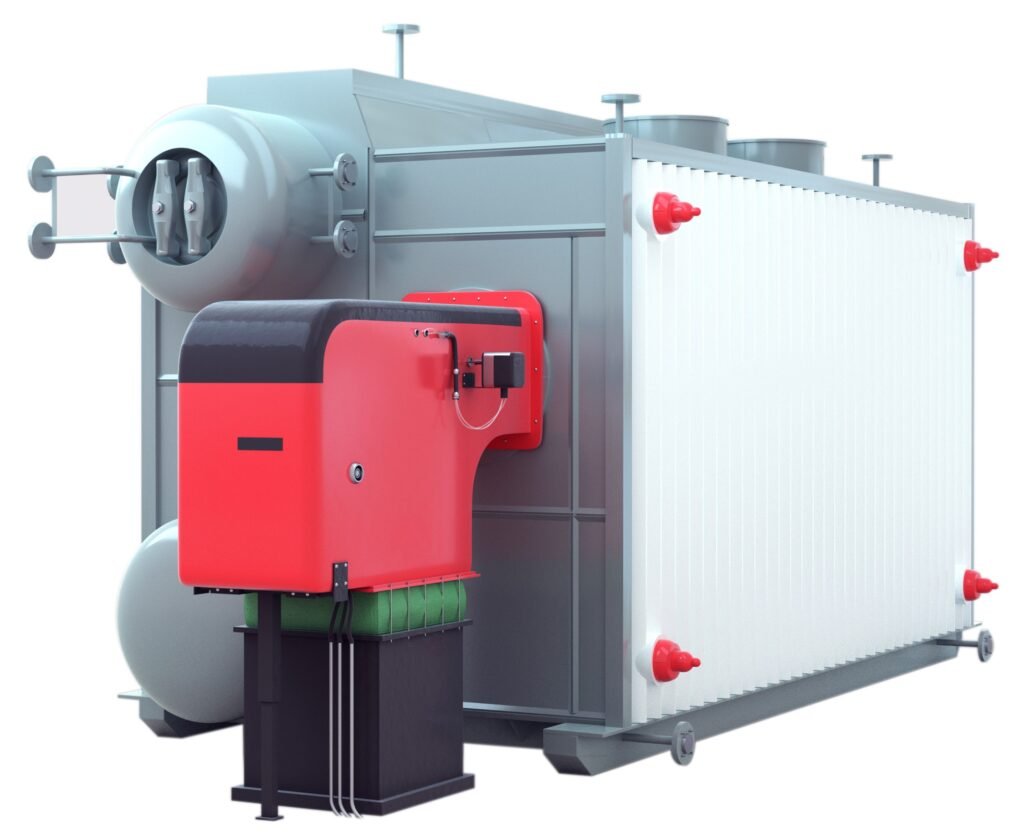
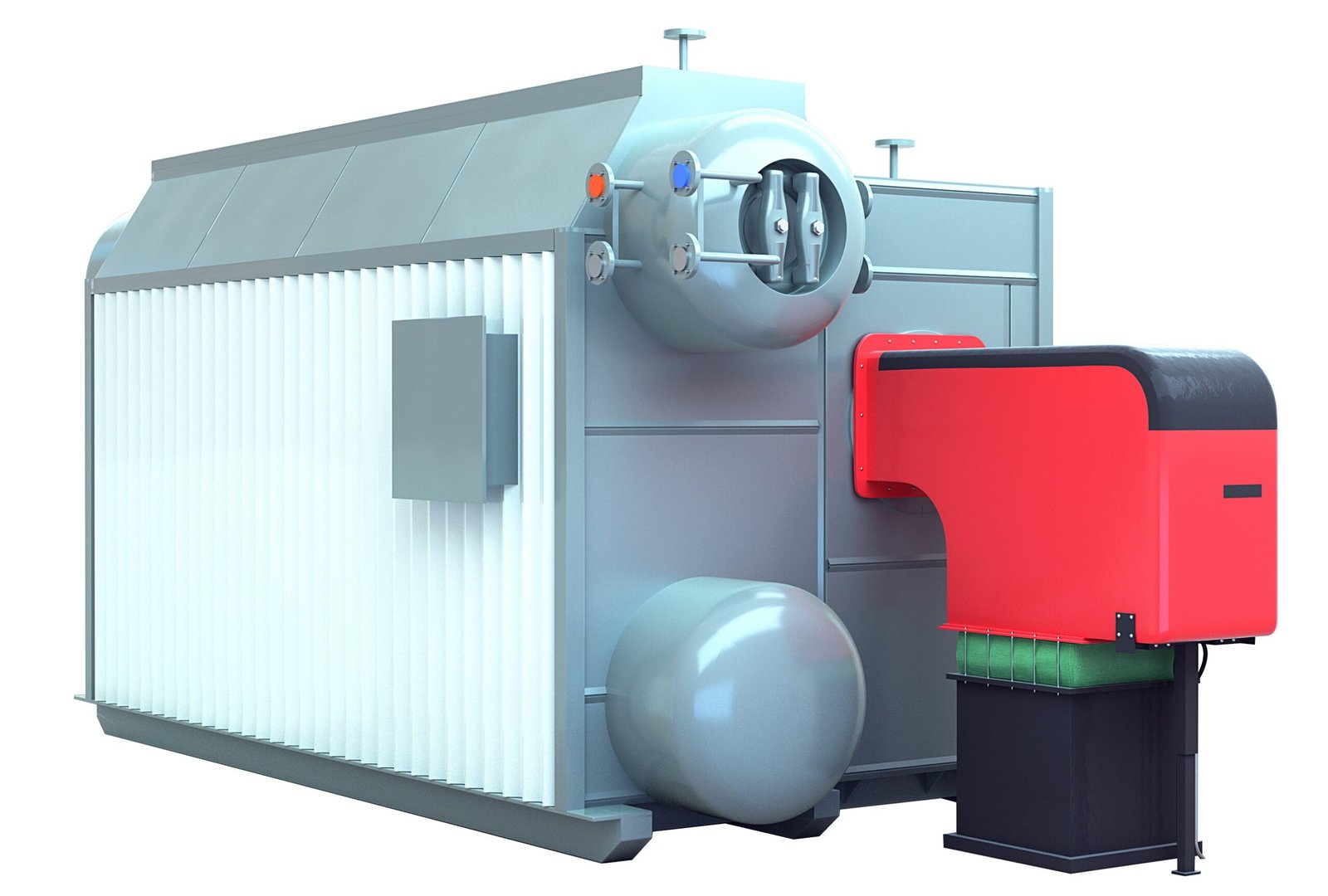
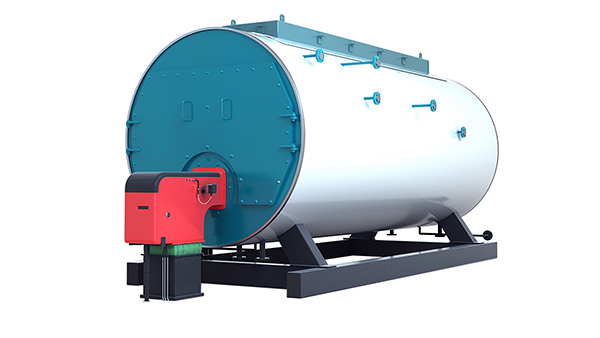
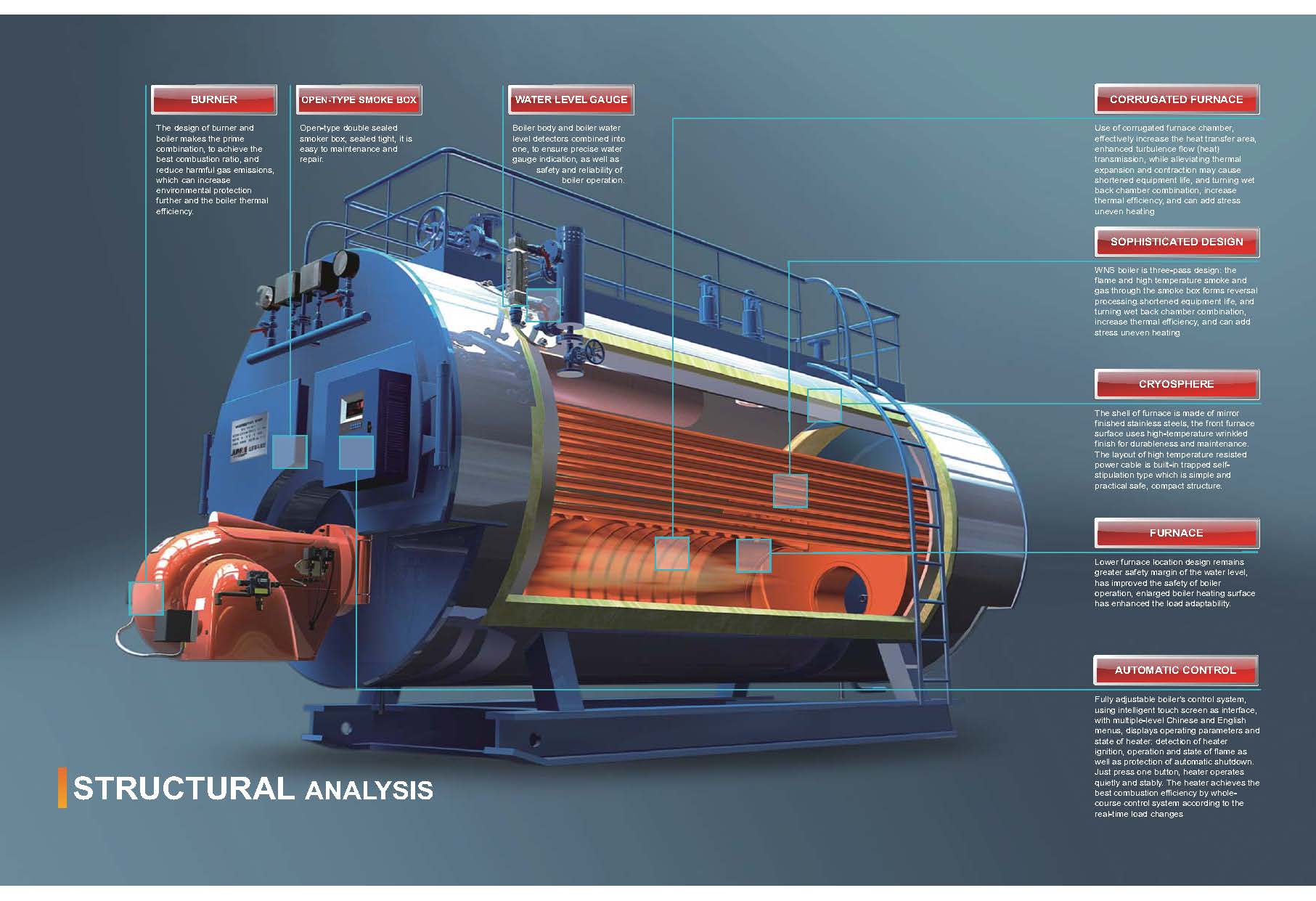
Industrial Boiler Classification by Output Medium
Choosing the wrong type of industrial boiler can lead to inefficient heat transfer, higher energy costs, and operational limitations. Many businesses are unsure whether they need a steam boiler, hot water boiler, or thermal oil boiler, especially when different industrial processes require specific temperature ranges and heating methods. Without understanding these classifications, companies may invest in systems that fail to meet performance, safety, or efficiency requirements. Properly identifying boilers by their output medium is essential for selecting the most suitable industrial heating solution.
Industrial boilers are commonly classified by output medium into steam boilers, hot water boilers, and thermal oil boilers. Steam boilers generate steam for power generation, sterilization, and industrial processing; hot water boilers provide heated water for space heating and low-temperature industrial applications; and thermal oil boilers use heat transfer oil to deliver high-temperature heating without high pressure, making them ideal for specialized industrial processes.
To determine which boiler type best suits your operational needs, it is important to understand how each classification works and where it is most commonly applied.
What Is a Steam Boiler and How Does It Work in Industrial Applications?
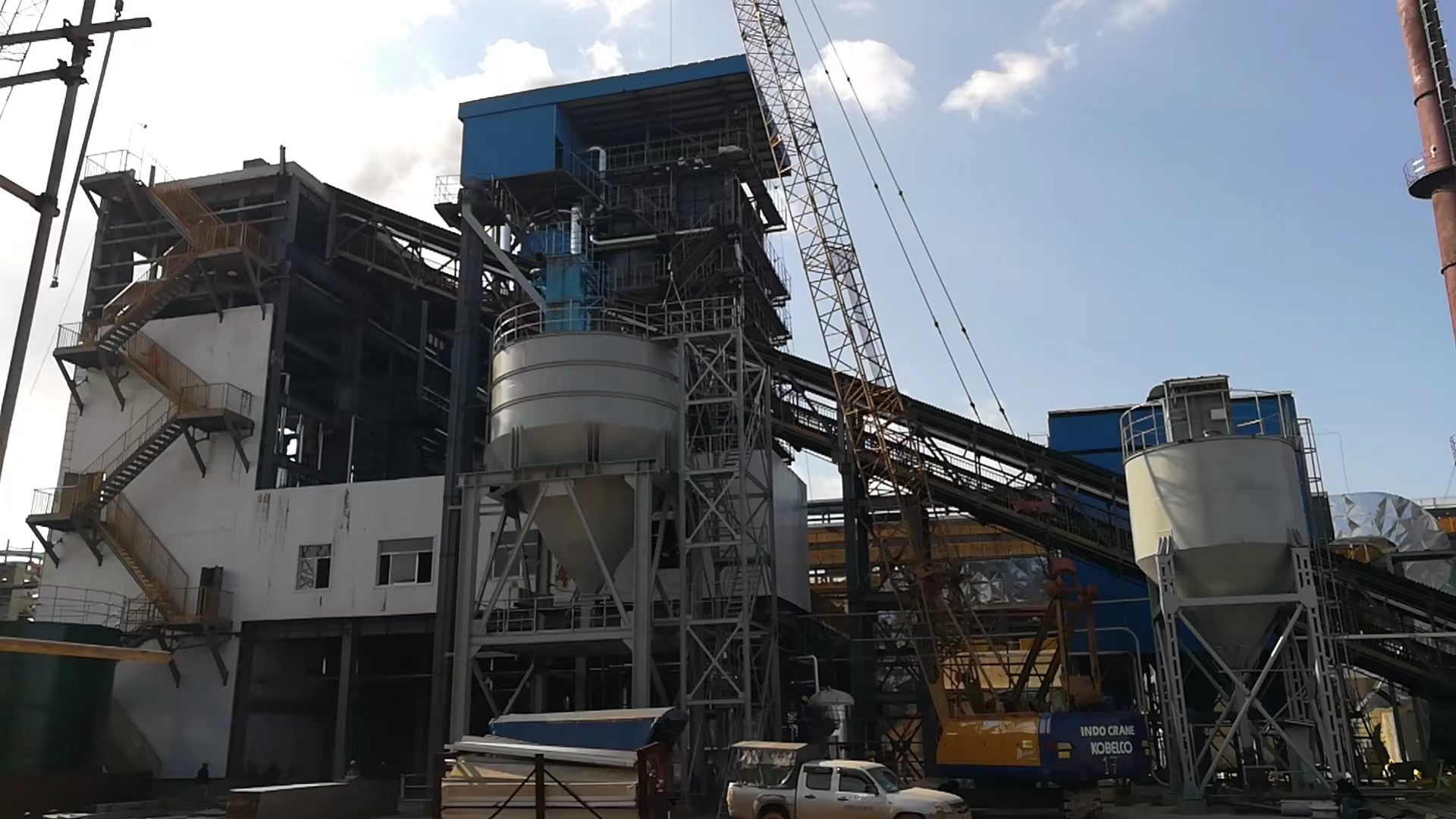
Steam boilers are among the most essential energy systems used across modern industries. From power generation and food processing to chemical manufacturing and textile production, steam boilers provide the thermal energy required to support countless industrial operations. However, many people misunderstand how steam boilers actually function or why they are so important in industrial environments. Without a clear understanding of steam generation, heat transfer, combustion systems, and pressure control, businesses may struggle with inefficient operation, high fuel consumption, equipment failure, or safety risks.
A steam boiler is a closed pressure vessel that heats water to generate steam using fuel combustion or other heat sources. In industrial applications, the generated steam is used for heating, power generation, sterilization, drying, processing, and mechanical energy transfer. Steam boilers operate by transferring thermal energy from combustion gases into water through heat exchange surfaces, producing pressurized steam for industrial use.
Steam boilers are essentially the “thermal heart” of many industrial facilities, delivering controlled and efficient energy where direct heating alone would be impractical 🔥⚙️
Steam boilers simply boil water without requiring complex control or heat transfer systems.False
Industrial steam boilers rely on advanced combustion, pressure control, heat transfer, and safety systems to generate steam efficiently and safely.
🔥 What Is a Steam Boiler?
A steam boiler is a specialized pressure vessel designed to:
- Heat water
- Convert water into steam
- Deliver pressurized thermal energy
📌 Core boiler principle:
Fuel combustion generates heat → heat transfers into water → steam is produced under pressure.
📊 Main components of a steam boiler
| Component | Function |
|---|---|
| Burner | Produces heat through fuel combustion |
| Combustion chamber | Contains the flame and heat generation |
| Heat exchanger / tubes | Transfer heat to water |
| Steam drum | Separates steam from water |
| Control system | Regulates pressure, fuel, and safety |
| Safety valves | Prevent overpressure conditions |
👉 Steam boilers convert chemical energy into thermal energy and finally into usable steam energy.
⚙️ How Does a Steam Boiler Work?
The steam generation process involves several coordinated stages.
🔄 Basic operating sequence:
- Fuel enters the burner
- Combustion creates high-temperature gases
- Heat transfers through boiler tubes or surfaces
- Water absorbs heat and begins boiling
- Steam accumulates under pressure
- Steam is distributed to industrial processes
📊 Simplified steam boiler workflow
| Process Stage | Purpose |
|---|---|
| Combustion | Generate heat |
| Heat transfer | Heat water efficiently |
| Steam generation | Produce pressurized steam |
| Steam distribution | Deliver usable energy |
👉 Efficient heat transfer is the key to boiler performance.
🌡 Understanding Steam Generation
Steam forms when water absorbs enough thermal energy to change phase.
Key steam parameters:
- Pressure
- Temperature
- Steam quality (dryness fraction)
📌 Common industrial steam types:
- Saturated steam
- Superheated steam
📊 Steam comparison
| Steam Type | Characteristics | Typical Applications |
|---|---|---|
| Saturated steam | Contains moisture | Heating & sterilization |
| Superheated steam | Higher temperature & dry | Power generation |
👉 Different industrial processes require different steam conditions.
🏭 Main Types of Industrial Steam Boilers
Different boiler designs serve different industrial needs.
🔹 Fire-Tube Boilers
In fire-tube boilers:
- Hot gases flow through tubes
- Water surrounds the tubes
✔ Advantages:
- Simpler design
- Lower cost
- Easier maintenance
❌ Limitations:
- Lower pressure capacity
- Slower steam response
🔹 Water-Tube Boilers
In water-tube boilers:
- Water flows inside tubes
- Hot gases surround the tubes
✔ Advantages:
- Higher pressure capability
- Faster steam generation
- Greater efficiency
❌ Limitations:
- More complex design
- Higher manufacturing cost
📊 Fire-tube vs water-tube comparison
| Feature | Fire-Tube | Water-Tube |
|---|---|---|
| Pressure capability | Lower | Higher |
| Steam generation speed | Moderate | Fast |
| Efficiency | Medium | High |
| Maintenance complexity | Lower | Higher |
👉 Water-tube boilers dominate large industrial applications.
🔥 Fuel Sources Used in Steam Boilers
Industrial boilers can operate on multiple fuel types.
Common fuels:
- Natural gas
- Diesel fuel
- Coal
- Biomass
- Waste heat recovery
- Hydrogen (emerging)
📊 Fuel comparison overview
| Fuel Type | Efficiency | Emissions Level |
|---|---|---|
| Natural gas | High | Low |
| Oil | Medium | Medium |
| Coal | Medium | High |
| Biomass | Variable | Lower carbon footprint |
👉 Fuel selection strongly affects efficiency and emissions.
⚡ Role of Steam Boilers in Industrial Applications
Steam is one of the most versatile forms of industrial energy.
🏭 Common industrial applications include:
- Process heating
- Sterilization
- Turbine power generation
- Drying systems
- Chemical reactions
- Food processing
📊 Industrial sectors using steam boilers
| Industry | Steam Application |
|---|---|
| Food & beverage | Sterilization & cooking |
| Chemical industry | Process heating |
| Textile industry | Drying & finishing |
| Power plants | Turbine operation |
| Pharmaceutical | Clean steam sterilization |
👉 Steam provides efficient and controllable thermal energy.
🧠 Boiler Control Systems and Automation
Modern steam boilers rely heavily on automation.
🔧 Key control functions:
- Fuel-air ratio control
- Pressure regulation
- Water level management
- Emission monitoring
- Safety shutdown systems
📊 Automation benefits
| Function | Benefit |
|---|---|
| Real-time monitoring | Stable operation |
| Automated combustion | Improved efficiency |
| Safety interlocks | Reduced accident risk |
👉 Smart control systems maximize safety and efficiency.
🌫 Boiler Efficiency and Heat Recovery
Industrial boilers aim to maximize energy utilization.
🔥 Efficiency improvement technologies:
- Economizers
- Condensing systems
- Heat recovery units
- Oxygen trim control
📊 Efficiency improvement impact
| Technology | Potential Efficiency Gain |
|---|---|
| Economizer | 3–8% |
| Oxygen trim | 2–5% |
| Condensing technology | Up to 10% |
👉 Small efficiency gains can create major fuel savings over time.
🔍 Safety Systems in Steam Boilers
Because boilers operate under pressure, safety is critical.
⚠️ Essential safety devices:
- Pressure relief valves
- Low-water cutoffs
- Flame failure detection
- Emergency shutdown systems
📌 Common boiler risks:
- Overpressure
- Tube rupture
- Low-water overheating
- Combustion instability
👉 Boiler safety systems prevent catastrophic failures.
🏭 Real-World Case Study: Steam Boiler in Food Processing
A food manufacturing facility required:
- Reliable sterilization steam
- High efficiency operation
- Low emissions compliance
Implemented solution:
- Natural gas water-tube boiler
- Automated combustion controls
- Economizer heat recovery system
Results:
- ✔ 15% fuel savings
- ✔ Stable steam pressure
- ✔ Reduced operational downtime
⚠️ Common Steam Boiler Operational Mistakes
- ❌ Poor water treatment
- ❌ Ignoring boiler blowdown management
- ❌ Improper burner tuning
- ❌ Delayed maintenance inspections
- ❌ Inadequate operator training
👉 Most boiler failures are linked to operational or maintenance issues rather than design alone.
💰 Economic Importance of Steam Boilers
Efficient steam systems provide:
- Lower fuel costs
- Improved productivity
- Reduced downtime
- Better energy utilization
📊 Boiler operating cost breakdown
| Cost Factor | Impact Level |
|---|---|
| Fuel consumption | Very High |
| Maintenance | High |
| Water treatment | Medium |
| Compliance costs | Variable |
👉 Fuel efficiency is the largest long-term cost driver.
🚀 Future Trends in Industrial Steam Boilers
- Hydrogen-ready boilers
- AI-driven combustion optimization
- Smart predictive maintenance
- Ultra-low emission systems
- Digital twin boiler management
👉 Future steam boilers will become more intelligent, efficient, and environmentally sustainable
📌 Summary
A steam boiler is a pressurized thermal energy system that converts water into steam through controlled heat transfer and combustion processes. In industrial applications, steam boilers provide essential energy for heating, sterilization, power generation, manufacturing, and process operations.
✔ Generate reliable industrial steam energy
✔ Support multiple industrial applications
✔ Improve process efficiency and productivity
✔ Enable controlled thermal energy transfer
✔ Integrate advanced safety and automation systems
Ultimately, steam boilers are not just heating devices—they are critical industrial energy platforms that power modern manufacturing and infrastructure worldwide 🔥🏭
How Are Hot Water Boilers Used in Industrial Heating Systems?
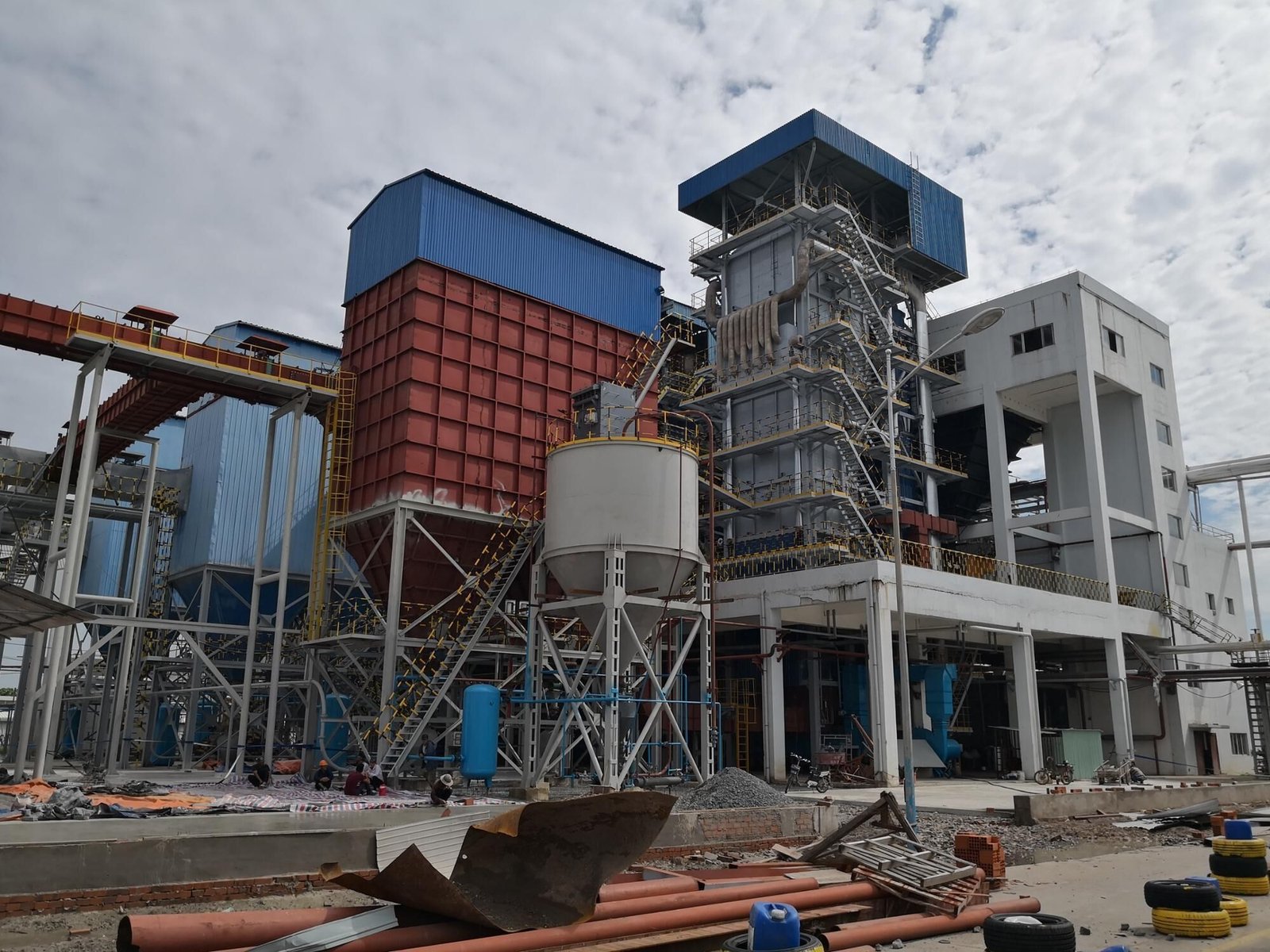
Industrial facilities require reliable and efficient heating systems to maintain production stability, worker comfort, equipment protection, and process efficiency. In many industries, inconsistent heating can lead to reduced productivity, frozen pipelines, equipment damage, or unstable manufacturing conditions. While steam boilers dominate high-temperature industrial processes, hot water boilers are widely used for controlled heating applications where lower-pressure thermal energy is more practical, efficient, and economical.
Hot water boilers are used in industrial heating systems to generate and circulate heated water for space heating, process heating, equipment temperature control, district heating, and thermal energy distribution. These systems operate by transferring combustion heat into water and circulating the heated water through insulated piping networks, heat exchangers, or industrial heating equipment.
Hot water boiler systems provide stable, controllable, and energy-efficient thermal management for a wide range of industrial applications 🔥💧
Industrial hot water boilers are only used for building comfort heating and have little industrial value.False
Industrial hot water boilers are extensively used in manufacturing, process heating, equipment temperature control, district energy systems, and industrial thermal management applications.
🔥 What Is a Hot Water Boiler?
A hot water boiler is a thermal energy system designed to:
- Heat water without converting it into steam
- Circulate heated water through a closed-loop system
- Deliver controlled thermal energy for industrial use
📌 Core operating principle:
Fuel combustion → heat transfer → water heating → circulation through heating network
📊 Main hot water boiler components
| Component | Function |
|---|---|
| Burner | Generates combustion heat |
| Heat exchanger | Transfers heat into water |
| Circulation pump | Moves hot water through the system |
| Expansion tank | Manages thermal expansion |
| Control system | Regulates temperature and operation |
| Safety valves | Protect against overpressure |
👉 Hot water boilers focus on efficient heat distribution rather than steam generation.
⚙️ How Hot Water Boilers Work in Industrial Systems
Hot water boilers operate in a continuous thermal circulation loop.
🔄 Basic operating sequence:
- Fuel enters the burner
- Combustion generates heat
- Heat exchanger warms the water
- Pumps circulate hot water through piping
- Heat transfers to industrial processes or spaces
- Cooler water returns to the boiler for reheating
📊 Simplified system workflow
| Process Stage | Purpose |
|---|---|
| Combustion | Produce thermal energy |
| Heat transfer | Heat circulating water |
| Water circulation | Deliver heat efficiently |
| Return loop | Recycle cooled water |
👉 Continuous circulation enables stable temperature control.
🏭 Main Industrial Applications of Hot Water Boilers
Hot water boilers are used across many industries.
🔹 Space Heating Systems
Industrial facilities often require large-scale heating.
Applications include:
- Factories
- Warehouses
- Workshops
- Distribution centers
✔ Benefits:
- Stable indoor temperatures
- Worker comfort
- Equipment freeze protection
### 🔹 Process Heating Applications
Many industrial processes require moderate-temperature heat.
Common examples:
- Food processing
- Textile production
- Chemical mixing
- Surface treatment systems
📌 Why hot water is preferred:
- More precise temperature control
- Lower pressure operation
- Improved safety compared to steam systems
🔹 District Heating Systems
Hot water boilers are commonly used in centralized heating networks.
Applications:
- Industrial parks
- Universities
- Hospitals
- Commercial complexes
📊 District heating advantages
| Benefit | Impact |
|---|---|
| Centralized energy production | Improved efficiency |
| Reduced infrastructure duplication | Lower cost |
| Easier maintenance | Simplified operations |
👉 Large hot water boilers often act as central energy hubs.
🌡 Temperature Control and Heat Distribution
Hot water systems provide highly stable thermal regulation.
Typical operating temperatures:
- Low-temperature systems: 60–90°C
- Medium-temperature systems: 90–120°C
- High-temperature hot water (HTHW): Above 120°C under pressure
📊 Heating system comparison
| Heating Method | Temperature Stability | Pressure Requirement |
|---|---|---|
| Hot water system | High | Lower |
| Steam system | Moderate | Higher |
👉 Hot water systems are ideal for controlled thermal environments.
🔥 Fuel Sources for Hot Water Boilers
Industrial hot water boilers support multiple fuel options.
Common fuels:
- Natural gas
- Diesel oil
- Biomass
- Coal
- Waste heat recovery systems
📊 Fuel comparison overview
| Fuel Type | Efficiency | Emissions Level |
|---|---|---|
| Natural gas | High | Low |
| Oil | Medium | Medium |
| Biomass | Variable | Lower carbon impact |
👉 Fuel choice strongly influences operating cost and emissions.
⚡ Heat Exchangers and Thermal Transfer
Efficient heat exchange is essential for system performance.
Common heat transfer components:
- Shell-and-tube exchangers
- Plate heat exchangers
- Finned tube systems
📌 Heat exchanger roles:
- Transfer thermal energy efficiently
- Separate industrial fluids if required
- Improve overall system flexibility
📊 Heat transfer efficiency factors
| Factor | Impact on Efficiency |
|---|---|
| Water flow rate | High |
| Heat exchanger cleanliness | High |
| Temperature differential | Moderate–High |
👉 Heat exchanger maintenance is critical for energy efficiency.
🧠 Automation and Smart Control Systems
Modern industrial hot water systems rely heavily on automation.
🔧 Control system functions:
- Temperature regulation
- Pump speed control
- Fuel-air ratio optimization
- Load balancing
- Remote monitoring
📊 Automation benefits
| Function | Operational Benefit |
|---|---|
| Smart temperature control | Energy savings |
| Variable-speed pumping | Lower electricity usage |
| Predictive maintenance | Reduced downtime |
👉 Intelligent controls maximize system efficiency and reliability.
🌫 Energy Efficiency and Heat Recovery
Hot water systems can achieve high energy efficiency levels.
🔥 Efficiency improvement technologies:
- Condensing heat recovery
- Economizers
- Variable frequency drives (VFDs)
- Thermal storage integration
📊 Potential efficiency gains
| Technology | Efficiency Improvement |
|---|---|
| Condensing systems | Up to 10% |
| VFD circulation pumps | 5–15% |
| Advanced controls | 3–8% |
👉 Heat recovery significantly reduces fuel consumption.
🔍 Safety Features in Hot Water Boiler Systems
Although lower-pressure than steam boilers, hot water systems still require strong safety protection.
⚠️ Key safety systems:
- Expansion tanks
- Pressure relief valves
- Flow protection switches
- Low-water cutoffs
- Emergency shutdown controls
📌 Common risks:
- Overheating
- Pump failure
- Pressure imbalance
- Corrosion and leaks
👉 Preventive maintenance is essential for safe operation.
🏭 Real-World Case Study: Industrial Facility Heating Upgrade
A manufacturing plant needed:
- Stable facility heating
- Reduced fuel costs
- Improved process temperature control
Implemented solution:
- High-efficiency condensing hot water boiler
- Variable-speed pump system
- Smart building automation integration
Results:
- ✔ 18% energy savings
- ✔ More stable indoor temperatures
- ✔ Reduced maintenance downtime
⚠️ Common Mistakes in Industrial Hot Water Systems
- ❌ Oversized boiler selection
- ❌ Poor pipe insulation
- ❌ Inadequate water treatment
- ❌ Improper pump sizing
- ❌ Ignoring heat exchanger maintenance
👉 Most efficiency losses originate from poor system design or maintenance.
💰 Economic Benefits of Hot Water Boiler Systems
Efficient hot water systems provide:
- Lower operating costs
- Improved temperature stability
- Reduced maintenance requirements
- Better energy utilization
📊 Operating cost impact overview
| Cost Factor | Importance |
|---|---|
| Fuel efficiency | Very High |
| Pump electricity use | Medium |
| Maintenance | High |
👉 Energy efficiency strongly influences long-term ROI.
🚀 Future Trends in Industrial Hot Water Heating
- Hydrogen-compatible hot water boilers
- Smart IoT heating systems
- AI-driven thermal optimization
- Renewable hybrid heating integration
- Ultra-high-efficiency condensing systems
👉 Future hot water systems will become more intelligent, sustainable, and energy-efficient
📌 Summary
Hot water boilers are essential industrial heating systems that generate and circulate heated water for space heating, process applications, district energy systems, and industrial thermal management.
✔ Provide reliable and stable industrial heating
✔ Support efficient thermal energy distribution
✔ Enable precise temperature control
✔ Improve energy efficiency and operational safety
✔ Integrate advanced automation and heat recovery technologies
Ultimately, hot water boilers are not just heating devices—they are critical thermal infrastructure systems that support efficient industrial operations across countless industries 🔥💧
What Is a Thermal Oil Boiler and Why Is It Used for High-Temperature Applications?
Many industrial processes require extremely high operating temperatures, but using steam systems at these temperatures often introduces major challenges such as high pressure risks, complex water treatment requirements, corrosion, and energy losses. In industries like chemical processing, asphalt production, textile manufacturing, food processing, and plastics production, maintaining stable high-temperature heat is essential for productivity and product quality. This is where thermal oil boilers become highly valuable, offering efficient high-temperature heat transfer without the need for extremely high-pressure steam systems.
A thermal oil boiler, also called a thermal fluid heater, is a closed-loop heating system that uses thermal oil instead of water or steam to transfer heat at high temperatures. It is widely used in industrial applications because thermal oil systems can safely deliver temperatures above 300°C under relatively low pressure, providing efficient, stable, and precise thermal energy for high-temperature industrial processes.
Thermal oil boilers are especially important in industries where consistent high-temperature control is required without the operational risks associated with high-pressure steam 🔥🛢️
Thermal oil boilers operate the same way as steam boilers and require equally high operating pressure.False
Thermal oil boilers can achieve very high temperatures at relatively low pressure because thermal oil has a much higher boiling point than water.
🔥 What Is a Thermal Oil Boiler?
A thermal oil boiler is a heat transfer system designed to:
- Heat thermal oil (heat transfer fluid)
- Circulate the heated oil through a closed-loop system
- Deliver stable high-temperature energy to industrial equipment
📌 Basic operating principle:
Fuel combustion → heat transfer to thermal oil → hot oil circulation → industrial heat utilization
📊 Main components of a thermal oil boiler system
| Component | Function |
|---|---|
| Burner | Generates combustion heat |
| Heater coil | Transfers heat into thermal oil |
| Circulation pump | Moves thermal oil through the system |
| Expansion tank | Accommodates thermal expansion |
| Control system | Regulates temperature and safety |
| Heat users | Industrial equipment receiving heat |
👉 Unlike steam boilers, thermal oil systems do not rely on phase change (boiling water into steam).
⚙️ How Does a Thermal Oil Boiler Work?
Thermal oil boilers operate in a continuous closed-loop circulation process.
🔄 Step-by-step workflow:
- Fuel enters the burner
- Combustion produces high-temperature gases
- Heater coils transfer heat into thermal oil
- Circulation pumps move the hot oil through pipelines
- Thermal energy transfers to industrial equipment
- Cooled oil returns to the heater for reheating
📊 Simplified thermal oil system process
| Process Stage | Purpose |
|---|---|
| Combustion | Generate thermal energy |
| Heat transfer | Heat thermal oil |
| Circulation | Deliver heat continuously |
| Heat utilization | Support industrial processes |
👉 The thermal oil continuously recycles without vaporizing under normal conditions.
🌡 Why Thermal Oil Is Ideal for High Temperatures
The biggest advantage of thermal oil is its ability to operate at very high temperatures under low pressure.
📌 Comparison with water-based systems:
Water boils at:
100^\circ C
But thermal oils can often operate above:
300^\circ C
without requiring extreme pressure.
📊 Steam vs thermal oil comparison
| Parameter | Steam Boiler | Thermal Oil Boiler |
|---|---|---|
| Operating pressure | High | Low |
| Maximum temperature | Limited by pressure | Very high |
| Water treatment required | Yes | No |
| Corrosion risk | Higher | Lower |
👉 Thermal oil systems provide safer high-temperature operation.
🏭 Main Industrial Applications of Thermal Oil Boilers
Thermal oil systems are widely used in industries requiring stable high-temperature heating.
🔹 Chemical Industry
Applications include:
- Reactor heating
- Resin production
- Distillation systems
✔ Benefits:
- Precise temperature control
- Stable process conditions
🔹 Asphalt and Bitumen Industry
Thermal oil boilers are commonly used for:
- Asphalt tank heating
- Bitumen transfer systems
- Road material production
✔ Why thermal oil is preferred:
- High temperature capability
- Continuous stable heat output
🔹 Food Processing Industry
Applications include:
- Frying systems
- Edible oil heating
- Food drying equipment
✔ Advantages:
- Uniform heating
- Improved product consistency
🔹 Textile and Printing Industry
Used for:
- Drying cylinders
- Fabric processing
- Dyeing systems
📊 Common industrial applications
| Industry | Typical Use |
|---|---|
| Chemical | Reactor heating |
| Food processing | Frying & drying |
| Textile | Fabric heating |
| Plastics | Mold heating |
| Asphalt | Bitumen heating |
👉 Thermal oil systems support a wide range of temperature-sensitive industries.
🔥 Fuel Sources Used in Thermal Oil Boilers
Thermal oil boilers support various fuel types.
Common fuel options:
- Natural gas
- Diesel oil
- Heavy fuel oil
- Biomass
- Coal (in some systems)
📊 Fuel comparison overview
| Fuel Type | Efficiency | Emissions Level |
|---|---|---|
| Natural gas | High | Low |
| Oil | Medium | Medium |
| Biomass | Variable | Lower carbon footprint |
👉 Fuel selection affects operating cost and environmental performance.
⚡ Heat Transfer Efficiency Advantages
Thermal oil systems offer highly efficient heat transfer.
✔ Key efficiency advantages:
- Uniform heat distribution
- Reduced thermal shock
- Minimal pressure losses
- Lower heat loss in circulation
📊 Efficiency comparison
| System Type | Thermal Stability | Energy Efficiency |
|---|---|---|
| Steam system | Moderate | Medium |
| Thermal oil system | High | High |
👉 Stable temperatures improve process quality and energy utilization.
🧠 Automation and Temperature Control
Modern thermal oil boilers use advanced control systems.
🔧 Key control functions:
- Temperature regulation
- Pump speed control
- Combustion optimization
- Safety shutdown systems
- Remote monitoring
📊 Automation benefits
| Feature | Operational Benefit |
|---|---|
| Precise temperature control | Improved product consistency |
| Smart combustion control | Fuel savings |
| Predictive maintenance | Reduced downtime |
👉 Accurate temperature control is critical in high-temperature processes.
🔍 Safety Features in Thermal Oil Systems
Although thermal oil systems operate at lower pressure than steam boilers, safety remains essential.
⚠️ Key safety devices:
- Expansion tanks
- Over-temperature protection
- Low-flow protection
- Pressure relief valves
- Emergency shutdown systems
📌 Common operational risks:
- Thermal oil degradation
- Pump failure
- Overheating
- Oil leakage
👉 Proper maintenance is crucial for safe long-term operation.
🌫 Thermal Oil Degradation and Maintenance
Thermal oil quality directly affects system performance.
Common degradation causes:
- Excessive temperatures
- Oxidation exposure
- Contamination
📊 Effects of degraded thermal oil
| Problem | Operational Impact |
|---|---|
| Increased viscosity | Reduced heat transfer |
| Carbon buildup | Lower efficiency |
| Acid formation | Corrosion risk |
👉 Regular oil analysis is essential for system reliability.
🏭 Real-World Case Study: Thermal Oil System in Plastics Manufacturing
A plastics manufacturing facility required:
- Stable high-temperature mold heating
- Reduced maintenance compared to steam
- Precise thermal control
Implemented solution:
- Natural gas thermal oil boiler
- Automated circulation control
- High-efficiency heat exchanger network
Results:
- ✔ Improved temperature stability
- ✔ Reduced maintenance costs
- ✔ Higher production consistency
⚠️ Common Mistakes in Thermal Oil Boiler Operation
- ❌ Overheating thermal oil beyond design limits
- ❌ Poor circulation flow management
- ❌ Ignoring oil quality testing
- ❌ Inadequate insulation
- ❌ Delayed maintenance inspections
👉 Most thermal oil system failures originate from operational neglect rather than design flaws.
💰 Economic Benefits of Thermal Oil Boilers
Thermal oil systems offer several financial advantages:
- Lower operating pressure costs
- Reduced maintenance requirements
- Improved energy efficiency
- Longer equipment lifespan
📊 Cost comparison overview
| Cost Factor | Steam System | Thermal Oil System |
|---|---|---|
| Pressure equipment cost | Higher | Lower |
| Water treatment | Required | Not required |
| Maintenance complexity | Higher | Moderate |
👉 Thermal oil systems can provide lower lifecycle costs for high-temperature applications.
🚀 Future Trends in Thermal Oil Heating Systems
- AI-driven thermal optimization
- Bio-based heat transfer fluids
- Hybrid renewable thermal systems
- Smart predictive maintenance
- Ultra-low emission burners
👉 Future thermal oil systems will become more efficient, sustainable, and digitally controlled
📌 Summary
A thermal oil boiler is a high-temperature heat transfer system that uses thermal oil to deliver stable thermal energy under relatively low pressure. It is widely used in industries requiring precise, efficient, and reliable high-temperature heating.
✔ Provides high temperatures without high pressure
✔ Improves thermal stability and process consistency
✔ Reduces water treatment and corrosion issues
✔ Supports diverse industrial applications
✔ Enhances energy efficiency and operational safety
Ultimately, thermal oil boilers are not simply alternatives to steam systems—they are specialized high-temperature energy solutions designed for demanding industrial thermal processes 🔥🛢️
How Do Steam, Hot Water, and Thermal Oil Boilers Differ in Efficiency and Pressure?
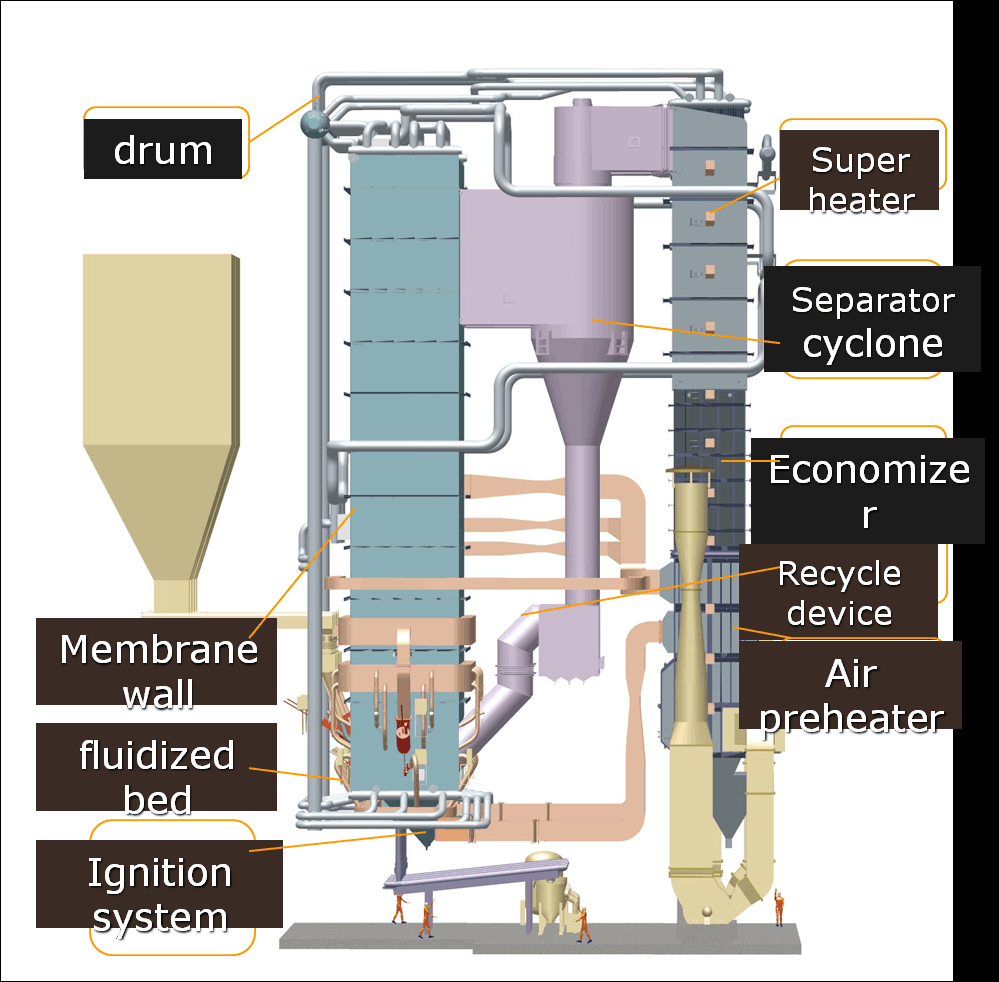
Choosing the right industrial boiler system is one of the most important decisions for industrial energy efficiency, operational safety, and process reliability. However, many businesses struggle to understand the practical differences between steam boilers, hot water boilers, and thermal oil boilers. Each system operates using different heat transfer principles, pressure conditions, temperature ranges, and efficiency characteristics. Selecting the wrong boiler type can lead to excessive energy consumption, unstable process temperatures, unnecessary maintenance costs, or even operational safety risks.
Steam boilers generate pressurized steam for high-energy industrial applications, hot water boilers circulate heated water for stable low-to-medium temperature heating, and thermal oil boilers use heat transfer oil to provide very high temperatures at relatively low pressure. Their efficiency and pressure characteristics differ based on heat transfer methods, operating temperatures, thermal stability, and industrial application requirements.
Understanding these differences helps industries choose the most efficient and cost-effective thermal energy solution for their specific operational needs 🔥⚙️
Steam, hot water, and thermal oil boilers operate with similar pressure and efficiency characteristics.False
These boiler systems use different heat transfer media and operating principles, resulting in major differences in pressure requirements, temperature capability, efficiency, and industrial suitability.
🔥 Understanding the Three Boiler Types
Before comparing efficiency and pressure, it is important to understand the core function of each system.
📌 Boiler type overview
| Boiler Type | Heat Transfer Medium | Main Purpose |
|---|---|---|
| Steam boiler | Steam | High-energy industrial processes |
| Hot water boiler | Heated water | Space & process heating |
| Thermal oil boiler | Thermal oil | High-temperature heating |
👉 Each system is optimized for different industrial operating conditions.
⚙️ How Steam Boilers Operate
Steam boilers convert water into pressurized steam.
🔄 Basic process:
Fuel combustion → water heating → steam generation → steam distribution
📌 Key characteristics:
- High thermal energy transfer
- Steam expansion capability
- Suitable for high-energy industrial operations
Common applications:
- Power generation
- Sterilization
- Chemical processing
- Turbine systems
💧 How Hot Water Boilers Operate
Hot water boilers heat and circulate water without converting it into steam.
🔄 Basic process:
Fuel combustion → water heating → hot water circulation → heat delivery
📌 Key characteristics:
- Stable temperature control
- Lower pressure operation
- Continuous closed-loop circulation
Common applications:
- Building heating
- Industrial process heating
- District heating systems
🛢️ How Thermal Oil Boilers Operate
Thermal oil boilers circulate heated thermal fluid instead of water.
🔄 Basic process:
Fuel combustion → thermal oil heating → oil circulation → high-temperature heat transfer
📌 Key characteristics:
- Very high temperature capability
- Low operating pressure
- Stable thermal performance
Common applications:
- Asphalt heating
- Chemical reactors
- Plastics manufacturing
- Textile drying systems
🌡 Pressure Differences Between Boiler Types
Pressure is one of the most important distinctions between these systems.
📌 Steam boilers:
Steam pressure increases rapidly with temperature because water boils into vapor.
For example:
100^\circ C
requires atmospheric pressure for boiling, but higher temperatures require much higher pressure.
📊 Pressure comparison
| Boiler Type | Typical Operating Pressure |
|---|---|
| Hot water boiler | Low–Moderate |
| Steam boiler | Medium–Very High |
| Thermal oil boiler | Low |
👉 Steam systems require the highest pressure due to phase change behavior.
🔥 Why Thermal Oil Boilers Operate at Lower Pressure
Thermal oils have much higher boiling points than water.
Many thermal oils can safely operate above:
300^\circ C
without vaporizing.
📌 Advantages:
- Reduced pressure vessel stress
- Improved operational safety
- Lower mechanical strain on components
📊 Temperature vs pressure relationship
| System | High Temperature Requirement | Pressure Requirement |
|---|---|---|
| Steam boiler | High | High |
| Thermal oil boiler | High | Low |
👉 This is one reason thermal oil systems are preferred for ultra-high-temperature industrial processes.
⚡ Efficiency Differences Between Boiler Types
Efficiency depends on:
- Heat transfer quality
- Thermal losses
- Operating conditions
- System design
📊 Typical efficiency comparison
| Boiler Type | Typical Efficiency Range |
|---|---|
| Steam boiler | 75–90% |
| Hot water boiler | 80–95% |
| Thermal oil boiler | 80–90% |
👉 Hot water systems often achieve the highest efficiency due to lower heat and pressure losses.
🌫 Why Steam Systems Can Lose Efficiency
Steam systems experience several energy losses:
- Steam leakage
- Condensate losses
- Flash steam losses
- Blowdown energy loss
📌 Additional challenges:
- High-pressure maintenance
- Water treatment requirements
- Condensate recovery complexity
📊 Steam system energy loss sources
| Loss Source | Efficiency Impact |
|---|---|
| Steam leakage | High |
| Blowdown losses | Moderate |
| Poor insulation | Moderate–High |
👉 Steam systems are powerful but operationally complex.
💧 Why Hot Water Boilers Are Often More Efficient
Hot water systems avoid phase-change energy losses.
✔ Efficiency advantages:
- Lower pressure operation
- Reduced heat loss
- Stable circulation loops
- Simpler heat recovery integration
📌 Condensing hot water boilers can achieve:
Very high thermal efficiency by recovering latent heat from exhaust gases.
👉 This makes hot water systems highly efficient for moderate-temperature heating applications.
🛢️ Thermal Oil Boiler Efficiency Characteristics
Thermal oil systems provide highly stable thermal transfer.
✔ Advantages:
- Uniform heat distribution
- Low pressure operation
- Reduced thermal shock
- Minimal water treatment needs
⚠️ Efficiency limitations:
- Thermal oil degradation over time
- Pump energy consumption
- Heat loss from long piping systems
📊 Thermal oil system efficiency factors
| Factor | Impact |
|---|---|
| Oil condition | High |
| Insulation quality | High |
| Circulation flow | Moderate |
👉 Proper maintenance is critical for maintaining thermal oil efficiency.
🧠 Safety Differences Between Boiler Systems
Pressure strongly influences safety requirements.
📊 Safety comparison
| Boiler Type | Pressure Risk | Main Safety Concern |
|---|---|---|
| Steam boiler | High | Pressure explosion |
| Hot water boiler | Moderate | Overheating |
| Thermal oil boiler | Lower pressure | Oil overheating/fire risk |
👉 Each system has unique operational safety priorities.
🏭 Industrial Application Comparison
Different industries choose different boiler types based on thermal requirements.
📊 Boiler selection by application
| Application | Preferred Boiler Type |
|---|---|
| Power generation | Steam boiler |
| Building heating | Hot water boiler |
| Chemical processing | Thermal oil boiler |
| Food sterilization | Steam boiler |
| Asphalt heating | Thermal oil boiler |
👉 Boiler selection depends on both temperature and process characteristics.
🔍 Maintenance and Operational Complexity
📊 Maintenance comparison
| Boiler Type | Maintenance Complexity |
|---|---|
| Hot water boiler | Low |
| Thermal oil boiler | Moderate |
| Steam boiler | High |
📌 Steam systems require:
- Water chemistry management
- Condensate systems
- High-pressure inspections
📌 Thermal oil systems require:
- Oil quality monitoring
- Leak prevention
- Temperature management
👉 Operational requirements vary significantly between systems.
🏭 Real-World Case Study: Choosing the Right Boiler System
A manufacturing company required:
- High-temperature process heating
- Stable temperature control
- Reduced operating pressure risks
Options evaluated:
- Steam boiler
- Hot water boiler
- Thermal oil boiler
Final solution:
Thermal oil boiler selected because:
- High temperatures were needed
- Low-pressure operation improved safety
- Stable process temperatures improved production quality
Results:
- ✔ Reduced maintenance requirements
- ✔ Improved thermal stability
- ✔ Lower operational risk
⚠️ Common Mistakes When Comparing Boiler Systems
- ❌ Choosing steam when high pressure is unnecessary
- ❌ Ignoring heat transfer efficiency differences
- ❌ Overlooking maintenance complexity
- ❌ Underestimating operating pressure risks
- ❌ Selecting systems based only on initial cost
👉 Lifecycle performance matters more than purchase price alone.
💰 Economic Comparison of Boiler Systems
📊 Cost comparison overview
| Factor | Steam Boiler | Hot Water Boiler | Thermal Oil Boiler |
|---|---|---|---|
| Initial cost | High | Moderate | Moderate–High |
| Operating pressure cost | High | Low | Low |
| Maintenance cost | High | Low–Moderate | Moderate |
| Water treatment cost | High | Moderate | None |
👉 Total lifecycle cost depends heavily on application suitability.
🚀 Future Trends in Industrial Boiler Systems
- Hydrogen-ready steam boilers
- Ultra-high-efficiency condensing hot water boilers
- Smart thermal oil circulation systems
- AI-driven thermal optimization
- Hybrid renewable thermal systems
👉 Future boiler technologies will become more efficient, digitally controlled, and environmentally sustainable
📌 Summary
Steam, hot water, and thermal oil boilers differ significantly in operating pressure, efficiency, temperature capability, maintenance requirements, and industrial applications.
✔ Steam boilers provide high-energy thermal transfer but require high pressure
✔ Hot water boilers offer highly efficient moderate-temperature heating
✔ Thermal oil boilers deliver very high temperatures under low pressure
✔ Each system has unique operational advantages and limitations
✔ Proper boiler selection depends on process temperature, safety, efficiency, and maintenance requirements
Ultimately, the best boiler system is not determined by size alone, but by how effectively it matches the thermal, operational, and safety demands of the industrial application 🔥⚙️
Which Industries Commonly Use Steam, Hot Water, and Thermal Oil Boilers?

Industrial boilers are critical energy systems used in countless sectors around the world. However, not all boilers are designed for the same purpose. Steam boilers, hot water boilers, and thermal oil boilers each serve different operational needs depending on temperature requirements, pressure conditions, process stability, and energy efficiency goals. Selecting the wrong boiler type for a specific industry can result in poor thermal performance, excessive fuel consumption, operational instability, or increased maintenance costs.
Steam boilers are commonly used in industries requiring high-pressure thermal energy or steam-driven processes, hot water boilers are widely used for space heating and moderate-temperature process applications, and thermal oil boilers are preferred in industries that require stable high-temperature heating under low pressure. Different industries select boiler systems based on their operational temperature, pressure, safety, and efficiency requirements.
Understanding which industries use each boiler type helps businesses choose the most suitable thermal energy solution for their industrial operations 🏭🔥
Steam, hot water, and thermal oil boilers are generally interchangeable across all industries.False
Different boiler types are designed for specific operating temperatures, pressures, and heat transfer requirements, making certain systems more suitable for particular industries and applications.
🔥 Why Different Industries Use Different Boiler Types
Industrial heating requirements vary significantly depending on:
- Process temperature
- Pressure requirements
- Thermal stability needs
- Safety considerations
- Energy efficiency goals
📊 Boiler selection overview
| Boiler Type | Main Strength |
|---|---|
| Steam boiler | High-energy heat transfer |
| Hot water boiler | Stable moderate-temperature heating |
| Thermal oil boiler | High-temperature low-pressure operation |
👉 Each boiler system is optimized for different industrial environments.
⚙️ Industries That Commonly Use Steam Boilers
Steam boilers dominate industries requiring:
- High thermal energy transfer
- Sterilization
- Mechanical steam power
- Rapid heat distribution
🔹 Power Generation Industry
Steam boilers are essential in thermal power plants.
🔄 How they work:
Boilers generate high-pressure steam → steam drives turbines → turbines generate electricity
✔ Why steam is used:
- Extremely high energy density
- Efficient turbine operation
- Large-scale thermal transfer capability
📊 Steam usage in power plants
| Function | Importance |
|---|---|
| Turbine operation | Critical |
| Electricity production | Primary role |
👉 Steam boilers are the backbone of conventional thermal power generation.
🔹 Food and Beverage Industry
Steam is widely used in:
- Sterilization
- Cooking
- Pasteurization
- Cleaning systems
✔ Advantages:
- Rapid heat transfer
- Hygienic processing
- Uniform heating
📌 Common applications:
- Dairy plants
- Beverage factories
- Meat processing facilities
🔹 Pharmaceutical Industry
Pharmaceutical manufacturing requires ultra-clean steam systems.
Uses include:
- Sterilization
- Equipment sanitation
- Controlled process heating
✔ Why steam is preferred:
- High sanitation standards
- Precise temperature control
- Reliable thermal energy delivery
🔹 Textile Industry
Steam is used for:
- Fabric drying
- Dye fixation
- Ironing and finishing
📊 Textile steam applications
| Process | Steam Function |
|---|---|
| Dyeing | Temperature control |
| Drying | Moisture removal |
| Finishing | Fabric treatment |
👉 Steam enables rapid and uniform textile processing.
🔹 Chemical Industry
Steam boilers support:
- Chemical reactors
- Distillation systems
- Process heating
✔ Benefits:
- Efficient heat transfer
- High-temperature capability
- Scalable energy delivery
💧 Industries That Commonly Use Hot Water Boilers
Hot water boilers are ideal for:
- Moderate-temperature heating
- Continuous thermal circulation
- Lower-pressure operation
🔹 Commercial and Institutional Buildings
Hot water boilers are widely used in:
- Hospitals
- Universities
- Office complexes
- Shopping centers
✔ Main applications:
- Space heating
- Domestic hot water supply
- Central heating systems
📊 Why hot water systems are popular
| Advantage | Benefit |
|---|---|
| Lower pressure | Improved safety |
| Stable temperatures | Better comfort |
| High efficiency | Lower operating cost |
👉 Hot water boilers dominate modern building heating systems.
🔹 Manufacturing Facilities
Factories use hot water systems for:
- Equipment heating
- Wash systems
- Process temperature stabilization
✔ Industries include:
- Automotive manufacturing
- Electronics production
- Packaging facilities
🔹 District Heating Systems
Hot water boilers often serve centralized heating networks.
Applications:
- Industrial parks
- Residential districts
- Campus heating systems
✔ Advantages:
- Centralized efficiency
- Simplified maintenance
- Large-scale heat distribution
🔹 Greenhouse and Agricultural Industry
Hot water systems provide:
- Greenhouse climate control
- Livestock building heating
- Agricultural drying support
📌 Why hot water is preferred:
- Stable low-temperature heating
- Energy-efficient circulation systems
👉 Consistent heating improves agricultural productivity.
🛢️ Industries That Commonly Use Thermal Oil Boilers
Thermal oil boilers are used where:
- Very high temperatures are required
- Low pressure operation is preferred
- Stable thermal control is critical
🔹 Asphalt and Bitumen Industry
Thermal oil systems are heavily used in:
- Asphalt storage tanks
- Bitumen heating
- Road material production
✔ Key advantage:
High-temperature heating without high-pressure steam systems.
🔹 Plastics and Polymer Industry
Thermal oil boilers support:
- Mold heating
- Extrusion systems
- Resin processing
✔ Benefits:
- Stable high temperatures
- Precise thermal control
- Improved product consistency
🔹 Chemical Processing Industry
Thermal oil systems are ideal for:
- Reactor jacket heating
- Distillation units
- High-temperature fluid processing
📊 Thermal oil application advantages
| Feature | Benefit |
|---|---|
| Low pressure | Improved safety |
| High temperature stability | Better process control |
👉 Many chemical processes require stable high-temperature environments.
🔹 Textile and Printing Industry
Used for:
- Drying cylinders
- Printing rollers
- Fabric treatment systems
✔ Why thermal oil is effective:
- Uniform thermal transfer
- Consistent process temperatures
🔹 Wood Processing and Panel Manufacturing
Thermal oil boilers provide heat for:
- Plywood presses
- MDF production
- Wood drying systems
📌 Advantages:
- Stable long-duration heating
- Efficient thermal transfer over large surfaces
🌡 Industry Comparison by Boiler Type
📊 Industry suitability overview
| Industry | Steam Boiler | Hot Water Boiler | Thermal Oil Boiler |
|---|---|---|---|
| Power generation | Excellent | Limited | Rare |
| Food processing | Excellent | Good | Moderate |
| Chemical processing | Excellent | Moderate | Excellent |
| Building heating | Limited | Excellent | Rare |
| Asphalt production | Poor | Poor | Excellent |
| Textile industry | Excellent | Moderate | Excellent |
👉 Different industries prioritize different thermal characteristics.
🔍 Pressure and Temperature Requirements by Industry
📊 Typical operating characteristics
| Boiler Type | Typical Temperature Range | Typical Pressure Level |
|---|---|---|
| Hot water boiler | Moderate | Low |
| Steam boiler | High | High |
| Thermal oil boiler | Very High | Low |
👉 Thermal requirements strongly influence industry boiler selection.
⚡ Energy Efficiency Considerations Across Industries
Industries select boiler systems partly based on energy performance.
📌 Efficiency priorities vary:
- Power plants prioritize steam energy density
- Buildings prioritize hot water efficiency
- Chemical plants prioritize thermal stability
📊 Efficiency focus by industry
| Industry | Main Efficiency Goal |
|---|---|
| Food processing | Fuel savings |
| Chemical processing | Stable temperatures |
| Commercial buildings | Low operating cost |
👉 Operational priorities determine the preferred boiler technology.
🏭 Real-World Case Study: Multi-Boiler Industrial Facility
A large industrial complex used:
- Steam boilers for sterilization
- Hot water boilers for facility heating
- Thermal oil boilers for chemical reactors
Results:
- ✔ Optimized energy usage
- ✔ Improved process control
- ✔ Reduced operational costs
👉 Many large industrial sites use multiple boiler types simultaneously.
⚠️ Common Mistakes When Selecting Boilers by Industry
- ❌ Using steam when lower-pressure systems are sufficient
- ❌ Ignoring process temperature stability requirements
- ❌ Underestimating maintenance complexity
- ❌ Choosing systems based only on initial cost
- ❌ Failing to consider long-term energy efficiency
👉 Proper boiler selection requires evaluating the entire industrial process.
💰 Economic Impact of Proper Boiler Selection
Correct boiler selection provides:
- Lower fuel consumption
- Reduced maintenance costs
- Improved process reliability
- Longer equipment lifespan
📊 Financial impact overview
| Selection Quality | Operational Outcome |
|---|---|
| Poorly matched system | High operating cost |
| Optimized system | Improved profitability |
👉 Thermal system optimization directly affects industrial competitiveness.
🚀 Future Trends in Industrial Boiler Applications
- Hydrogen-capable steam boilers
- Smart hot water heating networks
- AI-controlled thermal oil systems
- Renewable hybrid boiler technologies
- Ultra-low-emission industrial heating systems
👉 Future industrial boiler systems will become more efficient, sustainable, and digitally integrated
📌 Summary
Steam, hot water, and thermal oil boilers are widely used across different industries based on their unique pressure, temperature, efficiency, and thermal transfer characteristics.
✔ Steam boilers dominate high-energy industrial applications
✔ Hot water boilers provide efficient moderate-temperature heating
✔ Thermal oil boilers deliver stable high-temperature heat under low pressure
✔ Different industries prioritize different thermal requirements
✔ Proper boiler selection improves efficiency, safety, and operational reliability
Ultimately, industrial boiler selection is not simply about generating heat—it is about choosing the most suitable thermal energy system for the operational demands of a specific industry and process 🔥🏭
What Factors Should You Consider When Choosing an Industrial Boiler by Output Medium?
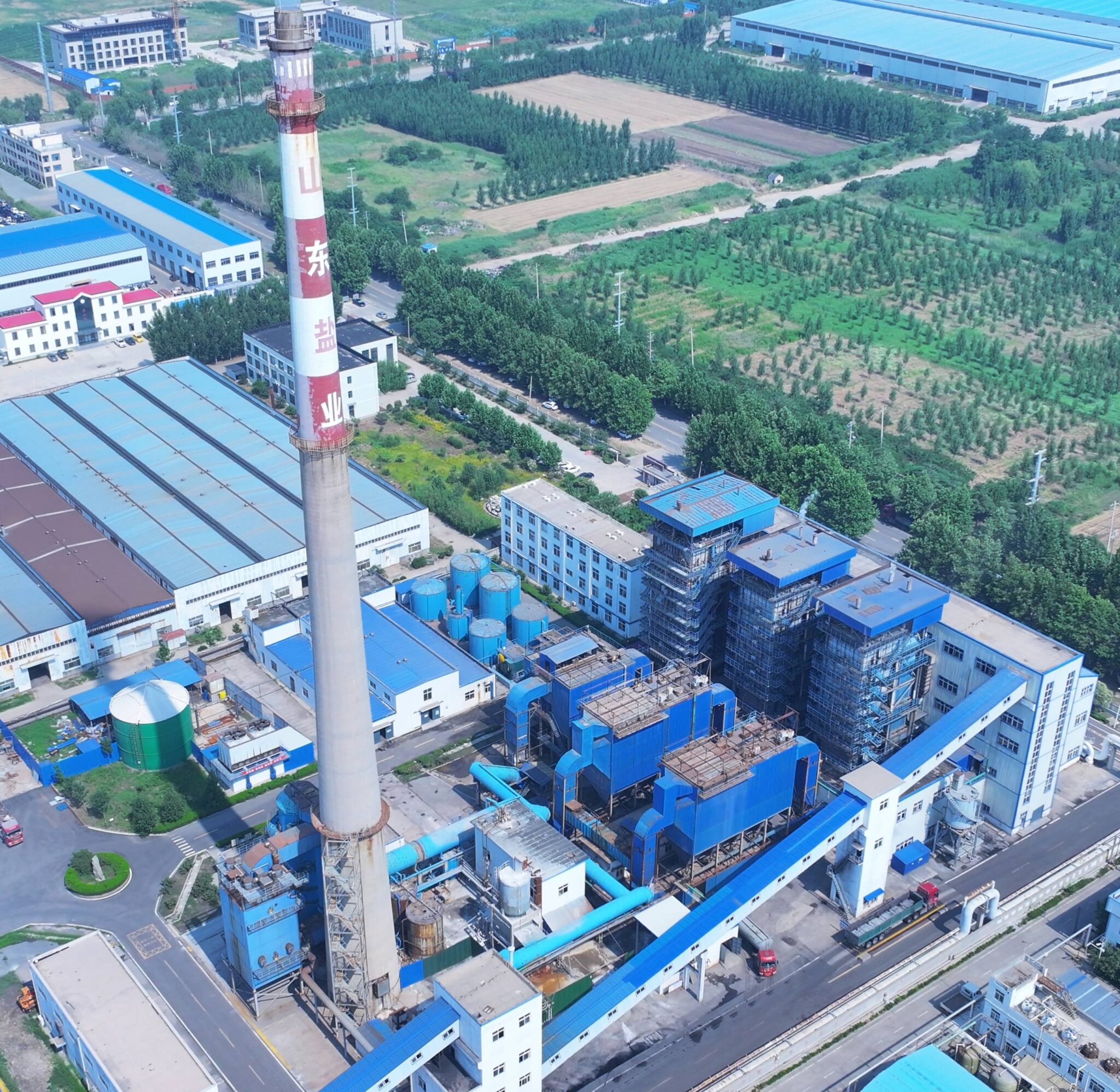
Selecting the right industrial boiler is not simply about choosing the largest capacity or the lowest purchase price. One of the most important decisions is choosing the correct output medium—steam, hot water, or thermal oil. The output medium directly affects temperature capability, pressure requirements, energy efficiency, process stability, operational safety, maintenance complexity, and long-term operating costs. Choosing the wrong output medium can lead to excessive fuel consumption, unstable production conditions, higher maintenance expenses, or even safety risks in industrial operations.
When choosing an industrial boiler by output medium, businesses should evaluate process temperature requirements, operating pressure, heat transfer efficiency, safety considerations, maintenance complexity, fuel consumption, process stability, environmental compliance, and long-term operational costs. Steam, hot water, and thermal oil systems each offer different advantages depending on industrial application requirements.
Understanding how different output media perform helps industries select the most efficient and reliable thermal energy solution for their operations 🔥⚙️
Steam, hot water, and thermal oil boilers mainly differ only in fuel type and have similar operational characteristics.False
The output medium fundamentally changes boiler pressure, temperature capability, efficiency, safety requirements, maintenance needs, and industrial suitability.
🔥 Why Output Medium Selection Matters
The output medium determines how thermal energy is transferred throughout the industrial process.
📌 Common industrial boiler output media:
- Steam 🌫
- Hot water 💧
- Thermal oil 🛢️
📊 Output medium overview
| Output Medium | Main Characteristic |
|---|---|
| Steam | High-energy heat transfer |
| Hot water | Stable moderate-temperature heating |
| Thermal oil | High-temperature low-pressure heating |
👉 The output medium affects nearly every aspect of boiler operation.
🌡 Consider Process Temperature Requirements
Temperature demand is one of the first selection criteria.
📌 Typical temperature capabilities:
| Boiler Type | Typical Temperature Range |
|---|---|
| Hot water boiler | Moderate |
| Steam boiler | High |
| Thermal oil boiler | Very High |
✔ General guidelines:
- Moderate-temperature heating → Hot water
- High-energy industrial processes → Steam
- Very high-temperature stable heating → Thermal oil
👉 The required operating temperature strongly influences boiler choice.
⚙️ Evaluate Operating Pressure Requirements
Pressure is a major operational and safety consideration.
📌 Steam systems:
Steam generation requires increasing pressure as temperature rises.
📌 Thermal oil systems:
Thermal oils can reach temperatures above:
300^\circ C
while maintaining relatively low pressure.
📊 Pressure comparison
| Boiler Type | Typical Pressure Requirement |
|---|---|
| Hot water boiler | Low |
| Thermal oil boiler | Low |
| Steam boiler | Medium–Very High |
👉 Lower-pressure systems generally reduce mechanical stress and safety risks.
🔥 Analyze Heat Transfer Efficiency
Different output media transfer heat differently.
📌 Steam advantages:
- Rapid energy transfer
- Excellent latent heat capacity
- Effective for sterilization and turbine systems
📌 Hot water advantages:
- Stable circulation
- Lower heat losses
- Excellent for continuous heating
📌 Thermal oil advantages:
- Uniform high-temperature transfer
- Stable thermal conditions
- Low-pressure operation
📊 Heat transfer characteristics
| Output Medium | Heat Transfer Behavior |
|---|---|
| Steam | Fast and high-energy |
| Hot water | Stable and efficient |
| Thermal oil | Uniform high-temperature |
👉 Heat transfer characteristics must match process requirements.
💧 Consider Process Stability and Temperature Control
Some industries require highly stable temperatures.
📌 Hot water systems:
Provide smooth moderate-temperature control.
📌 Thermal oil systems:
Offer extremely stable high-temperature heating.
📌 Steam systems:
Can fluctuate more due to pressure and condensate behavior.
📊 Temperature stability comparison
| Boiler Type | Temperature Stability |
|---|---|
| Steam boiler | Moderate |
| Hot water boiler | High |
| Thermal oil boiler | Very High |
👉 Precise process industries often prefer thermal oil or hot water systems.
⚡ Evaluate Energy Efficiency
Efficiency strongly affects long-term operating cost.
📊 Typical efficiency comparison
| Boiler Type | Typical Efficiency |
|---|---|
| Steam boiler | Moderate–High |
| Hot water boiler | High |
| Thermal oil boiler | High |
📌 Why hot water systems are efficient:
- Lower pressure losses
- Reduced phase-change losses
- Easier heat recovery integration
👉 Lifecycle fuel cost often matters more than initial boiler price.
🌫 Consider Maintenance Requirements
Maintenance complexity varies significantly.
📌 Steam boilers require:
- Water treatment systems
- Blowdown management
- Condensate recovery
- High-pressure inspections
📌 Thermal oil boilers require:
- Thermal oil quality monitoring
- Leak prevention
- Temperature management
📌 Hot water boilers generally require:
- Simpler maintenance routines
- Lower operational stress
📊 Maintenance complexity overview
| Boiler Type | Maintenance Complexity |
|---|---|
| Hot water boiler | Low |
| Thermal oil boiler | Moderate |
| Steam boiler | High |
👉 Maintenance requirements directly affect operational cost and downtime.
🔍 Evaluate Safety Considerations
Different output media create different operational risks.
📊 Safety comparison
| Boiler Type | Primary Safety Concern |
|---|---|
| Steam boiler | High-pressure explosion risk |
| Hot water boiler | Overheating |
| Thermal oil boiler | Oil overheating/fire risk |
📌 Steam systems:
Require the strictest pressure safety management.
📌 Thermal oil systems:
Require careful temperature and leak control.
👉 Safety requirements should align with facility capabilities and regulations.
🏭 Match Boiler Type to Industrial Application
Different industries prioritize different thermal characteristics.
📊 Application comparison
| Application | Recommended Output Medium |
|---|---|
| Power generation | Steam |
| Building heating | Hot water |
| Asphalt production | Thermal oil |
| Sterilization | Steam |
| Chemical reactors | Thermal oil |
👉 Boiler selection should always match actual process requirements.
🌍 Consider Environmental and Emission Requirements
Environmental compliance increasingly influences boiler selection.
📌 Factors include:
- Fuel efficiency
- Carbon emissions
- NOx emissions
- Heat recovery capability
📊 Environmental performance overview
| Boiler Type | Emission Optimization Potential |
|---|---|
| Steam boiler | Moderate–High |
| Hot water boiler | High |
| Thermal oil boiler | Moderate–High |
👉 High-efficiency systems reduce both emissions and fuel costs.
🧠 Assess System Scalability and Flexibility
Future expansion may affect boiler selection.
📌 Steam systems:
Scale well for large industrial operations.
📌 Hot water systems:
Flexible for distributed heating networks.
📌 Thermal oil systems:
Excellent for specialized process heating.
📊 Scalability comparison
| Boiler Type | Expansion Flexibility |
|---|---|
| Steam boiler | High |
| Hot water boiler | High |
| Thermal oil boiler | Moderate |
👉 Long-term operational planning is critical.
🚚 Evaluate Installation and Infrastructure Requirements
Infrastructure needs vary greatly.
📌 Steam systems require:
- Condensate return systems
- High-pressure piping
- Water treatment facilities
📌 Thermal oil systems require:
- Specialized insulated piping
- Expansion tanks
- Thermal fluid management systems
📌 Hot water systems require:
- Circulation pumps
- Closed-loop piping systems
👉 Infrastructure complexity affects total project cost.
🏭 Real-World Case Study: Choosing the Correct Output Medium
A manufacturing company needed:
- Stable high-temperature heating
- Improved process consistency
- Lower pressure-related safety concerns
Evaluated options:
- Steam boiler
- Hot water boiler
- Thermal oil boiler
Final selection:
Thermal oil boiler chosen because:
- High temperatures were required
- Stable thermal control improved product quality
- Low-pressure operation reduced operational risk
Results:
- ✔ Improved production consistency
- ✔ Reduced maintenance requirements
- ✔ Lower long-term operating costs
⚠️ Common Mistakes When Selecting Boiler Output Medium
- ❌ Choosing steam for low-temperature applications
- ❌ Ignoring maintenance complexity
- ❌ Underestimating safety requirements
- ❌ Focusing only on initial equipment cost
- ❌ Neglecting future expansion needs
👉 Proper boiler selection requires evaluating total lifecycle performance.
💰 Economic Comparison by Output Medium
📊 Lifecycle cost comparison
| Factor | Steam | Hot Water | Thermal Oil |
|---|---|---|---|
| Initial cost | High | Moderate | Moderate |
| Maintenance cost | High | Low | Moderate |
| Operating pressure cost | High | Low | Low |
| Fuel efficiency | Moderate–High | High | High |
👉 The most economical system depends on operational requirements—not just purchase price.
🚀 Future Trends in Industrial Boiler Output Systems
- Hydrogen-ready steam boilers
- Ultra-efficient condensing hot water systems
- Smart thermal oil circulation technology
- AI-driven thermal optimization
- Hybrid renewable heating systems
👉 Future industrial heating systems will become more efficient, intelligent, and environmentally sustainable
📌 Summary
Choosing an industrial boiler by output medium requires careful evaluation of temperature requirements, operating pressure, heat transfer characteristics, efficiency, maintenance complexity, safety risks, environmental goals, and long-term operational costs.
✔ Steam boilers excel in high-energy industrial applications
✔ Hot water boilers provide stable and efficient moderate-temperature heating
✔ Thermal oil boilers deliver high-temperature heat under low pressure
✔ Each output medium has unique operational advantages
✔ Proper selection improves efficiency, safety, and process reliability
Ultimately, the best industrial boiler is not determined by capacity alone, but by how effectively the output medium supports the specific thermal and operational needs of the industrial process 🔥🏭
Conclusion
Industrial boilers are classified by output medium based on the type of heat energy they deliver—steam, hot water, or thermal oil. Each type offers unique advantages depending on temperature requirements, pressure conditions, and industrial applications. Understanding these differences helps businesses select the most efficient, safe, and cost-effective boiler system for their operations.
If you need help selecting the right industrial boiler for your application, contact us today. Our experts provide customized steam, hot water, and thermal oil boiler solutions designed to maximize efficiency, reliability, and long-term performance.
FAQ
Q1: How are industrial boilers classified based on output medium?
A1:
Industrial boilers are commonly classified according to the type of heat transfer medium they produce and circulate. The three primary categories are steam boilers, hot water boilers, and thermal oil boilers. Each type is designed for specific industrial applications and operating requirements.
Steam boilers generate steam by heating water under pressure. The produced steam is then used for power generation, industrial processing, sterilization, heating, and mechanical drive systems. Steam boilers are among the most widely used industrial boiler types because steam can efficiently transfer large amounts of energy.
Hot water boilers heat water to a controlled temperature without converting it into steam. These systems are mainly used for space heating, district heating, and industrial processes requiring moderate-temperature water circulation. Hot water boilers generally operate at lower pressures compared to steam boilers.
Thermal oil boilers, also known as thermal fluid heaters, use specialized heat transfer oil instead of water. These systems can achieve very high temperatures without operating under high pressure. Thermal oil boilers are widely used in industries such as chemical processing, textile manufacturing, asphalt production, and food processing.
The classification by output medium helps industries select the most suitable boiler system based on temperature requirements, pressure conditions, safety considerations, and process efficiency.
Q2: What are the main characteristics of steam boilers?
A2:
Steam boilers are designed to convert water into steam through the application of heat generated by fuel combustion or electricity. These boilers are widely used because steam is an efficient energy carrier capable of transferring large amounts of thermal energy over long distances.
One of the main characteristics of steam boilers is their ability to operate under pressure. Higher pressure allows the production of higher-temperature steam, making steam boilers suitable for demanding industrial applications such as power generation, petrochemical processing, and manufacturing.
Steam boilers are generally classified into fire-tube and water-tube designs. Fire-tube boilers are commonly used in smaller industrial facilities, while water-tube boilers are preferred for large-scale and high-pressure applications.
Another important feature is rapid heat transfer. Steam can quickly distribute energy throughout industrial systems, improving process efficiency and productivity.
However, steam systems require careful maintenance and water treatment to prevent scaling, corrosion, and pressure-related safety issues. Safety devices such as pressure relief valves and low-water cutoffs are essential components of steam boiler systems.
In summary, steam boilers are characterized by high heat transfer capability, pressurized operation, versatility, and widespread industrial use.
Q3: How do hot water boilers differ from steam boilers?
A3:
Hot water boilers differ from steam boilers primarily in the type of output they produce and their operating conditions. Instead of generating steam, hot water boilers heat water to a specific temperature and circulate it through a closed-loop system.
One major difference is operating pressure. Hot water boilers generally operate at much lower pressures than steam boilers, making them simpler and often safer to manage. Because the water does not undergo phase change into steam, the system experiences less pressure-related stress.
Hot water boilers are commonly used for building heating, district heating systems, and industrial processes requiring moderate-temperature heat. They are especially popular in commercial facilities, hospitals, schools, and residential complexes.
These boilers are also more energy-efficient for applications where steam is not necessary. Since there is no steam generation process, energy losses related to steam condensation and flash steam are minimized.
Maintenance requirements are typically lower than steam systems because hot water systems experience fewer scaling and pressure-related issues. However, water quality management is still important to prevent corrosion and maintain heat transfer efficiency.
In summary, hot water boilers provide lower-pressure heating solutions with simpler operation, making them ideal for heating applications rather than high-energy industrial processes.
Q4: What are the advantages of thermal oil boilers?
A4:
Thermal oil boilers offer several important advantages, particularly for industries requiring very high temperatures without the risks associated with high-pressure steam systems. Instead of water or steam, these systems circulate thermal oil as the heat transfer medium.
One of the main advantages is the ability to achieve temperatures above 300°C (572°F) while operating at relatively low pressure. This improves safety and reduces the need for heavy pressure-resistant equipment.
Thermal oil systems also provide highly stable and uniform heating. The circulating oil maintains consistent temperatures throughout the process, which is critical for industries such as chemical manufacturing, food processing, textiles, and plastics production.
Another benefit is reduced corrosion risk. Unlike water-based systems, thermal oil systems do not experience issues such as scaling, oxygen corrosion, or freezing, reducing maintenance requirements.
Thermal oil boilers also offer high thermal efficiency because the heat transfer fluid retains heat effectively and minimizes energy loss.
Additionally, these systems often have lower operating and maintenance costs in high-temperature applications compared to steam systems.
However, thermal oil systems require careful monitoring of oil quality and circulation to prevent degradation and overheating.
In conclusion, thermal oil boilers provide safe, efficient, and stable high-temperature heating for specialized industrial processes.
Q5: How do industries choose between steam, hot water, and thermal oil boilers?
A5:
Industries choose between steam, hot water, and thermal oil boilers based on process requirements, operating temperature, pressure conditions, efficiency goals, and safety considerations.
Steam boilers are selected when high-energy transfer and pressurized steam are needed. Industries such as power generation, chemical processing, pharmaceuticals, and food sterilization rely heavily on steam systems because steam delivers large amounts of heat quickly and efficiently.
Hot water boilers are preferred for lower-temperature heating applications where steam is unnecessary. These systems are commonly used in commercial buildings, district heating, and industrial heating processes that require stable hot water circulation rather than pressurized steam.
Thermal oil boilers are chosen for processes requiring extremely high temperatures with low operating pressure. Industries such as asphalt production, textile manufacturing, plastics processing, and specialty chemical production often use thermal oil systems because of their precise temperature control and improved safety.
Fuel availability, environmental regulations, maintenance requirements, and installation costs also influence boiler selection. For example, some facilities prioritize energy efficiency and low emissions, while others focus on process flexibility or reduced maintenance.
In summary, boiler selection depends on balancing process temperature needs, safety, efficiency, operational costs, and industry-specific requirements.
References
- Industrial Boiler Fundamentals – https://www.energy.gov/eere/amo/steam-systems – U.S. Department of Energy
- Steam Boiler Systems – https://www.spiraxsarco.com – Spirax Sarco
- Thermal Fluid Heating Technology – https://www.engineeringtoolbox.com – Engineering Toolbox
- Boiler Classification and Design – https://www.asme.org – ASME
- Industrial Heating Applications – https://www.tlv.com – TLV International
- Thermal Oil System Efficiency – https://www.sciencedirect.com – ScienceDirect
- Hot Water Boiler Technology – https://www.ashrae.org – ASHRAE
- Industrial Energy Systems – https://www.iea.org – International Energy Agency
- Boiler Safety Standards – https://www.osha.gov – OSHA
- Advanced Industrial Boiler Systems – https://www.ge.com/power – General Electric
Industrial Boiler Classification by Output Medium Read More »