
IoT, AI & Predictive Maintenance for Boiler Management
Industrial boiler management has traditionally depended on manual inspections, fixed maintenance schedules, and operator experience. This often leads to hidden efficiency losses, unexpected shutdowns, safety risks, excess fuel consumption, and higher maintenance costs. By integrating IoT sensors, AI analytics, and predictive maintenance strategies, boiler operators can move from reactive control to intelligent, data-driven management.
IoT, AI, and predictive maintenance are transforming industrial boiler management by enabling real-time monitoring, early fault detection, optimized combustion control, reduced downtime, improved safety compliance, and lower operating costs. Together, these technologies help boiler systems operate more efficiently, reliably, and safely throughout their service life.
To understand the real value of this transformation, it is important to look beyond technology buzzwords and focus on how these tools solve practical boiler operation problems in factories, power plants, food processing facilities, chemical plants, hospitals, and other steam-intensive industries.
How Do IoT, AI, and Predictive Maintenance Improve Real-Time Industrial Boiler Management?
Industrial boiler management becomes risky and expensive when operators depend only on manual rounds, delayed alarms, paper logs, and fixed maintenance schedules. A small change in oxygen level, feedwater quality, vibration, burner response, stack temperature, or pressure stability can quietly become wasted fuel, tube damage, poor steam quality, nuisance shutdowns, or a serious safety event. The practical solution is not simply “adding more sensors”; it is building a connected boiler management architecture where IoT captures trustworthy real-time data, AI converts that data into operational intelligence, and predictive maintenance turns early warning signs into planned corrective action before production is interrupted.
IoT, AI, and predictive maintenance improve real-time industrial boiler management by continuously measuring boiler operating conditions, analyzing patterns that humans may miss, detecting abnormal behavior early, and recommending maintenance or operating adjustments before failures occur. IoT provides live data from pressure, temperature, flow, vibration, water chemistry, oxygen, fuel, steam, and emissions sensors; AI identifies efficiency losses, safety risks, fouling, combustion drift, and component degradation; predictive maintenance helps plants repair burners, pumps, valves, traps, tubes, controls, and auxiliaries at the right time instead of too early or too late.
For plant managers, energy engineers, maintenance supervisors, and procurement teams, the real value is measurable: fewer unplanned shutdowns, better combustion efficiency, safer operation, cleaner compliance documentation, lower fuel consumption, and more reliable steam delivery. As a boiler manufacturer and industrial thermal-system supplier, we see the strongest results when digital monitoring is designed together with boiler hardware, combustion controls, water treatment, safety interlocks, and maintenance workflows—not treated as a separate software project after commissioning.
IoT sensors alone guarantee safe and efficient industrial boiler operation.False
IoT sensors provide data, but safe and efficient boiler operation also requires correct sensor selection, calibration, control logic, operator response, water treatment, combustion tuning, inspection, cybersecurity, and compliance with applicable boiler and pressure vessel requirements.
Predictive maintenance can reduce unplanned boiler downtime when it is based on reliable sensor data and linked to maintenance action.True
Predictive maintenance uses real operating data to detect degradation early, allowing teams to schedule corrective work before failures interrupt steam production.
Why Real-Time Boiler Management Matters More Than Traditional Boiler Monitoring
Traditional boiler operation is often built around three layers: basic instrumentation, operator experience, and scheduled maintenance. This approach can work for stable loads and simple plants, but it struggles in modern factories where steam demand changes quickly, fuel prices fluctuate, environmental requirements are stricter, and production losses from downtime are high. A boiler is not an isolated machine; it is a dynamic energy conversion system connected to fuel supply, combustion air, feedwater, condensate return, deaeration, blowdown, steam distribution, pressure reduction, heat recovery, and process users. When one part drifts, the whole system can lose efficiency. For example, excessive combustion air raises stack losses, poor feedwater control increases thermal stress, failing steam traps increase makeup water and fuel demand, and unstable burner modulation can cause pressure swings that reduce process quality.
Authoritative energy guidance emphasizes combustion optimization, blowdown control, heat recovery, short-cycling reduction, and steam-system performance as major opportunities in boiler and steam systems. The U.S. Department of Energy’s steam-system resources specifically highlight measures such as improving boiler combustion efficiency, minimizing blowdown, reducing short-cycling losses, and recovering heat from boiler flue gas or blowdown streams. In practical terms, IoT and AI make these improvement areas visible every minute instead of only during annual audits or occasional tune-ups.
A real-time boiler management platform normally monitors four operating layers. The first layer is safety and integrity, including steam pressure, water level, flame status, furnace pressure, safety interlocks, low-water cutoff status, valve position, abnormal vibration, refractory temperature, and alarm history. The second layer is combustion and efficiency, including oxygen, carbon monoxide where applicable, fuel flow, air flow, stack temperature, burner position, fan speed, excess air, and load profile. The third layer is water and steam quality, including feedwater temperature, conductivity, pH, dissolved oxygen where available, hardness leakage, chemical dosing, blowdown rate, condensate return temperature, and steam dryness indicators. The fourth layer is asset health, including pump vibration, motor current, valve travel time, actuator response, tube skin temperature, economizer differential temperature, steam trap performance, and cycling frequency. When these layers are connected, the plant moves from “the boiler is running” to “the boiler is running safely, efficiently, and predictably.”
| Boiler Management Area | Traditional Approach | IoT + AI + Predictive Maintenance Approach | Practical Benefit |
|---|---|---|---|
| Combustion efficiency | Periodic flue gas test and manual adjustment | Continuous oxygen, stack temperature, fuel-air trend, burner response analysis | Lower fuel waste and faster detection of combustion drift |
| Water treatment | Manual sampling and periodic lab testing | Online conductivity, pH, temperature, blowdown, dosing, and condensate return monitoring | Reduced scaling, corrosion risk, and unnecessary blowdown |
| Safety monitoring | Local alarms and operator rounds | Real-time alarm analytics, event sequence review, remote dashboard, escalation workflow | Faster response and better incident investigation |
| Maintenance | Calendar-based service or repair after failure | Condition-based alerts for pumps, valves, burners, traps, and heat-transfer surfaces | Fewer emergency repairs and better spare-parts planning |
| Compliance records | Paper logs and scattered inspection files | Timestamped digital records, trend reports, maintenance history, inspection support | Easier audits and stronger accountability |
| Energy management | Monthly fuel bill review | Live fuel-to-steam ratio, load profile, blowdown loss, economizer performance | More precise energy-saving decisions |
How IoT Improves Real-Time Industrial Boiler Visibility
IoT improves boiler management by converting mechanical and thermal behavior into continuous, structured data. In a modern boiler room, the IoT layer may include wired industrial transmitters, wireless condition-monitoring sensors, smart meters, vibration sensors, smart valve positioners, analyzers, edge gateways, PLC/SCADA connections, historian integration, and secure cloud or on-premises dashboards. The most important design principle is that boiler IoT must be industrial-grade. A low-cost sensor that cannot tolerate heat, humidity, vibration, electromagnetic interference, or maintenance washdown may create false confidence. For pressure, temperature, water level, fuel flow, and combustion signals, the data chain must be accurate, calibrated, time-synchronized, and appropriate for the safety classification of the signal.
In our boiler projects, we usually divide sensor points into “control-critical,” “monitoring-critical,” and “diagnostic.” Control-critical signals are used by the boiler control system and safety logic. These must follow strict engineering, redundancy, and validation practices. Monitoring-critical signals support operator decisions, efficiency tracking, and maintenance planning. Diagnostic signals are used to detect degradation patterns, such as pump bearing wear, actuator hesitation, fan imbalance, economizer fouling, or trap failure. This classification prevents a common mistake: connecting everything to a dashboard without defining which measurements are allowed to influence control, which are advisory, and which require human verification.
The strongest IoT boiler systems also include edge processing. Edge gateways can clean data, detect impossible values, buffer information during network outages, and trigger local alerts even when cloud communication is unavailable. This matters because industrial boiler rooms cannot rely entirely on remote connectivity. The boiler must remain safe and controllable locally. IoT should enhance the existing burner management system, combustion control system, and plant automation architecture; it should never bypass certified safety functions.
Cybersecurity is another essential part of IoT boiler management. Once a boiler system is connected to plant networks or remote dashboards, it becomes part of the operational technology environment. The ISA/IEC 62443 series is widely used for cybersecurity requirements and processes in industrial automation and control systems, including the need to bridge operations, information technology, process safety, and cybersecurity. For boiler owners, this means secure network segmentation, role-based access, strong authentication, patch management, encrypted communications where appropriate, audit logs, vendor access controls, and a clear rule that remote monitoring does not equal uncontrolled remote operation.
| IoT Data Point | What It Reveals | Early Warning Pattern | Recommended Action |
|---|---|---|---|
| Stack temperature | Heat-transfer condition and combustion loss | Gradual increase at same load | Inspect soot, scale, economizer fouling, or excess air |
| Flue gas oxygen | Combustion air balance | O₂ drifting upward or unstable | Check burner linkage, actuator, fan, damper, oxygen sensor calibration |
| Feedwater conductivity | Dissolved solids and blowdown need | Rising conductivity or frequent blowdown | Review water treatment, condensate contamination, blowdown control |
| Pump vibration | Bearing, alignment, cavitation, imbalance | Increasing vibration amplitude | Schedule inspection before pump failure |
| Burner motor current | Load and mechanical condition | Current increase without load change | Inspect fan, damper, bearings, filters, or motor condition |
| Steam pressure fluctuation | Load matching and control stability | Overshoot, undershoot, hunting | Tune PID, inspect burner modulation, review steam demand profile |
| Condensate return temperature | Heat recovery and trap health | Falling return temperature | Check failed traps, leaks, or condensate system losses |
| Blowdown flow | Water quality and heat loss | Excessive blowdown at stable water quality | Optimize automatic blowdown setpoint and water treatment |
How AI Converts Boiler Data Into Operational Intelligence
AI improves industrial boiler management by identifying patterns, correlations, and abnormal operating signatures that are difficult for operators to detect from raw trends alone. In a boiler room, many variables change at the same time: steam load, ambient air temperature, fuel pressure, feedwater temperature, burner firing rate, oxygen trim, fan speed, blowdown, and condensate return. A human can interpret a few trends, but AI can compare hundreds of operating states and ask, “At this load and feedwater temperature, should this boiler consume this much fuel, produce this stack temperature, or show this vibration signature?” That shift—from fixed alarm limits to context-aware analysis—is the foundation of intelligent boiler management.
AI methods used in boiler applications can range from simple regression models to anomaly detection, classification, remaining useful life models, and digital twins. A regression model may estimate expected fuel consumption at a given steam output and feedwater temperature. If actual fuel use rises above the expected line, the system can flag efficiency loss. An anomaly detection model can learn normal burner startup behavior and detect delayed ignition sequence timing, unstable fan response, or unusual pressure recovery. A classification model can distinguish likely causes: fouling, excess air drift, pump cavitation, sensor fault, steam leak, or condensate loss. A digital twin can simulate boiler performance under different loads and compare the physical boiler against an expected thermodynamic baseline.
NIST describes predictive maintenance as a manufacturing AI use case where sensor data is analyzed to predict equipment failures before they happen, reducing downtime. (NIST) Deloitte similarly frames predictive maintenance as a way to maximize useful asset life while avoiding unplanned downtime and minimizing planned downtime, supported by IoT data and real-time operational insight. (Deloitte) These statements align with what we see in boiler plants: AI is most valuable when it is connected to maintenance decisions, not just displayed as another graph.
A practical AI boiler model should answer operational questions in plain language. Is the boiler using more fuel than expected? Is stack temperature rising because of fouling, excess air, or load mix? Is a feedwater pump likely to fail soon? Is oxygen trim control stable across low-fire and high-fire operation? Is blowdown excessive compared with water chemistry? Is condensate return declining because of steam trap failure? Is the safety valve lifting because of pressure-control instability or downstream demand changes? Is the system short cycling because boiler capacity is oversized for current process demand? When AI produces answers that match maintenance workflows, it becomes a useful tool rather than a black box.
Predictive Maintenance: From Scheduled Service to Failure Prevention
Predictive maintenance changes boiler maintenance from “service it because the calendar says so” or “repair it because it failed” to “service it because operating evidence shows degradation.” This distinction is crucial in boiler systems because some failures develop slowly before becoming expensive. Scale buildup gradually increases tube metal temperature and fuel consumption. Burner linkages wear and cause oxygen drift. Feedwater pump bearings deteriorate before seizure. Control valves respond more slowly before they stick. Steam traps leak before the condensate balance becomes obvious. Economizers foul before stack temperature rises dramatically. Safety devices may pass routine visual checks but still show event patterns that deserve investigation.
Predictive maintenance works best when it combines three forms of evidence. The first is condition data, such as vibration, motor current, actuator travel time, pressure drop, oxygen drift, and temperature difference. The second is process context, such as load, steam pressure, fuel type, feedwater temperature, ambient conditions, and operating hours. The third is maintenance history, including previous failures, spare-part changes, inspection results, water-treatment events, and operator notes. AI models need all three because a vibration increase during high load may be normal, while the same vibration increase at constant load may indicate bearing wear or cavitation.
Industrial research and consulting sources consistently describe predictive maintenance as a major Industry 4.0 application because it uses sensor data and analytics to reduce downtime and improve asset planning. However, it is important to avoid inflated expectations. McKinsey has warned that predictive maintenance can produce false positives or false negatives when failures are not predictable, data quality is poor, or the cost of intervention is not properly considered. This warning is highly relevant for boiler owners. A predictive maintenance alert should not automatically stop a boiler unless it is linked to a validated safety function. Instead, alerts should be prioritized by risk, confidence, production impact, and recommended verification steps.
A useful predictive maintenance workflow for boilers usually looks like this: detect abnormal pattern, classify probable cause, assign severity, generate work order, recommend inspection method, verify in the field, record result, and retrain or refine the model. For example, if stack temperature increases 18°C at the same firing rate and feedwater temperature while oxygen remains normal, the system may suggest heat-transfer fouling rather than combustion air drift. The maintenance team can inspect soot accumulation, water-side scaling indicators, economizer performance, and blowdown history. If the inspection confirms fouling, the corrective action and timestamp are fed back into the system. Over time, the model becomes more specific to that plant.
| Boiler Asset or Subsystem | Failure Mode | Predictive Signal | AI/PdM Method | Field Verification |
|---|---|---|---|---|
| Burner and combustion train | Air-fuel ratio drift, actuator wear, unstable flame | O₂ trend, CO trend where available, damper position, flame signal, fuel pressure | Anomaly detection and combustion-efficiency model | Combustion test, actuator inspection, linkage check, sensor calibration |
| Feedwater pump | Bearing wear, cavitation, seal failure | Vibration, motor current, suction pressure, discharge pressure, temperature | Vibration classification and trend forecasting | Vibration route, bearing inspection, NPSH review, seal inspection |
| Boiler tubes | Scale, corrosion, overheating, fouling | Stack temperature, tube skin temperature, blowdown trend, water chemistry | Performance deviation model | Water-side inspection, borescope, thickness testing, water treatment audit |
| Economizer | Fouling, leakage, reduced heat recovery | Flue gas inlet/outlet temperature, feedwater temperature rise, pressure drop | Heat-transfer efficiency model | Visual inspection, cleaning, leak test |
| Steam traps | Failed open or failed closed | Condensate temperature, ultrasonic signal, return-line imbalance | Classification model | Trap survey and replacement planning |
| Control valves | Stiction, slow response, leakage | Valve command versus position, travel time, pressure response | Valve signature analytics | Stroke test, positioner diagnostics, seat inspection |
| Safety and relief devices | Frequent lifting, leakage, poor reseating | Event count, acoustic/temperature signal, pressure excursion | Event analytics | Authorized inspection and testing according to local code requirements |
Real-Time Boiler Efficiency: Where the Savings Actually Come From
The financial value of smart boiler management usually comes from fuel reduction, avoided downtime, lower maintenance cost, longer equipment life, and better production stability. Fuel savings are often the easiest to measure because boilers consume large amounts of energy, and even a small efficiency improvement can become significant over a year. The efficiency equation is not mysterious: fuel energy enters the boiler, useful steam or hot water leaves the boiler, and losses escape through stack heat, radiation, blowdown, cycling, leaks, poor condensate return, and inefficient distribution. IoT measures these loss pathways more continuously; AI identifies abnormal patterns; predictive maintenance fixes the physical causes.
Combustion optimization is a clear example. Too much excess air sends heated nitrogen and oxygen up the stack, wasting fuel. Too little air can create incomplete combustion and unsafe operation. Oxygen trim systems use flue gas oxygen feedback to adjust combustion air and optimize air-fuel ratio; DOE guidance describes oxygen trim as a feedback method for minimizing excess combustion air and optimizing the air-to-fuel ratio. When IoT and AI are added, the plant can also track how well the oxygen trim system performs over time, whether the oxygen sensor drifts, whether burner response changes at low fire, and whether the same oxygen level produces the expected fuel-to-steam ratio.
Blowdown optimization is another major opportunity. Blowdown is necessary because dissolved solids concentrate as steam is generated, but excessive blowdown wastes hot water, chemicals, and fuel. A smart boiler management system can compare conductivity, makeup water rate, condensate return rate, steam load, and blowdown valve behavior. Instead of relying only on manual blowdown habits, the system can recommend automatic blowdown control tuning and identify contamination events. If condensate conductivity spikes after a process heat exchanger leak, the system can alert operators before the boiler water chemistry becomes dangerous.
Heat recovery is equally important. Economizers and blowdown heat recovery systems can reduce fuel requirements, but their performance deteriorates when surfaces foul or flows change. DOE steam resources highlight feedwater economizers as a way to reduce boiler fuel requirements by transferring heat from flue gas to feedwater. IoT makes the economizer’s real performance visible by tracking flue gas inlet temperature, flue gas outlet temperature, feedwater inlet temperature, feedwater outlet temperature, and pressure drop. AI can then detect whether heat recovery is declining faster than expected.
Example Efficiency Calculation for Management Decisions
| Scenario | Boiler Fuel Cost per Year | Efficiency Improvement | Estimated Annual Fuel Saving | Notes |
|---|---|---|---|---|
| Small process boiler | $300,000 | 2% | $6,000 | Often achieved through combustion tuning, leak reduction, or blowdown improvement |
| Medium industrial boiler | $1,200,000 | 3% | $36,000 | IoT-based fuel-to-steam monitoring can justify control upgrades |
| Large steam plant | $5,000,000 | 4% | $200,000 | Savings may come from oxygen trim, economizer recovery, condensate return, and maintenance optimization |
| Multi-boiler plant | $10,000,000 | 5% | $500,000 | AI can optimize boiler sequencing and load allocation |
This table is a simplified management calculation, not a guaranteed result. Actual savings depend on fuel price, boiler size, load factor, baseline efficiency, maintenance condition, steam-system losses, water treatment, and operator practices. However, the logic is reliable: when a boiler has high annual fuel consumption, modest efficiency improvements can produce large financial returns. That is why we recommend starting every smart boiler project with baseline measurement: fuel flow, steam flow, feedwater temperature, stack temperature, oxygen, blowdown, makeup water, condensate return, and operating hours.
Safety, Compliance, and Human Decision-Making
IoT, AI, and predictive maintenance should support boiler safety, not replace engineered safety systems or qualified personnel. Industrial boilers are pressure equipment, and their design, construction, inspection, repair, and operation must follow applicable codes, standards, jurisdictional rules, and manufacturer requirements. ASME describes its Boiler and Pressure Vessel Code as a major technical resource for the design, manufacturing, and operation of boilers and pressure vessels. OSHA’s pressure-vessel safety guidance also emphasizes the importance of inspection information, operating records, and safe management practices for pressure vessels and tanks.
This matters because digital boiler management can create a false sense of security if a plant assumes that dashboards equal compliance. They do not. A dashboard can help maintain records, detect abnormal events, and support inspection planning, but it does not replace authorized inspection, safety valve testing, low-water cutoff testing, burner management verification, water-treatment discipline, operator training, lockout/tagout, confined-space procedures, or jurisdictional requirements. The correct relationship is simple: certified safety systems protect the boiler in real time; operators run the plant; maintenance teams preserve asset condition; IoT and AI improve visibility and decision quality.
A reliable smart boiler system should include alarm rationalization. Many boiler plants suffer from either alarm scarcity or alarm overload. Alarm scarcity means dangerous or costly conditions are not detected early. Alarm overload means operators receive too many low-value alerts and begin ignoring them. AI can help by ranking alerts according to severity, confidence, persistence, and operating context. For instance, a brief oxygen spike during a controlled load transition is different from a persistent oxygen increase at steady load. A pressure fluctuation during process startup is different from repeated pressure hunting during normal production. Good alarm design helps operators focus on the few issues that require action.
Human-centered design is especially important. Boiler operators should not be forced to interpret complex AI scores without context. A practical alert should say: “Stack temperature is 22°C higher than expected at this load for 4 hours; oxygen is normal; probable heat-transfer fouling; inspect fireside surfaces and economizer during next maintenance window.” That message is much more useful than “Anomaly score 0.86.” The goal is not to impress the plant with AI language; the goal is to help people make safer, faster, better decisions.
Recommended Smart Boiler Architecture for Industrial Plants
A robust smart boiler management system should be designed in layers. The bottom layer is the physical boiler and auxiliaries: pressure vessel, burner, fan, feedwater system, valves, economizer, deaerator, blowdown, condensate return, and steam distribution. The second layer is instrumentation: pressure, temperature, level, flow, oxygen, conductivity, vibration, current, valve position, and emissions data where required. The third layer is control: burner management system, PLC, combustion control, oxygen trim, feedwater control, blowdown control, and safety interlocks. The fourth layer is connectivity: industrial protocols, edge gateway, historian, SCADA, secure network segmentation, and data buffering. The fifth layer is analytics: dashboards, baseline models, AI anomaly detection, predictive maintenance models, digital twin, and reporting. The sixth layer is action: work orders, spare-parts planning, operator procedures, maintenance scheduling, compliance reports, and management review.
For new boiler projects, this architecture should be specified during procurement. Buyers should ask suppliers for sensor lists, communication protocols, cybersecurity provisions, data ownership rules, calibration requirements, spare-parts strategy, dashboard functions, alarm philosophy, and maintenance integration. For existing boiler rooms, the best approach is phased modernization. Start with the most valuable measurements: fuel, steam, feedwater, oxygen, stack temperature, blowdown, conductivity, pressure, and operating hours. Then add condition monitoring for pumps, fans, motors, valves, steam traps, and economizers. After data quality is stable, deploy AI models and predictive maintenance workflows.
Implementation Roadmap
| Phase | Main Objective | Key Actions | Success Metric |
|---|---|---|---|
| Phase 1: Baseline audit | Understand current boiler performance | Review logs, fuel bills, steam demand, water treatment, failures, alarms, inspection history | Reliable baseline fuel-to-steam ratio and downtime record |
| Phase 2: Sensor upgrade | Capture trustworthy real-time data | Install or validate flow meters, O₂ analyzer, stack temperature, conductivity, vibration, valve position | Data completeness above agreed threshold |
| Phase 3: Connectivity | Move data into usable systems | Connect PLC/SCADA/historian/edge gateway; apply cybersecurity controls | Secure real-time dashboard and timestamped trends |
| Phase 4: Analytics | Detect losses and abnormal behavior | Build efficiency model, alarm rules, anomaly detection, maintenance dashboards | Verified alerts with low nuisance rate |
| Phase 5: Predictive maintenance | Convert alerts into action | Link alerts to work orders, inspections, spares, and root-cause records | Reduced emergency repairs and improved planned maintenance ratio |
| Phase 6: Optimization | Improve efficiency and reliability continuously | Tune combustion, optimize blowdown, improve condensate return, sequence boilers | Documented fuel savings, uptime improvement, and safer operation |
Common Mistakes to Avoid
The first mistake is buying software before defining the boiler problem. A plant should not begin with “we need AI.” It should begin with “we need to reduce fuel waste,” “we need to prevent feedwater pump failures,” “we need better combustion records,” or “we need fewer nuisance shutdowns.” Clear operational questions determine the sensor design, analytics model, and return on investment.
The second mistake is ignoring data quality. AI cannot repair bad instrumentation. A drifting oxygen probe, uncalibrated steam flow meter, noisy pressure transmitter, incorrect fuel meter, or missing maintenance record can mislead the model. Before applying advanced analytics, plants should validate sensor accuracy, sampling frequency, timestamp synchronization, engineering units, naming conventions, and maintenance history.
The third mistake is separating digital monitoring from mechanical expertise. Boiler problems are physical problems. Scale, corrosion, fouling, burner wear, valve stiction, fan imbalance, refractory damage, trap leakage, and poor water treatment cannot be solved by dashboards alone. The best results come when boiler engineers, operators, maintenance technicians, water-treatment specialists, controls engineers, and data analysts work from the same evidence.
The fourth mistake is overlooking cybersecurity. Connected boiler systems must be protected as operational technology. Remote access should be controlled, logged, and limited. Network segmentation should protect control systems from unnecessary exposure. Vendor support should follow approved access procedures. Cybersecurity requirements should be discussed during procurement, not after the system is online.
The fifth mistake is treating predictive maintenance as a replacement for preventive maintenance. Some boiler tasks remain schedule-based because they are required by regulation, safety practice, manufacturer recommendations, or known degradation mechanisms. Predictive maintenance is an additional intelligence layer, not a license to skip inspections.
Practical Buying Checklist for Industrial Boiler Owners
When selecting an IoT-enabled boiler, AI monitoring package, or predictive maintenance service, ask suppliers direct questions. Which boiler variables are monitored continuously? Which sensors are included, and which are optional? Are fuel and steam flow meters accurate enough for efficiency calculation? Does the system support oxygen trim monitoring? Can it monitor blowdown and water chemistry? Does it integrate with existing PLC, SCADA, historian, CMMS, or ERP systems? Is the data stored on-premises, in the cloud, or both? Who owns the data? What happens when the internet connection fails? Are remote access and cybersecurity aligned with industrial control system expectations? Can alerts generate maintenance actions, or are they only dashboard notifications? Does the supplier provide boiler engineering support, or only software support?
From a manufacturer’s perspective, the most dependable solution is a combined package: properly engineered boiler hardware, matched burner and controls, validated instrumentation, commissioning support, operator training, maintenance planning, and digital analytics. A software-only approach may identify symptoms but struggle to solve root causes. A hardware-only approach may deliver a good boiler but leave efficiency and maintenance opportunities hidden. The best value comes from integrating both.
Summary: Smart Boiler Management Is a Practical Reliability Strategy, Not a Technology Fashion
IoT, AI, and predictive maintenance improve real-time industrial boiler management by making the boiler room visible, understandable, and actionable. IoT captures live operating data from the boiler and steam system. AI compares that data against expected performance and detects abnormal behavior. Predictive maintenance converts early warnings into planned inspections, repairs, spare-parts decisions, and efficiency improvements. Together, they help plants reduce fuel waste, avoid unplanned downtime, improve safety awareness, strengthen compliance documentation, and extend equipment life.
The most successful projects are not the ones with the most sensors or the most complicated AI model. They are the projects where the plant defines the business problem, installs reliable instrumentation, protects the control network, validates the data, connects alerts to maintenance workflows, and keeps qualified boiler professionals involved. In real boiler rooms, digital intelligence only creates value when it leads to better combustion tuning, better water treatment, better maintenance timing, better operator response, and better management decisions.
How Do IoT, AI, and Predictive Maintenance Reduce Downtime in Industrial Boiler Management?
Industrial boiler downtime is rarely caused by one sudden event; it is usually the final result of many small warning signs that were missed, ignored, or recorded too late. A feedwater pump vibrates slightly more than usual, a burner actuator responds a little slower, stack temperature rises gradually, boiler water conductivity becomes unstable, a steam trap fails open, or oxygen trim begins to drift. If these symptoms are only discovered during manual inspections or after a shutdown alarm, the plant may face lost production, emergency repair costs, fuel waste, safety risk, and customer delivery delays. The practical solution is to connect industrial boilers to real-time data systems, use AI to interpret operating patterns, and apply predictive maintenance so maintenance teams can act before minor degradation becomes an unplanned outage.
IoT, AI, and predictive maintenance reduce downtime in industrial boiler management by continuously collecting boiler operating data, detecting abnormal patterns early, identifying likely failure causes, and converting those warnings into planned maintenance actions. IoT sensors monitor pressure, temperature, water level, fuel flow, steam flow, oxygen, vibration, motor current, valve position, feedwater quality, blowdown, condensate return, and burner performance in real time. AI compares these signals with normal boiler behavior and flags early signs of fouling, scaling, pump wear, combustion drift, valve sticking, steam leakage, or control instability. Predictive maintenance then helps the plant repair or adjust the right component at the right time, reducing emergency shutdowns and improving boiler availability.
To make this technology truly useful, boiler owners must avoid treating IoT and AI as decorative dashboard features. A smart boiler system should be designed around the real causes of downtime: mechanical failure, poor combustion stability, water-side scaling, corrosion, control problems, unsafe operating conditions, poor maintenance timing, and lack of actionable data. As an industrial boiler manufacturer and system supplier, we find that the best results come when digital monitoring is integrated with boiler design, burner selection, control logic, water treatment, operator training, spare-parts planning, and maintenance procedures. The following sections explain exactly how IoT, AI, and predictive maintenance work together to reduce downtime in real boiler rooms.
IoT sensors alone can eliminate all industrial boiler downtime.False
IoT sensors provide real-time visibility, but downtime reduction also requires accurate data, correct boiler design, proper maintenance action, skilled operators, water treatment control, safety protection, and reliable spare-parts planning.
Predictive maintenance can reduce unplanned boiler shutdowns when it is based on reliable operating data and connected to maintenance workflows.True
Predictive maintenance identifies degradation before failure and allows maintenance teams to plan inspection, repair, cleaning, calibration, or replacement before the boiler is forced offline.
Why Downtime Happens in Industrial Boiler Systems
Industrial boiler downtime is often misunderstood because many people only see the final shutdown condition, not the chain of causes behind it. For example, a boiler may stop because of a low-water alarm, but the deeper causes could include poor feedwater pump performance, a faulty level transmitter, blocked feedwater strainer, unstable condensate return, incorrect valve response, or operator delay. A burner lockout may look like a combustion issue, but it may be connected to fuel pressure instability, dirty flame scanner, air damper misalignment, actuator wear, ignition transformer weakness, oxygen sensor drift, or poor preventive inspection. A tube failure may appear sudden, but water-side scaling, oxygen corrosion, poor blowdown control, chemical dosing error, and overheating may have been developing for weeks or months. Downtime reduction therefore requires a system-level view of boiler operation, not just a repair-after-failure mindset.
In a traditional boiler room, operators usually rely on local gauges, periodic manual rounds, paper logs, alarms, annual inspection, and scheduled maintenance. These tools are still important, but they have limitations. Manual inspection only captures a moment in time. Paper logs may miss short abnormal events. Calendar-based maintenance may replace healthy parts too early while failing to catch components that degrade faster than expected. Standard alarms often activate only when a limit has already been exceeded. By the time an alarm forces a shutdown, the plant may already be losing steam pressure, production stability, and maintenance control. Real-time industrial boiler management solves this problem by watching the boiler continuously and identifying small deviations before they become major failures.
The most common downtime sources in industrial boilers can be grouped into seven categories: combustion system faults, feedwater system faults, water-treatment problems, pressure and level control instability, heat-transfer degradation, auxiliary equipment failure, and human workflow delays. Combustion faults include burner lockouts, flame instability, fuel-air imbalance, low fuel pressure, fan issues, and ignition problems. Feedwater faults include pump wear, cavitation, valve sticking, deaerator instability, and poor level control. Water-treatment problems include scaling, corrosion, high dissolved solids, oxygen attack, chemical imbalance, and condensate contamination. Heat-transfer degradation includes soot, scale, economizer fouling, and reduced thermal efficiency. Auxiliary equipment faults include motor failure, fan imbalance, steam trap failure, blowdown valve leakage, control cabinet overheating, and sensor failure. Human workflow delays include late detection, unclear alarm ownership, missing spare parts, incomplete records, and poor coordination between operations and maintenance.
IoT, AI, and predictive maintenance reduce downtime by addressing these categories before they force the boiler offline. IoT provides visibility. AI provides interpretation. Predictive maintenance provides action timing. This three-part structure is important. Without IoT, AI lacks trustworthy data. Without AI, operators may be overwhelmed by too many trends. Without predictive maintenance, alerts may not become real maintenance work. A successful smart boiler project connects all three into one closed loop: measure, analyze, decide, act, verify, and improve.
How IoT Reduces Downtime Through Real-Time Boiler Visibility
IoT reduces downtime by transforming the boiler from a mostly mechanical asset into a continuously monitored thermal system. In practical terms, this means installing or integrating industrial sensors that measure the operating conditions most closely linked to failure, shutdown, energy loss, and maintenance need. These sensors may already exist in the boiler control system, or they may be added as diagnostic instruments. Typical IoT data points include steam pressure, drum level, water temperature, feedwater flow, steam flow, fuel flow, flue gas oxygen, stack temperature, burner firing rate, fan speed, motor current, vibration, valve position, conductivity, pH, blowdown frequency, condensate return temperature, and alarm events. When this information is collected in real time and displayed through a secure dashboard, operators can see not only whether the boiler is running, but whether it is running normally.
One of the strongest downtime-reduction benefits of IoT is early abnormal trend detection. A feedwater pump rarely fails without warning. Before failure, it may show rising vibration, increasing motor current, reduced discharge pressure, higher bearing temperature, or unstable flow. A burner actuator may show slower travel time, wider command-position deviation, or repeated correction movements before it causes a combustion trip. A fouled economizer may show reduced feedwater temperature rise and increasing stack temperature before it creates a serious efficiency loss. A steam trap failure may show abnormal condensate temperature and return-line imbalance before it increases makeup water demand and boiler load. By collecting these signals continuously, IoT gives the maintenance team time to act during a planned window instead of reacting during an emergency shutdown.
Another important IoT benefit is event sequence reconstruction. When a boiler trips, the key question is not only “what alarm appeared?” but “what happened first?” In many plants, operators see a long list of alarms after a shutdown: low water, burner lockout, low fuel pressure, fan fault, high pressure, flame failure, or feedwater issue. Without accurate timestamps, it is difficult to identify the root cause. A well-designed IoT system records data with time synchronization, allowing engineers to review the event sequence second by second. This reduces diagnostic time, prevents repeated trips, and helps maintenance teams fix the actual cause rather than replacing parts by guesswork.
However, IoT must be engineered correctly. Industrial boiler rooms are hot, humid, electrically noisy, and mechanically demanding environments. Sensors must be selected for the process conditions. Pressure transmitters must match the pressure range and safety requirements. Temperature sensors must be installed in suitable thermowells. Oxygen analyzers must be maintained and calibrated. Vibration sensors must be mounted correctly. Flow meters must be sized for real operating ranges. Data must be filtered carefully to avoid false alarms. Most importantly, IoT monitoring must not bypass certified boiler safety controls. The burner management system, low-water protection, pressure controls, safety valves, and interlocks remain the primary safety layer. IoT adds visibility and intelligence; it does not replace safety engineering.
| Boiler Downtime Risk | IoT Signal to Monitor | Early Warning Pattern | Downtime Prevention Action |
|---|---|---|---|
| Feedwater pump failure | Vibration, motor current, suction pressure, discharge pressure | Rising vibration or current at same load | Inspect bearings, alignment, impeller, strainer, and suction conditions |
| Burner lockout | Flame signal, fuel pressure, air damper position, ignition sequence timing | Weak flame signal or delayed ignition | Clean scanner, inspect igniter, verify fuel pressure, calibrate actuator |
| Water-side scaling | Conductivity, blowdown rate, feedwater temperature, stack temperature | Stack temperature increases at same firing rate | Check water treatment, inspect tubes, optimize blowdown |
| Economizer fouling | Flue gas inlet/outlet temperature, feedwater temperature rise | Reduced heat recovery trend | Schedule cleaning before efficiency loss becomes severe |
| Control valve sticking | Valve command versus actual position | Delayed or unstable valve response | Stroke test, repair actuator, inspect positioner |
| Steam trap failure | Condensate return temperature, ultrasonic trap signal | Excessively hot or cold trap behavior | Plan trap replacement and restore condensate efficiency |
| Pressure instability | Steam pressure trend, burner modulation, demand profile | Repeated pressure hunting or overshoot | Tune control loop, inspect burner modulation, review load swings |
| Sensor failure | Signal quality, calibration drift, impossible values | Flatline, noise spike, or mismatch with related variables | Calibrate, replace, or validate sensor before false shutdown decisions |
How AI Converts Boiler Data Into Downtime Prevention
IoT data becomes far more valuable when AI turns it into clear operating intelligence. A boiler can generate thousands of data points every hour, but operators do not have time to interpret every trend manually. AI helps by learning what normal operation looks like under different conditions and then detecting behavior that does not fit. This is important because boilers operate dynamically. A high stack temperature may be normal at high firing rate but abnormal at low load. A pressure drop may be expected during process startup but suspicious during stable production. A motor current increase may be normal when a pump is moving more water but abnormal when flow remains unchanged. AI can compare variables in context rather than relying only on fixed alarm limits.
There are several practical AI methods used in smart boiler management. Anomaly detection models identify patterns that differ from normal operation. Regression models estimate expected fuel consumption, stack temperature, steam output, or pump current based on load and operating conditions. Classification models help identify likely causes of abnormal behavior, such as fouling, air-fuel drift, pump cavitation, valve stiction, sensor failure, or steam leakage. Forecasting models predict when a measured condition may cross a maintenance threshold. Digital twin models compare actual boiler behavior with a thermodynamic or performance-based model of expected operation. The objective is not to make the boiler “autonomous” in an unsafe way; the objective is to give operators and maintenance teams earlier, clearer, and more accurate warnings.
For example, an AI model may observe that at 70% firing rate, with a specific feedwater temperature and oxygen level, the boiler normally produces a certain steam output with a stable stack temperature. If stack temperature slowly rises while steam output and oxygen remain similar, the model may flag possible heat-transfer fouling rather than combustion drift. If oxygen begins to rise while stack temperature rises and burner position remains unchanged, the model may suggest air leakage, actuator drift, or fuel-air imbalance. If feedwater pump motor current increases while discharge pressure drops, the model may suggest cavitation, blockage, or impeller wear. These insights reduce downtime because maintenance teams can focus on the most likely cause instead of spending hours troubleshooting after a shutdown.
AI also reduces downtime by lowering nuisance alarms. In many boiler rooms, alarm overload is a serious operational problem. Operators may receive frequent alerts for small, temporary deviations that do not require action. Over time, they may become desensitized. AI can improve alarm quality by considering duration, severity, trend direction, operating mode, and correlation with other signals. A one-minute oxygen spike during burner modulation may be treated as low priority, while a steady oxygen increase over several hours at constant load may trigger a maintenance recommendation. A pressure fluctuation during a scheduled process startup may be recorded but not escalated, while the same pattern during normal production may be treated as control instability. Better alarm quality helps operators respond faster to the few alerts that truly matter.
AI must also be explainable enough for industrial use. Boiler operators need recommendations they can trust and verify. A poor alert says, “Anomaly detected.” A useful alert says, “Feedwater pump vibration has increased 28% over the last 10 days at similar load; motor current is also rising; probable bearing wear or misalignment; inspect pump during next maintenance window.” The second message reduces downtime because it points to a specific asset, explains the evidence, identifies the likely cause, and recommends action. This human-centered design is one of the most important differences between a practical AI boiler system and a generic dashboard.
Predictive Maintenance: The Link Between Early Warning and Real Action
Predictive maintenance is the part of smart boiler management that turns data into downtime reduction. IoT can detect abnormal signals, and AI can interpret them, but downtime will not decrease unless someone acts. Predictive maintenance creates a structured workflow: detect deterioration, estimate risk, prioritize the asset, schedule inspection, prepare spare parts, perform corrective work, verify the result, and update the maintenance record. This approach is more efficient than reactive maintenance because the plant does not wait for failure, and it is more precise than purely calendar-based maintenance because work is based on actual asset condition.
In industrial boiler systems, predictive maintenance is especially valuable for rotating equipment, combustion components, valves, heat-transfer surfaces, steam traps, and instrumentation. Feedwater pumps, forced-draft fans, induced-draft fans, fuel pumps, and motors are suitable for vibration and current monitoring. Burners are suitable for ignition sequence analysis, flame signal tracking, fuel pressure monitoring, and actuator response analysis. Control valves are suitable for command-position comparison and travel-time analysis. Boiler tubes, economizers, and heat exchangers are suitable for thermal performance monitoring. Steam traps can be monitored by temperature, ultrasound, or condensate behavior. Sensors themselves can also be monitored for drift, flatlining, noise, and mismatch with related measurements.
A strong predictive maintenance program does not eliminate preventive maintenance; it improves it. Some tasks must still be done according to code, manufacturer instructions, insurance requirements, or safety procedures. Safety valve inspection, low-water cutoff testing, burner safety checks, water-treatment testing, combustion verification, and pressure-vessel inspection remain essential. Predictive maintenance adds another layer by identifying which assets need attention sooner and which assets can safely wait until the next planned outage. This reduces unnecessary shutdowns and improves maintenance resource allocation.
Consider a common example: a feedwater pump serving a high-pressure steam boiler. In a reactive maintenance model, the plant may only respond when the pump fails, causing low water level, boiler trip, emergency repair, and production loss. In a calendar-based model, the pump may be rebuilt every fixed number of months whether it needs it or not. In a predictive maintenance model, vibration and motor current trends reveal early bearing degradation. The maintenance team schedules inspection during a planned production pause, prepares bearings and seals in advance, confirms alignment, and returns the pump to service before the boiler trips. The result is not only less downtime but also lower emergency labor cost, fewer secondary failures, and better operator confidence.
| Maintenance Strategy | How It Works | Downtime Risk | Cost Behavior | Best Use in Boiler Management |
|---|---|---|---|---|
| Reactive maintenance | Repair after failure | High, because failure may force shutdown | Emergency cost is often high | Only suitable for non-critical low-cost parts |
| Calendar preventive maintenance | Service at fixed intervals | Medium, because degradation may occur between intervals | Can replace parts too early | Required inspections, safety checks, routine service |
| Condition-based maintenance | Service when measured condition changes | Lower, if sensors are reliable | More targeted cost | Pumps, fans, valves, traps, burner components |
| Predictive maintenance | Forecast failure risk using trends and AI | Lowest when connected to action | Best balance of uptime and maintenance timing | Critical boiler assets with measurable degradation |
| Reliability-centered maintenance | Select strategy based on failure consequence | Optimized by asset criticality | Strategic cost control | Whole boiler room reliability planning |
Where Downtime Reduction Actually Comes From
The downtime reduction from IoT, AI, and predictive maintenance comes from several practical mechanisms. The first is earlier fault detection. When the system identifies degradation days or weeks before failure, maintenance can be planned instead of rushed. The second is faster root-cause analysis. When a trip occurs, timestamped data and AI event analysis help teams identify the first abnormal condition, reducing troubleshooting time. The third is fewer repeat failures. When maintenance teams understand the actual cause, they avoid replacing the wrong component. The fourth is better spare-parts readiness. Predictive alerts give procurement time to prepare pumps, seals, sensors, actuators, gaskets, valves, burner parts, or control modules. The fifth is better shutdown planning. Instead of stopping the boiler unexpectedly during production, work can be coordinated with process schedules. The sixth is improved operating stability. AI can identify pressure hunting, short cycling, poor load allocation, or combustion instability before these conditions cause trips or damage.
Downtime reduction also comes from better water management. Boiler water problems are among the most expensive hidden causes of downtime. Scale reduces heat transfer and can overheat tubes. Corrosion weakens metal and creates leaks. High dissolved solids can cause carryover and poor steam quality. Oxygen attack can damage feedwater systems and boiler internals. Condensate contamination can introduce oil, process chemicals, or hardness into the boiler. IoT monitoring of conductivity, temperature, makeup water, condensate return, blowdown, and chemical dosing helps detect water-side risk earlier. AI can compare water-quality patterns with load, blowdown, and condensate behavior to identify unusual conditions. Predictive maintenance then triggers inspection, cleaning, chemical adjustment, or condensate isolation before the boiler suffers damage.
Combustion management is another major source of uptime improvement. Burner failures are among the most visible causes of boiler downtime because they often trigger immediate lockout. However, many burner trips are preceded by signs such as unstable flame signal, delayed ignition, low fuel pressure, fan vibration, damper mismatch, oxygen drift, high excess air, or actuator hesitation. IoT captures these signals, AI identifies abnormal patterns, and predictive maintenance schedules cleaning, calibration, adjustment, or component replacement. The plant avoids repeated burner lockouts and improves combustion reliability.
Heat-transfer monitoring also matters. A boiler with clean heat-transfer surfaces operates with lower stack temperature and less thermal stress. Fouling, soot, scale, and economizer blockage reduce performance and may eventually force shutdown for cleaning or repair. AI-based performance models can identify when heat-transfer loss is developing by comparing stack temperature and steam output at similar load conditions. Instead of waiting until efficiency loss becomes obvious or tube damage occurs, the plant can schedule cleaning during a planned outage.
Practical Downtime-Reduction Data Model
A useful smart boiler platform should not only display data; it should organize data around failure modes. Each major asset should have a health profile. For example, the burner health profile may include flame signal strength, ignition time, fuel pressure stability, oxygen deviation, fan speed, damper position, actuator response, and lockout history. The feedwater pump health profile may include vibration, motor current, flow, suction pressure, discharge pressure, seal temperature, and operating hours. The heat-transfer health profile may include stack temperature, feedwater temperature rise, firing rate, steam flow, blowdown rate, and water chemistry. The control health profile may include pressure stability, valve response, PID output, cycling frequency, and alarm frequency.
Once these profiles are established, AI can score asset condition in a practical way. A health score does not need to be mysterious. It can combine trend severity, deviation from normal behavior, persistence of abnormal data, historical failure patterns, and asset criticality. For example, a vibration increase on a redundant condensate pump may be medium priority, while the same pattern on the only feedwater pump serving a critical process boiler may be high priority. This risk-based approach helps maintenance managers allocate limited time and budget.
Example Boiler Health Dashboard Structure
| Asset Health Area | Key Variables | AI Interpretation | Maintenance Output |
|---|---|---|---|
| Combustion health | O₂, fuel pressure, flame signal, firing rate, stack temperature | Detects air-fuel drift, ignition weakness, unstable flame | Burner tune-up, scanner cleaning, actuator calibration |
| Feedwater health | Pump vibration, current, suction/discharge pressure, flow | Detects cavitation, bearing wear, blockage, pump degradation | Pump inspection, seal replacement, alignment correction |
| Water chemistry health | Conductivity, pH, blowdown, makeup water, condensate temperature | Detects scaling risk, contamination, excessive blowdown | Chemical adjustment, condensate inspection, blowdown optimization |
| Heat-transfer health | Stack temperature, economizer temperature rise, firing rate | Detects soot, scale, fouling, reduced heat recovery | Fireside cleaning, water-side inspection, economizer service |
| Steam distribution health | Steam flow, trap temperature, condensate return, pressure drop | Detects leaks, trap failure, insulation losses | Trap replacement, leak repair, condensate recovery improvement |
| Control stability health | Pressure trend, valve response, burner modulation, cycling frequency | Detects hunting, oversizing, poor tuning, slow actuator response | Control tuning, valve service, sequencing adjustment |
Anonymized Field Case: Reducing Boiler Downtime in a Food Processing Plant
A food processing plant operating two medium-pressure firetube steam boilers experienced repeated production interruptions during peak demand periods. The reported problem was “random boiler trips,” but the actual causes were unclear because alarms were reviewed only after shutdown and manual logs were incomplete. The plant relied on calendar-based maintenance, monthly combustion checks, and operator rounds every few hours. Emergency callouts were common during seasonal production peaks, and the maintenance team suspected burner issues but could not prove whether the real problem was combustion, feedwater, controls, or steam demand.
During a smart boiler upgrade, the plant installed IoT monitoring on steam pressure, firing rate, oxygen, stack temperature, feedwater pump current, pump vibration, feedwater pressure, conductivity, blowdown valve operation, burner flame signal, fuel pressure, and condensate return temperature. The data was connected to a local dashboard with historical trending and AI-based anomaly detection. Within several weeks, the system identified three downtime drivers. First, one feedwater pump showed increasing vibration and unstable discharge pressure, especially during fast load changes. Second, the burner flame signal weakened during high-humidity mornings, suggesting scanner contamination and ignition reliability problems. Third, steam pressure hunting occurred when both boilers responded aggressively to sudden process demand changes, causing unnecessary burner cycling.
The predictive maintenance workflow converted these findings into planned action. The feedwater pump was inspected during a scheduled sanitation window, and the maintenance team found early bearing wear and partial suction strainer blockage. The burner scanner was cleaned, the ignition assembly was inspected, and fuel pressure stability was verified. The boiler sequencing and pressure-control tuning were adjusted so one boiler carried base load while the second handled peak demand more smoothly. The plant also added a spare flame scanner, pump bearing kit, and actuator parts to its critical spares inventory.
After implementation, the plant reported a clear reduction in emergency boiler trips over the next production cycle. The most valuable result was not only fewer shutdowns but faster diagnosis when abnormal events occurred. Operators could see whether an issue was related to combustion, feedwater, pressure control, or water quality. Maintenance work became more planned, and the production team had better confidence in steam availability. This case demonstrates a key principle: downtime reduction usually comes from solving multiple small reliability problems together, not from one single technology feature.
Example Downtime and Cost Impact Model
The following model shows how downtime reduction can affect business performance. The numbers are illustrative but realistic for many industrial plants where steam is essential for production, sterilization, drying, heating, cleaning, or process control.
| Item | Before Smart Boiler Management | After IoT + AI + Predictive Maintenance | Improvement |
|---|---|---|---|
| Unplanned boiler shutdowns per year | 12 events | 4 events | 67% fewer events |
| Average downtime per event | 4 hours | 2 hours | 50% faster recovery |
| Total unplanned downtime | 48 hours/year | 8 hours/year | 40 hours avoided |
| Estimated production loss per hour | $5,000 | $5,000 | Same plant condition |
| Estimated production loss per year | $240,000 | $40,000 | $200,000 avoided loss |
| Emergency maintenance callouts | 10 per year | 3 per year | 70% reduction |
| Planned maintenance ratio | 55% | 82% | Better maintenance control |
| Critical spare readiness | Low | High | Faster repair execution |
This type of calculation is useful because management often asks whether digital boiler monitoring has a financial return. The answer depends on the plant’s downtime cost, boiler criticality, baseline reliability, fuel consumption, maintenance maturity, and production schedule. A facility with low steam demand and full redundancy may see modest savings. A facility where one boiler outage stops production may see a very strong return. The most accurate approach is to calculate the cost of one hour of lost steam, multiply it by historical outage hours, and compare that loss with the cost of sensors, connectivity, analytics, maintenance integration, and training.
How AI Helps Operators Make Faster Decisions During Abnormal Conditions
During abnormal boiler conditions, speed and clarity matter. Operators need to know whether to continue monitoring, reduce load, switch boilers, call maintenance, inspect water quality, reset equipment, or initiate a controlled shutdown. Traditional alarm systems often provide a limit violation but not enough context. For example, “low feedwater pressure” tells the operator what is happening, but not why it is happening. AI-supported boiler management can provide context by comparing feedwater pump current, suction pressure, discharge pressure, valve position, drum level, steam load, and recent maintenance history. This reduces decision time and prevents unnecessary trial-and-error troubleshooting.
A practical operator alert should include five elements: the affected asset, the abnormal condition, the supporting evidence, the likely cause, and the recommended next step. For example: “Feedwater Pump 1 shows rising vibration and unstable discharge pressure during load increases; suction pressure is also lower than normal; likely strainer blockage or cavitation; inspect suction strainer and verify feedwater tank level during next safe maintenance window.” This alert is useful because it is specific, evidence-based, and actionable. It does not simply tell the operator that a number is abnormal.
AI can also help operators understand whether a problem is local or system-wide. If steam pressure drops while the boiler firing rate increases normally, the issue may be a sudden process demand increase or downstream steam leak. If steam pressure drops while burner firing rate does not increase, the issue may be control response, burner limitation, fuel supply, or safety interlock restriction. If feedwater flow falls while pump current rises, the issue may be blockage or pump damage. If feedwater flow falls while pump current falls, the issue may be control signal, valve closure, or pump command. These distinctions help operators select the correct response faster.
For multi-boiler plants, AI can improve uptime by optimizing boiler sequencing. Poor sequencing can cause short cycling, uneven wear, pressure swings, and inefficient loading. AI can analyze steam demand patterns and recommend which boiler should carry base load, which should remain standby, and when to bring additional capacity online. This reduces stress on individual boilers and improves plant reliability. Sequencing recommendations should still respect safety rules, operator authority, boiler warm-up requirements, and manufacturer limitations, but they can significantly improve real-time decision-making.
Cybersecurity and Reliability: A Necessary Part of Downtime Reduction
Connected boiler systems must be secure because cybersecurity failures can also cause downtime. Once sensors, gateways, dashboards, remote access tools, or cloud systems are connected to a boiler room, they become part of the operational technology environment. Poor cybersecurity can lead to communication failure, unauthorized access, data manipulation, system instability, or operational disruption. Therefore, cybersecurity is not separate from boiler reliability; it is part of it.
A reliable smart boiler architecture should use network segmentation so boiler control systems are not unnecessarily exposed to corporate networks or the public internet. Remote access should be controlled, approved, logged, and limited. User accounts should follow role-based permissions. Software updates should be tested and scheduled. Data should be backed up. The system should continue safe local operation even if the dashboard, cloud connection, or external network fails. Edge gateways should buffer data during communication interruptions so historical records are not lost. Critical control and safety functions should remain in the local boiler control system, not dependent on remote analytics.
Cybersecurity also affects trust. Operators and maintenance teams will not rely on a digital system if they believe the data may be unreliable or vulnerable. Clear access rules, data integrity checks, and change management procedures help create confidence. For manufacturers and suppliers, cybersecurity should be discussed during project design, not added after installation. For boiler owners, cybersecurity requirements should be included in procurement specifications for IoT-enabled boilers, remote monitoring services, and AI platforms.
Implementation Roadmap for Reducing Boiler Downtime
A successful IoT, AI, and predictive maintenance project should begin with a downtime audit, not with software selection. The plant should review historical shutdowns, alarm records, maintenance work orders, fuel usage, water-treatment reports, inspection findings, spare-parts delays, and operator feedback. The goal is to identify the highest-value downtime causes. If burner lockouts are the main issue, the project should prioritize combustion data, flame signal, fuel pressure, air damper position, ignition timing, and burner maintenance. If feedwater problems dominate, the project should prioritize pump monitoring, level control, feedwater pressure, deaerator performance, valve response, and water quality. If tube failures or efficiency loss dominate, the project should prioritize water chemistry, blowdown, stack temperature, heat-transfer monitoring, and inspection planning.
After the audit, the plant should define critical assets and required measurements. Not every sensor must be installed on day one. A phased approach is often more reliable. Phase one may include fuel flow, steam pressure, steam flow, stack temperature, oxygen, feedwater flow, conductivity, blowdown status, and alarm history. Phase two may add vibration sensors, motor current monitoring, valve diagnostics, steam trap monitoring, and economizer performance tracking. Phase three may deploy AI models, predictive maintenance scoring, digital work orders, and automated reports. This staged method allows the plant to improve data quality before relying on advanced analytics.
The next step is integration with maintenance workflow. Alerts must have owners. A high-priority feedwater pump alert should create a maintenance task, not sit unnoticed on a dashboard. A burner drift alert should trigger inspection, calibration, or combustion testing. A water-quality alert should involve both operations and water-treatment personnel. A heat-transfer alert should lead to cleaning or inspection planning. Every alert should be reviewed after action: Was the prediction correct? Was the severity appropriate? Was the recommended action useful? This feedback improves the model and builds trust.
Smart Boiler Downtime Reduction Roadmap
| Phase | Objective | Main Actions | Downtime Reduction Result |
|---|---|---|---|
| Phase 1: Downtime audit | Identify real shutdown causes | Review alarms, work orders, operator notes, water reports, failure history | Focuses investment on the highest-risk issues |
| Phase 2: Instrumentation check | Confirm reliable data | Calibrate sensors, add missing meters, validate signal quality | Prevents false alerts and wrong decisions |
| Phase 3: IoT connectivity | Centralize boiler data | Connect PLC, sensors, historian, dashboard, edge gateway | Enables real-time visibility and event review |
| Phase 4: AI analytics | Interpret abnormal patterns | Build baseline models, anomaly detection, health scoring | Detects degradation before shutdown |
| Phase 5: Predictive workflow | Convert alerts into maintenance | Create work orders, prepare spares, schedule inspections | Turns warnings into planned action |
| Phase 6: Continuous improvement | Improve accuracy and ROI | Review alert results, tune models, update procedures | Sustains long-term reliability improvement |
Key Design Requirements for an Effective Smart Boiler System
A downtime-reduction system must be practical, not just technically impressive. First, it must measure the right variables. A boiler dashboard without fuel flow, steam output, oxygen, stack temperature, feedwater data, water-quality indicators, and alarm history will have limited value. Second, it must provide accurate data. Poor calibration, sensor drift, missing timestamps, incorrect engineering units, or noisy signals can create false alerts. Third, it must be integrated with existing control and safety systems without compromising them. Fourth, it must provide clear recommendations. Operators need understandable guidance, not only trend lines and AI scores. Fifth, it must support maintenance planning, including work orders, inspection checklists, spare-parts preparation, and root-cause records.
The system should also support role-specific views. Operators need real-time status, alarms, recommended actions, and safe operating guidance. Maintenance teams need asset health, failure predictions, inspection history, and spare-parts information. Energy managers need fuel-to-steam performance, combustion efficiency, blowdown loss, condensate return, and heat recovery trends. Plant managers need uptime, downtime causes, maintenance cost, fuel savings, and risk ranking. A single dashboard cannot satisfy every user unless it is designed around these different decisions.
For new boiler procurement, buyers should ask whether the boiler package includes digital-ready instrumentation, communication protocols, remote monitoring options, cybersecurity controls, predictive maintenance support, and lifecycle service. For existing boiler rooms, buyers should ask whether the supplier can retrofit sensors, connect legacy controls, validate data, and provide boiler engineering expertise. A software-only vendor may understand analytics but not combustion, water treatment, pressure-vessel behavior, or boiler maintenance. A boiler manufacturer with digital capability can connect analytics to real mechanical solutions.
Common Mistakes That Limit Downtime Reduction
The first common mistake is installing sensors without defining the failure modes. More data does not automatically mean less downtime. If the plant’s main issue is burner lockout, but the sensors focus only on solutions.
Common Mistakes That Limit Downtime Reduction
The first common mistake is installing sensors without defining the failure modes. More data does not energy reporting, downtime may not improve. If the main issue is water-side scaling, but the dashboard does not monitor conductivity, blowdown, makeup water, and stack temperature, the system will miss the problem. The correct approach is failure-mode-based design.
The second mistake is ignoring maintenance execution. An AI alert has no value if nobody owns it. Plants should define who receives each alert, how quickly it must be reviewed, what verification steps are required, how work orders are created, and how completed work is recorded. The best predictive maintenance programs are not only digital; they are organizational.
The third mistake is trusting AI before validating sensors. A faulty oxygen analyzer can make combustion look abnormal. A poorly installed vibration sensor can create false pump warnings. A steam flow meter outside its accurate range can distort efficiency calculations. Before advanced AI is deployed, basic instrumentation must be checked.
The fourth mistake is failing to train operators. Operators may resist a digital system if it appears to criticize their work or overwhelm them with alarms. Training should explain how the system works, what each alert means, how to verify recommendations, and how operator feedback improves accuracy. The goal is to support operators, not replace them.
The fifth mistake is treating predictive maintenance as a way to skip required inspections. Boilers are regulated pressure systems, and safety tasks must still be performed. Predictive maintenance improves timing and prioritization, but it does not remove the need for qualified inspection, safety testing, burner checks, water-treatment discipline, and compliance procedures.
Final Summary
IoT, AI, and predictive maintenance reduce downtime in industrial boiler management by creating a complete reliability loop. IoT captures real-time boiler data from sensors and control systems. AI analyzes that data in context and detects abnormal patterns before they become failures. Predictive maintenance turns those warnings into planned inspections, repairs, cleaning, calibration, spare-parts preparation, and operational adjustments. Together, these technologies help prevent burner lockouts, feedwater pump failures, water-treatment damage, pressure instability, heat-transfer degradation, steam trap losses, and repeated emergency shutdowns.
The most effective smart boiler systems are not built around technology alone. They are built around practical boiler reliability. They start with a downtime audit, focus on critical failure modes, use reliable industrial sensors, protect cybersecurity, integrate with maintenance workflows, and keep experienced boiler engineers and operators involved. When implemented correctly, IoT, AI, and predictive maintenance can improve boiler availability, reduce emergency repair costs, stabilize steam supply, extend equipment life, and give plant managers much better control over production risk.
How Do IoT, AI, and Predictive Maintenance Improve Energy Efficiency in Industrial Boiler Management?
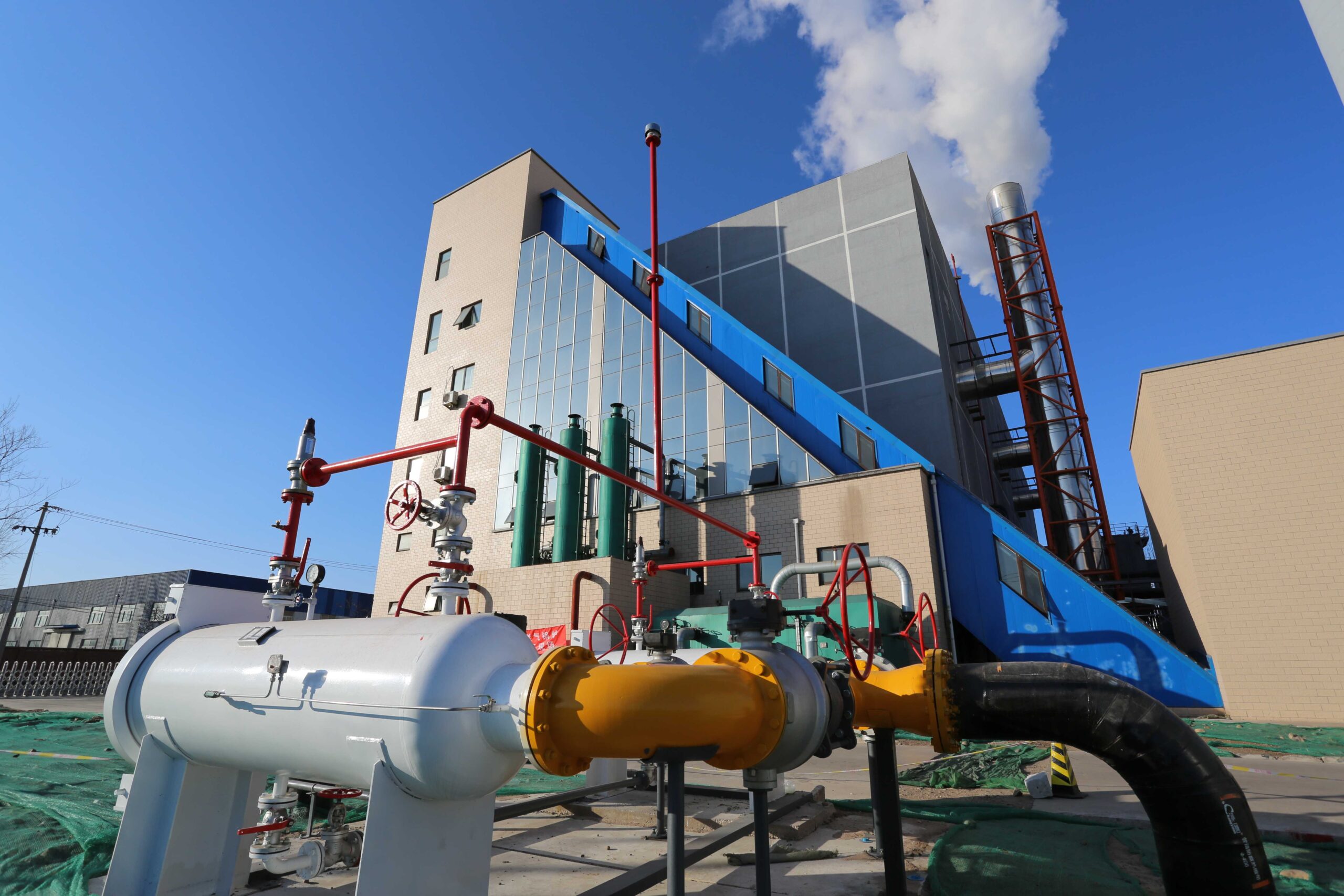
Industrial boilers consume a large share of energy in many factories, but many plants still manage them with delayed data, manual logs, periodic combustion checks, and reactive maintenance. This creates a serious problem: fuel is wasted long before anyone notices. A boiler may keep producing steam while excess air increases, stack temperature rises, condensate return drops, blowdown becomes excessive, heat-transfer surfaces foul, pumps lose efficiency, or steam traps fail. The consequence is not only a higher fuel bill; it is also unstable steam pressure, higher emissions, more frequent maintenance, reduced equipment life, and lower production reliability. The practical solution is to use IoT for real-time energy visibility, AI for intelligent performance analysis, and predictive maintenance to correct efficiency losses before they become expensive operating habits.
IoT, AI, and predictive maintenance improve energy efficiency in industrial boiler management by continuously measuring boiler performance, identifying hidden energy losses, and guiding timely corrective action. IoT sensors collect real-time data such as fuel flow, steam flow, oxygen level, stack temperature, feedwater temperature, conductivity, blowdown rate, condensate return, burner modulation, pump condition, and economizer performance. AI compares these data points against expected boiler behavior to detect excess air, fouling, scaling, steam leakage, poor load matching, inefficient cycling, and declining heat recovery. Predictive maintenance then helps operators clean, tune, repair, calibrate, or replace the right component at the right time, reducing fuel consumption and improving overall boiler efficiency.
For plant owners, energy managers, boiler operators, and procurement teams, the key point is simple: energy efficiency is not achieved by one device alone. A high-efficiency boiler can still waste fuel if combustion is poorly tuned, water treatment is unstable, condensate is lost, blowdown is excessive, sensors are inaccurate, or maintenance is delayed. As a professional industrial boiler manufacturer and system supplier, we see the strongest results when digital technologies are integrated with boiler hardware, burner systems, water treatment, heat recovery, controls, operator workflows, and maintenance planning. The following article explains how IoT, AI, and predictive maintenance work together to improve real-time industrial boiler energy efficiency in a practical, measurable, and sustainable way.
IoT sensors alone automatically make an industrial boiler energy-efficient.False
IoT sensors provide real-time data, but energy efficiency also requires accurate measurement, correct analysis, skilled operation, combustion tuning, water treatment control, heat recovery, maintenance action, and suitable boiler system design.
Predictive maintenance can improve boiler energy efficiency when it detects fouling, scaling, combustion drift, pump degradation, steam trap failure, and sensor drift before these problems cause major fuel waste.True
Predictive maintenance uses operating data to identify energy-loss patterns early, allowing maintenance teams to correct the physical causes of inefficiency before fuel consumption increases significantly.
Why Energy Efficiency in Industrial Boiler Management Is a System Problem
Industrial boiler energy efficiency is often misunderstood as a single number printed on a boiler specification sheet, but real operating efficiency depends on the complete steam or hot-water system. The boiler body, burner, combustion air system, fuel train, feedwater system, water treatment program, condensate return network, steam distribution piping, blowdown system, economizer, insulation, control logic, and maintenance discipline all influence how much useful heat the plant receives from each unit of fuel. A boiler may have excellent rated efficiency during factory testing, yet perform poorly in the field because it operates at unstable loads, receives cold makeup water, loses hot condensate, runs with high excess air, suffers from scale buildup, or short-cycles due to poor sizing or sequencing. This is why real-time industrial boiler management is so important: it shows the difference between theoretical efficiency and actual daily energy performance.
In practical boiler operation, the main energy losses usually appear in several areas. Stack loss occurs when hot flue gas leaves the boiler before enough heat has been transferred to water or steam. Excess air loss occurs when the burner uses more combustion air than necessary, heating unnecessary nitrogen and oxygen and sending that heat up the stack. Blowdown loss occurs when hot boiler water is discharged to control dissolved solids. Condensate loss occurs when hot condensate is not returned and the boiler must heat more cold makeup water. Cycling loss occurs when the boiler frequently starts and stops instead of operating steadily. Heat-transfer loss occurs when soot, fouling, or scale reduces the transfer of heat from combustion gases to the water side. Distribution loss occurs when steam leaks, failed traps, poor insulation, or pressure mismanagement waste useful energy after the steam leaves the boiler.
IoT, AI, and predictive maintenance improve boiler energy efficiency because they expose these losses continuously. Instead of waiting for a monthly fuel bill or an annual efficiency test, the plant can see real-time fuel-to-steam performance, stack temperature trends, oxygen deviation, blowdown behavior, feedwater temperature, condensate return percentage, economizer performance, steam pressure stability, and auxiliary equipment health. The boiler room becomes a measurable energy system rather than a collection of isolated machines. This matters because most energy losses develop gradually. A burner may drift slowly over several months. A steam trap may fail open without creating an obvious alarm. Scale may build up quietly until stack temperature rises. An economizer may foul little by little. Without continuous data, these problems become normal. With real-time data and AI analysis, they become visible, measurable, and correctable.
How IoT Improves Boiler Energy Visibility
IoT improves industrial boiler energy efficiency by creating a reliable data foundation. In a smart boiler room, sensors and meters collect live data from the boiler, burner, feedwater system, steam system, fuel system, and heat-recovery equipment. The most important energy-related measurements include fuel flow, steam flow, feedwater flow, feedwater temperature, stack temperature, flue gas oxygen, burner firing rate, air damper position, fan speed, steam pressure, boiler water conductivity, blowdown valve position, blowdown flow, condensate return temperature, makeup water volume, economizer inlet and outlet temperature, pump power, and alarm history. When these variables are recorded together, operators can calculate energy performance in real time and understand why efficiency changes.
For example, fuel flow alone does not explain whether the boiler is efficient. A boiler may consume more fuel because production demand increased, or because efficiency decreased. Steam flow must be measured together with fuel flow to calculate fuel-to-steam ratio. Stack temperature alone does not prove fouling; it must be compared with firing rate, feedwater temperature, oxygen level, and steam output. Conductivity alone does not explain blowdown loss; it must be compared with blowdown frequency, makeup water, condensate return, and water treatment quality. IoT enables these comparisons automatically. This is where energy management becomes practical rather than theoretical.
A well-designed IoT system should classify measurements into control-critical, performance-critical, and diagnostic categories. Control-critical signals are used by the boiler control system and must follow strict reliability and safety requirements. Performance-critical signals are used for energy monitoring, such as fuel flow, steam flow, oxygen, stack temperature, and feedwater temperature. Diagnostic signals identify causes of energy loss, such as vibration, valve position, motor current, trap condition, and economizer temperature difference. This classification helps the plant avoid a common mistake: adding many sensors without knowing which decisions each sensor supports.
| Energy Efficiency Variable | What It Measures | Efficiency Problem It Can Reveal | Corrective Action |
|---|---|---|---|
| Fuel flow | Actual fuel consumed by boiler | Rising fuel use without matching steam increase | Check combustion, heat transfer, steam leaks, and load profile |
| Steam flow | Useful steam output | Poor fuel-to-steam ratio | Compare boiler output with fuel input and operating conditions |
| Flue gas oxygen | Excess air level | Too much air wasting heat through the stack | Tune burner, calibrate oxygen sensor, inspect damper and actuator |
| Stack temperature | Heat-transfer effectiveness | Fouling, soot, scale, economizer degradation | Clean heat-transfer surfaces or inspect water-side condition |
| Feedwater temperature | Heat entering boiler from feedwater | Poor condensate return or heat recovery | Improve condensate recovery and economizer operation |
| Conductivity | Dissolved solids in boiler water | Excessive or insufficient blowdown | Optimize automatic blowdown control and water treatment |
| Blowdown flow | Hot water discharged from boiler | Unnecessary heat, water, and chemical loss | Adjust blowdown strategy based on real water quality |
| Condensate return temperature | Recovered heat from steam system | Failed traps, condensate loss, poor return system | Repair traps, leaks, and return piping |
| Burner firing rate | Boiler load behavior | Short cycling or poor modulation | Tune controls and improve boiler sequencing |
| Pump motor current | Auxiliary energy use and equipment condition | Pump inefficiency, wear, blockage, cavitation | Inspect pump, alignment, bearing, impeller, and suction conditions |
How AI Turns Boiler Data Into Energy-Saving Decisions
AI improves energy efficiency by turning large volumes of boiler data into useful recommendations. A boiler system is dynamic, so fixed limits are often too simple. A stack temperature of 220°C may be normal at one load and abnormal at another. An oxygen level of 5% may be acceptable during low-fire operation but excessive during steady high-fire operation. A small increase in fuel consumption may be justified by lower feedwater temperature, but suspicious if feedwater temperature and steam load remain unchanged. AI can evaluate these operating conditions together and identify whether the boiler is performing as expected.
In real industrial boiler management, AI can perform several valuable functions. It can build a baseline model of normal boiler efficiency under different loads. It can detect deviations from expected fuel-to-steam ratio. It can identify combustion drift by analyzing oxygen, stack temperature, firing rate, fuel flow, and air damper response. It can estimate heat-transfer loss by comparing stack temperature with load and feedwater temperature. It can detect excessive blowdown by comparing conductivity, blowdown activity, makeup water, and steam production. It can identify poor condensate return by tracking feedwater temperature, makeup water, condensate temperature, and steam demand. It can detect short cycling by analyzing burner start-stop frequency, load profile, and pressure control response. It can also recommend boiler sequencing strategies in multi-boiler plants so the most efficient unit carries the right load.
AI is especially valuable because many energy losses overlap. Suppose fuel consumption increases. The cause could be colder feedwater, lower condensate return, higher excess air, fouled heat-transfer surfaces, leaking steam traps, increased process demand, higher blowdown, poor burner modulation, or inaccurate meters. A human operator may need hours to compare all these trends. AI can rapidly rank the most likely causes based on correlated evidence. For example, if stack temperature rises while oxygen remains stable and feedwater temperature is unchanged, heat-transfer fouling may be likely. If oxygen rises and stack temperature rises at the same firing rate, combustion air drift may be likely. If feedwater temperature falls while makeup water increases, condensate loss may be likely. If conductivity remains low while blowdown is frequent, excessive blowdown may be likely. These cause-specific insights make energy-saving action faster and more accurate.
A practical AI system should not simply display a mysterious efficiency score. It should explain the evidence and recommend action. For example: “Fuel-to-steam ratio has worsened by 3.2% over 14 days at similar load. Stack temperature is 18°C higher, oxygen is stable, and feedwater temperature is unchanged. Probable fireside fouling or water-side scale. Inspect heat-transfer surfaces during next planned maintenance window.” This type of message is much more useful than a generic alarm because it connects energy loss to a likely physical cause. The best AI tools support operators, maintenance technicians, energy managers, and plant managers with clear, role-specific information.
Predictive Maintenance: The Missing Link Between Efficiency Loss and Physical Correction
Predictive maintenance improves boiler energy efficiency by identifying equipment degradation before it becomes a major energy penalty. Many efficiency problems are not caused by poor operating decisions alone; they are caused by physical deterioration. Burner linkages wear. Oxygen sensors drift. Dampers stick. Pumps lose hydraulic efficiency. Steam traps fail. Economizers foul. Control valves leak or respond slowly. Heat-transfer surfaces accumulate soot or scale. Insulation becomes damaged. Condensate return systems leak. If these problems are not corrected, the AI dashboard may correctly identify energy loss, but fuel consumption will continue to rise. Predictive maintenance closes this gap by converting energy signals into maintenance action.
For example, a feedwater pump with worn bearings or cavitation may still deliver enough water to keep the boiler running, but it may consume more electricity, operate less reliably, and create unstable feedwater control. A burner actuator may still move, but delayed response can create excess air, pressure instability, and inefficient firing. A leaking steam trap may not stop production, but it can waste large amounts of steam and reduce condensate return temperature. A fouled economizer may not trip the boiler, but it reduces heat recovery every hour. Predictive maintenance identifies these conditions early so the plant can repair them during planned downtime rather than allowing them to waste energy continuously.
Predictive maintenance should be risk-based and energy-based. Not every abnormal trend has the same financial importance. A small vibration increase on a non-critical standby pump may be less urgent than a failing condensate return pump that forces the boiler to use cold makeup water. A slightly drifting temperature sensor may be less urgent than an oxygen analyzer that misleads the combustion control system. A single failed steam trap in a small branch line may be less urgent than multiple failed traps in a high-pressure steam header. A good predictive maintenance system ranks issues according to energy impact, reliability impact, safety relevance, production consequence, and repair complexity.
| Component | Efficiency Degradation Pattern | Predictive Maintenance Signal | Energy Impact | Recommended Action |
|---|---|---|---|---|
| Burner system | Fuel-air ratio drifts away from optimum | Oxygen trend, stack temperature, actuator response | Higher fuel use and possible unstable combustion | Tune burner, calibrate analyzer, inspect linkage and actuator |
| Boiler tubes | Scale or soot reduces heat transfer | Rising stack temperature at same load | More fuel required for same steam output | Clean fireside, inspect water-side, improve water treatment |
| Economizer | Heat recovery declines | Reduced feedwater temperature rise | Lost opportunity to preheat feedwater | Clean economizer, check bypass, inspect for fouling or leakage |
| Steam traps | Failed open or failed closed | Abnormal trap temperature or ultrasonic signal | Steam loss, poor condensate return, water hammer risk | Survey and replace failed traps |
| Blowdown system | Excessive hot water discharge | Frequent blowdown despite acceptable conductivity | Fuel, water, and chemical waste | Tune automatic blowdown and review water chemistry |
| Feedwater pump | Mechanical wear or cavitation | Vibration, current, pressure instability | Higher auxiliary power and unstable operation | Inspect bearings, seals, impeller, strainer, and suction conditions |
| Control valve | Sticking or leakage | Command-position mismatch, slow travel | Pressure instability and inefficient modulation | Stroke test, repair actuator, inspect seat and positioner |
| Insulation and piping | Heat loss to environment | Surface temperature, steam demand increase | Continuous distribution energy loss | Repair insulation and leaks |
Real-Time Combustion Optimization
Combustion is one of the most important areas where IoT and AI improve boiler energy efficiency. The burner must supply enough air for complete combustion but not so much that excessive heat is carried away in the flue gas. In traditional operation, combustion is often tuned periodically. Between tune-ups, air-fuel ratio can drift because of fuel pressure changes, damper wear, actuator movement, linkage looseness, fan condition, oxygen analyzer drift, ambient air changes, or load variation. Even a small increase in excess air can increase stack loss and fuel consumption.
IoT improves combustion management by measuring oxygen, stack temperature, fuel flow, air flow where available, burner firing rate, fan speed, damper position, and flame stability. AI improves it by comparing these values under similar load conditions and identifying when combustion behavior changes. Predictive maintenance improves it by identifying the physical cause of combustion drift: an actuator that responds slowly, an oxygen sensor that needs calibration, a fan that is vibrating, a burner nozzle that needs service, a damper that is sticking, or linkage that requires adjustment.
Combustion optimization should always respect safety. The goal is not to reduce oxygen blindly. Too little air can cause incomplete combustion, carbon monoxide formation, flame instability, soot, and safety hazards. The correct target depends on boiler type, burner design, fuel type, load range, emissions requirements, and local operating rules. Smart boiler management helps by maintaining a safe and efficient combustion window rather than chasing the lowest possible oxygen number. In practice, AI can detect both excessive air and unsafe drift toward insufficient air, giving operators a more reliable way to maintain efficiency without compromising safety.
Blowdown Optimization and Water Treatment Efficiency
Blowdown is necessary because dissolved solids concentrate inside the boiler as steam is generated. If dissolved solids become too high, the boiler may suffer from carryover, foaming, poor steam quality, scaling, and corrosion risk. However, blowdown also removes hot treated water, meaning the plant loses heat, water, and chemicals. Too little blowdown creates water-quality risk. Too much blowdown wastes energy. The efficiency challenge is to discharge only what is necessary.
IoT supports blowdown optimization by monitoring conductivity, blowdown valve operation, blowdown flow, makeup water, feedwater quality, condensate return, and steam production. AI can detect whether blowdown is proportional to actual water quality or simply happening too frequently. Predictive maintenance can identify valve leakage, conductivity sensor drift, chemical dosing problems, or condensate contamination that causes unnecessary blowdown.
A common hidden energy loss occurs when automatic blowdown is poorly calibrated or when manual blowdown habits are not adjusted after water-treatment improvements. The boiler may be maintaining very low conductivity, which appears safe but wastes heat. Another common problem occurs when condensate contamination causes conductivity spikes, leading to frequent blowdown and higher makeup water demand. A smart boiler system can identify both situations. It can recommend conductivity sensor calibration, chemical program review, condensate testing, valve inspection, or blowdown setpoint adjustment.
| Blowdown Condition | What It Means | Energy Efficiency Effect | Smart Management Response |
|---|---|---|---|
| Conductivity high and blowdown low | Dissolved solids may be concentrating | Risk of carryover, scaling, and poor steam quality | Increase controlled blowdown and check water treatment |
| Conductivity low and blowdown high | More hot water is discharged than needed | Direct fuel, water, and chemical waste | Reduce blowdown frequency and verify sensor calibration |
| Conductivity unstable | Possible condensate contamination or dosing issue | Efficiency and reliability risk | Inspect condensate return and chemical feed system |
| Blowdown valve leaking | Continuous unnoticed hot water loss | Constant energy waste | Repair or replace valve |
| Makeup water rising | Condensate loss or steam leak likely | More fuel needed to heat cold water | Inspect traps, leaks, and condensate return system |
Condensate Return and Heat Recovery
Condensate return is one of the most practical efficiency opportunities in industrial boiler management. When steam transfers heat to a process, the resulting condensate is still hot and chemically treated. Returning this condensate to the boiler feedwater system reduces the amount of cold makeup water that must be heated and treated. Poor condensate return increases fuel consumption, water treatment cost, blowdown demand, and thermal stress. IoT helps by measuring condensate return temperature, return volume, makeup water flow, feedwater temperature, and steam demand. AI can detect when condensate return drops unexpectedly or when feedwater temperature declines at similar steam loads. Predictive maintenance can identify failed traps, leaking return lines, blocked condensate pumps, faulty control valves, or process heat exchanger contamination.
Heat recovery also includes economizers, blowdown heat recovery, flash steam recovery, and improved insulation. Economizers recover heat from flue gas to preheat feedwater. Their performance can be monitored by comparing flue gas inlet and outlet temperatures and feedwater inlet and outlet temperatures. If the economizer transfers less heat over time, AI may identify fouling, bypass leakage, poor flow, or surface degradation. Predictive maintenance can then schedule cleaning or inspection. In plants with large blowdown volumes, blowdown heat recovery may also be attractive. IoT can measure blowdown temperature and flow to estimate available heat and verify savings after installation.
The important point is that heat recovery devices must be monitored after installation. Many plants install an economizer and assume savings continue unchanged for years. In reality, fouling, corrosion, bypass operation, poor controls, or changed load conditions can reduce performance. Smart boiler management protects the original investment by making heat recovery measurable and maintainable.
Multi-Boiler Sequencing and Load Optimization
Many industrial plants operate more than one boiler. Energy efficiency depends not only on the efficiency of each boiler but also on how the boilers are sequenced and loaded. Poor sequencing can cause short cycling, low-load operation, pressure swings, and uneven equipment wear. A boiler operating far below its efficient load range may waste more fuel than expected. Bringing a second boiler online too early can increase radiation and standby losses. Bringing it online too late can create pressure instability and force aggressive firing. AI can analyze demand patterns, boiler efficiency curves, warm-up time, standby losses, maintenance condition, and production schedules to recommend better load allocation.
For example, in a two-boiler plant, one boiler may operate more efficiently at base load while the second boiler handles peaks. In a three-boiler plant, AI may recommend rotating lead-lag operation to balance operating hours while still prioritizing the most efficient unit for current demand. IoT provides the data: steam pressure, steam flow, firing rate, cycling frequency, and fuel use. AI identifies inefficient patterns. Predictive maintenance ensures the selected boiler is healthy enough to carry the recommended load.
This is especially useful in plants with variable demand, such as food processing, textile finishing, chemical production, pharmaceutical utilities, paper processing, rubber manufacturing, and district heating. Steam demand may rise sharply during batch operations and fall during cleaning or standby periods. AI-based sequencing helps stabilize pressure while reducing fuel waste.
Example Energy Efficiency Improvement Model
The financial value of smart boiler management depends on annual fuel consumption, baseline efficiency, operating hours, fuel price, steam demand profile, and maintenance condition. The table below shows a simplified example of how small efficiency improvements can create meaningful savings.
| Annual Boiler Fuel Cost | Efficiency Improvement from IoT + AI + Predictive Maintenance | Estimated Annual Fuel Saving | Main Sources of Improvement |
|---|---|---|---|
| $250,000 | 2% | $5,000 | Burner tuning, blowdown control, sensor calibration |
| $750,000 | 3% | $22,500 | Combustion optimization, condensate recovery, trap repair |
| $2,000,000 | 4% | $80,000 | Economizer monitoring, heat-transfer cleaning, load optimization |
| $5,000,000 | 5% | $250,000 | Multi-boiler sequencing, predictive maintenance, full steam-system optimization |
| $10,000,000 | 6% | $600,000 | Advanced AI optimization, high condensate recovery, continuous efficiency management |
These numbers are examples, not guaranteed results. However, they show why energy-intensive plants should treat boiler efficiency as a continuous management issue. A small percentage improvement can produce large annual savings when fuel consumption is high. The strongest business case usually appears when a plant combines efficiency improvement with reduced downtime, lower maintenance cost, better compliance reporting, and longer equipment life.
Practical Implementation Roadmap
A successful smart boiler energy-efficiency project should begin with a baseline audit. The plant should measure current fuel use, steam production, feedwater temperature, stack temperature, oxygen level, blowdown rate, makeup water, condensate return, operating hours, load profile, steam pressure stability, and maintenance history. Without a baseline, it is difficult to prove improvement. After the baseline, the plant should identify the largest energy losses. In some boiler rooms, combustion drift is the biggest issue. In others, condensate loss, blowdown waste, fouling, poor sequencing, or steam leakage may dominate.
The next step is instrumentation. The plant should verify that key meters are accurate and properly installed. Fuel and steam flow meters are especially important because many efficiency calculations depend on them. Oxygen analyzers and stack temperature sensors must be maintained and calibrated. Conductivity sensors must be clean and reliable. Condensate and makeup water measurements should be available. After instrumentation is reliable, data should be connected to a secure dashboard or historian. Then AI models can be applied to detect abnormal energy patterns, and predictive maintenance workflows can be linked to alerts.
| Implementation Phase | Objective | Key Actions | Energy Efficiency Result |
|---|---|---|---|
| Phase 1: Energy audit | Establish baseline performance | Review fuel bills, steam output, stack temperature, oxygen, blowdown, condensate return | Identifies current energy-loss areas |
| Phase 2: Sensor validation | Ensure data accuracy | Calibrate flow meters, oxygen analyzer, conductivity sensor, temperature sensors | Prevents wrong efficiency conclusions |
| Phase 3: IoT monitoring | Build real-time visibility | Connect boiler, burner, water treatment, heat recovery, and steam-system data | Makes energy losses visible immediately |
| Phase 4: AI analytics | Interpret performance patterns | Model fuel-to-steam ratio, stack loss, blowdown loss, condensate loss, cycling | Identifies root causes of inefficiency |
| Phase 5: Predictive maintenance | Correct physical degradation | Schedule cleaning, tuning, calibration, trap repair, pump service, economizer inspection | Converts energy alerts into fuel savings |
| Phase 6: Continuous optimization | Sustain improvement | Review reports, tune controls, update maintenance plans, train operators | Maintains long-term efficiency gains |
Common Mistakes to Avoid
The first mistake is assuming that a new boiler automatically guarantees low fuel consumption. Boiler design matters, but installation, controls, water treatment, load profile, maintenance, and steam-system condition determine real-world efficiency. The second mistake is installing a dashboard without accurate meters. AI cannot produce reliable recommendations from poor data. The third mistake is focusing only on the boiler and ignoring the steam distribution system. Failed steam traps, leaks, poor insulation, and low condensate return can waste large amounts of energy outside the boiler shell. The fourth mistake is reducing blowdown too aggressively without understanding water chemistry. Efficiency must never compromise boiler safety or steam quality. The fifth mistake is ignoring operator training. Operators must understand what the data means, how to respond to alerts, and when to involve maintenance or engineering support.
The sixth mistake is treating predictive maintenance as a replacement for required inspections. Boilers remain pressure equipment and must be operated, inspected, and maintained according to applicable codes, regulations, manufacturer instructions, and site safety procedures. Digital tools improve visibility and timing, but they do not replace professional boiler operation. The seventh mistake is overlooking cybersecurity. Connected boiler systems must be protected with controlled access, network segmentation, secure remote support, user permissions, and data integrity practices. Energy efficiency should not be gained at the expense of operational security.
Final Summary
IoT, AI, and predictive maintenance improve energy efficiency in industrial boiler management by transforming boiler operation from periodic checking to continuous optimization. IoT captures the real-time data needed to understand fuel use, steam production, combustion quality, blowdown loss, feedwater temperature, condensate return, heat recovery, equipment health, and control stability. AI analyzes that data in context and identifies hidden energy losses such as excess air, fouling, scaling, steam leakage, poor sequencing, excessive blowdown, sensor drift, and declining economizer performance. Predictive maintenance turns these insights into action by guiding cleaning, tuning, calibration, trap repair, pump service, valve maintenance, and heat-recovery inspection before energy losses become severe.
The greatest value comes when smart boiler management is treated as a complete energy-efficiency strategy, not merely a software upgrade. The boiler must be properly designed, accurately measured, securely connected, intelligently analyzed, and professionally maintained. When implemented correctly, IoT, AI, and predictive maintenance can reduce fuel consumption, improve steam stability, lower emissions, extend equipment life, reduce maintenance surprises, and provide plant managers with clear evidence for energy-saving decisions.
How Do IoT, AI, and Predictive Maintenance Enhance Safety in Industrial Boiler Management?
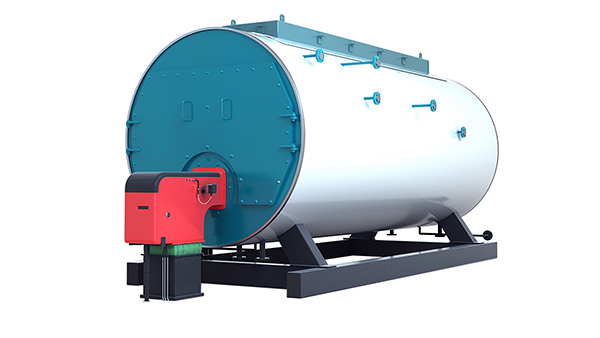
Industrial boiler safety can be compromised long before a visible emergency occurs. A water-level signal may drift, a feedwater pump may begin to cavitate, a burner may show unstable ignition, a control valve may respond slowly, boiler water chemistry may move toward scaling or corrosion, or pressure may fluctuate more than usual during load changes. If these early signs are missed, the consequences can include forced shutdowns, tube damage, unsafe combustion, steam leakage, equipment failure, production interruption, personnel injury, and serious regulatory exposure. The practical solution is to manage boiler safety in real time by combining IoT sensing, AI-based risk analysis, and predictive maintenance workflows that help operators identify, verify, and correct unsafe trends before they become critical incidents.
IoT, AI, and predictive maintenance enhance safety in industrial boiler management by continuously monitoring critical operating conditions, detecting abnormal patterns early, and guiding maintenance teams to correct risk factors before failure occurs. IoT sensors collect live data from water level, steam pressure, flame status, fuel pressure, oxygen level, stack temperature, feedwater flow, pump vibration, motor current, safety valve events, blowdown, boiler water conductivity, and control valve position. AI analyzes these signals to identify unsafe trends such as low-water risk, combustion instability, overheating, scaling, corrosion, pressure hunting, sensor drift, fuel-air imbalance, and auxiliary equipment degradation. Predictive maintenance then converts these warnings into planned inspections, calibration, cleaning, repair, or replacement, helping the boiler room operate more safely, reliably, and consistently.
For boiler owners, plant managers, energy engineers, operators, and maintenance teams, the most important point is that digital technology should support safety, not replace proven safety engineering. Certified safety valves, burner management systems, low-water protection, pressure controls, interlocks, operator training, water treatment, inspection, and compliance procedures remain essential. As an industrial boiler manufacturer and system supplier, we see IoT, AI, and predictive maintenance as safety-enhancing layers that make risks more visible, improve decision-making, reduce human blind spots, and create a stronger connection between operating data and real maintenance action.
IoT and AI can replace certified boiler safety devices such as safety valves, low-water protection, and burner safety interlocks.False
IoT and AI improve monitoring and decision support, but certified boiler safety devices and required safety systems must remain in place, properly tested, and maintained according to applicable standards and site procedures.
Predictive maintenance can improve boiler safety when it identifies equipment degradation before it causes unsafe operation or forced shutdown.True
Predictive maintenance uses operating data to detect early signs of pump wear, valve sticking, burner instability, scaling, corrosion, sensor drift, and other conditions that may increase safety risk if left unresolved.
Why Safety in Industrial Boiler Management Requires Real-Time Awareness
Industrial boilers operate under high temperature, high pressure, fuel combustion, water-steam phase change, and continuous load variation. This makes safety management more complex than simply checking whether the pressure gauge is within range. A boiler can appear normal while hidden risks are developing. For example, water-side scale may gradually increase tube metal temperature even though steam pressure remains stable. A feedwater pump may still run but become less reliable due to bearing wear or suction problems. A burner may continue firing while the air-fuel ratio drifts away from the intended safe operating window. A level transmitter may become noisy or inaccurate, creating uncertainty in one of the most important boiler safety signals. A steam trap failure or condensate contamination may indirectly affect water treatment, blowdown, and thermal stability. These conditions may not trigger immediate shutdown alarms, but they increase risk over time.
Traditional boiler safety management depends on operator rounds, manual logs, routine tests, scheduled inspections, and local alarms. These practices remain necessary, but they have limitations. Manual rounds capture only selected moments. Paper logs may miss short transient events. Standard alarms often activate only when a limit has already been exceeded. Scheduled maintenance may not detect parts that degrade faster than expected between service intervals. Real-time smart boiler management improves this situation by continuously watching the conditions that lead to unsafe operation. It gives operators and maintenance teams earlier warning, better evidence, and clearer priorities.
The safety value of IoT, AI, and predictive maintenance comes from creating a closed safety loop: measure, analyze, alert, verify, correct, document, and improve. IoT measures boiler conditions continuously. AI analyzes whether those conditions are normal for the current load and operating mode. Predictive maintenance turns abnormal patterns into practical maintenance tasks. Operators verify the condition in the field. Maintenance teams correct the root cause. The system records what happened and improves future detection. This loop helps prevent repeated incidents because it focuses not only on the alarm but also on the underlying cause.
| Safety Risk Area | Traditional Warning Sign | IoT + AI Early Warning | Safety Improvement |
|---|---|---|---|
| Low-water risk | Low-water alarm or unstable gauge reading | Feedwater flow instability, pump vibration, level signal deviation, valve response delay | Earlier intervention before low-water trip or tube overheating risk |
| Combustion instability | Burner lockout or flame failure | Weak flame signal, fuel pressure fluctuation, oxygen drift, ignition delay | Reduced burner trips and safer combustion control |
| Overpressure risk | High-pressure alarm or safety valve lift | Pressure hunting, slow control valve response, poor load matching | Better pressure control and fewer unsafe pressure excursions |
| Tube overheating | Efficiency loss or later inspection finding | Rising stack temperature, water chemistry drift, blowdown abnormality | Earlier scale/fouling detection and planned cleaning |
| Corrosion risk | Leak or inspection discovery | Conductivity changes, pH abnormality, oxygen-related water treatment indicators | Earlier water-treatment correction |
| Pump failure | Pump trip or low feedwater pressure | Rising vibration, current change, pressure instability | Planned pump maintenance before loss of feedwater reliability |
| Sensor failure | Conflicting readings after an event | Flatline signal, noise, calibration drift, mismatch with related variables | Higher confidence in critical measurements |
| Steam leakage | Visible leak or energy loss | Pressure imbalance, makeup water increase, condensate return decline | Faster leak detection and safer steam distribution |
How IoT Enhances Boiler Safety
IoT enhances boiler safety by making critical and supporting conditions visible in real time. A safe boiler room needs more than one alarm point; it needs a reliable picture of the complete operating state. Important data points include steam pressure, drum or water level, feedwater pressure, feedwater flow, burner status, flame signal, fuel pressure, combustion air status, oxygen level, furnace pressure where applicable, stack temperature, boiler water conductivity, blowdown operation, pump vibration, motor current, valve position, condensate return temperature, makeup water flow, and alarm history. When these signals are collected and time-stamped, operators can understand not only what is happening now but also what changed before an alarm occurred.
A key safety benefit is early deviation detection. For example, a low-water event may be preceded by unstable feedwater flow, a slow control valve, abnormal pump vibration, low suction pressure, or sudden steam demand. IoT monitoring can reveal these symptoms before the boiler reaches a dangerous level. Combustion safety can also be improved. Burner trips are often preceded by weak flame signals, unstable fuel pressure, delayed ignition timing, oxygen drift, or fan problems. IoT allows these conditions to be tracked continuously rather than discovered only after a burner lockout.
IoT also supports better incident investigation. When a boiler trips, many alarms may appear at nearly the same time. Without accurate event sequencing, teams may misidentify the root cause. A connected monitoring system can show whether fuel pressure dropped before flame failure, whether feedwater pressure fell before low-water protection activated, whether pressure hunting occurred before a safety valve event, or whether a sensor signal became unreliable before an operator response. This reduces repeated incidents caused by wrong diagnosis.
However, IoT must be designed carefully. Safety-critical control functions should remain within certified control and protection systems. Remote monitoring should not bypass local safety logic. Sensors must be industrial-grade, properly installed, calibrated, and protected from heat, vibration, moisture, electrical noise, and process contamination. Data should be validated because wrong data can create wrong decisions. A smart boiler system should improve operator confidence, not create confusion.
How AI Improves Boiler Safety Decision-Making
AI improves boiler safety by analyzing boiler data in context. This is important because a fixed alarm limit cannot always distinguish between normal operating behavior and early risk. A pressure fluctuation may be normal during process startup but abnormal during steady production. A stack temperature rise may be expected at higher load but suspicious at the same firing rate. A change in oxygen may be acceptable during modulation but dangerous if it persists. AI can compare current behavior with historical normal behavior, similar load conditions, equipment status, and related variables.
In practical boiler safety management, AI can support anomaly detection, fault classification, event sequencing, alarm prioritization, and risk scoring. Anomaly detection identifies patterns that do not match normal boiler behavior. Fault classification estimates the likely cause, such as pump degradation, valve sticking, burner drift, sensor failure, fouling, scaling, or poor load control. Event sequencing helps determine which abnormal condition happened first. Alarm prioritization reduces nuisance alarms and highlights conditions that require urgent attention. Risk scoring helps maintenance teams decide which issues should be handled immediately and which can be scheduled.
AI is especially useful in identifying combined risks. A single signal may not look dangerous, but several small deviations together may indicate a developing safety problem. For example, slightly rising stack temperature, unstable conductivity, and increased blowdown may suggest water-side risk. Weak flame signal, fuel pressure fluctuation, and oxygen instability may suggest combustion reliability risk. Rising pump vibration, unstable discharge pressure, and level-control movement may suggest feedwater reliability risk. AI can connect these patterns faster than manual trend review.
A useful AI alert should be understandable and actionable. Instead of saying “anomaly detected,” it should explain the evidence: “Feedwater Pump 1 vibration has increased steadily for 12 days, discharge pressure is less stable during high load, and water-level control valve movement has increased. Probable pump wear, cavitation, or suction restriction. Inspect pump, strainer, and suction conditions during the next safe maintenance window.” This type of alert helps operators and maintenance teams take practical action without guessing.
| AI Safety Function | What It Does | Example Boiler Application | Practical Safety Benefit |
|---|---|---|---|
| Anomaly detection | Finds behavior outside normal patterns | Detects unusual pressure hunting at stable load | Early warning before trip or unsafe pressure excursion |
| Fault classification | Suggests likely cause of abnormal data | Distinguishes combustion drift from sensor drift | Faster root-cause diagnosis |
| Event sequence analysis | Identifies what happened first | Shows fuel pressure dropped before flame failure | Better incident investigation |
| Alarm prioritization | Ranks alerts by severity and context | Filters short transient alarms and highlights persistent risk | Less alarm fatigue |
| Risk scoring | Combines severity, probability, and asset criticality | Ranks feedwater pump issue above non-critical auxiliary alert | Better maintenance prioritization |
| Predictive modeling | Forecasts when a condition may cross a threshold | Predicts pump vibration may reach warning level soon | Planned intervention before failure |
Predictive Maintenance as a Safety Strategy
Predictive maintenance enhances boiler safety because many safety incidents begin as maintenance problems. A worn pump, fouled burner, sticking valve, drifting sensor, leaking trap, blocked strainer, fouled economizer, or poor water-treatment condition may not be immediately dangerous, but each can contribute to unsafe operation if ignored. Predictive maintenance uses operating data to identify these problems early and schedule corrective work before the boiler is forced into an emergency condition.
For boiler safety, predictive maintenance should focus on critical systems first. The feedwater system is one of the most important because reliable water supply protects tubes from overheating. Pumps, valves, level controls, strainers, deaerators, and feedwater tanks should be monitored for abnormal behavior. The combustion system is another priority because unstable combustion can cause burner trips, unsafe flame conditions, soot formation, and poor thermal performance. Burner actuators, flame scanners, fuel valves, pressure regulators, fans, dampers, oxygen analyzers, and ignition systems should be included in the maintenance strategy. Water treatment is also safety-critical because scale, corrosion, and carryover can damage pressure parts and steam equipment. Conductivity, pH, blowdown, chemical dosing, makeup water, and condensate return should be managed carefully.
Predictive maintenance does not eliminate scheduled safety tasks. Safety valves, low-water cutoffs, burner management systems, interlocks, pressure controls, and inspections must still be tested and maintained according to applicable rules, manufacturer instructions, and site procedures. Predictive maintenance adds another layer by identifying which components are showing signs of degradation between scheduled checks. This reduces the chance that a problem develops unnoticed.
| Boiler Component | Safety-Related Failure Mode | Predictive Signal | Recommended Maintenance Action |
|---|---|---|---|
| Feedwater pump | Loss of feedwater reliability | Vibration, motor current, suction/discharge pressure instability | Inspect bearings, seals, impeller, strainer, and suction conditions |
| Level control valve | Poor water-level control | Command-position mismatch, slow travel, frequent correction | Stroke test, clean or repair valve and actuator |
| Burner system | Flame instability or lockout | Flame signal trend, ignition delay, fuel pressure fluctuation | Clean scanner, inspect igniter, verify fuel train and tune burner |
| Oxygen analyzer | Incorrect combustion feedback | Sensor drift, mismatch with stack temperature and fuel use | Calibrate or replace analyzer |
| Boiler tubes | Overheating, scale, corrosion | Stack temperature rise, water chemistry deviation, blowdown abnormality | Inspect water side, clean surfaces, correct treatment program |
| Safety valve | Leakage or frequent lifting | Acoustic/temperature event, pressure excursion history | Arrange authorized inspection and service |
| Blowdown valve | Excessive or insufficient blowdown | Valve position, conductivity, blowdown flow | Repair valve and optimize blowdown control |
| Steam traps | Steam loss, condensate problems, water hammer risk | Temperature or ultrasonic abnormality | Survey and replace failed traps |
Enhancing Low-Water Safety
Low-water conditions are among the most serious boiler risks because inadequate water coverage can expose heating surfaces and cause overheating. Traditional low-water protection is essential, but IoT and AI can improve safety by identifying upstream conditions that may lead to low water. These include feedwater pump degradation, low feedwater tank level, blocked strainers, deaerator problems, control valve sticking, poor level transmitter quality, sudden steam demand increase, or unstable condensate return.
A smart boiler system can compare water level, feedwater flow, steam flow, pump current, pump vibration, control valve position, and pressure trends. If the level is becoming harder to control, the system can warn operators before a low-water trip occurs. If the level signal disagrees with related measurements, the system can flag possible sensor error. If feedwater flow becomes unstable during high load, the system can recommend inspection of pump suction conditions or control valve response. This does not replace the low-water cutoff; it helps prevent the process from reaching the point where the cutoff must act.
Improving Combustion Safety
Combustion safety depends on stable fuel supply, correct air-fuel ratio, reliable ignition, proper flame detection, effective burner management, and clean burner components. IoT improves combustion safety by monitoring flame signal, fuel pressure, air flow or fan status, damper position, oxygen, stack temperature, burner firing rate, ignition timing, and lockout history. AI can detect patterns such as delayed ignition, weak flame signal, oxygen instability, fuel pressure fluctuations, or actuator hesitation. Predictive maintenance can then schedule burner cleaning, flame scanner inspection, fuel train verification, actuator calibration, or combustion tuning.
Combustion optimization must never be treated as simply reducing oxygen to save fuel. Too little air can create incomplete combustion, soot, flame instability, and unsafe conditions. The correct objective is to maintain a safe and efficient combustion window. AI can help by identifying both excessive air and dangerous drift toward insufficient air, while operators and qualified technicians maintain final authority over combustion adjustments.
Reducing Pressure and Control Instability
Pressure instability can create safety and reliability problems throughout the steam system. Frequent pressure hunting may lead to burner cycling, control valve stress, nuisance trips, process instability, and occasional safety valve lifting. IoT captures steam pressure, firing rate, burner modulation, steam demand, valve position, and load changes. AI can identify whether pressure instability is caused by poor PID tuning, oversized boiler capacity, sudden process demand, slow burner response, sticking valves, or poor multi-boiler sequencing.
Predictive maintenance supports pressure safety by detecting valves and actuators that are no longer responding properly. A control valve that sticks or moves slowly may create pressure overshoot or undershoot. A burner actuator that lags behind demand may cause unstable firing. A smart boiler system can detect these issues before they create unsafe pressure excursions.
Water Chemistry, Scaling, and Corrosion Safety
Water treatment is a major safety factor in boiler management. Poor water chemistry can cause scale, corrosion, foaming, carryover, and tube damage. Scale reduces heat transfer and can increase metal temperature. Corrosion weakens pressure parts and piping. Carryover can send water and dissolved solids into the steam system, damaging downstream equipment and reducing process quality. IoT supports water-chemistry safety by monitoring conductivity, blowdown, makeup water, condensate return, feedwater temperature, and chemical dosing indicators where available.
AI can detect abnormal water patterns that may not be obvious from one measurement. For example, rising makeup water and falling condensate temperature may suggest condensate loss, which can change chemical balance and increase oxygen-related risk. Conductivity instability may suggest contamination from a process heat exchanger. Excessive blowdown at low conductivity may indicate poor control or sensor error. Predictive maintenance then guides valve repair, sensor calibration, chemical feed inspection, condensate testing, or tube inspection.
Cybersecurity as Part of Boiler Safety
A connected boiler system must be protected from cybersecurity risks. Remote monitoring, IoT gateways, cloud dashboards, plant networks, and vendor access can improve safety and efficiency, but they also introduce new responsibilities. Unauthorized access, data manipulation, poor network segmentation, weak passwords, unmanaged remote support, or untested software changes can create operational risk. For this reason, cybersecurity should be treated as part of industrial boiler safety management.
A safe digital boiler architecture should separate monitoring from certified safety control, limit remote access, use role-based permissions, record user activity, protect data integrity, and allow safe local operation even if external communication is lost. Operators should always have local control and visibility. Safety interlocks should not depend on cloud analytics. Remote dashboards should support decision-making but not create uncontrolled pathways into critical systems.
Practical Implementation Roadmap for Safer Smart Boiler Management
A successful safety-focused IoT, AI, and predictive maintenance project should begin with a risk review. The plant should identify the most serious boiler hazards, historical shutdown causes, near-miss events, maintenance problems, inspection findings, alarm history, and operator concerns. Then the engineering team should decide which data points are required to detect these risks early. The project should prioritize safety-critical areas such as water level, feedwater reliability, combustion stability, pressure control, burner management, water treatment, safety valve events, and control system health.
After the risk review, the plant should validate instrumentation. A smart system is only as reliable as its data. Critical sensors must be calibrated, correctly installed, and maintained. Data should be time-synchronized and organized with clear tag names. Alarm thresholds should be reviewed to avoid both missed warnings and alarm overload. AI models should be tested against real operating history before operators rely on them. Predictive maintenance workflows should define who receives alerts, how they are verified, how work orders are created, and how completed actions are documented.
| Implementation Phase | Main Objective | Key Actions | Safety Result |
|---|---|---|---|
| Phase 1: Safety risk review | Identify priority hazards | Review incidents, alarms, maintenance history, inspection findings | Focuses technology on real safety risks |
| Phase 2: Sensor validation | Ensure trustworthy data | Calibrate pressure, level, oxygen, flow, conductivity, vibration, and temperature sensors | Reduces false alarms and missed warnings |
| Phase 3: IoT connectivity | Centralize real-time monitoring | Connect boiler controls, sensors, historian, and dashboard securely | Improves visibility and event review |
| Phase 4: AI risk analytics | Detect abnormal safety patterns | Build models for combustion, feedwater, pressure, water chemistry, and asset health | Identifies risk before critical limits are reached |
| Phase 5: Predictive maintenance workflow | Convert warnings into action | Create inspection tasks, prepare spares, verify repairs, record findings | Prevents repeated safety-related failures |
| Phase 6: Continuous improvement | Strengthen long-term safety culture | Review alerts, train operators, update procedures, refine models | Sustains safer boiler operation |
Common Mistakes to Avoid
One common mistake is assuming that a dashboard equals safety. A dashboard is useful only if the data is accurate, alerts are meaningful, and people act on the information. Another mistake is connecting equipment without protecting cybersecurity. A third mistake is allowing too many nuisance alarms, which can cause operator fatigue. A fourth mistake is using AI recommendations without field verification. Boiler safety decisions should remain under qualified human supervision. A fifth mistake is ignoring water treatment because the boiler appears to be running normally. Many serious boiler problems begin with hidden water-side conditions. A sixth mistake is treating predictive maintenance as a reason to delay required inspections. Required testing, inspection, and safety procedures must continue.
The safest approach is to use IoT, AI, and predictive maintenance as a support system for skilled operators and qualified maintenance teams. Digital tools can see trends that humans may miss, but people still provide judgment, verification, and responsibility. Smart boiler management is strongest when it improves the safety culture rather than replacing it.
Final Summary
IoT, AI, and predictive maintenance enhance safety in industrial boiler management by making hidden risks visible earlier, improving alarm quality, supporting faster diagnosis, and connecting abnormal trends to planned maintenance action. IoT continuously monitors pressure, water level, combustion, feedwater, water chemistry, vibration, valve behavior, and heat-transfer conditions. AI analyzes these signals in context and identifies early signs of unsafe trends. Predictive maintenance helps teams correct the physical causes of risk before they develop into shutdowns, equipment damage, or hazardous incidents.
The most reliable smart boiler safety strategy combines digital monitoring with proven boiler engineering. Certified safety devices, burner management systems, low-water protection, pressure controls, operator training, inspection, maintenance, water treatment, and compliance procedures remain essential. When implemented correctly, IoT, AI, and predictive maintenance strengthen these foundations by giving boiler teams better visibility, better decisions, better documentation, and better control over safety risk.
How Do IoT, AI, and Predictive Maintenance Support Smarter Maintenance Planning in Industrial Boiler Management?
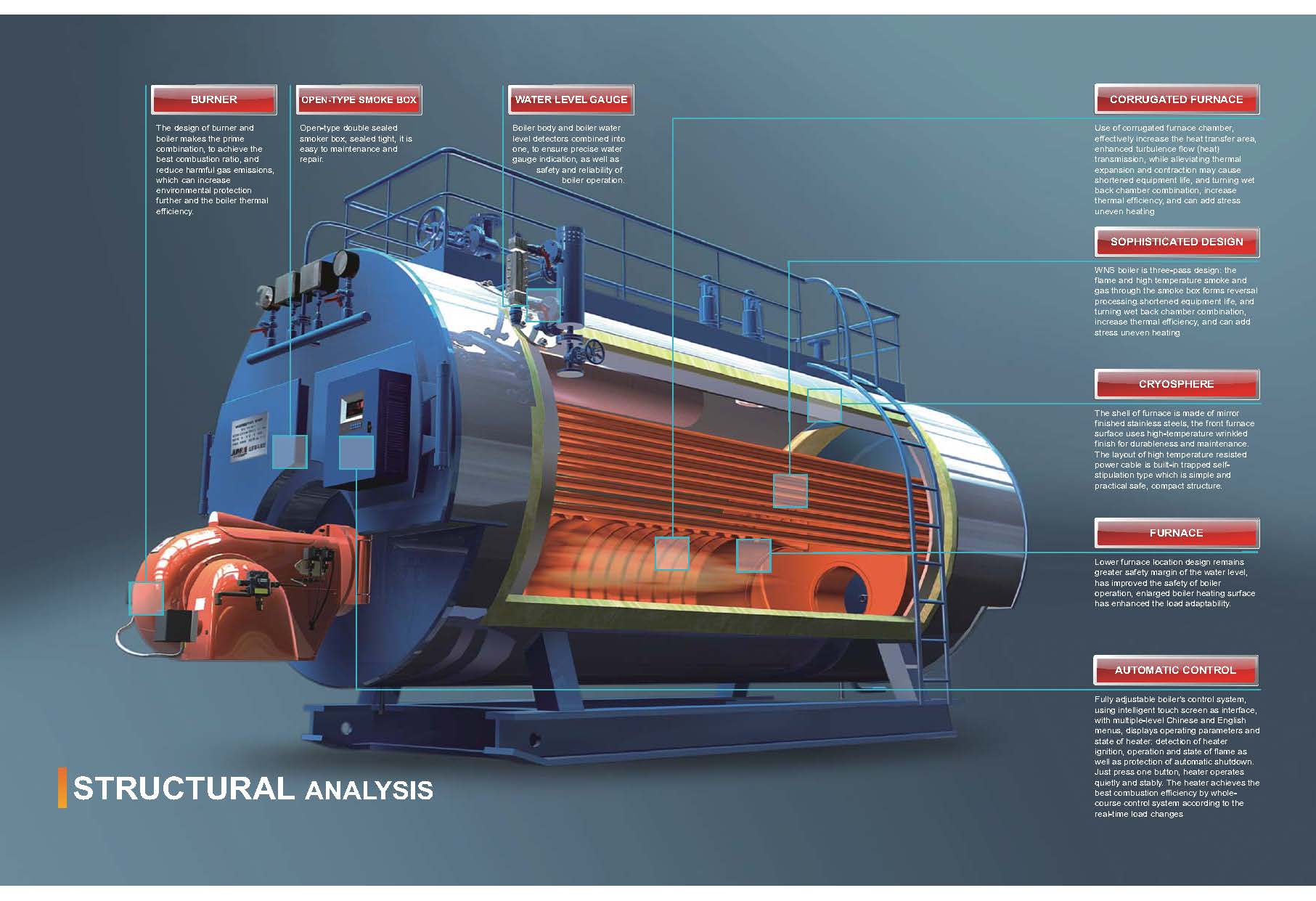
Industrial boiler maintenance planning becomes difficult when teams rely only on fixed schedules, emergency repairs, operator experience, and incomplete equipment history. A burner may need calibration earlier than expected, a feedwater pump may run for months without issue, a valve may begin sticking between scheduled inspections, or a steam trap may waste energy silently while still allowing production to continue. When maintenance is planned without real operating evidence, plants often face two expensive outcomes: they either replace parts too early and waste maintenance budget, or they act too late and suffer unplanned shutdowns, safety risks, production loss, and rushed spare-parts purchasing. The practical solution is to combine IoT, AI, and predictive maintenance so maintenance planning becomes condition-based, risk-based, and directly connected to real boiler performance.
IoT, AI, and predictive maintenance support smarter maintenance planning in industrial boiler management by turning real-time boiler data into prioritized maintenance decisions. IoT sensors collect live data from pumps, burners, valves, steam traps, water treatment systems, economizers, motors, fans, pressure controls, and safety-related components. AI analyzes these data patterns to identify degradation, abnormal behavior, asset criticality, failure probability, and maintenance urgency. Predictive maintenance then helps boiler teams schedule inspections, cleaning, calibration, repair, replacement, spare-parts preparation, and shutdown windows at the right time, reducing emergency work and improving boiler reliability, safety, efficiency, and lifecycle cost.
For plant managers, maintenance supervisors, boiler operators, energy engineers, and procurement teams, smarter maintenance planning is not just about avoiding breakdowns. It is about knowing which asset needs attention first, which repair can wait, which spare parts should be stocked, which maintenance task should be combined with a planned outage, and which recurring failure deserves root-cause correction instead of repeated temporary repair. As a professional industrial boiler manufacturer and system supplier, we see the best results when digital maintenance planning is integrated with boiler hardware, control systems, water treatment, combustion tuning, operator workflows, CMMS work orders, spare-parts management, and lifecycle service strategy.
A fixed maintenance calendar is always the most reliable way to maintain industrial boilers.False
Fixed maintenance schedules are useful for required inspections and routine tasks, but they may miss fast-developing failures or cause unnecessary service on healthy components. Smarter planning combines scheduled maintenance with condition-based and predictive data.
IoT, AI, and predictive maintenance can help maintenance teams plan boiler work based on real asset condition rather than guesswork.True
Real-time sensor data and AI analysis help identify early degradation, prioritize risk, and schedule maintenance before small problems become unplanned failures.
Why Traditional Boiler Maintenance Planning Often Fails
Traditional industrial boiler maintenance planning usually depends on three methods: calendar-based service, operator reports, and reactive repair after failure. These methods are familiar, but they do not always match the actual condition of the boiler system. A feedwater pump may fail before its next scheduled inspection because it operates under poor suction conditions. A burner may drift out of adjustment faster than expected because of actuator wear, fuel quality variation, or linkage movement. A control valve may begin sticking shortly after service because of process contamination. At the same time, another component may remain healthy long after the calendar says it should be replaced. This mismatch between schedule and real condition creates wasted labor, unnecessary parts replacement, emergency downtime, and poor maintenance confidence.
An industrial boiler is not a single asset; it is a connected system. The pressure vessel, burner, fuel train, combustion fan, feedwater pump, deaerator, water treatment system, blowdown valves, economizer, steam header, condensate return, safety valves, level controls, steam traps, PLC, sensors, and control valves all influence reliability. A maintenance issue in one area can create symptoms in another. For example, poor condensate return can lower feedwater temperature and increase boiler load. Water-treatment instability can create scaling, which increases stack temperature and tube stress. Pump cavitation can disturb water-level control. Burner air-fuel drift can reduce efficiency and increase lockout risk. Because these relationships are complex, maintenance planning based only on isolated equipment schedules is often incomplete.
IoT, AI, and predictive maintenance improve this situation by giving maintenance teams continuous evidence. Instead of asking, “Is it time to service this component?” the team can ask, “What does the asset condition show, how critical is the component, what is the risk of delaying work, and when is the best time to intervene?” This shift is the foundation of smarter boiler maintenance planning. It does not remove scheduled inspections or safety procedures. Instead, it adds a data-driven layer that helps maintenance teams plan with better timing, stronger evidence, and lower operational risk.
How IoT Builds the Data Foundation for Maintenance Planning
IoT supports smarter maintenance planning by collecting real-time condition data from the boiler and its auxiliary equipment. In practical boiler rooms, this may include pressure transmitters, temperature sensors, vibration sensors, motor current monitoring, oxygen analyzers, fuel flow meters, steam flow meters, conductivity sensors, valve position feedback, flame signal monitoring, stack temperature sensors, condensate return temperature sensors, pump discharge pressure sensors, and smart control system data. These signals create a live picture of asset health.
For maintenance planning, the most valuable IoT data is not only the current reading but the trend. A pump vibration reading matters more when compared with its normal baseline. A burner ignition delay matters more when it becomes longer over time. A valve position signal becomes useful when compared with the control command. Stack temperature becomes a maintenance indicator when it rises at the same firing rate and feedwater temperature. Conductivity becomes useful when linked with blowdown behavior and water-treatment records. IoT allows maintenance teams to see these relationships continuously.
IoT also improves maintenance documentation. Each alarm, trip, inspection, repair, calibration, and replacement can be connected to timestamped operating data. This helps answer important planning questions: Did the repair actually solve the problem? Did the same fault return? Did the component fail earlier than expected? Was the spare part correct? Did downtime decrease after the maintenance action? This evidence turns maintenance from a cost center into a measurable reliability program.
| Boiler Asset | IoT Data for Maintenance Planning | What the Data Reveals | Planning Benefit |
|---|---|---|---|
| Feedwater pump | Vibration, motor current, suction pressure, discharge pressure, flow | Bearing wear, cavitation, blockage, hydraulic degradation | Schedule pump service before water-supply failure |
| Burner system | Flame signal, ignition timing, fuel pressure, oxygen, actuator position | Combustion drift, weak ignition, scanner fouling, actuator wear | Plan tune-up, calibration, or component replacement |
| Control valve | Command signal, actual position, travel time, pressure response | Sticking, slow response, leakage, actuator problems | Plan stroke testing and repair |
| Boiler tubes | Stack temperature, water chemistry, blowdown, operating hours | Scale, soot, fouling, overheating risk | Plan cleaning and inspection |
| Economizer | Flue gas temperature, feedwater temperature rise, pressure drop | Fouling, reduced heat recovery, bypass leakage | Plan cleaning and performance restoration |
| Steam traps | Temperature, ultrasonic signal, condensate return behavior | Failed open, failed closed, steam loss | Plan trap survey and replacement |
| Blowdown system | Conductivity, valve operation, blowdown frequency | Excessive blowdown, valve leakage, sensor drift | Plan valve repair and conductivity calibration |
| Safety-related devices | Event history, pressure excursions, test records | Frequent lifting, abnormal pressure behavior | Plan authorized inspection and corrective action |
How AI Turns Boiler Data Into Maintenance Priorities
AI supports maintenance planning by analyzing large amounts of boiler data and converting it into asset-level priorities. A maintenance supervisor does not need hundreds of raw trend lines; they need to know which asset is degrading, how serious the condition is, what is likely causing it, how soon action is needed, and what work should be prepared. AI helps by comparing current data with historical normal behavior, similar operating conditions, manufacturer expectations, and known failure patterns.
In boiler maintenance planning, AI can perform several practical functions. It can detect abnormal trends before alarms occur. It can classify probable failure causes, such as pump cavitation, bearing wear, burner drift, valve stiction, heat-transfer fouling, oxygen sensor drift, or steam trap leakage. It can estimate urgency by evaluating trend speed, asset criticality, operating load, and production impact. It can recommend maintenance actions such as inspection, cleaning, calibration, lubrication, alignment, replacement, or root-cause review. It can also help group maintenance tasks so the plant can complete multiple repairs during one planned shutdown instead of stopping repeatedly.
A useful AI maintenance recommendation should be specific. A weak recommendation says, “Pump anomaly detected.” A practical recommendation says, “Feedwater Pump 2 vibration has increased 35% over the last 21 operating days, motor current is rising at similar flow, and discharge pressure is less stable during high load. Probable bearing wear, misalignment, or suction restriction. Inspect pump alignment, bearings, seals, and suction strainer during the next planned maintenance window.” This type of alert helps the maintenance planner prepare labor, tools, spare parts, and shutdown timing before the problem becomes urgent.
AI also helps rank maintenance work by risk. Not all faults deserve the same response. A minor abnormality on a redundant standby pump may be monitored. The same abnormality on the only operating feedwater pump may require fast intervention. A small steam trap loss in a non-critical branch may be scheduled with routine maintenance, while a failed trap causing water hammer risk near critical equipment may require immediate action. AI can combine failure probability with failure consequence, helping maintenance teams focus on the work that protects safety, production, and energy performance.
| AI Planning Function | Boiler Maintenance Application | Example Output | Value for Maintenance Team |
|---|---|---|---|
| Anomaly detection | Finds behavior outside normal baseline | “Burner oxygen trend drifting upward at steady load” | Early warning before efficiency loss or lockout |
| Fault classification | Suggests likely cause | “Probable actuator delay rather than fuel pressure issue” | Faster troubleshooting and fewer wrong repairs |
| Remaining useful life estimation | Forecasts degradation timeline | “Pump vibration may reach warning level within 18 operating days” | Better shutdown and spare-parts planning |
| Risk ranking | Prioritizes assets by consequence | “Feedwater pump issue has higher priority than trap issue” | Focuses labor on critical tasks |
| Work bundling | Groups tasks by outage window | “Combine economizer cleaning with burner calibration” | Reduces repeated downtime |
| Maintenance feedback learning | Compares alert with repair result | “Valve repair restored normal pressure response” | Improves future recommendations |
Predictive Maintenance and Smarter Work-Order Timing
Predictive maintenance is the practical bridge between data analysis and maintenance execution. It helps the plant decide when to create a work order, what priority the work order should have, what parts are needed, which technician skills are required, whether the boiler must be shut down, and whether the task can be combined with other planned work. This is where predictive maintenance becomes more than a dashboard feature; it becomes a planning tool.
In a traditional maintenance environment, work orders are often created after an operator reports a problem or after a failure occurs. In a smarter boiler maintenance system, work orders can be triggered by condition thresholds, trend speed, AI risk score, or repeated abnormal behavior. For example, a control valve may not yet have failed, but if command-position mismatch increases over several weeks, a planned work order can be created for stroke testing and actuator inspection. A burner may still operate, but if ignition time is increasing and flame signal is weakening, the planner can schedule scanner cleaning and ignition system inspection. A steam trap may not stop production, but abnormal trap temperature can generate a replacement task during the next maintenance route.
This approach improves maintenance timing. Work is not done too early simply because the calendar demands it, and it is not done too late after the equipment fails. The maintenance team can choose a window when production impact is low, safety preparations are complete, spare parts are available, and skilled technicians are assigned. Predictive maintenance also reduces emergency purchasing because parts are identified before failure. This is especially valuable for boiler plants with imported burners, specialized valves, pressure-rated components, oxygen analyzers, control modules, or custom pump parts that may have long lead times.
Better Spare-Parts Planning and Inventory Control
Spare-parts planning is one of the most practical benefits of IoT, AI, and predictive maintenance. Many boiler downtime events are extended not because the repair is technically difficult, but because the correct spare part is not available. A plant may discover that a burner actuator, flame scanner, feedwater pump seal, oxygen probe, control valve positioner, conductivity sensor, gasket kit, or safety-related component must be ordered urgently. Emergency shipping, production loss, and temporary repairs can be expensive.
Predictive maintenance improves spare-parts planning by forecasting likely component needs. If vibration trends show that a pump bearing may require service soon, the planner can check bearing, seal, coupling, and gasket availability. If burner ignition performance is declining, the planner can prepare ignition electrodes, flame scanner parts, fuel filters, actuator parts, or burner gaskets. If conductivity sensor drift appears likely, calibration solution and replacement probes can be prepared. If valve travel time is worsening, a repair kit or actuator may be ordered before the outage.
At the same time, smarter planning avoids overstocking. Not every part needs to be stored in large quantities. AI-supported maintenance history can show which parts fail frequently, which assets are critical, which parts have long lead times, and which parts are rarely used. This allows the plant to classify inventory into critical spares, recommended spares, planned-maintenance parts, and order-on-demand items.
| Spare-Part Category | Examples in Boiler Management | Planning Method | Benefit |
|---|---|---|---|
| Critical safety/reliability spares | Flame scanner, level sensor, feedwater pump seal kit, control module | Keep available based on asset criticality and lead time | Reduces emergency downtime |
| Predictive replacement parts | Bearings, actuators, valve kits, oxygen probes, trap elements | Order when AI trends show degradation | Reduces unnecessary inventory |
| Routine maintenance consumables | Gaskets, filters, electrodes, calibration fluids, lubricants | Stock based on scheduled service frequency | Supports planned maintenance efficiency |
| Long-lead specialized parts | Burner components, custom valves, imported sensors | Forecast from condition and lifecycle data | Prevents long outage extensions |
| Low-criticality parts | Non-critical gauges, minor fittings, secondary accessories | Order as needed | Controls inventory cost |
Smarter Shutdown Planning and Work Bundling
One of the biggest maintenance planning advantages of predictive maintenance is the ability to bundle work into planned shutdown windows. Industrial boilers often support production lines that cannot easily stop. A poor maintenance plan may require multiple interruptions: one shutdown for burner service, another for valve repair, another for economizer cleaning, and another for pump work. Smarter planning uses condition data to identify which tasks can be safely grouped.
For example, if AI detects moderate economizer fouling, early burner drift, and a control valve response delay, the maintenance supervisor may schedule all three tasks during one planned weekend outage. The team can prepare cleaning tools, burner calibration equipment, valve repair kits, lockout procedures, inspection checklists, and post-maintenance testing in advance. This reduces total downtime and improves maintenance quality because the work is organized instead of rushed.
Work bundling should be risk-based. Some issues cannot wait for the next major outage. A safety-critical feedwater problem, unstable combustion condition, or serious pressure-control issue may require immediate action. However, many early-stage degradation issues can be planned intelligently. AI helps distinguish urgent risks from manageable maintenance opportunities.
Maintenance Planning for Energy Efficiency
Smarter maintenance planning also improves boiler energy efficiency. Many energy losses are maintenance problems in disguise. Fouled heat-transfer surfaces increase stack temperature. Burner drift increases excess air and fuel waste. Failed steam traps reduce condensate return. Poor blowdown valve performance wastes hot treated water. Pump degradation increases auxiliary power and destabilizes operation. Economizer fouling reduces heat recovery. Sensor drift causes poor control decisions.
With IoT and AI, maintenance teams can prioritize tasks based on energy impact. If a failed steam trap wastes significant steam, it may deserve higher priority than a minor mechanical issue with limited energy consequence. If stack temperature rises steadily at the same load, cleaning may produce measurable fuel savings. If oxygen drift increases excess air, burner tuning may provide quick return. This connects maintenance planning with energy management and helps justify maintenance budgets with measurable fuel-saving results.
| Maintenance Issue | Energy Efficiency Impact | IoT/AI Detection Method | Planning Decision |
|---|---|---|---|
| Burner excess air drift | Higher stack loss and fuel use | Oxygen, stack temperature, fuel-to-steam ratio | Schedule burner tuning and analyzer calibration |
| Soot or scale buildup | Reduced heat transfer | Rising stack temperature at similar load | Plan fireside or water-side cleaning |
| Failed steam trap | Steam loss and lower condensate return | Trap temperature, condensate return trend | Add trap replacement to maintenance route |
| Excessive blowdown | Loss of hot treated water | Conductivity and blowdown frequency | Adjust controls and inspect valve |
| Economizer fouling | Lower feedwater heat recovery | Reduced temperature rise across economizer | Schedule economizer cleaning |
| Pump inefficiency | Higher electrical use and unstable feedwater control | Motor current, vibration, flow, pressure | Plan pump inspection or overhaul |
Maintenance Planning for Safety and Compliance
Boiler maintenance planning must always protect safety and compliance. IoT, AI, and predictive maintenance can support this by improving documentation, test scheduling, calibration tracking, and early risk identification. Safety valves, low-water cutoffs, burner management systems, pressure controls, flame scanners, fuel shutoff valves, interlocks, and control devices must be inspected and tested according to applicable rules, site procedures, and manufacturer requirements. Predictive maintenance does not replace these required tasks; it helps ensure that safety-related components receive attention before abnormal behavior becomes dangerous.
For example, if pressure data shows repeated near-relief events, maintenance planning should include pressure-control review, safety valve inspection, and process-load analysis. If flame signal quality is declining, burner safety components should be inspected before lockouts become frequent. If level transmitter readings become noisy or inconsistent with feedwater and steam flow, calibration or replacement should be planned. If conductivity trends are unstable, water-treatment review should be scheduled to prevent scaling, corrosion, or carryover risk.
Digital records also improve audit readiness. A smart boiler maintenance system can store timestamps, alarm history, inspection results, calibration records, work orders, technician notes, replacement parts, and post-repair performance. This gives plant managers stronger evidence that the boiler is being maintained responsibly and consistently.
Integrating IoT and AI With CMMS
To support smarter maintenance planning, IoT and AI should connect with the plant’s computerized maintenance management system, often called CMMS. A dashboard that only displays alerts may still require manual follow-up, which creates the risk that warnings are ignored. When alerts are integrated with work-order systems, maintenance tasks can be assigned, prioritized, tracked, and closed properly.
A good integration should include asset ID, alert type, severity, supporting data, recommended action, required spare parts, safety notes, target completion date, and verification requirements. For example, an AI alert about valve stiction should generate a work order linked to that exact valve, not a vague note saying “check boiler.” The work order should include evidence such as command-position mismatch, travel delay, pressure instability, and suggested inspection steps. After repair, the system should confirm whether valve response returned to normal.
This closed-loop process improves maintenance learning. If an AI prediction is confirmed in the field, the model becomes more trusted. If the prediction is wrong, the data and logic can be refined. Over time, the boiler maintenance program becomes more accurate and plant-specific.
Example Maintenance Planning Workflow
| Step | Action | Responsible Team | Output |
|---|---|---|---|
| 1 | IoT sensors collect asset condition data | Operations and automation | Real-time boiler health data |
| 2 | AI detects abnormal trend | Analytics system | Risk alert and probable cause |
| 3 | Maintenance planner reviews priority | Maintenance supervisor | Work-order decision |
| 4 | Spare parts and tools are checked | Maintenance and stores | Prepared repair package |
| 5 | Work is scheduled with production | Maintenance and production planning | Planned maintenance window |
| 6 | Technician performs inspection or repair | Maintenance team | Completed work order |
| 7 | Post-maintenance data is reviewed | Engineering and operations | Verification of improvement |
| 8 | Model and maintenance plan are updated | Reliability team | Better future planning |
Practical Example: Feedwater Pump Maintenance Planning
Consider a plant with two feedwater pumps serving an industrial steam boiler. In a traditional system, the pumps are inspected every three months, and repairs are made when operators report noise or pressure instability. One pump occasionally trips during high-load operation, but the cause is unclear. The plant keeps limited spare parts because failures are unpredictable.
After installing IoT monitoring, the plant collects vibration, motor current, suction pressure, discharge pressure, pump run hours, feedwater flow, and boiler level-control data. AI detects that Pump 1 vibration is increasing faster than Pump 2 and that discharge pressure becomes unstable during peak load. The system identifies probable bearing wear, suction restriction, or cavitation risk. Instead of waiting for a pump trip, the maintenance planner creates a work order for inspection during a planned production pause. The storeroom prepares bearings, seals, gaskets, and a strainer cleaning kit. During inspection, technicians find early bearing wear and partial strainer blockage. After repair, vibration and pressure stability return to normal.
This example shows the real value of predictive maintenance planning. The plant avoids an emergency feedwater problem, protects boiler water-level reliability, reduces unplanned downtime, uses spare parts efficiently, and improves confidence in the maintenance schedule. The repair becomes planned work instead of crisis work.
Practical Example: Burner Maintenance Planning
A burner may operate for months while gradually drifting away from optimal condition. In a traditional maintenance model, the burner may only receive attention during scheduled combustion testing or after repeated lockouts. With IoT monitoring, the plant tracks oxygen, stack temperature, flame signal, ignition timing, fuel pressure, actuator position, and firing rate. AI detects that oxygen is rising at similar loads and that actuator movement is becoming less responsive. The system recommends burner inspection, oxygen analyzer calibration, and actuator linkage review.
The maintenance planner schedules the work during a low-demand period. Technicians calibrate the oxygen analyzer, inspect the burner linkage, clean the flame scanner, and verify fuel pressure. After service, oxygen stability improves, stack temperature decreases, and burner lockout risk is reduced. This is smarter planning because the maintenance task is performed based on evidence, not guesswork.
Key Performance Indicators for Smart Boiler Maintenance Planning
Smarter maintenance planning should be measured. Without KPIs, it is difficult to prove whether IoT, AI, and predictive maintenance are improving boiler management. Useful KPIs include unplanned downtime hours, emergency work-order percentage, planned maintenance ratio, mean time between failures, mean time to repair, spare-parts availability, repeat failure rate, maintenance cost per operating hour, fuel-to-steam ratio, alarm frequency, and work-order completion time.
The most important KPI is not always the number of alerts. In fact, a mature system should reduce unnecessary alerts. The goal is better decisions, not more notifications. A useful smart maintenance system should increase planned work, reduce emergency work, improve repair accuracy, reduce repeat failures, and help the plant maintain safe, efficient boiler operation.
| KPI | What It Measures | Why It Matters |
|---|---|---|
| Planned maintenance ratio | Percentage of maintenance completed as planned work | Shows whether the team is moving away from emergency repair |
| Emergency work-order rate | Share of urgent unplanned tasks | Lower rate means better prediction and preparation |
| Mean time between failures | Average operating time between failures | Indicates reliability improvement |
| Mean time to repair | Average time required to restore equipment | Reflects spare-parts readiness and diagnostic speed |
| Repeat failure rate | Number of recurring failures on same asset | Shows whether root causes are being solved |
| Spare-parts availability | Critical parts available when needed | Reduces outage duration |
| Alarm-to-work-order conversion | Useful alerts that become verified actions | Measures alert quality |
| Fuel-to-steam ratio | Fuel used per unit of steam produced | Links maintenance planning to energy efficiency |
Common Mistakes to Avoid
The first mistake is collecting data without connecting it to maintenance action. A dashboard full of trends does not improve planning unless alerts become work orders, spare-parts checks, inspections, or operating changes. The second mistake is using AI before validating sensor accuracy. Poor data from drifting sensors, incorrect meter sizing, missing timestamps, or noisy signals can create false maintenance priorities. The third mistake is treating predictive maintenance as a replacement for required inspections. Boilers are pressure equipment, and safety-related tests and inspections must continue.
The fourth mistake is failing to involve operators. Operators often notice changes in sound, smell, vibration, startup behavior, and steam response before formal alarms appear. Their experience should be combined with IoT and AI data. The fifth mistake is overstocking spare parts without using failure history and criticality analysis. Predictive maintenance should improve inventory decisions, not simply increase inventory cost. The sixth mistake is ignoring root causes. If the same pump, valve, burner, or trap fails repeatedly, maintenance planning should investigate operating conditions, installation quality, water treatment, control logic, and equipment selection.
Final Summary
IoT, AI, and predictive maintenance support smarter maintenance planning in industrial boiler management by replacing guesswork with real operating evidence. IoT captures asset condition data from boilers, burners, pumps, valves, traps, water-treatment systems, economizers, and controls. AI analyzes that data to detect abnormal trends, identify likely causes, rank risk, and recommend action. Predictive maintenance turns those insights into planned inspections, repairs, calibration, cleaning, spare-parts preparation, and shutdown scheduling.
The result is a more organized and reliable boiler maintenance program. Emergency repairs decrease, planned maintenance increases, spare-parts readiness improves, shutdowns are better coordinated, energy losses are corrected earlier, and safety-related components receive more timely attention. The strongest results come when digital tools are integrated with skilled technicians, clear work-order processes, accurate sensors, operator feedback, and professional boiler engineering support.
How Do IoT, AI, and Predictive Maintenance Help Industrial Boiler Management Reduce Long-Term Operating Costs?
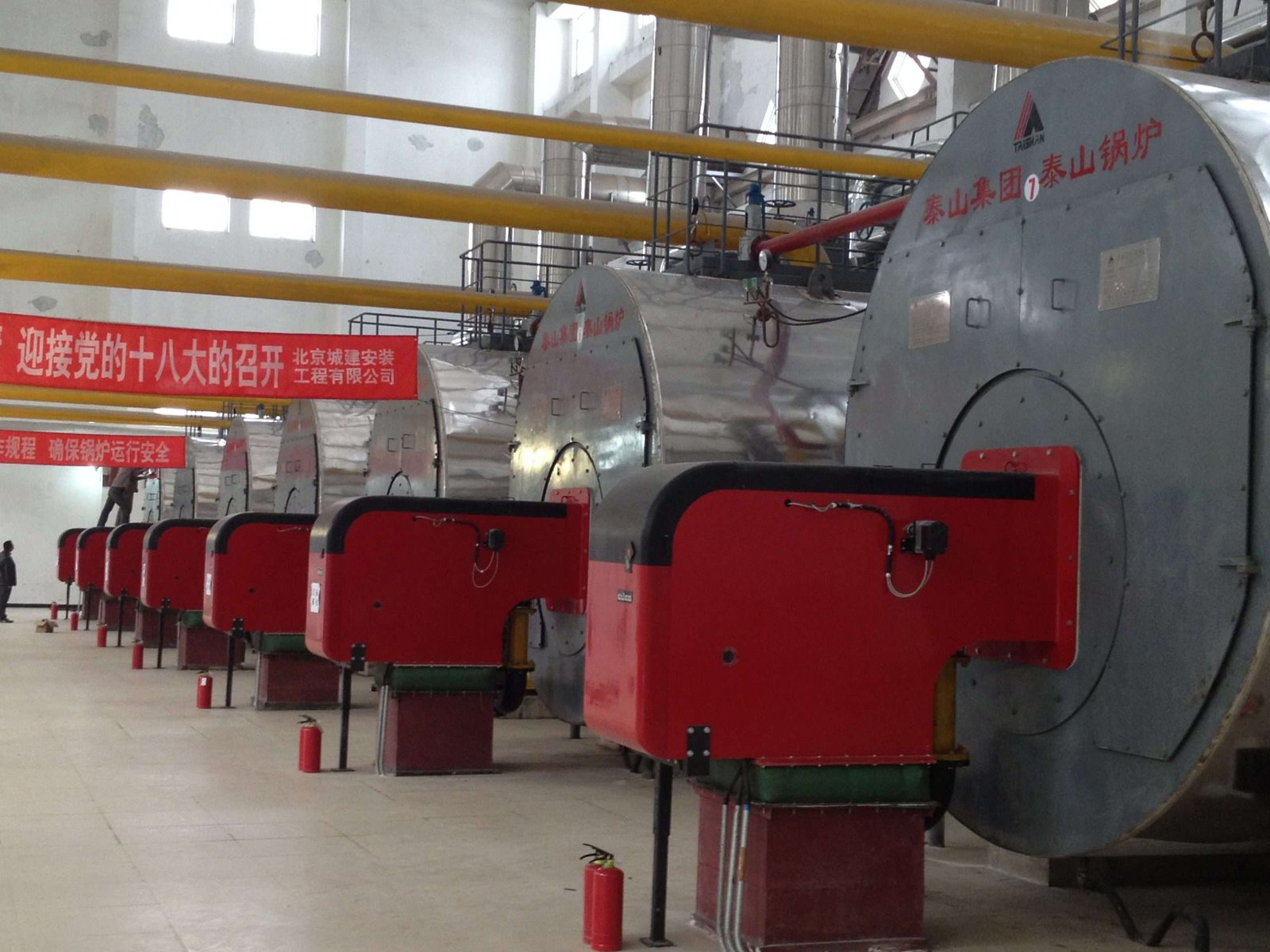
Long-term boiler operating cost is often higher than expected because many losses are hidden inside daily operation. A boiler may keep producing steam while fuel consumption slowly rises, excess air drifts upward, heat-transfer surfaces foul, blowdown wastes treated hot water, steam traps leak, condensate return declines, pumps lose efficiency, or emergency repairs become normal. The immediate problem may look small, but the consequence is serious: higher fuel bills, more unplanned downtime, rushed spare-parts purchases, shortened equipment life, greater safety risk, and a maintenance team trapped in reactive work. The practical solution is to use IoT, AI, and predictive maintenance as a connected cost-control system that continuously measures boiler performance, identifies the root causes of waste, and helps operators and maintenance teams act before small inefficiencies become expensive long-term problems.
IoT, AI, and predictive maintenance help industrial boiler management reduce long-term operating costs by lowering fuel waste, preventing unplanned failures, improving maintenance timing, extending equipment life, reducing water and chemical losses, optimizing spare-parts inventory, and supporting smarter capital decisions. IoT sensors collect real-time data from fuel flow, steam flow, oxygen, stack temperature, feedwater temperature, blowdown, conductivity, condensate return, burner operation, pumps, valves, traps, motors, and safety devices. AI analyzes these data patterns to detect efficiency loss, equipment degradation, poor load matching, combustion drift, fouling, scaling, leakage, and control instability. Predictive maintenance converts these insights into planned cleaning, tuning, calibration, repair, replacement, and shutdown scheduling, helping plants reduce total lifecycle cost rather than only reacting to breakdowns.
For boiler owners, plant managers, energy engineers, maintenance supervisors, and procurement teams, the most important financial lesson is that the purchase price of a boiler is only one part of its real cost. Over years of operation, fuel, downtime, maintenance labor, spare parts, water treatment, inspections, emissions control, and equipment replacement can cost far more than the original boiler package. As a professional industrial boiler manufacturer and system supplier, we see the strongest long-term savings when digital monitoring is not treated as a separate software accessory, but as part of a complete boiler lifecycle strategy involving correct boiler sizing, efficient burner selection, heat recovery, water treatment, reliable controls, operator training, spare-parts planning, and continuous service support.
The lowest purchase price always gives the lowest long-term operating cost for an industrial boiler.False
A lower initial price can lead to higher lifecycle cost if the boiler has poor efficiency, weak controls, limited heat recovery, higher maintenance needs, short component life, or poor digital monitoring capability.
IoT, AI, and predictive maintenance can reduce long-term boiler operating costs when they are connected to real maintenance actions and operating improvements.True
Digital monitoring only creates savings when accurate data leads to practical actions such as combustion tuning, cleaning, calibration, repair, spare-parts preparation, water-treatment correction, and better load management.
Why Long-Term Boiler Cost Is More Than Fuel Consumption
Industrial boiler operating cost is often discussed as fuel cost, and fuel is usually the largest cost category. However, a serious lifecycle cost analysis must include much more than fuel. A boiler plant also spends money on electricity for pumps and fans, water, water-treatment chemicals, blowdown losses, condensate losses, maintenance labor, spare parts, emergency service, inspections, downtime, emissions compliance, operator time, and eventual replacement of worn assets. A boiler that appears inexpensive at purchase may become costly if it consumes more fuel, requires frequent repairs, has poor modulation, lacks reliable controls, or cannot provide useful operating data. In contrast, a boiler system with better instrumentation, heat recovery, automation, and predictive maintenance capability may cost more initially but deliver lower total cost over its service life.
Long-term cost reduction starts with visibility. If the plant only reviews monthly fuel bills, it may know that cost increased, but not why. Did production demand increase? Did combustion efficiency decline? Did condensate return drop? Did blowdown increase? Did stack temperature rise due to fouling? Did steam traps fail? Did an oxygen sensor drift? Did the boiler short-cycle at low load? Did a pump consume more electricity because of wear or cavitation? Without real-time data, these questions are answered slowly, often after months of waste. IoT changes this by continuously capturing the operating variables that drive cost. AI then compares those variables with expected performance and highlights abnormal cost patterns. Predictive maintenance helps the plant correct the physical causes before they become permanent operating losses.
The key is to manage the boiler room as a cost system, not only as a steam generator. A modern industrial boiler plant should track cost per ton of steam, fuel-to-steam ratio, blowdown loss, condensate return percentage, feedwater temperature, stack temperature, excess air, cycling frequency, downtime hours, emergency work orders, planned maintenance ratio, spare-parts availability, and asset health. When these indicators are visible, management can make informed decisions. For example, if fuel cost rises because condensate return is falling, the solution is not necessarily a new boiler; it may be steam trap repair, condensate pump service, piping repair, or process-side leak isolation. If stack temperature rises at the same load, cleaning or water-treatment correction may provide savings. If emergency repair cost is high, predictive maintenance and spare-parts planning may provide better return than simply increasing the maintenance budget.
Cost Drivers in Industrial Boiler Management
| Cost Driver | Typical Hidden Cause | How IoT Helps | How AI Helps | How Predictive Maintenance Reduces Cost |
|---|---|---|---|---|
| Fuel consumption | Excess air, fouling, scale, poor sequencing, low condensate return | Measures fuel flow, steam flow, oxygen, stack temperature, feedwater temperature | Detects abnormal fuel-to-steam ratio and likely cause | Triggers burner tuning, cleaning, trap repair, and heat-recovery inspection |
| Unplanned downtime | Pump failure, burner lockout, valve sticking, control instability | Tracks vibration, flame signal, pressure, valve position, alarms | Identifies degradation before failure | Plans repair before production is interrupted |
| Maintenance labor | Reactive troubleshooting and repeated failures | Records asset condition and event history | Prioritizes probable root causes | Reduces trial-and-error repair and emergency work |
| Spare parts | Emergency purchases or overstocking | Tracks component condition and failure history | Forecasts likely part demand | Improves inventory planning and reduces urgent procurement |
| Water and chemicals | Excessive blowdown, condensate loss, poor treatment control | Measures conductivity, blowdown, makeup water, condensate return | Detects waste and contamination patterns | Plans valve repair, sensor calibration, and water-treatment correction |
| Equipment life | Thermal stress, corrosion, scaling, poor cycling | Monitors operating conditions and stress indicators | Detects repeated harmful patterns | Supports cleaning, tuning, and operating changes that protect assets |
| Compliance effort | Incomplete records and manual reporting | Captures timestamped operating and maintenance data | Organizes abnormal events and trends | Supports inspection readiness and maintenance documentation |
How IoT Reduces Long-Term Cost Through Continuous Measurement
IoT reduces long-term boiler cost by replacing assumptions with measurable evidence. In many boiler rooms, managers know the total fuel bill but cannot accurately connect that cost to boiler load, feedwater temperature, oxygen level, stack temperature, blowdown, or steam-system losses. This makes it difficult to identify the best cost-reduction action. A smart IoT system collects data from the boiler, burner, feedwater system, water treatment equipment, steam distribution system, and auxiliary machinery. The essential measurements include fuel flow, steam flow, oxygen, stack temperature, feedwater temperature, feedwater flow, boiler pressure, burner firing rate, fan speed, conductivity, blowdown flow, condensate return temperature, makeup water flow, pump vibration, motor current, valve position, flame signal, and alarm events.
The financial value of IoT comes from trend comparison. One fuel reading is not enough. A plant needs to know how fuel consumption changes at similar steam load, similar feedwater temperature, and similar oxygen conditions. One stack temperature reading is not enough. The plant needs to compare stack temperature with firing rate, feedwater temperature, and oxygen level. One conductivity reading is not enough. The plant needs to connect conductivity with blowdown, makeup water, and condensate return. IoT allows these comparisons to happen continuously, making cost leakage visible.
IoT also helps separate boiler-side losses from steam-system losses. This distinction matters because many plants blame the boiler when the real problem is outside the boiler shell. Failed steam traps, leaking steam lines, poor insulation, low condensate recovery, and process heat exchanger leaks can all increase boiler fuel consumption. IoT monitoring of steam flow, condensate return, makeup water, trap condition, and feedwater temperature helps identify whether the boiler is inefficient or whether the steam system is demanding more energy than necessary. This prevents unnecessary capital spending and directs maintenance money to the correct location.
How AI Finds the Real Causes of Cost Increase
AI reduces long-term operating cost by identifying cost patterns that are difficult to detect manually. A boiler plant is dynamic. Steam demand changes, fuel quality may vary, ambient conditions shift, feedwater temperature changes, production schedules fluctuate, and boilers may operate at different load points. Fixed alarms can identify extreme conditions, but they usually do not identify gradual cost drift. AI can build a baseline of normal performance and detect when actual performance deviates from that baseline.
For example, AI can determine that a boiler normally uses a certain amount of fuel to produce a certain amount of steam at a given feedwater temperature and oxygen level. If fuel use begins to rise without a matching change in steam demand, the model can investigate related signals. If stack temperature is rising while oxygen is stable, the likely issue may be fouling or scaling. If oxygen is rising and stack temperature is rising, combustion drift or air leakage may be involved. If feedwater temperature is falling and makeup water is increasing, condensate loss may be the cause. If blowdown is frequent while conductivity remains low, the plant may be wasting hot treated water. If pressure is unstable and burner cycling increases, poor control tuning or load matching may be increasing fuel use and equipment wear.
This ability to connect symptoms with causes is what makes AI valuable for cost control. A simple dashboard may show that fuel use increased, but AI can help explain why. A useful AI alert should be practical: “Fuel-to-steam ratio has worsened by 3.5% over the last 20 operating days. Stack temperature is 16°C higher at similar firing rate, oxygen is stable, and feedwater temperature has not changed. Probable heat-transfer fouling or scale. Plan fireside inspection, water-side review, and water-treatment verification.” This type of recommendation helps managers approve maintenance because the financial cause is visible.
AI also improves decision quality by ranking cost impact. Not every abnormal condition has the same financial consequence. A small steam trap failure in a low-use branch may be less urgent than oxygen drift on the main boiler. A minor pump vibration issue may be monitored, while economizer fouling on a high-load boiler may justify immediate cleaning. AI can rank issues by estimated cost impact, asset criticality, failure probability, and production consequence. This helps maintenance teams focus on the work that creates the highest lifecycle value.
How Predictive Maintenance Converts Data Into Financial Savings
Predictive maintenance reduces long-term operating cost because it changes maintenance from emergency response to planned intervention. Emergency maintenance is expensive for several reasons. Production may stop unexpectedly. Technicians may work overtime. Parts may be purchased urgently. Temporary repairs may be made because the correct components are unavailable. Troubleshooting may take longer because the failure sequence is unclear. Secondary damage may occur when one component fails and stresses another. Predictive maintenance reduces these costs by detecting degradation early and giving the plant time to prepare.
In boiler systems, many expensive failures develop gradually. Feedwater pump bearings wear before failure. Burner actuators slow down before lockouts become frequent. Oxygen analyzers drift before combustion performance declines significantly. Heat-transfer surfaces foul before fuel bills spike dramatically. Steam traps fail before condensate return losses become obvious. Blowdown valves leak before water and fuel waste are noticed. Control valves stick before pressure instability causes trips. Predictive maintenance tracks these patterns and recommends planned action.
Planned maintenance is usually cheaper than emergency repair because it can be scheduled during low production demand, combined with other tasks, supported with prepared spare parts, and performed with proper safety procedures. It also protects equipment life. For example, cleaning scale or soot earlier can reduce tube overheating risk. Correcting burner drift can reduce thermal stress and fuel waste. Repairing steam traps can restore condensate return and reduce makeup water treatment. Fixing pump cavitation can prevent impeller damage. Calibrating sensors can prevent poor control decisions. These actions reduce both immediate operating cost and long-term asset deterioration.
Maintenance Strategy Comparison for Lifecycle Cost
| Maintenance Strategy | How It Works | Cost Advantage | Cost Risk | Best Boiler Application |
|---|---|---|---|---|
| Reactive maintenance | Repair after failure | Low planning effort | High downtime, emergency labor, secondary damage | Non-critical low-cost components only |
| Calendar preventive maintenance | Service at fixed intervals | Predictable schedule | Can over-maintain healthy parts or miss early failures | Required inspections, routine service, safety checks |
| Condition-based maintenance | Service when measured condition changes | Better labor and parts timing | Requires reliable sensors and thresholds | Pumps, valves, traps, fans, burners |
| Predictive maintenance | Forecasts failure and cost risk using trends and AI | Reduces emergency work and improves planning | Requires good data, workflow integration, and technician feedback | Critical boiler assets and energy-loss components |
| Reliability-centered maintenance | Selects strategy by failure consequence | Optimizes lifecycle cost by asset criticality | Requires structured analysis and discipline | Whole boiler plant lifecycle management |
Fuel Cost Reduction: The Largest Long-Term Opportunity
Fuel cost is usually the biggest long-term expense in industrial boiler operation, so even small efficiency gains can create significant savings. IoT supports fuel cost reduction by measuring fuel flow, steam flow, feedwater temperature, oxygen, stack temperature, burner firing rate, and boiler load. AI analyzes these variables to calculate whether the boiler is using more fuel than expected. Predictive maintenance then corrects the causes of excess fuel use.
The most common fuel-waste causes include high excess air, fouled heat-transfer surfaces, water-side scale, poor condensate return, excessive blowdown, steam leaks, failed traps, poor boiler sequencing, short cycling, and inaccurate sensors. Each cause requires a different corrective action. High excess air may require burner tuning, oxygen analyzer calibration, damper adjustment, fan inspection, or actuator repair. Fouling may require fireside cleaning, water-side inspection, fuel-quality review, or soot-blowing strategy. Poor condensate return may require trap repair, condensate pump service, leak repair, or process heat exchanger inspection. Excessive blowdown may require conductivity sensor calibration, valve repair, water-treatment improvement, or setpoint adjustment.
A smart boiler system helps avoid the common mistake of applying the wrong fix. If fuel use rises, some plants immediately tune the burner. But if the real cause is lost condensate, burner tuning will not solve the main problem. If stack temperature rises because of scale, adjusting air-fuel ratio may not restore efficiency. AI-based analysis helps identify the most likely cause so maintenance money is used effectively.
Example Fuel Savings Model
| Annual Boiler Fuel Cost | Realistic Efficiency Improvement Scenario | Estimated Annual Fuel Saving | Likely Actions Behind Savings |
|---|---|---|---|
| $300,000 | 2% improvement | $6,000 | Oxygen trim correction, minor trap repair, blowdown adjustment |
| $1,000,000 | 3% improvement | $30,000 | Combustion tuning, condensate recovery, heat-transfer cleaning |
| $3,000,000 | 4% improvement | $120,000 | Economizer monitoring, burner optimization, scaling prevention |
| $6,000,000 | 5% improvement | $300,000 | Multi-boiler sequencing, predictive maintenance, steam-system repair |
| $12,000,000 | 6% improvement | $720,000 | Full digital energy management and lifecycle reliability program |
These figures are illustrative, not guaranteed. Actual savings depend on baseline condition, boiler size, operating hours, fuel price, steam demand, water treatment, controls, heat recovery, and maintenance quality. The table shows why long-term cost control should focus on continuous improvement. In a fuel-intensive plant, even a small percentage improvement can justify digital monitoring and predictive maintenance.
Downtime Cost Reduction
Unplanned boiler downtime can be more expensive than fuel waste because it may stop production. For food processing, textiles, chemicals, pharmaceuticals, paper, rubber, and other steam-dependent industries, one boiler outage can affect drying, heating, sterilization, cleaning, curing, or process control. Downtime cost includes lost output, labor disruption, emergency service, product quality loss, delayed delivery, and sometimes restart waste.
IoT reduces downtime cost by detecting early equipment degradation. AI reduces diagnostic time by identifying likely causes. Predictive maintenance reduces emergency failures by planning work before breakdown. For example, a feedwater pump vibration trend can trigger planned bearing replacement. A weak flame signal can trigger burner inspection before lockouts become repeated. A sticking control valve can be repaired before pressure instability interrupts production. A rising stack temperature trend can trigger cleaning before thermal stress becomes serious.
The financial benefit is not only fewer failures but shorter failures. When a problem does occur, historical data helps technicians diagnose faster. Spare parts may already be prepared because the system predicted likely failure. Maintenance records show previous symptoms and repairs. This reduces mean time to repair and prevents repeated downtime from wrong root-cause diagnosis.
Water, Chemical, and Blowdown Cost Reduction
Water-related cost is often underestimated. Boiler plants pay for makeup water, pretreatment, softening or demineralization, chemicals, blowdown heat loss, wastewater handling, and corrosion or scaling damage. Poor condensate return increases all these costs because the plant must replace hot treated condensate with cold makeup water. Excessive blowdown wastes hot water and chemicals. Poor water treatment can cause scale, corrosion, carryover, tube damage, and expensive shutdowns.
IoT helps by monitoring conductivity, blowdown frequency, blowdown flow, makeup water, condensate return temperature, feedwater temperature, and chemical dosing indicators where available. AI detects abnormal water patterns. Predictive maintenance identifies the physical causes, such as leaking blowdown valves, faulty conductivity sensors, failed traps, condensate leaks, pump problems, or contamination.
Reducing water-related cost requires balance. The goal is not to minimize blowdown blindly. Too little blowdown can create safety and reliability risks. The goal is optimized blowdown based on accurate water quality. A smart boiler system helps maintain this balance by showing when blowdown is excessive, insufficient, unstable, or caused by contamination.
Spare-Parts and Inventory Cost Reduction
Boiler spare-parts management has two opposite risks. If inventory is too low, a simple failure can create long downtime while parts are ordered. If inventory is too high, money is tied up in parts that may never be used. Predictive maintenance helps find the middle ground by using real asset condition and failure history to forecast likely part demand.
For example, if AI detects early feedwater pump bearing wear, the plant can prepare bearings, seals, gaskets, and coupling parts before the maintenance window. If burner ignition data shows deterioration, the plant can prepare electrodes, flame scanner components, fuel filters, or actuator parts. If valve diagnostics show slow response, the planner can prepare a valve repair kit or positioner. If oxygen analyzer drift is detected, replacement probes and calibration supplies can be stocked.
Over time, the plant can classify spare parts into critical spares, condition-based spares, routine consumables, long-lead items, and order-on-demand parts. This reduces emergency procurement while avoiding unnecessary stock.
Asset Life Extension and Capital Planning
Long-term operating cost also includes asset replacement. A boiler system that suffers from poor water treatment, frequent cycling, unstable combustion, thermal stress, corrosion, scale, and delayed maintenance will age faster. IoT and AI help extend equipment life by identifying damaging operating patterns early. Predictive maintenance helps correct them before they cause permanent damage.
For example, frequent short cycling can stress burners, refractory, controls, and pressure parts. AI can identify cycling patterns and recommend sequencing or control changes. Water-side scale can overheat tubes, so smart monitoring of stack temperature, conductivity, blowdown, and water treatment supports earlier cleaning and chemical correction. Combustion instability can increase soot and thermal stress, so burner diagnostics support timely tuning. Pump cavitation can damage impellers and seals, so vibration and pressure monitoring support early correction.
Digital records also support smarter capital planning. Instead of replacing equipment based only on age, managers can evaluate actual condition, operating history, maintenance cost, downtime risk, efficiency trend, and part availability. This helps decide whether to repair, retrofit, upgrade controls, add an economizer, improve water treatment, replace a burner, or purchase a new boiler. Better capital timing reduces both premature replacement and costly delay.
Practical Lifecycle Cost Dashboard
| Dashboard Metric | Why It Matters | Cost Decision It Supports |
|---|---|---|
| Cost per ton of steam | Shows real production cost of steam | Compare boilers, shifts, operating modes, and improvement projects |
| Fuel-to-steam ratio | Tracks combustion and heat-transfer performance | Identify fuel waste and justify tuning or cleaning |
| Stack temperature trend | Indicates heat-transfer degradation | Schedule cleaning or water-side inspection |
| Oxygen trend | Indicates excess air or combustion drift | Plan burner tuning and sensor calibration |
| Condensate return percentage | Shows heat and water recovery performance | Prioritize trap repair and condensate system investment |
| Blowdown loss estimate | Shows water, heat, and chemical waste | Optimize blowdown and water treatment |
| Emergency work-order rate | Shows reactive maintenance burden | Justify predictive maintenance and critical spares |
| Planned maintenance ratio | Shows maintenance maturity | Improve labor planning and shutdown coordination |
| Asset health score | Summarizes degradation risk | Prioritize maintenance and capital spending |
| Spare-parts readiness | Shows repair preparedness | Reduce downtime caused by missing parts |
Example Case: Reducing Long-Term Boiler Cost in a Manufacturing Plant
Consider a manufacturing plant operating two steam boilers for process heating and cleaning. The plant’s fuel bill had increased steadily over two years, but production output had not increased at the same rate. Maintenance costs were also rising because burner lockouts, feedwater pump repairs, and steam trap failures were becoming more frequent. The plant initially considered replacing one boiler, but a lifecycle cost review suggested that the main problem might be operating condition rather than boiler age alone.
The plant installed IoT monitoring on fuel flow, steam flow, oxygen, stack temperature, feedwater temperature, conductivity, blowdown valve operation, condensate return temperature, makeup water, feedwater pump vibration, burner flame signal, and control valve position. AI analytics compared boiler performance under similar load conditions and identified four cost drivers. First, oxygen levels were drifting upward at medium load, causing excess air loss. Second, stack temperature had gradually increased, suggesting heat-transfer fouling. Third, condensate return had declined because of multiple failed traps and a condensate pump issue. Fourth, feedwater pump vibration was increasing, creating future reliability risk.
The predictive maintenance plan included burner tuning, oxygen analyzer calibration, fireside cleaning, trap replacement, condensate pump repair, and feedwater pump bearing inspection. Spare parts were prepared before the planned shutdown. After the work, fuel-to-steam ratio improved, feedwater temperature increased due to better condensate return, stack temperature decreased after cleaning, and pump vibration returned closer to baseline. The plant avoided immediate boiler replacement and used the data to plan future upgrades more intelligently. This example shows an important principle: smart boiler management reduces long-term cost by identifying the true source of waste before capital is spent in the wrong place.
Implementation Roadmap for Long-Term Cost Reduction
A successful cost-reduction project should begin with a lifecycle cost audit. The plant should review fuel bills, steam production, downtime history, emergency work orders, spare-parts spending, water and chemical usage, blowdown practices, condensate return, inspection findings, and operator feedback. The goal is to identify the highest-cost problems, not simply install technology.
After the audit, the plant should validate key measurements. Fuel flow, steam flow, oxygen, stack temperature, feedwater temperature, conductivity, makeup water, and condensate return are essential for cost analysis. If these measurements are inaccurate, AI recommendations may be wrong. Once data quality is reliable, the plant can build dashboards, baseline models, asset health scores, and predictive maintenance workflows.
The most important implementation step is connecting alerts to action. If AI identifies excess air but no one schedules burner tuning, there is no saving. If vibration trends predict pump failure but spare parts are not prepared, downtime may still occur. If blowdown waste is detected but the valve is not repaired, water and fuel losses continue. Cost reduction requires a closed loop: detect, prioritize, plan, execute, verify, and improve.
| Implementation Phase | Objective | Key Actions | Cost Reduction Result |
|---|---|---|---|
| Phase 1: Lifecycle cost audit | Identify major cost drivers | Review fuel, downtime, maintenance, water, chemicals, spares, failures | Focuses investment on highest-value savings |
| Phase 2: Measurement validation | Ensure accurate cost data | Calibrate fuel, steam, oxygen, temperature, conductivity, and water meters | Prevents wrong decisions |
| Phase 3: IoT monitoring | Capture real-time boiler cost signals | Connect sensors, controls, historian, dashboards, and secure gateways | Makes cost leakage visible |
| Phase 4: AI analysis | Identify root causes and priorities | Build baselines, anomaly detection, cost ranking, asset health models | Converts data into decisions |
| Phase 5: Predictive maintenance | Plan corrective work before failure | Schedule tuning, cleaning, calibration, repairs, spare-parts preparation | Reduces emergency cost and fuel waste |
| Phase 6: Continuous optimization | Sustain long-term savings | Review KPIs, train operators, refine models, update maintenance plans | Maintains lifecycle cost control |
Common Mistakes That Prevent Cost Savings
The first mistake is focusing only on boiler purchase price. A boiler with lower initial cost may consume more fuel, require more maintenance, lack useful monitoring, or have shorter component life. The second mistake is installing sensors without a cost-reduction plan. Data must be linked to fuel savings, downtime reduction, maintenance planning, water savings, or asset life extension. The third mistake is relying on AI before validating instruments. Inaccurate steam flow, fuel flow, oxygen, or temperature data can produce misleading conclusions. The fourth mistake is ignoring the steam system. A boiler may be operating well while traps, leaks, insulation, and condensate problems waste energy downstream. The fifth mistake is treating predictive maintenance as a replacement for skilled technicians. Digital tools support human expertise; they do not eliminate the need for inspection, calibration, cleaning, repair, and professional judgment.
The sixth mistake is failing to calculate avoided cost. Many savings are not obvious because they appear as problems that did not happen: avoided shutdowns, avoided emergency freight, avoided tube damage, avoided overtime, avoided excessive blowdown, avoided premature replacement, and avoided repeated troubleshooting. A smart boiler program should track both direct savings and avoided losses. The seventh mistake is not training operators. Operators must understand what the dashboard means, how to respond to alerts, and when to escalate issues. Without operator involvement, even the best analytics can become unused software.
Final Summary
IoT, AI, and predictive maintenance help industrial boiler management reduce long-term operating costs by transforming the boiler room from a reactive cost center into a measurable, controllable, and continuously optimized system. IoT provides real-time visibility into fuel use, steam output, combustion quality, heat-transfer performance, blowdown, condensate return, water treatment, pumps, valves, traps, burners, and safety-related assets. AI analyzes these data points to identify hidden cost drivers such as excess air, fouling, scaling, steam leakage, excessive blowdown, poor sequencing, sensor drift, equipment degradation, and control instability. Predictive maintenance turns those insights into planned actions that reduce emergency repairs, improve spare-parts readiness, protect equipment life, and sustain energy efficiency.
The greatest savings come when digital tools are integrated with real boiler engineering and maintenance discipline. A smart boiler system should not simply report problems; it should help the plant decide what to do, when to do it, what parts to prepare, how much cost is at risk, and whether the repair achieved the expected result. When implemented correctly, IoT, AI, and predictive maintenance can lower fuel consumption, reduce downtime, control maintenance spending, reduce water and chemical waste, extend asset life, support compliance documentation, and improve capital planning.
FAQ
Q1: How does IoT improve industrial boiler management?
A1: IoT improves industrial boiler management by connecting boilers to real-time sensors, control systems, and data platforms. Instead of relying only on manual inspections or scheduled checks, operators can continuously monitor pressure, temperature, steam output, water level, fuel usage, combustion conditions, vibration, and emissions-related indicators. This gives maintenance teams a live view of boiler health and helps them detect abnormal operating patterns before they become serious failures.
In smart manufacturing, data feedback loops help systems model, sense, transmit, analyze, communicate, and act on operational data, making boiler operations more responsive and data-driven. (NIST) For boilers, that means IoT sensors can alert teams to issues such as heat-transfer loss, burner instability, feedwater problems, scaling, corrosion risk, or pressure irregularities. This visibility supports safer operation, more efficient fuel use, and faster troubleshooting.
IoT also helps centralize boiler management across multiple facilities. Plant managers can compare boiler performance, track energy consumption, and identify inefficient assets from a single dashboard. When IoT data is integrated with AI analytics, the system can move beyond simple alarms and start identifying early warning signs of failure. This creates a foundation for predictive maintenance, where repairs are planned based on actual equipment condition rather than fixed maintenance intervals.
Q2: How does AI support predictive maintenance for industrial boilers?
A2: AI supports predictive maintenance for industrial boilers by analyzing large volumes of operating data and identifying patterns that human teams may miss. Machine learning can process sensor streams from boiler systems, detect abnormal trends, and predict equipment failures before they happen. NIST notes that machine learning in manufacturing can analyze sensor data to predict failures and reduce downtime. (NIST)
In boiler management, AI can help detect early signs of tube leaks, fouling, scale buildup, burner issues, feedwater imbalance, pump wear, valve problems, and combustion inefficiency. For example, a slight change in stack temperature, oxygen level, steam pressure stability, or fuel-to-steam ratio may indicate that the boiler is losing efficiency or developing a fault. AI models can compare these patterns against historical performance and recommend maintenance actions before production is interrupted.
AI also helps prioritize maintenance tasks. Instead of treating every alarm equally, predictive analytics can rank issues by risk, urgency, and potential operational impact. This helps maintenance teams reduce unnecessary inspections, avoid emergency shutdowns, and schedule repairs during planned downtime. When combined with IoT monitoring, AI turns boiler management into a proactive process focused on reliability, safety, and energy optimization.
Q3: Why is predictive maintenance better than preventive maintenance for boilers?
A3: Predictive maintenance is often better than traditional preventive maintenance because it is based on real equipment condition rather than a fixed calendar. Preventive maintenance schedules boiler inspections or repairs at set intervals, which can be useful but may lead to unnecessary maintenance or missed failures between service dates. Predictive maintenance uses IoT sensor data and AI analytics to identify when a boiler component is actually showing signs of degradation.
For industrial boilers, this approach is valuable because unplanned downtime can disrupt production, increase repair costs, and create safety risks. Predictive maintenance helps teams act earlier by detecting small changes in operating behavior, such as pressure fluctuations, declining combustion efficiency, abnormal vibration, or temperature drift. NIST describes Industry 4.0 technologies as enabling preventive maintenance to become predictive maintenance, supporting scheduled downtime and more efficient resource use. (NIST)
Predictive maintenance also improves asset life. Boilers operate under demanding conditions involving heat, pressure, water chemistry, combustion, and mechanical stress. By identifying issues early, teams can prevent minor performance problems from becoming major equipment damage. This supports better reliability, improved energy performance, and more consistent compliance with safety and operating standards.
Q4: How do IoT, AI, and digital twins improve boiler efficiency and safety?
A4: IoT, AI, and digital twins improve boiler efficiency and safety by creating a smarter, more transparent boiler management system. IoT sensors collect real-time operational data, AI analyzes that data for risks and optimization opportunities, and digital twins create virtual models that help teams simulate performance and predict future behavior.
A digital twin can help monitor equipment status, detect anomalies, predict system behavior, and prescribe future operations, according to NIST. (NIST) For industrial boilers, this can include modeling steam demand, burner performance, fuel consumption, water treatment conditions, and heat-transfer efficiency. Operators can test operational changes virtually before applying them in the plant, reducing risk and improving decision-making.
These technologies also support safety and compliance. Industrial boilers must be managed carefully because they involve pressure vessels, combustion systems, and high-temperature steam. ASME’s Boiler and Pressure Vessel Code provides major technical guidance used in the construction and operation of boilers and pressure vessels. (美国机械工程师学会) AI and IoT do not replace safety codes, inspections, or trained operators, but they can strengthen safety programs by improving visibility, alerting teams earlier, and supporting better maintenance planning.
Q5: Is AI-powered boiler management difficult to implement in existing plants?
A5: AI-powered boiler management can be implemented in existing plants, but success depends on data quality, system integration, cybersecurity, and operational readiness. Many facilities begin with a phased approach: first installing IoT sensors, then connecting boiler data to dashboards, and later adding AI models for predictive maintenance and optimization. This allows teams to build confidence before automating more advanced decisions.
The most important step is choosing the right data points. Useful boiler data may include steam pressure, water level, feedwater temperature, flue gas temperature, oxygen levels, fuel flow, blowdown activity, pump vibration, burner status, and maintenance history. AI models need reliable historical and real-time data to produce accurate predictions. NIST emphasizes that smart manufacturing depends on interoperable integration, ubiquitous connectivity, and AI-enabled systems. (NIST)
Cybersecurity is also essential because boiler systems are part of operational technology environments. CISA guidance on AI in OT recommends understanding AI risks, considering the OT use case, establishing governance, and embedding safety and security practices. (网络安全和基础设施安全局) In practice, plants should involve engineering, maintenance, IT, cybersecurity, and safety teams from the beginning. With the right rollout plan, AI-powered boiler management can improve reliability without disrupting existing operations.
References
- The Rise of Artificial Intelligence in U.S. Manufacturing — https://www.nist.gov/mep/rise-artificial-intelligence-ai-us-manufacturing-text-only — NIST
- Advanced Manufacturing Technology and Industry 4.0 Services — https://www.nist.gov/mep/advanced-manufacturing-technology-and-industry-40-services — NIST
- Standard Connections for IIoT Empowered Smart Manufacturing — https://www.nist.gov/publications/standard-connections-iiot-empowered-smart-manufacturing — NIST
- Data Analytics for Smart Manufacturing Systems — https://www.nist.gov/programs-projects/data-analytics-smart-manufacturing-systems — NIST
- Digital Twins for Advanced Manufacturing — https://www.nist.gov/programs-projects/digital-twins-advanced-manufacturing — NIST
- Purchasing Energy-Efficient Boilers — https://www.energy.gov/cmei/femp/purchasing-energy-efficient-boilers — U.S. Department of Energy
- Improve Your Boiler’s Combustion Efficiency — https://digital.library.unt.edu/ark:/67531/metadc874042/ — U.S. Department of Energy / NREL via UNT Digital Library
- Industrial, Commercial, and Institutional Area Source Boilers — https://www.epa.gov/stationary-sources-air-pollution/industrial-commercial-and-institutional-area-source-boilers — U.S. EPA
- Industrial-Commercial-Institutional Steam Generating Units — https://www.epa.gov/stationary-sources-air-pollution/industrial-commercial-institutional-steam-generating-units-new — U.S. EPA
- ASME Boiler and Pressure Vessel Code — https://www.asme.org/codes-standards/bpvc-standards — ASME
IoT, AI & Predictive Maintenance for Boiler Management Read More »