
Latest Industrial Boiler Safety Standards: ASME, CE, ISO
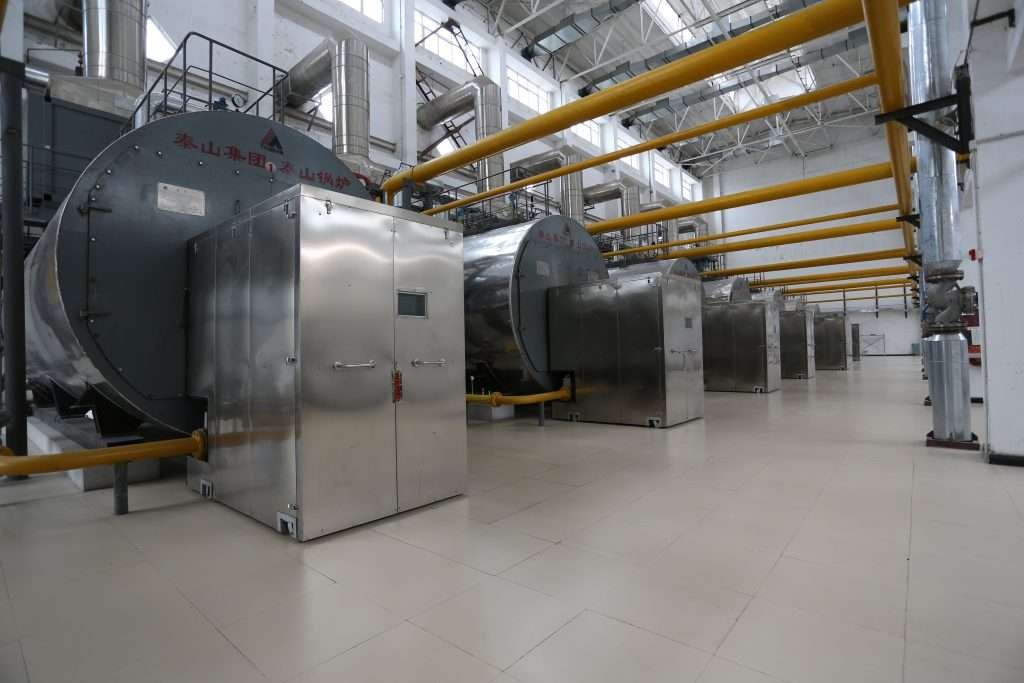
Industrial boiler buyers often face confusion when comparing ASME, CE, and ISO requirements, especially when equipment is exported across different markets. Choosing a boiler without the correct safety standard or certification can cause customs delays, failed inspections, rejected insurance approval, legal non-compliance, and serious safety risks. The solution is to understand which certification applies to boiler design, manufacturing, pressure safety, quality control, and local operating approval before purchasing or installing the boiler.
The latest industrial boiler safety standards and certifications generally include ASME Boiler and Pressure Vessel Code compliance for markets such as the United States and many international projects, CE marking under the EU Pressure Equipment Directive 2014/68/EU for pressure equipment sold in the European market, and relevant ISO standards such as ISO 16528 for boilers and pressure vessels, ISO 9001 for quality management, and ISO 45001 for occupational health and safety management. ASME’s current BPVC edition is the 2025 Boiler and Pressure Vessel Code, while the EU PED applies to stationary pressure equipment above 0.5 bar.
For industrial boiler owners, EPC contractors, and procurement teams, the most important point is that ASME, CE, and ISO do not replace each other. They serve different compliance purposes, and the correct choice depends on the destination country, boiler pressure, application, fuel type, inspection authority, and customer contract requirements.
What Are the Latest Industrial Boiler Safety Standards and Certifications for ASME Compliance?
Industrial boiler buyers often ask for an “ASME boiler,” but many projects still fail compliance because the equipment, piping, controls, safety valves, repair records, or inspection documents are not aligned with the correct ASME Code section. The result can be delayed installation approval, rejected inspection, invalid operating permit, insurance difficulty, unsafe operation, and expensive rework. The practical solution is to understand that ASME compliance is not one certificate; it is a complete safety framework covering boiler design, materials, fabrication, welding, inspection, pressure relief, controls, data reports, stamping, installation, repair, alteration, and jurisdictional acceptance.
The latest ASME compliance framework for industrial boilers is centered on the 2025 ASME Boiler and Pressure Vessel Code, especially Section I for power boilers, Section IV for heating boilers, Section II for materials, Section V for nondestructive examination, Section IX for welding and brazing qualifications, Section XIII for overpressure protection, and ASME B31.1-2024 for power piping and boiler-external piping. Depending on the boiler type, buyers should verify the ASME Certification Mark and correct designator such as S, A, E, M, H, HLW, V, HV, or related pressure-equipment marks. In service, inspection, repair, alteration, and pressure relief valve repair are commonly governed through the National Board Inspection Code and National Board programs such as R, VR, NR, and T/O where adopted by the authority having jurisdiction. ASME identifies the 2025 BPVC as the current edition covering boilers, pressure vessels, nuclear, and service/reference areas, while ASME’s certification program covers the quality-control systems used for design, fabrication, assembly, and inspection during construction.
For manufacturers, EPC contractors, plant engineers, procurement teams, and maintenance managers, the safest way to buy or operate an ASME-compliant boiler is to define the applicable Code section before purchase, confirm the manufacturer’s active ASME Certificate of Authorization, require the correct ASME stamp, review the Manufacturer’s Data Report, verify pressure relief device certification, check B31.1 piping scope, and confirm local authority requirements before installation. The following guide explains the latest ASME-related safety standards and certifications in practical project language.
An industrial boiler is ASME-compliant simply because it is designed by an experienced manufacturer.False
ASME compliance requires the correct applicable Code section, qualified materials, approved design, controlled fabrication, qualified welding, required inspection, proper pressure relief, ASME Certification Mark authorization, data reports, and jurisdictional acceptance where required.
ASME compliance for industrial boilers depends on selecting the correct ASME Code section, certification mark, pressure relief requirements, piping rules, inspection documentation, and post-construction repair requirements.True
Industrial boiler compliance is a complete lifecycle framework that includes construction, documentation, installation, operation, inspection, repairs, alterations, and pressure relief protection.
⚙️ What Does “ASME Compliance” Mean for Industrial Boilers?
ASME compliance means the boiler or pressure equipment has been designed, fabricated, inspected, tested, documented, and certified according to the applicable ASME Code rules. It does not mean only that the boiler looks strong, uses thick steel, or has a pressure gauge. It means the manufacturer has followed a controlled quality system and the equipment has been constructed under the correct ASME scope.
For industrial boiler projects, the most common question is whether the boiler is a power boiler, heating boiler, electric boiler, miniature boiler, boiler assembly, pressure vessel, pressure relief device, or boiler-external piping system. Each category may require a different ASME section, stamp, data report, inspection scope, and documentation package.
| Compliance Area | Practical Meaning | Why It Matters |
|---|---|---|
| 🏭 Boiler classification | Determines whether Section I, Section IV, or another section applies | Prevents wrong Code selection |
| 🧱 Materials | Material specifications and allowable stresses must match Code requirements | Protects pressure integrity |
| 🔥 Design pressure and temperature | Boiler must be designed for defined MAWP and operating conditions | Prevents under-designed equipment |
| 🧑🏭 Welding qualification | Welders and procedures must be qualified where required | Controls pressure-boundary quality |
| 🔍 Inspection and testing | Required examinations and tests must be completed | Confirms construction safety |
| 🛡️ Pressure relief | Safety valves and relief devices must be correctly selected and marked | Prevents overpressure |
| 📋 Data reports | Manufacturer’s documents must prove Code construction | Supports inspection and registration |
| 🏷️ ASME Mark | Confirms authorized Code stamping | Supports regulatory and buyer acceptance |
📘 Latest ASME Standards Commonly Used for Industrial Boiler Compliance
The 2025 ASME BPVC is the latest edition identified by ASME for Boiler and Pressure Vessel Code content, and ASME lists boiler-related BPVC sections such as Section I for power boilers, Section IV for heating boilers, Section VI for care and operation of heating boilers, and Section VII for care of power boilers.
| Standard / Code | Main Use in Boiler Projects | Practical Application |
|---|---|---|
| ASME BPVC Section I | Rules for construction of power boilers | High-pressure steam boilers, many industrial process boilers |
| ASME BPVC Section IV | Rules for construction of heating boilers | Low-pressure steam heating and hot-water heating boilers |
| ASME BPVC Section II | Materials | Approved material specifications and properties |
| ASME BPVC Section V | Nondestructive examination | Radiography, ultrasonic testing, liquid penetrant, magnetic particle testing where required |
| ASME BPVC Section IX | Welding, brazing, and fusing qualifications | WPS, PQR, welder qualifications |
| ASME BPVC Section XIII | Overpressure protection | Safety valves, relief valves, rupture disks, pressure relief devices |
| ASME B31.1-2024 | Power piping and boiler-external piping | Steam, feedwater, blowdown, and boiler-external piping scope |
| ASME CSD-1-2024 | Controls and safety devices for automatically fired boilers | Burner controls, safety devices, fuel shutoff, operating controls |
| ASME BPVC Section VI | Recommended care and operation of heating boilers | Operation and maintenance guidance |
| ASME BPVC Section VII | Recommended care of power boilers | Operation and maintenance guidance for power boilers |
| NBIC 2025 | Installation, inspection, repair, alteration, pressure relief devices | In-service inspection and post-construction compliance where adopted |
🏭 Section I: Power Boilers
ASME BPVC Section I is the core construction Code for power boilers. In practical industrial use, this commonly applies to steam boilers operating above low-pressure heating limits, high-pressure process steam boilers, electric power boilers, watertube boilers, firetube power boilers, waste heat boilers, and certain high-temperature water boilers. The exact scope must always be confirmed by the design conditions and local authority.
Section I compliance affects design calculations, materials, welding, heat treatment, nondestructive examination, hydrostatic testing, pressure relief valve capacity, inspection, stamping, and data reports. For buyers, the most important visible evidence is usually the correct ASME Certification Mark with the proper designator and complete Manufacturer’s Data Report.
| Section I Compliance Item | What Buyers Should Verify |
|---|---|
| Boiler design pressure and temperature | MAWP, design temperature, steam capacity |
| ASME designator | S, A, E, M, PP, or PRT depending on scope |
| Materials | ASME-compliant material specifications and traceability |
| Welding | Qualified WPS, PQR, and welder records |
| NDE | Required examination records |
| Hydrostatic test | Test pressure and inspection record |
| Safety valves | Proper ASME-certified pressure relief devices |
| Manufacturer’s Data Report | Complete and signed report for the boiler type |
| Authorized inspection | Inspector involvement where required |
♨️ Section IV: Heating Boilers
ASME BPVC Section IV applies to heating boilers, including many low-pressure steam heating boilers, hot-water heating boilers, hot-water supply boilers, and related equipment within the section’s scope. Section IV boilers are not “less important” simply because they often operate at lower pressure. They still require correct design, safety valves, temperature controls, pressure controls, low-water protection where applicable, and proper documentation.
ASME lists H and HLW among Section IV certificate designators, with H used for heating boilers and HLW for lined potable water heaters.
| Section IV Item | Practical Safety Concern |
|---|---|
| H stamp | Heating boiler construction certification |
| HLW stamp | Lined potable water heater certification |
| Pressure relief valve | Protects against overpressure |
| Temperature controls | Prevent overheating |
| Low-water protection | Prevents dry firing where applicable |
| Control system | Prevents unsafe firing |
| Installation clearance | Allows inspection and maintenance |
| Local permit | Required in many jurisdictions |
🛡️ Section XIII: Overpressure Protection
Overpressure protection is one of the most important boiler safety topics. ASME BPVC Section XIII provides rules for overpressure protection of pressurized equipment including boilers, pressure vessels, and piping systems, and it covers pressure relief valves, rupture disk devices, pin devices, spring-actuated non-reclosing devices, and temperature and pressure relief valves.
For boiler buyers, this means pressure relief devices should not be treated as generic accessories. They must match the applicable Code section, set pressure, capacity, service condition, fluid, temperature, discharge arrangement, and certification requirement.
| Pressure Relief Certification | Typical Use |
|---|---|
| V | Boiler pressure relief valves |
| HV | Heating boiler safety valves |
| UV | Pressure vessel pressure relief valves |
| UD | Pressure vessel rupture disk devices |
| UV3 / UD3 | High-pressure vessel relief devices |
| VR | National Board repair of pressure relief valves |
| T/O | National Board in-service testing of pressure relief valves |
🔧 ASME B31.1-2024: Boiler-External and Power Piping
An ASME-compliant boiler can still fail inspection if the connected piping is not correctly designed, fabricated, examined, and documented. ASME B31.1-2024 covers power piping systems commonly found in electric power generating stations, industrial and institutional plants, geothermal heating systems, and central or district heating/cooling systems; it also covers boiler-external piping for power boilers and high-temperature, high-pressure water boilers within defined pressure and temperature conditions.
This is especially important for steam outlet piping, feedwater piping, blowdown piping, safety valve discharge piping, drain piping, and boiler-external piping boundaries. Procurement teams should not buy only the boiler and ignore the piping compliance boundary.
| Piping Area | Why ASME B31.1 Matters |
|---|---|
| Main steam piping | High pressure and temperature require correct design |
| Feedwater piping | High pump pressure and thermal stress |
| Blowdown piping | High temperature, flashing, erosion risk |
| Safety valve discharge piping | Must safely discharge relief flow |
| Boiler-external piping | May require specific ASME documentation |
| Pipe supports | Control stress, expansion, and vibration |
| Welds and NDE | Confirm pressure-boundary quality |
| Pressure testing | Confirms piping integrity |
🎛️ ASME CSD-1-2024: Controls and Safety Devices
ASME CSD-1-2024 covers requirements for the assembly, installation, maintenance, and operation of controls and safety devices on automatically operated boilers directly fired with gas, oil, gas-oil, or electricity, with fuel input ratings under 12,500,000 Btu/hr.
This standard is especially relevant for packaged boilers, commercial-industrial boilers, burner management systems, flame safeguards, fuel shutoff valves, limit controls, interlocks, and low-water protection. Even when the pressure vessel is properly ASME stamped, unsafe control design can create serious operating risk.
| Control / Safety Device | Compliance Purpose |
|---|---|
| Flame safeguard | Stops fuel if flame is unsafe or lost |
| Fuel safety shutoff valves | Prevent uncontrolled fuel release |
| Low-water cutoff | Prevents dry firing |
| High-limit pressure control | Prevents excessive pressure |
| Operating pressure control | Maintains normal firing sequence |
| Combustion air proving | Confirms air before firing |
| Purge sequence | Removes combustible mixture before ignition |
| Manual reset limits | Prevent automatic restart after serious trip |
🏷️ ASME Certification Marks and Boiler Stamps
ASME’s BPVC Certification Program certifies manufacturers’ or assemblers’ quality control systems under BPVC Sections I, IV, VIII, X, and XII. ASME also states that products manufactured and stamped with the ASME Certification Mark by ASME BPVC Certificate Holders are in accordance with the applicable BPVC section.
| ASME Designator | Meaning | Common Boiler-Project Use |
|---|---|---|
| S | Power Boilers | High-pressure steam boilers |
| A | Assembly of Power Boilers | Field or shop assembly scope |
| E | Electric Boilers | Electric steam boilers |
| M | Miniature Boilers | Small boilers within Code scope |
| PP | Pressure Piping | Boiler pressure piping scope |
| PRT | Parts Fabrication | Boiler or pressure equipment parts |
| H | Heating Boilers | Section IV heating boilers |
| HLW | Lined Potable Water Heaters | Section IV water heaters |
| U | Pressure Vessels | Section VIII Division 1 pressure vessels |
| UM | Miniature Pressure Vessels | Small Section VIII vessels |
| V | Boiler Pressure Relief Valves | Section I safety valves |
| HV | Heating Boiler Safety Valves | Section IV safety valves |
ASME emphasizes that unless a manufacturer has a Certificate of Authorization from ASME allowing use of the Certification Mark and stating the product is certified to the ASME Code, it is not an ASME-stamped product.
📋 Manufacturer’s Data Reports and Documentation
Documentation is one of the easiest places for a boiler project to fail. ASME Data Report Forms provide standardized documentation for Code items. ASME lists forms such as P-2 for all types of boilers except watertube and electric, P-2A for electric boilers, and P-3 for watertube boilers, superheaters, waterwalls, and economizers. ASME also lists B31.1 certificates of compliance such as CC-1 and CC-2 for piping systems and fabricated components.
| Document | Why It Matters |
|---|---|
| ASME Certificate of Authorization | Confirms manufacturer is authorized for the relevant scope |
| Manufacturer’s Data Report | Proves Code construction details |
| Nameplate / stamping record | Confirms Code designator and MAWP |
| Material test reports | Confirms material traceability |
| Welding procedure records | Confirms welding qualification |
| Welder qualification records | Confirms personnel qualification |
| NDE reports | Confirms required examinations |
| Hydrostatic test record | Confirms pressure test completion |
| Safety valve certificates | Confirms capacity and set pressure |
| B31.1 piping certificates | Supports piping compliance |
| Installation inspection report | Supports operating permit approval |
🔍 NBIC 2025: Installation, Inspection, Repair, and Alteration
ASME BPVC mainly governs construction of new equipment. In-service boilers also need inspection, repair, alteration, and pressure relief device management. The National Board Inspection Code is widely used for this post-construction stage. The National Board describes the NBIC as an internationally recognized standard governing installation, inspection, repair, and alteration of in-service pressure equipment; it is organized into four parts: Installation, Inspection, Repairs and Alterations, and Pressure Relief Devices. The National Board also states that NBIC is updated every other year and published in July of odd-numbered years, including 2025.
The 2025 NBIC includes hundreds of revisions, with examples such as terminology changes from “Quality System” to “Quality Management System,” revised boiler installation reporting, new sealed-combustion air intake installation requirements, new external low-water fuel cutoff requirements, drain system requirements, and hot-water boiler thermometer/temperature-sensing requirements.
| NBIC Part | Practical Role |
|---|---|
| Part 1: Installation | Helps verify safe installation of boilers and pressure equipment |
| Part 2: Inspection | Guides inspection methods, documentation, NDE, failure mechanisms, and assessments |
| Part 3: Repairs and Alterations | Controls acceptable repair and alteration methods |
| Part 4: Pressure Relief Devices | Guides installation, inspection, repair, and testing of pressure relief devices |
🛠️ National Board R, VR, NR, and T/O Programs
For in-service boiler repairs, alteration, and pressure relief valve work, ASME construction stamps are not enough. Repair organizations often need National Board accreditation where required by the jurisdiction or owner. The National Board identifies the R Stamp for repair and/or alteration of boilers and other pressure-retaining items, the VR Stamp for pressure relief valve repair, the NR Stamp for nuclear components, and the T/O Mark for in-service testing of pressure relief valves.
| National Board Mark | Practical Use |
|---|---|
| R Stamp | Repair and alteration of boilers, pressure vessels, and pressure-retaining items |
| VR Stamp | Repair of pressure relief valves |
| NR Stamp | Nuclear repair and replacement activities |
| T/O Mark | In-service testing of pressure relief valves |
| NB registration | Records boiler and pressure vessel data for traceability where used |
✅ Buyer’s Checklist for ASME-Compliant Industrial Boilers
| Checklist Question | Required Answer Before Purchase |
|---|---|
| What type of boiler is it? | Power boiler, heating boiler, electric boiler, waste heat boiler, thermal fluid heater, etc. |
| Which ASME section applies? | Section I, Section IV, Section VIII, or other applicable scope |
| What ASME stamp is required? | S, H, E, A, PP, U, V, HV, etc. |
| Is the manufacturer actively ASME certified? | Confirm Certificate of Authorization and scope |
| Is the pressure relief device ASME-certified? | Verify V, HV, UV, or other correct designation |
| Are materials traceable? | Review material certificates and specifications |
| Are weld procedures qualified? | Review WPS, PQR, welder records |
| Is NDE required and documented? | Review NDE reports |
| Is boiler-external piping included? | Confirm ASME B31.1 boundary and documentation |
| Is CSD-1 applicable? | Check burner controls and safety devices |
| Are data reports complete? | Require Manufacturer’s Data Report and nameplate data |
| Does local authority accept the design? | Confirm jurisdictional rules before shipment |
| Who performs installation inspection? | Identify inspector, insurer, or authority |
| Who handles future repairs? | Use qualified R Stamp or approved repair organization where required |
Common Mistakes to Avoid
One common mistake is asking for an “ASME boiler” without specifying the required Code section and stamp. A Section IV heating boiler is not the same as a Section I power boiler. Another mistake is focusing only on the pressure vessel while ignoring burner controls, safety valves, boiler-external piping, blowdown piping, safety valve discharge piping, and installation clearance. A third mistake is accepting a quotation without confirming that the manufacturer has an active ASME Certificate of Authorization for the required scope.
Another major mistake is assuming that ASME construction compliance automatically covers future repairs. Repairs and alterations after the boiler enters service may require NBIC procedures, National Board R Stamp involvement, authorized inspection, and local authority approval. A final mistake is ignoring local jurisdiction. ASME provides the technical Code framework, but the authority having jurisdiction determines legal installation, inspection, operating permit, and certificate requirements.
Final Summary
The latest ASME compliance framework for industrial boiler safety begins with the 2025 ASME BPVC and extends into related standards such as ASME B31.1-2024 for power piping, ASME CSD-1-2024 for controls and safety devices on certain automatically fired boilers, and ASME BPVC Section XIII for overpressure protection. For boiler construction, Section I applies to power boilers and Section IV applies to heating boilers, while Sections II, V, and IX support materials, nondestructive examination, and welding qualification. The correct ASME Certification Mark and designator—such as S, H, E, A, PP, V, or HV—must match the equipment scope.
For in-service equipment, NBIC 2025 and National Board programs such as R, VR, NR, and T/O are important for inspection, repair, alteration, and pressure relief device work where adopted or required. A truly compliant boiler project should include the correct Code section, active manufacturer authorization, proper stamping, safety valve certification, data reports, piping documentation, control-system compliance, installation inspection, repair planning, and local authority acceptance.
What Are the Latest Industrial Boiler Safety Standards and Certifications for CE Marking Under PED?
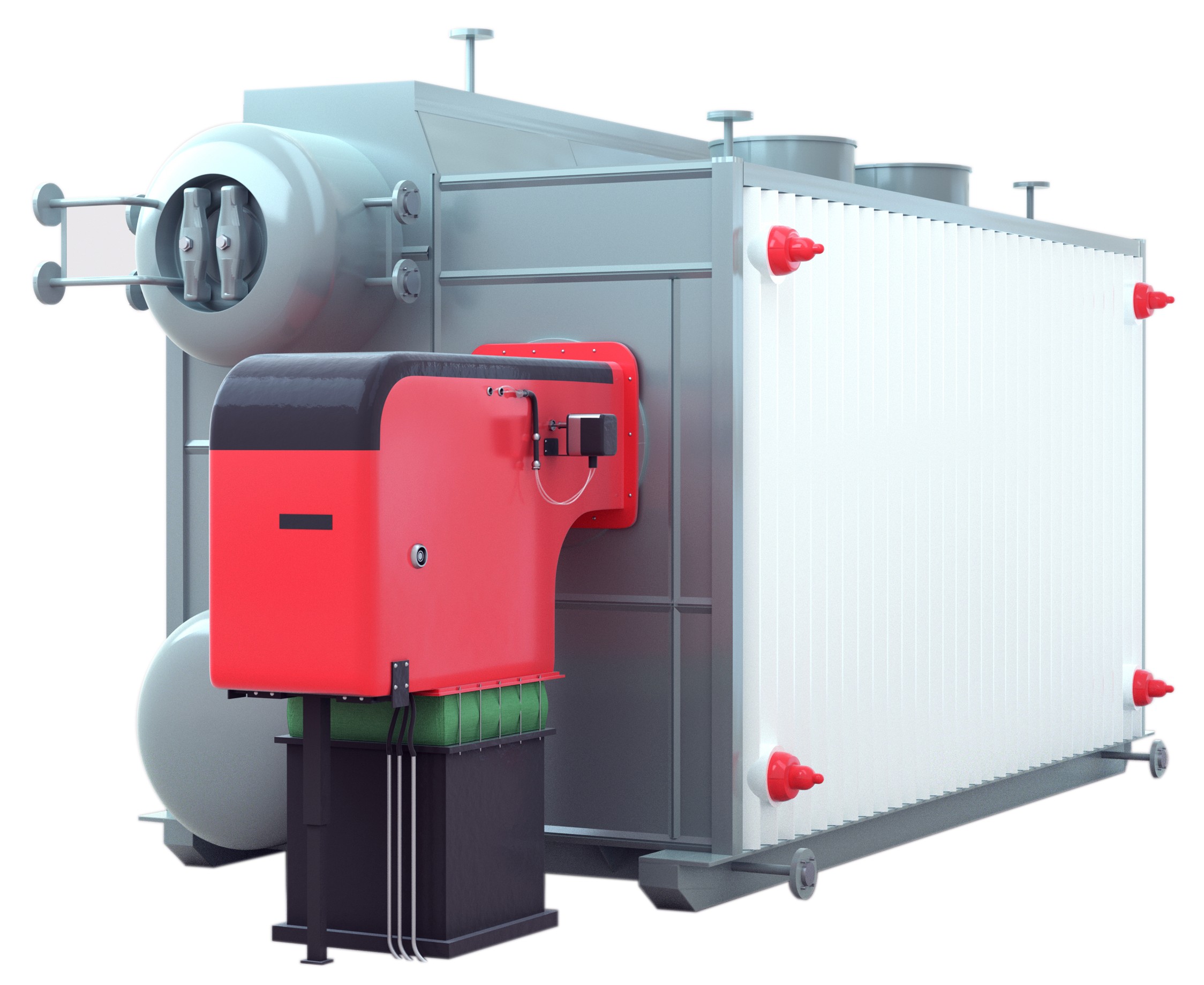
Industrial boiler buyers often ask for “CE certification,” but many projects still fail European compliance because the boiler, pressure piping, safety accessories, burner controls, technical documentation, or Declaration of Conformity are not aligned with the correct PED route. The consequences can be serious: customs delays, rejected Notified Body review, invalid CE marking, insurance problems, installation approval delays, and unsafe pressure equipment entering service. The practical solution is to treat CE marking under the Pressure Equipment Directive as a complete safety and documentation process, not as a single certificate attached at the end of manufacturing.
The latest CE marking framework for industrial boilers under PED is based on Directive 2014/68/EU for pressure equipment with maximum allowable pressure above 0.5 bar, using the current consolidated legal text, the applicable Essential Safety Requirements, pressure equipment category classification, conformity assessment modules, Notified Body involvement where required, harmonised EN standards, technical documentation, risk assessment, EU Declaration of Conformity, CE marking, and long-term documentation retention. For industrial boilers, the most relevant harmonised standards normally include EN 12952 for water-tube boilers, EN 12953 for shell boilers, EN 13445 for unfired pressure vessels, EN 13480 for metallic industrial piping, EN ISO 4126 for pressure relief devices, and EN 10204 / EN 10028 / EN 10216 / EN 10217 material documentation standards. The European Commission states that PED 2014/68/EU applies to stationary pressure equipment with maximum allowable pressure greater than 0.5 bar, and the EU harmonised standards list for PED is now organised through Commission implementing decisions, including Decision (EU) 2025/165 and its 2026 amendment.
For manufacturers, importers, EPC contractors, boiler room owners, and procurement teams, the key question is not “Do you have CE?” but “Which PED category, which conformity assessment module, which Notified Body scope, which harmonised standards, which safety accessories, which technical file, and which Declaration of Conformity support the CE marking?” As a professional industrial boiler manufacturer and supplier, we recommend confirming PED compliance at quotation stage, not after the boiler is already built.
A CE mark on an industrial boiler automatically proves that every connected steam pipe, burner, safety valve, control cabinet, and installation activity is compliant under PED.False
CE marking must be supported by the correct conformity assessment scope. Boiler pressure parts, assemblies, piping, safety accessories, controls, and installation responsibilities may require separate compliance review depending on project scope and applicable EU legislation.
A PED-compliant industrial boiler requires correct classification, Essential Safety Requirement review, applicable harmonised standards, conformity assessment, technical documentation, pressure relief protection, EU Declaration of Conformity, and CE marking before being placed on the EU market.True
PED compliance is a structured safety and conformity process, not only a label or commercial certificate.
⚙️ What Does CE Marking Under PED Mean for Industrial Boilers?
CE marking under PED means the manufacturer declares that the pressure equipment or assembly complies with applicable EU pressure equipment safety requirements before it is placed on the European market. The CE mark is not a general quality label, and it is not the same as ASME stamping. It is a legal conformity mark showing that the manufacturer has completed the required conformity assessment process, prepared technical documentation, issued an EU Declaration of Conformity, and affixed the CE mark correctly.
The European Commission explains that manufacturers are responsible for carrying out conformity assessment, setting up the technical file, issuing the EU Declaration of Conformity, and affixing CE marking; it also notes that CE marking does not mean the EU or another authority has “approved” the product as safe.
| CE / PED Term | Practical Meaning for Industrial Boilers | Buyer’s Question |
|---|---|---|
| PED 2014/68/EU | EU pressure equipment law for pressure equipment above 0.5 bar | Is the boiler within PED scope? |
| CE marking | Manufacturer’s legal declaration of conformity | Is the mark supported by a technical file and DoC? |
| Essential Safety Requirements | Mandatory safety requirements in PED Annex I | Has the ESR checklist been completed? |
| Harmonised standards | EN standards that can support presumption of conformity | Which EN standards were used? |
| Conformity assessment module | PED approval route based on risk category | Which module applies: A, A2, B, C2, D, D1, E, E1, F, G, H, H1? |
| Notified Body | Independent body required for higher-risk conformity assessment routes | Is the Notified Body authorised for PED and the selected module? |
| EU Declaration of Conformity | Signed legal document declaring compliance | Is it issued by the manufacturer and complete? |
| Technical file | Evidence package proving design, manufacture, inspection, testing, and risk control | Is it available for authority review? |
🏭 Which Industrial Boiler Equipment Is Usually Covered by PED?
PED applies broadly to pressure equipment and assemblies. For industrial boiler projects, the most common covered items include steam boilers, hot-water boilers, waste heat boilers, economizers, steam drums, headers, pressure vessels, pressure piping, safety accessories, pressure accessories, and boiler assemblies. The Directive applies to pressure equipment with maximum allowable pressure PS greater than 0.5 bar, and the current EUR-Lex page identifies Directive 2014/68/EU as in force with a consolidated version dated 30 May 2026.
| Boiler Project Item | PED Relevance | Practical Compliance Point |
|---|---|---|
| 🔥 Steam boiler | Usually PED pressure equipment | Classification by PS, volume, output, and fluid group |
| ♨️ Hot-water boiler | May fall under PED depending on pressure/temperature/scope | Confirm whether PED, machinery, or local installation rules also apply |
| 🏭 Water-tube boiler | Commonly supported by EN 12952 series | Requires design, material, construction, inspection, documentation |
| 🚂 Shell boiler / firetube boiler | Commonly supported by EN 12953 series | Requires shell, furnace, tube, weld, inspection, marking review |
| 💧 Pressure vessel | May use EN 13445 if unfired | Applies to deaerators, receivers, separators, tanks |
| 🧱 Industrial piping | May use EN 13480 | Steam, feedwater, blowdown, thermal oil, gas-related pressure piping |
| 🛡️ Safety valve / relief device | Safety accessory under PED | Must be correctly certified and sized |
| 🎛️ Boiler assembly | Integrated pressure system | Assembly conformity assessment may be required |
| 🔥 Burner system | May involve other EU legislation | PED may not cover all combustion/control risks by itself |
| ⚡ Electrical control cabinet | Usually not PED pressure equipment | CE compliance may require Low Voltage, EMC, Machinery, or other rules |
📘 Latest Harmonised Standards Relevant to PED Boiler Projects
Harmonised standards are voluntary, but they are highly practical because they can provide a presumption of conformity when their references are published in the Official Journal. The European Commission explains that harmonised standards are developed by recognised European Standards Organisations and can be used to demonstrate compliance with EU legislation, while the Your Europe guidance states that harmonised standards are voluntary but give a presumption of conformity.
For industrial boilers, the latest relevant PED harmonised standards list is not a single boiler certificate. It is a consolidated list of standards referenced under Directive 2014/68/EU. The Commission’s PED harmonised standards page states that references are published and withdrawn through implementing decisions and identifies Commission Implementing Decision (EU) 2025/165 of 30 January 2025 plus a 12 January 2026 amendment.
| Standard Family | Main Boiler Use | Practical Application |
|---|---|---|
| EN 12952 | Water-tube boilers and auxiliary installations | Materials, design, workmanship, inspection, documentation, marking |
| EN 12953 | Shell boilers | Shell boiler construction, equipment, inspection, documentation |
| EN 13445 | Unfired pressure vessels | Deaerators, receivers, separators, pressure vessels |
| EN 13480 | Metallic industrial piping | Steam piping, feedwater piping, blowdown piping, process pressure piping |
| EN ISO 4126 | Safety devices against excessive pressure | Safety valves, bursting discs, pilot-operated valves, relief systems |
| EN 10028 | Steel plates for pressure purposes | Boiler drums, shells, pressure parts |
| EN 10216 | Seamless steel tubes for pressure purposes | Boiler tubes, headers, pressure piping |
| EN 10217 | Welded steel tubes for pressure purposes | Pressure piping and pressure parts |
| EN 10204 | Metallic product inspection documents | Material certification and traceability |
| EN ISO 9606 / EN ISO 15614 | Welding personnel and procedure qualification | Welder qualification and welding procedure approval |
The Commission’s 13 January 2026 PED summary list includes EN 12952-2:2021 for water-tube boiler pressure-part materials, EN 12952-3:2022 for water-tube boiler pressure-part design and calculation, EN 12952-5:2021 for workmanship and construction, and EN 12952-6:2021 for inspection, documentation, and marking.
🔥 EN 12952 for Water-Tube Boilers
EN 12952 is the key European standard family for water-tube boilers and auxiliary installations. It is commonly used for industrial watertube steam boilers, power boilers, biomass boilers, waste heat boilers, and larger high-pressure boiler systems. For a PED project, EN 12952 helps structure materials, pressure-part design, fabrication, construction inspection, documentation, marking, equipment, safeguards, and operating considerations.
| EN 12952 Topic | What It Controls | Why It Matters |
|---|---|---|
| Materials | Boiler tubes, drums, headers, pressure parts | Prevents unsuitable material selection |
| Design calculation | Wall thickness, pressure, temperature, load cases | Protects pressure integrity |
| Workmanship | Fabrication and construction quality | Reduces weld and assembly defects |
| Inspection during construction | Required checks and documentation | Supports Notified Body review |
| Marking | Identification and traceability | Supports legal and service tracking |
| Equipment | Safety and auxiliary equipment requirements | Improves boiler operating safety |
| Safeguards | Protective functions and safety logic | Reduces overpressure, low-water, and firing risk |
🚂 EN 12953 for Shell Boilers
EN 12953 is the main European standard family for shell boilers, including many firetube steam boilers used in industrial plants. The Commission’s PED summary list includes EN 12953-4:2018 for workmanship and construction of shell boiler pressure parts and EN 12953-5:2020 for inspection during construction, documentation, and marking.
| EN 12953 Topic | Practical Boiler Area | Buyer’s Verification |
|---|---|---|
| Shell design | Boiler shell, furnace, tube plate | Design calculation file |
| Workmanship | Welding, forming, fabrication quality | Welding and inspection records |
| Boiler equipment | Safety valves, controls, fittings | Equipment list and certificates |
| Inspection | Construction inspection and testing | Notified Body / inspection report |
| Documentation | Technical file and marking | Complete document package |
| Marking | Boiler identification and traceability | Nameplate, CE marking, serial number |
For shell boilers, the compliance risk often comes from incomplete documentation, non-European material certificates, welding records that do not match the PED route, uncertified safety valves, or confusion between a boiler “test certificate” and a full EU Declaration of Conformity.
🧱 EN 13445 for Unfired Pressure Vessels
Industrial boiler rooms often include equipment that is not technically the fired boiler but is still pressure equipment under PED. Examples include deaerators, condensate receivers, blowdown vessels, steam separators, air receivers, fuel gas filters, expansion vessels, and heat exchangers. EN 13445 is commonly used for unfired pressure vessels.
The Commission’s PED summary list includes EN 13445-3:2021 for unfired pressure vessel design, EN 13445-4:2021+A1:2023 for fabrication, and EN 13445-5:2021+A1:2024 for inspection and testing.
| Pressure Vessel Item | Common Standard Route | Compliance Focus |
|---|---|---|
| Deaerator | EN 13445 | Pressure design, fatigue, inspection, material traceability |
| Blowdown vessel | EN 13445 | Pressure/temperature cycling, safe discharge |
| Steam separator | EN 13445 | Pressure design and internal loads |
| Air receiver | EN 13445 | Corrosion allowance and inspection |
| Heat exchanger shell | EN 13445 or product-specific standard | Pressure boundary and testing |
| Expansion vessel | EN 13445 or related standard | Relief protection and marking |
🧱 EN 13480 for Metallic Industrial Piping
A boiler can be correctly CE marked, but the project can still fail if the connected pressure piping is poorly designed or undocumented. EN 13480 is the major European standard family for metallic industrial piping. It supports design, calculation, fabrication, installation, inspection, and testing of pressure piping systems.
The PED summary list includes EN 13480-3 for metallic industrial piping design and calculation and EN 13480-5 for inspection and testing.
| Piping System | Why It Matters Under PED | Typical Documentation |
|---|---|---|
| Main steam piping | High pressure and temperature | Stress calculation, weld map, NDE, test report |
| Feedwater piping | High pressure pump discharge | Material certificates, pressure test, supports |
| Blowdown piping | Flashing, erosion, thermal shock | Rating review and safe discharge design |
| Safety valve discharge piping | Relief load and backpressure risk | Sizing calculation and support design |
| Thermal oil piping | High temperature and expansion | Flexibility analysis and leak prevention |
| Gas-related pressure piping | Pressure and fuel risk | PED plus other applicable legislation review |
🛡️ EN ISO 4126 for Safety Valves and Overpressure Protection
Pressure relief protection is one of the most important parts of boiler safety. EN ISO 4126 covers safety devices for protection against excessive pressure, including safety valves and bursting disc devices. The Commission’s PED summary list includes EN ISO 4126-1 for safety valves, EN ISO 4126-2 for bursting disc devices, EN ISO 4126-3 for safety valves and bursting discs in combination, EN ISO 4126-4 for pilot-operated safety valves, EN ISO 4126-5 for controlled safety pressure relief systems, and EN ISO 4126-7 for common data.
| Safety Device | Compliance Purpose | Practical Buyer Check |
|---|---|---|
| Safety valve | Protects boiler from overpressure | Capacity, set pressure, PED certificate |
| Bursting disc | Provides rupture protection | Correct pressure, temperature, compatibility |
| Pilot-operated safety valve | Used in certain pressure systems | Suitability for service and failure mode |
| Combination device | Safety valve + bursting disc arrangement | Backpressure and interaction review |
| Controlled safety pressure relief system | Advanced relief control | Requires careful design validation |
| Discharge piping | Safely routes relief flow | Backpressure, support, safe termination |
🧪 PED Classification: Category Determines the Compliance Route
PED classification is based on risk. Boiler category depends on equipment type, maximum allowable pressure, volume, nominal size, fluid group, temperature, and stored energy. Higher categories require stricter conformity assessment and usually more Notified Body involvement. PED recognises that conformity assessment should be proportional to the hazard level and selected from modules of different stringency.
| PED Classification Factor | Practical Meaning |
|---|---|
| PS | Maximum allowable pressure |
| V | Volume for vessels/boilers |
| DN | Nominal size for piping |
| Fluid group | Group 1 hazardous fluids or Group 2 other fluids |
| State of fluid | Gas, liquid, vapour, steam |
| Temperature | Affects material strength and category |
| Stored energy | Higher stored energy usually means higher risk |
| Assembly scope | Integrated boiler systems may require assembly assessment |
🧩 Conformity Assessment Modules Under PED
PED uses conformity assessment modules. The correct module depends on equipment category and manufacturer quality system. Buyers do not need to memorise every module, but they should know that the module determines how much manufacturer self-control, Notified Body review, design examination, production quality assurance, final inspection, or unit verification is required.
| Module | Practical Meaning | Typical Use Case |
|---|---|---|
| A | Internal production control | Lower-risk equipment where allowed |
| A2 | Internal production control plus supervised checks | Category II-type approach where applicable |
| B | EU-type examination | Design/type review stage |
| C2 | Conformity to type with supervised product checks | Production verification route |
| D / D1 | Production quality assurance | Manufacturer quality system route |
| E / E1 | Product quality assurance | Product-focused quality route |
| F | Product verification | Notified Body verifies products |
| G | Unit verification | Individual one-off equipment verification |
| H / H1 | Full quality assurance, with H1 including design examination where applicable | Higher-category manufacturers with approved quality systems |
For a one-off large industrial boiler, Module G may sometimes be considered. For serial boiler production, a quality assurance route may be more efficient. For high-risk equipment, the selected Notified Body must be authorised for the relevant PED scope and module.
👷 Notified Body Certification: When Is It Required?
A Notified Body is an independent conformity assessment body authorised by an EU country and listed for specific legislation and conformity assessment activities. Your Europe guidance states that manufacturers must check whether legislation requires a Notified Body; where one is required, its four-digit identification number must appear next to the CE marking.
| Situation | Notified Body Role |
|---|---|
| Higher PED category | Performs required conformity assessment tasks |
| Design examination route | Reviews design/type documentation |
| Production quality route | Audits manufacturer quality system |
| Final assessment route | May supervise inspection and testing |
| Unit verification | Reviews individual pressure equipment |
| Material approval, if required | Supports European material approval where applicable |
| Assembly conformity | Reviews integrated pressure equipment assembly if required |
A Notified Body certificate does not replace the EU Declaration of Conformity. The manufacturer must still issue the DoC and accept legal responsibility for the product placed on the EU market.
📋 Technical Documentation: What Must Be Included?
Technical documentation is the evidence behind CE marking. Your Europe states that manufacturers must prepare technical documentation before placing a product on the market, keep it available for market surveillance authorities, and retain it for 10 years unless relevant legislation specifies otherwise. The same guidance says the file should include risk assessment, applicable EU rules, relevant standards, conformity assessment procedure, product identification, test reports, labels, and instructions.
| Technical File Item | Why It Matters for Boiler CE Marking |
|---|---|
| Product description | Defines boiler type, model, scope, capacity |
| PED classification | Shows category and module selection |
| ESR checklist | Maps design to PED Annex I requirements |
| Risk assessment | Identifies pressure, temperature, combustion, operation, installation risks |
| Design calculations | Proves pressure boundary strength |
| Material certificates | Confirms traceability and suitability |
| Welding records | Supports pressure-part integrity |
| NDE records | Confirms inspection of welds and pressure parts |
| Pressure test report | Confirms proof testing |
| Safety valve documentation | Confirms pressure relief capacity and certification |
| Harmonised standards list | Shows EN standards used for compliance |
| Instructions for use | Supports safe installation, operation, maintenance |
| EU Declaration of Conformity | Legal declaration for CE marking |
| Nameplate and marking details | Confirms CE mark and identification |
🏷️ CE Marking Rules and Documentation Retention
The CE marking must be visible, legible, and indelible. Your Europe guidance also states that if a Notified Body is used, its four-digit ID number must appear next to the CE marking, and that the Declaration of Conformity and supporting technical documentation must be kept up to date and retained for at least 10 years after the product is placed on the market.
| CE Marking Requirement | Practical Meaning |
|---|---|
| Visible | Inspector and buyer can see it |
| Legible | Mark is readable and correctly proportioned |
| Indelible | Mark remains during expected service/environment |
| Notified Body number | Required when Notified Body involvement applies |
| DoC issued | Manufacturer signs legal declaration |
| Technical file retained | Evidence must be available to authorities |
| Updated after changes | Documentation must reflect significant changes |
| Covers all applicable EU rules | Multiple directives may require one coherent DoC package |
🎛️ What About Burner Controls, Electrical Panels, ATEX, EMC, and Machinery Rules?
PED focuses on pressure risks. Industrial boilers also create combustion, electrical, mechanical, environmental, and operational risks. Therefore, a boiler system may require compliance with other EU legislation in addition to PED. This is particularly important for packaged boiler systems, automatic burners, control cabinets, fuel trains, fans, pumps, skids, and hazardous-area installations.
| Related Area | Why It May Matter | Practical Compliance Check |
|---|---|---|
| Burner management | Flame failure, fuel leakage, purge, ignition safety | Applicable burner/control standards and EU legislation |
| Electrical cabinet | Shock, insulation, electrical safety | Low Voltage and EMC requirements where applicable |
| EMC | Interference affecting controls and safety systems | EMC testing / declaration |
| Machinery | Moving parts, skids, pumps, fans, access | Machinery safety assessment where applicable |
| ATEX | Explosive atmosphere risk | Hazardous area classification and equipment suitability |
| Gas appliances / fuel train | Fuel safety | Applicable gas-related legislation and standards |
| Environmental equipment | Emissions systems | Local and EU environmental compliance |
A complete CE package should identify all applicable EU legislation, not only PED. Your Europe guidance states that where a product falls under multiple EU rules, the documents must confirm compliance with all of them.
✅ Practical Buyer Checklist for PED CE-Marked Industrial Boilers
| Buyer Question | Acceptable Evidence |
|---|---|
| Is the boiler within PED scope? | PED applicability statement |
| What is the PED category? | Classification calculation |
| Which conformity module applies? | Module selection record |
| Is a Notified Body required? | Notified Body certificate / module documentation |
| Which harmonised standards are used? | Standards matrix, such as EN 12952 or EN 12953 |
| Are materials traceable? | EN 10204 certificates and material records |
| Are welds qualified? | Welding procedures and welder qualifications |
| Was NDE performed? | NDE reports and acceptance records |
| Was pressure testing performed? | Hydrostatic/pneumatic test report |
| Are safety valves compliant? | PED safety valve certificate and sizing calculation |
| Is piping included? | EN 13480 scope and piping documentation |
| Is the boiler an assembly? | Assembly conformity assessment record |
| Are instructions provided? | Installation, operation, maintenance manual |
| Is the DoC complete? | Signed EU Declaration of Conformity |
| Is CE marking correct? | Nameplate, CE mark, Notified Body number if required |
| Are other EU directives addressed? | Multi-directive compliance matrix |
Common Mistakes to Avoid
One common mistake is asking for a “CE certificate” as if it were one universal document. In reality, CE marking is supported by a conformity assessment process, technical file, Declaration of Conformity, and sometimes Notified Body certificates depending on category and module. Another mistake is treating the boiler only as a pressure vessel while ignoring safety accessories, piping, assemblies, burners, controls, electrical panels, and installation scope.
A third mistake is using non-harmonised material or welding documentation without explaining how it satisfies PED Essential Safety Requirements. A fourth mistake is assuming that ASME construction automatically equals PED compliance. ASME can be useful engineering evidence, but PED requires EU conformity assessment, classification, documentation, and CE marking. A fifth mistake is placing CE marking before all applicable EU requirements have been identified and documented.
Final Summary
The latest industrial boiler safety standards and certifications for CE marking under PED are built around Directive 2014/68/EU, the current consolidated PED legal framework, Essential Safety Requirements, PED classification, conformity assessment modules, Notified Body involvement where required, harmonised standards, technical documentation, EU Declaration of Conformity, and correct CE marking. For boiler projects, the most important harmonised standards are typically EN 12952 for water-tube boilers, EN 12953 for shell boilers, EN 13445 for unfired pressure vessels, EN 13480 for metallic industrial piping, EN ISO 4126 for overpressure protection, and EN material/welding/documentation standards such as EN 10028, EN 10216, EN 10217, EN 10204, EN ISO 9606, and EN ISO 15614.
The safest procurement strategy is to define PED scope before ordering: confirm boiler type, PS, volume, fluid group, category, module, Notified Body, standards, safety accessories, piping scope, technical file, and EU Declaration of Conformity. A reliable CE-marked boiler is not only a product with a label; it is a complete compliance package that proves the boiler was designed, manufactured, inspected, tested, documented, and declared according to the applicable EU safety rules.
What Are the Latest Industrial Boiler Safety Standards and Certifications for ISO Boiler and Pressure Vessel Requirements?

Industrial boiler buyers often ask whether a boiler is “ISO certified,” but this phrase can be misleading. ISO does not work like one universal boiler stamp that automatically replaces ASME, PED, EN, GB, JIS, or local pressure equipment law. If a company treats ISO as a single certificate instead of a structured quality, welding, inspection, and pressure-equipment framework, it may purchase equipment with incomplete design evidence, weak welding control, missing material traceability, unqualified NDT personnel, unclear inspection responsibility, or insufficient pressure-vessel documentation. The practical solution is to understand which ISO standards support boiler and pressure vessel safety, which certifications are actually useful, and which local legal approvals are still required before installation and operation.
The latest ISO-related industrial boiler and pressure vessel safety framework is built around ISO 16528-1:2007 for boiler and pressure vessel performance requirements, ISO 16528-2:2007 for procedures used by standard-writing bodies to demonstrate fulfilment of ISO 16528-1, ISO 9001:2015 with Amendment 1:2024 for quality management, ISO 3834:2021 series for welding quality requirements, ISO 14731:2019 for welding coordination, ISO 9606-1:2012 for welder qualification of steels, ISO 15614-1:2017 for welding procedure qualification, ISO 9712:2021 for NDT personnel qualification, and ISO/IEC 17020 for inspection body competence. However, ISO standards usually support boiler safety and manufacturing control rather than replacing legally required boiler design codes, operating permits, inspections, or national certification marks. ISO 16528-1 and ISO 16528-2 remain published and confirmed ISO standards for boilers and pressure vessels, while ISO/TS 16528:2002 has been withdrawn.
For manufacturers, EPC contractors, distributors, plant owners, and procurement teams, the key question should not be “Do you have ISO?” but “Which ISO standards are applied to the pressure boundary, welding, quality management, inspection, testing, material traceability, and documentation system?” As a professional industrial boiler manufacturer and supplier, we recommend using ISO standards as part of a complete compliance package that also includes the applicable boiler code, local inspection authority, safety valve requirements, pressure testing, operating permit, and maintenance plan.
ISO certification alone automatically makes an industrial boiler legally approved for operation in every country.False
ISO standards support quality, welding, inspection, and pressure-equipment performance systems, but legal boiler approval still depends on the applicable national or regional boiler code, inspection authority, operating permit, and local regulations.
ISO standards can strengthen industrial boiler safety by improving quality management, welding control, material traceability, inspection competence, NDT personnel qualification, and technical documentation.True
ISO standards are valuable when they are applied correctly as part of a complete boiler design, manufacturing, inspection, and certification system.
⚙️ What Does “ISO Boiler and Pressure Vessel Requirement” Really Mean?
In real industrial boiler procurement, “ISO boiler requirement” usually refers to a group of standards rather than one single boiler certificate. ISO 16528 provides a high-level international performance framework for boilers and pressure vessels. ISO 9001 supports the manufacturer’s quality management system. ISO 3834 supports welding quality. ISO 14731 defines welding coordination tasks and responsibilities. ISO 9606 and ISO 15614 support welder and welding procedure qualification. ISO 9712 supports qualification and certification of NDT personnel. ISO/IEC 17020 supports inspection body competence. Together, these standards help prove that pressure equipment is controlled through design, manufacturing, welding, inspection, testing, documentation, and quality assurance.
However, ISO is not the same as a pressure-vessel construction stamp. In many markets, a boiler may still need ASME stamping, CE marking under PED, EN compliance, GB certification, JIS compliance, local boiler registration, insurance inspection, or operating permit approval. ISO helps create confidence in the manufacturer and inspection system, but the buyer must still confirm the legal code required in the destination country.
| ISO-Related Requirement | Practical Meaning for Boilers | What Buyers Should Ask |
|---|---|---|
| ISO 16528 | International performance framework for boilers and pressure vessels | Is the design code aligned with recognized pressure-equipment requirements? |
| ISO 9001 | Quality management system | Is the manufacturer’s quality process certified and active? |
| ISO 3834 | Welding quality requirements | Is pressure-part welding controlled to the correct quality level? |
| ISO 14731 | Welding coordination | Who is responsible for welding quality decisions? |
| ISO 9606 | Welder qualification | Are welders qualified for the material, process, and position? |
| ISO 15614 | Welding procedure qualification | Are WPS and PQR records valid for pressure-part welding? |
| ISO 9712 | NDT personnel qualification | Are NDT operators certified for UT, RT, MT, PT, or other methods? |
| ISO/IEC 17020 | Inspection body competence | Is the inspection organization technically competent and impartial? |
📘 Main ISO Standards Relevant to Industrial Boiler and Pressure Vessel Safety
The ISO standards most relevant to industrial boilers are not all “boiler standards” in a narrow sense. Some address pressure-equipment performance, while others address the quality systems needed to manufacture safe pressure equipment.
| Standard | Main Purpose | Boiler Project Application |
|---|---|---|
| ISO 16528-1:2007 | Performance requirements for boilers and pressure vessels | High-level safety performance framework |
| ISO 16528-2:2007 | Procedures for fulfilling ISO 16528-1 | Helps standard-writing bodies demonstrate alignment |
| ISO 9001:2015 + Amd 1:2024 | Quality management requirements | Manufacturer quality management certification |
| ISO 3834-1/2/3/4/5:2021 | Welding quality requirements | Pressure-part welding control |
| ISO 3834-6:2024 | Guidance for implementing ISO 3834 | Practical welding quality implementation |
| ISO 14731:2019 | Welding coordination tasks and responsibilities | Welding management and technical accountability |
| ISO 9606-1:2012 | Welder qualification for fusion welding of steels | Welder qualification records |
| ISO 15614-1:2017 | Welding procedure qualification by welding procedure tests | WPS/PQR qualification |
| ISO 9712:2021 | Qualification and certification of NDT personnel | NDT personnel competence |
| ISO/IEC 17020 | Inspection body competence and impartiality | Third-party inspection and inspection agency qualification |
| ISO/IEC 17025 | Testing and calibration laboratory competence | Material testing, calibration, and lab testing support |
| ISO/IEC 17065 | Product/process/service certification body competence | Certification body credibility where applicable |
ISO 3834-1, -2, -3, and -4 were updated in 2021, and ISO 3834-6 was published in 2024 as implementation guidance for the ISO 3834 welding quality series.
🏭 ISO 16528: The Core ISO Boiler and Pressure Vessel Framework
ISO 16528 is the most directly relevant ISO standard family for boiler and pressure vessel requirements. ISO 16528-1 defines performance requirements for boiler and pressure vessel construction. ISO 16528-2 provides procedures and a standard format for demonstrating that other boiler and pressure vessel standards fulfil ISO 16528-1. In practical terms, ISO 16528 is not usually used like a shop-floor fabrication manual. It is more of an international performance framework that helps compare or align pressure-equipment standards.
This matters because industrial boilers are often built under recognized national or regional codes. ISO 16528 helps create a common safety philosophy, but a manufacturer still needs a detailed construction code for design calculations, material selection, welding, NDE, inspection, pressure testing, safety valves, and documentation.
| ISO 16528 Topic | Practical Boiler Meaning | Buyer’s Interpretation |
|---|---|---|
| Performance requirements | Pressure equipment must be designed and built to resist expected loads | Confirms safety intent |
| Construction framework | Covers broad boiler and pressure vessel safety concepts | Supports code alignment |
| Standard fulfilment procedure | Helps standard-writing bodies demonstrate compliance | Useful for international recognition |
| Pressure integrity | Equipment must safely contain pressure | Requires detailed design code |
| Documentation | Evidence must support conformity | Buyer should request complete technical file |
| Not a local operating permit | ISO does not replace jurisdictional approval | Local authority still controls operation |
🧾 ISO 9001 Quality Management: Useful but Not Enough by Itself
ISO 9001 is widely requested in boiler procurement because it shows that the manufacturer has a quality management system. As of this article’s date, ISO identifies ISO 9001:2015 as the current fifth edition, while also showing ISO 9001:2015/Amd 1:2024 and a Final Draft International Standard expected to replace ISO 9001:2015 later in 2026.
For industrial boilers, ISO 9001 can support document control, purchasing control, traceability, inspection planning, nonconformity management, corrective action, calibration control, and customer communication. However, ISO 9001 certification does not prove that a specific boiler pressure boundary was designed according to a valid boiler code. It proves quality system discipline, not automatic pressure-equipment approval.
| ISO 9001 Area | Why It Matters for Boiler Manufacturing |
|---|---|
| Document control | Prevents outdated drawings, procedures, and specifications from being used |
| Supplier control | Helps manage steel plate, tube, valve, burner, and instrument suppliers |
| Traceability | Links materials, welds, inspections, and test reports to the boiler |
| Calibration | Supports reliable pressure, temperature, and test measurement |
| Nonconformity control | Prevents defective pressure parts from moving forward |
| Corrective action | Helps prevent repeated welding, material, or inspection problems |
| Customer communication | Clarifies code, documentation, and delivery requirements |
| Production control | Supports consistent manufacturing quality |
🧑🏭 ISO 3834 Welding Quality Requirements
Welding is one of the most critical parts of boiler and pressure vessel safety. A boiler pressure boundary can fail if welding procedures are not qualified, welders are not competent, heat input is uncontrolled, materials are not matched correctly, preheat or post-weld heat treatment is missed, or inspection is incomplete. ISO 3834 provides welding quality requirements for fusion welding of metallic materials and is often used by manufacturers to prove stronger welding control than ISO 9001 alone.
ISO 3834 is especially useful for boiler drums, shells, headers, tube sheets, pressure piping, nozzles, manholes, handholes, economizers, and welded pressure parts. The correct level of ISO 3834 depends on product risk and contractual requirements. ISO 3834-2 is comprehensive, ISO 3834-3 is standard, and ISO 3834-4 is elementary.
| ISO 3834 Level | Quality Level | Typical Boiler Use |
|---|---|---|
| ISO 3834-2 | Comprehensive quality requirements | High-pressure boilers, critical pressure parts, export projects |
| ISO 3834-3 | Standard quality requirements | General welded pressure equipment where medium control is acceptable |
| ISO 3834-4 | Elementary quality requirements | Lower-complexity welding where permitted |
| ISO 3834-5 | Documents required to claim conformity | Defines supporting welding documents |
| ISO 3834-6 | Implementation guidance | Helps manufacturers apply the series practically |
👷 ISO 14731 Welding Coordination
ISO 14731 identifies essential welding-quality-related tasks and responsibilities in welding coordination. For boiler manufacturing, this is important because welding quality must be actively managed by competent personnel, not left only to individual welders on the shop floor. ISO 14731:2019 identifies welding coordination tasks and responsibilities.
A welding coordinator may review welding procedure specifications, welder qualifications, material compatibility, heat treatment requirements, inspection plans, subcontracted welding, repair welding, and technical deviations. In a boiler project, this role protects pressure-boundary quality.
| Welding Coordination Task | Boiler Safety Value |
|---|---|
| Review WPS and PQR | Ensures welding method is qualified |
| Confirm welder qualification | Prevents unqualified welding on pressure parts |
| Control filler material | Prevents wrong consumable selection |
| Review preheat/PWHT | Reduces cracking and residual stress risk |
| Coordinate NDE | Ensures critical welds are inspected |
| Manage weld repairs | Prevents uncontrolled repair welding |
| Maintain weld maps | Supports traceability and inspection |
| Review subcontractors | Controls external fabrication quality |
🔥 ISO 9606 and ISO 15614: Welder and Procedure Qualification
ISO 9606-1 specifies requirements for qualification testing of welders for fusion welding of steels, while ISO 15614-1 specifies how a preliminary welding procedure specification is qualified by welding procedure tests.
In simple terms, ISO 9606 asks, “Is the welder qualified to make this type of weld?” ISO 15614 asks, “Is the welding procedure itself qualified for this material, thickness, process, and joint condition?” Both are important. A qualified welder using an unqualified procedure is not enough. A qualified procedure used by an unqualified welder is also not enough.
| Qualification Item | Main Question | Boiler Example |
|---|---|---|
| WPS | What welding method will be used? | SAW, GTAW, SMAW, GMAW procedure for shell seam |
| PQR / WPQR | Has the procedure been tested and approved? | Test coupon proves mechanical properties |
| Welder qualification | Can this person perform the weld? | Qualified for material group, position, process |
| Welding process | Which process is approved? | GTAW root + SMAW fill, SAW longitudinal seam |
| Thickness range | Is the procedure valid for actual thickness? | Drum shell or tube sheet thickness |
| Material group | Is the procedure valid for pressure steel grade? | Boiler plate, tube, alloy steel |
| Position | Is welder qualified for actual weld position? | Shop weld, field weld, tube-to-header weld |
| Validity | Are certificates still valid? | Check continuity and renewal requirements |
🔍 ISO 9712 for NDT Personnel Qualification
Nondestructive testing is essential for boiler and pressure vessel safety because many defects cannot be seen visually. Radiographic testing, ultrasonic testing, magnetic particle testing, liquid penetrant testing, eddy current testing, and other methods may be used depending on the code and component. ISO 9712:2021 specifies requirements for qualification and certification of personnel who perform industrial NDT.
For boiler buyers, the practical question is not only whether NDT was done, but whether it was done by qualified personnel using approved procedures, calibrated equipment, correct acceptance criteria, and complete reporting.
| NDT Method | Common Boiler Use | Typical Defect Detected |
|---|---|---|
| RT | Weld inspection in shells, drums, pressure vessels | Volumetric weld defects |
| UT | Thickness testing, weld testing, tube inspection | Lamination, lack of fusion, wall thinning |
| MT | Ferromagnetic weld and surface inspection | Surface cracks |
| PT | Surface inspection of nonporous materials | Surface-breaking defects |
| ET | Tube inspection in some applications | Tube defects and wall loss |
| VT | Visual inspection | Surface condition, fit-up, weld appearance |
| AE | Special condition monitoring | Active flaw growth or leakage indication |
🧪 ISO/IEC 17020 and ISO/IEC 17025: Inspection and Testing Competence
Boiler projects often involve third-party inspection agencies and testing laboratories. ISO/IEC 17020 specifies requirements for the competence, impartiality, and consistent operation of inspection bodies; ISO’s current pages also identify a 2026 version of ISO/IEC 17020, replacing the 2012 edition. ISO/IEC 17025 is commonly used for testing and calibration laboratories, which matters when material tests, chemical analysis, mechanical tests, pressure gauge calibration, or instrument calibration support boiler documentation.
| Conformity Standard | Practical Role in Boiler Projects |
|---|---|
| ISO/IEC 17020 | Supports competence of inspection bodies |
| ISO/IEC 17025 | Supports competence of testing and calibration laboratories |
| ISO/IEC 17065 | Supports competence of product/process/service certification bodies |
| ISO/IEC 17024 | Supports certification bodies for persons, relevant to personnel certification schemes |
| ISO 9712 | Supports NDT personnel certification requirements |
A buyer should check whether inspection and laboratory certificates are issued by competent, accredited, and recognized organizations. A test report from an unknown laboratory may not be accepted by the final inspection authority.
🛡️ ISO Standards and Pressure Relief Safety
ISO boiler safety does not stop at the pressure shell. The boiler must also be protected from overpressure. ISO-related pressure relief requirements may connect with safety valves, relief valves, rupture disks, valve testing, capacity verification, discharge design, and local code acceptance. In many projects, pressure relief devices are selected according to ASME, EN, PED, GB, or other legal code requirements rather than ISO alone, but ISO-based documentation and testing discipline still matter.
| Pressure Relief Item | Buyer Check |
|---|---|
| Safety valve sizing | Capacity must protect boiler at maximum firing rate |
| Set pressure | Must match allowable pressure and local code |
| Valve certification | Must be accepted by destination authority |
| Discharge piping | Must avoid unsafe backpressure and discharge location |
| Test certificate | Set pressure and capacity evidence required |
| Installation orientation | Must follow manufacturer and code requirements |
| Maintenance interval | Must follow authority, insurer, and manufacturer requirements |
| Seal integrity | Prevents unauthorized adjustment |
📋 Documentation Required for ISO-Supported Boiler Compliance
A strong ISO-supported boiler package should include far more than a product brochure. Documentation is the proof that the boiler was designed, built, inspected, tested, and controlled correctly.
| Document | Why It Matters |
|---|---|
| Design calculation | Proves pressure-boundary strength |
| General arrangement drawing | Shows boiler layout and key dimensions |
| Pressure-part drawings | Supports inspection and traceability |
| Material certificates | Proves correct steel plate, tube, forging, and pipe materials |
| Material traceability list | Links certificates to actual boiler parts |
| Welding procedure specifications | Defines approved welding methods |
| Procedure qualification records | Proves WPS validity |
| Welder qualification certificates | Proves welder competence |
| Weld map | Links each weld to welder, WPS, and inspection record |
| NDT reports | Proves required inspections were completed |
| Heat treatment records | Proves PWHT or preheat control where required |
| Hydrostatic test report | Confirms pressure test completion |
| Safety valve certificates | Confirms set pressure and capacity |
| Inspection release note | Confirms inspection hold points completed |
| ISO 9001 certificate | Supports manufacturer quality system |
| ISO 3834 certificate, if applicable | Supports welding quality system |
| Operating manual | Supports safe use |
| Maintenance manual | Supports long-term inspection and care |
| Declaration or compliance statement | Clarifies applied standards and responsibilities |
🧾 ISO Certification vs. Product Certification vs. Legal Boiler Approval
This is one of the most important distinctions. ISO 9001 certification means a management system has been audited. ISO 3834 certification means a welding quality system has been audited. ISO 9712 certification means NDT personnel have been certified. None of these automatically means a specific boiler is legally approved for operation. A specific boiler may still need product certification, design approval, inspection, registration, hydrostatic test approval, local boiler certificate, or operating permit.
| Requirement Type | What It Proves | What It Does Not Prove |
|---|---|---|
| ISO 9001 certificate | Manufacturer has quality management system | Specific boiler pressure design approval |
| ISO 3834 certificate | Welding quality system is controlled | Boiler is automatically legal in all countries |
| ISO 9712 personnel certificate | NDT personnel competence | NDT acceptance criteria are automatically correct |
| ISO/IEC 17020 accreditation | Inspection body competence | Boiler design code approval by itself |
| Product code stamp | Boiler built under specific code | Quality system alone |
| Local operating permit | Boiler legally allowed to operate | Manufacturer’s global certification alone |
| Insurance inspection | Insurer risk acceptance | Universal legal approval everywhere |
🏭 How ISO Works With ASME, PED, EN, GB, JIS, and Local Rules
ISO standards often support, complement, or strengthen legal code compliance, but they do not automatically replace destination-market requirements. A boiler for the United States may need ASME and National Board documentation. A boiler for the European market may need CE marking under PED. A boiler for China may require Chinese regulatory approval. A boiler for Japan may require Japanese code compliance. Many countries have their own boiler inspection and operating permit systems.
| Market / Code System | ISO Role | Main Legal/Technical Approval Still Needed |
|---|---|---|
| ASME market | Supports quality, welding, NDT, documentation | ASME Code stamp, National Board, jurisdictional permit |
| EU PED market | Supports quality and technical evidence | CE marking, PED category/module, Notified Body where required |
| EN boiler projects | Supports welding, inspection, quality | EN 12952, EN 12953, EN 13445, EN 13480 as applicable |
| GB / Chinese market | Supports manufacturer quality system | Chinese boiler and pressure equipment requirements |
| JIS / Japanese market | Supports quality and welding discipline | Japanese boiler pressure equipment rules |
| International EPC projects | Supports cross-border quality confidence | Contract code, owner specification, local authority acceptance |
✅ Practical Buyer Checklist for ISO Boiler and Pressure Vessel Requirements
| Buyer Question | Recommended Evidence |
|---|---|
| Which boiler design code is used? | ASME, EN, PED, GB, JIS, or other project code |
| Is ISO 16528 relevant to the specification? | Compliance statement or code alignment explanation |
| Is the manufacturer ISO 9001 certified? | Valid certificate with correct scope |
| Is ISO 3834 required? | Valid welding quality certificate or documented system |
| Are welding coordinators assigned? | ISO 14731 responsibility matrix |
| Are welders qualified? | ISO 9606 or code-required welder certificates |
| Are welding procedures qualified? | ISO 15614 or code-required PQR/WPQR |
| Is NDT personnel competence proven? | ISO 9712 certificates and NDT reports |
| Are inspection agencies competent? | ISO/IEC 17020 accreditation or equivalent evidence |
| Are test laboratories competent? | ISO/IEC 17025 calibration/test reports |
| Are materials traceable? | Material certificates and traceability map |
| Is pressure testing documented? | Hydrostatic or pneumatic test report |
| Are safety valves approved? | Valve certificates accepted by destination authority |
| Is operating approval required? | Local registration and permit plan |
| Are manuals included? | Installation, operation, maintenance, inspection manuals |
🔧 Manufacturer’s Practical ISO Implementation Roadmap
A reliable boiler manufacturer should not simply frame ISO certificates on the office wall. The ISO system must control real production activities.
| Step | Implementation Action | Safety Benefit |
|---|---|---|
| 1 | Define applicable boiler code and customer specification | Prevents wrong compliance path |
| 2 | Confirm ISO 9001 quality process | Controls design, purchasing, production, inspection |
| 3 | Apply ISO 3834 welding control | Reduces welding defects |
| 4 | Assign ISO 14731 welding coordination | Creates welding accountability |
| 5 | Qualify WPS and welders | Ensures pressure-part welding competence |
| 6 | Control material traceability | Prevents wrong steel or tube use |
| 7 | Plan inspection hold points | Prevents missed inspections |
| 8 | Use qualified NDT personnel | Improves defect detection reliability |
| 9 | Maintain calibrated equipment | Improves measurement and test accuracy |
| 10 | Prepare complete technical file | Supports final approval and lifecycle maintenance |
Common Mistakes to Avoid
One common mistake is assuming ISO 9001 is a boiler product certificate. It is not. ISO 9001 supports quality management, but it does not prove pressure-boundary design compliance. Another mistake is buying an “ISO certified boiler” without specifying the design code, welding requirements, inspection plan, and destination-country approval. A third mistake is ignoring ISO 3834 when welding quality is critical. A fourth mistake is accepting NDT reports without checking whether NDT personnel are qualified and whether the acceptance criteria match the project code.
Another major mistake is treating ISO and legal compliance as alternatives. They should work together. ISO supports reliable manufacturing and inspection discipline, while ASME, PED, EN, GB, JIS, or local regulations define legal acceptance and technical construction rules. A final mistake is failing to maintain documentation after delivery. Boiler safety depends on lifecycle records, not only factory certificates.
Final Summary
The latest ISO boiler and pressure vessel requirement framework is best understood as a support system for safe pressure equipment manufacturing, welding, inspection, testing, and documentation. ISO 16528-1:2007 and ISO 16528-2:2007 provide the core ISO boiler and pressure vessel performance framework. ISO 9001:2015 with Amendment 1:2024 supports quality management. ISO 3834:2021 and ISO 3834-6:2024 support welding quality. ISO 14731:2019 supports welding coordination. ISO 9606-1:2012 and ISO 15614-1:2017 support welder and welding procedure qualification. ISO 9712:2021 supports NDT personnel competence. ISO/IEC 17020 and ISO/IEC 17025 support inspection and laboratory credibility.
However, ISO standards do not replace legal boiler codes, product certification marks, local inspection, insurance requirements, or operating permits. The best industrial boiler compliance strategy is to combine ISO quality and inspection systems with the correct boiler construction code, pressure relief requirements, technical documentation, third-party inspection, and local authority approval.
What Are the Latest Industrial Boiler Safety Standards and Certifications for Manufacturing Quality and Traceability?
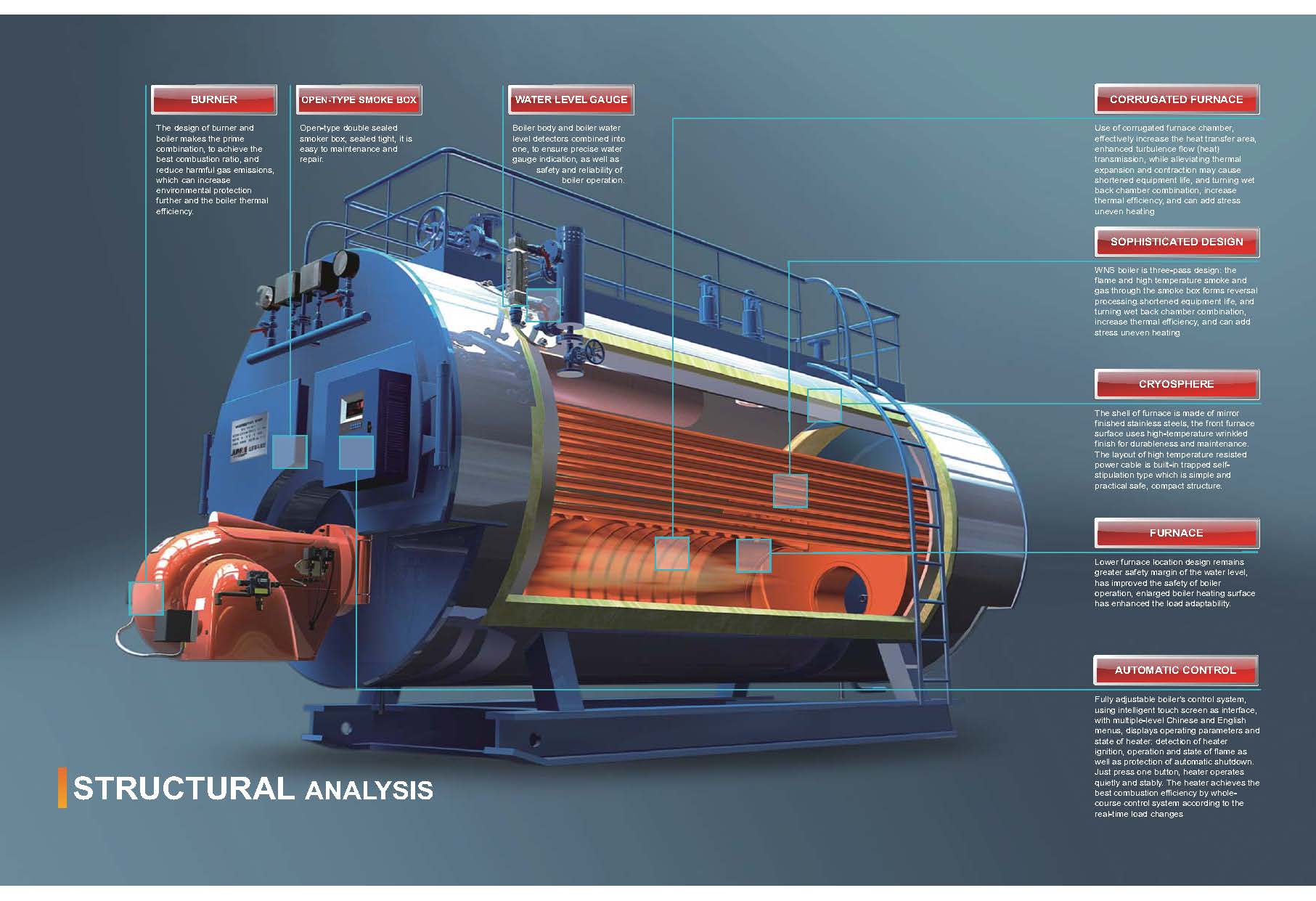
Industrial boiler buyers often face a serious problem: a boiler may look strong, well-painted, and professionally assembled, but if its safety standards, certifications, material traceability, welding records, inspection reports, and pressure-test documents are incomplete, the equipment can become a compliance risk before it ever produces steam. The consequences can be costly and disruptive: rejected jurisdictional inspection, delayed commissioning, insurance objections, failed owner audits, unplanned rework, missing spare-part traceability, unsafe burner operation, or pressure-boundary uncertainty. The practical solution is to evaluate boiler safety standards and certifications as a complete manufacturing quality system, not as a single logo on a nameplate.
The latest industrial boiler safety framework in 2026 is a layered compliance system. For manufacturing quality and traceability, buyers should verify the applicable pressure-part construction code, such as ASME BPVC 2025, regional conformity rules such as PED 2014/68/EU or CSA B51:24, in-service and repair rules such as NBIC 2025, combustion safety standards such as NFPA 85-2023 or ASME CSD-1:2024, package-boiler listing standards such as ANSI/CAN/UL 795:2024, and quality-management systems such as ISO 9001:2015 with the 2024 climate amendment. A qualified industrial boiler manufacturer should provide signed data reports, material test reports, heat-number traceability, weld maps, welder qualifications, WPS/PQR records, NDE reports, pressure-test records, safety-valve certificates, calibration records, inspection release forms, and a complete final data book.
To help plant owners, purchasing managers, EPC contractors, quality engineers, and maintenance teams make safer buying decisions, this article explains the current boiler standards landscape from the perspective of a professional industrial boiler manufacturer and supplier. The key point is simple: a safe boiler is not proven by one certificate. It is proven by a controlled chain of evidence from design calculation to raw material, welding, inspection, testing, shipment, installation, operation, repair, and long-term traceability.
An ASME certification mark alone proves that every industrial boiler is automatically accepted in every country and jurisdiction.False
ASME certification is a strong construction-code credential, but buyers must still verify the applicable jurisdictional requirements, data reports, registration, installation approval, combustion safety rules, local inspection requirements, and any regional conformity assessment such as PED or CSA requirements.
Material traceability is essential for industrial boiler safety because pressure-retaining parts must be linked to approved material specifications, heat numbers, inspection records, and manufacturing documents.True
Industrial boiler pressure-part quality depends on verifying that plates, tubes, pipes, forgings, fittings, welding consumables, and safety-critical components match the required code, material grade, heat number, test certificate, and inspection history.
Understanding the Latest Industrial Boiler Safety Standards
The latest industrial boiler safety standards should be understood in layers because different standards control different parts of boiler safety. A pressure-part construction code controls the boiler shell, drum, headers, tubes, nozzles, pressure-retaining welds, materials, design pressure, temperature, corrosion allowance, nondestructive examination, pressure testing, and nameplate marking. A combustion safety standard controls burner sequencing, purge timing, flame detection, fuel shutoff valves, ignition, low-water cutoff, combustion-air proving, furnace pressure protection, safety shutdown, and reset logic. A regional conformity system controls whether the boiler can legally enter or operate in a specific market. A quality-management certification controls how the factory manages documents, suppliers, inspections, nonconforming products, calibration, training, corrective actions, and customer requirements. A traceability system connects all of these layers into a usable record that the owner can rely on during commissioning, inspection, insurance review, repair, and future modification.
For many global industrial boiler projects, the most frequently encountered pressure-equipment framework includes ASME BPVC 2025, National Board registration and NBIC 2025, PED 2014/68/EU, CSA B51:24, NFPA 85-2023, ASME CSD-1:2024, ANSI/CAN/UL 795:2024, and ISO 9001:2015/Amd 1:2024. These standards do not replace each other. They are used together depending on the boiler type, pressure, fuel, country of installation, owner specification, insurance requirement, and authority having jurisdiction. For example, a high-pressure power boiler for a U.S. facility may require ASME Section I construction, National Board registration, local jurisdictional inspection, and combustion safety compliance. A packaged gas-fired boiler may also require CSD-1 or UL listing depending on its fuel input and application. A boiler exported to the European Union may require PED conformity assessment and CE marking. A boiler for Canada may require CSA B51 compliance and Canadian Registration Number acceptance where applicable. A boiler for a refinery, chemical plant, paper mill, food plant, or district-energy facility may also require owner-specific quality plans, safety-instrumented function documentation, third-party inspection, and enhanced traceability.
| Compliance layer | Current standard or certification to verify | What it controls | Buyer’s practical verification |
|---|---|---|---|
| Pressure-part construction | ASME BPVC 2025 | Boiler design, material, fabrication, examination, inspection, pressure testing, stamping | ASME certificate scope, signed Manufacturer’s Data Report, nameplate, Authorized Inspector release |
| In-service inspection, repair, and alteration | NBIC 2025 | Installation, inspection, repair, alteration, pressure-relief-device work | National Board registration, R-stamp or VR-stamp documentation where applicable |
| European market conformity | PED 2014/68/EU | EU design, manufacture, conformity assessment, CE marking for pressure equipment above scope thresholds | PED category, conformity module, technical file, EU Declaration of Conformity, Notified Body documents |
| Canadian compliance | CSA B51:24 | Boiler, pressure vessel, pressure piping, fittings, inspection, testing, repair practices | CRN requirements, provincial acceptance, local inspection authority review |
| Combustion safety | NFPA 85-2023 | Boiler combustion hazards, explosion prevention, purge, burner management, operating safety | Burner-management narrative, cause-and-effect matrix, flame safeguard records, proof-test procedure |
| Automatically fired boiler controls | ASME CSD-1:2024 | Controls and safety devices for automatically operated boilers within its scope | Low-water cutoff, pressure controls, fuel-train interlocks, safety shutdown tests |
| Gas-fired package boiler listing | ANSI/CAN/UL 795:2024 | Commercial-industrial gas-fired package boiler safety and listing pathway | Listing mark, model coverage, fuel configuration, installation manual, hydrogen-blend limits if claimed |
| Manufacturing quality management | ISO 9001:2015/Amd 1:2024 | Quality system, process control, customer requirements, documentation, improvement | Accredited certificate, internal audits, NCR/CAPA records, supplier controls, calibration records |
ASME BPVC 2025: The Core Standard for Boiler Pressure-Part Quality
ASME BPVC 2025 remains one of the most important construction-code references for industrial boiler manufacturing. For buyers, the practical point is that “ASME” is not a vague quality word. It must be tied to a specific code section, certificate scope, designator, code edition, design pressure, design temperature, inspection authority, and final data report. For power boilers, ASME Section I is commonly relevant. For heating boilers, ASME Section IV may apply. For pressure vessels associated with boiler systems, such as deaerators, blowdown tanks, separators, receivers, or certain economizer vessels, ASME Section VIII may apply. For boiler external piping or pressure piping connected to the boiler, other ASME sections and piping codes may be relevant. Therefore, a buyer should never accept the statement “ASME boiler” without asking which ASME section, which symbol stamp, which certificate scope, and which data report will be supplied.
From a manufacturing perspective, ASME compliance begins before fabrication. The manufacturer must review the contract, confirm code jurisdiction, select approved materials, perform design calculations, prepare drawings, control welding procedures, qualify welders, define inspection hold points, conduct required nondestructive examination, complete pressure testing, and prepare the official data report. The Authorized Inspector plays an important role in verifying that construction follows the code and the manufacturer’s approved quality-control system. This is why an ASME-stamped boiler is not simply “built strongly”; it is manufactured under a controlled system where design, material, welding, examination, testing, and certification are documented.
Buyers should check whether the supplier’s ASME Certificate of Authorization covers the actual product being purchased. A manufacturer may be certified for one scope but not another. For example, a shop may have authorization for pressure vessels but not power boilers, or for assembly but not complete fabrication. The purchase specification should identify the required ASME designator, whether National Board registration is required, whether the Authorized Inspector must witness hydrostatic testing, whether additional third-party inspection is required, and whether the final data book must be approved before shipment. This prevents the common problem where a supplier uses ASME materials or ASME-style calculations but does not deliver a fully code-stamped boiler.
National Board Registration and NBIC 2025: Preserving Boiler Identity Through Its Service Life
National Board registration is valuable because industrial boilers often remain in service for decades. During that life, the boiler may be inspected by different authorities, transferred between owners, repaired, retubed, modified, insured by different companies, or evaluated for life extension. A National Board number and properly registered Manufacturer’s Data Report help preserve the boiler’s identity and original construction record. This is especially important when owners need to confirm maximum allowable working pressure, original construction code, material basis, safety-valve requirements, inspection history, or repair limitations many years after installation.
NBIC 2025 is especially important after the boiler leaves the manufacturer. New construction and post-construction work are different compliance activities. The original ASME construction record does not automatically authorize future repairs or alterations. If pressure-retaining parts are repaired, altered, replaced, or modified, the work may need to follow NBIC rules and may require an organization holding the proper National Board accreditation, such as an R Certificate for repairs and alterations. Pressure-relief-valve repair may require VR accreditation. This matters because a poor repair can damage the traceability chain even if the original boiler was manufactured correctly. For example, if a steam drum nozzle is modified without proper engineering review, material control, welding qualification, NDE, pressure testing, and documentation, the owner may no longer have reliable evidence that the boiler still matches its original safety basis.
A buyer who wants long-term traceability should request National Board registration when applicable and should retain the Manufacturer’s Data Report, nameplate photograph, safety-valve data, hydrostatic test record, weld map, material records, and inspection release documents in both paper and electronic form. The owner should also define future repair rules in the maintenance program: who is authorized to repair pressure parts, how replacement tubes are identified, how safety valves are tested or repaired, how code repairs are documented, and how changes are approved. Good traceability is not only a factory issue; it is a lifecycle discipline.
PED 2014/68/EU, CSA B51:24, and Regional Conformity Requirements
Industrial boiler certification must match the installation market. A boiler that is suitable for one country may not be legally acceptable in another. In the European Union, the Pressure Equipment Directive 2014/68/EU controls the design, manufacture, and conformity assessment of pressure equipment within its scope. For boiler buyers, this means the supplier should identify the PED category, fluid group, conformity assessment module, essential safety requirements, Notified Body involvement where required, CE marking basis, technical file, operating instructions, and EU Declaration of Conformity. It is not safe to assume that an ASME-stamped boiler is automatically accepted as PED-compliant. ASME construction can be part of an engineering solution, but PED conformity must be specifically addressed when the equipment is placed on the EU market.
For Canadian projects, CSA B51:24 is a key reference for boilers, pressure vessels, pressure piping, and fittings. Canadian compliance is strongly tied to provincial and territorial requirements, so buyers should confirm the Canadian Registration Number process, local authority acceptance, adopted code edition, fittings registration requirements, pressure-piping scope, inspection requirements, and documentation format. A common procurement mistake is assuming that one Canadian approval automatically covers every province or every component. In practice, the project team should create a Canadian compliance matrix before fabrication begins.
For other regions, local requirements may reference ASME, EN, ISO, GB, JIS, Korean, Australian, Middle Eastern, or other national standards. The best practice is to define the hierarchy of requirements in the purchase contract. If the owner specification, local law, insurance standard, and manufacturer’s base design differ, the contract should state which requirement governs. A professional boiler supplier should review this before accepting the order and should issue a compliance matrix showing each applicable requirement, evidence document, responsible party, inspection point, and final deliverable.
| Market or application | Typical compliance evidence | What to request from the boiler supplier | Common purchasing mistake |
|---|---|---|---|
| United States industrial steam boiler | ASME stamp, Manufacturer’s Data Report, National Board registration if required, local inspection | ASME certificate scope, signed data report, NB number, hydrotest record, nameplate copy | Accepting “ASME design” as if it equals ASME-stamped construction |
| European Union boiler package | PED technical file, CE marking, EU Declaration of Conformity, Notified Body certificate where required | PED category, conformity module, ESR checklist, material documentation, operating instructions | Assuming ASME compliance automatically satisfies PED |
| Canadian boiler installation | CSA B51 compliance, CRN where required, provincial authority acceptance | CRN documentation, provincial registration plan, local inspection requirements | Assuming one jurisdiction’s acceptance applies everywhere |
| Gas-fired package boiler | ANSI/CAN/UL 795 listing where applicable | Listing mark, covered model number, installation manual, fuel limits | Assuming listed components equal a listed boiler package |
| Large combustion system | NFPA 85 compliance documentation | Burner-management logic, purge calculations, trip matrix, flame-safety system records | Reviewing only the PLC program and not the safety functions |
| Boiler repair or alteration | NBIC documentation, R-stamp report where required | Repair plan, material records, welder qualifications, NDE, pressure test | Using a general welding contractor for code pressure-part repairs |
NFPA 85-2023 and ASME CSD-1:2024: Combustion Safety Is Not Optional
Pressure-part standards reduce the risk of pressure-boundary failure, but combustion safety standards reduce the risk of furnace explosions, delayed ignition, flame failure, unsafe fuel accumulation, uncontrolled firing, and improper startup or shutdown. This distinction is critical because many boiler incidents are not caused by weak steel; they are caused by unsafe fuel handling, poor purge practices, failed flame detection, bypassed interlocks, incorrect burner sequencing, or inadequate operator training. NFPA 85-2023 is widely associated with boiler and combustion systems hazards, especially for larger systems, pulverized-fuel systems, heat recovery steam generators, and complex combustion arrangements. ASME CSD-1:2024 applies to controls and safety devices for automatically fired boilers within its stated scope.
A practical combustion safety review should include fuel type, burner capacity, fuel train arrangement, double-block-and-bleed valves where required, valve proving, low-gas-pressure switches, high-gas-pressure switches, combustion-air proving, forced-draft fan interlocks, purge airflow verification, pilot ignition sequence, main flame proving, flame scanner type, flame-failure response time, low-water cutoff, high-steam-pressure limit, high-temperature limit, emergency stop, alarm reset, lockout logic, and manual bypass control. For oil firing, the review should also cover atomizing medium, oil temperature, oil pressure, viscosity control, recirculation, and safe shutdown. For biomass, waste gas, refinery gas, hydrogen blends, or multi-fuel systems, additional hazard review is normally required because fuel composition, flame speed, heating value, moisture, contaminants, and combustion stability may vary.
The buyer should request a burner-management cause-and-effect matrix, sequence-of-operation description, instrument list, safety-interlock list, flame safeguard documentation, fuel-train component certificates, factory acceptance test procedure, commissioning checklist, proof-test interval recommendation, and operator training requirements. When safety instrumented systems are involved, the buyer may also require safety requirements specifications, safety integrity level assessment, proof-test procedures, bypass management, and validation records. A responsible supplier should never describe the burner management system as a “black box.” Every critical permissive, trip, alarm, shutdown, and reset function should be understandable, testable, and documented.
ANSI/CAN/UL 795:2024 and the Rise of Hydrogen-Blend Questions
ANSI/CAN/UL 795:2024 is important for buyers of commercial-industrial gas-fired package boilers because listing standards help verify that the boiler package, not just individual components, has been evaluated under a recognized safety standard. This is increasingly relevant as buyers ask about decarbonization, renewable natural gas, hydrogen blending, low-NOx burners, and alternative fuel strategies. However, the buyer must be careful: a standard providing a certification pathway does not mean every boiler model is automatically certified for every fuel blend. The exact listed model, burner, fuel train, controls, installation instructions, emissions configuration, and allowable fuel composition must match the listing and manufacturer’s documentation.
For hydrogen-blend-ready boilers, buyers should request written confirmation of the maximum hydrogen percentage, burner OEM approval, fuel-train compatibility, flame-detection validation, material compatibility review, pressure-regulator suitability, valve certification, emissions data, turndown limitations, combustion stability data, and commissioning requirements. Hydrogen can change flame characteristics, combustion speed, leak behavior, and NOx formation. Therefore, a simple sales claim such as “hydrogen ready” is not enough. It should be supported by test data, listing coverage where applicable, and a defined operating envelope.
From a traceability standpoint, hydrogen-blend projects also require careful spare-part control. If a certified boiler uses a specific burner head, gas valve, regulator, flame scanner, gasket, pressure switch, or control module, replacing it with a non-equivalent component may affect safety certification. The final data book should identify critical components by model number, rating, material, certification mark, and approved replacement options. This protects the owner during future maintenance and prevents accidental loss of compliance.
Manufacturing Quality and Traceability: What a Complete Boiler Data Book Should Include
A complete industrial boiler data book should allow the owner, inspector, insurer, and future maintenance team to reconstruct how the boiler was designed, built, inspected, tested, and released. The data book should not be a random pile of certificates. It should be organized by document index, revision control, equipment serial number, code basis, drawing number, material records, weld records, inspection records, test records, safety-device records, control-system records, and final release. A professional manufacturer treats the data book as a controlled product, not as an afterthought.
The traceability chain begins with material control. Steel plates, tubes, pipes, forgings, flanges, fittings, and welding consumables should be purchased to approved specifications and received with material test reports. The receiving inspection team should verify grade, size, heat number, condition, and certificate consistency. When material is cut, formed, machined, or transferred, the heat number should be transferred to the part or controlled by an equivalent traceability method. For boiler pressure parts, loss of material identity is a serious quality failure because it becomes difficult to prove that the installed part meets the required code and design basis.
Welding traceability is equally important. Each pressure-retaining weld should be identified on a weld map and linked to a welding procedure specification, supporting procedure qualification record, welder performance qualification, filler metal control record, preheat or interpass requirements, postweld heat treatment records if required, and NDE reports. If a weld is repaired, the repair should be documented, re-examined, and linked to the original weld number. This is how the manufacturer proves that the pressure boundary was not only welded but welded under controlled and qualified conditions.
| Traceability record | Why it matters | What a professional manufacturer should provide |
|---|---|---|
| Contract review record | Confirms code, jurisdiction, scope, documentation, and customer requirements | Compliance matrix, code edition, inspection plan, document submittal schedule |
| Design calculations | Proves pressure boundary design basis | MAWP calculation, temperature basis, corrosion allowance, load assumptions, revision control |
| Approved drawings | Controls fabrication geometry and pressure-part configuration | GA drawing, pressure-part drawings, nozzle schedule, weld details, revision history |
| Material Test Reports | Proves material chemistry, mechanical properties, heat treatment, and grade | MTRs linked to heat numbers, receiving inspection records, material substitution approvals |
| Weld map | Connects welds to inspection and welder records | Weld number, joint type, WPS, welder ID, NDE reference, repair record |
| WPS/PQR/WPQ | Proves welding procedure and welder qualification | Approved WPS, PQR, welder qualification, continuity records |
| NDE reports | Proves required examination was completed | RT, UT, MT, PT reports, technician qualifications, acceptance criteria, repair recheck |
| Heat treatment records | Proves required PWHT was performed correctly | Furnace chart, soak temperature, soak time, thermocouple layout, calibration status |
| Pressure test record | Proves pressure boundary integrity before release | Hydrostatic test pressure, duration, medium, gauge calibration, witness sign-off |
| Safety-valve documents | Proves overpressure protection basis | Set pressure, capacity, certification, sizing basis, test certificate |
| Calibration records | Proves measurement reliability | Gauge, meter, test bench, NDE equipment, torque tool calibration certificates |
| Final inspection release | Proves the product passed final quality review | Inspection checklist, nonconformance closure, nameplate photo, shipping release |
ISO 9001, ISO 3834, ISO 45001, ISO 14001, and ISO 19443: Management-System Certifications That Support Boiler Quality
ISO 9001 is not a boiler construction code, but it is highly useful because it verifies that the manufacturer has a structured quality management system. In boiler manufacturing, ISO 9001 supports document control, contract review, supplier evaluation, inspection planning, calibration control, training, nonconformance management, corrective action, customer communication, and continuous improvement. The 2024 amendment to ISO 9001 introduced climate-related consideration into the management-system context, which is relevant for manufacturers facing customer requirements related to energy efficiency, emissions, fuel transition, lifecycle impact, and environmental responsibility. However, buyers should understand the limitation: an ISO 9001 certificate does not prove that a boiler is ASME-stamped, PED-compliant, NB-registered, or combustion-safe. It proves that the manufacturer operates a quality management system within the certified scope.
ISO 3834 can be valuable for welded boiler fabrication because welding is a special process: the full quality of a weld cannot always be confirmed by final inspection alone. Welding quality must be built through procedure qualification, welder qualification, consumable control, joint preparation, fit-up inspection, preheat control, heat input control, NDE, repair control, and documentation. A manufacturer with mature welding quality practices will normally maintain clear WPS/PQR records, welder continuity logs, filler-metal storage rules, repair-rate analysis, welding supervisor review, and NDE trend monitoring.
ISO 45001 and ISO 14001 are also relevant for responsible boiler manufacturing. ISO 45001 supports occupational health and safety management, which matters in heavy fabrication involving lifting, welding, pressure testing, confined spaces, blasting, painting, and electrical work. ISO 14001 supports environmental management, which is increasingly important for customers concerned about emissions, waste, energy use, paint systems, packaging, and supplier sustainability. For nuclear-related boiler or pressure-equipment supply chains, ISO 19443 may be relevant because it adds requirements related to nuclear safety culture, configuration control, traceability, and documentation for products and services important to nuclear safety.
| Management system | How it supports boiler manufacturing quality | Buyer’s audit focus |
|---|---|---|
| ISO 9001 | Controls quality processes, documentation, suppliers, inspection, NCR/CAPA, customer requirements | Certificate scope, internal audits, supplier approval, document control, corrective actions |
| ISO 3834 | Strengthens welding quality management for fusion welding | WPS/PQR control, welder qualification, consumable control, repair tracking, NDE review |
| ISO 45001 | Supports worker safety in heavy fabrication and testing | Lifting plans, confined-space procedures, pressure-test safety, welding safety, incident records |
| ISO 14001 | Supports environmental control and sustainability | Paint emissions, waste handling, energy use, packaging, environmental objectives |
| ISO 19443 | Supports nuclear supply-chain quality where applicable | Nuclear safety culture, item classification, configuration control, lifetime records |
How Buyers Should Audit Industrial Boiler Manufacturing Quality
A strong buyer audit should start before the purchase order is issued. First, ask the supplier to provide a standards compliance matrix. This matrix should list each applicable standard, code edition, certificate, inspection authority, deliverable document, responsible party, and approval point. Second, ask for the supplier’s certificate scope. Do not only ask whether the supplier is “certified.” Confirm whether the certificate covers the exact boiler type, pressure-part scope, shop location, and code designator. Third, review the inspection and test plan. A good ITP should identify material receiving inspection, cutting, forming, fit-up, welding, NDE, heat treatment, dimensional inspection, hydrostatic test, safety-valve installation, control-panel test, burner test, painting inspection, final inspection, packing inspection, and document release.
During a factory audit, walk the traceability path physically. Select one pressure-part plate or tube from storage and ask the supplier to show its purchase order, material certificate, heat number, receiving inspection record, and transfer marking procedure. Then select one weld on the shop floor and ask for the weld map, WPS, welder qualification, filler-metal batch control, fit-up record, NDE requirement, and inspection status. Next, inspect the calibration system. Pressure gauges, temperature instruments, NDE equipment, test benches, torque tools, and measuring devices should have valid calibration status. Finally, review the nonconformance system. A factory that never reports nonconformities may not be perfect; it may simply be hiding problems. A mature manufacturer records issues, evaluates risk, obtains engineering disposition, implements corrective action, and prevents recurrence.
A buyer should also audit the control system and burner package. Ask for the burner-management sequence, interlock list, fuel-train diagram, safety-shutdown logic, alarm list, flame safeguard documentation, and factory acceptance test checklist. For larger systems, request purge calculations, trip-response requirements, safety instrumented function documentation where applicable, and proof-test procedures. This is especially important for boilers burning multiple fuels, refinery gas, hydrogen blends, biogas, biomass, or waste-derived fuels.
Practical Checklist Before Releasing a Boiler for Shipment
Before shipment, the buyer should not rely only on a visual inspection. A beautiful paint finish can hide missing documents, unresolved nonconformities, or incorrect components. The pre-shipment review should confirm that all pressure-part inspections are complete, NDE results are acceptable, weld repairs are closed, heat treatment charts are approved, hydrostatic test records are signed, safety valves match the design basis, nameplate information matches the data report, control-panel testing is complete, and the final data book is indexed and approved. The packing inspection should verify nozzle protection, flange covers, desiccants, lifting points, shipping saddles, spare-part labels, preservation method, and export packing requirements.
| Release checkpoint | Acceptable evidence | Why it protects the buyer |
|---|---|---|
| Code certificate verification | Valid certificate scope and code designator | Confirms the manufacturer is authorized for the required work |
| Data report review | Signed Manufacturer’s Data Report or equivalent conformity document | Confirms official construction record |
| Material traceability review | MTRs linked to heat numbers and installed parts | Prevents unknown material in pressure boundary |
| Weld traceability review | Weld map, WPS, welder ID, NDE reports | Confirms pressure-retaining weld history |
| Pressure test approval | Hydrostatic or approved pressure-test record with calibrated gauges | Confirms pressure-boundary integrity before shipment |
| Safety-device verification | Safety-valve certificates, set pressure, capacity, control interlock records | Confirms overpressure and combustion safeguards |
| Final nameplate check | Nameplate photo matching data report and drawings | Prevents identity and rating mismatch |
| Data book approval | Complete indexed dossier with revision control | Supports commissioning, inspection, insurance, and future maintenance |
Common Red Flags in Boiler Safety Certification
Several warning signs should cause a buyer to pause the project. The first red flag is vague language such as “designed according to ASME,” “ASME material,” “CE available,” “ISO factory,” or “UL components.” These phrases may be true but incomplete. They do not prove that the complete boiler is code-stamped, CE-marked, listed, registered, or accepted by the installation authority. The second red flag is certificate mismatch. If the supplier’s certificate covers pressure vessels but the order is for a power boiler, the certificate may not be sufficient. The third red flag is missing heat-number transfer. If the supplier cannot prove material identity after cutting and forming, traceability is weak. The fourth red flag is incomplete weld documentation. If welds cannot be linked to qualified procedures, qualified welders, inspection records, and repair history, the pressure boundary cannot be fully reconstructed. The fifth red flag is undocumented component substitution. Replacing a burner, valve, safety valve, flame scanner, pressure switch, gasket, or control module without approval may affect safety certification and performance.
Another red flag is treating combustion controls as a software-only matter. Boiler safety controls must be documented as functional safety elements, not merely as PLC code. The buyer should be able to understand the logic of purge, ignition, flame proving, fuel shutoff, interlocks, trips, alarms, lockouts, resets, and bypasses. For higher-risk systems, proof testing and management of change are essential. A final red flag is a supplier who refuses document review before shipment. A professional manufacturer should be willing to provide staged documentation because staged review reduces risk for both parties.
Case Example: How Traceability Prevents a Commissioning Delay
Consider a food-processing plant purchasing a 10-ton-per-hour gas-fired steam boiler for a new production line. The boiler arrives on schedule, but the local inspector requests the Manufacturer’s Data Report, safety-valve certificates, burner-management test record, hydrostatic test record, and material traceability for pressure parts. If the supplier only provides a general quality certificate and an operation manual, commissioning may be delayed. The plant may need emergency documentation support, third-party review, additional testing, or even component replacement. Production startup can be affected, and the buyer may face penalties from downstream customers.
Now compare that with a properly controlled project. Before fabrication, the supplier issues a compliance matrix confirming ASME construction, National Board registration, CSD-1 or other applicable combustion-safety requirements, local inspection expectations, and final data-book contents. During production, material heat numbers are transferred, welds are mapped, NDE is completed, pressure testing is witnessed, safety valves are certified, and the control system is factory tested. Before shipment, the buyer receives an indexed electronic data book. When the local inspector arrives, the owner can quickly provide the required records. The boiler is not only physically ready; it is document-ready. This is the real commercial value of manufacturing traceability.
Final Summary
The latest industrial boiler safety standards and certifications for manufacturing quality and traceability should be evaluated as a complete compliance ecosystem. ASME BPVC 2025 supports pressure-part construction quality. NBIC 2025 and National Board registration support lifecycle inspection, repair, alteration, pressure-relief-device work, and long-term identity preservation. PED 2014/68/EU supports European pressure-equipment conformity. CSA B51:24 supports Canadian boiler, pressure-vessel, pressure-piping, and fittings compliance. NFPA 85-2023 and ASME CSD-1:2024 support combustion safety and control-device requirements. ANSI/CAN/UL 795:2024 supports listed gas-fired package boiler safety and modern fuel-transition questions. ISO 9001, ISO 3834, ISO 45001, ISO 14001, and ISO 19443 support manufacturing discipline, welding quality, worker safety, environmental control, and specialized high-reliability supply chains.
For buyers, the most practical rule is this: do not buy only a boiler; buy a documented safety case. The equipment should arrive with evidence that every pressure-retaining material, weld, inspection, test, safety valve, control device, and nameplate rating can be traced back to the required standard and manufacturing record. When certification and traceability are built into the project from the beginning, the buyer gains safer commissioning, easier inspection, stronger insurance acceptance, better spare-part control, and more reliable long-term operation.
What Are the Latest Industrial Boiler Safety Standards and Certifications for Installation, Inspection, and Local Operating Approval?

Industrial boiler installation is one of the most risk-sensitive stages in the entire boiler lifecycle because even a properly manufactured boiler can fail inspection if it is installed with incorrect clearances, unsafe relief-valve discharge piping, insufficient combustion air, unapproved fuel piping, missing electrical protection, poor water treatment, incomplete commissioning records, or no local permit. The consequences can be severe: the authority having jurisdiction may refuse the operating certificate, the insurer may delay coverage, the plant may lose production time, and unsafe startup conditions may remain hidden until the boiler is under pressure. The practical solution is to treat installation, inspection, and local operating approval as a controlled compliance project from the beginning, not as paperwork to be solved after the boiler is already in the boiler room.
The latest industrial boiler safety framework for installation, inspection, and local operating approval in 2026 normally combines ASME BPVC 2025 for original pressure-part construction, NBIC 2025 for installation, inspection, repair, alteration, and pressure-relief-device guidance, ASME B31.1-2024 for boiler external piping and power piping where applicable, NFPA 85-2023 for larger boiler and combustion systems, ASME CSD-1:2024 for controls and safety devices on automatically fired boilers within its scope, NFPA 54-2024 for fuel gas installation where adopted, NFPA 70-2026 for electrical installation where adopted, the 2024 International Mechanical Code or local mechanical code for boiler room installation rules, and local jurisdictional regulations for permits, inspections, operator licensing, and certificates to operate. The most important rule is that the latest published standard is not always the legally enforced standard; the locally adopted edition and the authority having jurisdiction control final approval.
For plant owners, EPC contractors, facility managers, mechanical installers, and boiler buyers, the real question is not only “Which code applies?” but “What must be ready before the inspector will allow this boiler to operate?” This article explains the current standards and certifications from the perspective of a professional industrial boiler manufacturer and supplier, with a practical focus on installation readiness, inspection documentation, and successful local operating approval.
A boiler that has an ASME stamp can be operated immediately after delivery without local installation inspection.False
An ASME stamp supports original construction compliance, but the installed boiler normally still requires local permits, installation inspection, safety-device verification, piping review, combustion setup, electrical inspection, and a certificate or approval to operate from the authority having jurisdiction.
The locally adopted code edition and the authority having jurisdiction determine which installation and operating approval requirements apply at the job site.True
Industrial boiler approval depends on the legal requirements adopted by the local jurisdiction, including boiler laws, mechanical codes, fuel gas codes, electrical codes, inspection rules, licensing rules, and operating certificate procedures.
Understanding Boiler Installation Approval as a Complete Compliance System
Industrial boiler installation approval is never based on one standard alone. A safe and legally accepted boiler installation is normally built from several layers of requirements. The first layer is the original construction code, such as ASME BPVC 2025, which proves the boiler pressure parts were designed, fabricated, inspected, tested, and stamped under the proper manufacturing code. The second layer is the installation and in-service inspection framework, commonly supported by NBIC 2025 in North America, which helps guide installation, inspection, repairs, alterations, and pressure-relief-device activities. The third layer is the piping code, such as ASME B31.1 for power piping and boiler external piping, or another piping code depending on the service. The fourth layer is the combustion and burner safety standard, such as NFPA 85 for larger combustion systems or ASME CSD-1 for automatically fired boilers within its defined scope. The fifth layer is the building, mechanical, fuel gas, electrical, fire, environmental, and local operating approval system, which can include the 2024 International Mechanical Code, NFPA 54, NFPA 70, local fire code, air-emission permit, water discharge permit, operator licensing, and a jurisdictional certificate to operate.
The most common mistake is to confuse manufacturing certification with permission to operate. Manufacturing certification answers the question, “Was the boiler built correctly?” Local operating approval answers a different question: “Is this boiler installed safely at this specific site, connected to approved utilities, protected by correct controls, inspected by the proper authority, and ready to operate under local law?” A boiler can be perfectly built and still fail local approval if the relief-valve outlet is reduced, the combustion-air louvers are undersized, the fuel train does not match the accepted drawing, the boiler room lacks required access clearance, the emergency stop is not installed correctly, the stack draft is unstable, the electrical disconnect is missing, the water-treatment system is not ready, or the final documents are incomplete.
| Compliance area | Current standard or authority commonly checked in 2026 | What it affects during installation | Practical approval evidence |
|---|---|---|---|
| Original boiler construction | ASME BPVC 2025 | Boiler pressure-part construction, stamping, data report, nameplate | ASME stamp, Manufacturer’s Data Report, National Board number if required |
| Installation and in-service inspection | NBIC 2025 and local boiler law | Installation review, inspection, repair, alteration, inspection intervals | Installation inspection report, jurisdictional acceptance, operating certificate |
| Boiler external piping and power piping | ASME B31.1-2024 | Steam, feedwater, blowdown, boiler external piping, high-pressure piping | Piping drawings, weld records, pressure test records, inspector sign-off |
| Controls on automatically fired boilers | ASME CSD-1:2024 | Safety controls, low-water cutoff, fuel shutoff, limits, interlocks | CSD-1 report, control checkout, safety-device test record |
| Large combustion systems | NFPA 85-2023 | Burner management, purge, ignition, flame safeguards, trip logic | Burner-management narrative, cause-and-effect matrix, functional test report |
| Fuel gas installation | NFPA 54-2024 or local fuel gas code | Gas piping, regulators, shutoff valves, venting, appliance connection | Gas pressure test, fuel-train documents, regulator and valve certificates |
| Electrical installation | NFPA 70-2026 or locally adopted NEC edition | Power supply, grounding, disconnects, panels, wiring, classified areas | Electrical inspection, panel drawings, grounding check, test records |
| Mechanical room and building approval | 2024 IMC or local mechanical/building code | Clearance, ventilation, combustion air, access, drainage, seismic support | Mechanical permit, final mechanical inspection, fire/building approval |
| Local operating authorization | Authority having jurisdiction | Legal permission to operate boiler | Certificate to operate, operating permit, inspection tag, owner registration |
ASME BPVC 2025: Why Construction Certification Still Matters During Installation
Although ASME BPVC 2025 is mainly a construction code, it remains important during installation because local inspectors usually begin by verifying the boiler’s identity. The inspector may check the ASME symbol stamp, the nameplate, the maximum allowable working pressure, the design temperature, the serial number, the National Board number where applicable, the Manufacturer’s Data Report, the safety-valve set pressure, and the intended service. If the nameplate is damaged, hidden, painted over, mismatched with the data report, or inconsistent with the installation drawings, approval can be delayed. This is why a professional boiler supplier should provide a clear nameplate photograph, signed data report, design data, safety-valve documentation, and installation drawings before shipment.
From the installer’s perspective, ASME construction certification must be protected during field installation. Unauthorized welding on pressure-retaining parts, field modification of nozzles, incorrect replacement of safety valves, or changes to pressure-boundary components can create code problems. If field welding or modification is required, the owner should confirm whether the work must be performed by an organization holding the proper National Board repair authorization or another jurisdictionally accepted certification. For example, welding a new nozzle onto a pressure-retaining shell is not the same as connecting external piping. It may be treated as a repair or alteration and may require engineering review, approved welding procedures, qualified welders, inspection, nondestructive examination, pressure testing, and formal documentation.
ASME construction also affects installation through pressure ratings and connection requirements. Steam piping, feedwater piping, blowdown piping, safety-valve discharge piping, venting, drains, and instrument connections must not exceed or contradict the boiler’s rated conditions. The safety-valve set pressure must match the boiler’s maximum allowable working pressure and applicable code requirements. The installer should never install valves between the boiler and safety valve unless specifically allowed by the applicable code and approved arrangement. Safety-valve discharge piping must be properly sized, supported, drained, routed to a safe location, and free from restrictions that could create backpressure beyond permitted limits. Many local inspection failures occur not because the boiler is defective, but because safety-valve discharge piping is incorrectly installed in the field.
NBIC 2025: The Key Standard for Installation, Inspection, Repair, and Pressure-Relief Devices
NBIC 2025 is one of the most important references for owners who want their boiler installation to pass inspection and remain compliant during service. In practical terms, NBIC supports four important lifecycle areas: installation, inspection, repairs and alterations, and pressure-relief devices. During installation, it helps owners and inspectors evaluate whether the pressure equipment is properly placed, connected, protected, and documented. During service, it supports inspection planning, condition assessment, repair decisions, and safety-valve control. During repair or alteration, it defines structured expectations for restoring pressure-retaining integrity. During pressure-relief-device work, it helps maintain confidence that safety valves and relief valves are tested, repaired, set, and documented correctly.
A strong installation package should include the boiler’s original construction documents, installation drawings, piping diagrams, safety-valve documents, pressure-test records for field piping, burner and control records, electrical inspection documents, fuel-system documents, and commissioning test results. Local inspectors may also require registration forms, owner information, installer license information, insurance inspection reports, manufacturer installation instructions, and confirmation that the boiler room meets access and ventilation requirements. The operating certificate is usually issued only after the required inspection steps are completed and any deficiencies are corrected.
NBIC also matters because installation approval is only the beginning. Once the boiler is operating, periodic inspections are normally required. Inspection frequency depends on the jurisdiction, boiler type, pressure, use, size, risk category, and whether the inspection is internal, external, or operational. The owner should establish a compliance calendar for inspections, safety-valve testing, burner safety checks, low-water cutoff testing, water-treatment review, combustion tuning, emission testing where required, and operator training. Missing a required inspection or operating with an expired certificate can create legal, insurance, and safety exposure even when the boiler itself is physically functional.
ASME B31.1-2024 and Field Piping: Where Many Boiler Installations Fail
Boiler installation is often delayed by field piping issues. ASME B31.1-2024 is commonly relevant for power piping and boiler external piping, especially in steam and high-temperature water systems. The piping connected to an industrial boiler must be designed for pressure, temperature, material compatibility, thermal expansion, supports, anchors, flexibility, drainage, vents, isolation, testing, and safe operation. A boiler can be correctly manufactured but still operate unsafely if the field piping imposes excessive nozzle loads, traps condensate, lacks proper drains, has poor expansion compensation, uses incorrect gaskets, or routes safety-valve discharge piping improperly.
The most important piping systems to review before local approval are steam outlet piping, feedwater piping, blowdown piping, chemical feed piping, safety-valve discharge piping, fuel piping, condensate return piping, vents, drains, and instrument piping. Steam piping should be designed to avoid water hammer, excessive pressure drop, unsupported loads, and thermal movement problems. Feedwater piping should include proper check valves, stop valves, pump protection, and suitable materials. Blowdown piping must be rated for severe thermal and pressure service and routed to a blowdown separator or safe disposal system where required. Fuel piping must be tested and approved according to the applicable fuel gas, oil, or local mechanical code. Instrument piping must be protected from freezing, vibration, and plugging.
| Field installation item | Typical inspection concern | What the installer should prepare |
|---|---|---|
| Steam outlet piping | Pressure rating, expansion, supports, drainage, water hammer risk | Isometric drawings, material specs, support plan, pressure test record |
| Feedwater piping | Check valves, stop valves, pump pressure, thermal shock, material compatibility | P&ID, valve list, pump curve, test record, flushing record |
| Blowdown piping | High-temperature discharge, safe routing, separator capacity, drainage | Blowdown separator data, piping rating, discharge location approval |
| Safety-valve discharge piping | Backpressure, outlet restriction, support, drainage, safe discharge point | Sizing basis, routing drawing, drain detail, support detail |
| Fuel gas piping | Leak test, regulator venting, shutoff valves, pressure rating | Gas pressure test report, fuel-train diagram, regulator documents |
| Boiler external piping | Code boundary, weld quality, inspection hold points | B31.1 compliance records, weld maps, NDE if required |
| Condensate return piping | Flash steam, corrosion, pump NPSH, contamination risk | Return system drawing, receiver data, water-treatment plan |
| Vent and drain lines | Safe termination, freeze protection, operator safety | Routing layout, labeling, discharge location review |
NFPA 85-2023 and ASME CSD-1:2024: Burner Management and Control Approval
Combustion safety is one of the most important parts of operating approval. A pressure vessel inspection alone does not prove that the burner will start, fire, shut down, and lock out safely. NFPA 85-2023 is commonly associated with larger boilers and combustion systems, while ASME CSD-1:2024 applies to controls and safety devices on automatically fired boilers within its stated scope. Which one applies depends on boiler size, fuel input, fuel type, local adoption, owner specification, and authority having jurisdiction. In many projects, the local inspector, insurer, or owner’s engineer will require a documented burner safety checkout before the boiler is approved for operation.
A proper burner-management review should cover pre-purge, post-purge, ignition trial, pilot proving, main flame proving, flame-failure response, low-gas-pressure trip, high-gas-pressure trip, combustion-air proving, forced-draft fan permissive, low-water cutoff, high-steam-pressure limit, high-temperature limit, furnace pressure trip where applicable, emergency stop, fuel shutoff valve closure, valve proving, lockout reset, and alarm indication. The installer and commissioning team should test each safety function and document the result. The final operating approval package should include a burner sequence narrative, cause-and-effect matrix, loop checks, safety-interlock test sheet, flame safeguard data, fuel-train component list, calibration records, combustion tuning report, and startup report.
For multi-fuel boilers, hydrogen-blend projects, refinery gas systems, biogas systems, biomass boilers, waste-heat boilers, and heat recovery steam generators, combustion safety review becomes more complex. Fuel heating value, flame speed, fuel pressure stability, moisture content, contaminants, oxygen content, purge requirements, flame scanner suitability, ignition energy, and emission limits may all affect approval. A responsible boiler supplier should not simply state that the burner is “automatic” or “PLC controlled.” The approval authority needs evidence that the safety sequence is correct, that protective devices are independent where required, that trips are tested, and that operators understand safe startup and shutdown.
Mechanical Room, Ventilation, Clearances, and Building Code Approval
The boiler room itself must be inspection-ready. The 2024 International Mechanical Code is a common model code reference, but local adoption varies, and many jurisdictions enforce their own mechanical, building, fire, seismic, plumbing, and energy codes. The most important practical items are access clearance, combustion air, ventilation, floor loading, foundation design, drainage, lighting, emergency exits, fire separation, seismic anchorage where required, safe access to valves and controls, and adequate space for maintenance. A boiler that is squeezed into a mechanical room without tube-pull space, burner removal clearance, control-panel access, or safety-valve service access may fail inspection or become costly to maintain.
Combustion air and ventilation require special attention. An industrial boiler needs sufficient air for clean combustion and safe ventilation. Undersized louvers, blocked openings, negative building pressure, poorly located exhaust fans, or competing air-consuming equipment can cause flame instability, poor combustion, carbon monoxide risk, nuisance trips, and unsafe operating conditions. The design should account for all fuel-burning equipment in the room, altitude, ventilation method, louvers, dampers, freeze protection, air filtration, and makeup air. Where mechanical ventilation is used, interlocks may be required so that the boiler cannot fire unless airflow is proven.
Boiler foundations and supports also affect approval. The floor or pad must support operating weight, water weight, dynamic loads, vibration, thermal movement, and seismic loads where applicable. Large boilers may require anchor-bolt design, grout details, steel supports, vibration considerations, and expansion allowances. Stack and breeching systems must be properly supported and designed for draft, temperature, condensation, thermal expansion, wind loading, and safe discharge. Poor stack design can cause unstable combustion, flue gas leakage, condensation corrosion, excessive backpressure, and failed emission testing.
Fuel Gas, Oil, Electrical, and Fire Protection Approval
Fuel and electrical systems usually require separate inspection from the boiler pressure inspection. For gas-fired boilers, NFPA 54-2024 or the locally adopted fuel gas code may govern gas piping, regulators, shutoff valves, sediment traps, vent lines, pressure testing, appliance connection, and emergency shutoff. The fuel train must match the approved burner design and local requirements. Regulators must be correctly sized, vented, and protected. Gas piping must be pressure tested before operation, and test records should be kept in the approval package. For oil-fired systems, the project may require oil storage tank approval, containment, pumps, heaters, strainers, atomizing media, leak detection, and fire-protection review.
Electrical approval is equally important. NFPA 70-2026 is the current National Electrical Code edition, but the legally enforced edition depends on local adoption. Boiler installations normally require correct power supply, disconnects, grounding, bonding, cable routing, panel labeling, overcurrent protection, motor control, emergency stop, control transformer protection, and sometimes classified-area design. Electrical work should be performed by licensed personnel where required, and the electrical inspector may need panel drawings, field wiring diagrams, grounding test records, and equipment labels. For boilers located in hazardous areas or near flammable processes, electrical classification and equipment selection must be carefully reviewed.
Fire protection approval may include boiler room separation, fire detection, gas detection, emergency shutoff, ventilation interlocks, combustible storage restrictions, spill containment, access for emergency responders, and compliance with local fire code. In many projects, the fire marshal or fire authority is separate from the boiler inspector. This means the owner should coordinate inspection responsibilities early. One inspector may focus on pressure equipment, another on fuel systems, another on electrical work, and another on building or fire safety. Successful local operating approval requires all of these approvals to align before startup.
Local Operating Approval: The Practical Step-by-Step Process
Although every jurisdiction has its own process, most industrial boiler operating approvals follow a similar path. First, the project team determines the applicable jurisdiction and code edition. This includes identifying the boiler authority, mechanical permit authority, fuel gas authority, electrical authority, fire authority, environmental authority, and insurer. Second, the owner or contractor submits required documents before installation. These may include equipment specifications, ASME data reports, layout drawings, piping drawings, fuel train drawings, stack details, ventilation calculations, safety-valve data, control descriptions, and installation permits. Third, the boiler is installed according to approved drawings and manufacturer instructions. Fourth, field piping, fuel systems, electrical systems, safety devices, and controls are tested. Fifth, the inspector performs required inspections and identifies any deficiencies. Sixth, deficiencies are corrected and documented. Seventh, the jurisdiction issues an operating certificate, permit, tag, or approval allowing the boiler to be placed into service.
The owner should not wait until startup week to contact the inspector. Many delays happen because the project team assumes the manufacturer or installer has already handled local approval, while the manufacturer assumes local approval belongs to the owner or contractor. The purchase contract should clearly assign responsibility for permits, drawings, calculations, inspections, pressure tests, startup, emissions testing, operator training, and final certificate. If the boiler is part of a larger plant expansion, approval may also depend on building occupancy permits, environmental permits, utility approvals, and process safety reviews.
| Approval stage | Main responsible party | Documents or actions normally required | Risk if ignored |
|---|---|---|---|
| Code and jurisdiction review | Owner, engineer, supplier | Applicable code list, adopted editions, AHJ contact, inspection plan | Wrong standard selected, approval delay |
| Permit submission | Owner or licensed contractor | Layout, specifications, data report, piping drawings, fuel and electrical drawings | Installation stopped or rejected |
| Installation inspection | Installer and inspector | Foundation, clearance, piping, relief discharge, ventilation, stack, access | Rework before startup |
| Pressure and leak testing | Installer, inspector | Piping pressure test, gas leak test, hydrostatic test records if required | Unsafe operation or failed inspection |
| Burner safety checkout | Supplier, commissioning engineer | Interlock tests, flame safeguard tests, purge verification, trip tests | Combustion hazard, startup refusal |
| Electrical inspection | Licensed electrician, electrical inspector | Panel drawings, disconnects, grounding, wiring, labels | Power approval delayed |
| Final operating inspection | Boiler inspector or AHJ | Complete data book, test records, nameplate, permits, operator information | No certificate to operate |
| Ongoing compliance | Owner and operator | Inspection calendar, maintenance records, safety-valve tests, operator logs | Expired certificate, enforcement or insurance issue |
Operator Licensing, Training, and Owner Responsibilities
Local operating approval may also depend on operator qualification. Some jurisdictions require licensed boiler operators, stationary engineers, high-pressure boiler operators, or documented training depending on boiler pressure, capacity, building occupancy, and operating mode. Even where a formal license is not required, the owner remains responsible for safe operation, maintenance, testing, water treatment, recordkeeping, and emergency response. A modern boiler may be highly automated, but automation does not eliminate the need for trained operators. Operators must understand startup, shutdown, blowdown, water level control, burner lockout, alarm response, safety-valve operation, low-water cutoff testing, combustion-air requirements, water-treatment limits, and emergency procedures.
Training records are often useful during insurance reviews and incident investigations. A professional commissioning package should include operator training, attendance records, startup checklist, shutdown checklist, daily log template, maintenance schedule, water-treatment limits, alarm response guide, spare-parts list, and emergency contact information. Operators should know which alarms require immediate shutdown, which conditions require supervisor review, and which maintenance activities require certified personnel. For example, resetting a burner lockout repeatedly without investigating the cause is unsafe. Bypassing a low-water cutoff, flame safeguard, air-proving switch, or fuel-pressure switch is unacceptable and can create catastrophic risk.
Owner responsibility continues after the certificate is issued. The owner should maintain inspection records, operating logs, water-treatment reports, combustion-tuning reports, safety-valve test certificates, calibration records, repair records, incident reports, and management-of-change records. If the boiler is relocated, modified, retubed, converted to another fuel, upgraded with a new burner, or connected to new process loads, the owner should confirm whether new permits, inspections, or approval are required. Local approval is not a one-time formality; it is a lifecycle compliance obligation.
Environmental and Emissions Approval for Industrial Boiler Operation
In many modern industrial projects, the boiler cannot operate legally until air-emission requirements are also satisfied. Environmental approval may involve local, state, provincial, or national air-quality authorities. Depending on boiler size, fuel type, annual operating hours, location, and emissions profile, the project may require an air permit, emission limits, stack testing, low-NOx burner certification, continuous emission monitoring, fuel usage records, greenhouse gas reporting, or periodic tune-ups. Even where the boiler passes mechanical inspection, environmental restrictions may limit firing rate, fuel type, operating hours, or startup conditions.
Environmental approval should be reviewed early because it can affect equipment selection. Low-NOx burners, flue gas recirculation, economizers, oxygen trim, selective catalytic reduction, selective non-catalytic reduction, baghouses, cyclones, scrubbers, and continuous monitoring systems may need to be included in the design before installation. Stack height, sampling ports, access platforms, test ports, and safe access ladders should also be planned before construction. Retrofitting these items after installation is expensive and can delay startup.
For buyers, the correct approach is to connect boiler selection with permitting strategy. The supplier should provide fuel input, efficiency, expected emissions, burner turndown, stack temperature, flue gas volume, NOx data, CO data, oxygen requirements, and fuel specifications. The owner or environmental consultant should compare these values with permit thresholds and local emission limits. The commissioning team should perform combustion tuning and record final operating values. If stack testing is required, the boiler should be stable, tuned, and ready before the test date.
How a Professional Supplier Supports Installation and Local Approval
A professional boiler supplier does more than ship equipment. The supplier should help the owner prepare for approval by providing complete technical documents, clear installation instructions, code data, connection drawings, burner information, safety-device lists, wiring diagrams, control logic, recommended inspection points, and commissioning procedures. Before shipment, the supplier should confirm that the boiler nameplate, data report, safety valves, control panel, burner, fuel train, and documentation match the purchase order and applicable approval route. During installation, the supplier should support foundation placement, equipment setting, connection review, preservation, field wiring questions, burner setup, and commissioning.
The supplier should also define the boundary between factory scope and field scope. Many approval disputes arise because the boiler package is certified, but field-installed piping, stack, gas train extensions, electrical wiring, water-treatment equipment, or blowdown system is outside the factory scope. The contract should state who designs and certifies field piping, who obtains permits, who performs field pressure testing, who coordinates inspection, who performs combustion tuning, who provides operator training, and who submits final documents. A good supplier will provide a responsibility matrix so that no approval item is left unassigned.
For international projects, the supplier should prepare a jurisdiction-specific documentation plan. A boiler for the United States may need ASME and National Board documents. A boiler for Canada may need CRN support. A boiler for the European Union may need PED documentation and CE marking. A boiler for another region may require local registration, third-party inspection, customs documents, pressure-equipment approval, or local-language manuals. The earlier these requirements are defined, the easier the approval process becomes.
Common Red Flags That Can Delay Boiler Operating Approval
Several warning signs should be treated seriously. The first is vague responsibility. If the owner, installer, supplier, engineer, and inspector have not agreed who is responsible for permits and inspection coordination, delay is likely. The second is missing local code review. A boiler selected to the latest international standard may still fail if the local jurisdiction has adopted a different edition or additional requirements. The third is incomplete relief-valve discharge design. Inspectors frequently focus on whether discharge piping is correctly sized, supported, drained, and routed safely. The fourth is insufficient combustion air. Boiler rooms with tight construction, exhaust fans, or poor louver design can create unstable burner operation. The fifth is untested safety controls. Inspectors and insurers may refuse approval if low-water cutoffs, flame safeguards, fuel-pressure switches, air-proving devices, and emergency stops are not tested and documented.
Other red flags include field welding without proper authorization, missing pressure test records, undocumented gas leak testing, incorrect electrical disconnect location, poor access clearance, unapproved stack routing, missing operator training, expired calibration records, and no final data book. A particularly serious red flag is unauthorized modification after factory certification. Changing a burner, fuel valve, safety valve, flame scanner, control panel, or pressure part without approval can affect listing, code compliance, emissions performance, and safe operation.
Pre-Startup Checklist for Local Boiler Approval
Before requesting final inspection, the owner and contractor should perform a disciplined pre-startup review. The boiler should be set on its foundation, leveled, anchored where required, connected to approved piping, connected to fuel and electrical systems, connected to feedwater and blowdown systems, vented correctly, protected by safety valves, and ready for controlled firing. The boiler room should have required clearance, combustion air, ventilation, drainage, lighting, access, signage, emergency shutdown, and fire safety features. All field tests should be completed and documented before the inspector arrives.
| Pre-startup item | What to verify | Required evidence |
|---|---|---|
| Boiler identity | Nameplate matches data report, drawings, and permit | Nameplate photo, data report, serial number record |
| Installation layout | Clearance, access, foundation, anchorage, maintenance space | Layout drawing, foundation check, inspection checklist |
| Steam and water piping | Correct material, supports, valves, drains, expansion, pressure test | Piping test report, weld records, visual inspection |
| Safety valves | Correct set pressure, capacity, orientation, discharge routing | Safety-valve certificates, discharge piping review |
| Fuel system | Correct pressure, valves, regulators, vents, leak test | Fuel train drawing, gas test report, component certificates |
| Combustion air | Adequate air supply and ventilation | Ventilation calculation, louver or fan data, airflow check |
| Electrical system | Proper disconnects, grounding, wiring, labels, panel readiness | Electrical inspection, wiring drawings, continuity checks |
| Burner controls | Purge, ignition, flame proving, trips, lockout, reset | Functional test sheet, cause-and-effect matrix |
| Water treatment | Feedwater quality, softener, deaerator, chemical feed, blowdown | Water analysis, treatment plan, commissioning record |
| Operator readiness | Training, procedures, logs, emergency plan | Training record, O&M manual, startup checklist |
| Final approval file | All permits, test records, data reports, inspection documents | Indexed turnover package |
Final Summary
The latest industrial boiler safety standards and certifications for installation, inspection, and local operating approval should be treated as a coordinated approval system. ASME BPVC 2025 supports the original boiler construction record. NBIC 2025 supports installation, in-service inspection, repair, alteration, and pressure-relief-device management. ASME B31.1-2024 supports boiler external piping and power piping where applicable. NFPA 85-2023 supports combustion safety for larger boiler and combustion systems. ASME CSD-1:2024 supports controls and safety devices for automatically fired boilers within its scope. NFPA 54-2024, NFPA 70-2026, the 2024 International Mechanical Code, local mechanical codes, fire codes, environmental rules, and jurisdictional boiler laws support safe field installation and legal operation.
The most practical rule for buyers is this: do not wait until startup to think about approval. A boiler should be purchased, installed, inspected, commissioned, and operated according to a planned compliance pathway. The project team should identify the authority having jurisdiction, confirm the adopted code editions, assign responsibility for permits and inspections, prepare the correct documents, test field piping and safety controls, train operators, and obtain the certificate to operate before production depends on the boiler. When installation approval is managed correctly, the owner gains safer operation, faster commissioning, stronger insurance acceptance, better maintenance traceability, and fewer costly surprises.
What Are the Latest Industrial Boiler Safety Standards and Certifications Buyers Should Check Before Ordering?
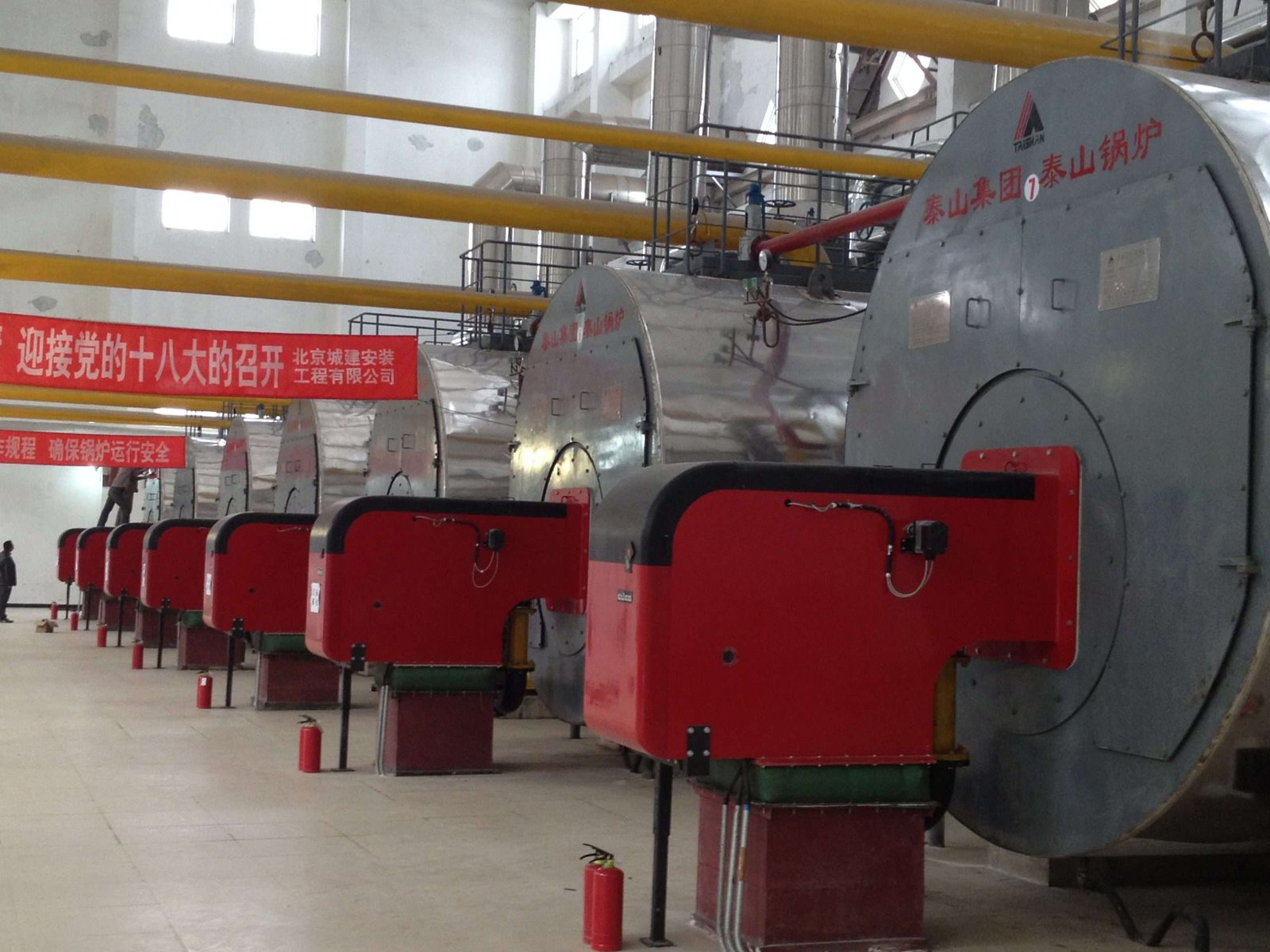
Buying an industrial boiler without checking the right safety standards and certifications before ordering is one of the most expensive mistakes a plant owner can make. A boiler may appear technically suitable on capacity, pressure, fuel type, and price, but if the required code stamp, jurisdictional registration, material traceability, welding records, burner safety documents, regional approval, or inspection package is missing, the equipment can be delayed, rejected, modified at extra cost, or even become unsafe to operate. The solution is to treat boiler purchasing as a compliance decision before it becomes a manufacturing order: the buyer must confirm the applicable construction code, installation jurisdiction, safety-control standard, quality certification, inspection route, and final document package before signing the purchase contract.
Before ordering an industrial boiler in 2026, buyers should check whether the boiler complies with the correct pressure-part construction code, such as ASME BPVC 2025, the correct regional approval system, such as PED 2014/68/EU for the European market or CSA B51:24 for Canada, the correct inspection and repair framework, such as NBIC 2025 where applicable, the correct combustion safety standard, such as NFPA 85-2023 or ASME CSD-1:2024, the correct gas-fired package boiler listing, such as ANSI/CAN/UL 795:2024 where applicable, and the manufacturer’s quality system, such as ISO 9001:2015 with the 2024 amendment. Buyers should also require a complete documentation package including Manufacturer’s Data Report, material test reports, weld maps, WPS/PQR/WPQ records, NDE reports, pressure-test records, safety-valve certificates, burner-management records, calibration certificates, inspection release forms, and final data book.
This article is written from the perspective of an industrial boiler manufacturer and supplier to help buyers avoid unclear quotations, incomplete certifications, and hidden compliance gaps. The practical goal is simple: before ordering, the buyer should know exactly which standards apply, which certificates must be supplied, which documents must be reviewed before shipment, and which items may affect local operating approval after installation.
A low boiler price is a reliable purchasing advantage even if the required safety certificates and data reports are incomplete.False
A low purchase price can become expensive if missing certificates, incomplete traceability, unapproved burner controls, or wrong code selection cause inspection failure, shipment delay, field modification, or local operating rejection.
The safest time to verify boiler standards, certificates, and traceability documents is before placing the purchase order.True
Once fabrication begins, changing the construction code, certification route, inspection authority, material requirements, or regional approval package can create major cost, schedule, and compliance problems.
Why Boiler Buyers Must Check Standards Before Ordering
The first responsibility of an industrial boiler buyer is to understand that a boiler is not just a heat-transfer product; it is regulated pressure equipment with combustion, electrical, piping, environmental, and operating safety implications. The purchase order should not only state steam capacity, working pressure, fuel type, thermal efficiency, and delivery time. It should also state the applicable design code, code edition, certificate requirement, third-party inspection requirement, jurisdictional registration requirement, local approval expectation, fuel safety standard, emission requirement, documentation package, and language of records. This is especially important for international projects, because a boiler that is suitable for one market may not be accepted in another. For example, a boiler built for ASME use in the United States may still need additional review for PED conformity in the European Union, CRN registration in Canada, or local authority approval in another country.
The buyer should also separate four different questions. First, is the boiler manufactured to the correct pressure-part construction code? Second, is the manufacturer authorized or certified for that scope? Third, will the boiler be accepted by the local authority, inspector, insurer, or owner specification? Fourth, will the final documentation allow future inspection, maintenance, repair, and traceability? Many purchasing failures happen because buyers ask only one of these questions. A supplier may say “ASME material,” but that does not necessarily mean the complete boiler is ASME-stamped. A supplier may say “CE available,” but that does not prove the correct PED category, conformity module, Notified Body involvement, and technical file are ready. A supplier may say “ISO factory,” but ISO certification alone does not replace a boiler construction code. A supplier may say “UL components,” but listed components do not automatically mean the entire gas-fired boiler package is listed.
| Buyer’s question before ordering | What the supplier must prove | Why it matters |
|---|---|---|
| Which construction code applies? | ASME BPVC, PED/EN, CSA, GB, or other applicable standard clearly stated in the quotation | Prevents ordering a boiler that cannot pass inspection in the installation location |
| Is the manufacturer authorized? | Valid certificate scope, code designator, shop location, and product coverage | Confirms the supplier can legally manufacture under the required certification |
| Is local approval considered? | Jurisdictional code review, National Board registration, CRN, PED, or local registration plan | Prevents commissioning delay and permit rejection |
| Are combustion controls compliant? | NFPA 85, ASME CSD-1, UL 795, burner listing, flame safeguard, fuel-train documents | Reduces fire, explosion, ignition, and unsafe shutdown risk |
| Is traceability complete? | Material certificates, heat numbers, weld maps, WPS/PQR/WPQ, NDE, hydrotest records | Proves the pressure boundary can be audited from raw material to final shipment |
| Is the data book included? | Indexed final quality dossier with signed reports and certificates | Supports inspection, insurance, maintenance, repair, and resale value |
ASME BPVC 2025: The First Certificate Many Buyers Should Verify
For many industrial boiler buyers, ASME BPVC 2025 is the first standard to check because it is one of the most widely recognized boiler and pressure vessel construction code systems. However, the buyer should not ask only whether the boiler is “ASME.” The buyer should ask which ASME section applies. For power boilers, ASME Section I is commonly relevant. For heating boilers, ASME Section IV may apply. For pressure vessels used around the boiler system, such as deaerators, blowdown tanks, separators, receivers, or certain heat exchangers, ASME Section VIII may apply. For boiler external piping or power piping, ASME B31.1 may also become relevant. The exact code depends on the boiler type, pressure, temperature, application, and jurisdiction.
The buyer should confirm the correct ASME symbol stamp and certificate scope before ordering. A manufacturer may be authorized for one ASME scope but not another. For example, authorization for pressure vessels does not automatically prove authorization for power boilers. Authorization for shop assembly does not automatically prove authorization for all field work. A reliable supplier should provide the certificate number, certificate scope, expiration date, manufacturing location, applicable code designator, Authorized Inspector arrangement, and sample Manufacturer’s Data Report format. The buyer should also require that the ASME data report, nameplate, hydrostatic test record, safety-valve information, and final inspection release be included in the final data book.
A strong purchasing specification should state the design pressure, design temperature, maximum allowable working pressure, steam capacity, feedwater temperature, fuel type, corrosion allowance, material requirements, NDE requirements, heat treatment requirements, pressure-test requirements, safety-valve set pressure, inspection hold points, and documentation deliverables. Without this detail, suppliers may quote different compliance levels while appearing to quote the same boiler capacity. This is one of the main reasons two boiler quotations can have very different prices. One quotation may include full code stamping, third-party inspection, complete traceability, certified safety valves, and a complete data book, while another may include only basic factory testing and limited documents.
National Board Registration and NBIC 2025: What Buyers Should Check for North American Projects
For many U.S. and Canadian projects, buyers should ask whether National Board registration is required or recommended. National Board registration helps preserve the boiler’s identity through a registered Manufacturer’s Data Report and National Board number. This is valuable because industrial boilers often operate for many years, and future inspectors, insurers, repair companies, and owners may need to confirm the original construction code, maximum allowable working pressure, design conditions, safety-valve basis, and inspection history. A boiler without proper registration may still be physically functional, but the owner may face more difficulty during future inspection, relocation, resale, repair, or life-extension review.
NBIC 2025 is also important because buyers should think beyond initial manufacturing. NBIC supports installation, inspection, repair, alteration, and pressure-relief-device work. Before ordering, the buyer should ask the supplier how future repairs and alterations should be handled, what documents will be needed for jurisdictional inspection, and whether the boiler package includes safety valves that can be tested, repaired, or replaced under accepted procedures. If the boiler is expected to operate in a highly regulated plant, the owner should also confirm whether future repairs require an R-stamp organization and whether safety-valve repair requires VR-stamp capability.
The practical purchasing requirement is this: if National Board registration is needed, it must be stated in the purchase order. The supplier should confirm registration responsibility, data report submission, nameplate marking, and final document delivery. The buyer should request a copy of the Manufacturer’s Data Report, National Board number, nameplate photograph, hydrostatic test record, safety-valve certificates, and inspection release before final shipment payment. These documents protect the owner long after the boiler is installed.
PED 2014/68/EU and CE Marking: Essential Checks for European Buyers
For boilers placed on the European market, buyers should check the Pressure Equipment Directive 2014/68/EU and CE marking requirements before ordering. PED compliance is not the same as simply using good engineering practice or manufacturing to another international code. PED requires pressure equipment within its scope to satisfy essential safety requirements and undergo the appropriate conformity assessment route. The boiler’s PED category, fluid group, pressure, volume, temperature, assembly scope, safety accessories, and conformity module must be defined. Depending on the category, a Notified Body may need to review design, quality assurance, manufacturing inspection, or final assessment.
A buyer should ask the supplier for the PED category, conformity assessment module, Notified Body involvement, essential safety requirement checklist, harmonized standard basis where applicable, material documentation, risk analysis, operating instructions, technical file index, CE marking plan, and EU Declaration of Conformity. If the boiler package includes pressure accessories, safety accessories, piping, economizers, valves, or assemblies, the scope of CE marking should be clearly defined. A common mistake is buying a boiler pressure body with one set of documents and then discovering that the full assembled package needs additional conformity assessment.
For European projects, language and documentation format can also matter. Operating manuals, warning labels, declarations, and technical files may need to meet local expectations. The buyer should define this in the purchase order, not after shipment. A professional manufacturer should provide a PED document matrix before fabrication and should clarify which items are included in the CE scope and which items remain the installer’s responsibility.
CSA B51:24 and CRN: Key Checks for Canadian Boiler Buyers
For Canadian boiler projects, CSA B51:24 is a major standard buyers should check before ordering. Canadian boiler and pressure equipment compliance is strongly connected to provincial and territorial requirements, so buyers should confirm not only the national standard but also local adoption and registration rules. In many cases, a Canadian Registration Number may be required for boilers, pressure vessels, fittings, or pressure piping. The buyer should determine whether the boiler design, pressure components, safety valves, fittings, and related pressure equipment need registration before manufacturing or shipment.
A buyer should ask for the supplier’s Canadian experience, CRN support capability, design registration plan, provincial acceptance strategy, inspection authority requirements, and document format. If the boiler will be installed in multiple provinces or supplied as part of a national rollout, the buyer should confirm whether additional provincial registrations are needed. A common mistake is assuming that acceptance in one province automatically covers all Canadian jurisdictions. Another mistake is leaving CRN review until after the boiler is manufactured. If the authority requires design changes, material documentation, calculation revision, or drawing updates, late discovery can cause serious delay.
For Canadian projects, the purchase contract should clearly state whether the supplier is responsible for CRN registration support, which province or territory is the installation location, which components are included, whether pressure piping or fittings are included in the supplier scope, and what documents must be submitted. This allows the supplier to prepare calculations, drawings, material specifications, inspection records, and certifications in the correct format before fabrication begins.
NFPA 85-2023, ASME CSD-1:2024, and Burner Safety
Boiler buyers often focus on the pressure vessel and forget the combustion system. This is dangerous because many serious boiler incidents are related to fuel handling, delayed ignition, flame failure, poor purge, unsafe restart, bypassed interlocks, or incorrect burner sequencing. Before ordering, the buyer should confirm which combustion safety standard applies. NFPA 85-2023 is commonly associated with larger boiler and combustion systems, while ASME CSD-1:2024 applies to controls and safety devices on automatically fired boilers within its defined scope. The authority having jurisdiction, insurer, owner specification, boiler size, fuel input, and fuel type may determine which requirements apply.
The buyer should require a burner-management sequence of operation, cause-and-effect matrix, safety interlock list, fuel-train diagram, flame safeguard details, purge logic, ignition sequence, trip and lockout philosophy, valve-proving details where applicable, low-gas-pressure and high-gas-pressure protection, combustion-air proving, low-water cutoff details, high-pressure limits, emergency stop arrangement, alarm list, and factory acceptance test procedure. For multi-fuel boilers, refinery gas, biogas, biomass, hydrogen blends, waste gas, or low-NOx burner systems, additional review is needed because fuel properties can affect flame stability, ignition, emissions, safety controls, and operating limits.
A boiler quotation that says “automatic burner” is not enough. The buyer should know exactly how the burner starts, purges, proves flame, opens fuel valves, responds to flame failure, shuts down, locks out, and resets. The buyer should also confirm whether local inspectors or insurers require witnessing of burner safety tests during commissioning. If the supplier cannot provide a clear safety-control document package, the buyer should treat that as a serious red flag.
| Combustion safety item | What buyers should check before ordering | Why it matters |
|---|---|---|
| Applicable standard | NFPA 85, ASME CSD-1, UL 795, local fuel code, insurer requirement | Defines required safety devices and test logic |
| Burner sequence | Pre-purge, pilot ignition, main flame proving, post-purge, lockout | Prevents unsafe fuel accumulation and delayed ignition |
| Flame safeguard | Scanner type, response time, approval, fuel suitability | Confirms reliable flame detection |
| Fuel train | Shutoff valves, regulators, pressure switches, vents, valve proving | Controls fuel safely before and during firing |
| Safety interlocks | Low water, high pressure, air proving, fuel pressure, emergency stop | Prevents unsafe operating conditions |
| Test records | FAT checklist, commissioning tests, proof-test procedure | Provides evidence for inspector and insurer review |
| Alternative fuels | Hydrogen blend, biogas, refinery gas, biomass, waste fuel review | Prevents unsafe assumptions about fuel compatibility |
ANSI/CAN/UL 795:2024: What to Check for Gas-Fired Package Boilers
For commercial-industrial gas-fired package boilers, ANSI/CAN/UL 795:2024 is an important standard buyers should understand. It applies to factory-built gas-fired package boilers within its scope and is especially relevant where listed equipment is required by the authority, owner, insurer, or project specification. Buyers should not confuse listed components with a listed boiler package. A gas valve, flame safeguard, or control panel may have its own certification, but that does not automatically mean the complete boiler package is listed as an assembly.
Before ordering, the buyer should ask whether the exact model, burner configuration, control panel, fuel train, input rating, and fuel type are covered by the listing. If the supplier claims hydrogen-blend readiness, the buyer should request written limits, test basis, burner approval, fuel-train compatibility, flame-detection validation, emissions information, installation instructions, and listing coverage where applicable. Hydrogen blending requires careful review because it can affect flame speed, ignition behavior, NOx emissions, leakage characteristics, and component compatibility. A vague statement such as “hydrogen ready” is not a sufficient purchasing requirement.
A good buyer specification should require that any listing mark, fuel rating, input rating, model number, installation manual, and safety instructions match the boiler actually delivered. If the supplier changes the burner, fuel valve, flame scanner, control panel, regulator, or ignition system after approval, the buyer should require written confirmation that the certification remains valid.
ISO 9001, ISO 3834, ISO 45001, and ISO 14001: Quality Certifications That Support Safer Purchasing
ISO 9001 is a useful manufacturer qualification because it indicates that the supplier has a quality management system covering customer requirements, document control, process control, supplier control, inspection, nonconformance handling, corrective action, and continuous improvement. However, buyers should understand that ISO 9001 is not a boiler construction code. An ISO-certified factory is not automatically authorized to build ASME-stamped boilers, PED-compliant boilers, or listed gas-fired package boilers. ISO 9001 supports manufacturing discipline, but it does not replace code certification.
ISO 3834 can be useful for welded boiler fabrication because welding quality cannot be fully verified by final visual inspection alone. A strong welding quality system controls welding procedures, procedure qualifications, welder qualifications, filler-metal storage, preheat, interpass temperature, heat input, repair welding, NDE, and welding records. Buyers ordering high-pressure boilers, large water-tube boilers, waste-heat boilers, or heavily welded pressure equipment should ask how welding quality is controlled and whether the supplier can provide WPS, PQR, WPQ, welder continuity records, weld maps, and NDE reports.
ISO 45001 and ISO 14001 can also support supplier evaluation. ISO 45001 relates to occupational health and safety management, which matters in heavy boiler fabrication involving lifting, welding, pressure testing, blasting, painting, and electrical work. ISO 14001 relates to environmental management, which is increasingly important for buyers concerned about emissions, waste handling, coating systems, energy use, and responsible manufacturing. These management-system certifications do not replace boiler safety codes, but they help buyers identify suppliers with more mature operating systems.
| Certification | What it proves | What it does not prove |
|---|---|---|
| ISO 9001 | The manufacturer has a quality management system | It does not prove the boiler is ASME-stamped or PED-compliant |
| ISO 3834 | The manufacturer controls fusion welding quality processes | It does not replace code-required welding qualifications or inspections |
| ISO 45001 | The manufacturer manages occupational health and safety | It does not certify boiler pressure-part construction |
| ISO 14001 | The manufacturer manages environmental responsibilities | It does not prove emissions compliance of the installed boiler |
| ASME Certificate | The manufacturer is authorized for specific ASME code work | It does not automatically grant local operating approval |
| PED CE Marking | The pressure equipment follows the required EU conformity route | It does not automatically satisfy non-EU jurisdictional requirements |
| UL Listing | The listed package or component meets the applicable listing scope | It does not cover modified configurations outside the listing |
The Final Data Book Buyers Should Require Before Shipment
A complete final data book is one of the most important purchasing deliverables. It protects the buyer during installation, inspection, insurance review, maintenance, repair, and future resale. The buyer should define the data book requirements in the purchase order because missing records are much harder to recover after shipment. At minimum, the data book should include the code compliance statement, Manufacturer’s Data Report where applicable, nameplate photo, approved drawings, design calculations where required, material test reports, heat-number traceability records, weld map, welding procedures, welder qualifications, NDE reports, heat treatment records, hydrostatic or pressure-test records, safety-valve certificates, calibration certificates, burner documents, fuel-train documents, control logic, factory acceptance test report, inspection release note, packing list, operation manual, maintenance manual, spare-parts list, and commissioning checklist.
The data book should be indexed and traceable to the boiler serial number. Every major pressure part should be traceable to material certificates. Every pressure-retaining weld should be traceable to a WPS, welder, and inspection record. Every safety valve should be traceable to set pressure, capacity, and certification. Every calibrated gauge used for pressure testing should have a valid calibration certificate. Every control safety function should be traceable to a test record. Without this structure, the data book becomes a pile of papers rather than a usable compliance tool.
| Data book document | Buyer’s acceptance question |
|---|---|
| Manufacturer’s Data Report | Is it signed, complete, and consistent with the nameplate? |
| Nameplate photo | Does it match the boiler serial number, pressure, code, and data report? |
| Material test reports | Are pressure parts traceable to heat numbers and approved specifications? |
| Weld map | Are all pressure-retaining welds identified and linked to records? |
| WPS/PQR/WPQ | Are welding procedures and welders qualified for the actual work? |
| NDE reports | Are required examinations completed and accepted? |
| Pressure-test record | Was the test pressure, duration, medium, gauge, and witness recorded? |
| Safety-valve certificates | Do set pressure and capacity match the boiler design? |
| Burner test record | Were purge, ignition, flame failure, and trips tested? |
| Calibration certificates | Were gauges and test instruments valid during inspection and testing? |
| Final inspection release | Are all nonconformities closed before shipment? |
| O&M manual | Can the owner install, operate, maintain, and inspect the boiler safely? |
Red Flags Buyers Should Avoid Before Ordering
Buyers should be cautious when a supplier uses vague compliance language. Phrases such as “designed according to ASME,” “ASME material,” “CE available,” “ISO factory,” “UL burner,” or “international standard quality” may sound reassuring but may not prove the boiler will meet the project requirement. The buyer should request specific certificate names, code editions, certificate numbers, inspection responsibilities, document lists, and approval procedures. If a supplier cannot define the applicable code clearly, the buyer should not place the order until the compliance path is clarified.
Another red flag is refusing to provide sample data book documents. A professional boiler manufacturer should be able to show a sample Manufacturer’s Data Report format, sample material traceability record, sample weld map, sample NDE report, sample hydrotest certificate, and sample final inspection checklist. The buyer does not need confidential customer information, but the supplier should demonstrate document capability. Missing sample documents often indicate weak traceability.
A third red flag is low pricing that excludes inspection and certification. Some quotations appear cheaper because they exclude third-party inspection, National Board registration, PED documentation, CRN support, safety-valve certification, burner commissioning, or complete data books. Buyers should compare quotations based on total compliance scope, not only boiler capacity and price. A boiler that costs less before ordering may cost more before startup.
Practical Pre-Order Checklist for Industrial Boiler Buyers
Before issuing a purchase order, buyers should complete a pre-order compliance checklist. This checklist should be reviewed by the plant engineer, purchasing manager, quality department, safety team, local inspector or authority where possible, insurance representative, and supplier. The purpose is not to make purchasing complicated; it is to prevent expensive surprises.
| Pre-order checkpoint | Required buyer action |
|---|---|
| Installation country and location | Confirm local authority, adopted codes, permits, and operating approval requirements |
| Boiler type and service | Define steam, hot water, thermal oil, waste heat, biomass, gas, oil, dual fuel, or special fuel |
| Construction code | Specify ASME, PED/EN, CSA, GB, or other required standard and edition |
| Manufacturer authorization | Verify certificate scope, code designator, shop location, and expiry date |
| Regional registration | Confirm National Board, CRN, PED, CE, or other local registration requirement |
| Combustion safety | Define NFPA 85, ASME CSD-1, UL 795, fuel code, and insurer requirements |
| Quality documentation | Attach final data book requirements to the purchase order |
| Inspection plan | Define factory hold points, third-party inspection, hydrotest witnessing, and document review |
| Field installation boundary | Clarify who is responsible for piping, stack, fuel system, wiring, permits, and commissioning |
| Warranty and support | Confirm startup support, operator training, spare parts, and after-sales response |
Final Summary
Before ordering an industrial boiler, buyers should check the latest applicable standards and certifications as a complete safety and compliance system. ASME BPVC 2025 is critical for pressure-part construction where ASME is required. National Board registration and NBIC 2025 support traceability, inspection, repair, alteration, and pressure-relief-device management in many North American projects. PED 2014/68/EU and CE marking are essential for European pressure equipment. CSA B51:24 and CRN requirements are critical for Canadian projects. NFPA 85-2023, ASME CSD-1:2024, and ANSI/CAN/UL 795:2024 help buyers evaluate combustion safety, burner controls, and gas-fired package boiler listing. ISO 9001, ISO 3834, ISO 45001, and ISO 14001 support supplier quality, welding control, workplace safety, and environmental responsibility.
The safest purchasing rule is simple: never order an industrial boiler based only on price, capacity, and delivery time. Order it based on a verified compliance package. The purchase contract should clearly define the construction code, certificate scope, jurisdictional approval route, inspection plan, burner safety requirements, documentation deliverables, and final data book. When buyers check these items before ordering, they reduce inspection risk, protect startup schedules, improve insurance acceptance, strengthen lifecycle traceability, and gain a safer boiler system for long-term operation.
Conclusion
In summary, the latest industrial boiler safety standards and certifications should be selected according to the target market and legal inspection requirements, not only by customer preference. ASME BPVC focuses heavily on boiler and pressure vessel design and construction rules, CE/PED is essential for many pressure equipment products placed on the EU market, and ISO standards support boiler performance requirements, quality management, and safety management systems. ISO 16528 defines performance requirements for boiler and pressure vessel construction, while ISO 9001 and ISO 45001 support consistent manufacturing quality and workplace safety management.
Contact us today to discuss ASME-certified boilers, CE/PED-compliant boiler solutions, ISO-supported manufacturing quality, documentation packages, third-party inspection, and export-ready industrial boiler systems for your project.
FAQ
Q1: What are the latest industrial boiler safety standards?
A1: The latest industrial boiler safety standards depend on where the boiler is designed, manufactured, installed, and operated. For the U.S. and many international projects, the ASME Boiler and Pressure Vessel Code remains one of the most important references. The current ASME BPVC edition is the 2025 edition, which provides rules used for the manufacturing, construction, and operation of boilers and pressure vessels.
In Europe, industrial boilers and pressure equipment must generally comply with the Pressure Equipment Directive 2014/68/EU when the maximum allowable pressure is greater than 0.5 bar. The PED covers design, manufacture, and conformity assessment for stationary pressure equipment and supports CE marking for eligible equipment.
ISO standards also support boiler safety, quality, and inspection systems. ISO 16528-1 defines performance requirements for boiler and pressure vessel construction, while ISO 9001 supports quality management and ISO 45001 supports occupational health and safety management.
Q2: What ASME certifications are important for industrial boilers?
A2: ASME certification is important for manufacturers and assemblers of industrial boilers, pressure vessels, and pressure-retaining components. The ASME Boiler and Pressure Vessel Certification Program certifies a company’s quality control system according to relevant BPVC sections, including Sections I, IV, VIII, X, and XII.
For industrial boiler projects, common ASME marks and certificates may include Section I power boiler authorization, Section IV heating boiler authorization, Section VIII pressure vessel authorization, and PP authorization for pressure piping, depending on the project scope. ASME certification does not simply mean a product is “high quality”; it means the manufacturer has been reviewed and authorized to apply the ASME Certification Mark under defined code rules.
For repairs and alterations, many facilities also rely on the National Board Inspection Code. The 2025 NBIC edition includes Parts 1 through 4, covering installation, inspection, repairs and alterations, and pressure relief devices.
Q3: What does CE certification mean for industrial boilers?
A3: CE certification for industrial boilers usually means the equipment has been assessed under applicable EU legislation, most commonly the Pressure Equipment Directive 2014/68/EU. The PED applies to stationary pressure equipment above 0.5 bar and includes pressure vessels, piping, safety accessories, pressure accessories, and assemblies.
For boilers sold into the European Economic Area, CE marking shows that the manufacturer has completed the required conformity assessment process. Depending on the boiler category, this may involve design review, material traceability, welding procedure qualification, non-destructive testing, pressure testing, technical documentation, declaration of conformity, and review by a Notified Body.
Harmonised European standards help manufacturers demonstrate conformity with PED requirements. The European Commission maintains a consolidated list of harmonised standards for pressure equipment, and a 2025 implementing decision updated references for certain PED-related harmonised standards.
Q4: Which ISO standards matter most for boiler manufacturers and operators?
A4: ISO standards are often used to strengthen boiler manufacturing quality, safety management, inspection consistency, and environmental performance. ISO 16528-1 is directly related to boilers and pressure vessels because it defines performance requirements for construction. ISO 16528-2 provides procedures for fulfilling ISO 16528-1 requirements.
ISO 9001 is widely used for quality management systems and helps manufacturers control processes, documentation, supplier quality, corrective actions, and customer requirements. ISO 45001 supports occupational health and safety management, which is especially relevant for boiler fabrication, installation, maintenance, and plant operation.
ISO/IEC 17020 is also relevant where inspection bodies are involved because it specifies requirements for inspection body competence, impartiality, and consistent operation. ISO certification does not replace ASME or CE co## Q5: How should buyers verify boiler safety standards and certifications?
A5: Buyers should verify boiler certifications before purchase by requesting complete documentation from the manufacturer or supplier. For ASME boilers, this may include the ASME Certificate of Authorization, applicable ASME stamp, manufacturer’s data report, material records, welding documentation, inspection records, and pressure test reports.
For CE-marked boilers, buyers should request the EU Declaration of Conformity, PED category, conformity assessment module, Notified Body details where applicable, technical file summary, harmonised standards used, operating limits, safety accessory documentation, and installation instructions.
For ISO-certified manufacturers, buyers should confirm the certificate scope, issuing certification body, validity dates, covered facility locations, and whether the certification applies to boiler design, fabrication, service, or only general management activities. A strong compliance package should also include operation manuals, maintenance guidance, inspection intervals, safety valve documentation, water treatment requirements, and local regulatory approvals.
References
- 2025 ASME Boiler and Pressure Vessel Code — https://www.asme.org/codes-standards/bpvc-standards/bpvc-2025 — ASME
- Boiler and Pressure Vessel Certification — https://www.asme.org/certification-accreditation/boiler-and-pressure-vessel-certification — ASME
- ASME Boiler and Pressure Vessel Code — https://www.asme.org/codes-standards/bpvc-standards — ASME
- Pressure Equipment Directive 2014/68/EU — https://single-market-economy.ec.europa.eu/sectors/pressure-equipment-and-gas-appliances/pressure-equipment-sector/pressure-equipment-directive_en — European Commission
- Harmonised Standards for Pressure Equipment — https://single-market-economy.ec.europa.eu/single-market/goods/european-standards/harmonised-standards/pressure-equipment_en — European Commission
- Commission Implementing Decision (EU) 2025/165 — https://eur-lex.europa.eu/legal-content/EN/TXT/PDF/?uri=OJ:L_202500165 — EUR-Lex
- ISO 16528-1:2007 Boilers and Pressure Vessels — https://www.iso.org/standard/41079.html — ISO
- ISO 9001:2015 Quality Management Systems — https://www.iso.org/standard/62085.html — ISO
- ISO 45001:2018 Occupational Health and Safety Management Systems — https://www.iso.org/standard/63787.html — ISO
- National Board Inspection Code 2025 Edition Changes — https://www.nationalboard.org/index.aspx?ID=493&pageID=4 — National Board of Boiler and Pressure Vessel Inspectors
Latest Industrial Boiler Safety Standards: ASME, CE, ISO Read More »