
Can the power plant boiler be customized based on altitude, water source conditions, or fuel supply characteristics?
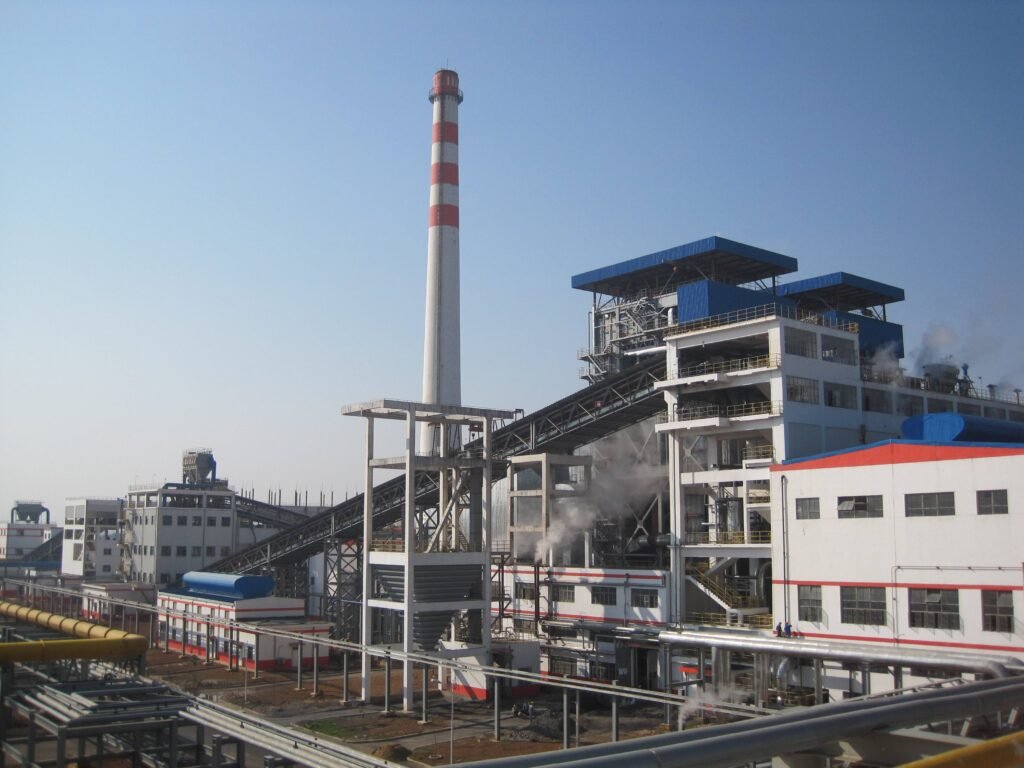
Choosing a standard boiler without considering local operating conditions can lead to unstable combustion, low thermal efficiency, excessive scaling or corrosion, higher fuel consumption, and unexpected shutdowns. In power plant projects, altitude, water quality, and fuel characteristics directly affect boiler design, performance, safety, and long-term operating cost. The right solution is to customize the power plant boiler according to actual site conditions before manufacturing and installation.
Yes, a power plant boiler can and should be customized based on altitude, water source conditions, and fuel supply characteristics. Altitude affects air density and combustion efficiency; water source conditions influence feedwater treatment, anti-scaling, and corrosion control; and fuel supply characteristics determine furnace structure, burner design, grate type, combustion system, slagging control, and emission treatment. Proper customization helps ensure stable output, higher efficiency, safer operation, longer service life, and lower operating costs.
For investors, EPC contractors, and plant operators, boiler customization is not simply an optional upgrade—it is a practical engineering requirement. The following article outline explains how to evaluate these factors and what customers should discuss with a professional boiler manufacturer before procurement.
How Can a Power Plant Boiler Be Customized for High-Altitude Operating Conditions?
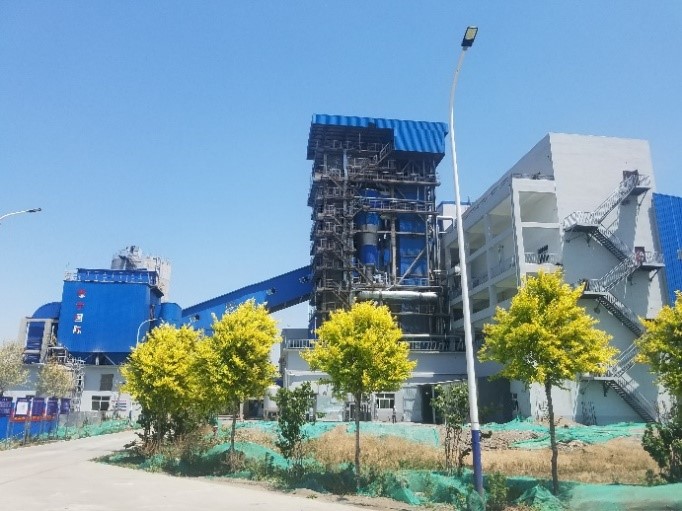
Operating a power plant boiler at high altitude is not just a matter of “turning up the fan.” Thin air reduces oxygen mass per cubic meter, weakens natural draft, changes fan pressure behavior, affects burner stability, shifts excess-air control, and can push steam temperature, furnace heat absorption, CO emissions, NOx emissions, slagging tendency, and safety interlocks outside the range originally proven at sea level. The result can be a boiler that looks correctly sized on paper but cannot reach maximum continuous rating, burns fuel unevenly, trips during load ramps, produces high CO, loses efficiency, or wears fans and dampers prematurely. The practical solution is to customize the boiler as an integrated high-altitude combustion and draft system: recalculate local air density, redesign or reselect FD/PA/ID fans for required mass flow, adapt burners and windboxes, tune excess-air and O₂ trim logic, verify heat-transfer balance, protect pressure parts under the applicable boiler code, and commission the unit with altitude-specific performance guarantees.
A power plant boiler can be customized for high-altitude operating conditions by designing around local air mass flow rather than sea-level volumetric flow: the manufacturer must calculate site pressure, temperature, oxygen availability, and density; derate or enlarge the combustion-air system; select fans, burners, ducts, air heaters, fuel nozzles, furnace geometry, controls, and safety interlocks for the required high-altitude mass flow; and validate steam output, emissions, efficiency, draft, flame stability, and turndown during site commissioning.
As a boiler designer and supplier, I treat altitude as a first-order design input, not a footnote. A safe, efficient high-altitude power plant boiler is produced by linking thermodynamics, combustion chemistry, fan selection, pressure-part design, control logic, and site commissioning into one engineering package. The following guide explains the customization method we use for utility boilers, industrial power boilers, biomass boilers, CFB boilers, pulverized-coal boilers, gas-fired boilers, and waste-heat assisted power systems.
A high-altitude power plant boiler can be selected using sea-level airflow values as long as the fan motor has enough power.False
At high altitude, the same volumetric airflow contains less oxygen mass, and fan pressure capability changes with air density; boiler customization must be based on required air mass flow, local density, draft losses, burner stability, and combustion-control verification.
High-altitude boiler customization normally affects the combustion system, fans, ducts, controls, emissions strategy, and performance guarantees, not only the boiler pressure parts.True
Altitude changes air density, oxygen delivery, draft behavior, and combustion margins, so the boiler must be engineered as a complete air-fuel-gas-steam system.
Why Does High Altitude Change Power Plant Boiler Performance?
Altitude changes boiler performance because atmospheric pressure and air density decrease as elevation increases. NASA’s standard atmosphere model explains that pressure decreases with altitude because there is less air above the location, and air density also decreases because density depends on pressure and temperature through the gas equation; the model provides tropospheric equations for temperature, pressure, and density that are useful for preliminary engineering checks. For a boiler, the important practical point is oxygen mass, not just air volume. A forced-draft fan may still deliver a large volume of air at altitude, but each cubic meter contains less oxygen than the same cubic meter at sea level. Since combustion requires a fixed oxygen mass per kilogram of fuel, the boiler must move more actual cubic meters of air to burn the same fuel input cleanly. If that volume increase is not designed into the FD fan, PA fan, windbox, burner registers, air heater, ductwork, and ID fan, the operator often sees high CO, low excess O₂ margin, unstable flames, slow load response, poor pulverizer transport, reduced MCR, or high auxiliary power. This is why high-altitude boiler customization starts with a corrected site design basis: elevation, barometric pressure, ambient temperature range, humidity, fuel analysis, required MCR, minimum stable load, load-ramp rate, emissions limits, and available electrical capacity for larger drives or VFDs.
| Elevation | Approx. pressure | Pressure ratio vs. sea level | Approx. air density | Density ratio vs. sea level | Practical boiler meaning |
|---|---|---|---|---|---|
| 0 m / 0 ft | 101.4 kPa | 1.000 | 1.227 kg/m³ | 1.000 | Baseline sea-level fan and burner rating |
| 1,000 m / 3,281 ft | 90.0 kPa | 0.887 | 1.113 kg/m³ | 0.908 | About 10% more actual air volume may be needed for same oxygen mass |
| 2,000 m / 6,562 ft | 79.6 kPa | 0.785 | 1.008 kg/m³ | 0.822 | Combustion-air system must usually be corrected, not simply accepted |
| 3,000 m / 9,843 ft | 70.2 kPa | 0.692 | 0.911 kg/m³ | 0.742 | Large fan, duct, burner, and draft corrections become essential |
| 4,000 m / 13,123 ft | 61.7 kPa | 0.609 | 0.821 kg/m³ | 0.669 | Sea-level boiler packages are normally unsuitable without redesign |
| 5,000 m / 16,404 ft | 54.1 kPa | 0.534 | 0.738 kg/m³ | 0.601 | High-altitude custom design is mandatory for reliable MCR operation |
The table above uses the NASA tropospheric standard-atmosphere equations as a preliminary design illustration, not as a substitute for project meteorological data.
Should the Boiler Be Derated or Customized to Keep Full Output?
The first commercial decision is whether the owner accepts derated output or requires full sea-level-equivalent steam generation. Residential and commercial gas codes often use simplified high-altitude derating rules; for example, NFPA 54 states that gas input ratings for appliances are used up to 2,000 ft and that appliances above 2,000 ft must be reduced by one of several methods, including 4% per 1,000 ft above sea level, authority-having-jurisdiction approval, or the manufacturer’s instructions. For a utility or industrial power plant boiler, however, a simple derate is usually not enough because the owner may need guaranteed steam flow, turbine output, district-heating capacity, process steam reliability, and emissions compliance at altitude. Therefore, we normally present three engineering pathways: accept derating, customize for full MCR, or customize for a flexible operating envelope with partial output recovery and lower capital cost. The correct choice depends on power purchase obligations, fuel cost, fan-drive electrical limits, site transport constraints, emissions permits, and whether the boiler is new-build or retrofit.
| Customization strategy | Best application | Main design action | Advantage | Limitation |
|---|---|---|---|---|
| Controlled derating | Remote plants with lower peak demand | Reduce fuel input and revise combustion curves | Lowest capital cost | Lower steam output and power generation |
| Full high-altitude MCR recovery | Utility units, mine-mouth plants, grid-critical stations | Enlarge air/flue-gas path, fans, burners, ducts, air heater, controls | Maintains guaranteed output | Higher fan power, larger equipment, more engineering |
| Hybrid recovery | Retrofit projects with space or budget limits | Upgrade bottleneck components and accept limited derating | Balanced cost and output | Requires precise performance modeling |
| Seasonal altitude-ambient optimization | Plateau sites with wide temperature swings | Use VFDs, O₂ trim, corrected airflow, and adaptive curves | Better annual efficiency | More sophisticated controls and commissioning |
How Should Combustion Be Customized for Thin Air?
Combustion customization begins with the air-fuel ratio on a mass basis. The stoichiometric air requirement is determined by the fuel ultimate analysis or gas composition, then multiplied by the selected excess-air margin. At altitude, the required mass of air does not decrease merely because the air is thin; what changes is the actual volumetric flow needed to deliver that mass. For natural gas, fuel nozzles, gas pressure regulators, burner throat velocity, flame scanners, igniters, and low-NOx staging must be checked against local density and turndown. For pulverized coal, the primary-air system must still transport coal through mills and pipes, but the same actual air volume carries less oxygen and has different conveying characteristics; PA fan sizing, mill outlet temperature, classifier performance, burner pipe balance, coal fineness, and burner ignition stability all require review. For biomass, RDF, sludge, and CFB boilers, the challenge is often even broader because fuel moisture, bed temperature, excess air, secondary-air penetration, and residence time are sensitive to oxygen availability. In every case, a high-altitude burner should be verified for flame shape, ignition energy, scanner sighting, register pressure drop, stable recirculation zone, CO burnout, furnace exit gas temperature, and slagging risk.
For gas-fired power boilers, the practical customization package often includes high-altitude burner nozzles, revised gas pressure settings, larger combustion-air registers, low-pressure-drop windboxes, VFD-controlled FD fans, O₂ trim with barometric correction, and a combustion management system that limits fuel flow when air mass flow is insufficient. For coal-fired boilers, it may include larger PA/FD fans, burner throat and register changes, coal-pipe balancing, improved overfire-air distribution, low-NOx burner retuning, furnace draft recalibration, and possibly additional furnace volume or modified heat absorption in new-build designs. For CFB boilers, it may include redesigned fluidizing air nozzles, loop-seal air capacity, cyclone inlet velocity checks, bed inventory management, oxygen-trimmed secondary air, and revised start-up burner capacity. These changes prevent the most common high-altitude failure mode: the boiler reaches a load where fuel input continues to rise but oxygen mass flow, mixing energy, or furnace residence time no longer supports complete combustion.
How Are FD, PA, and ID Fans Selected for High Altitude?
Fan selection is usually the largest mechanical change in a high-altitude boiler. A fan is a volumetric machine, but combustion is a mass-flow requirement. This means a boiler that needs the same oxygen mass at 3,500 m may need roughly 40% more actual volumetric air than at sea level, depending on the local design temperature and pressure. Fan engineering references consistently treat density as a key correction: one fan engineering guide notes that fan pressure and horsepower vary directly with the ratio of actual inlet density to standard density, while fan air volume is not affected by density in the same way. Another fan engineering source notes that standard fan tables are commonly based on dry air at 70°F at sea level and standard density of 0.075 lb/ft³, so published fan selections must be corrected for altitude and temperature. In boiler work, this affects FD fans for combustion air, PA fans for pulverized-fuel transport, SA fans for staged combustion or CFB secondary air, ID fans for furnace draft, seal-air fans, scanner cooling fans, and sometimes cooling-air systems for auxiliaries.
| Fan or air-path item | High-altitude effect | Custom design response | Commissioning check |
|---|---|---|---|
| FD fan | More actual volume required for same oxygen mass | Larger impeller, higher speed, VFD, lower-loss ductwork | Corrected airflow, windbox pressure, O₂ at MCR |
| PA fan | Coal transport and drying may be affected | Recalculate PA/coal ratio, mill pressure, pipe velocity | Coal pipe balance, mill outlet temperature, flame stability |
| ID fan | Flue-gas volume increases and draft pressure behavior changes | Larger ID fan, VFD, stronger draft-control logic | Furnace pressure stability during load ramps |
| Air heater | Higher volume can increase pressure drop | Larger surface or lower-pressure-drop design | Leakage, outlet temperature, draft loss |
| Ducts and dampers | Higher velocity may increase pressure loss and noise | Larger ducts, smoother transitions, damper authority review | Full-load damper position and vibration |
| Stack and breeching | Natural draft weakens at low density | Stack sizing and ID fan margin review | Stack pressure and backpressure under worst ambient case |
How Does High Altitude Affect Boiler Heat Transfer and Steam Temperature?
High-altitude customization is not complete when the air system is corrected. Once the boiler can burn the required fuel input, the heat-transfer balance must be rechecked. Higher actual gas volume can increase gas-side velocities in the furnace exit, superheater, reheater, economizer, SCR, air heater, ESP or baghouse, and stack. This can change convective heat transfer, erosion risk, pressure drop, and tube metal temperature. At the same time, altered excess air and flame shape can shift the radiant-to-convective heat absorption balance. If the furnace becomes oxygen-limited, the flame may lengthen and CO burnout may move upward, raising furnace exit gas temperature and increasing slagging or superheater overheating risk. If the design uses too much excess air to compensate, stack loss rises and efficiency falls. Therefore, the boiler thermal design must be recalculated at altitude for MCR, normal load, low load, start-up, hot ambient, cold ambient, minimum O₂, maximum O₂, and expected fuel variation.
For a new high-altitude power plant boiler, we may increase furnace plan area, adjust burner elevation, modify burner tilt range, select different superheater or reheater surface distribution, add spray attemperator capacity, use wider tube spacing in high-velocity gas zones, or reduce air-path pressure drop. For a retrofit, we normally start by measuring existing fan curves, duct pressure losses, furnace draft, O₂/CO profiles, steam temperatures, burner register positions, air heater leakage, and mill performance. Then we identify the controlling bottleneck: air mass flow, ID fan head, burner mixing, heat-transfer surface, air heater pressure drop, SCR pressure drop, or control logic. The final solution might be a fan upgrade only, but in many high-altitude plants the better result comes from a combined package: fan upgrade plus burner retuning plus duct modifications plus O₂ trim plus steam-temperature control changes.
What Codes and Safety Rules Matter During Customization?
Boiler pressure parts must remain code-compliant regardless of altitude. ASME describes the Boiler and Pressure Vessel Code as a major source of technical data used for manufacturing, construction, and operation of boilers and pressure vessels, and notes that the code is updated on a two-year cycle. ASME BPVC Section I is specifically the rules section for construction of power boilers, with a 2025 edition listed by ASME. Altitude customization does not permit shortcuts around material allowable stress, weld procedure qualification, nondestructive examination, hydrostatic testing, safety valve capacity, boiler external piping, drum internals, circulation checks, or documentation. In fact, high altitude can make safety validation more important because combustion instability, fan trips, and draft fluctuations can create thermal cycling and upset conditions that affect pressure-part life.
The safety logic should be customized along with the hardware. A high-altitude burner management system should prove adequate air before fuel admission, use corrected airflow or reliable differential-pressure compensation, confirm scanner performance under the local flame shape, prevent operation above the verified air-mass limit, and maintain safe purge volume. Furnace pressure trips should be validated because ID fan response and stack effect differ from sea-level behavior. Low-water protection, safety valves, main steam pressure controls, fuel trip valves, flame failure response, purge timing, and post-trip ventilation must all be verified during commissioning. The supplier should provide design calculations, code documentation, material certificates, ITP/QCP records, burner management cause-and-effect matrices, FAT/SAT procedures, and performance test methods that explicitly identify the high-altitude design basis.
How Should Controls and Instrumentation Be Adapted?
High-altitude boilers need smarter controls because traditional damper-position logic or uncorrected differential pressure can mislead operators. The control system should calculate or infer corrected airflow, compensate for barometric pressure and temperature, and link fuel demand to verified oxygen availability. O₂ trim should be used carefully: at altitude, a stack O₂ reading alone does not prove good burner mixing, because a boiler can show acceptable average O₂ while some burners run rich and others run lean. Therefore, high-altitude commissioning should include burner balancing, CO mapping, furnace exit temperature checks, and load-ramp tests. For pulverized-coal units, mill air/fuel control, primary-air temperature, coal feeder calibration, and burner line balance should be incorporated into the control philosophy. For gas units, manifold pressure, valve characterization, combustion-air flow, fuel Wobbe variation, and burner pressure drop must be included.
| Control item | Why it matters at altitude | Recommended customization |
|---|---|---|
| Corrected airflow | Actual volume does not equal oxygen mass | Add pressure and temperature compensation |
| O₂ trim | Prevents excess-air waste and oxygen starvation | Tune with CO and flame stability, not O₂ alone |
| Fuel master | Prevents overfiring beyond available air | Add air-mass permissive and cross-limiting |
| Furnace draft | Thin air changes pressure behavior | Retune ID fan PID and pressure trip margins |
| Burner management | Purge and ignition depend on actual air movement | Validate purge effectiveness and scanner reliability |
| Fan VFD logic | Wider operating range is often required | Use anti-surge, vibration, and motor current limits |
| Steam temperature | Heat absorption may shift | Retune spray, gas recirculation, burner tilt, or damper logic |
How Can Emissions Be Controlled at High Altitude?
Emissions control is part of high-altitude customization because oxygen shortage and poor mixing raise CO and unburned carbon, while excessive air raises stack loss and can affect NOx formation. NOx behavior depends on fuel type, flame temperature, nitrogen content, residence time, and oxygen availability. EPA technical material describes NOx formation mechanisms including thermal NOx from oxidation of nitrogen in air and fuel NOx from nitrogen in the fuel, and notes that thermal NOx is strongly temperature-dependent while fuel NOx is strongly linked to oxygen availability. EPA’s HERO database also summarizes research showing that flue gas recirculation can markedly reduce NOx emissions in a gas-fired furnace without significant effects on flame stability, overall combustion efficiency, CO, or unburned hydrocarbons in the reported tests. In high-altitude boiler projects, this supports a balanced approach: do not simply add excess air until CO disappears, because efficiency and NOx may suffer; instead, improve mixing, staging, burner aerodynamics, furnace residence time, and control accuracy.
For gas-fired units, low-NOx burners, flue gas recirculation, staged combustion, and O₂ trim can be adapted to altitude, but FGR fan capacity and burner stability must be checked because the total mixed flow through the burner changes. For coal-fired units, low-NOx burners and overfire air must be retuned so that the fuel-rich primary zone remains stable while burnout is completed before the convective pass. For biomass and CFB boilers, staged air, bed temperature, limestone injection, cyclone performance, and SNCR/SCR temperature windows must be validated. If the project includes SCR, the higher actual gas volume may increase pressure drop or change residence time, so ammonia injection grid design and catalyst face velocity should be reviewed. If it includes an ESP or baghouse, gas volume, dust loading, temperature, and pressure drop must be checked at altitude-corrected full load.
Example: What Changes at a 3,500 m Power Plant Site?
Consider a gas-fired power boiler supplying a turbine island at a 3,500 m plateau site. Using the same NASA standard-atmosphere method for preliminary comparison, air density at 3,500 m is roughly 70.5% of the sea-level value under standard conditions. Suppose the boiler heat input requires about 312 kg/s of combustion air at full load. At sea level, that mass flow is about 255 m³/s actual volume; at 3,500 m, the same mass flow is about 361 m³/s. That is an increase of about 42% in actual air volume before adding project-specific margins for hot ambient temperature, air heater leakage, duct fouling, fan wear, fuel variation, and control reserve. A sea-level FD fan selected only for the lower actual volume would force the operator to reduce fuel input or accept poor combustion. A customized high-altitude package would instead select an FD fan, ducts, windbox, burner registers, air heater, and ID fan for the higher actual volume and verified pressure losses.
| Item | Sea-level design basis | 3,500 m high-altitude requirement | Customization implication |
|---|---|---|---|
| Air density ratio | 1.000 | ~0.705 | Same m³/s contains far less oxygen |
| Combustion air mass flow | 312 kg/s | 312 kg/s | Fuel chemistry still requires same oxygen mass |
| Actual air volume | ~255 m³/s | ~361 m³/s | FD fan and ducts need much higher actual volume |
| Volume increase | Baseline | ~42% higher | Windbox, registers, air heater, and ID fan must be checked |
| Likely result without upgrade | Normal MCR | Derating or high CO | Sea-level package is not acceptable |
| Correct design response | Standard air path | High-altitude air path | Recalculate and guarantee at site conditions |
This example is an engineering calculation, not a universal rating rule. Final values must use the project’s real elevation, ambient temperature, humidity, fuel composition, excess-air target, leakage assumptions, fan curves, duct layout, burner design, emissions limits, and performance-test code.
What Should Be Included in a Manufacturer’s High-Altitude Boiler Proposal?
A reliable proposal should not merely state “suitable for high altitude.” It should show the exact design elevation, atmospheric pressure, design ambient temperature, fuel analysis, MCR steam flow, steam pressure and temperature, feedwater temperature, excess-air range, fan margins, motor ratings, air heater leakage assumptions, pressure drops, emissions guarantees, and commissioning test method. It should identify whether the boiler is guaranteed at local actual conditions or corrected reference conditions. It should also state whether output is derated, fully recovered, or conditionally guaranteed within a defined fuel and ambient envelope. For a retrofit, the proposal should include site measurement requirements before final engineering: existing fan curves, motor current, damper positions, duct pressure loss, O₂ and CO profiles, stack temperature, air heater leakage, mill performance, burner condition, vibration records, and trip history.
A high-altitude boiler supplier should deliver a complete package: process design, thermal calculation, combustion calculation, fan selection, burner design, pressure-part design, control narrative, BMS cause-and-effect, GA drawings, duct and platform interfaces, motor list, instrumentation list, refractory and insulation specification, FAT/SAT plan, commissioning procedure, performance test plan, spare parts, and operator training. For EPC projects, the supplier should coordinate with turbine, fuel handling, water treatment, ash handling, SCR/SNCR, ESP/baghouse, DCS, stack, electrical, and civil teams. The strongest proposals also include a load map showing guaranteed operation from minimum stable load to MCR under cold, normal, and hot ambient cases.
Practical High-Altitude Boiler Customization Checklist
| Engineering area | Key question | Required supplier output |
|---|---|---|
| Site atmosphere | What are elevation, pressure, temperature, humidity, and seasonal extremes? | Altitude-corrected design basis |
| Fuel | What oxygen demand and flue-gas volume does the fuel create? | Ultimate/proximate or gas-composition combustion calculation |
| Output | Is MCR derated or fully recovered? | Guaranteed steam flow and operating envelope |
| Fans | Can FD/PA/ID fans deliver required mass flow and pressure? | Fan curves corrected to site density |
| Burners | Are flame stability, turndown, and mixing proven? | Burner sizing, pressure drop, ignition and scanner design |
| Heat transfer | Will steam temperature and tube metal temperature remain safe? | Thermal balance and surface arrangement |
| Draft | Can furnace pressure remain stable during load changes? | ID fan margin and draft-control logic |
| Emissions | Can CO, NOx, SO₂, dust, and ammonia slip meet permit limits? | Emissions strategy and test method |
| Controls | Does the DCS use corrected air and safe cross-limiting? | Control narrative and cause-and-effect matrix |
| Code compliance | Are pressure parts designed and documented correctly? | ASME or applicable code data package |
| Commissioning | How will performance be proven at site altitude? | SAT, tuning, and performance test procedure |
Final Summary
A power plant boiler can be customized for high-altitude operation only when the manufacturer designs the boiler around site-specific air density, oxygen mass flow, fan performance, combustion stability, draft behavior, heat-transfer balance, emissions compliance, controls, and safety logic. The most common mistake is treating altitude as a small fan correction; the correct engineering approach is to redesign the complete air-fuel-flue-gas-steam system and guarantee performance at the actual project elevation. For owners, the essential procurement question is simple: will the boiler be derated, partially recovered, or fully guaranteed at high altitude? Once that target is clear, the supplier can size the fans, burners, ducts, air heater, furnace, heat-transfer surfaces, controls, and emissions equipment to match the site instead of forcing a sea-level boiler to survive mountain conditions.
How Can a Power Plant Boiler Be Customized According to Local Water Source Conditions?
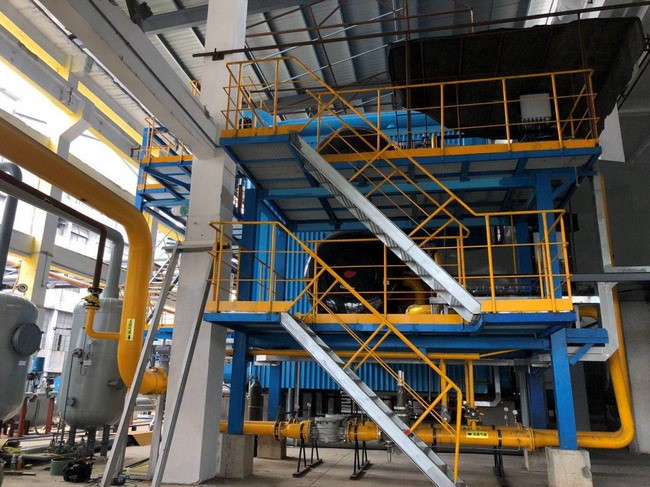
Poor local water quality can quietly damage even a well-designed power plant boiler. If the boiler is connected to river water with high suspended solids, groundwater with hardness and silica, seawater-influenced intake with chlorides, or reclaimed water with organic contamination, the consequences may include scale, corrosion, foaming, carryover, tube overheating, under-deposit attack, condenser leakage risk, frequent blowdown, high chemical consumption, and unplanned shutdowns. The solution is not to buy a “standard boiler” and treat water as an accessory; the correct approach is to customize the power plant boiler, feedwater system, condensate polishing system, blowdown system, chemical dosing system, and online monitoring strategy according to the actual local water source conditions.
A power plant boiler can be customized according to local water source conditions by first testing the raw water for hardness, alkalinity, silica, chlorides, sulfates, iron, manganese, suspended solids, dissolved gases, organic matter, conductivity, and seasonal variation, then designing the pretreatment, demineralization, deaeration, condensate polishing, dosing, blowdown, metallurgy, instrumentation, and operating limits around those results. For high-pressure and high-temperature boilers, the water treatment system must be more precise because even small impurities can cause scaling, corrosion, steam contamination, and turbine damage.
For owners, EPC contractors, and plant engineers, this means the boiler supplier should ask about the local water source before finalizing the boiler. A reliable manufacturer does not only calculate steam pressure, evaporation capacity, fuel consumption, and thermal efficiency; it also studies the water because boiler water chemistry directly affects safety, efficiency, service life, maintenance cost, and power generation reliability. Below is a practical, manufacturer-level guide to customizing a power plant boiler based on river water, lake water, well water, municipal water, seawater desalination water, mine water, industrial reclaimed water, and mixed-source water conditions.
A power plant boiler can use the same feedwater treatment design in all regions as long as the boiler pressure is the same.False
Local water source conditions vary greatly in hardness, silica, chlorides, dissolved gases, suspended solids, and organic matter, so the boiler water treatment system must be customized according to actual water analysis and boiler operating pressure.
For high-pressure power plant boilers, silica and conductivity control are especially important because impurities can carry over with steam and affect turbine reliability.True
High-pressure boilers require strict feedwater and steam purity control because dissolved solids and silica can cause deposits, corrosion, and turbine contamination.
💧 Why Is Local Water Source Analysis the First Step in Boiler Customization?
Local water source analysis is the foundation of power plant boiler customization because water is not just a supporting utility; it becomes steam, transfers heat, circulates through pressure parts, contacts metal surfaces, and determines whether the boiler operates cleanly or fails prematurely. Two sites may both require a 75 t/h, 130 t/h, 220 t/h, or 480 t/h power plant boiler, but if one plant uses soft municipal water and the other uses hard groundwater with high silica, the required feedwater treatment system will be completely different. In practical boiler engineering, we do not design the water system according to appearance, taste, or general cleanliness. We design according to a laboratory water analysis report that includes total hardness, calcium, magnesium, sodium, potassium, bicarbonate alkalinity, carbonate alkalinity, chloride, sulfate, nitrate, silica, total dissolved solids, total suspended solids, turbidity, pH, iron, manganese, aluminum, dissolved oxygen, chemical oxygen demand, total organic carbon, oil, microbial activity, conductivity, and seasonal maximum values. This is especially important for power plant boilers because evaporation concentrates impurities. A small amount of dissolved mineral in raw water may become a serious deposit risk after repeated boiler cycles of concentration. When water turns into steam, most impurities remain in the boiler water; if blowdown, dosing, and purification are not designed correctly, the concentration rises until scale, corrosion, foaming, carryover, or caustic attack appears. Therefore, a professional boiler supplier should request at least one full raw water analysis and, for important projects, several samples from dry season, rainy season, flood season, winter low-temperature period, and peak industrial discharge period. The customization should also consider whether the plant uses once-through water, stored water, mixed water, recycled condensate, desalinated seawater, cooling tower blowdown reuse, or reclaimed municipal wastewater. Each source has different risks. River water often changes rapidly after rainfall and may contain mud, algae, organic matter, and industrial pollutants. Groundwater is often stable but may contain high hardness, iron, manganese, alkalinity, and silica. Seawater or brackish water brings chloride and corrosion concerns. Reclaimed water may contain ammonia, organics, surfactants, phosphate, and biological growth. Municipal water may look easy, but residual chlorine, pipeline corrosion products, or seasonal supply changes still need attention. A power plant boiler customized according to local water source conditions should therefore include a complete water balance, water treatment flow diagram, chemical dosing design, blowdown calculation, material selection review, online analyzer list, sampling system, condensate recovery plan, and wastewater discharge plan.
| 🧪 Water parameter | Why it matters for power plant boilers | Possible boiler problem if ignored | Common customization response |
|---|---|---|---|
| Hardness | Calcium and magnesium form scale | Tube overheating, lower efficiency, rupture risk | Softening, RO, ion exchange, antiscalant |
| Silica | Can deposit in boiler and turbine | Turbine blade deposits, steam purity issues | Demineralization, mixed bed, strict blowdown |
| Chloride | Increases corrosion risk | Pitting, stress corrosion, under-deposit corrosion | RO, desalination, chloride monitoring, material review |
| Dissolved oxygen | Attacks steel surfaces | Feedwater line corrosion, economizer pitting | Deaerator, oxygen scavenger, closed condensate return |
| Iron and manganese | Form deposits and foul resin/membranes | Fouling, dirty boiler water, tube deposits | Oxidation filtration, multimedia filter, cartridge filter |
| Suspended solids | Cause fouling and sludge | Mud deposits, poor heat transfer, blowdown increase | Clarifier, filter, ultrafiltration |
| Organic matter | Causes foaming, fouling, biological growth | Carryover, membrane fouling, unstable water quality | Activated carbon, UF, oxidation, biological control |
| Conductivity/TDS | Indicates dissolved impurities | Foaming, carryover, high blowdown | RO, demineralizer, automatic blowdown |
| Alkalinity | Affects pH and CO₂ formation | Caustic corrosion, condensate corrosion | Decarbonator, acid dosing, pH control |
| Oil/grease | Fouls heat transfer and resins | Foaming, deposits, resin damage | Oil removal, coalescer, monitoring |
🏭 How Do Different Local Water Sources Change Boiler Design?
A power plant boiler should be customized differently for different water sources because each source brings a distinct chemical and mechanical risk profile. River water and lake water usually require robust pretreatment before fine purification. The first concern is suspended solids, turbidity, algae, silt, clay, and organic matter. If the intake is close to agricultural runoff or industrial discharge, the water may also contain pesticides, ammonia, phosphate, oil traces, or heavy metals. For this type of source, the boiler system should include intake screening, sedimentation or clarification, coagulation and flocculation, multimedia filtration, activated carbon when organics or chlorine are present, ultrafiltration when turbidity fluctuates strongly, reverse osmosis for dissolved solids reduction, and mixed-bed polishing for high-pressure boilers. Groundwater usually has lower turbidity but higher dissolved minerals. It may contain calcium, magnesium, bicarbonates, iron, manganese, silica, carbon dioxide, and sometimes hydrogen sulfide. For groundwater, the customization often includes aeration or oxidation, iron and manganese removal, softening or antiscalant-controlled RO, degassing, demineralization, and careful silica control. Municipal water can be easier, but it is not automatically suitable for a power boiler. It may contain residual chlorine or chloramine that damages RO membranes or affects resin performance, and its dissolved solids may still be too high for medium-pressure or high-pressure boilers. Seawater and brackish water require the most corrosion-aware design. The boiler itself should not receive seawater; instead, the plant needs desalination, usually through seawater reverse osmosis, brackish water reverse osmosis, multi-stage pretreatment, cartridge filtration, and final polishing. Reclaimed water is increasingly used where freshwater is scarce, but it demands advanced pretreatment because organic compounds, microbiological activity, ammonia, phosphate, surfactants, and variable conductivity can disturb membranes, resins, and boiler chemistry. In these cases, a supplier should design the boiler plant as a complete water-energy system, not as isolated boiler equipment. The selected water source affects feedwater tank size, condensate return strategy, boiler blowdown rate, steam purity guarantee, economizer material, deaerator capacity, dosing skid design, sampling points, wastewater treatment capacity, and spare equipment philosophy. If the water quality fluctuates, the water treatment system should have redundancy, bypass protection, automatic shutdown interlocks, and online monitoring. For example, if silica suddenly rises in RO permeate and the boiler continues running at high pressure, turbine deposition can occur. If chloride leakage enters the condensate through a condenser tube leak and no online cation conductivity alarm is installed, the boiler may experience rapid corrosion. Therefore, customization according to local water source conditions is not only about removing impurities before startup; it is about building a defensive operating system that continuously protects the boiler.
| 🌍 Local water source | Typical water quality characteristics | Boiler customization priority | Recommended system configuration |
|---|---|---|---|
| River water | Turbidity, silt, algae, seasonal variation | Stable pretreatment and solids removal | Intake screen + clarifier + multimedia filter + UF/RO + polishing |
| Lake/reservoir water | Algae, organics, moderate minerals | Biological and organic control | Coagulation + filtration + activated carbon + RO + mixed bed |
| Groundwater/well water | Hardness, iron, manganese, silica, alkalinity | Scale and silica prevention | Aeration + iron removal + softener/RO + degasser + polishing |
| Municipal water | Chlorine/chloramine, moderate TDS | Membrane/resin protection | Carbon filter + RO + EDI or mixed bed |
| Brackish water | High TDS, chloride, sulfate | Desalination and corrosion control | Pretreatment + brackish RO + second-pass RO + polishing |
| Seawater desalination feed | Very high chloride and TDS | High-rejection desalination | SWRO + second-pass RO + EDI/mixed bed |
| Reclaimed wastewater | Organics, ammonia, microbes, variable TDS | Fouling and biological control | Advanced oxidation/biological treatment + UF + RO + polishing |
| Mine water | Suspended solids, metals, sulfate, acidity/alkalinity | Metals and scaling control | pH adjustment + metals removal + filtration + RO + polishing |
⚙️ How Should Boiler Pretreatment Be Customized?
Pretreatment should be customized to protect downstream equipment and ensure stable feedwater quality. Many boiler failures begin not inside the boiler drum but at the pretreatment stage, where poor filtration, wrong chemical dosing, unstable pH, or undersized equipment allows contaminants to pass into the RO, demineralizer, deaerator, or boiler. For river water, pretreatment should be designed for the worst turbidity, not the average turbidity. A river that is clear during the dry season may become heavily loaded with silt during storms. If the clarifier, multimedia filter, or ultrafiltration unit is sized only for normal conditions, the plant will either reduce load, bypass treatment, consume excessive chemicals, or send poor-quality water downstream. For groundwater, pretreatment must consider oxidation chemistry. Iron and manganese may be dissolved in the well but precipitate after exposure to air, forming brown or black deposits that foul filters, RO membranes, resin beds, and feedwater lines. For municipal water, activated carbon or chemical dechlorination may be necessary before RO membranes. For reclaimed water, biological fouling control is essential; the design may require ultrafiltration, biocide control, clean-in-place systems, organic monitoring, and conservative membrane flux. For high-silica sources, pretreatment should manage silica scaling potential through pH control, antiscalant, lime softening, RO recovery adjustment, or stronger polishing. The pretreatment plant should also be designed with redundancy because a power plant boiler cannot safely depend on a single fragile treatment train. A common reliable arrangement is duty-standby raw water pumps, dual multimedia filters, cartridge filters before RO, two RO trains with cleaning connections, EDI or mixed-bed polishing, and a demineralized water storage tank sized for safe boiler operation during short treatment interruptions. The boiler design should also account for the pretreatment discharge streams: clarifier sludge, filter backwash, RO concentrate, regeneration waste, neutralization wastewater, and boiler blowdown. If the local environmental permit limits discharge, the water treatment system may need recovery optimization, wastewater reuse, or zero-liquid-discharge support. A manufacturer experienced in power plant boiler customization will not simply sell the boiler body; it will coordinate the boiler water treatment capacity with steam generation, blowdown, condensate return, start-up filling, chemical cleaning, emergency makeup, and future expansion. This is especially important in remote sites where chemical supply, skilled operators, and laboratory support are limited. A robust pretreatment system makes the whole boiler plant easier to operate, more forgiving, and less expensive over its lifetime.
🧭 Typical Pretreatment Selection Map
| Water risk level | Raw water condition | Pretreatment intensity | Typical equipment |
|---|---|---|---|
| Low | Stable municipal water, low TDS, low turbidity | Basic protection | Carbon filter + cartridge filter + RO |
| Medium | Groundwater with hardness or iron | Mineral control | Oxidation + filtration + softening/RO |
| High | River water with seasonal turbidity | Strong solids control | Clarifier + multimedia filter + UF + RO |
| Very high | Reclaimed water or brackish water | Advanced barrier design | Biological/chemical pretreatment + UF + two-pass RO |
| Critical | High-pressure boiler or turbine steam purity requirement | Ultra-pure polishing | RO + EDI/mixed bed + condensate polishing |
🔥 How Does Water Quality Affect Boiler Pressure, Steam Purity, and Heat Transfer?
The higher the boiler pressure, the stricter the feedwater and boiler water quality must be. A low-pressure industrial steam boiler may tolerate higher dissolved solids than a high-pressure power plant boiler, but a turbine-driven power system requires much cleaner steam. In a power plant, steam purity affects not only the boiler but also the superheater, steam pipeline, turbine blades, condenser, and condensate system. When dissolved solids, silica, sodium, or organic decomposition products carry over into the steam, they can deposit on turbine blades, reduce turbine efficiency, create imbalance, promote corrosion, and increase maintenance cost. Inside the boiler, hardness salts form scale on tube surfaces. Even a thin scale layer acts as insulation, forcing the tube metal temperature to rise. In high heat flux areas, this can cause bulging, creep damage, hydrogen damage, caustic gouging, or tube rupture. Chlorides and dissolved oxygen promote pitting corrosion, which is dangerous because a small pit can penetrate deeply while the surrounding metal looks normal. Carbon dioxide generated from bicarbonate alkalinity can dissolve in condensate and form carbonic acid, causing condensate line corrosion. Silica is particularly important in high-pressure power boilers because it becomes more volatile as pressure increases and may enter steam. Therefore, a boiler customized for high-pressure service and local high-silica water should include stronger demineralization, lower boiler water silica limits, automatic blowdown, high-quality sampling coolers, online silica analyzers when justified, and reliable condensate polishing. Heat transfer customization is also linked to water chemistry. If the local water source increases scaling risk, the boiler may need conservative heat flux design, better circulation margins, improved drum internals, enhanced blowdown arrangement, and strict chemical cleaning requirements before commissioning. In drum boilers, drum internals such as separators, scrubbers, demisters, and chevron dryers may be selected to improve steam-water separation and reduce carryover. In once-through boilers, the feedwater purity requirement becomes even stricter because there is no drum to separate impurities through blowdown; the entire water path becomes steam path, so contaminants travel directly through the evaporator and superheater. For biomass and waste-to-energy power boilers, the water side must also be protected against frequent load variation and start-stop operation, because thermal cycling can aggravate corrosion and deposition if water chemistry is unstable. A professional boiler customization plan therefore connects local water source quality with operating pressure, steam purity, circulation safety, blowdown control, and pressure-part lifetime.
| ⚡ Boiler category | Typical pressure sensitivity | Water customization focus | Key risk if poorly designed |
|---|---|---|---|
| Low-pressure power/utility boiler | Moderate | Hardness, oxygen, TDS, pH | Scale and corrosion |
| Medium-pressure power boiler | High | Demineralized makeup, deaeration, phosphate/AVT control | Carryover and tube deposits |
| High-pressure drum boiler | Very high | Silica, sodium, cation conductivity, condensate polishing | Turbine deposits and under-deposit corrosion |
| Once-through boiler | Critical | Ultra-pure feedwater, condensate polishing, oxygen/pH control | Direct contamination of steam path |
| Biomass power boiler | High due to variable operation | Stable pH, oxygen control, blowdown, corrosion monitoring | Cycling corrosion and deposits |
| CFB power boiler | High | Makeup purity, condensate control, reliable blowdown | Water-wall deposit and chemistry instability |
🧴 How Should Chemical Dosing Be Customized for Local Water Conditions?
Chemical dosing should be selected only after understanding both the local water source and the boiler operating pressure. A common mistake is to copy a chemical formula from another plant without considering water composition, condensate return rate, metallurgy, drum pressure, steam purity requirements, and blowdown strategy. For a power plant boiler, chemical dosing may include oxygen scavenger, pH adjuster, phosphate treatment, all-volatile treatment, neutralizing amine, filming amine, antiscalant for RO, biocide for pretreatment, reducing agent for dechlorination, coagulant, flocculant, and cleaning chemicals. Each chemical has a role, but each also has limits. Too little oxygen scavenger leaves dissolved oxygen corrosion. Too much scavenger may increase conductivity or create decomposition products. Incorrect phosphate control may produce hideout or caustic concentration under deposits. Poor amine selection may fail to protect long condensate return lines. Excess antiscalant may foul membranes or interfere with downstream polishing. Therefore, chemical dosing must be designed as a controlled program, not as casual manual addition. The boiler should include dosing pumps with suitable turndown, calibration columns, chemical tanks with level indication, dilution water quality control, injection quills placed in well-mixed locations, standby pumps for critical chemicals, and interlocks or alarms for chemical failure. The online monitoring system should include pH, conductivity, cation conductivity, dissolved oxygen, silica, sodium, phosphate, ORP, turbidity, and hardness depending on boiler pressure and risk level. Sampling points should include raw water, filtered water, RO feed, RO permeate, demineralized water, condensate, deaerator outlet, economizer inlet, boiler water, saturated steam, superheated steam, and blowdown. Local water source conditions determine which parameters deserve continuous monitoring. For example, if the source is high-chloride brackish water, conductivity and chloride leakage detection become critical. If the source is high-silica groundwater, silica monitoring is essential. If the source is reclaimed water, TOC and biological fouling indicators may be needed. If the plant has a surface condenser cooled by seawater, sodium and cation conductivity alarms in condensate can protect the boiler from condenser leakage. A customized chemical program should also define action levels: normal range, caution range, corrective action range, and shutdown range. Operators should know exactly what to do when hardness appears in RO permeate, when dissolved oxygen rises after the deaerator, when boiler water phosphate hides out, when cation conductivity increases, or when silica approaches the steam limit. Good boiler customization makes chemistry manageable for real operators, not only theoretically correct on a datasheet.
🧪 Boiler Chemical Program Customization Chart
| Chemical/control method | Main purpose | When it is commonly needed | Customization note |
|---|---|---|---|
| Coagulant/flocculant | Remove turbidity and colloids | River, lake, reclaimed water | Jar testing should guide dosage |
| Antiscalant | Protect RO membranes | Hardness, sulfate, silica risk | Must match RO recovery and water chemistry |
| Sodium bisulfite or carbon media | Remove oxidants | Chlorinated municipal/reclaimed water | Protect RO membranes from chlorine attack |
| Oxygen scavenger | Reduce dissolved oxygen | Feedwater systems with oxygen risk | Select according to pressure and metallurgy |
| Ammonia or amine | Control feedwater/condensate pH | Condensate systems, high-pressure plants | Must suit copper alloy presence if any |
| Phosphate | Control boiler water chemistry | Drum boilers | Requires coordinated phosphate-pH control |
| Caustic alkalinity control | Maintain boiler water pH | Selected lower-pressure applications | Must avoid caustic concentration |
| Condensate polishing | Remove trace ionic contamination | High-pressure boilers, condenser leakage risk | Strongly recommended for turbine units |
🛡️ How Should Boiler Materials and Corrosion Protection Be Customized?
Local water source conditions can influence material selection, corrosion allowance, condensate system design, and protective chemistry. The pressure parts of a power plant boiler are normally selected based on pressure, temperature, code requirements, fuel-side corrosion risk, and mechanical design, but water-side corrosion risk must also be reviewed. If makeup water may contain chlorides, dissolved oxygen, acidic components, or organic decomposition products, the feedwater system, economizer, condensate piping, deaerator, blowdown lines, and sampling system need special attention. Carbon steel is widely used in boiler feedwater and pressure parts, but it depends on controlled pH and low oxygen to maintain a protective magnetite layer. If water chemistry is unstable, that protective layer can dissolve, crack, or become porous. Stainless steel may be used in selected components such as condensate polishing internals, RO piping, chemical dosing skids, desalination equipment, sampling coolers, and certain high-purity water lines, but stainless steel is not automatically immune to chloride pitting or stress corrosion. Copper alloys in condensers or heat exchangers require careful amine and oxygen chemistry selection because some high-pH or ammonia-rich conditions may accelerate copper transport. In high-pressure units, copper transport can deposit in the boiler and turbine. Therefore, the supplier should ask about condenser tube material, cooling water source, condensate return system, feedwater heater metallurgy, and existing plant chemistry philosophy. For plants using seawater cooling, a condenser leak can introduce sodium and chloride into the condensate very quickly, so the boiler package should include fast-response conductivity, cation conductivity, sodium monitoring, condensate dump capability, and emergency operating procedures. For reclaimed water or mine water sites, the risk may include sulfate-reducing bacteria, acidic drainage, heavy metals, or organic acids, so pretreatment and monitoring must be more conservative. Corrosion protection also includes mechanical design. Dead legs, stagnant zones, poorly drained lines, oversized chemical tanks, and low-flow sampling lines can create corrosion or biological growth. Blowdown lines must be designed for flashing, erosion, thermal stress, and safe discharge. Deaerator storage tanks should be sized and controlled to prevent oxygen ingress. Feedwater tanks should have proper venting, level control, and insulation. In cold regions, exposed demineralized water lines need freeze protection because high-purity water can be aggressive and leaks may be difficult to detect early. A customized boiler design should combine suitable materials, correct chemistry, good drainage, proper velocities, oxygen control, and operator-friendly monitoring.
♻️ How Should Blowdown and Water Efficiency Be Customized?
Blowdown is the controlled removal of concentrated boiler water to keep dissolved and suspended impurities within safe limits. Local water source conditions strongly affect blowdown rate because higher makeup impurities require more removal unless treatment quality is improved. In a power plant, blowdown is not only a water loss; it is also an energy loss because hot boiler water carries heat. Therefore, customizing the boiler according to local water conditions should balance water treatment investment, blowdown heat recovery, chemical consumption, wastewater discharge, and boiler reliability. If the plant uses high-quality demineralized water and has high condensate return, blowdown may be low. If the plant uses variable river water or less effective treatment, blowdown may increase, reducing efficiency and increasing wastewater treatment load. A modern power plant boiler should include continuous blowdown for dissolved solids control, intermittent blowdown for sludge removal where applicable, blowdown flash tank, heat recovery exchanger, sample cooler, conductivity-based automatic blowdown, and safe discharge control. For water-scarce regions, the design may include blowdown heat recovery to preheat makeup water and blowdown reuse after treatment. For high-silica water, blowdown control may be based not only on conductivity but also on silica limits. For phosphate-treated drum boilers, blowdown also helps control phosphate and suspended corrosion products. The supplier should calculate cycles of concentration based on feedwater quality and boiler water limits. However, cycles of concentration should not be maximized blindly. Higher cycles reduce water loss but increase concentration risk, foaming, carryover, and deposit formation. The best design is the one that produces stable chemistry under real operating conditions. Water efficiency customization may also include condensate return improvement. Condensate is usually the best water in the plant because it has already been purified through evaporation and condensation, but it can be contaminated by process leaks, condenser leaks, oil, or corrosion products. A power plant boiler serving industrial process steam may need condensate monitoring and automatic rejection if oil, hardness, conductivity, or iron rises. A turbine power plant with a surface condenser may need condensate polishing to protect high-pressure boilers from condenser leakage. If the local water source is expensive, scarce, or difficult to treat, condensate recovery becomes economically valuable. In that case, the boiler should be designed with larger condensate tanks, polishing systems, heat recovery, online analyzers, and return-line corrosion control. Good blowdown and condensate customization can reduce fuel cost, water cost, chemical cost, and wastewater discharge while improving boiler safety.
| 💦 Design choice | When to use it | Benefit | Watch point |
|---|---|---|---|
| Automatic continuous blowdown | Medium/high-pressure boilers | Stable TDS and conductivity control | Sensor maintenance is essential |
| Intermittent bottom blowdown | Drum boilers with sludge risk | Removes settled solids | Must follow safe operating procedure |
| Blowdown flash tank | Hot blowdown streams | Recovers flash steam | Needs safe pressure and vent design |
| Blowdown heat exchanger | Water/energy saving projects | Preheats makeup water | Fouling and corrosion must be managed |
| Condensate recovery | High water cost or high treatment cost | Saves treated water and heat | Contamination detection required |
| Condensate polishing | High-pressure turbine plants | Protects boiler and turbine | Resin regeneration and monitoring needed |
| Zero-liquid-discharge support | Strict discharge or water-scarce sites | Minimizes wastewater | Higher capital and operating complexity |
🧠 How Should Instrumentation and Automation Be Customized?
Instrumentation is the “early warning system” for a power plant boiler operating with local water source risks. Without proper online monitoring, operators may not know that the water treatment plant is failing until the boiler already contains harmful impurities. For a small low-pressure boiler, periodic manual testing may be acceptable in some applications, but for power plant boilers, especially medium-pressure and high-pressure units, online instruments are strongly recommended. The customized analyzer package should be selected according to water source and boiler pressure. At minimum, many power boilers require online conductivity, pH, dissolved oxygen, feedwater temperature, deaerator pressure, and boiler water conductivity. Higher-pressure and turbine-connected units may need cation conductivity, silica, sodium, phosphate, hydrazine or alternative scavenger residual, ORP, turbidity, iron monitoring, and condensate polishing outlet quality. The sampling system itself must be designed correctly. Hot, high-pressure samples must pass through sample coolers and pressure reducers to provide safe, representative readings. Sample lines should avoid stagnant zones and long delays. Analyzer panels should be arranged for easy calibration, maintenance, and drainage. For remote plants, automatic data logging and alarm history are useful because gradual changes in water chemistry often reveal equipment problems before failure occurs. For example, a slow rise in RO permeate conductivity may indicate membrane scaling or seal leakage. A sudden rise in condensate cation conductivity may indicate condenser tube leakage. Increased dissolved oxygen after the deaerator may indicate poor venting, low steam pressure, spray valve problems, or air ingress. Rising iron in feedwater may indicate corrosion in condensate return lines. High boiler water conductivity may indicate insufficient blowdown or poor makeup quality. The control system should not only display these values; it should connect them to operating action. For critical boilers, high-high conductivity, silica, sodium, or dissolved oxygen alarms may trigger load reduction, condensate dumping, makeup isolation, or boiler shutdown depending on severity. Automation should also help optimize chemical dosage. Dosing pumps can be linked to feedwater flow, pH, phosphate residual, or oxygen readings, but manual verification remains important. A customized boiler control philosophy should define normal operating range, alarm range, trip range, sampling frequency, calibration frequency, and responsibility between boiler operators, water treatment operators, and laboratory personnel. This is where user-centered design matters: operators need clear alarms, not confusing numbers; maintenance teams need accessible instruments, not hidden panels; owners need trend reports, not only daily logs. The best boiler water system is one that plant personnel can operate confidently every day.
📊 Practical Water Source Customization Matrix for Power Plant Boilers
| 🏷️ Customization area | Low-risk water source | Medium-risk water source | High-risk water source | Critical-risk water source |
|---|---|---|---|---|
| Raw water pretreatment | Filtration + carbon | Filtration + softening/RO | Clarifier/UF + RO | Advanced treatment + two-pass RO |
| Makeup polishing | RO or EDI | RO + EDI/mixed bed | RO + mixed bed | RO + EDI + mixed bed standby |
| Deaeration | Standard deaerator | Deaerator + scavenger | High-efficiency deaerator + tight DO control | Redundant monitoring and strict action limits |
| Boiler blowdown | Conductivity-based | Conductivity + manual lab checks | Conductivity + silica/TDS control | Automatic blowdown + chemistry interlocks |
| Condensate protection | Basic monitoring | Conductivity + pH | Cation conductivity + iron/sodium | Condensate polishing + automatic dumping |
| Chemical dosing | Standard dosing skid | Flow-paced dosing | Multi-chemical dosing with standby pumps | Redundant dosing and online verification |
| Sampling | Manual + basic online | Online pH/conductivity/DO | Full sample panel | High-purity steam/water analysis system |
| Operator training | Basic | Chemistry response training | Alarm/action procedure training | Emergency contamination response drills |
🏗️ What Should a Boiler Supplier Confirm Before Final Design?
Before final design, the boiler supplier should confirm the complete water balance and chemistry basis. This includes the source of raw water, maximum and minimum raw water temperature, seasonal quality changes, storage method, pretreatment responsibility, expected condensate return rate, cooling water system type, condenser material, turbine steam purity requirements, boiler pressure and temperature, start-up frequency, load cycling pattern, blowdown discharge limits, and local chemical availability. The supplier should also ask whether the plant has laboratory capability. A sophisticated water treatment system may fail if the site cannot calibrate instruments, regenerate resin, clean membranes, handle chemicals safely, or interpret alarms. Therefore, customization should match both water chemistry and operational reality. For remote mines, islands, desert power stations, and plateau industrial parks, simplicity and robustness may be more valuable than overly complex systems. For large grid-connected power plants, higher automation, redundancy, and condensate polishing may be justified by the cost of turbine downtime. For biomass plants, sugar mills, paper mills, textile plants, and chemical parks, condensate contamination risk should be assessed because process heat exchangers may leak product into condensate. If contaminated condensate returns to the boiler, the boiler water can foam, organic acids may form, or deposits may develop. The supplier should design condensate return with oil detection, conductivity monitoring, hardness monitoring, storage segregation, and automatic rejection where necessary. For high-pressure boilers, the supplier should coordinate with turbine suppliers to ensure steam purity requirements are met. For boilers with superheaters, attemperator spray water must be high purity because it enters the steam path directly. If spray water contains silica or dissolved solids, those impurities can deposit in the superheater or turbine. This detail is sometimes overlooked, but it is crucial. A well-customized boiler system treats attemperator spray water, feedwater, condensate, and makeup water as parts of one chemistry loop. It also includes commissioning procedures such as flushing, hydrostatic test water quality control, chemical cleaning, steam blowing, passivation, and first-fire chemistry monitoring. Poor commissioning water can contaminate a boiler before commercial operation even begins. Therefore, the final design should include not only equipment but also procedures.
✅ Manufacturer’s Checklist for Customizing a Boiler to Local Water Source Conditions
| ✅ Item | Question to answer | Why it matters |
|---|---|---|
| Raw water report | Do we have complete seasonal analysis? | Prevents under-designed treatment |
| Boiler pressure | What feedwater purity is required? | Higher pressure means stricter chemistry |
| Steam use | Is steam sent to turbine, process, or both? | Determines steam purity and condensate risk |
| Condensate return | Is return clean, contaminated, or variable? | Affects polishing and rejection design |
| Silica level | Is silica high or seasonally unstable? | Protects superheater and turbine |
| Chloride risk | Is source brackish, seawater-related, or leak-prone? | Prevents pitting and corrosion |
| Hardness risk | Can hardness reach the boiler? | Prevents scale and tube overheating |
| Dissolved oxygen | Is deaeration reliable? | Protects economizer and feedwater lines |
| Blowdown plan | How will concentration be controlled? | Maintains safe boiler water chemistry |
| Monitoring | Are online analyzers included? | Gives early warning before damage |
| Chemicals | Are chemicals locally available and safe to handle? | Ensures realistic operation |
| Wastewater | Can blowdown and regeneration waste be discharged? | Avoids environmental and operating problems |
🚀 Final Summary
A power plant boiler can be customized according to local water source conditions by engineering the entire steam-water cycle around real water quality, not assumptions. The key is to test the local water source, identify risks such as hardness, silica, chlorides, oxygen, iron, suspended solids, organics, and seasonal variation, then design suitable pretreatment, RO or demineralization, deaeration, chemical dosing, condensate polishing, blowdown control, instrumentation, materials, and operating procedures. For low-pressure boilers, the main goal may be preventing scale and corrosion. For medium-pressure and high-pressure power plant boilers, the goal expands to steam purity, turbine protection, silica control, condensate quality, and rapid contamination response. A standard boiler may produce steam, but a customized boiler produces reliable steam under the real conditions of the site. That difference determines fuel efficiency, tube life, maintenance cost, shutdown risk, and long-term return on investment.
How Can a Power Plant Boiler Be Customized for Different Fuel Supply Characteristics?
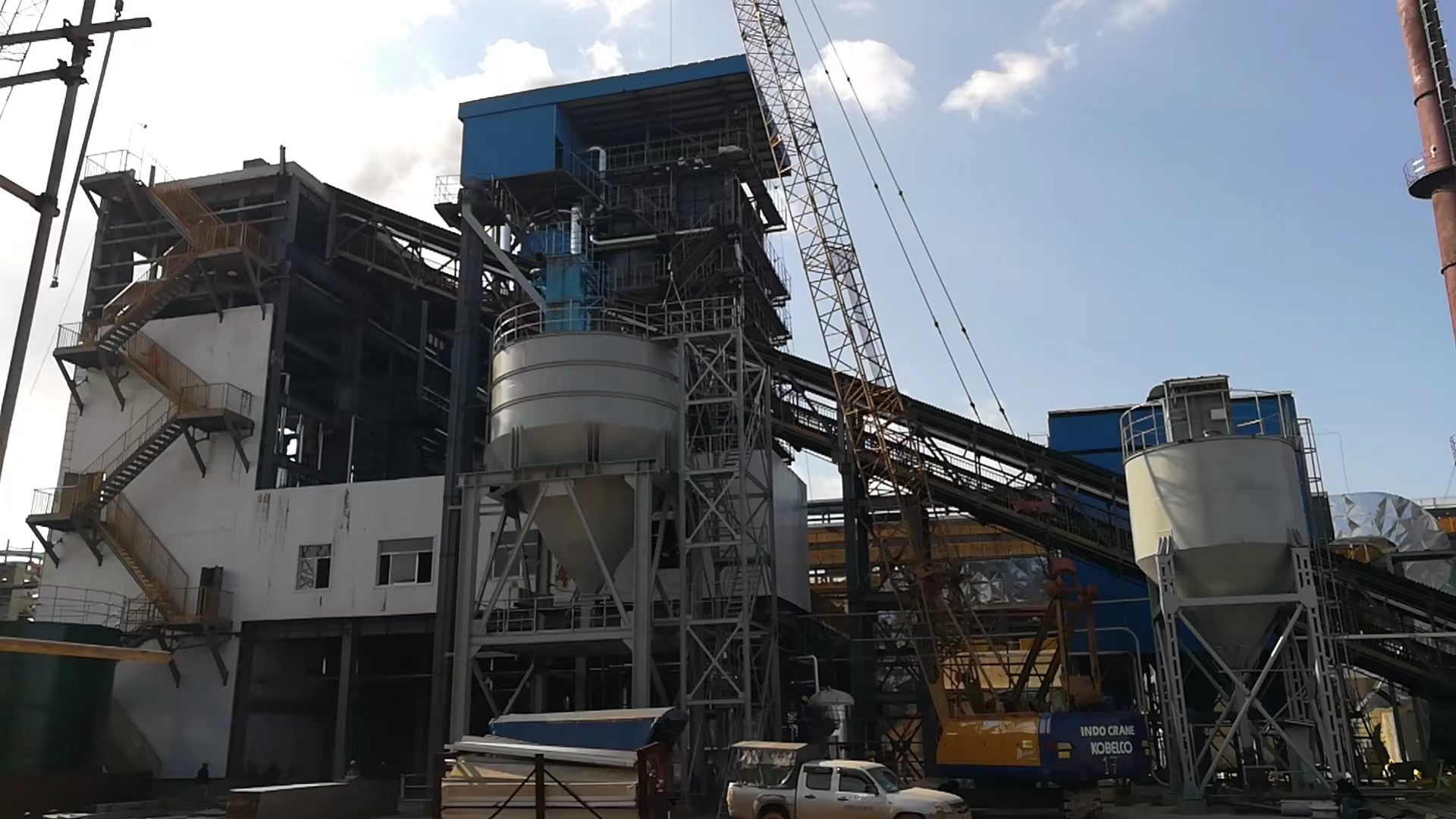
A power plant boiler may fail to reach its promised efficiency, steam output, emission limit, or service life if the fuel supply characteristics are misunderstood. Coal with high ash may slag the furnace, biomass with high moisture may reduce combustion temperature, natural gas with changing calorific value may destabilize burner control, fuel oil with high sulfur may increase corrosion risk, and mixed fuels may cause feeding, ignition, and emission problems. These issues can lead to unstable flames, high unburned carbon, excessive NOx or SO₂, tube fouling, clinker formation, fan overload, grate damage, bed agglomeration, frequent shutdowns, and higher operating cost. The correct solution is to customize the power plant boiler around the real fuel supply characteristics, including fuel type, heating value, moisture, ash, sulfur, volatile matter, particle size, supply pressure, seasonal variation, storage behavior, feeding reliability, and long-term fuel availability.
A power plant boiler can be customized for different fuel supply characteristics by analyzing the fuel’s calorific value, moisture, ash, sulfur, nitrogen, volatile matter, fixed carbon, particle size, bulk density, slagging tendency, ignition behavior, supply stability, and emissions profile, then adapting the furnace type, burner, grate, pulverizer, fuel feeder, combustion air system, heat-transfer surface, ash handling system, emission control equipment, materials, controls, and operating strategy to match the actual fuel.
For owners, EPC contractors, power producers, industrial parks, mining companies, biomass developers, and utility operators, fuel is not a simple purchasing item; it is the design foundation of the boiler. A professional boiler manufacturer should never finalize the boiler only from steam capacity and pressure. The supplier must first understand what fuel will actually arrive at the plant every day, how stable that fuel will be, how it will be stored, how it will be transported into the furnace, how it will burn, and what residues and emissions it will create. The following guide explains how a power plant boiler should be customized for coal, biomass, natural gas, oil, waste-derived fuel, mixed fuel, low-calorific-value fuel, and variable fuel supply conditions.
A power plant boiler can use the same furnace, burner, and feeding system for all fuels if the required steam capacity is the same.False
Different fuels have different heating value, moisture, ash, sulfur, volatile matter, particle size, ignition behavior, and emission characteristics, so the boiler must be customized according to the actual fuel supply.
Fuel supply stability is as important as fuel composition when customizing a power plant boiler.True
Even if the average fuel analysis looks acceptable, large fluctuations in moisture, calorific value, particle size, or supply pressure can cause unstable combustion, load limitation, emission excursions, and equipment damage.
🔥 Why Fuel Supply Characteristics Must Be Treated as the Boiler Design Basis
Fuel supply characteristics determine almost every important part of a power plant boiler, from furnace volume and burner design to ash handling, flue gas treatment, control logic, and long-term maintenance planning. In real projects, two boilers with the same evaporation capacity may require completely different designs because their fuels behave differently. A 130 t/h coal-fired boiler burning high-volatile bituminous coal is not the same as a 130 t/h boiler burning low-volatile anthracite. A 75 t/h biomass boiler burning dry wood chips is not the same as one burning wet palm fiber, rice husk, bagasse, or mixed agricultural residue. A gas-fired boiler supplied by stable pipeline natural gas is not the same as one supplied by low-BTU gas, coke oven gas, blast furnace gas, biogas, or LNG with changing Wobbe index. The fuel affects ignition temperature, flame length, heat release rate, residence time, oxygen demand, excess air, furnace exit gas temperature, ash melting behavior, slagging, fouling, corrosion, unburned carbon, NOx formation, SO₂ emissions, particulate loading, and auxiliary power consumption. If the fuel characteristics are not reflected in the design, the boiler may operate, but it will not operate reliably or economically.
The first step is to obtain a complete fuel analysis. For solid fuels, this includes proximate analysis, ultimate analysis, lower heating value, higher heating value, total moisture, inherent moisture, ash composition, ash fusion temperature, sulfur, chlorine, alkali metals, particle size distribution, bulk density, grindability, abrasiveness, and expected fuel variation. For liquid fuels, the supplier should know viscosity, density, sulfur, water content, ash, flash point, pour point, heating value, atomization requirement, and storage temperature. For gaseous fuels, the required data include composition, lower heating value, Wobbe index, supply pressure, pressure fluctuation, hydrogen content, inert gas content, sulfur compounds, moisture, dust, tar, and expected variation. For waste-derived and mixed fuels, the design must include wider safety margins because the fuel may vary significantly from shipment to shipment. A customized boiler is not designed for a perfect laboratory fuel; it is designed for the worst credible fuel envelope that the plant must burn safely.
| 🔍 Fuel characteristic | Why it matters | Possible boiler problem if ignored | Common customization response |
|---|---|---|---|
| Heating value | Determines fuel flow and heat input | Low output, feeder overload, unstable load | Larger feeder, revised burner, wider control range |
| Moisture | Reduces flame temperature and useful heat | Ignition difficulty, high stack loss, poor efficiency | Larger furnace, preheated air, drying system |
| Ash content | Determines slag, dust, and ash handling load | Fouling, erosion, ESP/baghouse overload | Larger ash system, sootblowers, wear protection |
| Sulfur | Drives SO₂ and acid corrosion risk | Emission failure, low-temperature corrosion | Desulfurization, material review, temperature control |
| Chlorine | Serious corrosion and deposit risk | Superheater corrosion, sticky deposits | Fuel blending, corrosion-resistant materials |
| Volatile matter | Affects ignition and flame stability | Flameout, long flame, burner instability | Burner redesign, ignition support, air staging |
| Particle size | Controls burning rate and feeding reliability | Unburned carbon, feeder blockage, poor mixing | Crushing, screening, pulverizing, feeder redesign |
| Bulk density | Affects storage and conveying capacity | Fuel starvation, bridge formation, conveyor overload | Larger hoppers, anti-bridging devices |
| Ash fusion temperature | Indicates slagging tendency | Clinker, furnace blockage, tube fouling | Furnace temperature control, CFB/grate selection |
| Supply stability | Determines control and reserve strategy | Load swings, trips, emission excursions | Fuel buffer, adaptive controls, dual-fuel backup |
🏭 How Should Boiler Type Be Selected for Different Fuel Characteristics?
The boiler type should be selected according to fuel behavior, not only according to steam capacity. Pulverized coal boilers are suitable for large-scale power generation where coal can be ground finely and burned in suspension with controlled air staging. They are efficient and responsive, but they require suitable coal grindability, pulverizer capacity, stable coal quality, and a well-designed burner system. Circulating fluidized bed boilers are more tolerant of low-grade coal, high-ash coal, coal gangue, petroleum coke, biomass blends, and fuels with variable heating value because the bed provides strong mixing, long residence time, and relatively uniform combustion temperature. Grate boilers are often practical for biomass, bagasse, wood chips, palm waste, and other solid fuels with larger particle size, but the grate must match moisture, ash, fuel size, and slagging behavior. Gas-fired boilers are compact, clean, and fast-response, but they require stable gas pressure, suitable burner design, fuel train safety, and careful control of fuel composition changes. Oil-fired boilers require atomization, heating, pumping, filtration, and sulfur/corrosion management. Waste heat or hybrid boilers may be needed when the fuel source is an industrial by-product gas or process exhaust stream.
A practical customization decision begins by asking: is the fuel solid, liquid, gas, or mixed? Is it stable or variable? Is it clean or ash-forming? Is it dry or wet? Is it easy to ignite or difficult to ignite? Is it locally abundant or seasonally limited? Is it delivered by pipeline, truck, conveyor, ship, or produced inside the plant? For example, if a plant has low-calorific-value coal with high ash and sulfur, a CFB boiler with limestone injection and robust ash handling may be more suitable than a conventional pulverized coal boiler. If a sugar mill has wet bagasse with seasonal operation, the boiler should have a furnace and air system customized for high moisture and variable load. If a steel plant uses blast furnace gas, the boiler must handle low heating value and large gas volume, requiring special burners, gas boosters, large ducts, flame detection, and backup fuel. If a plant uses biomass pellets with stable quality, a grate or suspension-fired biomass boiler may be efficient. If the project depends on multiple fuels, dual-fuel or multi-fuel combustion design should be selected from the beginning, rather than added later as an emergency modification.
| ⚙️ Boiler type | Suitable fuel characteristics | Main customization focus | Typical risk if mismatched |
|---|---|---|---|
| Pulverized coal boiler | Medium/high heating value coal, grindable coal, large power units | Pulverizer, burner, air staging, slagging control | Poor ignition, high unburned carbon, slagging |
| CFB boiler | Low-grade coal, high ash coal, biomass blends, petroleum coke | Bed temperature, fuel size, limestone, ash circulation | Bed agglomeration, cyclone wear, feeding instability |
| Grate-fired boiler | Biomass, wood chips, bagasse, agricultural residue | Grate area, fuel spreading, drying zone, ash discharge | Clinker, incomplete combustion, grate overheating |
| Gas-fired boiler | Natural gas, refinery gas, coke oven gas, biogas, low-BTU gas | Burner, fuel train, Wobbe control, flame safety | Flame instability, pressure fluctuation trips |
| Oil-fired boiler | Heavy oil, diesel, residual oil | Atomizer, fuel heating, viscosity control, sulfur corrosion | Poor atomization, smoke, coking, corrosion |
| Dual-fuel boiler | Gas/oil, coal/biomass, gas/by-product gas | Fuel switching, control curves, safety interlocks | Unsafe transition, unstable combustion |
| Waste-fuel boiler | RDF, sludge, industrial residue | Fuel preparation, residence time, emissions control | Corrosion, variable heat input, high pollutants |
🪨 How Can a Coal-Fired Power Plant Boiler Be Customized for Coal Quality?
A coal-fired power plant boiler must be customized according to coal rank, calorific value, moisture, ash, volatile matter, sulfur, grindability, ash fusion temperature, and mineral composition. Coal is not a single fuel. Lignite has high moisture and low heating value; sub-bituminous coal may have moderate moisture and reactive combustion; bituminous coal often has higher heating value and good ignition characteristics; anthracite has low volatile matter and can be harder to ignite; coal gangue and low-grade coal may contain very high ash and low useful energy. A professional boiler design begins with a coal envelope, not a single number. The supplier should define design coal, check coal, worst coal, and start-up coal if applicable. The furnace must be large enough to provide residence time for burnout. The burner must match volatile matter and flame speed. The pulverizer must match coal grindability and moisture. The air system must provide enough primary air for drying and conveying, enough secondary air for staged combustion, and enough overfire air for NOx control and burnout. The ash system must handle the maximum ash load, not merely the average ash load.
For high-moisture coal, the boiler may require larger mills, higher primary air temperature, stronger drying capacity, and careful mill outlet temperature control to avoid poor drying or fire risk. For high-ash coal, the design should include erosion-resistant tube shields, larger ash hoppers, stronger sootblowing, ash coolers, pneumatic or mechanical ash conveying, and suitable dust collection equipment. For low-volatile coal, ignition support, burner arrangement, flame stabilization, and furnace temperature are critical. For high-sulfur coal, the boiler must be coordinated with desulfurization equipment, sulfur corrosion control, and possibly limestone injection in a CFB system. For coal with low ash fusion temperature, slagging tendency becomes a major design constraint. The furnace heat release rate, burner zone temperature, wall arrangement, sootblower location, and furnace exit gas temperature must be controlled to reduce molten ash deposits. In CFB boilers, bed temperature control and ash chemistry are essential to prevent bed agglomeration. In pulverized coal boilers, coal fineness and burner balancing are essential to reduce unburned carbon and maintain stable flames. If the coal supply comes from several mines, the plant should install coal blending, sampling, online belt scales, magnetic separators, crushers, and coal yard management procedures. A customized coal boiler is therefore a complete fuel-to-steam system, not just a pressure vessel.
🌱 How Can a Biomass Power Plant Boiler Be Customized for Biomass Fuel?
Biomass fuel customization is especially important because biomass can vary more than coal in moisture, particle size, density, ash chemistry, chlorine, potassium, sodium, and seasonal availability. Wood chips, sawdust, bark, rice husk, straw, palm kernel shell, palm fiber, bagasse, corn stalk, cotton stalk, coconut shell, peanut shell, and energy crops all burn differently. A boiler that performs well on dry wood chips may not work well with wet bagasse or rice husk. Biomass often has lower bulk density, higher moisture, lower ash melting temperature, and higher alkali content than fossil fuels. This affects storage volume, feeder design, furnace size, grate cooling, air distribution, slagging, fouling, corrosion, and emission control. The boiler must also consider biological degradation, self-heating, dust explosion risk, odor, and uneven feeding. Because biomass is often seasonal, the boiler may need multi-fuel capability or a larger fuel yard.
For wet biomass, the customization should include a larger drying zone, higher hot air supply, flue gas recirculation if suitable, staged air distribution, and conservative furnace sizing. For light, fluffy biomass such as straw, the fuel feeding system must prevent bridging, rat-holing, and uneven spreading. For abrasive biomass such as rice husk with high silica, wear-resistant surfaces and ash handling design are important. For high-chlorine biomass such as some straws and agricultural residues, superheater corrosion risk must be carefully controlled by steam temperature selection, material selection, sootblowing, fuel blending, and deposit management. For bagasse boilers, the design should account for high moisture, large fuel volume, seasonal sugar mill operation, and possible auxiliary fuel firing during start-up or off-season. For palm waste boilers, the design must consider fiber moisture, shell hardness, ash characteristics, and fuel mixing. Grate-fired biomass boilers require customized grate speed, grate cooling, air zone control, fuel spreaders, furnace arch design, and ash discharge. CFB biomass boilers require controlled fuel particle size, bed inventory, cyclone performance, limestone if needed, and ash recirculation design. If biomass is co-fired with coal, the boiler must check changes in flame temperature, ash chemistry, mill safety, fuel feeding, and emissions. The safest approach is to define a fuel specification with allowed moisture range, particle size range, ash limit, chlorine limit, and minimum heating value, then design the boiler to that practical operating range.
| 🌿 Biomass fuel | Typical characteristic | Boiler customization priority | Key design warning |
|---|---|---|---|
| Wood chips | Moderate moisture, irregular size | Fuel screening, grate or CFB matching | Oversized pieces can block feeders |
| Sawdust | Fine particles, low density | Dust control, feeding stability | Explosion and backfire protection needed |
| Rice husk | High silica ash, abrasive | Wear protection, ash handling | Fouling and erosion risk |
| Straw | High alkali/chlorine, low ash melting point | Corrosion control, fuel blending | Superheater deposits and corrosion |
| Bagasse | Very high moisture, seasonal | Large furnace, drying air, auxiliary fuel | Low combustion temperature risk |
| Palm fiber/shell | Mixed density and moisture | Fuel mixing, grate design, ash control | Uneven combustion if poorly mixed |
| Bark | High ash and moisture variation | Robust grate, sootblowers | Slagging and fouling tendency |
⛽ How Can a Gas-Fired Boiler Be Customized for Gas Supply Characteristics?
Gas-fired power plant boilers are often considered simpler than solid fuel boilers, but this is only true when the gas supply is stable, clean, and within the burner design range. Natural gas, LNG, biogas, coke oven gas, blast furnace gas, refinery gas, syngas, and hydrogen-blended gas have very different combustion characteristics. The boiler must be customized according to gas composition, heating value, Wobbe index, supply pressure, pressure stability, flame speed, inert gas content, hydrogen content, sulfur compounds, moisture, and contaminants such as tar or dust. A natural gas burner designed for high-methane pipeline gas may not operate safely with low-BTU blast furnace gas because the required gas volume is much larger and flame stability is weaker. A burner designed for conventional gas may not be suitable for hydrogen-rich gas because hydrogen has higher flame speed, wider flammability range, and different flashback risk. Biogas may contain CO₂, moisture, hydrogen sulfide, siloxanes, and variable methane content, requiring gas cleaning and special burner tuning.
The fuel train should be customized with pressure regulation, shutoff valves, vent valves, filters, flow meters, pressure transmitters, leak detection, flame scanners, purge logic, and burner management interlocks. For low-pressure gas, a gas booster may be needed. For low-BTU gas, larger gas valves, burners, and ducts may be required because the same heat input requires much more fuel volume. For variable gas composition, the control system should include fuel calorific value compensation, Wobbe index monitoring if justified, oxygen trim, cross-limited air-fuel ratio, and safe load limitation when gas quality falls below the design range. For refinery gas or coke oven gas, the boiler may need special materials, condensate drainage, gas heating, tar removal, sulfur control, and explosion safety. For dual-fuel gas/oil boilers, the fuel switching sequence must be engineered carefully to avoid flameout, overfiring, pressure shock, or unsafe purging. A customized gas-fired boiler should also include low-NOx burner design matched to the actual gas. If the gas contains significant hydrogen or has a high flame temperature, NOx control strategy may need staged combustion, flue gas recirculation, or other measures. If the gas has low heating value, flame stability may be more important than ultra-low NOx at all loads. The supplier should therefore guarantee performance only within a clearly defined gas composition and pressure envelope.
🛢️ How Can an Oil-Fired Boiler Be Customized for Fuel Oil Quality?
Oil-fired boilers must be customized according to viscosity, density, sulfur, water content, ash, metals, flash point, pour point, heating value, and atomization behavior. Light oil and diesel are easier to burn, while heavy fuel oil and residual oil require heating, filtration, pumping, atomization steam or compressed air, and careful maintenance. If heavy oil is too cold, its viscosity becomes too high, atomization becomes poor, droplets become large, combustion becomes smoky, unburned carbon increases, and furnace deposits form. If oil contains water, flame pulsation and unstable combustion may occur. If oil contains ash, vanadium, sodium, or sulfur, high-temperature corrosion and low-temperature acid dew point corrosion become design concerns. Therefore, the customization should include fuel oil storage heating coils, circulation pumps, strainers, duplex filters, viscosity control, burner oil heaters, atomizers, oil return systems, leak collection, fire protection, and safe shutdown logic.
The burner is the heart of an oil-fired customization package. Pressure atomizing burners, steam atomizing burners, air atomizing burners, and rotary cup burners each have different suitability. The selected atomizer must match fuel viscosity and load range. Heavy oil boilers often require steam atomization for better droplet formation, but the steam supply must be reliable during start-up and low-load operation. Oil guns should be accessible for cleaning because poor fuel quality can plug nozzles. Burner management should verify purge, ignition, atomizing medium pressure, oil pressure, oil temperature, flame signal, and valve closure. For high-sulfur oil, the boiler should maintain proper flue gas exit temperature to reduce acid condensation risk, and downstream surfaces should be selected with corrosion awareness. Sootblowing may be more important because oil ash deposits can foul heating surfaces. The air preheater, economizer, stack, and low-temperature surfaces should be reviewed for sulfuric acid corrosion. If the plant plans to switch between oil and gas, the burner throat, register, flame scanner, fuel train, and control system must be designed for both fuels from the beginning. A retrofitted dual-fuel conversion without full combustion analysis can create serious safety and performance risks.
🔁 How Can a Boiler Be Customized for Multi-Fuel or Variable Fuel Supply?
Many modern power plants want fuel flexibility because fuel markets change, local supply varies, or the plant uses industrial by-products. However, multi-fuel capability must be engineered carefully. It is not enough to say that a boiler can “burn many fuels.” The supplier must define which fuels, what blending ratio, what moisture range, what particle size, what heating value range, what ash content, and what operating load are acceptable. A boiler designed for 100% coal plus 10% biomass co-firing is very different from a boiler designed for 50% biomass and 50% coal. A gas boiler designed for natural gas backup plus refinery gas base load is different from one designed for equal operation on both fuels. Multi-fuel customization affects furnace size, burner arrangement, fuel feeding, air distribution, control logic, ash chemistry, emissions, and safety systems.
For coal-biomass co-firing, the supplier must evaluate whether biomass is mixed with coal before milling, injected separately, or burned on a separate grate or burner system. Milling biomass with coal can create fire and explosion concerns because biomass is fibrous and reactive. Separate biomass feeding improves control but adds equipment. The ash chemistry may change slagging and fouling behavior because biomass alkali metals can interact with coal ash. For gas-oil dual-fuel boilers, separate fuel trains and burner guns are required, with safe changeover sequences. For low-BTU by-product gas with natural gas support, the boiler may use a stabilizing fuel to maintain flame quality. For RDF or waste-derived fuel, the boiler must handle fuel variability, contaminants, chlorine, metals, and high ash. It may need stronger furnace residence time, better mixing, robust grate or fluidized bed technology, and advanced flue gas cleaning. The control system should include fuel quality correction, adaptive air distribution, oxygen trim, CO monitoring, furnace temperature monitoring, and fuel feed limitation. A well-designed multi-fuel boiler gives the operator flexibility without sacrificing safety. A poorly designed multi-fuel boiler gives the operator uncertainty, unstable combustion, and high maintenance.
| 🔁 Multi-fuel case | Main design challenge | Recommended customization |
|---|---|---|
| Coal + biomass | Different moisture, ash chemistry, particle behavior | Separate feeding or controlled blending, ash analysis, air staging |
| Natural gas + oil | Different burner hardware and safety needs | Dual-fuel burner, separate fuel trains, safe changeover logic |
| Low-BTU gas + natural gas | Flame stability and large gas volume | Special burner, support fuel, Wobbe or LHV compensation |
| Biomass + RDF | Variable fuel and high contaminants | Robust grate/CFB, emissions control, corrosion protection |
| Coal + petroleum coke | High sulfur and low volatile matter | CFB design, limestone injection, ignition support |
| Process waste gas + backup fuel | Variable pressure and composition | Gas holder/buffer, booster, fast fuel control, trip logic |
🌬️ How Should the Combustion Air and Draft System Be Customized?
Different fuels require different air distribution, excess air, fan capacity, and draft control. Solid fuels often need staged air: primary air for drying, transport, and initial combustion; secondary air for main combustion; overfire air for burnout and NOx control; and sometimes undergrate air for grate combustion. Wet biomass needs more drying energy and may require higher air temperature. Pulverized coal needs primary air to carry coal from mills to burners, but excessive primary air can reduce burner stability and increase NOx. CFB boilers need fluidizing air to maintain bed suspension, plus secondary air for staged combustion. Gas and oil boilers require precise burner air control to maintain flame stability, efficiency, and emissions. If the air system is not customized, the boiler may have high CO, high NOx, poor turndown, flame impingement, furnace pressure swings, or high auxiliary power.
Fan selection must match the fuel envelope. Low heating value fuel requires higher fuel flow and often higher flue gas volume. High moisture fuel increases flue gas moisture and volume. High excess air operation increases ID fan load and stack loss. High ash fuel may increase gas path fouling, raising pressure drop over time. Therefore, the FD fan, ID fan, PA fan, secondary air fan, seal air fan, and recirculation fan should be selected with appropriate margins. Dampers, VFDs, windboxes, air registers, duct sizes, air preheater, and flue gas recirculation systems should be reviewed together. For emission control, air staging must be integrated with NOx strategy. For slagging control, furnace temperature and air distribution must be managed. For low-load operation, the boiler must maintain stable air-fuel mixing without excessive cooling. A customized control system should use cross-limiting logic so fuel cannot increase faster than available air, and air cannot decrease below safe combustion requirements. Oxygen trim should be supported by CO monitoring and flame observation because average stack oxygen alone may hide local burner imbalance.
🧱 How Should Furnace, Heating Surface, and Ash Handling Be Customized?
The furnace and heating surfaces must be customized according to fuel heat release, ash behavior, corrosion risk, and flue gas characteristics. A high-moisture, low-heating-value fuel usually needs a larger furnace volume and longer residence time. A high-volatile fuel may ignite quickly and require careful burner placement to avoid flame impingement. A low-volatile fuel may need stronger ignition support and higher furnace temperature. Fuels with low ash melting temperature require conservative furnace exit gas temperature and deposit control. Fuels with high chlorine or alkali content require superheater corrosion protection, lower steam temperature selection, material upgrades, fuel blending, or more frequent cleaning. Fuels with high ash require larger hoppers, stronger sootblowing, erosion protection, and ash conveying capacity.
Sootblowers should be customized according to deposit type. Coal ash may require retractable sootblowers in furnace and convective sections. Biomass ash can form sticky deposits that require different cleaning strategy. Oil ash deposits may need frequent cleaning of convection surfaces. CFB boilers require cyclone wear protection, loop seal reliability, bed ash coolers, and ash recirculation control. Grate boilers require bottom ash discharge, clinker removal, and grate cooling. Pulverized coal boilers require fly ash collection through ESP or baghouse systems and bottom ash handling. If ash contains valuable or regulated components, the plant must plan ash storage, transport, reuse, or disposal. The boiler design should also consider erosion. High ash loading and high gas velocity can erode economizer tubes, superheater tubes, bends, ash hoppers, and ductwork. Customization may include larger gas passes, lower velocity, tube shields, wear-resistant linings, thicker tubes in critical areas, and inspection doors at high-risk locations.
🧪 How Should Emission Control Be Customized for Fuel Characteristics?
Emission control equipment must match the fuel. High-sulfur coal or oil requires SO₂ control. High-nitrogen fuels or high-temperature flames may require NOx control through low-NOx burners, staged combustion, flue gas recirculation, SNCR, or SCR. High-ash fuels require particulate control through ESP, baghouse, cyclone, or multi-stage dust collection. Biomass and waste-derived fuels may require acid gas control, activated carbon injection, dioxin/furan control, heavy metal control, and strict combustion temperature management. Natural gas usually has low particulate and sulfur, but NOx can still be important. Low-BTU industrial gases may require special burner and CO control because incomplete combustion can occur if mixing is poor.
The boiler should be customized so combustion and emission control work together. For example, reducing NOx by lowering oxygen too much can increase CO and unburned carbon. Raising excess air to reduce CO can reduce efficiency and may increase NOx in some cases. Installing SCR without checking flue gas temperature can cause poor catalyst performance. Installing a baghouse without considering acid dew point and moisture can cause corrosion or filter damage. Burning high-chlorine biomass without deposit management can damage superheaters. Therefore, emission control must be part of the boiler’s original thermal and combustion design. The supplier should provide expected NOx, SO₂, CO, dust, unburned carbon, and flue gas volume under design fuel, worst fuel, and mixed-fuel conditions. The plant should also have enough space and interface points for future emission upgrades if local regulations become stricter.
🧠 How Should Controls and Automation Be Customized for Fuel Variation?
Fuel variation is one of the main reasons boilers need advanced controls. A boiler burning stable pipeline natural gas can use relatively precise fuel flow control, but a boiler burning biomass, coal from multiple mines, by-product gas, or mixed fuels needs adaptive control. The control system should monitor steam pressure, steam flow, oxygen, CO, furnace pressure, fuel feeder speed, fuel flow, air flow, bed temperature, furnace temperature, mill load, pulverizer outlet temperature, fuel gas pressure, oil temperature, and emission signals. For solid fuels, belt scales, gravimetric feeders, moisture measurement, coal sampling, and fuel yard management improve control accuracy. For gas fuels, calorific value or Wobbe index compensation may be needed. For oil fuels, viscosity and temperature control are essential.
A customized boiler control system should include safe fuel-air cross-limiting, fuel master control, air master control, furnace draft control, oxygen trim, CO trim where applicable, bed temperature control for CFB boilers, grate speed control for grate boilers, mill control for pulverized coal boilers, burner management system, start-up sequence, purge logic, fuel switching sequence, and emergency trip logic. The system should protect the boiler when fuel quality falls outside the acceptable range. For example, if biomass moisture rises sharply, the control system may limit load to maintain furnace temperature and CO limits. If gas pressure drops, the boiler may reduce load or switch to backup fuel. If coal feeder deviation becomes excessive, the boiler may alarm and balance feeders. If bed temperature rises toward agglomeration risk, a CFB boiler may adjust fuel, air, limestone, or ash discharge. Good automation does not replace good fuel quality management, but it gives operators time to respond before a small fuel problem becomes a shutdown.
📊 Practical Fuel-to-Boiler Customization Matrix
| 🔧 Customization area | Coal | Biomass | Natural gas | Fuel oil | Low-BTU/process gas | Mixed/waste fuel |
|---|---|---|---|---|---|---|
| Fuel preparation | Crushing, milling, drying | Chipping, screening, drying | Filtering, pressure control | Heating, filtering, viscosity control | Cleaning, boosting, drainage | Sorting, shredding, blending |
| Furnace design | Slagging and burnout control | Moisture and alkali control | Flame shape and NOx control | Flame radiation and fouling control | Large volume flow and stability | Long residence time and robustness |
| Burner/combustor | PC burner or CFB bed | Grate, spreader, or CFB | Gas burner | Oil atomizer | Special low-BTU burner | Multi-fuel combustor |
| Air system | PA/SA/OFA control | Undergrate/overfire air | Precise excess air | Atomization and combustion air | High gas volume coordination | Adaptive air staging |
| Ash handling | High fly/bottom ash | Variable ash/clinker | Minimal ash | Oil ash deposits | Usually low ash, depends on gas | High and variable residue |
| Emissions | NOx, SO₂, dust | NOx, dust, acid gases | NOx, CO | NOx, SO₂, particulates | CO and NOx | Complex pollutants |
| Control focus | Mill, feeder, O₂, NOx | Moisture, grate, CO, furnace temp | Wobbe, pressure, O₂ | Viscosity, atomization, flame | LHV, pressure, flame stability | Fuel envelope and safety limits |
✅ What Should Be Included in a Fuel-Based Boiler Customization Proposal?
A professional proposal for a customized power plant boiler should include a clear fuel design basis. It should list the design fuel, alternative fuel, start-up fuel, auxiliary fuel, and worst-case fuel. It should define heating value range, moisture range, ash range, sulfur range, particle size range, volatile matter range, and fuel supply pressure or feeding capacity. For solid fuels, it should include fuel storage, conveyor, crusher, screen, feeder, bunker, mill, grate, CFB feeding, ash handling, dust suppression, fire protection, and explosion prevention where applicable. For gaseous fuels, it should include the gas train, burner, pressure regulation, safety shutoff valves, venting, gas cleaning, flame detection, purge logic, and fuel composition limits. For liquid fuels, it should include storage heating, pumping, filtration, viscosity control, atomization, burner guns, and spill protection.
The proposal should also state performance guarantees based on fuel conditions: evaporation capacity, steam pressure, steam temperature, efficiency, fuel consumption, emissions, turndown ratio, auxiliary power, blowdown if relevant, ash carbon content, and availability assumptions. It should clearly identify what happens if the actual fuel is outside the design range. This protects both the owner and the manufacturer. A transparent fuel envelope prevents unrealistic expectations and helps the owner manage procurement. The best proposals also provide a fuel testing plan, commissioning fuel acceptance procedure, recommended laboratory analysis frequency, spare parts list, and operator training program. For plants with variable fuel, the supplier should provide operating curves for different fuel qualities so operators know how to adjust load, air, feeder speed, temperature, and emissions control.
🚀 Final Summary
A power plant boiler can be customized for different fuel supply characteristics by treating fuel as the central design input. The supplier must analyze heating value, moisture, ash, sulfur, chlorine, volatile matter, particle size, bulk density, ignition behavior, slagging tendency, corrosion risk, supply pressure, storage behavior, and seasonal variation. Based on this data, the boiler can be customized through furnace selection, burner design, grate or CFB configuration, pulverizer capacity, fuel feeding system, combustion air system, draft fan selection, heat-transfer surface arrangement, sootblowing, ash handling, emission control, materials, automation, and safety interlocks. Coal, biomass, gas, oil, low-BTU gas, and mixed fuels each require different engineering decisions. A standard boiler may burn a fuel under ideal conditions, but a customized boiler is designed to burn the real fuel available at the site safely, efficiently, and continuously.
How Can a Power Plant Boiler Be Customized to Maintain Efficiency and Rated Output?
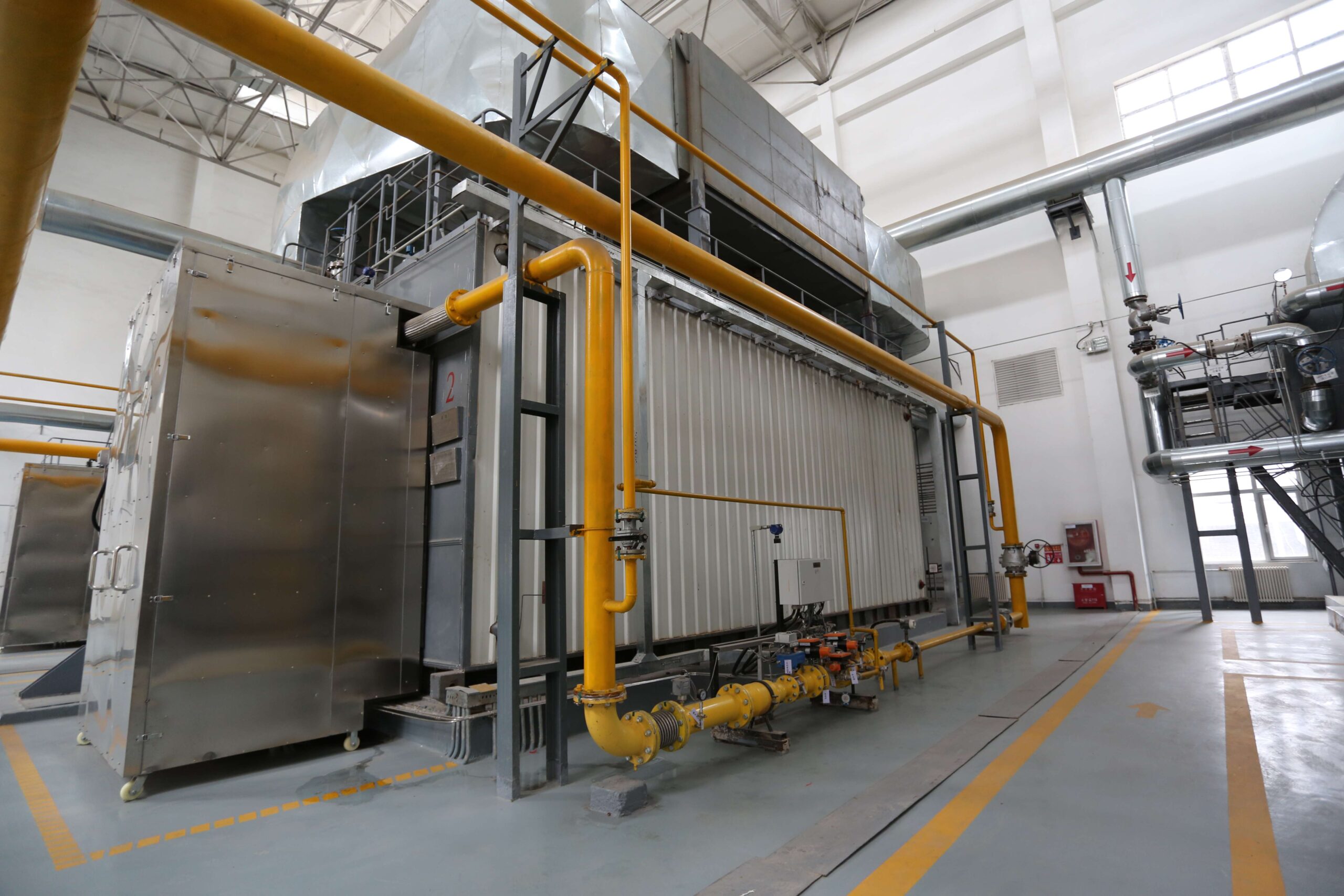
A power plant boiler may be designed for a specific rated output, but real operating conditions often make that target difficult to maintain. Fuel quality changes, air temperature rises, feedwater temperature drops, heat-transfer surfaces become fouled, fans lose margin, burners become unbalanced, water chemistry deteriorates, and control curves drift away from the original design. When these problems are ignored, the boiler may consume more fuel, fail to reach maximum continuous rating, produce unstable steam temperature, exceed emissions limits, or suffer tube overheating and unplanned shutdowns. The practical solution is to customize the power plant boiler as a complete performance system: combustion, heat transfer, draft, feedwater, fuel handling, controls, sootblowing, water treatment, materials, and maintenance access must all be engineered to protect both efficiency and rated steam output under real site conditions.
A power plant boiler can be customized to maintain efficiency and rated output by designing it around the actual fuel envelope, ambient conditions, feedwater quality, steam parameters, load profile, emissions limits, and site operating constraints. The manufacturer should optimize furnace size, burners, air and flue gas paths, heat-transfer surfaces, economizer, air preheater, fans, fuel feeding, blowdown, sootblowing, insulation, control logic, and online monitoring so the boiler can continuously deliver rated steam flow, pressure, temperature, and efficiency throughout normal operating conditions.
For power producers, EPC contractors, industrial plant owners, and utility operators, the key question is not only “Can this boiler reach rated output during a factory calculation?” The more important question is “Can this boiler maintain rated output and high efficiency after months of real operation, with real fuel, real water, real ambient temperature, real ash, real operators, and real load changes?” The following article explains how an experienced power plant boiler manufacturer customizes boiler design to protect long-term efficiency, stable steam generation, and maximum continuous rating.
A power plant boiler can maintain rated output only by increasing fuel input when steam production drops.False
Increasing fuel input without correcting combustion, heat transfer, draft, fouling, feedwater, and control problems can reduce efficiency, increase emissions, overheat tubes, and still fail to restore stable rated output.
Maintaining boiler efficiency and rated output requires integrated customization of combustion, heat transfer, fans, controls, fuel handling, water quality, sootblowing, and operating strategy.True
Boiler performance depends on the complete fuel-air-water-steam-flue gas system, so customization must address all major performance losses rather than a single component.
⚙️ What Does “Maintaining Efficiency and Rated Output” Really Mean?
Maintaining efficiency and rated output means the boiler can continuously produce the guaranteed steam flow at the specified steam pressure and steam temperature while consuming fuel close to the guaranteed rate and staying within safe operating limits. In power plant language, rated output is often connected with maximum continuous rating, or MCR. A boiler may be rated for 75 t/h, 130 t/h, 220 t/h, 480 t/h, 1,000 t/h, or higher steam generation, but this number is meaningful only when the design conditions are clearly defined. The supplier must state the fuel quality, feedwater temperature, ambient air temperature, excess air level, blowdown rate, steam pressure, steam temperature, auxiliary power condition, and emissions basis. Without these details, the rated output can become a marketing number instead of a reliable engineering guarantee.
Efficiency must also be defined carefully. Boiler thermal efficiency can be affected by dry flue gas loss, moisture in fuel, hydrogen in fuel, unburned carbon, radiation loss, blowdown loss, air leakage, high excess air, low feedwater temperature, fouling, and poor heat recovery. A boiler that reaches rated output by burning more fuel than expected is not truly maintaining performance. A boiler that keeps good efficiency at one load but becomes unstable during load changes is also not properly customized. A power plant boiler should be designed to maintain stable performance across the required operating range, such as 40–100% load, 50–100% load, or another agreed range depending on fuel type and combustion system.
From a manufacturer’s perspective, customization begins with a performance map. We define the rated operating point, normal operating point, minimum stable load, start-up mode, peak load requirement, seasonal ambient cases, fuel quality range, feedwater temperature range, and allowable emissions. Then we design each boiler subsystem so it has enough margin but not excessive oversizing. Too little margin causes derating, while too much oversizing can cause poor low-load control, high auxiliary power, unstable draft, low gas velocity, poor heat transfer, and unnecessary capital cost. The best customized power plant boiler is not simply larger; it is correctly balanced.
| 🎯 Performance target | What must be guaranteed | Main customization focus | Risk if ignored |
|---|---|---|---|
| Rated steam output | Required t/h of steam at specified pressure and temperature | Furnace, heat-transfer surface, fans, fuel system | Boiler cannot reach MCR |
| Boiler efficiency | Fuel-to-steam conversion performance | Economizer, air preheater, excess air, insulation | High fuel cost |
| Steam temperature stability | Superheated or reheated steam within design range | Superheater surface, attemperator, gas distribution | Turbine stress or process instability |
| Combustion stability | Safe flame and complete burnout | Burner, grate, CFB bed, air staging | Flameout, CO, unburned carbon |
| Draft stability | Safe furnace pressure and flue gas flow | FD fan, ID fan, ductwork, dampers | Furnace pressure trips |
| Emission compliance | NOx, SO₂, dust, CO, and other limits | Combustion tuning and flue gas treatment | Permit violation |
| Long-term reliability | Stable output after fouling and aging | Sootblowers, access, water treatment, materials | Frequent shutdowns |
🔥 How Should Combustion Be Customized to Protect Rated Output?
Combustion is the first major area of customization because the boiler cannot maintain rated output if the fuel cannot release heat completely, steadily, and safely. The combustion system must be designed according to the actual fuel envelope, not only the ideal design fuel. For coal, this means checking heating value, moisture, volatile matter, ash, grindability, ash fusion temperature, sulfur, and particle size. For biomass, the design must consider moisture fluctuation, bulk density, feeding behavior, alkali metals, chlorine, ash melting point, and seasonal storage. For natural gas or process gas, the supplier must consider heating value, Wobbe index, gas pressure, gas composition, inert content, hydrogen content, sulfur compounds, and supply stability. For fuel oil, viscosity, atomization temperature, sulfur, water content, and ash must be reviewed. A customized boiler uses this data to select the correct burner, grate, fluidized bed, pulverizer, fuel feeder, air distribution, furnace volume, and safety logic.
If the fuel has low heating value, the boiler may need higher fuel flow capacity, larger fuel feeders, stronger conveying systems, larger gas ducts, higher flue gas handling capacity, and more residence time. If the fuel has high moisture, the furnace must provide enough drying and ignition energy; otherwise, the flame temperature drops and rated output becomes difficult to maintain. If the fuel has high ash, the boiler needs stronger sootblowing, larger ash handling capacity, erosion protection, and heat-transfer surfaces designed for fouling resistance. If the fuel has low volatile matter, the burner must provide better ignition support and flame stabilization. If the fuel varies frequently, the control system must respond with adaptive air-fuel ratio, oxygen trim, CO monitoring, feeder correction, and safe load limitation.
A common mistake is assuming that rated output can always be recovered by increasing fuel flow. In reality, when combustion is limited by oxygen, mixing, residence time, ash fouling, or fan capacity, adding fuel can make the problem worse. It may increase CO, unburned carbon, smoke, slagging, furnace exit gas temperature, and tube overheating. Correct customization protects rated output by ensuring that every kilogram of fuel receives enough oxygen, mixing energy, burning time, and heat-transfer opportunity. For pulverized coal boilers, this may mean optimized coal fineness, balanced coal pipes, low-NOx burners, overfire air, and mill capacity margin. For biomass grate boilers, it may mean larger grate area, better fuel spreading, staged undergrate air, drying zones, and variable grate speed. For CFB boilers, it may mean proper bed temperature control, fuel particle size control, cyclone efficiency, limestone feeding, and ash recirculation. For gas-fired boilers, it may mean burner turndown, fuel pressure regulation, Wobbe compensation, and flue gas recirculation.
🌬️ How Should Fans, Draft, and Airflow Be Customized?
Fans and draft systems are critical to maintaining rated output because the boiler needs the correct air mass flow and flue gas removal capacity at full load. Even if the furnace and burners are well designed, the boiler will derate if the forced draft fan, primary air fan, secondary air fan, induced draft fan, air heater, ducts, dampers, or stack cannot support the required flow and pressure. The customization must consider fuel type, excess air requirement, ambient temperature, altitude, air density, flue gas volume, air heater leakage, duct pressure loss, dust collector pressure drop, desulfurization pressure drop, SCR pressure drop, baghouse pressure drop, and fouling allowance. Rated output is not protected by selecting a fan only for clean, new, ideal conditions. The fan must still have margin after real fouling, seasonal temperature changes, and normal equipment aging.
For coal-fired boilers, primary air fan capacity must support coal drying and transport from mills to burners. If the primary air system is undersized, mills cannot deliver stable coal flow, and the boiler may lose output. For biomass boilers, air distribution must provide drying, ignition, burnout, and grate cooling. For CFB boilers, the air system must maintain fluidization, bed temperature, and circulation. For gas and oil boilers, combustion air control must remain precise across load changes to avoid high excess air or oxygen deficiency. In all cases, the induced draft fan must maintain furnace pressure within a safe range. If the ID fan lacks margin, the furnace may become pressurized at high load, causing safety risks and load limitation. If the FD fan is oversized without proper VFD or damper control, low-load operation may become inefficient and unstable.
| 🌬️ Air and draft component | Customization method | Efficiency benefit | Rated output benefit |
|---|---|---|---|
| FD fan | Select for actual air demand, density, pressure loss, and margin | Avoids excessive excess air and auxiliary power | Supplies oxygen for MCR |
| ID fan | Select for full flue gas volume and downstream equipment pressure drop | Prevents inefficient draft operation | Maintains furnace pressure at rated load |
| Primary air system | Match fuel drying, milling, and conveying requirements | Improves burnout and reduces unburned carbon | Stabilizes solid fuel delivery |
| Air preheater | Optimize heat recovery and pressure drop | Lowers stack temperature and fuel consumption | Provides hot combustion air |
| Ductwork | Use proper velocity and smooth transitions | Reduces fan power | Prevents airflow bottlenecks |
| Dampers/VFDs | Provide accurate control across load range | Reduces throttling loss | Improves load response |
| Windbox/registers | Balance burner air distribution | Reduces CO and excess air | Supports stable full-load combustion |
♨️ How Should Heat-Transfer Surfaces Be Customized?
Heat-transfer customization is essential because rated output is not only a combustion problem; it is also a heat absorption problem. A boiler must transfer enough heat from combustion gas to water and steam through the furnace water walls, evaporator, superheater, reheater, economizer, and air preheater. If the heating surface is too small, fouled, poorly arranged, or mismatched to the fuel, the boiler may fail to produce rated steam flow or may produce steam at unstable temperature. If the surface is excessive or poorly distributed, steam temperature may be too low at partial load, gas velocity may be poor, or tube metal temperatures may become difficult to control. Customization must balance radiant heat absorption in the furnace with convective heat absorption in downstream passes.
The fuel strongly affects heat-transfer design. High-ash coal, biomass, and waste-derived fuels require larger spacing, accessible cleaning zones, sootblower coverage, erosion allowance, and lower gas velocities in selected areas. Natural gas produces cleaner flue gas and allows more compact heat-transfer surfaces, but NOx control and flame temperature still affect furnace design. High-moisture fuels produce more water vapor in flue gas, increasing stack loss and changing heat recovery economics. High-sulfur fuels require careful low-temperature surface design to avoid acid dew point corrosion. High-chlorine biomass may require lower superheater metal temperature, special alloys, or protective arrangements. For CFB boilers, the external heat exchanger, cyclone, loop seal, and bed temperature control may be customized to maintain steam temperature and output under variable fuel conditions.
To maintain rated output over time, the boiler should be designed with fouling allowance. A clean boiler may reach rated output easily during commissioning, but after months of operation, ash deposits reduce heat transfer and increase flue gas pressure drop. The manufacturer must anticipate this by selecting proper tube spacing, sootblower type, sootblower location, inspection doors, ash hoppers, access platforms, and online temperature monitoring. For power plant boilers with superheated steam, attemperator capacity must also be customized. If steam temperature rises at high load due to fouling or fuel change, spray water must control it without excessive efficiency loss or turbine risk. If steam temperature is too low at partial load, burner tilt, gas recirculation, flue gas dampers, or surface distribution may need adjustment. A well-customized boiler maintains both steam quantity and steam quality.
💧 How Do Feedwater, Blowdown, and Water Chemistry Affect Efficiency and Output?
Feedwater and boiler water chemistry directly influence efficiency and rated output because scale, corrosion, and blowdown losses change the boiler’s ability to absorb heat. Even a thin deposit layer on water-wall tubes or evaporator tubes can reduce heat transfer and increase tube metal temperature. Over time, deposits can cause under-deposit corrosion, hydrogen damage, caustic attack, or tube rupture. Poor feedwater quality may also cause foaming and carryover, contaminating steam and reducing turbine reliability. Excessive blowdown wastes heat and treated water, while insufficient blowdown concentrates impurities and creates scale risk. Therefore, a boiler customized to maintain efficiency must include a feedwater treatment and blowdown strategy matched to the local water source, boiler pressure, condensate return rate, and steam purity requirement.
The feedwater system should include suitable pretreatment, demineralization, deaeration, chemical dosing, condensate polishing when needed, and online monitoring. For medium-pressure and high-pressure power boilers, oxygen, pH, conductivity, silica, sodium, iron, and hardness control become especially important. The economizer should be protected from oxygen corrosion and flow instability. The deaerator should be sized for full-load feedwater flow and designed for stable oxygen removal. Chemical dosing should be controlled, not guessed. Blowdown should be calculated according to feedwater quality and boiler water limits, and continuous blowdown heat recovery should be considered for efficiency. Where makeup water is expensive or difficult to treat, condensate recovery becomes a major efficiency measure because hot condensate saves both water and fuel.
| 💧 Water-side factor | How it reduces performance | Customization response |
|---|---|---|
| Scale | Insulates tubes and reduces heat transfer | Demineralized feedwater, hardness monitoring, chemical cleaning |
| Dissolved oxygen | Causes pitting corrosion | Deaerator, oxygen scavenger, sealed condensate system |
| High silica | Risks steam contamination and turbine deposits | Strong polishing, silica monitoring, blowdown control |
| Excessive blowdown | Wastes hot water and fuel energy | Automatic blowdown and heat recovery |
| Poor condensate return | Requires more cold makeup water | Condensate recovery and polishing |
| Low feedwater temperature | Increases fuel demand | Feedwater heaters, economizer optimization |
| Carryover | Contaminates steam and turbine | Drum internals, water level control, chemistry control |
🧹 How Should Fouling, Slagging, and Sootblowing Be Customized?
Long-term rated output is often lost because of fouling, not because the boiler was undersized. Ash, soot, slag, alkali deposits, oil ash, and corrosion products gradually reduce heat transfer, increase flue gas temperature, raise draft loss, and force the boiler to burn more fuel for the same steam output. In severe cases, deposits block gas passages, distort flame patterns, overheat tubes, or cause clinker formation. A customized boiler must therefore include a deposit-control strategy from the beginning. This strategy depends on fuel ash content, ash fusion temperature, alkali and chlorine level, sulfur content, furnace temperature, gas velocity, tube spacing, and operating load.
Sootblowers should not be installed randomly. Furnace wall blowers, long retractable sootblowers, rotary sootblowers, acoustic cleaning, steam sootblowers, air sootblowers, and water cannons each have suitable applications. Coal-fired boilers often need furnace and convection-pass sootblowing. Biomass boilers may need special attention to sticky alkali deposits and low ash melting temperature. Oil-fired boilers may need cleaning for sticky vanadium and sodium deposits. Waste-fuel boilers may require aggressive online cleaning and corrosion monitoring. The sootblowing sequence should be integrated with steam temperature control, draft control, and load operation. Excessive sootblowing wastes steam and can erode tubes, while insufficient sootblowing reduces efficiency and output. A customized sootblowing system uses operating data such as flue gas temperature rise, pressure drop, steam temperature deviation, and heat-transfer performance to decide cleaning frequency.
Good mechanical design also matters. Wider tube spacing, lower gas velocity, hopper geometry, ash discharge reliability, inspection access, online cameras, temperature monitoring, and maintenance platforms help operators manage fouling before it becomes derating. If the boiler burns high-slagging fuel, the furnace should be designed to avoid excessive local heat release. Burner arrangement, air staging, furnace height, wall heat flux, and furnace exit gas temperature must be coordinated. For CFB boilers, bed temperature and ash circulation must be controlled to prevent agglomeration. For grate boilers, ash discharge and grate cooling must prevent clinker accumulation. Maintaining rated output is not a single commissioning event; it is a continuous cleanliness and heat-transfer management process.
🧠 How Should Automation and Performance Monitoring Be Customized?
A customized power plant boiler should include automation that protects efficiency and rated output under changing conditions. Basic control loops are not enough when fuel, ambient air, load demand, fouling, and water chemistry change over time. The control system should monitor steam flow, steam pressure, steam temperature, feedwater flow, drum level, furnace pressure, oxygen, CO, fuel flow, air flow, fan speed, damper position, flue gas temperature, air heater outlet temperature, economizer outlet temperature, boiler water conductivity, and key emissions. For solid fuel boilers, the system should also monitor feeder speed, mill load, primary air flow, bed temperature, grate speed, or fuel bunker level depending on boiler type.
Efficiency monitoring should be built into the operating philosophy. Operators need to know whether efficiency loss comes from high stack temperature, high excess air, unburned carbon, poor feedwater temperature, blowdown loss, air heater leakage, fouling, or fuel quality. Without diagnostic visibility, the common response is to add more air or more fuel, which may reduce efficiency further. A good control system provides trend data and alarms that point to the cause. For example, rising stack temperature with stable oxygen may indicate fouling or air heater performance loss. Rising oxygen with falling CO may indicate excessive air and fan energy waste. Rising CO with normal oxygen may indicate poor burner mixing or fuel distribution. Increasing ID fan load may indicate fouling in the gas path or dust collector. Lower feedwater temperature may indicate feedwater heater problems. Increasing blowdown rate may indicate makeup water quality problems.
| 📊 Monitoring signal | What it may reveal | Corrective action |
|---|---|---|
| Stack temperature rising | Fouling, air heater leakage, reduced heat recovery | Inspect surfaces, adjust sootblowing, check air heater |
| Excess O₂ too high | Too much air, heat loss, fan power waste | Tune air-fuel ratio and burner balance |
| CO rising | Incomplete combustion or poor mixing | Check burners, air distribution, fuel quality |
| Steam temperature unstable | Heat absorption shift or control issue | Tune attemperator, sootblowing, burner tilt |
| Furnace pressure fluctuation | Draft control or ID fan limitation | Tune draft loop and inspect gas path |
| Feedwater temperature low | Heater or condensate recovery issue | Restore heater performance |
| Blowdown rate high | Poor water quality or excessive concentration | Improve treatment and automatic blowdown |
| Fan current increasing | Fouling or airflow restriction | Inspect ducts, air heater, dust collector |
🧱 How Should Materials, Insulation, and Mechanical Layout Support Efficiency?
Efficiency and rated output are also influenced by material selection, insulation, casing tightness, refractory design, expansion design, and maintenance accessibility. Heat loss through casing, poor insulation, damaged refractory, air leakage, and flue gas leakage may seem small compared with combustion losses, but over years of operation they become real fuel cost. In large boilers, air leakage into the furnace or flue gas path can increase ID fan load, distort oxygen readings, lower efficiency, and reduce emission control performance. Poor sealing around inspection doors, expansion joints, air heater seals, duct flanges, ash hoppers, and sootblower openings can gradually reduce performance. A customized boiler should use reliable sealing design and provide access for inspection and replacement.
Materials must match temperature, pressure, corrosion risk, and ash behavior. Superheater and reheater materials should be selected according to steam temperature and fuel-side corrosion. Economizer tubes should resist oxygen corrosion and erosion. Air preheater materials should consider acid dew point risk when burning sulfur-containing fuels. Refractory should match thermal shock, slagging, abrasion, and start-stop frequency. Tube shields, wear pads, corrosion-resistant cladding, and erosion-resistant linings may be justified in high-ash or biomass applications. Insulation thickness should be selected according to surface temperature limits, heat loss targets, personnel protection, and outdoor climate. In cold regions, freeze protection for water lines, instruments, and chemical systems may be necessary to prevent forced outages.
Mechanical layout also affects maintainability. A boiler that is difficult to clean will slowly lose efficiency. A boiler with poor access to burners, sootblowers, ash hoppers, dampers, fans, analyzers, and sampling points will not be maintained properly. Customization should include inspection doors, platforms, lifting beams, removable panels, adequate lighting, safe walkways, drain points, vent points, and maintenance space. These details do not always appear in simple efficiency calculations, but they determine whether the boiler can actually maintain rated output after years of operation.
📈 Example Performance Customization Map
The following example shows how a manufacturer may convert common performance risks into design actions. The values are illustrative and should be finalized through project-specific thermal calculation, combustion calculation, fan selection, fuel analysis, and performance testing.
| 🔧 Performance risk | Typical symptom | Engineering diagnosis | Customization action |
|---|---|---|---|
| Fuel heating value lower than expected | Boiler cannot reach steam flow | Fuel input system reaches limit | Increase feeder/burner capacity and define fuel envelope |
| Excess air too high | Fuel consumption rises | Air-fuel curve too conservative or air leakage | Burner tuning, oxygen trim, casing sealing |
| Stack temperature too high | Efficiency drops | Fouling or insufficient heat recovery | Add/optimize economizer, air preheater, sootblowing |
| ID fan near full load | MCR limited | Gas path pressure drop too high | Larger fan, VFD, duct improvement, fouling control |
| Steam temperature too high | Attemperator overuse | Heat absorption shifted downstream | Surface redistribution, sootblowing, control tuning |
| Steam temperature too low | Turbine performance loss | Insufficient superheater absorption | Adjust surface, gas flow, burner pattern |
| CO high at full load | Incomplete combustion | Poor mixing, low air, fuel imbalance | Burner redesign, air staging, fuel balancing |
| High unburned carbon | Low combustion efficiency | Poor coal fineness or residence time | Mill upgrade, burner tuning, furnace review |
| Frequent slagging | Furnace blockage and derating | Low ash fusion temperature or high heat flux | Lower heat release, adjust air, add cleaning |
| High blowdown loss | Fuel and water waste | Makeup quality or control problem | Improve water treatment and blowdown recovery |
✅ Practical Manufacturer Checklist for Maintaining Efficiency and Rated Output
A serious boiler customization project should include a detailed checklist before final design. First, the supplier should confirm the design steam capacity, rated pressure, rated temperature, feedwater temperature, load range, start-stop frequency, and operating mode. Second, the fuel specification should include design fuel, worst fuel, alternative fuel, and expected variation. Third, the combustion system should be selected and sized for complete burnout and stable operation. Fourth, the air and draft system should be calculated with real pressure losses and margin. Fifth, heat-transfer surfaces should be arranged for both clean and fouled conditions. Sixth, the water treatment and blowdown system should be matched to boiler pressure and local water quality. Seventh, emission control should be coordinated with combustion design. Eighth, the control system should include performance monitoring and safe operating limits. Ninth, the mechanical design should provide cleaning access, insulation, sealing, and maintenance convenience. Finally, the performance guarantee should be linked to defined operating conditions so the owner understands exactly when rated output and efficiency are guaranteed.
| ✅ Checklist item | Key question | Required customization result |
|---|---|---|
| Steam rating | What output must be guaranteed? | Clear MCR and normal-load basis |
| Fuel envelope | What fuel will actually be burned? | Design fuel, check fuel, worst fuel |
| Combustion system | Can fuel burn completely at all required loads? | Burner/grate/CFB/mill design |
| Air and draft | Can fans support rated load with margin? | Correct FD/ID/PA fan sizing |
| Heat transfer | Can surfaces absorb heat when clean and fouled? | Optimized furnace, SH, ECO, APH |
| Water quality | Can scale and corrosion be prevented? | Treatment, dosing, blowdown, monitoring |
| Emissions | Can limits be met without efficiency loss? | Integrated combustion and flue gas cleaning |
| Controls | Can operators detect performance loss early? | Online monitoring and diagnostic trends |
| Maintenance | Can fouling and wear be managed easily? | Access, sootblowers, platforms, spare parts |
| Guarantee | Are conditions clearly defined? | Transparent performance contract |
🚀 Final Summary
A power plant boiler can be customized to maintain efficiency and rated output only when the manufacturer treats the boiler as a complete operating system rather than a single pressure vessel. The key is to design around real fuel quality, ambient conditions, water source, feedwater temperature, load profile, emissions requirements, fouling tendency, fan margin, heat-transfer balance, and operator capability. The most important customization measures include optimized combustion, properly sized FD and ID fans, balanced air distribution, efficient economizer and air preheater design, suitable heating surface arrangement, reliable sootblowing, strict water chemistry control, automatic blowdown, durable materials, strong insulation, low air leakage, performance monitoring, and intelligent control logic. When these elements are integrated correctly, the boiler can maintain rated steam output, stable steam temperature, high thermal efficiency, lower fuel consumption, safer operation, and longer service life.
How Can a Power Plant Boiler Be Customized to Reduce Scaling, Corrosion, Slagging, and Emissions?
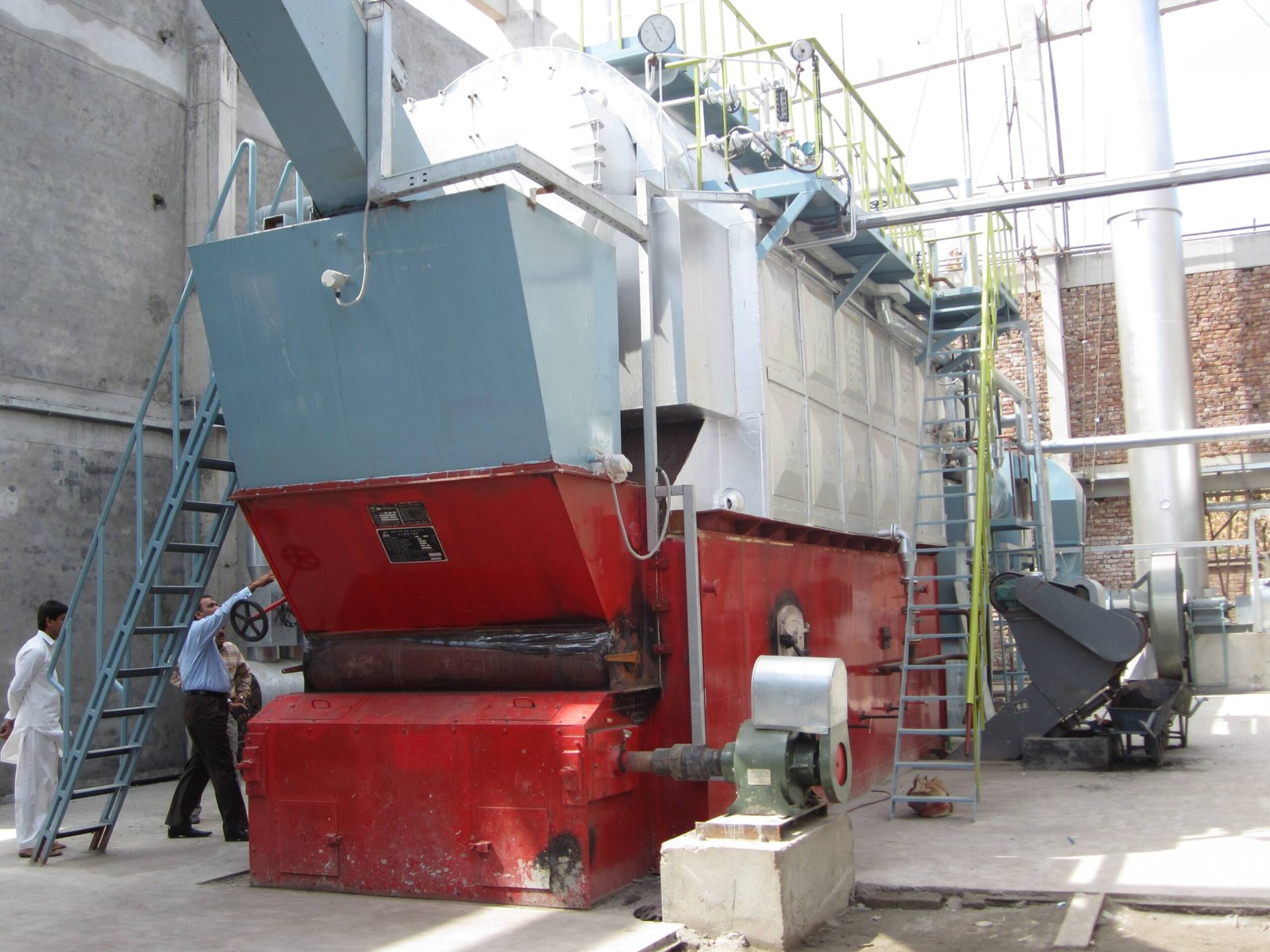
Scaling, corrosion, slagging, and emissions are four of the most expensive problems in power plant boiler operation. Scaling reduces heat transfer and overheats tubes; corrosion weakens pressure parts and piping; slagging blocks furnace heat absorption and causes forced shutdowns; emissions expose the plant to compliance risk, public pressure, fuel penalties, and costly retrofits. Many boiler owners try to solve these problems separately after they appear, but the better solution is to customize the power plant boiler from the beginning so the water system, combustion system, materials, furnace geometry, sootblowing, ash handling, flue gas treatment, and control logic work together as one protective design.
A power plant boiler can be customized to reduce scaling, corrosion, slagging, and emissions by designing the entire boiler system around the actual water quality, fuel characteristics, operating load profile, steam parameters, ash behavior, and emission limits. The main customization measures include advanced feedwater treatment, deaeration, chemical dosing, blowdown control, corrosion-resistant materials, optimized furnace temperature, low-slagging combustion design, sootblowers, ash removal systems, low-NOx burners, staged combustion, desulfurization, dust collection, online analyzers, and intelligent boiler controls.
For power plant owners, EPC contractors, utility operators, industrial steam users, biomass developers, and coal-fired boiler plants, this topic is not only about maintenance. It is about long-term boiler availability, fuel efficiency, tube life, turbine protection, environmental compliance, and lifecycle cost. As a boiler manufacturer and supplier, we customize boilers by first identifying the root causes of these four risks, then engineering prevention into the equipment instead of relying only on operator correction after damage has already started.
Scaling, corrosion, slagging, and emissions can be solved by one universal boiler design regardless of fuel and water quality.False
These problems depend strongly on local water chemistry, fuel ash composition, sulfur, chlorine, operating pressure, combustion temperature, excess air, and emission requirements, so boiler customization must be project-specific.
Reducing scaling, corrosion, slagging, and emissions requires coordination between boiler pressure parts, water treatment, combustion equipment, sootblowing, ash handling, flue gas treatment, and control systems.True
These problems are interconnected, so an effective boiler customization plan must treat the boiler as a complete water-fuel-air-steam-flue gas system.
🔎 Why Should These Four Boiler Problems Be Solved Together?
Scaling, corrosion, slagging, and emissions are often discussed as separate technical topics, but in real power plant boiler operation they are closely connected. Poor water treatment creates scale and corrosion on the water side, reducing heat transfer and increasing tube metal temperature. Higher tube temperature can accelerate material damage and increase the probability of leaks. Fuel with high ash, low ash fusion temperature, high sulfur, high chlorine, or high alkali content can create slagging and fouling on the fire side. These deposits also reduce heat transfer, raise flue gas temperature, increase draft loss, and force the boiler to burn more fuel for the same steam output. More fuel consumption usually means higher CO₂ output, higher flue gas volume, higher dust loading, and more stress on emission control equipment. At the same time, combustion settings used to reduce one pollutant may increase another. For example, lowering excess air too much may reduce some thermal losses but increase CO and unburned carbon. Raising excess air may reduce CO but increase stack heat loss and sometimes affect NOx. This is why a customized power plant boiler must be designed as an integrated system rather than a collection of independent accessories.
From a manufacturer’s perspective, the starting point is a project-specific risk map. We need to know the raw water analysis, feedwater target, boiler pressure, steam temperature, condensate return rate, fuel analysis, ash composition, ash fusion behavior, sulfur content, chlorine content, nitrogen content, moisture, heating value, particle size, local emission limits, operating load range, start-stop frequency, and expected maintenance capability. After this, the boiler can be customized through water-side protection, combustion-side optimization, material selection, furnace layout, heating surface arrangement, cleaning equipment, emission control, and online monitoring. A standard boiler may run acceptably under ideal conditions, but a customized boiler is designed to resist the real site conditions that cause scale, corrosion, slag, and excessive emissions.
| ⚠️ Problem | Main source | Typical symptom | Boiler customization response |
|---|---|---|---|
| Scaling | Hardness, silica, poor feedwater, excessive concentration | Tube overheating, lower efficiency, high stack temperature | Demineralization, RO, softening, blowdown control, chemical dosing |
| Corrosion | Oxygen, low/high pH, chlorides, CO₂, acid gases, deposits | Pitting, wall thinning, leaks, under-deposit attack | Deaerator, pH control, oxygen scavenger, material upgrades |
| Slagging | Low ash fusion temperature, high furnace temperature, ash chemistry | Clinker, blocked furnace, fouled tubes, high draft loss | Furnace redesign, air staging, sootblowers, fuel blending |
| Emissions | Fuel sulfur/nitrogen/ash, poor combustion, high excess air or low oxygen | NOx, SO₂, CO, dust, smoke, high CO₂ per kWh | Low-NOx burners, staged combustion, FGD, dust collector, O₂/CO control |
💧 How Can the Boiler Be Customized to Reduce Scaling?
Scaling is a water-side heat-transfer problem caused by dissolved minerals, silica, iron, corrosion products, and suspended solids depositing on tube surfaces. The most common scale-forming substances include calcium carbonate, calcium sulfate, magnesium compounds, silica deposits, iron oxide, copper oxide, and phosphate-related deposits when chemical control is poor. In a power plant boiler, scale is dangerous because it acts as insulation. The flame side continues to deliver heat, but the water side cannot remove that heat efficiently. Tube metal temperature rises, and the tube may suffer creep damage, bulging, hydrogen damage, or rupture. Even thin scale can reduce boiler efficiency because more fuel is required to generate the same steam output. Therefore, customization to reduce scaling must begin before water enters the boiler.
The first measure is raw water analysis and feedwater system design. If the local water source contains hardness, silica, alkalinity, iron, manganese, suspended solids, organic matter, or high conductivity, the boiler package should include proper pretreatment. Depending on water quality and boiler pressure, this may include clarification, multimedia filtration, activated carbon, ultrafiltration, softening, reverse osmosis, electrodeionization, mixed-bed ion exchange, condensate polishing, and high-purity storage. Low-pressure boilers may need less strict water treatment, but medium-pressure and high-pressure power plant boilers require much cleaner feedwater because impurities concentrate rapidly and steam purity becomes more important. For high-pressure turbine applications, silica and sodium control are especially important because carryover can contaminate superheaters and turbines.
The second measure is blowdown customization. Blowdown removes concentrated boiler water and prevents dissolved solids from rising above safe limits. Continuous blowdown is usually used for stable dissolved solids control, while intermittent bottom blowdown may remove sludge in drum boilers. However, blowdown wastes hot water and energy, so it should be optimized rather than excessive. A customized power plant boiler should include conductivity-based automatic blowdown, blowdown flash heat recovery, sample coolers, and clear operating limits for boiler water conductivity, silica, phosphate, pH, and suspended solids. If the raw water is difficult or expensive to treat, improving treatment quality may reduce blowdown loss and improve efficiency.
The third measure is internal water chemistry control. Depending on boiler pressure and design philosophy, the boiler may use coordinated phosphate treatment, all-volatile treatment, oxygenated treatment, or other chemistry programs. The correct program depends on metallurgy, pressure, steam purity requirements, condensate return, and water treatment quality. Chemical dosing should not be manual guesswork. The boiler should include dosing pumps, standby pumps, calibration columns, injection quills, chemical tanks, flow-paced control, and online analyzers. Sampling points should be arranged at raw water, treated water, deaerator outlet, feedwater, boiler water, saturated steam, superheated steam, condensate, and blowdown. Scale prevention is not achieved by one chemical; it is achieved by stable water chemistry, reliable monitoring, operator discipline, and equipment designed for the real water source.
| 💧 Scaling risk factor | What it causes | Customization measure |
|---|---|---|
| High hardness | Calcium/magnesium scale | Softener, RO, demineralizer, hardness alarm |
| High silica | Boiler and turbine deposits | Strong polishing, silica analyzer, blowdown limit |
| Iron oxide | Porous deposits and under-deposit corrosion | Condensate polishing, corrosion control, filtration |
| High TDS | Foaming, carryover, deposits | Automatic continuous blowdown |
| Poor pretreatment | Suspended solids entering boiler | Clarifier, filter, UF, cartridge filter |
| Low condensate return quality | Contaminated feedwater | Condensate monitoring and automatic rejection |
| Excessive concentration | Scale and unstable chemistry | Blowdown control and water balance optimization |
🛡️ How Can the Boiler Be Customized to Reduce Corrosion?
Corrosion is the gradual destruction of boiler metal by chemical or electrochemical reaction. It may appear as oxygen pitting, carbonic acid corrosion, caustic gouging, acid dew point corrosion, under-deposit corrosion, flow-accelerated corrosion, chloride pitting, stress corrosion cracking, or high-temperature fuel-side corrosion. Because corrosion can attack small areas deeply, it may cause sudden leaks even when the general tube surface appears acceptable. Power plant boiler customization must therefore protect both the water side and the fire side.
Water-side corrosion control begins with dissolved oxygen removal. Oxygen is one of the most aggressive causes of pitting in feedwater systems and economizers. A customized boiler system should include a properly sized deaerator, stable deaerator pressure, adequate venting, feedwater storage, oxygen scavenger dosing where appropriate, and online dissolved oxygen monitoring. The feedwater system should prevent air ingress through leaking pump seals, open tanks, poor condensate return design, and negative-pressure sections. For high-pressure boilers, oxygen control must be more precise because small deviations can damage economizers, feedwater heaters, and boiler tubes.
pH control is also essential. If pH is too low, acidic corrosion may occur. If pH is too high or caustic concentrates under deposits, caustic attack can occur. The correct pH range depends on boiler pressure, metallurgy, and treatment program. Condensate systems may need neutralizing amines or other pH control chemicals to reduce carbonic acid corrosion, especially where long steam and condensate return lines exist. If the plant has process condensate return, the boiler should include contamination detection for oil, hardness, conductivity, iron, and organic chemicals. Contaminated condensate should be automatically diverted instead of returned to the boiler.
Fire-side corrosion depends strongly on fuel. High-sulfur coal or oil can cause low-temperature acid dew point corrosion in economizers, air preheaters, stacks, and ducts if metal temperatures fall below safe limits. High-chlorine biomass, waste fuel, or certain agricultural residues can cause severe superheater corrosion because alkali chlorides form sticky deposits and corrosive compounds at high temperature. For such fuels, customization may include lower final steam temperature, corrosion-resistant superheater materials, tube cladding, protective coatings, fuel blending, optimized sootblowing, and careful furnace temperature control. Air preheater design may require enamel elements, corrosion-resistant baskets, steam coil air heaters, or controlled flue gas outlet temperature. The boiler should also include inspection ports and thickness monitoring points in high-risk areas so corrosion can be detected early.
| 🛡️ Corrosion type | Common cause | High-risk area | Customization solution |
|---|---|---|---|
| Oxygen pitting | Dissolved oxygen in feedwater | Economizer, feedwater lines | Deaerator, oxygen scavenger, DO analyzer |
| Carbonic acid corrosion | CO₂ in condensate | Condensate return lines | pH control, amine dosing, condensate monitoring |
| Caustic corrosion | Local caustic concentration | Water-wall tubes under deposits | Proper phosphate/pH control, deposit prevention |
| Under-deposit corrosion | Scale, sludge, iron oxide deposits | Furnace tubes, evaporator tubes | Clean feedwater, chemical cleaning, blowdown |
| Acid dew point corrosion | Sulfur compounds and low metal temperature | Air preheater, stack, economizer outlet | Temperature control, material selection |
| Chlorine corrosion | Biomass/waste fuel with chlorine and alkali | Superheater, reheater | Fuel blending, lower metal temperature, alloy upgrade |
| Flow-accelerated corrosion | High velocity and unstable chemistry | Feedwater lines, elbows | Velocity control, pH control, material review |
🔥 How Can the Boiler Be Customized to Reduce Slagging?
Slagging is the formation of molten or partially molten ash deposits on furnace walls, burners, superheaters, grates, fluidized beds, and other high-temperature areas. It is especially common when fuel ash has a low fusion temperature or contains components that become sticky at furnace operating temperatures. Slagging reduces heat absorption, blocks gas flow, distorts flames, increases draft loss, damages refractory, causes clinker formation, and can force the boiler to shut down for cleaning. A customized anti-slagging boiler design starts with fuel and ash analysis. The supplier should know ash content, ash fusion temperature, base-to-acid ratio, alkali metals, iron, calcium, sodium, potassium, chlorine, sulfur, and mineral distribution. For biomass, alkali and chlorine are especially important. For coal, ash fusion temperature, iron, sulfur, and mineral composition matter. For CFB boilers, bed material behavior and agglomeration tendency must be evaluated.
Furnace design is the first anti-slagging tool. If the furnace heat release rate is too high, local temperatures may exceed the ash softening point, causing sticky deposits. Therefore, the boiler may need larger furnace volume, lower burner zone heat flux, better air staging, controlled excess air, optimized burner spacing, and proper furnace exit gas temperature. In pulverized coal boilers, burner tilt, low-NOx staging, overfire air distribution, coal fineness, and burner balancing must be coordinated. Poor burner balance can create hot zones that slag even when average furnace temperature appears acceptable. In grate boilers, fuel bed thickness, grate speed, undergrate air distribution, and ash discharge must be customized to prevent clinker. In CFB boilers, bed temperature control is critical; excessive bed temperature can cause ash agglomeration and defluidization.
Sootblowing and online cleaning are the second anti-slagging tool. The boiler should include sootblowers selected for the deposit type and location. Furnace water wall blowers, long retractable sootblowers, rotary sootblowers, acoustic cleaners, water cannons, and pulse cleaning systems may be selected depending on boiler type. Sootblower location should be based on predicted deposit zones, not simply standard spacing. The control system should monitor flue gas temperature, draft loss, furnace exit gas temperature, superheater temperature, and heat-transfer trends to determine cleaning frequency. Over-cleaning wastes steam and may erode tubes; under-cleaning allows deposits to grow.
Fuel management is the third anti-slagging tool. If a plant uses multiple coal sources, biomass residues, or waste-derived fuel, blending may reduce slagging risk. Fuel preparation should control particle size, moisture, metal contamination, stones, and oversized pieces. For biomass with high alkali or chlorine, blending with lower-risk fuel may protect superheaters. For coal with low ash fusion temperature, the boiler may need conservative firing temperature and additional cleaning capacity. Slagging prevention is therefore not one device; it is a complete design philosophy linking fuel specification, furnace geometry, combustion air, ash chemistry, sootblowing, and operator monitoring.
| 🔥 Slagging driver | Boiler effect | Customization response |
|---|---|---|
| Low ash fusion temperature | Molten deposits on furnace walls | Lower heat release rate, larger furnace, temperature control |
| High alkali biomass ash | Sticky deposits and fouling | Fuel blending, lower steam temperature, cleaning system |
| Poor burner balance | Local hot spots | Burner tuning, air balancing, flame monitoring |
| High furnace exit gas temperature | Superheater fouling and slagging | Furnace geometry and heat absorption adjustment |
| Wet or uneven fuel | Unstable combustion and clinker | Fuel drying, screening, feeding control |
| CFB bed overheating | Bed agglomeration | Bed temperature control, ash discharge, air staging |
| Weak sootblowing | Deposit accumulation | Proper sootblower type, location, and sequence |
🌫️ How Can the Boiler Be Customized to Reduce Emissions?
Emission reduction begins with combustion design, not only with downstream flue gas treatment. The major emissions from power plant boilers may include NOx, SO₂, particulate matter, CO, CO₂, acid gases, mercury, volatile organic compounds, ammonia slip, and trace pollutants depending on fuel. A customized low-emission boiler first reduces pollutant formation in the furnace, then removes remaining pollutants through flue gas treatment. This approach is more efficient than relying only on large downstream equipment.
NOx reduction can be achieved through low-NOx burners, staged combustion, overfire air, flue gas recirculation, optimized excess air, burner balancing, and furnace temperature control. However, NOx control must not sacrifice complete combustion. If the furnace is made too oxygen-lean, CO and unburned carbon may increase. Therefore, the boiler should include oxygen monitoring, CO monitoring, burner balancing, and control logic that maintains both low NOx and low CO. For CFB boilers, relatively uniform bed temperature can help control NOx formation, and staged air distribution can further reduce emissions. For gas-fired boilers, low-NOx burners and flue gas recirculation may be selected depending on emission requirements. For biomass and waste-fuel boilers, NOx control must consider fuel nitrogen and variable moisture.
SO₂ reduction depends mainly on fuel sulfur and desulfurization strategy. For CFB boilers, limestone can be injected into the furnace to capture sulfur. For pulverized coal or oil-fired boilers, downstream flue gas desulfurization may be needed. The boiler design should reserve space, pressure drop margin, duct arrangement, and control interfaces for desulfurization equipment. If the plant burns high-sulfur fuel, the air preheater and low-temperature surfaces must also be protected from acid corrosion.
Particulate emissions depend on ash content, combustion completeness, and dust collection. High-ash coal, biomass, and waste fuels require robust particulate control such as electrostatic precipitators, baghouses, cyclones, or combined systems. The dust collector must be sized for maximum ash loading and flue gas volume, not only average conditions. The boiler should also reduce unburned carbon through proper combustion, because high carbon in fly ash can affect ash reuse and increase losses. CO emissions are controlled by adequate oxygen, good mixing, sufficient residence time, proper temperature, and stable fuel feeding. CO₂ reduction is mainly achieved by improving boiler efficiency, reducing excess air, recovering heat, improving condensate return, and selecting lower-carbon or renewable fuels where feasible.
| 🌫️ Emission target | Main cause | Boiler customization measure |
|---|---|---|
| NOx | High flame temperature, fuel nitrogen, excess oxygen pattern | Low-NOx burner, staged air, OFA, FGR, CFB temperature control |
| SO₂ | Sulfur in coal, oil, petcoke, or waste fuel | Limestone injection, FGD, fuel selection, sulfur-aware design |
| Dust/PM | Ash in fuel and fly ash carryover | ESP, baghouse, cyclone, ash handling, better burnout |
| CO | Incomplete combustion | Better mixing, O₂/CO control, residence time, burner tuning |
| CO₂ intensity | Fuel carbon and poor efficiency | Higher efficiency, heat recovery, optimized excess air |
| Acid gases | Chlorine, sulfur, waste fuel contaminants | Sorbent injection, FGD, material protection |
| Ammonia slip | Poor SNCR/SCR control | Proper temperature window and injection control |
🧠 How Should Controls and Online Monitoring Be Customized?
A boiler cannot consistently reduce scaling, corrosion, slagging, and emissions without accurate monitoring. Operators need early warnings before problems become failures. Therefore, a customized boiler should include a steam-water analysis system, combustion monitoring system, furnace monitoring system, and emission monitoring interface. For water-side protection, online instruments may include pH, conductivity, cation conductivity, dissolved oxygen, silica, sodium, phosphate, ORP, iron, turbidity, and hardness depending on boiler pressure and risk. For combustion and slagging protection, instruments may include O₂, CO, NOx, furnace pressure, furnace temperature, flue gas temperature, burner flame scanners, fuel flow, air flow, fan current, bed temperature for CFB boilers, grate temperature for grate boilers, and draft loss across heating surfaces. For emissions, the plant may include continuous monitoring for NOx, SO₂, CO, O₂, dust, and other regulated gases.
The control system should not only display values; it should guide corrective action. If boiler water conductivity rises, automatic blowdown should respond. If dissolved oxygen rises after the deaerator, the system should alarm and operators should inspect deaerator pressure, venting, chemical dosing, and air ingress. If silica approaches the limit, the boiler should reduce concentration cycles or investigate polishing failure. If furnace exit gas temperature rises gradually, the system should indicate possible slagging or fouling. If ID fan load increases while load remains constant, the system should identify possible gas path blockage or dust collector pressure rise. If NOx rises, air staging and burner settings may need adjustment. If CO rises while oxygen is normal, burner mixing or fuel distribution may be poor. If SO₂ rises, fuel sulfur or desulfurization performance should be checked.
Advanced customization may include performance dashboards, alarm action levels, trend analysis, sootblowing optimization, chemical dosing automation, combustion optimization, and fuel quality correction. However, the system must remain practical for operators. The best control system is not the one with the most screens; it is the one that tells operators what is happening, why it matters, and what action is required. For remote plants or plants with limited laboratory staff, automation and clear alarms are especially valuable.
| 📊 Monitoring point | Protects against | Recommended action when abnormal |
|---|---|---|
| Feedwater dissolved oxygen | Oxygen corrosion | Check deaerator, vent, scavenger, air ingress |
| Boiler water conductivity | Scaling and carryover | Adjust blowdown and check makeup quality |
| Silica | Turbine and boiler deposits | Reduce cycles, inspect polishing system |
| Furnace exit gas temperature | Slagging and fouling | Increase cleaning, check burner balance |
| O₂ and CO | Emissions and combustion efficiency | Tune air-fuel ratio and mixing |
| Draft loss | Fouling, slagging, dust collector blockage | Inspect gas path and sootblowing sequence |
| NOx/SO₂/dust | Environmental compliance | Adjust combustion or flue gas treatment |
| Tube metal temperature | Overheating and deposit risk | Reduce load, inspect deposits, verify flow |
🧱 How Should Materials and Mechanical Design Be Customized?
Material and mechanical design are essential because the best chemistry and combustion program still needs durable hardware. Pressure parts must be selected according to pressure, temperature, code requirements, corrosion risk, erosion risk, and fuel behavior. Water-wall tubes, superheater tubes, reheater tubes, economizer tubes, headers, drums, downcomers, risers, feedwater lines, blowdown lines, air preheater elements, ducts, ash hoppers, and refractory all face different conditions. A customized boiler should use standard proven materials where suitable and upgraded materials only where the risk justifies the cost. Over-designing every component is expensive; under-designing high-risk areas is dangerous.
For scaling and corrosion control, the water-side design should avoid dead zones, stagnant sections, poor circulation, sharp chemistry concentration areas, and difficult-to-drain lines. Drum internals should promote good steam-water separation and reduce carryover. Blowdown points should remove concentrated water effectively. Sampling lines should provide representative samples. Economizer design should avoid oxygen corrosion through proper flow, material selection, and feedwater chemistry. For high-pressure boilers, circulation calculations and heat flux distribution must be carefully reviewed to avoid departure from nucleate boiling and localized overheating.
For slagging and emissions control, fire-side mechanical design should include proper furnace dimensions, burner arrangement, sootblower access, ash hopper geometry, refractory selection, tube spacing, erosion protection, and inspection doors. High-ash fuels may require tube shields, wear-resistant linings, thicker sacrificial surfaces, and lower gas velocities in critical areas. High-chlorine biomass or waste fuel may require corrosion-resistant superheater materials or lower steam temperature. Sulfur fuels may require air preheater corrosion protection and controlled exhaust gas temperature. Mechanical access is also a customization issue. If operators cannot inspect or clean the areas where deposits form, slagging and corrosion will eventually reduce availability. Good platforms, inspection doors, lighting, lifting points, removable panels, and safe access routes directly support long-term boiler performance.
🔁 How Can Fuel Selection and Fuel Blending Help Reduce These Problems?
Fuel selection is one of the most powerful ways to reduce slagging and emissions, and it also indirectly affects corrosion and scaling through operating stability. A boiler supplier should define an acceptable fuel envelope instead of accepting unlimited variation. For coal, the envelope should include heating value, moisture, ash, sulfur, volatile matter, ash fusion temperature, grindability, and particle size. For biomass, it should include moisture, chlorine, alkali, ash, particle size, density, and contamination level. For waste-derived fuel, it should include plastics, metals, chlorine, heavy metals, moisture, ash, and calorific value variation. For gas, it should include composition, Wobbe index, pressure, inert gases, sulfur compounds, and hydrogen content. For oil, it should include viscosity, sulfur, water, ash, and metals.
Fuel blending can reduce slagging and emissions when used correctly. High-sulfur coal may be blended with lower-sulfur coal to reduce SO₂ load. High-alkali biomass may be blended with lower-risk biomass or coal to change ash behavior. Low-heating-value fuel may be supported by higher-heating-value fuel to stabilize combustion. However, blending can also create new problems. Different ashes may react and form lower-melting compounds. Mixed particle sizes may segregate in storage and feeding systems. Biomass and coal co-firing may affect mill safety. Waste fuel may introduce chlorine and metals. Therefore, fuel blending should be tested and included in the boiler design basis rather than improvised during operation.
The fuel handling system must support the fuel strategy. This may include crushers, screens, magnetic separators, metal detectors, dryers, covered storage, live-bottom hoppers, anti-bridging devices, gravimetric feeders, separate injection lines, gas boosters, oil heaters, or blending conveyors. Stable fuel supply reduces combustion fluctuation, which reduces CO, NOx instability, slagging hot spots, and thermal stress. A boiler customized for real fuel behavior is more reliable than a boiler designed for an ideal fuel specification that the plant cannot consistently purchase.
📌 Integrated Customization Matrix for Scaling, Corrosion, Slagging, and Emissions
| 🔧 Boiler customization area | Scaling reduction | Corrosion reduction | Slagging reduction | Emission reduction |
|---|---|---|---|---|
| Water treatment | Removes hardness, silica, TDS | Reduces corrosive impurities | Indirect benefit through stable operation | Indirect benefit through efficiency |
| Deaerator | Prevents oxygen-related deposits | Reduces oxygen pitting | No direct effect | Indirect efficiency benefit |
| Chemical dosing | Controls pH and deposits | Protects metal surfaces | No direct effect | Indirect reliability benefit |
| Blowdown system | Controls concentration | Removes corrosive impurities | No direct effect | Reduces carryover and instability |
| Furnace design | No direct effect | Reduces overheating damage | Controls temperature and ash sticking | Supports complete combustion |
| Burner/air staging | No direct effect | Reduces reducing-zone corrosion | Reduces hot spots | Lowers NOx and CO |
| Sootblowers | No direct water-side effect | Reduces under-deposit fire-side corrosion | Removes slag/fouling | Improves heat transfer and efficiency |
| Material upgrades | Tolerates remaining deposits | Resists corrosion | Resists ash corrosion/erosion | Supports long service life |
| Dust collector | No direct effect | Protects downstream equipment | Removes fly ash | Reduces particulate emissions |
| FGD/SCR/SNCR | No direct effect | May reduce acid gas exposure | No direct effect | Reduces SO₂ and NOx |
| Online monitoring | Detects scale precursors | Detects corrosion conditions | Detects deposit buildup | Detects emission excursions |
✅ Practical Manufacturer Checklist Before Final Boiler Design
Before finalizing a customized power plant boiler, the supplier should complete a technical checklist. First, the water source must be analyzed for hardness, silica, alkalinity, conductivity, chlorides, sulfates, iron, manganese, oxygen, organics, suspended solids, and seasonal fluctuation. Second, the fuel must be analyzed for heating value, moisture, ash, sulfur, nitrogen, chlorine, volatile matter, ash composition, ash fusion temperature, particle size, and supply stability. Third, the boiler pressure and steam temperature must be matched with water treatment quality and material limits. Fourth, the furnace must be designed for complete combustion without excessive local temperature. Fifth, sootblowing and cleaning systems must be selected based on actual deposit behavior. Sixth, the emission control system must be matched to the fuel and local regulatory targets. Seventh, online monitoring must be installed where operators need early warning. Eighth, the control system must connect water chemistry, combustion, cleaning, and emission signals into actionable alarms. Ninth, maintenance access must be designed so operators can inspect, clean, and repair high-risk areas. Finally, the performance guarantee should clearly state the fuel envelope, water quality requirements, operating load range, emission limits, and maintenance assumptions.
| ✅ Design question | Why it matters | Required supplier response |
|---|---|---|
| What is the raw water quality? | Determines scaling and corrosion risk | Water treatment and chemistry program |
| What is the real fuel envelope? | Determines slagging and emissions | Furnace, burner, ash, and flue gas design |
| What are the steam parameters? | Determines water purity and material requirements | Pressure-part and steam purity design |
| What are the emission limits? | Determines combustion and cleanup equipment | Low-NOx, FGD, dust collector, SCR/SNCR if needed |
| How variable is the load? | Affects combustion and chemistry stability | Turndown, control, and monitoring design |
| How severe is ash fouling? | Affects heat transfer and output | Sootblowers, tube spacing, access design |
| What is the maintenance capability? | Determines practical reliability | Access, redundancy, simple operating procedures |
| What are the alarm action levels? | Prevents small problems becoming failures | Online analyzers and control logic |
🚀 Final Summary
A power plant boiler can be customized to reduce scaling, corrosion, slagging, and emissions by addressing the root causes of each problem through integrated engineering. Scaling is reduced through high-quality feedwater treatment, blowdown control, chemical dosing, and online monitoring. Corrosion is reduced through deaeration, pH control, oxygen control, chloride management, corrosion-resistant materials, and fire-side temperature management. Slagging is reduced through fuel analysis, furnace design, burner balancing, temperature control, sootblowing, ash handling, and fuel blending. Emissions are reduced through low-NOx combustion, staged air, optimized excess air, desulfurization, dust collection, CO control, heat recovery, and intelligent automation. The most reliable solution is not a single device or chemical, but a customized boiler system designed around the actual water, fuel, load, and environmental conditions of the power plant.
How Can Customers Choose a Manufacturer for a Customized Power Plant Boiler Project?
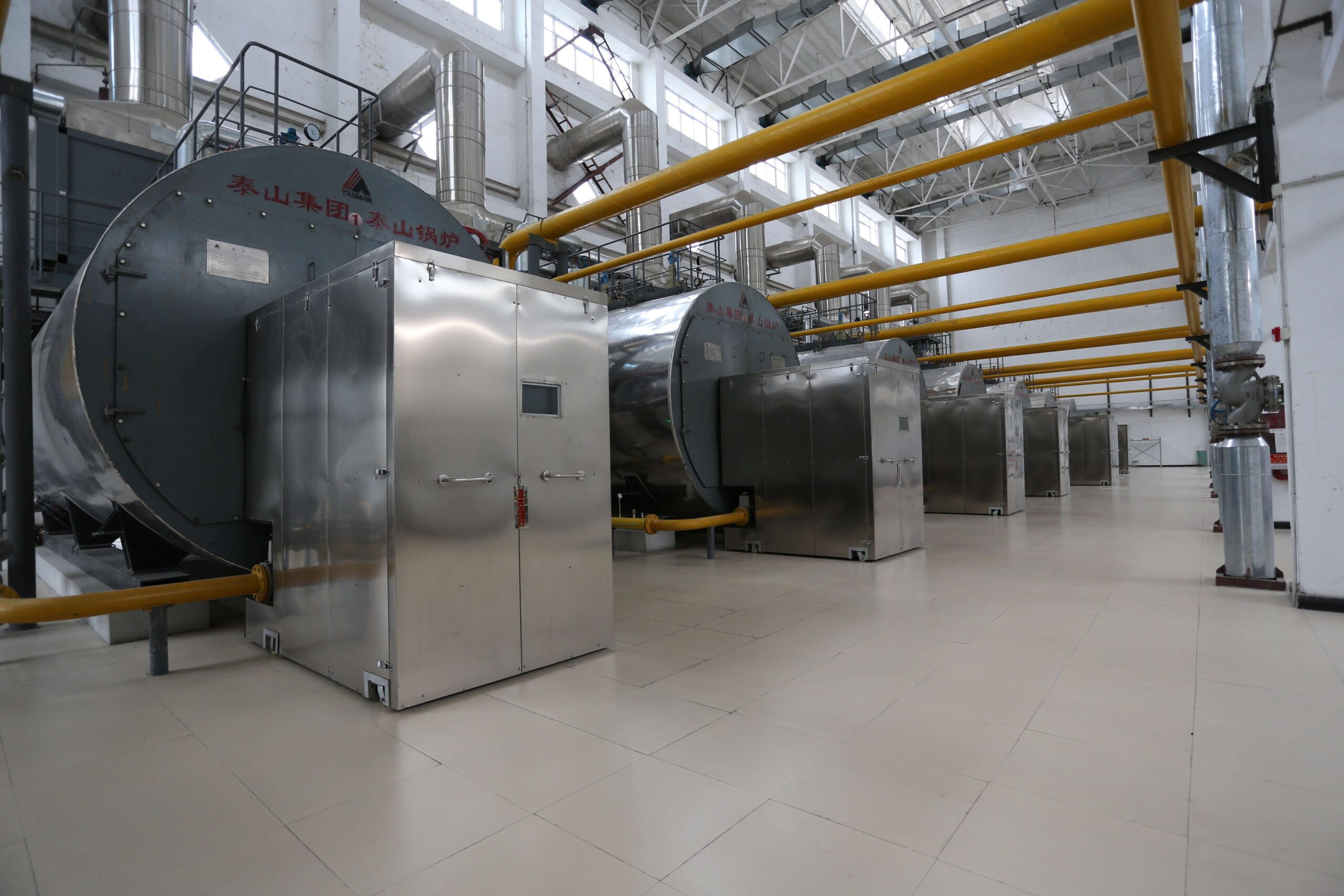
Choosing the wrong manufacturer for a customized power plant boiler project can create years of operational problems: unstable steam output, poor fuel adaptability, tube failures, high emissions, excessive scaling, slagging, corrosion, delayed delivery, weak documentation, and unclear responsibility after commissioning. A customized boiler is not a catalog product; it is a site-specific engineering system that must match local fuel, water, altitude, ambient temperature, emission limits, grid demand, and operating habits. The solution is to evaluate boiler manufacturers not only by price, but by their engineering capability, manufacturing quality, customization experience, code compliance, project management, commissioning support, after-sales service, and willingness to provide transparent technical guarantees.
Customers can choose a manufacturer for a customized power plant boiler project by checking whether the supplier has proven engineering design capability, certified pressure-part manufacturing, experience with similar fuel and site conditions, strong quality control, clear performance guarantees, complete documentation, reliable project delivery, professional commissioning support, and long-term spare parts and service capability. The best manufacturer should act as a technical partner, not only an equipment seller.
For investors, EPC contractors, power plant owners, industrial steam users, mining projects, biomass developers, and utility operators, the manufacturer selection stage is one of the most important decisions in the entire boiler lifecycle. A lower initial price may look attractive, but a power plant boiler operates for decades; fuel consumption, reliability, maintenance cost, emission compliance, tube life, and downtime usually matter much more than the purchase price difference. Below is a practical manufacturer-level guide to help customers select a reliable partner for a customized power plant boiler project.
The cheapest manufacturer is usually the safest choice for a customized power plant boiler project.False
A customized power plant boiler must meet strict engineering, safety, efficiency, emission, and reliability requirements, so customers should evaluate lifecycle value, technical capability, manufacturing quality, and service support rather than only initial price.
A qualified customized power plant boiler manufacturer should evaluate fuel, water, steam parameters, site conditions, emission limits, controls, layout, and maintenance needs before final design.True
Customized boiler performance depends on the complete site-specific operating environment, so responsible manufacturers must complete detailed technical evaluation before confirming the final solution.
🏭 Why Is Manufacturer Selection So Critical for a Customized Power Plant Boiler?
A customized power plant boiler is a high-value, high-risk, long-life industrial asset. It is expected to produce stable steam at rated pressure and temperature, support turbine or process operation, meet local environmental requirements, operate safely under changing load, and remain maintainable for many years. This means the manufacturer must understand more than the boiler pressure vessel itself. The supplier must understand combustion, thermal calculation, water circulation, heat transfer, pressure parts, welding quality, materials, fuel handling, ash handling, feedwater treatment, boiler controls, emission control, site installation, commissioning, and long-term service. If any of these areas are weak, the plant may experience derating, fuel waste, tube leakage, high CO, high NOx, unstable steam temperature, slagging, scaling, corrosion, fan overload, or repeated shutdowns.
The first sign of a reliable manufacturer is the depth of questions they ask before quoting. A serious boiler supplier will request steam capacity, steam pressure, steam temperature, feedwater temperature, fuel analysis, ash analysis, local water report, site altitude, ambient temperature range, emission limits, load profile, start-stop frequency, condensate return ratio, available plot space, transport limitations, electrical supply, automation standard, and local inspection requirements. A weak supplier may quote quickly from a standard model without asking enough technical questions. Fast quotation is not always bad, but a customized boiler cannot be responsibly designed from only “tons per hour” and “fuel type.” Customers should be cautious when a manufacturer promises guaranteed performance without studying the fuel and site conditions.
| 🔍 Evaluation area | What customers should check | Why it matters |
|---|---|---|
| Engineering capability | Thermal design, combustion design, circulation calculation, layout design | Determines whether the boiler truly fits the project |
| Manufacturing qualification | Pressure-part fabrication, welding, inspection, code compliance | Protects safety and legal acceptance |
| Similar project experience | Same fuel, capacity, pressure, industry, or climate | Reduces technical risk |
| Quality control | Material traceability, NDT, hydrotest, inspection records | Prevents hidden manufacturing defects |
| Customization depth | Fuel, water, emissions, controls, site layout, maintenance access | Ensures real operating suitability |
| Delivery management | Production schedule, milestones, logistics, documentation | Reduces project delay |
| Commissioning support | Start-up, tuning, performance test, operator training | Converts design into stable operation |
| After-sales service | Spare parts, troubleshooting, remote support, upgrades | Protects lifecycle reliability |
⚙️ How Can Customers Evaluate the Manufacturer’s Engineering Strength?
Engineering strength is the heart of a customized power plant boiler project. A manufacturer with strong engineering capability can convert customer requirements into a safe, efficient, maintainable, and site-specific boiler system. Customers should ask whether the supplier can provide thermal calculations, combustion calculations, water circulation calculations, pressure-part strength calculations, fan and draft calculations, fuel consumption calculations, efficiency estimates, emission estimates, general arrangement drawings, process flow diagrams, P&ID drawings, foundation load data, control philosophy, and performance guarantee conditions. These documents show whether the manufacturer is designing the boiler scientifically or simply modifying an old model.
Customers should also evaluate how the manufacturer handles uncertainty. Real projects often include fuel variation, seasonal water changes, high altitude, restricted layout, strict emissions, limited operator experience, or future fuel switching. A reliable boiler manufacturer will define the design fuel, check fuel, worst fuel, operating range, safety margin, and limitation conditions. For example, if the boiler is designed for biomass, the supplier should ask about moisture, particle size, chlorine, ash, alkali content, storage method, and seasonal supply. If it is designed for coal, the supplier should ask about heating value, volatile matter, ash fusion temperature, sulfur, grindability, and ash content. If it is designed for gas, the supplier should ask about gas composition, pressure fluctuation, Wobbe index, low-BTU gas risk, and backup fuel. These questions prove that the supplier understands practical operation.
A strong manufacturer should also be able to explain trade-offs clearly. Higher efficiency may require more heat-transfer surface, but too much surface can increase pressure drop, cost, and fouling risk. A larger furnace may reduce slagging, but it increases steel structure and footprint. More automation improves monitoring, but operators must be trained to maintain instruments. Low-NOx combustion reduces emissions, but it must be balanced with CO and burnout. A trustworthy manufacturer does not only say “yes”; it explains what is technically possible, what is risky, and what must be controlled by the owner during operation.
| 🧠 Engineering document | What it proves | Customer review point |
|---|---|---|
| Technical proposal | Overall solution logic | Does it match fuel, water, site, and emissions? |
| Thermal calculation | Heat absorption and efficiency basis | Are rated output and steam temperature realistic? |
| Combustion calculation | Fuel-air-flue gas balance | Is the design based on real fuel analysis? |
| Fan selection | Air and draft capacity | Are altitude, pressure drop, and fouling included? |
| Water circulation calculation | Tube cooling safety | Is circulation reliable at all loads? |
| GA drawing | Layout and maintenance access | Can the boiler be installed and serviced easily? |
| P&ID | System completeness | Are valves, instruments, blowdown, and dosing clear? |
| Control philosophy | Operating and safety logic | Does it protect fuel-air ratio and boiler trips? |
| Performance guarantee | Commercial and technical promise | Are guarantee conditions clearly defined? |
🔥 How Important Is Similar Project Experience?
Similar project experience is one of the strongest indicators of manufacturer reliability. A company may be capable in general boiler fabrication but still lack experience with a specific customized requirement. A coal-fired power plant boiler, biomass power boiler, CFB boiler, gas-fired power boiler, waste heat boiler, dual-fuel boiler, or high-pressure turbine boiler each has different design challenges. Customers should ask for case studies, reference projects, operating feedback, and performance examples that are similar in capacity, fuel, pressure, steam temperature, emission requirement, and operating environment.
However, customers should not evaluate experience only by the number of projects. The quality of experience matters more. A supplier may have many small low-pressure boilers but limited experience with high-pressure power boilers. Another supplier may have built coal boilers but not high-moisture biomass boilers. Another may have delivered standard gas boilers but not low-BTU process gas boilers. Customers should ask targeted questions: Has the manufacturer designed boilers for this exact fuel type? Has it solved slagging problems with similar ash? Has it supplied boilers to high-altitude or tropical sites? Has it handled strict NOx or dust limits? Has it delivered boilers with similar steam temperature? Has it supported performance testing after commissioning?
A reliable manufacturer should be able to discuss lessons learned from previous projects. For example, a biomass boiler supplier should know that fuel feeding stability is often as important as furnace design. A CFB boiler supplier should understand bed temperature control, cyclone wear, limestone feeding, and ash recirculation. A coal boiler supplier should understand mill performance, coal fineness, slagging, sootblowing, and low-NOx burner balance. A gas boiler supplier should understand fuel pressure fluctuation, flame safety, burner turndown, and oxygen trim. Customers should prefer manufacturers who can explain practical operating problems, not only show polished brochures.
🏗️ How Should Customers Inspect Manufacturing Capability and Quality Control?
Manufacturing quality determines whether the engineered design becomes a reliable physical boiler. Even the best design can fail if materials are wrong, welding quality is poor, tube bending is inaccurate, headers are not properly inspected, or pressure parts are not traceable. Customers should check whether the manufacturer has qualified workshops, trained welders, certified welding procedures, material traceability systems, nondestructive testing capability, heat treatment procedures, hydrostatic testing facilities, dimensional inspection processes, and final documentation control.
A factory visit is highly recommended for large customized boiler projects. During a visit, customers should observe pressure-part production, tube panel welding, drum fabrication, header drilling, membrane wall assembly, coil bending, welding consumable storage, NDT room, heat treatment equipment, inspection records, warehouse management, and finished-product protection. Clean and organized production is not only a visual preference; it often reflects management discipline. Customers should ask how materials are identified, how wrong material mixing is prevented, how welding repairs are controlled, how inspection results are recorded, and how nonconformities are handled.
Quality control should be documented in an Inspection and Test Plan. The ITP should identify hold points, witness points, material inspection, welding inspection, NDT, pressure testing, painting, packing, and customer inspection stages. For pressure parts, traceability is essential. Each drum, header, tube, plate, pipe, flange, and fitting should be traceable to material certificates. Welding should be traceable to welders and procedures. NDT reports should be available and understandable. Hydrotest records should be included. A professional manufacturer will welcome quality questions because good documentation protects both supplier and customer.
| 🏭 Factory inspection item | What to check | Warning sign |
|---|---|---|
| Material warehouse | Material certificates and identification | Mixed or unmarked materials |
| Welding workshop | Qualified welders and procedures | Poor weld appearance or no records |
| Tube panel production | Dimensional accuracy and weld quality | Distortion or inconsistent welds |
| Drum/header fabrication | Drilling, welding, NDT, heat treatment | Missing inspection records |
| NDT capability | RT, UT, MT, PT or outsourced control | No clear inspection process |
| Hydrotest area | Pressure test procedure and records | Informal or undocumented testing |
| Painting and packing | Surface protection and transport safety | Poor protection for export/shipping |
| Document control | Data book, certificates, inspection reports | Delayed or incomplete documents |
📑 What Certifications and Compliance Should Be Verified?
A customized power plant boiler must comply with the applicable pressure equipment code, local safety regulation, environmental requirement, electrical standard, and project specification. Customers should confirm which boiler code applies before purchase. Depending on the country and project, this may involve recognized boiler and pressure vessel codes, local manufacturing licenses, third-party inspection, import certification, emission compliance, electrical panel standards, safety interlock requirements, and site acceptance procedures. The manufacturer should clearly state which standards are included in the quotation and which requirements are excluded.
Compliance is not only about certificates on the wall. Customers should verify whether the manufacturer can produce the required design documents, calculation reports, welding procedure qualifications, welder certificates, material certificates, inspection records, NDT reports, heat treatment charts, hydrotest certificates, safety valve documentation, pressure-part drawings, operation manuals, maintenance manuals, spare parts lists, and final data book. For international projects, documentation language, format, and review cycle should be confirmed early. Many project delays occur because the equipment may be manufactured, but documents are incomplete or not accepted by the owner, consultant, or local authority.
Customers should also check whether the manufacturer understands environmental compliance. A boiler designed for strict emission limits must integrate combustion technology and downstream treatment from the start. If NOx, SO₂, dust, CO, or other pollutants are regulated, the proposal should define how the boiler will meet those limits and under what fuel conditions. It is risky to buy the boiler first and solve emissions later, because space, pressure drop, fan capacity, flue gas temperature, and control interfaces may not be sufficient for future equipment.
💰 How Should Customers Compare Price Without Choosing the Wrong Supplier?
Price comparison is necessary, but it must be done correctly. For customized power plant boilers, the lowest price may exclude important systems, use smaller heat-transfer surfaces, provide weaker materials, omit instruments, reduce sootblower coverage, undersize fans, exclude commissioning, or offer vague performance guarantees. Customers should compare scope line by line, not only total price. A technically complete quotation may appear more expensive but save money during installation, operation, and maintenance.
A proper commercial comparison should include boiler body, steel structure, platform and ladder, burners, fuel feeding system, fans, air ducts, flue ducts, economizer, air preheater, sootblowers, ash handling, water treatment interface, valves, instruments, control system, safety system, insulation, refractory, painting, spare parts, special tools, packing, shipping, supervision, commissioning, training, performance test, documentation, and warranty. If one supplier excludes many items, the owner may face unexpected costs later. Customers should also check whether the price includes design customization or only a standard boiler package.
Lifecycle cost should be considered. A boiler with 1–2% lower efficiency may consume a large amount of extra fuel every year. A boiler with poor sootblowing may require more shutdowns. A boiler with weak fuel adaptability may fail when fuel quality changes. A boiler with poor documentation may delay inspection. A boiler with limited after-sales support may create long outage periods when spare parts are needed. Therefore, a good manufacturer selection process weighs capital cost, fuel cost, auxiliary power, maintenance cost, downtime risk, emission penalty risk, and spare parts availability.
| 💵 Price comparison item | Low-price risk | Better evaluation method |
|---|---|---|
| Boiler heating surface | Smaller surface may reduce cost | Compare efficiency, fouling margin, steam temperature |
| Fans and motors | Undersized fans may limit output | Check fan curves and pressure-drop assumptions |
| Materials | Lower-grade materials may fail early | Confirm material list and high-risk area upgrades |
| Instruments | Missing analyzers reduce protection | Compare monitoring and control scope |
| Sootblowers | Too few sootblowers increase fouling | Check fuel ash and cleaning strategy |
| Documentation | Weak documents delay acceptance | Confirm final data book requirements |
| Commissioning | Excluded service shifts risk to owner | Include start-up, tuning, and training |
| Warranty | Vague terms reduce accountability | Review warranty scope and response process |
🧪 How Can Customers Test Whether the Manufacturer Understands Customization?
Customers can test customization ability by asking practical technical questions. A strong manufacturer should be able to answer clearly and specifically. For example: How will the boiler handle the worst fuel moisture? How much fan margin is included? What happens if the coal ash fusion temperature is lower than expected? How will the boiler reduce slagging? What water quality is required at the economizer inlet? What are the boiler water limits? How will steam temperature be controlled at partial load? What emissions are guaranteed and under what conditions? What instruments are included for O₂, CO, conductivity, pH, dissolved oxygen, silica, and furnace pressure? What are the start-up and shutdown requirements? What is the minimum stable load? What spare parts are recommended for two years of operation?
The quality of the answers matters. A weak answer is general, such as “our boiler is advanced” or “no problem.” A strong answer explains design basis, assumptions, margins, equipment selection, control strategy, and limitations. Good manufacturers are transparent about boundaries. They may say, “This boiler can maintain rated output if the fuel lower heating value remains above this value and moisture remains below this value; if moisture exceeds the limit, load reduction or auxiliary fuel may be required.” This kind of answer is more trustworthy than an unlimited promise.
Customers should also ask the manufacturer to review possible future changes. Can the boiler accept another fuel later? Can emission control be upgraded? Can capacity be expanded? Can the control system communicate with the plant DCS? Can spare parts be sourced locally? Can the boiler be shipped through local roads, ports, or bridges? Can installation be completed with available cranes? A customized boiler project succeeds when engineering design matches not only present requirements but also realistic future operating conditions.
🧰 What After-Sales Service and Commissioning Support Should Be Expected?
Commissioning is where design, manufacturing, installation, and operation meet. A customized power plant boiler should not be handed over as a static machine without supplier support. Customers should expect the manufacturer to provide installation guidance, pre-commissioning checklist, refractory drying procedure, boiler flushing guidance, hydrotest support, chemical cleaning guidance, burner commissioning, fan and damper testing, safety interlock verification, steam blowing support, combustion tuning, water chemistry guidance, performance testing, and operator training.
After-sales service should include spare parts, remote troubleshooting, on-site inspection, annual maintenance advice, emergency response, software or control support, and upgrade recommendations. Customers should ask where spare parts are manufactured, how long critical parts take to deliver, whether the supplier stocks common items, and whether technical engineers are available after warranty. For customized boilers, spare parts are not always interchangeable with standard models. Burners, grate bars, nozzles, sootblower parts, refractory shapes, control modules, valves, gaskets, and special tubes should be identified early.
Training is another important part of service. Operators should understand combustion adjustment, water chemistry limits, blowdown, sootblowing, start-up, shutdown, low-load operation, alarm response, emergency trip, and routine inspection. A well-designed boiler can still perform poorly if operators are not trained. A reliable manufacturer provides practical training materials, not only a generic manual. The best suppliers help customers build a maintenance and operation culture that protects the boiler over its entire life.
| 🛠️ Service item | Why it matters | Customer requirement |
|---|---|---|
| Installation guidance | Prevents assembly errors | On-site or remote engineer support |
| Commissioning | Ensures safe first operation | Clear start-up and tuning procedure |
| Combustion tuning | Achieves efficiency and emissions | Supplier support during load tests |
| Operator training | Reduces misuse and damage | Practical training in local language if needed |
| Spare parts | Reduces outage time | Recommended 1–2 year spare list |
| Troubleshooting | Solves early problems quickly | Defined response time and contact channel |
| Performance test | Verifies guarantees | Agreed method and acceptance criteria |
| Long-term service | Supports lifecycle reliability | Inspection and upgrade support |
📊 Manufacturer Selection Scorecard for Customers
Customers can use a weighted scorecard to compare suppliers more objectively. The weight can be adjusted according to project priorities. For a high-pressure, high-capacity, emission-sensitive project, engineering and quality should carry high weight. For a smaller industrial power project, delivery and service may also be critical. The key is to avoid selecting only by price.
| 🧾 Evaluation category | Suggested weight | Excellent supplier performance | Poor supplier warning sign |
|---|---|---|---|
| Engineering capability | 25% | Detailed calculations and custom solution | Standard quote with little technical review |
| Similar experience | 15% | Proven cases with similar fuel and pressure | No comparable reference |
| Manufacturing quality | 20% | Strong QC, traceability, factory inspection | Unclear production and inspection records |
| Compliance/documentation | 10% | Complete certificates and data book | Documents delayed or incomplete |
| Performance guarantee | 10% | Clear output, efficiency, emission basis | Vague or unlimited promises |
| Commissioning/service | 10% | Strong start-up and after-sales support | No clear service team |
| Delivery management | 5% | Realistic schedule and milestone control | Unrealistic delivery promise |
| Price/lifecycle value | 5% | Competitive cost with complete scope | Low price but many exclusions |
✅ Practical Procurement Checklist Before Signing the Contract
Before signing a customized boiler contract, customers should confirm the technical specification, supply scope, battery limits, design standards, performance guarantee, fuel envelope, water quality requirement, emission limits, delivery schedule, inspection plan, documentation list, payment milestones, warranty terms, spare parts, commissioning support, and responsibility matrix. The contract should state what is included, what is excluded, and what conditions must be met for performance guarantees. If the project requires third-party inspection, local approval, special import documents, or site-specific testing, these should be included early.
Customers should also request a final technical clarification meeting before contract award. In this meeting, the manufacturer should review the boiler model, steam parameters, design fuel, worst fuel, efficiency basis, fan margin, heating surface arrangement, material list, control system, water treatment interface, emission strategy, layout, foundation load, transport dimensions, erection sequence, commissioning plan, and spare parts. Any disagreement should be solved before manufacturing begins. Changes after production starts are expensive and can delay delivery.
| ✅ Contract item | What to confirm | Why it protects the customer |
|---|---|---|
| Supply scope | Exact equipment and exclusions | Prevents hidden costs |
| Design basis | Fuel, water, ambient, altitude, load | Prevents wrong boiler selection |
| Performance guarantee | Output, efficiency, steam temperature, emissions | Creates measurable acceptance |
| Documentation | Drawing, calculation, certificate, manual list | Supports approval and operation |
| Inspection plan | Factory test and customer witness points | Improves quality control |
| Delivery terms | Schedule, packing, shipping, responsibilities | Reduces project delay |
| Commissioning scope | Engineer days, tuning, training, test support | Ensures smooth start-up |
| Warranty terms | Coverage, duration, exclusions, response | Defines accountability |
| Spare parts | Start-up and 1–2 year operation list | Reduces outage risk |
| Change management | How design changes are handled | Avoids disputes |
🚩 Red Flags When Choosing a Customized Boiler Manufacturer
Some warning signs should make customers cautious. The first red flag is a supplier that does not ask for fuel analysis, water analysis, or site conditions before promising performance. The second is a supplier that offers a much lower price without clearly explaining scope differences. The third is vague technical language without calculations or drawings. The fourth is unwillingness to provide factory inspection, reference projects, or quality documents. The fifth is unclear responsibility for commissioning and performance testing. The sixth is a guarantee that sounds attractive but has no defined conditions. The seventh is poor communication during the quotation stage; if communication is weak before payment, it may be worse during manufacturing or after delivery.
Customers should also be careful with manufacturers who agree to every requirement without technical review. A trustworthy supplier may challenge unrealistic specifications because safety and reliability matter. For example, if a customer wants high steam temperature while burning high-chlorine biomass, a responsible manufacturer should discuss corrosion risk. If a customer wants very low emissions with poor fuel quality, the supplier should explain the required combustion and flue gas treatment equipment. If a customer wants high output from a restricted boiler size, the supplier should explain heat flux and fouling risks. Technical honesty is a positive sign, not a weakness.
🚀 Final Summary
Customers can choose a manufacturer for a customized power plant boiler project by evaluating the supplier as a long-term engineering partner rather than only an equipment vendor. The most reliable manufacturer should have strong engineering design capability, relevant project experience, qualified pressure-part manufacturing, strict quality control, clear compliance documentation, realistic performance guarantees, complete supply scope, professional commissioning support, and dependable after-sales service. Customers should compare technical solutions, lifecycle value, fuel adaptability, water-side protection, emission strategy, maintenance access, and service capability before comparing price. A customized power plant boiler is successful when the manufacturer understands the real project conditions and converts them into a safe, efficient, compliant, and maintainable boiler system.
Conclusion
A customized power plant boiler is more reliable than a one-size-fits-all solution because it is engineered around the real conditions of the project site. By analyzing altitude, water quality, fuel composition, fuel stability, load demand, and environmental requirements in advance, customers can avoid many operating risks and achieve better long-term economic returns.
Contact us to discuss your project conditions, including altitude, water analysis report, fuel specifications, steam parameters, and power generation requirements. Our engineering team can help design a customized power plant boiler solution that matches your site, fuel, and performance goals.
FAQ
Q1: Can a power plant boiler be customized for high-altitude installation?
A1: Yes, a power plant boiler can be customized for high-altitude installation, and altitude is one of the most important site factors in boiler engineering. At higher elevations, air density and oxygen availability decrease, which affects combustion air supply, burner performance, flame stability, heat release, fan sizing, and achievable boiler output. For this reason, boiler manufacturers and EPC contractors often review elevation data during the design stage instead of applying a standard sea-level boiler configuration to every site.
Customization may include larger forced-draft fans, adjusted air-fuel ratio controls, burner modifications, combustion tuning, revised furnace sizing, modified flue gas flow calculations, and derating analysis. The National Board notes that many burner manufacturers size combustion air fans for proper operation up to certain elevations, while larger fans are typically required above higher-altitude thresholds.
Altitude can also affect emissions performance. If the air supply is insufficient, combustion may become incomplete, increasing carbon monoxide, unburned carbon, flame instability, or efficiency losses. For gas-fired boilers, proper tuning is especially important because efficient combustion depends on matching fuel input with available oxygen. EPA’s natural gas combustion guidance notes that properly tuned boilers convert nearly all fuel carbon during combustion, while incomplete combustion can increase CO, methane, or VOC emissions.
A high-altitude boiler design should therefore begin with confirmed site elevation, ambient temperature range, barometric pressure, fuel heating value, required steam capacity, applicable emission limits, and local safety codes. The boiler pressure parts must still follow recognized design and fabrication rules such as ASME BPVC requirements, while the combustion system should also consider safety standards such as NFPA 85 for larger boiler systems.
In practical terms, high-altitude customization helps the plant maintain safe ignition, stable firing, rated steam output, reliable load response, and compliant emissions. Without this engineering adjustment, a boiler may suffer capacity loss, unstable combustion, higher excess air, poor efficiency, or safety shutdowns.
##@# Q2: How do water source conditions affect power plant boiler customization?
A2: Water source conditions strongly affect power plant boiler customization because feedwater quality directly influences scaling, corrosion, carryover, blowdown rate, chemical dosing, heat transfer efficiency, tube life, and long-term reliability. A boiler designed for a plant using treated municipal water may require a different pretreatment system than one using river water, well water, desalinated seawater, recycled industrial water, or high-silica groundwater.
Key water parameters include hardness, total dissolved solids, silica, chloride, sulfate, alkalinity, pH, dissolved oxygen, iron, copper, organic contamination, suspended solids, and conductivity. These values determine whether the boiler system needs softeners, reverse osmosis, demineralization, condensate polishing, deaeration, oxygen scavenging, phosphate treatment, all-volatile treatment, blowdown controls, or specialized chemical dosing.
Spirax Sarco emphasizes that boiler water treatment helps steam boiler plants operate safely, efficiently, and with longer low-maintenance service life. IAPWS also provides cycle chemistry guidance for feedwater, boiler water, and steam targets in fossil and combined-cycle plants, including guidance for different plant types and treatment regimes.
Customization may include selecting drum-type or once-through boiler configuration, defining feedwater purity requirements, increasing blowdown capacity, adding automatic TDS control, specifying deaerator size, selecting corrosion-resistant materials in vulnerable areas, and integrating online monitoring for conductivity, pH, sodium, silica, dissolved oxygen, and phosphate. High-pressure and supercritical boilers usually require stricter water chemistry than low-pressure industrial boilers because contaminants can rapidly cause deposition, overheating, turbine fouling, or corrosion damage.
Water quality also affects operating cost. Poor raw water may increase chemical consumption, wastewater volume, blowdown heat loss, and maintenance frequency. A customized power plant boiler package should therefore include a water analysis report before final design. The best design is not just a boiler body; it is a boiler, feedwater treatment system, condensate return strategy, blowdown recovery system, and chemistry control plan matched to the local water source.
Q3: Why should fuel supply characteristics be considered in power plant boiler design?
A3: Fuel supply characteristics are central to power plant boiler design because combustion behavior, heat release, ash formation, emissions, burner selection, furnace volume, heat-transfer surface, slagging tendency, and fuel-handling systems all depend on the actual fuel available at the site. A boiler firing natural gas, biomass, coal, heavy fuel oil, refinery gas, biogas, or mixed fuels cannot be optimized with the same combustion system.
Important fuel characteristics include heating value, moisture content, sulfur, nitrogen, ash content, volatile matter, fixed carbon, particle size, viscosity, pressure, temperature, Wobbe index for gaseous fuels, and consistency of supply. Babcock & Wilcox notes that fuel conditions such as temperature, pressure, and particle size can significantly affect combustion performance, unburned carbon, NOx, and slagging behavior.
For natural gas boilers, customization may focus on burner type, gas train design, pressure regulation, low-NOx combustion, flame detection, and fuel-air ratio control. EPA’s natural gas combustion guidance discusses emissions from gas-fired combustion and the role of proper tuning.
For oil-fired boilers, fuel viscosity, sulfur, ash, atomization, and preheating requirements are critical. EPA’s fuel oil combustion section notes that residual oils can contain significant ash, nitrogen, and sulfur, which directly affects emissions and boiler operation.
For coal-fired boilers, customization depends on coal rank, volatile matter, sulfur, moisture, ash, slagging, and agglomerating characteristics. EPA’s coal combustion guidance identifies volatile matter, sulfur content, slagging, and agglomerating behavior as key distinguishing fuel characteristics.
For biomass boilers, customization may involve fuel feeding, grate design, furnace residence time, ash handling, moisture tolerance, and emission controls. EPA’s wood residue combustion guidance highlights spreader stoker firing for larger wood-fired boilers.
A customized boiler reduces fuel risk by matching the combustion system to real-world fuel availability, not just ideal specification sheets. This helps improve efficiency, reduce outages, control emissions, and maintain stable steam generation even when fuel quality varies.
Q4: How is a customized power plant boiler engineered for efficiency and compliance?
A4: A customized power plant boiler is engineered through a structured design process that connects site conditions, performance targets, safety requirements, emissions rules, and lifetime operating costs. The process usually begins with site data collection: altitude, ambient temperature, humidity, fuel analysis, water analysis, steam pressure, steam temperature, load profile, turndown requirement, grid or process demand, emissions limits, available space, local codes, and maintenance expectations.
The pressure parts are designed according to recognized boiler and pressure vessel standards. ASME describes its Boiler and Pressure Vessel Code as a major technical resource for the design, manufacturing, and operation of boilers and pressure vessels, while its certification program covers design, fabrication, assembly, and inspection of boiler and pressure vessel components.
The combustion system is then matched to the fuel and operating profile. This may include burner selection, furnace geometry, air staging, flue gas recirculation, low-NOx burners, fuel train safety devices, flame scanners, combustion controls, oxygen trim, and interlocks. For larger boiler systems, NFPA 85 provides guidance intended to help prevent explosions and implosions in boilers and related combustion systems.
Efficiency customization may include economizers, air preheaters, sootblowers, heat-recovery systems, optimized excess air control, variable-speed fans, condensate recovery, blowdown heat recovery, advanced controls, and improved insulation. Water-side efficiency is addressed through feedwater treatment, deaeration, TDS control, and deposit prevention. Fuel-side efficiency is improved by maintaining proper combustion, stable flame conditions, and clean heat-transfer surfaces.
Compliance also depends on emissions controls. Depending on the fuel and jurisdiction, the system may require low-NOx burners, selective non-catalytic reduction, selective catalytic reduction, baghouses, electrostatic precipitators, scrubbers, activated carbon injection, or continuous emissions monitoring.
The result is a boiler package designed for the actual plant, not just a catalog capacity. A well-customized boiler can improve heat rate, reduce unplanned shutdowns, protect pressure parts, support regulatory compliance, and extend operating life.
Q5: Is a customized power plant boiler better than a standard boiler package?
A5: A customized power plant boiler is usually better than a standard boiler package when the site has demanding altitude, water, fuel, emission, capacity, or reliability requirements. Standard boiler packages can work well for simple applications with predictable fuel, moderate operating pressure, stable water quality, and conventional installation conditions. However, power plants often face more complex operating environments, making customization valuable.
A standard boiler may be designed around general assumptions, such as sea-level combustion air, typical fuel heating value, average water quality, standard emission limits, and limited load variation. If the actual site differs from these assumptions, the plant may experience output loss, higher fuel consumption, unstable combustion, scaling, corrosion, high blowdown, excessive emissions, or frequent maintenance.
Customization allows the boiler supplier to adjust the design around real operating conditions. For altitude, this may mean fan and burner modifications. For water quality, it may mean advanced pretreatment and chemistry control. For fuel supply, it may mean multi-fuel burners, biomass handling, oil preheating, coal milling, ash management, or low-NOx combustion. For compliance, it may mean adding required safety and emission-control systems.
The National Board highlights the importance of combustion air supply and maintenance for boiler and burner performance, especially where fan capacity and site conditions affect combustion. IAPWS and Spirax Sarco guidance also show why water chemistry and treatment must be matched to the steam system rather than treated as an afterthought.
The main advantage of customization is lifecycle value. Although a customized boiler may require more upfront engineering, it can reduce fuel waste, improve availability, lower emissions risk, extend tube life, reduce water and chemical losses, and support stable plant operation. For utility, industrial, biomass, CHP, and captive power plants, the best boiler is often the one designed around the actual site conditions, not the one chosen only by rated capacity.
References
- ASME Boiler and Pressure Vessel Code — https://www.asme.org/codes-standards/bpvc-standards — ASME
- Boiler and Pressure Vessel Certification — https://www.asme.org/certification-accreditation/boiler-and-pressure-vessel-certification — ASME
- NFPA 85 Code Development — https://www.nfpa.org/codes-and-standards/nfpa-85-standard-development/85 — NFPA
- Boiler/Burner Combustion Air Supply Requirements and Maintenance — https://www.nationalboard.org/index.aspx?ID=236&pageID=164 — National Board of Boiler and Pressure Vessel Inspectors
- AP-42 Section 1.4: Natural Gas Combustion — https://www.epa.gov/sites/default/files/2020-09/documents/1.4_natural_gas_combustion.pdf — U.S. EPA
- AP-42 Section 1.3: Fuel Oil Combustion — https://www.epa.gov/sites/default/files/2020-09/documents/1.3_fuel_oil_combustion.pdf — U.S. EPA
- AP-42 Section 1.1: Bituminous and Subbituminous Coal Combustion — https://www.epa.gov/sites/default/files/2020-09/documents/1.1_bituminous_and_subbituminous_coal_combustion.pdf — U.S. EPA
- Technical Guidance Documents for Cycle Chemistry — https://iapws.org/documents/techguide — IAPWS
- Water for the Boiler — https://www.spiraxsarco.com/learn-about-steam/the-boiler-house/water-for-the-boiler?sc_lang=en-GB — Spirax Sarco
- Boiler Operations That Affect Efficiency, Part 2 — https://www.babcock.com/home/about/resources/learning-center/boiler-operations-that-affect-efficiency-part-2 — Babcock & Wilcox