
How to Choose a Reliable Industrial Coal-Fired Boiler Manufacturer?
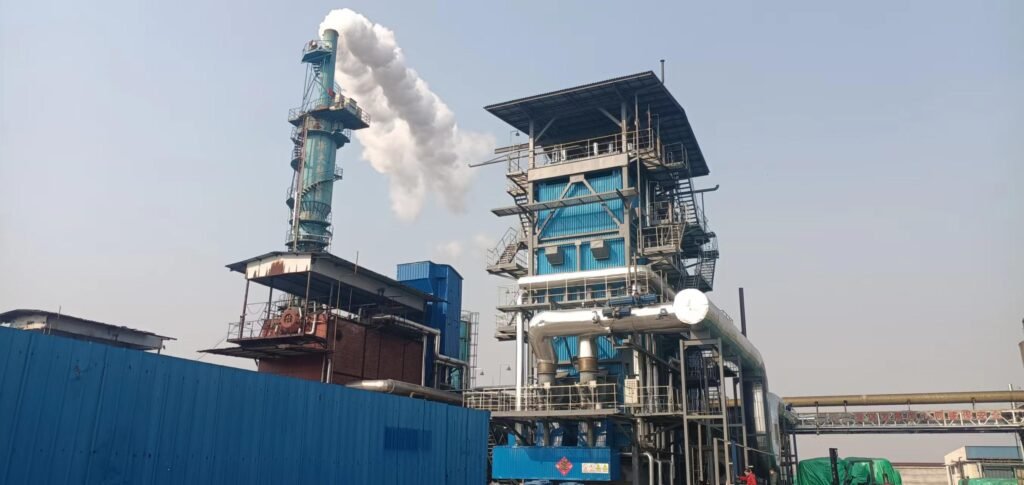
Picking the wrong coal-fired boiler manufacturer doesn’t just mean a machine that underperforms — it means unplanned shutdowns at the worst possible moment, fuel consumption running 8–12% above design spec because the grate or bed hydrodynamics were never properly engineered, and an emissions compliance problem that can cost you your operating permit. Procurement teams often discover these issues 18 months after commissioning, when the warranty conversation has already turned difficult and the manufacturer is three time zones away.
To choose a reliable industrial coal-fired boiler manufacturer, verify their design certification and pressure vessel approvals first, then evaluate combustion technology fit to your coal quality, check actual delivered projects at similar capacity (2–480 t/h steam, 1.4–350 MW thermal), confirm auxiliary systems integration capability, and assess post-commissioning support structure — not just price.
What most buyers don’t realize is that the gap between a competent manufacturer and a marginal one rarely shows up on a datasheet. Thermal efficiency claims of 88–93% are easy to print; achieving them consistently on your specific coal — with its actual moisture, ash fusion temperature, and sulfur content — is an entirely different problem, and the manufacturer’s combustion engineering depth is what separates a stable 15-year asset from a chronic maintenance liability.
Matching Boiler Type and Capacity to Your Actual Process Load Before Contacting Any Supplier
Before you send a single inquiry to a boiler manufacturer, you need to know what you actually need — not roughly, but with enough precision that a salesperson can’t talk you into the wrong configuration. This sounds obvious. In practice, a surprising number of procurement teams arrive at technical discussions with nothing more than “we need steam” and a budget ceiling. That usually ends with an oversized unit burning 15–20% more coal than necessary, or an undersized one that forces a second shift to idle while the boiler catches up.
The Four Output Types Are Not Interchangeable
Coal-fired industrial boilers aren’t a single product category. They fall into four fundamentally different output types, and mixing them up costs real money.
Saturated or superheated steam boilers are the workhorses of food processing, textile mills, chemical plants, and paper manufacturing. Saturated steam in the 0.8–1.6 MPa range handles most process heating and sterilization. Superheated steam at medium pressure (3.8–5.3 MPa) or high pressure (9.8–13.7 MPa) is required when you’re driving a steam turbine for power generation or cogeneration — the superheat margin matters enormously for turbine blade life.
Hot-water boilers serve district heating loops and building HVAC systems. They operate at lower pressures (typically 0.7–1.6 MPa) and deliver thermal output measured in MW rather than steam tonnage. If your application is space heating or domestic hot water at industrial scale, a steam boiler with a heat exchanger bolted on is almost always the wrong answer — a dedicated hot-water boiler runs simpler, safer, and with lower feedwater treatment costs.
Thermal-oil (heat-transfer fluid) heaters are the right choice for processes that need high temperatures — 250–350 °C is typical — without high-pressure containment. Asphalt plants, wood-drying kilns, and certain chemical reactors fall here. The operating pressure stays low (roughly 0.3–1.0 MPa), but materials selection and fluid maintenance are more demanding than water-side systems. Don’t let a generalist manufacturer talk you into a steam unit for this duty.
Waste-heat recovery boilers sit downstream of a kiln, furnace, or gas engine exhaust and recover sensible heat that would otherwise leave through the stack. They don’t fire coal themselves — they’re thermally downstream. Knowing whether you need a standalone coal-fired unit or a waste-heat boiler behind an existing process changes your entire supplier shortlist.
Calculating Your Actual Thermal Requirement
The correct starting point is your process heat demand, not a gut feel about boiler size.
For a 50 MW district heating project — a typical mid-sized city zone in a northern climate — the calculation works like this: if your peak heat load is 50 MW thermal, and you want a turndown ratio of roughly 30% at minimum seasonal load, you’re sizing the boiler for 50 MW with the expectation it runs at 60–80% load for most of the year. Coal-fired hot-water boilers in this range (roughly 130–175 t/h equivalent steam, or dedicated hot-water units at 50–70 MW rated output) require a manufacturer with experience in large-diameter membrane wall construction and circulation pump integration — not every shop has that.
For process steam: (kg/h steam) × (steam enthalpy − feedwater enthalpy) ÷ 3,600 gives you kilowatts. Add 10–15% for distribution losses and startup loads. That’s your minimum rated boiler output. Size to that number, not to a round figure that happens to be a standard catalog size.
Pressure and Temperature: Getting This Wrong Is Expensive
Low-pressure systems (≤1.6 MPa) are mechanically simpler, cheaper to certify in most jurisdictions, and easier to maintain. They’re appropriate for most process heating below 200 °C. Once you need superheated steam above roughly 220 °C, or you want to generate electricity as a byproduct, you’re moving into medium-pressure territory (3.8–5.3 MPa), and the boiler’s alloy steel requirements, drum thickness, and safety valve specifications all change substantially. High-pressure boilers at 9.8–13.7 MPa — used in back-pressure or condensing power generation — demand a manufacturer with a full pressure-vessel quality management system and third-party inspection capability. Not all industrial boiler shops are certified to build at these levels. Ask for the certificate, not just the claim.
CFB boilers can achieve SOx capture rates of 85–95% through in-furnace limestone injection, and NOx emissions below 100 mg/Nm³ with SNCR post-combustion treatment.True
These figures are consistent with established CFB combustion technology performance data. SOx capture depends on Ca/S molar ratio (typically 2–2.5:1) and bed temperature control. NOx reduction via SNCR depends on urea injection temperature window and residence time.
Coal Quality Drives Combustion Technology Selection
This is where a lot of projects go wrong early. The coal you can reliably procure is not always the coal you’d ideally specify.
A high-calorific bituminous coal (28–30 MJ/kg, ash below 15%, moisture below 10%) runs well on a chain-grate stoker or traveling-grate boiler — straightforward, proven, relatively low maintenance. But if your local supply is high-ash lignite (14–18 MJ/kg, ash 30–40%, sulfur 2–3%), a stoker boiler becomes a maintenance nightmare. Slagging on the grate, high unburned carbon in fly ash, and SOx levels that will fail any modern emissions permit. In that scenario, a CFB boiler is genuinely the better choice: it handles wide fuel variability, keeps bed temperature in the 850–900 °C range where in-furnace desulfurization works efficiently, and achieves thermal efficiencies of 88–93% with an economizer and air preheater. The capital cost premium — roughly 15–30% over a comparable stoker unit, depending on emissions scope — usually pays back inside five to eight years through fuel flexibility and avoided flue-gas treatment costs.
Pulverized coal (PC) firing makes sense at the high end of the capacity range (above 130–150 t/h) where the fuel preparation infrastructure is justified and coal quality is consistent enough to manage mill wear predictably.
Capacity Brackets and What They Demand from a Manufacturer
Small industrial units in the 2–20 t/h range are a volume game. Manufacturers in this space typically offer skid-mounted or package designs with short lead times (12–20 weeks is common). Quality varies enormously — this is the segment where cutting corners on refractory, insulation, and valve trim shows up in your first winter operating season.
Medium industrial units at 20–130 t/h are site-assembled with more engineered components. Expect a proper furnace, dedicated economizer, multicyclone or baghouse, and FD/ID fan sizing that accounts for your altitude and ambient temperature range. Lead times run 20–36 weeks in normal supply conditions.
Large units from 130 to 480 t/h are engineering projects, not product purchases. You need a manufacturer with in-house pressure-part fabrication, a traceable welding qualification program, and experience managing multi-discipline erection on site. This bracket is where EPC capability — including civil foundation design, electrical controls, and commissioning — matters as much as the boiler itself.
Know which bracket you’re in before the first call. It narrows your supplier list faster than any other filter.
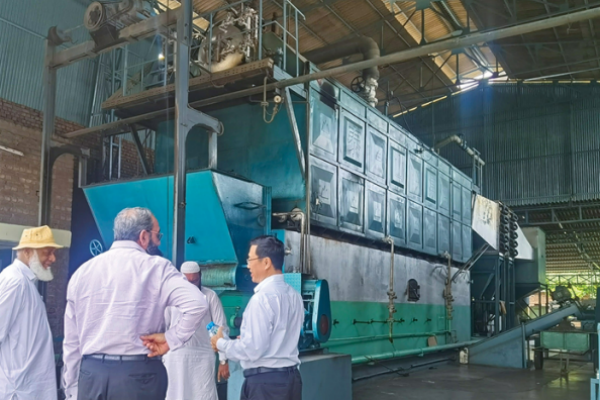 coal-fired boiler project 9
Core Technical Capabilities a Credible Coal-Fired Boiler Manufacturer Must Demonstrate
Asking a manufacturer for a brochure tells you almost nothing. What you actually need is evidence that they can design to your specific process conditions, fabricate pressure parts that will survive 100,000-plus operating hours, and integrate the full auxiliary train without subcontracting the critical bits to whoever bids lowest that week. Here is what to look for, and what the absence of each capability actually costs you downstream.
In-House Thermal and Structural Design Capability
A credible manufacturer runs their own thermal calculations — not a spreadsheet borrowed from a trade association, but combustion heat-balance software tied to their specific furnace geometry and fuel characteristics. For CFB boilers especially, combustion CFD simulation matters: bed temperature uniformity, cyclone separation efficiency, and secondary-air injection points all interact in ways that hand calculations miss. Get imperfect bed dynamics and you are looking at localized refractory erosion inside 18–24 months, sometimes faster on high-ash coals.
Finite-element analysis for drum and header stress is non-negotiable on units above roughly 75 t/h or operating above 3.8 MPa. Thermal cycling fatigue cracks in steam drums are not a minor maintenance item — they are a forced outage of four to eight weeks minimum, depending on your jurisdiction’s re-inspection requirements. Ask the manufacturer directly: do they run FEA in-house, or do they outsource it? Outsourcing is not automatically a disqualifier, but if they cannot interpret the output themselves, that is a real problem.
Fabrication Infrastructure Worth Verifying in Person
Walk the shop floor if you can. A factory quoting 130 t/h CFB boilers that has no CNC tube bending equipment and is doing membrane wall assembly with manual MIG is a risk you do not want to accept. Automatic submerged-arc welding (SAW) on drums and large-diameter headers is standard at any serious pressure-vessel fabricator — SAW weld consistency is simply not reproducible manually at scale.
Heat-treatment furnaces sized for full-length superheater header assemblies matter more than most buyers realize. Post-weld heat treatment (PWHT) on Cr-Mo alloy components is not optional; skipping or shortcutting it is how stress corrosion cracking develops in service, typically quietly, until it is not quiet anymore.
Hydraulic pressure testing at 1.5× design pressure, witnessed by a third-party inspection body, should be a contractual deliverable, not a courtesy. Radiographic (RT) and ultrasonic (UT) weld inspection reports with full traceability to weld joint numbers — ask for a sample package from a previous project. If they hesitate, that tells you something.
Material Traceability Is Where Corners Get Cut
Boiler-grade steel substitution is a real procurement risk, particularly on projects where the end buyer is geographically distant from the fabrication shop. For furnace waterwall tubes and economizer coils, SA-210 Gr. A1 is typical up to around 400 °C metal temperature. High-temperature superheater tubes on units generating steam above 450 °C should be 15CrMoG or 12Cr1MoVG at minimum, with the latter preferred above 540 °C. Mill certificates matched to heat numbers on actual components, verified by a third-party material lab, is the standard. Any deviation from this — “equivalent domestic grade,” certificates available only as scanned PDFs with no heat cross-reference — deserves a hard stop.
Reputable coal-fired boiler manufacturers provide full material traceability including mill certificates matched to heat numbers, verified by third-party inspectionTrue
This is standard practice under ASME, EN, and Chinese GB/T pressure vessel codes for boiler-grade pressure parts; any credible manufacturer operating under these codes can produce this documentation.
Auxiliary System Integration Capability
A manufacturer who builds the boiler but subcontracts the economizer, air preheater, deaerator, and feed-water system to three separate vendors is not offering you an integrated product — they are offering you a coordination problem. Thermal performance guarantees mean nothing if the economizer is undersized for the actual flue gas volume, or if the deaerator’s oxygen scavenging capacity was spec’d for a different steam load.
In-house design and fabrication of the full heat-recovery train — economizer, tubular or rotary air preheater, soot blowers, steam drum internals — is what allows a manufacturer to guarantee boiler thermal efficiency as a system figure rather than a furnace-only figure. For chain-grate stoker boilers, realistic efficiency runs 82–88% depending on coal moisture and ash content; CFB units with properly integrated air preheating and economizer packages can reach 88–93%. That 5–6 percentage point gap compounds significantly over 8,000 annual operating hours.
Demonstrated Experience Across Boiler Types
A manufacturer with 200 chain-grate stoker references and zero CFB deliveries is not a CFB manufacturer, whatever their sales literature says. Ask specifically for completed project references by boiler type — chain-grate, CFB, pulverized-coal, and waste-heat boilers each involve distinct design disciplines and fabrication sequences. References should include rated capacity, steam parameters, fuel specification, and a contact method for the operating plant. Not every buyer will call, but a manufacturer who cannot provide the list is telling you something about their actual delivery history.
Certifications, Standards Compliance, and Export Qualification Red Lines
A boiler is classified as special equipment in China, and that single fact creates a mandatory certification floor that no legitimate manufacturer can legally operate below. If a supplier cannot produce the relevant licenses before you even discuss price, walk away. It is not a paperwork formality — it is the legal basis for every pressure part they weld.
China Domestic Mandatory Certifications
The SELO (Special Equipment Manufacturing License) is non-negotiable. For steam boilers rated at or above 45.8 MW (roughly 65 t/h at typical parameters), the manufacturer must hold a Class A license. Below that threshold, Class B or Class D covers the smaller industrial range. Ask for the license number, then cross-check it directly in the SAMR (State Administration for Market Regulation) national database at samr.gov.cn — takes about two minutes and has caught fraudulent copies that looked convincing on paper.
Beyond the SELO, look for a pressure-vessel design license (压力容器设计许可证 — but what matters to you is the English certificate) and welder qualification records under TSG G0001, which is China’s national safety technical specification for boilers. A reputable shop will have welders individually certified, with procedure qualification records (PQRs) and welder performance qualification (WPQ) documents on file. If a manufacturer hesitates to show these, that hesitation is your answer.
International Codes and What Compliance Actually Requires
This is where projects get complicated fast, especially if your plant is in South or Southeast Asia, the Middle East, or Europe.
ASME Section I (Power Boilers) is the standard most internationally traded boilers are judged against. Full ASME certification — meaning the manufacturer holds a valid “S” or “E” stamp from the ASME organization — is different from a manufacturer saying they “design to ASME.” Anyone can claim the latter. The stamp means an authorized inspection agency (AIA) has audited their quality system and continues to surveil production. Ask for the stamp certificate number and its current expiry date.
IBR (Indian Boilers Regulations) applies to any boiler installed in India regardless of origin. IBR approval involves the Chief Inspector of Boilers in the relevant Indian state, and the manufacturer must provide IBR-compliant documentation, material traceability, and stage inspection by an IBR-approved inspector. Projects that skip this step during procurement end up with a boiler sitting at a port unable to be commissioned. I have seen it happen, and the delay typically runs three to five months.
For European destinations, EN 12952 (water-tube boilers) and the Pressure Equipment Directive (PED 2014/68/EU) govern design and CE marking. TÜV Rheinland is probably the most commonly accepted notified body for this route, though Bureau Veritas and Lloyd’s Register both serve the same function. CE marking is not cosmetic — it signals that design calculations, material certificates, and NDE procedures have all been reviewed by an independent European-recognized body.
Third-Party Inspection Readiness
A manufacturer who has never worked with Bureau Veritas, SGS, or a client-nominated inspector will show it almost immediately when inspection hold points come up in the ITP (Inspection and Test Plan). A factory that is genuinely export-experienced will already have a standard ITP template, know which stages require witness versus review-only, and have a coordinator whose job is specifically to manage TPI logistics. Ask them directly: which third-party bodies have you worked with in the last three years, and on what project types?
ISO 9001 certification guarantees manufacturing quality in a boiler factoryFalse
ISO 9001 certifies that a quality management system exists and is documented. It does not independently verify weld quality, material grades, or pressure-part dimensions. It is a useful baseline indicator, but it must be read alongside SELO, ASME stamps, and actual inspection records — not as a substitute for them.
Verifying Certificate Authenticity
Request notarized English translations of all Chinese-language certificates for any export project. A photocopy of a certificate is essentially meaningless without verification — SAMR registration numbers can be checked online, ASME stamp validity can be confirmed through the ASME society’s own verification portal, and ISO certificates issued by accredited bodies carry a registration number traceable through the issuing certification body’s website. TÜV, DNV, and Bureau Veritas all maintain searchable client certificate registries. Using them takes ten minutes and has objective value. Skipping them occasionally costs a project.
ISO 14001 (environmental management) is worth noting briefly: it signals that the manufacturer has systems for controlling environmental aspects of their process, which matters for your own ESG reporting and increasingly for import clearance in certain markets. What it does not tell you is anything about boiler combustion efficiency or emissions performance at your site — that depends on design, coal quality, and operating practice, not the manufacturer’s factory certification.
Evaluating Emission Control Systems and Environmental Compliance for Modern Coal Combustion
Coal combustion produces a predictable cocktail of pollutants — particulate matter (PM), SO₂, NOx, CO, and trace heavy metals including mercury and arsenic. Uncontrolled, a stoker-fired boiler burning medium-sulfur bituminous coal can emit 3,000–8,000 mg/Nm³ of SO₂, PM concentrations well above 1,000 mg/Nm³, and NOx in the 400–700 mg/Nm³ range depending on furnace temperature and excess air ratio. Post-treatment targets in most regulated markets sit at 35–200 mg/Nm³ for SO₂, 50–200 mg/Nm³ for NOx, and 10–30 mg/Nm³ for PM. The gap between those two sets of numbers is where your emissions control train lives — and where a lot of boiler projects get underspecified.
A manufacturer who only sells you the pressure parts and leaves flue-gas treatment to a third party creates serious integration risk. Ductwork geometry, flue-gas temperature profiles, draft balance, and the sizing of induced-draft fans are all interdependent. When the boiler OEM and the FGD contractor haven’t coordinated properly, you end up with pressure drop mismatches, corrosion at condensation points, or a scrubber that can’t maintain residence time at full load. In practice, a credible manufacturer should either supply the full treatment train themselves or demonstrate documented co-engineering experience with named technology partners.
Flue-Gas Desulfurization Options and When to Use Each
Wet limestone-gypsum FGD is still the workhorse for larger coal-fired units — typically above 35–50 t/h steam output — where SO₂ removal above 95% is required and you have space and water availability for a scrubber circuit. Operating cost runs mostly on limestone consumption and wastewater treatment. Semi-dry CFB-FGD (circulating fluidized bed dry scrubbing) suits medium-sized installations or sites with tight water budgets; SO₂ removal lands in the 85–93% range, and the dry byproduct is easier to handle than gypsum slurry in many developing-market contexts.
For CFB boilers specifically, in-furnace limestone injection is the first line of defense. At a Ca/S molar ratio of roughly 2.0–2.5, you can achieve 85–90% SO₂ capture without any downstream wet scrubbing — a real advantage for projects where capital is constrained or the regulatory limit allows it. Whether that’s sufficient depends entirely on the sulfur content of your coal and your local emission standard. Don’t let a supplier tell you in-furnace injection alone will meet EU IED limits on a 3% sulfur coal. It won’t.
NOx Control: Layered Approach
Low-NOx burner design and staged air injection (overfire air systems) are primary measures that cost almost nothing incrementally if designed in from the start, yet can drop NOx 20–35% compared to a conventional single-zone furnace. Retrofitting staged combustion later is expensive and sometimes geometrically impractical.
When primary measures aren’t enough — and for most regulated markets they won’t be — SNCR (urea or ammonia injection into the furnace at 850–1,100 °C) is the standard secondary measure, typically bringing NOx down to 150–200 mg/Nm³. SCR (selective catalytic reduction) pushes further, to below 50 mg/Nm³, and is increasingly mandated in China’s ultra-low emission zones and in EU installations above certain thermal inputs. SCR adds catalyst cost, requires flue-gas reheating in some configurations, and needs careful ammonia slip management. Specify it only where the regulatory threshold actually demands it; overshooting on NOx control while undershooting on PM is a common planning mistake.
Particulate Control: ESP vs. Baghouse
Electrostatic precipitators handle high-temperature, high-volume gas streams efficiently and have low pressure drop — typical collection efficiency is 99–99.7% on fly ash with normal resistivity. Fabric filter baghouses (pulse-jet type) consistently achieve above 99.5% collection and handle variable particle size distributions better, making them the preferred choice for biomass co-firing or waste coal with irregular ash properties. The tradeoff is higher pressure drop and filter bag replacement cost every 3–5 years depending on ash abrasiveness and operating temperature.
How to Benchmark a Manufacturer’s Emission Claims
Ask for stack-test reports from at least two completed reference projects with similar fuel type and boiler capacity. Not brochure figures — actual third-party test certificates with date, testing agency, and operating load at time of test. CEMS data printouts (30-day averages, not cherry-picked days) tell you more about real-world compliance than any single stack test.
CFB boilers with limestone injection and SNCR can achieve NOx emissions below 100 mg/Nm³True
At optimal Ca/S ratios and SNCR injection temperatures, CFB boilers routinely achieve sub-100 mg/Nm³ NOx in commercial operation, supported by stack-test data from compliant installations under Chinese ultra-low emission standards and comparable EU IED regulated projects.
Confirm which country standard applies to your project — EU IED, US EPA 40 CFR Part 63, or local equivalent — and ask the manufacturer to show a compliance matrix against that specific standard, not just against Chinese GB standards. A manufacturer with genuine export experience will have this document ready or be able to produce it quickly. One who stalls or offers generic assurances probably hasn’t actually built to those specs before.
EPC Delivery Model vs. Equipment-Only Supply: What Each Requires from Your Manufacturer
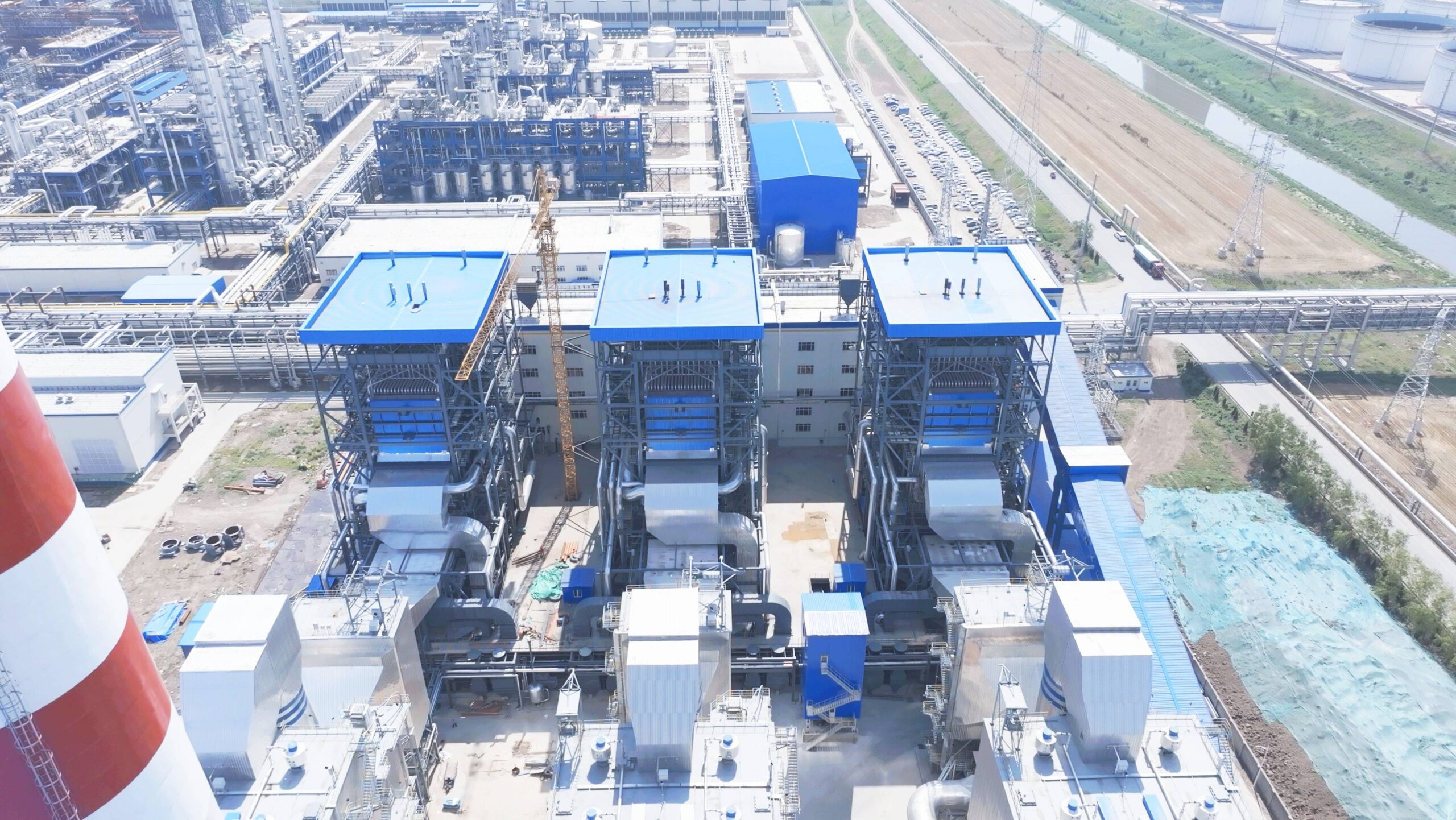
These are genuinely different contracts, and conflating them is one of the most common—and expensive—mistakes buyers make on boiler projects. An equipment-only purchase means you take delivery of the pressure parts, auxiliary skids, and controls at your port or factory gate, and your own team (or a separate EPC contractor) handles civil foundation, erection, piping integration, commissioning, and performance verification. An EPC engagement means the boiler manufacturer assumes responsibility for the whole chain: civil works interface, pressure-part fabrication, auxiliary equipment procurement and coordination, field erection supervision, pre-commissioning, steam blowing, performance acceptance testing, and operator training. The manufacturer’s organizational capability required for each is almost incomparable.
What Full EPC Scope Actually Covers on a Coal-Fired Boiler Plant
At minimum, a credible EPC scope for a coal-fired boiler project includes the boiler island proper (furnace, drum, superheater, economizer, air preheater), the entire flue-gas treatment train (ESP or baghouse, desulfurization, SCR or SNCR), fuel handling from the coal bunker through feeders, ash removal, water treatment and blowdown systems, feedwater and condensate pipework, the control room and DCS integration, and chimney or stack. Civil foundation design and interface with local structural contractors typically falls in scope too, which means the manufacturer needs in-house civil and structural engineers or a proven subconsultant they actually manage—not just pass drawings to.
Operator training is easy to underestimate. A new 35 t/h CFB boiler plant with limestone injection, SNCR, and a baghouse has enough instrumentation and interlock logic that inexperienced operators will cause repeated trips in the first months, damaging refractory and pressure parts. Good manufacturers build training into the commissioning schedule, not as an afterthought.
Red Flags in EPC Proposals Worth Taking Seriously
Watch for manufacturers who subcontract every non-boiler package—flue-gas treatment, water treatment, electrical—to third parties they’ve never worked with before, with no integrated project management layer sitting above those subcontractors. You end up owning the coordination risk yourself. No dedicated site supervision team is another warning sign; some vendors send one engineer for commissioning and call that “supervision.” If the proposal doesn’t include a performance-guarantee clause specifying steam output at rated pressure and temperature, thermal efficiency within a stated tolerance band, and emission limits as contractual obligations with liquidated damages attached, that absence tells you something.
A reputable EPC boiler manufacturer should provide performance guarantees covering steam output, thermal efficiency, and emission limits as binding contractual terms, not indicative targets.True
These parameters are measurable during acceptance testing (ASME PTC 4, EN 12952 performance tests, or equivalent) and form the legal basis for liquidated damages if the plant underperforms. Without them, the buyer bears all performance risk post-handover.
Contractual Elements That Actually Protect You
Insist on liquidated damages for commissioning delay—realistic rates depend on plant size but typically run in the range of 0.05–0.15% of contract value per day, capped at 5–10%, and what’s negotiable depends heavily on which party controls critical-path risks. Spare-parts inventory requirements should be written into the contract: at minimum, one set of critical wear items (grate bars, refractory repair materials, key valve internals, flame detector heads) should be on-site before acceptance sign-off. A structured commissioning acceptance protocol—72-hour or 168-hour continuous operation at rated load with logged data—is the only objective basis for final payment release.
Verifying Overseas EPC Track Record
Ask for a reference project list that specifies country, boiler type, capacity, fuel, commissioning date, and a client contact name you can actually call. Not a logo page—a list you can verify. Then call two or three references independently. Ask specifically about schedule adherence, the responsiveness of the site supervision team, and whether performance guarantees were met on first test or required rework. Manufacturers with genuine overseas EPC experience will have this list ready and won’t hesitate.
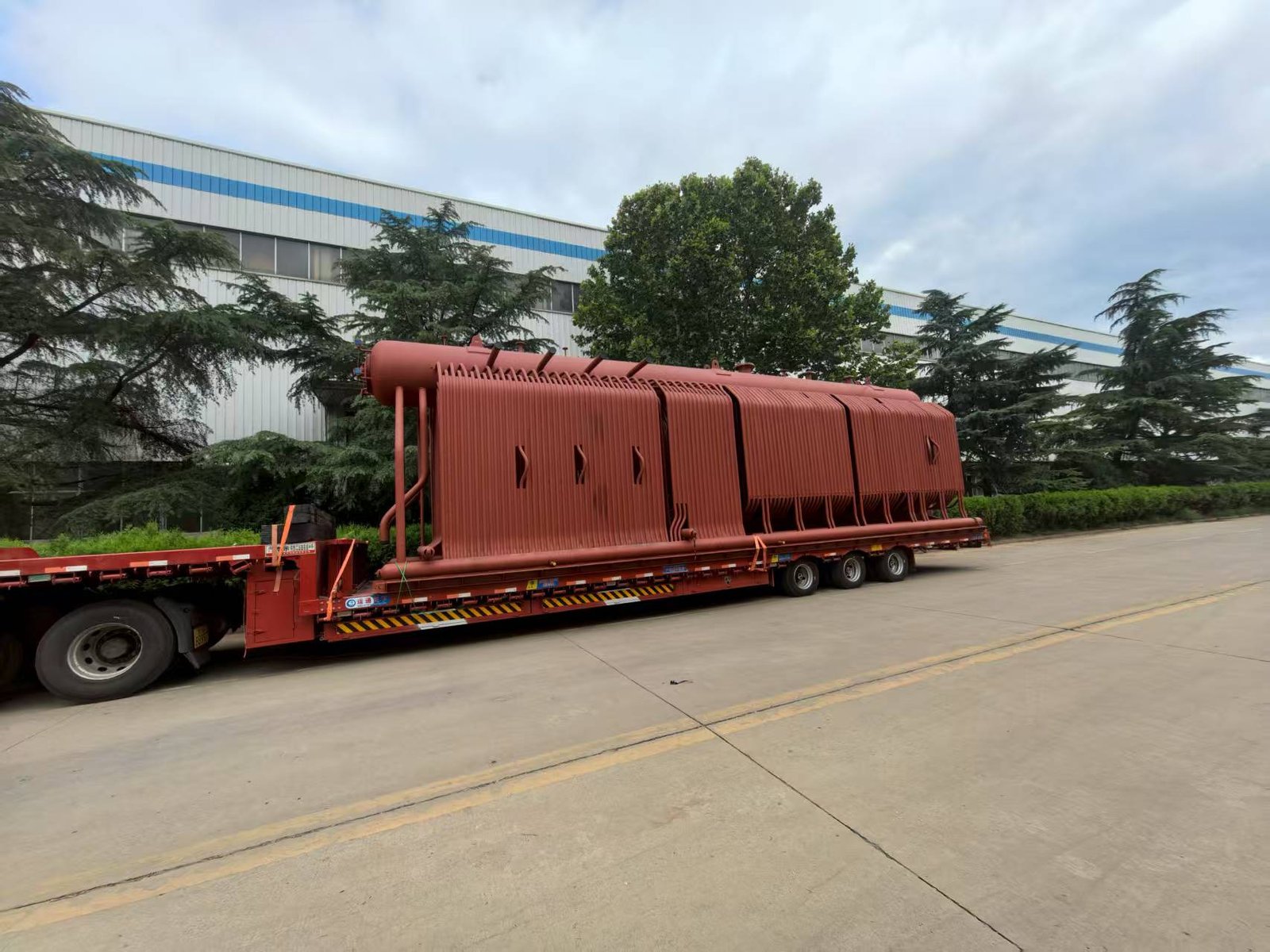
Logistics capability matters more than buyers realize until something goes wrong. Large steam drums and heavy headers on a 75 t/h boiler can require special-permit transport, and not every manufacturer has experience with over-dimensional shipping to Southeast Asian or African ports, customs documentation (Certificate of Origin, Form A for GSP countries, EUR.1 for applicable trade agreements), or established erection partnerships in the target country. Ask directly: who is your local erection subcontractor in this region, how long have you worked with them, and can I speak with their site manager?
Total Cost of Ownership Analysis: Purchase Price Is Only 15–25% of a Boiler’s Lifetime Cost
The lowest bid rarely wins in the long run. That sentence gets repeated constantly in procurement circles, yet engineering teams still get pressured to justify capital spending on lowest-price terms. For a coal-fired industrial boiler — an asset you’ll operate for 25 years, sometimes longer — the purchase price typically represents only 15–25% of what you’ll actually spend. The rest accumulates quietly: in the fuel bill, the maintenance crew’s overtime, the spare parts you couldn’t source fast enough, the compliance retrofits regulators eventually force.
The Real Cost Stack Over a 25-Year Asset Life
Fuel dominates. Depending on your operating hours, steam output, and local coal price, fuel cost typically accounts for 55–70% of lifetime expenditure. Operation and maintenance labor runs roughly 8–12%, spare parts and consumables around 5–8%, and regulatory compliance upgrades — emissions retrofits, stack monitoring, ash disposal system upgrades — account for another 2–5%. Capital equipment sits at 15–25%, depending heavily on whether you’re buying equipment-only or contracting EPC.
These proportions shift with fuel price volatility. When coal prices spike, fuel’s share climbs toward 70% and every percentage point of thermal efficiency becomes worth fighting over.
What a 1% Efficiency Difference Actually Costs You
Take a concrete case: a 75 t/h steam boiler, bituminous coal at roughly $80/tonne, 8,000 operating hours per year. Assume an evaporation rate of around 7–8 tonnes of steam per tonne of coal (depending on steam parameters and feed-water temperature — this varies). That puts annual coal consumption in the range of 9,500–10,700 tonnes. A 1% improvement in thermal efficiency reduces coal consumption by roughly 95–107 tonnes annually. At $80/tonne, that’s $7,600–$8,600 saved every year, before you account for ash disposal costs, which also drop proportionally.
Over 25 years, undiscounted, that single percentage point is worth somewhere between $190,000 and $215,000. A CFB boiler with a properly sized economizer and air preheater typically achieves 88–93% thermal efficiency; a poorly tuned chain-grate stoker without heat recovery might sit at 82–85%. That gap is not abstract — it shows up in your coal purchase orders every quarter.
A 0.1 mm scale layer on boiler heat transfer surfaces increases fuel consumption by approximately 1.5%.True
Scale has very low thermal conductivity (roughly 0.1–2 W/m·K depending on composition, compared to steel at ~50 W/m·K). Even thin deposits significantly increase the thermal resistance across tube walls, forcing higher flue gas temperatures and reducing heat transfer effectiveness. The 1.5% figure per 0.1 mm is a widely cited approximation in boiler water treatment engineering and aligns with heat transfer penalty calculations.
Pressure Parts Wear Out — Budget for It
Superheater tube bundles in high-pressure coal-fired boilers typically need replacement somewhere between 8 and 15 years, depending on steam temperature (above 450°C accelerates creep and oxidation significantly) and the erosivity of the coal ash — high-silica ash from certain Indonesian or South African coals can cut that interval noticeably. A full superheater bundle replacement on a mid-size boiler runs into serious money when you factor in outage time.
CFB combustor refractory is another one people underestimate. Budget for full or partial relining every 3–7 years; the actual interval depends on operating temperature, fuel sulfur content, and how often the unit cycles. Grate bars in stoker boilers last 5–10 years typically, but aggressive clinker formation from high-ash-fusion coals can shorten that.
Spare Parts Strategy: Don’t Get Locked Out
Sole-source dependency is a genuine operational risk. If a manufacturer discontinues a non-standard pressure part five years into your boiler’s life, you’re either paying premium prices for emergency fabrication or facing extended downtime. The right move is negotiating a 10-year spare parts supply commitment into the original contract — pricing formulas, lead time guarantees, and approved third-party alternatives for wearing items like grate bars, seal rings, and instrumentation. Most reputable manufacturers will accept this. Ones who resist that conversation are telling you something.
Water treatment is often treated as an afterthought until scale or corrosion causes a tube failure. A proper condensate polishing and feed-water dosing program costs relatively little compared to a drum replacement or an unplanned outage mid-winter when your plant is at peak load. Get your water quality specification defined before commissioning, not after the first tube leak.
After-Sales Service Infrastructure and Remote Monitoring Capabilities That Separate Tier-1 Manufacturers
A boiler that runs reliably for 25 years isn’t just a product of good engineering at the factory — it’s a product of what the manufacturer does after the handover certificate is signed. This is where tier-1 and tier-2 suppliers diverge most visibly, and where procurement teams who focused only on bid price discover the real cost of their decision.
Minimum Acceptable Service Commitments for International Projects
For plants located outside the manufacturer’s home country — which covers most export projects into Southeast Asia, South Asia, the Middle East, and Africa — the benchmark for on-site response should be a dedicated field service engineer on the ground within 48 to 72 hours of a confirmed fault call. Not a sales contact, not a regional agent who subcontracts to a local fitter. An actual boiler engineer employed by the manufacturer, carrying the right documentation and parts.
A 24/7 remote technical hotline sounds standard, but in practice many suppliers route these calls to a general customer service desk after hours. Ask specifically: who answers at 2 a.m. local time during a forced outage, and what is their technical authority to authorize an emergency shutdown protocol or a bypass procedure? Get that answer in writing.
Regional spare-parts stocking is equally non-negotiable for critical-path components. Grate bars, economizer tube bundles, drum gaskets, safety valve internals, and refractory anchor hardware — these items should sit in a warehouse within a few days’ freight of your plant, not in a container on a six-week ocean shipment. A reasonable minimum is that the manufacturer maintains consignment stock or a third-party logistics arrangement covering the most failure-prone wear parts for your specific boiler model.
Remote Monitoring and Predictive Maintenance Integration
Modern coal-fired boilers — CFB units especially — generate enough sensor data to catch most developing faults weeks before they cause a forced outage, but only if the manufacturer has built that capability into the control architecture. DCS/SCADA integration should be standard on anything above roughly 20 t/h. What varies significantly is the quality of the remote diagnostics layer sitting on top of it.
Look for IoT-enabled monitoring covering at minimum: furnace temperature distribution across multiple bed or furnace zones, flue-gas O₂ trim at the economizer outlet (tighter O₂ control typically cuts unburned carbon losses and keeps efficiency in the 88–92% range for well-tuned CFB units), drum-level control with redundant transmitters, and draft pressure differentials across the air preheater and ESP. Data logging with a minimum 12-month rolling archive lets the manufacturer’s remote engineering team trend tube-wall temperature creep, blowdown frequency drift, and combustion stoichiometry shifts that signal a fouling or wear problem developing.
Tier-1 boiler manufacturers provide real-time remote diagnostics via IoT sensors integrated with plant DCS/SCADA systems, enabling predictive maintenance.True
This is standard practice among established industrial boiler OEMs for modern coal-fired and CFB boilers above roughly 20 t/h, where continuous monitoring of combustion parameters, drum level, and flue-gas composition is both technically feasible and commercially justified given the cost of unplanned outages.
Annual Inspection and Combustion Optimization Services
Most plants run an annual boiler turnaround of 7 to 14 days, depending on fuel quality and operating hours. A credible manufacturer should offer a structured inspection service tied to that window — not just a sales visit. This means internal pressure-part inspection with borescope or confined-space access, NDE (non-destructive examination) of critical welds and tube-to-header joints using UT or PT methods, safety valve bench calibration against the rated lift pressure, and a combustion optimization session that re-tunes excess air, grate/bed temperature setpoints, and sootblowing frequency based on the actual coal being fired.
That last point matters more than people expect. Coal quality drifts — sometimes significantly — between the fuel specified at contract and what arrives at the bunker in year three or four. A manufacturer with real combustion engineering depth can recalibrate the firing system to maintain efficiency and stay within emissions limits on an off-spec fuel. One that only supplied the pressure parts cannot.
Operator Training Programs
A formal training curriculum delivered to your operations and maintenance team is worth asking about during supplier qualification, not as an afterthought at FAT. At minimum this should cover combustion control logic and manual override procedures, boiler water chemistry and blowdown management, emergency shutdown sequences for overpressure, low-water, and flue-gas exceedance scenarios, and emissions monitoring with the plant’s continuous emissions monitoring system (CEMS).
The best programs combine classroom training at the manufacturer’s facility — ideally during fabrication so operators can see the pressure parts before they’re insulated — with structured on-site training during commissioning and the first 30 to 60 days of operation. Written procedures in the plant’s operating language are not a luxury.
Warranty Terms: What’s Reasonable and What’s a Red Flag
A credible warranty baseline is 12 months from commissioning or 18 months from ex-works shipment, whichever comes first, covering pressure parts including drums, headers, and superheater/economizer tubes. The exclusion list should be limited to consumables (grate bars, refractory, gaskets subject to normal wear), damage from water chemistry outside specified limits, and modifications made without manufacturer approval.
What should not be excluded: weld failures in pressure parts under rated operating conditions, tube erosion rates higher than the design basis assumed, and control system faults in manufacturer-supplied panels. If a supplier’s warranty exclusion list runs to two pages of carve-outs, that tells you something about how they expect their equipment to perform in the field.
Frequently Asked Questions About Choosing a Coal-Fired Boiler Manufacturer
How long does it actually take to get a custom coal-fired boiler delivered?
Realistically, budget 9 to 18 months from contract signature to boiler on-site, ready for commissioning. The range is wide because it depends heavily on unit size, how quickly your engineering inputs are frozen, and port-to-port shipping distance.
Engineering design freeze typically runs 4 to 8 weeks — longer if your process data arrives piecemeal or fuel analysis is still pending when the contract is signed. This phase is where most projects quietly lose a month without anyone noticing. Pressure-part fabrication is the long pole: expect 16 to 22 weeks for boilers under roughly 75 t/h, and 22 to 28 weeks for larger CFB units where membrane wall panels, cyclone separators, and the superheater pendant assemblies all have their own sub-schedules. Factory acceptance testing (FAT) takes 2 to 4 weeks depending on whether your third-party inspector can mobilize promptly. Shipping adds another 4 to 8 weeks depending on destination — Southeast Asia is on the shorter end, West Africa or South America is on the longer end, and seasonal port congestion (Chinese New Year, monsoon disruptions at destination ports) can add 2 to 4 weeks on top of that.
The single most common cause of delay, in practice, is late civil and steel structure drawing approval. Agree on a design freeze milestone in the contract and tie a payment release to it.
How do I verify a Chinese manufacturer’s SELO Class A pressure vessel license is valid — and covers what I need?
Go directly to the State Administration for Market Regulation (SAMR) national special equipment information service platform. The URL is http://special.samr.gov.cn — search by manufacturer name or unified social credit code. The license record will show the license number, validity period, manufacturing category, and crucially, the specific sub-category and parameter scope (design pressure range, temperature rating, medium type). A Class A boiler manufacturing license covers industrial steam boilers, but you need to confirm the scope explicitly includes the capacity and pressure class you’re procuring. Some licenses are grandfathered at lower pressure or exclude supercritical parameters. Ask the manufacturer to send you a scanned copy, then cross-check every field against the online record yourself. Do not rely solely on a copy they provide.
SAMR maintains a publicly accessible online registry where any buyer can verify the validity and scope of a Chinese boiler manufacturer's SELO license in real time.True
The SAMR special equipment information platform is an official government registry used by regulators, third-party inspectors, and international buyers to confirm manufacturing license status, category, and scope parameters.
Can a coal-fired boiler be retrofitted to burn biomass or natural gas later?
Yes, but the honest answer is: it depends on how much of the original combustion system you’re willing to replace, and whether the pressure parts were sized for the different heat release profile. Coal and biomass have meaningfully different bulk density, moisture content, ash fusion temperature, and combustion behavior. Converting a chain-grate stoker from coal to biomass often requires a new grate assembly, modified fuel feeding system, and potentially different furnace volume — roughly 20 to 40% of the original boiler capital cost, give or take. Gas conversion is more involved: burner windbox, combustion control, safety interlock, and often refractory changes. CFB boilers handle fuel flexibility better by design, since the bed temperature is relatively stable across a wider fuel range, but even CFB units need specific grate air distribution and cyclone sizing adjustments when fuel switches significantly.
The practical advice: if there is any realistic chance of fuel switching in the first 10 to 15 years of operation, specify co-firing capability or fuel flexibility at the RFQ stage. Engineering it in at design costs far less than retrofitting later.
CFB vs. chain-grate stoker: what efficiency difference should I actually expect?
A well-designed CFB boiler with air preheating, economizer, and proper cyclone efficiency will run 88 to 93% net thermal efficiency. A chain-grate (travelling grate) stoker with economizer and air preheater typically lands at 82 to 88%. The gap is driven by three things: more complete carbon burnout in the CFB bed (char recirculation captures unburned carbon that a grate would lose to ash), better heat transfer surface integration, and the ability to run at lower excess air ratios. On lower-grade coals with high ash content, the efficiency gap widens further in the CFB’s favor. The stoker, though, has lower auxiliary power consumption and simpler maintenance — relevant for plants with limited skilled maintenance staff.
Does a manufacturer supply a single boiler, or is there a minimum order?
Reputable industrial boiler manufacturers supply single units starting from 2 t/h steam output. There is no practical minimum order quantity barrier. That said, a single small unit will carry relatively higher unit engineering and project management costs compared to a repeat order of identical units, and customization depth is usually limited at the lower end of the range — most manufacturers have standard model configurations below roughly 20 t/h where they will accommodate some parameter variation but not a full ground-up custom design.
How should a boiler supply contract be structured to reduce overseas procurement risk?
Payment terms tied to verifiable milestones are non-negotiable: typical structure runs 30% advance, 30% at design approval and raw material inspection, 30% at FAT completion with third-party sign-off, and 10% after commissioning sign-off. Specify inspection hold points — at a minimum, pressure-part hydrostatic test and FAT — and name an internationally recognized third-party inspection agency (SGS, Bureau Veritas, TÜV, or equivalent) in the contract. Performance bonds of 5 to 10% of contract value, issued by a credible bank and valid through commissioning, provide real recourse. Define performance guarantees explicitly: steam output at rated load, thermal efficiency at stated fuel quality, and emissions limits. Vague “general compliance” language is unenforceable. If the supplier won’t agree to liquidated damages for schedule delay and performance shortfall, that tells you something.
References
BPVC Section I — Rules for Construction of Power Boilers — ASME
ISO 9001 — Quality Management Systems — International Organization for Standardization (ISO)
National Board Inspection Code (NBIC) — National Board of Boiler and Pressure Vessel Inspectors
Boiler Efficiency and Combustion — Spirax Sarco
Water for the Boiler — Spirax Sarco
Coal Analysis and Production Information — Thermo Fisher Scientific
Coal-Fired Power Plant Services — GE Vernova
Advanced Boiler Control Solutions — Emerson
Water-Tube Boilers Application Guide — Emerson
How to Choose a Reliable Industrial Coal-Fired Boiler Manufacturer? Read More »