
How Long Does an Industrial Coal-Fired Boiler Project Take? Manufacturing, Delivery, Installation & Commissioning Timeline
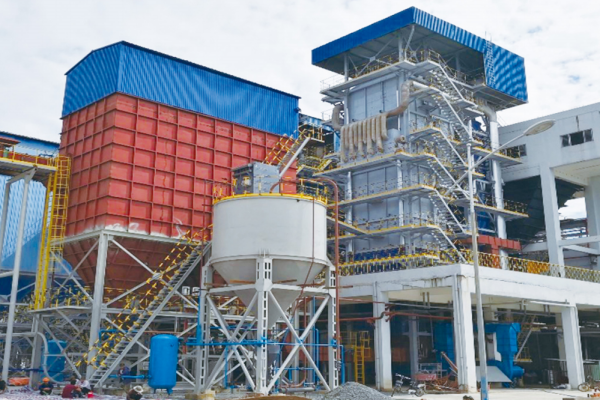
You’ve signed a contract for a new coal-fired boiler, the old unit is running on borrowed time, and your production schedule has exactly zero slack for a surprise six-month delay. That gap between “purchase order issued” and “steam on-line” is where projects go wrong — not because manufacturers lie about lead times, but because buyers rarely account for all four phases stacking against each other: factory build, ocean freight, civil foundation work, and commissioning. Miss one, and you’re looking at idle furnaces, penalty clauses, and a maintenance team standing around waiting for pressure-part erections that haven’t started yet.
A 10–75 t/h industrial coal-fired steam boiler project typically takes 120 to 270 days from contract signing to full commissioning handover. The range depends on boiler type (chain-grate stoker versus CFB), operating pressure, site readiness, and whether civil foundation work can overlap with factory manufacturing. Broken down: factory lead time runs 45–90 days for standard stoker boilers and 90–150 days for CFB units above 75 t/h or 130 bar; on-site civil, erection, and pressure-part installation add another 60–120 days on top.
What most procurement managers discover too late is that the manufacturing clock and the site-preparation clock rarely run in parallel the way the project schedule assumes they will. Permit delays, foundation rework, late auxiliary equipment — any one of these can collapse a buffer that looked generous on paper. The following breakdown works through each phase with the realistic variables that actually drive the numbers, so you can build a schedule that holds up when reality hits it.
Phase 1 – Engineering Design, Drawing Approval, and Regulatory Submission: 15–45 Days
Most vendor quotations list this phase as “2–3 weeks” and leave it at that. In practice, it routinely runs 30–45 days on export projects, and I’ve seen it stretch past 60 when a customer’s fuel data arrives late or a third-party inspection body has a backlog. This is the phase that quietly sets the whole project clock — because manufacturing cannot legally start until stamped pressure-vessel drawings exist, and those drawings cannot be stamped until the thermal calculations are signed off.
What Actually Gets Produced Here
The deliverable list is longer than most owners expect. A properly executed Phase 1 for a coal-fired steam boiler produces, at minimum: combustion and heat-transfer calculation sheets, pressure-part design drawings (drum, headers, tubes, downcomers), structural steel layout drawings, boiler room general arrangement drawings, and a full equipment list with nozzle schedules. For a CFB unit above 75 t/h, add fluidized-bed hydrodynamic calculations and cyclone separator design drawings — those alone can take 10–15 days with in-house design staff.
All pressure-vessel drawings must be stamped by a certified boiler design institute. In China, that means a design institute holding a valid Class A or Class B boiler design license issued by SAMR (State Administration for Market Regulation). The stamp is not optional; it’s a legal prerequisite for the manufacturing license holder to cut steel. Skipping or rushing this step is how projects accumulate hidden defects that surface during final inspection.
Fuel Specification — The Silent Clock-Restart Risk
Here is where a lot of projects run into trouble. A customer submits a coal proximate analysis at the inquiry stage, sometimes pulled from a spot shipment or a generic regional average. If the actual contracted fuel differs — calorific value off by more than roughly 8–10%, ash content above 35%, sulfur over 2%, or moisture consistently above 30% — the combustion system design has to be revised. Grate area, furnace volume, overfire air ratio, and ID fan selection all shift. That is not a minor revision; it can restart the thermal calculation cycle entirely, adding 10–20 days minimum.
Coal fuel specification deviations at the contract stage are one of the top three causes of boiler project delays in export orders.True
Changes to calorific value, ash content, or moisture outside the design envelope require rework of combustion calculations, grate sizing, and fan selection — all of which must be re-approved before manufacturing can proceed.
For export projects, get a witnessed fuel analysis — ideally from a third-party lab — into the contract appendix before Phase 1 begins. It sounds bureaucratic. It saves weeks.
Country-Specific Regulatory Submissions
This is the part vendors almost never put in their Gantt charts. Depending on where the boiler is installed, Phase 1 may include parallel submission to an external authority.
| Regulatory Path | Typical Added Duration | Key Trigger |
|---|---|---|
| No third-party certification (domestic or accepted mutual-recognition) | 0–5 days | Customer accepts manufacturer’s stamp + design institute seal |
| CE PED (Pressure Equipment Directive, Category III/IV) | 15–25 days | EU installation; requires Notified Body involvement |
| ASME Stamp (S, A, or E stamp) | 20–35 days | North America or customer-specified ASME requirement |
| Local national boiler authority approval (Southeast Asia, Middle East, Africa) | 10–30 days | Depends on country; some accept CE or ASME by reference, others require independent review |
These windows assume the Notified Body or inspection authority has normal scheduling. During busy periods — typically Q1 and Q3 in my experience — queue times can add another 10 days.
Auxiliary System Drawing Coordination
A standalone boiler drawing package is not enough. Each major auxiliary — economizer, air preheater, baghouse or electrostatic precipitator, induced draft and forced draft fans, feedwater deaerator, continuous blowdown vessel — requires its own sub-drawings, and those sub-drawings have to be coordinated against the boiler general arrangement. Interference checking between the ID fan outlet duct and the stack base, for instance, is the kind of thing that gets caught in the second approval round if nobody forced a combined review in the first.
Approval Iteration Reality
| Approval Rounds | Realistic Duration | Common Cause of Multiple Rounds |
|---|---|---|
| 1 round (customer approves with minor comments) | ~15 days | Simple scope, experienced customer engineering team |
| 2 rounds (one revision cycle) | 22–28 days | Nozzle location changes, auxiliary layout revisions |
| 3 rounds + third-party review | 40–45 days | Regulatory certification, EPC main contractor involvement, customer’s own PMC |
Three-round approval is more common than vendors admit on projects where an EPC main contractor, a plant owner’s engineer, and a local inspection authority all have separate comment lists. Build 35–40 days into your schedule for any export project with third-party certification. If it comes in faster, you have float. If you assumed 15 days and it runs to 40, you’ve already lost a month before a single piece of steel is cut.
Phase 2 – Steel, Pressure Parts, and Auxiliary Component Manufacturing: 45–150 Days by Boiler Type
Manufacturing is where most buyers get surprised. The quotation says “60 days lead time” and the buyer assumes that means the boiler ships in 60 days. What it usually means is 60 days after the approved general arrangement drawing, after the pressure vessel registration paperwork clears, and after the drum plate material is confirmed in stock. Add those upstream steps and you’re already at day 90 before a single weld is laid on the drum shell.
The variance across boiler types is real and significant, so here’s a working reference rather than a round-number estimate:
| Boiler Type | Capacity Range | Typical Manufacturing Lead Time | Key Driver of Variance |
|---|---|---|---|
| Chain-grate coal steam boiler | 4–15 t/h | 45–60 days | Drum diameter, shop backlog |
| Water-tube coal steam boiler | 20–35 t/h | 60–90 days | Membrane wall panel count, superheater spec |
| Coal-fired CFB steam boiler | 75–130 t/h, to ~130 bar | 100–150 days | Header forging lead time, refractory lining |
| Coal-fired thermal oil heater | 1–14 MW | 40–60 days | Coil material (carbon vs. alloy steel) |
| Coal-fired hot water boiler | 1.4–14 MW | 45–70 days | Pressure rating, drum wall thickness |
Thermal oil heaters and hot water boilers are genuinely faster to manufacture than steam boilers of equivalent heat output. The pressure levels are lower, the drum geometry is simpler, and there’s no superheater section to complicate coil bending sequences. A 7 MW coal-fired thermal oil heater can realistically leave the factory in 45 days under normal shop conditions. A 35 t/h water-tube steam boiler at the same calendar point is still mid-fabrication.
What Actually Sits on the Critical Path
The boiler drum — the main pressure vessel — governs everything else. Plate rolling for a 35 t/h drum takes several days, but the welding procedure qualification, radiographic or ultrasonic examination of longitudinal and circumferential seams, post-weld heat treatment, and final hydrostatic test add up fast. Drum shell plates for high-pressure units (above roughly 3.8 MPa) typically require SA-299 or the Chinese equivalent Q345R in thicknesses that not every steel service center stocks. If the plate order falls during a domestic steel mill allocation period — which happens more often in Q1 after Chinese New Year than buyers expect — you can lose two to three weeks before a weld is even started.
Membrane water-wall panels are a parallel fabrication stream, but they’re labor-intensive. Each panel is hundreds of individual fin-welded tubes, and dimensional tolerances are tight because the panels bolt together on site. Superheater coil bending, especially for alloy-steel tubes (T91, TP304H) on units running above 450°C steam temperature, requires qualified CNC benders and inter-pass temperature control. One shop I’ve seen tried to rush a superheater assembly and ended up scrapping a partial coil set — that set the job back nearly three weeks.
Header forgings deserve special mention for CFB units. The large-diameter headers connecting the water walls and superheater circuits are often forged components, not fabricated from plate. Forging lead times from the mill can run 25–40 days on their own, and this is frequently on the critical path for any CFB boiler above 75 t/h.
Regulatory Hold Points and Third-Party Inspection
Chinese boiler manufacturing operates under TSGGG0001 (Boiler Safety Technical Supervision Regulation), which mandates specific inspection hold points: material certificate verification before cutting, weld procedure qualification, NDT on pressure welds, hydrostatic pressure testing, and final dimensional and documentation review before the boiler can be legally certified for export or domestic use.
Third-party inspection by Bureau Veritas, SGS, or Lloyd's adds 5–15 days to manufacturing duration.True
TPI scheduling depends on inspector availability and plant location. The inspector must witness the hydrostatic test in person, and if their travel or availability doesn't align with shop readiness, the boiler physically waits. In practice, 7–10 days is the most common added duration for a single TPI visit covering hydrostatic test plus final inspection.
Buyers who require TPI — and most EPC contracts and overseas project financing agreements do — should build this buffer in explicitly rather than hoping the shop can schedule around it.
Shop-Assembled vs. Site-Erected: a Downstream Consequence
Smaller boilers in the 4–35 t/h range are typically shop-assembled as complete modules: combustion chamber, drum, economizer, air preheater, and fans all pre-piped and pre-wired before shipping. This costs more in transport (heavier lifts, sometimes wide-load permits) but compresses site installation to roughly 20–40 days once the foundation is ready.
Larger CFB units above 75 t/h ship as pressure parts and structural steel separately. The water-wall panels, drum, headers, and refractory materials arrive in dozens of containers. Site erection then becomes its own project within a project — typically 60–90 days of crane work, tube welding, and refractory casting before the unit is anywhere near a cold-start attempt.
Parallel Manufacturing of Auxiliaries
The baghouse dust collector, economizer, ID/FD fans, coal feeding and ash handling conveyors — none of these need to wait for the boiler drum to be finished. A well-managed project starts fabricating auxiliaries at the same time as the pressure parts, not sequentially after them. Running these streams in parallel routinely compresses the overall manufacturing-to-delivery window by 15–30 days. The caveat is that this requires a project manager actively tracking both streams; if the procurement of fan impeller castings or filter bags slips quietly because nobody is watching it, the parallel benefit evaporates.
Phase 3 – Inland Transport, Port Operations, and International Sea Freight: 15–60 Days
This is the phase that quietly destroys schedules. Engineering teams debate furnace geometry for weeks, procurement managers track steel delivery to the day, and then the whole project sits at a port in Qingdao for three weeks because one certificate has a mismatched unit weight. I’ve seen it happen more than once.
Inland Transport: Getting a 75 t/h Boiler from Factory to Port
A fully assembled steam drum for a 75 t/h chain-grate boiler typically weighs somewhere between 18 and 35 tonnes, and the longest single pieces — economizer headers, air preheater modules, the drum itself — can run 12–16 meters. That means abnormal load permits before the truck moves an inch. In Shandong, Henan, and Jiangsu, where the bulk of Chinese industrial boiler manufacturing sits, permit processing usually takes 3–7 working days and requires a route survey approved by the local highway authority. If the route crosses a bridge with weight restrictions, the logistics team reroutes, sometimes adding 100–200 km.
Transit time from factory to port — Qingdao, Tianjin, or Shanghai, depending on origin — runs 2–5 days under normal conditions. Seasonal factors matter: the weeks around Chinese New Year and the October Golden Week create backlogs at port gates that add 3–8 days nobody budgets for. Flat-bed trailers are standard; low-loaders are needed for anything approaching 4 meters in loaded height. Escort vehicles are legally required on most provincial routes for loads above a certain width threshold (usually 3.5 m in most provinces).
Sea Freight: Transit Time by Region
Once cargo is at port, vessel loading for OOG (out-of-gauge) cargo doesn’t happen on the next available ship. Flat-rack container slots and open-top bookings need to be arranged in advance — typically 1–2 weeks lead time for a major Chinese export port — and the vessel cutoff for OOG cargo is usually 3–5 days before standard FCL cutoff.
Realistic sea transit times from Chinese main ports:
| Destination Region | Representative Ports | Typical Sea Transit |
|---|---|---|
| Southeast Asia (Vietnam, Indonesia, Philippines) | Ho Chi Minh, Jakarta, Manila | 7–18 days |
| South Asia (India, Bangladesh, Pakistan) | Nhava Sheva, Chittagong, Karachi | 18–28 days |
| Middle East (UAE, Saudi Arabia) | Jebel Ali, Dammam | 25–35 days |
| East Africa (Tanzania, Ethiopia via Djibouti) | Dar es Salaam, Djibouti | 30–45 days |
| West Africa (Nigeria, Ghana) | Apapa, Tema | 40–55 days |
These ranges depend heavily on whether direct service or transshipment routing is used. A direct Qingdao–Jebel Ali sailing runs around 25 days; a transshipment via Singapore or Colombo adds 5–12 days and introduces a missed-connection risk that no one likes to discuss until it happens.
Documentation and Customs Risk — The Underestimated Variable
Missing or mismatched CCIC export inspection certificates can delay boiler shipments by 10–20 days at destination ports.True
Destination customs authorities in South Asia, the Middle East, and Africa commonly require CCIC (China Certification and Inspection Group) certificates for pressure vessel equipment. Any discrepancy between the certificate data and the commercial invoice or packing list triggers a customs hold requiring amended documentation, which typically takes 1–3 weeks to resolve through back-and-forth with the exporter and inspection body.
The boiler pressure vessel certificate of origin needs to correctly list every pressure-bearing component, with weights and dimensions that match the packing list exactly. Sounds obvious. In practice, last-minute design changes — a nozzle relocated, an auxiliary pump added to the skid — often don’t get reflected in the final documentation package before it ships. One transposed digit in a gross weight field has triggered a full customs examination in Bangladesh that added 17 days to a project I’m aware of.
Destination-country import permits are a separate layer. Several African markets and Pakistan require pre-shipment import approval for pressure vessels. Getting that permit can take 3–6 weeks if the buyer’s local agent isn’t already moving on it before the boiler leaves the factory. That work needs to start during Phase 2, not after the vessel departs.
LCL, FCL, and OOG: Choosing the Wrong Container Spec Is Expensive
Standard 40-foot high-cube FCL containers work for auxiliary equipment — feed water pumps, economizer coil bundles in crates, instrumentation panels. The main drum and furnace membrane wall panels almost always require flat-rack or open-top containers. Trying to force-fit a 14-meter drum into a standard container to save on freight costs is how you get a demurrage claim and damaged pressure parts.
A proper packing specification, reviewed jointly by the boiler manufacturer’s shipping team and the freight forwarder, should be locked in before manufacturing is finished — not after the cargo arrives at the port shed. Port demurrage at Apapa or Dar es Salaam can run $150–$400 per container per day, and delays of 10–20 days are not unusual if documentation isn’t pre-cleared.
The EPC contractor or the owner’s designated freight forwarder needs to be actively coordinating with the destination port agent at least 3–4 weeks before the vessel arrives. Waiting for the arrival notice to start customs prep is, in my experience, the single most common logistics mistake on these projects.
Phase 4 – Civil Foundation, Steel Structure Erection, and Pressure-Part Installation: 45–120 Days on Site
This is where projects either hold their schedule or quietly fall apart. The boiler ships on time, clears customs, arrives at the plant gate — and then sits on rollers for three weeks because the foundation isn’t ready. It happens more often than most EPC managers want to admit.
Civil Prerequisites: The Work That Has to Be Done Before the Boiler Arrives
Concrete cure time alone is a hard constraint that no amount of schedule pressure can compress safely. A boiler house foundation poured to ACI 301 requirements needs a minimum 28 days to reach design compressive strength before you load it with pressure parts. Try to rush this — which some contractors do by stripping formwork early in hot climates — and you risk micro-cracking under dynamic load from the feed water pumps or induced-draft fan. That’s not a theoretical risk; settlement cracks under a drum saddle are expensive to diagnose and almost impossible to fix without a full boiler lift.
Beyond the main boiler foundation, the following structures need to be substantially complete before mechanical installation begins: the flue gas duct and ESP or baghouse foundation, the stack foundation (especially if the stack is self-supporting steel above 30 m), the deaerator and feed water pump platform, and the coal bunker or coal handling structure. On a mid-size project — say, a 35 t/h chain-grate steam boiler — getting all of these foundations poured, cured, and surveyed typically takes 30–50 days if the civil contractor is organized and material supply is consistent. In practice, steel reinforcement delivery delays and wet-season concrete pours can push that to 60–70 days without anyone making an obvious mistake.
Mechanical Installation Sequence and Realistic Day Counts
For a site-erected boiler in the 35–75 t/h range, the mechanical sequence runs roughly like this:
| Activity | Typical Duration |
|---|---|
| Boiler steel frame erection | 7–14 days |
| Lower drum and header setting | 3–7 days |
| Water-wall panel assembly | 10–20 days |
| Superheater and economizer installation | 7–14 days |
| Flue gas ductwork and dust collector connection | 10–15 days |
| Hydraulic pressure testing | 3–5 days |
These ranges depend heavily on crane capacity on site, whether water-wall panels arrived pre-assembled from the factory, and how experienced the local rigging crew is. A crew that has erected three boilers of the same model works faster than one seeing the design for the first time — that’s not a trivial difference, more like 20–30% on elapsed time.
Package boilers are a different story. A shop-assembled chain-grate package boiler below roughly 20 t/h can be mechanically set and connected in 10–25 days on site, assuming the foundation is ready and utilities are stubbed in. The bulk of the work shifts back to the factory, which is exactly the point.
CFB boilers above 75 t/h are the opposite end of the spectrum. Field-erected CFB construction — cyclone separators, loop seals, refractory-lined furnace walls, external heat exchangers on some designs — realistically occupies 60–120 days on site, and the upper end of that range is not unusual for first-time installations in locations where specialist CFB erection crews have to be mobilized from elsewhere.
Refractory Curing: The Step That Gets Skipped and Costs Dearly
Castable refractory and ceramic fiber lining in the furnace, cyclone, and ductwork need a controlled bake-out protocol — typically a staged heat-up over 7–14 days — before the boiler sees full operating temperature. The protocol matters: you’re driving out chemically bound moisture without thermally shocking the lining. Skip it or compress it to two or three days because the owner wants first steam fast, and the lining will crack and spall. In my experience, furnace lining failures within the first three months of operation almost always trace back to an inadequate or abbreviated bake-out. Refractory repairs on a running boiler are costly and disruptive; on a CFB, they can mean a full outage.
Skipping the refractory bake-out protocol to accelerate first fire will not cause immediate visible failure but leads to lining spallation within 3 months of operation.True
Refractory castables contain chemically bound water that must be removed through controlled staged heating. Rapid firing traps steam pressure within the lining matrix, causing cracking and delamination that becomes structurally significant under thermal cycling.
Piping, Instrumentation, and Electrical: The Quiet Bottleneck
Boiler steam and blowdown piping, feed water lines, fuel supply, ash handling, compressed air, and the instrumentation and electrical connections all run concurrently with structural and pressure-part work — in theory. In practice, when two or three subcontractors are sharing scaffold access and the civil contractor is still grouting anchor bolts, coordination breaks down. Instrumentation and electrical work in particular tends to get pushed to the back of the queue and then becomes the reason commissioning starts two weeks late. A well-run project assigns a single site coordinator with authority over access scheduling; without that, the I&E contractor shows up, finds the conduit runs blocked by a steel erection crew, and comes back next week.
Total on-site duration from first concrete to mechanical completion for a 35–75 t/h coal-fired steam boiler project, assuming adequate site preparation and reasonable coordination, runs 60–100 days. Add the 3–5 day pressure test and the 7–14 day refractory bake-out, and you’re at 70–120 days before the commissioning engineer fires the first burner.
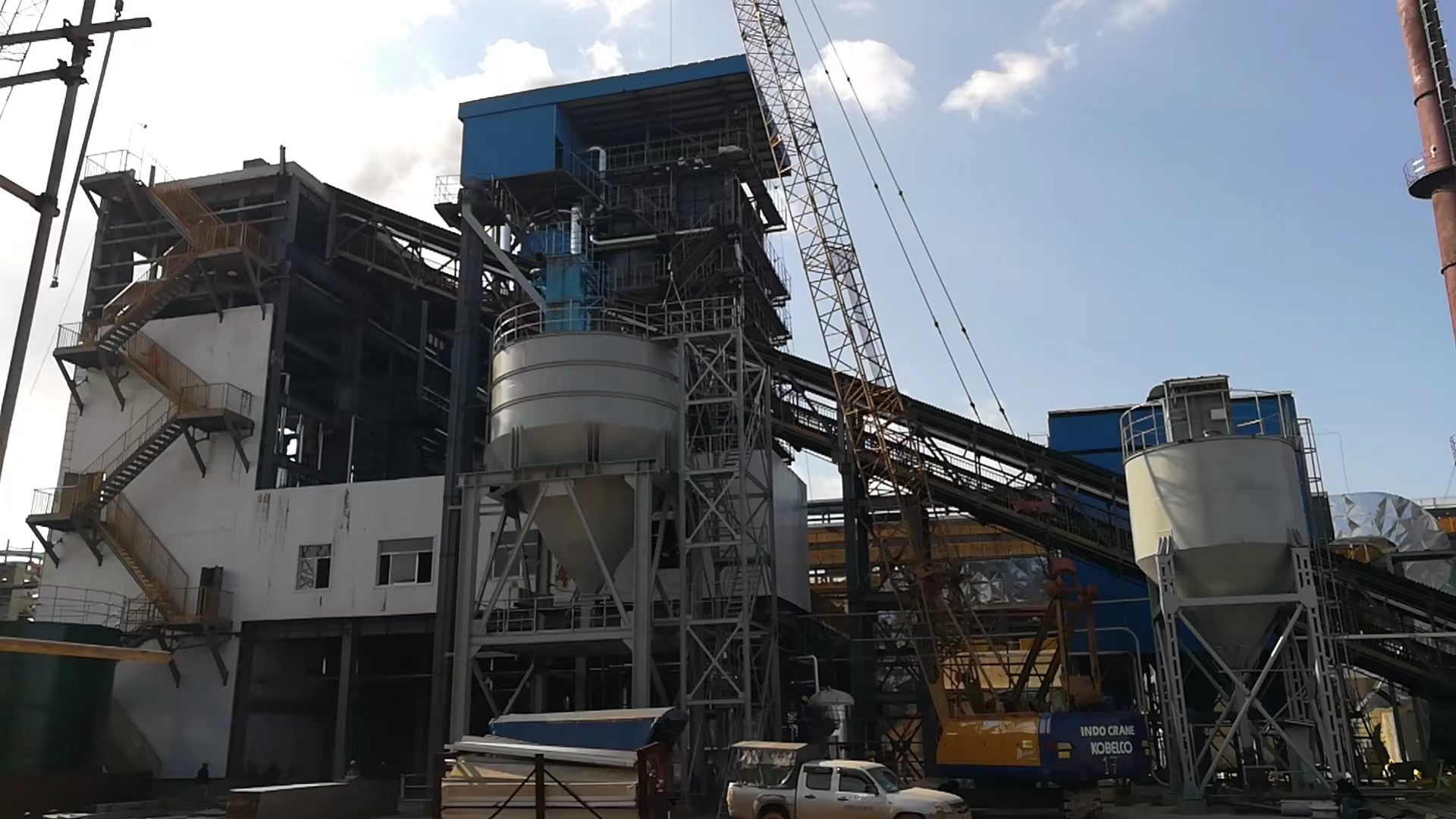
Phase 5 – Cold Commissioning, Hot Firing, Steam Blow, and Performance Acceptance: 15–35 Days
First fire is not handover. This distinction sounds obvious, but in practice it gets blurred constantly — especially on overseas EPC projects where the owner’s team is watching a boiler produce steam for the first time and assumes the hard part is over. It isn’t. The commissioning phase is where years of design intent either get confirmed or quietly undermined, and cutting it short produces failures that typically show up 6–18 months into operation when warranty coverage is already thin.
Cold Commissioning: Getting the Boiler Ready to Fire Safely
Cold commissioning runs roughly 5–10 days, depending on how well the installation team prepared the site and how many I/O points the DCS or PLC system carries. The work is unglamorous but consequential. Every safety valve gets bench-tested and set to its correct lift pressure — a step that occasionally reveals valves that left the factory slightly out of tolerance, which happens more than manufacturers like to admit. Feed water pumps and ID/FD fans are bump-started to confirm rotation direction; a reversed fan motor has destroyed more than one hour’s worth of refractory preheating when caught late. Coal feeder calibration on a chain-grate stoker involves running the grate at multiple speed settings and physically weighing the coal throughput against the control-system readout, because a 10–15% calibration error in fuel feed rate will skew thermal efficiency and emissions results during the acceptance test.
DCS loop testing — confirming that every transmitter, control valve, and interlock responds correctly end-to-end — typically takes 2–4 days on a system with 300–600 I/O points, which is normal for a 35–75 t/h industrial steam boiler. Larger CFB units with 1,200+ I/O points can push this alone to 5–7 days.
Hot Firing Sequence and Load Stepping
The initial light-off almost always uses diesel or natural gas, not coal. This is deliberate: a new boiler’s refractory needs a controlled, slow heat soak — typically following the manufacturer’s heating curve over 48–72 hours — to cure any residual moisture and prevent thermal cracking. Skipping or compressing this step is a classic contractor shortcut that causes refractory spalling within the first operating season.
Once drum pressure rises and the boiler generates first steam, load is stepped progressively: 25% MCR, stabilize, check; 50%, stabilize, check; 75%; then full MCR. Each step holds for at least 2–4 hours while operators verify combustion stability, bed temperature uniformity (critical for CFB units), steam temperature control response, and blowdown behavior. Rushing the load steps — usually because the owner is eager to connect to the process — is how soot fires and tube-to-header leaks get missed during commissioning and become unplanned outages three months later.
Steam Blow: Non-Negotiable for High-Pressure Lines
For new steam lines operating above 2.5 MPa, steam blow is mandatory before any connection to turbine stop valves or critical process headers. The procedure uses the boiler’s own steam — raised to roughly 75–80% of operating pressure — to purge weld slag, mill scale, and construction debris from the piping at high velocity. Temporary target plates (polished stainless or aluminum inserts in the pipe) catch particulate between blow cycles; acceptance requires a defined cleanliness rating with no indentations above a specified size on two consecutive plates.
This takes 3–7 days. It is not optional, and any vendor who tells you it can be skipped for “industrial process steam” below a certain pressure threshold deserves a hard follow-up question about what happens to your control valves and heat exchanger tubes downstream.
Steam blow is only required for power-generation turbine connections, not industrial process steam systems.False
Steam blow is standard practice for any new high-pressure steam piping above approximately 2.5 MPa, regardless of end use. Weld slag and mill scale entrained in uninspected piping cause erosion damage to valves, strainers, and process equipment. Most reputable boiler manufacturers specify it in their commissioning procedures for industrial installations.
Performance Acceptance Test
The formal acceptance test is a 72-hour continuous full-load run. During this window, the boiler must sustain rated steam output within ±3–5% of contract capacity while operators record fuel consumption, flue gas composition (O₂, CO₂, CO), stack temperature, and unburned carbon in bottom ash and fly ash. Thermal efficiency is back-calculated from these measurements — a properly commissioned 10–35 t/h chain-grate unit should land somewhere in the 82–88% range, depending on coal quality and design specification, while a well-tuned CFB typically achieves 88–92% at steady full load.
Emission measurements for NOx, SO₂, and particulate matter are taken during this window and compared against the contract guarantee and local regulatory limits. If the plant is in a jurisdiction with CEMS requirements, this is also when the continuous monitoring equipment gets calibrated and its data stream verified.
The Visa Problem Nobody Puts in the Schedule
The single most consistent cause of commissioning delays on export projects — in my experience, more common than equipment defects or site readiness issues — is simply that the manufacturer’s commissioning engineers cannot get on-site when needed. Visa processing for technical staff traveling to Southeast Asia, South Asia, Africa, or the Middle East can run 2–6 weeks, and in countries where invitation letters require government-level processing, delays of 30 days are not unusual.
A boiler sitting fully installed but uncommissioned costs the owner real money every day: capital is deployed, operating staff are on payroll, and production startup is blocked. The fix is straightforward but requires discipline: confirm visa requirements and lead times during contract negotiation, not after the boiler ships. Any EPC or supply contract should specify commissioning engineer deployment timelines and clarify whether travel delays caused by documentation processing fall under contractor or owner responsibility.
Get this language in writing before you sign. It rarely is.
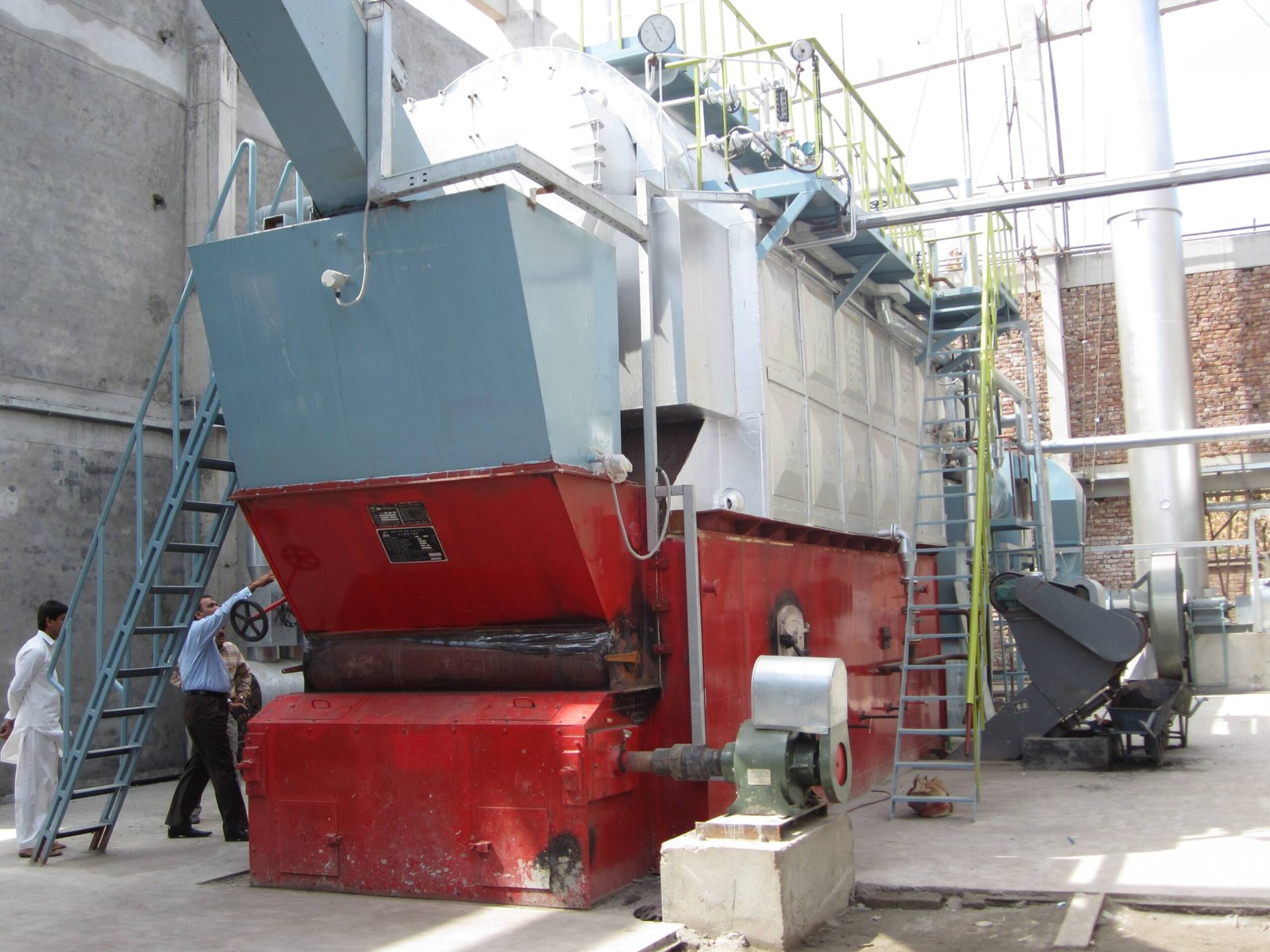
Timeline Comparison Table: Chain-Grate vs. Water-Tube vs. CFB Coal Boiler Projects by Capacity
The phases described above don’t exist in isolation — they stack, and the stack looks very different depending on what you’re buying. A 6 t/h chain-grate stoker for a textile mill and a 110 t/h CFB boiler for an industrial park are fundamentally different procurement events, yet both get described in vendor proposals as “standard lead time, approximately 4–5 months.” That kind of vagueness is where project schedules fall apart.
The table below gives capacity-segmented estimates across the five most common coal-fired boiler configurations sold into export markets. Freight column is baselined to Southeast Asia (Vietnam, Indonesia, Thailand, Philippines); see footnotes for other regions.
| Boiler Type | Capacity Range | Design & Approval (days) | Manufacturing (days) | Freight to SE Asia (days) | Installation (days) | Commissioning (days) | Typical Total Range (days) |
|---|---|---|---|---|---|---|---|
| Chain-grate stoker coal steam boiler | 2–15 t/h | 15–20 | 45–60 | 10–18 | 15–25 | 15–20 | 100–143 |
| Three-pass water-tube coal steam boiler | 20–35 t/h | 20–30 | 60–90 | 10–18 | 25–45 | 15–25 | 130–208 |
| Corner-tube coal hot water boiler | 7–29 MW | 20–30 | 55–80 | 10–18 | 20–35 | 15–20 | 120–183 |
| Coal-fired CFB steam boiler | 75–130 t/h | 30–45 | 100–150 | 15–25 | 75–120 | 25–35 | 245–375 |
| Coal-fired thermal oil heater | 1–14 MW | 15–20 | 40–60 | 10–18 | 10–20 | 10–15 | 85–133 |
Footnotes:
– Middle East destinations (Saudi Arabia, UAE, Oman): add roughly 10 days to the freight column, plus allow 5–10 extra days for port customs clearance variability.
– East and West Africa destinations: add 20–30 days freight, and factor in the real possibility of 1–3 weeks additional port dwell time depending on terminal congestion and local import documentation requirements.
– Where the buyer’s engineering team and the boiler manufacturer run design approval and long-lead procurement in parallel rather than sequentially, total schedule compression of 10–15% is achievable — but this requires the buyer to have drawings reviewed internally without waiting on regulatory submission cycles to close first.
Why the CFB Row Looks So Different
The 245–375 day range for a 75–130 t/h CFB isn’t a typo and it isn’t padding. CFB boilers at this scale involve refractory-lined furnace chambers, cyclone separators, external heat exchangers, and loop seals — components that require sequential fabrication and shop assembly checks that simply can’t be rushed without risking pressure-part weld integrity. The installation window alone (75–120 days) reflects the refractory curing schedule, which has hard minimums regardless of how many workers you put on site. Try to accelerate refractory dry-out and you’ll be doing an unplanned shutdown within 18 months to repair spalled lining.
CFB boiler refractory curing cannot be safely compressed below its minimum thermal schedule without risk of premature spalling and unplanned outage.True
Refractory castables and bricks require staged temperature holds during initial heat-up to drive off chemically bound moisture. Skipping or shortening these hold periods causes internal steam pressure to fracture the material. This is standard practice guidance from refractory manufacturers including Resco, Harbison-Walker, and equivalent suppliers.
Reading the Chain-Grate and Thermal Oil Rows Correctly
The 100–143 day total for a small chain-grate stoker looks attractively short — and it genuinely can be, provided civil works are already done or the site uses a prefabricated steel-frame boiler house. If the buyer is breaking new ground, civil foundation and structure add 3–5 weeks before the installation clock even starts, which effectively pushes the real total closer to 150–170 days. The thermal oil heater row is similarly optimistic at face value; those 85–133 days assume the thermal oil system piping, expansion tank, and user-side heat exchangers are already specified and ready to connect.
Where Parallel Scheduling Actually Helps
For the three-pass water-tube and corner-tube hot water boiler rows, the design-approval and manufacturing phases have meaningful overlap potential. Experienced EPC buyers submit non-pressure auxiliary specs (induced draft fans, economizers, dust collectors) for local procurement while the pressure vessel drawings are still in the regulatory review queue. Done properly, this trims 2–4 weeks off the middle of the schedule — not the front or back end, which are constrained regardless.
The numbers in this table are honest estimates. Actual durations depend on your country’s boiler registration requirements, the manufacturer’s current shop loading, whether your site has road access for oversized transport, and — frankly — how quickly your own team reviews and approves submittals. The schedule is a shared responsibility.

Six Schedule Risk Factors That Extend Coal Boiler Projects Beyond the Baseline Timeline
Every timeline range in this article assumes a reasonably clean project execution. In practice, few projects are clean. The six factors below are the ones that actually push coal boiler projects past their baseline — not because of poor manufacturing, but because of decisions and events that happen outside the boiler shop entirely.
Coal Specification Change After Contract Signing
This one surprises owners more than it should. A client locks in a contract based on 5,500 kcal/kg bituminous coal, then three months later informs the manufacturer that the actual fuel supply will be high-ash lignite at 3,800 kcal/kg with 30–35% ash content. That is not a minor adjustment. The furnace volume has to grow to maintain adequate residence time, the grate speed calculation changes, and the dust collector — typically a bag filter or electrostatic precipitator sized to the original ash load — often needs to be stepped up to the next capacity class entirely. Depending on how far into fabrication the pressure parts are, this kind of fuel switch adds roughly 20–40 days to manufacturing, sometimes more if new pressure vessel drawings require re-stamping or re-submission to the local approval authority. The fix is simple on paper: lock the coal specification in the contract, get a proximate and ultimate analysis attached as an exhibit, and treat any fuel change as a formal variation order with a timeline impact clause.
Third-Country Boiler Inspection Requirements
Projects destined for Indonesia, India, or the Philippines carry statutory inspection obligations that many buyers only discover after the boiler enters production. Indonesia’s SII certification, India’s IBR (Indian Boiler Regulations) third-party witness inspection, and DOLE-supervised requirements in the Philippines all require an authorized inspector — sometimes a local government inspector, sometimes an accredited third-party agency — to physically witness hydrostatic tests and weld NDE at the manufacturing facility. Scheduling that inspector’s travel to a factory in China takes time. Realistically, 15–30 days of buffer needs to be built into the manufacturing phase purely for inspection scheduling. This is separate from the time needed to prepare the documentation package, which itself can take a week or two if the manufacturer isn’t already familiar with the destination country’s paperwork format.
Site Civil Work Delays
Hands down the most common cause of on-site overruns. The boiler arrives at the port on schedule, clears customs, gets trucked to site — and the foundation isn’t ready. Either the concrete hasn’t reached design strength yet (28-day cure is not optional for a structure carrying 80–200 tonnes of equipment), or a buried utility line appeared during excavation that nobody knew about, or the local steel fabricator contracted for the boiler house structure is running six weeks late. These scenarios add 30–60 days to the installation phase, and there is nothing the boiler manufacturer can do about any of them. The mitigation is straightforward: start civil work no later than when manufacturing begins, share the certified foundation drawing with the civil contractor immediately after engineering approval, and verify underground utility surveys before breaking ground.
Customs Clearance Complications
Industrial boilers crossing international borders generate complex customs entries. HS code pre-classification errors are common — pressure vessels, heat exchangers, and auxiliary equipment within the same shipment often get classified inconsistently, triggering hold-and-inspect flags. In several developing markets, undervalued invoice disputes between the importer’s declared value and customs’ reference database add days of back-and-forth. Import duty exemption certificates for capital equipment, where they exist, need to be applied for weeks before arrival — not after the vessel docks. Realistic port dwell time added by these complications runs 15–25 days, occasionally longer in markets with less predictable customs administration.
Import duty exemption for capital equipment in many developing markets must be applied for before the shipment arrives, not after.True
Most duty exemption schemes for industrial capital goods require pre-approval from the relevant ministry or investment authority prior to importation. Applying retroactively after goods have arrived is typically not accepted and results in full duty liability or prolonged port storage.
Auxiliary System Supply Chain Gaps
The boiler itself arrives complete. The problem is the gearbox for the coal feeder that was supposed to be sourced locally, or the VFD drives for the induced draft fan that the local electrical contractor agreed to supply. In many destination markets — parts of sub-Saharan Africa, inland Southeast Asia, smaller South Asian industrial zones — these items carry local lead times of 60–90 days from a regional distributor. If nobody pre-ordered them six months ago, the boiler sits mechanically assembled and ready to fire, waiting on a single gearbox. Pre-identifying every auxiliary component that will be sourced in-country, confirming availability or pre-ordering before the boiler ships, is a basic EPC discipline that gets skipped often enough to be worth stating explicitly.
Commissioning Engineer Visa and Travel Delays
The boiler is installed, auxiliaries are connected, instrumentation is calibrated. Now the commissioning engineer can’t get a visa. Post-pandemic visa processing for Chinese technical personnel traveling to certain African countries, South Asian markets, and parts of Latin America has improved but remains unpredictable — processing windows of 20–45 days are not unusual, and some embassies require in-person interviews with limited appointment slots. A single delayed visa holds up the entire commissioning sequence. The practical answer is to start the visa application process as soon as the installation schedule crystallizes, not after the contractor calls to say the site is ready. For long projects, exploring whether a regional technical partner can handle initial cold commissioning checks is worth discussing with the manufacturer during contract negotiation.
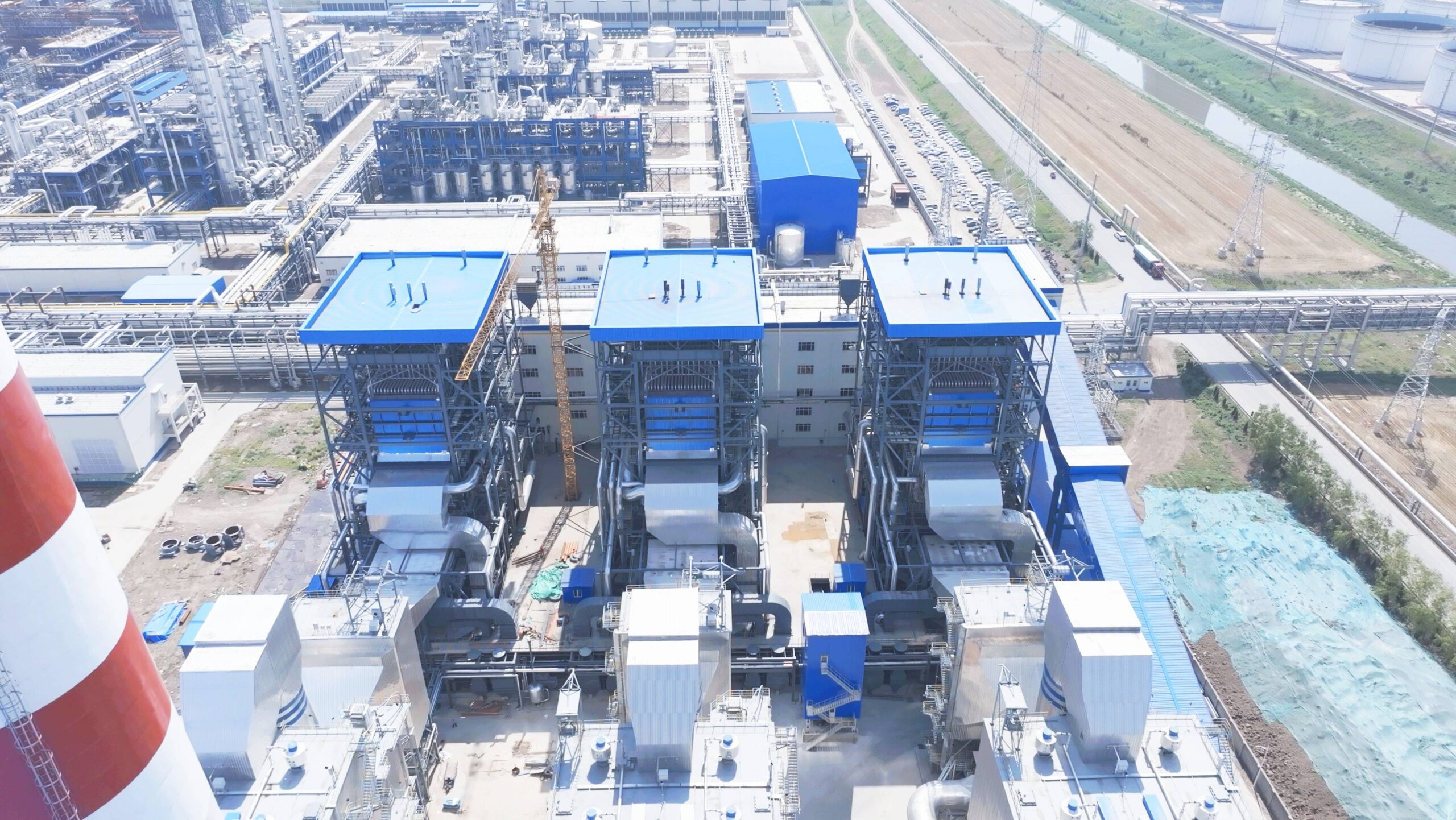
How to Compress Your Total Coal Boiler Project Timeline Without Sacrificing Safety or Quality
Most schedule overruns on coal boiler projects aren’t caused by manufacturing delays or shipping problems. They’re caused by sequential decision-making — waiting for one phase to finish before starting the next one. A disciplined parallel-path execution strategy, combined with a few procurement habits that cost almost nothing to implement, can realistically shave 45–70 days off a standard 10–75 t/h project without touching safety hold points or inspection requirements.
Issue Purchase Orders for Long-Lead Auxiliaries During Drawing Approval, Not After
The single most recoverable delay in a typical coal boiler project is the gap between drawing approval and auxiliary equipment procurement. Induced draft and forced draft fans, coal bunker structural steel, bag filter cages and membrane bags, refractory castables for the furnace throat and burner zone — these items carry their own lead times of 25–60 days depending on the supplier and specification. Most procurement managers wait until the boiler general arrangement drawing is stamped approved before touching these orders. That’s understandable from a change-order risk perspective, but in practice the fan duty point and dust collector inlet conditions rarely shift by more than 5–8% between preliminary and final design. Issue the purchase orders against preliminary specifications with a defined revision window. Your procurement team absorbs a small re-specification risk; you save four to six weeks of dead calendar time.
Submit Coal Analysis Before Contract Signing, Not After
Submitting a complete coal proximate analysis, ultimate analysis, and ash fusion temperature report to the boiler manufacturer before contract signing eliminates the single most common engineering restart trigger in the design phase.True
Boiler furnace sizing, grate heat release rate, superheater tube spacing, and sootblower placement all depend directly on fuel properties — particularly ash fusion temperature and sulfur content. If this data arrives after detailed design has started, the engineering team must partially restart thermal calculations, which typically costs 10–20 days and occasionally requires renegotiating pressure parts dimensions.
Ash fusion temperature alone determines whether the furnace exit gas temperature needs to stay below 950 °C or can run higher, which affects the entire convection pass layout. Proximate analysis drives grate area selection. Without this data locked in at contract signature, the manufacturer’s thermal design team is essentially working with placeholders. Getting a coal sample tested at a certified lab costs almost nothing — usually under a few hundred dollars — and the turnaround is 5–10 days. It’s the cheapest schedule investment in the entire project.
Start Civil Foundations on Preliminary Load Data
Most reputable boiler manufacturers can issue a preliminary foundation load drawing within 8–12 days of contract signing. These drawings carry maybe 10–15% uncertainty on anchor bolt positions and edge loads — acceptable tolerance for early excavation and concrete pouring on all but the most constrained sites. A sequential schedule waits for certified final civil drawings, which arrive somewhere around day 45–60. Running civil foundation work in parallel with manufacturing buys you 30–40 days of real calendar time, and the concrete curing period — typically 28 days minimum before you load structural steelwork — overlaps cleanly with the middle of the manufacturing phase.
Package Boilers Below 35 t/h: Shop Assembly Changes the Game
For capacities below roughly 35 t/h, a factory pre-assembled, shop-hydrostatically-tested package boiler cuts on-site installation from the typical 45–60 day range down to 15–25 days. The boiler arrives essentially as a single lifts-ready unit — drums, headers, tubes, insulation panels, and most piping connections already made. The site crew connects steam and water mains, mounts the burner or stoker assembly, wires instruments, and you’re into cold commissioning. The tradeoff is a larger shipping envelope, so confirm port and road clearances early. In most Southeast Asian and South Asian port cities this isn’t a problem for units up to about 20–25 t/h; beyond that, check the transport route specifically.
Don’t Wait for Sea Freight Arrival to Arrange Commissioning Engineers
This one gets overlooked constantly. Commissioning engineer travel — particularly for overseas projects in West Africa, the Middle East, or inland South Asia — involves visa applications, health clearances, sometimes vaccination requirements, and airfare booking. That process realistically takes 20–30 days if you start it when the ship departs. Start it the day manufacturing completion is confirmed. The engineer may arrive a week before the boiler, which means a week of pre-installation inspection and site readiness checks that would have happened anyway. You lose nothing; you eliminate a gap that commonly idles a fully constructed plant.
Single-Source Supply Is an Underrated Schedule Tool
When the boiler, economizer, bag filter, coal handling conveyor, and ash removal system come from different vendors, every interface becomes a potential coordination delay. Fan inlet flange doesn’t match dust collector outlet. Economizer support legs conflict with boiler steel structure. Ash conveyor discharge point doesn’t align with the transport vehicle bay. These aren’t hypothetical — they’re the ordinary friction of multi-vendor projects, and resolving them in the field costs days each time. A single-source supplier or a properly structured EPC contract where one party owns all interfaces compresses this friction dramatically. The coordination happens in the supplier’s engineering office, not on your plant floor.
None of these strategies require cutting corners on NDT, hydrostatic testing, safety valve settings, or regulatory inspections. They’re about eliminating idle time between phases, not compressing the phases themselves.
Frequently Asked Questions About Coal Boiler Project Timelines
How long does it take to manufacture a 10 t/h coal-fired steam boiler?
For a standard chain-grate stoker coal steam boiler at 10 t/h, expect 45–60 days of factory production time after drawing approval is confirmed — not after contract signing. That distinction matters. Drawing approval alone can consume 10–20 days depending on how quickly the buyer’s engineering team or local authority reviews and stamps the documents. The 45–60 day window covers membrane wall fabrication, drum rolling, tube-to-header welding, refractory casting, hydrostatic pressure testing at 1.25–1.5× working pressure, and the pre-shipment inspection. What pushes it toward 60 days? Usually congested shop schedules during peak order seasons (Q3 tends to be busy for export-bound units) or delayed material arrival for pressure-rated steel plate, which suppliers don’t always stock in the exact thickness called out on drawings.
What is the total project timeline from contract to first steam for a 75 t/h CFB coal boiler?
Realistically, plan for 270–360 days from contract signing to first usable steam. Breaking that down: engineering and regulatory submission takes roughly 30–40 days, manufacturing 100–130 days (CFB refractory-lined furnace sections and cyclone separators add fabrication complexity beyond a standard water-tube unit), sea freight to Southeast Asia destinations adds 15–25 days, on-site installation runs 90–120 days, and commissioning — which for a CFB includes refractory cure, bed material conditioning, and load stepping — typically takes 25–35 days. Any slip in the engineering phase cascades forward. A 75 t/h CFB is not a unit you fast-track without risk.
Can manufacturing and civil foundation work run simultaneously?
Yes, and in practice this is where serious EPC planners recover 30–45 days on the critical path. If preliminary foundation drawings are issued within 10–15 days of contract signing — which is achievable when the boiler vendor has a mature design — the civil contractor can begin excavation, piling, and concrete pours weeks before the boiler leaves the factory. The boiler arrives on site into a foundation that’s already cured. Waiting until delivery to start civil work is one of the most common and avoidable timeline mistakes I’ve seen on export projects.
Starting civil foundation work before boiler delivery can save 30–45 days on the overall project schedule.True
Foundation construction (excavation, piling, concrete pour, and curing) typically requires 30–60 days and can run in parallel with boiler manufacturing. Issuing preliminary foundation drawings within 10–15 days of contract signing enables this parallel-path execution, which is standard practice on well-managed EPC coal boiler projects.
Does a coal hot water boiler take longer to install than a coal steam boiler of the same output?
Generally no — a coal-fired hot water boiler in the 7–29 MW range runs about the same on-site installation time as an equivalent steam unit, typically 20–40 days depending on capacity and site conditions. What changes is commissioning. Hot water boilers skip the steam blow procedure entirely and involve simpler high-temperature piping connections compared to high-pressure steam systems above 2.5 MPa. That trims commissioning by roughly 5–10 days. For a plant replacing an aging steam boiler with a hot water system for process heating, that time saving is real but shouldn’t be the primary driver of the decision — the process heat delivery method matters more.
How long does coal boiler commissioning take, and what does it include?
Fifteen to 35 days, and the range depends heavily on boiler type and steam pressure. Cold loop checks on feedwater, combustion air, and flue gas systems come first. Then refractory bake-out — typically a staged temperature hold protocol over 3–7 days that you cannot rush without cracking the furnace lining. Cold commissioning of draft fans, feed pumps, and the fuel-feed system follows. Hot firing begins at reduced load, stepping up in increments while monitoring drum levels, furnace pressure, and flue gas temperatures. For steam boilers operating above 2.5 MPa, steam blow is mandatory — a high-velocity purge to clear construction debris from the steam lines, sometimes requiring multiple blow cycles before target plates show acceptable cleanliness. The 72-hour full-load performance acceptance test closes the process. Skipping or shortening any of these steps doesn’t save time in a useful sense; it just moves the failure to a less convenient moment.
What documentation is required for importing a Chinese-manufactured coal boiler?
The standard set includes the boiler quality certificate issued in accordance with TSGGG0001 (China’s boiler safety technical supervision regulation), a third-party inspection certificate from an accepted body such as SGS, BV, or CCIC, a copy of the manufacturer’s pressure vessel manufacturing license, commercial invoice, packing list, and certificate of origin. Beyond those, destination-country requirements vary considerably. Some Southeast Asian and Middle Eastern markets require pre-import boiler registration or a local authority approval before customs clearance. Getting that pre-approval started early — ideally while the boiler is still being manufactured — prevents it from becoming a 3–6 week delay sitting between port arrival and site delivery.
What is the minimum advance notice needed to plan a coal boiler replacement without shutting down production for more than 30 days?
For a like-for-like replacement of a boiler below 35 t/h, 150–180 days of advance planning is the practical minimum. That window allows manufacturing and freight to complete before a planned maintenance window opens, and lets the civil team prepare any foundation modifications in advance. The actual production shutdown, when properly pre-planned, can be compressed to 15–25 days covering final mechanical tie-in, utility connections, refractory bake-out, and initial hot commissioning. Plants that start planning with 60–90 days’ notice typically end up with shutdowns twice that length, because something — drawings, permits, a fabrication backlog — wasn’t ready.
Planning Your Coal Boiler Project Timeline: Key Takeaways and Next Steps for Buyers
If there is one thing this article should leave you with, it is that a coal boiler project almost never fails because of the boiler itself. It fails because the schedule was drawn up without accounting for all the phases together — and by the time someone notices the gap, the civil contractor is already mobilized and waiting.
So here is where the numbers land, stated plainly.
A small chain-grate coal steam boiler under 15 t/h — the kind of unit you see feeding process steam to a food plant or a small textile mill — can realistically reach first steam in roughly 100 to 145 days from contract signing, assuming foundation drawings are approved promptly, no hold-ups at customs, and the site is actually ready when the boiler arrives (that last condition is less common than buyers expect). Step up to a medium water-tube coal boiler in the 20–50 t/h range, and the honest figure is 130 to 210 days; the spread depends mostly on operating pressure, whether the drum is shop-fabricated or site-welded, and how quickly your local boiler inspection authority processes the pressure vessel registration. Large CFB coal boilers above 75 t/h are a different category entirely — 270 to 375 days minimum from contract to formal handover is realistic, and projects at the high end of that range are not badly managed ones, they are simply projects where the refractory cure cycle, performance test fuel procurement, and third-party witness inspections were given the time they actually need.
Five Questions to Ask Before You Sign
Before you execute any purchase contract or EPC agreement, push the manufacturer on these five points specifically:
- What is your current manufacturing queue lead time? Published lead times are catalog figures. The real answer depends on how many drums are currently being rolled in their workshop.
- Do you hold an active boiler design institute license for the pressure class your project requires? A manufacturer without the appropriate license for, say, a 130 bar unit cannot legally certify the drawings, which stalls regulatory submission before manufacturing even starts.
- Can you issue preliminary foundation loading drawings within 15 days of contract? If the answer is vague, your civil contractor will be idle for weeks.
- Who is your third-party inspection partner, and what is their current mobilization lead time? In some export markets — parts of West Africa and South Asia in particular — getting a recognized inspection body on-site for hydrostatic witness tests can add two to four weeks to the schedule if it is not booked early.
- Do you have reference projects in my destination country with documented commissioning records? Not a brochure. Actual records — inspection certificates, steam blow reports, performance test data. A manufacturer with genuine export experience in your region will have these without hesitation.
Vertically integrated boiler manufacturers who supply the pressure vessel, combustion system, auxiliary equipment, and manage EPC coordination under one contract typically reduce schedule risk compared to multi-vendor procurement arrangements.True
When the boiler OEM also supplies induced draft fans, economizers, feed water systems, and controls, interface conflicts between equipment packages are reduced, and a single point of accountability shortens the resolution cycle for delivery delays or drawing discrepancies.
Why Scope Integration Matters More Than Unit Price
Splitting the boiler from its auxiliary systems across two or three separate vendors looks like it saves money on the purchase order. In practice, the interface management — resolving duct connection dimensions, fan curve matching, control panel compatibility — absorbs engineering hours and schedule days that nobody budgeted. A vertically integrated supplier who covers pressure parts, the stoker or CFB combustion system, the flue gas train, and EPC coordination is not a more expensive option; it is a schedule-risk-reduction strategy with a cost attached.
What to Include in Your First Inquiry
When you contact a manufacturer for a project-specific timeline proposal, three inputs make the difference between a generic range and an actual commitment: your coal proximate and ultimate analysis (or at minimum, the origin and rank of the fuel), your required steam parameters — pressure in bar, temperature in °C if superheated, and output in t/h — and your destination country and port of discharge. Without those three data points, any timeline a manufacturer gives you is no more than a brochure figure. With them, an experienced project engineer can identify the pressure class, select the combustion technology, flag any destination-country certification requirements, and give you a phased schedule you can actually build a production startup plan around.
References
Industrial Boiler Replacement — Project Planning and Boiler Lead Times — HPAC Engineering
Industrial Steam Boiler Manufacturing and Delivery Lead Time — CoalBiomassBoiler.com
Industrial Boiler Manufacturing Lead Time and Delivery Schedule — CoalBiomassBoiler.com
Industrial Boiler Installation and Commissioning Guide — EPCB Boiler
BPVC Section I — Rules for Construction of Power Boilers — ASME
Performance Test Codes — Boiler Performance and Acceptance Testing — ASME
National Board Inspection Code — Boiler Installation and Inspection Requirements — National Board of Boiler and Pressure Vessel Inspectors
Coal Analysis and Production Information — Thermo Fisher Scientific
Boiler Efficiency and Combustion — Coal Boiler Operating Fundamentals — Spirax Sarco