
How Long Does a CFB Boiler Project Take? Manufacturing, Delivery, Installation and Commissioning Timeline
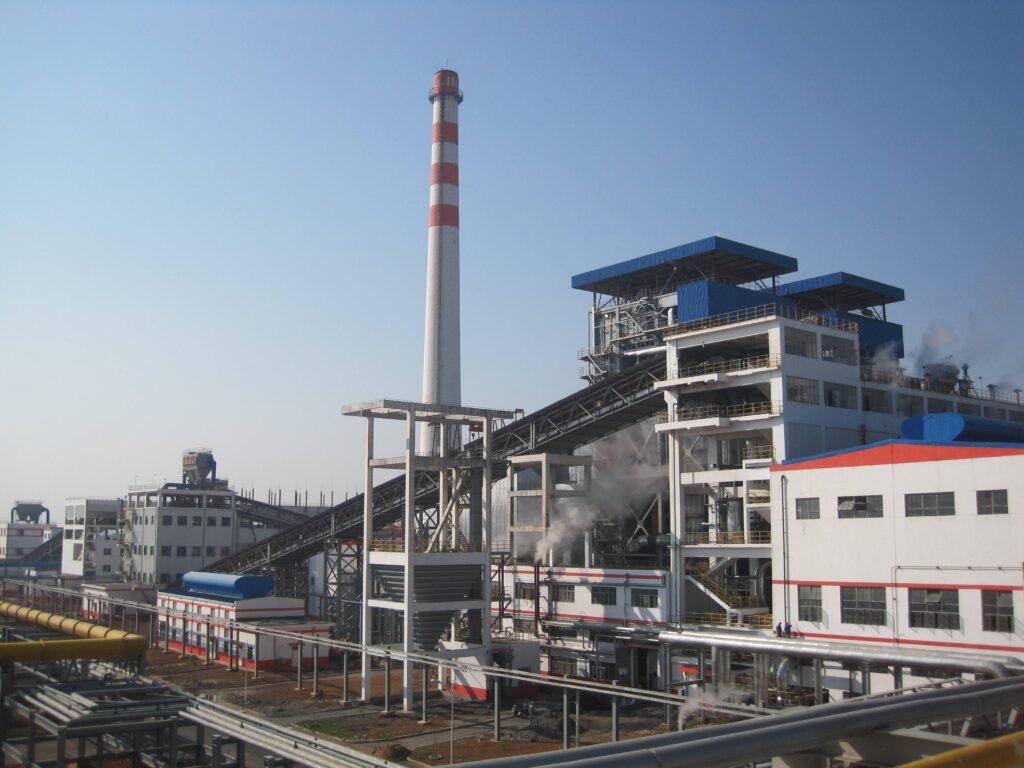
Owners who have never built a CFB boiler plant from scratch tend to underestimate the schedule badly — and that gap between expectation and reality is where projects bleed money. A six-month slip on a 130 t/h unit can cascade into missed fuel contracts, delayed grid connection, and penalty clauses that eat a meaningful fraction of the equipment budget before a single tonne of steam is ever produced. Getting the timeline right at the front end isn’t a paperwork exercise; it determines whether the plant finances close on time.
A CFB boiler project typically runs 14–24 months from contract signing to commercial operation. Manufacturing a mid-size unit (130–220 t/h, 9.8–13.7 MPa) takes 6–10 months at a certified boiler works. Ocean freight to most overseas destinations adds 45–75 days. Site erection and commissioning then requires 4–8 months, depending on civil readiness, local labor, and fuel availability during hot commissioning.
What makes this schedule genuinely hard to predict is that the four phases — manufacturing, shipping, erection, commissioning — don’t stack neatly end-to-end. Civil works run in parallel, or should. Customs clearance at the receiving port can idle a vessel for weeks if the import documentation isn’t coordinated with manufacturing milestones. And commissioning on a CFB is not a flip-the-switch event; bed material selection, initial light-off, and load-stepping each carry their own failure modes that extend the clock. The sections below break each phase down in enough detail to build a realistic project schedule — and to spot where your specific project is most likely to drift.
Phase 1 — Engineering Design and Equipment Procurement: Weeks 1–16
Most buyers sign the contract and immediately start mentally counting down to first steam. The reality is that the first four months are almost entirely paperwork, calculations, and purchase orders — not fabrication. Not a single pressure-part weld happens until this phase is substantially complete, and if it’s rushed or sequenced badly, you’ll feel the pain six months later when a long-lead item shows up three weeks after the boiler shell is ready to ship.
Process Design and Thermal Calculation: The Foundation Everything Else Sits On
The engineering workflow opens with process design: confirming steam parameters (pressure, temperature, flow rate), running proximate and ultimate analysis on the actual fuel, and establishing furnace heat release rate per unit cross-sectional area. For a coal-fired CFB in the 130–220 t/h range operating at 9.8–13.7 MPa, this thermal calculation package typically takes 4–7 weeks in a competent boiler works — longer if the owner’s fuel specification is still being negotiated, which happens more often than it should.
From there, pressure part design follows: drum sizing, waterwall panel layout, superheater and reheater surface area, cyclone separator geometry. Structural steel layout and the P&ID come in parallel, not in series, which is why a well-staffed engineering team matters. A small design shop serializing these tasks can easily burn 10–12 weeks before they’re ready to issue fabrication drawings, rather than the 6–8 weeks a capable manufacturer achieves with discipline and parallel tasking.
Long-Lead Items: Order in Weeks 1–4 or Accept the Consequences
This is where procurement managers earn their pay — or where the schedule quietly bleeds out. Certain items carry 14–22 week manufacturing lead times from specialist suppliers, and they need to be ordered almost simultaneously with the engineering kick-off, before fabrication drawings are finalized. That requires enough engineering confidence to write a purchase specification off preliminary process data, which makes some people uncomfortable. Do it anyway.
The items that consistently drive critical-path risk:
- High-pressure steam drums (forged shell or heavy welded plate, typically SA-516 Gr.70 or equivalent GB material, wall thickness often 80–120 mm at these pressures) — forging lead times alone can run 10–14 weeks
- Superheater alloy tubes — SA-213 T91 for final superheater sections, TP347H where metal temperatures push above roughly 580–600 °C; both are specialty mill products with variable availability, especially in non-standard wall thicknesses
- Induced draft and forced draft fans — heavy-duty, wear-resistant ID fans for CFB service are not off-the-shelf; anything sized for a 130 t/h-and-up unit is a custom order
- Electrostatic precipitators or pulse-jet bag filters — the choice depends on ash resistivity and local emission limits, but either way, detailed gas flow and dust load data must come from the thermal design, and then the flue gas treatment vendor needs 8–12 weeks minimum
Superheater tube material SA-213 T91 and TP347H must be ordered weeks before fabrication drawings are issued on large CFB projects.True
These are specialty alloy mill products with long and variable lead times. Waiting for final fabrication drawings before ordering typically adds 8–16 weeks of unrecoverable schedule delay on critical-path pressure parts.
Fuel Variability: The Hidden Schedule Killer
If the owner delivers a complete, lab-verified fuel analysis in Week 1, thermal design runs smoothly. In practice, biomass projects frequently arrive with moisture content ranges of ±10–15 percentage points, or with ash fusion temperatures measured on samples that don’t represent the actual feed stock. Coal projects sometimes have ash sulfur content still being negotiated between the owner and their fuel supplier. MSW-fired CFBs carry the added complication of chlorine content — a parameter that directly affects superheater material selection and flue gas treatment design, not just corrosion risk.
Each round of fuel data revision typically costs 2–4 weeks of thermal redesign iteration. Two rounds and you’ve lost a month. Get a proper fuel analysis — proximate, ultimate, ash fusion, calorific value, chlorine if relevant — before the contract is signed if at all possible, or at minimum in the first week after.
Regulatory and Third-Party Approvals Running in Parallel
The documentation workload in this phase is substantial and genuinely parallel to engineering, not downstream of it. For export projects, this typically means: preparing boiler registration drawings for submission to the Chinese special equipment authority (TSG compliance, drawing review under the relevant pressure vessel standard), nominating and briefing the destination-country third-party inspection body — TÜV, Bureau Veritas, Lloyd’s Register, SGS, or whichever the owner or local regulation requires — and in many jurisdictions, supporting the owner’s local environmental impact assessment with design data that only the contractor has.
The inspection body nomination should happen by Week 4–6. Waiting until fabrication starts to introduce a TÜV witness inspection requirement into the QA plan causes disruption and sometimes rework.
Civil Design Handoff: A Deadline That Slips Easily
Foundation loading data and anchor bolt drawings must be in the hands of the site civil contractor by roughly Week 8–10. This is a hard dependency. Civil ground preparation, foundation concrete, and embedded steel work take 3–5 months on a typical greenfield site, running in parallel with boiler manufacturing. If the civil contractor is waiting on foundation loads while the boiler manufacturer is waiting on civil completion before they can deliver — the two paths are supposed to overlap, not stack sequentially. A late handoff here, even by three or four weeks, often results in a civil works delay that pushes first steel erection back by the same margin, with no way to recover it.
Under a full EPC contract, the contractor owns this coordination internally. Under a supply-only arrangement, the owner’s engineering team has to chase it explicitly — and in my experience, this is exactly the task that falls through the gap between the boiler vendor’s scope and the civil contractor’s scope, with nobody feeling fully responsible until there’s a problem.
Phase 2 — CFB Boiler Manufacturing Timeline: Months 3–10
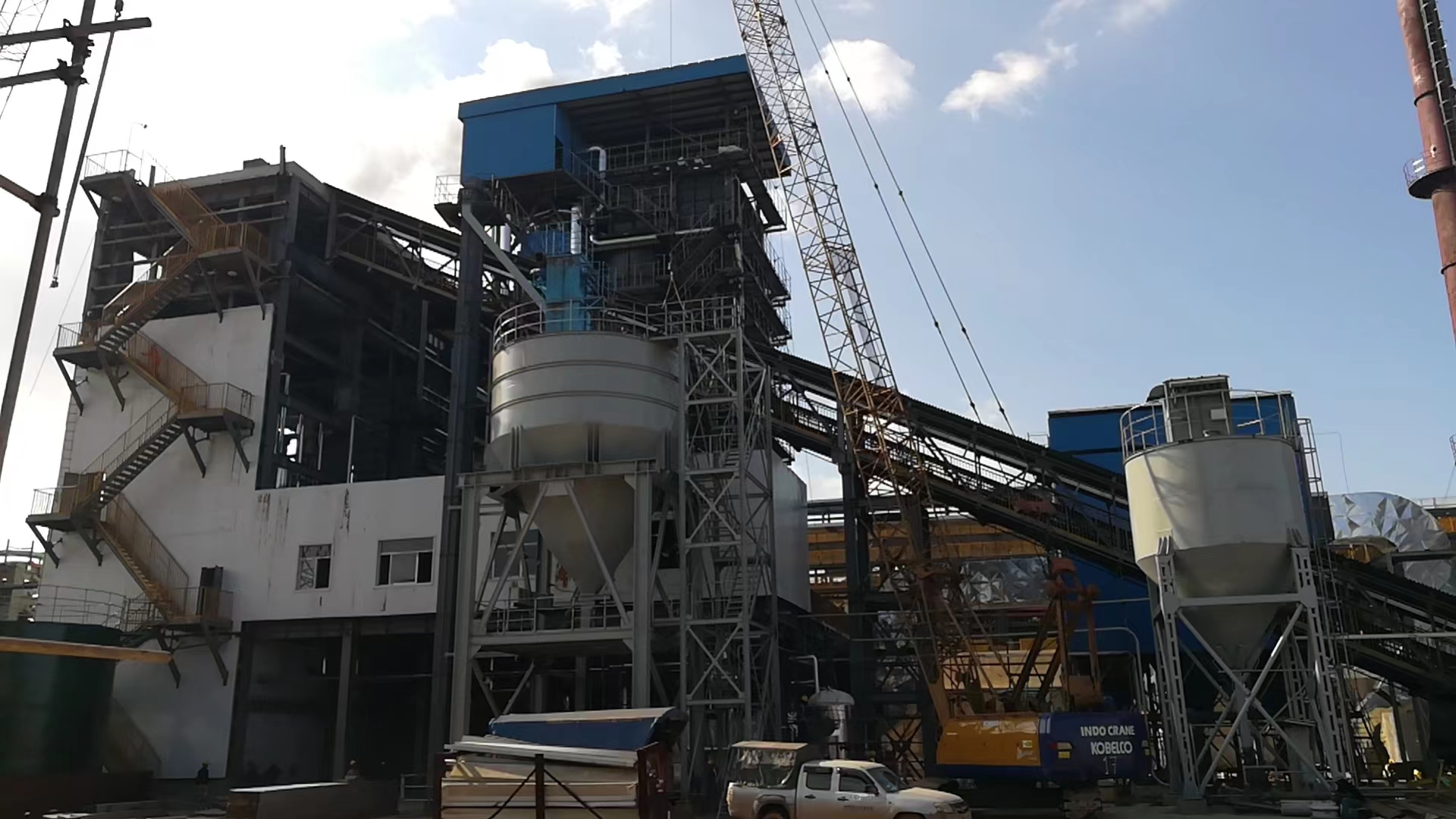
Workshop fabrication typically starts around week 10–14, once the boiler manufacturer has approved drawings signed off by the buyer’s engineer, certified raw material on hand, and at least the first procurement milestone payment cleared. That last point matters more than people expect — material procurement for a 130 t/h CFB unit ties up significant working capital, and most reputable Chinese boiler works won’t cut steel until the commercial terms are settled.
Capacity Segments and Realistic Shop Durations
These ranges assume a manufacturer holding current pressure vessel certifications (GB 150, ASME, or CE PED as applicable) with dedicated CFB fabrication bays. A shop without prior CFB experience will run 20–30% longer.
| CFB Capacity | Steam Pressure | Typical Shop Duration | Key Driver of Variance |
|---|---|---|---|
| Small industrial (35–75 t/h) | ≤3.82 MPa | 4–6 months | Drum diameter, fuel type (biomass vs coal adds refractory scope) |
| Mid-size power (130–220 t/h) | 9.8–13.7 MPa | 6–9 months | T91/P91 alloy weld volume, superheater stage count |
| Utility-scale (300–670 t/h) | 13.7–17.5 MPa | 9–14 months | Reheater addition, multi-cyclone count, site-specific emission upgrades |
The Fabrication Sequence — What Actually Happens on the Shop Floor
It moves roughly in this order, with overlapping tracks once the first components clear NDE:
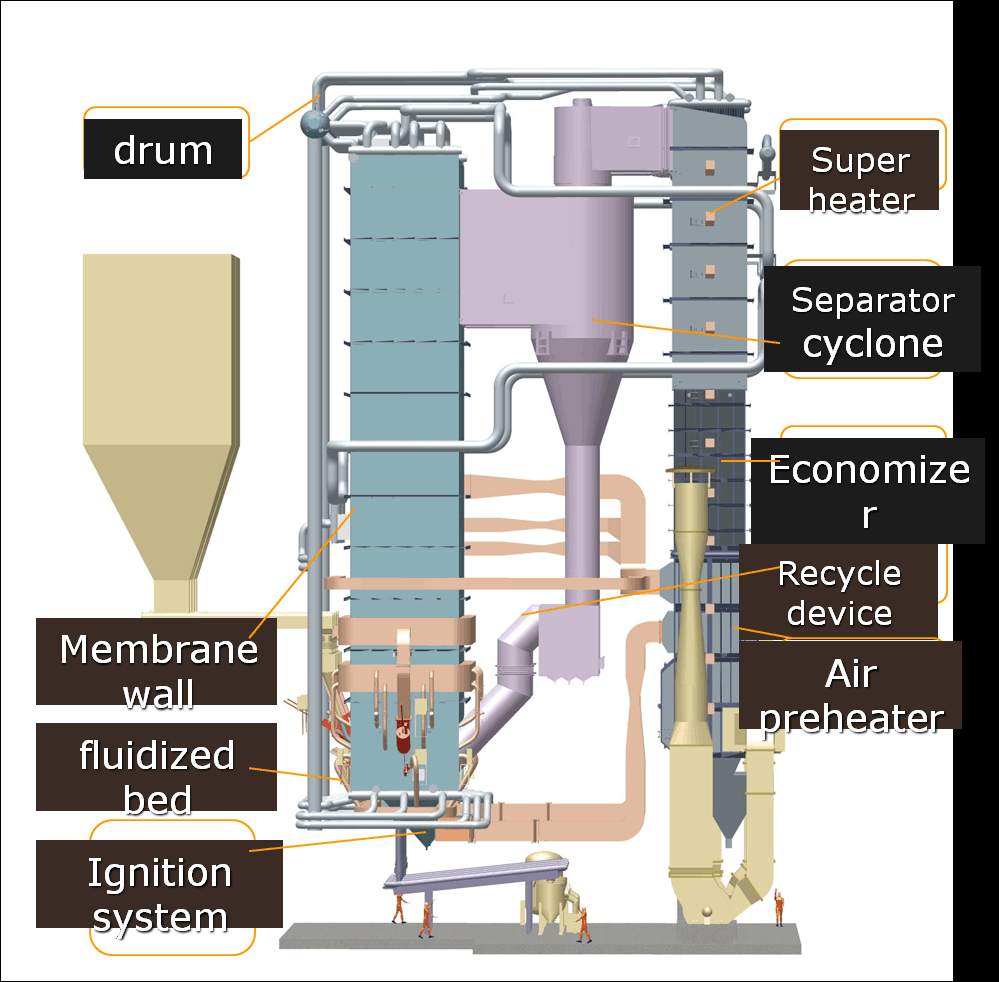
Drum and header fabrication comes first because these are the long-pole items — a steam drum for a 220 t/h unit can take 8–10 weeks just for rolling, welding, and initial NDE. Headers follow on a parallel track. Then membrane wall panel assembly begins: fin welding on the furnace walls is repetitive but precision-critical, since bow or twist in a panel causes alignment headaches during field erection that nobody wants to deal with at elevation.
Superheater and reheater coil bending and welding overlap with panel work. High-alloy tubes — TP347H, T91 — require qualified welders, controlled preheat, and post-weld heat treatment (PWHT) in a furnace, not with a torch. Shops that try to skip or abbreviate PWHT will get RT failures. It happens.
Cyclone separator shell rolling and assembly runs in parallel. Large-diameter cyclone cans (often 3–5 m diameter on utility units) require plate rolling capacity that not every shop has in-house. Economizer module assembly and air preheater fabrication are generally the last major pressure-part work streams, followed by structural steel fabrication for the boiler frame.
NDE and Hydrostatic Test Hold Points
GB/T 16507, ASME Section I, and EN 12952 all require radiographic testing on pressure-bearing butt welds, ultrasonic testing on drum nozzle welds, and a shop hydrostatic test at 1.25× design pressure witnessed by an authorized third-party inspector.True
These are codified mandatory hold points under each respective standard. Skipping them or substituting unwitnessed internal tests is a code violation and invalidates pressure vessel certification.
RT film review takes time. A weld repair cycle on a high-alloy seam — reject, grind, re-weld, PWHT, re-RT — can easily consume two weeks. Budget for at least one repair cycle on complex alloy welds; experienced shops already do.
The hydrostatic test is a witnessed, documented event. Your inspector should be on-site for it, not reviewing photos afterward.
Refractory: What Comes from the Shop, What Waits for Site
Cyclone separator and return leg refractory castable is typically shop-cast and cured in a controlled environment. This is worth insisting on contractually — shop curing reduces on-site refractory drying time by roughly 3–5 weeks. Furnace membrane wall refractory pins are shop-welded to the panels, but the actual castable lining is applied on-site after erection. That’s normal and unavoidable given transport constraints.
The Three Things That Blow Up the Schedule
Raw material certification delays are the most common. Mill test reports for P91 tube batches occasionally come back with chemistry or hardness values that require supplier re-certification or substitution — this alone can push a delivery by 4–6 weeks if it hits early in the drum fabrication stage.
Large valve body castings from sub-suppliers are the second culprit. Main steam stop valves and circulating pump casings for high-pressure units are long-lead castings; if the boiler manufacturer didn’t order them in week 2 or 3 of the project, they will be late.
Third is rework on high-alloy welds. Shops with a first-pass RT acceptance rate below roughly 90% on alloy seams indicate a welder qualification or procedure problem, not just bad luck.
Factory Acceptance Testing
FAT typically runs 5–10 working days and covers dimensional inspection of pressure parts against approved drawings, the hydrostatic test (if not already completed mid-fabrication), fan and motor running tests at rated speed, control panel I/O loop verification, and a full documentation package review — including NDE records, PWHT charts, material traceability, and the inspection certificate from the notified body or authorized inspection agency.
FAT sign-off is the contractual trigger for shipping authorization and usually the payment milestone for the final fabrication installment. Don’t let it become a formality — bring your own inspector or a third-party agency, work through any punch-list items before signing, and confirm the documentation package is complete. Chasing missing weld maps after the equipment is on a ship is a miserable experience.
Phase 3 — Export Packaging, Ocean Freight, and Customs Clearance: Weeks 1–12 After FAT
Most buyers mentally start the countdown clock to site arrival the moment the factory acceptance test wraps up. The reality is that the next 8–12 weeks are a logistical minefield, and the teams that navigate it smoothly are the ones who started planning it 6 weeks before FAT, not after.
Export Packaging: Not Just Crating
CFB pressure parts are not off-the-shelf industrial equipment. The steam drum — typically 10–18 metres long on a mid-size unit, with forged nozzles sticking out at awkward angles — gets mounted in a heavy timber cradle with continuous VCI (vapor corrosion inhibitor) film wrap beneath the outer poly sheet. Skip the VCI and you’re gambling on a 3–6 week ocean voyage in a salt-air environment against a pressure vessel you’ve spent 8 months fabricating. Headers and manifolds go into purpose-built wooden boxes with foam blocking; tube bundles (economiser, superheater, air preheater modules) typically ship in welded steel-framed export crates that are reusable on-site as temporary storage. Refractory materials — dense castables, insulating bricks, ceramic fibre modules — need moisture-proof pallet wrapping with desiccant packs inside. Refractory that absorbs humidity in transit will shrink, crack, and fail on first firing. I’ve seen a project add three weeks to commissioning because nobody paid attention to how the refractory crates were palletized for a rainy-season port discharge in Southeast Asia.
For a 130 t/h CFB set, total shipping volume realistically runs 8–15 × 40-foot HQ containers plus 2–4 flat-rack loads for the large structural columns, buckstay frames, and sometimes the steam drum itself if it exceeds standard container clearances. Exact count depends on how much pre-assembly the fabricator completes versus ships knocked-down, and whether the cyclone separator shell ships as one piece or field-welded halves.
Port-to-Port Transit: Realistic Benchmarks
Carrier schedules are optimistic. These are working estimates based on typical routing, not best-case:
| Destination Region | Typical Port-to-Port Transit | Key Variables |
|---|---|---|
| Southeast Asia (Vietnam, Indonesia, Thailand) | 12–22 days | Direct vs. transhipment via Singapore |
| South Asia (India, Bangladesh, Pakistan) | 18–28 days | Colombo transhipment adds 5–7 days |
| Middle East (Saudi Arabia, UAE) | 22–35 days | Jebel Ali congestion periodically adds 1–2 weeks |
| East Africa (Kenya, Tanzania) | 30–45 days | Mombasa/Dar es Salaam port congestion variable |
| South America (Brazil, Chile) | 35–55 days | Santos customs notorious for delays on capital equipment |
| Europe | 28–40 days | Northern vs. Mediterranean ports differ significantly |
Add 5–10 days buffer for any schedule involving a transhipment hub. Port congestion is not predictable, and demurrage on flat-rack cargo accumulates fast — typically USD 150–400 per unit per day depending on the shipping line, which adds up quickly when you’re waiting on crane availability.
Documentation: The Set You Need Complete Before Loading
Customs clearance for a CFB boiler shipment is not a standard commercial goods exercise. The document set required — and the absence of any single item can hold cargo for weeks — typically includes: commercial invoice and detailed packing list (line-item to crate level, not bulk), bill of lading, certificate of origin (Form A for GSP-eligible countries, or standard CO), material test certificates for all pressure parts, a copy of the manufacturer’s pressure vessel manufacturing license, third-party inspection certificate from an accredited body (TÜV, BV, SGS, or equivalent), and — critically — the destination country’s import permit for special or pressure equipment where it applies. India, Indonesia, and several Middle Eastern countries have specific import registration requirements for boilers that can take 4–8 weeks to process independently.
A CFB boiler shipped without the manufacturer's pressure vessel license copy may be held at destination customs until the document is couriered, delaying project schedules by weeks.True
Many jurisdictions classify boilers as special equipment subject to import inspection; customs authorities require proof of manufacturing certification before releasing pressure vessel shipments.
Biomass-fired and MSW boiler shipments add another layer: refractory and ceramic fibre insulation materials may require hazardous material declarations depending on whether the composition includes regulated substances (certain refractory binders, for instance). Phytosanitary certificates are occasionally required where wooden crating is used, particularly for shipments to Australia, New Zealand, and parts of South America — timber packaging must meet ISPM 15 heat-treatment standards or the entire shipment risks quarantine hold.
Inland Transport: The Last Obstacle Nobody Budgets For
Getting cargo off the vessel is one problem. Getting a 14-metre steam drum from the port to an inland plant site is another. Structural columns and the steam drum routinely exceed standard road transport limits on height, width, or axle loading. Abnormal load permits in countries like India, Indonesia, or Saudi Arabia can take 2–4 weeks to obtain and typically require a route survey, pilot vehicle arrangements, and sometimes road reinforcement for bridge crossings. Budget for it — both time and cost — before you sign the contract.
The practical recommendation is to nominate a local freight forwarder with genuine industrial equipment experience at least 6 weeks before FAT. Not a general cargo forwarder who handles consumer goods. Someone who has moved pressure vessels before, who knows the destination port’s crane capacity and berth availability for flat-rack, and who can start the import permit application process while fabrication is still finishing. Starting this conversation the week after FAT is too late.
Phase 4 — Site Civil Works and Steel Structure Erection: Months 1–4 on Site
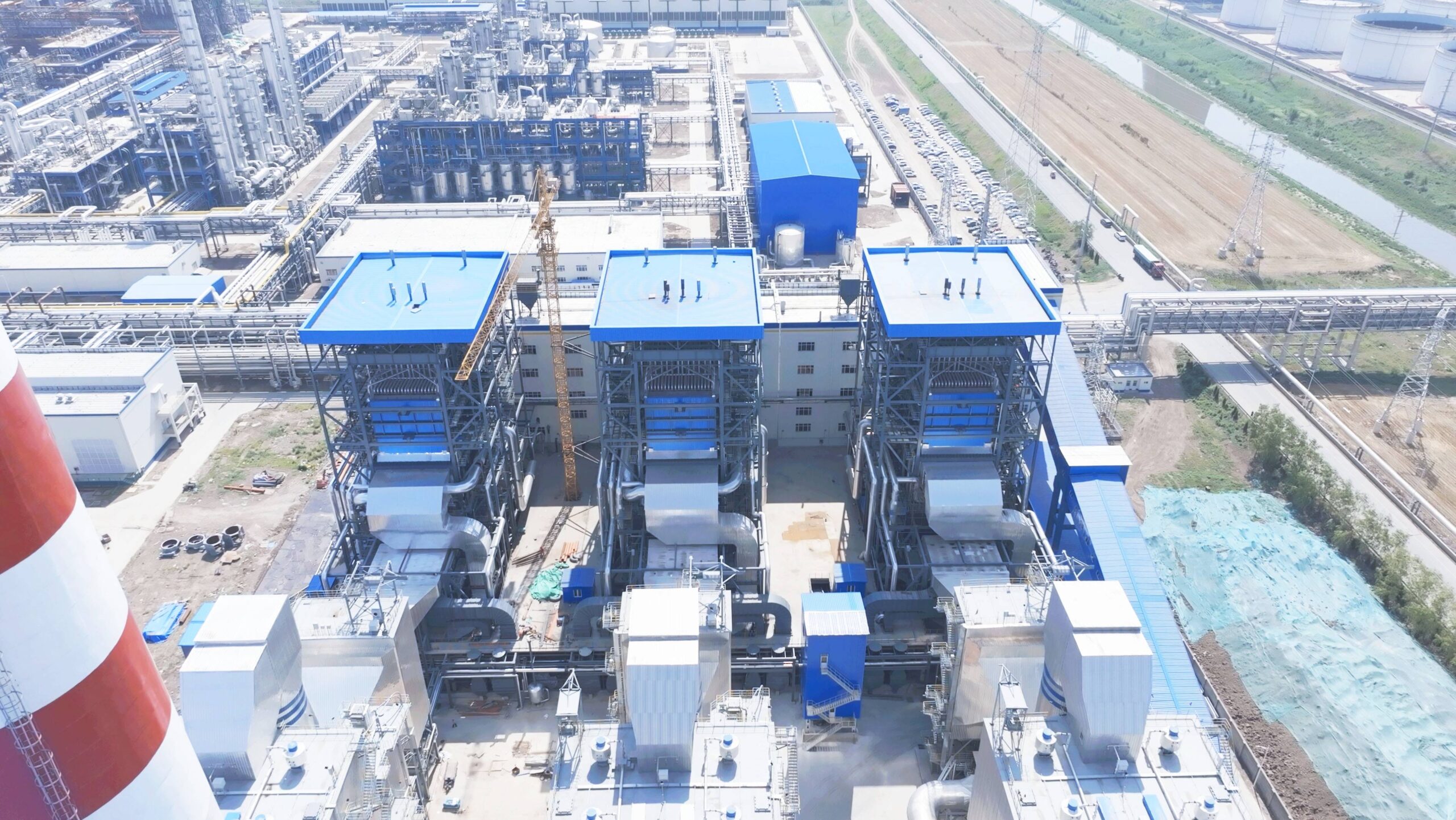
This phase is where schedules bleed. In my experience, civil delays — not manufacturing delays — are the single most common reason a CFB project pushes past its target commissioning date. The reason is almost always the same: civil scope was underestimated at contract, and the sequential dependencies between concrete cure and steel erection leave zero room to recover lost time.
CFB-Specific Civil Scope and Why It’s Heavier Than a Water-Tube Package Boiler
A CFB boiler imposes unusually demanding foundation loads. The fluidizing air system — primary air fans, secondary air fans, and the associated ductwork — generates continuous low-frequency vibration that propagates into any inadequately isolated structure. ID and FD fan foundations typically require reinforced concrete with embedded anti-vibration isolation pads (spring isolators or rubber-steel sandwich mounts depending on fan size and soil bearing capacity), and getting that specification wrong means you’re grinding anchor bolts and shimming pads six months after commissioning.
The cyclone separator and return leg (the loop seal) need their own discrete concrete plinths. These are not light structures — the separator shell on a 130–220 t/h unit can weigh 40–90 tons fully assembled, and the plinth geometry has to be accurate to within a few millimeters for the flue gas transition ductwork to align. Ash silo foundations carry significant static load from stored bottom ash and fly ash, and fuel bunker structures — whether coal or biomass — add another set of column footings that are often on the critical path for the fuel-feed system.
The Foundation-to-Erection Handoff: Where One Slip Costs You Weeks
Structural concrete requires a minimum 28-day cure before it develops design compressive strength. That’s not a guideline; it’s physics, and no amount of schedule pressure changes it. The sequence is rigid: pour and cure → survey and set anchor bolts → non-shrink grout and cure anchor bolt pockets → place and level boiler column base plates. If the concrete pour slips by two weeks — say, because reinforcing steel arrived late or the rainy season started early — you lose at minimum two to three weeks off the erection start, with no parallel path to recover them.
Structural concrete for boiler foundations must cure for at least 28 days before anchor bolt grouting and column base plate installation can proceed safely.True
This is standard structural engineering practice; 28 days is when OPC concrete typically reaches ~99% of its 28-day design compressive strength. Premature loading risks settlement and misalignment of the pressure vessel support structure.
Steel Structure Erection Sequence
The erection sequence is not flexible — each lift depends on the one before it. Main boiler frame columns and primary beams go first, establishing the reference grid. Then the hanger rods and top-supported suspension system are installed; a CFB’s furnace walls and pressure parts hang from the boiler top frame, which means any dimensional error in the steel frame propagates into every pressure part alignment that follows. Furnace membrane wall panels — usually pre-assembled in workshop sections of 6–12 meters — are lifted and aligned next. On a 130–220 t/h unit, the steam drum alone weighs roughly 30–80 tons depending on pressure rating and length, requiring a 100–250 ton crawler crane. Cyclone separator shell sections run 15–40 tons each and need precise angular positioning to match the inlet duct geometry.
Crane availability is a genuine bottleneck on remote or developing-country sites. Mobilizing a 200-ton crawler crane to an inland site in Southeast Asia or Sub-Saharan Africa can add four to six weeks and meaningful cost — sometimes $15,000–$40,000 just for mobilization, depending on distance and road conditions. It’s worth checking this early.
After the cyclone, the sequence moves to superheater and reheater module hanging, then economizer and air preheater installation, and finally penthouse sealing. Each stage has access windows that close once the next lift begins.
Erector Licensing and Why It Actually Matters for Your Operating Permit
Boiler installation in most jurisdictions is classified as special equipment work requiring a government-issued installation license. In China, that’s a Class A installation license from the State Administration for Market Regulation (formerly AQSIQ). Destination countries typically have equivalent requirements — the Philippines has DOLE-accredited boiler inspectors, Indonesia has K3 certification requirements, and so on. An unlicensed erection team doesn’t just create safety risk; it invalidates the boiler registration and operating permit application. Getting that unwound after the fact is expensive and slow. Verify the erection subcontractor’s license before mobilization, not after.
Parallel Installation Work: Sequencing Matters More Than Speed
While structural erection proceeds, parallel crews handle flue gas ducting between the boiler outlet and the downstream ESP or bag filter, the bottom ash extraction system (screw conveyors, chain conveyors, or pneumatic lines depending on the design), and the air distribution system — primary air ducts, secondary air injection manifolds, and the fluidizing air headers beneath the air distribution plate. The access conflict risk here is real. Duct runs and ash conveyors need clearances inside the boiler frame that disappear once the economizer and air preheater modules are hung. Sequencing these parallel scopes against the main structural lifts is the erection superintendent’s primary scheduling job. Doing it well typically compresses Phase 4 to three to four months on a mid-size unit; poor coordination easily pushes it to five or six.
Phase 5 — Refractory Installation, Insulation, and Cladding: Months 3–6 on Site
Most buyers who have dealt with conventional water-tube boilers — gas-fired, oil-fired, even pulverized coal units — underestimate this phase badly. A gas boiler has almost no refractory to speak of. A CFB boiler is, in large part, a refractory structure that happens to contain pressure parts. That distinction matters enormously for scheduling.
Why CFB Refractory Scope Is in a Different League
The physics of circulating fluidized bed combustion create conditions that simply don’t exist in other boiler types. The lower furnace dense-phase zone carries a high-velocity stream of recirculating bed material — typically crushed limestone, fuel ash, and partially burned char — moving fast enough to abrade unprotected steel membrane wall panels within weeks. The cyclone separators take the full brunt of particle impingement at inlet velocities that can exceed 20 m/s. Return legs and loop seals handle continuous solids flow at elevated temperature around the clock.
Every one of those zones requires a different refractory specification, and none of it is quick to install.
In the lower furnace, the standard approach is SiC-containing or high-alumina castable, typically 150–230 mm thick depending on design heat release rate and bed velocity. Cyclone interiors usually get high-alumina brick (often 65–75% Al₂O₃) with a castable backup layer against the steel shell — the brick handles wear, the castable handles thermal backup and seals the shell. Return legs and loop seals use a combination of insulating castable toward the steel side and a harder wear-resistant face layer. Bottom ash hoppers get liner tiles or cast wear panels, because that material is hot, abrasive, and drops continuously.
On a 130–220 t/h unit, the total refractory volume across all zones runs roughly 80–150 m³ of placed material, give or take depending on furnace geometry and whether a single or double cyclone arrangement is used. That is a lot of mixing, anchoring, forming, and finishing work.
The Curing Schedule Is Non-Negotiable
After castable placement, the material needs a minimum 48–72 hours of ambient cure before any heat is applied. Then comes the controlled dry-out curve — in practice, a 5–7 day ramp from ambient up through 150°C (holding to drive off free water), continuing to 300°C, holding again, then stepping to roughly 600°C. The exact curve varies by castable supplier specification; the licensed refractory vendor should provide a written heat-up protocol and it should be followed precisely.
Skipping or compressing the refractory dry-out curve causes castable spalling and does not simply reduce refractory life — it can cause structural failure of the lining within the first few operating weeks.True
Rapid moisture expulsion from incompletely cured castable generates steam pressure within the matrix faster than the material can vent it, causing delamination, cracking, and large-scale spalling. This is well-documented in CFB refractory failure investigations and is the primary reason manufacturers specify mandatory hold stages in the heat-up protocol.
Rushing this step to recover schedule is one of the more expensive mistakes a project team can make. Repairs to spalled cyclone lining require a full shutdown, cooling, removal of failed material, recast, and another full dry-out cycle. You lose more time than you saved, plus you’ve already generated your first forced outage before commercial operation.
Labor and Contractor Availability
Refractory work is skilled labor. Castable mixing ratios, anchor stud installation pattern, expansion joint placement at wall penetrations and section transitions — these are not tasks for general construction labor pulled off the civil crew. On overseas projects, finding a refractory contractor with CFB-specific experience is harder than it sounds. Anchoring systems alone require familiarity with the V-type and Y-type stud patterns used in high-wear zones.
In practice, contractor availability is the most common source of 2–4 week slippage in this phase on projects in Southeast Asia, Central Asia, and parts of Eastern Europe. Locking in the refractory subcontractor during Phase 1 procurement — not after civil work starts — is worth doing even if it feels premature.
Insulation and Cladding Running in Parallel
External insulation of steam drum, headers, connecting pipework, superheater outlet lines, and main steam valves proceeds in parallel with refractory once the relevant structural sections are accessible. For a mid-size CFB, this scope typically takes 3–5 weeks with a properly staffed crew. Mineral wool or ceramic fiber blanket is standard; thickness is sized to keep surface temperatures below roughly 50°C ambient under rated operating conditions, which usually means 100–200 mm on high-temperature sections.
Aluminum cladding goes over the insulation last, partly for weather protection and partly to give the plant a finished appearance that maintenance crews actually appreciate — loose insulation that gets wet and never dries is a chronic energy loss source that plant operators deal with for years.
Cold-climate sites add real complexity here. On projects in northern regions — parts of Central Asia, Russia-adjacent locations, northeastern installations — insulation thickness on ash extraction lines, drain points, and instrument impulse lines must be increased, and heat trace systems are typically added to prevent freeze-up during winter shutdowns or low-load periods. Budget an extra 1–2 weeks for this scope and confirm it is in the contract before the project leaves the engineering phase.
Phase 6 — Instrumentation, Controls, and Pre-Commissioning Checks: Months 5–7 on Site
By the time refractory curing is complete and the boiler shell is closed up, the I&C team has usually been on site for several weeks already — pulling cable trays, mounting transmitters, and running conduit through a structure that’s still dusty from grouting work. The overlap is intentional and necessary. If you wait until refractory is finished to start instrument installation, you’ll lose three to four weeks you can’t afford.
DCS Scale and Instrument Density on a Modern CFB Unit
A 130–220 t/h CFB boiler running at 9.8–13.7 MPa is not a simple industrial boiler. The DCS I/O count for a unit this size typically falls between 800 and 2,000 points, and where it lands depends on how many auxiliaries are integrated — bag filter, limestone injection system, bottom ash cooler, flue gas desulfurization if fitted separately. Bed temperature measurement alone requires 12–24 thermocouples distributed across the furnace cross-section, because the fluidized bed is not isothermal in practice; temperature gradients indicate uneven fluidization, channeling, or fuel feed imbalance, and you need the spatial resolution to catch that early.
Pressure measurement points include the steam drum, superheater outlet header, windbox, and each cyclone return leg. Differential pressure cells across the furnace-to-cyclone circuit tell you bed inventory — how much material is circulating — which directly controls combustion stability. Flame detectors (usually infrared type) and continuous emissions monitors or gas analyzers round out the scope. It’s a lot of hardware in a hot, vibrating, dusty environment, and installation quality matters enormously.
Loop Check: The Tedious Work That Protects Everything
Full loop check for a mid-size CFB unit — verifying signal integrity from each field sensor through to the DCS faceplate and confirming control output reaches the actuator — typically takes 3–5 weeks with a team of 6–10 I&C technicians. That range is real; a well-organized team with clean cable documentation on the low end, a site with last-minute instrument relocations and incomplete as-built drawings on the high end.
Every loop gets a paper record. Cold calibration confirms the transmitter is reading correctly before you expose it to process conditions. Skipping or compressing loop check is one of the more common ways a commissioning schedule unravels — a misidentified interlock or a reversed 4–20 mA signal that wasn’t caught in cold check will cause a protective trip during hot commissioning, and tracing it back under pressure is far more expensive than doing it methodically now.
Safety Interlock and MFT Verification
The boiler master fuel trip logic, drum level protection (both high and low), superheater outlet temperature trips, and the ID/FD fan interlock matrix must all be formally tested and documented before the boiler authority witness inspection. There is no shortcut here — most jurisdictions require witnessed MFT simulation as a condition of operating permit issuance. High superheater temperature protection is especially critical on a CFB: because fuel feed rate doesn’t drop instantaneously when you cut primary air, there’s a short thermal lag that can spike metal temperature if the interlock logic isn’t correctly sequenced.
CFB boilers require more interlock logic verification steps than equivalent capacity pulverized coal or stoker-fired boilersTrue
The CFB combustion management system involves interdependent controls for primary air, secondary air, bed pressure, limestone injection, and loop seal — each with its own trip conditions and interlock dependencies — making the protection matrix substantially more complex than a conventional boiler of similar output.
Combustion Management System Specifics
CFB combustion control is fundamentally different from a pulverized coal or grate boiler. Primary-to-secondary air split, typically in the range of 50–65% primary air at full load, directly controls bed temperature and carbon burnout. Bed pressure control works through bottom ash extraction rate — you’re managing inventory by bleeding material out of the system at a rate matched to fresh fuel and sorbent input.
Limestone injection control targets a Ca/S molar ratio of roughly 1.8–2.5 to achieve 90%+ SO2 removal in-furnace. Getting this ratio wrong doesn’t just affect emissions — excess limestone increases ash volume and parasitic load on the bottom ash handling system. The cyclone separator differential pressure is monitored continuously as a proxy for solids circulation rate.
Chemical Cleaning and Steam Blowing
Before any steam is raised, the boiler internals go through alkaline boil-out followed by acid passivation. This removes mill scale, construction debris, and surface contaminants from the pressure parts — essentially protecting the superheater from deposit-driven overheating on first light-off. Expect 5–7 days for the full chemical cleaning sequence. This work requires a specialist chemical cleaning contractor; it’s not something the boiler erection crew handles, and trying to combine the two usually creates scheduling conflicts and liability questions.
Once chemical cleaning is complete and the system has been hydro-tested and inspected, steam line blowing begins. High-energy steam blows — typically 3–7 sequences over 2–4 days — clean the superheater tubes and main steam pipework before final connection to the turbine stop valve or process steam header. The target is a cleanliness factor of 1.0 or better per ASME/ANSI criteria, verified using a polished steel target plate in the steam path. Rushing the blow count to save a day or two is usually a mistake; debris passing through a turbine control valve costs far more than another 24 hours of steam blowing.
Phase 7 — Cold Start, Hot Commissioning, and Performance Testing: Months 7–9 on Site
This is the phase where everything upstream either holds together or falls apart. By month seven, the civil works are done, the steel structure is standing, refractory has cured, instrumentation loops are verified — and yet, a CFB boiler still has roughly 8–14 weeks of methodical commissioning work ahead before it can legally generate steam for a paying process. Buyers who’ve only dealt with package fire-tube boilers are sometimes genuinely surprised by this. It’s not a sign of trouble; it’s just how CFBs work.
Cold Commissioning: Running Everything Without Fire
Cold commissioning starts before a single burner is lit. The ID fan, FD fan, primary air fan, and seal air fan each get individual no-load run tests — typically 2–4 hours each — checking bearing temperatures, vibration signatures, rotation direction, and damper response. Seal air fan pressure holding is worth particular attention on CFB units because inadequate seal air is a recurring cause of shaft erosion in the early operating months. Don’t skip it.
The ash extraction system — both bottom ash cooler and fly ash conveyors — gets a dry no-load test at this stage. Feedwater pumps are stroked, feed control valves are cycled through their full travel and checked for hysteresis, and every DCS operator station function is verified against the I/O list. Safety valve set pressures are confirmed against the approved design documents; any discrepancy needs to go back to the manufacturer before first fire, not after.
Bed Fill and First Fluidization Test
CFB furnaces need an initial bed of inert material — silica sand is most common, though crushed limestone works and doubles as the initial sorbent charge. Target bed depth at operating conditions is roughly 500–900 mm, measured indirectly via windbox-to-furnace differential pressure rather than any physical dip stick. Getting the right bed inventory before first fire matters more than many site teams realize; too shallow a bed and you’ll get hot spots; too deep and you choke fluidization air at startup.
The cold fluidization test runs primary air through the distribution plate nozzles without ignition. You’re looking for uniform pressure drop across the plate — any localized high-dP zones suggest blocked nozzles, which need clearing before heat is introduced. This test takes a few hours but regularly surfaces installation issues that would otherwise show up as bed temperature non-uniformity during hot operation.
First Fire and Refractory Dry-Out Integration
If refractory dry-out wasn’t completed as a standalone phase earlier (see Phase 5), it gets integrated into the first-fire sequence now. Either way, bed temperature rise rate is constrained — typically 50–100°C per hour — following the refractory cure curve. The start-up oil or gas burners are embedded in the lower furnace wall, not torch-lit from the top; this is a detail that matters for understanding why CFB commissioning schedules look different from pulverized coal units.
Coal or biomass feed begins only after bed temperature clears the ignition threshold. For bituminous or sub-bituminous coal, that’s usually 600–700°C. Biomass — being more volatile — typically ignites around 500–600°C, though this shifts depending on moisture content. High-moisture biomass (above roughly 40% as-received) extends the warm-up window noticeably.
Load Ramping, Tuning, and the Part Nobody Budgets Time For
This is the phase that consistently gets underestimated in project schedules. A CFB boiler needs somewhere between 5 and 15 hot start-stop cycles before the bed inventory stabilizes, the air distribution balances out, and the PID loops for bed temperature and steam pressure are properly tuned. Limestone injection rate calibration against live SO₂ readings adds another layer of iteration. Realistically, this tuning phase runs 3–6 weeks. Plants that budget two weeks and then wonder why emissions are non-compliant at handover have simply not allowed enough time.
CFB boiler commissioning tuning typically requires 3–6 weeks of hot operation before stable emissions and bed temperature control are achievedTrue
Multiple hot start cycles are needed to stabilize bed inventory, balance air distribution through the nozzle plate, and calibrate PID loops for bed temperature, steam pressure, and limestone injection. This is a well-established operational characteristic of circulating fluidized bed combustion and is reflected in commissioning schedules from major CFB manufacturers globally.
The 72-Hour Rated Load Acceptance Test
Once the unit is stable and all loops are tuned, the formal performance test runs at 100% MCR for 72 consecutive hours without interruption. The measurement package is extensive: steam output in t/h, steam pressure and temperature at the superheater outlet, thermal efficiency calculated from the heat balance, auxiliary power consumption expressed as kWh per tonne of steam produced, and stack emissions — SO₂, NOx, and particulate matter in mg/Nm³ — compared against the guaranteed figures in the contract. Bed temperature uniformity across the furnace cross-section is recorded too, because wide temperature spreads are a leading indicator of future refractory and tube wear.
If the unit trips or dips below load during the 72 hours, the clock resets. That’s not unusual; in practice, a first attempt that runs clean through is the exception rather than the rule.
Documentation Package and Authority Registration
The 72-hour test is not the finish line. Commercial operation requires a formal operating permit from the local boiler inspection authority, and that permit requires a complete documentation package: as-built drawings, full weld inspection and NDE records, hydrostatic test certificate, safety valve bench-test records, the 72-hour performance test report, and the operating and maintenance manual. Assembling this set — particularly if the boiler was manufactured under ASME or CE PED certification for an overseas jurisdiction — takes 2–4 weeks of administrative work that project timelines routinely ignore.
Get the documentation checklist from the local authority before the unit ships. Discovering a missing third-party inspection certificate after the boiler is on-site is expensive in both time and credibility.
Timeline Comparison by CFB Boiler Capacity and Project Type
The table below pulls together realistic schedule ranges across the five most common CFB boiler project types. Treat these as planning benchmarks, not contractual guarantees — every column has variables attached, and those variables are noted beneath.
| Project Type | Engineering (wks) | Manufacturing (mo) | Shipping (wks) | Installation (mo) | Commissioning (mo) | Total (mo) |
|---|---|---|---|---|---|---|
| Small industrial CFB, 35–75 t/h, ≤3.82 MPa, sat./low-superheat steam | 6–10 | 4–6 | 4–8 | 2–3 | 1–2 | 12–16 |
| Mid-size industrial/cogen CFB, 130–220 t/h, 9.8–13.7 MPa, high-superheat | 10–16 | 6–10 | 6–10 | 3–4 | 2–3 | 16–22 |
| Utility power CFB, 300–670 t/h, 13.7–17.5 MPa, with or without reheat | 14–20 | 9–14 | 8–12 | 4–6 | 2–4 | 20–30 |
| Biomass-fired CFB, 35–130 t/h, varied pressure | 8–14 | 5–9 | 5–10 | 3–5 | 2–4 | 14–22 |
| MSW incineration CFB, 300–600 t/d waste throughput | 16–24 | 10–15 | 6–10 | 5–7 | 3–5 | 22–32 |
Manufacturing duration depends primarily on capacity, pressure class, and the shop’s current order backlog. Shipping is port-to-port and swings with destination — Southeast Asia is typically 2–3 weeks; West Africa or the east coast of South America can push 8–10 weeks. Installation is the column most sensitive to civil contractor performance and seasonal weather.
What Compresses the Schedule
Fast-track EPC contracts built on pre-approved standard designs can shave 4–8 weeks off engineering alone — the combustion calculation package, pressure part design, and auxiliary layout don’t start from a blank sheet. That’s meaningful. Pre-ordering long-lead items before contract signing, even under a letter of intent, routinely saves 6–10 weeks; the items that hurt you if you wait are the high-alloy superheater tubes (T91, TP347H), induced draft fan rotors, and the DCS hardware for anything above 9.8 MPa. Mobilizing the erection crew during the final manufacturing phase rather than after factory acceptance testing eliminates 2–4 weeks of dead time that plagues projects where the EPC team is managing multiple sites.
Regulatory Environment — The Variable Nobody Budgets For
Projects requiring design approval under India’s IBR, EU PED, or ASME jurisdictions in the Americas typically add 4–12 weeks to the front end. Third-party inspection bodies — Lloyd’s, TÜV, BV — have their own review queues, and getting a weld procedure qualification witnessed and stamped takes calendar time regardless of how fast the shop moves. Countries that accept Chinese GB 150 and TSG documentation with notarization and a local translation move considerably faster, assuming the buyer’s import authority is familiar with the process. In practice, first-time imports into a jurisdiction add roughly 3–5 weeks of paperwork friction even when the documents are clean.
CFB boiler projects in ASME or IBR jurisdictions require third-party design review that can add 4–12 weeks versus projects accepting GB code documentation.True
ASME Section I and India IBR both mandate independent authorized inspection authority sign-off on design calculations and material traceability before manufacturing begins. This is a sequential gate, not a parallel activity.
Biomass and MSW — Why Commissioning Takes Longer
A coal-fired CFB can usually reach stable rated load within 3–5 weeks of first fire, assuming the bed material is correct and the fuel quality is consistent. Biomass with moisture above roughly 40% — palm kernel shell, rice husk, bagasse — demands extended combustion tuning because bed temperature stability is harder to hold and cyclone separation efficiency shifts with particle size variation across fuel batches. Budget 3–6 additional weeks over coal equivalents.
MSW CFBs face a different version of the same problem. Waste calorific value fluctuates week to week, sometimes dramatically. The DCS auto-control logic for combustion air staging, bed temperature, and grate speed has to be tuned against real, representative waste — not the design-case composition. That process cannot be rushed without risking incomplete combustion and CO exceedances. In my experience, operators who try to rush through this phase to meet a commercial operation deadline end up back-sliding and spending twice as long fixing emission compliance issues under operating pressure.
Best Case vs. Worst Case — Honest Numbers
Best case: standard coal-fired CFB, experienced EPC contractor, no regulatory surprises, domestic Chinese installation. You can realistically hit 12–14 months from contract signing to commercial operation for a mid-size unit.
Worst case: first-of-kind fuel blend, new regulatory jurisdiction, remote site with unpaved access roads and a monsoon season in the middle of installation, civil contractor who under-resourced the foundation crew. That combination can stretch to 24–30 months, occasionally longer for utility-scale units in challenging environments.
Mitigating Schedule Risk
Experienced EPC contractors run procurement and engineering on parallel paths from day one. Workshop pre-assembly of valve stations, instrumentation racks, and piping sub-assemblies reduces field labor hours and, more importantly, reduces weather exposure for sensitive work. Embedding an owner’s engineer in the manufacturing facility during pressure-part fabrication catches dimensional and material issues before they become site problems — a misaligned header support discovered in the shop costs half a day; discovered during erection it can cost two weeks. Tying milestone payments to verified schedule gates — design completion, first pressure test, FAT, first concrete pour, refractory dry-out completion — creates shared financial incentive for on-time performance. It sounds obvious. Plenty of contracts still don’t do it properly.
What to Verify Before Signing a CFB Boiler Supply or EPC Contract
Signing a CFB boiler contract without running through a structured pre-contract verification process is one of the most reliable ways to inherit someone else’s problems. The checklist below is not bureaucratic box-ticking — each item maps directly to a category of risk that shows up as schedule delay, performance shortfall, or warranty dispute once the boiler is on-site.
Manufacturer Qualification Documents
Request the original certificates, not scanned copies of scanned copies. The AQSIQ Class A boiler manufacturing license is the baseline for any Chinese-manufactured power boiler — confirm it is current (licenses require periodic renewal) and that the pressure class and steam output range on the license actually covers the boiler you are ordering. A manufacturer quoting a 130 t/h, 9.8 MPa unit on a license that only covers sub-3.8 MPa boilers should stop the conversation immediately.
If your project requires ASME code construction — common for projects in North America, parts of Southeast Asia, and certain industrial clients with corporate standards — verify the ASME S stamp (power boilers) and U stamp (pressure vessels) are both current and that the authorized inspection agency relationship is active. CE marking under PED Category III or IV, with a notified body certificate, is mandatory for EU-destined equipment. ISO 9001 is table stakes. Ask for a references list covering at least three CFB boilers of similar capacity currently in commercial operation, with plant contact details you can actually call.
A valid AQSIQ Class A manufacturing license is legally required for power boiler fabrication in China and must specifically cover the design pressure class of the boiler being manufactured.True
Under Chinese regulation (TSG G0001), boiler manufacturers are classified by pressure class and boiler type; a license covering a lower pressure class does not authorize manufacture of higher-pressure boilers, and mismatched licenses are a known compliance issue in competitive bidding.
Evaluating the Manufacturing Facility
Ask for workshop floor area, the number of CNC tube bending machines in active service, radiographic testing qualification records (film reader certifications, RT procedure qualifications per ASME Section V or NB/T 47013), and the maximum test pressure of the hydrostatic test bay. A credible CFB boiler manufacturer needs a dedicated pressure parts shop, an in-house NDT laboratory, and a hydrostatic test bay rated to at least 1.5× the design pressure of the largest unit they quote. If a shop quotes you a 13.7 MPa drum boiler but their test bay tops out at 15 MPa, that is a practical problem. Shops with test bays rated to 25–30 MPa give you real headroom and signal serious investment in the pressure vessel side of the business.
Fuel Analysis Data Package
Incomplete fuel data is, in my experience, the single most common root cause of post-commissioning performance shortfalls — and it is almost always the buyer’s fault, not the manufacturer’s. Before contract signing, you must provide: proximate analysis (moisture, volatile matter, fixed carbon, ash content), ultimate analysis (C, H, N, S, O, and Cl), ash fusion temperatures (IDT, DT, ST, FT — all four, not just softening temperature), HGI grindability index for coal, and bulk density for biomass fuels. Chlorine content matters particularly for biomass and waste-derived fuels because it drives superheater corrosion allowances and material selection. If your fuel blends seasonally — common in agricultural biomass projects — provide worst-case and typical-case analyses for both. A manufacturer who signs a performance guarantee without a complete fuel data package is either naive or hoping you will not notice the clause that voids the guarantee if fuel deviates from design basis.
Contract Terms That Govern Schedule and Risk
Liquidated damages for delivery delay typically run 0.1–0.5% of contract value per week, capped somewhere between 5–10% total, though the cap negotiation is where things get contentious. Performance guarantees should specify exact test conditions: steam output, steam pressure, steam temperature, feedwater temperature, fuel specification, ambient conditions, and the test duration (usually 72 hours at rated load for a CFB). Warranty periods vary — 12–18 months from commercial operation, or 18–24 months from ex-works delivery, whichever comes first, is a reasonable industry range. Pin down the spare parts list at contract stage, not after shipment. First two years of operation typically require stocked wearing parts: cyclone refractory seal segments, bed nozzles, seal pot components, and a set of critical instrument transmitters. Discovering a 16-week lead time on a bed nozzle plate during an unplanned outage is an expensive lesson.
EPC Versus Supply-Only
This choice deserves more thought than it usually gets. EPC contracts make sense when the buyer lacks an experienced site management team, is unfamiliar with local regulatory requirements for boiler registration and pressure vessel inspection, or is commissioning their first CFB unit. Supply-only is appropriate for experienced power plant developers who already have established EPC partners and a site team that has done this before. Mismatching contract scope to actual capability — an inexperienced buyer taking supply-only to save money on the EPC fee, then struggling with local code compliance and site coordination — is a reliable source of six-to-twelve month overruns.
Factory Inspection Plan
Agree the inspection plan at contract signing, not three months before the hydrostatic test. Specify hold points (H) and witness points (W) for drum head forming, longitudinal seam welding and RT review, tube-to-header welding, drum hydrostatic test, and the final factory acceptance test. Each hold point should carry a minimum advance notice period — typically 7–14 days — so your third-party inspector or owner’s engineer can actually get a flight booked. A manufacturer uncomfortable with clearly defined hold points in the contract is telling you something worth hearing before you sign.
Frequently Asked Questions About CFB Boiler Project Timelines
How long does it take to manufacture a CFB boiler?
For a mid-size coal-fired CFB boiler in the 130–220 t/h range at 9.8–13.7 MPa, manufacturing at a qualified Chinese boiler works — one holding ASME, GB 150, or CE PED pressure vessel certifications — typically runs 6–9 months from order placement to factory acceptance test (FAT) completion. That range exists because alloy tube content and pressure class matter a lot: a 130 t/h unit at 9.8 MPa with mostly carbon steel membrane walls sits at the short end; a 220 t/h unit at 13.7 MPa with T91 superheater tubes and a forged drum plate pushes toward nine months or beyond.
Smaller industrial CFBs (35–75 t/h) usually take 4–6 months. Utility-scale units, 300–670 t/h, need 9–14 months, partly because drum forgings and large cyclone refractory anchor components have their own long-lead times embedded within fabrication. Manufacturer backlog is the wild card — during peak inquiry seasons (typically Q4 and Q1 in the Chinese boiler industry), lead times can stretch by 6–10 weeks simply because welding bays and pressure-part test slots are occupied.
What is the total project time from contract signing to first steam?
Realistically, 14–24 months from contract signing to first steam generation, and 16–26 months to completion of the 72-hour rated-load performance test. Projects in locations with complex port logistics, multi-agency regulatory approval (some Southeast Asian and African countries require separate boiler inspection authority sign-off before any pressure test), or thin local contractor availability consistently fall toward the upper end. The 14-month figure is achievable but requires everything to go right simultaneously — which, in my experience, happens maybe once in five projects.
Can CFB boiler delivery be expedited?
Yes, under three specific conditions. First, the manufacturer already has an approved standard design covering the required capacity — no iterative thermal calculation cycles needed. Second, long-lead items (thick drum plate, alloy superheater tubes, large primary air fans) are pre-ordered using a letter of intent before the formal contract is signed. Third, the buyer supplies complete proximate/ultimate fuel analysis and site elevation, cooling water temperature, and stack height data within the first two weeks. When all three conditions hold, engineering and procurement phases can overlap meaningfully, compressing the total schedule by roughly 6–10 weeks. Skip any one of those three, and the compression evaporates.
Pre-ordering long-lead items with a letter of intent before contract execution is a legitimate and commonly used method to shorten CFB boiler project timelines.True
Drum plate procurement and alloy tube orders typically require 10–16 weeks even from domestic Chinese suppliers. Initiating these orders before final contract execution is standard practice on time-sensitive projects and is recognized in FIDIC-based EPC contracts as a reimbursable preliminary cost.
How long does CFB boiler installation take on site?
Four to eight months from the first structural column being set to completion of steam line blowing, for a mid-size CFB. The spread depends on crew size, local contractor experience with CFB-specific work, and — critically — weather. Refractory installation and the subsequent dry-out program alone consume 6–10 weeks of that total. You cannot rush the dry-out curve without cracking the lining, and a cracked refractory in the cyclone return leg means pulling the unit back down, which costs more time than the schedule pressure ever saved.
What causes the most delays in CFB boiler projects?
Five causes account for the overwhelming majority of overruns:
- Late or incomplete fuel data, which delays thermal design finalization and pushes every downstream milestone.
- Civil foundation contractor falling behind the boiler manufacturing schedule — foundation concrete curing and grouting inspection hold up steel structure erection regardless of when the boiler arrives at port.
- Refractory dry-out being compressed under schedule pressure, causing early lining failure and forced outage within the first operating season.
- Customs clearance delays for pressure vessel documentation; countries with strict import controls sometimes require original third-party inspection certificates to be physically present before the equipment clears, not just emailed copies.
- Commissioning teams arriving on site before DCS loop checks and interlock verification are finished — this creates pressure to start firing before the controls are actually ready, which is where serious incidents happen.
Does a CFB boiler take longer to commission than a conventional boiler?
Yes, and the difference is meaningful. CFB commissioning typically runs 2–4 months versus 1–2 months for a pulverized coal or gas-fired unit of similar steam output. The reason is that bed inventory management, primary and secondary air split, limestone injection rate, and cyclone return leg seal pot operation must all be tuned together over multiple hot start cycles before the combustion is stable enough to demonstrate rated performance. You cannot isolate one parameter at a time the way you can with a burner-fired boiler. Each cycle teaches you something, but it takes time.
What is the timeline difference between a biomass CFB and a coal CFB?
Manufacturing timelines are broadly similar for the same capacity class. Commissioning is where biomass projects take longer — usually 3–6 weeks more than a comparable coal CFB — because high-moisture fuels like palm kernel shell, rice husk, or green wood chips require careful combustion air profiling and fuel feed rate calibration across a wider moisture range than coal. MSW incineration CFB boilers are in a different category entirely: commissioning periods of 3–5 months are typical because municipal solid waste calorific value can swing by 40–50% depending on season and waste stream composition, and the DCS auto-control logic has to be tuned to handle that variance safely before any acceptance test can be signed off.
References
- Biomass-Fired CFB Boiler Project in Japan — 39-Month Execution Timeline — ANDRITZ
- 75 TPH CFB Boiler EPC Project in Indonesia — Delivery and Erection Schedule — Taishan Group
- PowerFluid Circulating Fluidized Bed Boilers — Technical Design and Plant Scope — ANDRITZ
- Valmet CFB Boiler — Technology and Engineering Features — Valmet
- A Boiler Rebuild Is a Shortcut to Improved Performance — Project Planning — Valmet
- CFB Boiler Design, Construction and Demonstration Project Schedule — U.S. Department of Energy, Office of Scientific and Technical Information
- BPVC Section I — Rules for Construction of Power Boilers — ASME
- PTC 4 — Fired Steam Generators: Performance Testing — ASME
- Annual Reminder for Restart of Boilers — Startup and Operational Readiness — National Board of Boiler and Pressure Vessel Inspectors
- Boiler Logs Can Reduce Accidents — Operational Records and Monitoring — National Board of Boiler and Pressure Vessel Inspectors