
How to Improve Industrial Boiler Thermal Efficiency: Practical Methods and Priorities?
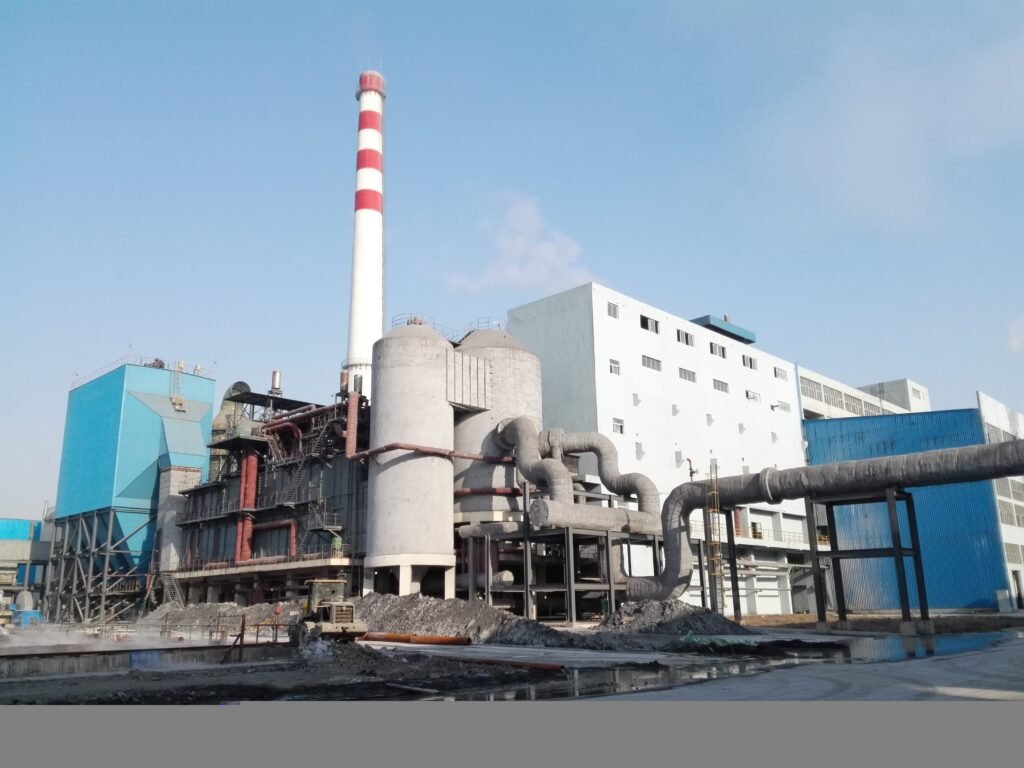
Improving industrial boiler thermal efficiency means converting more of the fuel’s energy into useful steam or hot-water output. The most practical methods are to improve combustion, keep heat-transfer surfaces clean, recover usable flue-gas heat, manage boiler water and blowdown, and match operation to actual demand.
These methods do not deliver identical results on every boiler. Fuel characteristics, firing technology, installed heat-recovery equipment, and operating conditions determine what can be improved. The following guide explains how each method works, when it is useful, and what to check before making operational changes or equipment upgrades.
What Should Be Considered Before Improving Boiler Thermal Efficiency?
In this guide, boiler thermal efficiency means fuel-to-useful-heat efficiency within a clearly defined boiler boundary. It is not the same as combustion efficiency or the energy efficiency of an entire steam plant.
Boiler thermal efficiency (%) = Useful boiler heat output / Fuel energy input × 100
For a steam boiler, useful heat output can be evaluated from steam flow and the enthalpy difference between steam and feedwater at the selected measurement points. For a hot-water boiler, it is determined from water flow and the enthalpy increase across the boiler. A meaningful comparison must use the same fuel heating-value basis—higher heating value (HHV) or lower heating value (LHV)—and consistent measurement boundaries.
The main opportunities typically concern heat carried away in flue gas, unburned fuel, heat lost through the boiler enclosure, and, where included in the test boundary, energy discharged with steam-boiler blowdown. A detailed discussion of efficiency terminology is available in How Efficient Are Industrial Boilers?.
Combustion Optimization: Reduce Excess Air and Unburned Fuel Losses
Balance Excess Air and Combustion Stability
Combustion needs enough oxygen for reliable fuel burnout. Insufficient air or poor mixing can increase carbon monoxide (CO), soot, and unburned fuel. Excessive air increases the mass of gas heated and exhausted through the stack. The objective is to reduce avoidable losses while maintaining stable combustion and complying with emissions and safety requirements.
Useful measurements include flue-gas O₂ and CO, stack temperature, fuel input, and boiler load. They should be interpreted together. For example, air leaking into a duct downstream of the furnace can raise measured O₂ without proving that too much air was supplied to the combustion zone. Comparing readings at the same load and measurement location is more meaningful than reacting to an isolated oxygen value.
There is no universal optimum excess-air setting for industrial boilers. Natural-gas burners, chain-grate furnaces, and circulating fluidized bed (CFB) boilers have different mixing and burnout characteristics. The U.S. Department of Energy’s combustion-efficiency guidance explains the excess-air/stack-loss trade-off using defined natural-gas conditions; its figures should not be applied indiscriminately to solid-fuel equipment.
Match Combustion Control to Fuel and Firing Technology
For gas-fired boilers, fuel-air ratio control and burner adjustment are central. Oil-fired boilers additionally depend on appropriate atomization and fuel properties, including viscosity where relevant.
For coal- and biomass-fired boilers, fuel particle size, moisture content, distribution across the grate or bed, and primary/secondary air distribution all influence burnout. In suitable solid-fuel systems, unburned carbon in fly ash or bottom ash represents fuel energy that was not released usefully. Ash sampling and fuel-quality checks can help assess whether this loss deserves attention; the interpretation depends on the firing technology and ash-handling arrangement. The Council of Industrial Boiler Owners (CIBO) discusses these losses specifically for conventional coal-firing systems in its Energy Efficiency Handbook.
A CFB boiler is a combustion technology, not a separate fuel category. Its efficiency is affected by fuel properties together with fluidization, bed temperature, solids circulation, and air staging. Detailed adjustment must follow the particular boiler design. For coal-specific measures, see How to Improve the Efficiency of Coal-Fired Boilers.
Maintain Clean Heat-Transfer Surfaces
Control Soot, Ash, and Gas-Side Fouling
Soot, ash deposits, and slagging reduce heat transfer from combustion gas to boiler tubes. With less heat absorbed, stack temperature may rise and additional fuel may be required for the same useful output.
For coal- and biomass-fired boilers, fuel ash behavior and the location of deposits influence the cleaning approach. Inspection, correctly applied soot-blowing equipment, and planned cleaning can help restore heat-transfer performance. A sustained rise in stack temperature under comparable load, excess-air, and fuel conditions can be a useful warning sign, but it does not by itself prove that deposits are the cause.
Before considering a new heat-recovery device, confirm that existing heating surfaces are operating as intended. Otherwise, a retrofit assessment may overestimate the heat available for recovery.
Prevent Water-Side Scale and Deposits
Water-side deposits add thermal resistance and may contribute to localized tube overheating. Appropriate feedwater treatment, monitoring of boiler-water chemistry, and inspection help prevent these conditions. Where deposits are confirmed, cleaning must be planned according to the material, location, and manufacturer’s procedures.
Removing deposits generally restores lost performance rather than increasing the boiler’s original design efficiency. This distinction matters when reporting the benefit of a maintenance program.
Recover Useful Heat from Boiler Flue Gas
Evaluate Feedwater Economizers
A feedwater economizer transfers sensible heat from outgoing flue gas to boiler feedwater, reducing the fuel needed to reach the required steam conditions. It is especially relevant when the exhaust retains useful heat after combustion has been tuned and the existing surfaces are clean.
An initial assessment should establish stack temperature and flue-gas flow at representative loads; feedwater inlet temperature and flow; existing economizer configuration; and the fuel’s corrosion and fouling characteristics. The intended outlet-gas temperature must also respect condensation, cold-end corrosion, pressure-drop, and stack requirements.
The DOE economizer technical sheet illustrates how recoverable heat is estimated using specified natural-gas and operating conditions. Its savings examples are not universal performance guarantees. For new boilers, heat-recovery surfaces should be assessed as part of the overall thermal design rather than as an isolated addition.
Consider Air Preheaters as Part of the Heat Balance
An air preheater transfers flue-gas heat to incoming combustion air. It can reduce exhaust losses and support the combustion process in boiler designs suited to air preheating, particularly in some solid-fuel applications.
Its suitability depends on combustion-air requirements, fuel contaminants, air leakage, corrosion risk, draft resistance, and available fan capacity. Air preheating is not automatically advantageous for every oil- or gas-fired package boiler.
Economizers and air preheaters may recover heat from the same flue-gas stream. Their combined effect must be evaluated through an integrated heat balance, not by adding separate estimated savings percentages.
Use Condensing Recovery Only with an Appropriate Heat Sink
A condensing economizer can recover additional latent heat by cooling exhaust gas below the water-vapor dew point. To make use of that heat, the plant needs a suitable low-temperature demand, such as makeup-water or process-water preheating.
Applications must address corrosion-resistant materials, condensate collection and treatment, and the actual flue-gas composition. These considerations are especially important when comparing natural-gas applications with sulfur- or ash-bearing fuels. If recovered heat is delivered outside the defined boiler boundary, the reported benefit should be assigned to the appropriate boiler or plant-level efficiency metric. See the DOE guidance on selecting a condensing economizer.
Manage Feedwater Quality and Steam-Boiler Blowdown
Maintain Water Chemistry Within Equipment Limits
Water treatment helps limit scale, corrosion, and carryover while maintaining suitable steam quality. Depending on the system, it may involve makeup-water treatment, deaeration, chemical conditioning, and routine sampling. Treatment requirements depend on boiler pressure, design, feedwater source, and operating conditions.
This is primarily a way to preserve safe and effective heat transfer. Increasing chemical dosing without a water-chemistry basis is not an efficiency strategy.
Avoid Unnecessary Blowdown Heat Loss
Steam-boiler blowdown removes concentrated impurities but also carries away hot water. Excessive blowdown wastes energy and makeup water; insufficient blowdown can create deposits, foaming, or carryover. The appropriate rate must therefore follow water-quality and boiler operating limits.
Where suitable, conductivity-controlled surface blowdown can reduce unnecessary discharge. A flash vessel or heat exchanger may recover part of the discharged energy when a usable heat demand exists. The DOE guidance on minimizing boiler blowdown explains the relationship between water quality and energy loss.
These measures mainly concern steam boilers; they should not be assumed to apply in the same way to closed-loop hot-water systems.
Improve Load Management and Operating Controls
Operate Within an Efficient and Stable Load Range
A boiler’s efficiency changes with load, but the shape of that relationship depends on its design and firing system. At low output, fixed heat losses can become a larger share of useful output; repeated short cycling can also add purge and standby losses in applicable equipment. However, no single load percentage is optimal for all boilers.
For plants with several boilers, compare actual demand, each unit’s measured part-load performance, minimum stable operating load, and standby needs before deciding which units to operate. Boiler safety, steam supply reliability, and process requirements remain controlling constraints.
Use Monitoring and Control to Sustain Improvements
Fuel-flow, steam-flow or hot-water-flow, temperature, pressure, and flue-gas measurements make it easier to identify changing performance. Suitable combustion controls, oxygen trim, and load-following logic can help maintain consistent operation where the equipment supports them.
The control system must have calibrated instruments, appropriate safety interlocks, and verified logic. A reduction in fan or pump electricity use is valuable, but it is an auxiliary-energy saving and should not automatically be reported as higher fuel-to-useful-heat boiler efficiency.
How Should Efficiency Improvements Be Prioritized and Verified?
Compare Measures Against Actual Operating Conditions
There is no fixed ranking that fits every boiler. A sensible approach is to first confirm the baseline and restore existing equipment performance, then examine modifications that are supported by measured heat losses and a feasible operating envelope.
| Improvement measure | What it can improve | Key data to review | Main condition or limitation |
|---|---|---|---|
| Combustion tuning | Excess-air and incomplete-combustion losses | O₂, CO, stack temperature, fuel and load | Burner/furnace design, stable burnout, emissions |
| Heat-transfer-surface cleaning | Heat absorbed by existing boiler surfaces | Surface inspection, stack-temperature trend, load | Verified fouling or scale; safe cleaning methods |
| Feedwater economizer | Sensible heat lost in exhaust gas | Stack temperature/flow, feedwater temperature/flow | Recoverable heat, cold-end corrosion, pressure drop |
| Air preheater | Exhaust heat recovered into combustion air | Combustion-air flow/temperature, flue-gas conditions | Draft, leakage, corrosion, interaction with economizer |
| Water treatment and blowdown control | Deposits and avoidable hot-water discharge | Water chemistry, blowdown rate, makeup-water demand | Steam-boiler water-quality limits |
| Load and control optimization | Avoidable losses across operating conditions | Load profile, cycling frequency, control trends | Unit operating range, process demand, interlocks |
This comparison is a screening tool, not a substitute for detailed engineering. For example, a high stack temperature may make heat recovery worth investigating, but the priority could still be to correct air leakage or fouling before specifying an economizer.
Verify Results on a Consistent Basis
Record a baseline before making changes. Compare useful steam or hot-water output, fuel consumption and heating value, feedwater or return-water conditions, load, and flue-gas measurements using the same test boundary and calculation method. For variable solid fuels, representative fuel sampling and a consistent as-fired moisture/heating-value basis are particularly important.
When reporting an improvement, distinguish percentage points of efficiency from percentage reduction in fuel consumption. These are different calculations. Any combined savings estimate should also avoid counting the same recovered heat twice.
For formal performance tests of fired steam generators, ASME PTC 4 provides a recognized testing framework. A detailed discussion of measurement methods is available in How to Measure the Thermal Efficiency of an Industrial Steam Boiler.
Frequently Asked Questions
Can Boiler Thermal Efficiency Improve Without Major Equipment Upgrades?
Yes. If combustion settings are unsuitable, heat-transfer surfaces are fouled, or steam-boiler blowdown is unnecessarily high, operational and maintenance measures may improve performance without a major retrofit. The actual potential depends on the existing condition.
Does Improving Insulation Always Increase Boiler Thermal Efficiency?
Repairing damaged insulation on the boiler enclosure can reduce heat loss within the boiler boundary. Insulating external steam piping improves steam-distribution efficiency, but that saving should not automatically be counted as an improvement in the boiler’s own thermal efficiency.
How Do Fuel Type and Combustion Technology Affect Improvement Methods?
All fired boilers benefit from effective combustion and heat transfer, but the relevant controls differ. Gas and oil burners depend heavily on burner and fuel-air settings; coal and biomass systems also depend on fuel preparation, burnout, ash behavior, and grate or bed operation. A CFB system has additional fluidization and solids-circulation requirements.
Conclusion
Improving industrial boiler thermal efficiency is most effective when the selected measures address verified heat losses. Combustion adjustment, clean heat-transfer surfaces, suitable flue-gas recovery, sound boiler-water management, and stable load control should be evaluated against the actual boiler design and operating conditions. For a new boiler project or an equipment-related technical enquiry, contact Taishan Group with the fuel, required capacity, steam or hot-water conditions, and expected operating profile.
References
- U.S. Department of Energy. Improve Your Boiler’s Combustion Efficiency — Steam Tip Sheet #4.
- Council of Industrial Boiler Owners (CIBO). Energy Efficiency Handbook.
- U.S. Department of Energy. Use Feedwater Economizers for Waste Heat Recovery — Steam Tip Sheet #3.
- U.S. Department of Energy. Minimize Boiler Blowdown — Steam Tip Sheet #9.
- U.S. Department of Energy. Considerations When Selecting a Condensing Economizer — Steam Tip Sheet #26B.
- ASME. PTC 4 — Fired Steam Generators.
How to Improve Industrial Boiler Thermal Efficiency: Practical Methods and Priorities? Read More »