
How to Read a Waste Heat Recovery Boiler Datasheet and Technical Specification?
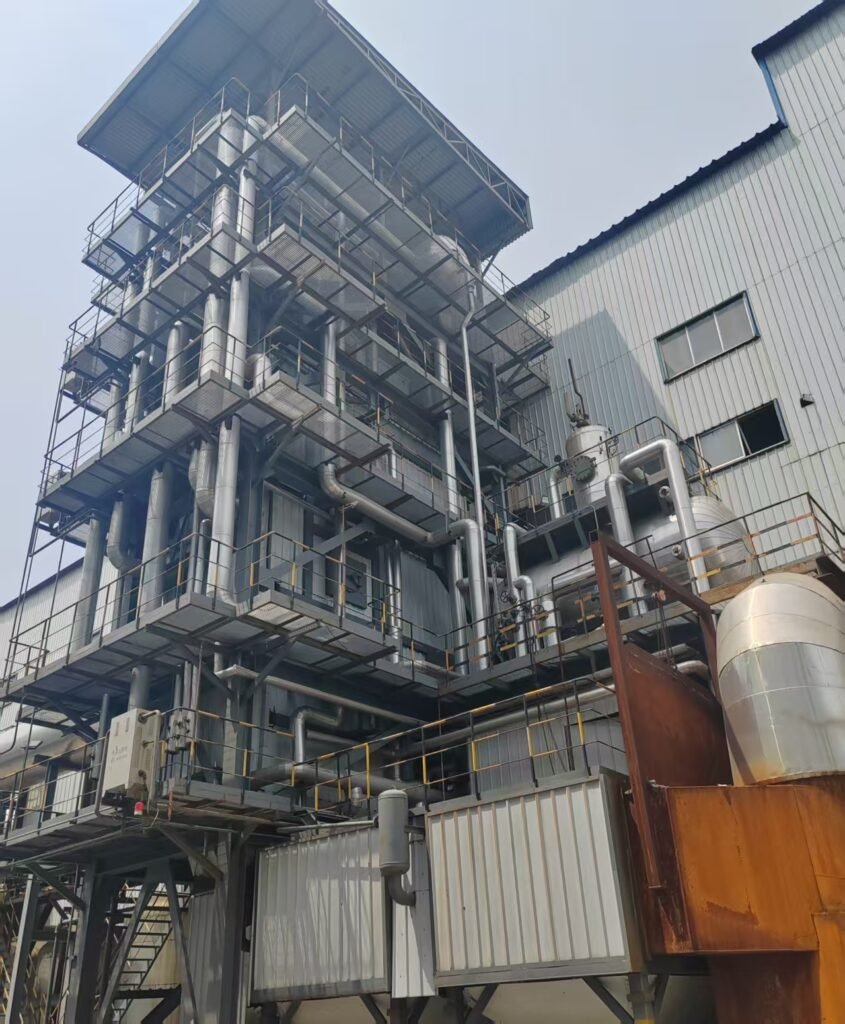
A waste heat recovery boiler (WHRB) datasheet summarizes the operating conditions, thermal performance, design parameters, and equipment requirements of a boiler recovering heat from industrial exhaust gases. Reading it correctly requires more than checking the rated steam capacity, steam pressure, or exhaust gas temperature.
The essential approach is to examine each parameter together with its operating case, measurement basis, and applicable performance guarantees. Two WHRBs with identical rated steam capacities may not deliver equivalent performance if their exhaust gas conditions or feedwater assumptions differ.
This guide explains how industrial buyers, plant engineers, and EPC contractors can interpret WHRB datasheets and technical specifications, identify incomplete or ambiguous entries, and compare technical documents on a consistent basis.
1. What Is Included in a WHRB Datasheet and Technical Specification?
A datasheet and technical specification serve complementary purposes. Together, they provide the information needed for preliminary technical review and subsequent engineering discussions.
WHRB Datasheet vs. Technical Specification
A WHRB datasheet typically summarizes key parameters, including:
- Exhaust gas inlet temperature, flow rate, and composition
- Rated steam generation or hot water output
- Steam pressure, temperature, and feedwater conditions
- Exhaust gas outlet temperature and gas-side pressure drop
- Design pressure and design temperature
- Equipment dimensions and principal connection details
- Performance guarantees and reference operating conditions
A technical specification defines the broader engineering requirements governing the equipment. These may include applicable design codes, construction materials, inspection requirements, instrumentation, auxiliary systems, and contractual supply responsibilities.
For example, a datasheet may identify the required steam pressure, while the technical specification establishes the applicable mechanical design rules and documentation requirements.
The exact document structure varies between projects and manufacturers. Some suppliers incorporate the datasheet into a larger specification, while others provide separate mechanical, thermal, and performance schedules.
Supporting Documents for Technical Review
| Document | Main Purpose | What to Verify |
|---|---|---|
| Heat Balance Diagram | Describes principal heat flows and operating conditions | Consistency of exhaust gas, feedwater, and steam data |
| General Arrangement Drawing | Shows equipment layout and dimensions | Connections, installation space, and access |
| Piping and Instrumentation Diagram (P&ID) | Identifies piping, valves, instruments, and control functions | System interfaces and control requirements |
| Scope of Supply | Defines included equipment and responsibility boundaries | Exclusions and battery limits |
| Performance Guarantee Schedule | Records guaranteed performance requirements | Operating conditions, tolerances, and verification criteria |
A useful reading sequence is to review the datasheet first, confirm thermal conditions against the supporting heat balance documents, and then examine the technical specification for mechanical requirements and supply boundaries.
For additional information about available configurations, see Taishan Group’s Waste Heat Recovery Boiler products.
2. How to Read Exhaust Gas Parameters and Design Conditions
Exhaust gas conditions are fundamental to WHRB performance because the available thermal energy depends on the upstream industrial process.
For an unfired WHRB, the boiler cannot independently maintain its heat input through fuel firing. Its recoverable energy is constrained by the temperature, flow rate, composition, and availability of the exhaust gas stream.
Exhaust Gas Temperature, Flow Rate, and Composition
Exhaust Gas Inlet Temperature
This parameter describes the gas temperature at a defined inlet reference point.
A higher inlet temperature generally increases the potential for heat recovery when other relevant conditions remain comparable. However, temperature alone does not determine achievable steam output.
Check whether the stated temperature represents normal operation, a thermal design case, or a maximum anticipated condition.
Also confirm the measurement location. The temperature measured at an upstream furnace outlet may differ from the actual WHRB inlet temperature because of intervening heat losses or process arrangements.
Exhaust Gas Flow Rate
Gas flow may be expressed in different units:
- kg/h or kg/s: Mass flow rate
- m³/h: Volumetric flow rate at specified actual conditions
- Nm³/h: Volumetric flow rate referenced to defined normal conditions
These values are not directly interchangeable.
When reviewing volumetric flow data, confirm the reference temperature, pressure, gas composition, and wet or dry basis where applicable.
The notation Nm³/h should not be treated as a complete definition without identifying the reference conditions used by the supplier.
Exhaust Gas Composition
Gas composition influences thermal properties and may affect condensation behavior, corrosion risks, and material requirements.
Depending on the industrial process, the gas analysis may need to identify water vapor, oxygen, carbon dioxide, sulfur-containing compounds, and other relevant constituents.
The reviewer should determine whether the reported composition represents the same operating condition as the stated exhaust gas flow and temperature.
Dust Loading
Industrial exhaust gases from certain furnaces, metallurgical processes, and other manufacturing operations may contain particulate matter.
Dust concentration and particle characteristics can influence fouling, erosion, cleaning requirements, and gas-side pressure losses.
Where these conditions are relevant, the technical specification should identify the assumptions used for equipment design.
The U.S. Department of Energy’s Waste Heat Recovery Basics discusses material limitations and maintenance-related challenges associated with industrial waste heat recovery.
Normal, Design, and Off-Design Operating Conditions
A WHRB datasheet may distinguish several operating cases:
- Normal Operating Condition: The expected condition during typical upstream process operation.
- Thermal Design Condition: The defined gas and water/steam conditions used for thermal design.
- Mechanical Design Conditions: Conditions used to establish mechanical design requirements.
- Minimum and Maximum Operating Conditions: The specified boundaries of anticipated operation.
- Off-Design or Part-Load Conditions: Operating cases that differ from the principal rated condition.
These terms must be interpreted according to the actual project specification rather than assumed to have identical meanings across manufacturers.
For example, when an industrial furnace operates at reduced production capacity, its exhaust gas flow rate or temperature may change.
Consequently, the WHRB’s steam generation may also change.
If a project experiences substantial variations in waste heat availability, a single rated operating point may not provide sufficient information.
In such cases, request performance data for the relevant operating conditions, particularly the normal, minimum-load, and maximum-load cases.
Gas Outlet Temperature and Gas-Side Pressure Drop
Gas Outlet Temperature
This parameter indicates the expected exhaust gas temperature at the specified WHRB outlet location.
It should be reviewed against downstream process requirements, allowable cooling limits, and relevant corrosion or condensation risks.
A lower exhaust gas outlet temperature is not automatically a superior result if it conflicts with process or material limitations.
Gas-Side Pressure Drop
Gas-side pressure drop represents the pressure loss through the specified boiler gas path.
It may be reported in Pa, kPa, or mbar.
Excessive pressure drop may affect upstream process equipment or the available capacity of the exhaust gas handling system.
When reading this value, determine whether it represents:
- An expected or calculated pressure drop
- A guaranteed maximum pressure drop
- A project-specified allowable limit
The corresponding exhaust gas flow, temperature, equipment boundary, and fouling assumptions should also be identified.
Common Datasheet Entries That Require Clarification
The following hypothetical entries illustrate why seemingly complete technical data may still require clarification.
| Datasheet Entry | Potential Issue | What to Clarify |
|---|---|---|
| Gas flow: 20,000 Nm³/h | Reference conditions unspecified | Reference temperature, pressure, and wet/dry basis |
| Gas inlet temperature: 450°C | Operating case undefined | Normal, thermal design, or maximum condition |
| Rated steam output: 10 t/h | Related operating conditions missing | Gas and feedwater conditions |
| Gas pressure drop: 1.5 kPa | Fouling assumption unclear | Clean or specified fouled condition |
| Gas outlet temperature: 180°C | Downstream constraints unknown | Process temperature and condensation limits |
All numerical values in this table are hypothetical teaching examples, not verified equipment specifications or recommended design limits.
The essential principle is that a datasheet value should be interpreted together with its reference conditions and technical definition.
3. How to Interpret Steam, Feedwater, and Rated Output Parameters
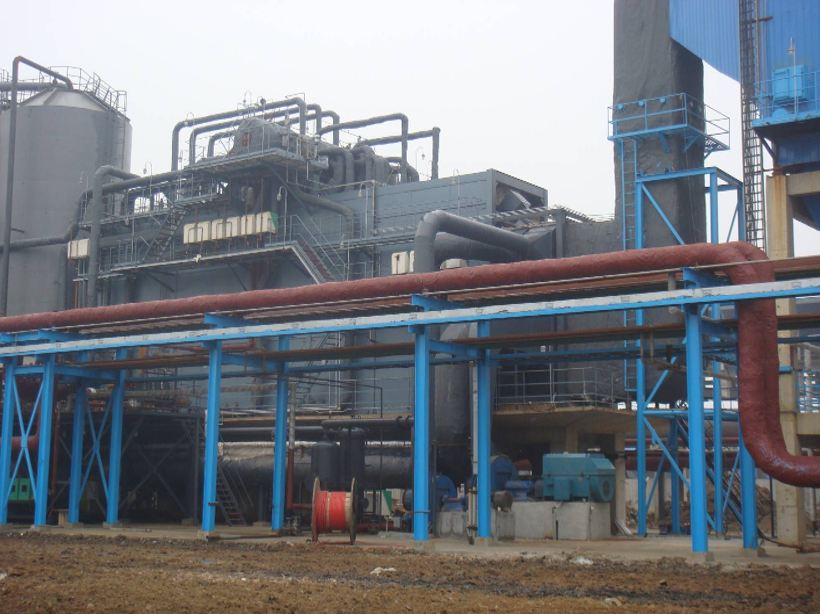
After reviewing the exhaust gas conditions, examine the specified steam or hot water output.
The following discussion focuses on steam-generating WHRBs. Hot water systems require their corresponding water-side supply, return, flow, pressure, and temperature data.
Rated Steam Capacity, Pressure, and Temperature
Rated Steam Capacity
Steam generation is commonly expressed in t/h or kg/h.
Rated capacity describes the steam mass flow associated with specified operating conditions.
It should not be interpreted independently from the exhaust gas temperature, gas flow rate, feedwater conditions, and required steam properties.
For example, two boilers may both have a rated steam capacity of 4 t/h but require different thermal inputs because their steam conditions or feedwater temperatures differ.
Steam Pressure
Steam pressure may be expressed as:
- MPa(g) or bar(g): Gauge pressure
- MPa(a) or bar(a): Absolute pressure
The reader should confirm both the pressure reference and measurement location.
A pressure stated at the steam drum may differ from the required pressure at a downstream delivery point because of system pressure losses.
Steam Temperature
Steam temperature establishes the specified thermal condition of the steam.
For saturated steam, temperature and pressure are related through the saturation properties of water and steam.
For superheated steam, the actual steam temperature exceeds the saturation temperature at the corresponding pressure.
These differences influence the thermal energy required for steam generation.
For authoritative thermodynamic property definitions, the International Association for the Properties of Water and Steam (IAPWS) publishes the IAPWS-IF97 industrial formulation, widely used for water and steam property calculations.
Operating Pressure, Design Pressure, and MAWP
Several pressure-related terms may appear in a WHRB technical specification.
| Parameter | Meaning |
|---|---|
| Normal Operating Pressure | Pressure expected during typical operating conditions |
| Rated Steam Pressure | Pressure associated with the stated rated duty or steam delivery condition |
| Design Pressure | Pressure used as a basis for mechanical design under applicable requirements |
| Maximum Allowable Working Pressure (MAWP) | A code-defined allowable pressure limit where applicable |
These terms are not interchangeable.
A normal operating steam pressure does not, by itself, establish the mechanical design pressure.
Likewise, MAWP must be interpreted according to the governing construction code and relevant equipment boundary.
When comparing technical documents, confirm the pressure reference, measurement location, applicable design rules, and whether the stated values represent operating requirements or mechanical design limits.
Feedwater Conditions and Water Quality Requirements
Important feedwater parameters include:
- Feedwater inlet temperature
- Feedwater inlet pressure
- Feedwater flow rate, where specified
- Feedwater quality requirements
Feedwater temperature affects the thermal energy required to produce the specified steam output.
Consequently, identical rated steam capacities may correspond to different thermal duties if the feedwater conditions differ.
Feedwater pressure must be compatible with the system’s operating and hydraulic requirements.
Water quality requirements should be defined based on the boiler configuration, operating conditions, applicable standards, and equipment specifications.
Example: Reading a Simplified WHRB Datasheet
The following example demonstrates how related parameters should be interpreted together.
Illustrative example only: The values below are hypothetical and have not been derived from a verified heat and mass balance. They must not be used for equipment selection, steam output prediction, or design approval.
| Parameter | Illustrative Datasheet Value |
|---|---|
| Heat Source | Industrial furnace exhaust gas |
| Exhaust Gas Inlet Temperature | 480°C |
| Exhaust Gas Mass Flow | 50,000 kg/h |
| Rated Steam Generation | 4 t/h |
| Rated Steam Pressure | 1.0 MPa(g) |
| Steam Condition | Saturated |
| Feedwater Inlet Temperature | 105°C |
| Expected Gas Outlet Temperature | 220°C |
| Expected Gas-Side Pressure Drop | 1.2 kPa |
Step 1: Identify the heat-source conditions.
The datasheet lists an exhaust gas temperature of 480°C and a mass flow rate of 50,000 kg/h.
The reviewer should establish which operating case these values represent, confirm the measurement locations, and obtain the relevant gas composition data.
Step 2: Interpret the rated steam output.
The stated steam generation is 4 t/h at 1.0 MPa(g), with saturated steam specified.
The reviewer should confirm that this output corresponds to the listed exhaust gas conditions and the stated 105°C feedwater temperature.
However, the numerical entries alone do not demonstrate that the proposed thermal duty is physically achievable.
A suitable heat and mass balance and detailed thermal assessment are required.
For readers seeking to understand the separate capacity calculation process, see our guide to waste heat recovery boiler sizing and capacity planning.
Step 3: Examine the exhaust gas outlet temperature.
The expected outlet temperature is 220°C.
Check whether this condition is compatible with downstream equipment, process constraints, and the relevant condensation or corrosion limitations.
Step 4: Review the gas-side pressure drop.
The listed expected pressure drop is 1.2 kPa.
The reviewer must determine whether the project has established a maximum allowable pressure loss and whether this figure represents clean or specified fouled conditions.
Step 5: Identify missing design and guarantee information.
The example does not provide:
- Mechanical design pressure and temperature
- Applicable construction code
- Guaranteed steam output
- Performance tolerances
- Defined off-design performance
- Contractual scope of supply
These items must be obtained from the corresponding specification and supporting documents where required.
The main lesson is that a datasheet is not technically complete simply because its principal performance fields contain numerical values.
4. How to Understand Heat Recovery Performance and Guarantees
Performance indicators describe the thermal duties and operational results associated with the proposed WHRB.
They must be interpreted according to their calculation boundaries and reference conditions.
Heat Recovery Duty and Performance Indicators
Heat Recovery Duty describes the rate of thermal energy transferred through the specified heat recovery process.
It is commonly expressed in kW or MW.
For steam-generating equipment, the thermal duty depends on the water/steam mass flow and associated thermodynamic state changes.
Where the technical documents include a heat recovery efficiency or another performance indicator, the reviewer should confirm its definition.
Different indicators may use different reference temperatures, energy inputs, and calculation boundaries.
For example, a ratio describing recovered heat relative to the available exhaust gas energy over a defined temperature interval may not be directly comparable with a different ratio based on another thermal boundary.
When reviewing such values, check:
- What is counted as useful recovered heat
- Which exhaust gas reference conditions apply
- Which energy flows are included or excluded
- Whether auxiliary energy is considered
- Whether the result is calculated, expected, or guaranteed
Two identical efficiency percentages do not necessarily represent equivalent performance when their calculation methods differ.
Pinch Point, Approach Temperature, and Their Applicability
Some WHRB and heat recovery steam generator configurations include pinch point and approach temperature in their technical documentation.
Pinch Point
For a conventional evaporator arrangement, the pinch point commonly refers to the temperature difference between the gas leaving the evaporator section and the saturation temperature corresponding to the relevant steam pressure.
Approach Temperature
In a conventional arrangement incorporating an economizer, the approach temperature commonly refers to the difference between the saturation temperature and the water temperature leaving the economizer.
These parameters describe important thermal relationships in applicable heat recovery configurations.
However, their relevance and exact definitions depend on the equipment arrangement.
Not all WHRBs contain identical evaporator and economizer sections.
For multi-pressure heat recovery systems, the datasheet should also identify the applicable pressure level or heat-transfer section.
The purpose of reading these parameters is to understand the supplier’s design assumptions, not to perform a complete heat-transfer design calculation.
Rated Performance vs. Guaranteed Performance
This distinction is particularly important when reviewing supplier technical proposals.
Rated performance describes a defined equipment performance point.
Guaranteed performance represents a contractual commitment under specified operating conditions and agreed verification requirements.
The rated and guaranteed values may coincide, but they should not automatically be treated as identical.
A performance guarantee schedule may specify:
- Guaranteed steam generation
- Guaranteed steam pressure or temperature
- Guaranteed gas outlet temperature
- Guaranteed maximum gas-side pressure drop
- Reference operating conditions
- Measurement boundaries and contractual tolerances
A guaranteed steam output should be associated with defined exhaust gas and feedwater conditions.
Similarly, a guaranteed pressure drop should identify the relevant gas flow, operating condition, equipment boundary, and applicable fouling assumptions.
A useful technical review should answer five questions:
- Which operating case does the guarantee represent?
- Which values are guaranteed rather than estimated?
- Where are the reference measurement points?
- Which tolerances or correction procedures apply?
- How will compliance be verified?
A performance guarantee is meaningful only when the guaranteed value and its applicable conditions are clearly defined.
The detailed procedures for testing and calibration are separate technical subjects. For further reading, see WHRB performance testing and calibration.
5. What to Check in the WHRB Technical Specification and Scope of Supply
A technical specification provides the additional engineering requirements that cannot be fully communicated through performance figures alone.
Design Codes, Materials, and Equipment Requirements
The applicable construction code is a critical element of a WHRB specification.
Depending on the equipment classification, project jurisdiction, and contractual requirements, relevant standards may cover boiler construction, pressure equipment, piping, inspection, and certification.
For applicable power boilers and heat recovery steam generators, ASME BPVC Section I — Rules for Construction of Power Boilers may be relevant.
However, no single construction code should be assumed applicable to every WHRB configuration.
The technical specification should identify the governing code, required edition, certification requirements, and applicable equipment boundaries.
Material requirements should be reviewed against the mechanical design conditions and the actual exhaust gas environment.
For gas streams containing corrosive compounds or significant particulate matter, additional attention may be required for:
- Material suitability
- Corrosion and erosion considerations
- Cleaning arrangements
- Access for inspection and maintenance
- Relevant operating limitations
These requirements should be supported by the actual process data rather than generic assumptions.
Scope of Supply and Battery Limits
The scope of supply defines which components and services are included in the manufacturer’s responsibility.
Depending on the project, these may include:
- Boiler pressure parts and steam drums
- Evaporators, economizers, and superheaters, where applicable
- Gas ducts and expansion joints
- Structural supports and insulation
- Valves, instrumentation, and control equipment
- Auxiliary systems and cleaning provisions
- Inspection, testing, and technical documentation
Battery limits describe the defined physical or functional interfaces between the supplier’s equipment and other plant systems.
For example, a supplier may provide the boiler pressure parts while the EPC contractor remains responsible for certain external piping, ducts, or auxiliary systems.
The precise division of responsibility must be confirmed in the contractual scope of supply and interface documents.
Project Reference: Parnaíba Waste Heat Boiler Drums
Taishan Group’s published project case portfolio records the supply of one high-pressure drum and one low-pressure drum for a 70-ton waste heat boiler associated with the Parnaíba Complex in Brazil.
This reference illustrates why the complete boiler duty and the supply scope of an individual manufacturer must be distinguished.
Different pressure levels and equipment components may have separate design requirements and interfaces.
The published record confirms the stated drum supply; it does not establish that Taishan Group supplied the entire boiler system or disclose the project’s detailed operating conditions.
For industrial buyers, the practical lesson is to confirm which equipment is actually included in a supplier’s contract, rather than relying solely on the capacity of the overall boiler project.
6. How to Review and Compare WHRB Technical Documents
Once the key parameters have been interpreted, the reviewer should check whether the technical information is complete and internally consistent.
The purpose is to establish a reliable basis for technical evaluation—not to replace detailed engineering design or contractual verification.
WHRB Technical Datasheet Review Checklist
| Review Item | Key Question |
|---|---|
| Exhaust gas conditions | Are inlet temperature, flow rate, and composition sufficiently defined? |
| Gas flow basis | Are units, reference conditions, and wet/dry basis clear where applicable? |
| Operating cases | Are normal, design, and off-design conditions distinguished? |
| Rated steam output | Is the stated capacity linked to specified operating conditions? |
| Steam conditions | Are pressure, temperature, and measurement locations identified? |
| Feedwater conditions | Are inlet temperature, pressure, and relevant quality requirements defined? |
| Mechanical design | Are design pressure, design temperature, and governing code specified? |
| Gas outlet temperature | Is the value compatible with downstream process constraints? |
| Pressure drop | Is the expected or guaranteed value within the allowable limit? |
| Performance guarantees | Are reference conditions, boundaries, and tolerances defined? |
| Scope of supply | Are inclusions, exclusions, and battery limits clear? |
| Document consistency | Do the datasheet, specification, and supporting documents agree? |
When information is missing or inconsistent, record the issue and request clarification.
If two documents contain conflicting values, the reviewer should not simply choose the more favorable figure. The discrepancy should be resolved through formal technical clarification or revised documentation.
How to Compare Two Supplier Datasheets
Consider two proposed WHRBs with identical rated steam capacities.
Supplier A may state its rated output under one exhaust gas inlet temperature and feedwater condition.
Supplier B may report the same steam capacity but use a different gas flow rate or feedwater inlet temperature.
The matching capacity figures do not establish equivalent performance under the same operating conditions.
A meaningful comparison should therefore establish:
- A common exhaust gas operating basis
- Consistent steam and feedwater conditions
- Comparable performance guarantee requirements
- Clearly defined measurement and equipment boundaries
- Separately identified supply scopes
Where necessary, suppliers should provide revised performance information based on the same project conditions.
This approach helps identify genuine technical differences without confusing variations in input assumptions with variations in equipment performance.
7. Frequently Asked Questions About WHRB Datasheets
What Is the Difference Between Rated Steam Capacity and Guaranteed Steam Output?
Rated steam capacity describes an equipment performance point under specified conditions. Guaranteed steam output is a contractual commitment associated with agreed operating conditions and verification requirements. The values may coincide, but the relevant guarantee schedule should be reviewed before treating them as equivalent.
Why Must Exhaust Gas Flow Units Be Checked in a WHRB Datasheet?
Gas flow may be expressed as mass flow, actual volumetric flow, or volumetric flow at defined normal conditions. These values cannot be compared directly without checking reference conditions, gas properties, and the wet or dry basis where relevant.
Is Design Pressure the Same as Operating Pressure in a WHRB?
No. Operating pressure describes an expected operating condition, while design pressure forms part of the mechanical design basis under applicable rules. Code-defined pressure limits such as MAWP may also apply and must be interpreted according to the governing code.
Can Two WHRB Datasheets Be Compared Using Rated Capacity Alone?
No. Rated steam capacity should be reviewed alongside exhaust gas temperature and flow, feedwater conditions, steam parameters, and performance guarantees. Two boilers with identical stated capacities may not offer equivalent performance under a common operating case.
What Should You Do If Important WHRB Datasheet Parameters Are Missing?
Request technical clarification or a revised datasheet from the supplier. Missing operating conditions, measurement references, design limits, guarantee terms, and equipment boundaries should be resolved before the data are used for meaningful comparison or technical approval.
Conclusion
Reading a waste heat recovery boiler datasheet correctly requires understanding how exhaust gas conditions, steam or hot water output, mechanical design limits, and performance guarantees relate to one another.
A reliable technical review examines the definitions and operating conditions behind each rating rather than evaluating individual values in isolation.
For an industrial waste heat recovery project, Taishan Group can review the available technical requirements to support discussions on an appropriate boiler solution.
When requesting a technical proposal, provide the available exhaust gas temperature, flow rate, composition, operating-load range, required steam conditions, and any process limitations or applicable design standards.
Clear project data help establish a more reliable basis for technical evaluation and supplier communication.
References
U.S. Department of Energy (DOE). Waste Heat Recovery Basics. Background information on industrial waste heat recovery opportunities and technical limitations.
International Association for the Properties of Water and Steam (IAPWS). Revised Release on the IAPWS Industrial Formulation 1997 for the Thermodynamic Properties of Water and Steam. Official industrial formulation for water and steam thermodynamic properties.
American Society of Mechanical Engineers (ASME). BPVC Section I — Rules for Construction of Power Boilers. Official code information for applicable power boiler construction requirements.
How to Read a Waste Heat Recovery Boiler Datasheet and Technical Specification? Read More »