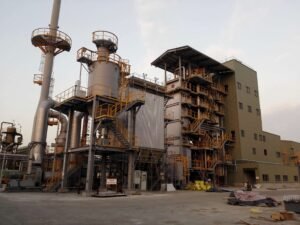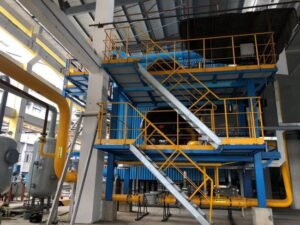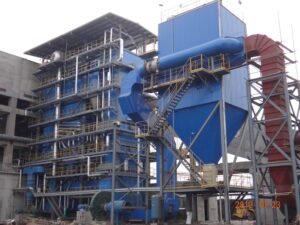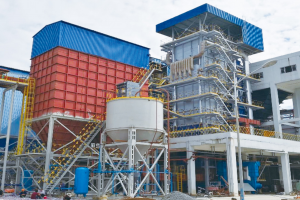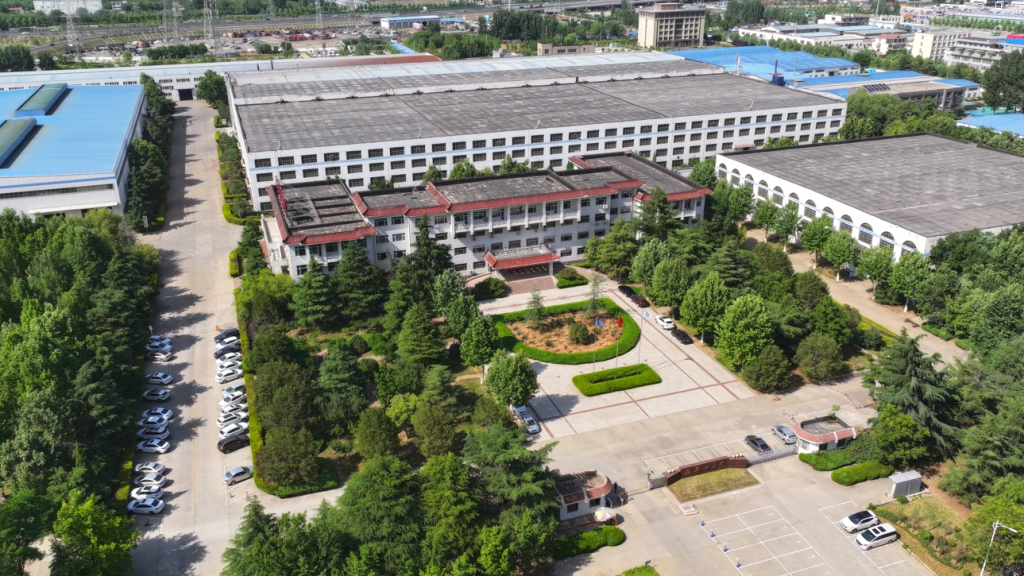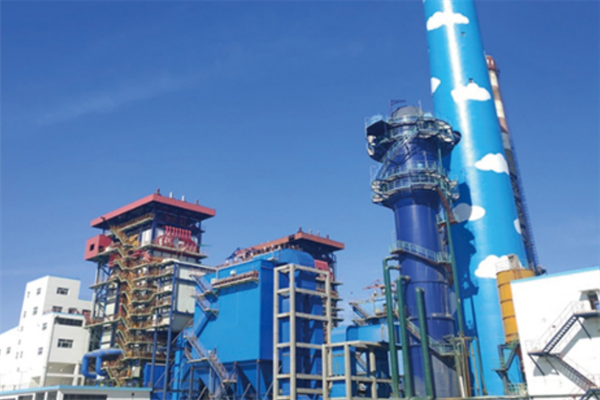
Sourcing a biomass boiler for industrial or power-plant duty is not like buying a pump or a compressor. Get the supplier wrong — wrong combustion design for your fuel moisture content, undersized grate area, a vendor with no after-sales footprint in your region — and you are looking at chronic unplanned shutdowns, grate clinker every few weeks, and fuel-to-steam efficiency that sits 6–10 points below what the datasheet promised. At scale, that gap translates to real money: on a 20 t/h installation running 7,000 hours a year, a single percentage point of thermal efficiency loss can cost more in extra biomass procurement than most plant managers expect when they signed the purchase order.
The best industrial biomass boiler suppliers in the world combine fuel-flexible combustion technology (stoker-grate, CFB, or spreader-stoker configurations), proven capacity ranges from roughly 1 t/h steam output up to 130 MW thermal, operating pressures to 9.8 MPa, and a demonstrated service network that survives the commissioning phase. The shortlist includes manufacturers in China, Europe, and Southeast Asia, each with different strengths in fuel type, emissions compliance, EPC capability, and total installed-cost position.
What makes this category genuinely difficult is that “biomass” covers an enormous spread of fuels — rice husk, wood chips at 50% moisture, palm kernel shell, bagasse, municipal solid waste fractions, agricultural straw — and each one punishes the wrong boiler design in a different way. A grate boiler optimized for dry wood pellets will give you a maintenance headache on wet paddy straw inside six months. The suppliers worth serious consideration are the ones who have already learned those lessons on someone else’s plant, not yours.
Technical Specifications That Actually Separate World-Class Biomass Biomass Boiler Manufacturers
Combustion Technology: Pick the Wrong Type and You’ll Fight Your Fuel Every Day
Fixed grate units are the simplest and cheapest entry point — adequate for dry wood chips or agricultural residue with moisture below roughly 30% and capacities under 10 t/h. They’re still common in small Southeast Asian mills, but turndown ratios rarely exceed 1:3, which causes problems the moment fuel quality swings or steam demand drops at night.
Traveling grate (chain grate) stokers extend that range considerably. Practical capacity sweet spot sits between 6 and 75 t/h, fuel moisture tolerance up to about 45% wet basis, and turndown in the 1:4 range depending on grate design and furnace geometry. They handle rice husk, bagasse, wood waste, and palm shell reasonably well. Air distribution across the grate width is critical — if a supplier can’t show you their undergrate air-zone mapping, that’s a gap worth probing.
Water-cooled vibrating grate designs handle higher-ash and slightly stickier fuels better than traveling grate because the water cooling manages bed temperature more precisely and reduces clinker risk. Common in European wood waste and SRF (solid recovered fuel) applications, 10–80 t/h range.
Bubbling fluidized bed (BFB) systems start making real sense above roughly 20 t/h and become the preferred choice when fuel calorific value varies widely — say 8–16 MJ/kg in the same week — or when moisture climbs above 50%. The turbulent bed maintains combustion stability that a grate simply can’t match under those conditions. Turndown can reach 1:5 or better. The tradeoff is higher parasitic power for bed fluidization and more sophisticated controls.
CFB (circulating fluidized bed) is the technology to specify for large-scale projects, co-firing scenarios, or difficult fuels with high chlorine or alkali content. Capacity range runs from roughly 35 t/h up to 480 t/h and beyond. Solid fuel flexibility is exceptional — some designs tolerate moisture up to 60% wet basis if the furnace sizing accounts for drying load — and turndown ratios of 1:5 to 1:6 are achievable in well-engineered units. In-bed limestone injection handles SO₂ without a wet scrubber, which simplifies the backend in many jurisdictions.
Capacity Classes and What They Mean for Project Sizing
Small industrial range (roughly 1–20 t/h steam, 0.7–14 MW thermal) covers most food processing, textile dyeing, small wood products, and agricultural cooperative applications. Saturated steam at 0.7–1.6 MPa is usually sufficient. Operating pressure selection here is mostly about piping and consumer equipment, not thermodynamic optimization.
Medium industrial (20–75 t/h, approximately 14–52 MW) is where cogeneration starts to become economically viable. Superheated steam at 3.82 MPa / 400°C or 4.9 MPa / 450°C feeds a back-pressure or extraction-condensing turbine for combined heat and power — payback periods depend heavily on local electricity tariffs, but in markets where grid power costs USD 0.08–0.14/kWh, the economics are usually compelling within 5–9 years.
Large power-grade (75–480 t/h, 52–130+ MW) is dedicated biomass power or industrial CHP at utility scale. Superheated steam at 9.8 MPa / 540°C. At this level you’re evaluating boiler island design, turbine-generator integration, fuel receiving and handling infrastructure, and grid connection simultaneously. EPC execution risk dominates procurement decisions.
Pressure, Temperature, and the Thermal Oil Option
Not every industrial process needs steam. High-temperature thermal oil (hot oil) circuits operating at 280–320°C under relatively low pressure (typically 0.3–1.0 MPa) are the right call for plywood pressing, bitumen production, chemical reactors, and similar applications where steam condensate management is problematic or where precise temperature control below 300°C matters more than latent heat transfer.
High-temperature thermal oil biomass systems can achieve fluid outlet temperatures up to 320°C at operating pressures well below 1.0 MPa, making them inherently safer from a pressure standpoint than equivalent-temperature steam systems.True
Thermal oil systems operate in liquid phase at these temperatures, so saturation pressure is not a constraint — unlike steam, which at 320°C would require roughly 11.3 MPa. This is a well-established thermodynamic fact and a genuine advantage in many industrial applications.
Fuel Flexibility: Where Most Spec Sheets Lie by Omission
Calorific value range on the design basis matters enormously. A boiler optimized for wood chips at 15–17 MJ/kg will run inefficiently — possibly dangerously if furnace temperatures drop too low — on wet rice straw at 8–10 MJ/kg. Any serious supplier should specify the fuel design matrix: moisture range, calorific value range, bulk density range, ash content, and critically, ash fusion temperature. Slagging above the grate starts when ash fusion temperature drops below roughly 1,050°C, and some agricultural residues (rice husk, wheat straw) push this boundary regularly.
Chlorine content above 0.3% in the as-fired fuel accelerates high-temperature corrosion on superheater tubes — a failure mode that surfaces 18–36 months into operation, not at commissioning. The better manufacturers design superheater tube spacing, material selection (often 15CrMo or TP347H for high-chlorine service), and flue gas temperature profiles to account for this. Ask specifically. If the answer is vague, that’s diagnostic.
Efficiency: The Numbers and What Drives Them
Grate-fired boilers from competent manufacturers typically achieve 82–88% net thermal efficiency on dry fuels, dropping to 78–84% on wetter fuels unless they include a flue gas condenser or hot-water economizer. CFB units from top-tier suppliers with air preheater, economizer, and condensing heat recovery can push 90–93% — but that figure depends on fuel moisture, stack temperature, and whether the condensate heat is actually captured usefully in the process.
The heat loss breakdown to probe: flue gas sensible heat (typically 6–12% depending on excess air and stack temperature), unburnt carbon in ash (0.5–3% for grate, lower for CFB), radiation and convection from boiler surface (0.3–1%). Suppliers who claim efficiency above 90% without specifying stack temperature and fuel moisture are almost certainly cherry-picking conditions.
Emissions: Standard vs. Optional Is a Contract Question
EU IED limits for biomass boilers above 50 MW thermal are demanding: PM ≤ 20 mg/Nm³, SO₂ ≤ 200 mg/Nm³, NOx ≤ 200 mg/Nm³ at 6% O₂. China GB 13271 sets tiered limits depending on boiler capacity and region, generally 30–50 mg/Nm³ for PM in key emission control zones.
Primary combustion control — staged air, OFA (overfire air) ports, flue gas recirculation — handles NOx reduction to roughly 250–400 mg/Nm³ range on its own. Getting below 200 mg/Nm³ reliably requires SNCR at minimum; SCR for sub-100 mg/Nm³ targets. Particle control: fabric filters (bag filters) outperform ESP for fine particulate below 10 mg/Nm³ but carry higher maintenance costs on sticky or hygroscopic ash streams. World-class suppliers integrate at least bag filter and SNCR as standard scope; ESP, SCR, and wet scrubber for SO₂ come in depending on fuel sulfur and local permit limits.
| Combustion Type | Capacity Sweet Spot | Fuel Moisture Tolerance | Typical Turndown | NOx Primary Control Effectiveness |
|---|---|---|---|---|
| Fixed grate | 1–10 t/h | ≤30% | ~1:2.5–3 | Limited |
| Traveling grate | 6–75 t/h | ≤45% | ~1:3–4 | Moderate (staged air) |
| Water-cooled vibrating grate | 10–80 t/h | ≤50% | ~1:4 | Moderate |
| BFB | 20–130 t/h | ≤55% | ~1:4–5 | Good |
| CFB | 35–480 t/h | ≤60% | ~1:5–6 | Good (in-bed staging) |
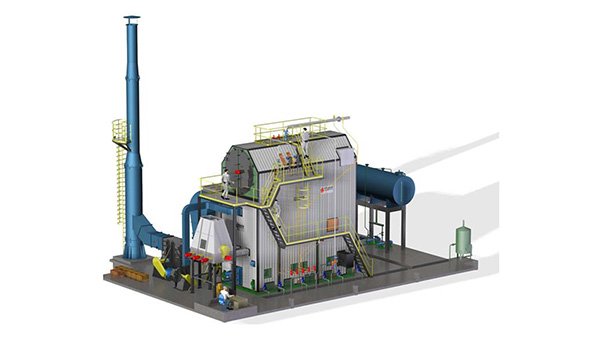
Top 10 Industrial Biomass Boiler Suppliers in the World — Ranked and Evaluated
Choosing a biomass boiler supplier isn’t like ordering a pump or a heat exchanger. You’re committing to a combustion technology, a fuel-handling philosophy, an emissions compliance path, and — if you go EPC — a project execution partner for 18 to 36 months. The ten manufacturers below represent the realistic shortlist for serious industrial and power projects in 2026. Each has earned its position through delivered references, not brochures.
Taishan Group (China)
Taishan builds CFB and grate-fired biomass steam boilers from 10 t/h up to 480 t/h, covering operating pressures from 1.25 MPa to 9.8 MPa and steam temperatures to 540°C. That range covers everything from a mid-sized rice mill to a grid-connected biomass power plant. Fuel flexibility is a genuine strength here — rice husk, bagasse, palm shell, wood chip, and MSW co-firing are all handled with purpose-designed fuel-feeding and bed temperature control systems, not afterthoughts bolted onto a coal design. Certifications include ASME, CE, and ISO 9001, which matters when you’re shipping into Southeast Asia or the Middle East where third-party inspection is contractually required. EPC delivery capability — covering civil, mechanical, electrical, and commissioning — is real and demonstrated across projects in Vietnam, Bangladesh, Pakistan, Nigeria, and Saudi Arabia. In my experience, the ability to supply matched auxiliary equipment (economizers, dust collectors, fans, feedwater systems) from a single source reduces interface risk significantly on overseas sites where spare-part logistics are already a headache.
Taishan Group holds ASME and CE certifications for its industrial biomass boiler product linesTrue
ASME S and U stamps and CE pressure equipment directive compliance are standard certification requirements for export-oriented Chinese boiler manufacturers targeting North American and European-regulated markets; Taishan Group maintains these for its export product range.
Babcock & Wilcox (USA)
B&W’s bubbling and circulating fluidized bed biomass systems scale up to roughly 300 MW thermal, making them one of the few suppliers capable of utility-grade biomass power with a long reference list. Their emissions control engineering — SNCR, SCR, activated carbon injection — is mature and well-documented. Carbon capture integration is on their roadmap in a credible way, not just marketing language.
Valmet (Finland)
Valmet’s BFB (bubbling fluidized bed) technology is arguably the benchmark for wet, variable-moisture biomass fuels — bark, sludge, and agricultural residues that would choke a grate system. Their pulp-and-paper and district energy references across Scandinavia, Central Europe, and Asia-Pacific are extensive. The lifecycle service network is genuinely differentiated; parts and process optimization support for a 20-year boiler life isn’t something every supplier can back up.
ANDRITZ (Austria)
Strong in the wood-processing and paper sectors, ANDRITZ integrates biomass combustion with upstream drying and fuel-handling systems. Their European IED-compliant designs are well-suited to projects where NOx and particulate limits are tightening. Less competitive on price for straightforward industrial steam applications outside their core sectors.
Thermax (India)
Cost-competitive and well-calibrated for South and Southeast Asian project economics. Proven in sugar (bagasse), rice, and textile industries. EPC capability is growing, though complex high-pressure projects above 6.5 MPa are less common in their reference list than straightforward saturated and low-superheat steam applications.
Hurst Boiler (USA)
Hurst fills a specific niche well: packaged, modular biomass boilers for North American industrial users who need fast delivery and don’t want to manage a field-erected project. Lumber mills, food processors, and institutional campuses are the sweet spot. Capacity tops out around 25,000 lb/h steam, so don’t go here for a power plant.
Kohlbach (Austria)
Specialized in small-to-medium biomass systems (roughly 1 MW to 20 MW thermal) for European industrial and district heating markets. Automation level is high, operator-hour requirements are low, and emission performance is tuned for Austrian and German regulatory environments. Less relevant outside Europe unless you’re replicating a European-spec district energy project.
Zhengzhou Boiler (China)
Traveling grate and CFB designs at competitive price points, with a growing export footprint in Africa and South America. Certifications and documentation quality have improved in recent years. A reasonable option for budget-constrained projects with straightforward fuel streams, though EPC execution depth for overseas sites is thinner than Taishan’s.
Compte-R (France)
Custom biomass energy systems with a particular focus on flue gas treatment integration — wet scrubbers, bag filters, condensing economizers. Useful for European projects where planning permits hinge on emissions guarantees. Small company; delivery lead times and capacity can vary, so verify production slot availability early.
SHL (Sweden)
SHL’s hot water and steam boilers are optimized for cold-climate district heating — high return-temperature tolerance, condensing capability, and integration with seasonal heat storage. Efficiency in Scandinavian and Baltic applications is genuinely impressive. Outside those geographies, the value proposition narrows.
Supplier Comparison: Key Parameters at a Glance
| Supplier | Capacity Range | Combustion Type | Key Certifications | Fuel Flexibility | EPC Service | Primary Export Markets |
|---|---|---|---|---|---|---|
| Taishan Group | 10–480 t/h steam | CFB, Grate | ASME, CE, ISO 9001 | Rice husk, bagasse, palm shell, wood chip, MSW co-fire | Yes, full EPC | SE Asia, S Asia, Africa, Middle East |
| Babcock & Wilcox | Up to ~300 MW | BFB, CFB | ASME, various | Multi-fuel biomass, coal co-fire | Yes | North America, Europe, Global |
| Valmet | 5–300+ MW | BFB, CFB | CE, ISO, local | Bark, sludge, agri-residue, wood | Yes | Europe, Asia-Pacific |
| ANDRITZ | 5–150 MW | Grate, CFB | CE, ISO | Wood, agri-residue, sludge | Yes (process integration) | Europe, South America |
| Thermax | 1–150 t/h steam | Grate, CFB | IBR, ISO, CE | Bagasse, rice husk, wood, coal co-fire | Growing | S Asia, SE Asia, Africa |
| Hurst Boiler | Up to ~25,000 lb/h | Stoker, Grate | ASME, NB | Wood chips, sawdust, agricultural waste | No (packaged only) | North America |
| Kohlbach | 1–20 MW thermal | Grate | CE, Austrian/German regs | Wood chips, pellets, bark | Limited | Europe |
| Zhengzhou Boiler | 6–220 t/h steam | Grate, CFB | CE, ISO | Wood, agri-residue, coal co-fire | Partial | Africa, South America |
| Compte-R | 1–30 MW thermal | Grate | CE, French regs | Wood, agri-residue | Partial | Europe |
| SHL | 1–50 MW thermal | Grate | CE, Swedish regs | Wood chips, pellets | Limited | Scandinavia, Baltic |
A few practical notes on using this table: capacity ranges reflect typical project references, not theoretical maximums. EPC capability is not binary — ask specifically about civil scope, commissioning responsibility, and performance guarantee terms before assuming full turnkey delivery. Fuel flexibility claims should always be tested against your actual fuel proximate and ultimate analysis, not just a generic fuel category name.
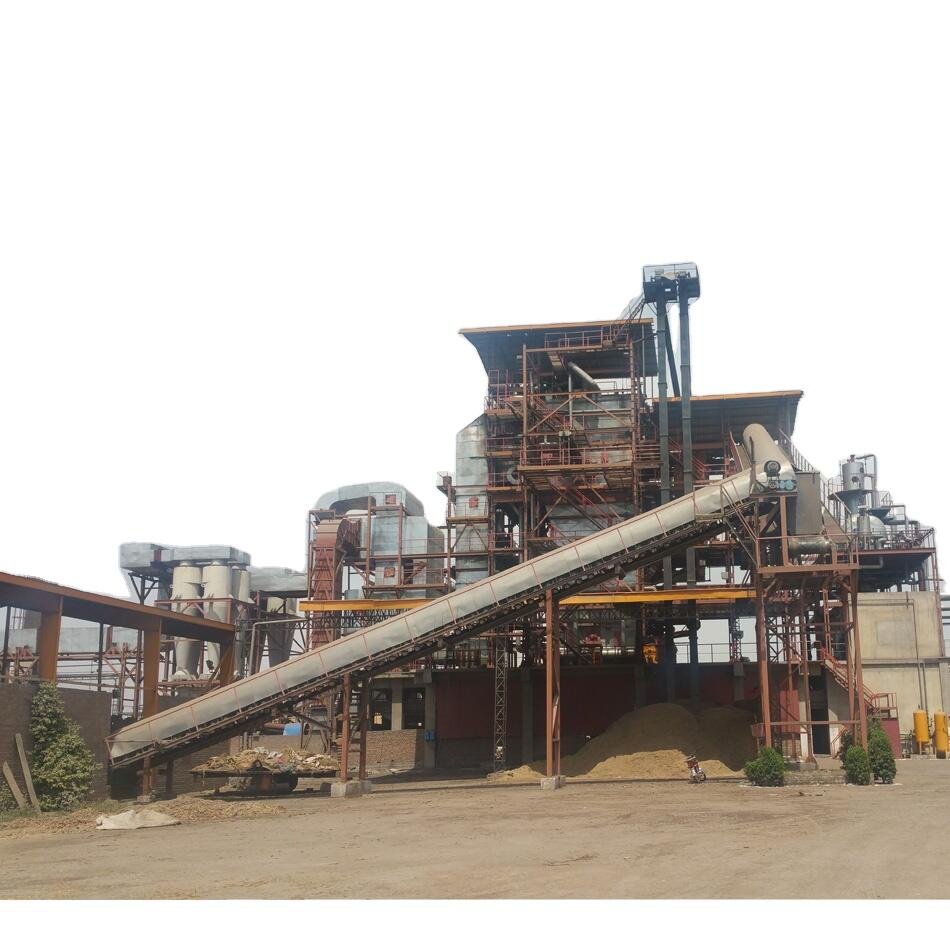
How to Evaluate Biomass Boiler Suppliers: A Procurement Checklist for Factory Owners and EPC Engineers
Supplier brochures all look the same after a while. Every manufacturer claims “world-class manufacturing,” “advanced combustion technology,” and “full after-sales support.” The checklist below cuts through that and gives you concrete, verifiable criteria — things you can actually check before you wire a deposit.
Manufacturing Qualification Verification
Start here, because nothing else matters if the pressure parts aren’t code-stamped. The ASME S stamp (power boilers) and U stamp (pressure vessels) are the gold standard for export to North America and are widely recognized globally as a manufacturing quality indicator — not just a sales badge. To verify authenticity, go directly to the ASME online certificate verification portal and cross-check the manufacturer’s certificate number and scope. CE PED 2014/68/EU is mandatory for boilers sold into Europe; ask for the Notified Body certificate number and verify it against the EU NANDO database. ISO 9001:2015 alone tells you very little — almost every factory has it — but its absence is a red flag.
For China-manufactured boilers (which represent a large share of global supply), the relevant code is GB 150 for pressure vessels and the AQSIQ/TSG boiler manufacturing license, which specifies rated pressure and capacity classes. Indian customers should require IS 2825 compliance plus IBR (Indian Boiler Regulations) certification for the specific design. European designs reference EN 12952 (water-tube) or EN 12953 (shell boilers). Ask for the actual certificate documents, not just logos on a brochure, and verify them independently.
ASME S/U stamp authenticity can be verified through the ASME online certificate directory at no cost.True
ASME maintains a public online certificate verification tool where any buyer can look up a manufacturer's certificate number, scope, and expiry date — this is a standard due-diligence step.
Design and Engineering Depth
A real OEM has in-house combustion CFD simulation capability — they can show you temperature and velocity field plots for your specific furnace geometry and fuel mix. Ask for this explicitly. If they can’t produce it, or if the models look suspiciously generic, you’re probably dealing with an assembler or trading company reselling another factory’s design. Pressure part design should be backed by recognized software (COMPRESS or PVElite are the most common; some European firms use their own certified tools). Thermal and fluid system simulation for feedwater, steam, and flue gas circuits is a further indicator of genuine engineering depth. One question that separates OEMs from traders quickly: “Can you show us the design change records for your furnace geometry when moving from rice husk to wood chip fuel?” A real manufacturer has these; a reseller does not.
Workshop Capacity Audit Checklist
If the project scale justifies it — and for anything above roughly 20 t/h it usually does — conduct or commission a workshop audit before contract award. Key things to verify:
| Item | What to Check | Why It Matters |
|---|---|---|
| Plate rolling capacity | Maximum plate thickness and width on CNC roll | Determines if drum and header sizes are within their actual capability |
| Welding qualifications | WPS/PQR records, welder certifications (ASME IX or EN ISO 15614) | Submerged arc welding on drum longitudinal seams is a precision process |
| Heat treatment furnace | Internal dimensions, temperature uniformity records | Post-weld heat treatment for high-pressure drums cannot be skipped or faked |
| NDT capabilities | RT, UT, MT, PT equipment and third-party certification of NDT personnel | Radiographic test records for weld seams should be available on request |
| Hydraulic test records | Test pressure certificates for recent comparable units | Confirms actual shop test was performed, not just declared |
Reference Project Verification
References matter, but “we have 200 projects in 30 countries” is meaningless without specifics. Request a reference list formatted with: plant country, commissioning year, capacity (t/h steam or MW thermal), fuel type, operating pressure, and a contact name or at minimum a verifiable site location. Then actually call or email. In practice, many buyers skip this step and regret it. Even a 15-minute call with a plant engineer at an existing installation will tell you more about reliability and after-sales responsiveness than any factory visit. Pay attention to operating hours logged — a unit commissioned in 2021 with 25,000+ hours and no major unplanned outages is a strong signal.
Fuel Adaptability Testing
Biomass fuel variability is where projects go wrong most often. Moisture content, ash fusion temperature, chlorine and alkali content, and bulk density all affect furnace sizing, grate design, and slagging tendency. Ask suppliers to provide combustion test reports specifically on fuel with a proximate and ultimate analysis close to yours. If your fuel is high in potassium and chlorine — as many agricultural residues are — ask explicitly how the furnace and superheater tube spacing are designed to manage deposit formation and corrosion. A supplier who responds with generic answers about “flexible fuel design” without referencing slagging indices (base-to-acid ratio, Babcock index, or similar) is waving a flag.
Spare Parts and After-Sales Ecosystem
High-wear components — grate bars, refractory castables, air nozzles, drum internals — need to be available within weeks, not months. Ask for the lead time on grate bars for the specific model you’re buying, and ask whether they maintain a regional warehouse or partner stocking arrangement in your geography. Remote monitoring capability (SCADA integration, OPC-UA connectivity, or a supplier-provided portal) is increasingly standard and worth insisting on. Get the after-sales contract structure in writing before you sign, not after.
Total Cost of Ownership Model
CAPEX is the number everyone negotiates. OPEX is where you actually live for the next 15–20 years. A credible supplier should be able to provide a 10-year OPEX estimate covering fuel consumption at rated load (dependent on your fuel’s calorific value), auxiliary power consumption of fans, pumps, and conveyors (typically 2–5% of rated thermal output, depending on system design), water treatment chemical costs, scheduled inspection and refractory replacement cycles, and estimated maintenance labor. If a supplier refuses to provide this or can only give you vague ranges, that tells you something. The cheapest boiler on the quotation sheet frequently ends up the most expensive unit in year five.
Biomass Fuel Types and Their Impact on Boiler Design, Selection, and Long-Term Performance
Fuel selection is where biomass boiler projects go wrong most often. Not during combustion system commissioning, not during emissions testing — during the design phase, when someone assumes a boiler specified for wood chips will handle rice husk without modification. That assumption costs real money.
Agricultural Residues: The Awkward Fuels Nobody Warns You About
Rice husk sits at roughly 13 MJ/kg LHV — about half the energy density of wood pellets — with ash content running 18–22% by weight, most of it amorphous silica. That silica doesn’t melt cleanly. It forms a glassy, abrasive deposit on grate bars and superheater tubes that standard traveling grate designs were not built to handle gracefully. In practice, you need a water-cooled vibrating grate or a spreader-stoker configuration with higher-than-normal furnace clearance, and your furnace exit temperature should stay below around 850°C to avoid sintering. Plants that ignore this end up pulling clinker off the grate every few days instead of every week or two.
Sugarcane bagasse arrives at 45–55% moisture straight from the mill, which is really the defining characteristic for boiler design — not the fibrous texture, though that matters for conveying. At that moisture level, a conventional fixed grate struggles to sustain combustion without auxiliary fuel support. Either you pre-dry the bagasse (feasible if you have low-grade heat available on site), or you move to a CFB configuration that tolerates high moisture through better heat distribution and longer particle residence time. Bagasse-fired CFB boilers in sugar mills typically run at 85–90% thermal efficiency, but only when the fuel supply is consistent; wide moisture swings kill that number quickly.
Wheat straw and other cereal straws carry potassium and chlorine levels that most boiler engineers underestimate until they see the first superheater tube failures. Alkali index above roughly 0.17 kg/GJ is the threshold where slagging and high-temperature corrosion risk escalates sharply. Furnace temperature management — keeping bed temperatures below 800°C in stoker-fired units — buys time, but it doesn’t eliminate the problem. Co-firing with lower-alkali fuels, or selecting corrosion-resistant alloy tubes (T91, TP347H) in the superheater, is the real answer.
Woody Biomass: Predictable, But Moisture Still Bites
Wood chips, sawdust, bark, and pellets are the forgiving end of the biomass spectrum. Combustion behavior is well understood, supplier support is broad, and most grate and CFB systems handle them without exotic design adjustments. The one lever that matters most is incoming moisture. Above 55% moisture content, combustion stability deteriorates noticeably on a standard grate — flame temperature drops, unburned carbon in ash climbs, and you start seeing CO spikes in the flue gas. Either enforce a fuel moisture specification with your supplier (35–45% is a reasonable upper limit for grate-fired units), or design in a drum dryer or rotary dryer upstream. CFB units tolerate wetter fuel better, but they’re not immune.
Energy Crops and Palm-Derived Fuels
Palm shell is almost a luxury fuel by biomass standards — ~18 MJ/kg LHV, low ash (~3%), and reasonably low moisture when properly stored. Boilers sized for palm shell and then switched to palm empty fruit bunch (EFB) by plant management face a nasty mismatch. EFB moisture runs 60–65% as-received, alkali content is high, and the fibrous structure creates bridging problems in standard screw conveyors. If your fuel supply includes EFB as even a secondary option, that needs to be declared during boiler design — not disclosed after the purchase order is signed.
Miscanthus and switchgrass are gaining traction in European and North American energy crop programs. They’re lower in ash than straw but still carry enough alkali to warrant attention on grate temperature control. Calorific values range from about 16 to 18 MJ/kg on a dry basis, which makes them attractive on paper. The practical challenge is seasonal supply and the storage footprint — energy crops harvested once a year need either large covered storage or a reliable supply chain to avoid running the boiler on off-spec wet fuel in winter.
Industrial Biomass: High Nitrogen Means NOx Budget Gets Tight Fast
Paper mill sludge, poultry litter, and food processing residues are collectively underestimated as NOx sources. Poultry litter, for instance, can carry 3–5% nitrogen by dry weight. When that nitrogen oxidizes in a high-temperature combustion zone, you’re looking at fuel NOx contributions that overwhelm what primary air staging alone can manage. For these fuels, you need staged combustion with a low-stoichiometry primary zone, overfire air ports positioned to complete burnout without a temperature spike, and typically an SNCR system with urea injection to keep stack NOx below 200 mg/Nm³. Skipping any one of those steps and hoping emissions will pass is a common and expensive mistake.
Fuel Property Reference: 10 Common Biomass Fuels
| Fuel | Moisture (% as-received) | Ash Content (% dry basis) | LHV (MJ/kg dry) | Ash Fusion Temp (°C) | Cl (% dry) | S (% dry) | Alkali Index (kg/GJ) | Recommended Combustion Technology |
|---|---|---|---|---|---|---|---|---|
| Wood chips (softwood) | 30–50 | 0.5–1.5 | 18–20 | >1200 | <0.02 | <0.05 | 1200 | <0.02 | <0.04 | 1100 | 0.05–0.15 | 0.05–0.1 | 0.1–0.2 | CFB, water-cooled grate with pre-drying |
| Wheat straw | 12–20 | 5–10 | 16–18 | 700–900 | 0.2–0.8 | 0.1–0.2 | 0.2–0.4 | Low-temp CFB, co-firing recommended |
| Palm shell | 10–15 | 2–4 | 17–19 | >1100 | 0.01–0.05 | 0.05–0.1 | <0.1 | Traveling grate, CFB, stoker |
| Palm EFB | 55–65 | 4–8 | 16–18 (dry) | 900–1050 | 0.2–0.5 | 0.1–0.2 | 0.2–0.35 | CFB with fuel pre-treatment |
| Poultry litter | 20–35 | 15–25 | 11–14 | 750–900 | 0.4–1.0 | 0.3–0.8 | 0.3–0.6 | Low-temp CFB, staged combustion + SNCR |
| Paper mill sludge | 40–60 | 20–40 | 8–12 (dry) | 900–1100 | 0.1–0.3 | 0.2–0.5 | 0.2–0.4 | CFB, co-firing with wood or coal |
| Miscanthus / switchgrass | 15–25 | 3–7 | 16–18 | 900–1050 | 0.1–0.3 | 0.05–0.15 | 0.15–0.3 | Grate (low temp), CFB |
Ash fusion temperature is the number most procurement specs omit. If your fuel’s ash softening temperature is below around 950°C and you’re specifying a high-temperature combustion zone, you will slag the grate. That table entry should be a hard requirement in any fuel analysis report you request from a supplier.
Fuel Handling and Storage: The Part Nobody Budgets Correctly
Fuel handling systems are consistently under-budgeted in biomass projects — sometimes by 20–30% relative to actual installed cost. For woody fuels, a drag chain conveyor feeding a screw meter into the furnace is fairly standard. For rice husk and sawdust, fine-particle behavior creates bridging in standard hoppers and fire risk in enclosed storage due to spontaneous combustion. Rice husk in particular oxidizes slowly when stored in bulk piles deeper than about 3–4 meters; you need either forced-air ventilation in the storage silo or regular turnover of the pile. Some plants use inert gas blanketing for fine biomass silos, which adds cost but removes the fire suppression headache.
Storage sizing for 3–7 days of fuel autonomy is the typical design target. Three days suits operations with reliable daily fuel delivery. Seven days is appropriate for facilities in regions with seasonal logistics disruptions — monsoon access issues in Southeast Asia being the obvious example — or where the fuel is a crop residue available only during harvest windows. Get the bulk density of your actual fuel right before sizing the silo: rice husk at roughly 80–120 kg/m³ needs roughly four to five times the silo volume of wood pellets at 550–650 kg/m³ for the same energy content. That difference alone can change the civil footprint of the fuel yard significantly.
Biomass boilers designed for wood chip combustion can be directly substituted with rice husk without design modificationsFalse
Rice husk has significantly higher ash content (18–22% vs under 2% for wood chips), lower ash fusion temperature (sometimes below 900°C), and different bulk flow properties. Using an unmodified wood chip grate design with rice husk typically causes grate slagging, increased unburned carbon, and elevated maintenance frequency. Fuel-specific grate design and furnace temperature management are required.
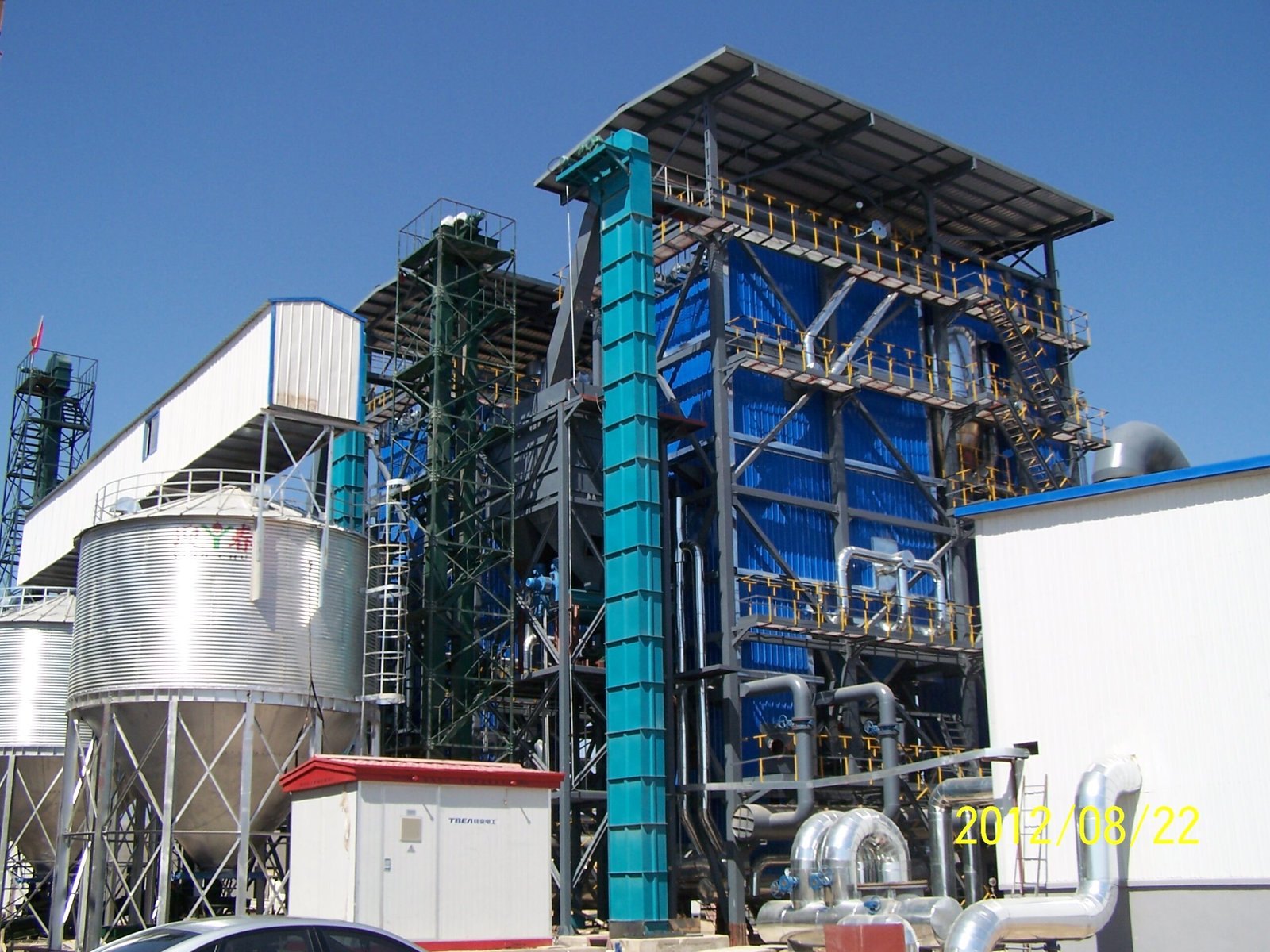
Auxiliary Equipment and EPC Integration: What a Complete Biomass Boiler System Actually Includes
A biomass boiler is not a product you bolt in and run. The combustion unit itself — grate, furnace, pressure vessel, superheater — might represent 35–50% of total installed cost depending on project scope. The rest is balance of plant (BOP), and if you source it in fragments or leave it undefined in your EPC contract, you will pay for that ambiguity during commissioning, not during tendering.
Air and Flue Gas System
Forced draft (FD) and induced draft (ID) fans are sized against actual flue gas volume at maximum continuous rating, with a margin of roughly 10–15% depending on fuel moisture variability. For high-moisture fuels — green wood chips at 45–55% moisture, for instance — actual flue gas mass flow can run 20–25% higher than a calculation based on dry fuel assumptions. Undersized ID fans are a surprisingly common source of commissioning delays. Secondary air fans for overfire air injection and, where installed, flue gas recirculation (FGR) fans for NOx or temperature control need to be treated as part of the combustion system design, not afterthoughts. Acoustic treatment on fan housings matters too, especially for plants near residential areas or inside enclosed boiler houses — noise levels from improperly selected fans can hit 90–95 dB(A) at one metre, which triggers occupational health requirements and community noise limits in most jurisdictions.
Flue Gas Treatment Train
Particulate control is almost always either an electrostatic precipitator (ESP) or a fabric bag filter. ESP suits higher-temperature, lower-moisture gas streams and is generally lower in maintenance labour; bag filters achieve finer particulate capture (outlet concentrations routinely below 20 mg/Nm³) but the filter bags need replacement every 2–4 years depending on gas temperature and chemical attack from chlorides and sulfur compounds — both present in agricultural residue fuels. For SO₂, wet FGD adds complexity and wastewater handling, while dry or semi-dry systems using lime injection are simpler and more common in smaller biomass plants under 50 MW thermal. SNCR (selective non-catalytic reduction) with urea solution injection in the 850–1050°C furnace temperature window can get NOx down to roughly 150–200 mg/Nm³. Below 100 mg/Nm³ — increasingly required under EU Industrial Emissions Directive thresholds and equivalent national regulations in Southeast Asia — you need SCR with catalyst beds downstream of the economiser. SCR adds capital cost and requires careful management of ammonia slip and catalyst poisoning from alkali metals in biomass ash.
Water and Steam Circuit Auxiliaries
The deaerator, feedwater pumps, chemical dosing (phosphate and oxygen scavenger dosing for drum boilers, typically), blowdown heat recovery, and condensate return system collectively determine whether you hit the boiler’s rated thermal efficiency in practice. Continuous blowdown heat recovery alone can recover 1.5–3% of fuel energy. Condensate return rates below 60% — common when plant steam users are poorly designed or leaking — force the boiler to heat cold make-up water constantly, driving fuel consumption well above the nameplate efficiency figure. Steam drum level control using three-element control (feedwater flow, steam flow, drum level) is standard practice above roughly 10 t/h and non-negotiable above 20 t/h.
Ash Handling
Rice husk produces 15–20% ash by weight — significantly more than wood chips at 1–3%. A 35 t/h steam boiler firing rice husk can generate 8–12 tonnes of fly ash and bottom ash per day. Without properly sized pneumatic or drag chain conveying, hoppers fill and the plant shuts down. Ash silo sizing needs to account for weekend accumulation if ash disposal is not continuous.
Instrumentation, Control, and Safety
DCS-based boiler master control with O₂ trim, CO monitoring, and steam temperature control by spray attemperation or gas biasing between parallel gas paths is standard on any plant above 20 t/h. The burner management system (BMS) — designed to EN 50156 or NFPA 85 depending on export market — governs purge sequences, ignition permissives, and flame failure response. These are life-safety systems and should never be value-engineered out or reduced to simple PLC logic without formal functional safety assessment.
Civil and Structural Scope
A 35 t/h biomass steam boiler plant realistically requires a boiler house steel structure, a dedicated fuel storage and live-floor conveying building, a stack in the range of 40–60 m depending on dispersion modelling, a water treatment building, and an electrical room. Total plant footprint for that scale typically runs 3,000–5,000 m² depending on fuel storage buffer and ash silo count. This scope is often missing from early-stage budget estimates.
EPC Integration
A supplier offering true EPC delivery for biomass boiler plants manages mechanical design, procurement, fabrication, civil coordination, erection, commissioning, and performance testing under one contract.True
Integrated EPC responsibility eliminates interface disputes between boiler OEM, BOP contractors, and civil builders — the most common source of commissioning delays and cost overruns on biomass boiler projects.
An equipment-only supply model transfers integration risk entirely to the buyer. In practice, most factory owners and independent power producers lack the in-house engineering depth to manage that risk. Suppliers with genuine EPC capability — including coordinated design of all BOP systems, single-point performance guarantee, and local erection supervision — reduce project delivery risk substantially. Taishan Group, for example, delivers biomass boiler projects on an EPC basis inclusive of flue gas treatment, ash handling, fuel conveying, water treatment, and DCS integration, with commissioning teams experienced across Southeast Asia, South Asia, and Africa where grid-connected and captive biomass power plants are the fastest-growing application segment.
The key question to ask any supplier during pre-qualification: what exactly is outside your contract boundary, and who owns the interface specification for each handoff? If that answer is vague, the budget surprise is coming.
Emissions Regulations and Compliance Requirements Biomass Boiler Buyers Must Understand in 2026
Getting the emissions spec wrong at the project design stage is one of the most expensive mistakes a buyer can make. Retrofitting a baghouse filter or an SCR system after installation — because the original spec missed a local limit — can easily cost 15–30% of the original boiler contract value, and that’s before you account for the downtime and permitting delays. Specify to the right standard from day one.
European Union: IED, BREF, and the MCPD Split
The EU regulatory framework splits on a hard capacity threshold at 50 MW thermal input. Above that, you’re under the Industrial Emissions Directive (IED 2010/75/EU) and the associated BREF document for Large Combustion Plants. For new biomass installations above 50 MWth, the current BAT-AELs (Best Available Technique Associated Emission Levels) are tight: PM ≤10 mg/Nm³, NOx ≤200 mg/Nm³, SO₂ ≤200 mg/Nm³. Meeting PM ≤10 reliably requires a well-tuned fabric filter or an ESP with proper flue gas conditioning — not a simple cyclone, regardless of what a budget proposal might suggest.
Below 50 MWth, the Medium Combustion Plant Directive (MCPD 2015/2193/EU) applies. Limits are somewhat less stringent but the directive is now fully in force for new plants, and member states increasingly front-load permitting with requirements that approach IED levels anyway. Don’t assume the MCPD is a soft option in Germany, the Netherlands, or Austria.
United Kingdom Post-Brexit
The UK retained and in some respects tightened the MCPD framework through the Medium Combustion Plant Regulations 2018, enforced by the Environment Agency under Environmental Permitting Regulations. In practice the permitting process is slower and more case-specific than many buyers expect — allow 6–12 months for a permit for any plant above roughly 5 MWth in England. If the project involves biomass heat under the Renewable Heat Incentive scheme (legacy applications still in processing), fuel sustainability criteria add another compliance layer: feedstock chain-of-custody documentation, GHG savings verification, and land criteria checks. Buyers sourcing wood chip or pellet from non-European supply chains find this documentation requirement catches them off guard.
United States: Boiler MACT and State-Level Permits
Under 40 CFR Part 63 Subpart DDDDD (the Boiler MACT rule), industrial boilers burning biomass are subject to limits on PM, CO, mercury, and dioxin/furans — and the applicable limits depend on both the unit’s heat input rating and the fuel subcategory. A biomass unit at a major source facility faces stricter limits than the same unit at an area source. The important operational point: state-level air permits often impose limits more stringent than the federal MACT floor, particularly in California (CARB/local air district rules), the Northeast, and parts of the Midwest. Always pull the state and local permit requirements before finalizing the flue gas treatment train. Specifying only to federal MACT and then discovering the local district requires lower NOx is a common and avoidable procurement error.
Southeast Asia and Emerging Markets
Indonesia, Vietnam, and Thailand have their own national emission standards — PERMEN LHK P.15/2019, QCVN 19:2009/BTNMT, and PCD standards respectively — which are generally less stringent than EU benchmarks, though the gap is narrowing as regulators update them. The more practically significant requirement for most industrial and power projects in these markets is compliance with World Bank IFC Performance Standards, which project finance lenders (including most DFI-backed deals) require as a condition of lending. IFC guidelines typically reference EU BREF levels as a reference ceiling. A boiler system that passes Indonesian national standards may still fail IFC review — and that can hold up a project loan disbursement.
Chinese-manufactured biomass boilers cannot comply with European or US emissions and pressure vessel codes.False
Leading Chinese EPC boiler manufacturers routinely obtain ASME (U-stamp), CE (PED), and Lloyd's or BV third-party certifications for export projects. The obligation is to comply with the destination country's codes, not Chinese GB standards — and the better Chinese suppliers have been doing exactly this for well over a decade on overseas projects.
Carbon Accounting and Biomass Sustainability Credentials
This is the area where requirements have moved fastest recently. The EU Taxonomy Regulation now specifies biomass sustainability criteria aligned with the Renewable Energy Directive, and RED III raises the GHG saving threshold to ≥70% vs. a fossil fuel baseline for new installations commissioned from 2026 onward. That threshold has to be demonstrated through a lifecycle calculation, not assumed. ISCC (International Sustainability and Carbon Certification) and FSC chain-of-custody certification are the two most widely accepted fuel verification schemes for international projects and for buyers targeting EU taxonomy-aligned financing.
In practice, a boiler system that is thermally and mechanically correct can still fail project financing review because the fuel supply chain lacks certified documentation. Procurement teams should treat fuel certification as part of the boiler project scope — not someone else’s problem downstream.
Overseas Biomass Boiler Project Case Studies: Real Installations Across Southeast Asia, South Asia, and Africa
These aren’t marketing slides. The projects below represent the kind of messy, real-world conditions that separate a supplier with genuine overseas execution capability from one that looks good in a datasheet. Fuel inconsistency, civil delays, customs hold-ups on pressure parts — every one of these sites dealt with at least two of those problems. Here’s how they played out.
Indonesia: Palm Shell Cogeneration, 2×35 t/h Traveling Grate
A palm oil processing facility in Sumatra commissioned two traveling grate biomass boilers rated at 35 t/h each, operating at 3.82 MPa / 450°C. The fuel mix was primarily palm kernel shell (PKS) with periodic blending of empty fruit bunch fiber during peak season — a combination that creates wide variation in bulk density and moisture content (PKS typically 10–15% moisture, EFB fiber pushing 50–60% during wet months).
The back-pressure turbine generator extracted 6 MW of electricity from the combined steam output, with exhaust steam at roughly 0.5 MPa routed directly to the mill’s sterilizer stations. Commissioning took approximately 14 weeks from first fire to stable full-load operation, which is on the longer end for this capacity class — largely because the EFB fiber handling conveyors required two rounds of redesign after bridging problems at the fuel silo discharge.
Measured thermal efficiency settled at 86–88% on PKS-dominant fuel, dropping to around 83% during high-EFB-fiber periods. NOx emissions ran below 180 mg/Nm³ without secondary treatment, which comfortably met the Indonesian environmental permit conditions in place at that site.
Bangladesh: 75 t/h CFB Boiler, Sugar Industry Bagasse Transition
Replacing a 1990s-era coal-fired stoker unit with a 75 t/h CFB biomass boiler at 5.29 MPa / 485°C is not a straightforward fuel swap. Bagasse from sugar crushing exits at 45–55% moisture during the milling season, and that moisture load directly taxes combustion stability and soot accumulation rates.
The original soot-blowing schedule specified by the boiler design — every 6 hours — proved insufficient within the first two weeks. Operators were seeing a 4–6% efficiency drop between cleaning cycles due to fouling on the superheater pendants. After adjusting to a 3-hour interval with rotary soot blowers on the generating bank and adding one additional long-retractable blower at the superheater inlet, the unit stabilized. Net thermal efficiency over a full crushing season averaged 88–90%, compared to roughly 79% from the old coal unit — a meaningful improvement in fuel-to-steam conversion even accounting for the higher ash reinjection load the CFB system handles.
The fuel transition also required modifications to the clinker crusher and bottom-ash extraction rate. Bagasse ash behaves differently from coal bottom ash — it’s lighter, more porous, and tends to accumulate unevenly in the CFB return leg if loop seal aeration rates aren’t tuned properly.
CFB biomass boilers achieve higher thermal efficiency than stoker-grate units on high-moisture bagasse fuelTrue
CFB combustion maintains stable bed temperature (typically 850–900°C) regardless of fuel moisture variation, allowing more complete combustion than fixed grate systems which struggle with fuel moisture above 40–45%. Published efficiency data from sugar industry installations in South and Southeast Asia consistently shows CFB outperforming stoker units on wet bagasse by 6–10 percentage points net efficiency.
Vietnam: 130 t/h High-Pressure Wood Chip Power Boiler
This was a dedicated biomass power project — not an industrial heat-and-power hybrid — supplying a 25 MW grid-connected generator under a feed-in tariff framework. The boiler specification at 9.8 MPa / 540°C places it firmly in the utility-grade range, and the EPC scope reflected that: fuel reception and chip storage covering roughly 7,000 m² of covered storage area, a fuel handling and sizing line with oversize screening, a bag filter plus SNCR flue gas treatment train targeting NOx below 150 mg/Nm³, and full DCS commissioning integrated with the turbine island and grid protection relay system.
Wood chip quality at this site varied noticeably by season. Dry season chips from acacia plantations ran at 20–25% moisture; wet season supply from the same sources pushed 40–45%. The combustion control system — specifically the air/fuel ratio trim logic — needed about three months of tuning to handle that range without manual intervention. After that, the unit ran with minimal operator adjustment across the fuel moisture band.
DCS commissioning on a project of this scale typically adds 6–10 weeks to the overall schedule, and this project was no exception. The interface between the boiler protection logic and the turbine trip system required more loop-checking iterations than anyone’s schedule had allocated.
Kenya: 20 t/h Rice Husk Boiler, High-Ash Fuel Management
Rice husk is genuinely one of the more demanding biomass fuels from an ash handling and erosion standpoint. Ash content runs 15–20% by weight, silica content is high, and the ash has a relatively low fusion temperature — meaning slagging on grate bars and in the convective passes is a real operational concern rather than a theoretical one.
At this rice processing facility, grate bar wear data over the first 18 months showed replacement intervals of roughly 10,000–13,000 operating hours on the high-temperature section, which is broadly consistent with what other rice husk grate installations report. The electrostatic precipitator (ESP) was sized conservatively — two fields, not one — specifically to handle the fine-particle fraction of rice husk ash. Stack emission measurements showed particulate below 50 mg/Nm³ in routine operation.
The local maintenance training program ran over six weeks during commissioning and focused heavily on ash extraction sequencing and grate drive chain lubrication intervals. In practice, the on-site maintenance team was capable of first-level troubleshooting within about four months of handover.
Pakistan: 14 MW Biomass Hot Water Boiler, Textile Industry
Cotton stalk and wheat straw present a specific challenge that doesn’t get enough attention in supplier literature: high alkali content (K₂O and Na₂O from straw can exceed 0.5% in the ash) drives aggressive slagging on heat transfer surfaces at furnace exit temperatures above roughly 850°C. The design solution here involved lowering the theoretical combustion temperature zone and specifying a larger furnace volume-to-output ratio than would be typical for wood-based fuel.
The boiler supplies hot water at 180°C / ~1.0 MPa to fabric dyeing baths — a continuous-load process that’s unforgiving of supply interruptions. To replace natural gas, the plant had to install fuel preprocessing (straw baling, shredding, and an enclosed conveyor system to control dust), which added roughly 15–20% to the total project cost compared to a wood chip installation of equivalent capacity. Alkali deposit buildup on superheater and generating bank tubes is cleaned on a roughly 500-hour schedule; the team found acoustic soot blowers less effective than steam blowers on this particular slag chemistry.
What These Projects Have in Common
Fuel supply consistency caused more operational problems than any equipment deficiency across all five sites. Civil contractor coordination — specifically the interface between the boiler supplier’s installation team and the local civil contractor handling foundations and flue ducting — was a source of delay on three of the five projects. Customs clearance for pressure vessels and pressure parts added 4–12 weeks at ports in Bangladesh, Kenya, and Pakistan, and in each case the project teams that had pre-positioned critical long-lead items fared significantly better than those that hadn’t.
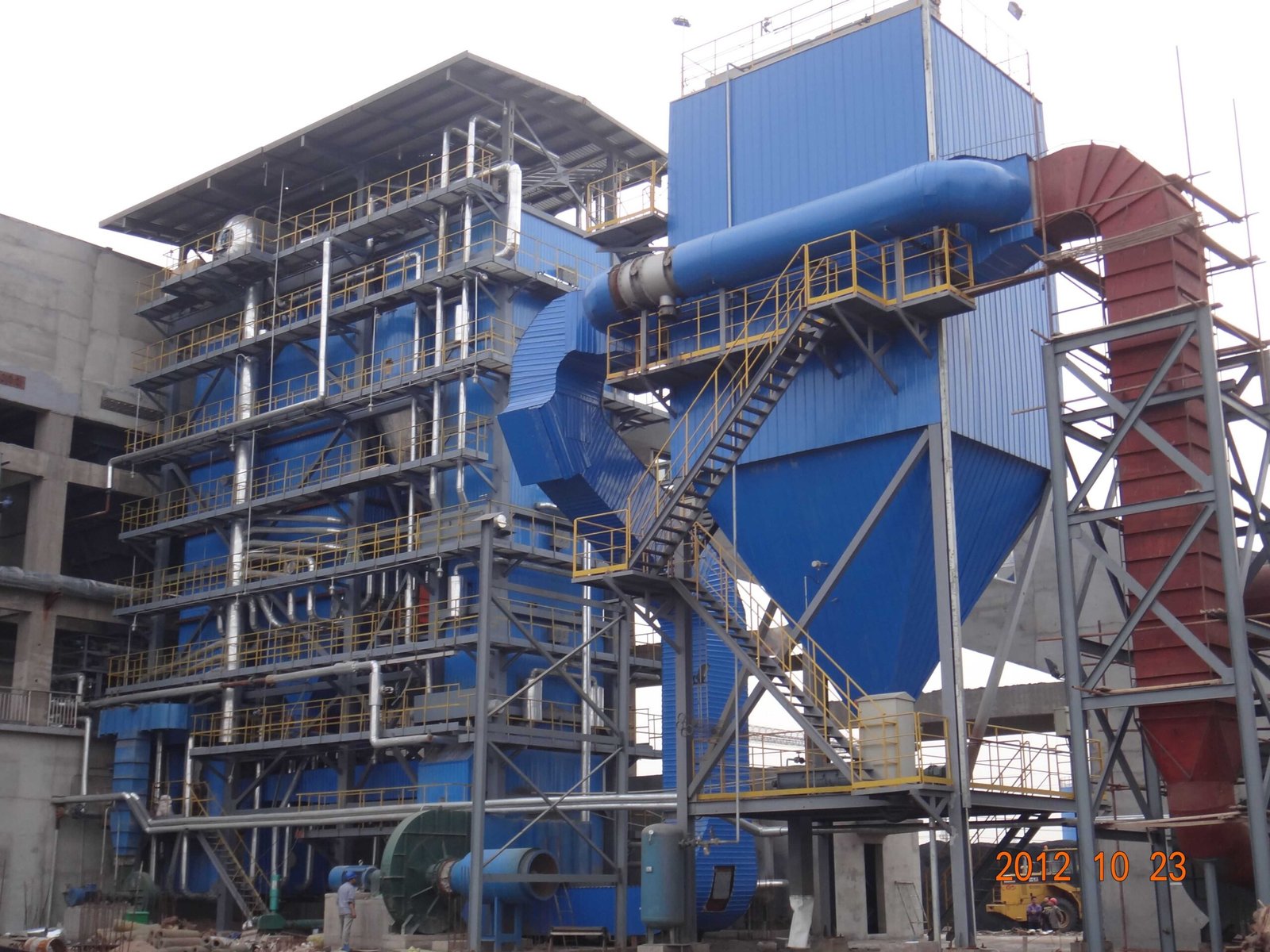
On-site commissioning engineer support isn’t optional. Every one of these installations required hands-on adjustment — combustion tuning, control logic modification, auxiliary equipment rework — that simply cannot be done remotely or left to a first-time local operator team. Suppliers who treat commissioning as a formality rather than a technical deliverable create expensive problems for their customers.
Frequently Asked Questions About Industrial Biomass Boiler Suppliers and Systems
What is the typical price range for an industrial biomass steam boiler?
Expect to budget anywhere from USD 80,000 for a simple 1–2 t/h grate-fired unit on a supply-only basis up to USD 2,500,000 or more for a fully engineered 100+ t/h CFB system with flue gas treatment and EPC delivery. The spread is wide because price depends on at least five variables stacked on top of each other: capacity (1 t/h to 130 t/h covers a huge cost curve), pressure class (a 1.25 MPa saturated steam boiler costs materially less to fabricate than a 9.8 MPa superheated unit requiring alloy headers and drum-quality plate), combustion technology, flue gas treatment scope (a bare cyclone versus a full baghouse-plus-SNCR train can add 15–30% to system cost), and whether you’re buying equipment only or a contracted EPC package. For a mid-range 35 t/h travelling-grate unit at around 3.8 MPa with basic multi-cyclone and ESP dust collection, budget roughly USD 600,000–950,000 FOB — but that figure shifts depending on steel prices at the time of order and whether the supplier is carrying the engineering risk or you are.
Grate-fired or CFB — how do I actually decide?
The short answer is: grate-fired if your fuel is consistent and your budget is constrained; CFB if your fuel is variable, wet, or mixed, and your capacity justifies the capital premium.
| Decision Factor | Grate / Stoker | CFB |
|---|---|---|
| Fuel particle size tolerance | Requires sized fuel (typically 20 t/h; below that, grate wins on capital | |
| Turndown ratio | 3:1 to 4:1 typical | 4:1 to 5:1, better for variable steam demand |
| NOx profile before secondary treatment | Higher, ~300–450 mg/Nm³ raw | Lower inherent NOx, ~150–250 mg/Nm³ raw, easier to achieve <200 with SNCR |
| Capital cost premium (CFB vs grate, same capacity) | Baseline | +20–40% roughly |
In practice, a palm mill burning mixed shell, fiber, and wet EFB should lean CFB above 25 t/h. A rice mill burning dry husk with tight sizing control is a textbook grate application.
Can a biomass boiler replace my existing coal or gas boiler without gutting the plant?
Sometimes more than you’d expect can be retained — the steam drum, main steam header, feedwater system, and controls architecture often survive. What almost always needs redesigning: the fuel handling and feeding system (completely different from coal conveyors or gas trains), the furnace volume and grate geometry (biomass has lower bulk energy density than coal, so the furnace must be larger for equivalent output), and the flue gas ducting and treatment train (biomass produces more particulate from ash-rich fuels like rice husk or bagasse). Stack sizing may also need revisiting because flue gas volume increases. Don’t assume a boiler room footprint swap — budget for civil and structural work.
A biomass boiler can directly replace a gas-fired boiler using the same burner and combustion chamber with minor modifications.False
Biomass combustion is fundamentally different from gas firing — it requires a dedicated grate or fluidized bed furnace, solid fuel handling infrastructure, ash removal systems, and a much larger furnace volume. The combustion chamber of a gas-fired boiler cannot accommodate solid-fuel combustion without complete furnace redesign.
What certifications should I require from a supplier?
For pressure vessel integrity, ASME Section I with the S stamp is the global reference — particularly important if the boiler ships to North America, Southeast Asia, or any market that mirrors ASME requirements. European destination projects need CE marking under the Pressure Equipment Directive (PED 2014/68/EU). ISO 9001 is a baseline quality management check, not a technical differentiator by itself, but gaps in the quality system show up during audits. Welder and welding procedure qualifications to ASME Section IX or EN ISO 15614 matter more than people admit — a pressure vessel is only as good as its welds. For EPC contracts, also verify that the supplier holds relevant national boiler manufacture licenses in their home jurisdiction; in China, for example, this is the AQSIQ Class A boiler manufacture license, which covers high-pressure vessels.
How long does a 35 t/h biomass boiler project take from contract to steam?
Realistic timeline, assuming no major permitting delays or fuel system surprises:
Engineering and drawing approval: 6–8 weeks. Fabrication: 16–24 weeks depending on shop load and pressure class. Ocean freight to Southeast Asia or South Asia: 4–6 weeks; to West Africa or South America, add 2–4 weeks. Site civil and steel erection: 8–12 weeks. Commissioning, steam blow, and performance test: 2–4 weeks. Total: 9–14 months from contract signature to reliable steam delivery. Projects that try to compress fabrication below 16 weeks on a complex unit usually pay for it during commissioning.
Biomass steam boiler, hot water boiler, or thermal oil heater — which do I need?
These are not interchangeable. A biomass steam boiler produces steam — saturated or superheated — for process use or power generation, operating at pressures from 0.7 MPa upward and requiring pressure vessel codes and safety valve systems appropriate to the pressure class. A biomass hot water boiler delivers pressurized hot water, typically 95–150°C for district heating or low-temperature process use; lower pressure, simpler safety classification, but not suitable where steam is the process medium. A thermal oil (heat transfer fluid) heater operates at atmospheric or slight positive pressure but delivers fluid temperatures of 200–320°C — the right choice for processes needing high-temperature heat without high-pressure steam, common in wood drying, chemical processing, and edible oil refining. Specifying the wrong output medium is a procurement error that can take 6+ months and significant cost to correct. Be explicit in your enquiry.
How do top suppliers handle after-sales support in remote locations?
The honest answer: it varies enormously, and this is where supplier selection genuinely separates. A credible supplier should offer: a recommended spare parts list for the first two years of operation (critical wear parts — grate bars, refractory, fan impellers, instrumentation), remote DCS monitoring capability if the control system supports it, a regional service partner or in-country agent for first-response maintenance, and structured operator training during commissioning. Ask specifically how many engineers they can deploy to your country, and in what timeframe. A supplier who hesitates on that question or defaults to “we’ll send someone when needed” is telling you something important.
How to Request a Qualified Biomass Boiler Proposal and What to Include in Your RFQ
A vague RFQ wastes everyone’s time. Suppliers either pad contingency into the price to cover unknowns, or they underbid and claw it back during engineering. Either way, the buyer loses. If you want a technically accurate proposal — one you can actually compare across suppliers — you need to hand over real operating data upfront. Here is exactly what that looks like in practice.
Process Steam or Heat Requirements
Start with the non-negotiable numbers: required steam output in t/h or kg/h, operating pressure in MPa, and whether you need saturated or superheated steam. If superheated, specify the target temperature — there is a material cost difference between 250°C and 450°C, and a very significant one at 540°C. State your annual operating hours and, critically, your load profile. A textile mill running a constant 8 t/h base load is a completely different design problem from a batch process plant that swings between 2 t/h and 12 t/h across a shift. Redundancy requirements matter too — whether you need N+1 standby capacity affects the entire plant layout and cost basis.
Fuel Data Package
This is where proposals fall apart most often. Suppliers need your fuel type (wood chips, rice husk, bagasse, palm shell, mixed agricultural residue — be specific), proximate analysis if you have it, and ideally an ultimate analysis for combustion and emissions modelling. If lab analysis isn’t available yet, at minimum provide moisture content as-received, because a 15% MC rice husk and a 55% MC fresh wood chip are handled by fundamentally different fuel handling and combustion systems. Bulk density and particle size distribution drive conveyor sizing, silo volume, and feeder selection. Provide your best estimate of annual consumption and how fuel arrives — whether you have on-site storage, daily truck deliveries, or seasonal supply gaps matters for silo and surge bin sizing.
Site and Utility Conditions
Elevation catches people off guard. A plant at 1,800 m above sea level needs meaningfully larger forced-draft and induced-draft fans than the same boiler at sea level — combustion air density drops, and the fan curves shift. Provide ambient temperature and humidity ranges (seasonal extremes, not just annual averages), available cooling water temperature and flow rate, compressed air supply pressure, and electrical supply voltage and frequency. Space envelope constraints — headroom, footprint, access for maintenance — should be dimensioned, not described loosely as “limited space.”
Regulatory and Certification Requirements
State the destination country clearly. Specify which pressure vessel and boiler codes apply — ASME, EN 12952/12953, GB standards, or local equivalents. Emissions limits vary enormously: the EU’s Medium Combustion Plant Directive, Southeast Asian national standards, and IFC Performance Standards are not interchangeable. If your project financing involves IFC, ADB, or World Bank, flag it explicitly — those environmental and social frameworks add documentation requirements that affect both scope and schedule.
Biomass boilers supplied without destination-country pressure vessel code compliance cannot legally be commissioned in most regulated markets, regardless of manufacturer reputation.True
Pressure vessel codes (ASME, PED/EN, national standards) are legal requirements in most jurisdictions. A boiler fabricated to a different standard typically requires re-certification, third-party inspection, or cannot be registered at all — causing project delays of months and significant cost.
Contract Model and Evaluation Criteria
Be explicit about whether you need equipment supply only (EXW, FOB, or CIF), supply with installation supervision, or full EPC turnkey including civil, piping, electrical, and commissioning. Suppliers cannot price risk they cannot see. Tell them what local contractor capability exists and whether you want technology transfer provisions. Equally useful: tell them how you are weighting the decision — CAPEX, lifecycle cost, delivery schedule, technology risk, or supplier financial stability. That framing alone improves proposal quality significantly.
Taishan Group’s international project team handles all of the above directly. Bring your fuel analysis, site data, and process requirements, and you get a detailed technical proposal, reference project documentation from comparable overseas installations, and an open invitation for factory audit. Reach out with your RFQ data and the conversation starts there.
References
- Valmet BFB Boiler — Industrial Biomass and Multifuel Combustion — Valmet, Finland
- PowerFluid Circulating Fluidized Bed Boilers — ANDRITZ, Austria
- Renewable Energy Boilers — Biomass and Multifuel Solutions — Babcock & Wilcox, United States
- Circulating Fluidized Bed Boilers — Sumitomo SHI FW, Japan / Finland
- Solid Fuels, Agro-Waste and Biomass-Fired Boilers — Thermax, India
- Industrial Steam, Hot-Water and Biomass Boilers — Hurst Boiler, United States
- Biomass Boiler and Energy Plant Solutions — VYNCKE, Belgium
- Biomass Boilers, Combined Heat and Power Plants — Aalborg Energie Technik, Denmark
- Biomass-Fueled Boiler Systems — Justsen Energiteknik, Denmark
- Biomass Boiler Market Size, Share and Competitive Landscape 2026–2035 — Global Market Insights