An Inspection and Test Plan (ITP) is a key quality control document in industrial boiler manufacturing. It defines the inspections, examinations, tests, responsibilities, acceptance criteria, and quality records required throughout the manufacturing process.
However, receiving an ITP from a boiler manufacturer does not automatically mean that its inspection arrangements are complete or suitable for the project. Missing inspection activities, unclear acceptance criteria, incorrectly assigned inspection points, or inadequate material traceability requirements can create quality risks and disputes during manufacturing.
For boiler owners, EPC contractors, and procurement engineers, reviewing the ITP before manufacturing begins is therefore an essential step in verifying that contractual and applicable code requirements have been translated into a practical inspection program.
This guide explains how to review an industrial boiler ITP, evaluate inspection requirements for major boiler components, identify common deficiencies, and establish appropriate conditions for approval before manufacturing starts.
1. What Should Be Established Before Reviewing an Industrial Boiler ITP?
Before examining individual inspection activities, reviewers should establish the technical and contractual requirements against which the ITP will be evaluated.
1.1 Identify Applicable Codes and Contract Requirements
The first step is to identify the governing requirements for the boiler project. These may include:
- Purchase orders and contractual technical specifications.
- Applicable boiler construction codes and regulations.
- Approved engineering and manufacturing drawings.
- Project quality assurance and inspection requirements.
- Material and welding specifications.
- Third-party inspection requirements, where specified.
For projects adopting the ASME Boiler and Pressure Vessel Code (BPVC), the applicable construction section must be identified according to the boiler type and project scope. For example, ASME BPVC Section I covers power boilers, while Section IV addresses heating boilers.
Other relevant sections may include:
- Section II: Material specifications and properties.
- Section V: Nondestructive examination methods.
- Section IX: Welding, brazing, and fusing qualifications.
For applicable power piping, ASME B31.1 may also be relevant, depending on the contractual and code boundaries.
Importantly, these sections do not serve interchangeable purposes. For example, Section V addresses examination methods, while the applicable construction code and project documents establish the relevant examination extent and acceptance requirements.
The applicable editions should follow the contract and governing regulatory requirements rather than automatically adopting the latest published edition.
Refer to the ASME Boiler and Pressure Vessel Certification Program and ASME Required Code Books for official information.
1.2 Understand the Difference Between ITP, QCP, and Inspection Procedures
These documents serve related but different purposes:
| Document | Main Purpose |
|---|---|
| Inspection and Test Plan (ITP) | Defines inspection activities, inspection points, responsibilities, acceptance criteria, and required records |
| Quality Control Plan (QCP) | Establishes broader project quality control arrangements |
| Inspection Procedure | Describes how a specific inspection or test is performed |
An ITP may form part of a broader QCP or operate as a separate controlled document. Reviewers should check whether it is consistent with the project’s quality requirements and whether supporting inspection procedures are available when required.
2. How to Review Inspection Activities Across Boiler Manufacturing Stages?
The most important part of an ITP review is verifying whether the proposed inspection activities adequately cover the actual boiler manufacturing scope.
Reviewers should not simply check whether familiar inspection items appear in the document. Each ITP entry should also be evaluated for its component scope, applicable references, inspection method, examination extent, acceptance criteria, inspection point, responsible party, and required records.
2.1 Check Each Inspection Entry Against Essential ITP Fields
A practical way to review an ITP is to examine its individual columns rather than relying only on the overall manufacturing sequence.
The following matrix provides a useful review framework:
| ITP Field | Key Review Questions |
|---|---|
| Inspection Activity | Is the activity clearly defined and applicable? |
| Component / Scope | Are the relevant boiler components or manufacturing boundaries identified? |
| Reference Documents | Are the applicable codes, drawings, and specifications correctly referenced? |
| Inspection Method | Is the inspection or test method specified? |
| Inspection Extent | Is the examination scope or sampling basis supported by applicable requirements? |
| Acceptance Criteria | Are objective acceptance requirements identified? |
| Inspection Point | Is the H/W/R/S designation appropriate? |
| Responsibility | Are the responsible inspection parties clearly assigned? |
| Required Records | Are the necessary inspection reports and supporting records specified? |
An entry should not be considered adequate simply because an inspection activity has been listed.
For example, an ITP entry stating only “NDT Required” does not establish which welds require examination, which methods apply, what acceptance criteria govern the results, or what documentation must be submitted.
The reviewer should trace these requirements to the applicable construction code, approved drawings, specifications, and inspection procedures.
2.2 Review Material Receiving and Preparation Activities
Material control is the starting point of boiler manufacturing quality assurance.
The ITP should address applicable checks for:
- Material Test Certificates (MTCs) and material specifications.
- Material grades, dimensions, and identification.
- Heat number identification and material traceability.
- Material condition and receiving inspection.
- Additional material testing or verification, where required.
- Cutting, edge preparation, forming, and dimensional inspection.
For pressure-retaining materials, verify that identification and certification requirements are consistent with approved drawings, material specifications, and the applicable construction code.
For subcontracted materials and fabricated components, the ITP should also clarify how material traceability and inspection records will be maintained.
2.3 Review Welding and Heat Treatment Activities
Welding is a critical manufacturing activity for boiler pressure parts.
The ITP should identify relevant inspection and verification activities, including:
- Welding Procedure Specifications (WPS).
- Procedure Qualification Records (PQR), where applicable.
- Welder and welding operator qualifications.
- Welding consumable control, where required.
- Fit-up and visual inspection.
- Welding process inspection.
- Post-weld heat treatment (PWHT), where applicable.
Reviewers should verify that welding activities are supported by approved procedures and that the necessary qualification and inspection records are identified.
PWHT requirements must be determined according to the applicable code, material, thickness, joint configuration, and project specifications. It should not be treated as a mandatory operation for every boiler weld.
2.4 Review Non-Destructive Testing Requirements
Nondestructive testing (NDT) is used to examine materials, welds, and fabricated components without damaging their intended serviceability.
Common methods include:
- Radiographic Testing (RT).
- Ultrasonic Testing (UT).
- Magnetic Particle Testing (MT).
- Liquid Penetrant Testing (PT).
When reviewing the ITP, check whether it specifies the applicable examination methods, required examination extent, approved procedures, acceptance criteria, and reporting requirements.
The examination extent should be supported by the governing construction code, approved engineering documents, and contractual requirements.
The reviewer should also verify whether different component types or weld categories require different examination arrangements. A generic NDT requirement should not be applied indiscriminately to every boiler component.
The ITP should identify the relevant inspection records and any required witness or hold arrangements.
2.5 Review Hydrostatic Testing Requirements
Hydrostatic testing is an important verification activity for applicable boiler pressure-retaining components and assemblies.
The ITP should identify:
- Applicable components and test boundaries.
- Approved hydrostatic test procedures.
- Relevant code and contractual requirements.
- Test preparation and inspection arrangements.
- Required witness or hold points.
- Test instruments and calibration requirements, where applicable.
- Test reports and acceptance records.
Reviewers should verify that the proposed test arrangements are consistent with the approved design and applicable construction requirements.
Specific test pressure, temperature, duration, and acceptance conditions must be taken from the governing code and approved project documentation. Generic values copied from unrelated boiler projects should not be used as substitutes.
2.6 Check Inspection Coverage for Major Boiler Components
A boiler ITP should reflect the actual equipment configuration and pressure-part manufacturing scope.
Different boiler components may require different inspection arrangements. For example:
| Boiler Component | Main ITP Review Considerations |
|---|---|
| Steam Drums | Material traceability, forming, openings, welding, applicable NDT and pressure testing |
| Headers | Material identification, nozzle connections, welding, dimensional inspection |
| Waterwall Panels | Tube alignment, membrane welding, panel dimensions and applicable examination |
| Superheater and Economizer Coils | Tube bending, welding, header connections and applicable inspection |
| Pressure Piping | Material control, weld identification, NDT and pressure testing within the applicable code boundary |
These are component-specific review considerations, not a universal list of mandatory inspections. The actual requirements depend on the boiler design, construction method, applicable code, and contractual supply scope.
Reviewers should also distinguish boiler pressure parts from auxiliary equipment and other package components, which may be subject to different technical specifications and inspection requirements.
Practical project example:
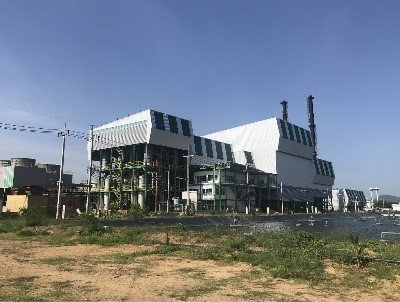
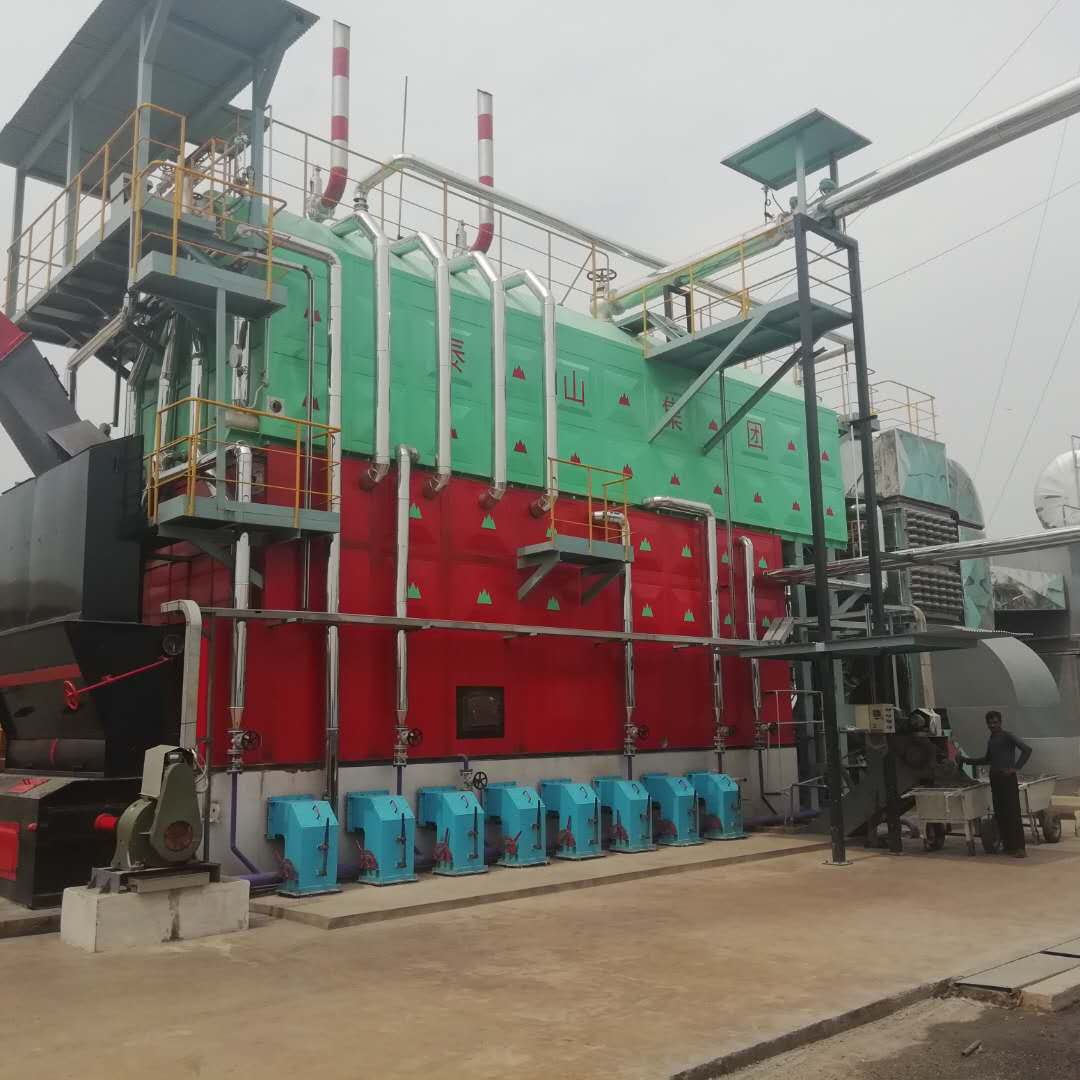
Taishan Group’s Thai Beverage biomass boiler EPC project is publicly listed as involving two 30 TPH spent-grain biomass boilers and a 9 MW backpressure steam turbine-generator. The project information also describes a complete EPC scope for the boiler island.
For a project involving multiple boilers and associated power-generation equipment, the ITP review should first establish the boundaries between boiler pressure parts, associated piping, auxiliary equipment, and other supplied systems.
Each equipment category should have inspection requirements appropriate to its applicable codes, specifications, and contractual responsibilities. A single generic inspection checklist may not adequately cover the entire supply scope.
The published project information does not disclose the project’s actual ITP or individual inspection records; therefore, it should be treated as an example of supply-scope complexity rather than evidence of a particular inspection procedure.
3. How to Review Hold Points, Witness Points, and Inspection Responsibilities?
Inspection points determine when and how different parties participate in manufacturing inspections. Incorrectly assigned inspection points can result in missed inspections, manufacturing delays, or disagreements over authorization to proceed.
3.1 Understand H, W, R, and S Inspection Points
Four commonly used inspection point designations are:
| Point | Meaning | Main Review Consideration |
|---|---|---|
| H | Hold Point | Work cannot proceed beyond the defined point until the required release is obtained |
| W | Witness Point | Designated parties are given an opportunity to witness the specified activity |
| R | Review Point | Required documents or inspection records must be reviewed |
| S | Surveillance Point | Inspection or manufacturing activities are subject to monitoring |
The exact definitions and release arrangements should follow the project’s inspection procedure and contractual requirements.
A Hold Point should clearly identify the activity that cannot proceed, the party authorized to release it, and the evidence required for release.
For a Witness Point, the ITP should clarify notification arrangements and the agreed procedure if the designated inspector cannot attend. A missed witness inspection should not automatically be treated as permission to proceed unless the applicable project procedure allows it.
3.2 Verify Responsibilities and Notification Requirements
The ITP should clearly distinguish the responsibilities of the relevant parties.
These may include:
- Manufacturer QC: Performs manufacturing inspections and maintains quality records.
- Owner or EPC Inspector: Reviews compliance with contractual and project requirements.
- Third-Party Inspection Agency: Performs assigned independent inspection activities.
- Authorized Inspector: Performs the formal inspection functions required under the applicable code and jurisdiction, where applicable.
Reviewers should check who performs each inspection, who witnesses it, who reviews the resulting records, and who authorizes release at designated hold points.
Inspection notification periods should also be clearly established according to the contract or agreed inspection procedure.
A third-party inspector and an Authorized Inspector are not necessarily the same role. Their authority and responsibilities should not be confused.
4. How to Verify Inspection References, Methods, and Acceptance Criteria?
An ITP may list the correct manufacturing activities but still be inadequate if its inspection references or acceptance criteria are unclear.
4.1 Check Applicable Codes and Document Revisions
Verify that each relevant inspection activity refers to the correct controlled documents, including:
- Applicable construction codes and editions.
- Approved manufacturing drawings.
- Material specifications.
- Welding procedures.
- NDT procedures.
- Approved inspection and test procedures.
Pay particular attention to document revisions. An ITP referencing superseded drawings or outdated procedures may result in inspections being performed against incorrect requirements.
Where different documents contain conflicting requirements, the manufacturer should obtain clarification through the project’s formal technical query or document control process rather than independently selecting a preferred requirement.
4.2 Verify Inspection Methods and Acceptance Criteria
Each inspection activity should have a clearly identifiable verification method and acceptance basis.
For example, an ITP entry stating only “NDT Required” does not provide sufficient information for a meaningful review.
The reviewer should establish whether the applicable documentation identifies:
- The required NDT method.
- The examination extent or sampling basis.
- The applicable procedure.
- The governing acceptance criteria.
- The required inspection report.
Acceptance criteria should be traceable to the applicable construction code, approved drawings, specifications, or other contractual documents.
Avoid accepting vague descriptions such as “satisfactory condition” or “pass inspection” when objective acceptance requirements are necessary.
It is also important to distinguish between a method standard and an acceptance requirement. A document describing how an examination is performed does not necessarily establish the complete acceptance criteria for the component being inspected.
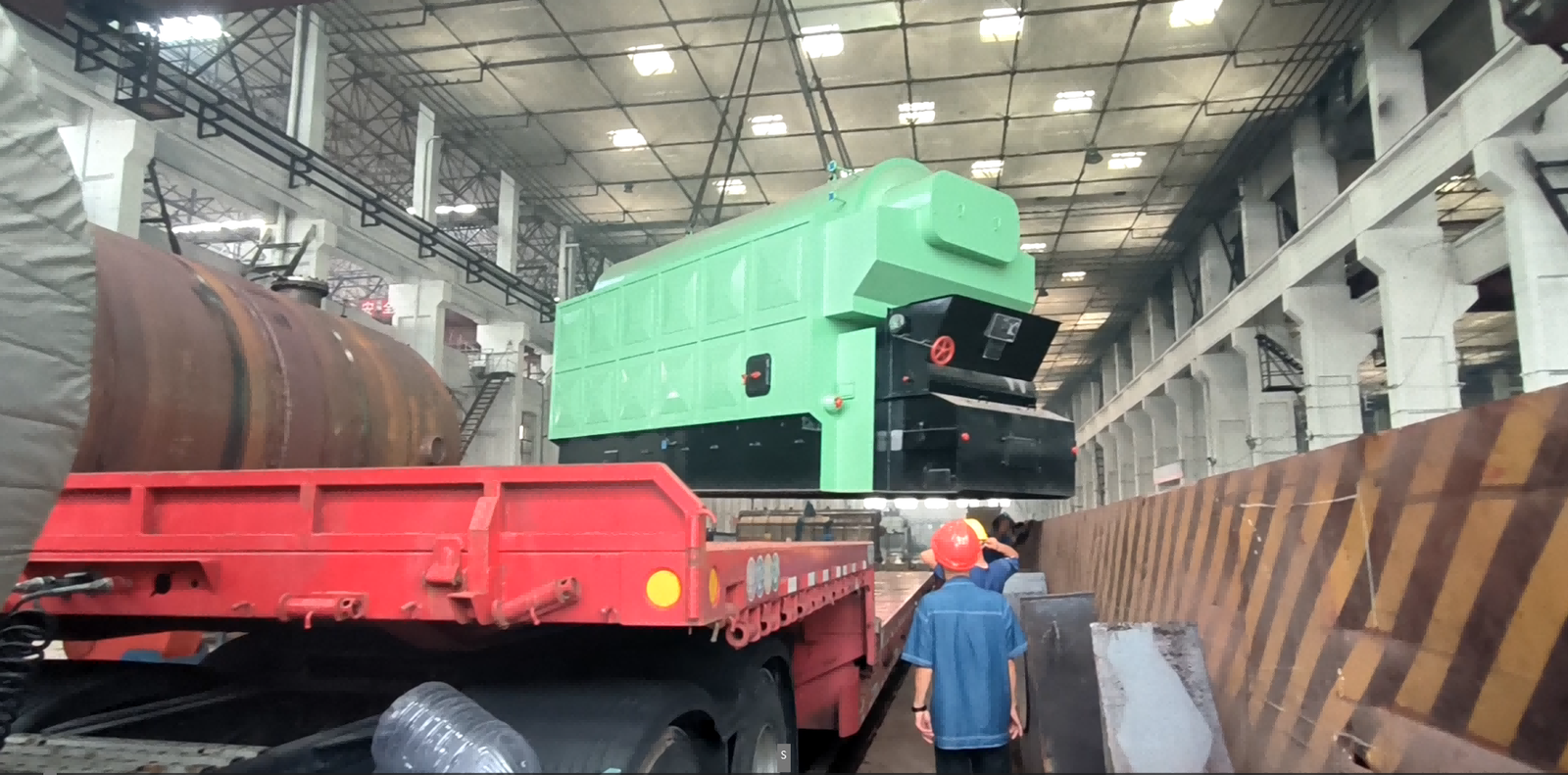
5. How to Check Quality Records, Traceability, and Nonconformance Procedures?
A complete ITP should establish not only what must be inspected but also how inspection results will be documented and how nonconforming results will be managed.
5.1 Review Required Quality Records
Reviewers should verify that the ITP identifies the records required to demonstrate completion of the applicable inspection activities.
Typical records may include:
| Activity | Typical Quality Records |
|---|---|
| Material Receiving | MTCs, material receiving inspection reports |
| Welding | WPS/PQR references, welder qualification records, welding inspection reports |
| NDT | Approved NDT procedures and examination reports |
| PWHT | Heat treatment charts and reports, where applicable |
| Hydrostatic Testing | Approved test procedures and test reports |
| Final Inspection | Dimensional, visual, and final inspection reports |
Records should be traceable to the relevant equipment, components, materials, welds, or inspection activities.
For pressure-part manufacturing, a practical traceability chain may follow this sequence:
Material Heat Number / MTC → Material Identification → Component Identification → Weld Map / Joint Identification → NDT Report → PWHT Record, Where Applicable → Pressure Test Record → Final Inspection Documentation
Not every component requires every record in this sequence. The applicable records should be determined by the component’s manufacturing route, inspection requirements, and project documentation specifications.
The reviewer should also verify that the ITP is consistent with the project’s final manufacturing documentation requirements.
5.2 Review NCR and Reinspection Procedures
The ITP and supporting quality procedures should establish how nonconformities are identified, recorded, corrected, and verified.
The review should consider:
- How nonconforming inspection results are reported.
- Who is responsible for issuing and reviewing Non-Conformance Reports (NCRs).
- How corrective actions and repair activities are approved.
- Whether reinspection or additional testing is required.
- How the final disposition and NCR closure are documented.
An inspection activity should not be considered fully closed merely because the initial test has been completed. Any outstanding nonconformity must be resolved through the applicable approval and verification process.
6. How to Approve an Industrial Boiler ITP Before Manufacturing?
After completing the technical review, the owner, EPC contractor, or designated inspection representative should consolidate comments and establish the required approval status.
6.1 Follow a Structured Review and Comment Resolution Process
A practical review process consists of four steps:
Step 1: Initial Document Review
Confirm that the ITP is complete, correctly identified, and based on the applicable project documents.
Step 2: Technical Review
Check manufacturing activities, component coverage, inspection points, responsibilities, references, acceptance criteria, and required records.
Step 3: Comment Resolution
Return identified deficiencies to the manufacturer for clarification or revision. Track comments until they are resolved or formally dispositioned.
Step 4: Final Approval
Complete the required approval process and distribute the approved revision to the relevant project participants.
6.2 Confirm Manufacturing Release Conditions
Depending on the project procedure, the review outcome may be recorded as:
- Approved: The ITP satisfies the applicable review requirements.
- Approved with Comments: Permitted only where the project procedure allows this status and clearly defines which comments do not prevent the relevant work.
- Revise and Resubmit: The manufacturer must address identified deficiencies before approval.
- Not Approved: The submitted ITP does not satisfy essential project requirements.
ITP approval should not automatically be interpreted as authorization to begin every manufacturing activity.
Before fabrication starts, reviewers should also confirm that other contractually required prerequisites have been satisfied, such as approved manufacturing drawings, applicable procedures, material documentation, and required manufacturing release authorizations.
The approval record should identify the reviewed ITP revision and clearly document any remaining actions or restrictions.
7. Industrial Boiler ITP Review Checklist
The following checklist can be used as a practical starting point when reviewing a manufacturer’s ITP before manufacturing.
| Review Item | Key Question |
|---|---|
| Contract Requirements | Are all applicable contractual requirements identified? |
| Component Coverage | Are the relevant boiler components and manufacturing boundaries covered? |
| Material Traceability | Are material certificates and identification addressed? |
| Welding and NDT | Are applicable procedures and acceptance criteria specified? |
| Inspection Points | Are H/W/R/S points properly assigned? |
| Responsibilities | Are inspection parties and notification requirements clear? |
| Quality Records | Are the required inspection records identified and traceable? |
| NCR Management | Are corrective actions and reinspection addressed? |
| Final Approval | Are required comments and approvals closed? |
The review should conclude with a documented decision and a clear list of outstanding actions, if any. The applicable project procedure should determine the official approval status and manufacturing release requirements.
Frequently Asked Questions
1. When Should an Industrial Boiler ITP Be Reviewed?
An industrial boiler ITP should generally be reviewed before the manufacturing activities covered by the plan begin, in accordance with contractual approval requirements. Early review allows missing inspections, unclear acceptance criteria, and incorrect inspection responsibilities to be corrected before fabrication progresses.
2. Who Is Responsible for Approving a Boiler ITP?
Approval responsibilities depend on the contract and project quality arrangements. The boiler manufacturer normally prepares the ITP, while the owner, EPC contractor, or designated inspection representative reviews it. Third-party inspectors or Authorized Inspectors may participate where required by the applicable code, jurisdiction, or contract.
3. What Is the Difference Between a Hold Point and a Witness Point?
A Hold Point prevents the relevant work from proceeding until the specified release is obtained. A Witness Point provides a designated party with an opportunity to attend and witness an inspection. Their release and notification arrangements should follow the applicable project procedure.
4. Can Boiler Manufacturing Start Before the ITP Is Approved?
This depends on the contract and project procedures. If ITP approval is a mandatory prerequisite for a particular manufacturing activity, that activity should not begin before the required approval is obtained. Other manufacturing release conditions must also be satisfied.
Conclusion
A properly reviewed industrial boiler ITP helps ensure that manufacturing inspections are adequately planned, component requirements are properly covered, responsibilities are clearly assigned, and quality records remain traceable.
By reviewing each ITP entry against contractual requirements, applicable construction codes, and actual boiler manufacturing activities, project owners and EPC contractors can identify deficiencies before fabrication begins and establish a more controlled manufacturing process.
For industrial boiler projects, selecting a manufacturer with established production and quality control capabilities is equally important. Contact Taishan Group to discuss boiler manufacturing requirements and project-specific quality control arrangements.