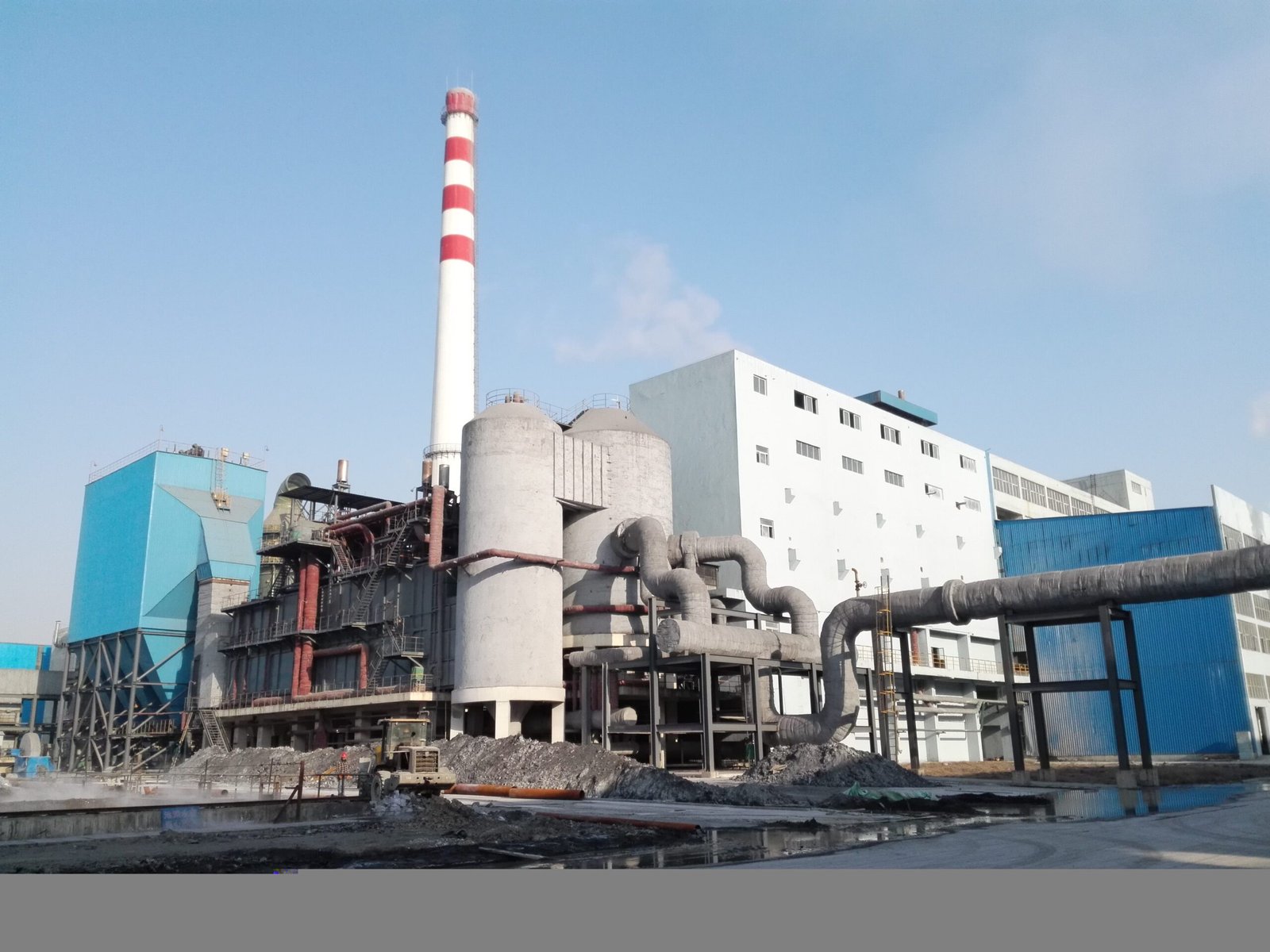
Power plant boiler efficiency measures how effectively the energy supplied by fuel is transferred into useful energy in the water and steam produced by the boiler. But an efficiency percentage alone does not tell the whole story.
A boiler reported at 90% efficiency is not automatically more efficient than one reported at 88%. Before those two figures can be compared, you need to know whether they use the same fuel-energy basis, measurement boundary, fuel, operating load, reference conditions, and test method.
This distinction is particularly important in power generation, where boiler efficiency, steam-cycle efficiency, and overall plant efficiency describe different stages of energy conversion.
Key Takeaway: A boiler-efficiency percentage becomes meaningful only when you know what is being measured, on what energy basis, and under what operating conditions.

What Does Power Plant Boiler Efficiency Actually Measure?
The basic energy path is:
Fuel energy input → boiler / fired steam generator → useful energy in water and steam
Boiler thermal efficiency therefore represents how much of the fuel-energy input is captured by the steam generator and transferred into useful water/steam energy within the defined boiler boundary.
In simplified form:
Boiler Efficiency = Useful Energy Transferred to Water/Steam ÷ Fuel Energy Input
The exact calculation becomes more detailed during a formal performance test, but the measurement boundary is the first concept that must be understood correctly.
The Boiler Boundary Matters
A reported efficiency only has technical meaning when the equipment and energy flows included in the calculation are defined.
ASME PTC 4 — Fired Steam Generators provides performance-test rules for fuel-fired steam generators, including pulverized-fuel, stoker, fluidized-bed, subcritical, and supercritical once-through designs.
In practical terms, an efficiency claim should make it possible to answer:
What equipment and energy flows are inside the efficiency calculation boundary?
Depending on the agreed test boundary and boiler configuration, heat-recovery sections associated with the steam generator may form part of the performance assessment.
This is one reason why two efficiency percentages should not be compared solely because both are labeled “boiler efficiency.”
Boiler Efficiency Is Not Overall Power Plant Efficiency
This is one of the most important distinctions when interpreting power-generation efficiency data.
Boiler Thermal Efficiency
Measures primarily:
Fuel → Water/Steam Energy
Overall Power Plant Efficiency
Measures:
Fuel → Electricity
The second boundary is much larger.
Overall plant efficiency reflects not only the boiler but also the thermodynamic performance of the steam cycle, turbine-generator, condenser, auxiliary equipment, and other plant-level losses.
Therefore:
A coal-fired power plant with overall electrical efficiency in the 40% range does not have a boiler thermal efficiency of only 40%.
This also explains why subcritical, supercritical, and ultra-supercritical plant-efficiency figures should not automatically be presented as boiler thermal-efficiency figures.
For the separate technology-level comparison, see What Is the Most Efficient Type of Power Plant Boiler?.
How Is Power Plant Boiler Efficiency Measured and Reported?
Boiler efficiency is commonly evaluated using an input-output approach or an energy-balance approach.
This article only explains what those methods mean for interpreting an efficiency value. Detailed formulas, instrumentation, measurements, and test procedures belong in a dedicated measurement guide.
Input-Output Method
The input-output approach compares useful boiler output with the energy supplied by the fuel.
Conceptually:
Efficiency = Useful Water/Steam Energy Output ÷ Fuel Energy Input
The concept is straightforward, but the reliability of the result depends on the quality of the underlying measurements, including fuel flow and heating value as well as water/steam flow and thermodynamic conditions.
Energy-Balance Method
The energy-balance approach determines boiler efficiency by accounting for energy losses and other relevant energy flows around the steam generator.
ASME describes PTC 4 as a comprehensive framework for defining, calculating, and testing fired-steam-generator efficiency using the Energy Balance Method. The code also addresses correction of performance from actual test conditions to specified guarantee or reference conditions.
For detailed boiler-efficiency measurement and calculation, see How to Measure the Thermal Efficiency of an Industrial Power Plant Boiler.
Why Do HHV and LHV Matter When Reporting Boiler Efficiency?
Before comparing two boiler-efficiency figures, one of the first questions should be:
Are both values reported on the same fuel-energy basis?
The two most common bases are HHV and LHV.
Higher Heating Value — HHV / GCV
Higher Heating Value, also called Gross Calorific Value, represents the fuel-energy content including the energy associated with condensation of water vapor produced during combustion.
Lower Heating Value — LHV / NCV
Lower Heating Value, also called Net Calorific Value, uses a lower fuel-energy basis because the energy associated with condensing combustion-produced water vapor is not included in the usable fuel-energy value.
The U.S. Department of Energy’s Guide to Combined Heat and Power Systems for Boiler Owners and Operators distinguishes HHV and LHV and explains why the reporting basis matters when evaluating efficiency.
Why Can the Same Boiler Show Different HHV and LHV Efficiencies?
Fuel-energy input appears in the denominator of the efficiency calculation.
Because LHV is lower than HHV for the same fuel, the same physical boiler operating under the same conditions will normally show a numerically higher efficiency on an LHV basis than on an HHV basis.
That does not mean the boiler has suddenly become more efficient.
The equipment has not changed.
The reporting basis has changed.
The size of the numerical difference depends on fuel composition, particularly the amount of water associated with the fuel and combustion products. It should therefore not be represented by one universal conversion percentage for every coal, biomass, gas, or other fuel.
The practical rule is:
Never compare an HHV-based efficiency directly with an LHV-based efficiency unless both values have first been placed on the same energy basis.
For example:
Boiler A: 89% HHV
and
Boiler B: 91% LHV
do not provide enough information to conclude that Boiler B is more efficient.

Why Can the Same Boiler Have Different Efficiency Numbers?
Even when the boiler itself has not fundamentally changed, legitimately reported efficiency figures may differ.
| Reason | Why the Reported Efficiency Can Change |
|---|---|
| HHV vs. LHV basis | The fuel-energy denominator is different |
| Fuel properties | Moisture, composition, ash, and combustion characteristics influence energy losses |
| Operating load | Combustion conditions, excess air, heat transfer, and relative fixed losses can change |
| Test boundary | Different equipment or energy flows may be included |
| Reference conditions | Actual operating conditions may differ from corrected or guarantee conditions |
| Measurement method | Different measurement approaches and uncertainties can affect the reported result |
| Equipment condition | Fouling, leakage, combustion condition, and other changes can alter actual performance |
Another important source of confusion is the type of efficiency value being quoted.
Design Efficiency
The efficiency expected from engineering calculations under specified design conditions.
Guaranteed Efficiency
The performance that a supplier has contractually committed to under defined guarantee conditions.
Tested Efficiency
The result obtained during a defined performance or acceptance test.
Operating Efficiency
The efficiency actually achieved during normal plant operation.
These values do not necessarily have to be identical.
A design value, a contractual guarantee, an acceptance-test result, and a current operating result may all be legitimate numbers while representing different conditions and purposes.
The important question is:
Were the values established on the same basis and under comparable conditions?
What Is a Good Power Plant Boiler Efficiency?
There is no single percentage that defines “good” efficiency for every power plant boiler.
A generic industry-average number can be misleading because boiler efficiency varies with factors such as:
- fuel;
- firing technology;
- boiler configuration;
- heating-value basis;
- operating load;
- heat-recovery arrangement;
- equipment condition;
- measurement boundary; and
- test/reference conditions.
Instead of asking:
“Is 88%, 90%, or 92% a good boiler efficiency?”
a more useful question is:
“How does this efficiency compare with the correct reference under comparable conditions?”
Compare With the Specified or Guaranteed Performance
For a new boiler or EPC project, the contractual guarantee is an important reference.
But a guarantee should always be read together with its specified conditions, which may include:
- fuel specification;
- boiler load;
- feedwater and steam conditions;
- HHV/LHV basis;
- performance-test method;
- test boundary;
- applicable reference conditions.
A statement such as:
Guaranteed boiler efficiency: 90%
is incomplete without those conditions.
Compare With a Performance-Test Baseline
A commissioning or acceptance performance test can establish a meaningful baseline for later operating assessment.
If the same boiler later shows a lower efficiency, however, the comparison still needs to consider whether the fuel, load, measurement basis, and other operating conditions are comparable.
Compare With Historical Performance Under Similar Conditions
For an existing power plant, the boiler’s own historical performance can be more informative than a broad industry average.
For example, comparing current performance with the unit’s previous results at:
- similar load;
- similar fuel;
- the same HHV/LHV basis; and
- comparable operating conditions
can help distinguish genuine deterioration from a simple change in operating conditions.
Compare With Other Boilers Only When They Are Technically Comparable
Two boilers should not be treated as directly comparable simply because both are called:
coal-fired boilers,
biomass boilers,
or
CFB boilers.
Boiler size, fuel, firing technology, heat-recovery arrangement, duty, test basis, and operating conditions can all influence the reported result.
A broad efficiency range may provide context, but it should not replace an equipment-specific guarantee or properly defined performance comparison.
Can Two Boiler Efficiency Values Be Compared Directly?
The table below provides a practical test.
| Efficiency Comparison | Directly Comparable? | Why? |
|---|---|---|
| 89% HHV vs. 91% LHV | No | Different fuel-energy bases |
| Boiler efficiency 90% vs. plant efficiency 45% | No | Different system boundaries |
| Guaranteed efficiency vs. current operating efficiency | Not automatically | Conditions and purposes may differ |
| Two boilers burning substantially different fuels | Not automatically | Fuel-related loss conditions differ |
| Same boiler at substantially different loads | Not directly | Operating conditions and losses change |
| Same boiler, same basis, same fuel, comparable load | Potentially | Major comparison conditions are aligned |
Boiler Efficiency Comparison Checklist
Before concluding that one boiler is more efficient than another, confirm the following:
1. Are both figures measuring boiler thermal efficiency?
Do not mix boiler fuel-to-steam efficiency with overall plant fuel-to-electricity efficiency.
2. Is the measurement boundary the same?
Confirm which equipment and energy flows are included.
3. Are both values expressed on the same HHV/LHV basis?
If not, convert them before comparison.
4. Are the fuels sufficiently comparable?
Fuel composition and moisture can influence both the energy basis and actual heat losses.
5. Are the operating loads comparable?
Boiler efficiency can change with load.
6. Are the test or reference conditions comparable?
Actual operating conditions should not be directly compared with guarantee or corrected conditions without qualification.
7. Are the test and calculation methods compatible?
Measurement method and uncertainty should be considered when precise performance comparisons are required.
If several of these questions cannot be answered, then:
The two percentages are not yet sufficiently defined for a valid technical comparison.
What Makes Power Plant Boiler Efficiency Rise or Fall?
The detailed causes of boiler-efficiency change deserve their own discussion, but the main groups can be summarized briefly.
Fuel Characteristics
Fuel moisture, ash behavior, consistency, and combustion characteristics can affect moisture-related losses, burnout, and heat-transfer conditions.
Combustion and Air Management
Insufficient air can contribute to incomplete combustion, while unnecessary excess air increases the amount of gas that must be heated and discharged through the stack.
The U.S. Department of Energy’s Improve Your Boiler’s Combustion Efficiency guidance identifies excess air and stack-gas temperature as important variables affecting boiler combustion efficiency.
Heat-Transfer Condition
Soot, slagging, fouling, and other deposits can reduce effective heat transfer between combustion gases and the water/steam circuit.
Flue-Gas Heat Recovery
Economizers and air preheaters recover energy from flue gas that would otherwise leave through the exhaust.
Operating Load and Control Conditions
Efficiency can change as the boiler moves away from its intended operating range or as combustion and control conditions change.
For a mechanism-based explanation of these factors, see Key Factors Affecting Power Plant Boiler Efficiency.
How Should You Read a Boiler Efficiency Claim?
A useful efficiency statement should contain more information than a percentage.
Instead of:
Boiler efficiency: 90%
a technically more meaningful statement would be:
Boiler efficiency: 90% HHV under the specified fuel, load, boundary, and performance-test conditions.
When reading a supplier proposal, test report, technical article, or plant performance record, ask:
- What efficiency metric is being reported?
- What equipment lies inside the boundary?
- Is the fuel basis HHV or LHV?
- Which fuel was used?
- At what load was the result established?
- Is it a design, guaranteed, tested, or operating value?
- Which test or calculation method was used?
The more clearly those conditions are defined, the more useful the efficiency number becomes.
Conclusion
Power plant boiler efficiency is a fundamental performance metric, but the percentage should never be interpreted in isolation.
Boiler thermal efficiency measures the conversion of fuel energy into useful water/steam energy within a defined boiler or fired-steam-generator boundary. It is not the same as the overall fuel-to-electricity efficiency of the power plant.
Its numerical value can also change depending on:
- HHV or LHV basis;
- fuel;
- load;
- measurement boundary;
- test method;
- reference conditions; and
- actual equipment condition.
That means the correct question is not simply:
“Which boiler has the higher efficiency percentage?”
It is:
“Were these efficiency figures defined, measured, and reported on a genuinely comparable basis?”
For boiler owners, EPC contractors, engineers, and technical buyers, that distinction is essential. A properly defined efficiency value can support equipment guarantees, acceptance testing, operational benchmarking, and technical comparison.
An isolated percentage cannot.
FAQ
What is power plant boiler efficiency?
Power plant boiler efficiency measures how effectively fuel energy is transferred into useful energy in water and steam within a defined boiler or fired-steam-generator boundary.
It is fundamentally a fuel-to-steam thermal-efficiency metric, not the overall fuel-to-electricity efficiency of the power plant.
What is a good power plant boiler efficiency?
There is no universal percentage that defines good performance for every power boiler.
A meaningful benchmark should consider the boiler’s fuel, configuration, HHV/LHV basis, operating load, test boundary, test method, and reference conditions.
For an individual boiler, its specified guarantee, verified performance-test baseline, and historical performance under comparable conditions are generally more meaningful than an isolated generic industry range.
What is the difference between boiler efficiency and power plant efficiency?
Boiler efficiency primarily measures:
Fuel → Water/Steam Energy
Overall power plant efficiency measures:
Fuel → Electricity
Overall plant efficiency therefore includes steam-cycle, turbine-generator, condenser, auxiliary, and other plant-level losses in addition to boiler performance.
Why is boiler efficiency numerically higher on an LHV basis?
LHV uses a lower fuel-energy input value than HHV because the energy associated with condensation of combustion-produced water vapor is not included in the LHV basis.
As a result, the same physical boiler will normally show a numerically higher efficiency on an LHV basis.
This does not mean that its actual equipment performance has improved.
Can HHV and LHV boiler efficiencies be compared directly?
No.
The efficiency figures should first be expressed on the same heating-value basis.
For example, an 89% HHV efficiency and a 91% LHV efficiency do not, by themselves, prove that the second boiler is more efficient.
How is power plant boiler efficiency measured?
Boiler efficiency can be evaluated using an input-output approach or an energy-balance approach.
ASME PTC 4 provides a formal performance-test framework for fuel-fired steam generators using the Energy Balance Method.
For detailed formulas and measurement requirements, see How to Measure the Thermal Efficiency of an Industrial Power Plant Boiler.
Why can operating boiler efficiency differ from guaranteed efficiency?
Guaranteed performance applies to defined guarantee or reference conditions.
Actual operation may involve a different fuel, load, equipment condition, or operating environment. The measurement basis and test conditions may also differ.
For this reason, operating and guaranteed values should only be compared after confirming that the relevant conditions are aligned or appropriately corrected.
References
ASME PTC 4 — Fired Steam Generators
Performance-test rules and procedures for fuel-fired steam generators, including determination of efficiency and other performance characteristics.
Overview of ASME performance-test methodology, including uniform test procedures, measurement requirements, test uncertainty, and correction to reference or guarantee conditions.
Technical guidance covering boiler efficiency, fuel heating-value bases, steam-system performance, and the distinction between boiler and overall power-generation efficiency.
U.S. Department of Energy — Improve Your Boiler’s Combustion Efficiency
DOE guidance explaining the relationship between excess air, stack-gas temperature, and boiler combustion efficiency.