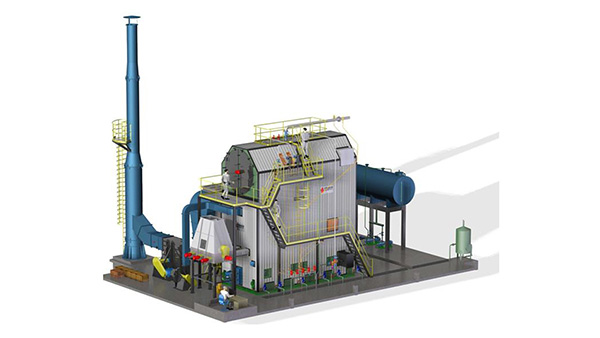
As industries and governments push toward cleaner energy solutions, many organizations face challenges in reducing carbon emissions while maintaining reliable power and heat generation. Traditional fossil-fuel systems often struggle to meet sustainability goals and environmental regulations, leading to rising operational and compliance costs. Without efficient energy conversion technologies, valuable renewable resources and waste materials may go underutilized. Industrial boilers have become a critical component in renewable energy and waste-to-energy systems by enabling efficient thermal energy recovery and sustainable power production.
Industrial boilers play a central role in renewable energy and waste-to-energy systems by converting biomass, municipal waste, agricultural residues, and other alternative fuels into steam and heat for electricity generation, district heating, and industrial processes. Advanced boiler technologies improve fuel efficiency, reduce landfill waste, lower greenhouse gas emissions, and support the transition toward sustainable and circular energy systems.
To better understand their importance, it is essential to explore how industrial boilers are integrated into different renewable and waste-to-energy applications.
How Are Industrial Boilers Used in Biomass Energy Systems?
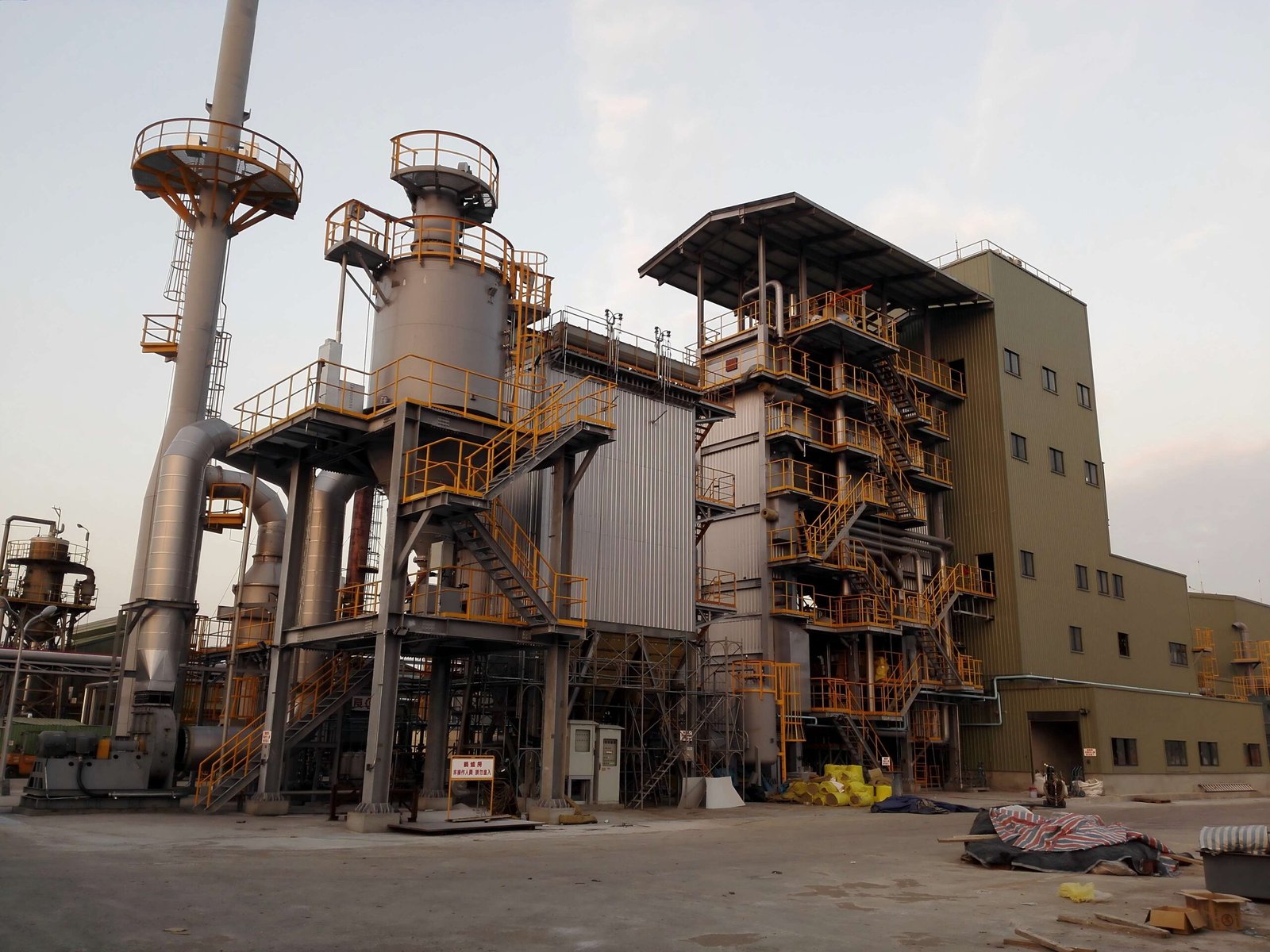
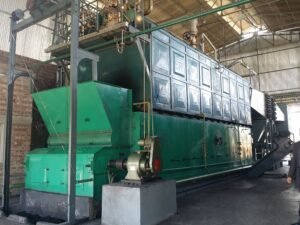
As industries and governments around the world accelerate the transition toward cleaner and more sustainable energy infrastructure, biomass energy systems have become increasingly important because they provide a practical method for converting renewable organic materials into usable thermal and electrical energy on a large industrial scale. At the center of these systems are industrial boilers, which serve as the primary thermal conversion equipment responsible for transforming the chemical energy stored in biomass fuels into steam, hot water, or process heat for industrial operations, district heating networks, and power generation facilities. Unlike conventional fossil-fuel boiler systems that rely on coal, oil, or natural gas extracted from finite underground reserves, biomass boiler systems utilize renewable organic resources such as wood chips, agricultural residues, forestry waste, sawdust, rice husks, sugarcane bagasse, and energy crops, thereby helping reduce fossil fuel dependence while supporting circular energy utilization and lower net carbon emissions. However, because biomass fuels differ significantly from conventional fossil fuels in terms of moisture content, ash composition, combustion behavior, calorific value, and fuel handling characteristics, industrial biomass boiler systems require highly specialized engineering design, combustion control strategies, emissions management technologies, and thermal integration methods in order to operate efficiently, safely, and sustainably within modern energy infrastructure. 🌱🔥🏭
Industrial boilers are used in biomass energy systems to convert renewable organic fuels into thermal energy, steam, hot water, and electricity through controlled combustion and heat transfer processes. These boilers support industrial heating, process steam generation, district heating, combined heat and power (CHP), and renewable electricity production while helping reduce fossil fuel consumption and improve sustainable energy utilization.
Because biomass energy systems involve complex interactions between fuel properties, combustion dynamics, heat transfer performance, emissions control, and energy distribution infrastructure, understanding the role of industrial boilers in biomass applications requires a comprehensive engineering perspective. The following detailed guide explains how industrial boilers operate within biomass energy systems and why they have become essential technologies in renewable thermal energy infrastructure. ⚙️
Industrial boilers are the core thermal conversion equipment in most biomass energy systems.True
Biomass boilers convert the chemical energy stored in organic materials into usable thermal energy and steam.
Biomass boilers operate exactly the same way as conventional fossil-fuel boilers.False
Biomass fuels have unique combustion, moisture, ash, and handling characteristics that require specialized boiler designs and operating strategies.
Understanding the Role of Biomass Energy Systems 🌿
Biomass energy systems are designed to utilize renewable organic materials as fuel sources for generating:
- Thermal energy
- Steam
- Electricity
- Industrial process heat
Unlike fossil fuels formed over millions of years, biomass fuels originate from recently living biological materials, making them part of the contemporary carbon cycle.
Common biomass fuel sources include:
- Forestry residues 🌲
- Wood chips
- Agricultural waste 🌾
- Sawdust
- Rice husks
- Corn stalks
- Sugarcane bagasse
- Energy crops
The industrial boiler functions as the central thermal conversion unit that extracts usable energy from these materials.
Basic Working Principle of [Biomass Boiler](https://coalbiomassboiler.com/product/biomass-boilers/) Systems 🔥
Although biomass boilers vary in design and scale, their fundamental operating principle follows a similar thermal process:
Biomass Fuel → Fuel Preparation → Combustion → Heat Transfer → Steam/Hot Water Generation → Energy Distribution
The process can be explained more specifically as follows:
- Biomass fuel is collected and stored.
- Fuel handling systems transport biomass into the combustion chamber.
- Controlled combustion releases thermal energy.
- Heat exchangers transfer heat into water-filled tubes or vessels.
- Steam or hot water is generated.
- Thermal energy is distributed to industrial processes, turbines, or district heating systems.
This process allows biomass energy systems to convert renewable organic matter into practical industrial energy.
Why Industrial Boilers Are Essential in Biomass Systems 🏭
Industrial boilers are critically important because biomass fuel alone has no practical value unless its energy can be converted efficiently into usable thermal output.
The boiler performs several key functions simultaneously:
- Fuel combustion management
- Heat transfer optimization
- Steam generation
- Pressure control
- Emissions regulation
- Thermal energy distribution
Without properly engineered industrial boilers, biomass energy systems would suffer from:
- Poor combustion efficiency
- Excessive fuel waste
- Unstable steam generation
- High emissions
- Operational instability
Types of Industrial Boilers Used in Biomass Energy Systems ⚙️
Different biomass applications require different boiler structures depending on:
- Fuel characteristics
- Capacity requirements
- Pressure conditions
- Energy output goals
Water-Tube Biomass Boilers
Water-tube boilers are commonly used in large-scale biomass plants because they:
- Handle high pressures effectively
- Support large steam capacities
- Provide efficient heat transfer
- Operate continuously under heavy loads
These systems are widely used in:
- Biomass power plants
- CHP systems
- District heating infrastructure
Fire-Tube Biomass Boilers
Fire-tube systems are more common in:
- Small industrial facilities
- Medium-capacity heating systems
- Lower-pressure applications
They generally offer:
- Simpler construction
- Easier maintenance
- Lower installation cost
Comparison of Biomass Boiler Types
| Boiler Type | Typical Biomass Application | Main Advantages |
|---|---|---|
| Water-Tube Boiler | Large biomass power plants | High pressure and capacity |
| Fire-Tube Boiler | Medium industrial heating | Simpler operation |
| Fluidized Bed Boiler | Mixed biomass fuels | Fuel flexibility |
| Grate-Fired Boiler | Wood chips and pellets | Stable combustion |
Fuel Preparation Is Critically Important 🌾
One major difference between biomass systems and fossil-fuel systems is that biomass fuels often require significant preparation before combustion.
Fuel preparation may include:
- Drying
- Crushing
- Screening
- Pelletizing
- Size classification
This is necessary because biomass fuel properties can vary greatly in:
- Moisture content
- Particle size
- Energy density
- Ash composition
Excessively wet biomass can:
- Lower combustion temperature
- Reduce boiler efficiency
- Increase emissions
Biomass Fuel Handling Systems 🚜
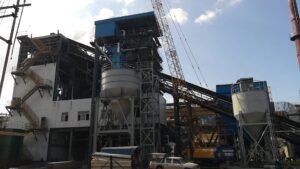
Industrial biomass boiler plants often require sophisticated fuel handling infrastructure because biomass fuels are bulkier and less energy-dense than fossil fuels.
Typical fuel handling systems include:
- Conveyor belts
- Screw feeders
- Storage silos
- Fuel bunkers
- Automated feeding mechanisms
Efficient fuel handling is essential for maintaining:
➡️ Stable combustion
➡️ Continuous boiler operation
➡️ Reliable steam production
Combustion Systems in Biomass Boilers 🔥
Biomass combustion is significantly more complex than natural gas combustion because biomass fuels contain:
- Volatile organic compounds
- Ash-forming minerals
- Variable moisture levels
As a result, biomass boilers use specialized combustion systems such as:
- Grate combustion
- Fluidized bed combustion
- Suspension firing
Grate-Fired Biomass Boilers
These systems burn biomass on moving or stationary grates and are widely used for:
- Wood chips
- Forestry residues
- Agricultural waste
Advantages include:
- Mechanical simplicity
- Reliable operation
- Good fuel adaptability
Fluidized Bed Biomass Boilers
Fluidized bed systems suspend fuel particles within hot circulating air and inert material.
These boilers provide:
- Excellent fuel mixing
- Stable combustion temperature
- Lower NOx formation
- Better fuel flexibility
Fluidized bed boilers are especially valuable when using:
- Mixed biomass fuels
- High-moisture biomass
- Low-quality organic residues
Heat Transfer in Biomass Boiler Systems 🌡️
Once combustion occurs, heat transfer becomes the next critical process.
Thermal energy from combustion gases transfers through:
- Boiler tubes
- Heat exchangers
- Steam drums
into circulating water systems.
Efficient heat transfer is essential because it determines:
- Steam generation rate
- Fuel utilization efficiency
- Overall plant performance
Steam Generation Applications 💨
Industrial biomass boilers generate steam for several major applications.
Industrial Process Steam
Industries using biomass steam include:
- Paper mills 📄
- Food processing 🍞
- Textile manufacturing 👕
- Chemical production ⚗️
Steam supports:
- Heating
- Drying
- Sterilization
- Process reactions
Electricity Generation
In biomass power plants:
➡️ High-pressure steam drives turbines
➡️ Turbines generate electricity
➡️ Exhaust steam may be reused for heating
This forms the basis of biomass thermal power generation.
Combined Heat and Power (CHP) Biomass Systems ⚡♨️
One of the most efficient biomass applications is CHP, also known as cogeneration.
In CHP systems:
- Electricity is generated
- Waste heat is recovered
- Thermal energy supports district heating or industrial processes
This significantly improves overall energy utilization compared with standalone electricity generation.
| Biomass Energy Application | Boiler Function |
|---|---|
| Industrial Heating | Process steam generation |
| District Heating | Hot water production |
| CHP Systems | Steam for power and heating |
| Biomass Power Plants | High-pressure steam generation |
Biomass Boilers in District Heating Networks 🏙️
Biomass boilers are increasingly used in district heating systems because they provide:
- Renewable thermal energy
- Centralized heat generation
- Lower fossil fuel dependence
Hot water generated by biomass boilers circulates through insulated pipelines to:
- Residential buildings
- Schools
- Hospitals
- Commercial complexes
This allows entire urban districts to receive renewable heating from centralized biomass energy plants.
Emissions Control in Biomass Boiler Systems 🌫️
Although biomass is renewable, biomass combustion still produces:
- Particulate matter
- Nitrogen oxides
- Carbon monoxide
- Ash residues
Therefore, modern biomass boiler systems require advanced emissions control equipment such as:
- Cyclone separators
- Electrostatic precipitators
- Baghouse filters
- Flue gas cleaning systems
These systems help maintain compliance with environmental regulations.
Ash Handling and Waste Management 🪵
Biomass fuels produce ash during combustion, especially:
- Agricultural residues
- Bark-heavy fuels
- High-mineral biomass
Industrial biomass systems therefore require:
- Ash collection systems
- Bottom ash handling
- Fly ash filtration
In some cases, biomass ash may be reused for:
- Soil improvement
- Construction materials
- Industrial recycling
Automation and Smart Control Systems 🤖
Modern biomass boiler plants increasingly use advanced automation technologies including:
- AI combustion optimization
- Real-time oxygen monitoring
- Automated fuel feeding
- Predictive maintenance systems
These technologies improve:
- Combustion efficiency
- Fuel utilization
- Operational reliability
- Emissions control
Thermal Efficiency Considerations ♻️
Several factors affect biomass boiler efficiency:
- Fuel moisture content
- Combustion stability
- Heat exchanger cleanliness
- Air-fuel ratio control
- Load conditions
Because biomass fuels vary more than natural gas, maintaining stable efficiency requires sophisticated control strategies.
Challenges of Biomass Boiler Systems ⚠️
Despite their sustainability benefits, biomass systems also face technical challenges such as:
- Fuel variability
- Corrosion risk
- Slagging and fouling
- Larger storage requirements
- Higher maintenance demands
These challenges require:
- Careful engineering design
- Advanced operating procedures
- Proper fuel quality management
Environmental Advantages of Biomass Boilers 🌍
When sustainably sourced and properly managed, biomass energy systems can help:
- Reduce fossil fuel use
- Lower net carbon emissions
- Utilize agricultural waste
- Support circular energy economies
Biomass energy also improves:
- Local energy resilience
- Renewable energy diversification
- Rural economic development
Future Trends in Biomass Boiler Technology 🚀
Modern biomass energy systems are evolving toward:
- AI-driven combustion optimization
- Hydrogen-biomass hybrid systems
- Carbon capture integration
- Ultra-low-emission combustion
- Smart district heating integration
These innovations aim to improve:
- Sustainability
- Fuel flexibility
- Emissions performance
- Long-term efficiency
Simplified Biomass Energy System Workflow 🔄
| System Stage | Main Function |
|---|---|
| Biomass Collection | Fuel sourcing |
| Fuel Preparation | Drying and sizing |
| Fuel Feeding | Controlled combustion supply |
| Combustion Process | Thermal energy release |
| Heat Transfer | Steam/hot water generation |
| Energy Distribution | Industrial or district heating use |
| Emissions Control | Pollution reduction |
Why Industrial Boilers Are Central to Biomass Energy Systems 🤔
Industrial boilers are the core thermal conversion technologies within biomass energy systems because they transform renewable organic materials into usable steam, hot water, process heat, and electrical energy through carefully controlled combustion and heat transfer processes. Their role extends far beyond simple fuel burning, encompassing fuel handling, combustion optimization, steam generation, pressure management, emissions control, thermal distribution, and integration with industrial processes, CHP infrastructure, and district heating networks. Because biomass fuels possess highly variable physical and chemical properties compared with conventional fossil fuels, biomass boiler systems require specialized engineering designs capable of maintaining stable combustion, efficient heat transfer, and environmental compliance under continuously changing operating conditions. As industries and governments continue prioritizing renewable energy, decarbonization, and sustainable thermal infrastructure, industrial biomass boilers are expected to remain essential technologies supporting the global transition toward cleaner and more resource-efficient energy systems. 🌱🔥🏭♻️
What Role Do Industrial Boilers Play in Waste-to-Energy Power Plants?
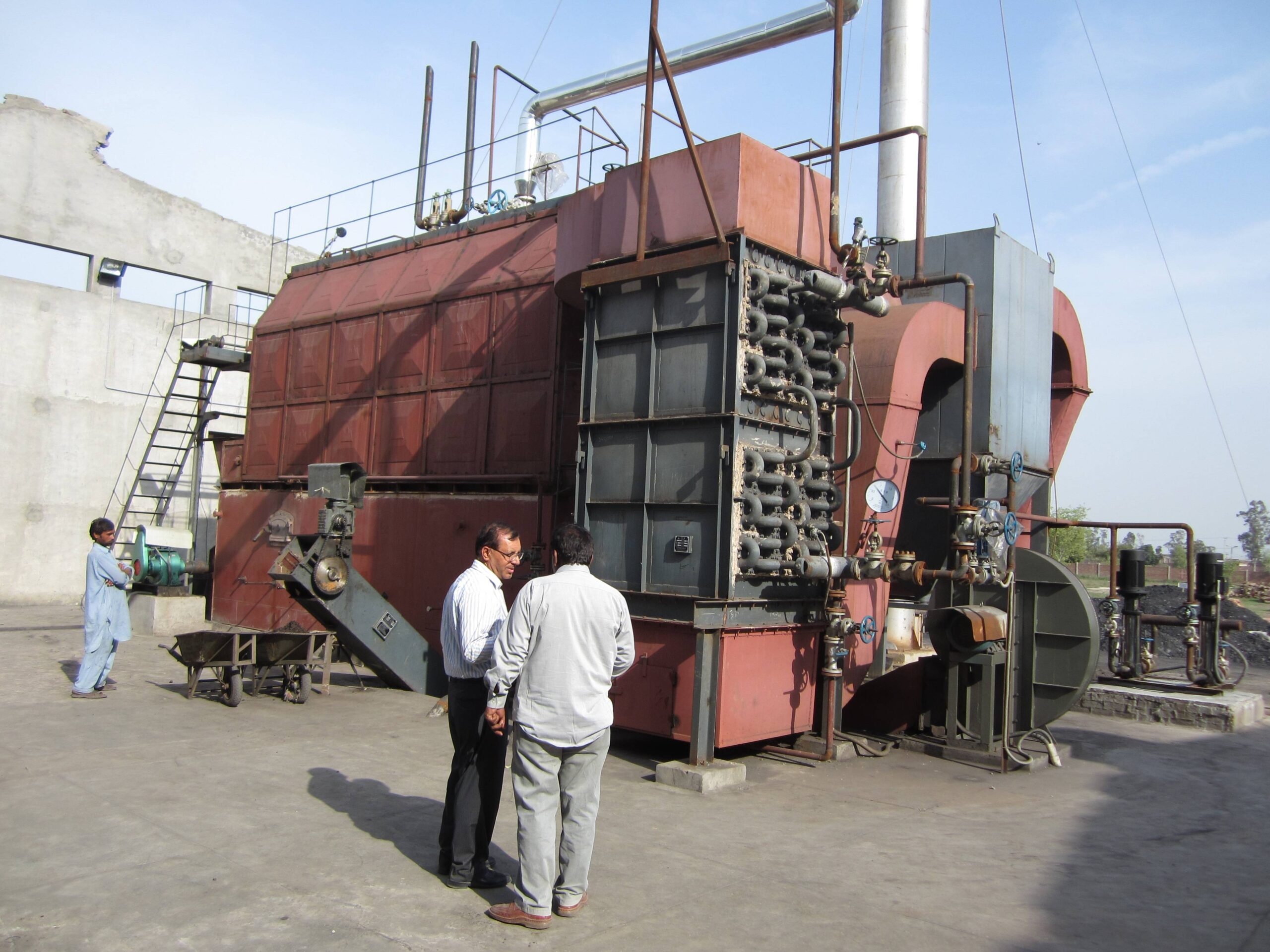
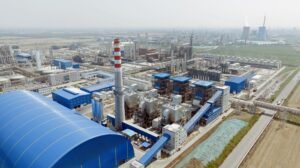
As urban populations continue growing and global waste generation rises rapidly alongside industrialization and consumer activity, governments and energy providers are increasingly turning toward waste-to-energy (WtE) power plants as an integrated solution capable of simultaneously addressing municipal solid waste disposal challenges and renewable energy production needs. At the heart of these facilities are industrial boilers, which function as the primary thermal conversion systems responsible for transforming the chemical energy stored in combustible waste materials into high-temperature steam that can be used for electricity generation, district heating, and industrial thermal applications. Unlike conventional fossil-fuel power plants that rely on coal, oil, or natural gas extracted from underground reserves, waste-to-energy facilities utilize municipal waste streams—including household garbage, commercial refuse, industrial non-hazardous waste, and biomass residues—as fuel sources, thereby reducing landfill dependence while recovering usable energy from materials that would otherwise become environmental burdens. However, because waste-derived fuels possess highly variable calorific values, moisture content, chemical composition, chlorine levels, and ash characteristics, industrial boilers used in waste-to-energy plants require sophisticated engineering designs capable of handling aggressive combustion environments, corrosive flue gases, complex heat transfer conditions, and strict emissions control requirements while maintaining stable long-term thermal performance. 🔥♻️🏭
Industrial boilers play a central role in waste-to-energy power plants by converting the thermal energy released during waste combustion into high-pressure steam for electricity generation, district heating, and industrial process applications. They serve as the core heat recovery and steam generation systems that enable waste materials to be transformed into usable energy while supporting landfill reduction and resource recovery.
Because waste-to-energy infrastructure combines thermal engineering, environmental management, power generation, and waste treatment technologies into a single integrated system, understanding the role of industrial boilers requires a detailed examination of combustion processes, steam cycles, emissions control strategies, and thermal recovery engineering. The following comprehensive guide explains how industrial boilers operate in waste-to-energy power plants and why they are essential to modern sustainable energy infrastructure. ⚙️
Industrial boilers are responsible for generating steam in waste-to-energy power plants.True
Waste combustion releases thermal energy that industrial boilers convert into high-pressure steam for power generation and heating.
Waste-to-energy plants burn waste directly without requiring advanced boiler systems.False
WtE facilities rely on highly engineered boiler systems for heat recovery, steam generation, and emissions management.
Understanding Waste-to-Energy (WtE) Power Plants ♻️
Waste-to-energy plants are industrial facilities designed to:
- Reduce waste volume
- Recover thermal energy
- Generate electricity
- Produce district heating
- Support sustainable waste management
Instead of sending municipal waste directly to landfills, WtE plants thermally process combustible waste materials and convert part of their energy content into usable power.
Modern WtE plants often handle:
- Municipal solid waste (MSW)
- Commercial refuse
- Industrial non-hazardous waste
- Biomass residues
- Refuse-derived fuel (RDF)
The industrial boiler serves as the key thermal recovery system enabling this conversion process.
Why Industrial Boilers Are Essential in WtE Plants 🏭
Combustion alone does not create usable electricity or district heating. The thermal energy released during waste incineration must first be captured and converted into controlled steam energy.
Industrial boilers perform this crucial function by:
- Recovering combustion heat
- Transferring thermal energy into water systems
- Producing high-pressure steam
- Supporting turbine-driven electricity generation
Without industrial boilers, waste-to-energy plants would simply destroy waste without efficiently utilizing its energy potential.
Basic Operating Principle of Waste-to-Energy Boilers 🔥➡️💨➡️⚡
The simplified operating process in a WtE plant typically follows this sequence:
Waste Reception → Combustion → Heat Recovery Boiler → Steam Generation → Turbine → Electricity and Heat Production
More specifically:
- Waste is delivered and stored.
- Waste is fed into the combustion furnace.
- Combustion releases thermal energy.
- Boiler heat exchangers absorb heat from flue gases.
- Water converts into high-pressure steam.
- Steam drives turbines for electricity generation.
- Residual thermal energy may support district heating systems.
This integrated thermal cycle enables waste materials to become an energy resource rather than a disposal burden.
Waste Combustion Characteristics Are Highly Complex 🔥
Unlike natural gas or standardized fossil fuels, municipal waste contains highly variable materials such as:
- Plastics
- Paper
- Food waste
- Textiles
- Wood
- Packaging materials
As a result, waste-derived fuel properties fluctuate significantly in:
- Calorific value
- Moisture content
- Chlorine concentration
- Ash composition
- Combustion behavior
This variability creates substantial engineering challenges for industrial boilers.
Types of Boilers Used in Waste-to-Energy Plants ⚙️
Most large WtE facilities use water-tube boilers because they:
- Handle high pressures effectively
- Support continuous operation
- Provide efficient heat transfer
- Tolerate large thermal loads
Water-tube boilers are especially suitable for:
- Utility-scale power generation
- CHP systems
- District heating integration
Why Water-Tube Boilers Dominate WtE Applications 💨
In water-tube systems:
- Water circulates inside tubes
- Hot combustion gases flow around the tubes
This configuration provides:
- Faster heat transfer
- Higher pressure capability
- Better thermal response
- Improved operational safety
These advantages are extremely important in WtE plants where combustion conditions may fluctuate continuously.
| Boiler Type | Suitability for WtE Applications | Main Characteristics |
|---|---|---|
| Water-Tube Boiler | Excellent | High pressure and continuous operation |
| Fire-Tube Boiler | Limited | Smaller-scale applications |
| Heat Recovery Steam Generator | Specialized | CHP and turbine integration |
The Furnace and Boiler Work Together 🔄
In waste-to-energy facilities, the combustion furnace and industrial boiler operate as closely integrated systems.
The furnace:
- Burns waste materials
- Releases high-temperature flue gases
The boiler:
- Captures thermal energy
- Converts water into steam
- Transfers usable energy into the steam cycle
The efficiency of this thermal integration strongly influences overall plant performance.
Steam Generation Is the Core Energy Conversion Process 💨
Industrial boilers in WtE plants generate steam at:
- High temperatures
- Elevated pressures
- Continuous flow rates
The steam is then used for:
- Electricity generation
- Industrial heating
- District heating
- CHP applications
Steam parameters vary depending on:
- Plant size
- Energy demand
- Turbine configuration
- Heat utilization strategy
Electricity Generation Through Steam Turbines ⚡
Once high-pressure steam is generated:
➡️ Steam enters turbines
➡️ Turbines rotate generators
➡️ Electrical energy is produced
This thermal power generation process resembles conventional fossil-fuel power plants, except the fuel source is waste instead of coal or gas.
CHP Integration Improves Overall Efficiency ♨️⚡
Many modern waste-to-energy facilities operate as CHP plants, also known as cogeneration systems.
In CHP operation:
- Electricity is generated
- Residual heat is recovered
- Thermal energy supports district heating or industrial use
This dramatically improves overall energy utilization because waste heat that would otherwise be lost is productively reused.
District Heating Applications of WtE Boilers 🏙️
Waste-to-energy plants are increasingly integrated into urban district heating systems.
Steam or hot water generated by industrial boilers can supply:
- Residential heating
- Commercial buildings
- Hospitals
- Schools
- Public infrastructure
This allows cities to:
- Reduce landfill use
- Generate renewable thermal energy
- Improve urban energy efficiency
Flue Gas Conditions Are Extremely Aggressive 🌫️
One of the biggest technical challenges in WtE boiler systems is the highly corrosive nature of waste combustion gases.
Waste combustion may generate:
- Chlorine compounds
- Sulfur compounds
- Acidic gases
- Fine particulates
- Heavy metals
These substances can cause:
- High-temperature corrosion
- Tube fouling
- Slagging
- Heat exchanger degradation
Advanced Boiler Materials Are Necessary 🛡️
To withstand aggressive combustion environments, WtE boilers often use:
- Corrosion-resistant alloys
- Protective coatings
- Specialized tube materials
- Advanced refractory linings
Material selection is critical for:
- Long-term durability
- Thermal reliability
- Maintenance reduction
Fouling and Slagging Challenges 🔥
Waste combustion produces ash particles that may accumulate on:
- Boiler tubes
- Heat exchangers
- Furnace walls
This creates:
- Reduced heat transfer
- Increased maintenance requirements
- Operational instability
Modern WtE plants therefore use:
- Soot blowers
- Automated cleaning systems
- Optimized combustion control
Emissions Control Systems Are Essential 🌍
Modern waste-to-energy plants operate under strict environmental regulations.
Industrial boilers work together with advanced emissions control systems including:
- Electrostatic precipitators
- Baghouse filters
- Scrubbers
- Selective catalytic reduction (SCR)
- Activated carbon injection
These systems help reduce:
- Particulate emissions
- Nitrogen oxides
- Dioxins
- Acid gases
- Heavy metals
Typical Emissions Control Workflow ♻️
| Process Stage | Main Purpose |
|---|---|
| Combustion Optimization | Improve fuel burnout |
| Heat Recovery Boiler | Steam generation |
| Particulate Removal | Reduce ash emissions |
| Gas Scrubbing | Neutralize acidic gases |
| Catalytic Reduction | Lower NOx emissions |
| Final Filtration | Improve air quality compliance |
Heat Recovery Maximizes Energy Efficiency 🌡️
Waste-to-energy boilers are designed to maximize heat recovery from:
- Furnace gases
- Exhaust streams
- High-temperature combustion zones
Efficient heat recovery improves:
- Steam production
- Fuel utilization
- Electricity generation
- Economic performance
Automation and Smart Control Systems 🤖
Modern WtE boiler systems increasingly rely on:
- AI-assisted combustion optimization
- Real-time emissions monitoring
- Automated fuel feeding
- Predictive maintenance systems
These technologies help stabilize combustion despite variable waste composition.
Waste Fuel Variability Requires Sophisticated Control 🎛️
Unlike standardized fossil fuels, municipal waste composition changes constantly.
Advanced control systems continuously adjust:
- Air supply
- Furnace temperature
- Fuel feed rates
- Steam conditions
to maintain:
- Stable combustion
- Efficient heat transfer
- Emissions compliance
Ash Management in WtE Plants 🪨
Waste combustion generates:
- Bottom ash
- Fly ash
These byproducts require careful handling and disposal.
In some cases:
- Metals are recovered for recycling
- Bottom ash is processed for construction materials
This improves overall resource recovery efficiency.
Environmental Benefits of Waste-to-Energy Systems 🌱
Properly designed WtE systems provide several environmental advantages:
- Reduced landfill dependence
- Lower methane emissions from waste decomposition
- Energy recovery from discarded materials
- Reduced fossil fuel consumption
Modern WtE plants are increasingly viewed as part of:
- Circular economy strategies
- Integrated waste management systems
- Sustainable urban infrastructure
Challenges Facing Waste-to-Energy Boiler Systems ⚠️
Despite their advantages, WtE systems also face engineering challenges such as:
- Corrosion risk
- Complex emissions control
- Variable fuel quality
- High maintenance demands
- Public environmental concerns
Successful operation therefore requires:
- Advanced engineering design
- Strict operational control
- Continuous emissions monitoring
Future Trends in Waste-to-Energy Boiler Technology 🚀
Future developments include:
- AI combustion optimization
- Carbon capture integration
- Hydrogen-assisted combustion
- Advanced corrosion-resistant materials
- Smart district heating integration
These innovations aim to improve:
- Energy efficiency
- Environmental performance
- Long-term operational reliability
Simplified Workflow of Industrial Boilers in WtE Plants 🔄
| Stage | Function |
|---|---|
| Waste Reception | Fuel supply management |
| Waste Combustion | Thermal energy release |
| Boiler Heat Recovery | Steam generation |
| Steam Turbine Operation | Electricity generation |
| District Heating Integration | Thermal distribution |
| Emissions Treatment | Environmental compliance |
| Ash Handling | Residue management |
Why Industrial Boilers Are Central to Waste-to-Energy Power Plants 🤔
Industrial boilers play a foundational role in waste-to-energy power plants because they transform the thermal energy released during waste combustion into controlled high-pressure steam capable of supporting electricity generation, district heating, industrial process heating, and combined heat and power applications. Far more than simple combustion equipment, WtE boiler systems operate as highly sophisticated thermal recovery technologies designed to manage unstable waste-derived fuels, corrosive combustion environments, demanding heat transfer conditions, and strict environmental compliance requirements simultaneously. Their successful operation depends on advanced combustion engineering, durable heat exchanger design, emissions control integration, automated process optimization, and efficient steam cycle management. As cities worldwide continue pursuing landfill reduction, renewable energy expansion, and sustainable urban infrastructure development, industrial boilers will remain indispensable components within modern waste-to-energy systems, enabling municipalities and industries to recover valuable energy from waste streams while supporting cleaner and more resource-efficient energy production. 🔥♻️🏭⚡
How Do Industrial Boilers Support Combined Heat and Power (CHP) Renewable Systems?

As industries, utilities, and governments pursue higher energy efficiency, lower carbon emissions, and more sustainable energy infrastructure, Combined Heat and Power (CHP) systems have become one of the most effective technologies for maximizing fuel utilization because they simultaneously generate electricity and useful thermal energy from a single energy source. Within these integrated systems, industrial boilers play a central role by converting fuel energy into high-pressure steam or hot water, recovering waste heat from power generation processes, stabilizing thermal output, and supporting the continuous distribution of usable energy to industrial facilities, district heating networks, commercial buildings, and renewable energy plants. In renewable CHP systems particularly, industrial boilers are no longer limited to traditional fossil-fuel operation; instead, they increasingly utilize biomass, biogas, waste-derived fuels, hydrogen blends, and other low-carbon energy sources in order to support cleaner and more efficient energy production. Unlike conventional power plants where substantial thermal energy is wasted during electricity generation, CHP systems recover and utilize this heat productively, allowing industrial boilers to function as both thermal conversion units and energy efficiency multipliers within highly integrated renewable energy ecosystems. Because modern renewable CHP infrastructure combines combustion engineering, steam cycle thermodynamics, heat recovery technology, emissions management, and smart automation into a single operational framework, industrial boilers have become indispensable technologies supporting the transition toward low-carbon and resource-efficient energy systems worldwide. ⚡🔥🌱
Industrial boilers support renewable Combined Heat and Power (CHP) systems by generating steam or hot water from renewable fuels, recovering thermal energy from power generation processes, stabilizing thermal output, supplying district heating and industrial process heat, and maximizing overall energy efficiency through simultaneous electricity and heat production.
Because renewable CHP systems require continuous coordination between fuel conversion, steam generation, electricity production, and thermal energy recovery, industrial boilers serve as the core thermal infrastructure connecting all major operational stages. The following comprehensive guide explains how industrial boilers support renewable CHP systems from a professional energy engineering and thermal systems perspective. ⚙️
CHP systems improve energy efficiency by simultaneously producing electricity and usable heat.True
Combined heat and power systems recover thermal energy that would otherwise be wasted during electricity generation.
Industrial boilers in CHP systems are only used for backup heating.False
Industrial boilers are often central operational components responsible for steam generation, heat recovery, and thermal distribution in CHP systems.
Understanding Combined Heat and Power (CHP) Systems ⚡
Combined Heat and Power systems, also known as cogeneration systems, are designed to produce:
- Electricity
- Useful thermal energy
from a single fuel source simultaneously.
Unlike conventional power plants that discard large amounts of waste heat into the environment, CHP systems recover this heat and use it productively for:
- District heating
- Industrial steam
- Process heating
- Domestic hot water
- Thermal storage systems
This significantly improves total energy utilization.
Why CHP Systems Are More Efficient Than Conventional Power Plants ♻️
Traditional electricity generation often wastes substantial thermal energy through:
- Cooling towers
- Exhaust gases
- Condenser systems
In contrast, CHP systems recover and utilize much of this thermal energy instead of discarding it.
The result is:
➡️ Lower fuel consumption
➡️ Improved thermal utilization
➡️ Reduced emissions
➡️ Better infrastructure efficiency
Industrial boilers are essential to enabling this energy recovery process.
The Central Role of Industrial Boilers in Renewable CHP Systems 🔥
Industrial boilers function as the thermal core of renewable CHP systems because they:
- Convert renewable fuel into thermal energy
- Generate steam or hot water
- Recover waste heat
- Stabilize thermal distribution
- Support turbine operation
Without industrial boilers, CHP systems would struggle to efficiently integrate renewable fuels into large-scale energy production infrastructure.
Basic Operating Principle of Renewable CHP Boiler Systems 🔄
Although renewable CHP configurations vary, the simplified process generally follows this sequence:
Renewable Fuel → Combustion or Heat Recovery → Boiler Steam Generation → Turbine Electricity Production → Thermal Energy Recovery → Heat Distribution
More specifically:
- Renewable fuel enters the system.
- Combustion or thermal conversion releases heat.
- Industrial boilers generate steam or hot water.
- Steam drives turbines or engines for electricity generation.
- Residual thermal energy is recovered.
- Heat supports district heating or industrial applications.
This integrated cycle allows CHP systems to maximize total energy utilization.
Renewable Fuels Used in CHP Boiler Systems 🌱
Modern CHP systems increasingly utilize renewable and low-carbon fuels such as:
- Biomass
- Biogas
- Waste-derived fuels
- Agricultural residues
- Forestry byproducts
- Sewage gas
- Hydrogen blends
Fuel selection depends on:
- Regional availability
- Infrastructure design
- Emissions requirements
- Energy demand profiles
Biomass Boilers in CHP Systems 🌿
Biomass boilers are among the most widely used industrial boilers in renewable CHP infrastructure.
Common biomass fuels include:
- Wood chips
- Wood pellets
- Sawdust
- Rice husks
- Sugarcane bagasse
Biomass CHP systems are especially common in:
- District heating networks
- Paper mills
- Food processing facilities
- Agricultural industries
Biogas CHP Boiler Systems 🟢
Biogas generated from:
- Landfills
- Anaerobic digestion
- Wastewater treatment plants
can fuel CHP boiler systems capable of producing both electricity and heat.
Biogas CHP systems help:
- Recover renewable energy from waste
- Reduce methane emissions
- Improve waste management sustainability
Waste-to-Energy CHP Systems ♻️
Some renewable CHP systems utilize:
- Municipal solid waste
- Refuse-derived fuel (RDF)
- Industrial combustible residues
Industrial boilers recover heat from waste combustion and generate steam for:
- Turbine electricity production
- District heating networks
This allows waste streams to become energy resources.
Industrial Boilers Generate High-Pressure Steam 💨
One of the primary functions of industrial boilers in CHP systems is generating:
- High-pressure steam
- Superheated steam
- Hot water
Steam generation is critical because steam drives:
- Steam turbines
- Industrial processes
- Heat exchangers
The efficiency and stability of steam production strongly affect overall CHP performance.
Why Water-Tube Boilers Are Common in CHP Applications ⚙️
Most large CHP plants use water-tube boilers because they:
- Handle high pressures effectively
- Support large steam capacities
- Provide rapid heat transfer
- Operate continuously under demanding conditions
These characteristics are especially important in:
- Utility-scale CHP plants
- Industrial cogeneration systems
- Renewable district heating networks
| Boiler Type | CHP Suitability | Main Advantages |
|---|---|---|
| Water-Tube Boiler | Excellent | High pressure and efficiency |
| Fire-Tube Boiler | Moderate | Smaller-scale CHP systems |
| Heat Recovery Steam Generator | Excellent | Waste heat utilization |
| Fluidized Bed Boiler | Excellent | Biomass fuel flexibility |
Heat Recovery Is a Core CHP Function ♨️
A defining characteristic of CHP systems is heat recovery.
Industrial boilers recover thermal energy from:
- Turbine exhaust gases
- Engine cooling systems
- Combustion flue gases
- Waste heat streams
Recovered heat can then support:
- District heating
- Process steam
- Industrial drying
- Hot water systems
This dramatically improves overall energy efficiency.
Heat Recovery Steam Generators (HRSG) 🔥➡️💨
Many CHP systems use Heat Recovery Steam Generators, commonly called HRSGs.
These specialized boilers capture thermal energy from:
- Gas turbine exhaust
- Industrial exhaust streams
- High-temperature flue gases
HRSG systems generate steam without requiring additional primary combustion in some operating conditions.
District Heating Integration 🏙️
Renewable CHP boiler systems are highly compatible with district heating networks because they provide:
- Continuous thermal energy
- Stable hot water production
- Centralized heat distribution
Hot water generated by CHP boilers circulates through insulated pipelines supplying:
- Residential buildings
- Hospitals
- Universities
- Commercial facilities
This allows cities to combine:
➡️ Electricity generation
➡️ Renewable heating
➡️ High energy efficiency
Industrial Process Heating Applications 🏭
In industrial environments, CHP boiler systems support:
- Chemical processing
- Food sterilization
- Textile drying
- Paper production
- Pharmaceutical manufacturing
Many industries require both:
- Electricity
- Large quantities of steam
CHP systems efficiently provide both simultaneously.
Thermal Storage Improves CHP Stability 🔋
Many renewable CHP systems integrate:
- Hot water storage tanks
- Steam accumulators
- Thermal energy storage systems
Thermal storage allows CHP boilers to:
- Operate more steadily
- Reduce cycling
- Balance fluctuating demand
This improves:
- Efficiency
- Equipment lifespan
- Grid flexibility
Flexible Operation Supports Renewable Energy Integration ♻️
Renewable energy systems often experience variability due to:
- Weather conditions
- Seasonal demand changes
- Fuel supply fluctuations
Industrial boilers help stabilize CHP systems by:
- Providing thermal buffering
- Supporting flexible load response
- Maintaining steady steam generation
Fluidized Bed Boilers Improve Biomass CHP Performance 🌪️
Fluidized bed combustion technology is especially valuable in renewable CHP systems because it:
- Handles variable biomass fuels
- Improves combustion stability
- Reduces NOx formation
- Enhances fuel flexibility
These boilers are widely used in:
- Biomass power plants
- Waste-to-energy facilities
- Large district heating systems
Emissions Control in Renewable CHP Boiler Systems 🌍
Although renewable fuels reduce fossil fuel dependence, combustion still produces emissions such as:
- Particulates
- Nitrogen oxides
- Carbon monoxide
Modern CHP boiler plants therefore integrate:
- Cyclone separators
- Electrostatic precipitators
- Baghouse filters
- Selective catalytic reduction systems
These technologies improve environmental compliance.
Smart Automation and AI Optimization 🤖
Modern renewable CHP boiler systems increasingly use:
- AI-assisted combustion control
- Real-time fuel monitoring
- Predictive maintenance
- IoT-enabled thermal management
These technologies optimize:
- Steam generation
- Fuel efficiency
- Emissions performance
- Heat recovery
Fuel Variability Requires Advanced Combustion Control 🔥
Renewable fuels often vary significantly in:
- Moisture content
- Particle size
- Calorific value
- Ash composition
Industrial boiler control systems continuously adjust:
- Air-fuel ratios
- Feed rates
- Furnace temperature
- Steam conditions
to maintain stable CHP operation.
CHP Boilers Improve Energy Security 🛡️
Renewable CHP systems improve:
- Local energy independence
- Grid resilience
- Fuel diversification
Because CHP plants produce both electricity and heat locally, they reduce dependence on centralized energy infrastructure.
Environmental Benefits of Renewable CHP Systems 🌱
Properly designed renewable CHP systems can help:
- Reduce greenhouse gas emissions
- Improve fuel utilization
- Minimize energy waste
- Support circular energy economies
They are increasingly viewed as important technologies for:
- Decarbonization
- Sustainable industrial development
- Smart urban energy systems
Challenges Facing Renewable CHP Boiler Systems ⚠️
Despite their advantages, renewable CHP systems also face technical challenges such as:
- Fuel supply variability
- Higher maintenance complexity
- Corrosion and fouling risks
- Infrastructure integration demands
Successful operation requires:
- Advanced engineering
- Reliable fuel logistics
- Sophisticated automation systems
Simplified Renewable CHP Workflow 🔄
| System Stage | Main Function |
|---|---|
| Renewable Fuel Supply | Energy source preparation |
| Combustion or Heat Recovery | Thermal energy generation |
| Industrial Boiler Operation | Steam/hot water production |
| Turbine or Engine Operation | Electricity generation |
| Heat Recovery | Thermal energy utilization |
| District Heating Distribution | Heat delivery |
| Emissions Control | Environmental compliance |
Future Trends in Renewable CHP Boiler Technology 🚀
Future renewable CHP systems are evolving toward:
- Hydrogen-compatible boilers
- Carbon capture integration
- AI-driven optimization
- Hybrid renewable systems
- Smart thermal grid integration
These technologies aim to improve:
- Sustainability
- Efficiency
- Operational flexibility
- Long-term decarbonization potential
Why Industrial Boilers Are Essential in Renewable CHP Systems 🤔
Industrial boilers play a foundational role in renewable Combined Heat and Power systems because they function as the primary thermal conversion and heat recovery infrastructure enabling renewable fuels to be transformed into both electricity and usable thermal energy simultaneously. Through steam generation, waste heat recovery, district heating integration, industrial process support, and thermal stabilization, industrial boilers allow CHP systems to achieve significantly higher overall energy utilization compared with conventional separate heat and power generation. Their ability to integrate with biomass fuels, biogas systems, waste-to-energy infrastructure, thermal storage technologies, and advanced automation platforms makes them indispensable components within modern low-carbon energy networks. As industries and cities continue pursuing cleaner, more efficient, and more resilient energy systems, industrial boilers will remain central technologies supporting the growth of renewable CHP infrastructure worldwide. ⚡🔥🌱♻️
Why Are Fluidized Bed Boilers Popular in Renewable and Waste-to-Energy Applications?
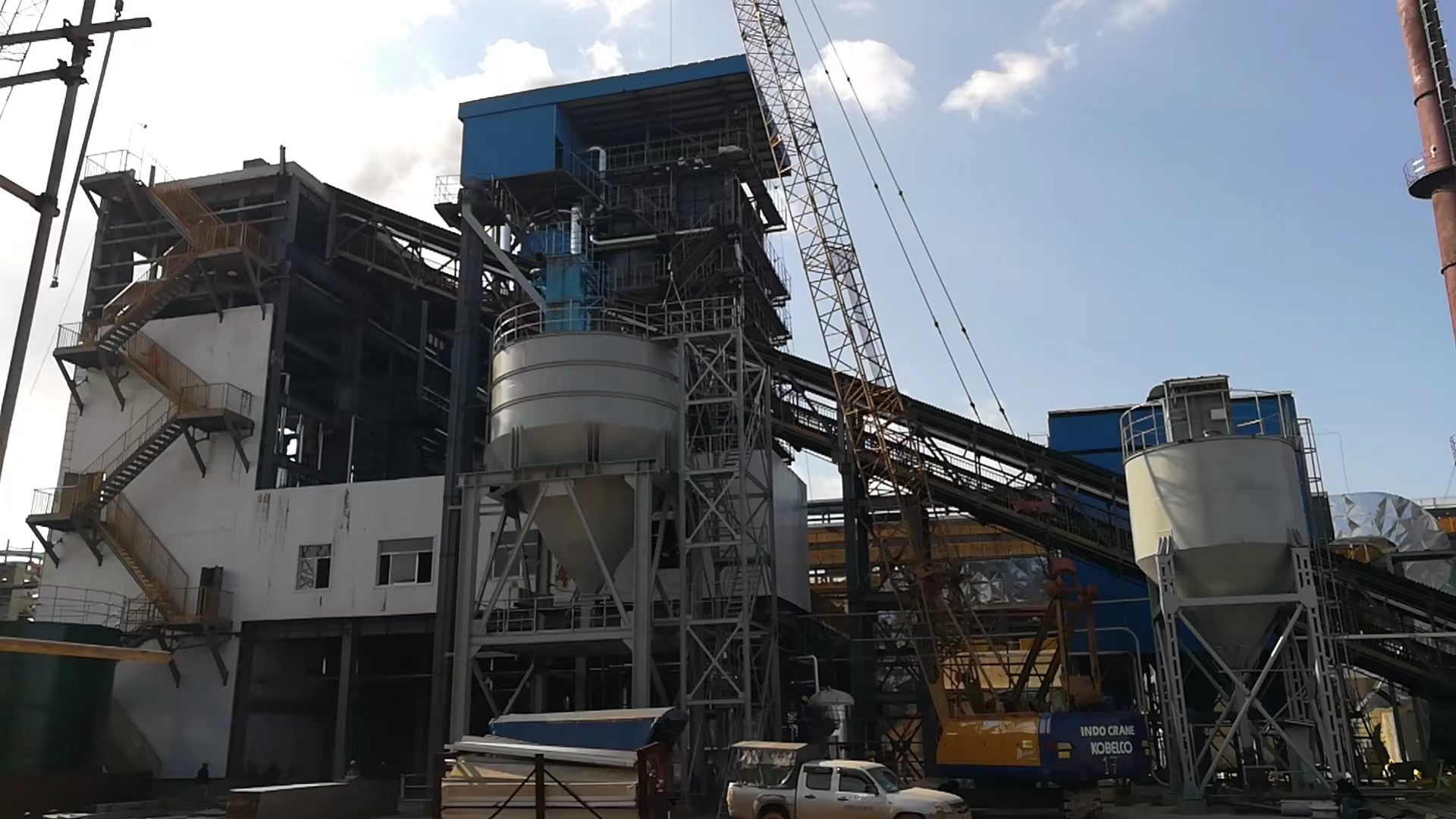
As renewable energy systems and waste-to-energy (WtE) technologies continue expanding worldwide in response to growing environmental pressures, stricter emissions regulations, rising fossil fuel costs, and the urgent need for sustainable waste management solutions, fluidized bed boilers have become one of the most widely adopted industrial boiler technologies because they offer exceptional fuel flexibility, efficient combustion performance, lower pollutant emissions, and stable thermal operation under highly variable fuel conditions. Unlike traditional grate-fired or pulverized fuel boilers that often struggle to handle low-grade fuels, mixed biomass residues, municipal solid waste, sewage sludge, or industrial byproducts with inconsistent combustion characteristics, fluidized bed boilers are specifically engineered to maintain highly efficient combustion by suspending fuel particles within a turbulent bed of heated inert material such as sand or ash, thereby creating intense mixing between fuel and combustion air. This unique operating principle allows fluidized bed systems to achieve more uniform temperature distribution, improved heat transfer efficiency, better fuel burnout, and lower nitrogen oxide emissions compared with many conventional combustion technologies. Because renewable fuels and waste-derived fuels frequently contain high moisture levels, inconsistent calorific values, and complex ash compositions, fluidized bed boiler systems have become particularly valuable in modern renewable power generation, biomass CHP infrastructure, district heating systems, and waste-to-energy plants where operational flexibility and environmental performance are equally important. 🌱🔥♻️🏭
Fluidized bed boilers are popular in renewable and waste-to-energy applications because they can efficiently burn a wide variety of low-grade and variable fuels while maintaining stable combustion, high thermal efficiency, lower emissions, improved fuel flexibility, and effective heat transfer performance under demanding operating conditions.
Because renewable fuels and waste-derived fuels create combustion challenges that conventional boiler systems often cannot manage efficiently, fluidized bed technology has emerged as one of the most practical and adaptable thermal solutions for sustainable energy infrastructure. The following detailed guide explains why fluidized bed boilers are so widely used in renewable energy and waste-to-energy applications from a professional combustion engineering and thermal systems perspective. ⚙️
Fluidized bed boilers can efficiently burn biomass and waste-derived fuels with variable combustion characteristics.True
Fluidized bed combustion provides excellent fuel mixing and stable temperature control, allowing efficient combustion of diverse fuel types.
Fluidized bed boilers only work effectively with high-quality fossil fuels.False
Fluidized bed systems are specifically valued for their ability to handle low-grade, renewable, and waste-derived fuels.
Understanding the Basic Principle of Fluidized Bed Combustion 🌪️
Fluidized bed boilers operate using a fundamentally different combustion process compared with conventional boiler systems.
Instead of simply burning fuel on grates or in suspension flames, fluidized bed systems introduce fuel into a hot bed of:
- Sand
- Ash
- Limestone particles
- Other inert materials
High-velocity combustion air flows upward through this particle bed, causing the solid particles to behave almost like a boiling liquid. This phenomenon is called fluidization.
Within this highly turbulent environment:
- Fuel particles mix intensely with air
- Heat distribution becomes highly uniform
- Combustion efficiency improves significantly
This combustion method provides several major operational advantages in renewable and waste-to-energy systems.
Why Renewable Fuels Create Combustion Challenges 🌱
Renewable fuels are very different from standardized fossil fuels such as natural gas or refined coal.
Biomass and waste-derived fuels often vary in:
- Moisture content
- Particle size
- Ash composition
- Energy density
- Chemical makeup
- Combustion reactivity
For example:
- Fresh wood chips may contain high moisture
- Agricultural waste may contain silica and alkali metals
- Municipal waste may contain plastics, textiles, and food residues simultaneously
Traditional combustion systems often struggle to maintain:
- Stable flame conditions
- Uniform combustion temperatures
- Efficient fuel burnout
under these variable fuel conditions.
Fluidized bed boilers were developed specifically to overcome many of these challenges.
The Turbulent Bed Improves Fuel Mixing 🔄
One of the most important advantages of fluidized bed boilers is the intense turbulence created inside the combustion chamber.
The constantly circulating particle bed ensures:
➡️ Excellent air-fuel contact
➡️ More complete combustion
➡️ Uniform heat distribution
➡️ Reduced cold spots and hot spots
This allows fuels with inconsistent properties to burn much more efficiently than they would in conventional systems.
Uniform Temperature Distribution Improves Stability 🌡️
In many traditional boilers, localized high-temperature zones may develop inside the furnace.
These hot spots can lead to:
- Slagging
- Ash melting
- Nitrogen oxide formation
- Uneven combustion
Fluidized bed boilers maintain a more consistent combustion temperature because the turbulent bed continuously mixes:
- Fuel particles
- Air
- Hot solids
This creates a much more stable thermal environment.
Why Lower Combustion Temperatures Matter 🔥⬇️
Fluidized bed combustion typically operates at lower temperatures than pulverized coal combustion systems.
This is extremely important because lower combustion temperatures help reduce:
- Nitrogen oxide (NOx) formation
- Thermal stress
- Ash fusion problems
Lower NOx emissions are especially valuable in modern renewable energy plants where environmental regulations are increasingly strict.
Fuel Flexibility Is One of the Biggest Advantages 🌿♻️
Perhaps the single most important reason fluidized bed boilers are popular in renewable energy systems is their extraordinary fuel flexibility.
These boilers can efficiently burn:
- Wood chips
- Wood pellets
- Agricultural residues
- Rice husks
- Sawdust
- Sewage sludge
- Municipal solid waste
- Refuse-derived fuel (RDF)
- Industrial biomass byproducts
In many cases, multiple fuel types can even be blended together within the same system.
This flexibility provides major economic and operational advantages.
| Fuel Type | Suitability for Fluidized Bed Boilers |
|---|---|
| Wood Chips | Excellent |
| Agricultural Waste | Excellent |
| Sewage Sludge | Good |
| Municipal Solid Waste | Good |
| Coal-Biomass Blends | Excellent |
| High-Moisture Biomass | Very Good |
High-Moisture Fuel Handling Capability 💧
Many renewable fuels contain significantly more moisture than fossil fuels.
For example:
- Fresh biomass may contain 40–60% moisture
- Sewage sludge may contain even higher water content
Conventional boilers often struggle with wet fuels because:
- Combustion temperatures drop
- Flame stability decreases
- Efficiency suffers
Fluidized bed systems tolerate high-moisture fuels more effectively because the hot particle bed provides:
- Strong thermal buffering
- Stable ignition conditions
- Enhanced evaporation capability
Improved Combustion Efficiency ♻️
Efficient combustion is essential for:
- Maximizing fuel utilization
- Reducing fuel costs
- Lowering emissions
Fluidized bed boilers achieve high combustion efficiency because:
- Fuel particles remain suspended longer
- Air distribution is highly uniform
- Combustion reactions occur more completely
This reduces:
- Unburned carbon losses
- Fuel waste
- Combustion instability
Fluidized Bed Boilers Support Waste-to-Energy Infrastructure ♻️🏭
Waste-to-energy plants require boiler systems capable of handling highly inconsistent fuel streams.
Municipal waste often includes:
- Paper
- Plastics
- Food waste
- Textiles
- Wood residues
Fluidized bed boilers are highly suitable for WtE applications because they:
- Accommodate fuel variability
- Maintain stable combustion
- Reduce operational disruptions
This makes them highly valuable in modern waste management infrastructure.
Circulating Fluidized Bed (CFB) vs Bubbling Fluidized Bed (BFB) 🌪️
There are two major fluidized bed boiler types commonly used in renewable applications.
Bubbling Fluidized Bed (BFB)
In BFB systems:
- Air velocity is moderate
- Bed particles remain mostly within the combustion chamber
Advantages include:
- Simpler construction
- Stable operation
- Lower capital cost
Circulating Fluidized Bed (CFB)
In CFB systems:
- Higher air velocity circulates particles continuously
- Cyclone separators return solids to the furnace
Advantages include:
- Higher combustion efficiency
- Better fuel flexibility
- Improved heat transfer
Comparison Between BFB and [CFB Boilers](https://coalbiomassboiler.com/product/circulating-fluidized-bed-boiler/)
| Feature | Bubbling Fluidized Bed | Circulating Fluidized Bed |
|---|---|---|
| Air Velocity | Moderate | Higher |
| Particle Circulation | Limited | Continuous |
| Fuel Flexibility | Good | Excellent |
| Combustion Efficiency | High | Very High |
| Scale Suitability | Medium plants | Large utility plants |
Limestone Injection Helps Reduce Sulfur Emissions 🪨
Fluidized bed boilers can incorporate limestone directly into the combustion bed.
During combustion:
- Sulfur compounds react with limestone
- Sulfur dioxide emissions decrease
This in-furnace desulfurization capability helps reduce:
- Acid rain pollutants
- Flue gas treatment requirements
Better Heat Transfer Performance 🌡️
The constant movement of hot particles inside fluidized bed boilers creates extremely efficient heat transfer conditions.
This improves:
- Steam generation
- Thermal response
- Boiler efficiency
Efficient heat transfer is especially important in:
- CHP systems
- District heating networks
- Utility-scale renewable power plants
Industrial Boilers in Biomass CHP Systems ⚡♨️
Fluidized bed boilers are widely used in biomass Combined Heat and Power systems because they:
- Produce stable steam
- Handle mixed biomass fuels
- Support continuous operation
CHP systems recover:
- Electricity
- Process heat
- District heating energy
simultaneously, maximizing fuel utilization.
Reduced Slagging and Fouling Problems 🛡️
Renewable fuels often contain:
- Alkali metals
- Silica
- Chlorine compounds
These substances may create:
- Slagging
- Tube fouling
- Corrosion
Fluidized bed boilers help reduce these issues because:
- Combustion temperatures are lower
- Temperature distribution is more uniform
- Ash behavior becomes more manageable
Emissions Performance Is Environmentally Attractive 🌍
Modern fluidized bed systems can achieve relatively low emissions of:
- NOx
- SO₂
- Unburned hydrocarbons
especially when combined with:
- Advanced air staging
- Flue gas cleaning systems
- Automated combustion controls
This makes them attractive for renewable energy projects operating under strict environmental standards.
Automation and Smart Combustion Control 🤖
Modern fluidized bed boiler plants increasingly use:
- AI-assisted combustion optimization
- Real-time oxygen monitoring
- Predictive maintenance systems
- Automated fuel feeding
These technologies help maintain:
- Stable bed temperature
- Efficient fuel combustion
- Consistent steam generation
despite highly variable renewable fuel conditions.
Thermal Stability Supports District Heating 🏙️
District heating systems require:
- Stable thermal output
- Continuous operation
- Reliable steam or hot water generation
Fluidized bed boilers provide excellent operational stability, making them highly suitable for:
- Urban district heating systems
- Renewable thermal networks
- CHP district energy infrastructure
Challenges of Fluidized Bed Boilers ⚠️
Despite many advantages, fluidized bed systems also involve engineering challenges such as:
- More complex air distribution systems
- Higher maintenance complexity
- Bed material management
- Erosion risks from circulating particles
Successful operation therefore requires:
- Advanced engineering design
- Proper material selection
- Sophisticated automation systems
Future Trends in Fluidized Bed Technology 🚀
Fluidized bed systems continue evolving toward:
- Hydrogen-compatible combustion
- Carbon capture integration
- AI-driven optimization
- Ultra-low-emission operation
- Hybrid renewable fuel systems
These developments aim to improve:
- Sustainability
- Fuel flexibility
- Decarbonization potential
- Long-term efficiency
Simplified Fluidized Bed Boiler Workflow 🔄
| Process Stage | Main Function |
|---|---|
| Fuel Feeding | Biomass or waste supply |
| Air Injection | Particle fluidization |
| Combustion | Thermal energy release |
| Heat Transfer | Steam generation |
| Cyclone Separation | Particle recovery |
| Emissions Control | Pollution reduction |
| Steam Distribution | CHP or district heating support |
Why Fluidized Bed Boilers Are So Important in Renewable and WtE Applications 🤔
Fluidized bed boilers have become highly popular in renewable energy and waste-to-energy applications because they provide exceptional fuel flexibility, stable combustion performance, efficient heat transfer, lower emissions, and strong operational adaptability under the highly variable fuel conditions associated with biomass, municipal waste, industrial residues, and other renewable fuel sources. Their unique combustion principle—based on suspending fuel particles within a turbulent heated bed—creates highly uniform temperature distribution, improved air-fuel mixing, enhanced fuel burnout, and reduced slagging compared with many conventional combustion systems. These advantages make fluidized bed boilers especially valuable in biomass CHP systems, district heating networks, renewable power plants, and waste-to-energy facilities where environmental compliance, fuel diversity, and long-term operational reliability are critical. As global energy systems continue transitioning toward decarbonization and sustainable resource utilization, fluidized bed boiler technology is expected to remain one of the most important thermal engineering solutions supporting advanced renewable and circular energy infrastructure worldwide. 🌱🔥♻️🏭
How Do Industrial Boilers Help Reduce Emissions and Improve Sustainability?
As industries worldwide face increasing pressure to reduce greenhouse gas emissions, improve energy efficiency, comply with stricter environmental regulations, and transition toward more sustainable production models, industrial boilers have evolved far beyond their traditional role as simple steam or hot water generators and have instead become highly engineered energy systems designed to support cleaner combustion, optimized fuel utilization, renewable energy integration, and advanced thermal efficiency management. In sectors such as manufacturing, food processing, pharmaceuticals, chemicals, district heating, power generation, and pulp and paper production, industrial boilers remain essential because many industrial processes still require large quantities of steam, process heat, and thermal energy for continuous operation. However, traditional boiler systems historically contributed significantly to air pollution and carbon emissions due to inefficient combustion, heat loss, fossil fuel dependence, and outdated control technologies. Modern industrial boiler engineering has therefore shifted toward sustainability-focused solutions that combine high-efficiency heat transfer systems, low-emission combustion technologies, intelligent automation, waste heat recovery, renewable fuel utilization, and integrated emissions control systems in order to minimize environmental impact while maintaining reliable industrial energy supply. Today’s advanced industrial boilers not only help reduce operational fuel consumption and pollutant emissions but also support broader global sustainability goals including decarbonization, circular energy utilization, energy conservation, and long-term industrial environmental responsibility. 🌱🔥🏭♻️
Industrial boilers help reduce emissions and improve sustainability by increasing fuel efficiency, lowering fuel consumption, integrating renewable energy sources, recovering waste heat, optimizing combustion processes, reducing pollutant formation, supporting low-carbon energy systems, and enabling cleaner industrial thermal energy production.
Because industrial thermal systems account for a substantial portion of global industrial energy use and carbon emissions, improving boiler sustainability has become one of the most important objectives in modern industrial engineering. The following comprehensive guide explains how industrial boilers contribute to emissions reduction and sustainable industrial development from a professional thermal engineering and environmental systems perspective. ⚙️
Modern industrial boilers can significantly reduce emissions through advanced combustion and heat recovery technologies.True
High-efficiency boiler systems lower fuel consumption and reduce pollutant formation through optimized thermal performance.
Industrial boilers are inherently unsustainable and cannot support environmental goals.False
Modern industrial boilers increasingly integrate renewable fuels, emissions controls, and energy-efficient technologies that support sustainability initiatives.
Why Industrial Boilers Matter in Global Energy Consumption 🌍
Industrial boilers are used extensively across global industries because they generate:
- Steam
- Hot water
- Process heat
- Thermal energy
These outputs support critical operations in:
- Manufacturing 🏭
- Food processing 🍞
- Pharmaceuticals 💊
- Chemicals ⚗️
- Textiles 👕
- District heating 🏙️
- Power generation ⚡
However, industrial heating processes consume large amounts of fuel, which historically resulted in:
- High carbon dioxide emissions
- Air pollution
- Excessive energy waste
Improving boiler sustainability therefore has a major impact on overall industrial environmental performance.
How Boiler Efficiency Directly Reduces Emissions ♻️
One of the most effective ways industrial boilers reduce emissions is through improved thermal efficiency.
A more efficient boiler:
➡️ Converts more fuel into usable heat
➡️ Wastes less thermal energy
➡️ Consumes less fuel overall
Because lower fuel consumption directly reduces combustion-related emissions, efficiency improvements are critically important for sustainability.
The Relationship Between Fuel Consumption and Emissions 🔥
Combustion emissions are directly linked to the amount of fuel burned.
When boilers operate inefficiently:
- More fuel is required
- More carbon dioxide is generated
- More pollutants are released
Efficient industrial boilers reduce:
- CO₂ emissions
- Nitrogen oxides (NOx)
- Sulfur dioxide (SO₂)
- Particulate matter
by improving energy conversion performance.
Advanced Heat Transfer Improves Sustainability 🌡️
Modern industrial boilers use highly optimized heat transfer systems that maximize thermal energy utilization.
These systems may include:
- Water-tube heat exchangers
- Condensing economizers
- Multi-pass flue gas pathways
- Enhanced tube surface designs
Improved heat transfer means:
- Less wasted energy
- Faster steam generation
- Reduced fuel demand
Condensing Boiler Technology Improves Efficiency 💧
Condensing boilers are among the most important sustainability-focused boiler technologies.
Traditional boilers lose significant energy through:
- Hot exhaust gases
- Water vapor in flue gases
Condensing systems recover this latent heat by cooling exhaust gases below the dew point and capturing additional thermal energy.
This improves:
- Fuel utilization
- Thermal efficiency
- Emissions performance
especially in low-temperature heating systems.
| Boiler Technology | Sustainability Benefit |
|---|---|
| Condensing Boiler | Heat recovery from exhaust gases |
| Water-Tube Boiler | High-efficiency steam generation |
| Fluidized Bed Boiler | Efficient renewable fuel combustion |
| CHP Boiler System | Simultaneous heat and power generation |
Low-NOx Combustion Technology Reduces Air Pollution 🌫️
Nitrogen oxides are major contributors to:
- Smog formation
- Acid rain
- Respiratory health problems
Modern industrial boilers increasingly use low-NOx burners designed to:
- Optimize flame shape
- Control combustion temperature
- Improve air-fuel mixing
This reduces NOx formation during combustion.
Why Combustion Temperature Matters 🔥⬇️
Excessively high combustion temperatures promote thermal NOx formation.
Modern boiler systems carefully manage:
- Air staging
- Flame stability
- Combustion temperature profiles
to reduce pollutant generation while maintaining efficient fuel combustion.
Renewable Fuel Integration Supports Decarbonization 🌱
Many modern industrial boilers are now designed to operate using renewable and low-carbon fuels such as:
- Biomass
- Biogas
- Hydrogen blends
- Waste-derived fuels
This helps industries reduce dependence on:
- Coal
- Oil
- Conventional fossil fuels
Renewable fuel integration plays a major role in industrial decarbonization strategies.
Biomass Boilers and Carbon Reduction 🌿
Biomass boilers utilize renewable organic materials including:
- Wood chips
- Agricultural residues
- Forestry waste
- Sawdust
When sustainably sourced, biomass fuels can significantly lower net carbon emissions because the carbon released during combustion is partially offset by the carbon absorbed during plant growth.
Waste-to-Energy Boilers Support Circular Sustainability ♻️
Waste-to-energy systems use industrial boilers to recover energy from:
- Municipal waste
- Industrial residues
- Biomass byproducts
This provides several sustainability benefits:
- Reduced landfill use
- Energy recovery from waste streams
- Lower methane emissions from decomposition
- Reduced fossil fuel demand
Combined Heat and Power (CHP) Improves Energy Utilization ⚡♨️
CHP systems are among the most efficient industrial energy solutions because they simultaneously produce:
- Electricity
- Useful heat
Conventional power generation wastes large amounts of thermal energy, but CHP systems recover and utilize this heat productively.
Industrial boilers support CHP systems through:
- Steam generation
- Heat recovery
- Thermal distribution
This significantly improves total fuel utilization.
CHP Efficiency Compared With Conventional Systems 📈
| Energy System | Typical Energy Utilization |
|---|---|
| Conventional Power Plant | Lower total utilization due to waste heat loss |
| CHP System | Much higher overall energy utilization through heat recovery |
Waste Heat Recovery Minimizes Energy Loss ♨️
Modern industrial boilers increasingly incorporate:
- Economizers
- Air preheaters
- Heat recovery steam generators (HRSG)
- Condensing heat exchangers
These systems recover thermal energy that would otherwise be lost through exhaust gases.
Recovered heat can support:
- Feedwater heating
- Process heating
- District heating
- Combustion air preheating
Economizers Improve Boiler Sustainability 🌡️
Economizers transfer residual heat from flue gases into boiler feedwater before it enters the steam drum.
This:
➡️ Reduces fuel demand
➡️ Improves thermal efficiency
➡️ Lowers exhaust temperatures
and therefore improves sustainability.
Smart Automation Enhances Efficiency 🤖
Modern boiler systems increasingly use:
- AI-assisted combustion optimization
- Real-time oxygen monitoring
- Predictive maintenance
- IoT-enabled energy management
These technologies continuously optimize:
- Fuel-air ratios
- Steam generation
- Heat transfer
- Load response
to maximize efficiency and minimize emissions.
Oxygen Control Reduces Fuel Waste 💨
Excess combustion air reduces boiler efficiency because heated air exits through the exhaust system.
Insufficient air may cause:
- Incomplete combustion
- Carbon monoxide formation
Smart oxygen control systems maintain optimal combustion conditions that:
- Improve fuel efficiency
- Reduce emissions
- Stabilize combustion
Thermal Insulation Improves Energy Conservation 🛡️
Industrial boilers operate at high temperatures, making heat loss prevention extremely important.
Modern systems use advanced insulation materials to reduce:
- Surface heat loss
- Energy waste
- Fuel consumption
Effective insulation improves:
- Operational efficiency
- Workplace safety
- Sustainability performance
Water Treatment Improves Boiler Longevity 💧
Efficient water treatment helps prevent:
- Scale formation
- Corrosion
- Tube fouling
Cleaner heat transfer surfaces improve:
- Thermal efficiency
- Fuel economy
- Equipment lifespan
Longer-lasting equipment supports sustainability by reducing:
- Material waste
- Maintenance requirements
- Replacement frequency
Fluidized Bed Boilers Support Cleaner Renewable Combustion 🌪️
Fluidized bed boilers are widely used in renewable energy systems because they:
- Burn biomass efficiently
- Handle mixed fuels
- Reduce NOx formation
- Improve combustion stability
Their lower combustion temperatures and excellent fuel mixing improve environmental performance compared with many traditional combustion systems.
Carbon Capture Integration Is Emerging 🧪
Some advanced industrial boiler systems are beginning to integrate:
- Carbon capture technology
- Flue gas CO₂ separation systems
- Carbon utilization infrastructure
Although still developing economically, these technologies may play a major role in future industrial decarbonization.
District Heating Improves Urban Sustainability 🏙️
Industrial boilers also support sustainable district heating systems by generating centralized thermal energy for:
- Residential buildings
- Commercial facilities
- Public infrastructure
District heating improves urban energy efficiency because:
- Centralized systems are often more efficient
- Waste heat can be recovered
- Renewable fuels can be integrated more easily
Emissions Monitoring Ensures Environmental Compliance 📊
Modern boiler systems use continuous emissions monitoring systems (CEMS) to track:
- NOx
- CO₂
- SO₂
- Particulates
- Carbon monoxide
This allows operators to:
- Optimize combustion
- Ensure regulatory compliance
- Improve environmental performance
Lifecycle Sustainability Matters ♻️
Sustainability is not only about emissions during operation.
Modern industrial boiler engineering also considers:
- Equipment lifespan
- Material durability
- Recyclability
- Water usage
- Resource efficiency
Longer-lasting and more efficient systems generally produce:
- Lower lifecycle environmental impact
- Better long-term sustainability performance
Challenges Still Facing Sustainable Boiler Systems ⚠️
Despite major technological improvements, industrial boilers still face sustainability challenges including:
- Fossil fuel dependency in some sectors
- Infrastructure upgrade costs
- Fuel supply variability
- Carbon reduction pressure
Future innovation remains essential.
Future Trends in Sustainable Industrial Boiler Technology 🚀
Industrial boiler systems are evolving toward:
- Hydrogen-ready combustion
- Electrified heating integration
- AI-driven optimization
- Carbon-neutral fuels
- Smart thermal grids
- Hybrid renewable energy systems
These technologies aim to further improve:
- Decarbonization
- Fuel efficiency
- Operational flexibility
- Environmental sustainability
Simplified Sustainability Workflow of Modern Industrial Boilers 🔄
| Sustainability Stage | Main Contribution |
|---|---|
| Efficient Combustion | Reduced fuel consumption |
| Heat Recovery | Lower energy waste |
| Renewable Fuel Use | Reduced fossil dependence |
| Smart Automation | Optimized efficiency |
| Emissions Control | Cleaner exhaust gases |
| CHP Integration | Improved total energy utilization |
| District Heating | Centralized thermal efficiency |
Why Industrial Boilers Remain Essential for Sustainable Industry 🤔
Industrial boilers continue to play a critically important role in reducing emissions and improving sustainability because they provide the thermal foundation required for efficient industrial energy utilization while increasingly incorporating advanced technologies that minimize fuel consumption, optimize combustion performance, recover waste heat, integrate renewable energy sources, and reduce environmental impact. Modern boiler systems have evolved into highly sophisticated thermal engineering platforms capable of supporting decarbonization initiatives, CHP infrastructure, district heating networks, waste-to-energy systems, and renewable fuel integration while maintaining the reliable steam and process heat supply required by modern industry. Through innovations such as condensing heat recovery, low-NOx combustion, AI-driven optimization, fluidized bed technology, renewable fuel compatibility, and advanced emissions control systems, industrial boilers are helping industries transition toward cleaner, more energy-efficient, and environmentally responsible operations. As global sustainability targets continue becoming more ambitious, industrial boiler technology will remain central to the future of low-carbon industrial infrastructure and sustainable energy systems worldwide. 🌱🔥🏭♻️
What Future Innovations Are Shaping Industrial Boilers in Renewable Energy Systems?
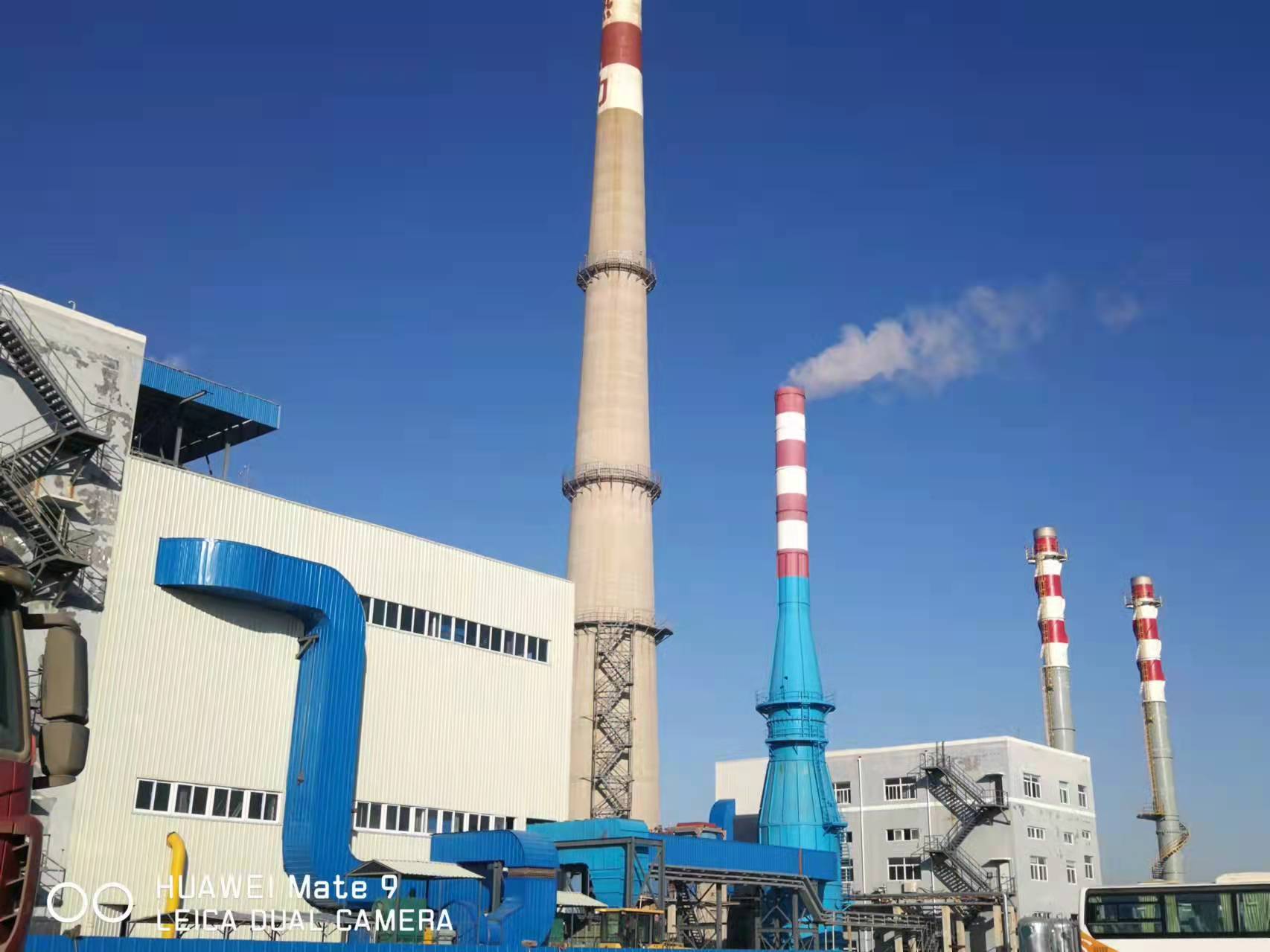
As global energy systems move rapidly toward decarbonization, electrification, circular resource utilization, and low-carbon industrial development, industrial boilers are undergoing one of the most significant technological transformations in their history because traditional boiler systems designed primarily for fossil-fuel combustion are no longer sufficient to meet the evolving demands of modern renewable energy infrastructure, carbon reduction policies, stricter environmental regulations, and intelligent energy management systems. In the past, industrial boilers were mainly evaluated according to steam generation capacity, pressure rating, and fuel consumption; however, modern renewable energy systems now require boiler technologies capable of integrating variable renewable fuels, maximizing thermal efficiency, minimizing emissions, supporting district heating and CHP infrastructure, adapting to smart digital control environments, and operating flexibly alongside intermittent renewable power sources such as wind and solar energy. Consequently, manufacturers, thermal engineers, energy utilities, and industrial operators are investing heavily in advanced combustion technologies, hydrogen-ready systems, artificial intelligence optimization, carbon capture integration, ultra-efficient heat recovery equipment, hybrid electrification strategies, and next-generation materials capable of supporting cleaner, more adaptive, and highly sustainable industrial thermal systems. These innovations are reshaping industrial boilers from relatively isolated heat-producing equipment into fully integrated components of intelligent renewable energy ecosystems designed to support long-term global sustainability goals. 🌱⚡🔥🏭
Future innovations shaping industrial boilers in renewable energy systems include hydrogen-compatible combustion, AI-driven automation, advanced biomass and waste combustion technologies, carbon capture integration, smart heat recovery systems, electrified thermal support, digital predictive maintenance, hybrid renewable energy integration, and ultra-efficient low-emission boiler designs.
Because renewable energy infrastructure is evolving rapidly and industrial thermal systems remain essential for manufacturing, district heating, CHP operation, and power generation, industrial boilers are expected to play a central role in the future of sustainable energy engineering. The following detailed guide explains the major innovations currently transforming industrial boilers within renewable energy systems from a professional thermal engineering and energy systems perspective. ⚙️
Hydrogen-ready boiler technology is becoming an important innovation in renewable industrial energy systems.True
Hydrogen-compatible combustion systems are being developed to support future low-carbon industrial heating applications.
Industrial boilers will disappear completely as renewable energy expands.False
Industrial boilers remain essential for steam generation, thermal storage, district heating, CHP systems, and industrial process energy in renewable infrastructure.
Why Industrial Boilers Are Evolving Rapidly 🌍
Industrial boilers remain essential because many industrial processes still require:
- Steam generation
- Process heat
- Thermal energy
- District heating support
- CHP operation
However, several global pressures are driving technological change:
- Carbon reduction targets
- Fossil fuel phase-down policies
- Energy efficiency requirements
- Renewable energy integration
- Emissions regulations
As a result, industrial boiler systems are becoming:
➡️ Cleaner
➡️ Smarter
➡️ More flexible
➡️ More digitally integrated
➡️ More renewable-compatible
Hydrogen-Ready Boiler Technology Is Expanding 🟢
One of the most important future innovations is the development of hydrogen-compatible industrial boilers.
Hydrogen offers several potential sustainability advantages because:
- It produces no direct CO₂ during combustion
- It can support renewable energy storage
- It may help decarbonize heavy industry
Modern boiler manufacturers are increasingly developing:
- Hydrogen-ready burners
- Dual-fuel combustion systems
- Hydrogen-natural gas blending technologies
Why Hydrogen Combustion Requires Specialized Boiler Design 🔥
Hydrogen combustion behaves differently from natural gas because hydrogen has:
- Higher flame speed
- Different combustion temperatures
- Lower volumetric energy density
Future boiler systems therefore require:
- Advanced burner engineering
- Improved combustion control
- Specialized flame monitoring systems
to maintain:
- Safe operation
- Stable heat transfer
- Low emissions performance
AI-Driven Boiler Optimization Is Transforming Operations 🤖
Artificial intelligence is becoming increasingly important in industrial boiler systems because modern renewable energy infrastructure involves:
- Variable fuel conditions
- Dynamic energy demand
- Complex thermal balancing
AI-driven control systems continuously analyze:
- Combustion conditions
- Oxygen levels
- Steam demand
- Fuel quality
- Thermal efficiency
This allows real-time optimization of:
- Fuel-air ratios
- Boiler load response
- Heat recovery
- Emissions control
Predictive Maintenance Improves Reliability 🔧
Traditional boiler maintenance often relied on:
- Scheduled inspections
- Reactive repairs
- Manual monitoring
Modern predictive maintenance systems now use:
- IoT sensors
- Machine learning
- Thermal analytics
- Vibration monitoring
to predict:
- Tube wear
- Fouling buildup
- Corrosion risk
- Component failure
before serious operational problems occur.
This helps reduce:
- Unplanned downtime
- Maintenance costs
- Efficiency losses
Advanced Biomass Combustion Technology 🌿
Biomass remains one of the most important renewable boiler fuels because it can provide:
- Dispatchable thermal energy
- Industrial steam
- CHP support
- District heating
Future biomass boiler innovations focus on:
- Improved fuel flexibility
- Cleaner combustion
- Higher thermal efficiency
- Lower emissions
Fluidized Bed Technology Continues Advancing 🌪️
Fluidized bed boilers are evolving through:
- Better air distribution systems
- Enhanced combustion control
- Advanced bed materials
- Improved fuel handling automation
These innovations improve:
- Biomass combustion stability
- Waste fuel adaptability
- Heat transfer efficiency
- Emissions reduction
Carbon Capture Integration Is Becoming More Important 🧪
As industries pursue net-zero carbon targets, carbon capture technology is increasingly being integrated with industrial boiler systems.
Carbon capture systems may:
- Separate CO₂ from flue gases
- Compress captured carbon
- Support carbon storage or reuse
Although currently expensive and technically complex, carbon capture could become a major future innovation in:
- Biomass CHP systems
- Waste-to-energy plants
- Industrial steam systems
Bioenergy with Carbon Capture (BECCS) 🌱➡️🧪
One especially important emerging concept is BECCS:
Bioenergy with Carbon Capture and Storage
In BECCS systems:
- Biomass absorbs atmospheric CO₂ during growth.
- Biomass boilers generate thermal energy.
- Carbon emissions are captured and stored.
This may potentially create:
➡️ Negative carbon emissions
making BECCS highly attractive for future climate strategies.
Smart Heat Recovery Systems Improve Efficiency ♨️
Future industrial boilers increasingly integrate advanced heat recovery technologies such as:
- Condensing economizers
- High-efficiency recuperators
- Heat recovery steam generators (HRSG)
- Thermal storage systems
These systems maximize:
- Fuel utilization
- Thermal efficiency
- Waste heat recovery
especially in CHP and district heating applications.
Thermal Energy Storage Will Play a Larger Role 🔋
Thermal storage systems are becoming increasingly important because renewable energy generation is often intermittent.
Industrial boilers may increasingly integrate with:
- Hot water storage tanks
- Molten salt storage
- Steam accumulators
- Phase-change thermal storage materials
This allows:
- Better load balancing
- Flexible energy dispatch
- Improved renewable integration
Electrification and Hybrid Boiler Systems ⚡
Some future industrial heating systems may combine:
- Electric boilers
- Renewable electricity
- Conventional combustion boilers
- Thermal storage systems
Hybrid systems improve operational flexibility because they can dynamically switch between:
- Electricity-based heating
- Fuel-based heating
depending on:
- Energy prices
- Renewable electricity availability
- Grid conditions
Renewable Power Integration Improves Sustainability ☀️🌬️
Future industrial boiler systems will increasingly coordinate with:
- Solar power
- Wind energy
- Smart electrical grids
- Energy management platforms
This creates highly integrated renewable energy ecosystems capable of optimizing:
- Electricity use
- Steam production
- Heat recovery
- Carbon reduction
Digital Twin Technology Is Emerging 🖥️
Digital twin systems create real-time virtual models of industrial boilers using:
- Live operational data
- Simulation software
- AI analytics
These systems allow operators to:
- Predict performance changes
- Optimize maintenance
- Improve efficiency
- Simulate operating conditions
before making physical adjustments.
Advanced Materials Improve Boiler Durability 🛡️
Future industrial boilers will increasingly use:
- Corrosion-resistant alloys
- Ceramic coatings
- High-temperature composites
- Erosion-resistant tube materials
These materials improve:
- Boiler lifespan
- Thermal efficiency
- High-temperature performance
- Reliability in biomass and waste combustion systems
Low-NOx and Ultra-Low-Emission Burners 🌫️
Environmental regulations continue becoming stricter worldwide.
Future boiler burners are being designed to further reduce:
- NOx emissions
- Particulate formation
- Carbon monoxide production
through:
- Improved flame shaping
- Staged combustion
- Advanced fuel injection systems
Smart District Heating Integration 🏙️
Future renewable district heating systems will increasingly integrate:
- CHP boilers
- Biomass plants
- Heat pumps
- Waste heat recovery
- Smart thermal grids
Industrial boilers will play a key role in balancing:
- Thermal demand
- Renewable variability
- Seasonal heating loads
Waste-to-Energy Boiler Innovation ♻️
Waste-to-energy systems continue evolving through:
- Better corrosion protection
- Improved flue gas cleaning
- AI-assisted combustion control
- Enhanced ash recovery systems
These innovations improve:
- Reliability
- Environmental performance
- Fuel flexibility
Decentralized Energy Systems Are Expanding 🌐
Future renewable infrastructure may rely more heavily on:
- Distributed CHP plants
- Local biomass heating systems
- Community district heating
- Industrial microgrids
Industrial boilers are well suited for decentralized thermal energy systems because they can provide:
- Local steam generation
- Flexible heating support
- Reliable thermal backup
Automation and Remote Monitoring Continue Expanding 📡
Industrial boiler systems increasingly support:
- Remote diagnostics
- Cloud-based monitoring
- Automated optimization
- Centralized energy management
This improves:
- Operational visibility
- Maintenance planning
- Energy efficiency
- System reliability
Comparison of Key Future Boiler Innovations
| Innovation | Main Sustainability Benefit |
|---|---|
| Hydrogen Combustion | Reduced carbon emissions |
| AI Optimization | Higher efficiency and lower fuel use |
| Carbon Capture | CO₂ reduction potential |
| Thermal Storage | Renewable energy balancing |
| Advanced Biomass Combustion | Renewable fuel flexibility |
| Smart Heat Recovery | Reduced energy waste |
| Digital Twin Systems | Predictive operational optimization |
Future Industrial Boiler Workflow in Renewable Systems 🔄
| Operational Stage | Future Innovation |
|---|---|
| Fuel Supply | Hydrogen and renewable fuels |
| Combustion Control | AI-assisted optimization |
| Steam Generation | Ultra-efficient heat transfer |
| Heat Recovery | Advanced condensing systems |
| Thermal Distribution | Smart district heating integration |
| Emissions Reduction | Carbon capture and low-NOx systems |
| Maintenance | Predictive analytics and digital twins |
Challenges Facing Future Boiler Innovation ⚠️
Despite rapid technological progress, several challenges remain:
- High investment costs
- Hydrogen infrastructure limitations
- Renewable fuel supply variability
- Carbon capture economics
- Complex system integration
Long-term success will require:
- Continued research
- Infrastructure modernization
- Regulatory support
- Industrial investment
Why Industrial Boilers Will Remain Essential in Renewable Energy Systems 🤔
Industrial boilers will continue playing a central role in future renewable energy systems because steam generation, process heat, district heating, thermal storage, CHP operation, and industrial energy supply remain essential functions that cannot be fully replaced by intermittent renewable electricity alone. However, the technologies used within industrial boiler systems are changing rapidly as manufacturers and energy providers pursue cleaner combustion methods, renewable fuel integration, AI-driven optimization, advanced heat recovery, digital automation, carbon capture compatibility, and flexible hybrid energy infrastructure capable of supporting global sustainability objectives. Innovations such as hydrogen-ready combustion systems, smart thermal grids, predictive maintenance platforms, advanced biomass technologies, and integrated carbon management solutions are transforming industrial boilers into highly intelligent and environmentally optimized energy systems capable of supporting the next generation of renewable industrial infrastructure. As decarbonization accelerates across global energy markets, industrial boilers are expected to evolve from conventional fuel-burning equipment into advanced thermal management platforms fully integrated within future low-carbon renewable energy ecosystems. 🌱⚡🔥🏭♻️
Conclusion
Industrial boilers are essential to the success of renewable energy and waste-to-energy systems because they efficiently convert alternative fuels and waste materials into valuable thermal and electrical energy. By supporting biomass utilization, waste reduction, and low-carbon power generation, modern boiler technologies contribute significantly to global sustainability and energy transition goals.
If you are looking for advanced industrial boiler solutions for renewable energy or waste-to-energy projects, contact us today. Our experts provide customized systems, innovative technologies, and professional support to help you achieve efficient, sustainable, and reliable energy production.
FAQ
Q1: What role do industrial boilers play in renewable energy systems?
A:
Industrial boilers play a critical role in renewable energy systems by converting renewable fuel sources into usable thermal energy, steam, and electricity. These boilers support sustainable power generation and industrial heating while helping reduce dependence on fossil fuels and lower greenhouse gas emissions.
One of the most common applications is biomass energy production. Biomass boilers burn renewable organic materials such as wood chips, wood pellets, agricultural waste, forestry residues, and energy crops to produce steam and hot water. The generated steam can be used for industrial processes, district heating systems, or electricity generation through steam turbines.
Industrial boilers are also widely used in combined heat and power (CHP) systems powered by renewable fuels. CHP plants simultaneously produce electricity and usable heat, greatly improving overall energy efficiency compared to conventional power generation methods. Renewable CHP systems are commonly installed in industrial plants, universities, hospitals, and district heating networks.
Another important application is geothermal energy support. In some geothermal facilities, industrial boiler systems provide supplementary heating or integrate with heat exchange systems to stabilize thermal output during fluctuating operating conditions.
Solar thermal energy systems may also use industrial boilers as backup heat sources. During periods of low solar availability, boilers ensure continuous steam and hot water production for industrial operations or centralized heating systems.
Industrial boilers in renewable energy systems are designed to maximize fuel efficiency and minimize emissions. Modern systems often incorporate advanced combustion controls, heat recovery technologies, and automated monitoring systems to optimize performance and environmental compliance.
By supporting renewable fuel utilization and efficient energy conversion, industrial boilers contribute significantly to decarbonization efforts, energy security, and sustainable industrial development.
Q2: How do waste-to-energy boiler systems work?
A:
Waste-to-energy (WTE) boiler systems convert municipal solid waste, industrial waste, biomass waste, or other combustible materials into thermal energy and electricity. These systems help reduce landfill usage while generating useful energy from materials that would otherwise be discarded.
The process begins with waste collection and preparation. Waste materials are transported to a waste-to-energy facility where they may be sorted, shredded, or processed to improve combustion efficiency. The prepared waste is then fed into a combustion chamber or furnace.
During combustion, the waste materials release heat at high temperatures. Industrial boilers capture this thermal energy to heat water and produce high-pressure steam. The generated steam can be used directly for industrial heating applications or sent to steam turbines to generate electricity.
Most modern waste-to-energy plants use water-tube boilers because they can safely handle high temperatures, continuous operation, and large steam production capacities. These systems are engineered to withstand corrosive combustion conditions and variable fuel quality.
Heat recovery is a major advantage of waste-to-energy systems. Instead of allowing combustion heat to dissipate unused, industrial boilers efficiently convert thermal energy into valuable power and heating resources. Some facilities also operate combined heat and power systems that simultaneously supply electricity and district heating.
Environmental control systems are extremely important in WTE plants. Advanced filtration technologies such as scrubbers, electrostatic precipitators, and selective catalytic reduction systems help reduce emissions of particulate matter, heavy metals, sulfur compounds, and nitrogen oxides.
Waste-to-energy boilers contribute to sustainable waste management by reducing landfill dependence, recovering energy from waste streams, and supporting circular economy initiatives. However, proper emissions management and regulatory compliance remain essential for environmentally responsible operation.
Q3: Why are biomass boilers important in renewable energy production?
A:
Biomass boilers are important in renewable energy production because they generate thermal energy and electricity using renewable organic materials instead of fossil fuels. These systems support carbon reduction strategies, energy diversification, and sustainable industrial operations.
Biomass fuels commonly include wood chips, sawdust, agricultural residues, corn stalks, rice husks, forestry waste, and specially grown energy crops. Since biomass materials can be replenished naturally, they are considered renewable energy sources when managed sustainably.
One major advantage of biomass boilers is their ability to reduce greenhouse gas emissions. Although biomass combustion releases carbon dioxide, the carbon emitted is generally offset by the carbon absorbed during plant growth. This creates a more balanced carbon cycle compared to fossil fuel combustion.
Biomass boilers are widely used in district heating systems, industrial facilities, paper mills, agricultural operations, and renewable power plants. Many industries with access to agricultural or forestry waste can use locally available biomass fuels to reduce energy costs and improve energy independence.
Modern biomass boilers incorporate advanced combustion systems, automated fuel feeding mechanisms, and emissions controls to improve efficiency and reduce air pollution. Technologies such as fluidized bed combustion help optimize fuel utilization and accommodate variable biomass fuel characteristics.
Another important benefit is waste utilization. Biomass energy systems can convert agricultural and forestry byproducts into valuable energy resources rather than allowing them to become waste. This supports circular economy principles and resource efficiency.
Governments in many countries encourage biomass energy adoption through renewable energy incentives, carbon reduction policies, and sustainability programs. As a result, biomass boiler installations continue to expand globally.
Despite these advantages, biomass systems require careful fuel supply management, storage infrastructure, moisture control, and emissions monitoring to ensure reliable and environmentally compliant operation.
Q4: How do industrial boilers support energy efficiency and sustainability goals?
A:
Industrial boilers support energy efficiency and sustainability goals by improving fuel utilization, reducing emissions, enabling renewable energy integration, and recovering waste heat that would otherwise be lost. Because boilers are central to many industrial energy systems, improving boiler performance can significantly reduce overall energy consumption and environmental impact.
One of the most important contributions is heat recovery. Modern industrial boilers often include economizers, condensing systems, and waste heat recovery technologies that capture unused thermal energy from exhaust gases. This recovered heat is reused within the system, improving efficiency and lowering fuel consumption.
Combined heat and power (CHP) systems also enhance sustainability. CHP boilers simultaneously generate electricity and usable thermal energy from a single fuel source, greatly increasing total system efficiency compared to separate heat and power generation methods.
Industrial boilers also facilitate renewable energy adoption. Biomass boilers, waste-to-energy systems, and hybrid renewable heating networks rely heavily on advanced boiler technologies to convert renewable materials into usable energy.
Automation and digital control technologies further improve efficiency. Modern boiler systems use sensors, monitoring software, and intelligent combustion controls to optimize fuel-air ratios, steam output, and operating conditions in real time. This minimizes energy waste and enhances operational reliability.
Low-emission combustion technologies are another key sustainability feature. Advanced burners, flue gas treatment systems, and emissions controls help reduce nitrogen oxides, sulfur dioxide, particulate matter, and carbon dioxide emissions.
Industries are increasingly upgrading older boiler systems to comply with stricter environmental regulations and corporate sustainability initiatives. High-efficiency boilers not only lower environmental impact but also reduce long-term operating costs through lower fuel consumption and improved reliability.
As industries continue transitioning toward cleaner energy systems, industrial boilers remain essential infrastructure for achieving energy efficiency, decarbonization, and sustainable manufacturing goals.
Q5: What challenges do boilers face in renewable energy and waste-to-energy applications?
A:
Industrial boilers used in renewable energy and waste-to-energy applications face several technical, operational, and environmental challenges due to the complex nature of alternative fuels and evolving sustainability requirements.
One major challenge is fuel variability. Unlike conventional fossil fuels, biomass and waste-derived fuels often have inconsistent moisture content, calorific value, chemical composition, and combustion characteristics. These variations can affect boiler efficiency, combustion stability, and steam generation performance.
Corrosion and fouling are also significant concerns. Biomass and waste fuels may contain chlorine, sulfur, alkali metals, and other contaminants that contribute to corrosion, slagging, and ash buildup inside boiler components. These conditions can reduce heat transfer efficiency and increase maintenance requirements.
Emissions management is another critical challenge. Waste-to-energy systems must comply with strict environmental regulations controlling particulate matter, heavy metals, dioxins, sulfur oxides, and nitrogen oxides. Advanced filtration and flue gas treatment systems are often necessary to maintain compliance.
Fuel handling and storage infrastructure can also be complex. Biomass materials typically require large storage areas, moisture control systems, conveyors, shredders, and automated feeding equipment. Improper fuel handling may reduce combustion efficiency and operational reliability.
Operational flexibility is increasingly important because renewable energy systems often experience fluctuating energy demand and intermittent fuel supply conditions. Boilers must be capable of adjusting output efficiently while maintaining stable operation.
Economic factors also influence renewable boiler adoption. Although renewable energy systems can reduce long-term fuel costs and emissions, initial capital investment for advanced boiler technology, emissions controls, and fuel infrastructure may be substantial.
Despite these challenges, continuous advancements in combustion engineering, digital monitoring, materials technology, and emissions management are improving the reliability and efficiency of industrial boilers used in renewable and waste-to-energy applications.
References
Waste-to-Energy Technology Overview — https://www.epa.gov/smm/energy-recovery-combustion-municipal-solid-waste-msw — Source: U.S. Environmental Protection Agency
Biomass Boiler Systems — https://www.energy.gov/eere/bioenergy/biopower-basics — Source: U.S. Department of Energy
Renewable Energy Steam Systems — https://www.iea.org/reports/renewables — Source: International Energy Agency
Combined Heat and Power Basics — https://www.epa.gov/chp/combined-heat-and-power-basics — Source: U.S. Environmental Protection Agency
Industrial Boiler Efficiency — https://www.energy.gov/eere/amo/steam-systems — Source: U.S. Department of Energy
Biomass Combustion Technologies — https://www.ieabioenergy.com/ — Source: IEA Bioenergy
Waste Heat Recovery Systems — https://www.spiraxsarco.com/learn-about-steam/the-boiler-house/waste-heat-recovery — Source: Spirax Sarco
Water-Tube Boiler Fundamentals — https://www.britannica.com/technology/water-tube-boiler — Source: Encyclopaedia Britannica
Industrial Sustainability and Boilers — https://www.cleaverbrooks.com/solutions/sustainability — Source: Cleaver-Brooks
Boiler Emissions and Environmental Compliance — https://www.osha.gov/boilers-pressure-vessels — Source: OSHA