Waste heat recovery boilers sit at the intersection of two unforgiving realities: the process line upstream cannot wait, and the flue gas temperature window that makes the whole system worthwhile is narrow. When after-sales support is weak — slow spare parts, no local service presence, vendor documentation that stops at commissioning — a single tube failure or a control fault can idle a cement kiln, a glass furnace, or a steel reheating line for days. Unplanned downtime on a process-critical WHRB installation typically runs USD 15,000–80,000 per day, depending on how tightly the boiler is coupled to the upstream process, and most of that cost has nothing to do with the boiler itself. Getting the procurement right on after-sales terms matters as much as getting the heat transfer surface area right.
To assess after-sales support for a waste heat recovery boiler, evaluate the supplier across five areas: proximity and staffing of regional service depots, contractual response-time commitments for emergency on-site support (benchmark: 24–72 hours for reputable OEMs), spare parts availability and holding-cost structure, quality of O&M documentation, and whether the warranty terms cover the specific operating envelope — inlet gas temperature, dust loading, and cycling frequency — of your actual process.
What most buyers discover too late is that two suppliers quoting nearly identical heat transfer performance and capital cost can be separated by years of operational difference once the boiler is in service — and the gap only shows up after the first unplanned shutdown, or the first time you need a replacement superheater element on a Friday afternoon.
Mapping the WHRB Service Lifecycle: What Happens After Commissioning
Most procurement conversations focus heavily on commissioning and first-year performance. That’s understandable — it’s when the warranty is active and the supplier is still paying close attention. But the real test of after-sales depth shows up over the following decade, and a supplier who can walk you through every phase of that lifecycle during tendering is telling you something important about their engineering maturity.
Phase 1 — Warranty Period (Typically 12–24 Months Post-Commissioning)
The warranty window on a WHRB is not the same as on a conventional fired boiler, and the exclusions are where buyers get caught out. Standard OEM warranties cover pressure-part defects in materials and workmanship, but they routinely exclude anything attributed to process-side conditions — and in waste heat recovery applications, the process side is doing most of the damage.
Soot deposition in cement kiln WHRB units, sulfate fouling in copper smelter gas streams, alkali chloride condensation in biomass-fired WHRBs — these are process contamination issues, not manufacturing defects. Suppliers who write warranties without clearly defining these boundaries are either inexperienced with the application or hoping you won’t notice until it’s too late. Ask for the exclusion list in writing before you sign anything.
Scaling on the water/steam side is another grey area. If feedwater quality deviates from the design specification, tube failures that follow are almost certainly excluded from coverage. In practice, this is one of the most common warranty dispute triggers I’ve seen, particularly on projects where the utility water treatment system is installed by a separate contractor.
Phase 2 — Routine Preventive Maintenance Cycles (Years 2–10)
Once the warranty expires, you’re running on whatever PPM regime you’ve negotiated or built in-house. Annual statutory inspections are mandatory under most pressure vessel codes — ASME Section I, EN 12952 for water-tube boilers, EN 12953 for shell-type units, or national equivalents like GB/T 16507 in China. These aren’t optional, and missing a statutory inspection cycle can invalidate your operating license depending on jurisdiction.
Beyond compliance, the practical maintenance tasks specific to WHRBs are more involved than most operators anticipate. Borescope inspection of superheater and evaporator tube banks is essential — visual access is often limited in convective pass designs, and erosion patterns from high-velocity particulate-laden flue gas can progress quickly between outages. Sootblower systems (rotary or retractable lance types) need nozzle wear checks and steam supply valve condition assessments. Economizer fin surfaces, especially on extended-surface tube designs, need cleaning protocols matched to the specific fouling characteristics of the upstream process.
Phase 3 — Long-Term Performance Degradation (Years 5–15)
This is where the financial case for structured supplier support is clearest. In high-dust applications — cement kilns, electric arc furnaces, certain non-ferrous smelting operations — heat transfer surface fouling can reduce thermal efficiency by roughly 0.5–2% per year if cleaning and monitoring aren’t managed systematically. Over a decade, that compounds into measurable fuel equivalent loss or reduced steam output against your process demand.
A supplier worth retaining will have baseline performance data from commissioning (guaranteed heat transfer coefficients, design pressure drop across gas-side passes) and should be able to benchmark your annual inspection readings against those figures. If they don’t retain that data, or can’t offer the comparison analysis, you’re essentially managing degradation blind.
Heat transfer surface fouling in WHRB installations operating in high-dust industrial environments (cement, steel, non-ferrous smelting) can reduce boiler thermal efficiency by 0.5–2% annually without structured cleaning and maintenance programs.True
This range is consistent with published heat exchanger fouling research and field performance data from convective WHRB applications in particulate-heavy flue gas streams. The actual rate depends on dust loading (g/Nm³), flue gas temperature, tube surface temperature relative to dew point, and cleaning frequency.
Phase 4 — Major Overhaul and Life Extension (Year 10–15+)
At the 10–15 year mark, most WHRBs face a decision point that rarely gets discussed at the point of purchase. Tube bundle replacement in the high-temperature superheater sections is often necessary — especially where chromium-molybdenum alloy tubes have been operating near their creep threshold. Pressure part recertification under the applicable code requires documented inspection records; without them, you may be forced into full replacement rather than repair. Refractory lining in WHRBs coupled to cement kilns or rotary furnaces typically needs partial renewal somewhere in this window too.
A supplier who can outline this phase during tendering — with rough cost ranges, typical scope, and what documentation you’ll need to support recertification — is demonstrating genuine project depth. One who deflects the question or says “we’ll assess it when the time comes” is giving you a soft answer to a hard question.
| Lifecycle Stage | Timeframe | Key Activities | Supplier Commitment to Verify |
|---|---|---|---|
| Commissioning | Year 0 | Performance baseline testing, handover documentation | As-built drawings, test records, spare parts list |
| Warranty period | Year 1–2 | Defect rectification, process-side exclusion clarity | Written exclusion scope, response time SLA |
| Active PPM regime | Year 3–10 | Annual inspections, sootblower maintenance, tube borescoping, fin cleaning | Service contract terms, OEM parts availability |
| Mid-life audit | Year 10–15 | Remaining life assessment, tube sampling, refractory check | Engineering assessment capability, code recertification experience |
| Life extension / replacement decision | Year 15+ | Major overhaul scope definition or retirement | Cost modeling support, retrofit design capability |
The lifecycle table above isn’t just a planning aid — use it as a structured question framework when evaluating supplier proposals. A supplier who can populate every cell with specifics, not generalities, has probably been through this cycle before on real projects.
Technical Response Capability: Evaluating Engineering Depth Behind the Hotline
When something goes wrong with a waste heat recovery boiler — a tube failure at 3 a.m., a drum level oscillation nobody can explain, a sudden spike in flue gas outlet temperature — the first call you make will tell you almost everything about whether you bought a good piece of equipment or just a good sales pitch. The question is not whether your supplier has a support hotline. Nearly everyone does. The question is who answers it, and what they actually know.
Does the Service Team Have Real Boiler Engineering Depth?
There is a meaningful difference between a field technician who can swap a feed pump seal and a boiler engineer who understands why a particular tube bundle section is running 40–60°C above its design metal temperature under partial-load gas conditions. WHRB fault diagnosis almost always requires the second type. Gas-side heat transfer behavior, steam drum water chemistry upsets, tube bundle thermal stress from cycling duty — these are not generalist maintenance problems. They require someone who has read the original thermal design calculations, not just the O&M manual.
Ask your supplier directly: how many engineers in your after-sales department hold pressure vessel or boiler engineering qualifications? Can they access and interpret the original heat flux calculations from the design phase? In my experience, suppliers who genuinely have this depth will answer quickly and specifically. Those who don’t will give you a headcount of “field service personnel” and change the subject.
Use the RCA Test During Tendering
One of the most reliable qualification methods available during procurement is simple: ask the supplier for a sanitized sample root cause analysis report from a previous WHRB fault case. Not a marketing case study. An actual RCA.
A report written by engineers with genuine depth will reference specific heat flux values, tube metal temperature limits (typically governed by material selection — T11, T22, or austenitic grades depending on the application), or water chemistry parameters like silica carryover and pH excursions. A report written by a call center or a generalist technician team will say things like “tube was found corroded” or “water quality was poor” without quantifying anything. The difference is obvious once you know what to look for. If a supplier cannot or will not provide this, treat it as a serious warning.
Response Tiering: What Benchmarks Actually Mean
Reputable suppliers structure technical support in at least three tiers, and each tier has a realistic target response window:
| Support Level | Scope | Realistic Target |
|---|---|---|
| Level 1 — Remote phone/email | Initial fault triage, operating parameter review | Within 4 hours |
| Level 2 — Remote engineering analysis | P&ID review, thermal calculation support, written fault assessment | Within 24 hours |
| Level 3 — On-site specialist deployment | Physical inspection, tube sampling, pressure part repair oversight | 48–72 hours (regional depot); longer if intercontinental |
The 48–72 hour benchmark for on-site response is achievable — but only if the supplier maintains engineering offices or qualified partner service centers in your region. A manufacturer with no presence outside its home country will rarely meet that window when you’re operating in Southeast Asia, the Middle East, or sub-Saharan Africa. Ask for an actual map of service locations, not a list of countries where they’ve sold equipment. Selling into a region and having engineering support capacity there are not the same thing.
Suppliers with regional service depots can typically deploy on-site boiler engineers within 48–72 hours for most industrial sites in Southeast Asia and the Middle East.True
This benchmark is consistent with industry practice for OEM suppliers maintaining staffed regional offices or certified partner centers; suppliers operating solely from their home country manufacturing base will routinely exceed this window by several days.
Certifications That Actually Matter for Pressure Part Repairs
When a WHRB requires a weld repair on a pressure part — a tube-to-header joint, a drum nozzle, anything carrying steam — that work cannot legally or safely be done by an uncertified technician in most jurisdictions. Ask which of the supplier’s field engineers hold, or have documented access to, an ASME National Board R-stamp or equivalent local pressure vessel repair certification. In regions where ASME certification is not the governing standard, ask what the equivalent is and verify it. An engineer who cannot legally sign off on a pressure part repair is not actually a complete resource for you in an emergency.
Red Flags Worth Walking Away From
The after-sales team is functionally the same people as the sales team. No dedicated service engineering department exists. The supplier cannot provide P&ID support or thermal calculation review after delivery. Nobody on the technical support line can discuss steam drum internals, blowdown chemistry, or gas-side fouling rates without escalating to “head office” for days. Any one of these is a yellow flag. More than one, and you should be asking yourself whether a lower purchase price is genuinely worth USD 15,000–80,000 per day in potential unplanned downtime if a serious fault occurs six months into operation.
Spare Parts Strategy: Criticality Classification and Supply Chain Assurance for WHRB Components
Most procurement teams spend months negotiating the initial equipment price, then discover two years post-commissioning that a single failed sootblower drive element — a part costing perhaps USD 400–800 — has idled a cement clinker line for four days waiting on airfreight. That’s a foreseeable failure. The entire point of a structured spare parts strategy is to make it a non-event rather than a crisis.
Three Tiers, Three Very Different Risk Profiles
Not all WHRB components carry equal failure consequence, and treating them as if they do is how plants end up simultaneously overstocked on gaskets and completely blind-sided when a drum level transmitter dies during a night shift.
Tier 1 — Production stops immediately. Sootblower elements and drive assemblies, safety valves (especially spring-loaded types set to boiler design pressure), drum level instruments and their impulse lines, feedwater pump mechanical seals. If any of these fails and you don’t have a replacement on the shelf, you’re shutting down the upstream process — kiln, furnace, whatever is generating the waste heat — or you’re venting live steam and burning fuel you’re no longer recovering. Unplanned downtime for an industrial WHRB installation typically runs USD 15,000–80,000 per day, depending entirely on process criticality and whether the host plant has any bypass capacity. Tier 1 parts must be held either on-site or in the supplier’s nearest regional warehouse, accessible within hours. One spare is the minimum; for mechanical seals on pumps running continuous duty, two is not excessive.
Tier 2 — You have a short window. Economizer tube sections (a localized leak can sometimes be isolated with a tube plug for 24–72 hours while you wait), blowdown valve trim, steam separator internals. These components should be available within 5–7 business days from either the OEM depot or a qualified distributor. If your supplier can’t give you a documented lead time commitment for Tier 2 items in writing, that’s worth pushing on before contract signature — not after.
Tier 3 — Standard procurement, no panic. Flange gaskets, insulation panels, general-purpose sensor transmitters with industry-standard signal outputs, sight glass assemblies. Normal purchase-order lead times are acceptable here. Where buyers waste money is over-stocking Tier 3 items because they’re cheap and easy to justify, while under-stocking Tier 1 items because they’re expensive and “probably won’t fail.”
The Proprietary Lock-In Problem
This is where I see buyers get hurt most consistently. Fin tube panels, pressure drum nozzle forgings, custom-pitched headers — if these are proprietary designs, meaning dimensionally unique to that OEM’s product line and not interchangeable with any market-standard component, you are completely dependent on that manufacturer’s goodwill and production schedule for the operational life of the boiler. That might be 20–25 years.
Ask directly: which pressure-boundary components are proprietary, and which conform to published standards? Well-capitalized boiler manufacturers can supply tubes to ASTM SA-210, SA-213, or EN 10216-2, with full mill certificates traceable to heat number. That matters because if the OEM has a production disruption — supply chain problems happen, manufacturers go through ownership changes, regional sanctions create logistics complications — you can procure replacement tube material locally and have it fabricated by a certified boiler shop. Without standardized material specifications, you can’t.
A reputable WHRB manufacturer should commit to a minimum 10–15 year guaranteed spare parts availability period post-deliveryTrue
This is recognized industry practice for capital boiler equipment under standards frameworks such as EN 13480 and common EPC contract terms; buyers should verify this commitment is written into the supply contract with defined escalation terms, not left as a verbal assurance.
What to Demand in the BOM and Contract
Request a complete Bill of Materials with MTBF estimates for every rotating and wear-prone component — feedwater pumps, sootblower drive motors, actuated valves. If the supplier can’t provide MTBF data, ask what service interval they recommend and what the basis is. Vague answers here usually mean the engineering team is thin.
On the contract side, the guaranteed availability period should be explicit: a minimum of 10–15 years post-delivery is standard for capital boiler equipment. Nail down the price escalation terms too — some suppliers index to steel commodity prices, which is reasonable; others leave it entirely open, which gives them pricing leverage over your maintenance budget for the boiler’s entire service life. The difference between those two positions is real money across a decade of operation.
Spare parts holding cost for a WHRB installation typically runs 2–5% of total boiler CAPEX per year, and where you land in that range depends heavily on how disciplined the criticality classification is and how reliable the OEM’s supply chain actually turns out to be. Getting this right at the procurement stage is substantially cheaper than learning it operationally.
Preventive Maintenance Programs: Benchmarking Scope, Frequency, and Deliverable Quality
The gap between a genuine OEM-engineered PM program and a generic boiler maintenance checklist with “waste heat recovery boiler” typed into the header is wider than most procurement teams realize — and it usually only becomes visible after the first missed inspection or an unexplained drop in steam output at year three.
Gas-Side Fouling Intervals Are Application-Specific, Not Universal
A properly engineered WHRB PM program calibrates fouling inspection intervals to the actual waste gas composition on that specific installation. Diesel genset exhaust carries sulfur and particulate loads that behave entirely differently from cement kiln exit gas, which is alkaline, dusty, and prone to bonding deposits on tube banks. Steel EAF flue gas is something else again — high in zinc oxide fume and metal particulates that blind tube surfaces and accelerate external corrosion in ways a standard boiler checklist simply doesn’t account for.
Ask any prospective supplier directly: what is the recommended gas-side cleaning interval for your installation, and how was that interval derived? The answer should reference the waste gas analysis from commissioning, actual deposit sampling results if available, and — for sulfur-bearing gases — the acid dew point relative to your local cold-end tube wall temperatures. A vague answer (“every 12 months”) with no reference to gas composition is a red flag.
Minimum Deliverables for an Annual Inspection Visit
An annual PM visit for a WHRB should produce specific, documented outputs. If a supplier’s scope letter doesn’t include all of the following, push back before signing the service contract:
- Written inspection report with thermal performance comparison against the baseline commissioning data — exhaust gas outlet temperature vs. design, steam generation rate vs. design at comparable load
- Tube wall thickness measurements via ultrasonic testing (UT), with results trended against prior years (a single-year snapshot is nearly useless without the trend)
- Water/steam chemistry audit, reviewed against ASME or equivalent guidelines for the operating pressure class
- Safety valve test certificates, signed and dated by a qualified technician, with as-found lift pressures recorded
- Sootblower mechanical inspection report covering lance tube condition, drive gear wear, and nozzle erosion — commonly neglected on variable-load sites where sootblowers cycle irregularly
Performance-Based Indicators vs. Checkbox Maintenance
A quality supplier doesn’t just inspect — they track. The difference matters. Checkbox maintenance tells you the WHRB passed inspection on a given date. Performance-based maintenance tells you that exhaust outlet temperature has drifted 14°C above design over 18 months, which almost certainly points to tube-side fouling or flow distribution problems developing in the evaporator section. Catching that trend early can avoid a forced outage; missing it means an unplanned shutdown that, depending on process criticality, runs USD 15,000–80,000 per day in lost production and recovery costs.
Suppliers who track efficiency KPIs over time and issue formal degradation trigger alerts — rather than waiting for the plant to call with a complaint — are the ones worth paying a premium for.
Operator Training and O&M Manual Quality
This gets underweighted in procurement evaluations. A well-structured O&M manual should contain procedure-level operating instructions, not just equipment datasheets and P&IDs. It should tell the shift operator what to do when drum level oscillates during load changes on the upstream process, not just list the drum level transmitter range.
On-site operator training from the OEM service team, delivered during commissioning and again at first annual PM, is standard with reputable suppliers. If the training package is described vaguely as “standard OEM training” with no defined curriculum or duration, that’s worth clarifying. Local maintenance staff training matters especially on remote sites — if your boiler technician can’t diagnose a sootblower valve fault without flying in an OEM engineer, your operating cost model is broken from day one.
Fleet-Level PM for Multi-Unit Sites
Sites running multiple WHRBs — a combined cycle installation with three gas turbines and three HRSGs, for instance, or a cement plant with parallel kiln waste heat circuits — have coordination requirements that single-unit service contracts don’t address. Fleet-level PM scheduling means aligning inspection windows with planned process outages, staggering unit shutdowns to maintain partial production, and consolidating reporting so the plant engineering team gets a single fleet health summary rather than three separate documents with inconsistent formats.
Coordinated fleet PM scheduling for multi-WHRB sites reduces total planned outage duration compared to independently scheduled unit inspections.True
Aligning PM windows with process outages and sequencing unit shutdowns avoids additive downtime. A supplier managing a three-HRSG site under a fleet contract can typically complete all three units within a single planned maintenance window that would otherwise require three separate partial shutdowns.
Not every supplier has the service team depth to manage this. Ask for references from multi-unit installations in the same industrial sector before assuming fleet coordination is included.
PM Contract Pricing: What the Numbers Actually Mean
Annual PM contract costs for WHRBs typically run 0.5–1.5% of installed WHRB cost per year, depending on unit size, access difficulty, the number of included site visits, and what’s covered in terms of minor consumables and replacement parts. Contracts priced below roughly 0.5% of installed cost almost always indicate reduced scope — fewer UT measurement points, no performance trend analysis, or a third-party subcontractor who has never seen the specific boiler design. That’s not a bargain; it’s deferred risk.
The right question isn’t “how much does the PM contract cost?” It’s whether the deliverables described above are explicitly included and whether the supplier has the engineering staff to actually deliver them.
Remote Monitoring, Digital Diagnostics, and IoT Integration for WHRB Health Management
Waste heat recovery boilers occupy an awkward operational position in most industrial plants. The primary process — the cement kiln, the glass furnace, the DRI shaft — commands operator attention, engineering resources, and maintenance budget. The WHRB sitting downstream is treated as secondary infrastructure, often running unattended through shifts with minimal manual oversight. That arrangement works fine until it doesn’t. Silent degradation in tube banks, creeping economizer fouling, or a slow water chemistry drift can go unnoticed for weeks before they show up as a forced outage or, worse, a tube failure during peak production.
This is exactly where remote monitoring earns its keep, and it’s a meaningful differentiator when you’re comparing WHRB suppliers.
Parameters That Actually Matter for Remote WHRB Health Monitoring
Not all sensor feeds are equally useful. A basic alarm relay output telling you the drum level tripped is not remote monitoring — it’s a delayed fault notification. Genuine condition monitoring for a WHRB should be tracking, at minimum: exhaust gas temperature at the inlet and outlet of each heat exchange section, pressure drop across individual tube banks (this is your fouling indicator — a rising ΔP trend over weeks tells you the sootblower isn’t keeping up or the fuel-side ash chemistry has shifted), steam flow and header pressure, drum water level trend rather than just instantaneous value, feedwater dissolved oxygen and conductivity, and sootblower cycle frequency with some indication of effectiveness.
That last one is underappreciated. If the sootblower is cycling more frequently than the baseline established during commissioning, something has changed — fuel composition, load profile, or the sootblower itself is losing effectiveness. Catching that trend early, before it compounds into a tube erosion problem or a boiler efficiency drop you can’t explain, is the practical value of continuous data logging over alarm-only systems.
Evaluating the Supplier’s Digital Platform
Ask directly: does the supplier offer a proprietary monitoring dashboard, genuine SCADA/DCS integration, or just hardwired alarm outputs? The answer tells you a lot about their installed base maturity. A supplier with several hundred WHRBs in commercial operation across steel, cement, and chemical plants will have invested in data infrastructure because their own service team needs it to manage warranty obligations efficiently. A smaller or less experienced supplier may offer integration as a checkbox item without the backend analytics to make it useful.
For plants already running Siemens PCS 7, Honeywell Experion, ABB System 800xA, or Yokogawa CENTUM, the integration question is practical: can the WHRB monitoring data be pulled into the existing DCS as tagged process variables, or does the operator need to toggle between two separate interfaces? The latter sounds minor until you’re in a control room at 3 a.m. trying to correlate a WHRB drum pressure anomaly with a kiln load change. Fragmented data is a real operational liability.
Predictive Analytics: Ask for Evidence, Not Promises
Suppliers marketing AI-based tube failure prediction or economizer fouling rate forecasting should be pressed for documented case examples — not polished marketing slides, but service records showing the alert, the response, and the outcome. A supplier with a sufficiently large installed base and consistent data collection architecture can build statistically meaningful models for these failure modes. A supplier with 20 units in the field probably cannot, regardless of what the brochure says.
Suppliers with mature remote monitoring platforms can detect economizer fouling trends and water chemistry excursions before they cause unplanned outagesTrue
Continuous trending of pressure drop across tube banks and feedwater conductivity provides early warning signals that periodic manual inspections would typically miss between scheduled maintenance intervals
Cybersecurity and Data Sovereignty — Not a Soft Issue
For overseas plant operators, remote access to boiler controls is a genuine security consideration that procurement contracts frequently underspecify. You need to know: is remote access via a dedicated VPN with two-factor authentication, or something less controlled? Where is operational data stored — on servers in the supplier’s home country, in a regional cloud instance, or on-premise? Who owns that data contractually, and can the supplier use anonymized fleet data for model training without explicit consent?
These questions feel bureaucratic until you’re a chemical plant operator who has just discovered your boiler OEM’s remote access credentials were shared across a service team of forty engineers with no individual accountability. Get the cybersecurity protocol documented in the service agreement before commissioning.
The 2 A.M. Test
The most practical evaluation question you can ask any WHRB supplier: show me your remote monitoring interface — live or recorded — and walk me through the escalation workflow when an alarm triggers at 2 a.m. at a plant site eight time zones away from your service headquarters. A supplier with a real after-sales infrastructure will have a documented response protocol, a named on-call engineer (or a regional depot with after-hours coverage), and a defined timeline from alarm acknowledgment to remote diagnosis to on-site dispatch decision. Benchmark response times from established OEMs with regional service depots run roughly 24–72 hours for on-site support, depending on geography and parts availability — but the remote diagnostic response should be happening within the first hour or two, not waiting for business hours.
If the answer to that question is vague, that tells you more about the supplier’s after-sales capability than any specification sheet will.
Evaluating Service Agreements and Contractual Protections: SLA Terms That Actually Protect Plant Owners
A service agreement that looks comprehensive on page one can still leave you exposed if the critical clauses are vague, capped too low, or simply absent. Procurement teams often spend more time negotiating the boiler purchase price than the service contract — which is backwards, given that post-commissioning costs over a 15–20 year WHRB lifespan routinely dwarf the original capital outlay.
Core SLA Parameters Worth Specifying in Writing
Response time commitments need to be tiered, not blanket. A reputable supplier should be able to distinguish between a remote diagnostic inquiry (target: 4–8 hours for first technical response), a process-affecting fault requiring engineering guidance (target: same business day), and a full process shutdown with safety implications (target: on-site within 24–72 hours, depending on geography and whether the supplier maintains a regional service depot). “We will respond promptly” in a contract means nothing. Get the tiers defined, get the clock-start trigger defined — does it begin when you log the ticket, or when the supplier acknowledges it? — and make sure the escalation path is named: not just “engineering management” but an actual role or function with contact obligation.
Minimum on-site visit frequency should be written as a floor, not an average. Two structured visits per year is a reasonable baseline for most WHRB installations; higher-fouling applications — cement kilns, certain chemical processes, waste-to-energy — warrant quarterly. Tie each visit to a defined deliverable: a written inspection report with tube wall thickness readings, pressure part observations, and recommended actions. A visit without documented output has no contractual value.
Spare parts delivery lead time guarantees belong in the SLA, not just in a sales conversation. Class A critical components — drum internals, pressure relief valves, economizer tube bundles — should carry a contractual lead time commitment of no more than 4–8 weeks from order, depending on part complexity. If a supplier won’t commit to this in writing, that tells you something about their actual inventory position.
Performance Guarantees Tied to Measurable Plant Outcomes
This is where stronger suppliers differentiate themselves. A well-structured service agreement will include a thermal performance retention clause: the supplier commits to maintaining exhaust outlet temperature within roughly ±5°C of the design setpoint across the contract period, subject to agreed fuel gas composition bands and process load ranges. If the WHRB drifts outside that band due to fouling, soot accumulation, or deteriorating heat transfer surfaces, the contract obligates the supplier to remediate at their cost. Without this clause, efficiency degradation becomes entirely your problem to diagnose and fund.
Leading WHRB OEMs will contractually commit to exhaust outlet temperature performance bands in multi-year service agreementsTrue
Reputable manufacturers with strong service engineering capability do offer performance retention provisions in integrated service contracts, typically tied to defined operating conditions and annual verification protocols. This is standard practice among established WHRB suppliers serving cement, petrochemical, and glass industries.
Liquidated Damages: Meaningful or Cosmetic?
LD provisions for missed SLAs exist in many contracts — but the caps often make them commercially irrelevant. If your plant loses USD 30,000–50,000 per day of unplanned downtime (a realistic figure for a process-critical WHRB in, say, a glass furnace or a sulfuric acid plant), an LD cap of USD 5,000 per incident is not protection; it’s a footnote. Push for LD exposure that scales with actual downtime duration and is at least partially referenced to your process’s documented daily output value. Suppliers who resist meaningful LD caps are implicitly telling you how confident they are in their own service delivery.
The table below maps the most common SLA clauses against what a weak, standard, and strong contract version looks like in practice.
| SLA Element | Weak Contract | Adequate Contract | Strong Contract |
|---|---|---|---|
| Emergency response time | “Best efforts” | 72 hours on-site | Tiered: 4 hr remote / 24–48 hr on-site |
| Performance retention | Not mentioned | Annual efficiency check | Outlet temp band ±5°C, remediation obligation |
| LD for SLA breach | None | Fixed small cap | Scaled to downtime cost, meaningful cap |
| Parts lead time guarantee | Not specified | Acknowledged in writing | Contractual commitment by part class |
| Termination notice period | 180 days | 90 days | 60 days for cause, 90 days convenience |
| Documentation handover | At supplier discretion | “Available on request” | Contractually obligated, defined format |
Multi-Year Structures and Why Annual Renewals Cost More
Three-to-five year integrated service agreements typically produce better outcomes than rolling annual contracts — not just on price (discounts of 10–20% on annual equivalent cost are common, depending on scope and supplier), but on supplier behavior. A supplier locked into a five-year performance commitment has a financial incentive to do preventive work properly the first time rather than bill for corrective visits. Annual contracts create the opposite dynamic.
That said, a long-term agreement with no exit rights is its own risk. Standard practice is 60–90 days written notice for termination for cause — meaning documented, repeated SLA failures — with shorter notice if the supplier enters insolvency or loses the relevant regulatory certifications. Make sure your legal team reads that termination clause before signing, not after.
Transition and Documentation Obligations
Upon contract termination — for any reason — the supplier should be contractually obligated to deliver complete as-built drawings, P&IDs, pressure part inspection history, control logic (including PLC/DCS configuration files), and calibration records to the plant owner within a defined window, typically 30 days. In practice, suppliers sometimes treat this documentation as informal leverage during contract renewal negotiations. A clause requiring handover, with a defined scope list attached as an exhibit, removes that leverage cleanly.
Cross-Border Projects: Jurisdiction, Currency, and Field Mobilization
For WHRB installations outside the supplier’s home country — Southeast Asia, the Middle East, Africa, Latin America — the service contract needs to address several things that domestic contracts often skip. Governing law and dispute resolution should be explicit; ICC arbitration with a neutral seat city is widely used in international industrial contracts and generally preferable to either party’s domestic courts. Currency denomination for service calls matters: if your plant operates in USD but the service contract invoices in the supplier’s local currency, exchange rate swings over a five-year term can distort your maintenance budget meaningfully.
Field engineer mobilization responsibilities — visa applications, work permits, travel costs, per diem — should be allocated in writing. This sounds administrative, but a visa delay of three to four weeks during an emergency repair is not unusual in certain markets, and if the contract is silent on whose problem that is, the dispute is yours to manage while the boiler sits idle.
Assessing Supplier Credibility Through References, Certifications, and Installed Base Evidence
Self-reported claims are cheap. A supplier brochure will always say “comprehensive after-sales support” and “experienced service team.” What you actually need is verifiable, third-party evidence — and for a capital asset that will run for 20-plus years, spending a few weeks on proper due diligence is trivially cheap compared to discovering the gaps after commissioning.
Reference Project Verification
Ask any serious WHRB supplier for a list of operating installations in the same application category as yours. A gas turbine HRSG reference is not useful if you’re buying a cement kiln WHRB — the fouling characteristics, tube bank geometry, and maintenance access issues are completely different. Request at minimum 5–8 references in your specific application, with actual contact names and phone numbers, not just company names on a slide deck.
When you make those calls, resist the temptation to focus only on delivery and commissioning. The useful questions are: How long did it take to get a field engineer on-site during an unplanned shutdown? Were critical spare parts available from the supplier’s own stock, or did you wait weeks? Has the supplier’s service team demonstrated they understood the upstream process — not just the boiler itself? In practice, plant engineers giving references will be candid if you ask specific operational questions rather than general satisfaction questions.
Certifications That Actually Signal After-Sales Capability
Some certifications matter more than others for post-sale support specifically. ASME S and U stamps confirm the supplier can manufacture to a recognized pressure vessel code, but the NBBI R stamp is what signals genuine repair capability — it means the supplier’s engineering and welding systems have been independently audited for in-service pressure part repair work. That’s directly relevant to after-sales. EN ISO 3834 welding certification matters if the unit will be repaired or modified in the field by the supplier’s own service welders. ISO 9001 confirms a documented quality management system exists, though it says nothing about depth.
Local pressure vessel manufacturing licenses are often overlooked by international buyers but matter operationally: in many jurisdictions, repair and on-site welding on registered pressure vessels requires locally recognized certifications, not just ASME. If the supplier can’t demonstrate this for your country or region, their on-site repair response is legally constrained regardless of what the service agreement says.
ASME S and U stamp certification requires third-party inspection and quality system audits by an ASME-authorized inspection agency, making it a reliable indicator of manufacturing discipline.True
ASME certification involves mandatory third-party inspection by an Authorized Inspection Agency (AIA), documented quality control programs, and periodic surveillance audits — it is not self-declared.
Installed Base Scale as a Proxy for Service Maturity
A supplier running 500+ WHRB units across cement, steel, glass, and power generation applications has encountered a statistically broader range of failure modes than one with 20 or 30 units in the field. That translates directly to better-refined PM procedures, more realistic spare parts stocking decisions, and field service engineers who’ve actually seen the failure pattern you’re dealing with — rather than one who’s reading from a troubleshooting matrix for the first time. It’s not a perfect proxy, but it’s a real one.
Factory Audit: Looking Beyond the Manufacturing Floor
During a supplier visit, most buyers spend their time on the production bays. Spend time in the service department too. Ask how many engineers are dedicated to after-sales versus new project engineering. Check whether as-built drawing archives are properly controlled and retrievable for units delivered 10 years ago. Look at the spare parts warehouse: is it organized by criticality and unit serial number, or is it a general stockroom? Training facilities for customer operators matter as well — a supplier who invests in structured operator training is signaling that they care about unit performance after handover, not just before.
Financial Stability and Long-Term Viability
An orphaned WHRB is a genuine operational risk. If a supplier exits the market, discontinues a product line, or gets acquired and restructured, the plant owner is left without OEM engineering support, proprietary parts supply, or someone who actually knows the as-built configuration. For a boiler with a design life of 20–25 years, supplier financial health over that horizon matters. Review company age, ownership structure, and any publicly available revenue or credit information. A 30-year-old manufacturer with stable ownership is not the same risk profile as a five-year-old trading company reselling another factory’s units under its own brand.
EPC Track Record for Multi-Party Projects
If you’re procuring WHRB within an EPC scope, the coordination complexity after commissioning is real. After-sales obligations don’t exist in isolation — they interact with process licensor warranties, civil contractor scope, and electrical/control system integrators. Ask specifically whether the supplier has experience managing their service obligations within multi-party EPC projects: who coordinates when a control system fault triggers a boiler trip — the boiler OEM or the DCS integrator? A supplier who’s navigated that ambiguity on past projects will have cleaner contractual interfaces and more pragmatic field response than one who hasn’t.
Application-Specific After-Sales Considerations: Cement, Steel, Power Generation, and Chemical Process WHRB
Generic service contracts don’t age well. A maintenance team that performs excellently on a gas turbine HRSG may have no business near a cement kiln AQC boiler — the failure modes, the deposit chemistry, and the safety environment are fundamentally different. Before signing anything, buyers need to probe whether a supplier’s after-sales organization has actually worked in their specific process context, not just in “waste heat recovery” broadly.
Cement Kiln WHRB: Dust Loading and Alkali Deposits Are the Real Problem
Cement kilns produce preheater exit gas carrying 50–100 g/Nm³ of clinker dust, and the AQC boiler on the cooler side isn’t much cleaner. That dust load is abrasive, sticky in places, and chemically aggressive — alkali sulfates and chlorides condense on tube surfaces at temperatures that vary depending on raw meal composition and kiln operating mode. An after-sales team that doesn’t understand deposit formation mechanisms will keep replacing sootblowing lances without addressing the root cause.
Equally important: the interaction between WHRB operation and raw meal moisture content is something most generic boiler service engineers simply aren’t trained to think about. When raw meal moisture rises (seasonal, or feedstock changes), gas temperature profiles shift, and deposit character changes. Service engineers on a cement kiln WHRB contract need to understand that relationship, not just boiler thermal performance in isolation.
Ask any candidate supplier to name two common alkali compound deposits found in cement kiln WHRB convection banks. If they can’t answer without looking it up, that tells you something.
Steel Plant WHRBs: Intermittent Loads, CO Risk, and Refractory Interfaces
EAF and converter gas waste heat boilers operate under conditions that would be considered extreme excursions in almost any other application — high-temperature pulses every heat cycle, CO-rich off-gas that creates real explosion risk if air infiltration occurs, and steel fume deposits with a chemistry unlike anything in combustion flue gas. Refractory-lined transition ductwork connecting the furnace to the boiler is a chronic maintenance headache; cracking and spalling in this zone is often where unplanned outages originate.
The after-sales team needs gas explosion safety protocol experience — not as a regulatory checkbox, but as working knowledge of purging sequences, interlock logic, and what actually happens when a duct gasket fails on an EAF during tapping.
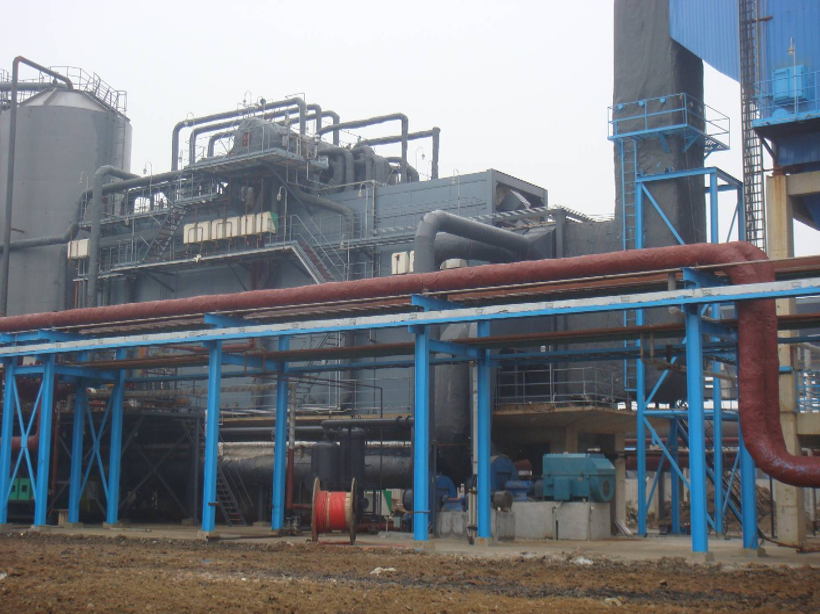
Gas Turbine HRSG: This Is Power Plant Territory
Multi-pressure HRSGs in combined-cycle or cogeneration service are not industrial boilers with extra drums. HP/IP/LP steam systems interact with turbine bypass valves, duct burners, and plant-wide DCS in ways that require after-sales engineers with genuine power plant experience. Tube failures in LP economizer sections from flow-accelerated corrosion (FAC), duct burner tile cracking, and HPSH outlet header weld inspection are all routine HRSG concerns that a factory boiler maintenance team may never have encountered.
HRSG after-sales engineers require specific experience with multi-pressure steam systems and turbine control integration, distinct from standard industrial boiler maintenanceTrue
Gas turbine HRSGs involve HP/IP/LP drum interactions, bypass steam systems, and tight turbine-boiler control loop integration that are not present in single-pressure industrial WHRBs. Maintenance errors in pressure-part sequencing or duct burner control can cause turbine trips or boiler damage.
Chemical and Petrochemical WHRBs: PSM Compliance Is Not Optional
Sulfur-bearing process gas WHRBs — common in sulfuric acid plants, refineries, and syngas processes — operate in environments where tube failure means more than lost production. Hydrocarbon contamination of the steam side, ATEX-rated instrument maintenance, and formal Process Safety Management requirements under frameworks like OSHA PSM or equivalent national standards mean that the after-sales service team must be qualified to work in those environments legally and safely. A supplier whose field engineers don’t hold the right hazardous area certifications can’t enter your site on an emergency call. That matters at 2 a.m. when you have a tube leak.
Glass and Non-Ferrous Furnace WHRBs: High-Temperature Inlet Conditions
Some float glass and aluminum smelting applications feed WHRB inlet temperatures that approach or exceed 900–1,000°C. That means the first pass geometry, refractory throat design, and tube material selection (often high-alloy austenitic or even Inconel-clad in extreme cases) are outside the experience range of most boiler service teams. After-sales engineers need to understand high-temperature oxidation mechanisms, not just standard waterside corrosion.
Biomass and Waste-Adjacent WHRBs: Chlorine Corrosion Demands a Different PM Mindset
Flue gas from biomass combustion or municipal solid waste incineration carries HCl concentrations and alkali chloride vapors that cause aggressive high-temperature corrosion on superheater and evaporator tubes at metal temperatures that would be perfectly safe in a clean gas application. The after-sales program for this type of WHRB should include regular corrosion coupon analysis, tube thickness trending from UT surveys on a schedule tighter than standard industrial boilers — roughly every 6–12 months rather than every 2–3 years — and an expedited tube replacement protocol that accounts for the accelerated consumption rate. Suppliers who offer the same PM interval regardless of fuel chemistry are not paying attention.
The practical screening question across all of these applications is simple: ask the supplier’s service manager to describe the two most common failure modes they’ve handled in your specific process type in the last three years. Generic answers reveal generic experience.
Frequently Asked Questions About After-Sales Support for Waste Heat Recovery Boilers
What is a reasonable warranty period for a WHRB, and what should it explicitly cover?
Twelve to 24 months from commissioning is the standard range across reputable OEM suppliers — where you land within that range usually depends on boiler size, process duty severity, and how hard you negotiate. What matters more than duration is coverage specificity. The warranty should explicitly name pressure parts (headers, drums, tube bundles), all circumferential and longitudinal welds, thermal performance to the agreed design specification (outlet steam conditions, gas-side pressure drop), and sootblower mechanical components, which fail more often than most buyers anticipate.
Equally important is what the warranty excludes. Consumables like gaskets and blowdown valves are reasonable exclusions. Less reasonable — but common in loose contract language — are blanket exclusions for “process-side conditions,” which some suppliers invoke to dodge tube failure claims even when the root cause was a design oversight, not your feedwater. Push for explicit language: damage attributable to feed water or process gas quality deviations outside the agreed design envelope is excluded; everything else within operating parameters is covered.
Warranty periods shorter than 12 months from commissioning are a red flag for industrial WHRBs, especially in high-fouling applications like cement or steel.True
Pressure part defects in welded tube assemblies often manifest 6–18 months into operation under thermal cycling; a sub-12-month warranty may expire before latent fabrication defects surface.
How do I compare after-sales service offerings when suppliers present wildly different scope descriptions?
They will present them differently, almost always deliberately. The only practical solution is to require every bidder to fill out a standardized After-Sales Capability Questionnaire before commercial evaluation begins. Structure it around five pillars: technical response depth, spare parts supply chain, PM program scope and deliverables, digital monitoring capability, and contractual terms. Then run a weighted scoring matrix — weight spare parts and technical response more heavily for process-critical applications, digital monitoring more heavily for remote or multi-site plants.
Without this structure, you end up comparing a 40-page service brochure from one supplier against a two-paragraph paragraph in another’s quotation. That comparison is meaningless.
Can a third-party contractor maintain my WHRB, or must it be the OEM?
Third-party contractors can handle routine PM and minor non-pressure repairs, provided they hold appropriate pressure vessel repair certifications — the NBBI R Stamp is the recognized benchmark in North America; equivalent national certifications apply elsewhere. They also need access to OEM-approved spare parts, not generic substitutes, and ideally written OEM authorization.
For any pressure part repair — a tube weld, a header patch, anything requiring post-weld heat treatment or re-hydro — OEM involvement is strongly recommended. Insurance underwriters and national boiler inspection bodies in most jurisdictions will scrutinize who performed the repair during the next statutory inspection. Unauthorized pressure part work can void your operating certificate entirely. That is not a theoretical risk.
What digital data should I expect from a remote monitoring service?
At minimum: real-time exhaust gas temperature at both inlet and outlet, steam pressure and flow, drum level, pressure drop across each tube bank, feedwater flow and temperature, and sootblower cycle completion data. All of it should be trend-logged at intervals no coarser than one minute, with configurable alarm thresholds. Anything less and you are losing the early warning signals that actually prevent tube failures.
A system that only logs daily averages is essentially useless for condition-based maintenance on a WHRB — fouling events and tube overheating episodes develop over hours, not days.
How do I evaluate a supplier located in another country?
Geographic distance is manageable if the supplier has a documented regional service partner network and contractual provisions covering travel, mobilization costs, and response time from the nearest service depot. Ask for case studies from overseas projects — documented ones, with response time records and inspection reports, not testimonial quotes. Verify whether there are locally authorized repair shops in your country or region who can perform certified work without waiting for an OEM team to clear customs.
The mobilization cost question is one buyers routinely forget until the first emergency. A 72-hour response benchmark means nothing if the supplier’s service team is flying from the other side of the world and your contract has no per-diem cap.
What are the most common causes of unplanned WHRB shutdowns?
In rough order of frequency across cement, steel, and chemical process applications: tube failure from fouling-induced localized overheating, sootblower mechanical failure leading to progressive gas-side plugging, internal corrosion driven by water chemistry deviations (usually oxygen ingress or pH drift), and steam drum safety valve false actuation from setpoint drift or seat corrosion.
Every one of these is preventable with a competent PM program. Tube overheating is caught early through pressure drop trending and infrared inspection during planned outages. Sootblower failures are largely a lubrication and drive mechanism maintenance issue — in practice, plants that put sootblowers on a documented inspection schedule see dramatically fewer unplanned plugging events. Water chemistry corrosion requires nothing exotic: a disciplined blowdown regime, regular water analysis, and feedwater treatment that actually matches your makeup water quality. Safety valve drift is a calibration and testing frequency problem.
Strong after-sales support ties these directly to a proactive spare parts holding strategy. Sootblower drive components and safety valve trim kits have lead times of four to ten weeks from most suppliers — if you are waiting for the part after the failure, you are already deep into the USD 15,000–80,000 per day unplanned downtime range, depending on how critical your process is.
Building Your WHRB After-Sales Evaluation Scorecard: A Practical Decision Tool for Procurement Teams
After reading through everything above, the natural question is: how do you actually compare two or three WHRB suppliers in a procurement process without letting price dominate the conversation before you’ve accounted for service risk? A structured scorecard is the most defensible way to do that — not because it’s perfect, but because it forces your team to assign relative weight to factors that otherwise get hand-waved during bid evaluation.
The Five-Domain Weighted Framework
The table below shows the recommended domains, their suggested weights, and what a score of 1 versus 5 actually looks like in practice. Weights are starting points — adjust them based on your plant’s criticality. A continuous process (ammonia synthesis, float glass) should push Technical Response Capability toward 30%; a batch operation with more scheduling flexibility can afford to shift weight toward Contractual Terms.
| Evaluation Domain | Suggested Weight | Score 1 (Weak) | Score 5 (Strong) |
|---|---|---|---|
| Technical Response Capability | 25% | Call center only; no dedicated WHRB engineers; response SLA undefined | Dedicated WHRB service team, 10+ qualified engineers; regional depot within 500 km; documented sub-24-hr remote engineering SLA |
| Spare Parts Availability & Strategy | 20% | No regional stock; no BOM with MTBF data; no long-term availability commitment | Tiered critical parts stocked regionally; full BOM with MTBF classifications; written 10-year parts availability commitment |
| Preventive Maintenance Program Quality | 20% | Generic annual checksheet; no WHRB-specific scope; deliverables unstated | WHRB-specific PM protocol; includes tube thickness mapping, heat transfer surface fouling assessment, documented inspection reports |
| Digital Monitoring & Remote Support | 15% | No remote capability; manual data collection only | IIoT-enabled continuous monitoring; predictive analytics; remote engineering access with data retention |
| Contractual Terms & References | 20% | No SLA penalties; no references in same application; vague scope | Penalty-backed uptime SLAs; minimum two verifiable references in same industry vertical; parts pricing locked |
Hard Red Lines — Non-Negotiables Before You Score Anything
A supplier scoring below 3 on Spare Parts Availability should be disqualified, full stop, regardless of how attractive their capital equipment price looks. No regional stock, no MTBF-based criticality classification, and no 10-year parts commitment means you are accepting unknown downtime risk for the entire operating life of the boiler. In my experience, this is exactly the trap that produces the most expensive surprises — the capital savings evaporate after the first major tube bundle failure where lead time runs 18–24 weeks from a single overseas workshop.
Similarly, a Technical Response Capability score of 1 or 2 in a process-critical installation is a structural problem, not a negotiable gap. If the supplier cannot get a qualified WHRB engineer on-site within 48–72 hours, downtime risk runs USD 15,000–80,000 per day depending on process criticality and whether bypass capacity exists. That range is wide because it depends heavily on whether the process can be partially maintained or must halt entirely.
Converting Scorecard Gaps into TCO Numbers
This is the step most procurement teams skip, and it’s the most persuasive internal communication tool you have. A supplier scoring 2 versus 5 on Technical Response Capability translates to roughly USD 50,000–200,000 per year in additional downtime risk exposure — that estimate depends on process criticality, annual forced outage probability, and whether your plant has any redundancy. Run the same calculation for Spare Parts: a supplier with no regional stock and long lead times adds roughly 2–5% of WHRB CAPEX annually in combined expediting costs, emergency logistics, and production loss. Put those numbers into your bid comparison spreadsheet alongside capital equipment price. The conversation changes immediately.
A lower capital price from a supplier with weak after-sales capability typically results in higher total cost of ownership over a 10-year WHRB operating life.True
Unplanned downtime, expedited spare parts, and third-party emergency service costs consistently exceed upfront savings from suppliers lacking regional support infrastructure and dedicated WHRB engineering teams.
Recommended Tender Process Sequence
Issue an After-Sales Capability RFI before you release the equipment RFQ. This sounds counterintuitive but it screens out suppliers who cannot credibly support the installation — better to know that before you invest weeks in technical bid evaluation. Require written service program proposals as a mandatory part of the technical bid, not an optional attachment. Conduct reference calls with at least two operating plants in the same application vertical; ask specifically about unplanned failure response times and parts lead times, not just general satisfaction. Negotiate SLA terms in parallel with equipment contract terms — don’t leave service agreements as a post-award discussion, because your leverage essentially disappears once the purchase order is signed.
Partnership Over Transactional Vendor Logic
The most durable after-sales arrangements are multi-year integrated service contracts with performance-linked KPIs — uptime targets, heat recovery efficiency benchmarks, response time penalties. When a supplier’s revenue is tied to your plant performing well, the incentive structure aligns properly. This is not idealism; it’s contract design. A supplier earning a flat annual service fee has no particular reason to prevent the next forced outage. A supplier with a penalty clause tied to unplanned downtime hours has every reason to get preventive maintenance right the first time.
Use this scorecard as a living document. Update scores after the first year of operation based on actual service experience — that discipline creates institutional memory that protects your organization through staff turnover and through the next procurement cycle.
References
HRSG Tests, Inspections and Other Site Services
Source: GE VernovaBest Management Practice #8: Steam Boiler Systems
Source: U.S. Department of EnergyAPI Standard 510 — Pressure Vessel Inspection Code
Source: American Petroleum Institute (API)API 510 Pressure Vessel Inspector Certification and Qualification Requirements
Source: American Petroleum Institute (API)API RP 572 — Pressure Vessel Inspection Practices
Source: American Petroleum Institute (API)National Board Commissioned Inspectors and Qualifications
Source: National Board of Boiler and Pressure Vessel InspectorsNational Board Boiler Owner and Operator’s Guide
Source: National Board of Boiler and Pressure Vessel InspectorsNational Board Jurisdictional Boiler and Waste Heat Boiler Inspection Requirements
Source: National Board of Boiler and Pressure Vessel InspectorsISO 9001:2015 — Quality Management Systems Requirements
Source: International Organization for Standardization (ISO)Boiler Tune-up Guides for Owners, Operators and Technicians
Source: U.S. Environmental Protection Agency (EPA)