Environmental emission requirements are a fundamental consideration when selecting an industrial power plant boiler. They influence more than the permissible concentration of pollutants in flue gas. Depending on the project location, fuel type, boiler capacity, and applicable regulations, emission requirements can affect combustion technology, boiler configuration, flue gas treatment systems, monitoring arrangements, and overall project economics.
For power plant owners and EPC contractors, the challenge is to translate environmental requirements into practical engineering specifications. These specifications must address fuel characteristics, emission performance, equipment scope, and testing conditions before the boiler enters the procurement and manufacturing stages.
A suitable boiler solution must therefore balance emission compliance, fuel availability, thermal performance, operating flexibility, and long-term operating costs. Understanding these relationships early helps buyers avoid unsuitable equipment configurations and costly modifications after installation.
1. Which Environmental Emission Regulations Apply to Industrial Power Plant Boilers?
Environmental emission regulations differ between countries and jurisdictions. Their applicability generally depends on the boiler’s rated thermal input, fuel type, combustion technology, installation date, and whether the project involves a new installation, an existing facility, or a retrofit.
1.1 Factors Determining Applicable Emission Regulations
Before selecting a boiler, project owners should establish the regulatory framework governing the proposed installation.
The main factors include:
- Project location: National legislation, regional environmental requirements, local air quality regulations, and environmental permits may impose different limits.
- Boiler capacity: Some regulations classify combustion installations by total rated thermal input rather than electrical output or steam production capacity.
- Fuel type: Coal, biomass, liquid fuels, and natural gas may be subject to different pollutant limits and monitoring requirements.
- Installation status: New installations, existing boilers, and substantially modified units may fall under different regulatory provisions.
- Project classification: Industrial steam-generating units, electric utility generating units, and combined heat and power facilities may be regulated under different rules.
1.2 Major Regulatory Frameworks in Different Markets
Several major regulatory frameworks are particularly relevant to international boiler projects.
European Union
The Industrial Emissions Directive (IED) 2010/75/EU covers specified combustion activities with a total rated thermal input of 50 MW or more. Large combustion plants must also consider the applicable emission limits in Annex V and the Large Combustion Plants Best Available Techniques (BAT) conclusions established by Commission Implementing Decision (EU) 2021/2326.
Directive (EU) 2024/1785 amended the IED, with a transposition deadline of July 1, 2026. However, its new provisions do not all apply immediately to existing installations. Article 3 establishes transitional arrangements, and the European Commission’s September 2026 guidance explains how these provisions interact with existing permits and future BAT conclusions.
Consequently, buyers should verify the applicable national legislation, installation category, BAT requirements, and environmental permit conditions rather than assuming that every revised provision applies immediately.
Official references: Industrial Emissions Directive | LCP BAT Conclusions | Directive (EU) 2024/1785 | European Commission’s 2026 IED Questions and Answers
United States
The applicable requirements depend on whether the equipment is classified as an industrial-commercial-institutional steam generating unit or an electric utility steam generating unit.
Industrial boilers may be subject to New Source Performance Standards (NSPS) under 40 CFR Part 60, including Subparts Db and Dc, as well as hazardous air pollutant requirements under the relevant Boiler NESHAP provisions, such as Subpart DDDDD for major sources and Subpart JJJJJJ for area sources.
Coal- and oil-fired electric utility generating units may also be subject to the Mercury and Air Toxics Standards (MATS), which address hazardous air pollutants rather than serving as a general SO₂ and NOx emission standard.
An important regulatory change occurred in 2026. The U.S. EPA finalized the repeal of certain amendments to MATS adopted in 2024, effective April 27, 2026. These included the stricter filterable particulate matter requirement for coal-fired generating units, the revised mercury limit for lignite-fired units, and the associated PM CEMS requirement. This action did not repeal MATS as a whole; the applicable requirements must be checked against the current version of 40 CFR Part 63, Subpart UUUUU.
Official references: EPA ICI Steam Generating Unit NSPS | EPA Boiler NESHAP | EPA MATS Regulatory Update
China
The existing national framework includes GB 13223-2011 and GB 13271-2014. Their applicability depends on boiler capacity and combustion characteristics, not simply whether the boiler generates electricity.
The Ministry of Ecology and Environment (MEE) issued an interpretation in September 2025 clarifying the application of these standards to different coal-fired boiler categories.
In March 2026, the MEE published a consultation draft proposing to integrate and revise GB 13223-2011 and GB 13271-2014. The consultation period closed on April 24, 2026. The published proposal should not be treated as a binding replacement standard unless and until a final version is formally promulgated and becomes effective.
Buyers should verify the current standard, its applicable provisions, and any stricter local requirements before establishing the boiler design basis.
Official references: MEE Interpretation of Boiler Standard Applicability | 2026 Consultation Notice
India
India’s emission requirements for thermal power plants are issued through the Ministry of Environment, Forest and Climate Change (MoEFCC), with additional implementation and monitoring responsibilities involving the Central Pollution Control Board (CPCB).
For coal- and lignite-based thermal power plants, the Environment (Protection) Fourth Amendment Rules, 2025 (G.S.R. 465(E), July 11, 2025) introduced a location-based categorization for the applicability of SO₂ emission standards.
Category A covers specified locations near the National Capital Region and cities with populations exceeding one million. Category B covers specified areas near critically polluted areas and non-attainment cities. Category C covers other locations.
The notification sets a December 31, 2027 compliance date for applicable Category A plants, provides case-by-case decisions for Category B plants, and exempts Category C plants from the specified SO₂ standards subject to stack-height requirements.
These provisions apply specifically to coal- and lignite-based thermal power plants and should not be generalized to all industrial boilers.
Official reference: India Gazette Notification G.S.R. 465(E), 2025
International financing requirements
Projects involving international financing may also need to consider the IFC Environmental, Health, and Safety (EHS) Guidelines for Thermal Power.
These guidelines cover relevant combustion facilities with a total rated heat input above 50 MWth on an HHV basis, including facilities using gaseous, liquid, and solid fossil fuels or biomass to produce electricity, mechanical power, steam, or heat.
They are not automatically equivalent to national emission legislation. Their application depends on the financing arrangement, applicable project requirements, and contractual commitments.
Reference: IFC EHS Guidelines for Thermal Power
1.3 Why Project-Specific Regulatory Verification Is Necessary
Two boilers with similar capacities and fuel types may have different compliance obligations because they are installed in different jurisdictions or fall under different regulatory categories.
A preliminary regulatory review should establish:
- The applicable national and local emission standards.
- Environmental permits and project approval requirements.
- Pollutants subject to mandatory control.
- Required monitoring and reporting arrangements.
- Additional requirements imposed by the project owner or financing institution.
This review establishes the environmental conditions that must be considered during boiler selection and engineering.
2. Which Emission Parameters Should Be Considered in Power Plant Boiler Selection?
Different fuels and combustion technologies produce different emission profiles. The relevant pollutants should be identified according to fuel characteristics, boiler design, and applicable regulatory requirements.
2.1 Major Air Pollutants from Fuel-Fired Boilers
Four parameters are particularly important in conventional fuel-fired boiler projects.
| Emission Parameter | Main Formation Factors | Potential Design Considerations |
|---|---|---|
| Sulfur Dioxide (SO₂) | Sulfur content in fuel | Fuel selection and desulfurization |
| Nitrogen Oxides (NOx) | Thermal and fuel-related nitrogen reactions | Combustion optimization and denitrification |
| Particulate Matter (PM) | Mineral ash, entrained solids, and unburned carbon | Combustion control and particulate removal |
| Carbon Monoxide (CO) | Incomplete combustion | Air distribution and combustion optimization |
Sulfur dioxide (SO₂) is primarily associated with sulfur contained in the fuel. Coal and certain liquid fuels may require additional sulfur-control measures depending on fuel composition and the applicable emission limit.
Nitrogen oxides (NOx) are generated through several combustion mechanisms, principally thermal NOx and fuel NOx. Flame temperature, oxygen availability, combustion staging, and fuel nitrogen content influence NOx formation.
Particulate matter (PM) originates mainly from fuel-derived mineral ash and entrained solids. Unburned carbon and other combustion-related particles may also contribute, depending on fuel characteristics and operating conditions.
Carbon monoxide (CO) indicates incomplete combustion. Poor air distribution, unsuitable excess-air conditions, insufficient mixing, and unstable combustion can increase CO emissions.
These parameters should be evaluated together because a combustion adjustment intended to reduce one pollutant may affect other emission or operating characteristics.
2.2 Other Pollutants Required by Specific Fuel and Regulations
Some projects must also address additional pollutants depending on fuel composition and applicable legislation.
These may include:
- Mercury and other trace metals, particularly in certain coal-fired applications.
- Hydrogen chloride (HCl), where fuels contain relevant chlorine compounds.
- Other hazardous air pollutants regulated under specific national standards.
- Ammonia slip associated with SCR or SNCR systems, where applicable requirements exist.
These pollutants should not automatically be included in every boiler specification. Their relevance must be established through fuel analysis and regulatory review.
2.3 Air Pollutants vs. Greenhouse Gas Emissions
CO₂ should be considered separately from conventional air pollutants.
SO₂, NOx, PM, and CO are generally addressed through air pollutant emission standards, whereas CO₂ is primarily managed through greenhouse gas accounting, carbon pricing, emissions trading, or other climate-related policies.
Fuel selection influences both categories. Coal generally has a higher carbon intensity than natural gas, while biomass may receive different accounting treatment under specific regulatory frameworks.
However, biomass combustion physically releases CO₂. Its treatment as biogenic carbon or zero-rated emissions depends on applicable accounting rules, fuel sustainability requirements, and regulatory conditions. Biomass should not automatically be described as having zero carbon emissions.
For boiler buyers, carbon-related requirements should be evaluated alongside conventional emission requirements without confusing the two regulatory frameworks.
3. How Do Environmental Requirements Affect Boiler Technology and Fuel Selection?
Emission requirements can influence which boiler technology is suitable for a project. Fuel properties and combustion characteristics determine the pollutants that may need to be controlled and the systems required to achieve the specified performance.
3.1 Fuel Quality as a Basis for Emission Design
Fuel analysis is one of the most important inputs in boiler selection.
Relevant properties include:
- Sulfur content: Influences potential SO₂ generation and desulfurization requirements.
- Ash content: Affects particulate loading and ash-handling requirements.
- Fuel nitrogen: Contributes to fuel NOx formation.
- Moisture content: Influences combustion performance, heat balance, and flue gas conditions.
- Chlorine and other constituents: May affect acid gas emissions, deposits, and corrosion.
For coal-fired projects, the design should account for representative coal quality and its allowable operating range rather than relying on a single nominal fuel analysis.
For biomass projects, variations in moisture, ash composition, chlorine, and alkali metals may influence combustion stability, particulate characteristics, deposits, and heat-transfer surface durability.
A boiler designed for one fuel specification may not achieve the same emission performance when operating with a substantially different fuel. Buyers should therefore provide representative fuel analysis data before requesting a final technical proposal.
3.2 How Different Boiler Technologies Influence Emission Control
Different boiler technologies offer different approaches to fuel combustion and emission management.
Pulverized coal-fired boilers
Pulverized coal-fired systems use finely ground coal and controlled air distribution to achieve combustion. Their emission performance depends on coal characteristics, furnace design, burner configuration, and downstream pollution-control equipment.
Low-NOx combustion arrangements can reduce NOx formation, while appropriate particulate and sulfur-control systems may be required to meet project-specific limits.
See Taishan Group’s coal-fired boiler solutions.
Circulating fluidized bed boilers
CFB boilers use a fluidized bed combustion process that allows fuel and bed materials to mix under controlled operating conditions.
Their design can accommodate a relatively broad range of solid fuels, subject to the specified fuel properties and boiler design. In-bed limestone addition can capture sulfur during combustion, while staged air supply helps control NOx formation.
However, actual sulfur capture performance depends on factors including fuel sulfur content, limestone reactivity, particle size, Ca/S molar ratio, bed temperature, gas-solid contact, and solids residence time. Inadequate limestone utilization or unsuitable operating conditions can reduce desulfurization performance.
Additional downstream FGD may still be necessary when the required SO₂ limit cannot be achieved through in-bed capture alone.
For more information, see Taishan Group’s circulating fluidized bed boiler solutions.
Biomass-fired boilers
Biomass boilers can use suitable fuels such as wood chips, agricultural residues, and other biomass materials.
Their emission characteristics depend heavily on fuel composition and combustion conditions. Moisture content, ash composition, chlorine, and alkali metals may influence combustion performance, particulate control, deposits, and equipment durability.
A suitable boiler and flue gas treatment configuration should therefore be developed around the actual biomass fuel rather than assuming that all biomass fuels have identical emission characteristics.
See Taishan Group’s biomass boiler solutions.
Oil- and gas-fired boilers
Natural gas generally produces substantially lower SO₂ and particulate emissions than coal or high-sulfur liquid fuels because of its fuel composition. Nevertheless, NOx remains an important design consideration, particularly for larger installations and projects with strict emission limits.
For oil-fired boilers, sulfur content and fuel quality must be considered when determining the need for sulfur control and other emission treatment measures.
See Taishan Group’s oil- and gas-fired boiler solutions.
3.3 Balancing Emission Compliance and Operating Flexibility
Boiler selection should not be based exclusively on emission performance at rated load.
Actual operating conditions may include:
- Continuous operation at rated capacity.
- Partial-load operation.
- Frequent load changes.
- Variations in fuel quality.
- Startup and shutdown periods.
These conditions can influence combustion stability and the effectiveness of emission-control systems. For example, SCR performance depends on flue gas temperature and catalyst operating conditions, while combustion arrangements may require optimization at reduced loads.
A suitable design should therefore consider the expected operating range and the emission requirements applicable to each relevant operating condition.
Project reference: Biomass power generation
Taishan Group’s public project portfolio lists a 170 t/h biomass power plant boiler supplied for Weixian Aosen New Energy Co., Ltd. The published description states that the boiler generates steam by burning biomass fuel, drives generators to produce electricity, and supplies power to the grid.
This provides an example of biomass boiler application in power generation. However, the public project description does not provide fuel analysis, stack emission test results, or detailed emission-control equipment specifications. It should therefore be treated as an application reference, not evidence of compliance with a particular emission limit.
View Taishan Group’s project cases.
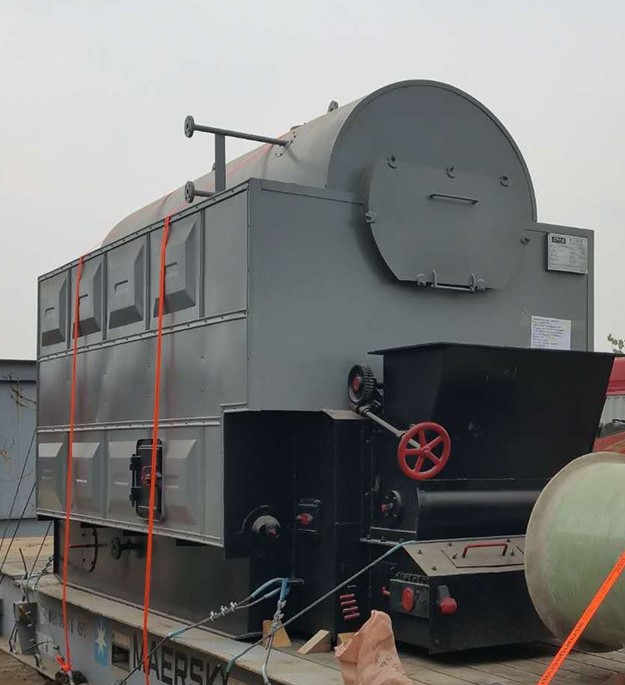
4. How Do Emission Limits Affect Flue Gas Treatment System Configuration?
After selecting a suitable boiler technology and fuel basis, the next step is determining whether additional flue gas treatment systems are needed to meet the required emission limits.
The configuration should be based on expected raw flue gas characteristics, required outlet concentrations, operating conditions, and project-specific environmental requirements.
4.1 NOx Control: Low-NOx Combustion, SNCR and SCR
NOx control can involve combustion-stage measures and downstream treatment.
Low-NOx combustion technologies, including suitable burner designs, staged combustion, and combustion optimization, aim to reduce NOx formation inside the furnace.
When further reduction is required, selective non-catalytic reduction (SNCR) or selective catalytic reduction (SCR) may be considered.
- SNCR introduces a reducing agent into a suitable high-temperature region of the flue gas without using a catalyst.
- SCR uses a catalyst to promote the reaction between nitrogen oxides and a reducing agent.
Their selection involves different engineering considerations.
| Consideration | SNCR | SCR |
|---|---|---|
| Reaction location | Suitable furnace or flue gas temperature zone | Catalyst reactor |
| Temperature requirement | Relatively narrow suitable temperature window | Catalyst-specific operating temperature range |
| Main design concern | Temperature distribution and reagent mixing | Catalyst activity, temperature, and flue gas composition |
| Additional considerations | Ammonia slip and reagent utilization | Ammonia slip, catalyst deactivation, and replacement |
The choice depends on the required emission level, flue gas temperature, boiler operating range, available space, reagent consumption, and operating costs.
Neither technology should be selected solely because it is commonly used in another boiler project.
4.2 SO₂ Control: In-Bed Desulfurization and FGD
Sulfur control requirements depend primarily on fuel sulfur content and the applicable emission limit.
For suitable CFB applications, limestone can be introduced directly into the fluidized bed to capture sulfur during combustion.
For other boiler configurations, or where lower outlet SO₂ concentrations are required, downstream flue gas desulfurization (FGD) may be necessary.
Common approaches include wet limestone-gypsum systems and other dry or semi-dry desulfurization processes.
The selected arrangement should consider removal performance, reagent consumption, water demand, byproduct handling, corrosion protection, and maintenance requirements.
4.3 Particulate Matter Control: ESP and Bag Filters
Electrostatic precipitators (ESP) and fabric filters are widely used for particulate matter removal.
An ESP uses an electric field to charge and collect particles from flue gas. Its performance depends on particle characteristics, electrical operating conditions, and gas properties.
A bag filter captures particles as flue gas passes through filter media. Its selection requires consideration of gas temperature, moisture, dust characteristics, pressure drop, and filter material compatibility.
Neither technology is universally suitable for every project. The final selection should reflect the required outlet particulate concentration and actual flue gas characteristics.
4.4 Integrating Emission Control Systems into the Overall Plant Design
Emission-control equipment should be designed as part of the overall boiler and power plant system rather than treated as independent accessories.
Important engineering considerations include:
- Equipment layout: Available space, structural support, access, and maintenance clearances.
- Flue gas resistance: Additional pressure drop and its effect on induced-draft fan requirements and auxiliary power consumption.
- Reagent consumption: Limestone, ammonia-based reagents, activated carbon, or other consumables where applicable.
- Water and wastewater: Requirements associated with wet treatment systems.
- Residue handling: Collection, storage, transportation, and disposal or utilization of ash and treatment byproducts.
- Material selection: Corrosion and erosion risks under expected flue gas conditions.
These factors also affect the plant’s net electrical output. Additional fans, pumps, reagent preparation systems, and other auxiliary equipment consume electricity, reducing the power available for export. Water consumption and consumable requirements can also influence long-term operating costs.
A project may require only a limited combination of emission-control technologies, while another may need several treatment stages.
For example, a coal-fired CFB boiler using in-bed limestone addition may still require downstream particulate removal and, depending on the required NOx limit, additional denitrification. A natural gas-fired boiler may need a low-NOx combustion system without requiring the same particulate and sulfur-control configuration as a coal-fired unit.
The correct solution is determined by the emission design basis, not by applying the same equipment arrangement to every boiler.
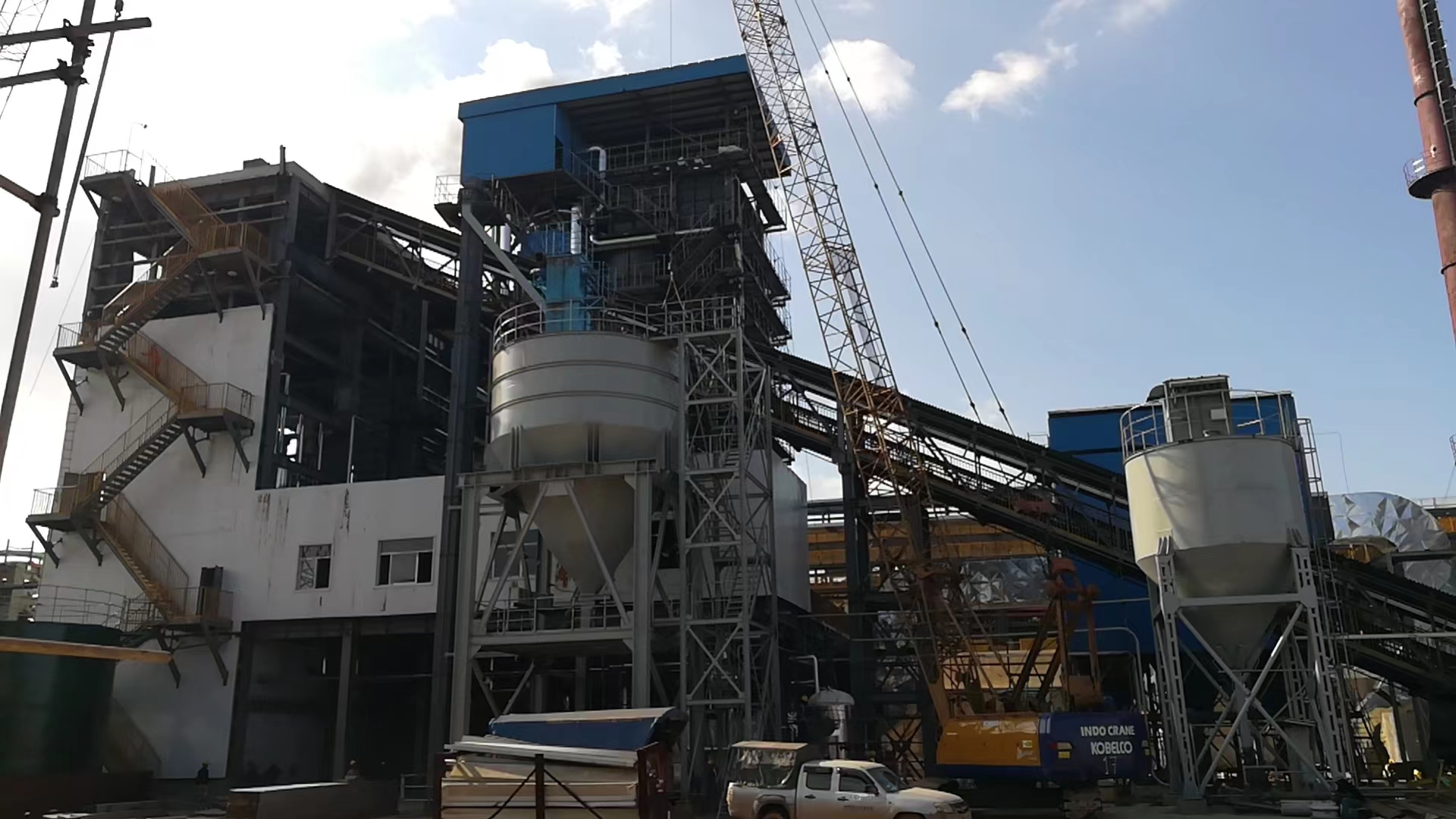
5. How Should Emission Guarantees and Compliance Testing Be Defined?
Selecting appropriate emission-control equipment is only part of achieving compliance. Project owners must also define how emission performance will be guaranteed, measured, and verified.
Poorly defined testing conditions can lead to disputes even when the installed equipment is technically capable of achieving the required performance.
5.1 Defining Emission Guarantee Values and Reference Conditions
Emission guarantees should specify more than a numerical concentration.
Before issuing a boiler inquiry or technical specification, buyers should define the following items:
| Specification Item | Information to Define |
|---|---|
| Pollutants | SO₂, NOx, PM, CO, and other regulated substances |
| Guarantee Value | Maximum permitted or contractually guaranteed concentration |
| Measurement Point | Boiler outlet or final stack, as applicable |
| Reference Oxygen | Applicable reference O₂ concentration |
| Gas Basis | Dry or wet basis |
| Standard Conditions | Reference temperature and pressure |
| Averaging Period | Applicable hourly, daily, or test-period averaging basis |
| Operating Conditions | Rated load and specified operating range |
| Fuel Basis | Design fuel and allowable fuel range |
| Verification Method | Applicable sampling and testing standards |
Reference oxygen is particularly important because measured pollutant concentrations may be corrected to a specified oxygen concentration to account for differences in excess air.
For example, Annex V of the EU IED specifies reference oxygen concentrations of 6% for solid fuels and 3% for liquid and gaseous fuels for relevant combustion plants, excluding gas turbines and gas engines. Gas turbines and gas engines use a different reference basis of 15%.
China’s MEE has also clarified different reference oxygen requirements for certain coal-fired boiler categories, including 6% under the relevant GB 13223 provisions and 9% under the applicable GB 13271 provisions.
These examples demonstrate why emission concentrations cannot be compared directly without checking their reference conditions.
The measurement point must also be agreed upon. A boiler supplier may guarantee performance at the boiler outlet, while the project owner may require final stack emissions after all flue gas treatment equipment. These are different guarantee boundaries and should not be confused.
5.2 CEMS and Periodic Emission Testing
Continuous Emission Monitoring Systems (CEMS) provide ongoing information about selected pollutant concentrations and operating parameters.
However, CEMS is not automatically mandatory for every industrial boiler. Its application depends on the relevant regulations, installation category, capacity, permit conditions, and monitoring provisions.
For example, under Annex V of the EU IED, covered large combustion plants with a total rated thermal input of 100 MW or more are generally required to continuously measure SO₂, NOx, and dust, subject to specified exceptions. Where continuous measurement is not required, periodic measurement provisions apply.
In the United States, monitoring requirements are established by the applicable source-specific rules. Some boilers require continuous monitoring, while others may demonstrate compliance through performance testing and prescribed operating or monitoring requirements.
Monitoring arrangements in India and other markets should similarly be checked against the relevant environmental notification, CPCB requirements, and site-specific permit conditions.
CEMS installation does not independently prove that all emission guarantees have been achieved. The system must be properly installed, calibrated, maintained, and operated, and its data must be evaluated using the applicable regulatory averaging and quality-assurance procedures.
5.3 Emission Performance Testing and Acceptance
Performance testing should be planned before equipment procurement, not after commissioning.
The project specification should define:
- The pollutants to be tested.
- Applicable sampling and measurement methods.
- Required boiler load and operating conditions.
- Design fuel or agreed test fuel.
- Sampling location and measurement basis.
- Test duration and averaging procedure.
- Criteria for evaluating compliance.
Where required, independent or accredited testing organizations should carry out the measurements.
The acceptance procedure should also distinguish between the performance of the boiler itself and the performance of the complete emission-control system.
Clear testing requirements help ensure that the equipment supplier, EPC contractor, and project owner share the same understanding of the expected results.
6. What Should Buyers Check Before Selecting an Industrial Power Plant Boiler Supplier?
An emission-compliant boiler project requires more than selecting a manufacturer with a suitable boiler model. Buyers should evaluate whether the supplier can translate project-specific environmental requirements into an appropriate engineering solution.
6.1 Technical Capabilities to Evaluate in a Boiler Supplier
The following capabilities deserve particular attention.
Understanding of applicable emission requirements
The supplier should be able to work with the project’s emission design basis and identify the technical implications of specified pollutants and operating conditions.
Fuel analysis and combustion design
The supplier should understand how fuel properties affect boiler performance, combustion conditions, and emission-control requirements.
Boiler and auxiliary system integration
The proposed boiler configuration should be compatible with the required flue gas treatment systems, fans, ductwork, monitoring equipment, and other relevant auxiliaries.
Clear supply boundaries
Buyers should establish whether the supplier is responsible for the boiler alone, the boiler island, selected emission-control equipment, or the complete flue gas treatment system.
Emission performance guarantees
The supplier should explain the guarantee values, measurement locations, fuel assumptions, reference conditions, averaging periods, and testing procedures covered by its contractual scope.
Relevant project experience
Previous projects can demonstrate experience with similar fuels, boiler technologies, capacities, and operating applications. However, project references should not be treated as proof of emission compliance unless supported by relevant test reports or acceptance documentation.
6.2 Pre-Procurement Emission Compliance Checklist
Before requesting a final technical proposal, buyers should prepare the following information:
| Item | Information to Confirm |
|---|---|
| Applicable Regulations | National, regional, and project-specific requirements |
| Fuel Basis | Fuel type, representative analysis, and allowable range |
| Emission Limits | Required pollutant concentrations |
| Reference Conditions | Oxygen basis, dry/wet basis, and standard conditions |
| Averaging Period | Applicable regulatory or contractual averaging basis |
| Equipment Scope | Boiler, combustion system, and flue gas treatment boundaries |
| Monitoring | CEMS or periodic testing requirements |
| Performance Testing | Test methods, operating conditions, and acceptance criteria |
| Contract Guarantees | Guaranteed performance and supplier responsibilities |
Providing these details during the inquiry stage helps manufacturers develop more accurate boiler configurations and quotations.
It also reduces the risk of missing emission-control equipment, underestimating auxiliary power consumption, or discovering additional compliance requirements after the project has entered manufacturing or installation.
Conclusion
Environmental emission requirements should be considered from the beginning of an industrial power plant boiler project. They influence fuel selection, combustion technology, flue gas treatment configuration, monitoring arrangements, and performance guarantees.
A reliable boiler selection process starts with identifying the applicable regulations, establishing a clear fuel and emission design basis, and evaluating the complete system required to achieve the specified performance.
By defining emission guarantees, equipment supply boundaries, reference conditions, and acceptance procedures before procurement, project owners can reduce compliance risks and establish a more reliable basis for long-term plant operation.
For projects involving coal-fired, biomass-fired, CFB, or oil- and gas-fired boilers, Taishan Group can provide technical consultation and customized boiler solutions based on project capacity, fuel characteristics, operating conditions, and applicable emission requirements.
Contact Taishan Group for Industrial Power Plant Boiler Solutions
Frequently Asked Questions
1. Do all industrial power plant boilers follow the same emission standards?
No. Applicable standards depend on the country, regulatory jurisdiction, boiler capacity, fuel type, installation date, and equipment classification. Project owners must verify the applicable national and local requirements before finalizing boiler specifications.
2. Is CEMS mandatory for every industrial power plant boiler?
No. Continuous emission monitoring requirements depend on applicable regulations and permit conditions. Some installations require CEMS, while others may use periodic stack testing or alternative monitoring arrangements where permitted.
3. Can a boiler manufacturer guarantee total plant emission compliance?
A boiler manufacturer can guarantee the performance of the equipment and systems included in its contractual scope. However, total plant emission compliance may also depend on separately supplied flue gas treatment systems, fuel quality, plant operation, and other equipment. These responsibilities must be clearly defined in the project contract.
4. What information should buyers provide to obtain an emission-compliant boiler proposal?
Buyers should provide the project location, applicable emission requirements, boiler capacity, fuel analysis, operating conditions, required pollutant limits, reference conditions, and monitoring expectations. These details allow the supplier to evaluate the boiler configuration and identify the necessary emission-control systems.
References
European Union. Industrial Emissions Directive (2010/75/EU), as amended by Directive (EU) 2024/1785.
Industrial Emissions Directive | 2024 AmendmentU.S. Environmental Protection Agency. Industrial Boiler Emission Standards and Regulations, including NSPS and Boiler NESHAP.
ICI Steam Generating Unit NSPS | Boiler NESHAPU.S. Environmental Protection Agency. Mercury and Air Toxics Standards (MATS): 2026 Final Repeal of Certain 2024 Amendments.
Federal Register – Final RuleMinistry of Ecology and Environment of China. Interpretation of Boiler Emission Standard Applicability and 2026 Draft Standard Revision.
2025 Regulatory Interpretation | 2026 Consultation NoticeMinistry of Environment, Forest and Climate Change, India. Environment (Protection) Fourth Amendment Rules, 2025, G.S.R. 465(E).
Official Gazette NotificationInternational Finance Corporation (IFC). Environmental, Health, and Safety Guidelines for Thermal Power.
IFC Thermal Power EHS Guidelines