Industry News

What Is the Most Efficient Type of Industrial Boiler?

What Is the Most Efficient Type of Industrial Boiler?

In industrial operations, boiler efficiency determines how much of the fuel’s energy is converted into useful steam output. Low-efficiency systems waste significant energy as heat loss through flue gas or radiation, increasing fuel costs and carbon emissions. Choosing the right boiler type is crucial for achieving both economic and environmental performance.

The most efficient type of industrial boiler is the condensing gas-fired boiler or supercritical/ultra-supercritical water-tube boiler, depending on the application. Condensing boilers can achieve efficiency levels up to 98% by recovering latent heat from flue gases, making them ideal for medium and low-pressure systems. For high-capacity power and process plants, supercritical and ultra-supercritical water-tube boilers offer 90–94% efficiency due to advanced heat recovery, high operating pressures, and precise combustion control.

Selecting the most efficient boiler depends on fuel type, operating conditions, and steam requirements.

Why Does Boiler Efficiency Matter in Industrial Operations?

In every manufacturing or process industry—from food and beverage to chemicals, textiles, and power generation—boilers are the core energy producers that drive production. Yet, in many facilities, inefficiency in boiler operation remains an unseen drain on resources. Poor combustion control, heat losses, or inadequate maintenance can silently waste tens of thousands of dollars annually in fuel and lead to excessive emissions. For plant managers, understanding and improving boiler efficiency is not just about energy savings—it’s about competitiveness, reliability, and sustainability.

Boiler efficiency matters because it determines how effectively fuel energy is converted into useful steam or heat. Higher efficiency means lower fuel costs, reduced emissions, improved system reliability, and greater overall productivity in industrial operations. It is the single most critical indicator of a boiler’s economic and environmental performance.

Improving boiler efficiency only reduces fuel costs marginally.False

Even a 1% increase in boiler efficiency can save thousands of dollars annually, depending on fuel type and usage.


Boiler efficiency directly affects both production output and operating cost.True

Efficient steam generation ensures optimal process heating and reduces total energy expenditure.


1. The Economic Impact of Boiler Efficiency

Energy costs are typically 60–80% of total operating expenses in steam systems.
Every percentage point improvement in efficiency delivers measurable savings:

Boiler SizeFuel TypeAnnual Fuel Use (tons)Efficiency ImprovementFuel Savings (tons/year)Annual Cost Savings (USD)
10 t/hNatural Gas2,500+1%25$16,000
20 t/hFuel Oil5,000+2%100$68,000
30 t/hCoal12,000+3%360$72,000

A small efficiency gain translates into significant annual fuel savings, directly improving the plant’s profitability.


2. Thermodynamic Foundation: Efficiency Defined

Boiler efficiency (η) is defined as the ratio of useful heat output (steam energy) to total heat input (fuel energy).

Formula (simplified for Excel):
Boiler Efficiency (%) = (Steam Output × (h_steam – h_feedwater)) / (Fuel Input × Calorific Value) × 100

Where:

  • h_steam = Enthalpy of steam (kJ/kg)

  • h_feedwater = Enthalpy of feedwater (kJ/kg)

  • Calorific Value = Energy content of the fuel (kJ/kg or kJ/Nm³)

This equation reveals that both fuel quality and heat recovery play vital roles in achieving high efficiency.


3. Environmental Benefits of High Boiler Efficiency

Efficient boilers not only reduce fuel costs but also minimize environmental footprint:

ParameterInefficient Boiler (80%)High-Efficiency Boiler (92%)Reduction
CO₂ Emissions (kg/ton steam)25021713%
NOₓ Emissions (ppm)15010033%
SO₂ (from fuel oil)504020%
Fuel Use100%87%13%

Each efficiency upgrade directly supports ISO 50001 energy management and national carbon reduction programs.


4. Reliability and Process Performance

In industries such as food processing, paper manufacturing, or pharmaceuticals, steam quality and reliability are vital.
An efficient boiler provides:

  • Stable steam pressure and temperature, ensuring consistent product quality.

  • Reduced downtime, since efficient combustion minimizes fouling and scale formation.

  • Longer equipment lifespan, due to uniform heat distribution and controlled operation.


5. Technologies That Improve Boiler Efficiency

Efficiency FeatureFunctionEfficiency Gain (%)
EconomizerRecovers heat from flue gas to preheat feedwater3–5
Air PreheaterUses flue gas to warm combustion air2–3
Condensing Heat ExchangerCaptures latent heat from water vapor5–10
Advanced Burner ControlMaintains optimal air-fuel ratio1–2
Variable Speed Drives (Fans/Pumps)Reduces parasitic power losses0.5–1

When combined, these technologies can raise overall boiler efficiency to 90–95%, depending on system type.


6. Real-World Example

A 20 t/h gas-fired water-tube boiler in a textile mill operated at 82% efficiency.
After retrofitting with:

  • A condensing economizer

  • O₂ trim control

  • Automatic blowdown recovery

The boiler achieved 92.5% efficiency.
This resulted in annual fuel savings of $60,000 and CO₂ emission reduction of 120 tons, paying back the investment in less than 18 months.


7. Maintenance and Monitoring for Sustained Efficiency

Efficiency declines over time due to soot, scale, and control drift. Regular practices include:

  • Soot blowing and flue gas cleaning (maintains heat transfer).

  • Water treatment and blowdown control (prevents scaling).

  • Burner tuning and excess air control (optimizes combustion).

  • Real-time monitoring systems (detect deviations before efficiency loss occurs).

Plants equipped with digital boiler management systems (BMS) sustain higher efficiency and safer operation over the long term.


8. Summary

Boiler efficiency is the cornerstone of industrial productivity and sustainability. It directly determines fuel costs, emission levels, product consistency, and operational safety. Even marginal improvements lead to major gains across the lifecycle of a plant.
Investing in efficient combustion systems, waste heat recovery, and continuous monitoring is not an expense—it’s a strategic asset for long-term profitability.

How Do Condensing Gas-Fired Boilers Achieve Near 98% Efficiency?

In industrial and commercial heating, energy efficiency directly translates into fuel savings and emission reduction. Traditional boilers typically operate between 80–90% efficiency, meaning that up to 20% of the fuel’s energy is wasted through hot exhaust gases. The pain point for many plant operators lies in this lost potential—burning costly natural gas while venting valuable heat. The solution? Condensing gas-fired boilers, designed to capture and reuse the latent heat of water vapor in exhaust gases, pushing efficiencies to as high as 98% (LHV basis).

Condensing gas-fired boilers achieve near 98% efficiency by recovering the latent heat from water vapor in flue gases through condensation, utilizing advanced heat exchangers made of corrosion-resistant materials to maximize heat transfer and minimize energy loss. This process significantly reduces exhaust gas temperature and recovers otherwise wasted thermal energy.

Condensing boilers achieve efficiency by reheating exhaust gases.False

Condensing boilers recover latent heat by cooling exhaust gases below the dew point, condensing water vapor into liquid.


Condensing gas-fired boilers can reach efficiencies up to 98% (LHV).True

By condensing water vapor in the flue gas, these systems recover 10–12% additional heat compared to non-condensing boilers.


1. Principle of Condensing Operation

Natural gas combustion produces carbon dioxide (CO₂) and water vapor (H₂O) as primary byproducts. In a conventional boiler, the exhaust temperature (150–250 °C) keeps this vapor in gaseous form, and its latent heat of vaporization (around 2,260 kJ/kg) is lost.

A condensing boiler, however, cools flue gases below their dew point (typically 55°C), causing the water vapor to condense into liquid water. This condensation releases latent heat, which is recovered by the boiler’s secondary heat exchanger and transferred to the system’s return water.

ParameterConventional BoilerCondensing Boiler
Flue Gas Temperature180–250 °C40–60 °C
Water Vapor StateGaseous (lost)Condensed (recovered)
Efficiency (LHV)85–90%95–98%

2. Thermodynamic Efficiency Gains

The efficiency improvement comes from the energy recovered during condensation.

Simplified Excel Formula:
Boiler Efficiency (%) = (Useful Heat Output / Fuel Input) × 100

When flue gases are cooled below dew point:
Additional Efficiency Gain (%) ≈ (Mass of Water Vapor × Latent Heat) / (Fuel Energy Input) × 100

For natural gas (CH₄):

  • Each 1 kg of CH₄ produces ~2.25 kg of H₂O.

  • Latent heat recovery ≈ 10–12% of total energy.

Thus, condensing systems can achieve up to 108% efficiency on the lower heating value (LHV) basis, which translates to 98% efficiency on the higher heating value (HHV).


3. Engineering Design Features Enabling High Efficiency

ComponentFunctionBenefit
Stainless Steel or Aluminum Heat ExchangerResists acidic condensate corrosionLong service life
Large Heat Transfer Surface AreaMaximizes flue gas-to-water contactHigher heat recovery
Modulating BurnerAdjusts output to match demandReduced cycling losses
Low Return Water Temperature (<55°C)Promotes continuous condensationSustained high efficiency
Condensate Neutralization SystemTreats acidic condensate before drainageEnvironmental compliance

4. Impact of Return Water Temperature

For condensation to occur, the return water entering the heat exchanger must be cooler than the flue gas dew point.

Return Water Temp (°C)Condensing EffectApprox. Efficiency (%)
70None88
60Partial92
50Moderate95
40Strong98

In systems designed for low-temperature heating (e.g., underfloor heating, district heating, or preheated process water), condensing operation is nearly continuous, maximizing efficiency.


5. Combustion Control and Automation

Condensing boilers rely heavily on advanced control systems for peak performance:

  • O₂ trim control to maintain optimal air-fuel ratio.

  • Variable-speed fan modulation for stable combustion.

  • Continuous flue gas temperature and dew point monitoring.

  • Weather-compensated return temperature control to sustain condensation.

Automation ensures that boilers dynamically adjust to varying load conditions, maintaining condensation efficiency without operator intervention.


6. Example of Efficiency Gains in Practice

A 10 t/h natural gas-fired condensing boiler installed in a food processing facility replaced a conventional fire-tube boiler.

ParameterBeforeAfterImprovement
Efficiency86%97%+11%
Flue Temp210 °C48 °C↓162 °C
Annual Gas Use2.8 million Nm³2.5 million Nm³–300,000 Nm³
CO₂ Emissions5,400 t4,850 t–550 t

The payback period for the upgrade was less than 2 years, with lifetime fuel savings exceeding $250,000.


7. Emission and Environmental Advantages

  • Reduced CO₂ emissions: lower fuel use = less carbon output.

  • Lower NOₓ formation: cooler combustion and flue temperatures.

  • Condensate recovery potential: water vapor condensed into liquid can be treated and reused in closed systems.

Emission ParameterConventional BoilerCondensing BoilerReduction
CO₂ (kg/h)1,000890–11%
NOₓ (ppm)9060–33%
Stack Loss (%)10–152–5–70%

8. Maintenance and Design Considerations

To sustain 98% efficiency, attention must be paid to:

  • Regular condensate drain cleaning to avoid clogging.

  • Inspection of acid-resistant materials (SS304/316L, aluminum-silicon).

  • Calibration of sensors for dew point tracking.

  • Periodic flue gas analysis for combustion tuning.

These practices ensure longevity and maintain high heat transfer performance.


9. Summary

Condensing gas-fired boilers represent the pinnacle of combustion efficiency. By reclaiming latent heat from exhaust gases, they deliver nearly 98% efficiency with minimal emissions. Their success depends on proper design integration—low return water temperature, corrosion-resistant materials, and smart controls. In modern industrial or commercial plants, they are not just a trend but an essential component of energy optimization and carbon reduction strategies.

What Makes Supercritical and Ultra-Supercritical Water-Tube Boilers More Efficient?

In modern power generation, efficiency is not just a technical metric—it defines profitability, sustainability, and long-term competitiveness. Conventional subcritical coal-fired boilers, limited by thermodynamic boundaries, waste large amounts of heat energy through the condenser. Power plants striving for higher efficiency and lower emissions have therefore shifted toward supercritical (SC) and ultra-supercritical (USC) water-tube boilers. The pain point for plant investors is that older boiler technology caps efficiency around 35–38%, while fuel costs and carbon regulations continue to rise. The solution lies in raising steam temperature and pressure to extract more useful work from every unit of fuel.

Supercritical and ultra-supercritical water-tube boilers achieve higher efficiency by operating above the critical point of water (22.1 MPa, 374°C), eliminating phase change, improving thermodynamic cycle performance, and enabling higher turbine inlet temperatures that increase the overall Rankine cycle efficiency to 42–47%.

Supercritical boilers use both water and steam phases within the evaporator.False

Supercritical boilers operate above the critical point where water and steam become a single supercritical fluid, eliminating phase distinction.


Ultra-supercritical boilers reach efficiencies exceeding 45% in large-scale power plants.True

Higher steam temperatures (≥600°C) and advanced alloys enable ultra-supercritical units to achieve thermal efficiencies above 45%.


1. Thermodynamic Foundation: Why Higher Pressure and Temperature Matter

The Rankine cycle governs steam power generation efficiency. Its performance depends on how much of the fuel’s heat energy can be converted into mechanical work before being lost as waste heat.
As steam conditions approach and exceed the critical point (22.12 MPa, 374°C), the enthalpy difference between steam and condensate widens, improving the thermal efficiency of the cycle.

Boiler TypePressure (MPa)Steam Temp (°C)Cycle Efficiency (% LHV)
Subcritical16–1854035–38
Supercritical (SC)22–2556540–43
Ultra-supercritical (USC)25–30600–62044–47

The higher the steam temperature and pressure, the greater the expansion ratio across the turbine, and thus, the higher the mechanical output per unit of fuel burned.


2. Elimination of the Boiling Phase Transition

In subcritical boilers, water boils at a distinct saturation temperature, requiring large evaporator surfaces and drum separation. Supercritical and ultra-supercritical boilers operate beyond the critical point, where:

  • There is no phase boundary between liquid and vapor.

  • Water transitions into a supercritical fluid with properties of both.

  • The fluid absorbs and transfers heat more efficiently.

This eliminates the drum and natural circulation, replacing it with once-through flow—simplifying design, improving responsiveness, and reducing metal stress.

FeatureSubcriticalSupercritical/USC
Phase ChangeYes (boiling)No (supercritical fluid)
Drum PresenceRequiredEliminated
Circulation TypeNatural/forcedOnce-through
Heat TransferTwo-phaseSingle-phase (continuous)
EfficiencyLowerHigher

3. Advanced Materials Enable High-Temperature Operation

Raising steam temperatures introduces severe thermal stress and oxidation risks. To ensure durability and safety, USC boilers employ nickel-based superalloys, austenitic stainless steels, and ferritic–martensitic materials such as:

  • TP347HFG, Super304H for high-pressure tubes

  • P91, P92 steels for headers and superheaters

  • Inconel 617/625 for ultra-high-temperature regions

These alloys maintain structural integrity up to 650°C, enabling safe long-term operation under extreme pressures.

MaterialMax Operating Temp (°C)Typical Application
P91600Superheater/Headers
Super304H620Final Superheater
Inconel 617650USC Steam Path

4. Efficiency Gains in the Rankine Cycle

A simplified expression for cycle efficiency (η):
η = 1 – (T_cond / T_boiler)
where temperatures are in absolute scale (Kelvin).

By raising the average boiler temperature (T_boiler):

  • Subcritical (540°C → 813K): η ≈ 1 – (313/813) = 61.5% (theoretical).

  • Supercritical (600°C → 873K): η ≈ 1 – (313/873) = 64.2%.

After accounting for practical losses, the net plant efficiency rises by 5–9 percentage points, which can translate to hundreds of thousands of tons of fuel savings annually in large power stations.


5. Environmental and Economic Advantages

Higher efficiency means less fuel burned per MWh generated, directly reducing CO₂ and SO₂ emissions.

ParameterSubcriticalUSC BoilerReduction (%)
Fuel Use (kg coal/MWh)370310–16%
CO₂ Emission (kg/MWh)950800–16%
SO₂ (g/MWh)2,0001,650–17.5%
Efficiency (LHV)37%46%+24%

These savings compound annually, making USC plants not only cleaner but also financially more sustainable under carbon pricing schemes.


6. Boiler Design Innovations That Support Higher Efficiency

FeatureFunctionImpact on Efficiency
Once-Through Water FlowEliminates drum lossesReduces thermal inertia
Vertical Tube ArrangementEnhances heat transferUniform fluid distribution
Integrated Superheater/Reheater BanksMaintains optimal steam temperatureHigher turbine efficiency
Sliding Pressure OperationAdjusts pressure with loadImproved part-load efficiency
Flue Gas Recirculation (FGR)Controls NOₓ and temperatureEnvironmental compliance

7. Real-World Case: Ultra-Supercritical Power Plant

A 1,000 MW USC plant operating in East Asia achieved:

  • Main steam pressure: 25.0 MPa

  • Main steam temperature: 605°C

  • Reheat temperature: 620°C

  • Gross efficiency: 46.5%

  • Net CO₂ reduction: 1.2 million tons/year compared with subcritical units.

The plant also utilized high-efficiency regenerative feedwater heating and low-NOₓ burners, illustrating how USC systems integrate thermal and environmental performance.


8. Challenges and Maintenance Considerations

While efficiency gains are substantial, the technology introduces challenges:

  • Higher material cost (up to +15% CAPEX).

  • Strict water quality control to prevent corrosion.

  • Advanced welding and fabrication techniques required for exotic alloys.

  • Regular inspection for creep and fatigue due to extreme stresses.

Still, over the lifecycle, fuel savings and emission credits far outweigh the initial investment.


9. Future Outlook: Toward Advanced USC and A-USC

Research continues into Advanced Ultra-Supercritical (A-USC) technology, targeting 700°C steam using nickel-based alloys and closed-loop cooling. Such systems promise 50%+ thermal efficiency, pushing fossil generation closer to renewable competitiveness in both economics and carbon intensity.


10. Summary

Supercritical and ultra-supercritical water-tube boilers redefine thermal performance by operating above the water critical point, maximizing heat conversion, and minimizing losses. Their high-pressure, high-temperature design not only improves fuel utilization but also reduces environmental impact. They represent the pinnacle of boiler thermodynamics, setting the benchmark for all future large-scale thermal power systems.


How Do Fuel Type and Combustion Technology Affect Efficiency?

Industrial and power plant boilers are the heart of energy conversion—transforming chemical energy in fuel into usable steam or electricity. Yet, not all fuels or combustion methods are created equal. Plant owners often face the pain of rising fuel costs and tightening emission limits, while efficiency losses from poor fuel selection or mismatched combustion technology erode profitability. Choosing the right fuel type and combustion method is one of the most critical engineering and economic decisions, directly influencing thermal efficiency, emission performance, maintenance needs, and lifecycle cost.

Boiler efficiency is strongly affected by fuel type and combustion technology because each fuel’s composition, moisture, and heating value determine how completely it burns and how much waste heat can be recovered, while combustion system design (such as pulverized coal, fluidized bed, or staged gas burners) controls how effectively that fuel’s energy is converted into steam.

All fuels produce similar boiler efficiencies when burned under the same conditions.False

Fuel chemical composition, heating value, and moisture content cause significant efficiency differences among fuels.


Combustion technology design determines how completely fuel energy is utilized in a boiler.True

Optimized combustion systems reduce unburned carbon, improve heat transfer, and minimize flue losses, directly raising efficiency.


1. Fuel Characteristics That Influence Efficiency

Each fuel type—coal, oil, natural gas, or biomass—has unique thermochemical properties that determine combustion quality and efficiency.

Fuel TypeLower Heating Value (LHV, MJ/kg)Moisture (%)Ash (%)Typical Boiler Efficiency (%)
Natural Gas48–500092–98
Fuel Oil40–42<1<0.188–92
Bituminous Coal25–305–1010–1582–88
Lignite15–1830–405–1075–82
Biomass (Wood Chips)12–1620–501–370–85

Natural gas burns cleanly with nearly complete combustion, allowing for condensing heat recovery and the highest efficiencies. Coal and biomass, with higher ash and moisture, lose efficiency through incomplete combustion, radiation loss, and unburned carbon in ash.

Moisture content is particularly detrimental—it absorbs latent heat during evaporation, reducing useful steam output. For every 1% increase in fuel moisture, boiler efficiency can drop by up to 0.2–0.3%.


2. Combustion Technologies and Their Impact on Efficiency

Modern boilers use several combustion systems, each tailored to different fuels and applications:

Combustion TypeFuel CompatibilityOperating Temperature (°C)Efficiency Range (%)Features
Gas/Oil Burners (Diffusion or Premix)Gas, light/heavy oils900–1,20090–98Complete combustion, low unburned fuel, condensing potential
Pulverized Coal (PC)Bituminous, anthracite1,400–1,60085–90Fine particle combustion, high flame temperature
Circulating Fluidized Bed (CFB)Coal, biomass, waste800–90086–92Uniform temperature, low NOₓ, high fuel flexibility
Grate FiringBiomass, wood, waste750–90075–85Simple and robust, but lower combustion completeness
Gasification + Secondary CombustionBiomass, waste, low-grade fuels900–1,00088–92Cleaner combustion with staged air supply

3. Key Combustion Efficiency Factors

a. Air-Fuel Ratio (λ)

Excess air is necessary to complete combustion, but too much dilutes the flame and increases flue gas losses.
Optimal excess air levels:

  • Natural gas: 5–10%

  • Oil: 10–15%

  • Coal: 15–25%

  • Biomass: 25–35%

Maintaining ideal air control can boost efficiency by 2–4% compared to uncontrolled combustion.

b. Flue Gas Temperature

Every 20°C rise in flue gas temperature above optimum reduces efficiency by 1%. High exhaust temperature indicates unrecovered heat—solved by adding economizers or air preheaters.

c. Unburned Carbon Loss

Coal and biomass boilers may lose 1–3% efficiency through unburned fuel in fly ash or bottom ash. Proper particle size, air staging, and turbulence minimize these losses.


4. Comparative Efficiency Chart by Fuel and Combustion Type

Fuel & TechnologyEfficiency (%)CO₂ Emission (kg/MWh)Typical Application
Natural Gas (Condensing Burner)97200Industrial heating, CHP
Fuel Oil (Low-NOx Burner)90260Backup power, refineries
Pulverized Coal (PC)88340Utility-scale power plants
CFB (Coal/Biomass Mix)90310Industrial cogeneration
Biomass Grate Boiler800* (carbon-neutral)Small process plants

(*Biomass CO₂ considered biogenic, net-zero in lifecycle accounting.)


5. Case Study: Comparing Efficiency Across Fuels

A textile mill operating a 10 t/h steam boiler compared fuel options:

FuelBoiler TypeFuel Cost ($/GJ)Efficiency (%)Steam Cost ($/ton)
Natural GasCondensing Fire-Tube11.09628
Heavy OilWater-Tube10.09031
Bituminous CoalChain Grate4.58422
BiomassFluidized Bed3.88720

Although gas offers the highest efficiency, biomass and coal remain cost-effective for users with local availability and emission compliance systems.


6. Role of Advanced Combustion Controls

Modern systems integrate digital automation to sustain optimal conditions:

  • O₂ trim control for real-time excess air management.

  • Flame scanning sensors for complete combustion.

  • Load-following controls to maintain stable efficiency across variable demand.

  • Flue gas analyzers for continuous tuning.

Plants adopting smart combustion management achieve sustained fuel savings of 3–5% annually, while maintaining lower emissions and better reliability.


7. Efficiency Enhancement Through Fuel Pre-Treatment

Fuel Preparation StepEffect on Efficiency
Coal PulverizationImproves surface area and burnout
Biomass DryingReduces moisture losses
Oil PreheatingEnhances atomization and combustion
Gas Pressure RegulationStabilizes flame and air ratio

For biomass, drying from 40% to 20% moisture can increase boiler efficiency by 5–7%, justifying investment in waste-heat dryers or solar pre-drying systems.


8. Environmental and Operational Implications

High-efficiency combustion lowers emissions by reducing unburned carbon and CO₂ per MWh output. For every 1% gain in boiler efficiency, CO₂ emissions drop by approximately 1.5–2%.

Emission TypeReduced by Optimized CombustionBenefit
CO (Incomplete combustion)↓ up to 90%Safer, cleaner exhaust
NOₓ (Air staging, low-temp burn)↓ up to 50%Regulatory compliance
SO₂ (Fuel selection, desulfurization)↓ up to 95%Environmental protection

9. Summary

Fuel type defines the potential efficiency ceiling, while combustion technology determines how close the boiler can operate to that theoretical maximum. Natural gas and condensing systems deliver the highest efficiencies, while advanced CFB and staged combustion systems allow coal and biomass to approach similar performance with flexibility and emission control. Optimal selection and control of combustion technology can thus boost efficiency by 10–15%, reduce emissions, and extend boiler life.

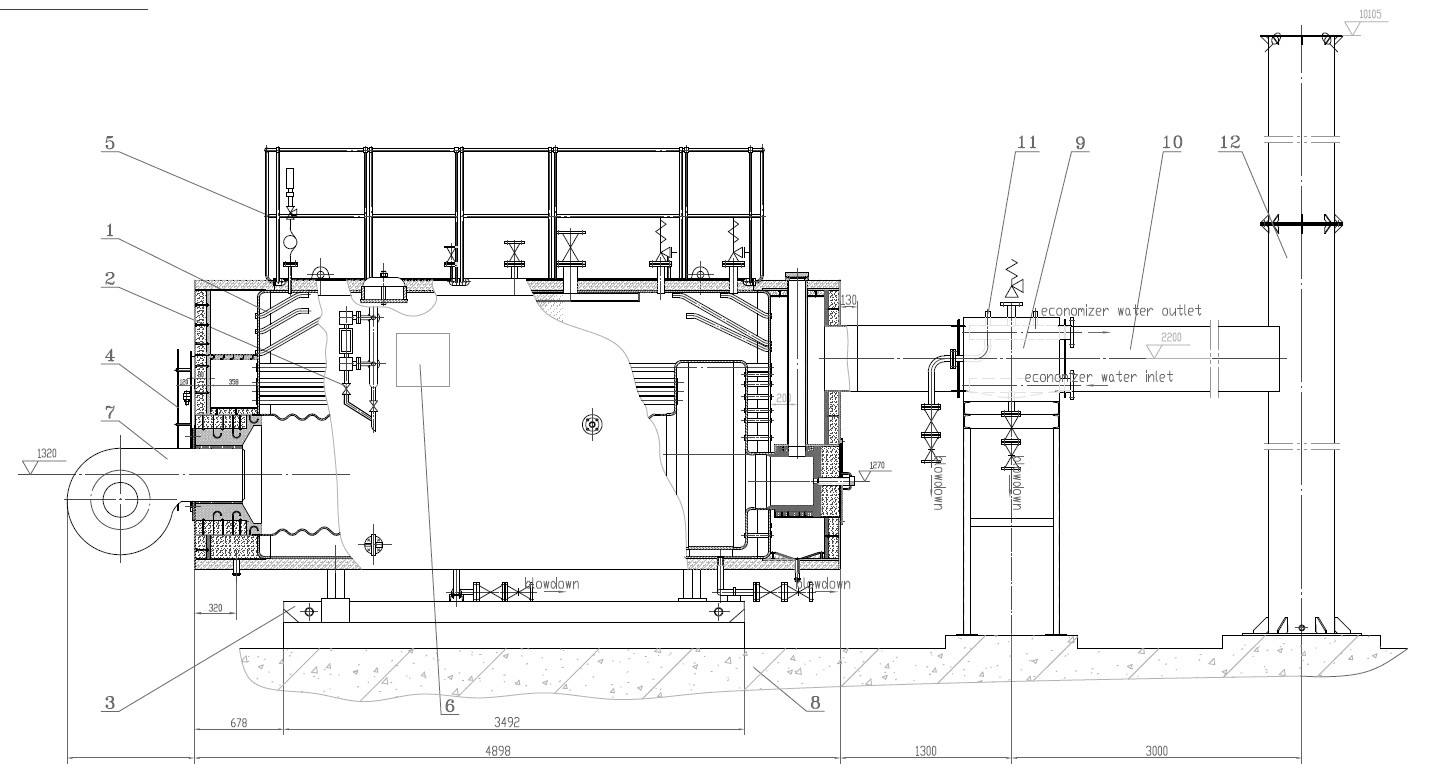
What Role Does Heat Recovery Equipment (Economizers and Air Preheaters) Play in Efficiency Improvement?

In any steam-generating system, a significant portion of fuel energy is lost as hot flue gas. Instead of letting this energy escape through the stack, heat recovery equipment—mainly economizers and air preheaters—captures and reuses part of this waste heat to preheat feedwater or combustion air. This process can increase overall boiler efficiency by 5–10%, translating directly into lower fuel consumption and reduced emissions.

In simple terms:

Economizers and air preheaters improve efficiency by reclaiming waste heat from exhaust gases and using it to raise the temperature of boiler feedwater and combustion air, thus reducing the amount of fuel needed to generate steam.

Economizers and air preheaters reduce fuel use by recovering waste heat from flue gases.True

They preheat incoming feedwater and combustion air, lowering the required heat input for steam generation.


Flue gas heat recovery is only beneficial for small boilers.False

Heat recovery offers proportional savings across all boiler sizes, with greater absolute benefits in large industrial systems.


1. Economizers – Preheating Feedwater Using Flue Gas Heat

Function:
An economizer transfers heat from exhaust gases to the incoming feedwater before it enters the boiler drum or economizer section.

Key Benefits:

  • Improves efficiency by 3–7%.

  • Lowers fuel consumption by reducing the enthalpy difference needed to produce steam.

  • Reduces thermal stress on boiler tubes due to gradual water heating.

Typical Operation:

  • Flue gas outlet temperature: 300–400°C

  • Feedwater inlet temperature: 80–120°C

  • Economizer outlet water temperature: 150–220°C

Efficiency Gain Formula (Excel-Ready):
Efficiency gain (%) = (Cp_gas * (T_in - T_out) * (1 - η_existing)) / (Fuel_LHV * Boiler_Load)

Where:

  • Cp_gas = Specific heat of flue gas (~1.0 kJ/kg·K)

  • T_in - T_out = Flue gas temperature drop across the economizer

  • η_existing = Existing boiler efficiency (decimal)

Example:
A 10 t/h boiler with a 50°C reduction in flue gas temperature can achieve ~5% fuel savings annually.


2. Air Preheaters – Warming Combustion Air for Better Fuel Burn

Function:
An air preheater transfers heat from the outgoing flue gases to the incoming combustion air.

Key Benefits:

  • Enhances flame temperature, promoting more complete combustion.

  • Improves efficiency by 2–5%.

  • Reduces unburned carbon and CO emissions.

  • Lowers stack losses by utilizing residual flue heat.

Typical Configurations:

  • Recuperative type: Tubular or plate heat exchangers.

  • Regenerative type: Rotary heat wheels (common in large coal-fired units).

Example Calculation:
Raising combustion air from 25°C to 150°C can save 1.5–2.0% fuel per 50°C increase in air temperature.


3. Combined Effect of Economizers + Air Preheaters

When used together, these two systems deliver cumulative efficiency improvements of up to 10%.

ComponentFuel Saving (%)Temperature Recovery Range
Economizer3–780–220°C (water side)
Air Preheater2–525–150°C (air side)
Total (combined)5–10

This synergy is especially valuable in coal, biomass, and oil-fired boilers, where flue gas temperatures are high enough for substantial heat recovery.


4. Operational and Design Considerations

FactorImpact
Flue gas compositionAcidic gases (SO₂, moisture) can cause corrosion; stainless or enamel-coated tubes are recommended.
Condensation controlKeep metal temperatures above acid dew point (~120°C for coal, ~90°C for gas).
Soot and foulingRegular cleaning ensures sustained heat transfer efficiency.
Flow configurationCounter-flow designs yield higher temperature differentials and better performance.

5. Economic and Environmental Benefits

  • Reduced fuel costs: A 1% gain in efficiency cuts fuel consumption by ~1.5%.

  • Lower CO₂ emissions: For each 1% efficiency improvement, CO₂ output drops by ~1.8%.

  • Short payback period: Typically 6–18 months depending on fuel price.

Example:
A 20 t/h coal-fired boiler saving 5% fuel at $100/ton of coal reduces operating costs by ~$25,000–30,000 per year.


6. Summary

SystemPurposeEfficiency GainMain Advantage
EconomizerPreheats feedwater3–7%Less fuel required to generate steam
Air PreheaterHeats combustion air2–5%Improved combustion efficiency
Combined Effect5–10%Lower emissions, faster payback

Together, economizers and air preheaters form the foundation of modern boiler heat recovery design—simple, reliable, and highly effective measures for achieving substantial fuel savings and emission reductions.

How Can Automation and Control Systems Help Maintain Peak Boiler Efficiency?

In industrial boiler operation, even small deviations in air-fuel ratio, steam demand response, or flue gas temperature can cause significant efficiency losses and higher fuel bills. Many facilities face the pain of inefficient manual control, where inconsistent combustion or unoptimized load transitions lead to wasted energy and excessive emissions. The solution lies in modern automation and control systems, which continuously monitor, adjust, and optimize every process variable to sustain peak efficiency and reliable performance over time.

Automation and control systems maintain peak boiler efficiency by continuously monitoring key operating parameters (such as air-fuel ratio, flue gas temperature, pressure, and feedwater levels) and automatically adjusting combustion, feedwater, and load conditions to achieve optimal performance with minimal energy waste.

Automation systems simply record data without adjusting boiler operation.False

Modern control systems actively regulate combustion, water levels, and air-fuel ratios in real time to maintain efficiency.


Automated controls can improve boiler efficiency by 3–8% compared with manual operation.True

Precise modulation of burners, airflow, and load balance reduces excess air and minimizes energy losses.


1. Role of Automation in Boiler Efficiency

Automation provides real-time monitoring, feedback, and control over the combustion and steam generation process. Instead of manual intervention, smart systems ensure all components—burners, fans, pumps, and valves—operate in perfect synchronization for maximum thermal efficiency.

System FeatureFunctionEfficiency Impact
O₂ Trim ControlContinuously adjusts air supply to maintain optimal O₂ level in flue gasReduces excess air, saving 1–3% fuel
Load Modulation ControlMatches firing rate to steam demandMinimizes on/off cycling losses
Feedwater ControlMaintains proper drum level and preheats feedwaterPrevents carryover and thermal shock
Flue Gas Temperature MonitoringDetects fouling or heat loss issuesEnables timely maintenance
Combustion OptimizationCoordinates burner and airflow in real timeImproves overall efficiency 3–8%

2. Key Control Technologies for Peak Performance

a. O₂ Trim Control System

This system uses flue gas oxygen analyzers to automatically adjust combustion air flow. The optimal O₂ range depends on fuel type and boiler design.

Fuel TypeOptimal O₂ (%)Efficiency Gain (%)
Natural Gas2.0–3.02–4
Fuel Oil3.0–4.01–3
Coal4.0–6.02–5

By maintaining the correct oxygen level, the system minimizes excess air and reduces stack losses—each 1% reduction in excess air typically increases efficiency by 0.3–0.6%.


b. Variable Speed Drives (VSDs) and Modulating Burners

Traditional systems operate blowers and pumps at constant speeds. VSDs adjust motor speed according to real demand, cutting unnecessary power use.

Benefits:

  • 20–30% electrical energy savings.

  • Smoother load response.

  • Reduced mechanical wear on moving parts.

Example Excel Formula:
Power Saving (%) = (1 - (Actual Speed / Rated Speed)^3) × 100


c. Advanced Combustion Control (ACC) and Burner Management Systems (BMS)

These integrated systems continuously manage the air-fuel ratio, flame stability, and ignition sequence.

Functions include:

  • Dynamic fuel flow control based on steam load.

  • Continuous burner flame monitoring via UV/IR sensors.

  • Automatic purge and restart for safety.

  • Real-time efficiency tracking with heat balance algorithms.

A properly tuned ACC/BMS can raise boiler efficiency by 5–7% while improving safety compliance.


3. Smart Monitoring and Data Analytics

Digital monitoring systems equipped with IoT sensors and cloud connectivity track:

  • Flue gas O₂ and CO levels.

  • Feedwater temperature and conductivity.

  • Steam pressure and flow trends.

  • Heat exchanger temperature differential (ΔT).

Data analytics dashboards provide predictive insights—alerting operators to fouling, scaling, or inefficient firing conditions before they impact performance.

Parameter TrackedNormal RangeAction Trigger
O₂ in Flue Gas2–4%>6% (adjust air damper)
Feedwater Temp85–105°C<80°C (check economizer)
Stack Temp120–180°C>200°C (clean heat surface)
Steam Pressure±2% of setpointSudden deviation (load imbalance)

4. Integration with Energy Management Systems (EMS)

Modern automation platforms link directly with Energy Management Systems, allowing plant operators to:

  • Benchmark energy KPIs (e.g., kg steam/kg fuel).

  • Schedule optimized boiler loading.

  • Balance multiple boilers for best combined efficiency.

  • Generate compliance reports automatically.

Result: Up to 10% reduction in total plant fuel use through better load management and continuous tuning.


5. Case Study: Automated Gas-Fired Boiler System

A food processing plant replaced manual control with a PLC-based automation system featuring O₂ trim and variable-speed drives.

ParameterBeforeAfter AutomationImprovement
Efficiency (%)8794+7
Gas Use (Nm³/year)1,200,0001,110,000–90,000
Payback Period14 months

The system achieved consistent combustion quality, fewer shutdowns, and reduced fuel and maintenance costs.


6. Economic and Environmental Benefits

AspectAutomation Impact
Fuel Savings3–10% annually
Emission ReductionUp to 8% CO₂, 15% NOₓ
Maintenance Reduction10–20% less downtime
Payback Period1–2 years

The improved stability in combustion directly leads to fewer incomplete burns, lower CO and NOₓ formation, and a longer boiler life cycle.


7. Summary

Automation FunctionEfficiency ContributionKey Benefit
O₂ Trim Control1–3%Reduces excess air losses
Burner Modulation2–5%Matches fuel rate to demand
Smart Monitoring1–2%Early detection of inefficiencies
Predictive Maintenance1–3%Reduces unplanned downtime
Total Combined Gain5–10%Sustained high efficiency

Automation ensures that efficiency isn’t a one-time tuning outcome—it’s maintained every hour of operation, automatically and reliably.

🔍 Conclusion

The most efficient industrial boilers utilize advanced heat recovery and combustion control technologies, such as condensing systems for gas applications or supercritical designs for power generation. Choosing the right boiler ensures lower fuel consumption, reduced emissions, and long-term cost savings.


📞 Contact Us

💡 Looking to upgrade to a high-efficiency industrial boiler? We provide customized gas-fired, biomass, and supercritical boiler systems engineered for maximum performance and energy savings.

🔹 Contact us today to discover the most efficient boiler solution for your industry. ⚡🔥🏭✅

FAQ

What is the most efficient type of industrial boiler?

The most efficient industrial boilers today are typically condensing gas-fired boilers, which can achieve efficiencies up to 98% (LHV). These systems capture and reuse latent heat from exhaust gases that would otherwise be lost. In large-scale industrial applications, supercritical and ultra-supercritical boilers and waste heat recovery boilers (WHRBs) are also considered top performers for efficiency.


How do condensing boilers achieve such high efficiency?

Condensing boilers utilize a secondary heat exchanger to recover heat from flue gas condensate. This process captures latent heat from water vapor, dramatically improving thermal efficiency. When operated with natural gas or LPG and under low return water temperatures, they reach peak performance levels of up to 98%.


What are other highly efficient boiler types besides condensing models?

Other efficient industrial boiler types include:

  • Circulating Fluidized Bed (CFB) boilers – 85–90% efficiency, with fuel flexibility (coal, biomass, waste).

  • Waste Heat Recovery Boilers (WHRBs) – utilize exhaust heat from industrial processes or gas turbines.

  • Supercritical & Ultra-supercritical boilers – 42–47% efficiency in power generation applications.

  • Hybrid boilers – combine conventional combustion and waste heat recovery for optimized efficiency.


What factors influence industrial boiler efficiency?

Key factors include:

  • Fuel type and quality – gas yields higher efficiency than coal or biomass.

  • Steam pressure and temperature – higher conditions improve heat conversion.

  • Maintenance and operation – regular cleaning, tuning, and automation improve efficiency.

  • Heat recovery systems – economizers and air preheaters significantly boost performance.

  • Load management – running boilers at optimal load avoids efficiency loss.


Which boiler type offers the best long-term ROI?

Although condensing boilers provide the highest immediate efficiency, the best ROI depends on application:

  • Gas-fired condensing boilers – best for food, textile, and chemical industries with steady low-temperature demand.

  • CFB or biomass boilers – ideal for facilities with access to low-cost fuels.

  • Waste Heat Recovery Boilers – best where waste heat sources (kilns, turbines, engines) are available.
    A full lifecycle cost analysis should include installation, maintenance, fuel, and emission compliance costs.


References

  1. Energy.gov – Improving Steam System Efficiencyhttps://www.energy.gov

  2. IEA – High-Efficiency Industrial Boiler Technologieshttps://www.iea.org

  3. Babcock & Wilcox – Efficient Industrial Boilershttps://www.babcock.com

  4. Cleaver-Brooks – Condensing Boiler Technologyhttps://www.cleaverbrooks.com

  5. Thermax – Waste Heat Recovery Boilershttps://www.thermaxglobal.com

  6. Doosan Lentjes – Circulating Fluidized Bed Boilershttps://www.doosanlentjes.com

  7. GE Steam Power – Supercritical Boiler Efficiencyhttps://www.ge.com

  8. ASME – Boiler Efficiency Standardshttps://www.asme.org

  9. ScienceDirect – Industrial Boiler Performance Analysishttps://www.sciencedirect.com

  10. ResearchGate – Optimization of Boiler Thermal Efficiencyhttps://www.researchgate.net

Wade Zhang

CEO of Taishan Group Taian Boao International Trade Co., Ltd. 30 years experience in Global industrial boiler market,  Over 300 boiler projects experience, including 21+ EPC projects. Projects span 30+ countries & regions, involving industries such as nuclear power, energy & electricity, municipal heating, mining, textiles, tires etc.

What Is the Most Efficient Type of Industrial Boiler? Read More »

Taishan Group Showcases Advanced Industrial Boilers at 138th Canton Fair 2025

Taishan Group Showcases Advanced Industrial Boilers at 138th Canton Fair 2025

1️⃣ Exhibition Overview: Taishan Group at the 138th Canton Fair

Taishan Group, a globally recognized industrial steam boiler and power plant boiler manufacturer, is excited to announce its participation in the 138th Canton Fair, to be held in Guangzhou, China, from October 15 to 19, 2025.
We sincerely invite all domestic and international partners to visit us at Booth 18.1A09 to explore our latest energy-efficient and environmentally friendly boiler technologies.

As a leading enterprise in the boiler manufacturing industry, Taishan Group has been providing complete boiler systems and solutions for power generation, industrial processing, and renewable energy applications across more than 100 countries.

2️⃣ Innovative Boiler Products on Display

At this year’s Canton Fair, Taishan Group will present a full range of high-performance industrial boilers, including:

  • Coal-Fired Boilers – designed for high efficiency and stable operation in industrial and utility applications.

  • Biomass Boilers – an eco-friendly alternative utilizing renewable fuel sources.

  • Oil and Gas-Fired Boilers – offering flexible dual-fuel operation with low emissions and quick startup.

  • Waste-to-Energy Boilers – suitable for waste incineration and power generation projects.

  • Thermal Oil Furnace Boilers – ideal for precise and stable heat transfer in industrial processes.

Each boiler type represents Taishan Group’s commitment to innovation, energy efficiency, and environmental sustainability, ensuring that clients receive reliable, customized solutions to meet diverse industrial needs.

3️⃣ Commitment to Global Energy Efficiency and Quality

With decades of engineering expertise and international certifications, Taishan Group stands out as a trusted industrial boiler supplier and exporter. Our products comply with international standards such as ASME, CE, and ISO, and have been widely applied in power plants, chemical industries, food processing, textile manufacturing, and paper production.

At the 138th Canton Fair, we will highlight our latest advancements in low-emission combustion systems, smart control technology, and modular boiler design, helping clients reduce operating costs and achieve carbon reduction goals.


4️⃣ Visit Us at Booth 18.1A09 — Let’s Build the Future Together

Taishan Group warmly welcomes global partners, project developers, and industry professionals to visit our booth and learn more about our industrial boiler and power plant solutions. Our technical and sales teams will be available to provide on-site consultation, discuss customized projects, and share insights into the latest energy trends.

📍 Exhibition Details:

  • Event: 138th Canton Fair (China Import and Export Fair)

  • Date: October 15–19, 2025

  • Venue: Guangzhou, China

  • Booth: 18.1A09

We look forward to meeting you at the Canton Fair 2025 and exploring new opportunities for cooperation in the global energy and industrial boiler sectors.

🔍 Conclusion

Taishan Group’s participation in the 138th Canton Fair 2025 reaffirms its commitment to technological innovation and global sustainability. With advanced boiler systems engineered for performance, efficiency, and environmental compliance, Taishan Group stands ready to support industrial and power clients worldwide in achieving energy transformation and green development goals.


📞 Visit or Contact Us

📍 Event: The 138th Canton Fair 2025
📅 Date: April 15–19, 2025
🏢 Location: China Import and Export Fair Complex, Guangzhou, China
📦 Booth: 𝟏𝟖.𝟏𝐀𝟎𝟗

💡 Schedule a meeting or technical consultation with our experts today!

🔹 Join Taishan Group at the Canton Fair and discover the future of industrial boiler innovation. ⚙️🔥🌍✅

Wade Zhang

CEO of Taishan Group Taian Boao International Trade Co., Ltd. 30 years experience in Global industrial boiler market,  Over 300 boiler projects experience, including 21+ EPC projects. Projects span 30+ countries & regions, involving industries such as nuclear power, energy & electricity, municipal heating, mining, textiles, tires etc.

Taishan Group Showcases Advanced Industrial Boilers at 138th Canton Fair 2025 Read More »

How Much Does an Industrial Gas-Fired Boiler Cost?

How Much Does an Industrial Gas-Fired Boiler Cost?

When planning for a new boiler project, one of the most important considerations is the total cost of a gas-fired boiler. Without a clear understanding, businesses may underestimate budgets, face delays during installation, or select a boiler that is not aligned with their operational needs.

The cost of an industrial gas-fired boiler typically ranges from $30,000 to over $300,000 depending on capacity (measured in tons/hr or BHP), steam pressure, efficiency level, and whether it is a standard packaged unit or a custom-engineered system. Additional expenses such as installation, auxiliary equipment (burner, economizer, feedwater system, control panels), and piping can bring the total installed cost to 1.5–3 times the base price. Long-term operating costs, mainly fuel and maintenance, should also be factored into the investment decision.

By evaluating both capital and operational costs, companies can ensure better ROI and reliable steam supply.

What Factors Determine the Price of an Industrial Gas-Fired Boiler?

When businesses plan a boiler investment, they often focus on the unit price alone. However, the real cost of an industrial gas-fired boiler depends on multiple technical and project-specific factors. Gas-fired boilers are widely used for their high efficiency, cleaner emissions, and lower operating cost compared to coal and oil. Yet, their purchase price can vary by over 100% depending on capacity, design, and auxiliary systems.

The price of an industrial gas-fired boiler is primarily determined by its steam capacity, pressure rating, design type (fire-tube, water-tube, condensing, CFB), efficiency features (economizer, condenser, advanced controls), auxiliary systems (burner, feedwater system, stack), installation and commissioning costs, and compliance with local emission standards. Together, these factors can double or triple the base unit price.

This makes a holistic evaluation essential for accurate budgeting and lifecycle planning.

The base boiler price is the only major cost when buying a gas-fired boiler.False

Auxiliary systems, installation, and compliance costs can equal or exceed the boiler’s purchase price.


Efficiency features such as economizers and condensing designs increase upfront price but reduce lifecycle cost through fuel savings.True

They typically deliver 5–10% efficiency gains with 2–4 year payback periods.

1. Boiler Capacity & Pressure Rating

  • Larger capacity = higher material and fabrication costs.

  • High-pressure (>40 bar) systems need thicker steel, certified welding, and stricter safety standards.

  • Cost can rise 20–50% when moving from low to high pressure.

2. Boiler Type & Design

  • Fire-tube: Lower cost, suitable for ≤20 TPH, <25 bar.

  • Water-tube: More expensive, for larger capacities and higher pressures.

  • Condensing boilers: Add 10–20% to upfront cost but save fuel.

  • CFB gas boilers: Specialized, higher cost, for very large utility projects.

3. Efficiency Features

  • Economizers: Add 5–10% cost, improve efficiency 3–6%.

  • Condensing heat exchangers: Recover latent heat, boost efficiency to >95%.

  • O₂ Trim & Controls: Cost more initially, cut fuel use 2–5%.

4. Auxiliary Systems

  • Burner: 15–20% of project cost.

  • Feedwater treatment: 10–15%.

  • Chimney/stack: 5–8%.

  • Control panel/automation: 8–12%.

5. Installation & Commissioning

  • Adds 15–30% depending on site conditions.

  • Includes piping, electrical, civil works, and testing.

6. Emission Compliance

  • Local NOx, CO₂, and particulate standards impact design.

  • Low-NOx burners or SCR (selective catalytic reduction) can add 10–20% to boiler cost.

7. Cost Comparison Example

Boiler TypeCapacityPressureBase Price (USD)Total Installed (USD)
Fire-Tube5 TPH, 16 bar$120,000$220,000–$250,000 
Water-Tube20 TPH, 40 bar$380,000$650,000–$750,000 
Condensing10 TPH, 25 bar$260,000$450,000–$520,000 

Conclusion

The cost of a gas-fired boiler is shaped by capacity, pressure, design, efficiency features, auxiliaries, installation, and compliance needs. Buyers should budget not only for the base unit but also for integration and lifecycle efficiency.

How Does Boiler Size and Steam Capacity Affect Cost?

When planning for an industrial boiler investment, boiler size and steam capacity are among the most important cost drivers. Larger boilers not only require more materials and advanced design but also need stronger infrastructure, higher-rated auxiliaries, and stricter safety compliance. This makes cost scaling non-linear—doubling the steam output does not simply double the price; it can increase by 2.5–3 times because of pressure vessel complexity and auxiliary system upgrades.

Boiler size and steam capacity directly affect cost because larger boilers require more steel, thicker pressure parts, stronger foundations, bigger burners, and higher-capacity auxiliaries. While small packaged boilers (≤5 TPH) may cost $100,000–$200,000, medium units (10–20 TPH) can range $300,000–$700,000, and large utility-scale boilers (>50 TPH) exceed several million dollars. Higher pressures (above 40 bar) further raise costs by 20–40% due to material and fabrication requirements.

This means steam demand forecasting is crucial, as oversizing increases capital and operating cost, while undersizing risks production shortfalls.

Boiler cost scales linearly with size and steam output.False

Cost increases disproportionately with larger sizes due to thicker steel, advanced welding, and auxiliary system upgrades.


Higher-capacity boilers require bigger auxiliaries such as burners, pumps, and economizers, which significantly add to total cost.True

Auxiliary system cost grows with boiler size, often making up 30–50% of installed price.

1. Why Size Affects Price

  • Material Use: Larger pressure vessels need exponentially more steel.

  • Safety Standards: Higher pressures demand certified welding and testing.

  • Auxiliaries: Larger units require more powerful burners, pumps, fans, and controls.

  • Installation Costs: Foundations, piping, and lifting requirements are more complex.

2. Typical Cost Ranges by Capacity

Boiler SizeSteam CapacityPressure RangeBase Price (USD)Total Installed (USD)
Small Packaged1–5 TPH10–16 bar$100k – $200k$180k – $300k
Medium Industrial10–20 TPH20–40 bar$300k – $700k$550k – $1M
Large Utility30–50 TPH40–80 bar$800k – $1.5M$1.5M – $3M+
Utility-Scale>50 TPH>80 bar$2M+$5M+

3. Example: 10 TPH vs 20 TPH Boiler

  • 10 TPH, 25 bar: ~$380,000 base, ~$650,000 installed.

  • 20 TPH, 25 bar: ~$650,000 base, ~$1.2M installed.

  • Cost nearly doubles, but per-ton steam cost decreases with larger unit (economy of scale).

4. Pressure Factor

  • Low-Pressure (<16 bar): Lower steel thickness, cheaper fabrication.

  • Medium-Pressure (20–40 bar): Adds 15–25% cost.

  • High-Pressure (40–100 bar): Adds 30–40% cost due to alloy steel, certifications.

Conclusion

Boiler size and steam capacity are the primary cost determinants, with larger and higher-pressure units demanding significantly higher investment. Choosing the right capacity requires balancing CAPEX, OPEX, and scalability for future demand.

What Role Do Efficiency Ratings and Emissions Standards Play in Pricing?

When evaluating a gas-fired boiler purchase, buyers often compare only the base unit price, but efficiency ratings and emissions standards can have just as much impact on total investment. Modern energy policies, rising fuel costs, and strict air-quality regulations mean that low-cost, standard-efficiency units are often no longer viable. Instead, buyers must weigh higher upfront CAPEX against lower lifecycle fuel costs and compliance-driven penalties.

Higher efficiency ratings increase boiler price by 10–25% due to advanced heat recovery technologies, while stricter emissions standards can add 15–30% for low-NOx burners, flue gas recirculation, or SCR systems. However, these features typically reduce fuel consumption by 5–12% and avoid regulatory fines, making them cost-effective over the boiler’s lifetime.

This makes efficiency and emissions compliance not just technical requirements, but strategic cost factors that directly influence ROI.

Higher-efficiency boilers always cost more but have no impact on lifecycle cost.False

Fuel savings from a 5–10% efficiency gain often pay back the premium within 2–4 years.


Stricter emission standards can add 15–30% to boiler price due to the need for low-NOx burners and after-treatment systems.True

Meeting modern environmental regulations requires advanced combustion and flue gas treatment technologies.

1. Impact of Efficiency Ratings

  • Standard Efficiency (80–85%): Lower cost, but higher fuel bills.

  • High Efficiency (88–92%): Requires economizers, adds 10–15% cost.

  • Condensing Efficiency (>95%): Needs corrosion-resistant heat exchangers, adds 20–25%.

Efficiency LevelCost PremiumFuel SavingsPayback Period
Standard (82%)Base priceNoneN/A
High (90%)+10–15%5–8%2–4 years
Condensing (95%)+20–25%8–12%2–5 years

2. Role of Emission Standards

  • NOx Compliance: Ultra-low NOx burners add 10–20% to boiler cost.

  • SO₂ / PM: Less relevant for gas but critical in dual-fuel designs.

  • CO₂ Reduction Goals: May require efficiency upgrades or hybridization.

  • After-Treatment Systems: SCR (Selective Catalytic Reduction) or FGR (Flue Gas Recirculation) add 10–15% cost.

3. Example: 10 TPH Boiler Case

  • Standard 82% efficiency, no emissions controls: ~$280,000 base.

  • 90% efficiency + low-NOx burner: ~$340,000 (+21%).

  • 95% condensing + SCR system: ~$420,000 (+50%).

  • Fuel savings: $30,000–50,000 per year, paying back in ~3–4 years.

4. Regulatory Pressure

  • Many regions (EU, US EPA, China, India) mandate <30 mg/Nm³ NOx for new boilers.

  • Non-compliance can result in fines, retrofits, or operating restrictions.

  • Forward-looking buyers prefer to invest in future-proof systems.

Conclusion

Efficiency ratings and emissions standards directly raise upfront boiler cost, but they reduce lifecycle expenses and secure compliance. Buyers must treat these as investments in operational sustainability and risk avoidance, not optional add-ons.

How Do Auxiliary Systems and Controls Influence the Total Investment?

When companies evaluate a gas-fired boiler purchase, the boiler unit price is often the first number considered. However, this represents only part of the true cost. The auxiliary systems and control package—burners, economizers, feedwater treatment, pumps, chimneys, instrumentation, and automation—can equal or exceed the price of the boiler itself. These systems are not optional; they are essential for safe, efficient, and compliant operation.

Auxiliary systems and controls typically account for 30–50% of the total installed cost of a gas-fired boiler. Burners alone can represent 15–20% of cost, economizers 5–10%, feedwater systems 10–15%, and automation 8–12%. While they increase upfront investment, they improve combustion stability, recover waste heat, ensure water quality, reduce emissions, and optimize performance—ultimately lowering lifecycle fuel and maintenance costs.

This makes auxiliaries and controls central to both budgeting and long-term ROI.

Auxiliary systems are optional extras that can be excluded to reduce boiler cost.False

Burners, feedwater systems, and controls are essential for safe operation, efficiency, and compliance.


Automation and digital controls can add 8–12% to cost but reduce fuel use and maintenance expenses by 5–10% annually.True

Smart controls optimize combustion and enable predictive maintenance, improving lifecycle economics.

1. Major Auxiliary Systems and Their Cost Role

  • Burner System (15–20%)

    • Ensures efficient combustion and low NOx.

    • Advanced modulating burners cost more but cut fuel waste.

  • Economizer (5–10%)

    • Recovers flue gas heat to preheat feedwater.

    • Improves efficiency by 3–6% with 2–3 year payback.

  • Feedwater System (10–15%)

    • Includes deaerators, pumps, water treatment.

    • Prevents scaling and corrosion, extending boiler life.

  • Stack/Chimney (5–8%)

    • Sized for flue gas volume and emissions control needs.

  • Control & Automation (8–12%)

    • PLC/SCADA with combustion controls and safety interlocks.

    • Enables monitoring, alarms, and remote operation.

2. Comparative Example – 10 TPH Gas-Fired Boiler

Cost ComponentApprox. ShareEstimated Cost (USD)
Boiler Base Unit55–65%$240,000
Burner System15–20%$70,000
Economizer5–10%$35,000
Feedwater System10–15%$50,000
Automation & Controls8–12%$40,000
Stack & Misc.5–8%$25,000
Total Installed Cost100%~$460,000

3. Impact of Controls on Lifecycle Costs

  • Fuel Savings: O₂ trim and load modulation reduce gas use by 3–5%.

  • Maintenance Reduction: Predictive alerts lower repair frequency.

  • Downtime Avoidance: Early fault detection prevents costly shutdowns.

  • Compliance Assurance: Automated reporting simplifies regulatory checks.

4. Case Study

A 20 TPH gas-fired boiler with advanced automation cost 12% more upfront, but reduced annual gas consumption by 7%. Over 10 years, this saved $1.2M in fuel costs, more than offsetting the initial premium.

Conclusion

Auxiliary systems and controls are not secondary costs—they are the foundation of boiler efficiency, reliability, and compliance. Although they increase CAPEX, they deliver payback through fuel savings, reduced maintenance, and longer boiler lifespan.

What Is the Difference in Cost Between Packaged and Custom Gas-Fired Boilers?

When deciding on a gas-fired boiler investment, one of the first questions is whether to select a packaged unit or a custom-designed system. The choice impacts not only capital cost but also installation schedule, operating flexibility, and lifecycle economics. Many end-users assume that a larger or more advanced boiler must always be custom, but advances in modular packaged solutions have blurred this line.

Packaged gas-fired boilers are typically 20–35% less expensive upfront than custom-engineered units, since they are mass-produced, skid-mounted, and require minimal site engineering. Custom-designed boilers, while 30–50% more costly, allow higher steam capacities, special fuel blends, higher pressures, and integration with complex plant systems.

The decision depends on plant size, process needs, and site constraints.

Packaged boilers are always cheaper over their lifecycle than custom boilers.False

While packaged units cost less upfront, custom systems may deliver lower fuel costs and longer lifespans in large-scale applications.


Custom-engineered gas-fired boilers can cost 30–50% more than packaged units due to site-specific engineering and auxiliary integration.True

Design customization, higher capacities, and unique compliance requirements increase cost.

1. Packaged Gas-Fired Boilers – Cost and Benefits

  • Cost Range: $50,000 – $500,000 (up to 30 TPH steam).

  • Advantages:

    • Lower CAPEX due to standardized design.

    • Factory-assembled skid (burner, controls, feedwater) minimizes installation cost.

    • Faster delivery (2–4 months).

    • Ideal for small to mid-sized plants, hospitals, food processing.

  • Limitations:

    • Typically capped at ~30 TPH and 25–40 bar pressure.

    • Limited customization of fuel flexibility or control systems.

2. Custom Gas-Fired Boilers – Cost and Benefits

  • Cost Range: $400,000 – $3,000,000+ (30–300 TPH steam).

  • Advantages:

    • Tailored to exact steam load, pressure, and redundancy requirements.

    • Can integrate dual-fuel capability, advanced emissions controls.

    • Suitable for utility-scale power and petrochemical industries.

    • Long service life with higher efficiency optimization.

  • Limitations:

    • Longer delivery (8–12 months).

    • Engineering, commissioning, and auxiliaries increase cost.

3. Cost Comparison Example – 20 TPH Steam Boiler

ParameterPackaged BoilerCustom Boiler
Base Cost$420,000$650,000
Auxiliaries & ControlsIncluded (standard)+$150,000 (custom)
Installation$80,000$200,000
Delivery Lead Time4 months10 months
Total Installed Cost$500,000$1,000,000

4. ROI Considerations

  • Packaged Units: Faster ROI (1–3 years) in small plants with stable loads.

  • Custom Units: Longer payback (3–6 years) but better lifecycle efficiency and scalability.

  • Fuel Savings Impact: A 2–3% efficiency gain in a large custom boiler can save $100,000+ annually in fuel.

Conclusion

Packaged boilers minimize upfront investment and commissioning time, making them the best choice for small to medium industrial users. Custom boilers demand higher CAPEX but deliver flexibility, higher efficiency, and long-term reliability for large-scale operations. The correct choice depends on whether your priority is fast, low-cost deployment or optimized lifecycle performance.

What Long-Term Operating Costs Should Be Considered in Budgeting for Gas-Fired Boilers?

When planning for a new gas-fired boiler, most buyers focus on CAPEX (purchase + installation). However, the OPEX (operating expenses) often far exceed the initial investment over a boiler’s 20–30 year service life. Failure to account for these hidden costs leads to budget overruns, unexpected downtime, and poor ROI.

The main long-term operating costs include fuel (60–80% of lifecycle cost), maintenance and spare parts (5–10%), water and treatment chemicals (3–5%), emission compliance costs (2–5%), and labor/monitoring (5–10%). Budgeting must therefore prioritize lifecycle efficiency and reliability, not just upfront purchase price.

This perspective allows buyers to make smarter decisions about efficiency upgrades, automation, and preventive maintenance strategies.

Fuel costs account for the majority of a gas-fired boiler’s lifecycle expenses.True

Fuel typically represents 60–80% of total cost of ownership, making efficiency gains crucial.


Maintenance and spare parts can be ignored in lifecycle budgeting because they are minimal.False

Annual inspections, burner servicing, gasket replacements, and water-side cleaning contribute 5–10% of OPEX.

1. Major Long-Term Operating Cost Components

Cost ComponentTypical Share of OPEXDescription
Fuel Consumption60–80%Natural gas, LNG, or biogas costs dominate. Even a 1% efficiency gain can save $10,000–50,000 annually in mid-size plants.
Maintenance & Spare Parts5–10%Burner servicing, refractory repairs, valve/gasket replacements, annual inspection fees.
Water & Chemicals3–5%Feedwater pre-treatment, demineralization, softeners, oxygen scavengers. Poor water treatment increases scaling costs.
Emission Compliance2–5%NOx monitoring systems, low-NOx burner servicing, permits, and possible carbon credit purchases.
Labor & Monitoring5–10%Operator salaries, digital monitoring systems, training, safety compliance.

2. Example – 10 TPH Gas-Fired Boiler (20-Year Lifecycle)

Cost ElementAnnual Cost (USD)20-Year Cost (USD)Share of Total
Fuel (natural gas @ $0.35/m³)$280,000$5,600,00075%
Maintenance & Parts$30,000$600,0008%
Water & Chemicals$15,000$300,0004%
Emission Compliance$10,000$200,0003%
Labor & Monitoring$35,000$700,00010%
Total Lifecycle OPEX$370,000$7,400,000100%

3. Strategies to Manage OPEX

  • Invest in High Efficiency: Even a 3–5% higher efficiency rating pays back quickly through fuel savings.

  • Use Economizers/Condensing Tech: Reduces gas use by 5–10%.

  • Water Treatment Programs: Prevents scaling, reduces fuel penalties, and extends boiler life.

  • Automation & Remote Monitoring: Cuts labor costs and avoids costly downtime.

  • Planned Maintenance: Reduces emergency repair costs and keeps efficiency stable.

4. Key Insight

CAPEX for a gas-fired boiler may range from $300,000–$3M, but OPEX can exceed 10–15 times CAPEX over its service life. This makes lifecycle costing, not initial price, the critical budgeting factor.

Conclusion

When budgeting for a gas-fired boiler, long-term costs—especially fuel and maintenance—must guide investment decisions. Paying more upfront for efficiency and automation usually delivers much larger savings over the lifecycle.

🔍 Conclusion

The cost of an industrial gas-fired boiler depends on capacity, efficiency, system design, and installation scope. While the upfront investment may seem significant, choosing the right configuration can result in fuel savings, lower emissions, and reliable long-term operation.


📞 Contact Us

💡 Looking for a detailed quotation for a gas-fired boiler project? We provide cost evaluations, system customization, and turnkey installation services to match your production needs and budget.

🔹 Contact us today for a tailored gas-fired boiler solution with competitive pricing. 🏭🔥💰✅

FAQ

How much does an industrial gas-fired boiler cost?

The price depends on capacity, pressure, and design:

  • Small packaged gas boilers (1–5 t/h): $25,000 – $70,000

  • Medium capacity (6–20 t/h): $80,000 – $250,000

  • Large gas-fired units (20–75+ t/h): $400,000 – $1,200,000+
    This excludes installation, shipping, and auxiliary systems.


What factors affect the cost of a gas-fired boiler?

Key cost drivers include:

  • Capacity and pressure ratings

  • Boiler type – fire-tube vs water-tube

  • Fuel efficiency level (standard vs condensing)

  • Auxiliary equipment – economizers, burners, feedwater systems

  • Automation level – basic controls vs advanced PLC/SCADA

  • Regulatory certifications (ASME, CE, ISO, etc.)


What are the operating costs of a gas-fired boiler?

Gas-fired boilers generally have lower operating costs than oil or coal systems due to cleaner combustion.

  • Natural gas consumption – 60–75% of total OPEX

  • Routine maintenance – burner checks, water treatment, safety valves

  • Labor and utilities – operators, electrical systems

  • Emission compliance – typically lower costs compared to oil/coal


How does efficiency impact the total cost of ownership?

Efficiency plays a critical role:

  • Condensing gas boilers (95%+) provide significant savings.

  • A 10 t/h boiler running 8,000 hrs/year at 90% efficiency can save $40,000–$90,000 annually in fuel compared to an 80% unit.

  • Over a 15–20 year lifecycle, efficiency reduces overall costs more than purchase price differences.


What is the total installed cost of an industrial gas-fired boiler system?

Beyond the boiler unit itself, total installed costs include:

  • Civil works (foundation, supports)

  • Auxiliary systems – pumps, economizers, water treatment

  • Piping, ducting, and electricals

  • Commissioning and testing
    Typically, the installed cost = 1.5–2 times the boiler price.


References

  1. U.S. Department of Energy – Industrial Boiler Basicshttps://www.energy.gov

  2. ASME – Boiler and Pressure Vessel Standardshttps://www.asme.org

  3. Forbes Marshall – Gas Boiler Cost Factorshttps://www.forbesmarshall.com

  4. Cleaver-Brooks – Industrial Boiler Costshttps://www.cleaverbrooks.com

  5. Thermax – Gas-Fired Boiler Solutionshttps://www.thermaxglobal.com

  6. Babcock & Wilcox – Boiler Technologieshttps://www.babcock.com

  7. Spirax Sarco – Steam Boiler Cost Considerationshttps://www.spiraxsarco.com

  8. ResearchGate – Gas-Fired Boiler Economicshttps://www.researchgate.net

  9. ScienceDirect – Lifecycle Cost Analysis of Boilershttps://www.sciencedirect.com

  10. Engineering Toolbox – Boiler Fuel Data and Calculationshttps://www.engineeringtoolbox.com

Wade Zhang

CEO of Taishan Group Taian Boao International Trade Co., Ltd. 30 years experience in Global industrial boiler market,  Over 300 boiler projects experience, including 21+ EPC projects. Projects span 30+ countries & regions, involving industries such as nuclear power, energy & electricity, municipal heating, mining, textiles, tires etc.

How Much Does an Industrial Gas-Fired Boiler Cost? Read More »

Latest Innovations in Industrial Steam Boiler Design

Latest Innovations in Industrial Steam Boiler Design

Industrial steam boilers have long been the backbone of power generation, manufacturing, food processing, and chemical industries, but traditional designs often suffer from low efficiency, high emissions, and frequent maintenance challenges. With rising energy costs and stricter environmental regulations, companies are seeking advanced boiler technologies to stay competitive.

The latest innovations in industrial steam boiler design include high-efficiency heat recovery systems (economizers, condensing technology), low-NOx and ultra-low-emission combustion technologies, modular and compact boiler designs, smart control and automation systems with IoT integration, and compatibility with renewable fuels such as biomass and hydrogen blends. These advancements not only improve energy efficiency but also reduce carbon footprint, enhance operational safety, and extend equipment life.

By embracing these innovations, industries can lower operating costs, improve reliability, and ensure compliance with future energy and environmental standards.

How have advanced combustion technologies reduced emissions in modern steam boilers?

Industrial steam boilers have historically been significant contributors to NOx, SOx, CO, and particulate emissions. With tightening environmental regulations and rising fuel costs, traditional combustion systems often fail to meet compliance or efficiency demands. Left unchecked, these emissions not only increase operating costs but also expose plants to penalties and reputational risks. The solution has been the development and adoption of advanced combustion technologies that optimize flame stability, fuel-air mixing, and temperature control to minimize pollutant formation at the source.

Advanced combustion technologies—including low-NOx burners, staged combustion, flue gas recirculation (FGR), oxy-fuel systems, and digital combustion controls—have reduced boiler emissions by 40–80%. These innovations limit NOx formation, enhance fuel efficiency, and support compliance with global emission standards such as EPA, EU, and CPCB norms.

By implementing these technologies, modern steam boilers achieve both regulatory compliance and lower lifecycle costs, positioning industries for sustainable operation.

Conventional burners are sufficient to meet modern low-emission regulations.False

Conventional burners produce higher NOx and CO emissions and often cannot comply with today’s stricter regulations.


Low-NOx burners and staged combustion reduce NOx formation at the flame level.True

These technologies optimize flame temperature and oxygen distribution to suppress thermal NOx generation.

Key Combustion Technologies and Their Impact

1. Low-NOx Burners (LNB)

  • Improve fuel-air mixing to avoid hot spots.

  • Reduce thermal NOx by lowering flame temperature.

  • Widely used in both fire-tube and water-tube boilers.

2. Staged Combustion

  • Splits combustion into primary and secondary stages.

  • Limits oxygen availability in the first stage to suppress NOx formation.

  • Completes oxidation in the second stage to minimize CO.

3. Flue Gas Recirculation (FGR)

  • Recirculates a portion of exhaust gases into the burner.

  • Dilutes oxygen and lowers flame temperature, reducing NOx by up to 60%.

  • Common in gas-fired boilers.

4. Oxy-Fuel Combustion

  • Uses pure oxygen instead of air, eliminating nitrogen from the reaction.

  • Produces near-zero NOx and allows easier CO₂ capture.

  • Mostly applied in large, high-efficiency units.

5. Digital Combustion Controls

  • Advanced sensors and PLC/SCADA systems optimize excess air, flame shape, and fuel flow.

  • Improve efficiency while reducing both CO and NOx emissions.

Emission Reduction Comparison

TechnologyNOx Reduction (%)CO Reduction (%)Notes
Low-NOx Burner30–5010–20Standard upgrade
Staged Combustion40–6020–30Often combined with LNB
Flue Gas Recirculation50–7020–25Widely adopted in gas-fired units
Oxy-Fuel Combustion70–9040–50High cost, niche applications
Digital Controls10–2010–15Continuous optimization

Case Example: 50 TPH Water-Tube Boiler Upgrade

  • Original NOx emissions: ~350 mg/Nm³

  • With LNB + FGR: ~140 mg/Nm³ (60% reduction)

  • With additional staged combustion + controls: ~90 mg/Nm³ (75% reduction)

  • Result: Compliance with EU Industrial Emissions Directive (IED) limits (<100 mg/Nm³).

Conclusion

Advanced combustion technologies have transformed modern steam boilers from high-emission units into clean, efficient energy systems. By integrating low-NOx burners, staged combustion, FGR, oxy-fuel options, and smart controls, industries achieve both compliance and efficiency. These technologies not only cut emissions by up to 80% but also reduce fuel costs and enable future-ready carbon capture strategies.

What role do economizers, air preheaters, and condensing systems play in boosting efficiency?

One of the biggest sources of energy loss in steam boilers is wasted heat in flue gases. Traditional designs often let exhaust gases leave at high temperatures, carrying away valuable energy and forcing operators to burn more fuel to maintain steam output. This increases operational costs and emissions. The solution lies in heat recovery systems—specifically economizers, air preheaters, and condensing units—that reclaim this waste heat and feed it back into the process.

Economizers, air preheaters, and condensing systems improve boiler efficiency by 5–15% by recovering waste heat from flue gases. Economizers preheat feedwater, air preheaters raise combustion air temperature, and condensing systems extract latent heat from water vapor in exhaust, collectively reducing fuel consumption and emissions.

By integrating these systems, modern boilers achieve higher thermal efficiency, lower operating costs, and better compliance with energy-efficiency standards.

Flue gas heat recovery systems have little effect on boiler efficiency.False

Heat recovery through economizers, air preheaters, and condensing units significantly reduces fuel use and raises efficiency.


Condensing systems recover latent heat from exhaust gases, improving boiler efficiency.True

Condensing heat exchangers extract additional energy by cooling flue gases below dew point.

How Each System Boosts Efficiency

1. Economizers

  • Located in the flue gas path before the chimney.

  • Transfer waste heat to incoming feedwater.

  • Typical fuel savings: 4–7%.

  • Reduce thermal shock to boiler by preheating water.

2. Air Preheaters

  • Use flue gas to warm combustion air.

  • Hotter combustion air improves flame stability and efficiency.

  • Typical fuel savings: 2–4%.

  • Common in large water-tube boilers.

3. Condensing Heat Exchangers

  • Cool flue gases below the dew point (~55°C).

  • Recover latent heat from water vapor in exhaust.

  • Efficiency gain: up to 8–10% (especially with natural gas).

  • Require corrosion-resistant materials due to acidic condensate.

Efficiency Gains Overview

SystemEfficiency ImprovementNotes
Economizer4–7%Feedwater preheating
Air Preheater2–4%Hotter combustion air
Condensing Unit5–10%Latent heat recovery
Combined Use10–15%Common in modern designs

Case Example: 50 TPH Gas-Fired Boiler

  • Base efficiency: ~82%

  • With economizer: ~87%

  • With air preheater: ~90%

  • With condensing heat exchanger: ~94–95%

  • Net fuel savings: ~10–15% (~$250,000/year in a mid-sized plant).

Conclusion

Economizers, air preheaters, and condensing systems are essential components of modern high-efficiency boilers. By recovering both sensible and latent heat from flue gases, they significantly cut fuel consumption and emissions. Plants that integrate these systems typically achieve 10–15% higher efficiency, making them vital tools for reducing lifecycle costs and meeting stringent energy regulations.

How do modular and compact boiler designs improve installation and scalability?

For decades, industrial boiler projects were defined by long installation times, heavy civil foundations, and rigid, single-unit capacity. This meant high upfront investment and limited flexibility if demand changed. Delayed commissioning often created costly downtime for plants waiting on steam supply. Modular and compact boiler designs were developed as a solution to these challenges, offering faster setup, smaller footprints, and scalable capacity expansion.

Modular and compact boiler designs reduce installation time by up to 50% by using factory-assembled, skid-mounted units that require minimal on-site work. They also improve scalability by allowing plants to add modules in parallel as steam demand grows, ensuring flexible, staged investment and improved operational efficiency.

This approach provides industries with faster project delivery, lower installation risk, and adaptable capacity planning.

Modular boilers take as long to install as conventional monolithic designs.False

Factory-assembled modular boilers require far less site fabrication, cutting installation time by months.


Compact boiler systems allow plants to scale up capacity by adding units instead of replacing existing equipment.True

Parallel modular arrangements enable cost-effective expansion and load balancing.

Key Benefits of Modular and Compact Boiler Designs

1. Accelerated Installation

  • Pre-engineered, skid-mounted units reduce civil works.

  • On-site installation typically cut from 6–9 months (conventional) to 2–4 months.

  • Containerized compact units can be operational in 4–8 weeks.

2. Scalable Capacity Growth

  • Modules (e.g., 5–30 TPH each) can be installed incrementally.

  • Load-sharing across modules enhances part-load efficiency.

  • Expansion is as simple as adding more units, avoiding major shutdowns.

3. Smaller Footprint & Mobility

  • Compact designs fit in tight industrial spaces or urban plants.

  • Easier transport using standard trucks or containers.

  • Suitable for relocatable or temporary installations.

4. Operational Flexibility & Reliability

  • Multiple modules provide redundancy—if one fails, others maintain supply.

  • Maintenance can be performed on individual units without halting the entire system.

Installation & Scalability Comparison

FeatureConventional BoilerModular/Compact Boiler
Installation Time6–9 months2–4 months (or less)
FootprintLargeCompact
ExpansionReplace or oversizeAdd parallel modules
ReliabilitySingle point of failureRedundant operation
Investment ModelHigh upfrontStaged investment

Case Example: 120 TPH Steam Demand

  • Conventional option: One 120 TPH water-tube boiler → ~12 months delivery + ~8 months installation.

  • Modular option: Six 20 TPH modules → ~8 months delivery + ~3 months installation.

  • Expansion scenario: Demand increases to 160 TPH → simply add two more 20 TPH modules, avoiding new boiler procurement.

Conclusion

Modular and compact boiler designs streamline installation and make steam generation systems more adaptable to evolving plant needs. By shortening commissioning, reducing space requirements, and enabling staged capacity growth, these designs help industries cut costs and improve reliability while future-proofing steam infrastructure.

What smart automation and IoT solutions are being applied in boiler control systems?

In traditional boiler systems, operators relied on manual checks and analog gauges to maintain safe and efficient performance. This approach was prone to delays in fault detection, inefficiencies in fuel usage, and higher maintenance costs. As industries push for greater efficiency, safety, and reliability, manual monitoring has become a limiting factor. The solution has been the integration of smart automation and IoT technologies, which allow boilers to self-optimize, predict failures, and provide real-time data for decision-making.

Smart automation and IoT solutions in boiler control systems include advanced PLC/SCADA integration, IoT-enabled sensors for temperature, pressure, and water chemistry, cloud-based monitoring platforms, predictive maintenance algorithms, and AI-driven combustion optimization. These technologies improve efficiency by 5–15%, enhance safety, and minimize downtime by enabling remote supervision and proactive interventions.

By adopting these solutions, modern steam boilers evolve into intelligent, connected assets within Industry 4.0 frameworks.

IoT solutions in boiler systems are mainly cosmetic and do not affect performance.False

IoT sensors and automation provide actionable data that improves efficiency, reliability, and safety.


Smart automation allows predictive maintenance and remote boiler monitoring.True

AI-enabled analytics detect early faults, reducing downtime and unplanned costs.

Key Smart Automation & IoT Applications

1. IoT-Enabled Sensors

  • Real-time monitoring of temperature, pressure, vibration, water chemistry (pH, TDS), and fuel flow.

  • Data transmitted to central dashboards for trend analysis.

2. PLC & SCADA Systems

  • Programmable Logic Controllers (PLC) automate burner management, feedwater control, and blowdown scheduling.

  • Supervisory Control and Data Acquisition (SCADA) systems provide centralized visualization and alarms.

3. Cloud & Remote Monitoring

  • Data uploaded to secure cloud platforms.

  • Remote access allows operators and OEMs to supervise performance globally.

  • Enables 24/7 diagnostics and service support.

4. Predictive Maintenance with AI

  • Machine learning analyzes sensor data to predict tube leaks, scaling, or burner faults before failure.

  • Reduces unscheduled downtime by up to 30–40%.

5. Advanced Combustion Control

  • AI-driven algorithms adjust air-fuel ratio, excess oxygen, and flame stability dynamically.

  • Improves fuel efficiency and lowers NOx and CO emissions.

Benefits of Smart Boiler Controls

BenefitTraditional SystemsSmart Automation & IoT
Efficiency75–85%85–95%
MonitoringManual, localReal-time, remote
MaintenanceReactivePredictive & proactive
SafetyOperator-dependentAutomated fail-safes
Data AnalyticsMinimalAdvanced AI-driven insights

Example: Smart Boiler Upgrade

A 50 TPH gas-fired boiler upgraded with IoT sensors, predictive analytics, and AI combustion control achieved:

  • Fuel savings: ~8% annually.

  • NOx reduction: 25%.

  • Unplanned downtime: cut by 35%.

  • Payback period: ~2 years due to reduced fuel and maintenance costs.

Conclusion

Smart automation and IoT are revolutionizing boiler control systems. By combining real-time monitoring, predictive analytics, cloud platforms, and AI-based combustion control, boilers are becoming intelligent, self-optimizing assets. These solutions not only boost efficiency and safety but also align industrial plants with digital transformation and sustainability goals.

How are renewable fuels (biomass, hydrogen, waste-to-energy) integrated into boiler design?

Conventional industrial boilers were historically optimized for coal, oil, or natural gas, which are reliable but carbon-intensive fuels. As sustainability regulations tighten and industries pursue decarbonization, companies face the challenge of adopting renewable alternatives. However, burning biomass, hydrogen, or waste-derived fuels introduces unique design challenges—such as variable calorific values, higher moisture content, and combustion stability issues. To address these, boiler manufacturers are re-engineering systems with specialized designs that enable efficient, safe, and flexible use of renewable fuels.

Renewable fuels are integrated into boiler design by customizing combustion chambers, fuel feeding systems, burners, and heat recovery components to handle the unique properties of biomass, hydrogen, and waste-derived fuels. Biomass boilers require larger furnaces and advanced ash handling, hydrogen boilers need specially designed burners to manage flame speed and NOx formation, while waste-to-energy boilers integrate robust grates, advanced filtration, and corrosion-resistant alloys. These adaptations ensure efficiency, safety, and compliance with emission standards.

By adopting these design solutions, industries can transition from fossil fuels to sustainable steam generation without compromising reliability.

Hydrogen can be burned in conventional gas burners without modification.False

Hydrogen requires specially designed burners due to its high flame speed, low ignition energy, and risk of flashback.


Biomass fuels can replace coal in boilers when combustion chamber design and feeding systems are adapted.True

Biomass needs larger furnace volumes, moisture management, and ash handling systems to operate efficiently.

Fuel-Specific Boiler Design Adaptations

1. Biomass Integration

  • Fuel Feeding: Screw feeders, pneumatic conveyors, or chain grates for diverse biomass sizes.

  • Combustion Chamber: Larger furnace volumes to account for lower calorific value (~8–18 MJ/kg vs. coal’s ~24–30 MJ/kg).

  • Ash Handling: Automatic removal systems due to higher ash and slag formation.

  • Emission Control: Multi-cyclones, bag filters, or electrostatic precipitators to capture particulates.

2. Hydrogen Integration

  • Burner Technology: Special swirl-stabilized burners to manage hydrogen’s flame speed and prevent flashback.

  • NOx Control: Flue gas recirculation (FGR), staged combustion, or water injection.

  • Material Selection: Alloys resistant to hydrogen embrittlement.

  • Hybrid Flexibility: Many modern hydrogen-ready boilers can run on natural gas today and transition to 100% H₂ in the future.

3. Waste-to-Energy (WtE) Integration

  • Fuel Handling: Robust grates and feeding systems to handle municipal solid waste (MSW), RDF, or industrial residues.

  • Combustion Chamber: High turbulence zones for complete burnout of heterogeneous fuels.

  • Corrosion Resistance: Water walls clad with Inconel or stainless steel to withstand chlorine and alkali salts.

  • Emission Control: Advanced flue gas treatment including lime scrubbers, bag filters, and SCR units for dioxin, acid gas, and NOx control.

Boiler Design Comparison by Fuel

FeatureBiomass BoilerHydrogen BoilerWaste-to-Energy Boiler
Calorific Value (Fuel)8–18 MJ/kg120–142 MJ/kg6–12 MJ/kg (variable)
Furnace DesignLarger volume, low-NOx air stagingCompact, high-velocity burnersLarge grate systems, robust walls
Main ChallengeMoisture & ash handlingFlame stability, NOx emissionsFuel variability, corrosion
Key SolutionAdvanced feeding & ash removalHydrogen-specialized burnersHigh-alloy materials & emission scrubbing

Example of Hybrid Integration

A European paper mill replaced two coal boilers with biomass-waste co-firing units:

  • Fuel mix: 70% wood chips, 30% RDF.

  • Efficiency: ~84%.

  • CO₂ reduction: 220,000 tons/year.

  • Payback: ~5 years, due to avoided carbon taxes and lower fuel costs.

Conclusion

Renewable fuels can be successfully integrated into modern boiler design when fuel-specific adaptations are applied. Biomass boilers require robust fuel and ash handling, hydrogen boilers demand specialized burners and NOx control, while waste-to-energy units need durable materials and sophisticated emission treatment. Together, these innovations enable industries to meet decarbonization targets while maintaining reliable steam generation.

What safety and durability innovations enhance the long-term reliability of boilers?

Boilers operate under high temperature and pressure conditions, making them one of the most critical and risk-prone assets in industrial plants. Historically, boiler failures caused downtime, safety hazards, and costly repairs due to tube ruptures, scaling, or faulty controls. These risks limited operational efficiency and shortened equipment lifespan. To address these challenges, manufacturers have introduced safety and durability innovations that reduce accidents, extend service life, and ensure regulatory compliance.

Modern boiler reliability is enhanced through safety innovations such as redundant safety valves, automated burner management systems, flame detection, and IoT-enabled monitoring, combined with durability improvements like advanced alloys, membrane wall construction, anti-corrosion coatings, and predictive maintenance analytics. These solutions prevent catastrophic failures, extend operating cycles, and lower lifecycle costs.

Together, these innovations transform boilers into safer, more resilient, and longer-lasting assets.

Boiler safety is guaranteed solely by operator experience and manual checks.False

Modern boilers employ automated protection systems, sensors, and fail-safes that go beyond manual monitoring.


Using advanced alloys and coatings significantly extends boiler tube life under harsh conditions.True

Materials such as Inconel, stainless steel, and ceramic coatings resist corrosion, scaling, and high-temperature creep.

Key Safety Innovations in Modern Boilers

1. Automated Burner Management Systems (BMS)

  • Ensures proper sequencing of start-up, operation, and shutdown.

  • Monitors fuel-air ratio and prevents unsafe ignition.

  • Integrated flame scanners for early fault detection.

2. Redundant Safety Valves and Interlocks

  • Dual or triple valves ensure pressure relief redundancy.

  • Interlock systems shut down fuel supply instantly during abnormal conditions.

3. IoT-Based Safety Monitoring

  • Real-time sensors track pressure, temperature, vibration, water chemistry, and flame stability.

  • Predictive alarms prevent operator delay in responding to unsafe conditions.

4. Emergency Shutdown Systems (ESD)

  • Rapid depressurization and fuel cut-off.

  • Linked to plant-wide safety instrumented systems (SIS).

Durability Enhancements

1. Advanced Materials

  • Membrane water wall tubes reduce leakage points.

  • High-alloy steels and Inconel claddings withstand chlorine, sulfur, and hydrogen attack.

  • Ceramic coatings protect against slagging and scaling.

2. Water Chemistry Management

  • Automatic dosing systems maintain pH, hardness, and dissolved oxygen levels.

  • Online monitoring minimizes scaling and corrosion.

3. Thermal Stress Control

  • Drum and tube designs with optimized expansion joints.

  • Controlled ramp-up and cool-down sequences reduce fatigue.

4. Predictive and Preventive Maintenance

  • AI-driven analytics predict tube failure or corrosion hotspots.

  • Condition-based monitoring replaces fixed-interval overhauls.

Comparative Table: Traditional vs. Modern Reliability Features

FeatureTraditional BoilersModern Boilers with Innovations
Safety ControlManual checksAutomated BMS, IoT alarms
MaterialsCarbon steelInconel, stainless, ceramic-coated
Corrosion ResistanceBasic treatmentsAdvanced coatings & alloy cladding
MonitoringPeriodic manualContinuous digital monitoring
Lifespan15–20 years25–35 years with proper care

Case Example

A 200 TPH circulating fluidized bed (CFB) boiler upgraded with Inconel-coated water walls and IoT monitoring achieved:

  • Tube failure reduction: 70% over five years.

  • Extended inspection cycle: from 12 to 24 months.

  • Operational availability: >96%.

Conclusion

Modern safety and durability innovations—ranging from automated burner controls and IoT sensors to advanced alloys and anti-corrosion coatings—significantly extend boiler reliability and safety. These technologies protect operators, reduce maintenance costs, and ensure compliance with increasingly stringent industry standards, securing the long-term value of boiler investments.

🔍 Conclusion

The future of industrial steam boilers lies in efficiency, sustainability, and digitalization. By adopting these latest design innovations, companies can not only reduce fuel consumption and emissions but also achieve smarter, safer, and more flexible operations.


📞 Contact Us

💡 Interested in upgrading to the latest boiler technology? We provide advanced design solutions, fuel conversions, and turnkey project support to help industries transition to next-generation steam boiler systems.

🔹 Contact us today to explore innovative steam boiler solutions tailored to your industry needs. 🚀🔥🌱✅

FAQ

What are the latest innovations in industrial steam boiler design?

Modern steam boiler design integrates advanced technologies to enhance performance, safety, and sustainability. Key innovations include:

  • Low-NOx and ultra-low-NOx burners for reduced emissions.

  • Condensing heat recovery systems to boost efficiency by 5–10%.

  • Biomass and multi-fuel capabilities for renewable energy use.

  • Digital twin technology for predictive maintenance and performance modeling.

  • Smart automation systems with IoT integration for real-time monitoring.


How is automation changing industrial steam boiler design?

Automation has shifted boilers from manual operation to intelligent control systems. Features include:

  • PLC and SCADA-based controls for precise operation.

  • Remote monitoring via cloud platforms.

  • AI-powered optimization of combustion and load management.

  • Predictive maintenance alerts, reducing downtime and costs.


What materials and construction improvements are being used in modern boilers?

  • High-strength, corrosion-resistant alloys extend boiler lifespan.

  • Improved refractory materials enhance heat retention and durability.

  • Modular design allows faster assembly and flexible capacity scaling.

  • Compact footprint designs save plant space without sacrificing output.


How do sustainability trends affect steam boiler design?

To align with global decarbonization goals, boiler manufacturers are focusing on:

  • Biomass, biogas, and hydrogen-ready designs.

  • Carbon capture and storage (CCS) compatibility.

  • High-efficiency heat recovery units for reduced fuel use.

  • Hybrid systems combining renewable energy with conventional fuel boilers.


What benefits do companies gain from adopting innovative boiler designs?

Organizations that upgrade to modern designs benefit from:

  • Lower fuel costs due to higher efficiency.

  • Regulatory compliance with stricter emission standards.

  • Reduced downtime thanks to predictive maintenance.

  • Flexibility in fuel sources, ensuring long-term sustainability.

  • Enhanced safety with advanced monitoring and control systems.


References

  1. U.S. Department of Energy – Advanced Boiler Systemshttps://www.energy.gov

  2. IEA – Innovation in Industrial Energy Systemshttps://www.iea.org

  3. Babcock & Wilcox – Modern Boiler Technologieshttps://www.babcock.com

  4. Cleaver-Brooks – Boiler Design Advancementshttps://www.cleaverbrooks.com

  5. Forbes Marshall – Smart Steam Boiler Systemshttps://www.forbesmarshall.com

  6. Thermax – Sustainable Boiler Innovationshttps://www.thermaxglobal.com

  7. Spirax Sarco – Boiler Energy Efficiency Trendshttps://www.spiraxsarco.com

  8. ScienceDirect – Research on Boiler Innovationhttps://www.sciencedirect.com

  9. ResearchGate – Smart Boiler Technologieshttps://www.researchgate.net

  10. Engineering Toolbox – Boiler Performance Datahttps://www.engineeringtoolbox.com

Wade Zhang

CEO of Taishan Group Taian Boao International Trade Co., Ltd. 30 years experience in Global industrial boiler market,  Over 300 boiler projects experience, including 21+ EPC projects. Projects span 30+ countries & regions, involving industries such as nuclear power, energy & electricity, municipal heating, mining, textiles, tires etc.

Latest Innovations in Industrial Steam Boiler Design Read More »

WNS3 Oil & Gas-Fired Boiler Ready for International Shipment

WNS3 Oil & Gas-Fired Boiler Ready for International Shipment

1️⃣ Shipment Overview: Preparing for Safe Delivery

[Company Name] is pleased to announce the upcoming shipment of a WNS3 oil and gas-fired boiler along with its auxiliary equipment. The boiler is currently on the transport vehicle, undergoing final secure packaging to ensure safe delivery to the client’s country.

Our logistics and engineering teams are closely monitoring the packaging process to maintain the integrity and quality of the equipment during transportation. This shipment exemplifies our commitment to delivering high-efficiency, reliable industrial boilers to clients worldwide.

2️⃣ Boiler Specifications & Advanced Features

The WNS3 boiler is designed as a dual-fuel (oil and gas) steam boiler with internal and chamber combustion systems, offering high flexibility for industrial applications. Key technical parameters include:

  • Boiler Type: WNS3, oil and gas-fired

  • Design Pressure: 1.25 MPa

  • Fuel Type: Oil and gas

  • Application: Steam generation for industrial processes

The boiler is engineered for stable and efficient operation, providing consistent steam output while maintaining energy efficiency. Its advanced combustion technology ensures reliable performance, optimal fuel utilization, and compliance with modern industrial standards. This combination of quality, efficiency, and reliability makes it an ideal solution for diverse industrial applications.

3️⃣ Packaging, Handling & Transportation

To ensure the safe shipment of the WNS3 boiler, the unit and auxiliary equipment are being carefully packed with reinforced protective materials. Each component is securely fastened to prevent damage during transit, and the loading process is supervised by our experienced logistics team.

Our meticulous approach to industrial boiler export ensures that every shipment arrives in perfect condition, minimizing risk and supporting on-time project execution for our clients.


4️⃣ Customer Value & After-Sales Support

The WNS3 oil and gas-fired boiler offers clients a reliable, energy-efficient steam solution tailored to industrial needs. Customers benefit from:

  • Stable and high-quality steam generation

  • Advanced dual-fuel flexibility for operational convenience

  • Reliable construction and long service life

  • Professional packaging, logistics support, and technical guidance

  • Comprehensive after-sales service including installation and commissioning

This shipment highlights [Company Name]’s expertise as a trusted industrial boiler manufacturer and exporter, committed to providing high-performance steam boilers that enhance operational efficiency and ensure client satisfaction.

🔍 Conclusion

The shipment of the 6t/h coal-fired steam boiler to Kyrgyzstan demonstrates our strength in designing, manufacturing, and exporting customized industrial boilers. By ensuring high efficiency, stable operation, and strong service support, this project helps the juice factory achieve reliable production capacity and cost efficiency.


📞 Contact Us

💡 Looking for a reliable steam boiler solution for your food or beverage plant? We provide customized design, high-efficiency equipment, and global delivery services to meet your production needs.

🔹 Contact us today for a customized steam boiler solution that boosts your factory’s productivity. 🏭🍊🔥✅

FAQ

What is the WNS3 oil and gas-fired boiler?

The WNS3 is a 3-ton/hour horizontal internal combustion boiler designed for both oil and natural gas fuels. It features:

  • High thermal efficiency (90%+) with optimized combustion

  • Dual-fuel flexibility for secure and cost-effective operation

  • Low NOx burner design for compliance with environmental standards

  • Compact, packaged design for easy installation and maintenance


Why choose a WNS series boiler for industrial applications?

  • Proven reliability – widely adopted in food, textiles, chemicals, and pharmaceuticals

  • Lower fuel costs – especially when operating with natural gas

  • Ease of operation – automated controls and safe operation system

  • Durability – long service life with high-grade materials


How is the WNS3 boiler prepared for international shipment?

  • Factory testing before dispatch to ensure quality

  • Strong export packaging to prevent damage

  • Modular transportation for simplified logistics

  • Full documentation for customs clearance and compliance


What industries benefit from the WNS3 oil and gas boiler?

This boiler is suitable for:

  • Food and beverage factories – sterilization, cooking, bottling

  • Textile and garment industries – dyeing and finishing processes

  • Chemical and pharmaceutical plants – process heating

  • Manufacturing – general industrial steam applications


Do you provide installation and after-sales service globally?

Yes, we provide:

  • On-site installation and commissioning support

  • Operator training programs

  • Spare parts supply and quick replacement

  • Remote technical assistance for troubleshooting


References

  1. U.S. Department of Energy – Industrial Boilershttps://www.energy.gov

  2. ASME – Boiler Standardshttps://www.asme.org

  3. Cleaver-Brooks – Dual-Fuel Boiler Technologyhttps://www.cleaverbrooks.com

  4. Babcock & Wilcox – Oil & Gas-Fired Boilershttps://www.babcock.com

  5. Thermax – WNS Oil & Gas Steam Boilershttps://www.thermaxglobal.com

  6. Forbes Marshall – Steam Boiler Applicationshttps://www.forbesmarshall.com

  7. Spirax Sarco – Steam in Industrial Applicationshttps://www.spiraxsarco.com

  8. ResearchGate – Oil & Gas Boiler Performancehttps://www.researchgate.net

  9. ScienceDirect – Advances in Industrial Boilershttps://www.sciencedirect.com

  10. Engineering Toolbox – Boiler Data & Efficiencyhttps://www.engineeringtoolbox.com

Wade Zhang

CEO of Taishan Group Taian Boao International Trade Co., Ltd. 30 years experience in Global industrial boiler market,  Over 300 boiler projects experience, including 21+ EPC projects. Projects span 30+ countries & regions, involving industries such as nuclear power, energy & electricity, municipal heating, mining, textiles, tires etc.

WNS3 Oil & Gas-Fired Boiler Ready for International Shipment Read More »

How Much Does an Industrial Oil-Fired Boiler Cost?

How Much Does an Industrial Oil-Fired Boiler Cost?

Investing in an industrial oil-fired boiler is a major capital decision, and many businesses struggle with budgeting due to the wide variation in costs. Without a clear understanding, companies may face unexpected expenses, delayed projects, or choosing an undersized/oversized unit that affects long-term efficiency.

The cost of an industrial oil-fired boiler generally ranges from $25,000 to over $250,000 depending on boiler capacity (measured in tons/hr or BHP), pressure rating, efficiency level, and whether it is packaged or custom-engineered. Additional expenses include installation, auxiliary equipment (burner, economizer, feedwater system, control panels), and operational costs such as fuel and maintenance. For a complete installed system, total project costs may be 1.5–3 times the base boiler price.

Understanding these cost factors allows businesses to make accurate budget plans and optimize ROI.

What Factors Influence the Price of an Industrial Oil-Fired Boiler?

When investing in an oil-fired boiler, many plant operators focus only on the quoted purchase price. However, the true cost of an industrial oil-fired boiler is influenced by multiple technical and operational factors—capacity, steam pressure, fuel type, efficiency features, and auxiliary systems. Failing to consider these variables can lead to unexpected overruns in both investment and lifecycle costs.

The price of an industrial oil-fired boiler is influenced by its steam capacity, working pressure, boiler type (fire-tube or water-tube), efficiency-enhancing features (economizers, condensing design), fuel oil type, auxiliary equipment (burners, feedwater systems, controls), and installation requirements. Larger capacity and higher-pressure units cost significantly more, while advanced designs with higher efficiency add to upfront investment but reduce operating costs over time.

This means buyers should evaluate not only initial equipment costs but also long-term operational savings and compliance needs when selecting a boiler.

The purchase price of an oil-fired boiler is the only major cost to consider.False

Auxiliary systems, installation, efficiency features, and lifecycle fuel costs often exceed the base equipment price.


Higher efficiency boilers with economizers or condensing designs have higher upfront prices but lower lifetime fuel costs.True

Fuel savings over 15–20 years typically outweigh the additional investment.

1. Steam Capacity and Working Pressure

  • Small boilers (1–5 TPH, <20 bar) → $50,000–$150,000.

  • Medium boilers (5–20 TPH, 20–40 bar) → $200,000–$600,000.

  • Large utility-scale (>20 TPH, >40 bar) → $1 million+.
    Capacity and pressure requirements are usually the biggest cost drivers.

2. Boiler Type: Fire-Tube vs. Water-Tube

ParameterFire-Tube BoilerWater-Tube Boiler
CostLowerHigher
Capacity RangeUp to ~25 TPH>25 TPH
Pressure RangeUp to ~30 bar>100 bar possible
EfficiencyModerateHigh (with advanced designs)

3. Fuel Oil Type and Quality

  • Heavy fuel oil (HFO): Requires preheaters and filtering → adds to cost.

  • Light fuel oil (diesel): Easier combustion, lower CAPEX.

  • Dual-fuel boilers: Higher investment but offer flexibility.

4. Efficiency-Enhancing Features

  • Economizers → +5–7% efficiency, +$30,000–$100,000 investment.

  • Condensing design → 92–95% efficiency, higher CAPEX but strong fuel savings.

  • Advanced controls (O₂ trim, digital monitoring) → +$15,000–$50,000.

5. Auxiliary Systems and Installation

  • Burners, pumps, feedwater treatment, chimneys, and control panels must be included in total cost.

  • Installation (civil works, piping, electricals) often equals 30–50% of equipment price.

6. Case Example

A 10 TPH, 25 bar water-tube oil-fired boiler with economizer and full auxiliary systems:

  • Base boiler: $350,000.

  • Auxiliaries: $180,000.

  • Installation: $150,000.

  • Total installed cost: ~$680,000.
    Adding a condensing unit added $90,000, but fuel savings gave a 3.5-year payback.

Conclusion

The price of an industrial oil-fired boiler is shaped by more than just equipment cost. Capacity, pressure, fuel type, boiler design, efficiency features, and auxiliary systems all play a role. Evaluating total installed and lifecycle costs ensures a smarter investment decision.

How Does Boiler Capacity and Pressure Rating Affect Cost?

When selecting an oil-fired boiler, one of the first specifications to define is steam capacity (tons of steam per hour) and working pressure (bar/psi). These two parameters directly impact not only the design and materials required but also the manufacturing complexity, auxiliary equipment size, and ultimately the price. Ignoring their effect can lead to budget miscalculations or underperforming systems.

Boiler capacity and pressure rating strongly affect cost because larger capacity boilers require more heat transfer surface area, larger pressure vessels, and bigger auxiliary systems, while higher pressure ratings demand thicker steel, more advanced welding, stricter certifications, and higher-spec safety equipment. As a result, costs increase nonlinearly with capacity and pressure.

This makes it essential to balance your process needs with cost-optimized sizing.

Boiler cost increases linearly with capacity and pressure.False

Costs rise nonlinearly due to material thickness, certification, and auxiliary system scaling.


Higher capacity and pressure ratings require more advanced design and manufacturing, driving up price.True

Larger heat transfer areas, thicker steel, and high-pressure safety compliance add to CAPEX.

1. Effect of Capacity on Cost

  • Heat Transfer Surface Area: More tubes, larger shell, and extended furnace.

  • Auxiliaries: Bigger pumps, fans, and burners required.

  • Space & Installation: Civil works and piping costs scale with size.

Boiler CapacityTypical Cost RangeNotes
1–5 TPH$50,000 – $150,000Small industrial use
5–20 TPH$200,000 – $600,000Food, textile, chemical plants
20–50 TPH$700,000 – $1.5MLarge process & captive power
50+ TPH$2M+Utility-scale, custom engineered

2. Effect of Pressure Rating on Cost

  • Thicker Pressure Vessel Walls: ASME Section I or EN 12952 compliance.

  • More Expensive Materials: For >40 bar, alloy steels often replace carbon steel.

  • Stricter Safety Systems: High-pressure safety valves, drum internals, controls.

  • Testing & Certification: Hydrostatic testing at 1.5× design pressure increases QA/QC costs.

Pressure RatingTypical Impact on Cost
<20 barBaseline cost
20–40 bar+15–25% over baseline
40–60 bar+25–40% over baseline
>60 bar+50% or more, depending on alloys

3. Case Example

A customer requested a 10 TPH boiler at 18 bar vs. 40 bar:

  • 18 bar fire-tube design cost: $320,000.

  • 40 bar water-tube design with thicker drums: $430,000.

  • Difference: +34%, mainly due to vessel wall thickness and certification.

4. Engineering Insight

  • Capacity affects size and auxiliaries.

  • Pressure affects materials and vessel design.

  • The highest cost multipliers occur when both scale up together—a 50 TPH, 60 bar boiler costs 5–6× a 10 TPH, 20 bar boiler, not just 5×.

Conclusion

Boiler capacity and pressure rating are the primary technical drivers of cost in oil-fired boiler projects. Larger boilers demand more heat exchange surface and auxiliaries, while higher pressures require advanced metallurgy and certification. Buyers should carefully match process requirements to avoid over-specification and unnecessary CAPEX.

What Role Do Auxiliary Systems (Burner, Economizer, Feedwater System) Play in Total Cost?

When evaluating an oil-fired boiler investment, many buyers focus on the base boiler unit price. However, the reality is that the auxiliary systems—burner, economizer, feedwater treatment, pumps, chimneys, and controls—can contribute 30–50% of the total installed cost. These systems are not optional extras; they are essential to ensure efficient combustion, reliable steam generation, and long-term operational safety.

Auxiliary systems such as burners, economizers, and feedwater systems play a major role in total boiler cost because they ensure proper combustion, energy recovery, and water quality. The burner alone can represent 15–20% of cost, the economizer adds 5–10% but improves efficiency, and the feedwater system can account for 10–15%. Together, auxiliaries often equal or exceed the boiler’s base price while reducing lifecycle fuel and maintenance costs.

This means a realistic budget must always account for these critical components.

Auxiliary systems are optional add-ons for oil-fired boilers.False

Burners, feedwater treatment, and controls are essential for safe and efficient operation.


Auxiliary systems often account for 30–50% of the total installed cost of an oil-fired boiler.True

Burners, economizers, and feedwater systems add significant cost but are indispensable for efficiency and reliability.

1. Burner System

  • Function: Atomizes fuel oil, mixes with air, ensures complete combustion.

  • Cost Impact: 15–20% of total system cost.

  • Efficiency Role: Poor-quality burners waste fuel and increase emissions.

  • Advanced Options: Low-NOx burners, digital combustion controls.

2. Economizer

  • Function: Recovers flue gas heat to preheat feedwater.

  • Cost Impact: 5–10% of total boiler project.

  • Efficiency Role: Improves efficiency by 3–6%, lowering fuel bills.

  • Payback: Often within 2–3 years.

Boiler SizeWith Economizer Efficiency (%)Without Economizer Efficiency (%)
5 TPH8479
10 TPH8580
20 TPH8681

3. Feedwater System

  • Function: Conditions and supplies water to boiler at required pressure/quality.

  • Components: Pumps, deaerator, water softener/RO, chemical dosing system.

  • Cost Impact: 10–15% of total project.

  • Efficiency Role: Prevents scaling, corrosion, and unplanned downtime.

4. Additional Auxiliaries

  • Chimney/stack (5–8%).

  • Instrumentation and control panels (5–12%).

  • Oil storage and handling system (varies).

5. Case Example

For a 10 TPH, 25 bar oil-fired boiler:

  • Base boiler: $320,000.

  • Burner system: $65,000.

  • Economizer: $35,000.

  • Feedwater system: $50,000.

  • Other auxiliaries (stack, controls, piping): $100,000.

  • Total Installed Cost: ~$570,000.

Here, auxiliaries represented ~44% of total investment—but also ensured efficiency and long-term reliability.

Conclusion

Auxiliary systems are not secondary—they are integral to boiler cost and performance. While they add significantly to CAPEX, they deliver payback through efficiency gains, fuel savings, and reduced downtime. Any cost evaluation that ignores them risks major underestimation.

What Is the Difference in Cost Between Packaged and Custom-Designed Oil-Fired Boilers?

When industrial users budget for an oil-fired boiler, one of the earliest decisions is whether to select a packaged unit or commission a custom-designed system. This choice significantly influences both upfront capital cost and long-term operating expenses. A packaged boiler typically arrives factory-assembled, ready to connect and run, while a custom system is engineered for site-specific requirements such as higher capacities, unique steam parameters, or integration with existing infrastructure.

Packaged oil-fired boilers generally cost 20–35% less than custom-designed units of the same capacity because they are standardized, factory-assembled, and require less on-site installation. Custom-designed boilers, however, provide greater flexibility, higher pressure/temperature capabilities, and better integration with complex plants, but involve longer delivery times and higher engineering, fabrication, and installation costs.

This cost difference is not just about initial CAPEX—it reflects differences in scalability, flexibility, and lifecycle value.

Packaged boilers are always cheaper in both upfront and lifecycle costs than custom systems.False

While packaged boilers have lower initial cost, custom systems may offer better efficiency, durability, and integration for complex plants, reducing lifecycle expenses.


Custom-designed boilers typically cost 20–50% more than packaged systems due to engineering, fabrication, and site integration requirements.True

Customization adds complexity and longer project timelines, increasing both material and labor costs.

1. Packaged Oil-Fired Boilers – Cost Characteristics

  • Capacity Range: Up to ~20 TPH, 20–25 bar.

  • Price Range: $50,000 – $600,000 depending on size.

  • Advantages:

    • Factory-tested, minimal site work.

    • Lower transportation and installation cost.

    • Shorter delivery (3–6 months).

  • Limitations:

    • Restricted capacity and design options.

    • Less flexible integration with advanced fuel or emission systems.

2. Custom-Designed Oil-Fired Boilers – Cost Characteristics

  • Capacity Range: >20 TPH, up to 150 bar+ for utility-grade.

  • Price Range: $400,000 – $5 million+.

  • Advantages:

    • Tailored to site fuel, steam demand, and environmental compliance.

    • Can integrate advanced economizers, multi-fuel burners, or cogeneration.

    • Higher durability and longer lifecycle ROI for large operations.

  • Limitations:

    • Longer lead time (8–14 months).

    • Requires detailed site engineering.

    • Higher installation and commissioning cost.

3. Comparative Cost Table

ParameterPackaged BoilerCustom-Designed Boiler
Capacity Limit≤20 TPH>20 TPH, utility scale
Delivery Time3–6 months8–14 months
Installation Cost10–15% of base price20–35% of base price
Efficiency82–87%85–92%
Price Range$50k – $600k$400k – $5M+

4. Example Case

A 10 TPH, 25 bar packaged boiler may cost around $280,000 including auxiliaries with installation adding another $40,000. A custom 10 TPH, 40 bar system with advanced economizer and emissions control may cost $420,000–$480,000, with installation and commissioning raising the total beyond $600,000.

Conclusion

The choice between packaged and custom oil-fired boilers depends on scale, flexibility needs, and long-term ROI. Packaged boilers are ideal for small to mid-sized industrial users seeking lower upfront cost and fast delivery, while custom designs are justified when higher pressures, unique integration, or strict environmental compliance is required.

How Do Installation and Commissioning Expenses Impact the Overall Budget?

When budgeting for an oil-fired boiler, many buyers initially focus on the boiler unit price. However, the installation and commissioning phase often represents a substantial share of total project cost. These expenses go beyond simply placing the boiler in position—they include civil works, piping, electrical connections, auxiliary system integration, safety checks, and operator training. Ignoring this portion of investment can lead to budget overruns of 15–30%.

Installation and commissioning expenses typically add 20–35% to the total oil-fired boiler project budget, depending on boiler size, site conditions, and system complexity. Smaller packaged boilers may only require 10–15% additional cost, while large custom-designed systems can double installation spending due to specialized foundations, extensive piping, and advanced automation integration.

This means that true project cost must account for more than just the equipment—it includes the effort required to make it fully operational.

Installation and commissioning costs are negligible compared to boiler purchase price.False

They can add 20–35% to the total project budget, making them a major cost factor.


Commissioning involves testing, calibration, and operator training, not just switching on the boiler.True

Proper commissioning ensures safe, efficient, and compliant operation.

1. Breakdown of Installation Costs

  • Civil & Structural Works (5–10%) – foundation, housing, chimney base.

  • Mechanical Erection (5–12%) – boiler placement, piping, ducting, insulation.

  • Electrical & Controls (3–8%) – cabling, switchgear, control panels.

  • Auxiliary Integration (5–10%) – burner, economizer, feedwater system, stack.

2. Commissioning Expenses

  • System Calibration: Burner tuning, pressure/temperature controls.

  • Performance Testing: Efficiency, emissions, safety interlocks.

  • Training Programs: Operators trained on daily operations and troubleshooting.

  • Documentation: Compliance reports for regulators.

3. Cost Comparison Example

Boiler TypeBase Boiler CostAuxiliariesInstallation & CommissioningTotal Installed Cost
5 TPH Packaged$180,000$70,000$40,000 (15%)$290,000
20 TPH Custom$420,000$180,000$200,000 (27%)$800,000
50 TPH Utility$900,000$450,000$500,000 (33%)$1,850,000

4. Case Example

A 20 TPH oil-fired boiler project in Southeast Asia initially budgeted $600,000 for boiler + auxiliaries only. Installation and commissioning were underestimated at $80,000, but actual costs reached $200,000 due to site-specific piping, high-pressure steam integration, and extended testing. The final budget overran by 20%—an avoidable mistake with proper upfront planning.

5. Cost Reduction Strategies

  • Pre-fabricated Skids: Reduce onsite welding and piping labor.

  • Standardized Controls: Faster commissioning vs. custom-built automation.

  • Vendor-Supported Installation: EPC contracts streamline cost control.

  • Early Site Surveys: Prevents underestimation of civil/utility expenses.

Conclusion

Installation and commissioning are not minor add-ons—they are integral to total project economics. By realistically budgeting 20–35% for this phase, operators can avoid overruns and ensure the boiler delivers safe, efficient, and compliant performance from day one.

What Are the Long-Term Operational and Maintenance Cost Considerations?

When planning an oil-fired boiler investment, many buyers focus on capital cost but underestimate the operational and maintenance (O&M) expenses that dominate the boiler’s lifecycle. Since fuel, water treatment, and servicing account for 70–80% of total ownership cost, understanding these factors is essential for accurate budgeting and long-term profitability.

The main long-term operational and maintenance cost considerations for oil-fired boilers include fuel consumption (60–70% of lifecycle cost), routine maintenance (5–10%), replacement of wear parts (burners, pumps, refractory), water treatment chemicals, downtime risk, and compliance testing. High-efficiency designs, predictive maintenance, and automation can reduce O&M costs by 10–20% over the boiler’s life.

This means selecting the right boiler design and service approach has a larger financial impact than negotiating equipment purchase price.

Capital expenditure is the largest cost component in oil-fired boiler ownership.False

Fuel consumption dominates lifecycle costs, often exceeding 60% of total expenditure.


Regular maintenance and water treatment reduce lifecycle costs by preventing efficiency loss and unplanned downtime.True

Scaling, fouling, and poor burner performance increase fuel waste and repair expenses.

1. Fuel Costs – The Dominant Factor

  • Represents 60–70% of lifetime cost.

  • Efficiency losses of just 1% can increase fuel bills by thousands of dollars annually.

  • Fuel oil quality (viscosity, sulfur content) impacts burner wear and efficiency.

2. Routine Maintenance

  • Annual servicing: Burner tuning, safety valve calibration, refractory inspection.

  • Consumables: Gaskets, filters, seals.

  • Labor: Skilled technicians are critical to prevent downtime.

  • Cost share: Typically 3–5% of annual O&M budget.

3. Component Replacement

  • Burners: 8–12 year lifespan.

  • Pumps and fans: 10–15 years.

  • Refractory: 5–8 years depending on duty cycle.

  • Unexpected failure leads to high downtime cost.

4. Water Treatment & Blowdown

  • Essential for preventing scaling and corrosion.

  • Cost depends on raw water hardness and treatment method (softener, RO, chemicals).

  • Poor treatment can reduce efficiency by 5–10% and shorten boiler life.

5. Compliance and Testing

  • Regular emissions checks for NOx, SO₂, and particulates.

  • Safety certification renewals every 1–3 years depending on jurisdiction.

  • Associated costs include inspection fees and temporary downtime.

6. Example Lifecycle Cost Breakdown

Cost ElementShare of Lifecycle CostNotes
Fuel60–70%Highly dependent on efficiency & oil prices
Water Treatment5–8%Chemicals, blowdown losses
Routine Maintenance5–10%Inspections, tuning, minor parts
Component Replacement8–12%Burners, fans, refractory, pumps
Compliance & Testing3–5%Emissions, safety certification

7. Strategies to Reduce O&M Costs

  • Economizers & Condensing Units: Reduce fuel use by 5–8%.

  • Advanced Automation: Optimizes combustion and detects inefficiencies.

  • Predictive Maintenance: Sensors forecast failures before breakdowns.

  • High-Quality Water Treatment: Extends boiler life and prevents scaling.

  • Training Operators: Reduces human error and improves efficiency.

Conclusion

Long-term operational and maintenance costs often outweigh the purchase price of an oil-fired boiler. A strategic focus on fuel efficiency, preventive maintenance, and water treatment is the best way to control total cost of ownership and extend boiler life.

🔍 Conclusion

The price of an industrial oil-fired boiler is shaped by capacity, pressure, efficiency, and system scope. While the upfront investment may seem high, choosing the right boiler with proper auxiliary systems and installation planning ensures long-term reliability and fuel savings.


📞 Contact Us

💡 Need a detailed quotation for an oil-fired boiler project? We provide cost analysis, system design, and turnkey installation support to help you select the most cost-effective solution.

🔹 Contact us today for a customized oil-fired boiler quotation that matches your capacity and budget needs. 🏭🔥💰✅

FAQ

How much does an industrial oil-fired boiler cost?

The cost depends on capacity, design, and customization:

  • Small packaged oil-fired boilers (1–5 t/h): $30,000 – $80,000

  • Medium capacity (6–20 t/h): $100,000 – $300,000

  • Large units (20–75+ t/h): $500,000 – $1,500,000+
    Prices exclude installation, shipping, and auxiliary equipment.


What factors influence the price of an oil-fired boiler?

Key cost drivers include:

  • Boiler capacity and pressure rating

  • Fuel efficiency (standard vs condensing designs)

  • Auxiliary equipment – burners, economizers, feedwater systems

  • Material selection – high-grade steel, corrosion resistance

  • Automation level – manual vs PLC-based intelligent controls

  • Compliance requirements – ASME, CE, or local certifications


What are the operating costs of an oil-fired boiler?

Operating costs are dominated by fuel expenses:

  • Fuel oil consumption – The largest OPEX (60–80%).

  • Maintenance – Burner servicing, tube cleaning, water treatment.

  • Labor and utilities – Skilled operators and electricity for auxiliaries.

  • Emissions control – Filters or scrubbers may be required for compliance.


How does efficiency affect the cost of ownership?

A boiler with higher efficiency (90% vs 80%) reduces annual fuel consumption significantly.

  • Example: A 10 t/h oil-fired boiler running 8,000 hours/year can save $50,000–$100,000+ annually in fuel when efficiency is optimized.

  • Over 20 years, efficiency improvements have more impact than the initial purchase price.


What is the typical total installed cost of an oil-fired boiler system?

Beyond the boiler itself, installation includes:

  • Civil works and foundations

  • Piping and electrical connections

  • Auxiliary systems (pumps, water treatment, controls)

  • Commissioning and testing
    The installed cost is usually 1.3–2 times the boiler purchase price.


References

  1. U.S. Department of Energy – Industrial Boilershttps://www.energy.gov

  2. ASME – Boiler and Pressure Vessel Standardshttps://www.asme.org

  3. Forbes Marshall – Oil-Fired Boiler Cost Factorshttps://www.forbesmarshall.com

  4. Babcock & Wilcox – Industrial Boiler Systemshttps://www.babcock.com

  5. Cleaver-Brooks – Boiler Efficiency and Cost of Ownershiphttps://www.cleaverbrooks.com

  6. Thermax – Oil-Fired Boiler Solutionshttps://www.thermaxglobal.com

  7. Spirax Sarco – Cost Considerations in Steam Boilershttps://www.spiraxsarco.com

  8. ResearchGate – Economic Analysis of Oil Boilershttps://www.researchgate.net

  9. ScienceDirect – Lifecycle Costs of Industrial Boilershttps://www.sciencedirect.com

  10. Engineering Toolbox – Boiler Fuel Consumption Datahttps://www.engineeringtoolbox.com

Wade Zhang

CEO of Taishan Group Taian Boao International Trade Co., Ltd. 30 years experience in Global industrial boiler market,  Over 300 boiler projects experience, including 21+ EPC projects. Projects span 30+ countries & regions, involving industries such as nuclear power, energy & electricity, municipal heating, mining, textiles, tires etc.

How Much Does an Industrial Oil-Fired Boiler Cost? Read More »

Typical Lead Time for Industrial Steam Boiler Manufacturing and Delivery

Typical Lead Time for Industrial Steam Boiler Manufacturing and Delivery

When planning a new project or boiler replacement, one of the biggest concerns for buyers is how long it will take to manufacture and deliver the industrial steam boiler. Delays can lead to production downtime, extended project schedules, and additional costs if not planned properly.

The typical lead time for manufacturing and delivering an industrial steam boiler ranges from 8 to 20 weeks, depending on the boiler type (fire-tube, water-tube, biomass, or waste heat), capacity, customization requirements, and availability of auxiliary equipment. Standard packaged boilers with common specifications may be available faster, while custom-designed, high-capacity, or special-fuel boilers can take 6–12 months including engineering, fabrication, testing, and shipment. Delivery time also depends on logistics arrangements, packaging, and port of dispatch.

Understanding these timelines helps businesses schedule projects efficiently and avoid costly delays.

What factors influence the manufacturing lead time of industrial steam boilers?

One of the most frustrating pain points for project managers and plant owners is the delay between ordering and receiving an industrial steam boiler. Extended lead times can disrupt project schedules, delay production capacity, and even cause contractual penalties. This problem often arises when the complexity of boiler manufacturing and supply chains is underestimated. The solution is to understand the critical factors influencing lead time so that procurement schedules can be planned more realistically and contingencies established.

The manufacturing lead time of industrial steam boilers is influenced by factors such as boiler size and design complexity, material availability, fabrication processes, customization requirements, quality inspections, regulatory certifications, and shipping logistics. Larger, custom-designed boilers typically take 6–12 months, while standard package boilers may be delivered in 3–6 months.

By recognizing these variables early, companies can engage suppliers strategically, optimize design choices, and prevent schedule overruns.

All industrial steam boilers can be manufactured and delivered within 2 months.False

Only small, standardized units may be ready quickly; large custom boilers often require 6–12 months.


Material availability and design complexity significantly affect boiler lead time.True

Special alloys, thicker plates, and custom designs require longer sourcing and fabrication times.

Key Factors Influencing Manufacturing Lead Time

1. Boiler Size and Design Complexity

  • Small package boilers: Faster production due to standardized designs.

  • Large water-tube boilers: Require extensive engineering, tube bending, welding, and stress testing.

  • Complex combustion systems (multi-fuel, low-NOx burners) extend design and testing phases.

2. Material Availability

  • Pressure vessel steel, alloy tubes, and refractory materials may have long procurement cycles.

  • Special metallurgy (stainless, Inconel) often requires longer sourcing lead times.

Material TypeTypical Lead TimeNotes
Standard carbon steel plates2–4 weeksReadily available
Alloy tubes (superheater, reheater)8–12 weeksSpecialized mills
Stainless steels12–16 weeksLonger procurement
Refractory bricks/insulation3–6 weeksOften outsourced

3. Fabrication and Assembly

  • Tube bending, welding, and NDT (non-destructive testing) are time-intensive.

  • Large boilers often require modular assembly at site, adding to total schedule.

4. Customization Requirements

  • Standard “off-the-shelf” designs ship faster.

  • Custom configurations (dual-fuel systems, hybrid firing, special controls) increase engineering and manufacturing cycles.

5. Quality Assurance and Testing

  • Hydrostatic testing, X-ray welding inspections, and performance trials extend production timelines.

  • Third-party inspections (ABS, ASME, Lloyd’s Register) add additional scheduling layers.

6. Regulatory Certifications

  • Boilers must comply with codes such as ASME, CE, or IBR (India).

  • Certification requires document preparation, inspector scheduling, and approvals.

7. Shipping and Logistics

  • Large boilers may require special transport permits, oversized cargo handling, or even on-site assembly.

  • Overseas shipments can add 4–8 weeks depending on distance and customs.

Example Timeline for a 50 TPH Water-Tube Boiler

StageTypical DurationNotes
Design & Engineering6–8 weeksDrawings, calculations, approvals
Material Procurement8–12 weeksAlloy tubes often critical path
Fabrication & Welding10–14 weeksPressure parts and auxiliaries
Testing & Certification4–6 weeksHydro test, NDT, inspector approval
Shipping & Installation6–10 weeksDepends on geography
Total34–50 weeks (8–12 months)Custom projects longer

Conclusion

The manufacturing lead time of industrial steam boilers is a function of engineering complexity, material availability, fabrication intensity, and certification requirements. While smaller package boilers can be delivered in a few months, large custom-built units often require nearly a year from order to commissioning. Early planning, realistic scheduling, and supplier coordination are essential to avoid costly project delays.

How does boiler type (fire-tube vs. water-tube) affect delivery time?

One common pain point in boiler procurement is underestimating how the type of boiler—fire-tube or water-tube—impacts manufacturing and delivery schedules. Project managers may expect fast delivery regardless of boiler choice, only to face delays that disrupt commissioning and production start-up. The core solution is to understand how differences in design, size, and complexity affect lead times so that procurement strategies can be aligned with project schedules.

Fire-tube boilers generally have shorter delivery times, typically 3–6 months, due to standardized designs and simpler fabrication. Water-tube boilers, especially large custom-built units, require 6–12 months or more because of their engineering complexity, extensive welding, and certification requirements.

By considering boiler type early in project planning, companies can balance schedule requirements with capacity needs and avoid bottlenecks caused by unrealistic delivery expectations.

Fire-tube and water-tube boilers require the same delivery time.False

Fire-tube units are standardized and faster to produce, while water-tube units involve longer design and fabrication cycles.


Water-tube boilers typically take longer to manufacture and deliver than fire-tube boilers.True

The larger size, modular construction, and custom designs of water-tube boilers extend lead times.

Key Differences Affecting Delivery Time

Fire-Tube Boilers

  • Compact design with tubes running through a shell filled with water.

  • Often manufactured as package units, pre-engineered and stocked.

  • Fabrication involves fewer critical welds and simpler assembly.

  • Shorter certification and testing cycles.

  • Typical delivery: 12–24 weeks (3–6 months).

Water-Tube Boilers

  • Complex design with water flowing through tubes heated externally by combustion gases.

  • Usually large-capacity, custom-engineered to meet site-specific requirements.

  • Extensive tube bending, welding, stress relieving, and NDT inspections required.

  • Requires modular assembly and, in many cases, site fabrication.

  • Regulatory approvals (e.g., ASME, IBR, CE) take longer.

  • Typical delivery: 28–52 weeks (6–12 months).

Delivery Time Comparison

Boiler TypeTypical Capacity RangeDelivery Time (Months)Notes
Fire-TubeUp to ~30 TPH3–6Standardized, faster shipping
Water-Tube (Package)30–50 TPH6–9More engineering complexity
Water-Tube (Utility/Custom)50–500+ TPH9–12+Large custom builds, longer certification

Example Timeline Illustration

For a 50 TPH plant requirement:

  • Fire-tube option: Delivery in ~16 weeks, but may not meet steam demand efficiently.

  • Water-tube option: Delivery in ~40 weeks, but suitable for higher loads and continuous duty.

Conclusion

Boiler type directly influences delivery time. Fire-tube boilers offer quicker availability due to simpler, standardized designs, making them ideal for smaller plants or urgent projects. Water-tube boilers, while slower to deliver, provide the capacity, efficiency, and durability required for large-scale continuous operations. Choosing the right type requires balancing delivery schedules with long-term performance requirements.

What impact do customizations and auxiliary systems have on production schedules?

One of the most common frustrations in boiler projects is that delivery timelines stretch far longer than expected. A major reason is the inclusion of customizations and auxiliary systems. While such add-ons improve performance, efficiency, or compliance, they introduce new engineering steps, procurement delays, and extended testing phases. If project managers fail to anticipate this impact, they may commit to unrealistic schedules and face penalties or downtime. The solution is to clearly understand how auxiliary systems and custom designs affect production schedules.

Customizations and auxiliary systems significantly extend boiler production schedules because they require additional engineering, specialized materials, supplier coordination, and integrated testing. Features like dual-fuel burners, economizers, advanced controls, and water treatment systems can add 2–6 months to delivery, especially for large water-tube boilers.

Factoring in these extensions at the procurement stage ensures project timelines remain realistic and avoids costly overruns.

Adding customizations to a boiler has little or no effect on production schedule.False

Custom features extend engineering, procurement, and testing phases, often adding months to delivery.


Auxiliary systems like feedwater treatment and economizers can lengthen boiler delivery times.True

These components require additional design, sourcing, and integration, impacting the schedule.

How Customizations Extend Lead Time

  1. Engineering & Design Modifications

    • Custom drawings, 3D modeling, and code compliance reviews.

    • Involves coordination with multiple suppliers (e.g., burner, controls, pumps).

  2. Procurement of Specialized Components

    • Non-standard burners, exotic alloy tubes, or advanced control panels may have long lead times.

    • International sourcing adds customs and shipping delays.

  3. Fabrication & Assembly Complexity

    • Integrating auxiliary equipment into the boiler house requires modular assembly.

    • Additional piping, cabling, and mounting extend shop work and on-site commissioning.

  4. Testing & Certification

    • Each customization (low-NOx burner, economizer, feedwater system) must undergo performance and safety tests.

    • Third-party inspections and compliance checks add further time.

Typical Schedule Impacts

Customization / Auxiliary SystemAdditional Time AddedNotes
Dual-Fuel Burner System4–8 weeksMore complex fuel piping & testing
Economizer / Air Preheater3–6 weeksRequires integration with flue gas path
Advanced Controls (PLC/SCADA)6–10 weeksHardware + programming + FAT/SAT
Deaerator & Feedwater System4–6 weeksFabrication + piping integration
Water Treatment Unit3–5 weeksChemical dosing or demineralizer system
Emission Control (SCR/Baghouse)8–12 weeksOften critical path item

Example: 50 TPH Water-Tube Boiler with Custom Additions

  • Base unit (standard water-tube): 32–40 weeks

  • With economizer + SCADA + dual-fuel burner: +12–16 weeks

  • Total delivery time: ~44–56 weeks (10–13 months)

Conclusion

Customizations and auxiliary systems can transform a boiler into a more efficient, flexible, and compliant asset—but they also extend manufacturing and delivery schedules. Each added system introduces engineering, procurement, and testing stages that accumulate into months of extra time. For realistic project planning, procurement teams must account for these schedule impacts at the bidding stage and build sufficient buffer into delivery timelines.

How long does testing, quality assurance, and certification add to the timeline?

A common pain point in boiler procurement is underestimating the time required for testing, quality assurance (QA), and certification. Many project managers assume once fabrication is complete, delivery is immediate. In reality, rigorous inspection and certification are mandatory for safety, performance, and regulatory compliance. If not planned properly, these steps can delay shipment by weeks or even months, especially when third-party inspectors or international standards are involved. The solution is to factor in these processes early when negotiating project schedules.

Testing, quality assurance, and certification typically add 4–10 weeks to the boiler manufacturing timeline. Hydrostatic and non-destructive tests, material traceability, control system validation, and compliance with standards like ASME, CE, or IBR must be completed before shipment. Larger custom boilers and stricter jurisdictions may extend this to 12 weeks or more.

These steps, though time-consuming, are essential to ensure reliability, safety, and regulatory acceptance.

Boiler testing and certification can be skipped to save time if fabrication is completed.False

Testing and certification are mandatory for safety and compliance; skipping them is not permissible.


Testing and certification can add up to 2–3 months to the delivery schedule of industrial boilers.True

Extensive inspections and third-party approvals often extend timelines significantly.

Breakdown of Time Additions

ActivityTypical Time AddedNotes
Hydrostatic Pressure Test1 weekConfirms vessel integrity
Non-Destructive Testing (X-ray, Ultrasonic, Magnetic)2–3 weeksInspects weld quality & material flaws
Material Traceability & QA Documentation1–2 weeksRequired for certifications (ASME, CE, IBR)
Control System & Burner Performance Tests1–2 weeksFactory Acceptance Test (FAT)
Third-Party Inspections2–4 weeksScheduling often delays
Regulatory Certification (ASME, CE, IBR)2–4 weeksDocumentation + inspector sign-off

Example Timeline Impact

For a 50 TPH water-tube boiler:

  • Fabrication complete: Week 30

  • Testing & QA (hydro, NDT, performance tests): +4 weeks

  • Certification (ASME stamp, CE, IBR): +4–6 weeks

  • Total added time: 8–10 weeks (can be longer if inspector availability or rework delays occur)

Factors That Influence Testing Duration

  1. Boiler Size & Complexity – Larger boilers require longer hydro and NDT cycles.

  2. Standards & Jurisdictions – Multiple certifications (e.g., ASME + CE) extend paperwork and inspections.

  3. Third-Party Inspector Availability – Scheduling conflicts often delay approvals.

  4. Rework Requirements – Failed tests may add several weeks if repairs are needed.

Conclusion

Testing, quality assurance, and certification are not optional add-ons but integral parts of the boiler manufacturing timeline. They typically extend schedules by 1–2.5 months, with longer durations for large, custom, or multi-standard projects. Properly accounting for these steps at the contract stage prevents unrealistic delivery promises and ensures boilers enter service safely and compliantly.

What shipping, packaging, and port handling considerations affect delivery?

Even after a boiler is fully manufactured and tested, delivery timelines can still be delayed by logistical challenges. Many project teams assume shipping is a straightforward task, but in reality, the sheer size and weight of industrial boilers make transportation, packaging, and port handling critical schedule risks. Without proper planning, boilers may be damaged in transit, stuck at customs, or delayed by lack of specialized handling equipment. The solution is to anticipate these logistics factors as part of the delivery schedule.

Shipping, packaging, and port handling can add 2–8 weeks to boiler delivery schedules depending on boiler size, distance, packaging complexity, and port capacity. Oversized boilers require custom crating, heavy-lift equipment, route surveys, and specialized handling at ports, all of which introduce potential delays.

By addressing logistics requirements early, manufacturers and buyers can avoid surprises that extend delivery timelines.

Boilers can be shipped like standard equipment without special handling.False

Industrial boilers are oversized, heavy, and require specialized packaging, permits, and handling at ports.


Shipping and port handling can add more than a month to boiler delivery timelines.True

Complex logistics steps, customs clearance, and heavy-lift handling can extend schedules by several weeks.

Key Shipping and Handling Considerations

  1. Boiler Size and Weight

    • Fire-tube units are smaller, often containerized or truck-mounted.

    • Water-tube units may exceed 100 tons and require modular shipment.

    • Oversized loads often need road surveys, escort vehicles, and special permits.

  2. Packaging and Protection

    • Boilers are crated with steel framing or shrink-wrapped to prevent corrosion.

    • Sensitive components (burners, controls) are packaged separately.

    • Export packaging may include fumigation or weatherproof coatings.

  3. Port Handling Requirements

    • Heavy-lift cranes (250–500 tons) may be required.

    • Some ports cannot accommodate oversized loads, requiring alternative routes.

    • Congestion and vessel scheduling can add days to weeks.

  4. Customs and Documentation

    • Certificates of origin, inspection reports, and shipping documents must align with regulations.

    • Incomplete paperwork can delay customs clearance.

    • Some countries require pre-shipment inspections (PSI), adding 1–2 weeks.

Timeline Impacts

StageTypical Time AddedNotes
Packaging & Crating1–2 weeksSteel frame, shrink-wrap, export prep
Inland Transport (factory to port)1–3 weeksRoute surveys, permits, escort vehicles
Port Handling & Vessel Loading1 weekHeavy-lift cranes, scheduling
Customs & Clearance1–2 weeksVaries by country
Ocean Freight (example: Asia → Europe)4–6 weeksDepends on route & vessel availability

Example Case

For a 100 TPH water-tube boiler shipped overseas:

  • Packaging & inland transport: 3 weeks

  • Port handling & loading: 1 week

  • Customs clearance: 2 weeks

  • Ocean shipping: 5 weeks

  • Total logistics time: ~11 weeks (nearly 3 months)

Conclusion

Shipping, packaging, and port handling are major factors in boiler delivery timelines. Unlike standard equipment, boilers require specialized crating, heavy-lift logistics, and careful customs preparation. These steps typically add 2–8 weeks, but for oversized water-tube units shipped internationally, the logistics phase alone can stretch to 3 months. Anticipating these requirements during project planning is essential to align delivery with commissioning schedules.

DZL coal-fired boilers(3)

How can project planning and early procurement reduce lead time risks?

One of the greatest challenges in industrial boiler projects is the risk of delivery delays. These delays often stem not from fabrication itself, but from poor planning, late procurement, and lack of coordination with suppliers and inspectors. A misaligned schedule can lead to idle installation teams, postponed commissioning, and financial penalties. The solution lies in integrating project planning with early procurement strategies that anticipate bottlenecks and secure critical-path items in advance.

Project planning and early procurement reduce lead time risks by aligning engineering, fabrication, logistics, and certification schedules. By finalizing specifications early, pre-ordering long-lead components, and engaging regulators and suppliers upfront, companies can cut 10–20% off delivery timelines and avoid last-minute delays.

This proactive approach not only ensures boilers arrive on time but also stabilizes budgets and improves coordination across contractors and stakeholders.

Boiler procurement can start after fabrication begins without affecting delivery.False

Delaying procurement risks shortages of critical parts and extends the fabrication schedule.


Early procurement of long-lead items helps reduce overall boiler delivery time.True

Securing burners, tubes, and control systems in advance prevents bottlenecks during production.

Key Ways Project Planning Reduces Lead Time

  1. Front-End Engineering & Early Finalization

    • Locking specifications early prevents redesign delays.

    • Standardizing on proven configurations reduces engineering cycles.

  2. Long-Lead Item Procurement

    • Burners, high-pressure tubes, economizers, and control panels often have 12–20 week lead times.

    • Pre-ordering ensures they arrive before fabrication milestones.

  3. Parallel Workflows

    • While boilers are fabricated, civil works and piping can progress simultaneously.

    • Reduces idle time during site installation.

  4. Regulatory Engagement

    • Early scheduling with ASME, CE, or IBR inspectors prevents last-minute certification delays.

    • Pre-shipment inspections (PSI) can be booked months in advance.

  5. Logistics Planning

    • Route surveys, port booking, and customs documentation prepared early prevent shipping hold-ups.

    • Alternative shipping options can be reserved in case of congestion.

Typical Impact on Delivery Timeline

Risk FactorDelay if ReactiveTime Saved if Proactive
Late spec finalization+4–6 weeksSave 4 weeks
Long-lead item shortage+8–12 weeksSave 6–10 weeks
Inspector availability+2–4 weeksSave 2–3 weeks
Port congestion+1–3 weeksSave 1–2 weeks
Overall+15–25 weeksSave 10–20% of schedule

Example: 80 TPH Water-Tube Boiler Project

  • Without early procurement: 48 weeks fabrication + 10 weeks shipping + 8 weeks testing delays = ~66 weeks total.

  • With proactive planning: 44 weeks fabrication (specs frozen early) + 8 weeks shipping (routes pre-booked) + 4 weeks testing = ~56 weeks total.

  • Net reduction: ~10 weeks saved.

Conclusion

Project planning and early procurement are among the most effective strategies to reduce lead time risks in boiler projects. By freezing designs early, securing long-lead components, and coordinating with inspectors and logistics providers in advance, companies can compress timelines by weeks or even months. This foresight is especially critical in large water-tube boiler projects where delays can ripple across an entire plant startup schedule.

🔍 Conclusion

The lead time for an industrial steam boiler depends on design complexity, production capacity, and shipping logistics, but with proper planning, companies can align delivery with their project schedules. Early consultation with suppliers ensures on-time installation and startup.


📞 Contact Us

💡 Need a clear delivery schedule for your steam boiler project? We provide detailed project timelines, production updates, and shipping coordination to keep your project on track.

🔹 Contact us today for reliable boiler manufacturing and delivery scheduling. 🚢🔥🏭✅

FAQ

What is the typical lead time for manufacturing an industrial steam boiler?

The lead time varies depending on capacity, design complexity, and customization:

  • Standard packaged boilers – 8 to 12 weeks.

  • Medium-capacity water tube boilers – 12 to 20 weeks.

  • Large or custom-designed utility boilers – 6 to 12 months.
    This includes material procurement, fabrication, assembly, and factory acceptance testing (FAT).


What factors affect the delivery time of industrial steam boilers?

Key factors include:

  • Boiler size and pressure rating – Larger, high-pressure units require longer fabrication.

  • Customization level – Special materials, fuel systems, or emission controls extend timelines.

  • Auxiliary equipment integration – Economizers, feedwater systems, and controls may add lead time.

  • Material availability – Delays in alloy steels or castings can affect schedules.

  • Regulatory compliance – ASME stamping, CE marking, or local certifications may extend delivery.


What is the typical shipping time after manufacturing?

  • Domestic delivery – 1 to 3 weeks.

  • International delivery – 4 to 8 weeks depending on shipping method and customs clearance.

  • Modularized transport – Large boilers may be shipped in sections, requiring longer logistics coordination.


How can buyers reduce boiler lead times?

Strategies include:

  • Early project planning – Engage manufacturers at the feasibility stage.

  • Standardized designs – Opt for proven models rather than custom configurations.

  • Pre-ordering critical components – Burners, controls, and pressure parts often have long procurement times.

  • Choosing local manufacturers – Reduces shipping and customs delays.


Why is understanding lead time important for industrial projects?

Knowing lead time helps in:

  • Project scheduling – Aligning boiler delivery with civil works and plant commissioning.

  • Cost planning – Avoiding penalties for project delays.

  • Resource allocation – Coordinating auxiliary systems, utilities, and manpower.
    Lead time is a critical factor in overall project success.


References

  1. U.S. DOE – Industrial Boiler Procurement Guidelineshttps://www.energy.gov

  2. ASME – Boiler Manufacturing and Certification Standardshttps://www.asme.org

  3. Babcock & Wilcox – Boiler Project Timelineshttps://www.babcock.com

  4. Cleaver-Brooks – Steam Boiler Manufacturing Processhttps://www.cleaverbrooks.com

  5. Forbes Marshall – Boiler Delivery and Installation Planninghttps://www.forbesmarshall.com

  6. Thermax – Industrial Boiler Project Scheduleshttps://www.thermaxglobal.com

  7. IEA – Industrial Energy Systems Reportshttps://www.iea.org

  8. Spirax Sarco – Steam Boiler Project Considerationshttps://www.spiraxsarco.com

  9. ResearchGate – Lead Time Analysis in Boiler Manufacturinghttps://www.researchgate.net

  10. ScienceDirect – Boiler Supply Chain and Delivery Studieshttps://www.sciencedirect.com

Wade Zhang

CEO of Taishan Group Taian Boao International Trade Co., Ltd. 30 years experience in Global industrial boiler market,  Over 300 boiler projects experience, including 21+ EPC projects. Projects span 30+ countries & regions, involving industries such as nuclear power, energy & electricity, municipal heating, mining, textiles, tires etc.

Typical Lead Time for Industrial Steam Boiler Manufacturing and Delivery Read More »

How to Improve the Efficiency of Industrial Biomass Boilers?

How to Improve the Efficiency of Industrial Biomass Boilers?

Biomass boilers are increasingly favored for their renewable fuel source and lower carbon footprint, but many operators struggle with low combustion efficiency, high ash content, and fuel variability. Without optimization, these issues can lead to higher fuel costs, unstable steam supply, and increased maintenance needs.

The efficiency of industrial biomass boilers can be improved by optimizing combustion with advanced grate or fluidized bed technology, controlling excess air, installing economizers and air preheaters, ensuring proper fuel preparation (drying, sizing, blending), maintaining effective ash handling, and using automation systems for real-time monitoring. Regular cleaning of heat transfer surfaces and water treatment further sustain high efficiency and boiler reliability.

By implementing these strategies, industries can reduce biomass fuel consumption, minimize emissions, and achieve stable long-term operation.

SZL small(10)(1)

How Does Fuel Quality and Preparation Impact Biomass Boiler Efficiency?

One of the biggest challenges in biomass boiler operation is fuel variability. Unlike natural gas or oil, which are uniform in quality, biomass fuels vary widely in moisture content, particle size, ash composition, and calorific value. Poor fuel quality or inadequate preparation results in incomplete combustion, slagging, higher maintenance, and reduced efficiency. Ensuring consistent, high-quality biomass fuel and proper preparation is therefore critical to sustaining efficiency and protecting boiler performance.

Fuel quality and preparation impact biomass boiler efficiency by determining combustion stability, heat release, and ash behavior. Low-moisture, uniform-sized, and properly prepared fuels such as wood pellets enable efficiencies above 85–90%, while unprocessed high-moisture or heterogeneous fuels can lower efficiency by 10–20%, increase emissions, and shorten boiler lifespan.

In short, efficient biomass boilers depend as much on fuel quality management as on combustion technology.

High-moisture biomass improves boiler efficiency because it absorbs more heat.False

Moisture lowers net calorific value and wastes energy evaporating water, reducing boiler efficiency.


Consistent particle size in biomass fuel ensures stable combustion.True

Uniform size improves feeding, mixing with air, and complete combustion, leading to higher efficiency.

1. Fuel Moisture Content

  • Ideal: <20% moisture (wood pellets ~8–12%).

  • Wet fuels waste energy evaporating water → lower flame temperature → incomplete combustion.

  • Rule of thumb: Each 10% increase in moisture reduces efficiency by ~2–3%.

Fuel TypeMoisture (%)Net Calorific Value (MJ/kg)Typical Boiler Efficiency (%)
Wood Pellets8–1217–1988–92
Wood Chips25–3510–1278–84
Agri Residues15–3012–1580–85

2. Particle Size and Preparation

  • Too large → incomplete combustion, unburned char.

  • Too fine → dust handling issues, risk of explosion.

  • Uniformity ensures stable feeding and air distribution.

  • Pre-processing: chipping, shredding, or pelletizing improves fuel handling and combustion consistency.

3. Ash Content and Composition

  • High ash fuels (rice husk, straw) → slagging, fouling, and erosion of boiler tubes.

  • Alkali metals (K, Na) lower ash melting point → clinker formation.

  • Solution: ash monitoring, additives (e.g., kaolin), or fluidized bed technology to handle high-ash fuels.

4. Case Example

A 10 MW biomass CHP plant shifted from unprocessed wood chips (30% moisture, uneven size) to pre-dried chips (15% moisture, screened size):

  • Efficiency gain: +7%

  • CO emissions reduced by 40%

  • Annual fuel savings: $180,000

  • Payback for drying system: 1.5 years

5. Best Practices for Fuel Preparation

  • Invest in drying systems to reduce moisture.

  • Screen and size fuel for uniform feeding.

  • Blend fuels to stabilize calorific value.

  • Apply on-site quality monitoring for moisture, calorific value, and ash.

Conclusion

Fuel quality and preparation are the foundation of biomass boiler efficiency. By controlling moisture, particle size, and ash content, operators can achieve higher efficiency, cleaner combustion, and lower maintenance costs.

What Role Does Combustion Technology (Grate, Fluidized Bed) Play in Performance?

In biomass boilers, performance is not determined by fuel alone—combustion technology is equally critical. Since biomass varies in particle size, moisture, and ash content, the choice of combustion system (grate vs. fluidized bed) directly affects efficiency, fuel flexibility, emissions, and maintenance needs. Selecting the right technology ensures stable operation and maximum energy recovery.

Grate-fired systems are robust, cost-effective, and suitable for dry, uniform fuels like wood chips and pellets, while fluidized bed boilers provide higher efficiency, fuel flexibility, and lower emissions, making them ideal for high-moisture or mixed biomass fuels. The combustion technology determines how effectively fuel energy is converted into steam, with fluidized beds often achieving 85–90% efficiency compared to 75–85% for conventional grates.

This makes the combustion system one of the most important design decisions in any biomass boiler project.

Grate-fired boilers can efficiently handle all types of biomass fuels.False

Grates are best for uniform, low-ash fuels; high-moisture or ash-rich fuels cause slagging and efficiency losses.


Fluidized bed boilers achieve higher efficiency by enhancing mixing and combustion stability.True

The fluidized sand bed ensures uniform temperature, complete combustion, and fuel flexibility.

1. Grate Combustion Technology

  • Types: Fixed grate, moving grate, reciprocating grate.

  • Fuel Handling: Best for wood chips, pellets, briquettes with <25% moisture.

  • Advantages: Simple, proven, lower CAPEX, easy maintenance.

  • Limitations: Poor performance with high-moisture, fine particles, or ash-rich fuels.

ParameterGrate BoilersFluidized Bed Boilers
Efficiency (%)75–8585–90
Fuel FlexibilityLow (wood-based)High (agricultural residues, waste, coal blends)
Moisture Tolerance<25%Up to 50%
Emission ControlModerateSuperior (lower NOx, SO₂)
CAPEXLowerHigher

2. Fluidized Bed Combustion (FBC) Technology

  • Principle: Fuel particles suspended in a turbulent bed of sand/ash fluidized by air.

  • Types: Bubbling FBC (BFBC), Circulating FBC (CFBC).

  • Advantages:

    • High efficiency (up to 90%).

    • Wide fuel flexibility (wood, straw, rice husk, refuse-derived fuel).

    • In-bed desulfurization with limestone → reduced SO₂.

    • Lower combustion temperature (850–900°C) → reduced NOx.

  • Limitations: Higher CAPEX, more complex O&M.

3. Case Example

A 20 MW biomass plant originally using a moving grate boiler faced clinker formation and low efficiency (78%) with rice husk fuel. After upgrading to a CFBC system:

  • Efficiency increased to 89%.

  • Fuel flexibility expanded to include agri residues and mixed biomass.

  • NOx emissions dropped by 30%.

  • Payback: 3.2 years despite higher CAPEX.

4. Selection Criteria

  • Fuel Type & Moisture: Grate for uniform fuels; FBC for variable fuels.

  • Efficiency Target: FBC for maximum energy recovery.

  • Emission Standards: FBC offers inherent compliance advantages.

  • Budget: Grate for lower upfront cost; FBC for lifecycle savings.

Conclusion

The choice between grate and fluidized bed combustion defines the efficiency, flexibility, and sustainability of biomass boiler operations. Grates are best for simple, uniform fuels, while FBC delivers superior performance for plants dealing with diverse or difficult biomass.

Biomass boilers (9)

Why Is Excess Air Control Important for Stable Biomass Combustion?

Biomass fuels are inherently more variable than natural gas or oil—they differ in moisture, density, particle size, and ash composition. This variability makes precise air management essential to maintain complete combustion and high efficiency. Too little air results in incomplete combustion, carbon monoxide, unburned char, and smoke. Too much air, on the other hand, carries heat out through the stack, lowering boiler efficiency and destabilizing the flame. That’s why excess air control is one of the most critical factors in biomass boiler operation.

Excess air control is important for stable biomass combustion because it ensures complete burning of variable fuels while minimizing stack losses. Proper control maintains the optimal air-to-fuel ratio, stabilizes flame temperature, reduces CO and particulate emissions, and improves efficiency by 2–5%.

This makes air management not only an efficiency measure, but also a tool for reliable and environmentally compliant biomass boiler operation.

Adding more air always improves combustion quality in biomass boilers.False

Excess air beyond the optimal point reduces flame temperature, increases flue gas losses, and lowers efficiency.


Excess air control can save 2–5% in biomass boiler fuel costs.True

Optimizing the air-to-fuel ratio reduces incomplete combustion and stack losses, directly improving efficiency.

1. Combustion Challenges with Biomass

  • High moisture → needs more energy for evaporation.

  • Variable particle size → uneven mixing with air.

  • High volatile content → requires staged combustion air.

  • Ash behavior → can form clinkers if flame is too hot or uneven.

2. Effect of Excess Air on Performance

Excess Air (%)Combustion QualityFlue Gas Temp (°C)Efficiency (%)CO Emissions (ppm)
10 (Too Low)Incomplete, smoky70078500+
30 (Optimal)Stable, clean85086<100
60 (Too High)Weak flame, heat loss95081<50

Observation: Efficiency peaks around 25–35% excess air, depending on fuel type and boiler design.

3. Methods for Excess Air Control

  • O₂ Sensors & Trim Systems: Adjust airflow in real time based on flue gas oxygen.

  • CO Monitoring: Indicates incomplete combustion.

  • Staged Air Supply: Primary air for fuel bed, secondary/tertiary air for volatiles.

  • Automated Dampers & Fans: Maintain consistent airflow under variable loads.

4. Case Example

A 15 TPH biomass grate-fired boiler burning wood chips operated at 55% excess air, causing efficiency losses. After installing O₂ trim control:

  • Excess air reduced to 32%.

  • Efficiency improved by +3.8%.

  • Annual savings: $95,000 in fuel.

  • CO emissions cut by 42%.

5. Secondary Benefits

  • Flame Stability: Prevents blow-off and thermal cycling.

  • Lower NOx & CO Emissions: Meets stricter environmental compliance.

  • Reduced Ash Problems: Proper flame temperature reduces clinker formation.

Conclusion

Excess air control is the cornerstone of stable and efficient biomass combustion. By balancing the air-to-fuel ratio, plants can achieve higher efficiency, cleaner emissions, and longer boiler life, even with variable fuel quality.

How Do Economizers and Air Preheaters Enhance Energy Recovery in Biomass Boilers?

One of the biggest sources of energy loss in biomass boilers is waste heat in flue gases. If this heat simply escapes through the chimney, efficiency remains low and fuel consumption rises. To recover this energy, two of the most effective solutions are economizers (heating feedwater) and air preheaters (heating combustion air). Together, they help biomass boilers reduce fuel demand, stabilize combustion, and improve overall thermal efficiency by up to 8–12%.

Economizers recover heat from flue gases to preheat boiler feedwater, while air preheaters use flue gas heat to warm combustion air. Both systems reduce fuel consumption, improve boiler efficiency, and stabilize combustion, with potential efficiency gains of 5–10% in biomass boilers.

This makes them essential add-ons for modern biomass-fired systems aiming for lower lifecycle costs and compliance with efficiency standards.

Economizers and air preheaters only provide minor benefits in biomass boilers.False

Depending on boiler size, they can improve efficiency by 5–10%, leading to significant fuel savings over time.


Air preheaters stabilize combustion by reducing fuel ignition delay.True

Warmer combustion air helps volatile biomass fuels burn more steadily and reduces unburned carbon losses.

1. The Role of Economizers

  • Working Principle: Flue gas passes over heat exchange tubes, transferring heat to incoming feedwater.

  • Impact: Raises feedwater temperature closer to saturation point, reducing boiler fuel demand.

  • Efficiency Gain: Typically 3–6%.

  • Best Applications: Medium to large biomass boilers (>10 TPH steam).

ParameterWithout EconomizerWith Economizer
Flue Gas Temp (°C)220160
Feedwater Temp (°C)60110
Boiler Efficiency (%)7883

2. The Role of Air Preheaters

  • Working Principle: Flue gas heat warms incoming combustion air before it enters the furnace.

  • Impact: Improves fuel-air mixing, accelerates ignition, and stabilizes flame.

  • Efficiency Gain: Typically 2–4%.

  • Best Applications: Fuels with higher moisture (wood chips, agricultural residues).

ParameterWithout Air PreheaterWith Air Preheater
Combustion Air Temp (°C)30120
Ignition Time (s)5.53.0
CO Emissions (ppm)220130

3. Combined Benefits

When applied together:

  • Efficiency: Total gain of 5–10%.

  • Fuel Savings: 3–8% biomass reduction.

  • Emission Reduction: Lower CO, soot, and unburned carbon.

  • Operational Stability: Reduced clinker formation and better load-following.

4. Case Example

A 25 TPH fluidized bed biomass boiler burning rice husk installed both an economizer and regenerative air preheater:

  • Boiler efficiency rose from 80% to 87%.

  • Annual biomass savings: 4,500 tons.

  • Payback: 2.8 years due to reduced fuel costs.

5. Design Considerations

  • Fuel Moisture Content: High moisture → higher benefit from preheated combustion air.

  • Corrosion Risks: Economizers must be designed for low-temperature corrosion (sulfur/alkali deposits).

  • Space Requirements: Retrofits may require additional space in boiler house.

Conclusion

Economizers and air preheaters are proven energy recovery solutions that enhance biomass boiler performance. By recovering flue gas heat, they improve efficiency, cut fuel costs, stabilize combustion, and reduce emissions, making them indispensable for plants targeting both economic and environmental optimization.

What Maintenance Practices Ensure Sustained High Efficiency in Biomass Boilers?

Even the most advanced biomass boiler loses efficiency over time if not properly maintained. Ash deposits, soot buildup, uncalibrated controls, and neglected fuel handling systems gradually raise fuel consumption, lower steam output, and increase emissions. For operators, this means higher costs and more downtime. The solution is a structured maintenance strategy designed specifically to sustain efficiency and reliability across the boiler’s lifecycle.

Sustained high efficiency in biomass boilers requires systematic maintenance practices including regular cleaning of heat transfer surfaces, ash and slag removal, fuel handling inspections, water treatment, burner and grate upkeep, sensor calibration, and proactive monitoring of efficiency indicators. Together, these measures ensure stable combustion, optimal heat transfer, reduced downtime, and extended equipment life.

This makes maintenance not a cost but an investment—preventing unplanned breakdowns while keeping energy performance at its peak.

Biomass boilers can operate at maximum efficiency without regular cleaning and maintenance.False

Ash and soot accumulation reduce heat transfer efficiency and increase fuel consumption if not routinely cleaned.


Proactive maintenance reduces long-term operating costs by lowering unplanned downtime and fuel waste.True

Regular inspections and servicing prevent efficiency losses and costly breakdowns.

1. Cleaning and Ash Management

  • Soot Blowing: Periodic cleaning of boiler tubes with compressed air or steam.

  • Ash Removal: Frequent emptying of ash hoppers and conveyors.

  • Slag Control: Prevent clinker buildup on grates by monitoring fuel quality and combustion conditions.

Issue if IgnoredImpact on EfficiencyMaintenance Solution
Tube foulingHeat transfer reduced 5–10%Online/offline soot blowing
Clinker formationRestricted airflow, unstable combustionManual or automated grate cleaning
Excessive ash carryoverHigh particulate emissionsElectrostatic precipitator/bag filter inspection

2. Fuel Handling and Feeding System Maintenance

  • Inspect conveyors, screws, and feeders for blockages and wear.

  • Lubricate moving parts regularly.

  • Check for bridging in silos to ensure steady fuel flow.

  • Keep moisture monitoring systems calibrated.

3. Water-Side Maintenance

  • Water Treatment: Prevent scaling and corrosion.

  • Blowdown Management: Maintain TDS within limits.

  • Deaerator Checks: Avoid oxygen-induced corrosion.

4. Combustion and Burner System Maintenance

  • Grate inspection for warping or cracks.

  • Burner nozzles cleaned and aligned.

  • Secondary air dampers adjusted for proper mixing.

  • Fuel-air ratio recalibrated periodically.

5. Automation, Sensors, and Efficiency Monitoring

  • Oxygen sensors and flue gas analyzers calibrated quarterly.

  • CO and NOx monitors checked for accuracy.

  • Automation system software updated.

  • Continuous efficiency tracking using digital monitoring.

6. Case Example

A 10 MW biomass grate-fired boiler suffered efficiency decline from 85% to 78% over 18 months due to neglected cleaning. After implementing a structured maintenance program:

  • Efficiency restored to 86%.

  • Fuel savings: 1,800 tons/year.

  • Downtime reduced by 25%.

  • Maintenance cost payback: 14 months.

7. Best Practice Maintenance Schedule

FrequencyTasks
DailyAsh removal, fuel feeder check, pressure/temperature monitoring
WeeklySoot blowing, grate inspection, lubrication of conveyors
MonthlyBurner inspection, flue gas analyzer check, blowdown system review
QuarterlySensor calibration, refractory inspection, air damper adjustments
YearlyFull system overhaul, tube bundle inspection, automation system upgrade

Conclusion

Sustained biomass boiler efficiency is not achieved by design alone—it is maintained through disciplined cleaning, monitoring, and servicing. By adopting a structured maintenance schedule, operators not only maximize efficiency but also minimize fuel costs, reduce emissions, and extend equipment lifespan.

How Do Automation and Digital Monitoring Improve Biomass Boiler Operation?

Unlike fossil fuels, biomass is variable in moisture, density, and calorific value, which makes boiler operation more complex and less predictable. Manual control often leads to unstable combustion, efficiency losses, higher emissions, and unplanned downtime. This is where automation and digital monitoring transform performance—by ensuring the boiler continuously adapts to changing conditions for optimal output.

Automation and digital monitoring improve biomass boiler operation by stabilizing combustion, optimizing fuel-air ratio, reducing excess air, enabling predictive maintenance, ensuring regulatory compliance, and providing real-time performance insights. Together, they improve efficiency by 3–7%, reduce emissions, and extend equipment life.

This makes them not just add-ons but core technologies for achieving reliable, efficient, and sustainable biomass boiler performance.

Manual operation of biomass boilers ensures the same stability and efficiency as automated control.False

Biomass fuel variability requires continuous adjustments that can only be managed effectively with automation and real-time monitoring.


Digital monitoring allows predictive maintenance by analyzing trends in boiler performance data.True

Sensors and data analytics detect early signs of fouling, wear, or imbalance, preventing costly breakdowns.

1. Automation for Stable Combustion

  • Fuel Feeding Control: Automated conveyors and screw feeders ensure consistent biomass delivery.

  • Air-to-Fuel Ratio Management: Sensors regulate primary, secondary, and tertiary air supply in real time.

  • Load Matching: Boiler output adjusted automatically to match steam demand without manual intervention.

ParameterManual ControlAutomated Control
Excess Air (%)45–6028–35
Boiler Efficiency (%)78–8285–88
CO Emissions (ppm)200+<100

2. Digital Monitoring for Efficiency and Compliance

  • Real-Time Data: Flue gas O₂, CO, and NOx tracked continuously.

  • Performance Dashboards: Operators view live efficiency, load, and fuel consumption trends.

  • Regulatory Reporting: Automatic logs simplify compliance with environmental authorities.

  • Alarm Systems: Detect deviations before they escalate into breakdowns.

3. Predictive Maintenance Benefits

  • Sensor Alerts: Detect fouling in heat exchangers.

  • Trend Analysis: Monitors pump vibration, fan energy use, and pressure drop.

  • Downtime Reduction: Shifts maintenance from reactive to predictive, reducing costs.

4. Case Example

A 15 MW fluidized bed biomass plant integrated an advanced automation and monitoring system:

  • Efficiency improved from 82% to 88%.

  • Excess air reduced by 15%, lowering fuel use by 6%.

  • Maintenance costs dropped 20% with predictive servicing.

  • Regulatory compliance reporting time reduced by 70%.

5. Future Integration

  • AI-based Controls: Machine learning to predict best operating parameters.

  • IoT Integration: Cloud-based dashboards for remote monitoring.

  • Digital Twins: Simulated boiler operation for training and optimization.

Conclusion

Automation and digital monitoring are the cornerstones of modern biomass boiler operation, ensuring stable combustion, reduced fuel waste, lower emissions, and smarter maintenance. Plants that adopt these technologies secure long-term savings and environmental compliance.

🔍 Conclusion

Improving the efficiency of industrial biomass boilers requires a balanced approach of fuel management, combustion optimization, and preventive maintenance. With the right technologies and practices, plants can enjoy lower operating costs, higher reliability, and improved environmental performance.


📞 Contact Us

💡 Looking to optimize your biomass boiler performance? We provide fuel testing, combustion system upgrades, and turnkey efficiency improvement solutions tailored to your needs.

🔹 Contact us today to improve your biomass boiler efficiency and reduce operating costs. 🌱🔥📊✅

FAQ

How can the efficiency of an industrial biomass boiler be improved?

Efficiency can be improved through a combination of design upgrades, operational practices, and fuel management:

  • Fuel preparation – Use properly dried biomass (≤20% moisture) for better combustion.

  • Combustion control – Optimize air-fuel ratio with staged combustion and oxygen monitoring.

  • Heat recovery systems – Install economizers, air preheaters, and flue gas recirculation.

  • Insulation and sealing – Minimize heat loss from boiler surfaces and ducts.

  • Ash management – Regular removal prevents slagging and fouling that reduce efficiency.


Why does fuel quality matter for biomass boiler efficiency?

Fuel is the single biggest efficiency factor:

  • High moisture content wastes energy on drying rather than steam generation.

  • Particle size impacts combustion—too fine causes blow-off, too coarse causes incomplete burning.

  • Consistent supply ensures stable flame and reduces fluctuations in steam output.


What role does combustion technology play in biomass boiler efficiency?

Different grate and bed technologies affect efficiency:

  • Reciprocating grates – Suitable for mixed fuels but less efficient.

  • Circulating Fluidized Bed (CFB) – Provides higher combustion efficiency and better fuel flexibility.

  • Fixed grates – Simpler but prone to incomplete combustion with variable fuels.
    Advanced combustion control systems with oxygen trim and CO monitoring further optimize performance.


What maintenance practices support high efficiency in biomass boilers?

Preventive maintenance reduces unplanned downtime and heat losses:

  • Daily checks – Monitor pressure, water levels, and combustion stability.

  • Routine cleaning – Remove soot, clinker, and ash from tubes and grates.

  • Water treatment – Prevent scaling and corrosion that lower heat transfer.

  • Inspection of refractory and seals – Prevent air leakage and loss of combustion efficiency.


Can automation and digital controls improve biomass boiler performance?

Yes. Modern biomass boilers use:

  • O₂/CO sensors for precise combustion tuning.

  • PLC-based controls to adjust fuel feed and air supply.

  • Real-time monitoring for efficiency tracking and predictive maintenance.
    Automation can increase efficiency by 5–10% and extend equipment lifespan.


References

  1. U.S. Department of Energy – Biomass Boiler Efficiencyhttps://www.energy.gov

  2. IEA Bioenergy – Biomass Combustion Technologieshttps://www.ieabioenergy.com

  3. Spirax Sarco – Biomass Boiler Efficiency Guidehttps://www.spiraxsarco.com

  4. Forbes Marshall – Biomass Boiler Optimizationhttps://www.forbesmarshall.com

  5. Babcock & Wilcox – Biomass Energy Systemshttps://www.babcock.com

  6. Thermax – Industrial Biomass Boiler Efficiencyhttps://www.thermaxglobal.com

  7. ScienceDirect – Efficiency Analysis of Biomass Boilershttps://www.sciencedirect.com

  8. ResearchGate – Biomass Combustion Efficiency Studieshttps://www.researchgate.net

  9. MDPI – Advances in Biomass Boiler Technologyhttps://www.mdpi.com

  10. Engineering Toolbox – Biomass Fuel and Boiler Efficiencyhttps://www.engineeringtoolbox.com

Wade Zhang

CEO of Taishan Group Taian Boao International Trade Co., Ltd. 30 years experience in Global industrial boiler market,  Over 300 boiler projects experience, including 21+ EPC projects. Projects span 30+ countries & regions, involving industries such as nuclear power, energy & electricity, municipal heating, mining, textiles, tires etc.

How to Improve the Efficiency of Industrial Biomass Boilers? Read More »

What Are the Capital Costs vs. Operational Costs of Steam Boilers?

What Are the Capital Costs vs. Operational Costs of Steam Boilers?

When planning a new boiler project, many buyers focus heavily on the purchase price while overlooking the much larger lifecycle operating expenses. This imbalance often results in selecting the wrong system — one that may be cheap upfront but costly to run, maintain, and fuel over its lifetime.

The capital cost of a steam boiler refers to the initial investment, including the boiler unit, auxiliaries (burner, economizer, feedwater system), installation, and commissioning. This can range from tens of thousands to several million dollars depending on capacity and design. Operational costs, on the other hand, include fuel consumption, water treatment, labor, maintenance, and periodic part replacement. For most industrial steam boilers, fuel alone accounts for over 70% of the total lifecycle cost, meaning operational expenses far exceed capital costs over time.

Understanding this balance is essential for making cost-effective, long-term decisions.

What are the main components of the capital cost for steam boilers?

When companies plan to invest in new steam boilers, one of the most pressing concerns is the high upfront cost. A poorly understood cost structure can lead to budget overruns, missed financial targets, or underinvestment in critical components like controls and water treatment. The consequences may include lower efficiency, compliance issues, and higher lifetime operating costs. The solution lies in understanding the capital cost structure of steam boilers and where the major investments go, allowing decision-makers to budget accurately and select the right system.

The main components of the capital cost for steam boilers include the boiler unit itself, burner system, control and instrumentation, auxiliary equipment (such as feedwater systems and economizers), installation and commissioning, and supporting infrastructure like piping, ducting, and foundations. Together, these account for the total installed cost (TIC), which can be two to three times the base equipment cost.

By recognizing these components, plant owners and engineers can better plan procurement strategies, evaluate return on investment, and avoid the hidden expenses that often arise during boiler projects.

The capital cost of a steam boiler only includes the boiler vessel itself.False

The vessel is only part of the cost; controls, burners, auxiliaries, and installation often exceed equipment cost.


Installation and commissioning represent a significant portion of boiler capital cost.True

Labor, piping, wiring, and testing can equal or exceed the base price of the boiler equipment.

Major Components of Steam Boiler Capital Cost

1. Boiler Unit (Pressure Vessel and Heat Exchanger)

  • Forms the largest portion of base cost.

  • Includes drums, tubes, furnace, and casing.

  • Materials (carbon steel, alloy, stainless) impact price significantly.

2. Burner and Combustion System

  • Oil, gas, coal, or biomass firing equipment.

  • Includes fans, fuel handling systems, and emission reduction technologies (e.g., low-NOx burners).

3. Control and Instrumentation

  • PLC/SCADA systems, pressure/temperature sensors, and safety interlocks.

  • Increasingly costly as plants adopt automation and digital monitoring.

4. Auxiliary Equipment

  • Feedwater pumps, deaerators, water treatment systems, and economizers.

  • Critical for efficiency and reliability.

Cost ComponentTypical Share of Total Installed CostNotes
Boiler Unit25–35%Depends on size & material
Burner System10–15%Fuel flexibility increases cost
Controls & Instrumentation8–12%Automation adds value
Auxiliary Equipment15–25%Includes feedwater & economizers
Installation & Commissioning20–30%Labor-intensive
Civil/Structural Work5–10%Foundations, ducting, stack

5. Installation and Commissioning

  • Labor, piping, ductwork, cabling, and integration with plant systems.

  • Testing and start-up calibration.

6. Civil and Structural Work

  • Boiler house foundations, chimneys/stacks, and steel structures.

  • Site-specific and often underestimated in early budgets.

Example Capital Cost Breakdown

Example 50 TPH Gas-Fired Boiler ProjectCost (USD million)Share (%)
Boiler Unit2.530%
Burner & Combustion1.012%
Controls & Instrumentation0.810%
Auxiliaries (feedwater, economizer, etc.)1.720%
Installation & Commissioning2.024%
Civil/Structural Work0.56%
Total Installed Cost (TIC)8.5100%

Conclusion

The capital cost of a steam boiler project is far more than the purchase price of the boiler itself. Burners, controls, auxiliary equipment, installation, and civil works all contribute substantially to the total installed cost. By understanding this breakdown, plant managers can budget realistically, evaluate tenders more effectively, and avoid cost overruns while ensuring the boiler system is complete, efficient, and compliant with modern industrial standards.

How do operational costs compare to capital costs over the boiler’s lifecycle?

When evaluating a steam boiler investment, many companies focus heavily on the upfront capital cost. While this cost can be substantial, it represents only a fraction of the total lifecycle expense. The true financial burden often comes from operational costs such as fuel, water treatment, maintenance, labor, and compliance, which accumulate year after year. If decision-makers overlook this, they risk underestimating long-term expenses and selecting systems that appear affordable at purchase but become costly liabilities over decades of operation.

Over a boiler’s lifecycle, operational costs far exceed capital costs. Fuel alone typically accounts for 60–80% of lifetime expenses, while capital costs usually represent only 15–25%. Maintenance, labor, and compliance further increase operational costs, meaning lifecycle cost analysis is critical when evaluating boiler investments.

This cost reality highlights why efficiency, fuel choice, and maintenance strategies are more important than minimizing initial capital spending. Boilers designed for efficiency and equipped with modern controls may cost more upfront but deliver substantial long-term savings.

Capital costs are usually the largest share of a boiler’s total lifecycle cost.False

Capital costs are significant but usually only 15–25% of lifecycle cost; fuel and operations dominate.


Fuel costs account for the majority of a boiler’s lifetime expenses.True

Fuel often represents 60–80% of total lifecycle cost, making efficiency improvements highly valuable.

Lifecycle Cost Distribution

Cost CategoryTypical Share (%)Notes
Capital Cost (Boiler, installation, auxiliaries)15–25%Paid upfront
Fuel60–80%Largest driver, depends on efficiency and fuel type
Maintenance & Repairs5–10%Includes spare parts and labor
Water Treatment & Chemicals2–4%Needed to prevent scaling/corrosion
Labor & Operations3–6%Operator staffing, monitoring
Compliance & Emissions Control2–5%Testing, monitoring, reporting

Example: 50 TPH Natural Gas Boiler (20-Year Lifecycle)

Cost ComponentEstimated Lifetime Cost (USD million)Share (%)
Capital Cost8.518%
Fuel32.069%
Maintenance3.06%
Water Treatment1.23%
Labor2.04%
Compliance1.53%
Total Lifecycle Cost48.2100%

Why Operational Costs Dominate

  1. Fuel Dependency – Even small inefficiencies (1–2%) can translate into millions in wasted fuel over 20 years.

  2. Maintenance Needs – Boiler tubes, burners, pumps, and controls require routine service to prevent costly breakdowns.

  3. Water Chemistry – Continuous treatment is necessary to prevent scaling and corrosion.

  4. Compliance Costs – Emissions regulations require monitoring, testing, and sometimes additional hardware upgrades.

Strategic Implications

  • Efficiency is ROI: Investing in high-efficiency boilers, economizers, and digital monitoring reduces fuel consumption significantly.

  • Predictive Maintenance Saves Money: Shifts costs from emergency repairs to planned interventions.

  • Fuel Choice Matters: Natural gas, biomass, or hybrid systems can impact lifecycle costs dramatically.

  • Lifecycle Analysis > Lowest Bid: A boiler with slightly higher upfront cost but 5–10% better efficiency usually pays for itself within a few years.

Conclusion

While capital costs are highly visible at project launch, operational costs dominate over a boiler’s lifecycle. Fuel consumption alone outweighs the purchase and installation price many times over. For this reason, lifecycle cost analysis must guide procurement decisions, ensuring efficiency, maintenance planning, and compliance strategies are prioritized to deliver true long-term value.

Why is fuel cost the dominant factor in boiler operational expenses?

For most industrial plants, the primary purpose of a boiler is to convert fuel into usable steam or heat. While labor, maintenance, water treatment, and compliance costs add to the operational budget, none compare to the magnitude of fuel expenses. Companies that overlook this reality often focus too much on minimizing upfront costs or routine service, while missing the fact that fuel decisions and combustion efficiency have the greatest impact on long-term profitability.

Fuel cost dominates boiler operational expenses because boilers consume large volumes of energy continuously, and even small variations in efficiency or fuel pricing translate into massive lifetime costs. Fuel typically accounts for 60–80% of a boiler’s total operating expenses, far outweighing maintenance, labor, and water treatment.

This explains why boiler design, combustion tuning, and fuel selection are central to lifecycle cost analysis. Improving efficiency by just 1–2% can save millions over decades of operation, making fuel the most critical cost factor in boiler economics.

Labor and maintenance are the largest components of boiler operating costs.False

While important, labor and maintenance are minor compared to the overwhelming share of fuel expenses.


Fuel typically represents 60–80% of total boiler operating costs.True

Due to continuous fuel consumption, energy costs dominate the operational budget of boilers.

How Fuel Drives Operational Costs

  1. Continuous Consumption – Boilers often run 24/7, consuming massive amounts of energy daily.

  2. High Energy Input – Generating steam requires large heat transfer, which is directly proportional to fuel burned.

  3. Efficiency Sensitivity – A 1% efficiency drop in a 50 TPH boiler may waste hundreds of thousands of dollars in extra fuel annually.

  4. Fuel Price Volatility – Natural gas, coal, oil, and biomass prices fluctuate significantly, directly impacting operational budgets.

Cost Distribution in Boiler Operations

Expense CategoryTypical Share (%)Notes
Fuel60–80%Largest cost driver
Maintenance5–10%Spare parts, service labor
Labor3–6%Operators, supervisors
Water Treatment2–4%Chemicals, testing
Compliance & Emissions2–5%Monitoring, reporting

Example Calculation: 50 TPH Natural Gas Boiler

  • Fuel consumption: ~4,000 Nm³/h at full load

  • Average cost: $0.30/Nm³

  • Annual operation: 8,000 hours

  • Annual fuel cost = $9.6 million

By comparison:

  • Maintenance = ~$0.5 million/year

  • Labor = ~$0.3 million/year

  • Water treatment = ~$0.15 million/year

Clearly, fuel dwarfs all other categories.

Strategies to Control Fuel Costs

  • High-Efficiency Boiler Design: Modern designs with economizers, air preheaters, and low excess air operation.

  • Digital Combustion Monitoring: Continuous O₂ and CO monitoring for optimal burner adjustment.

  • Fuel Switching: Shifting to lower-cost or renewable fuels when possible.

  • Waste Heat Recovery: Capturing flue gas heat for feedwater preheating.

  • Regular Maintenance: Preventing fouling, scaling, and burner misalignment that waste energy.

Conclusion

Fuel cost is the dominant factor in boiler operational expenses because energy consumption is continuous, massive, and directly tied to efficiency and fuel pricing. While other expenses remain important, optimizing combustion efficiency and fuel strategy yields the largest financial impact, making fuel management the cornerstone of boiler economics.

How do maintenance, water treatment, and labor contribute to ongoing costs?

When analyzing the lifecycle costs of steam boilers, fuel is usually the most significant expense. However, other operational costs—specifically maintenance, water treatment, and labor—play critical roles in ensuring safe, efficient, and compliant operation. Neglecting these areas may seem like cost savings in the short term, but it often leads to expensive breakdowns, premature boiler failure, or unsafe conditions. To fully understand boiler economics, companies must evaluate how these supporting costs contribute to the overall financial picture.

Maintenance, water treatment, and labor contribute to ongoing boiler costs by ensuring reliability, preventing efficiency losses, and maintaining safe operation. Maintenance typically accounts for 5–10% of operating expenses, water treatment 2–4%, and labor 3–6%. While smaller than fuel costs, these categories are essential for preventing failures, avoiding downtime, and extending boiler life.

In other words, these costs are the backbone of operational sustainability. Skimping on them almost always results in higher fuel costs, more frequent repairs, and regulatory penalties down the line.

Non-fuel costs like maintenance, labor, and water treatment are negligible in boiler operations.False

Though smaller than fuel costs, these expenses are essential for long-term efficiency, safety, and compliance.


Maintenance, water treatment, and labor typically make up 10–20% of a boiler’s operating expenses.True

These supporting costs, while smaller than fuel, are critical to overall lifecycle performance.

1. Maintenance Costs

Regular inspections, part replacements, and predictive repairs keep boilers operating within design parameters. Key contributors include:

  • Routine servicing of burners, pumps, fans, and controls.

  • Planned outages for tube cleaning, refractory checks, and safety valve testing.

  • Spare parts and consumables such as gaskets, filters, and lubricants.

  • Predictive tools like vibration analysis and thermography to prevent failures.

Maintenance TaskFrequencyCost ImpactBenefit
Burner tuningQuarterlyModerate1–3% fuel savings
Tube cleaningAnnuallyHighRestores efficiency
Safety valve testingAnnuallyLowEnsures compliance
Predictive inspectionsOngoingModeratePrevents unplanned outages

2. Water Treatment Costs

Water chemistry directly affects efficiency and equipment longevity. Key expenses include:

  • Chemicals (phosphates, sulfites, amines) for hardness, oxygen, and pH control.

  • Testing and monitoring for TDS, pH, alkalinity, and dissolved gases.

  • Equipment such as softeners, demineralizers, and dosing systems.

Water Treatment CostTypical Share of OPEXRisk if Neglected
Chemicals1–2%Scaling, corrosion
Testing & Lab Analysis<1%Undetected chemistry issues
Equipment Upkeep1–2%Loss of treatment effectiveness

Without proper treatment, scaling can increase fuel costs by 5–10% and corrosion can cause catastrophic tube failures.

3. Labor Costs

Trained personnel are essential to safe and efficient operation. Labor costs include:

  • Operators for monitoring, blowdowns, and daily checks.

  • Technicians and engineers for troubleshooting and optimization.

  • Training to maintain competency with modern controls and safety practices.

Labor ElementCost ShareValue Contribution
Operators (daily checks)2–3%Prevent unsafe conditions
Maintenance staff1–2%Reduce downtime
Training programs<1%Improves reliability

Example Ongoing Cost Breakdown (20-Year Lifecycle for 50 TPH Boiler)

Cost CategoryLifetime Cost (USD million)Share (%)
Maintenance3.06%
Water Treatment1.22%
Labor2.04%
Fuel32.069%
Compliance & Misc.1.53%
Total39.7100%

Conclusion

Maintenance, water treatment, and labor may not rival fuel costs, but they form the critical support structure of boiler economics. They prevent scaling, corrosion, and failures that would otherwise drive up fuel use and emergency repair expenses. Viewed correctly, these costs are not overhead—they are strategic investments in reliability, compliance, and long-term cost savings.

What is the typical payback period for investing in high-efficiency boilers?

Industrial boilers are capital-intensive assets, and companies often hesitate to choose higher-efficiency models because of their higher upfront price. The pain point arises when managers prioritize initial cost savings, only to face higher fuel bills and operating costs for decades. Since fuel is the dominant operating expense, overlooking efficiency improvements can lock a plant into millions in unnecessary lifetime costs. The solution lies in evaluating the payback period—how quickly fuel savings offset the additional capital investment in high-efficiency boilers.

The typical payback period for investing in high-efficiency boilers ranges from 2 to 5 years, depending on fuel prices, boiler size, operating hours, and efficiency improvement achieved. In continuous industrial operation with high fuel consumption, payback can be even shorter, while facilities with intermittent use may see longer returns.

This makes lifecycle cost analysis far more important than focusing only on initial purchase price. In many cases, efficiency-related upgrades like economizers, advanced controls, and waste-heat recovery provide some of the fastest returns on investment in industrial energy systems.

High-efficiency boilers never recover their higher upfront cost.False

Fuel savings quickly outweigh the additional capital, with typical payback in 2–5 years.


Payback periods for high-efficiency boilers are typically within 2 to 5 years.True

Continuous fuel savings accelerate ROI, especially in high-load industrial applications.

Factors Affecting Payback

  1. Fuel Type & Cost – Higher-cost fuels (oil, natural gas) shorten payback because efficiency saves more money.

  2. Boiler Size & Load Factor – Larger boilers and continuous operation accelerate returns.

  3. Efficiency Gain – A jump from 80% to 90% efficiency translates to ~12.5% fuel savings.

  4. Operating Hours – 24/7 plants recover investments much faster than seasonal users.

  5. Additional Upgrades – Economizers, O₂ trim systems, and heat recovery reduce payback time further.

Example Payback Calculation

Assume:

  • Boiler capacity: 50 TPH

  • Fuel: Natural gas at $0.30/Nm³

  • Annual operation: 8,000 hours

  • Standard boiler efficiency: 82%

  • High-efficiency boiler efficiency: 90%

  • Additional capital cost: $1.2 million

Fuel savings:

  • Annual fuel input (82%): ~33.4 million Nm³

  • Annual fuel input (90%): ~30.4 million Nm³

  • Fuel saved = 3.0 million Nm³/year = $0.9 million/year

Payback period = $1.2M ÷ $0.9M = ~1.3 years

Payback Ranges by Industry

IndustryTypical Load ProfilePayback Period
Petrochemicals24/7 continuous1–2 years
Food ProcessingLong shifts, high steam demand2–3 years
Paper MillsContinuous large loads2 years
HospitalsHigh base load with seasonal peaks3–4 years
UniversitiesSeasonal heating4–6 years

Conclusion

For most industrial facilities, high-efficiency boilers pay for themselves in just 2–5 years—sometimes in as little as one year under heavy load and high fuel prices. Since boilers often operate for 20–30 years, the cumulative savings can dwarf the original investment. This makes efficiency not just an environmental decision but one of the strongest financial choices in industrial energy management.

How can lifecycle cost analysis help optimize boiler investment decisions?

When companies invest in industrial boilers, the temptation is often to prioritize the lowest upfront cost. This short-term mindset creates a major pain point: low-cost boilers may require more maintenance, consume more fuel, and fail earlier, leading to total lifecycle costs far higher than anticipated. The consequence is an asset that appears cheap at first but becomes financially and operationally burdensome over decades of service. The solution is lifecycle cost analysis (LCCA)—a structured method to evaluate not only the purchase price but also the long-term costs of fuel, maintenance, water treatment, labor, and compliance.

Lifecycle cost analysis helps optimize boiler investment decisions by comparing the total cost of ownership—including capital, fuel, maintenance, labor, and compliance—over the boiler’s lifespan. This approach ensures decision-makers prioritize efficiency and reliability, often revealing that higher-efficiency boilers with greater upfront costs deliver lower total costs and faster ROI than cheaper alternatives.

By applying LCCA, companies can align boiler investments with strategic goals: lowering operating expenses, reducing risk, and ensuring compliance with energy and environmental regulations.

The cheapest boiler at purchase is always the most cost-effective choice.False

Boilers with lower upfront cost often have higher fuel and maintenance expenses, making them more expensive long-term.


Lifecycle cost analysis considers all expenses over a boiler’s service life, not just capital cost.True

LCCA accounts for fuel, water treatment, labor, maintenance, and compliance costs, providing a full economic picture.

Key Components of Lifecycle Cost Analysis

Cost CategoryTypical Share of Lifecycle CostImpact
Capital Cost15–25%Upfront purchase, installation, civil works
Fuel60–80%Dominant expense, efficiency-driven
Maintenance & Repairs5–10%Prevents breakdowns, extends lifespan
Water Treatment2–4%Protects against scaling/corrosion
Labor & Operations3–6%Skilled staff required
Compliance & Emissions2–5%Regulatory testing and reporting

Example: Lifecycle Cost Comparison (20-Year, 50 TPH Natural Gas Boiler)

ParameterStandard Boiler (82% eff.)High-Efficiency Boiler (90% eff.)
Capital Cost (USD million)7.58.7
Fuel Cost (20 years)36.032.0
Maintenance & Others6.06.0
Total Lifecycle Cost49.546.7
Payback Period~2 years

This example shows that although the high-efficiency boiler costs $1.2M more upfront, it saves $3M over its lifetime.

How LCCA Optimizes Boiler Investments

  1. Reveals Hidden Costs – Shows the dominance of fuel costs over capital expenses.

  2. Supports Long-Term Planning – Ensures financial forecasts align with actual operating realities.

  3. Improves Vendor Evaluation – Allows fair comparison of tenders beyond sticker price.

  4. Aligns with Sustainability Goals – Energy-efficient boilers reduce both costs and emissions.

  5. Reduces Risk – Prevents underestimating expenses that can lead to financial strain.

Conclusion

Lifecycle cost analysis transforms boiler procurement from a short-term purchase decision into a strategic investment strategy. By accounting for all costs—not just the purchase price—LCCA ensures companies select boilers that deliver efficiency, reliability, and compliance at the lowest total cost of ownership. For capital-intensive assets like boilers, this approach is essential to optimize long-term value.

🔍 Conclusion

While the capital cost of a steam boiler is significant, it is the operational costs — especially fuel — that dominate over the system’s lifetime. Therefore, selecting a boiler with high efficiency, reliable design, and proper maintenance planning delivers the best long-term value.


📞 Contact Us

💡 Need help evaluating boiler costs? We provide lifecycle cost analysis, high-efficiency boiler solutions, and turnkey project support to ensure maximum ROI for your investment.

🔹 Contact us today to balance capital and operational costs for your steam boiler project. 💰🔥📊✅

FAQ

What are the capital costs of steam boilers?

Capital costs are one-time upfront expenses required to purchase and install a steam boiler system. They typically include:

  • Boiler equipment purchase – Steam drum, furnace, heat exchangers, burners.

  • Auxiliary systems – Feedwater pumps, economizers, blowdown systems, controls.

  • Installation and commissioning – Piping, electrical connections, civil works.

  • Engineering and permits – Design, regulatory compliance, safety approvals.

Depending on capacity and fuel type, capital costs range from $50,000 for small units to $10M+ for utility-scale boilers.


What are the operational costs of steam boilers?

Operational costs are ongoing expenses of running a boiler. These include:

  • Fuel costs – The largest expense (60–80% of total OPEX).

  • Water treatment and chemicals – Prevent scaling and corrosion.

  • Maintenance and repairs – Routine inspections, tube cleaning, refractory work.

  • Labor costs – Skilled operators and technicians.

  • Utilities and consumables – Electricity for pumps, fans, and controls.

Operational costs can often exceed capital costs over the boiler’s lifecycle.


Which has more impact: capital costs or operational costs?

  • Short term: Capital costs dominate (purchase and installation).

  • Long term: Operational costs (mainly fuel and maintenance) far outweigh capital investment.
    For example, over a 20-year lifecycle, fuel can account for 70%+ of total cost of ownership (TCO).


How can operational costs be reduced in steam boilers?

Efficiency improvements help lower OPEX:

  • Install economizers and condensate recovery.

  • Optimize combustion and excess air control.

  • Use high-quality water treatment to reduce scaling.

  • Schedule preventive maintenance to avoid costly breakdowns.

  • Consider automation and digital monitoring to cut labor and energy waste.


What is the importance of lifecycle cost analysis in boiler selection?

Choosing a boiler only on capital cost can be misleading. A cheap boiler with poor efficiency will cost far more in fuel over time. Lifecycle cost analysis considers:

  • Initial investment (CAPEX)

  • Fuel and operating expenses (OPEX)

  • Maintenance and repair costs

  • Expected service life

This approach ensures the lowest total cost of ownership and better long-term returns.


References

  1. U.S. Department of Energy – Lifecycle Costs of Boilershttps://www.energy.gov

  2. ASME – Boiler Costs and Efficiency Guidelineshttps://www.asme.org

  3. IEA – Industrial Boiler Energy Costs Analysishttps://www.iea.org

  4. Spirax Sarco – Steam Boiler Lifecycle Costshttps://www.spiraxsarco.com

  5. Forbes Marshall – Boiler Efficiency and Cost Factorshttps://www.forbesmarshall.com

  6. Cleaver-Brooks – Cost of Steam Boiler Ownershiphttps://www.cleaverbrooks.com

  7. Babcock & Wilcox – Boiler Investment and OPEX Guidehttps://www.babcock.com

  8. ScienceDirect – Economic Analysis of Boiler Systemshttps://www.sciencedirect.com

  9. ResearchGate – Boiler Lifecycle Cost Assessmenthttps://www.researchgate.net

  10. Engineering Toolbox – Boiler Fuel and Efficiency Costshttps://www.engineeringtoolbox.com

Wade Zhang

CEO of Taishan Group Taian Boao International Trade Co., Ltd. 30 years experience in Global industrial boiler market,  Over 300 boiler projects experience, including 21+ EPC projects. Projects span 30+ countries & regions, involving industries such as nuclear power, energy & electricity, municipal heating, mining, textiles, tires etc.

What Are the Capital Costs vs. Operational Costs of Steam Boilers? Read More »

Reciprocating Grate Boiler: Structure and Combustion

Reciprocating Grate Boiler: Structure and Combustion

Structure of a Reciprocating Grate Boiler

The reciprocating grate boiler is widely used for burning low-grade coal and biomass fuels. Its main components include fixed grate plates, movable grate plates, transmission mechanism, and reciprocating mechanism.

The movable grate plates are supported at the rear by a movable beam and overlap the next fixed plate at the front, forming a stepped grate with a certain slope that allows fuel to move downward smoothly. These plates are connected by two channel steels into an integral movable frame. Driven by a motor through an eccentric wheel and push rod, the frame performs reciprocating motion with a stroke of 30–100 mm and a frequency of 1–5 times per minute.

The fixed grate plates are similarly overlapped and supported. To reduce pressure and wear, support rods are arranged in the middle of the movable plates.

Combustion air enters through longitudinal and transverse gaps between the grate plates, with the ventilation area ratio controlled at 7%–12%. After complete combustion, the ash falls into the ash pit at the rear of the inclined grate.

Combustion Process and Working Principle

The combustion process of a reciprocating grate is similar to that of a chain grate. Fuel descends from the hopper, passes through the regulating gate, and forms a fuel bed of appropriate thickness. Under the pushing action of the moving grate, it gradually travels backward across the inclined surface, undergoing four main stages:

  • Preheating and drying: Fresh fuel is heated by radiation from hot flue gas and furnace arches.

  • Volatile release and ignition: The fuel starts to decompose and ignite.

  • Char combustion: Coke continues to burn on the hot firebed.

  • Ash burnout: Residual carbon particles are fully consumed.

The unique advantage of the reciprocating grate lies in its poking and raking action. New fuel is pushed onto the hot firebed, improving ignition, while part of the burning coke is raked back into the unburned layer, serving as a heat source. This process loosens the fuel bed, improves permeability, and enhances overall combustion.

Fuel feed can be adjusted by the gate height, while stroke and frequency of the grate can also be regulated. Because combustion develops progressively along the grate length, zoned air supply is necessary—usually with higher air volume and pressure in the middle zone, and lower at the front (drying zone) and rear.

Furnace Design and Efficiency Enhancement

To strengthen turbulence and mixing, the furnace chamber is usually equipped with front and rear arches or partition walls, along with properly arranged secondary air supply. This ensures better ignition of fresh fuel and promotes complete combustion by allowing combustible gases to mix with excess air in high-temperature zones.

In terms of design, reciprocating grate boilers often reference chain grate boilers, including zoned air distribution, secondary air layout, and arch dimension optimization.

Advantages and Limitations of Reciprocating Grate Boilers

Advantages:

  • Dual-sided ignition ensures faster and more efficient combustion.

  • High adaptability to difficult fuels such as high-ash coal and strongly caking fuels.

  • Raking action enhances air–fuel contact, reducing incomplete combustion losses.

Limitations:

  • The front ends of movable grate plates are exposed to intense heat from burning coke, making them prone to damage.

  • Once damaged or detached, grate plates are difficult to detect and replace, posing operational risks.

  • Air leakage and fuel leakage at the inclined grate sides may lead to uneven fuel beds and unstable combustion.

Therefore, improving the sealing structure and ensuring durability of grate plates are key to stable and safe operation.

The reciprocating grate boiler offers high combustion efficiency and broad fuel adaptability, making it an ideal choice for burning low-grade coal and biomass. Although certain structural challenges exist, these can be mitigated through optimized air distribution and reinforced grate design.

For industries dealing with low-quality fuels, reciprocating grate boilers remain a cost-effective and reliable solution that combines durability with operational flexibility.


✅ Key SEO Enhancements:

  • Keywords included naturally: reciprocating grate boiler, structure, working principle, combustion process, advantages.

  • Clear section headings (H2/H3) for better Google indexing.

  • Technical accuracy preserved while improving readability.

  • Conclusion highlights value and application benefits, aligning with B2B search intent.

🔍 Conclusion

Reciprocating grate boilers combine robust structure, staged combustion, and fuel adaptability, making them highly effective for biomass and coal-fired applications. Their design enables better fuel utilization, higher efficiency, and reduced emissions compared to traditional fixed-grate systems.


📞 Contact Us

💡 Considering a reciprocating grate boiler for your plant? We provide custom boiler design, fuel testing, turnkey supply, and lifecycle support for solid-fuel combustion systems.

🔹 Contact us today for expert solutions in reciprocating grate boiler technology. 🔥♻️🏭✅

FAQ

What is the structure of a reciprocating grate boiler?

A reciprocating grate boiler consists of:

  • Boiler body (drum, furnace, superheater, economizer, air preheater)

  • Grate system – Made of multiple inclined or stepped movable grates that push fuel forward.

  • Air distribution system – Primary and secondary air supply for staged combustion.

  • Fuel feeding system – Stoker or conveyor to deliver biomass/coal.

  • Ash discharge system – Automatic ash removal from the grate bottom.
    This design is robust, suitable for solid fuels like biomass and coal.


What is the working principle of a reciprocating grate boiler?

The working principle is based on stepwise mechanical movement of grates:

  1. Fuel feeding – Solid fuel enters the furnace via feeders.

  2. Ignition & drying – Fuel is ignited at the front, with moisture evaporating.

  3. Combustion & gasification – As the grate moves, fuel undergoes volatile release and main combustion.

  4. Burnout & ash discharge – Remaining char is burned, ash falls into the discharge system.

  5. Heat transfer – Hot gases transfer heat to water/steam surfaces.

The staged movement ensures uniform combustion, better fuel utilization, and reduced clinker formation.


What are the combustion characteristics of reciprocating grate boilers?

Key combustion features include:

  • Staged combustion – Fuel moves through drying, volatile burning, and char burnout zones.

  • Good adaptability – Handles low-grade coal, biomass, and mixed fuels.

  • High combustion efficiency – Uniform air distribution improves fuel burnout.

  • Lower slagging tendency – Continuous movement avoids fuel accumulation.

  • Moderate efficiency – Typically 75–85% thermal efficiency, depending on fuel quality and operation.


What types of fuels can reciprocating grate boilers use?

They are fuel-flexible and can handle:

  • Biomass – Wood chips, sawdust, bagasse, rice husk, palm shells.

  • Coal – Lignite, bituminous, anthracite (low to medium quality).

  • Waste fuels – Municipal solid waste (MSW) and agricultural residues.
    This makes them suitable for renewable energy and industrial process heating.


What are the advantages and limitations of reciprocating grate boilers?

Advantages:

  • Fuel flexibility and ability to burn biomass.

  • Mechanized ash removal and continuous operation.

  • Better combustion control than fixed grates.

  • Lower risk of clinker buildup.

Limitations:

  • Lower efficiency compared to fluidized bed boilers.

  • Higher mechanical wear due to moving grates.

  • Limited capacity – usually up to 65–100 tons/hr of steam.


References

  1. Spirax Sarco – Solid Fuel Boiler Principleshttps://www.spiraxsarco.com

  2. Forbes Marshall – Grate Boiler Technologieshttps://www.forbesmarshall.com

  3. ScienceDirect – Combustion Characteristics of Reciprocating Grate Boilershttps://www.sciencedirect.com

  4. ResearchGate – Biomass Combustion in Reciprocating Grateshttps://www.researchgate.net

  5. Babcock & Wilcox – Industrial Boiler Systemshttps://www.babcock.com

  6. IEA Bioenergy – Biomass Combustion Technologieshttps://www.ieabioenergy.com

  7. Engineering Toolbox – Boiler Types and Efficiencieshttps://www.engineeringtoolbox.com

  8. MDPI – Grate Boiler Combustion Analysishttps://www.mdpi.com

  9. Thermax – Biomass Boiler Applicationshttps://www.thermaxglobal.com

  10. Energy.gov – Boiler Efficiency and Fuelshttps://www.energy.gov

Wade Zhang

CEO of Taishan Group Taian Boao International Trade Co., Ltd. 30 years experience in Global industrial boiler market,  Over 300 boiler projects experience, including 21+ EPC projects. Projects span 30+ countries & regions, involving industries such as nuclear power, energy & electricity, municipal heating, mining, textiles, tires etc.

Reciprocating Grate Boiler: Structure and Combustion Read More »

Scroll to Top
Taishan Group
Make an appointment with us to meet at exhibition
Quick Contact

Get Quick Support