Industry News

What is the difference between a power boiler and a process boiler?
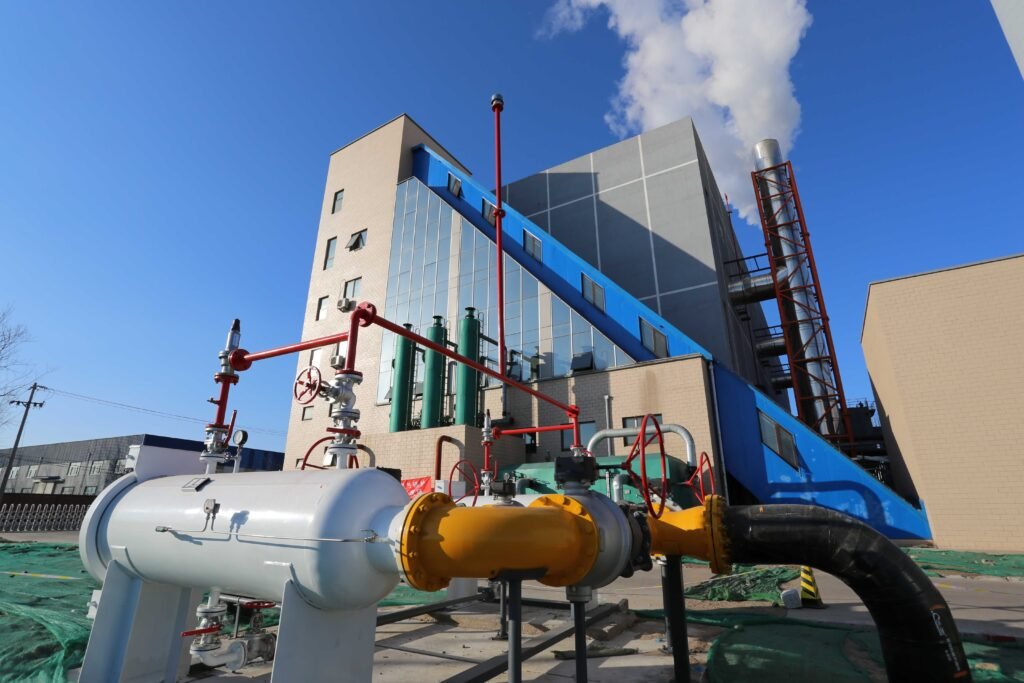
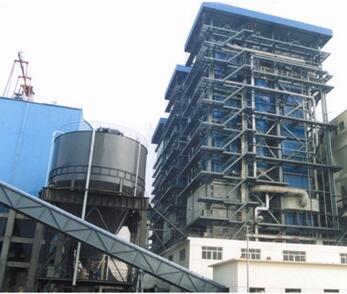
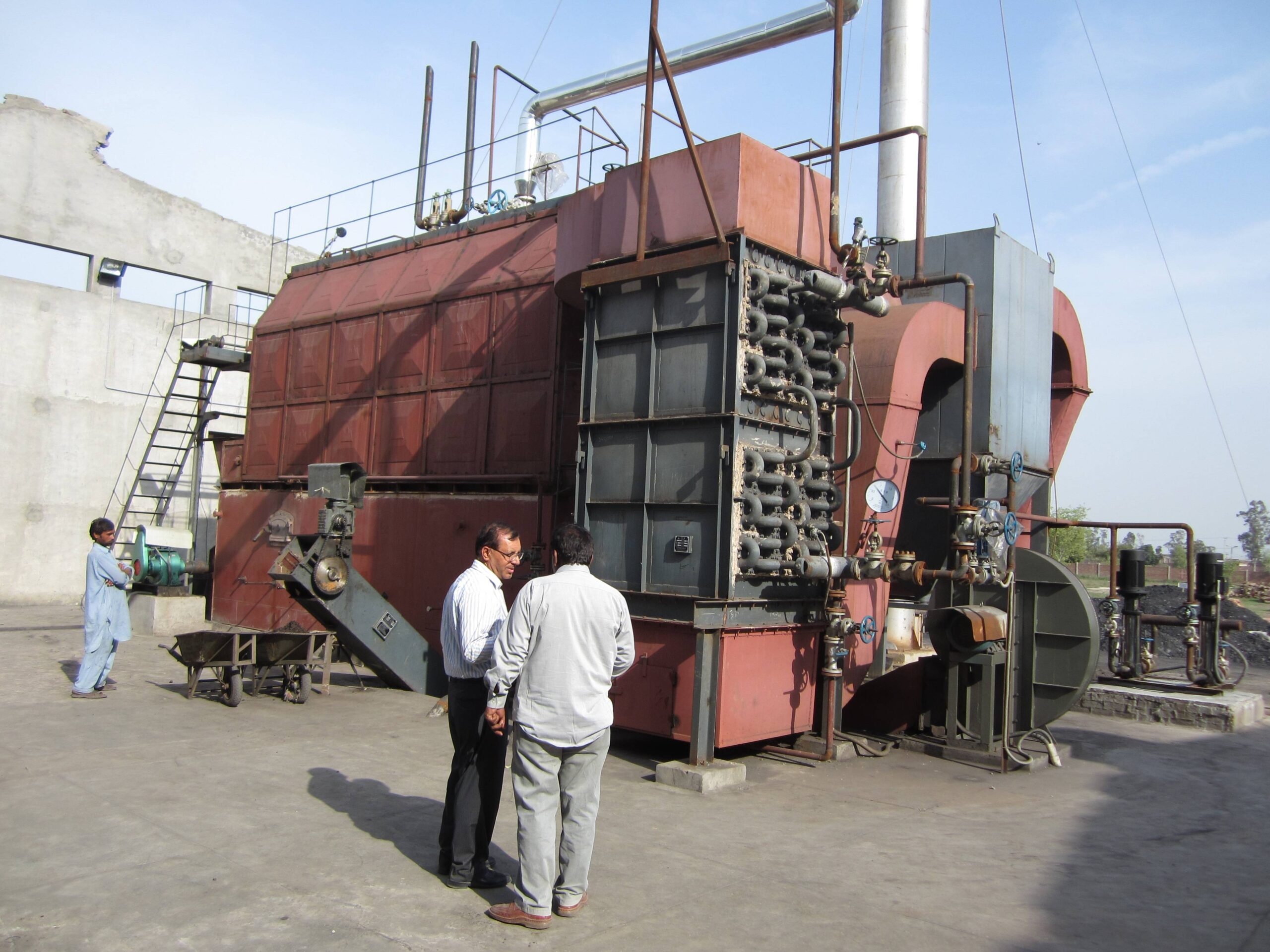
What is the difference between a power boiler and a process boiler?

When selecting a boiler for industrial use, it’s important to understand the application-specific design and function of different boiler types. Two commonly used terms—power boiler and process boiler—describe distinct categories of boilers with different performance standards, operating conditions, and regulatory requirements. Confusing them can result in underperformance, safety risks, or compliance violations.

A power boiler is designed to generate high-pressure steam for electricity generation or mechanical power, typically operating above 15 bar (220 psi), and is subject to stringent ASME Section I regulations. A process boiler, by contrast, is used to provide steam or hot water for industrial operations like heating, cleaning, or manufacturing processes—often at lower pressures—and is governed by ASME Section IV or other less intensive codes. The main differences lie in pressure, temperature, application scope, regulatory codes, and design robustness.

Let’s break down the key differences between these two types of boilers in industrial settings.
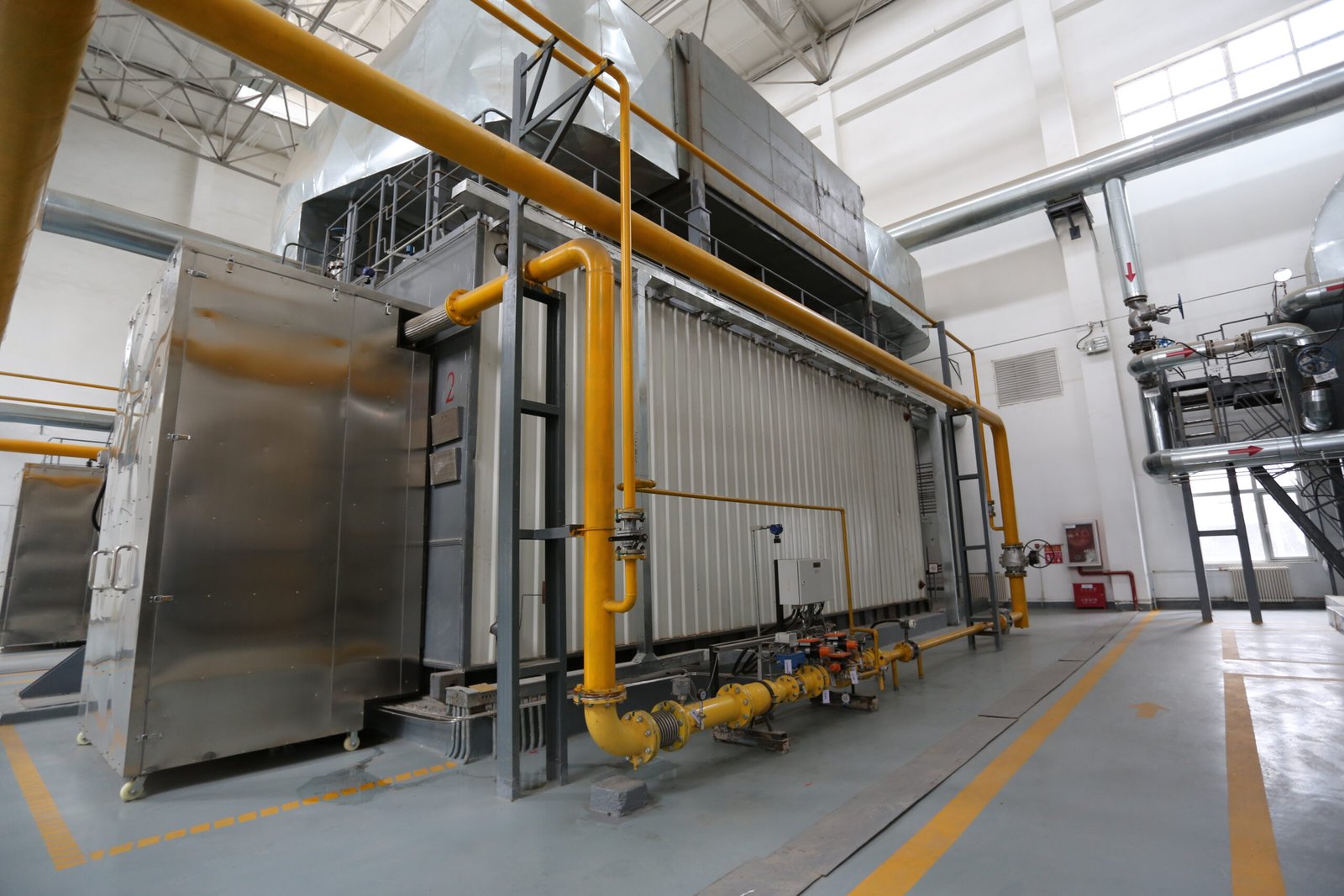
What Defines a Power Boiler, and What Are Its Typical Operating Conditions and Applications?

Modern industries and utilities rely heavily on large-scale steam generation, not just for process heating but also for electricity production. When conventional boilers fall short in pressure, capacity, or reliability, power boilers step in as the heavy-duty workhorses of the energy landscape. Choosing the wrong system or underestimating your pressure requirements can lead to system failures, regulatory violations, and production bottlenecks. So, what exactly defines a power boiler? What are its typical operating parameters, and where is it used? In this article, we answer these critical questions with precision and practical depth—empowering engineers, procurement teams, and plant operators to make informed decisions.

A power boiler is a high-capacity, high-pressure steam boiler designed to generate steam at pressures exceeding 15 bar (typically up to 160 bar or more) and temperatures beyond 450°C, primarily for power generation and heavy industrial processes; it usually features water-tube design, superheaters, economizers, and operates under stringent ASME Section I or equivalent codes.

Power boilers are not general-purpose boilers; they are designed for specialized applications involving intense energy conversion, reliability over long duty cycles, and strict code compliance. Read on to discover how they work, their technical structure, operating conditions, and the industries that rely on them daily.

Power boilers operate under the ASME Section I code, which governs high-pressure steam generation systems.True

ASME Section I sets the rules for construction, materials, inspection, and pressure ratings for power boilers, typically above 15 psi.

Power boilers are defined by low-pressure applications like space heating.False

Power boilers are specifically designed for high-pressure, high-temperature steam generation—not for low-pressure heating systems.

Key Features That Define a Power Boiler

Unlike heating or process boilers, power boilers must conform to much more rigorous standards, reflecting their mission-critical role in energy systems and continuous industrial operations.

Essential Characteristics of Power Boilers:

FeatureSpecification
Design PressureTypically 45–160 bar (650–2,300 psi)
Design TemperatureRanges from 450°C to 600°C (superheated steam)
Steam OutputFrom 50 to over 1,000 tons per hour (TPH)
Code ComplianceASME Section I (USA), IBR (India), PED (Europe), GB (China)
Construction TypeWater-tube boiler with superheater and economizer
MountingStationary (most common); also skid-mounted for modular systems
Control SystemsFully automated, DCS/PLC controlled with redundancy and fail-safes

These systems are engineered to endure high thermal stress, pressure fluctuations, and long periods of continuous operation. Their design incorporates safety valves, blowdown systems, flame scanners, feedwater treatment modules, and often turbine integration.

Typical Operating Conditions of Power Boilers

Power boilers are tailored for high-efficiency steam generation under extreme conditions. Below is a standard range of operating parameters:

Typical Operating Ranges:

ParameterValue Range
Steam Pressure45–160 bar
Steam Temperature450–600°C (superheated)
Feedwater Temperature105–150°C
Thermal Efficiency88% – 94% (without heat recovery)
Steam Generation Rate50–1,000+ TPH
Fuel TypeNatural gas, coal, oil, biomass, or waste heat
Typical Duty Cycle24/7 continuous operation

Advanced power boilers also incorporate forced circulation, once-through steam generation, and combined cycle compatibility for enhanced performance and energy savings.

Applications of Power Boilers by Industry

Power boilers are integral to industries where high-pressure, continuous steam is essential for electricity generation or process heating.

Industry-Specific Use Cases:

IndustryApplicationTypical Boiler Type
Power GenerationSteam turbine supply in thermal power plantsWater-tube, once-through
Chemical IndustryHigh-pressure steam for reactors, separation, and strippingSuperheated water-tube
Petrochemical PlantsUtility steam and process integrationMulti-drum water-tube
Pulp & PaperProcess steam and power cogenerationHigh-capacity water-tube
RefineriesSteam for distillation, cracking, and process loopsModular water-tube or WHRB
Steel MillsSteam for furnaces and turbinesHeavy-duty water-tube
Cement PlantsWaste heat recovery steam generationHRSG-type power boiler

Power Boiler System Architecture

Here’s a diagram-style breakdown of a typical high-pressure power boiler system:

Fuel Supply → Combustion Chamber → Water Wall Tubes → Steam Drum
                             ↓                    ↑
                        Downcomers           Risers
                             ↓                    ↑
              Economizer → Feedwater Input    Superheater → Steam Outlet

Key equipment includes:

  • Steam Drum: Separates water and steam

  • Superheater: Raises steam temperature beyond saturation

  • Economizer: Preheats feedwater using flue gas

  • Air Preheater: Recovers heat from flue gases to warm combustion air

These components boost overall thermal efficiency and reduce fuel consumption, especially when integrated with heat recovery and emission control systems.

Performance Optimization in Power Boilers

Modern power boiler systems are increasingly enhanced through:

  • Real-time DCS/PLC automation

  • Oxygen trim and excess air control

  • Flue gas recirculation (FGR)

  • Low-NOₓ burners

  • Fuel blending optimization algorithms

Advanced installations also integrate cogeneration (combined heat and power) and trigeneration systems to maximize energy use across power, steam, and cooling loads.

Sample Technical Specification Sheet for a Power Boiler

ParameterSpecification
Rated Steam Capacity250 TPH
Operating Pressure110 bar
Superheat Temperature540°C
Feedwater Inlet Temperature130°C
Fuel TypePulverized coal / Natural gas
Thermal Efficiency93.5%
Emissions ControlSCR + ESP + Low-NOₓ burner
Control SystemSiemens PCS 7 DCS

Compliance and Certification Standards

Power boilers must conform to rigorous construction and inspection codes due to their high-pressure operation. Key standards include:

  • ASME Section I – U.S. power boiler design, fabrication, and safety

  • IBR (Indian Boiler Regulation) – India’s national boiler standard

  • PED (Pressure Equipment Directive) – European Union directive

  • EN 12952 / EN 12953 – European design standards for water-tube and shell boilers

Conclusion

A power boiler is not just a high-capacity steam generator—it’s the backbone of industrial energy systems, particularly in sectors like power generation, chemicals, petrochemicals, and pulp & paper. Defined by its ability to generate superheated steam at very high pressures and flow rates, it operates under strict codes and delivers critical process and energy reliability. When selecting or upgrading your boiler system, understanding the unique capabilities and operating profile of a power boiler is essential.
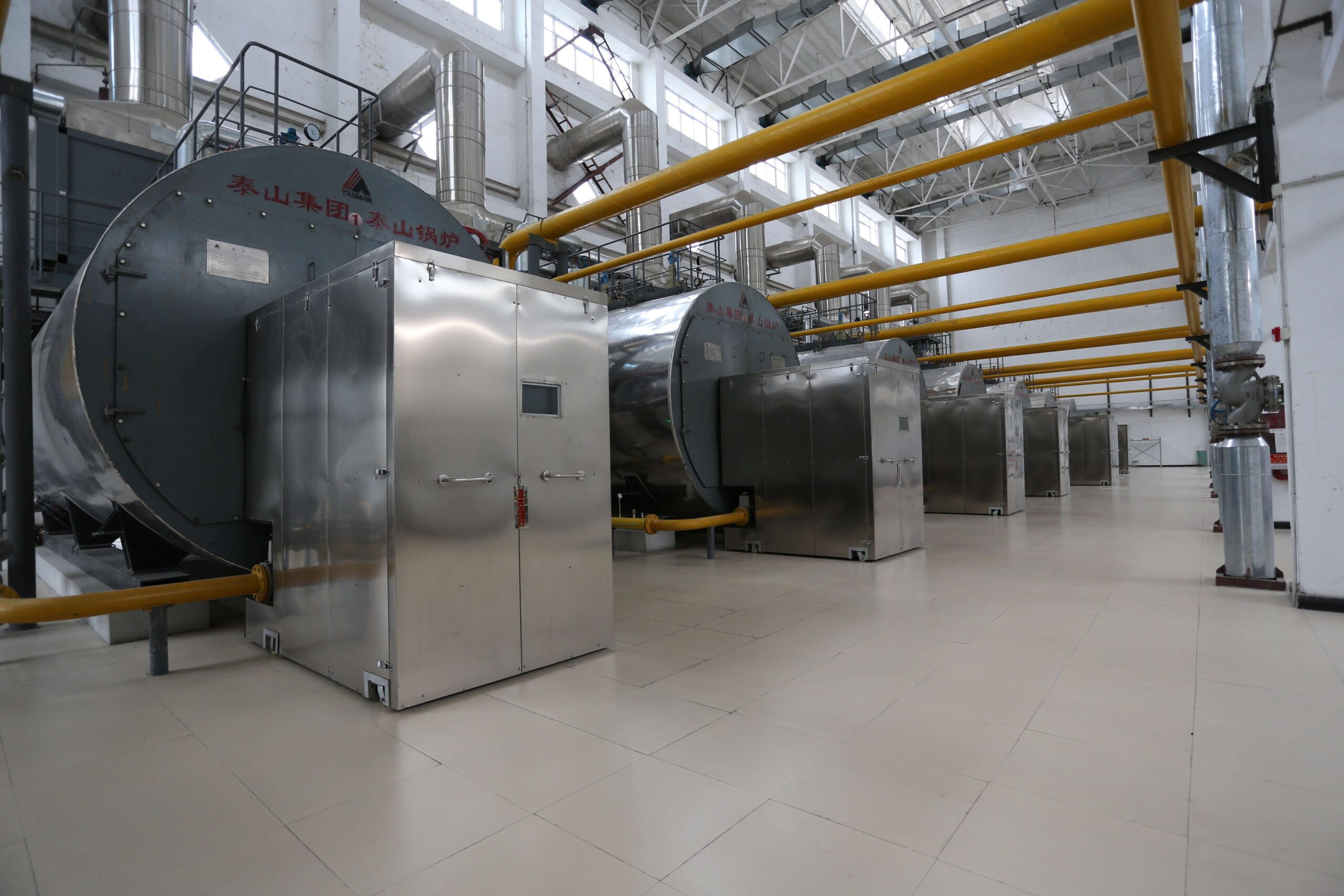
What Defines a Process Boiler, and in Which Industries Is It Most Commonly Used?

When steam or hot water is essential to a production process—not just as an energy source but as a functional medium for sterilizing, heating, drying, or chemical reactions—a process boiler becomes the heart of the operation. Many industries struggle with system inefficiencies or safety risks simply because they’re using boilers that don’t match their specific process needs. Unlike power boilers, which are designed to produce electricity through turbines, process boilers serve manufacturing, heating, or treatment applications directly. In this article, we define what a process boiler is, how it differs from other boiler types, and explore the industries where it plays an irreplaceable role.

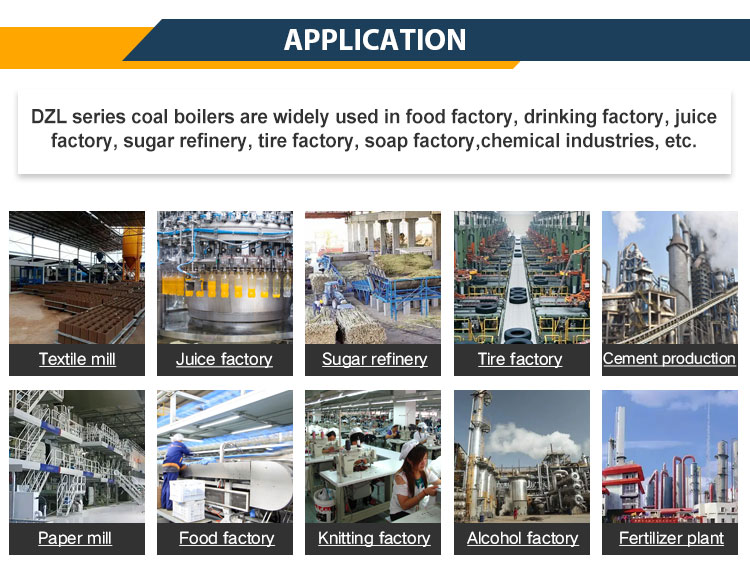
A process boiler is an industrial boiler designed to provide steam or hot water specifically for production processes such as heating, cleaning, cooking, sterilization, drying, or chemical processing; it operates at moderate pressures and is most commonly found in industries like food and beverage, textiles, chemicals, pharmaceuticals, pulp and paper, and manufacturing.

Unlike power boilers, process boilers prioritize thermal efficiency, operational flexibility, and compatibility with different steam qualities and load profiles. Their design, fuel configuration, and control systems are tailored to support ongoing industrial processes safely and economically.

Process boilers are used for steam generation that supports industrial production processes like drying, sterilizing, and cooking.True

Process boilers generate steam or hot water used directly in various manufacturing steps, not for driving turbines.

Process boilers and power boilers follow the same design standards and usage profiles.False

While both are pressure vessels, process boilers typically fall under different regulations (like ASME Section IV or local codes) and are used for process heat, not power generation.

Key Characteristics That Define a Process Boiler

Process boilers are optimized for specific industrial workflows. Their design reflects the process load’s variability, the need for rapid startup, and the cleanliness of the output steam or water.

Defining Features of Process Boilers:

FeatureSpecification
PurposeSteam or hot water for industrial or commercial processes
Pressure Range3 – 25 bar (typical); can go up to 40 bar for some high-pressure applications
Steam Output0.5 – 100 tons/hour (TPH), depending on the industry and process
Boiler TypeFire-tube (common for batch processes), water-tube (for continuous processes)
Fuel TypeNatural gas, diesel, biomass, electricity, or dual-fuel
Regulatory CodesASME Section IV (Heating Boilers) or Section I (if high pressure), IBR, PED
Steam QualitySaturated or low superheat; clean or culinary steam often required
Operation CycleIntermittent to continuous, depending on production schedule

Many process boilers are designed for modular installation, fast ramp-up, and low excess air operation to reduce fuel usage and emissions in variable-load environments.

Common Industries That Use Process Boilers

Process boilers are essential wherever steam or hot water serves a functional role in production, not just heating. Here’s how they’re used across different sectors:

Industry Applications of Process Boilers:

IndustryProcess ApplicationTypical Boiler Type
Food & BeverageCooking, pasteurization, cleaning-in-place (CIP), canningFire-tube / Electric
TextilesDyeing, drying, pressing, steamingFire-tube / Water-tube
PharmaceuticalsClean steam for sterilization, reactors, labsElectric / Water-tube
ChemicalsHeating vessels, batch reactors, stripping processesWater-tube / Waste heat
Paper & PulpPulp digestion, bleaching, drying, black liquor processingWater-tube
Breweries & DistilleriesBrewing, fermenting, cleaning, distillationFire-tube / Electric
Rubber & PlasticsCuring, molding, extrusion, vulcanizationFire-tube / Water-tube
Commercial LaundryIroning, washing, dryingFire-tube
HospitalsSterilization, space heating, humidificationElectric / Fire-tube

Each of these industries requires different steam qualities, pressure levels, and reliability thresholds—necessitating a boiler that fits process-specific performance profiles.

Real-World Example: Process Boiler in a Food Plant

Technical Snapshot:

FacilityMid-size fruit canning plant
Boiler Type6-ton/hour fire-tube steam boiler
Steam Pressure10 bar
FuelNatural gas
Steam UseCooking, CIP, steam jacket heating, sterilization
Special FeaturesQuick startup, 3-pass design, low NOₓ burner

This plant runs two shifts per day and relies on process steam to maintain product safety and throughput. A fire-tube design was chosen due to its robust performance under cyclical loads and low maintenance overhead.

Process Boiler Design Considerations

When selecting a boiler for process use, engineers should focus on matching the boiler’s capabilities to the exact process profile.

Key Selection Factors:

Design FactorWhy It Matters
Load VariabilityCyclical vs. steady processes require different turndown ratios
Steam PurityClean or culinary steam required in pharma, food, beverage
Ramp-Up TimeShort warm-up critical in batch or on-demand operations
Control System IntegrationSCADA, PLC, or DCS compatibility for automated plants
Footprint & AccessibilitySpace limitations in food or textile units often limit boiler type
Emission LimitsUrban or export-oriented facilities may need low-NOₓ or electric boilers
Water Treatment NeedsImportant for reducing scale and corrosion, especially in process-sensitive industries

Boiler Efficiency & Cost Profile

Average Performance Metrics for Process Boilers:

Boiler TypeEfficiency (%)CapEx ($/TPH)Maintenance LevelStartup Time
Fire-Tube82–89%$15,000–$35,000Low30–60 minutes
Water-Tube85–93%$40,000–$120,000Medium-High10–20 minutes
Electric98–100%$10,000–$30,000Very LowInstantaneous

Electric boilers excel in clean environments and offer near-instant start-up, while fire-tube boilers are ideal for batch processes and budget-sensitive industries. Water-tube boilers dominate in high-capacity or continuous operations.

Regulations and Safety Codes

Process boilers must meet local and international safety codes, which can differ from those governing power boilers:

  • ASME Section IV – For low-pressure steam or hot water heating boilers

  • ASME Section I – For higher-pressure process boilers

  • FDA / 3-A Sanitary Standards – For clean steam in food and pharma

  • EPA Emission Regulations – NOₓ and CO₂ limits

  • Boiler Operator Licensing – May be required for >15 psi systems

Conclusion

A process boiler is an industrial steam or hot water generator specifically tailored for use in manufacturing, treatment, or sterilization processes. Its versatility, moderate pressure range, and diverse fuel compatibility make it suitable for a wide range of industries—from food and textiles to pharmaceuticals and chemicals. The key to success lies in matching the right boiler type (fire-tube, water-tube, or electric) to your unique process needs, facility layout, and regulatory environment.
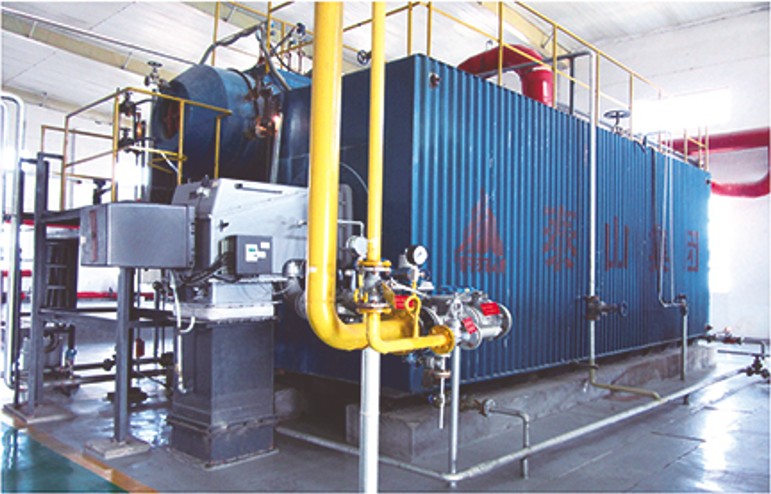
How Do Power Boilers and Process Boilers Differ in Terms of Pressure and Temperature Ratings?

When selecting an industrial boiler, pressure and temperature ratings are among the most critical specifications to evaluate. Using a boiler that can’t handle the required steam conditions can lead to catastrophic equipment failure, regulatory non-compliance, and costly production interruptions. While power boilers and process boilers may look similar externally, they serve very different operational roles—and their pressure and temperature capabilities reflect that difference. This article dives deep into how power boilers and process boilers differ in terms of pressure and temperature design, operational profiles, and the standards that govern their use.

Power boilers are engineered for high-pressure, high-temperature applications—typically generating steam above 45 bar (650 psi) and up to 600°C—primarily for electricity generation and heavy industrial systems; in contrast, process boilers operate at lower pressures (3–25 bar) and temperatures (150–300°C), providing steam or hot water directly for manufacturing processes.

Understanding these differences helps prevent under-specifying your boiler system, ensures safe operation under high thermal loads, and guarantees compliance with applicable pressure vessel codes.

Power boilers are designed for higher pressure and temperature than process boilers.True

Power boilers must supply superheated steam to turbines and other high-energy equipment, while process boilers serve lower-pressure industrial functions.

Process boilers can safely generate steam above 600°C and 160 bar.False

Only power boilers are engineered for such extreme conditions; process boilers generally operate below 30 bar and 300°C.

Side-by-Side Pressure & Temperature Comparison

Boiler Design Ratings by Application:

ParameterPower BoilerProcess Boiler
Typical Design Pressure45 – 160 bar (650 – 2,300 psi)3 – 25 bar (45 – 365 psi)
Typical Operating Pressure50 – 140 bar (725 – 2,000 psi)6 – 18 bar (90 – 260 psi)
Steam Temperature450°C – 600°C (superheated)150°C – 300°C (saturated or slightly superheated)
Temperature ControlAdvanced: superheaters, reheatersModerate: standard PID or cascaded loop controls
Steam UseTurbines, large-scale cogeneration systemsCooking, sterilizing, washing, chemical reactions
Safety MarginHigh; uses forged drums, advanced materialsModerate; depends on use and thermal cycles
Regulatory CodeASME Section I, EN 12952, IBRASME Section IV or lower-end Section I

Detailed Pressure and Temperature Profiles

Power Boilers: High-Energy Steam Generation

Power boilers are typically water-tube boilers built to withstand:

  • Extreme pressures up to 160 bar

  • Superheated steam temperatures of 540–600°C

  • Continuous operation with high duty cycles

  • Integration with turbines in Rankine or combined cycle systems

These systems incorporate:

  • Primary and secondary superheaters

  • Alloy steel components (e.g., Cr-Mo steels)

  • Reheat loops for maintaining steam quality

  • Automated blowdown and feedwater control

Example: A 300 MW thermal power station’s power boiler may produce steam at 155 bar and 565°C to drive a steam turbine for 24/7 electricity generation.

Process Boilers: Controlled, Mid-Range Thermal Systems

Process boilers are typically fire-tube or small water-tube systems, and are used to:

  • Generate saturated steam for batch operations

  • Support moderate pressures (e.g., 8–12 bar) ideal for food, textile, or pharma

  • Offer simplified temperature control in lower-risk environments

  • Support systems that start and stop frequently

While some large process boilers may reach pressures of 30–35 bar, they are not optimized for turbine operation and generally lack the high-alloy metallurgy required in power boilers.

Example: A dairy plant may use a fire-tube process boiler rated at 10 bar and 180°C for pasteurization and CIP systems.

Pressure & Temperature Chart: Visual Comparison

Boiler TypeLow PressureMedium PressureHigh PressureSuperheat Range
Power Boiler45–65 bar65–110 bar110–160+ bar450–600°C
Process Boiler3–8 bar8–18 bar18–30 bar150–300°C

Safety Design and Code Compliance Differences

Design ElementPower BoilerProcess Boiler
Code ComplianceASME Section I (mandatory)ASME Section IV or Section I (depending)
Drum ConstructionForged/rolled drums with stress analysisRolled steel or shell design
Tube MaterialP11, P22, stainless, alloy steelsMild steel or low-alloy tubes
Pressure ReliefRedundant safeties, pressure trip systemsStandard pressure relief valves
Inspection FrequencyAnnual/quarterly with third-party reviewBi-annual to annual, based on local laws

Typical Industrial Applications by Pressure and Temperature Needs

IndustrySteam Pressure RequirementBoiler Type PreferredWhy
Power Plants110–160 bar @ 540–600°CPower BoilerNeeded for turbines and continuous duty
Chemical Refineries60–120 bar @ 500°CPower BoilerHigh-pressure steam for distillation
Food Processing8–12 bar @ 180–200°CProcess BoilerCooking, CIP, pasteurization
Pharmaceuticals6–10 bar @ 150–180°CProcess Boiler (Electric)Clean steam, small footprint, safe
Paper Mills20–40 bar @ 350°CHybrid (Process/Power)Process + co-generation demands
Textile Dyeing Plants10–15 bar @ 180–220°CProcess BoilerModerate pressure and batch operations

Summary of Differences in Pressure and Temperature Ratings

CriteriaPower BoilerProcess Boiler
Primary FunctionElectricity GenerationIndustrial Process Heat
Pressure Capability45 – 160+ bar3 – 25 bar
Temperature Capability450°C – 600°C150°C – 300°C
Boiler TypeWater-Tube (Multi-drum or Once-Through)Fire-Tube or Small Water-Tube
Code/StandardASME Section IASME Section IV or low-end Section I

Conclusion

The key difference between power and process boilers lies in their pressure and temperature handling capabilities. Power boilers are designed for high-pressure, high-temperature superheated steam to drive turbines and meet heavy-duty energy requirements. In contrast, process boilers operate under moderate pressures and temperatures suitable for food processing, textile dyeing, chemical heating, and other industrial applications that require steam as a utility rather than a power source.
What Design Codes and Standards Apply to Power Boilers vs. Process Boilers?

When selecting, manufacturing, or operating industrial boilers, compliance with design codes and safety standards isn’t optional—it’s legally mandated and critically important for safety, performance, and inspection requirements. The mistake of applying the wrong standard—or misunderstanding the difference between a power boiler and a process boiler—can result in system failures, regulatory violations, or denial of operating licenses. Whether you’re an engineer, specifier, or plant owner, understanding which design codes and standards apply to power boilers vs. process boilers is essential for safe and compliant operation. This article breaks down these standards in detail, including ASME, EN, IBR, and PED, and explains how they define and distinguish between these boiler types.

Power boilers are governed by stringent high-pressure design codes such as ASME Section I, EN 12952, IBR, and PED, reflecting their high-pressure, high-temperature application in energy generation; process boilers, which operate at lower pressures, are typically regulated by ASME Section IV, EN 12953, or equivalent local standards depending on pressure, temperature, and usage.

Choosing the correct boiler code ensures the system meets its intended safety margins, inspection protocols, and documentation requirements. Let’s look at these codes more closely.

ASME Section I governs power boilers that operate above 15 psig.True

ASME Section I applies to boilers that generate steam at pressures exceeding 15 psi, typically used for power generation.

All industrial boilers are covered by the same design standard regardless of pressure or application.False

Different boiler types are governed by different standards depending on their pressure, temperature, and functional role.

Key Code Distinctions: Power Boiler vs. Process Boiler

Boiler Code Applicability Overview

CategoryPower BoilerProcess Boiler
Typical UseElectricity generation, turbine supportIndustrial heating, cleaning, chemical processing
Design Pressure>15 psig (typically 650–2,300 psi)≤15 psig (ASME IV) or up to 300 psi (with ASME I)
Main US CodeASME Section I – Power BoilersASME Section IV – Heating Boilers
EU CodeEN 12952 (Water-tube) / PED for high-pressureEN 12953 (Shell boilers) / PED for medium pressure
India CodeIBR – Indian Boiler Regulation (high-pressure)IBR or State-specific regulation for low-pressure boilers
Boiler TypeWater-tube (multi-drum, once-through)Fire-tube, electric, small water-tube
Inspection BodyAuthorized Inspector (AI), Notified Body, or IBR AuthorityLocal/state agency or internal QA under relaxed oversight

1. ASME Boiler and Pressure Vessel Code (BPVC) – United States

🔷 ASME Section I – Power Boilers

  • Scope: Boilers exceeding 15 psi steam or 160 psi water, or temperatures >250°F

  • Application: Power generation, co-generation, high-pressure steam supply

  • Design Requirements:

    • Full material traceability

    • Certified weld procedures (WPS/PQR)

    • Third-party inspection and stamped certification

    • Pressure testing (hydrostatic ≥1.5x MAWP)

  • Stamping: “S” Stamp

  • Documentation: Manufacturer’s Data Report (P-2A/P-3)

🔸 ASME Section IV – Heating Boilers

  • Scope: Steam <15 psi or hot water ≤250°F and ≤160 psi

  • Application: Process heating, commercial laundry, food, pharma, textiles

  • Design Requirements:

    • Less stringent inspection and testing

    • Simplified material control

    • Local inspection permitted

  • Stamping: “H” Stamp

  • Documentation: Form H-1 or H-2


2. EN Standards – European Union

CodeApplies ToUsed For
EN 12952Water-tube boilers (high pressure)Power generation, high-volume process steam
EN 12953Shell and fire-tube boilers (medium pressure)Food, textile, pharma, general industrial heating

Both EN standards align with the Pressure Equipment Directive (PED), which classifies boilers by pressure, temperature, and volume. For boilers over 0.5 bar and volume >25 liters, CE marking and Notified Body approval are required.


3. IBR – Indian Boiler Regulations

🔷 Power Boilers (IBR Compliance Required)

  • Boilers generating steam above 22.75 liters capacity and 1 kg/cm² (14.2 psi) pressure

  • Mandated for all pressure parts, valves, piping, and drums

  • Inspections conducted by Chief Inspector of Boilers

  • Requires:

    • Approved drawings

    • IBR stamped materials

    • X-ray for welds

    • Hydraulic pressure tests

    • Site inspection and certification

🔸 Process Boilers (Non-IBR or Low Pressure)

  • Operate below IBR-defined limits

  • Exempt from IBR, but may follow state rules or internal QA programs

  • Common in:

    • Laundry and garment industries

    • Small-scale food processing

    • Hospitals and labs


Code Comparison Table

Code/StandardRegionBoiler TypeDesign PressureBoiler Classification
ASME Section IUSAPower boilers>15 psi (103 kPa)High-pressure / Power
ASME Section IVUSAHeating/process boilers≤15 psi (steam)Low-pressure / Process
EN 12952EUWater-tube (power)Typically >32 barPower/utility
EN 12953EUFire-tube (process)Up to 32 barMedium-pressure / Process
PED DirectiveEUAll pressure equipment≥0.5 bar and ≥25L volumeSafety compliance / CE Marking
IBRIndiaAll boilers above 14.2 psi>1 kg/cm² (14.2 psi)Mandatory for steam boilers
Local State CodesGlobal/DevelopingSmall process boilers≤1 kg/cm² (non-IBR)Commercial and light-industrial

Documentation & Inspection Requirements

AspectPower Boiler (ASME I, EN 12952)Process Boiler (ASME IV, EN 12953)
Third-party inspectionMandatoryNot always required
Design certificationRequiredSimplified or internal approval
Pressure test (hydrostatic)≥1.5× MAWP1.25–1.5× MAWP, depending on jurisdiction
Quality systemASME/PED-certified quality programLocal QA or manufacturer standard
TraceabilityFull MTRs and weld logsMay be partial or relaxed

Choosing the Right Code for Your Boiler Type

Use ASME Section I or EN 12952 if:

  • You’re building a power plant, CHP system, or industrial turbine system

  • Your steam pressure exceeds 15 psi (1 bar) continuously

  • Your boiler will serve as a utility steam supplier for other facilities

Use ASME Section IV, EN 12953, or local rules if:

  • Your boiler serves only process heat, sterilization, or indirect equipment

  • The pressure is moderate (<15 psi steam, <250°F water)

  • You prioritize lower cost, faster inspection, and lighter compliance


Conclusion

Power boilers and process boilers are governed by entirely different sets of codes and standards based on their pressure, temperature, and end-use. Power boilers require compliance with ASME Section I, EN 12952, PED, or IBR, focusing on high-pressure steam for energy systems. Process boilers, on the other hand, fall under ASME Section IV, EN 12953, or local codes and serve lower-pressure, process-focused applications. Understanding and applying the correct code is essential for legal compliance, insurance coverage, safety, and long-term performance.
How Do Maintenance, Safety Protocols, and Inspection Requirements Differ Between a Power Boiler and a Process Boiler?

Safety and performance in boiler operations hinge on rigorous maintenance, strict safety protocols, and regular inspections—but not all boilers are subject to the same standards. Power boilers, which operate under high pressure and temperature, face far more complex and demanding oversight than process boilers, which serve lower-pressure, production-oriented applications. Failure to adhere to the correct safety and maintenance regime can lead to catastrophic failures, legal non-compliance, or significant downtime. This article compares the maintenance schedules, safety systems, and inspection requirements between power boilers and process boilers—highlighting what facility managers, operators, and engineers need to know.

Power boilers require more intensive and frequent maintenance, highly regulated safety systems, and mandatory third-party inspections under codes like ASME Section I or IBR due to their high-pressure, high-temperature nature; process boilers, operating at lower pressures, have simpler maintenance routines, relaxed inspection cycles, and fewer safety system redundancies under codes like ASME Section IV or local regulations.

These differences are not just technical—they directly impact operational risk, staffing needs, downtime planning, and regulatory compliance. Below is a detailed technical breakdown.

Power boilers require more stringent inspection, maintenance, and safety protocols than process boilers.True

Power boilers operate at higher pressures and temperatures, posing greater risk and thus requiring stricter regulatory and operational controls.

Process boilers and power boilers follow identical inspection cycles and safety requirements.False

Their inspection and safety requirements differ significantly based on their pressure rating, application, and code jurisdiction.


Key Differences at a Glance

AspectPower BoilerProcess Boiler
Regulatory CodeASME Section I / IBR / EN 12952ASME Section IV / Local Code / EN 12953
Operating Pressure>15 psi (often >100 bar)≤15 psi (typical 3–25 bar)
Inspection FrequencyMandatory annual + interim (as per jurisdiction)Annual or biennial (often flexible or local)
Inspection AuthorityThird-party Authorized Inspector (AI) or government bodyInternal QA or local inspector (often not third-party)
Shutdown RequirementsRequired for annual inspection and hydrotestMay not require full shutdown depending on use
Safety Device TestingQuarterly to monthlySemi-annually or annually
Control System ComplexityHigh—DCS/PLC with trip logic and redundancyLow to moderate—PID or standalone controls
Risk LevelHigh (due to stored energy and temperature)Medium to low
Operator License RequiredYes (Boiler Operator License/Class Certification)Sometimes exempt, varies by region

Maintenance Differences: Frequency, Scope, and Responsibility

🔷 Power Boiler Maintenance

TaskIntervalDetails
Tube Inspection & CleaningEvery 6–12 monthsUse of boroscopes, ultrasonic testing, chemical cleaning
Superheater/DesuperheaterAnnuallyCheck for tube scaling, erosion, and cracking
Safety Valve TestingQuarterlyMust lift at set pressure; calibrated per ASME/IBR standards
Combustion System Tune-UpMonthlyInspect burner tips, flame scanners, O₂ trim controls
Hydrostatic TestingAnnually1.5× MAWP (Maximum Allowable Working Pressure)
Controls & Trip LogicQuarterlyTest DCS fail-safes, redundancy systems, alarm hierarchy
NDT (Non-Destructive Tests)AnnuallyUltrasonic, radiographic, magnetic particle testing on pressure parts

Power boilers also require trained in-house teams or certified third-party contractors to carry out most maintenance and safety tasks due to their complexity.


🔸 Process Boiler Maintenance

TaskIntervalDetails
Tube CleaningAnnuallyOften manual or with flexible rotary brushes
Safety Valve CheckSemi-annuallyMay be tested in-situ or swapped with spares
Burner Tune-UpEvery 6 monthsVisual inspection, gas flow calibration
Control Panel CheckAnnuallyBasic loop tuning and pressure switch testing
Water Treatment ReviewWeeklyTDS, pH, phosphate levels checked manually or via inline sensors
Pressure TestBiennial or as requiredLess stringent; some exemptions for hot water boilers under local codes

Many process boiler plants use service contracts from OEMs or rely on general plant technicians due to the simpler construction and lower risk profile.


Safety Protocols Comparison

🔐 Power Boiler Safety Systems

SystemFunction
High-pressure cutoffTrips boiler at pressure > MAWP
Flame failure protectionCloses fuel valve instantly on flameout
Water level alarmsHigh and low level cutouts tied to feedwater system
Redundant sensorsDual RTDs, pressure transducers for reliability
Emergency stop systems (ESD)Manual trip and auto shutdown under unsafe condition
Blowdown controlAutomated, based on conductivity and TDS readings

🔐 Process Boiler Safety Systems

SystemFunction
Low-water cutoffShuts off burner at low water level
Overpressure relief valveReleases pressure at 1.05× MAWP
Flame safeguard systemAuto relight or shutdown
Feed pump interlocksStops burner if no water flow
Temperature/pressure switchSimple thermostat or mechanical switch control

Safety features in power boilers are typically programmable, digital, and integrated into plant DCS, whereas in process boilers, many are electromechanical and simplified.


Inspection & Compliance Differences

📋 Power Boiler Inspection Requirements

RequirementAuthorityDetails
Annual CertificateAuthorized InspectorValidates hydrotest, safety valves, and visual inspections
NDT ReportsASME/IBR certifiedRequired before re-certification or post-repair
Code Stamp ValidationASME “S” Stamp or IBRReviewed during installation or modification
Shutdown LogbookRequiredDocumented reason and duration of any trip or repair

📋 Process Boiler Inspection Requirements

RequirementAuthorityDetails
Basic Annual VisualIn-house or localVisual check, safeties test, water level control inspection
HydrotestOptional / 2–3 yearsOften waived below 15 psi depending on jurisdiction
Logbook or ChecklistOften voluntaryCan be maintained internally for maintenance tracking
Third-party AuditRarely mandatoryRequired only under special contracts or insurance clauses

Training and Staffing Implications

FactorPower BoilerProcess Boiler
Licensed Operator NeededYes (per jurisdiction)Sometimes waived for <15 psi
Training RequiredExtensive: safety, combustion, codesModerate: operation, water chemistry
Staffing Model24/7 with standbyDay-shift or on-demand monitoring

Conclusion

The differences in maintenance intensity, safety systems, and inspection protocols between power boilers and process boilers reflect the pressure, temperature, and application risk levels of each type. Power boilers require high-frequency inspections, fail-safe automation, licensed operators, and strict third-party compliance. In contrast, process boilers allow for simpler systems, longer maintenance intervals, and flexible compliance standards—especially in low-pressure or electric applications.
When Should You Choose a Power Boiler Instead of a Process Boiler (and Vice Versa)?

Choosing between a power boiler and a process boiler is not just a matter of preference—it’s a strategic engineering decision based on your pressure, temperature, energy integration, and regulatory needs. Selecting the wrong type can lead to energy losses, compliance issues, and operational inefficiencies. If your plant relies on high-pressure, high-volume steam for energy generation or industrial integration, the choice will lean toward a power boiler. But if you’re primarily producing steam for cooking, sterilization, or heating, a process boiler is likely your best fit. This article explores when and why you should choose one over the other, providing a decision-making framework for plant designers, engineers, and facility managers.

You should choose a power boiler when your operation requires high-pressure (>45 bar), high-temperature (>450°C) steam for electricity generation, turbine systems, or large-scale energy recovery; alternatively, choose a process boiler when your steam needs are lower in pressure (3–25 bar), used for direct manufacturing processes like drying, cleaning, or sterilization.

Understanding your application profile, steam characteristics, and compliance requirements will lead you to the right boiler investment—saving both capital and operational costs in the long run.

Power boilers are designed for high-pressure applications like electricity generation and large-scale cogeneration systems.True

Power boilers are built to operate at very high pressures and temperatures, often above 100 bar and 500°C.

Process boilers are suitable for steam turbine systems in power plants.False

Process boilers typically operate at lower pressures and are not designed to drive turbines for power generation.


Quick Decision Table: When to Choose Which Boiler

Decision CriteriaChoose Power Boiler If…Choose Process Boiler If…
Steam Pressure>45 bar (e.g., 60, 100, or 160 bar)3–25 bar typical
Steam TemperatureSuperheated steam >450°CSaturated or mild superheat up to 300°C
Steam ApplicationPower generation, turbine drive, large cogeneration plantsHeating, sterilizing, drying, cooking, chemical processing
Steam Load (Flow Rate)>50 TPH (tons/hour)<50 TPH, often 0.5–20 TPH
Operation Time24/7 continuous (base-load or critical process)Intermittent, batch, or time-specific loads
Fuel & Emissions StrategyEmission-controlled (SCR, low-NOx) for combustion-heavy systemsClean fuel or electric preferred; emission needs vary
System ComplexityComplex instrumentation, DCS/PLC, turbine interfacingSimple PID controls or manual loops
Maintenance Team AvailabilityTrained boiler engineers, certified maintenance staffStandard plant technician team
Regulatory EnvironmentASME Section I / IBR / PED / EN 12952ASME Section IV / EN 12953 / Local codes
Capital Investment CapacityHigher CapEx (~$100k–$5M+)Lower to moderate CapEx (~$20k–$500k)

Choose a Power Boiler If Your Operation Involves:

1. Electricity Generation

  • Steam turbines in thermal, combined cycle, or biomass plants

  • Operating pressures >100 bar and steam temperatures >500°C

  • Must meet ASME Section I, IBR, or PED design rules

  • High fuel input with waste heat recovery systems

Example: A 500 MW power plant uses a 600 TPH water-tube power boiler to generate 160 bar, 540°C steam for turbines.

2. Heavy Industrial Co-Generation

  • Refineries, petrochemical plants, and pulp mills that run turbines and process loops

  • Requires continuous steam reliability with redundancy systems

  • Integration with heat recovery and turbine bypass systems

3. High Thermal Duty Utilities

  • Facility-wide utility systems that support both energy and process steam

  • Long lifecycle expectation (>25 years) with complete NDT traceability

  • Requires specialized maintenance, water chemistry, and inspection programs


Choose a Process Boiler If Your Operation Involves:

1. Manufacturing or Food Processing

  • Steam used in direct contact with product: e.g., sterilization, cooking, pasteurization

  • Boiler operates in a batch cycle or on-demand mode

  • Compliance with FDA, 3-A, or sanitary standards more critical than pressure

Example: A bakery uses a 4 TPH fire-tube process boiler at 10 bar for oven steam and cleaning-in-place (CIP).

2. Textile & Garment Industry

  • Steam for dyeing, drying, and pressing processes

  • Lower pressure ranges (6–12 bar) with fast startup requirements

  • Less need for superheat or high metallurgy materials

3. Pharmaceutical or Clean Environments

  • Need for high-purity steam without combustion residue

  • Electric process boilers preferred for zero emissions and quiet operation

  • Boiler rooms often adjacent to cleanrooms


Technical Comparison Chart

FeaturePower BoilerProcess Boiler
Design CodeASME I / EN 12952 / IBRASME IV / EN 12953 / Local Codes
Pressure Capability45–160+ bar3–25 bar
Steam Temperature450–600°C (superheated)150–300°C (saturated)
Boiler TypeWater-tube (multi-drum, once-through)Fire-tube, electric, small water-tube
Efficiency85–94% (with economizers/superheaters)80–90% (standard models)
Startup TimeModerate (30–60 min)Fast (5–30 min, electric instant)
Maintenance ComplexityHighLow to moderate
Control SystemAdvanced DCS/PLC with redundancySimple PID or local panel
Safety SystemsRedundant, smart logicBasic level switches and pressure trips

Selection Flowchart

                START
                  ↓
      Is steam used for electricity generation?
                 ↙      ↘
              YES        NO
              ↓            ↓
      CHOOSE POWER     Is max pressure > 25 bar?
          BOILER           ↙     ↘
                       YES        NO
                       ↓           ↓
              CHOOSE POWER      CHOOSE PROCESS
                  BOILER            BOILER

Conclusion

Choose a power boiler when your operation requires high-pressure, high-temperature steam for energy generation, continuous industrial utility loads, or if you’re operating in a regulated environment under ASME I, IBR, or PED. Choose a process boiler when your application is product-focused, involves moderate pressures, and emphasizes simplicity, startup speed, and cost-efficiency—such as in food, textiles, pharmaceuticals, and smaller chemical facilities.

🔍 Conclusion

Understanding the distinction between power boilers and process boilers is vital for making the right equipment choice. Power boilers are built for high-pressure, high-temperature energy generation, while process boilers are optimized for industrial heating and utility functions. Selecting the right type ensures safety, compliance, and operational efficiency for your specific application.


📞 Contact Us

💡 Need help choosing between a power boiler and a process boiler? We offer application consulting, code compliance guidance, and performance-based system design.

🔹 Let us help you select the boiler that fits your pressure, performance, and process requirements. ⚡🏭♨️✅

FAQ

What is the main difference between a power boiler and a process boiler?

The main difference lies in their purpose:

  • A power boiler generates high-pressure steam to drive turbines for electricity production.

  • A process boiler produces steam or hot water used directly in industrial processes like drying, cooking, or cleaning.


How do power boilers operate compared to process boilers?

Power boilers operate at much higher temperatures and pressures—often exceeding 1,000 psi—to maximize thermal efficiency and output for power generation.
Process boilers typically run at low to medium pressures and focus on reliability, modulation, and ease of integration into plant systems.


What industries use power boilers vs. process boilers?

  • Power boilers: Power plants, energy utilities, large industrial complexes

  • Process boilers: Food & beverage, pharmaceuticals, paper & pulp, chemical manufacturing, textiles


Are there differences in design and fuel flexibility?

Yes.

  • Power boilers are usually water-tube designs and often require high-grade fuels like pulverized coal, natural gas, or oil.

  • Process boilers can be fire-tube or water-tube and may support biomass, gas, oil, or waste heat recovery depending on plant requirements.


Which boiler is more efficient or cost-effective?

  • Power boilers are optimized for maximum efficiency, especially in combined cycle or cogeneration setups, but are more expensive to install and maintain.

  • Process boilers offer flexibility and are usually more cost-effective for facilities not requiring electricity production.


References

  1. ASME Boiler Classifications and Pressure Guidelineshttps://www.asme.org

  2. DOE Guide to Industrial Steam Systemshttps://www.energy.gov

  3. Power Boiler vs. Process Boiler Use Cases – IEAhttps://www.iea.org

  4. Industrial Boiler Pressure Types – EPAhttps://www.epa.gov

  5. Fire-Tube and Water-Tube Boiler Comparisonhttps://www.sciencedirect.com

  6. Steam Generation for Process Heatinghttps://www.researchgate.net

  7. Fuel Flexibility in Boilers – BioEnergy Consulthttps://www.bioenergyconsult.com

  8. Cogeneration and Boiler Efficiencyhttps://www.energy.gov

  9. Boiler Design Requirements by Industryhttps://www.iso.org

  10. Steam and Power Boiler Safety Guidelineshttps://www.energystar.gov

Wade Zhang

CEO of Taishan Group Taian Boao International Trade Co., Ltd. 30 years experience in Global industrial boiler market,  Over 300 boiler projects experience, including 21+ EPC projects. Projects span 30+ countries & regions, involving industries such as nuclear power, energy & electricity, municipal heating, mining, textiles, tires etc.

What is the difference between a power boiler and a process boiler? Read More »
How Do Boiler Suppliers Handle Warranty Claims and What Documentation Is Required?

How Do Boiler Suppliers Handle Warranty Claims and What Documentation Is Required?

Industrial boilers are engineered for long-term, heavy-duty operation—but like any complex system, component failures, control errors, or fabrication defects can occur. That’s why a clear and responsive warranty and service claim process is critical. Poor warranty handling can lead to downtime, safety risks, or unexpected repair costs. Understanding how suppliers handle warranty claims—and what documentation you’ll need—is essential for protecting your investment and minimizing disruption.

Boiler suppliers typically handle warranty claims by reviewing service reports, operating logs, inspection records, and installation documentation to determine if the issue falls within warranty terms. To file a claim, you’ll need to provide proof of purchase, commissioning records, photos or failure logs, and evidence of proper maintenance. Once reviewed, the supplier may dispatch a technician, ship replacement parts, or recommend third-party service depending on the warranty coverage and severity of the issue.

Here’s what you need to know about navigating the industrial boiler warranty and service claim process.

SZL small(10)(1)

What Types of Warranties Do Industrial Boiler Suppliers Typically Offer (Standard, Extended, Performance-Based)?

When buying an industrial boiler, most customers focus on price, size, or fuel type—but overlook a key part of the purchase: the warranty. A poor warranty can leave you with unexpected repair bills or serious downtime. A good warranty can save you money, reduce risk, and ensure the boiler runs well for years. So, what types of warranties do boiler suppliers actually offer? In this article, we break it down in a simple and clear way, so you can make the best decision for your business.

Most industrial boiler suppliers offer three types of warranties: a standard warranty that covers basic parts and manufacturing defects for 1–2 years; an extended warranty that adds more years of protection for key parts; and a performance-based warranty that guarantees the boiler will hit certain efficiency, output, or emission targets.

If you’re not familiar with warranty terms, don’t worry—this guide is made to help you understand what each warranty covers, what to look out for, and which one fits your needs. Whether you’re a plant manager, a purchasing officer, or a business owner, knowing your warranty options means better planning and peace of mind.

Performance-based warranties ensure that industrial boilers meet specified efficiency targets.True

These warranties promise that the boiler will meet key performance goals like fuel savings, steam output, or emissions, or the supplier must fix it.

Standard Warranty: Basic Protection Comes with the Boiler

A standard warranty is included in the price of most boilers. It’s your basic safety net in case the boiler has a factory defect or a major part fails early.

What It Usually CoversCoverage Period
Boiler shell/body1–2 years
Burner unit6–12 months
Controls & valves6–12 months
Pumps and motors6–12 months

Standard warranties cover manufacturing problems. They do not cover:

  • Mistakes during installation

  • Normal wear and tear

  • Poor maintenance or water quality

Tip: Ask if the warranty starts when the boiler ships or when it’s installed—this can save you months of lost coverage.

Extended Warranty: Extra Years for Peace of Mind

An extended warranty gives you longer coverage. It usually costs extra but is a smart investment if you want to protect your budget from surprise repairs.

Extra Warranty LengthTypical Extra Cost (% of Boiler Price)Common Coverage
5 Years2–4%Main boiler parts
10 Years5–8%Shell, burner, economizer
15 Years8–12%Full boiler body and tubing

Extended warranties are good for:

  • Buyers who plan to use the boiler for 10+ years

  • Plants that want to lock in maintenance costs

  • Operations in tough environments (dust, heat, etc.)

Extended warranties automatically cover all repair costs.False

They usually only cover major parts and not labor, wear items, or damage from poor maintenance. Always read the details.

Performance Warranty: Guarantees for Efficiency and Output

A performance warranty is not about part failures—it’s about results. It’s often used for custom or large boilers and gives you a written promise that the boiler will meet key goals.

Performance AreaTypical GuaranteeIf Not Met
Efficiency88% or higherSupplier pays penalties
Steam output10,000 lbs/hrSupplier repairs or upgrades it
Emissions≤ 9 ppm NOxSupplier must correct it
Uptime95%+ availabilityDiscount or service credit

Performance warranties are best for:

  • High-efficiency systems

  • Plants with emission rules

  • Users who want guarantees on output and fuel savings

They cost more but give more control and confidence. Make sure you have data monitoring tools to track results.

Final Thoughts

In short, standard warranties are good for basic coverage, extended warranties add long-term protection, and performance warranties are for those who want strong guarantees on efficiency or output. Depending on your budget, plant use, and risk tolerance, the right warranty can save you major costs and stress later on.

What Documentation Is Required to Submit a Valid Warranty Claim?

When your industrial boiler breaks down, you want fast repairs under warranty. But if you don’t have the right documents ready, your warranty claim could be delayed—or even denied. This means longer downtime and higher repair costs. To avoid that, it’s important to know exactly what documents you need to make a valid claim. In this article, we’ll show you the basic paperwork every boiler buyer should keep on file to make the process smooth and fast.

To submit a valid warranty claim for an industrial boiler, you need: (1) the purchase invoice, (2) the warranty certificate, (3) a service and maintenance log, (4) a report explaining the problem, and (5) photos or videos of the issue. These documents prove you followed the rules and help the supplier process your claim quickly.

Having these documents ready can save you time, money, and stress. Even if your boiler is still under warranty, missing just one required document can cause delays.

You can make a boiler warranty claim without any proof of maintenance.False

Most suppliers require proof of regular maintenance to keep the warranty valid. No record, no claim.

5 Must-Have Documents for a Warranty Claim

Here’s a simple list of what most boiler suppliers ask for:

DocumentWhy It’s Needed
Purchase InvoiceShows when and where you bought the boiler
Warranty CertificateConfirms what’s covered and how long the coverage lasts
Maintenance LogProves the boiler has been serviced regularly as required
Breakdown ReportDescribes the issue and what happened during the failure
Photos/VideosShows clear evidence of the damage or fault

Quick Tips:

  • Keep all documents in one folder (digital and physical).

  • Make sure service records are dated and signed.

  • Take clear photos or short videos of the problem before any repair work starts.

Having these five items ready can help your warranty claim go through faster—so your boiler gets back to work with less hassle. 

Biomass boilers (9)

What Service Conditions or Actions May Void Your Boiler’s Warranty?

Many customers believe that once their boiler is under warranty, any issue will be fixed for free. But in reality, warranties come with strict terms. If you ignore proper care or make certain mistakes, your warranty can be voided—leaving you to cover all repair costs yourself. This is especially important for industrial boilers, where repairs are expensive and downtime can disrupt production. In this article, we’ll explain the most common actions or service conditions that can void your boiler warranty, so you can avoid costly surprises.

A boiler warranty may be voided if you: (1) skip regular maintenance, (2) use poor-quality or untreated water, (3) install the boiler incorrectly, (4) use unauthorized parts or technicians, or (5) operate the boiler outside the recommended limits. These actions break the warranty terms and can lead to denied claims.

If you want to keep your boiler protected, you need to follow the warranty rules. Luckily, avoiding warranty issues is simple once you know what to watch out for. Let’s look at the top causes of warranty voids and how to avoid them.

Improper water treatment can void an industrial boiler warranty.True

Most boiler warranties require the use of clean, treated water to prevent scale, corrosion, and system damage.

Top 5 Reasons Your Boiler Warranty Might Be Voided

Action or ConditionWhy It Voids the Warranty
No regular maintenanceSuppliers require service logs as proof of proper care
Poor water qualityUntreated or hard water causes scale and corrosion
Incorrect installationInstalling without following guidelines leads to safety or damage risks
Unauthorized repairs or partsUsing non-approved parts or technicians may cause failures
Overuse or incorrect operationRunning above rated pressure/temperature can damage the unit

1. Skipping Maintenance

Warranties often require servicing every 3–6 months by a certified technician. If you can’t prove regular service, your claim may be denied—even if the issue isn’t your fault.

2. Using Bad Water

Boilers need clean, treated water. If your water contains minerals, scale can build up, overheat tubes, and cause failures. Always keep a water treatment record.

3. Installing It Wrong

Improper installation—like bad venting, wrong pipe sizing, or no clearance—can damage the boiler and void the warranty. Always use trained installers and follow the supplier’s manual.

4. Using Cheap or Unapproved Parts

Only use OEM (original) parts and approved service teams. If you install a non-approved part and it causes damage, the supplier won’t cover it.

5. Misusing the Boiler

Every boiler has limits for pressure, temperature, and usage time. Pushing it beyond those specs can cause stress or breakdowns that aren’t covered by warranty.

Tip: Ask your supplier for a “warranty checklist” so your team knows what not to do.

Final Thought

Warranties are there to protect you—but only if you follow the rules. Taking shortcuts with maintenance, water quality, or repairs might save money now but can cost much more if your warranty is denied. 

How Do Suppliers Respond to Valid Warranty Claims (On-Site Repair, Parts Replacement, Technical Guidance)?

When your industrial boiler breaks down and you file a warranty claim, what happens next? Many customers aren’t sure what kind of support to expect—will someone come fix it, or will you just get a spare part in the mail? This confusion can lead to downtime, delays, and frustration. Knowing how boiler suppliers usually respond to valid claims helps you prepare properly and speeds up your return to normal operation. In this article, we’ll explain what actions suppliers typically take when a warranty claim is approved, and how you can get the best service outcome.

For a valid boiler warranty claim, suppliers typically respond in one or more of the following ways: (1) sending replacement parts, (2) dispatching a technician for on-site repair, or (3) providing technical support to guide your maintenance team through the fix. The type of response depends on the issue, warranty terms, and your location.

Every boiler warranty is a bit different, but most suppliers aim to fix the problem fast and keep your system running. Let’s take a closer look at how these responses work in real life and what you can expect based on the situation.

Suppliers always send technicians for every warranty claim.False

In most cases, suppliers only send technicians for serious issues. For simple problems, they may ship parts and provide remote support instead.

What Support to Expect When Your Claim Is Approved

Type of ResponseWhen It HappensWho Covers the Cost
Parts ReplacementFor damaged valves, pumps, sensors, gaskets, etc.Usually free under warranty
On-Site RepairFor major failures, leaks, burner faults, or system shutdownsOften free if covered, but check travel fees
Technical GuidanceFor minor problems or troubleshooting steps your staff can doFree via phone, video, or manuals

1. Parts Replacement

This is the most common response. If your boiler has a broken or defective part (like a control board, igniter, or pump), the supplier will usually send a new one by courier. You’ll be expected to:

  • Confirm the part number

  • Provide photo/video evidence of the damage

  • Arrange for a qualified technician to install it

2. On-Site Repair

If the issue is complex or dangerous (e.g., a pressure vessel crack or gas leak), the supplier may send their technician or authorize a local service partner. This can include:

  • Diagnostic testing

  • Repair or replacement of key components

  • Safety inspections after repair

Some suppliers cover full labor and travel, while others only cover the part. Always check the fine print in your warranty.

3. Technical Support

For simpler issues—like error codes, wiring problems, or control settings—the supplier may guide your in-house team over the phone or video call. This saves time and avoids waiting for parts or site visits.

Pro tip: Keep a detailed log of the issue and your communication with the supplier. It speeds up the process and shows that you’ve followed the proper steps.

Summary

In short, once your boiler warranty claim is approved, the supplier will respond in the fastest and most cost-effective way. That might mean shipping a new part, sending a technician, or walking your team through a fix. Understanding these responses helps you stay ready—and get your boiler running again quickly.

Need help with a claim or want to understand your boiler’s coverage better? Contact our support team today—we’re here to make the warranty process easy and reliable for you.

What Role Do Maintenance Records and Operator Training Logs Play in Claim Validation?

When an industrial boiler fails and you file a warranty claim, your supplier won’t just look at the broken part—they’ll want to know how the boiler was used and maintained. Without proof of proper care, even a valid claim can be rejected. Two of the most important documents in this process are your maintenance records and operator training logs. These show that the boiler was handled correctly and not damaged due to neglect or misuse.

Maintenance records and operator training logs are key to warranty claim approval. Maintenance logs prove the boiler was regularly serviced, while training logs show that qualified staff operated it correctly. Without these, your warranty claim may be delayed or denied.

Suppliers use these documents to check if the warranty terms were followed. Most warranties clearly state that regular maintenance and trained operation are required. If you can’t prove that your team followed the rules, even a small repair might not be covered.

Boiler suppliers require proof of proper maintenance and training to approve a warranty claim.True

Regular service and trained operation help prevent misuse and failures, so suppliers often make these documents mandatory for claim validation.

Document TypeWhy It Matters
Maintenance RecordsShow that the boiler was cleaned, inspected, and serviced on time
Training LogsProve that only trained personnel operated and handled the boiler

Tip: Keep these logs up to date, signed, and easy to access. It can save you days of downtime and protect your warranty.

How Can You Streamline Communication and Resolution of Service Issues with Your Supplier?

![Image Placeholder: Smooth industrial boiler service communication]
Prompt: Industrial boiler maintenance team and supplier representative talking with documents and laptop + inside a boiler control room + efficient, cooperative, and focused mood + well-lit technical environment

When your industrial boiler has a problem, quick and clear communication with your supplier can make all the difference. But without a clear process, service requests can get delayed, miscommunicated, or go unresolved—leading to longer downtimes and mounting losses. To avoid this, you need a smart, simple way to work with your supplier. In this article, we’ll explain how to make communication smooth and fast, so you can get service issues resolved without the stress.

To streamline service issue resolution with your supplier, assign a clear point of contact, use detailed service logs, prepare required documents in advance, and communicate through official channels (email or service portal). Always keep records of each step and response to avoid delays.

Good communication means faster action, fewer mistakes, and better outcomes. Whether you’re requesting warranty repairs, spare parts, or technical help, a clear process helps both sides stay on the same page.

Clear and organized communication with your boiler supplier reduces downtime and service delays.True

Suppliers respond faster and more accurately when they receive complete, clear, and traceable information.

5 Tips to Improve Service Issue Resolution

StepWhy It Helps
Assign a contact personPrevents confusion; keeps communication consistent
Use detailed service recordsHelps suppliers understand the issue quickly
Prepare documents before callingSpeeds up claim or support requests
Use official channels (email, portal)Ensures traceability and faster routing to the right department
Keep a written recordProtects your rights and confirms what was said or promised

Pro Tip: Ask your supplier if they offer a service ticket system or mobile app for faster updates and tracking.

By following a clear process and being prepared, you can turn what could be a stressful service issue into a smooth, quick fix.

🔍 Conclusion

A smooth warranty and service claim process starts with proper documentation and clear communication. Knowing what to submit and how to work with your boiler supplier ensures faster resolutions, minimal downtime, and long-term operational integrity. Protecting your boiler warranty also means staying compliant with the manufacturer’s maintenance and operating guidelines.


📞 Contact Us

💡 Need assistance managing a boiler service claim or reviewing warranty coverage? We provide technical documentation reviews, inspection reports, and claim handling support for industrial boiler owners.

🔹 Let us help you resolve boiler issues quickly—and ensure your warranty works for you. 🛠️📄✅

FAQ

How do boiler suppliers typically handle warranty claims?

Warranty claims for industrial boilers usually follow a structured process:

  1. Customer contacts supplier or service rep with issue details.

  2. Technical evaluation is performed (remote or on-site).

  3. Warranty eligibility is verified based on purchase date, claim type, and usage history.

  4. If valid, the supplier repairs or replaces the faulty part/system per warranty terms.

  5. Documentation is updated and filed for future reference.
    In most cases, labor may or may not be included—check contract terms.

What kind of warranty coverage do industrial boilers typically include?

Standard warranties often cover:

  • Pressure vessel and shell: 5–10 years

  • Burners, pumps, and control systems: 1–3 years

  • Refractory and gaskets: 6–12 months

  • Labor: Sometimes covered only during commissioning
    Extended warranties may be available for an extra cost or through service contracts.

What documentation is required to file a warranty claim?

Common documents needed include:

  • Proof of purchase (invoice or contract)

  • Warranty certificate or registration form

  • Service and maintenance records

  • Operating log or incident report

  • Photos or videos of the issue (if applicable)

  • Serial number and model information of the affected unit
    Accurate and complete documentation speeds up claim resolution.

What could void an industrial boiler warranty?

Warranty may be voided if:

  • The boiler is used outside specified parameters (e.g., fuel type, pressure, temperature)

  • There’s a lack of regular maintenance or improper servicing

  • Unauthorized modifications or non-OEM parts are used

  • Installation or operation is not performed by certified professionals

  • Overheating or dry-firing incidents are documented

Always follow the O&M manual and maintain service logs to protect your warranty.

How can you streamline the warranty and service request process?

Best practices include:

  • Registering the boiler with the manufacturer post-installation

  • Keeping a digital record of all maintenance and inspections

  • Using manufacturer-recommended service agents

  • Reporting problems as soon as they occur, not after extended delay

  • Requesting and reviewing the supplier’s warranty claim procedure in advance

References

  1. ASME Warranty and Safety Standardshttps://www.asme.org

  2. DOE Industrial Boiler Maintenance Guidelineshttps://www.energy.gov

  3. EPA Industrial Equipment Warranty Guidelineshttps://www.epa.gov

  4. ISO 9001 Quality Management Standardshttps://www.iso.org

  5. Sample Boiler Warranty Terms – Manufacturer Examplehttps://www.trustpilot.com

  6. Boiler Installation and Operating Manualshttps://www.bioenergyconsult.com

  7. Boiler Service Report Templates – ResearchGatehttps://www.researchgate.net

  8. Predictive Maintenance and Documentation Toolshttps://www.automation.com

  9. Common Boiler Failures and Warranty Solutionshttps://www.sciencedirect.com

  10. Warranty Claim Management Software Providershttps://www.energystar.gov

Wade Zhang

CEO of Taishan Group Taian Boao International Trade Co., Ltd. 30 years experience in Global industrial boiler market,  Over 300 boiler projects experience, including 21+ EPC projects. Projects span 30+ countries & regions, involving industries such as nuclear power, energy & electricity, municipal heating, mining, textiles, tires etc.

How Do Boiler Suppliers Handle Warranty Claims and What Documentation Is Required? Read More »

What Is the Life Expectancy of an Industrial Boiler?

What Is the Life Expectancy of an Industrial Boiler?

Industrial boilers are mission-critical assets in sectors like power generation, food processing, petrochemicals, and manufacturing. When properly selected and maintained, they provide years—or even decades—of reliable steam or hot water production. However, many facilities underestimate the importance of lifecycle planning, resulting in unexpected failures, rising operating costs, or unsafe conditions. Understanding the life expectancy of an industrial boiler is key to maximizing ROI and planning for upgrades or replacements.

The typical life expectancy of an industrial boiler ranges from 20 to 30 years, depending on the boiler type, operating conditions, maintenance practices, fuel quality, and design standards. Fire-tube boilers usually last 20–25 years, while water-tube and circulating fluidized bed (CFB) boilers can exceed 30 years if properly maintained. Factors like corrosion, scale buildup, thermal fatigue, and combustion efficiency degradation can shorten lifespan if not proactively managed.

Here’s a breakdown of the factors that influence how long your boiler can safely and economically operate.

What Is the Average Service Life of Different Types of Industrial Boilers (Fire-Tube, Water-Tube, CFB)?

Industrial boilers are long-term capital investments that form the thermal backbone of manufacturing, power generation, petrochemical, textile, pulp & paper, and food processing operations. When selecting a boiler, understanding its expected operational life is essential to project ROI, schedule preventive maintenance, budget replacements, and determine the value of long-term service contracts.

The average service life of industrial boilers depends on type, operating pressure, fuel quality, maintenance quality, and duty cycle. Fire-tube boilers typically last 15–25 years, water-tube boilers 20–35 years, and circulating fluidized bed (CFB) boilers 25–40+ years—with properly maintained units often exceeding their designed lifespans.

Your boiler’s lifespan is not just about years—it’s about engineering, application, and care.

The average service life of fire-tube, water-tube, and CFB boilers ranges from 15 to 40 years depending on design, operation, and maintenance practices.True

Boilers are engineered with different pressure parts, wall thicknesses, and fuel tolerances, resulting in varied lifespans across types and industries.


Average Service Life Comparison of Industrial Boiler Types

Boiler TypeTypical Design LifeField-Achieved Service LifeKey Lifespan Factors
Fire-Tube Boiler15–20 years15–25 yearsPressure cycles, scale buildup, tube thinning
Water-Tube Boiler20–30 years20–35 yearsDrum thickness, tube wear, thermal shock control
CFB Boiler (Circulating Fluidized Bed)25–35 years25–40+ yearsRefractory integrity, erosion control, ash handling

1. Fire-Tube Boilers – Simplicity, but Shorter Lifespan

Design: Hot combustion gases pass through tubes surrounded by water
Applications: Low-to-medium pressure steam (<25 bar), heating, small industrial process loads

StrengthsWeaknesses
Compact and cost-effectiveLimited to low-pressure duty
Easy to install and operateVulnerable to scale and corrosion
Ideal for intermittent useNot suitable for high-temperature process loads

Common Failure Causes:

  • Internal corrosion due to poor feedwater chemistry

  • Overfiring causing shell distortion

  • Tube pitting and cracking due to oxygen ingress

Typical Replacement Trigger:
15–20 years with signs of drum wall thinning or excessive tube plugging.


2. Water-Tube Boilers – Long Life Under Pressure

Design: Water circulates in tubes heated by combustion gases
Applications: High-pressure steam (>25 bar), thermal oil heating, power generation, continuous process industries

StrengthsWeaknesses
Handles high pressure and temperatureMore expensive and complex
Fast startup and efficient for continuous loadsRequires more skilled maintenance
Compatible with superheaters and reheatersSusceptible to localized thermal shock if water level is unstable

Life-Extending Practices:

  • Deaerator + proper chemical dosing to prevent pitting

  • Periodic ultrasonic thickness testing

  • Economizer and superheater tube replacements on schedule

Typical Service Life:
20–35 years, extendable with retubing or pressure part refurbishment.


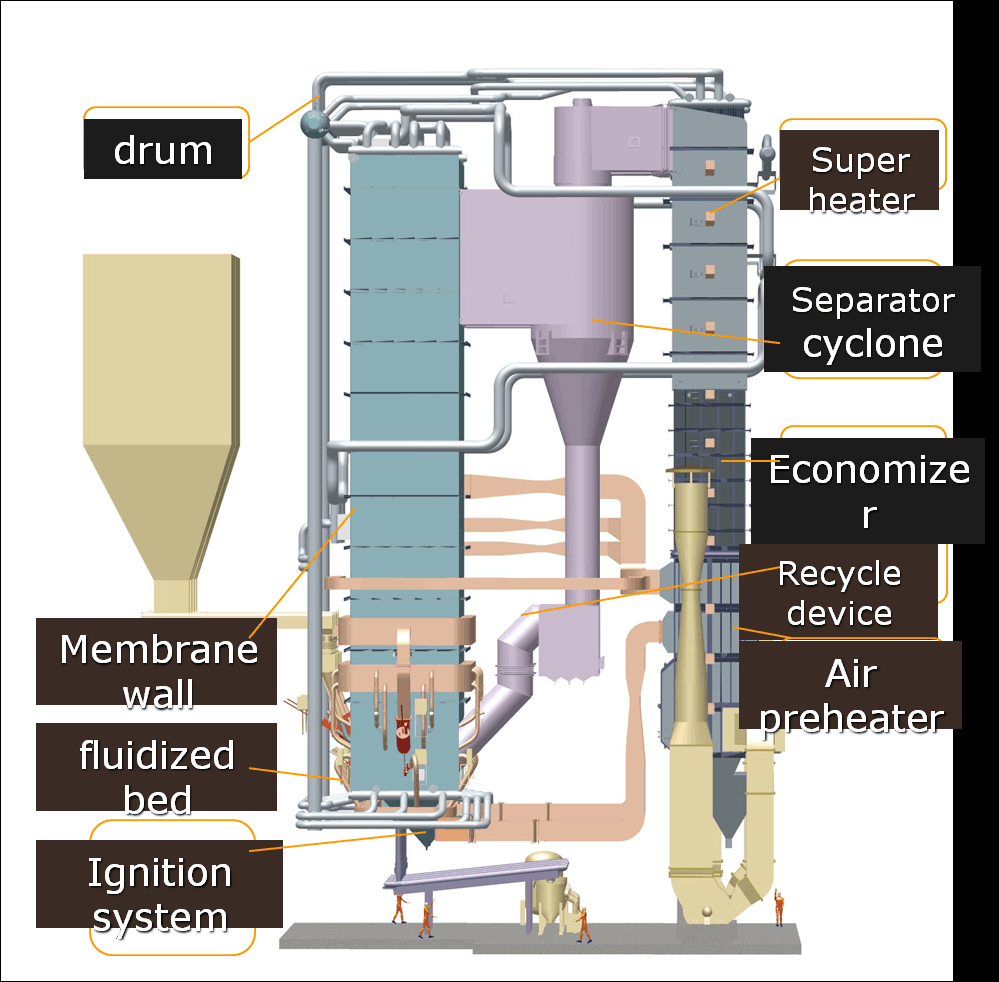
3. CFB Boilers – Built for Durability and Fuel Flexibility

Design: Fuel is burned in a fluidized bed of sand/ash particles, ensuring uniform temperature distribution
Applications: Large industrial plants and utility boilers using low-grade fuels (coal, biomass, sludge, petcoke)

StrengthsWeaknesses
Excellent fuel flexibilityHigher CAPEX and complexity
Low NOₓ and SO₂ emissions without SCR/FGDRequires robust maintenance plans for ash, refractory, fans
Resistant to slagging and corrosionRefractory management is critical

Life-Limiting Factors:

  • Cyclone and loop seal erosion

  • Refractory degradation in fluidized bed and cyclone zones

  • Air nozzle and tube erosion due to ash velocity

Maintenance Strategy for 40+ Years:

  • Replace refractory zones every 5–8 years

  • Monitor ash system wear annually

  • Use of ceramic air nozzles and upgraded cyclone tiles

  • Predictive maintenance through SCADA monitoring


Service Life Extension Techniques (All Boiler Types)

TechniqueLifespan Benefit
Re-tubing or pressure part replacement+5–10 years
Burner retrofit for fuel efficiency+3–7 years
Water chemistry upgrade (online analyzers)Reduces corrosion
Control system upgrade (PLC/SCADA)Improves load response, reduces thermal stress
Refractory relining (CFB)Extends uptime and heat retention
Heat exchanger cleaning and retubingRecovers lost efficiency

Case Example: 90 TPH Biomass-Fired CFB Boiler

  • Design pressure: 92 bar

  • Commissioned: 2004

  • Fuel: Rice husk, wood chips, sludge (36% moisture avg.)

  • Initial design life: 30 years

  • Upgrades done:

    • Refractory relining (2012, 2021)

    • New cyclones (2017)

    • Superheater tube replacement (2020)

    • Automation upgrade to PLC with real-time erosion monitoring (2023)

  • Projected life extension: Additional 12–15 years with no major pressure part failure

  • Total lifecycle target: 42–45 years


Summary

Boiler longevity isn’t just a function of type—it’s a function of design, duty, fuel, and how well you maintain and monitor the system. Fire-tube boilers may serve 15–25 years reliably for light-duty use. Water-tube boilers power industries for 30 years or more. And with proper care, CFB boilers can deliver steam steadily for over four decades, even while burning the most difficult fuels.

Ask your supplier for case studies, maintenance plans, tube life forecasts, and upgrade options. Choose a boiler that not only meets today’s demand but outlasts tomorrow’s challenges. Choose steam built for decades—not just duty. Choose longevity engineered into every weld.

How Do Water Treatment, Scale Control, and Blowdown Practices Impact Boiler Longevity?

Inside every industrial boiler, water is both a working medium and a potential threat. If untreated, water contains dissolved oxygen, hardness minerals, and impurities that cause scaling, corrosion, foaming, and metallurgical fatigue. Over time, these effects erode heat transfer efficiency, elevate fuel costs, damage pressure parts, and shorten the boiler’s service life significantly.

Water treatment, scale control, and blowdown practices are critical to boiler longevity because they prevent corrosion, maintain internal cleanliness, ensure consistent heat transfer, and protect against tube failure. Poor water chemistry can reduce boiler life by 30–50%, while proper treatment can extend it by decades.

Your boiler’s true enemy isn’t just heat—it’s what’s in the water.

Proper water treatment, scale control, and blowdown practices are essential for maximizing industrial boiler service life.True

Impurities in untreated feedwater cause scaling and corrosion that reduce efficiency and cause irreversible damage to boiler tubes and drums. Chemical treatment and controlled blowdown preserve equipment integrity.


1. Why Water Chemistry Management Matters

ThreatCauseEffect on Boiler
ScaleCalcium, magnesium, silicaTube overheating, reduced heat transfer
CorrosionDissolved oxygen, low pHPitting, thinning, tube failure
Foaming/CarryoverHigh TDS, oil contaminationWet steam, turbine blade erosion
DepositsIron, aluminum, sludgeReduced flow, pressure drop, overheating
Stress corrosion crackingChlorides + thermal cyclingCatastrophic failure under pressure

Result: Increased fuel use, reduced thermal efficiency, loss of pressure part integrity, and ultimately shortened lifespan or catastrophic failure.


2. Water Treatment Techniques That Preserve Boiler Life

Treatment AreaDescriptionBenefits
Pre-treatmentSoftening, filtration, demineralizationRemoves hardness and suspended solids
DeaerationMechanical deaerator + chemical oxygen scavenger (e.g., sodium sulfite)Eliminates corrosive oxygen and CO₂
Internal chemical treatmentPhosphate, polymer dispersants, chelating agentsPrevents scale, disperses sludge, buffers pH
Condensate polishingRemoves contaminants from returned steamProtects from contamination cycles

Key Parameters to Monitor:

Water Quality ParameterTarget Value
pH (boiler water)9.0 – 11.0
Dissolved oxygen (ppm)<0.007 ppm (7 ppb)
Total dissolved solids (TDS)Controlled based on boiler pressure
Silica (ppm)<0.02 ppm for high-pressure boilers
Iron/copper content<0.05 ppm

3. Scale Control – Protecting Heat Transfer Surfaces

Scaling AgentControl Method
Calcium/magnesiumWater softener or reverse osmosis (RO) system
SilicaHigh-efficiency RO or demineralization
Iron/aluminumCoagulation + filtration or polyamine-based dispersants

Consequences of scale:

  • Just 1 mm of scale can reduce efficiency by 7–10%

  • Internal tube metal temperatures rise dramatically, leading to creep or rupture

  • Flame impingement risk due to poor water-side cooling

Ask:

  • Is your feedwater chemically softened and monitored daily?

  • Are phosphate/polymer blends tailored to your boiler pressure?

  • Do you conduct monthly or quarterly tube cleaning inspections?


4. Blowdown Practices – Managing TDS and Sludge

Blowdown TypePurposeFrequency
Surface blowdownControls dissolved solids (TDS)Continuous or daily
Bottom blowdownRemoves sludge and sediment1–2 times/day, depending on load and impurities
Automatic blowdown systemUses conductivity sensors + solenoid valvesDynamic and optimized blowdown control

Improper blowdown risks:

  • Excess TDS causes foaming and steam contamination

  • Sludge deposits in mud drum or water walls restrict flow

  • Wasted water and energy if blowdown is excessive

Ask:

  • Do you use automatic conductivity-controlled blowdown valves?

  • Is blowdown heat recovered in a flash tank or exchanger?

  • Are logs maintained for TDS, frequency, and duration?


5. Example: 40 TPH Water-Tube Boiler with Chemical Control Program

Boiler pressure: 42 bar
Feedwater system:

  • Twin softeners + RO system

  • Deaerator with sodium sulfite dosing

  • Phosphate/polymer blended internal treatment

Monitoring program:

  • pH: 9.3–9.8

  • TDS: <1,200 ppm

  • Silica: 0.01 ppm

  • Dissolved oxygen: <5 ppb

  • Blowdown: Surface (continuous, automated), Bottom (twice/day)

Results:

  • No major scale observed in 7-year inspection

  • Fuel savings of ~6% vs. untreated baseline

  • Estimated extension of boiler life by 8–10 years


6. Signs of Poor Water Treatment or Scale Issues

SymptomPossible Cause
Drop in steam pressure with same fuelScale buildup on tubes
White residue or pitting inside drumOxygen corrosion or silica deposits
High blowdown frequencyPoor feedwater quality or untreated condensate
Abnormal flame temperatureInsufficient water-side cooling due to scaling

Summary

Your boiler’s longevity depends less on what you burn—and more on what flows inside. Proper water treatment, scale prevention, and blowdown practices safeguard heat exchange surfaces, prevent metal loss, and ensure high-efficiency steam generation for decades. Ask your supplier for custom water chemistry programs, inline monitoring tools, and documented maintenance schedules. Choose steam with purity. Choose performance preserved by water discipline. Choose a boiler protected by chemistry—not just steel.

What Role Do Material Selection and Construction Quality Play in Extending Lifespan?

An industrial boiler is a pressure vessel under fire—quite literally. It endures high-temperature combustion, pressurized water and steam, continuous thermal cycling, and in many cases, corrosive fuel ash and demanding load changes. Over time, a boiler’s ability to survive these stresses without cracking, thinning, or rupturing depends directly on the quality of materials selected and the precision of its fabrication and assembly process.

Material selection and construction quality are critical to boiler lifespan because they determine resistance to heat, pressure, corrosion, creep, and erosion. High-quality alloys, certified plate steel, precise welding, and rigorous quality assurance ensure the boiler can maintain pressure part integrity over decades of operation. Poor materials or fabrication errors can shorten life by years or even cause early catastrophic failure.

Lifespan starts not in the field, but in the steel yard and welding bay.

Material selection and construction quality directly impact the service life, safety, and reliability of industrial boilers.True

Correctly selected high-temperature alloys, certified pressure-rated steels, and precise welding techniques resist corrosion, creep, thermal fatigue, and erosion—common failure modes in industrial boilers.


1. How Material Selection Affects Boiler Lifespan

ComponentCommon Material ChoicesFailure Risk from Wrong Material
Steam drumSA-516 Gr.70, SA-299Brittle fracture, deformation under pressure
Water/steam tubesSA-210, SA-213 T11/T22, T91Tube thinning, creep rupture
SuperheatersSA-213 T11, T22, T91Overheat cracking, oxidation
Refractory anchor rodsInconel 600, SS310Warping, failure in hot zones
Cyclone liners (CFB)Cast basalt, ceramic compositeErosion blowouts

Key material properties to match with application:

  • Creep resistance for sustained high temperatures

  • Thermal conductivity to manage heat transfer

  • Corrosion resistance in presence of oxygen or acidic condensate

  • Erosion resistance under ash or sand flow

Ask:

  • Are your pressure parts ASME/EN-certified and traceable to heat numbers?

  • Do you use T22 or T91 steel for superheaters above 500°C?

  • Are cyclone and bed seals protected with erosion-resistant ceramics?


2. Why Construction Quality Determines Reliability

Construction StageQuality Control Requirement
Steel plate preparationCertified tensile strength, mill test report (MTR)
Tube bending/formingMandrel control, ovality limits, wall thinning <10%
Welding (manual/TIG/SAW)Certified welders (ASME IX/EN ISO 9606), WPS/PQR verified
Post-weld heat treatment (PWHT)Relieves residual stress, especially in alloy and thick plates
Non-destructive testing (NDT)Radiography (RT), Ultrasonic (UT), Dye Penetrant (PT), Magnetic Particle (MT)
Hydrostatic testing1.5× design pressure for >30 minutes with no leak or deformation

Fabrication errors cause:

  • Weld cracking under thermal cycling

  • Thin spots or inclusions leading to early leaks

  • Localized stress risers that propagate into fatigue failure

  • Warped drums that cause uneven tube stress

Ask:

  • What is your NDT coverage percentage (target = 100% for critical welds)?

  • Is hydrostatic testing witnessed and documented by third-party inspection?

  • Do you maintain welding traceability logs for each pressure part weld?


3. Comparison of Materials and Their Boiler Performance Attributes

MaterialMax Operating Temp (°C)Key PropertiesUsed In
SA-516 Gr.70~500°CToughness, pressure ratingDrums, headers
SA-213 T11540°CModerate creep strengthSuperheaters, reheaters
SA-213 T22570°CImproved high-temp strengthHigh-temp tubes
SA-213 T91610°CExcellent creep and corrosion resistanceUltra-supercritical tubes
SS310/Inconel>900°COxidation/thermal shock resistantRefractory anchors, exposed tips
Ceramic/aluminaErosion and acid-resistantCyclone/burner tiles in CFBs

4. Indicators of Construction Quality in Supplier Capability

Fabrication PracticeWhy It Matters
ASME “S” stamp or CE PED Module HVerified compliance with global pressure codes
In-house vs. outsourced weldingBetter control over welding quality and inspection
Preheating and PWHT for alloy weldingPrevents HAZ cracking and long-term creep
Tube-to-drum weld beveling and flushnessMinimizes thermal fatigue failure
Shell alignment checksEnsures even stress distribution under pressure

Ask:

  • Can you provide weld procedure qualifications (WPS, PQR)?

  • Are you ISO 3834 or EN 1090 certified for welding process control?

  • How are wall thickness and ovality measured post-rolling?


5. Case Example: 120 TPH High-Pressure Water-Tube Boiler

Operating pressure: 92 bar
Fuel: Petcoke + coal + sludge
Materials used:

  • Steam drum: SA-299 Gr.B

  • Tubes: SA-213 T22 and T91 in superheater sections

  • Refractory anchor material: SS310

  • Cyclone liner: Cast basalt + cordierite ceramic

Fabrication controls:

  • 100% RT for all longitudinal drum welds

  • All superheater header welds UT-scanned and logged

  • Post-weld heat treatment at 650°C for 4 hours

  • Third-party inspector (TÜV) approved pressure test @ 1.5× MAWP

  • Verified weld maps and material traceability records

Result:

  • 18 years of continuous operation

  • <0.2 mm/year corrosion rate in steam drum

  • Superheater tube life extended with T91 use to projected 28 years

  • No record of weld failure or creep damage to date


Summary

A boiler’s lifespan isn’t measured only by years—it’s welded into the seams and alloyed into the tubes. Ask your supplier for complete documentation of pressure part materials, welding procedures, inspection logs, and steel traceability. Choose pressure vessels built from metals proven to survive heat, erosion, and time. Choose construction done by certified hands under trusted eyes. Choose longevity forged from metallurgy. Choose a boiler that’s built to last—before it’s ever fired.

How Does Operating Pressure, Fuel Type, and Duty Cycle Affect Boiler Wear and Fatigue?

Industrial boilers are built to withstand immense heat and pressure over long lifetimes—but they are not immune to fatigue, corrosion, or mechanical failure. Three of the most important factors that determine how fast a boiler wears out are operating pressure, fuel type, and duty cycle. These variables directly influence how the boiler’s metallurgy, seals, welds, and internal surfaces respond over time.

High operating pressure increases metal stress and creep risk, corrosive or high-ash fuels cause erosion and slagging, and frequent cycling (on/off or load swings) introduces thermal fatigue. Together, these factors determine how fast a boiler degrades, how often it requires maintenance, and how long it can operate reliably.

The boiler doesn’t just burn fuel—it wears every time it breathes, flexes, and runs.

Operating pressure, fuel type, and duty cycle are the primary stressors that determine boiler wear rates, fatigue, and long-term degradation.True

These parameters control thermal and mechanical loading, which in turn dictate corrosion, creep, scaling, and fatigue damage in tubes, drums, and headers.


1. Operating Pressure – The Higher the Pressure, the Greater the Stress

EffectMechanismRisk to Boiler
Hoop stressStress on drum and pipe walls increases with pressureWall thinning, cracking
Creep deformationLong-term metal stretching at high temp/pressureTube sagging or rupture
Water-side scalingHigher temp → more prone to hardness precipitationOverheat, reduced heat transfer

Formula (hoop stress on drum wall):

σ=P×r÷t

Where:

  • P = internal pressure

  • r = radius

  • t = wall thickness

Design tips:

  • Use T22, T91 materials in superheater/reheater at >540°C

  • Apply post-weld heat treatment (PWHT) in thick-wall drums

  • Monitor wall thickness and creep using ultrasonic testing

Ask:

  • What is your boiler’s allowable creep life under current pressure/temp?

  • Are tube metals selected for >100,000 hours at design stress?


2. Fuel Type – The Ash, Sulfur, and Moisture Matter

Fuel TypeWear ImpactCorrosive/Mechanical Risks
Coal (bituminous)Abrasive ash, sulfurSlagging, high-temperature corrosion
BiomassAlkali/acidic ash, high moistureBed fouling, chloride attack
Petroleum cokeHigh vanadium/sulfurTube corrosion, refractory erosion
Natural gasClean combustionLow risk (except condensate pH issues)
Waste (RDF, sludge)Unpredictable ashVariable fouling, volatile corrosion

Failure examples:

  • Furnace wall cracking from alkali corrosion (biomass)

  • Cyclone inlet damage from hard fly ash particles

  • Ash-induced blockage in economizer due to petcoke agglomeration

Prevention:

  • Erosion shields in elbows and tube bends

  • Ash analysis to adjust refractory and air distribution

  • SO₂/NOₓ control to reduce acid condensation in low-temp zones

Ask:

  • Is your combustion air staging matched to ash melting point?

  • Are cyclone tiles and refractory materials chosen for ash chemistry?


3. Duty Cycle – Load Changes, Cycling, and Thermal Shock

Duty TypeImpactDamage Caused
Base load (24/7 operation)StablePredictable metal creep, lower fatigue
Load-followingVariable load swingsHeader/tube expansion mismatch, fatigue
Start-stop (daily/weekly)Frequent thermal cyclingTube-end cracking, weld fatigue, seal leakage
StandbyInfrequent steamingOxygen corrosion if improperly preserved

Thermal shock = rapid expansion or contraction of metals

  • Water-to-steam transitions cause tube bowing

  • Header welds experience cyclic strain

Mitigation strategies:

  • Install expansion joints and bellows in tube headers

  • Use controlled ramp rates for startup and shutdown

  • Include bypass or recirculation valves to reduce ΔT gradients

Ask:

  • What’s your average start-up ramp rate (°C/min)?

  • Has your boiler experienced thermal shock-induced cracking?


4. Combined Effect: Boiler Wear Risk Matrix

ScenarioWear RiskExpected Impact
High pressure + abrasive fuel + cyclingVery HighEarly tube erosion, thermal cracking, creep rupture
Medium pressure + stable operation + clean fuelLow30+ years of life with minor maintenance
Low pressure + biomass + daily cyclingModerate to HighBed maintenance, refractory loss, fatigue on tube ends
High pressure + gas fuel + base loadLow to ModerateMinimal scaling, but watch for condensate pH issues

5. Case Study: 100 TPH CFB Boiler on Mixed Biomass + Coal

Pressure: 92 bar
Duty: 18 hours/day, load-following
Fuel: 60% wood chips, 40% lignite
Observed Wear:

  • Air nozzles wore out every 14 months

  • Cyclone inlet tiles replaced after 5 years due to erosion

  • Refractory relining needed every 6–7 years

  • Economizer tubes replaced every 12 years due to acidic corrosion from biomass ash

Solution Implemented:

  • Installed ceramic-coated air nozzles

  • Adjusted primary air velocity to reduce tube impact

  • Added online erosion monitoring system

  • Implemented controlled ramp-up during startup

Result:

  • Extended predicted life to 34+ years with preventive maintenance

  • 23% reduction in unplanned downtime over 5 years


Summary

The way you fire your boiler, pressurize your steam, and schedule your loads defines how long it will last. High pressure stresses metal. Dirty or acidic fuels corrode and erode. Load swings crack welds and bend tubes. Ask your supplier for material fatigue data, fuel flexibility design specs, and thermal cycling reports. Choose a boiler designed not just for output—but for endurance. Choose durability built for your pressure, fuel, and rhythm. Choose a system that works as long as your industry runs. Choose longevity powered by smart operation.

What Signs Indicate a Boiler Is Reaching the End of Its Service Life?

Even the most robust industrial boilers—whether fire-tube, water-tube, or circulating fluidized bed (CFB)—have a finite operational lifespan. Over time, thermal stress, chemical corrosion, mechanical fatigue, and scaling will gradually degrade the performance, safety, and reliability of the boiler. Waiting until catastrophic failure or complete shutdown is not an option. That’s why facility managers must monitor the system closely for clear end-of-life indicators.

Common signs a boiler is approaching the end of its service life include: increased frequency of tube leaks, reduced thermal efficiency, thinning of pressure parts, longer startup times, costly refractory damage, non-compliance with emissions limits, difficulty sourcing spare parts, and rising maintenance costs. If multiple symptoms are present simultaneously, proactive replacement planning is essential.

A boiler nearing its limit doesn’t fail suddenly—it warns you repeatedly.

Frequent tube leaks, declining efficiency, and structural fatigue are major indicators that an industrial boiler may be reaching the end of its service life.True

These signs reflect cumulative wear and fatigue in pressure parts, insulation, and control systems, which if left unaddressed, can lead to catastrophic failure or regulatory violations.


Key Signs Your Industrial Boiler Is Nearing End of Service Life

1. Increasing Tube Failures and Repairs

IndicatorWhat It Means
Frequent water/steam leaksInternal corrosion or wall thinning
Plugging of multiple tubesAdvanced erosion/scaling
Repeat repairs in the same areaFatigue crack propagation or weld failure

🔍 Inspection tip: Use ultrasonic testing (UT) to check wall thickness in superheater and economizer tubes. Compare to minimum allowable thickness from ASME code or OEM specs.

Ask:

  • How many tubes have been replaced or plugged in the last 3 years?

  • Is tube failure occurring due to internal corrosion or external erosion?


2. Drop in Thermal Efficiency and Fuel Economy

SymptomPossible Cause
Increased fuel usage per steam unitScale buildup or air leakage
Unstable flue gas temperaturesBaffle failure or ash deposition
Poor steam quality (wet steam)Foaming, poor separation, carryover issues

💡 A 1 mm scale layer can reduce heat transfer efficiency by up to 10%, forcing the system to work harder for the same output.

Ask:

  • When was the last water-side or fire-side cleaning done?

  • Has excess air ratio changed without burner adjustment?


3. Excessive Wall Thinning and Metal Fatigue

LocationTypical Failure Risk
Drum shellsCreep fatigue or overstress
Tube bends/headersThermal shock-induced cracks
Superheater tubesOverheat from slag or poor flow

📏 Regular thickness readings should be trended annually. ASME requires retirement before reaching the minimum design thickness.

Ask:

  • Has creep damage analysis (e.g., Larson-Miller parameter) been performed?

  • Are thickness readings within 10% of code-defined minimums?


4. Refractory and Insulation Breakdown

SymptomEffect
Refractory cracks or detachmentLocal overheating, wall failure
Hot spots on outer shellInsulation degradation
Refractory dust in hopper or cycloneExcessive wear in fluidized bed or combustion zone

🔥 In CFB boilers, refractory wear directly affects bed performance, emissions, and startup time. Deterioration after 10–15 years is common.

Ask:

  • What percentage of refractory surface has been replaced in the last cycle?

  • Have hot spot surveys indicated thermal loss zones?


5. Control and Instrumentation Obsolescence

IssueImpact
Obsolete PLC/SCADAIncompatibility with modern systems
Sensor drift or failureInaccurate pressure/temp control
Poor integration with remote monitoringDelayed diagnostics and alerts

⚙️ Aging controls can’t reliably support emissions tuning, trip protection, or load optimization.

Ask:

  • Is your BMS (burner management system) compliant with NFPA 85 or EN 746-2?

  • Can spare parts still be sourced for the DCS or PLC platform?


6. Increased Frequency and Cost of Unplanned Outages

MetricBenchmark
Outages/year>2 = sign of system instability
MTBF (Mean Time Between Failures)<1,500 hours = possible end-of-life trend
Annual maintenance cost as % of CAPEX>4–6% = consider replacement economics

💰 Example: If annual maintenance costs exceed 20% of boiler replacement value, ROI for a new system may already be justified.

Ask:

  • What’s your outage cost per hour of lost production?

  • Has preventive maintenance failed to reduce emergency callouts?


Combined End-of-Life Risk Scorecard (Self-Diagnosis)

CategoryYes/NoWeight
>3 tube failures/yearHigh
Fuel cost up >10% with same outputMedium
>25% refractory repaired in past 2 yearsMedium
Pressure part wall <10% above minimumHigh
Unavailable PLC/SCADA sparesHigh
MTBF <1,000 hoursCritical

👉 If 3 or more high/critical flags are checked: Initiate retirement planning and ROI calculation.


Case Example: 65 TPH Water-Tube Boiler (Oil-Fired)

Operational life: 28 years
Observed symptoms:

  • 14 tubes plugged in 24 months

  • 17% drop in efficiency due to fire-side fouling

  • Refractory delaminated in two zones

  • Original DCS platform discontinued

  • Blowdown valve actuators malfunctioned repeatedly

Action Taken:

  • Retrofit estimate: $850k (partial tubes + automation upgrade)

  • New high-efficiency packaged boiler quote: $1.5M

  • Decision: Replace unit with new 75 TPH condensing boiler (estimated 12% fuel savings)


Summary

An industrial boiler nearing the end of its life doesn’t just break—it slows down, leaks, costs more, and becomes harder to keep compliant. These signals—from thinning walls to failing tubes to refractory fatigue—are measurable, predictable, and actionable. Ask your supplier for end-of-life inspection reports, UT readings, efficiency loss logs, and cost-risk forecasts. Choose a proactive response to aging steel, not a reactive shutdown. Choose to retire your boiler before it retires your process. Choose awareness that prevents failure.

DZL coal-fired boilers(3)

When Should You Consider Repair, Retrofitting, or Full Boiler Replacement?

Industrial boilers are high-value, long-life assets—but not immortal. Over time, wear and tear from thermal cycles, corrosion, outdated controls, and emissions regulations erode their performance and reliability. The question isn’t whether failure will occur, but when you should intervene—and how. Whether it’s a minor repair, a targeted retrofit, or complete replacement, making the right decision at the right time can save millions in energy costs, lost production, or regulatory penalties.

Repair is best when damage is isolated and the core pressure parts remain sound. Retrofitting is recommended when the structure is intact but efficiency, automation, or emissions compliance must improve. Full replacement is warranted when the boiler has widespread fatigue, escalating maintenance costs, obsolete components, or fails to meet capacity or regulatory requirements.

Deciding too late invites downtime. Deciding wisely secures your future.

Timely decisions between boiler repair, retrofit, or replacement are essential to optimize performance, comply with regulations, and control long-term operational costs.True

Evaluating boiler condition, lifecycle cost, efficiency, and compliance status helps determine whether continued investment or capital renewal delivers the best value.


Boiler Decision Framework: Repair vs Retrofit vs Replace

Decision TypeWhen to ChooseCommon Triggers
RepairLocalized damage, limited wearSingle tube leaks, pump or valve failure, actuator issues
RetrofitGood mechanical health but poor performance or complianceOutdated burner, high emissions, poor automation, control system obsolescence
ReplacementEnd-of-life or major failure riskWidespread corrosion, tube wall thinning, lost efficiency, emission non-compliance, capacity mismatch

1. When Repair Is Sufficient

IndicatorRepair Action
<5% of tubes affectedPlug or replace select tubes
Soot or slag in fireboxMechanical cleaning or refractory patching
Feedwater valve leakageReplace seals or actuators
Boiler casing hot spotsAdd insulation or reapply cladding

Criteria:

  • Unit <70% into service life

  • Repairs cost <20% of boiler replacement

  • No core pressure part deformation

Ask:

  • Can NDT confirm integrity of surrounding components?

  • Will the repair extend service for at least 3 years?

🛠 Example: One-off superheater tube failure repaired for $9,500 avoided a full outage.


2. When Retrofitting Offers a Smart Upgrade

Retrofit ScopeUpgrade Goals
Burner retrofitImprove turndown ratio, reduce NOₓ/CO
Control system upgradeReplace outdated PLC or HMI, improve automation
Economizer additionRecover heat and boost efficiency 5–10%
Fuel conversionSwitch from oil to gas, or coal to biomass
Condensate recoveryReduce feedwater and fuel cost

Criteria:

  • Structure and pressure parts in good condition

  • Unit is <80% of expected lifespan

  • Retrofit cost <60% of full replacement

  • ROI within 2–4 years via savings or compliance

Ask:

  • Are emissions non-compliant but fixable with SNCR/SCR or burner upgrade?

  • Is downtime <3 weeks with planned retrofit?

🔧 Example: Digital burner management system retrofit on a 90 TPH water-tube boiler improved NOₓ control and reduced trips, with 18-month ROI.


3. When Full Boiler Replacement Is the Right Move

Red FlagsReplacement Justification
>25% of tubes plugged or replacedSystematic failure risk
Boiler runs <80% of rated efficiencyLost fuel value adds up
Annual maintenance >8% of CAPEXFinancially inefficient
Obsolete PLC/BMS with no supportControls unserviceable
Can’t meet new emission normsLegal/regulatory threat
Capacity shortfallCan’t meet demand or flexibility needs

Typical Outcomes:

  • +8–15% thermal efficiency improvement

  • 25–40% lower fuel consumption (if condensing)

  • Full automation, remote diagnostics

  • Compliance with latest NOₓ/SO₂/PM standards

  • Higher turndown (e.g., 10:1) for load flexibility

🆕 Example: Replacing a 28-year-old 75 TPH boiler saved $260,000/year in fuel and $75,000/year in downtime losses.


Lifecycle Cost Comparison Table (Illustrative, 60 TPH Water-Tube Boiler)

OptionInitial CostTypical ROIAdded LifeEfficiency GainDowntime
Repair$8,000–$80,000<6 months1–2 yearsNone1–5 days
Retrofit$150,000–$600,0001–3 years5–10 years+3–10%7–21 days
Replace$1.2M–$3.5M3–6 years25–30 years+10–15%3–6 weeks

5-Point Boiler Intervention Checklist

✅ Tube failure rate increasing year-on-year
✅ Burner or BMS platform no longer supported
✅ Annual maintenance rising >6% of capital value
✅ NOₓ/PM/SO₂ compliance failing local regulations
✅ System cannot meet future load growth

👉 3 or more boxes checked? → Initiate retrofit feasibility or replacement study now.


Summary

Every boiler has a lifespan—but your decision determines whether it ends in crisis or with value extracted to the last hour. If damage is isolated and the frame is solid, repair works. If efficiency and compliance matter more than age, retrofit wisely. But when metal fatigue, emissions violations, or runaway OPEX take hold—replace before failure replaces you. Ask your supplier for lifecycle data, cost modeling, emissions ROI, and retrofit compatibility. Choose intervention that matches reality—not just hope. Choose a solution backed by data, not delay. Choose timing that protects production and profit.

🔍 Conclusion

With proper operation, routine inspections, and preventive maintenance, an industrial boiler can serve reliably for 20–30 years or more. However, ignoring signs of wear, corrosion, or outdated controls can shorten its life and pose operational or safety risks. A proactive approach to lifecycle management ensures maximum performance, safety, and return on investment.


📞 Contact Us

💡 Need help assessing the condition or remaining life of your boiler? Our team offers boiler inspections, lifecycle analysis, and upgrade planning services for all industrial boiler types.

🔹 Let us help you protect your boiler investment and plan confidently for the future. ♨️⏳✅

FAQ

What is the average life expectancy of an industrial boiler?

The average life expectancy of an industrial boiler is typically 20 to 30 years, depending on:

  • Boiler type (fire-tube, water-tube, biomass, CFB, etc.)

  • Operating conditions (pressure, temperature, load cycles)

  • Fuel type (gas, oil, coal, biomass)

  • Water quality and treatment

  • Maintenance frequency and quality
    With optimal care, some units can exceed 30 years.

Which factors most influence boiler lifespan?

Key factors include:

  • Corrosion and scale formation from poor water treatment

  • Thermal fatigue caused by rapid temperature fluctuations

  • Mechanical wear from soot, ash, or pressure cycling

  • Fuel combustion quality (e.g., low-NOx vs. high-emission systems)

  • Maintenance schedule and inspections
    Boilers exposed to harsh or inconsistent conditions will degrade faster.

How can you extend the life of an industrial boiler?

To maximize longevity:

  • Implement a regular maintenance schedule

  • Use proper water treatment to avoid scaling and corrosion

  • Install automated monitoring systems for pressure and temperature control

  • Perform annual inspections (internal and external)

  • Upgrade components like burners, economizers, and control systems when needed

Does boiler type affect life expectancy?

Yes:

  • Fire-tube boilers: ~20–25 years

  • Water-tube boilers: ~25–30 years (more in power generation)

  • CFB and biomass boilers: ~20–30 years, depending on ash handling and fuel variability

  • Electric boilers: Often >30 years due to minimal combustion wear

When should an industrial boiler be replaced?

Consider replacing when:

  • Efficiency drops significantly despite maintenance

  • Repair costs exceed 50% of replacement cost

  • Frequent breakdowns impact productivity

  • Compliance with emissions or safety standards is no longer possible without major upgrades

References

  1. ASME Boiler Longevity Standardshttps://www.asme.org

  2. DOE Industrial Boiler Maintenance Best Practiceshttps://www.energy.gov

  3. EPA Guide to Boiler Efficiency and Lifecycle Emissionshttps://www.epa.gov

  4. Boiler Inspection and Replacement Planning – IEA Reportshttps://www.iea.org

  5. Steam Boiler Lifespan Factors – ResearchGatehttps://www.researchgate.net

  6. Preventive Maintenance Guidelines – BioEnergy Consulthttps://www.bioenergyconsult.com

  7. Thermal Fatigue and Boiler Failures – ScienceDirecthttps://www.sciencedirect.com

  8. Boiler Control System Modernizationhttps://www.automation.com

  9. Water Quality Standards in Industrial Boilershttps://www.iso.org

  10. Industrial Boiler Warranty and Lifecycle Estimateshttps://www.trustpilot.com

Wade Zhang

CEO of Taishan Group Taian Boao International Trade Co., Ltd. 30 years experience in Global industrial boiler market,  Over 300 boiler projects experience, including 21+ EPC projects. Projects span 30+ countries & regions, involving industries such as nuclear power, energy & electricity, municipal heating, mining, textiles, tires etc.

What Is the Life Expectancy of an Industrial Boiler? Read More »
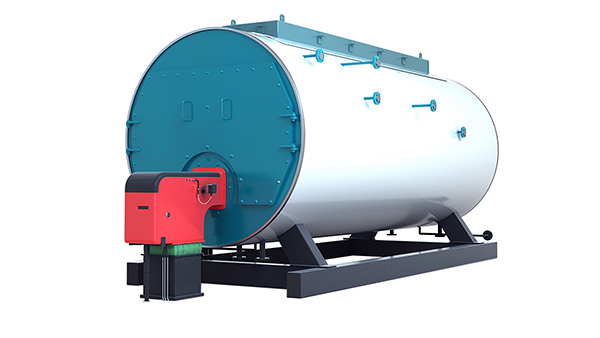
How to Assess After-Sales Support and Maintenance Services for Industrial Biomass Boilers

How to Assess After-Sales Support and Maintenance Services for Industrial Biomass Boilers

Industrial biomass boilers are an effective solution for sustainable energy generation, but they require specialized and consistent after-sales support due to the variability of fuel types, combustion conditions, ash content, and emissions control systems. Without strong post-installation service, issues like slagging, poor combustion, downtime, and regulatory violations can significantly increase operating costs and reduce boiler lifespan.

To assess after-sales support and maintenance services for industrial biomass boilers, evaluate the supplier’s preventive maintenance protocols, remote monitoring capabilities, spare parts inventory, emergency response times, technician training, refractory and ash-handling expertise, and long-term performance guarantees. Ask about service contracts, operator training, fuel testing services, and historical uptime performance. A trusted supplier should offer full lifecycle support tailored to the unique operational challenges of biomass fuel systems.

Here’s a comprehensive guide to evaluating a supplier’s service capability.

SZL small(10)(1)

What Types of Service Agreements Are Available (Basic Inspection, Full Maintenance, Performance-Based)?

Biomass-fired boilers face unique challenges—such as fuel variability, high ash content, refractory wear, and emissions complexity—that require structured, proactive, and fuel-informed maintenance. Without the right service agreement in place, boiler owners are left exposed to unpredictable downtime, combustion inefficiency, and regulatory risk. The solution lies in selecting the right type of service contract to match the plant’s operational needs, fuel quality, and production criticality.

Buyers must ask suppliers to clearly define the service agreement options available—typically categorized as basic inspection, full maintenance, and performance-based—and understand the scope of coverage, frequency of service, spare parts availability, technical support terms, and performance KPIs. Contracts should align with the complexity of the biomass system and the expected runtime hours.

Service isn’t a cost—it’s a safeguard. Choose it wisely.

Structured service agreements tailored to biomass boiler operation are critical for managing fuel-related risks, maintaining efficiency, and ensuring emissions compliance.True

Biomass fuels introduce operational variability. Maintenance contracts that proactively address fouling, ash buildup, and combustion control prevent outages and stabilize long-term performance.

Common Biomass Boiler Service Contract Types Explained

1. Basic Inspection Agreement – Entry-Level Oversight and Support

ScopeFeaturesIdeal For
Annual or semi-annual visitVisual inspection, combustion check, report issuancePlants with skilled in-house O&M teams
Includes trip log reviewEmissions drift check, visual grate wear assessmentLow-load or standby biomass systems
Advisory onlyNo parts or tuning includedFuel quality stable or batch-mode

Ask:

  • Is the inspection report digitally formatted for ISO audits?

  • Are refractory inspections or sensor checks included?

  • Can you assist in preparing for local compliance audits?

2. Full Maintenance Contract – All-Inclusive Preventive Service

ScopeFeaturesIdeal For
Quarterly or monthly visitsFull cleaning, tuning, lubrication, thermal scanBase-load biomass steam generation plants
Spare parts coverageGrate bars, nozzles, actuators, thermocouplesContinuous-use or high-ash fuel plants
Emissions tuning and reportingCEMS calibration support, O₂/CO/NOₓ tuningPlants under strict environmental oversight
Emergency supportGuaranteed response within 48 hoursCritical uptime environments

Ask:

  • Are burner curves and air/fuel ratios adjusted each visit?

  • Does your technician carry spare parts for on-the-spot repairs?

  • Are scheduled cleaning routines adapted to our biomass grade?

3. Performance-Based Contract – Guaranteed Results Linked to KPIs

ScopeFeaturesIdeal For
Contract linked to boiler uptime, efficiency, or emissionsShared risk model based on runtime hours or fuel consumptionHigh-reliability users (IPPs, district heating, continuous process industries)
Real-time performance monitoringRemote diagnostics, dashboard alerts, predictive alertsDigital-ready plants with SCADA access
Incentives for high availabilityPenalties/bonuses tied to performanceESG or uptime contract-regulated facilities

Ask:

  • What KPIs are included—efficiency, uptime, emissions, maintenance intervals?

  • How are fuel variations (e.g., moisture shifts) accounted for?

  • Is downtime response covered under the contract or separately?

Contract Comparison Table

FeatureBasic InspectionFull MaintenancePerformance-Based
Site visits/year1–24–126–12 + remote
Spare partsNot includedIncluded (select items)Fully included
Remote monitoringOptional add-onOften includedRequired
Uptime KPIsInformational onlyContractual target (e.g., ≥95%)
Report generationManualScheduled + dashboardAuto-generated, real-time

Example: 20 TPH Biomass Boiler Service Agreement Case

Fuel: Mixed sawdust + rice husk (18–28% moisture)
Service Plan: Full Maintenance Contract
Included:

  • Monthly site visit with combustion diagnostics and refractory thermal mapping

  • Ash system inspection + scraper chain lubrication

  • Grate bar wear replacement every 6 months

  • Emergency response under 24 hours

  • CEMS recalibration and NOₓ tuning every quarter

  • Access to emissions dashboard with daily NOₓ trendline

Results:

  • Unplanned shutdowns reduced from 3.8/year to 0.5/year

  • Steam-to-fuel ratio improved by 7.2%

  • Emissions consistently below 135 mg/Nm³ for NOₓ and 25 mg/Nm³ for CO

Summary

Biomass fuels change with every truckload—your service plan shouldn’t. Whether you need a light inspection, a full-service lifecycle shield, or a performance-guaranteed partnership, make sure your contract matches your operation. Ask for clarity, KPIs, and real-world case proof. Choose not just service, but assurance. Choose biomass support built for variability, uptime, and regulatory peace of mind.

How Do You Handle Spare Parts and Consumables for Fuel Feed, Combustion, and Ash Systems?

Biomass boiler operations depend on mechanical systems that endure constant wear, abrasion, corrosion, and thermal cycling—especially in fuel feeding, combustion, and ash extraction zones. Without proper spare parts planning and consumable inventory, failures in a single screw feeder, grate, or ash conveyor can halt the entire steam supply chain, trigger emissions excursions, or even damage refractory linings.

Buyers must ask biomass boiler suppliers how they manage spare parts and consumables—especially for high-wear systems such as fuel screw conveyors, combustion air nozzles, grate bars, refractory modules, and ash extraction components. This includes parts availability, stocking options, delivery timelines, digital tracking, and replacement schedules.

Reliability isn’t built into steel alone—it’s stocked on your shelf and tracked in your logs.

Timely availability of spare parts and consumables for biomass boiler fuel, combustion, and ash systems is essential to prevent unplanned downtime and operational losses.True

Due to high wear from abrasive fuels, parts like screw conveyors, nozzles, and grates must be replaced proactively to maintain combustion performance and ensure safe operation.

Key Spare Parts Management Areas to Ask Your Supplier

1. How Are Fuel Feeding Components Supported?

ComponentWear RiskParts to Track
Fuel screw conveyorsAbrasion, jammingShafts, bearings, seals, drive motors
Rotary airlocksAsh buildup, jammingVanes, seals, couplings
Chain/bucket elevatorsDust ingress, misalignmentChains, sprockets, buckets

Ask:

  • Do you recommend stocking entire assemblies or critical wear kits?

  • What’s the typical lifetime (hours/tons) for screw flights in our fuel type?

  • Are motors and couplings standardized or custom-sized?

2. What Is the Grate and Combustion Parts Supply Strategy?

ComponentFailure ModeRecommended Spares
Grate barsThermal cycling, fuel ash fusionAlloy-cast bar sets by row or section
Air nozzlesAsh impingement, warpingCeramic/SS nozzles, O-rings, seat washers
Primary/secondary air dampersWarping, actuator slipActuator kits, damper blades, sensors

Ask:

  • Are grates modular for partial replacement?

  • Can you deliver ceramic nozzles pre-matched to our row IDs?

  • Do you offer a combustion tuning kit (nozzles + seals + gaskets)?

3. How Are Ash Handling Parts Managed?

SystemCritical ComponentsFailure Points
Bottom ash conveyorTrough liner, drag chainChain wear, sprocket rounding
Fly ash hopperRapping motors, filter elementsMotor failure, bag blinding
Rotary unloaderSeal ring, vanes, gearheadLeakage, torque slippage

Ask:

  • What is the ash removal motor’s MTBF under high-ash fuels?

  • Are baghouse filters provided in sets with barcode labels?

  • Can you auto-replenish filters based on runtime?

4. What Are the Parts Stocking and Delivery Terms?

Spare TypeStocking MethodLead Time (Typical)
Critical parts (motors, grates)On-site consignment or contract1–3 days (in-region)
Consumables (gaskets, filters)Yearly or bi-annual kitsDelivered quarterly
Large parts (gearboxes, fans)Reserved at regional warehouse4–8 weeks
Digital inventoryQR-tagged BOM + reorder alertsReal-time mobile access

Ask:

  • Do you offer a digital spare parts management system?

  • Can spares be bundled with service contracts or preventive kits?

  • Are obsolete or upgraded parts automatically flagged?

5. Do You Provide Parts Replacement Schedules and Predictive Planning?

ToolFunction
Runtime counter linked to SCADATriggers part replacement alerts
Visual inspection checklistIdentifies fatigue, warping, cracking
Predictive service dashboardCombines run hours, ash rate, temperature trends
Illustrated parts manual3D exploded views with codes for reordering

Ask:

  • Do you provide expected life charts for major assemblies?

  • Can we access parts forecasts based on our actual fuel blend?

  • Are parts kits optimized by runtime or calendar-based intervals?

Example: Spare Parts Kit for 15 TPH Biomass Boiler

Fuel: Sawdust + palm kernel shell blend (ash 7.2%, 23% moisture)
Stocked On-Site:

  • Grate bars: 12% annual replacement rate (per burner row)

  • Ceramic air nozzles: 25% attrition/year

  • Fuel screw shaft + coupling kit: 1 spare per 8,000 hours

  • Bottom ash drag chain set: Full length every 3 years

  • Filter bags (PTFE): Full change every 12–18 months

Digital Tools:

  • QR-coded BOM matched to boiler serial number

  • Parts dashboard linked to service intervals and usage logs

  • Monthly reorder report + alert email for low inventory levels

Summary

Biomass burns hard—and it wears harder. Your supplier’s spare parts system must anticipate that reality with smart stocking, predictive replacement, and responsive logistics. Ask not just what parts they offer, but how, when, and with what support they deliver them. Choose a spare parts system as strong as the boiler itself. Choose proactive logistics. Choose parts that arrive before failure. Choose combustion without compromise.

Biomass boilers (9)

What Is Your Response Time for Emergency Support, and Do You Offer 24/7 Assistance?

Biomass boilers are subject to fuel variability, mechanical stress, and ash accumulation—making them more prone to unplanned shutdowns, fuel feeder blockages, flame loss, or refractory failure. When a fault occurs, your ability to recover operations quickly depends entirely on the speed and quality of your supplier’s emergency response. Every hour offline means production losses, compliance risk, and fuel waste.

Buyers must ask biomass boiler suppliers to clearly define their emergency support terms—including guaranteed response times, hotline availability, field engineer dispatch protocol, and the availability of 24/7 assistance. Support terms should also cover fault diagnosis procedures, digital access to controls, escalation hierarchy, and availability of spare parts for urgent repair.

When you’re facing a shutdown, only one metric matters: how fast your supplier shows up—with solutions.

Rapid emergency response and 24/7 support access are essential for minimizing downtime and avoiding production and environmental losses in biomass boiler operations.True

Biomass boiler failures often occur due to ash bridging, fuel flow disruption, or emissions drift. Timely support prevents extended outages and safety risks.

Key Emergency Support Elements You Must Clarify

1. What Are Your Remote Support and Diagnostic Capabilities?

Remote Support TypeExpected ResponseWhat It Includes
24/7 technical hotline≤2 hours responseFirst-line troubleshooting
VPN-based diagnostics<1 hour login (if contracted)PLC review, sensor faults, trip logs
SCADA remote viewingReal-time data accessAlarm status, emissions levels
SMS/Email alert systemAuto-alarm forwardingCritical events push notifications

Ask:

  • Is your hotline staffed by boiler-specific engineers?

  • Can you access our control system remotely?

  • Are remote resets or parameter tuning permitted under warranty?

2. What Is the Guaranteed Field Engineer Response Time?

Response TypeIn-Region TargetTypical Outside Timeframe
On-site engineer (critical failure)≤24–48 hours48–72 hours (remote or rural)
Parts + engineer combo dispatch≤72 hours with spare deliveryPre-contract required
Weekend/emergency visitAvailable with surcharge or SLAMust be pre-authorized

Ask:

  • Do you have regional service bases for field deployment?

  • Is the response time SLA-backed or “best effort”?

  • Do you offer priority support under extended service contracts?

3. Do You Support 24/7 Assistance and What Does It Cover?

Support CoverageAvailable Under
24/7 hotline supportAll service tiers or with subscription
Emergency field visitsOnly with premium service contract or add-on
24/7 parts dispatchContracted clients or key accounts only
SCADA/VPN support after hoursRequires pre-configured access + consent

Ask:

  • Is 24/7 support included in our default service plan?

  • Are nighttime or holiday response terms different?

  • What incidents are prioritized for overnight dispatch?

4. What Is the Fault Escalation and Closure Workflow?

StepTimelineResponsibility
Fault report receivedWithin 15 minutesPlant operator logs via hotline or web
Support assigned<30 minutesSenior technician or remote engineer
Root cause diagnosis<2 hours for digitalOn-site only if unresolved
Follow-up report + closureWithin 48–72 hoursField engineer or account manager

Ask:

  • Are service events logged in a digital portal?

  • Do you issue post-event debriefing with action plan?

  • Can you provide monthly incident history for audit?

5. Do You Offer Emergency Spare Parts and On-Demand Kits?

Spare Part SupportTerms
Pre-packed emergency kitsSupplied on consignment or contract
Courier shipping24–72 hours from regional depot
Rental/replacement burners or controlsSelect models only

Ask:

  • Can critical spares be shipped same-day?

  • Do you pre-stock emergency items at our site?

  • Are spare parts mapped to fault types for rapid matching?

Example: Emergency Response Record – 12 TPH Biomass Boiler, Thailand

Issue: Ash screw jam + flame loss on night shift
Support Flow:

  • 22:48 – Alarm logged, SCADA auto-sends to supplier support

  • 23:05 – Hotline engineer diagnoses trip via remote login

  • 00:34 – On-site operator guided to clear obstruction and purge ash

  • 01:20 – Boiler restarted under remote supervision

  • 10:00 – Field engineer dispatched for post-event inspection

  • Total Downtime: 2.5 hours

  • Parts used: None (issue resolved remotely)

Summary

In biomass combustion, time is steam—and steam is money. Don’t wait until your feeder jams, your flame dies, or your NOₓ trips a shutdown alarm. Ask your supplier what real emergency support looks like: how fast they respond, what’s included, and how they’ll protect your uptime 24/7. Choose not just a boiler vendor, but an emergency-ready service partner. Choose support that starts when the fault does—not after. Choose presence. Choose preparedness. Choose round-the-clock reliability.

What Monitoring Tools and Automation Systems Do You Provide for Real-Time Performance Tracking?

Biomass boilers present significant control challenges due to fuel variability, moisture fluctuations, and combustion unpredictability. To operate safely, efficiently, and within emissions limits, these systems must be continuously monitored, automatically adjusted, and transparently logged. That’s where real-time automation and performance tracking tools make the difference between reactive troubleshooting and proactive efficiency.

Buyers must ask suppliers about the automation platform (PLC, HMI), monitoring instruments (O₂, CO, steam, fuel flow, emissions), data visualization (SCADA or dashboards), remote access capabilities, and whether the system provides alerts, diagnostics, and performance KPIs in real time. These tools ensure visibility, safety, and compliance throughout the boiler’s lifecycle.

A modern boiler must do more than burn biomass—it must understand itself.

Integrated monitoring and automation systems are essential for optimizing combustion, preventing faults, and ensuring emissions compliance in biomass boiler operations.True

Real-time visibility into oxygen, fuel flow, and thermal efficiency enables early detection of inefficiencies or failures, especially under variable biomass fuel conditions.

What to Look For in a Monitoring and Automation System

1. What PLC and HMI Platforms Are Offered?

ComponentFunctionPopular Brands
PLC (Programmable Logic Controller)Burner logic, interlocks, air/fuel ratioSiemens, Schneider, Allen-Bradley
HMI (Human-Machine Interface)Touchscreen control, alarm handlingWeintek, ProFace, Siemens
RTU or Edge GatewayFor isolated or cloud-linked systemsModbus/OPC/IoT-ready

Ask:

  • Is the PLC logic modular for fuel-specific adaptation?

  • Is the HMI multilingual and touchscreen-enabled?

  • Can settings be remotely accessed for tuning or resets?

2. What Sensors and Instruments Are Installed for Performance Monitoring?

Sensor TypePurpose
O₂ analyzerOptimize excess air for combustion efficiency
CO analyzerDetect incomplete combustion and firebox drift
Fuel flowmeterTrack kg/hour of biomass feed
Steam output sensorsMeasure energy conversion and demand match
Bed temp / flue gas tempEnsure combustion zone control
Pressure differential (baghouse, economizer)Detect fouling or maintenance needs

Ask:

  • Are sensors linked to alarm triggers for trip events?

  • Can sensor readings be trended historically?

  • Are sensors field-replaceable and calibrated on-site?

3. What Real-Time Dashboards and Visualizations Are Available?

Dashboard FeatureUse Case
Efficiency trackerLive boiler thermal performance (% HHV/LHV)
Alarm log viewerTimestamped fault investigation
Emissions panelNOₓ, SO₂, CO readings (linked to CEMS or sensors)
Fuel moisture/flowAlerts for wet/sluggish feed affecting flame
Steam-to-fuel ratioKPI for operator performance tracking

Ask:

  • Is the dashboard accessible remotely (cloud or app)?

  • Can multiple boilers be viewed in a single interface?

  • Can reports be exported (CSV, Excel, PDF) for audits?

4. What Automation Functions Are Available for Control?

Control FunctionBenefit
O₂ trim controlAdjusts air fan speed based on real-time excess air
Fuel-air ratio logicMatches burner output to feed variation
PID tuning auto-adjustmentMaintains stable output during load swings
Burner modulationAvoids flame extinction at low demand
Ash system logicTriggers cleaning based on runtime or ash % trends

Ask:

  • Is combustion tuning adaptive to fuel grade or manual only?

  • Are auto-cleaning systems programmable based on ash trend data?

  • Can safety shutdowns be tested via simulation?

5. Do You Provide Remote Monitoring, Reporting, and Alerts?

Remote FeatureUtility
VPN-secured PLC accessTroubleshoot without site visit
Email/SMS alert systemOperator and manager notifications
Daily or weekly report auto-exportFor compliance and performance logs
Remote burner tuning (optional)Adjust curves for emissions or moisture variation

Ask:

  • Can multiple users have different access levels (operator, engineer, auditor)?

  • Are alerts prioritized (warning vs critical)?

  • Is a mobile app available for off-site status checking?

Example: 12 TPH Biomass Boiler Monitoring Suite

Fuel: Coffee husk + sawdust (19–24% moisture)
PLC: Siemens S7-1500
HMI: 10” touchscreen, multilingual
Sensors Installed:

  • O₂ + CO in flue gas

  • Fuel belt scale with CV compensation

  • Steam pressure and output

  • Baghouse ΔP sensor

  • Ash bin fill level sensors

Visualization:

  • Efficiency dashboard with real-time HHV-based curve

  • NOₓ trend line from CEMS API

  • Operator shift performance logs

  • Auto-email of steam/fuel KPIs daily at 6:00 AM

Summary

Biomass combustion requires precision, and precision requires visibility. Choose a supplier who not only builds strong boilers—but equips them with smart eyes, ears, and logic. Ask for real-time analytics, sensor integration, and full automation that adapts to your fuel and load. Choose not just a firebox—but a feedback loop. Choose the biomass boiler that doesn’t just burn clean—it thinks smart. Choose control built for combustion. Choose insight built for uptime.

Do You Offer Biomass Fuel Analysis, Combustion Tuning, and Refractory Inspection Services?

Biomass boiler performance hinges on three dynamic variables: fuel quality, combustion stability, and refractory integrity. Variations in ash content, moisture levels, and calorific value can quickly throw combustion out of tune, increase emissions, cause slagging, or damage furnace linings. Routine operations without biomass fuel analysis, combustion tuning, and refractory inspection quickly degrade efficiency and elevate maintenance costs.

Buyers must ask the supplier whether they offer a full suite of diagnostic and tuning services—including proximate/ultimate fuel testing, burner/air ratio tuning, flame shape optimization, and infrared or manual refractory inspections. These services must be scheduled periodically or triggered by performance drift, and included in service contracts or available on-demand.

Precision in fuel, flame, and firebrick isn’t optional—it’s operational insurance.

Fuel analysis, combustion tuning, and refractory inspection services are essential to optimize performance and prevent failure in biomass boiler systems.True

Biomass fuels are inconsistent by nature. Adjusting combustion settings and monitoring refractory health prevents costly downtime and ensures emissions compliance.

Key Diagnostic and Optimization Services to Request

1. Do You Offer Biomass Fuel Analysis and Testing?

Test TypePurpose
Proximate analysisMoisture, volatile matter, fixed carbon, ash
Ultimate analysisCarbon, hydrogen, nitrogen, sulfur, oxygen
Ash fusion temperaturePredict slagging and clinker risk
HHV/LHV measurementCalorific value for tuning feed rate
Bulk density + particle sizeFeeder and combustion consistency

Ask:

  • Do you offer on-site sampling or lab-based testing?

  • Can analysis reports be tied to combustion performance trends?

  • How often should fuel be re-tested for consistent operation?

2. What Combustion Tuning Services Are Provided?

Tuning ElementTarget Benefit
Primary/secondary air calibrationOptimal excess air for fuel burn completeness
Burner nozzle cleaning/replacementFlame shape control and CO reduction
Grate speed and fuel bed depth tuningSlagging avoidance, complete combustion
CO and O₂ trim tuningFuel savings and emissions reduction
Flame scanner calibrationTrip avoidance and flameout protection

Ask:

  • Is tuning performed after every fuel change or seasonally?

  • Do you provide combustion curve reports before/after tuning?

  • Can tuning be done remotely via SCADA or only on-site?

3. Do You Conduct Refractory Inspections and Maintenance?

Inspection MethodFindings
Visual inspectionCracks, spalls, wear zones
Thermal camera mappingHot spots, insulation loss, bridging detection
Thickness gauge (manual)Lining erosion or uneven wear
Expansion joint assessmentHigh-risk leakage or detachment

Ask:

  • Is thermal imaging included in your annual service plan?

  • Are refractory maps archived digitally for comparison?

  • Can you conduct minor patch repairs during inspection?

4. How Are These Services Delivered—Contract, Schedule, or On-Demand?

Service TypeDelivery Options
Fuel analysisInitial commissioning + quarterly or fuel change
Combustion tuningQuarterly or fuel quality variation
Refractory inspectionAnnually or during shutdown

Ask:

  • Are these services bundled in your full maintenance contracts?

  • Do you support training for in-house staff on combustion tuning?

  • Are post-service reports included with photos and sensor logs?

5. Example Service Record – 20 TPH Biomass Boiler (Rice Husk + Wood Chips)

Service Package: Quarterly Optimization + Annual Refractory Audit
Fuel Testing:

  • Moisture: 18.6% (avg)

  • Ash content: 14.2%

  • HHV: 13.9 MJ/kg

  • Ash fusion: 1190°C

Combustion Tuning Actions:

  • Adjusted secondary air dampers by 8%

  • Replaced 12 nozzles with ceramic tips

  • Optimized CO level from 65 → 23 mg/Nm³

  • Increased efficiency by 4.1% after tuning

Refractory Findings:

  • Rear wall hot zone (thermal delta +65°C)

  • Repaired 0.8 m² patch during planned outage

  • Next inspection scheduled in 11 months

Summary

Biomass combustion isn’t “set and forget”—it’s “monitor, tune, and inspect.” Choose a supplier that delivers fuel-informed, combustion-optimized, and refractory-protected service—not just during breakdowns, but proactively throughout your boiler’s life. Ask for fuel labs, burner experts, and thermal scanners—not just spares. Choose combustion support that adapts to your feedstock. Choose uptime through understanding. Choose tuning that saves fuel and firebrick alike.

What Training Programs Are Available for Operators and On-Site Maintenance Staff?

Operating a biomass boiler is not just about pushing buttons—it’s about understanding combustion dynamics, fuel variability, emissions control, and mechanical systems under real-world pressures. Without structured training, even the best boiler technology is at risk of human error, emissions violations, or avoidable downtime. For safe, efficient, and consistent performance, operators and maintenance teams must be trained to master the boiler’s unique challenges.

Buyers must ask their boiler supplier what formal training programs are available for on-site teams, including operator certification, maintenance skills development, SCADA use, emissions compliance, and emergency handling. Training should cover startup/shutdown protocols, troubleshooting, preventive maintenance, tuning, and safety systems—delivered through classroom, on-site, and digital modules.

Skilled people protect steam, emissions, uptime—and investment.

Structured operator and maintenance training programs are essential to ensure safe, efficient, and compliant operation of biomass boilers.True

Without proper training, biomass boiler operators may mishandle fuel variability, damage refractory, or cause inefficient combustion—leading to unnecessary downtime and higher emissions.

Key Training Program Components to Ask About

1. What Training Topics Are Covered for Operators?

ModuleCore Focus
System overviewBoiler anatomy, fuel system, flue path
Startup/shutdownPurge logic, burner ignition, load control
SCADA interfaceAlarms, KPIs, parameter changes
Emissions monitoringO₂/CO/NOₓ readings, CEMS data handling
Alarm handlingSafety trips, auto/manual intervention
Fuel handlingMoisture, ash content, bridging risks

Ask:

  • Is operator training modular by skill level?

  • Can sessions be tailored for fuel-specific challenges?

  • Are classroom and on-site formats both available?

2. What Skills Are Taught to Maintenance Personnel?

Maintenance AreaKey Learning
Refractory inspectionVisual signs, thermal hotspots, patching
Air/fuel systemGrate cleaning, fan maintenance, actuator alignment
Sensor calibrationO₂/CO probe handling, SCADA diagnostics
Ash system upkeepScrew inspection, gear lubrication, hopper alarms
Burner inspectionNozzle erosion, ignition probe checks

Ask:

  • Are technicians taught fault tracing from alarm logs?

  • Do training modules include step-by-step maintenance SOPs?

  • Can your engineers supervise live maintenance during training?

3. How Is Training Delivered (Formats and Scheduling)?

Delivery ModeDescription
On-site classroomSlides, manuals, Q&A, safety briefings
Hands-on practicalIn-boiler and control room drills
SCADA simulationFault scenarios, trip handling, tuning
Online portalRefresher videos, manuals, certification test
OEM workshop (optional)Advanced courses at supplier facility

Ask:

  • How many sessions are included with boiler delivery?

  • Can training be repeated for shift changes or new hires?

  • Do you offer mobile or tablet-based learning modules?

4. Is There a Certification or Assessment Process?

Assessment TypePurpose
Written examTheory verification
Simulation testControl room action handling
Hands-on evaluationMechanical and safety task execution
Attendance-based certificateISO or audit evidence

Ask:

  • Are pass/fail records and scores documented?

  • Is certification valid for multiple years?

  • Do you provide plant-specific completion records?

5. Can Training Be Integrated into Service Contracts?

Contract TypeTraining Option
Commissioning phaseFull handover package + training
Annual service contractRefreshers for operators and techs
Performance-based serviceMandatory operator competency evaluation

Ask:

  • Can training be scheduled before annual shutdowns?

  • Are updated manuals and troubleshooting guides included?

  • Can training logs be used for compliance audits?

Example: Biomass Boiler Operator Training Plan – 10 TPH System (Fuel: Palm Kernel Shell + Sawdust)

Training Duration: 5 days (post-commissioning)
Format: 50% classroom + 30% hands-on + 20% SCADA simulation

DayTopic
Day 1System layout, fuel variability, refractory risks
Day 2Burner ignition, air-fuel ratio, emissions panel
Day 3SCADA control + alarm simulation exercises
Day 4Maintenance team drill: grates, nozzles, fans
Day 5Written and practical exams, certificate issue

Result:

  • 14 personnel trained (3 shifts)

  • 100% pass rate, 3 maintenance technicians certified in refractory patching

  • Emissions drift reduced by 22% in first 60 days post-training

Summary

Your biomass boiler’s best efficiency guarantee is not just a curve—it’s the people running it. Choose a supplier who builds skills, not just systems. Ask for fuel-adaptive training, SCADA-based simulation, and certification your team can trust. Choose training that equips—not just informs. Choose instruction built for combustion, compliance, and confidence. Choose a workforce ready for every shift. Choose operational certainty through education.

🔍 Conclusion

Effective after-sales support for biomass boilers goes beyond routine inspections—it includes fuel-specific tuning, emissions monitoring, and predictive maintenance. By choosing a supplier with a structured service model and proven field expertise, you ensure operational reliability, compliance, and cost efficiency throughout the boiler’s lifecycle.


📞 Contact Us

💡 Need help reviewing or optimizing service plans for your biomass boiler? Our team provides support benchmarking, maintenance strategy development, and lifecycle performance consulting.

🔹 Partner with a service team that understands your fuel, your system, and your long-term goals. 🌱🛠️✅

FAQ

What should be included in a complete after-sales support package for biomass boilers?

A reliable supplier should offer:

  • Installation and commissioning assistance

  • Operator training and safety documentation

  • 24/7 technical support

  • Remote monitoring or diagnostics (if available)

  • Spare parts supply and long-term support (10–15 years)

These services reduce downtime and optimize boiler operation.

What specific maintenance services are critical for biomass boilers?

Maintenance must address biomass-specific needs:

  • Fuel feeder and auger system inspection

  • Ash removal system cleaning and alignment

  • Refractory maintenance (due to variable combustion conditions)

  • Flue gas cleaning systems (cyclone, baghouse, scrubber)

  • Moisture and fuel sensor calibration

Routine maintenance ensures consistent combustion and reduces emissions.

How responsive is the service team in case of breakdowns or emergencies?

Ask the supplier:

  • What is your average response time for service calls?

  • Do you have local or regional service technicians?

  • Can you provide emergency support outside standard business hours?
    Prompt service minimizes production losses and protects system integrity.

Are spare parts readily available and how long are they supported?

Ensure the supplier:

  • Keeps critical parts in stock (motors, grates, actuators, sensors)

  • Provides OEM-certified spares to maintain performance

  • Offers long-term parts availability (10–15+ years)

  • Has an efficient logistics network for global dispatch

Lack of spares can cause extended downtimes and costly outages.

What value-added services enhance long-term performance?

Look for:

  • Predictive maintenance programs using data logs

  • Performance audits and optimization reports

  • System upgrades and control retrofits

  • Fuel consulting to help adjust settings based on biomass variation

These extras help maximize ROI and ensure regulatory compliance.

References

  1. ASME Guidelines for Boiler Maintenance and Servicehttps://www.asme.org

  2. EPA Biomass Boiler Emissions and Maintenance Compliancehttps://www.epa.gov

  3. Biomass Boiler Maintenance Strategies – IEA Bioenergyhttps://www.ieabioenergy.com

  4. DOE Industrial Boiler Service Support Guidelineshttps://www.energy.gov

  5. Predictive Maintenance Technologies for Biomass Boilershttps://www.sciencedirect.com

  6. Boiler Refractory and Fuel System Inspection Toolshttps://www.bioenergyconsult.com

  7. Smart Monitoring Systems for Biomass Combustionhttps://www.automation.com

  8. Spare Parts and Supply Chain Planninghttps://www.researchgate.net

  9. Boiler Warranty Terms and Service Contract Modelshttps://www.trustpilot.com

  10. OEM Recommendations for Biomass Boiler Servicing

  11. https://www.iso.org

Wade Zhang

CEO of Taishan Group Taian Boao International Trade Co., Ltd. 30 years experience in Global industrial boiler market,  Over 300 boiler projects experience, including 21+ EPC projects. Projects span 30+ countries & regions, involving industries such as nuclear power, energy & electricity, municipal heating, mining, textiles, tires etc.

How to Assess After-Sales Support and Maintenance Services for Industrial Biomass Boilers Read More »

How to Assess After-Sales Support and Maintenance Services for Circulating Fluidized Bed Boilers

How to Assess After-Sales Support and Maintenance Services for Circulating Fluidized Bed Boilers

Circulating Fluidized Bed (CFB) boilers are complex, high-performance systems used in industrial plants and power generation facilities. Their ability to burn multiple fuels with low emissions makes them attractive—but their long-term success hinges on strong after-sales support and maintenance services. Without reliable service, issues like bed material degradation, refractory failure, air distribution imbalance, or emissions non-compliance can lead to significant downtime and cost overruns.

To assess after-sales support and maintenance services for CFB boilers, evaluate the supplier’s service structure, spare parts logistics, technician expertise, combustion optimization capabilities, monitoring tools, refractory support, and emissions control maintenance. Ask about remote diagnostics, maintenance contracts, scheduled inspections, and technical training programs. A qualified CFB service partner should provide tailored service plans that reduce unplanned outages, extend component life, and maintain stable fuel flexibility and environmental compliance.

Here’s a practical framework to help you evaluate support quality before and after installation.

What Maintenance Packages Are Available (e.g., Inspection-Only, Full-Service, Predictive Maintenance)?

Circulating Fluidized Bed (CFB) boilers are complex, high-performance combustion systems that require regular, specialized, and often fuel-dependent maintenance. With variables like fluidization velocity, refractory wear, bed ash behavior, and emissions limits, even small deviations in maintenance schedules can lead to reduced thermal efficiency, ash carryover, or costly unplanned outages.

Buyers must ask potential CFB boiler suppliers to clearly outline the maintenance service packages available—whether inspection-only, full-service preventive, or predictive condition-based maintenance—while understanding the scope, frequency, response protocols, spare parts coverage, and performance guarantees associated with each.

A good maintenance plan doesn’t just fix what breaks—it prevents failures before they happen.

Defined maintenance packages are essential for ensuring the long-term efficiency, reliability, and emissions compliance of CFB boilers.True

Due to the complex fluidization dynamics, ash behavior, and refractory conditions in CFB boilers, structured maintenance—including predictive tools—is critical for preventing premature failure and optimizing fuel performance.

Types of Maintenance Packages Typically Offered for CFB Boilers

1. Inspection-Only Package – Baseline Support for Self-Managed Operations

ScopeKey InclusionsBest For
Annual or biannual visitsVisual inspection of cyclones, nozzles, refractoryPlants with strong in-house O&M teams
Alarm and trip log reviewOperator interview, combustion parameter trendsLow-duty or non-critical boilers
Recommendations onlyMaintenance actions carried out by clientMinimal operating budget or start-up phases

Ask:

  • Are inspection reports formatted for ISO or insurer review?

  • Are thermal photos or erosion maps included?

  • Can findings be integrated into future service contracts?

2. Full-Service Preventive Maintenance – Scheduled Hands-On Reliability

ScopeKey InclusionsBest For
Quarterly or seasonal serviceCyclone inspection, ash system cleaning, grate tuningMid- to high-duty base load units
Refractory patchingBed seal checks, dome/loop seal integrityFuel-variable or multi-cycle units
Burner, nozzles, fansReplacement of worn components, air/fuel balancePlants aiming for stable high uptime
Emissions tuningNOₓ/SO₂/CO compliance calibrationRegulated or export-facing markets

Ask:

  • Does this include all consumables or just labor?

  • Are spare parts stocked locally or pre-shipped with each visit?

  • Do you provide maintenance dashboards with visit logs?

3. Predictive Maintenance Contract – Data-Driven Optimization

ScopeKey Technologies UsedBest For
Sensor-based analysisVibration, temp, pressure, flue gas O₂ trendsCritical-load, utility-scale boilers
Real-time SCADA integrationAI/ML diagnostics, fault forecastingSmart grid or remote plant operations
Remote monitoringCondition-based service triggeringClients needing minimum unplanned downtime
Dynamic schedulingAdjusted based on fuel, load, ash dataPlants using multiple fuels (coal, petcoke, biomass)

Ask:

  • What predictive tools are used—custom or vendor platform?

  • Are alerts integrated into our control system?

  • Can we receive automatic scheduling recommendations?

Comparative Overview of Maintenance Package Options

FeatureInspection-OnlyFull-ServicePredictive Maintenance
Visit frequency1–2 per year4–12 per yearContinuous monitoring + dynamic visits
Fault analysisManual + trend reviewVisual + sensorAI-driven root cause prediction
Parts coverage✅ (with spares contract)✅ (based on wear models)
Emissions tuningOptional add-onIncluded quarterlyAutomated or on-condition
Refractory supportBasic observationPatch repairThickness trend + IR mapping
Data accessReport onlyOperator report + SCADARemote dashboard + alert system
Ideal userSelf-managed sitesModerate complexity unitsMulti-fuel, uptime-critical systems

Example: 80 TPH CFB Boiler with Predictive Maintenance Contract

Fuel mix: Bituminous coal + biomass (rice husk + palm kernel shell)
Service Plan: Predictive Maintenance (3-year contract)
Included:

  • SCADA integration with AI-based ash fouling predictor

  • Flue gas differential pressure trending + cyclone alert logic

  • Bed temp monitoring with threshold-adjusted refractory alerts

  • Remote O₂/CO tuning dashboard for combustion engineer

  • Monthly efficiency and emissions report auto-emailed to plant manager

  • On-condition visit scheduling triggered by burner flame instability model

Results:

  • Bed seal wear pre-identified 3 weeks before failure

  • Refractory breach avoided using thermal anomaly alert

  • Reduced unplanned shutdowns from 2.4/year → 0.6/year

  • Emissions remained <150 mg/Nm³ NOₓ for 97.5% of operating hours

Summary

Your CFB boiler’s performance relies on a strategic, tailored maintenance contract, not generic repairs. Whether you choose inspection-only, preventive full-service, or data-powered predictive coverage, your supplier must commit to protecting your pressure parts, combustion efficiency, and emissions margin. Ask for clarity, logs, dashboards, and proven results—not just labor. Choose proactive protection. Choose uptime you can plan. Choose service engineered for fluidized combustion.

How Quickly Can the Supplier Respond to Unplanned Outages or System Alarms?

Circulating Fluidized Bed (CFB) boilers are complex, high-capacity systems where a single trip event—like bed pressure fluctuation, cyclone failure, or refractory breach—can result in hours of lost steam production, emissions violations, or even equipment damage. In such scenarios, the only thing more important than having a solid maintenance plan is having a supplier who can respond immediately when something goes wrong.

Buyers must demand a clear definition of the supplier’s emergency response protocol, including timeframes for remote diagnostics, on-site engineer dispatch, parts mobilization, and fault resolution. The supplier must also offer 24/7 alarm support, tiered escalation procedures, and optional SLA-backed response terms in extended service contracts.

When your boiler trips, every minute counts. Your supplier must move faster than your losses accumulate.

Rapid response to unplanned outages and system alarms is essential for minimizing production downtime and avoiding safety or environmental violations in CFB boiler operations.True

CFB boilers operate under complex pressure and fluidization conditions. If alarms are not addressed promptly, failures can escalate into full shutdowns, damaging performance and regulatory compliance.

Key Emergency Response Criteria You Must Verify

1. What Is the Guaranteed Remote Support Response Time?

Support TierResponse TimeCoverage
24/7 Hotline≤1 hourAlarm response, verbal guidance
Remote diagnostics (VPN/SCADA)≤2 hoursControl logic review, trip log analysis
Email/SMS escalationInstantAlert confirmation + dispatch trigger

Ask:

  • Are remote engineers boiler-specific experts or general support staff?

  • Is remote access pre-configured at commissioning?

  • Do logs automatically upload to a central support portal?

2. What Is the On-Site Emergency Dispatch Time?

Incident TypeEngineer Arrival TargetParts Delivery
Critical trip event (bed seal failure, fan loss)≤24–48 hours (in-region)Pre-stocked or couriered (if urgent)
Emissions over-limit<72 hoursBurner tuning kit or analyzer swap
Refractory breach or leak<3–5 daysPatch kit + inspection tools

Ask:

  • Do you offer SLA-backed dispatch response or “best effort”?

  • Are technicians regionally based or deployed from HQ?

  • Is emergency logistics available for weekends and holidays?

3. How Are Alarm Conditions Prioritized and Escalated?

Alarm TypeResponse LevelAction Trigger
Safety trip (flame loss, O₂ spike)Tier 1 – ImmediateOperator call + system freeze
Performance drift (bed temp variation)Tier 2 – Within 4–8 hrsRemote review + advisement
Maintenance alerts (fan bearing temp high)Tier 3 – Logged for next serviceScheduled repair or alert escalation

Ask:

  • Do you provide alarm classification guidelines?

  • Are trip causes auto-logged and analyzed per incident?

  • Can users assign severity levels to local alarms?

4. What Emergency Tools or Agreements Are Offered?

Tool/ServicePurpose
Remote VPN control room accessTroubleshoot SCADA logic, alarms
Emergency spare kitsPre-stocked fans, sensors, refractory patch kits
Fault simulation trainingOperator preparedness for alarm events
Mobile app alertingInstant trip or fault notification by SMS/email

Ask:

  • Are emergency toolkits included in premium service packages?

  • Can remote resets or logic adjustments be authorized on-call?

  • Is a backup technician available if primary contact is unavailable?

5. Sample Emergency Response Scenario – 70 TPH CFB Boiler

Event: Unplanned trip due to cyclone pressure imbalance and bed fluidization loss
Support Flow:

  • 22:42 – Trip triggered, SCADA sent alarm via SMS and email

  • 22:53 – Operator contacted 24/7 hotline

  • 23:12 – Remote engineer accessed PLC and confirmed air distribution fault

  • 00:45 – Fluidization restored via air damper reset and blower override

  • 03:10 – Boiler restarted under remote guidance

  • 10:00 – Field engineer dispatched for next-day root cause inspection

  • Total downtime: 4.3 hours

  • Avoided: Unscheduled refractory exposure, emissions breach, 13 hours of production loss

Summary

In the high-stakes world of CFB boiler operation, response speed equals risk mitigation. Don’t wait for a system trip to discover your support is on a 9–5 schedule. Demand clear, fast, and verifiable emergency support protocols. Choose a supplier with 24/7 access, tiered response tiers, regional deployment, and real-time escalation procedures. Choose a boiler backed by presence—not just promises. Choose support that’s faster than your fault. Choose resilience built into the service.

What Is Their Spare Parts Inventory Strategy—Especially for Nozzles, Cyclones, Bed Material, and Refractory?

In a Circulating Fluidized Bed (CFB) boiler, mechanical components face extreme conditions—abrasive ash circulation, high-temperature particle collisions, corrosive flue gas, and thermal cycling. Components such as air nozzles, cyclones, bed material, and refractory lining suffer from continuous erosion, wear, and chemical attack. When these wear out unexpectedly and spares are unavailable, the result is prolonged shutdowns, de-rated operation, emissions non-compliance, and even equipment failure.

Buyers must ask suppliers to explain their critical spare parts strategy: what’s stocked locally, what’s pre-allocated to your plant, how lead times are managed, what predictive usage models are used, and whether consignment, auto-replenishment, or digital tracking systems are available—especially for high-wear parts like nozzles, cyclone components, refractory modules, and bed media.

Inventory is more than a warehouse—it’s your buffer against downtime.

A well-managed spare parts inventory strategy is essential for maintaining availability and efficiency in CFB boiler operations, especially for high-wear components.True

Parts like air nozzles, refractory, and cyclone linings are subject to predictable erosion. Without timely access to replacements, plants risk costly shutdowns and operational instability.

Key Spare Parts Strategy Areas to Investigate

1. What Is Your Policy for High-Wear Component Stocking (Nozzles, Grates, Cyclone Linings)?

ComponentTypical Replacement CycleRecommended Stocking Policy
Air nozzles10–30% attrition annuallyFull set in 3 years, 10% spare annually
Cyclone tiles/linings18–24 monthsFull set stocked regionally
Bed seal elements12–18 monthsOne complete set at site
Refractory bricksPartial repair yearly, full lining 5–7 yrsZone-specific modules + patch kits

Ask:

  • Are these parts pre-stocked at your service depot or made to order?

  • Can we store rotating sets to minimize wait time?

  • Do you offer standard vs extended-wear options (ceramic, alloy)?

2. How Is Bed Material Stocked and Replenished?

Bed MaterialReplenishment MethodInventory Approach
Inert bed media (sand, bauxite)Continuous makeupLocal bulk stocking or delivery contract
Active bed additives (limestone, dolomite)Metered dosingSilo or bagged storage with usage tracking

Ask:

  • Do you offer recommendations based on fuel ash properties?

  • Is chemical analysis available for bed blending optimization?

  • Can replacement orders be automated based on flow rate tracking?

3. Do You Offer Spare Parts Kits or Scheduled Packages?

Kit TypeContentsDelivery Frequency
Start-up kitNozzles, igniters, gaskets, refractory patchOne-time with boiler delivery
Annual overhaul kitGrate wear parts, actuators, sensors12-month intervals
Emergency repair kitAir nozzles, refractory bags, thermocouplesAlways on-site or delivered within 48 hours

Ask:

  • Are kits customized per fuel grade and runtime expectations?

  • Can we modify kits based on outage planning or budget cycle?

  • Are kits barcoded or digitally tracked per asset ID?

4. How Is Inventory Forecasted and Monitored?

Forecasting MethodTools Used
Runtime-based wear curvesService logs + usage hours
Fuel-specific attrition modelingMoisture, ash %, silica index
Thermal imaging for refractory wearIR camera trend analysis
Airflow data for nozzle damageΔP trend vs time chart

Ask:

  • Do you provide predicted replacement intervals based on usage history?

  • Is your inventory system integrated with SCADA or maintenance software?

  • Are worn part records logged and used for future forecasting?

5. What Are the Lead Times and Logistics Terms for Critical Spares?

Part CategoryTypical Lead Time (Without Stock)With Stock Agreement
Cyclone liners8–12 weeks3–5 days from regional hub
Air nozzles4–6 weeksPre-packed annually for 10% usage
Refractory patch kits3 weeksAlways in consignment box
Bed material2–4 weeks (bulk)Local contract or monthly schedule

Ask:

  • Can emergency shipments be air-freighted within 48 hours?

  • Do you offer consignment stocking at our site?

  • Is there a penalty-free exchange for unused spare kits?

Example: Spare Parts Strategy – 90 TPH CFB Boiler, Multi-Fuel Operation

Fuel: Lignite + Paper sludge + Biomass (moisture 30–42%)
Spares Plan: Full-service with predictive wear modeling

Inventory Plan:

  • 300 ceramic air nozzles (10% attrition rate/year)

  • 1 full cyclone liner set (in bonded warehouse)

  • 1-year supply of bed additive with monthly usage reporting

  • Refractory patch modules for firebox and dome corners (delivered annually)

  • Digital inventory app with QR scan for part tracking + auto reorder email alerts

Benefits:

  • 80% of wear parts pre-located in service region

  • No unplanned outage due to missing critical spares in 30 months

  • Cyclone downtime avoided by preemptive liner scheduling based on pressure drop monitoring

  • 16% reduction in emergency airfreight costs

Summary

In CFB boilers, reliability is stocked in crates, tagged in databases, and tracked by runtime—not guesswork. Ask your supplier for a spare parts strategy based on wear rate models, pre-stocked kits, predictive analytics, and rapid logistics. Choose partners who think ahead of erosion. Choose combustion security that’s inventoried. Choose critical component support engineered to outlast the ash.

Do They Offer Remote Diagnostics and Real-Time Combustion/Emissions Monitoring Tools?

Circulating Fluidized Bed (CFB) boilers are dynamic systems where fuel variability, air distribution, bed fluidization, and emissions stability must be constantly optimized to maintain compliance, efficiency, and uptime. In this high-stakes environment, real-time visibility and remote diagnostic capabilities are no longer optional—they’re operational necessities.

Buyers must ask if the supplier provides digital tools for remote combustion monitoring, real-time emissions tracking (NOₓ, SO₂, CO, CO₂), O₂/CO optimization, and access to live diagnostics through SCADA or cloud-based platforms. These tools should also support fault detection, alarm response, predictive analytics, remote tuning, and regulatory reporting.

You can’t control what you can’t see. And in a CFB boiler, real-time insight is your best insurance policy.

Remote diagnostics and real-time emissions monitoring are essential for performance optimization and regulatory compliance in CFB boilers.True

CFB boilers have complex, rapidly changing combustion conditions. Without real-time feedback and remote access, efficiency losses, emission excursions, and undetected faults can escalate into costly downtime or penalties.

Key Remote Monitoring & Diagnostic Capabilities to Ask Your Supplier

1. Do You Offer Real-Time Combustion Monitoring Tools?

Key ParameterUse CaseTypical Sensors
Bed temperature & pressureMaintain stable fluidizationThermocouples, DP cells
Flue gas O₂ & COOptimize excess air, prevent incomplete burnZirconia O₂ sensors, IR CO analyzers
Fuel feed rate vs steam outputMonitor combustion efficiencyGravimetric feeder load cells
Furnace DP & fan speedDetect fouling, blockageDP transmitters, motor VFDs

Ask:

  • Are combustion data streams viewable via SCADA or web dashboard?

  • Can tuning be triggered automatically or remotely based on feedback?

  • Is sensor data archived for performance audits?

2. What Emissions Monitoring Capabilities Are Included?

Monitored EmissionsRelevanceDetection System
NOₓ (mg/Nm³)Regulatory complianceCEMS, chemiluminescent analyzer
SO₂Sulfur capture efficiencyUV fluorescence or CEMS
COCombustion completenessIR analyzer
CO₂Fuel carbon intensityNDIR analyzer or flue gas analyzer

Ask:

  • Is your system compatible with local environmental authority standards?

  • Can emissions trends be exported for ESG or compliance reporting?

  • Do you provide alarms for exceedances or drift from setpoints?

3. Do You Provide Remote Diagnostics Access?

Access MethodFeatures
VPN-secured SCADA accessReal-time alarm response, parameter review
Cloud dashboard (browser/mobile)Live combustion and emissions KPIs
Auto-alerts (SMS/email)Instant notification for trips or limit breaches
Historical data viewerTrend analysis and performance optimization

Ask:

  • Is access read-only for OEM, or does it include tuning permissions?

  • Can your engineers respond to alarms without on-site presence?

  • Is the platform multilingual or regionally localized?

4. Are Remote Tuning and Fault Resolution Supported?

Tunable ElementsAdjustment Method
Air/fuel ratioRemote logic change or PID tuning
Fan curves & speedVFD setpoint control
Emissions limit adjustmentControl logic shift under authority rules
Alarm logicReset, delay, or escalation tuning

Ask:

  • Can remote engineers initiate tuning based on emissions spikes?

  • Are changes logged and validated via version control?

  • Is operator approval required for remote overrides?

5. Example: 75 TPH CFB Boiler with Remote Monitoring System

Fuel: Coal + biomass blend
Supplier System: Remote diagnostic suite + online SCADA integration
Features:

  • Real-time monitoring of O₂, CO, NOₓ, bed temp, cyclone ΔP

  • VPN-secured access for OEM engineers (24/7 availability)

  • Cloud-based performance dashboard with alarms and trending

  • Weekly auto-report of emissions and steam/fuel performance

  • Remote combustion tuning successfully reduced CO by 34% during load dip

  • Fault trace for air nozzle erosion identified via ΔP trends + AI model

Downtime Avoided: 2 days per year on average
Payback: ROI in 14 months via fuel savings and avoided emissions penalties

Summary

For a CFB boiler, optimization never stops—and your visibility shouldn’t either. Ask your supplier to deliver remote diagnostics, SCADA integration, emissions tracking, and digital performance tools that empower your team and prevent failure before it starts. Choose control that reaches beyond your plant walls. Choose digital visibility built for pressure, ash, and flame. Choose intelligence that watches the boiler—while your operators sleep.

What Is Their Track Record with Ash Handling, Erosion Control, and Refractory Lifecycle Management?

In Circulating Fluidized Bed (CFB) boiler systems, the most severe stress doesn’t happen during combustion—it happens in the mechanical aftermath: ash erosion, refractory fatigue, cyclone wear, and heat-induced material degradation. Improper ash handling leads to system blockages and downtime. Unchecked erosion causes high-pressure leaks or unplanned maintenance. Mismanaged refractory life reduces system insulation, increases fuel consumption, and eventually shuts down the boiler.

Buyers must assess the supplier’s proven track record in managing these challenges by requesting case studies, inspection protocols, failure analyses, and service records that demonstrate how they monitor, maintain, and extend the life of the ash removal system, erosion-prone components, and refractory linings. Performance is more than thermal—it’s how well the boiler withstands what it burns.

Proper ash handling, erosion control, and refractory lifecycle management are critical for long-term durability and efficiency in CFB boiler operations.True

CFB boilers experience constant abrasion from circulating solids. Without regular inspection, wear mitigation, and refractory maintenance, these systems suffer premature failure and production loss.

Key Performance Areas to Examine in the Supplier’s Operational Record

1. What Is Their Experience with Ash Handling System Design and Support?

ComponentTypical IssuesWhat to Look For
Bottom ash screw conveyorsJamming, wear, motor overloadHardened steel screws, chain tensioning logs
Fly ash hoppersHopper bridging, ash re-entrainmentPneumatic rapping reports, pressure control history
Rotary ash valvesLeakage, seal wearRebuild kit availability, shaft logs
Ash cooling systemsInadequate heat dissipationPast thermal failure case studies

Ask:

  • Do you have documented ash blockage prevention case records?

  • How often are ash system components inspected and replaced?

  • Do you use condition-based alerts for fly ash removal?

2. How Do You Monitor and Mitigate Erosion in Critical Flow Zones?

Erosion-Prone ZonesIndicatorsControl Methods
Cyclone separatorsPressure drop increase, metal thinningAbrasion-resistant liners, IR thermography
Loop seals and bed ash linesFlow imbalance, sudden noiseFlow modeling, ceramic elbow retrofits
Air nozzlesCO spikes, fluidization lossHardened alloy nozzles, staged replacement
Downcomer elbowsFrequent leaks, pressure lossCladding, alloy upgrades, flow redesigns

Ask:

  • Can you provide erosion maps or wear curve models from similar plants?

  • What is your nozzle replacement cycle and erosion monitoring interval?

  • Do you offer upgrades to harder alloys or ceramic inserts?

3. What Refractory Inspection, Repair, and Lifecycle Planning Is Offered?

Inspection TypePurposeFrequency
Thermal imagingDetect hot spots, insulation failureAnnually or by alarm
Visual inspectionIdentify cracks, spalls, anchoring lossQuarterly or by service visit
Thickness mappingMeasure wear zones quantitativelyShutdown periods
Material trackingMatch installed batches to known failuresEvery repair cycle

Ask:

  • How do you track refractory condition over years of runtime?

  • Do you offer patch kits for partial repairs or only full lining?

  • What is your average refractory lifecycle under high-ash fuels?

4. Do You Provide Real Case Studies and Performance Records?

Example Data to RequestWhat It Proves
Ash screw failure preventionMaterial choice + torque log response
Cyclone liner wear caseErosion curve + maintenance interval
Refractory repair logScheduled vs emergency replacement ratio
O₂ and CO drift from nozzle erosionTuning interval tied to wear rate

Ask:

  • Can you share a customer record showing improved refractory life after redesign?

  • Have you conducted erosion modeling for mixed-fuel units?

  • What are your documented refractory failures and resolutions?

Example: Supplier Track Record – 110 TPH CFB Boiler (Coal + Petcoke Blend)

Boiler Site: Southeast Asia, high-sulfur fuel
Support Provided:

  • Full thermal scan and erosion mapping twice annually

  • Ash screw system upgraded with Ni-hard flight design

  • Air nozzles replaced every 14 months (20% rotation strategy)

  • Cyclone tile wear tracked with drone camera and replaced every 28 months

  • Refractory lifecycle extended from 3.5 to 5.8 years with upgraded anchoring

  • Total unplanned ash-related shutdowns: reduced from 3/year → 0/year in 2 years

Summary

CFB boiler durability isn’t just about what you install—it’s about how you manage the ash it generates, the metal it wears, and the refractory it eats. Demand documented evidence, failure case histories, replacement strategies, and preventive tools. Choose a supplier whose experience with wear is measurable. Choose performance that lasts beyond combustion. Choose a lifecycle strategy—not just a start-up promise.

Are Technical Training Programs Offered for On-Site Teams, and How Frequently Are They Updated?

Circulating Fluidized Bed (CFB) boilers require highly skilled operations and maintenance personnel to manage complex fluidization, combustion control, refractory integrity, ash systems, and emissions compliance. Without structured, up-to-date technical training, even the most advanced boiler system risks becoming a source of inefficiency, unplanned shutdowns, and safety violations.

Buyers must confirm that the supplier provides formal technical training programs tailored to operators, technicians, and maintenance engineers—including modules on combustion logic, instrumentation, air/fuel tuning, refractory handling, and emissions control. The training must be updated regularly to reflect new standards, fuel types, and boiler upgrades.

A well-trained team is not a cost—it’s your first line of defense against downtime.

Regular technical training for boiler operators and maintenance staff is critical for safe, compliant, and optimized CFB boiler operation.True

CFB boilers involve dynamic combustion, fluidized media, and complex air distribution that require continuous skill development to maintain efficiency, control emissions, and prevent equipment damage.

Key Aspects of CFB Boiler Training Programs to Evaluate

1. Is a Structured Training Program Offered at Commissioning and Post-Startup?

Training PhaseTarget AudienceContent Focus
Initial commissioningOperators + instrumentation engineersSystem overview, alarm handling, emergency shutdown
Post-startup refresher (30–90 days)Maintenance + control engineersAir/fuel tuning, fluidization logic, sensor calibration
Annual re-trainingAll O&M personnelNew alarms, wear handling, emissions tuning updates

Ask:

  • Is training provided on-site, online, or at the OEM’s facility?

  • Is the program tailored to our fuel type and load regime?

  • Can sessions be delivered per shift or per functional team?

2. What Technical Topics Are Covered in the Training Modules?

Topic AreaTypical Content
Boiler operation fundamentalsFluidization behavior, bed temperature management
Fuel feeding and air distributionFeeder calibration, nozzle maintenance, cyclone separation
Instrumentation & controlSCADA logic, PID tuning, alarm diagnostics
Emissions complianceNOₓ/CO tuning, CEMS use, data logging
Refractory and erosion zonesThermal mapping, patching SOP, IR camera use
Safety proceduresPurge cycles, interlock logic, emergency response drills

Ask:

  • Do you offer advanced modules for supervisory engineers?

  • Can training be extended to third-party contractors or OEM partners?

  • Are simulations or real-world case studies used in instruction?

3. How Frequently Are Training Materials and Curriculum Updated?

Update DriverHow It Impacts Training
Regulatory changes (e.g. emissions limits)New compliance tactics and sensor use
Fuel type evolutionAdjusted combustion tuning, refractory protection
Equipment upgradesLogic changes, new instrumentation protocols
Control software updatesHMI/PLC interface training, diagnostic reconfiguration

Ask:

  • Are training manuals and slides revised annually or with system upgrades?

  • Do updates include new safety SOPs and emissions reporting tools?

  • Is retraining offered free with major upgrades?

4. Is There Certification and Competency Evaluation?

Evaluation MethodPurpose
Written or online testKnowledge retention and regulation awareness
Hands-on task assessmentRefractory patch, nozzle cleaning, SCADA fault response
Alarm drill performanceTrip condition response simulation
Training completion certificateDocumented proof for audits or ISO/QHSE compliance

Ask:

  • Do you issue personalized competency records?

  • Can training data be linked to our internal HR or safety system?

  • Are refresher exams required annually?

5. Example: 2-Year Training Plan – 100 TPH Multi-Fuel CFB Boiler

Plant Location: Southeast Asia (coal, sludge, biomass blend)
Training Format: Blended (on-site + digital)
Modules Delivered:

  • Year 1: Commissioning phase (full team, 5 days), post-startup (90 days later)

  • Quarterly: Maintenance deep-dives (nozzles, refractory, loop seal inspections)

  • Annual: SCADA simulation + emergency trip response

  • Certification: 28 operators and 12 technicians passed Level II CFB Operation Exam

  • Update Cycle: Manuals and courseware revised annually based on ash content trends and emissions reporting requirements

Summary

Even the most advanced CFB boiler can be brought down by one untrained response to an alarm—or one misjudged fuel variation. Ask your supplier not only whether training is available, but how often it’s updated, what it includes, and how your team is certified. Choose a partner that delivers competence—not just components. Choose training designed for turbulence, solids, emissions, and ash. Choose knowledge that burns as steadily as your bed material.

🔍 Conclusion

CFB boilers demand expert-level support throughout their lifecycle due to their technical complexity, multi-fuel usage, and emissions control requirements. Partnering with a supplier that offers responsive, specialized, and proactive service is essential for maximizing uptime, efficiency, and regulatory compliance. Assessing after-sales capabilities early helps ensure that your CFB system remains a resilient and cost-effective energy asset.


📞 Contact Us

💡 Need help evaluating or upgrading your CFB boiler service strategy? We offer technical audits, long-term maintenance planning, and performance optimization services for fluidized bed boiler systems.

🔹 Let us help you secure the service reliability your CFB boiler needs for continuous, efficient operation. 🔄🔥🛠️✅

FAQ

What are the essential elements of after-sales support for CFB boilers?

Comprehensive support for Circulating Fluidized Bed (CFB) boilers should include:

  • Installation supervision and startup support

  • Operator and maintenance crew training

  • Warranty coverage for pressure parts, refractory, and control systems

  • Remote diagnostics and real-time performance monitoring

  • 24/7 technical assistance with guaranteed response times
    These elements ensure system uptime and compliance with environmental and operational standards.

What CFB-specific maintenance tasks should be covered?

Maintenance for CFB boilers is complex due to their high-ash, multi-fuel operation. Services should include:

  • Bed material fluidization and loop seal checks

  • Cyclone and separator inspections

  • Ash handling system maintenance

  • Refractory repairs and erosion monitoring

  • In-bed tube and heat exchanger inspections
    Regular inspections are crucial to prevent clinker formation and maintain efficiency.

How responsive is the supplier’s technical support team?

Ask the following:

  • Do you offer 24/7 emergency response or remote assistance?

  • Are regional service centers or technicians available?

  • What is your average service response time?

  • Do you provide service contracts with guaranteed SLAs (Service Level Agreements)?
    Fast, localized service is essential for minimizing costly downtime.

Is there guaranteed availability of CFB boiler spare parts?

Confirm that the supplier:

  • Offers long-term spare parts support (10–20 years)

  • Stocks high-wear components like nozzles, refractory blocks, dampers, valves, and bed drain equipment

  • Provides customized spares kits and rapid delivery logistics
    This ensures readiness for preventive maintenance and emergency replacements.

What value-added services should a top-tier CFB boiler supplier provide?

Look for advanced services like:

  • Predictive maintenance based on operating data

  • Fuel and bed material optimization consulting

  • Annual performance audits and thermal balancing

  • Digital twin or SCADA-based boiler monitoring platforms
    These services improve long-term reliability, reduce emissions, and boost efficiency.

References

  1. ASME Guidelines for Boiler Maintenance and Lifecycle Managementhttps://www.asme.org

  2. IEA Bioenergy CFB Boiler Operation and Maintenance Reportshttps://www.ieabioenergy.com

  3. EPA Emissions Compliance for Fluidized Bed Boilershttps://www.epa.gov

  4. DOE Industrial Boiler Service and Maintenance Handbookhttps://www.energy.gov

  5. Refractory Maintenance in CFB Boilershttps://www.sciencedirect.com

  6. Automation and SCADA Integration for Boilershttps://www.automation.com

  7. Boiler Spare Parts Planning and Logisticshttps://www.bioenergyconsult.com

  8. Condition-Based Monitoring for Fluidized Bed Systemshttps://www.researchgate.net

  9. ISO 9001 Service Quality Standards for Industrial Equipmenthttps://www.iso.org

  10. Supplier Reliability Ratings and Customer Reviewshttps://www.trustpilot.com

Wade Zhang

CEO of Taishan Group Taian Boao International Trade Co., Ltd. 30 years experience in Global industrial boiler market,  Over 300 boiler projects experience, including 21+ EPC projects. Projects span 30+ countries & regions, involving industries such as nuclear power, energy & electricity, municipal heating, mining, textiles, tires etc.

How to Assess After-Sales Support and Maintenance Services for Circulating Fluidized Bed Boilers Read More »
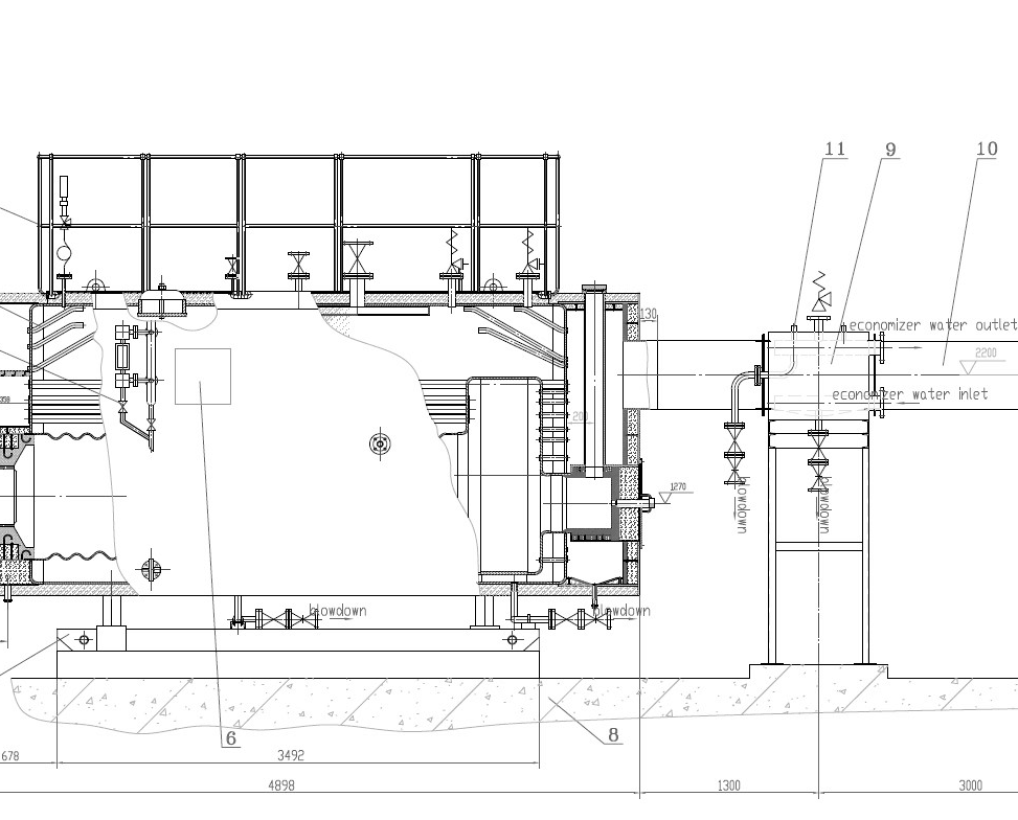
What Is Inside an Industrial Boiler? Key Components Explained

What Is Inside an Industrial Boiler? Key Components Explained

Industrial boilers are essential systems used in factories, power plants, and processing facilities to generate steam or hot water for heating, power generation, or process operations. But beyond the outer shell lies a complex assembly of mechanical, thermal, and control components working together to ensure safe, efficient, and reliable operation. Understanding what’s inside an industrial boiler is key to proper maintenance, efficiency optimization, and system selection.

An industrial boiler typically contains a pressure vessel (drum), combustion chamber (furnace), heat exchanger tubes, burner system, feedwater system, flue gas exhaust system, control panel, and safety devices. Depending on the boiler type (fire-tube, water-tube, fluidized bed, etc.), the internal configuration and working principles vary—but all components are designed to transfer heat from fuel combustion to water or steam while ensuring pressure control, energy efficiency, and safe operation.

Here’s a detailed breakdown of the main components inside an industrial boiler system.

What Is the Function of the Pressure Vessel and How Does It Contain High-Pressure Steam or Water?

At the heart of every industrial boiler lies the pressure vessel—a critical component responsible for containing high-pressure steam or water under controlled conditions. Whether in a utility-scale CFB boiler, a biomass-fired system, or a gas/oil package boiler, the pressure vessel must withstand elevated temperatures, internal pressure, and thermal cycling—without cracking, leaking, or deforming. A failure in this structure can result in catastrophic explosions, process downtime, or safety violations.

The pressure vessel’s function is to safely contain and regulate pressurized steam or water generated by combustion, using a welded steel enclosure, seamless tubing, and pressure-rated components such as steam drums, water walls, and headers. It maintains pressure integrity through ASME/CE-compliant design, tested materials, controlled welding, and continuous monitoring of wall temperature, thickness, and pressure.

This vessel isn’t just a container—it’s a fortress of steam.

The pressure vessel in an industrial boiler is designed to safely contain and manage high-pressure steam and water.True

Through engineered materials, certified welding, and design codes like ASME Section I, the pressure vessel prevents rupture or failure even under extreme thermal and pressure loads.

Key Functions and Design Features of a Boiler Pressure Vessel

1. Core Function: Steam or Water Containment Under Pressure

System ElementFunction
Steam drumCollects and holds generated steam at pressure
Water wallsCirculate water along furnace walls to absorb radiant heat
Mud drumCollects solids and sediment from water loop
Riser/downcomer tubesCreate natural or forced circulation of water-steam mixture

The pressure vessel ensures that the pressurized medium (usually >10 bar, up to 200+ bar) is safely separated from the combustion process, external air, and mechanical support systems.

Ask your supplier:

  • What is the design pressure and temperature rating of the vessel?

  • How is pressure monitored and relieved in case of overpressure?

2. How It Contains Pressure: Material Strength and Geometry

Pressure Vessel FeatureDesign Strategy
Cylindrical shape (drum)Minimizes stress under internal pressure
SA-516, SA-387, or equivalent steelHigh tensile and creep strength
Welded construction with RT or UTPrevents leaks, complies with ASME/CE codes
Seamless tubes (e.g. SA-210, SA-192)Withstand expansion, erosion, and thermal shock

The thickness of the shell, number of expansion joints, and reinforcement rings are all calculated via pressure vessel codes (ASME Section I or EN 13445) using:

t=P⋅R/(S⋅E−0.6P)

Where:

  • t = required thickness

  • P = internal pressure

  • R = inner radius

  • S = allowable stress

  • E = weld joint efficiency

Ask your supplier:

  • What stress calculations and finite element analysis were performed?

  • Are pressure parts certified with EN 10204 3.1 material test certificates?

3. Structural Integrity via Code Compliance and Testing

Code RequirementWhy It Matters
ASME Section I / CE PEDEnsures design pressure, material, and construction quality
Hydrostatic testingVerifies vessel integrity at 1.5x working pressure
Nondestructive Testing (NDT)Confirms weld quality using RT, UT, MT, or PT
Post-weld heat treatment (PWHT)Relieves thermal stress from welding
Corrosion allowanceExtra thickness to extend lifespan under erosion or scaling

Ask:

  • Is the vessel ASME “S”-stamped or CE Module H-certified?

  • Was hydrotesting performed with proper instrumentation and hold time?

  • Is the design corrosion allowance ≥3 mm for high-temperature operation?

4. Internal Monitoring and Protection Systems

Monitoring DeviceFunction
Pressure gauge + transmitterReal-time pressure reading for control logic
Safety relief valveVents steam if pressure exceeds limits
Water level gauge + probePrevents dry firing and overheating
Temperature sensor (skin and internal)Prevents overheat or creep
Corrosion coupons or ultrasonic probesTracks wear and thinning over time

Advanced boilers include:

  • Remote SCADA monitoring of wall pressure and drum level

  • Tube failure detection sensors

  • Redundant safety valves with interlock logic

Ask:

  • What interlocks protect against vessel overpressure or dry run?

  • Are internal sensors calibrated to ISO 17025 or equivalent?

Example: 120 TPH High-Pressure Biomass CFB Boiler

Design pressure: 92 bar
Design temperature: 540°C
Material: SA-516 Gr.70 drum, SA-210 tubes
Code: ASME Section I with “S” stamp
Testing:

  • Hydrotested to 138 bar

  • 100% RT on main welds

  • PWHT performed at 625°C

  • Relief valve set at 96 bar (110% margin)

Monitoring:

  • Dual pressure transmitters + mechanical gauge

  • 2-out-of-3 logic for water level trip

  • Thermal imaging zone scans performed every 3 months

  • Wall thinning tracked by ultrasonic probe array

Summary

Your boiler’s pressure vessel is the backbone of its reliability—and the guardian of its safety. It’s not just steel; it’s a carefully calculated, tested, and certified structure designed to manage the volatile power of steam under pressure. Ask for the math, the metallurgy, and the monitoring. Choose a vessel that’s built to withstand pressure—not just generate it. Choose a supplier whose pressure parts are proofed, not just promised. Choose strength backed by standards.

What Roles Do the Furnace and Burner Play in Fuel Combustion and Heat Generation?

At the heart of every industrial boiler lies the furnace and burner system—the engineered interface where fuel energy is converted into heat energy. Whether burning natural gas, oil, coal, biomass, or waste fuels, this combination is what initiates and sustains the combustion process. Poor burner performance or an improperly designed furnace can lead to low efficiency, high emissions, flame instability, or even catastrophic failure.

The burner is responsible for delivering a controlled, stable flame by atomizing or injecting fuel into the combustion chamber, mixing it with air, and igniting it. The furnace surrounds the flame zone, contains the radiant heat, and directs it to the water walls or tubes, enabling rapid heat transfer to generate high-pressure steam. Together, they form the core combustion and heat generation system in any boiler.

Combustion starts at the burner—but it lives and works inside the furnace.

The burner initiates combustion by delivering and igniting the fuel-air mixture, while the furnace contains the flame and directs heat to water walls or tubes.True

This coordinated system enables efficient heat transfer to the pressure vessel and stable steam production, ensuring the boiler operates safely and effectively.

Roles and Functions of the Burner and Furnace in an Industrial Boiler

1. What Does the Burner Do in the Combustion Process?

Burner FunctionRole in Combustion
Fuel deliveryFeeds liquid, gas, or pulverized solid fuel into flame zone
Air mixingRegulates primary, secondary, and sometimes tertiary air
Atomization (oil/gas)Breaks fuel into fine droplets or jets for better ignition
Flame stabilizationMaintains consistent flame shape and size for safe burning
IgnitionUses pilot flame or electric arc to initiate combustion
Turndown ratio managementAdjusts fuel/air to match boiler load demand

Ask your supplier:

  • What turndown ratio does the burner support (e.g., 10:1, 5:1)?

  • How is air-fuel ratio controlled (mechanical linkage or PLC)?

  • Is the burner low-NOₓ, staged combustion, or FGR-equipped?

2. What Is the Function of the Furnace in Heat Transfer?

Furnace ComponentFunction
Furnace enclosureContains the flame and radiant heat
Water wallsAbsorb radiant heat and convert water to steam
Refractory or membrane wallsReflect heat inward, protect structural steel
Combustion chamber geometryEnsures complete combustion and minimizes CO/NOₓ
Flue gas outletGuides hot gases toward convection banks or economizer

The furnace must withstand extreme flame temperatures (>1,200°C) while ensuring complete combustion and minimizing unburnt particles. It also channels the radiant energy into the pressurized water system.

Ask your supplier:

  • What is the furnace volume and residence time for our fuel?

  • Is the enclosure membrane wall or refractory lined?

  • What is the water wall coverage ratio (usually ≥65–70%)?

3. How the Burner and Furnace Work Together

ParameterBurner InfluenceFurnace Influence
Flame lengthAdjusted by fuel/air mixContained within chamber design
Emissions (NOₓ/CO)Controlled by staged air, FGRAffected by temperature and residence time
Combustion efficiencyAir-fuel tuningTurbulence and burnout zone size
Heat fluxFlame shape and orientationTube surface area and emissivity
Load responseBurner modulation speedFurnace thermal inertia

Successful design requires matching the burner’s flame characteristics to the furnace’s geometry to prevent flame impingement, excessive quenching, or incomplete combustion.

4. Monitoring and Control Systems

SystemMonitored VariablePurpose
Flame scannerFlame presence and stabilityTrip protection and safety interlock
Oxygen analyzerFlue gas O₂Air-fuel tuning and efficiency control
Furnace draft sensorInternal negative pressurePrevent backfire or leakage
Temperature sensorsFlame temperature, water wall skinOverheat protection and load tracking

These systems ensure that combustion remains safe, stable, and efficient under varying load and fuel conditions.

5. Example: 50 TPH Oil/Gas Boiler with Integrated Burner-Furnace Design

Fuel: Natural gas + No. 2 oil (dual-fuel)
Burner: Modulating burner, 10:1 turndown, low-NOₓ staged combustion
Furnace: Fully membrane wall enclosure, 18 m³ volume, 2.6 seconds residence time
Monitoring:

  • UV scanner for flame detection

  • O₂ analyzer linked to VFD-controlled FD fan

  • Draft control via damper feedback loop

  • Burner control logic on PLC with SCADA interface

Performance:

  • Combustion efficiency: 92.8–95.4%

  • NOₓ: <50 mg/Nm³ (with FGR active)

  • CO: <20 mg/Nm³ across load range

  • Startup time (cold): 18–22 minutes to full flame

Summary

The burner and furnace are the combustion core of your industrial boiler—igniting the fuel, shaping the flame, and transferring the energy that powers your process. Whether it’s oil, gas, coal, or biomass, you need a system that’s harmonized, monitored, and optimized for your specific fuel and load profile. Ask for performance data, flame geometry, turndown specs, and emissions logs—not just burner brochures. Choose combustion that burns clean, controls tight, and heats with purpose. Choose a furnace and burner duo designed to deliver fire with focus.

How Do Heat Exchanger Tubes Transfer Thermal Energy to Water or Steam?

Inside every industrial boiler, heat exchanger tubes are the primary pathway that converts combustion energy into steam power. Whether in a fire-tube or water-tube design, these tubes form the critical interface between hot combustion gases and pressurized water or steam. Their job: to absorb, transfer, and distribute heat efficiently while withstanding extreme temperature, pressure, and corrosion conditions.

Heat exchanger tubes transfer thermal energy to water or steam by absorbing radiant and convective heat from hot flue gases and conducting it through their walls into the fluid inside. This process involves conduction through the metal tube wall, convection from the gas to the tube surface, and phase change from water to steam inside the tube. In water-tube boilers, this results in high-pressure, high-temperature steam generation.

These tubes are the arteries of the boiler’s thermal system, turning fuel into usable energy, safely and continuously.

Heat exchanger tubes in industrial boilers transfer heat through conduction and convection, enabling water to convert into steam under pressure.True

Hot combustion gases flow over the external surface of the tubes, heating the water or steam inside via metal conduction, with carefully engineered materials ensuring safe and efficient thermal transfer.


Mechanism of Heat Transfer Inside Boiler Tubes

1. Thermodynamic Steps of Heat Transfer

StageProcessPhysical Mechanism
1. CombustionFlame heats up surrounding gasesRadiant heat absorption
2. Gas-tube interfaceHot gases contact outer tube surfaceConvective heat transfer
3. Tube wallHeat travels through steel wallThermal conduction
4. Inside tubeWater absorbs heatConvection + phase change (evaporation)
5. Steam generationSteam rises or is collected in steam drumSaturated or superheated steam output

The governing equation:

Q=U⋅A⋅ΔTQ 

Where:

  • Q = heat transferred (W)

  • U = overall heat transfer coefficient (W/m²·K)

  • A = surface area of tube (m²)

  • ΔT = temperature difference between hot gas and water/steam


2. Types of Heat Transfer Involved

Heat Transfer ModeWhere It OccursWhy It Matters
Radiative transferFurnace zone, to water wallsMost intense heat, >50% total energy
Convective transferGas flow across economizers/superheatersDriven by flue gas velocity
Conductive transferThrough the tube wall metalControlled by wall thickness and material
Nucleate boilingInside water tubes at saturation pointMaximizes thermal transfer efficiency

Ask your supplier:

  • What tube material is used (e.g., SA-210, SA-213, T11, T22)?

  • How is internal water flow arranged—natural circulation or forced?

  • Are tube surfaces enhanced (finned, rifled, coated) to increase efficiency?


3. Common Tube Configurations in Water-Tube Boilers

Tube Bank TypeFunctionLocation in Boiler
Water wallsAbsorb radiant heatFurnace chamber sides and roof
Superheater tubesRaise steam temp > saturationPost-radiant zone
Economizer tubesPreheat feedwater using flue gasLast pass of flue gas path
Reheater tubesReheat steam post-turbine stageSecondary steam loop (power plants)

4. Tube Design Considerations for Thermal Efficiency and Safety

FactorDesign Solution
Heat stressAlloy steel with high creep resistance (T91, T22)
Thermal expansionExpansion loops, tube hanger supports
Erosion from flue gasTube shields, gas deflectors, flow design
Fouling or scalingBlowdown systems, internal treatment chemicals
Tube rupture protectionSafety interlocks, water level alarms, NDT inspection routines

5. Example: High-Pressure CFB Boiler Heat Transfer Tubes

Fuel: Petcoke + biomass (abrasive fuel)
Tube Types:

  • Membrane water walls: SA-210A1 seamless tubes

  • Superheater tubes: SA-213 T11 alloy steel, 3.5 mm thickness

  • Economizer tubes: Fin-type, carbon steel SA-192

  • Refractory shielding: In cyclone inlet zone to reduce radiant tube damage

Performance:

  • Overall heat transfer coefficient (U): 80–120 W/m²·K

  • Steam outlet temp: 540°C @ 100 bar

  • Surface area: 14,600 m² of heat transfer tube surface

  • Estimated steam generation efficiency: 88.6% thermal


Summary

The heat exchanger tubes inside an industrial boiler are where fuel becomes function—turning flame and gas into pressurized steam through a finely tuned balance of physics, metallurgy, and geometry. Ask your supplier how their tube design handles heat, pressure, erosion, and fouling, and how long it will sustain that transfer with minimal loss. Choose tubes that don’t just carry heat—they carry your plant’s performance. Choose transfer engineered for longevity, safety, and efficiency. Choose tubing that turns heat into horsepower.

What Auxiliary Systems (Feedwater Pumps, Deaerators, Economizers) Support Boiler Operation?

While the furnace, burner, pressure vessel, and heat exchanger tubes form the thermal core of an industrial boiler, auxiliary systems are what make it function safely, continuously, and efficiently. Without reliable support systems like feedwater pumps, deaerators, and economizers, even the best boiler will suffer from pressure instability, thermal shock, corrosion, or fuel inefficiency.

Auxiliary systems such as feedwater pumps, deaerators, economizers, blowdown systems, and condensate recovery loops support boiler operation by managing water input, oxygen removal, preheating, and pressure control. These components ensure steady steam generation, prolong equipment life, reduce energy losses, and maintain safe operating conditions.

Think of them as the circulatory, respiratory, and sensory systems of your boiler—not just accessories, but critical to survival.

Auxiliary systems like feedwater pumps, deaerators, and economizers are essential to ensure safe, efficient, and continuous boiler operation.True

They regulate water supply, reduce oxygen corrosion, recover heat, and balance steam demand, ensuring optimal thermal and mechanical performance in industrial boilers.


Key Auxiliary Systems Supporting Industrial Boiler Operation

1. Feedwater Pumps – Driving the Circulation

FunctionDelivers treated water into the boiler drum or economizer at high pressure
TypesMultistage centrifugal pumps (horizontal/vertical), turbine-driven, motor-driven
ControlVFD (variable frequency drive) or control valve modulation to match load
MonitoringFlow meters, pressure transmitters, suction filters, NPSH sensors

Importance:

  • Maintains boiler water level

  • Ensures high-pressure injection (up to 200 bar+)

  • Prevents cavitation and dry-run failures

Ask:

  • What is the pump head and flow rate required for my design pressure?

  • Is the pump duplexed (1 working + 1 standby)?

  • Is there auto-switching logic during pump failure?


2. Deaerators – Removing Dissolved Oxygen

FunctionEliminates oxygen (O₂) and carbon dioxide (CO₂) from feedwater to prevent corrosion
TypesTray-type, spray-type, or combined tray/spray deaerators
Operating pressureTypically 0.1–0.3 MPa (1–3 bar)
Vent condenserRecovers steam flash losses and minimizes oxygen re-entrainment

Importance:

  • Prevents corrosion in economizers, tubes, and drums

  • Increases system lifespan

  • Preheats feedwater to near saturation

Ask:

  • What is the O₂ removal efficiency (typically <7 ppb)?

  • Is the tank insulated and vented with flash recovery?

  • Do you provide level and pressure control integration?


3. Economizers – Recovering Flue Gas Heat

FunctionPreheats boiler feedwater using residual heat from flue gas exiting the furnace
MaterialCarbon steel, alloy steel (for high-temp systems)
Tube configurationBare tube, finned tube, inline or staggered
Heat gainRaises feedwater temp from ~100°C to 140–180°C (depending on steam drum pressure)

Importance:

  • Improves boiler thermal efficiency by 5–10%

  • Reduces fuel consumption

  • Lowers flue gas temperature and stack loss

Ask:

  • What is the gas-side pressure drop and its effect on fan sizing?

  • Is the economizer equipped with soot blowers for cleaning?

  • Are inlet/outlet temperatures monitored for scaling detection?


4. Condensate Recovery System – Closing the Loop

FunctionReturns condensed steam (from heat exchangers or traps) to the feedwater system
ComponentsFlash tanks, condensate pumps, return lines, steam traps
ControlLevel control in tanks, pressure relief systems

Importance:

  • Reduces makeup water demand

  • Recovers sensible heat and reduces fuel use

  • Minimizes thermal shock in feedwater inlet

Ask:

  • Is the system insulated to avoid heat loss?

  • Are traps regularly maintained or auto-diagnosed?

  • Do you track condensate return percentage (target ≥75%)?


5. Blowdown System – Managing Water Quality

FunctionDischarges part of the boiler water to control TDS (total dissolved solids) and prevent scaling
TypesContinuous (surface), intermittent (bottom blowdown)
ControlAutomated blowdown valves, conductivity sensors, blowdown heat recovery units

Importance:

  • Prevents scale, tube overheating, and efficiency loss

  • Maintains steam purity

  • Reduces chemical costs when properly automated

Ask:

  • Are blowdown rates controlled via real-time TDS?

  • Is heat recovery integrated in the blowdown tank?

  • What is your recommended blowdown frequency per load level?


Example: 60 TPH Industrial Biomass Boiler Auxiliary Systems

ComponentSpecification
Feedwater pump2 × 55 kW multistage pumps, 180 m³/h @ 32 bar
DeaeratorSpray-type, 5 m³ tank, oxygen <5 ppb
Economizer340 m² finned tube, raises water temp from 105°C to 165°C
Condensate system2.5 bar recovery loop, 82% return rate
BlowdownAutomated surface blowdown with heat recovery exchanger

Results:

  • 6.3% overall fuel savings from economizer + condensate integration

  • 18-month ROI on deaerator + recovery system

  • Reduced boiler water treatment chemical usage by 27%


Summary

The thermal core of a boiler may burn the fuel, but the auxiliary systems deliver the water, recover the heat, remove the oxygen, and close the loop. Ask your supplier how each of these systems is designed, integrated, and maintained in your plant. Choose a boiler that’s supported not just by steel—but by a smart balance-of-plant strategy. Choose efficiency that flows with every drop. Choose auxiliaries that make combustion complete.

How Is Flue Gas Managed Through Chimneys, Air Preheaters, and Pollution Control Equipment?

In industrial boilers, the by-product of combustion is flue gas—a high-temperature, chemically reactive mixture of CO₂, H₂O vapor, NOₓ, SOₓ, CO, PM (particulate matter), and excess oxygen. If not carefully managed, this gas stream can cause heat loss, emissions violations, equipment erosion, and community health risks.

Flue gas is managed through a controlled sequence of systems: air preheaters to recover heat, pollution control equipment (e.g., ESPs, baghouses, scrubbers) to capture emissions, and chimneys or stacks to safely disperse cleaned gas into the atmosphere. Each stage reduces waste, improves efficiency, and ensures regulatory compliance.

The journey of flue gas is as important as the flame that created it.

Industrial boiler flue gas is managed through energy recovery and emissions control systems including air preheaters, scrubbers, and stacks.True

These systems reduce environmental impact, improve boiler efficiency, and meet regulatory emissions limits by treating the gas before atmospheric release.


Step-by-Step Flue Gas Management Path in Industrial Boilers

1. Air Preheater (APH): Recovering Thermal Energy

FunctionTransfers residual flue gas heat to combustion air
TypesRotary regenerative (Ljungström), recuperative plate/tube
Temperature dropReduces flue gas from ~350–450°C to ~180–220°C
Air preheat gainRaises incoming air from ambient to 150–200°C

Benefits:

  • Increases combustion efficiency by 2–5%

  • Reduces fuel consumption and stack loss

  • Lowers flue gas temperature for better ESP/baghouse operation

Ask:

  • What is the leakage rate of the APH seals?

  • Are seals, baskets, and sectors replaceable?

  • Is the APH protected against acid dew point corrosion?


2. Pollution Control Equipment: Capturing Harmful Emissions

DevicePollutant ControlledEfficiency
Electrostatic Precipitator (ESP)Particulate matter (PM₁₀, PM₂.₅)98–99.9%
Baghouse (Fabric Filter)Fine dust and unburned ash99.5–99.99%
Desulfurization System (WFGD/DSD)SO₂90–99%
SNCR/SCRNOₓ60–95%
Activated Carbon Injection (ACI)Heavy metals, dioxins70–90%

ESP: Charges dust particles and attracts them to collection plates
Baghouse: Filters ash using high-temp cloth filter bags
Wet FGD: Sprays limestone slurry to absorb SO₂
SNCR: Injects ammonia/urea into furnace to neutralize NOₓ
SCR: Uses catalyst downstream of APH to decompose NOₓ at 300–400°C

Ask:

  • What PM, NOₓ, and SO₂ emission limits does your system meet?

  • Are all control systems SCADA-integrated with alarm limits?

  • How often are filter bags or electrodes serviced?


3. Induced Draft (ID) Fan: Maintaining Negative Pressure

FunctionPulls flue gas through the boiler and pollution control system to the chimney
ControlVFD speed regulation to match load and draft requirements
MonitoringDraft pressure sensor, vibration monitor, bearing temp sensors

Importance:

  • Keeps furnace under negative pressure

  • Prevents backflow or gas leakage into boiler room

  • Maintains flue gas velocity through ESP and stack

Ask:

  • Is the fan oversized for future capacity increase?

  • Are dampers automated?

  • Is the fan vibration- or temperature-protected?


4. Chimney (Stack): Safe Dispersion to Atmosphere

FunctionDischarges cleaned flue gas at height to prevent ground-level concentration
Height standardTypically 30–120 m depending on emissions and dispersion modeling
MaterialCarbon steel lined with acid-resistant brick or FRP
MonitoringContinuous Emissions Monitoring System (CEMS) installed at exit point

Stack Design Features:

  • Spiral ladder and platform for access

  • Rain cap or spark arrestor (for biomass or coal)

  • Lightning protection grounding

Ask:

  • Is the chimney designed using CFD dispersion modeling?

  • What is the flue gas exit temperature and velocity?

  • Is stack sampling compliant with local EPA or ISO 8178?


Example: 100 TPH CFB Biomass Boiler Flue Gas Management System

Fuel: Rice husk + palm kernel shell
Flue gas flow: ~180,000 Nm³/h @ 400°C
System Includes:

  • Rotary air preheater: Raises air to 180°C, reduces gas to 210°C

  • ESP: 3-field, 99.8% ash removal

  • Semi-dry FGD: SO₂ < 130 mg/Nm³

  • SNCR: NOₓ < 180 mg/Nm³ with urea injection

  • ID Fan: 250 kW VFD-driven unit

  • Stack: 70 m tall, 2.2 m internal diameter, with top-mounted CEMS

Emission Performance:

ParameterMeasured ValueLimit (Standard)
Particulate (PM)23 mg/Nm³<30 mg/Nm³
NOₓ172 mg/Nm³<200 mg/Nm³
SO₂118 mg/Nm³<150 mg/Nm³
CO36 mg/Nm³<50 mg/Nm³

Summary

In industrial boilers, flue gas management is not just about pollution—it’s about reclaiming energy, ensuring safety, and protecting regulatory standing. Ask your supplier for performance data on each segment: air preheaters, emission control, ID fans, and stack design. Choose a system where nothing escapes unmeasured, untreated, or uncontrolled. Choose emissions technology built for heat, ash, and scrutiny. Choose air management that breathes responsibility into combustion.

What Instrumentation and Safety Devices Ensure Pressure, Temperature, and Water Level Control?

Industrial boilers operate under extreme pressure and temperature conditions—often with superheated steam above 100 bar and internal water at boiling points exceeding 300°C. Any failure in monitoring or control can result in catastrophic explosions, equipment damage, and life-threatening hazards. That’s why modern industrial boilers are equipped with a comprehensive set of instrumentation and safety devices that constantly monitor key parameters and activate protective systems when thresholds are crossed.

Instrumentation and safety devices ensure boiler pressure, temperature, and water level are accurately monitored and controlled by using pressure transmitters, safety valves, temperature sensors, level gauges, limit switches, and control logic interlocks. These systems protect equipment, personnel, and ensure stable steam production during all modes of operation.

In a boiler, control is not optional—it’s the difference between performance and disaster.

Industrial boilers rely on advanced instrumentation and safety devices to monitor and control pressure, temperature, and water level with high precision.True

These devices are critical for preventing dry-firing, overpressure, overheating, and loss of steam reliability, ensuring safe and compliant operation.


Key Instrumentation and Safety Devices in Industrial Boilers

1. Pressure Monitoring and Safety

DeviceFunction
Pressure gaugeLocal visual display of steam drum pressure
Pressure transmitterElectronic sensor for real-time SCADA feedback
Safety relief valve (SRV)Releases excess pressure automatically
Pressure switch (high/low)Triggers alarms or interlocks based on setpoints

Design Standards:

  • Safety valves sized per ASME Section I or EN 12953

  • Relief valve lift pressure typically set at 110% of MAWP (Maximum Allowable Working Pressure)

  • Redundancy: often 2-out-of-3 sensor voting logic

Ask:

  • What is the response time of the transmitter?

  • Are pressure sensors calibrated to ISO 17025?

  • Is the safety valve soft-seated or metal-to-metal for high-cycle duty?


2. Temperature Monitoring and Overheat Protection

DeviceFunction
RTDs / ThermocouplesMeasure metal, steam, and water temperature
Temperature transmitterConverts signal for digital readout and alarm logic
Overheat protection relayTrips burner in case of skin temp exceedance
Furnace/flue gas temperature sensorUsed for combustion optimization and boiler tuning

Applications:

  • Drum, economizer outlet, and superheater outlet temperature control

  • Protecting tube metal from overheating or oxidation

  • Detecting fouling or inefficient heat transfer

Ask:

  • What class of accuracy is the RTD (e.g., Class A, B)?

  • Are sensor wells corrosion-resistant (e.g., SS316, Inconel)?

  • Do you use dual-element thermocouples for redundancy?


3. Water Level Monitoring and Protection

DeviceFunction
Sight glass (gauge glass)Manual visual check of water level
Conductivity probeDetects water level using resistance change
Differential pressure transmitterContinuous level measurement for control system
Low Water Cut-Off (LWCO)Trips burner and sounds alarm if level is unsafe
High-level switchPrevents water carryover and drum flooding

Importance:

  • Prevents dry-firing (boiler running with no water), a major explosion risk

  • Avoids steam drum flooding which can damage turbines and superheaters

  • Redundant sensors often required by law or insurance codes

Ask:

  • Are level sensors SIL-rated (Safety Integrity Level)?

  • Is there automatic blowdown and self-checking logic for level probes?

  • Do you use a 2-out-of-3 logic for level alarms and burner trips?


4. Control and Safety Interlocks

SystemFunction
Burner management system (BMS)Manages ignition, flame detection, purge, trip logic
SCADA/HMI interfaceVisualizes instrumentation in real time
Programmable Logic Controller (PLC)Interprets sensor data and enforces interlocks
Alarm log panelTime-stamped alerts for parameter excursions
Emergency stop buttonManual shutdown override with lockout relay

Features:

  • First-out trip indication (identifies initial cause of shutdown)

  • Trip log for investigation

  • Manual reset after fault with operator confirmation

Ask:

  • Is the BMS compliant with NFPA 85 or EN 746-2?

  • Can your PLC be remotely monitored or adjusted via VPN?

  • Is there redundancy in sensor inputs (e.g., dual temp or level probes)?


Example: Instrumentation Suite for a 75 TPH Industrial Biomass Boiler

ParameterDeviceControl System
Drum pressureRosemount PT3051 transmitter + analog gaugePLC + HMI display
Water levelYokogawa DP transmitter + 2 conductivity probesRedundant low/high trip logic
Superheater outlet tempK-type thermocouple + overtemp relayAlarm + shutdown interlock
Safety valvesTandem ASME-certified spring-loaded valves110% MAWP relief
Flame detectionUV scanner with BMS integrationBurner trip within 2s of flameout
Emergency shutdownE-stop station + safety relayHardwired to trip fuel valves and fans

Performance Highlights:

  • Automated level and pressure logging every 5 seconds

  • Remote dashboard for pressure trend review via web interface

  • All safety devices tested semi-annually with documented results

  • 3-year average: 0 incidents of water-level-related faults


Summary

Inside an industrial boiler, precision instrumentation and layered safety systems are not just best practices—they are legally mandated, risk-mitigating lifelines. Ask your supplier what sensors are installed, how they are calibrated, what logics protect your boiler, and how your team can monitor them in real time. Choose a boiler built not just for pressure—but with protection engineered into every drop, every degree, and every decision. Choose control that saves your system before failure can.

🔍 Conclusion

An industrial boiler is more than just a metal vessel—it’s a highly engineered thermal system comprising interdependent components that manage fuel combustion, heat transfer, water circulation, and emissions. A clear understanding of what’s inside your boiler enables better operation, maintenance, and lifecycle decision-making, ensuring safe and cost-effective performance.


📞 Contact Us

💡 Want to explore the internal structure of a boiler for your project or plant upgrade? We provide technical consultations, system audits, and design support for industrial boiler applications.

🔹 Let us help you understand and optimize the boiler systems that power your operations. ♨️🏭🔧

FAQ

What are the main components inside an industrial boiler?

An industrial boiler consists of several essential internal systems:

  • Burner – Mixes air and fuel (gas, oil, biomass, etc.) and initiates combustion.

  • Combustion Chamber – Where fuel is burned to produce high-temperature gases.

  • Heat Exchanger (or boiler tubes) – Transfers heat from the combustion gases to the water or steam.

  • Drum or Shell – Holds water or steam, depending on the boiler type.

  • Refractory Lining – Insulates high-temperature areas to protect the boiler shell.

  • Control System – Manages temperature, pressure, fuel input, and alarms.

  • Blowers/Fans – Ensure proper airflow and draft control for combustion.

What is the role of the burner inside a boiler?

The burner is responsible for igniting the fuel and ensuring proper mixing with air. It determines the boiler’s efficiency, emission levels, and fuel compatibility. Advanced burners may include low-NOx or dual-fuel capabilities.

How does the heat exchanger work in an industrial boiler?

The heat exchanger transfers thermal energy from hot combustion gases to the water or steam. In fire-tube boilers, gases pass through tubes surrounded by water. In water-tube boilers, water flows inside tubes heated by external gases. Efficient heat transfer is critical for performance.

Are there differences in internal components between boiler types?

Yes. While core components are similar, configurations differ:

  • Fire-tube boilers have fewer, larger tubes with water surrounding them.

  • Water-tube boilers have more complex tube arrangements and higher pressure tolerance.

  • CFB and biomass boilers may include fuel feeders, fluidized beds, ash extractors, and multi-stage separators.

Why is the control system a critical internal component?

The control system ensures safe and efficient boiler operation by managing:

  • Fuel supply

  • Water level and feedwater pumps

  • Steam pressure and temperature

  • Safety interlocks and emergency shutdowns
    Modern systems include PLC or SCADA integration for real-time monitoring.

References

  1. ASME Boiler and Pressure Vessel Code Overviewhttps://www.asme.org

  2. Boiler Types and Components Explained – DOEhttps://www.energy.gov

  3. Boiler Burner System Functionality – IEAhttps://www.iea.org

  4. Industrial Boiler Control Systems – Automation.comhttps://www.automation.com

  5. Fire-Tube vs Water-Tube Design Comparisonhttps://www.sciencedirect.com

  6. Combustion Efficiency and Burner Technologyhttps://www.epa.gov

  7. Boiler Heat Transfer and Thermal Analysishttps://www.researchgate.net

  8. Biomass and CFB Boiler Internal Configurationshttps://www.bioenergyconsult.com

  9. Steam System Components and Functionalityhttps://www.iso.org

  10. Boiler Safety and Instrumentation Guidelineshttps://www.energystar.gov

Wade Zhang

CEO of Taishan Group Taian Boao International Trade Co., Ltd. 30 years experience in Global industrial boiler market,  Over 300 boiler projects experience, including 21+ EPC projects. Projects span 30+ countries & regions, involving industries such as nuclear power, energy & electricity, municipal heating, mining, textiles, tires etc.

What Is Inside an Industrial Boiler? Key Components Explained Read More »
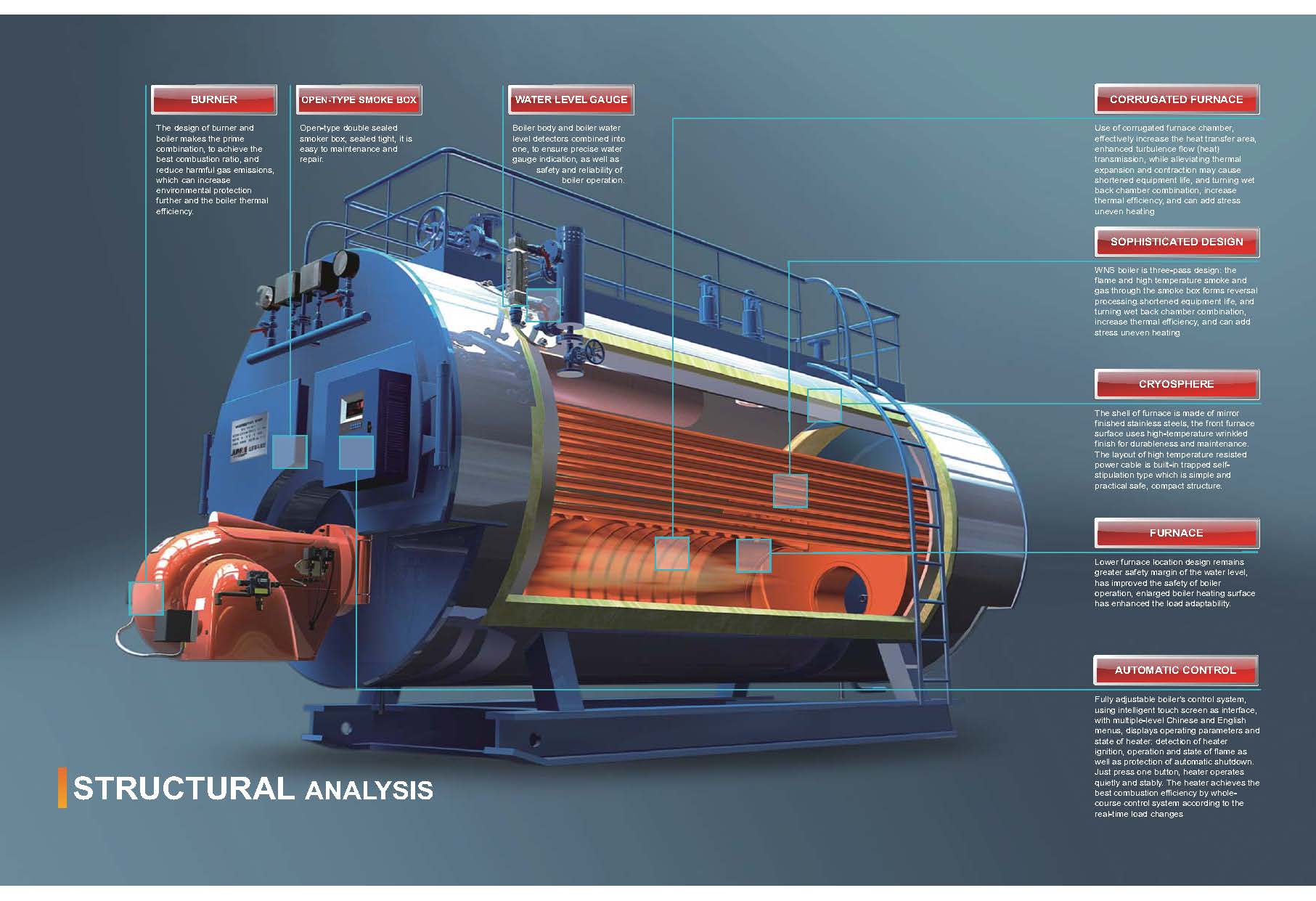
Essential Questions to Ask Industrial Gas-Fired Boiler Suppliers

Essential Questions to Ask Industrial Gas-Fired Boiler Suppliers

Investing in an industrial gas-fired boiler is a long-term decision that impacts your plant’s energy efficiency, safety, emissions compliance, and operational reliability. While equipment performance is key, so is the competence, transparency, and support offered by the supplier. Asking the right questions will help you identify a partner who can deliver a complete, compliant, and cost-effective boiler solution—not just a product.

To assess potential industrial gas-fired boiler suppliers, ask questions about thermal efficiency, burner technology, emissions performance, automation systems, compliance standards, spare parts availability, project references, and after-sales service. Verify their ability to provide real-time monitoring tools, support fuel flexibility (e.g. LPG, LNG, biogas), and deliver high turndown ratios for part-load operation. These inquiries help uncover technical strengths, operational support, and long-term service value.

Use the following checklist to guide a comprehensive supplier evaluation.

What Is the Guaranteed Thermal Efficiency and Turndown Ratio Under Different Load Conditions?

In industrial gas-fired boiler systems, efficiency and flexibility must coexist. While thermal efficiency at full load determines your base fuel cost, the turndown ratio defines how well your boiler can operate under varying demand—without excessive cycling, fuel waste, or emissions instability. As production loads fluctuate throughout the day, a boiler with poor part-load efficiency or limited turndown will cost more to operate and wear out faster.

Buyers should ask the supplier for guaranteed thermal efficiency values at multiple load points (e.g., 100%, 75%, 50%) and confirm the turndown ratio—defined as the maximum-to-minimum firing rate at which the system can operate reliably. These guarantees must be based on specific fuel types (natural gas, LPG, biogas), test standards (ASME PTC 4, EN 12953), and ambient/fuel conditions.

A boiler that performs well only at peak load is not enough—it must perform efficiently across every shift, every hour.

Guaranteed thermal efficiency and turndown ratio across load conditions are essential metrics for optimizing fuel cost, reducing emissions, and ensuring reliable operation in gas-fired boilers.True

Gas-fired boilers with higher turndown can respond to load variation without shutdown, while part-load efficiency prevents energy losses during low-demand periods.

What You Need to Ask About Efficiency and Turndown

1. What Is the Guaranteed Thermal Efficiency at Various Loads?

Load (%)Typical Efficiency (LHV Basis)Expected Performance
100%94% – 96%Optimal burner flame and heat recovery
75%92% – 94%Minimal loss if well-tuned
50%89% – 92%Burner and air control crucial
25–30%85% – 90%Requires staged modulation or parallel burner logic

Ask:

  • Are efficiency guarantees based on LHV or HHV?

  • What fuel properties were assumed (CV, pressure)?

  • Is flue gas condensation used in the test setup?

2. What Is the Rated Turndown Ratio and How Is It Achieved?

Boiler/Burner TypeTypical TurndownMechanism
Modulating burner5:1 to 10:1PID control, air/fuel trim
Dual burner setup10:1 to 15:1Stage sequencing
Ultra-low NOₓ premix burnerUp to 15:1VFD-driven fan, flame scanner feedback
Condensing boiler5:1 to 8:1Enhanced exchanger design

Ask:

  • Can you maintain combustion stability at minimum firing rate?

  • Is turndown automatic or manually adjusted?

  • Are emissions compliant at low load?

3. What Happens to Emissions at Low Load?

ParameterHigh LoadLow Load RiskMitigation
NOₓ30–50 mg/Nm³May increase if flame destabilizesBurner geometry control
CO<50 mg/Nm³Can spike with incomplete combustionFlame monitoring and trimming
O₂3–5% optimalCan rise with excess airModulated fan control

Ask:

  • Are NOₓ/CO guarantees valid across all load conditions?

  • Do you tune burner curves for partial-load operation?

  • Are sensors calibrated at both low and high firing rates?

4. Can You Provide an Efficiency and Turndown Curve?

Graph TypeWhat It Should Show
Efficiency vs LoadLine or curve from 100% to minimum
Fuel Consumption vs LoadNm³/hour per ton of steam
Turndown DiagramBurner modulation range and logic
Emissions vs LoadNOₓ, CO drift at part-load

Ask:

  • Is the curve validated with test data?

  • Are your systems third-party verified for guarantees?

  • Can we log this data through your SCADA?

Example: 12 TPH Natural Gas-Fired Boiler Performance Table

Load LevelSteam OutputEfficiency (LHV)Fuel Consumption (Nm³/h)NOₓ Emission
100%12 TPH95.1%865 Nm³/h36 mg/Nm³
75%9 TPH93.2%678 Nm³/h38 mg/Nm³
50%6 TPH91.5%504 Nm³/h41 mg/Nm³
30%3.6 TPH88.4%324 Nm³/h45 mg/Nm³

Turndown Ratio: 6.5:1
Fuel: Natural gas at 38 MJ/Nm³
Tested: ISO 23145-1, verified by TÜV
Emissions Compliant Across Loads: YES

Summary

A high-efficiency gas boiler that only performs well at full load leaves energy savings—and emissions targets—on the table. Ask your supplier for clear guarantees of efficiency and emissions at partial loads, and confirm turndown capabilities with proven burner technology. Choose flexibility without fuel penalties. Choose flame stability in every hour. Choose a boiler that adapts to your plant—not the other way around.

What Burner Types Do You Use, and How Do They Manage NOₓ and CO Emissions?

For industrial gas-fired boilers, the burner is the heart of combustion performance—and the front line of emissions compliance. Whether you’re burning natural gas, LPG, or biogas, achieving low NOₓ (nitrogen oxides) and CO (carbon monoxide) emissions without compromising efficiency depends entirely on the burner’s design, flame control, and air-fuel management.

Buyers must ask the supplier what burner type is used—whether it’s premix, staged, flue gas recirculation (FGR), or ultra-low NOₓ design—and how it achieves emissions control. Confirm the design basis, performance guarantees, burner modulation range, and NOₓ/CO performance under full and part loads.

Choosing a high-spec boiler without asking about the burner is like buying a car without checking the engine—it’s what makes everything else work.

The type of burner and its emissions control strategy directly determine a gas-fired boiler's ability to meet efficiency, NOₓ, and CO emission targets.True

Premix and staged burners with proper air/fuel control reduce thermal NOₓ and CO formation, while enabling stable combustion across turndown ranges.

Key Burner Design Questions You Must Ask

1. What Type of Burners Are Offered or Integrated in Your System?

Burner TypeDesign PrincipleEmissions Control Capability
Premix burnerFuel and air mixed before ignition<30 mg/Nm³ NOₓ, very low CO
Staged (Low-NOₓ)Primary/secondary air zonesNOₓ <50 mg/Nm³, CO ~30 mg/Nm³
FGR burnerRecycled flue gas lowers flame tempUltra-low NOₓ, often <25 mg/Nm³
High-turbulence burnerExtended flame zone reduces hotspotsGood CO control, moderate NOₓ
Modular burner (multi-nozzle)Combines staging and recirculationExcellent modulation, stable flame

Ask:

  • Is the burner premix, staged, or dual-mode?

  • Who is the burner manufacturer—OEM or licensed design?

  • Is the burner suitable for both LHV and HHV fuels?

2. How Is NOₓ Emissions Reduction Achieved in the Burner Design?

NOₓ Formation MechanismMitigation Technique
Thermal NOₓ (from high flame temperature)Flame temperature reduction (FGR, staging)
Prompt NOₓ (from nitrogen in fuel/air)Rapid mixing, reduced residence time
Peak temperature controlWide, lean flames and premix tuning

Ask:

  • What NOₓ emissions do you guarantee at 100% and 50% load?

  • Are the NOₓ values achieved without post-combustion treatment (e.g., no SCR)?

  • Can we fine-tune NOₓ levels via air/fuel ratio or burner logic?

3. How Is CO Controlled Across the Load Range?

Risk at Low LoadBurner Feature for CO Control
Incomplete combustionFlame stability sensor feedback
Poor air-fuel ratioAuto-trim control, staged firing
Low flame tempProper flame geometry, turndown tuning

Ask:

  • What CO levels do you guarantee (<50 mg/Nm³, <20 mg/Nm³)?

  • Are CO limits maintained at 30–40% load?

  • Do you provide O₂ trim + CO sensors for feedback control?

4. Is the Burner Matched to Boiler Geometry and Load Response?

Design FactorImportance
Furnace volume vs flame lengthPrevents flame impingement
Flue gas velocity vs flame propagationEnsures flame stability
Load response timeImpacts emissions and fuel use during swings

Ask:

  • Was the burner selected specifically for this boiler type?

  • Can flame length or profile be adjusted if fuel properties change?

  • How is flame failure risk mitigated under part-load?

5. Do You Offer Burner Performance Testing and Certification?

Test/VerificationPurpose
Factory acceptance test (FAT)Confirms NOₓ/CO under controlled conditions
On-site commissioning tuningAdjusts flame geometry and modulation curve
Emissions report (EN 676 or local)Legal compliance proof
Flame camera or UV scanner calibrationEnsures real-time flame detection and alarm

Ask:

  • Can you show previous emissions test reports?

  • Is burner tuning provided during commissioning?

  • Do you issue a burner performance certificate?

Example: Premix Low-NOₓ Burner on 10 TPH Gas Boiler

Load (%)Efficiency (LHV)NOₓ (mg/Nm³)CO (mg/Nm³)
100%95.2%2818
75%93.4%3020
50%91.0%3225
30%88.5%3529

Burner Type: Premix with staged air injection and variable speed fan
Turndown Ratio: 8:1
Control: PLC-based modulation with O₂/CO feedback
Certifications: EN 676-compliant, TÜV-tested emissions guarantee

Summary

The burner is where combustion starts—and where emissions must be controlled from the very first spark. Don’t settle for vague specs. Ask your supplier to show you burner type, flame logic, emissions guarantees, and load-matching performance. Because a boiler is only as clean and efficient as the burner at its core. Choose engineered flames. Choose emissions by design—not afterthought. Choose a burner system that earns your fuel budget’s trust.

What Certifications and Manufacturing Standards (ASME, ISO, CE) Does Your System Meet?

For gas-fired industrial boilers, internationally recognized certifications and manufacturing standards are not just formalities—they are essential for regulatory approval, operational safety, insurance compliance, and market access. Whether you’re operating in the EU, North America, Middle East, or Asia-Pacific, your boiler must meet the design, fabrication, and quality assurance benchmarks defined by globally accepted codes like ASME, CE PED, and ISO.

Buyers must request full transparency about the certifications a supplier holds—including ASME “S” or “U” stamps for pressure vessels, CE marking per the Pressure Equipment Directive (PED 2014/68/EU), and ISO 9001/14001/45001 for quality, environment, and safety management. Suppliers must also document compliance with burner and emissions regulations such as EN 676 (for gas burners) and provide traceable material certificates.

A boiler without verifiable certification is a risk—legally, operationally, and financially.

Certified compliance with standards like ASME, ISO, and CE PED is essential for safe, legal, and insurable operation of gas-fired industrial boiler systems.True

Certified systems undergo design review, quality audits, and safety testing—ensuring the boiler can legally operate and meet performance expectations in regulated markets.

Certification & Compliance Areas You Must Verify

1. Does the Pressure Equipment Comply With ASME Boiler & Pressure Vessel Code?

ASME CertificationScopeRequired For
ASME “S” StampPower boiler (Section I)Main pressure vessel, steam drum
ASME “U” StampUnfired pressure vessels (Section VIII)Economizer, deaerator, blowdown tank
ASME Section IXWelding qualificationsAll pressure-retaining joints
ASME Section VNondestructive testing (NDT)RT, UT, PT for weld inspections

Ask:

  • Is your boiler ASME “S” stamped with a valid Certificate of Authorization?

  • Do you provide full weld traceability and NDT reports?

  • Are hydrotests performed per ASME PTC 4 or equivalent?

2. Does the System Meet CE Marking and PED Compliance for EU Markets?

DirectiveApplicationCE PED Modules
PED 2014/68/EUPressure parts, valves, safety devicesH, H1, B+D depending on system
Machinery DirectiveBurner, actuator, fansMechanical safety and labeling
EMC DirectiveControl panels, PLC/HMIElectromagnetic compatibility
Gas Appliances Regulation (GAR)Gas-fired burner unitsEU burner compliance (EN 676)

Ask:

  • Which notified body issued your CE PED certification?

  • Do you issue a full CE Declaration of Conformity?

  • Are all burner controls CE/GAR certified?

3. Is the Manufacturing Facility ISO Certified?

ISO StandardPurposeRelevance
ISO 9001Quality managementTracks material, inspection, NCRs
ISO 14001Environmental controlsWaste, emissions from manufacturing
ISO 45001Health & safetyWorkshop safety compliance
ISO 3834Welding QA (optional but relevant)Ensures WPS/PQR/WQT control

Ask:

  • Is ISO 9001 certified by an accredited body (e.g., SGS, TÜV)?

  • Are supplier and subcontractor audits part of your QMS?

  • Can we review the quality manual and ITP before production?

4. Do Materials and Parts Have Traceable Certifications?

DocumentationPurpose
EN 10204 3.1/3.2 MTCsMaterial test certificates with heat number
Welding logsLink each weld to welder, joint ID, inspection
Instrument calibration certificatesValidity for transmitters, PLC, CEMS
Burner test certificate (EN 676)Verifies emissions at factory test

Ask:

  • Are materials traceable to the source foundry?

  • Is a digital QA dossier provided with the system?

  • Can you show sample calibration reports for sensors?

5. Do You Provide a Full Compliance and Data Book Package?

Included DocumentsVerified By
Pressure part drawings, weld mapsQA and third-party inspector
Test certificates (hydro, burner, FAT)Witnessed by client/authority
Electrical conformity (CE, EMC)CE notified body
Commissioning checklistSite engineer signed + stamped

Ask:

  • Will we receive a printed and electronic data book?

  • Are digital logs linked to serial numbers and QR codes?

  • Do you support audit inspections or factory walkthroughs?

Example: 10 TPH Gas-Fired Boiler Compliance Snapshot

Certifications Held:

  • ASME “S” Stamp for steam drum and water walls

  • CE PED Module H approved by TÜV Rheinland

  • EN 676 compliant premix burner, <30 mg/Nm³ NOₓ

  • ISO 9001, ISO 14001, ISO 45001 manufacturing system

  • Full EN 10204 3.1 MTCs for all pressure parts (SA-516 Gr.70)

  • Factory Acceptance Test (FAT) with burner ignition, trip logic, SCADA demo

Delivered Documentation:

  • Digital QA book (PDF + searchable index)

  • CE Declaration of Conformity

  • Burner performance report (NOₓ/CO results)

  • ITP and weld log cross-referenced to drawings

Summary

When it comes to your boiler, certification is confidence—proof that it’s built to last, tested to perform, and safe to operate. Never accept undocumented claims. Ask for ASME stamps, CE modules, ISO system proofs, and fully traceable manufacturing records. Choose compliance not just as paperwork—but as performance integrity. Choose standards that protect your plant. Choose a supplier certified from flame to flange.

Can the Boiler Be Configured for Multiple Gas Types (LNG, CNG, LPG, Biogas)?

As industrial facilities strive for resilience, emissions compliance, and energy cost optimization, the ability to operate a boiler using multiple gas fuels—such as liquefied natural gas (LNG), compressed natural gas (CNG), liquefied petroleum gas (LPG), or biogas—has become a top priority. This capability allows plants to switch fuels based on availability, price volatility, or regulatory carbon intensity targets—without changing hardware or undergoing long retrofit shutdowns.

Buyers must ask if the boiler and burner system are compatible with multiple gas types, whether switching is automatic or manual, and what safety, control, and calibration modifications are required. Fuel flexibility should include valve train configuration, CV range tolerance, combustion tuning, and emissions control strategies.

Fuel diversity isn’t a feature—it’s an investment in long-term operational adaptability.

Multi-gas compatibility enhances energy security and flexibility in gas-fired industrial boilers.True

Gas availability and pricing vary across regions and seasons. A boiler that handles multiple gases—like LNG, LPG, and biogas—enables cost-effective and uninterrupted operation under changing conditions.

Key Areas to Clarify About Multi-Gas Fuel Compatibility

1. Which Gas Types Can the Boiler System Support?

Fuel TypeCommon ApplicationsKey Characteristics
LNG (Liquefied Natural Gas)Off-grid industrial usersHigh methane, high CV
CNG (Compressed Natural Gas)Urban/utility pipelinesPipeline quality, ~38 MJ/Nm³
LPG (Propane/Butane)Backup/off-grid systemsHigh CV (~93 MJ/Nm³), different air ratio
Biogas (from digesters)Waste-to-energy or food industryLow CV (~20–26 MJ/Nm³), high moisture/H₂S

Ask:

  • Which fuels are supported as standard vs with modification?

  • Can you provide test data or references using each fuel?

  • Are emissions still guaranteed for each fuel type?

2. Is the Burner Designed for Dual or Multi-Gas Compatibility?

Burner FeatureFunction
Dual-curve PID logicDistinct air/fuel ratio for each gas
Flame scanner tuningPrevents false flame loss alarms on fuel switch
Injector/nozzle sizingSized for varying CV and flow dynamics
Gas valve train with auto selectorSwitches gas supply lines without shutdown

Ask:

  • Is your burner certified under EN 676 for all listed fuels?

  • Can the same burner operate biogas and LPG with only tuning?

  • Are different ignition profiles used per fuel?

3. How Is Switching Between Gas Types Managed?

Switch ModeMechanismIdeal For
Manual switchOperator changes fuel source via HMIInfrequent fuel shifts
Semi-automaticPLC sequence with operator approvalScheduled switchovers
Fully automaticSensor- or price-triggered switchingLoad-following or tariff optimization

Ask:

  • Does the switch require a full burner shutdown and purge?

  • Are all valves interlocked to prevent cross-fuel leakage?

  • Is flame detection recalibrated post-switch?

4. What Adjustments Are Needed for Each Fuel Type?

FuelAdjustments RequiredRisks If Not Tuned
LNG/CNGMinimal if CV is similarFlame instability if CV fluctuates
LPGNew air/fuel ratio curve, nozzle sizingNOₓ spike, incomplete combustion
BiogasMoisture/hydrogen sulfide filters, CV tuningFlameout, high CO if H₂S unfiltered

Ask:

  • Can the PLC store multiple combustion curves?

  • Is gas quality monitored continuously?

  • Are NOₓ/CO emissions guaranteed under each gas?

5. Do You Provide Fuel Changeover Logs and Emissions Data?

ParameterWhat to Monitor
Gas type change historyTime-stamped for audit traceability
O₂/CO curve shiftPost-changeover efficiency validation
NOₓ trendEnsure emissions compliance per fuel
Fuel flowrate vs CVEconomic tracking and input optimization

Ask:

  • Can we view combustion data for each fuel?

  • Are emissions reports split by gas type for ESG audits?

  • Can SCADA flag abnormal flame behavior after switching?

Example: 8 TPH Dual-Gas Boiler with Biogas Backup

FuelCV (MJ/Nm³)Efficiency (LHV)NOₓ (mg/Nm³)CO (mg/Nm³)
Natural gas38.295.1%2815
LPG92.493.5%4018
Biogas (60% CH₄, 40% CO₂)23.589.2%3221

Features:

  • Dual-gas valve train with 3-way actuator control

  • Flame scanner auto-calibration for biogas

  • CO₂ dilution logic to stabilize flame under low CV

  • PLC with gas-switch event log and alarm buffer

  • Emissions tracking per fuel on SCADA dashboard

Summary

Fuel flexibility is the future—and your boiler must be ready. Ask for full compatibility with LNG, CNG, LPG, and biogas; confirm combustion tuning, emissions stability, and switching logic. Don’t lock your energy security to a single pipeline—choose multi-gas capability and take control of your combustion economics. Choose a boiler that runs on fuel choice—not fuel chance.

What Automation and Control Systems Are Offered for Performance Monitoring and Integration?

Modern gas-fired boiler systems are no longer mechanical black boxes—they are intelligent energy assets. The efficiency, emissions, reliability, and responsiveness of a boiler depend not only on its thermal design, but on the automation and control systems that monitor and manage it in real time. A boiler’s brain—its PLC, sensors, and interface—must support performance optimization, load responsiveness, emissions tuning, alarm management, and full plant integration.

Buyers must ask suppliers what type of automation system is offered—PLC platform, HMI design, SCADA integration, remote access, and monitoring capabilities—as well as how the system tracks KPIs like fuel usage, O₂ levels, NOₓ emissions, and efficiency. They should confirm if the system supports open protocols for seamless integration with plantwide control systems.

A powerful combustion system is only as smart as the controls that manage it.

Advanced automation and control systems are essential for optimizing efficiency, ensuring emissions compliance, and enabling real-time integration of industrial gas-fired boilers into plant operations.True

Digital control and monitoring platforms provide transparency, predictability, and safety—allowing operators to maintain peak performance and prevent failures through early warnings and remote access.

Key Automation System Features to Discuss with Suppliers

1. What Type of PLC and HMI Systems Are Provided?

System ComponentFunctionPreferred Brands
PLC (Programmable Logic Controller)Manages burner logic, interlocks, modulationSiemens, Allen-Bradley, Schneider
HMI (Human-Machine Interface)Touchscreen interface for operator controlWeintek, ProFace, Siemens
RTU (optional)Remote terminal unit for isolated sitesModbus-compatible

Ask:

  • What PLC platform do you use—standard or customizable?

  • Is the HMI touchscreen and multilingual?

  • Can the logic be updated remotely or by in-house engineers?

2. What Performance Metrics Are Monitored in Real-Time?

Key MetricsApplication
Steam flow, pressure, tempLoad balancing, turbine interface
Fuel flow, burner rateFuel cost and combustion curve optimization
O₂/CO sensor dataExcess air and efficiency tuning
NOₓ, SO₂, CO₂ (via CEMS)Emissions compliance and auditing
Boiler efficiencyLive heat rate, stack loss calculations

Ask:

  • Can efficiency be trended by load condition?

  • Are emissions monitored with integrated sensors or via external CEMS?

  • Can SCADA display multiple boilers and their comparative KPIs?

3. How Is Safety Managed and Alarms Controlled?

Safety FunctionControl Feature
Flame monitoringUV or IR scanner with alarm relay
Trip interlocksBurner shutdown on fan/fuel/sensor fault
Redundancy logicDual-channel sensors for critical parameters
Alarm prioritizationTiered logic (warning, critical, shutdown)
Auto-purge & restart logicProgrammed sequences for safe relighting

Ask:

  • How many alarm categories are defined in your system?

  • Is there a historical alarm log with timestamps?

  • Can trips be auto-analyzed for fault traceability?

4. Is the System Ready for SCADA, DCS, or Cloud Integration?

Integration CapabilityPurposeProtocols Supported
SCADA interfaceCentralized plant monitoringModbus RTU/TCP, OPC UA
Remote accessVPN or cloud login for diagnosticsEncrypted web-based platform
Historian/log exportPerformance & emissions logsCSV, SQL, XML
IoT-ready dashboardsCloud dashboard, mobile alertingMQTT, REST API

Ask:

  • Can you connect to our existing DCS or third-party SCADA?

  • Do you offer mobile or web-based performance dashboards?

  • Can reports be automatically exported to our ERP or maintenance system?

5. What Reporting and Analytical Tools Are Included?

Report TypeFrequencyContent
Daily performanceAuto-generatedFuel use, load curve, O₂/CO, trip log
Emissions complianceMonthlyNOₓ, CO₂, SO₂ logs with date stamps
Alarm/event logReal-time + exportableTime, parameter, reset action
Maintenance trackerPer hour counterBurn-in hours, filter alerts, service due

Ask:

  • Are reports email-delivered or stored locally?

  • Can reports be customized for regulatory submission?

  • Is there AI-based recommendation or diagnostics logic?

Example: Automation System on 10 TPH Natural Gas Boiler

PLC: Siemens S7-1500
HMI: 10” capacitive touchscreen, multilingual
Integration: Modbus TCP/IP to plant SCADA
Monitored:

  • Steam flow, pressure, temp

  • Burner position, gas valve % open

  • O₂ sensor, CO analyzer

  • Efficiency calculator (LHV-based)

  • Alarm log with 2-year storage

Features:

  • Remote access via VPN tunnel

  • Weekly reports emailed to plant manager

  • Emissions trendline available via CEMS dashboard

  • Burner auto-tuning feature via CO curve feedback

Summary

Your boiler’s brain matters as much as its burner. A modern industrial gas boiler must not only burn clean—it must think smart. Ask your supplier what PLC/HMI platform they offer, how they monitor performance, how they protect against faults, and how easily their system integrates with your plant’s automation architecture. Choose data-driven combustion. Choose controls that deliver visibility, safety, and savings. Choose a system that monitors what matters—and reports before it fails.

What Are Your After-Sales Services, Spare Parts Availability, and Maintenance Support Terms?

An industrial gas-fired boiler is only as reliable as the after-sales infrastructure that supports it post-installation. Even the best combustion design requires spare parts management, trained service technicians, digital diagnostics, and responsive maintenance plans to stay efficient, compliant, and available. When unexpected failures or emissions drift occur, your ability to resume operations without delay or uncertainty depends on the strength of your supplier’s lifecycle service commitment.

Buyers must confirm exactly what after-sales services are offered, how spare parts are stocked or dispatched, and what maintenance support plans (e.g., annual, multi-year, emergency) are available. This includes response times, warranty terms, digital support, training, and performance monitoring after commissioning.

Service isn’t an accessory—it’s the bridge between capital investment and continuous value.

Comprehensive after-sales service, spare parts logistics, and maintenance support are essential to ensure long-term efficiency, compliance, and availability of industrial gas-fired boilers.True

Without structured support, even high-quality systems face costly downtime, emissions violations, or loss of efficiency due to preventable component degradation.

Key Aspects of After-Sales Support to Ask About

1. What Services Are Included After Commissioning?

Service TypeTypical Inclusions
Commissioning supportBurner tuning, safety trip test, SCADA demo
Operator trainingHMI usage, trip response, maintenance routines
Documentation deliveryQA dossier, wiring diagrams, IOM manuals
Warranty supportParts/labor coverage for defined period
Initial inspectionFree follow-up within 6–12 months post start-up

Ask:

  • Do you provide on-site commissioning by certified engineers?

  • Is training included in the handover package?

  • Are site revisit inspections included within the warranty window?

2. How Do You Handle Spare Parts Logistics and Availability?

Spare TypeSupply MethodTypical Lead Time
Critical spares (burner, sensors)Stocked at regional depot<72 hours dispatch
Consumables (gaskets, filters)Yearly kit recommendedDelivered with boiler or by contract
Long-lead items (motors, panels)Made to order4–12 weeks unless reserved
Digital parts trackingVia serial number/QRReal-time reorder system

Ask:

  • Do you provide a recommended 2-year spare parts list?

  • Can we pre-stock parts at our site or under consignment?

  • Is there a digital spares portal or automated replenishment system?

3. What Maintenance Support Plans Are Offered?

Service PlanScopeIdeal For
Basic (annual)Burner inspection, control check, emissions reviewLow-duty or seasonal systems
Extended (quarterly)Efficiency optimization, NOₓ tuning, sensor calibrationMedium-duty operations
Full lifecycle24/7 remote support, parts coverage, digital KPIsHigh-dependency critical steam applications

Ask:

  • Do you offer multi-year service contracts with uptime KPIs?

  • Are maintenance schedules customized by usage hours or calendar?

  • Can tuning visits be synchronized with audits or seasonal load shifts?

4. What Is the Emergency Support and Response Protocol?

Support TierResponse Commitment
Remote support24/7 hotline, <2 hrs remote access
Field engineer dispatch<48 hours in-region
Parts courier serviceSame-day for stocked items
Fault escalationDedicated technical manager assigned

Ask:

  • Is remote diagnostics included with the PLC/HMI?

  • Are emergency visits SLA-backed or subject to availability?

  • Do you support response during weekends/holidays?

5. Is There Ongoing Performance Monitoring or Optimization Support?

Monitoring ToolBenefit
Efficiency dashboardTracks real-time heat rate, fuel use
Emissions trend logNOₓ/CO tracking for CEMS compliance
Alarm/event historyPreventive fault analysis
Maintenance alert systemService due reminders based on usage hours

Ask:

  • Is performance monitoring included in your extended support?

  • Can data be exported for audits or plant-wide analytics?

  • Do you provide monthly or quarterly efficiency reports?

Example: After-Sales Support for 15 TPH Gas Boiler

Included at Handover:

  • On-site commissioning + operator training

  • Full QA/data book with ITP and emissions certificate

  • Burner tuning report and CO/NOₓ performance graph

  • 1-year warranty for control panel, burner, actuator

Optional Extended Support Plan:

ServiceFrequency
NOₓ recalibration + burner tuningQuarterly
Sensor cleaning/replacementSemi-annual
Alarm history audit + SCADA upgradeAnnually
Spare parts resupply based on usageAuto-ship every 6 months

Emergency Protocol:

  • 24/7 phone + VPN support

  • Field engineer within 48 hrs

  • Same-day spare dispatch (if stocked locally)

Summary

Your boiler’s performance doesn’t end at startup—it’s a lifecycle commitment. Choose a supplier who offers transparent, SLA-backed after-sales services, fast-moving spare parts logistics, and tailored maintenance plans. Ask for real metrics, dedicated engineers, and digital tools that keep your plant running—safely and efficiently. Choose service built for steam. Choose support built for uptime. Choose a partner that stands behind every flame.

🔍 Conclusion

The right gas-fired boiler supplier offers more than a product—they deliver engineering depth, compliance assurance, and responsive support. Asking focused questions ensures you invest in a boiler that performs reliably under your specific operational and environmental conditions. It also reveals how well the supplier can support you over the boiler’s entire lifecycle.


📞 Contact Us

💡 Need help comparing gas boiler suppliers? Our team provides technical reviews, bid analysis, and sourcing support to help you choose the right gas-fired boiler partner.

🔹 Let us help you ask the right questions—and make the right investment—for reliable, efficient boiler performance. 🔥🏭✅

FAQ

What certifications do your gas-fired boilers comply with?

Confirm that the manufacturer meets recognized standards, such as:

  • ASME Boiler & Pressure Vessel Code

  • ISO 9001 / 14001 for quality and environmental practices

  • CE or PED for EU compliance

  • UL, CSA, or local safety approvals
    These certifications ensure legal compliance, reliability, and access to government or utility incentives.

What are the boiler’s efficiency ratings and emissions levels?

Request specific data on:

  • Thermal efficiency (≥90% for condensing models)

  • Fuel-to-steam conversion rate

  • NOx, SOx, and CO₂ emissions

  • Compatibility with low-NOx burners, heat recovery systems, or economizers
    This ensures the system aligns with your environmental and operating cost goals.

What fuel types and operating pressures are supported?

Clarify fuel compatibility and flexibility, including:

  • Natural gas, LPG, or dual-fuel options

  • Operating pressure ranges and temperature tolerances

  • Adaptability for future fuel transitions (e.g., hydrogen-ready designs)
    This future-proofs your investment and accommodates changes in fuel availability or policy.

What control systems and monitoring capabilities are offered?

Ask about:

  • PLC or SCADA integration

  • Real-time monitoring and alerts

  • Remote diagnostics or cloud-based analytics

  • Automation for startup/shutdown and load modulation
    Modern controls reduce labor needs and improve efficiency and safety.

What after-sales support, training, and maintenance services are included?

Inquire about:

  • Warranty terms and service level agreements (SLAs)

  • Operator training programs

  • Maintenance packages (annual inspections, burner calibration, etc.)

  • Spare parts availability and service technician response time
    Quality post-sale support ensures reliability, safety, and lower lifecycle costs.

References

  1. ASME Certification Requirements for Boilershttps://www.asme.org

  2. Gas-Fired Boiler Efficiency Standards – DOEhttps://www.energy.gov

  3. EPA Emissions Guidelines for Industrial Boilershttps://www.epa.gov

  4. ISO 9001 / 14001 Standards Overviewhttps://www.iso.org

  5. Smart Boiler Monitoring and Automation Systemshttps://www.automation.com

  6. Industrial Gas Boiler Emissions and Fuel Trends – IEAhttps://www.iea.org

  7. Vendor Comparison and Boiler Buyer Guideshttps://www.bioenergyconsult.com

  8. Maintenance and Service Contract Models – Sciencedirecthttps://www.sciencedirect.com

  9. Boiler Procurement Planning Resources – ResearchGatehttps://www.researchgate.net

  10. Supplier Ratings and Customer Reviews – Trustpilothttps://www.trustpilot.com

Wade Zhang

CEO of Taishan Group Taian Boao International Trade Co., Ltd. 30 years experience in Global industrial boiler market,  Over 300 boiler projects experience, including 21+ EPC projects. Projects span 30+ countries & regions, involving industries such as nuclear power, energy & electricity, municipal heating, mining, textiles, tires etc.

Essential Questions to Ask Industrial Gas-Fired Boiler Suppliers Read More »

How to Assess After-Sales Support and Maintenance Services for Industrial Coal-Fired Boilers

How to Assess After-Sales Support and Maintenance Services for Industrial Coal-Fired Boilers

Industrial coal-fired boilers are robust, high-output systems that require consistent maintenance, specialized support, and efficient spare parts management to operate safely and economically over decades. While design and capacity are important, it’s the after-sales service quality that often determines downtime risk, lifecycle cost, and regulatory compliance. Poor maintenance planning can result in slag buildup, reduced efficiency, unexpected shutdowns, and costly environmental violations.

To assess after-sales support and maintenance services for industrial coal-fired boilers, evaluate the supplier’s regional service network, availability of spare parts, frequency of preventive maintenance, refractory and ash-handling support, technician qualifications, response time for emergencies, and performance monitoring tools. Ask about maintenance contracts, training programs, automation support, and historical service uptime. A reliable supplier should offer tailored service plans, technical audits, and 24/7 support.

Here’s a guide to key areas you should investigate when evaluating service capabilities.

What Service Contracts Are Available and How Are They Structured (Basic, Extended, Full Lifecycle)?

Coal-fired boilers operate under extreme thermal, mechanical, and chemical stress, making their reliability heavily dependent on robust after-sales service and long-term maintenance planning. From slagging and fouling to tube leaks and fuel feed failures, the risks are real—and costly. That’s why evaluating the structure and scope of available service contracts is just as critical as selecting the right combustion technology or pressure rating.

Buyers must ask the supplier what tiers of service contracts they offer—typically categorized as basic, extended, or full lifecycle—what each includes (frequency of inspection, spare parts coverage, emergency response, performance guarantees), and how these services are priced, renewed, and monitored. A structured service contract transforms technical complexity into operational stability and predictable costs.

Structured service contracts are essential for maintaining performance, extending lifespan, and reducing risk in coal-fired boiler operations.True

A proactive service strategy prevents unplanned shutdowns, controls emissions, and ensures long-term efficiency in coal-fired systems prone to ash buildup and fuel variation.

Key Types of Service Contracts for Industrial Coal-Fired Boilers

1. Basic Service Contract – Entry-Level Support for Stable Load Operations

InclusionsScopeBest Fit For
Annual inspectionTubes, nozzles, refractoriesPlants with experienced in-house O&M
Hotline supportLimited hours, remote assistanceLow-duty or batch steam plants
Trip diagnostic log reviewEmail or cloud uploadPreventive planning only
Spare parts quotingBuyer-managed inventoryNo stocking obligation

Ask:

  • Are inspection reports digitized or paper-based?

  • Do you provide trip root-cause analysis?

  • Are your hotline engineers trained on coal systems specifically?

2. Extended Service Contract – Support for Moderate to High-Load Systems

InclusionsScopeIdeal For
Quarterly visitsMechanical, burner, emission systemContinuous-use plants
Emissions compliance supportSO₂, NOₓ tuning, CEMS calibrationPlants under audit pressure
O₂/CO tuningCombustion diagnostics includedPlants seeking efficiency gain
Annual operator trainingFor both old and new teamsSkill retention & compliance

Ask:

  • Are emission compliance logs maintained?

  • Is tuning specific to ash content or coal grade?

  • Can site visits be synchronized with maintenance shutdowns?

3. Full Lifecycle Contract – End-to-End Performance and Reliability

InclusionsScopeIdeal For
24/7 technical supportRemote diagnostics + field dispatchMission-critical steam utilities
All critical spares includedFeed system, actuator, sensor kitsZero-downtime policy plants
CEMS integration + remote monitoringEmissions + combustion performanceESG-regulated industries
Uptime and efficiency KPIsPerformance-based contractPower and process plants with SLAs
Scheduled tube cleaningSootblower monitoring + ash evacuation auditFuel-rich/high-ash operation zones

Ask:

  • Can this contract be benchmarked against runtime KPIs?

  • Are efficiency or emissions linked to penalty/incentive clauses?

  • Do you provide a digital dashboard to track service visits and events?

Contract Comparison Table

FeatureBasicExtendedFull Lifecycle
Site visits/year146+
Remote diagnosticsLimited24/7
Emissions tuningContinuous
Spare parts stockQuoted on demandOptional stock planIncluded in contract
KPI trackingManualDigital dashboard
CEMS supportSetup onlyIntegrated maintenance

Example: 40 TPH Coal-Fired Boiler Support Lifecycle

Contract: Full Lifecycle
Scope:

  • 6 inspections per year (thermal camera + refractory mapping)

  • SNCR calibration + SO₂ tuning every quarter

  • Remote tuning for different coal grades (bituminous, lignite, blend)

  • Ash handling system audit + hopper maintenance

  • SLA: ≥97.5% availability, ≤130 mg/Nm³ NOₓ across fuel grades

Result:

  • Achieved average availability: 98.3%

  • Maintained emissions below limits in all seasons

  • Prevented 3 potential unplanned shutdowns via remote diagnostics

Summary

A coal-fired boiler without structured service is a time bomb of ash, wear, and emissions risk. Choose a supplier who offers tiered service contracts—basic, extended, or full lifecycle—that fit your plant’s complexity, load profile, and compliance obligations. Don’t leave uptime to luck—contract it. Choose proactive support. Choose preventive cost control. Choose a partner who guarantees your boiler’s best years are always ahead.

What Is Your Response Time for Emergency Repairs and On-Site Technical Assistance?

In coal-fired boiler operations, emergency response time is not a service bonus—it is a business survival metric. Whether you’re facing slag buildup, forced draft fan failure, furnace trip, or feed system collapse, any delay in recovery could result in production losses, emissions violations, or equipment damage. That’s why evaluating how quickly the boiler supplier can respond—with diagnostics, dispatch, and resolution—is critical in any after-sales agreement.

Buyers must ask the supplier to clearly define their emergency service response time—including remote diagnostics, field engineer deployment, parts dispatch SLA, and escalation protocol. These timelines should be written into the contract, tracked with KPIs, and backed by real performance data from past customers. A reliable service partner turns a fault from a crisis into a controllable event.

Rapid response for emergency repairs and technical assistance is vital to maintaining uptime, safety, and regulatory compliance in coal-fired boiler operations.True

Boiler faults can escalate quickly. Delays in technical assistance lead to extended outages, emissions breaches, and costly downtime. Guaranteed response times reduce operational risk.

Key Aspects to Evaluate in Emergency Response Capability

1. What Is the Remote Support Response Time?

Fault LevelResponse Time GoalResolution Scope
Critical (shutdown/furnace trip)<2 hours (remote login)Diagnose trip cause, advise restart
Moderate (control issue, emission drift)<4 hoursTune PID, bypass interlocks if safe
Routine query or alert<1 working dayLogged for next visit

Ask:

  • Do you offer 24/7 remote access or business hours only?

  • Is VPN or secure access to the DCS/SCADA available?

  • Can burner or fan logic be modified remotely in emergencies?

2. What Is the On-Site Engineer Dispatch Time?

Location TypeResponse WindowConditions
Within same country/region≤24–48 hoursLocal engineer network or satellite office
Cross-border dispatch48–72 hoursRequires visa, customs clearance
Remote/off-grid plantBased on air/train route + courier for toolsMay require standby crew pre-arrangement

Ask:

  • Where is your nearest service engineer stationed?

  • Can you guarantee 48-hour on-site support in the contract?

  • Are engineers trained in coal system-specific troubleshooting?

3. What Is the Spare Parts Response Protocol During Emergencies?

Part TypeDispatch TimeEmergency Solution
Flame sensors, actuators, igniters<48 hoursCourier from regional warehouse
Motors, fans, panels3–10 days unless pre-stockedRental or field repair in the interim
Coal feeder parts, air dampersDepends on stocking contractCustom fast-fab if long lead

Ask:

  • Is a spare parts SLA included with your emergency response?

  • Do you support same-day dispatch for in-stock items?

  • Can you pre-stock parts near our site?

4. What Is the Fault Escalation and Resolution Tracking Protocol?

StepTimelineDocumentation
Fault report generationImmediate via SCADA/CEMS triggerEmail/SMS alert to service team
Case assignment<30 minutesTicket number issued
Remote support initiated<2 hoursFault logs analyzed
Site visit confirmationWithin 4 hours of diagnosisArrival time scheduled
Post-fault closure reportWithin 72 hoursRoot cause + prevention recommendation

Ask:

  • Is fault data logged digitally and analyzed for trends?

  • Do you offer post-event debriefing with O&M team?

  • Can you assign a dedicated account manager for high-risk sites?

Example: Emergency Response Record – 35 TPH Coal Boiler

Issue: Fuel feeder gear failure during peak load at cement plant
Timeline:

  • 11:13 AM – Alarm auto-escalated to supplier service center

  • 11:35 AM – Remote engineer logged into SCADA and analyzed speed encoder failure

  • 12:05 PM – Field service engineer dispatched (100 km away)

  • 2:10 PM – Spare motor installed using on-site stock (from LTSA)

  • 4:45 PM – Boiler restarted and load restored

Total downtime: 5.5 hours
Outcome: No production loss, no emissions penalty, successful same-day closeout

Summary

Emergency response is where suppliers prove their worth—not in brochures, but in battle. When your coal-fired boiler goes down, your supplier must be ready to diagnose, dispatch, and deliver—fast. Ask for SLA-backed commitments, real case references, and logistical readiness. Because when the grate stops turning, you don’t need promises—you need presence. Choose a partner that’s already on the way. Choose real-time readiness, not reaction. Choose the team that keeps your fire burning.

How Do You Handle Spare Part Logistics for Wear Items Like Grates, Refractory, and Air Systems?

Coal-fired boilers experience high levels of abrasive, thermal, and chemical wear, especially on components such as grates, refractory linings, and air system parts (fans, dampers, nozzles). These are not just accessories—they are lifeline components that determine operational uptime, combustion stability, and emissions control. A single failed grate, cracked refractory panel, or air seal loss can trigger boiler shutdowns and loss of steam supply.

Buyers must evaluate how the supplier manages spare part logistics—especially for high-wear items—covering inventory strategy, lead times, regional stocking, emergency dispatch capabilities, part standardization, and wear tracking tools. Proactive parts management means operational resilience.

If spare parts are missing when you need them, uptime becomes a matter of chance—not planning.

Efficient logistics and availability of wear-critical spares like grates, refractory, and air system components are essential to maintaining the reliability of industrial coal-fired boilers.True

Coal boilers face frequent wear from ash, heat, and fuel feed. Without timely access to high-wear components, unplanned downtime and repair costs quickly escalate.

Key Areas of Spare Parts Logistics to Evaluate for Wear-Critical Items

1. How Are Grates, Nozzles, and Ash-Handling Parts Managed?

ComponentWear CauseBest Practice
Grate barsThermal fatigue, ash abrasionAlloy-cast, pre-shaped grates stocked locally
Air nozzlesAsh impingement, erosionCeramic-tipped or stainless steel variants
Ash discharge screwMechanical fatigueProvided in sections for easy swap
Chain sprockets/drive motorsLoad and misalignmentScheduled wear part replacement kits

Ask:

  • Are your grate bars standardized or custom-profiled?

  • What is your average lead time for nozzle and air cap replacement?

  • Can you ship small replacement sets or only bulk orders?

2. How Is Refractory Inventory Managed for Scheduled and Emergency Needs?

Refractory ZoneCommon DamageLogistics Approach
Furnace floor tilesSlag, thermal cyclingShaped panels warehoused by part ID
Cyclone cone liningVelocity erosionLightweight monolithics, fast-setting kits
Rear walls/expansion jointsCreep + crackingInsulating firebrick sets + repair fiber packs

Ask:

  • Do you stock pre-formed refractory shapes by boiler model?

  • Can refractory kits be pre-positioned before outages?

  • Is a refractory inspection included in your LTSA?

3. How Are Air System Components and Fans Managed?

PartFailure RiskSupply Strategy
ID/FD fan bladesFouling, imbalanceDynamic balancing + vane spares
DampersAsh clogging, seal lossPre-cut seals, actuator kits
Air preheater sealsThermal fatigueReplaceable module kits

Ask:

  • What’s your delivery time for axial fan vanes or motor seals?

  • Do you offer wear monitoring tools (vibration, temp sensors)?

  • Are fan blades standard size or customized?

4. What Are the Spare Parts Delivery SLAs?

Spare TypeStandard Lead TimeBest Practice
In-stock wear parts (grates, nozzles)24–72 hoursRegional warehouse dispatch
Refractory tile sets3–5 days (pre-cut)With repair team or site outage plan
Air system parts (fans, dampers)5–15 days unless stockedUrgent courier for critical fans

Ask:

  • Do you support 24/7 shipment for emergency orders?

  • Is there a reorder portal linked to runtime hours or parts usage?

  • Can critical items be stored on consignment?

5. Do You Offer Digital Spare Parts Traceability and Maintenance Tools?

Digital ToolFunction
QR-tagged parts systemEnables scan-and-order tracking
Runtime-based alertsPredicts wear-out intervals
Online BOM viewerMatch parts to maintenance logbooks
Inventory dashboardVisual reorder status, safety stock levels

Ask:

  • Do you provide a digital spares catalog matched to our boiler serial number?

  • Are spares tracked by part number, revision, and install date?

  • Can we audit consumption to optimize next year’s order?

Example: Grate and Refractory Spare Logistics – 50 TPH Chain Grate Boiler

Annual Spare Plan:

  • Grate bars: 8% replacement/year, alloy-cast pre-profiled bars

  • Ash nozzles: 15% attrition, ceramic tip inserts stocked onsite

  • Furnace floor: 3% cracked tiles/year, 3-day supply held in regional depot

  • Air dampers: Seal kits replaced every 12,000 hrs, on automated reorder

Supplier Commitments:

  • 72-hour dispatch for all listed parts from regional warehouse

  • Emergency logistics with weekend courier support

  • Spare part dashboard accessible to O&M via mobile app

  • Part scan QR code matched to serial ID and installation date

Summary

In coal boiler operations, wear is guaranteed—downtime shouldn’t be. Your supplier must offer a full-spectrum spare part logistics system for grates, refractory, air systems, and more. Ask about stocking policies, lead times, dispatch capabilities, and tracking tools. Choose a partner who treats spare parts as operational infrastructure—not afterthoughts. Choose predictive, prepared, and prompt spare parts logistics. Choose steam that never waits for a part.

What Tools and Systems Do You Use for Remote Diagnostics and Real-Time Performance Monitoring?

Coal-fired boilers face unique operational challenges—including variable fuel quality, slag buildup, refractory wear, and ash loading—that demand continuous observation and proactive maintenance. With modern emissions norms and tight uptime requirements, real-time data and remote access are no longer optional—they are mission-critical. These digital tools not only prevent catastrophic failures, but also enable combustion tuning, emissions tracking, load forecasting, and alarm management without the need for constant on-site intervention.

Buyers must ask which systems and tools the supplier uses for remote diagnostics and live monitoring, such as VPN-secured access, SCADA integration, digital sensors, AI-driven alerts, and emissions dashboards. Confirm whether these systems offer automated reports, mobile access, and predictive analytics for wear and combustion performance.

When faults are visible before they happen, downtime becomes optional.

Remote diagnostics and real-time monitoring tools are essential for identifying issues, optimizing combustion, and maintaining compliance in coal-fired boiler operations.True

Modern control systems equipped with digital monitoring and remote access prevent unplanned shutdowns and reduce service costs by enabling early intervention and continuous optimization.

Key Tools and Monitoring Functions for Reliable Remote Support

1. What Remote Diagnostics Access Is Provided?

Access TypeFunctionSecurity
VPN loginSecure external access to PLC/SCADAPassword/encryption-based
Cloud dashboardBrowser/mobile access to live dataEncrypted with access control
Remote fault resolutionAdjust air/fuel ratio, trip logic, PID loopsControlled override via authorization
Video/thermal camera linkVisual inspection of flame, ash hopper, fansOptional live feed with timestamping

Ask:

  • Can you remotely log into our control system?

  • Is your remote tuning read-only or write-enabled?

  • How do you ensure cybersecurity for offsite access?

2. What Real-Time Performance Data Is Captured and Tracked?

ParameterPurpose
Steam flow, pressure, tempLoad matching, turbine sync
O₂, CO, NOₓ levelsCombustion optimization and compliance
Fuel feed rate and ash contentHeat rate control and slag monitoring
Flue gas temp and velocityDetect fouling or refractory failure
Fan current/power drawPredictive maintenance for motors

Ask:

  • Is data logged and trended automatically?

  • Can alerts be set for threshold breaches?

  • Is downtime history tracked and correlated?

3. Are Predictive Maintenance or AI-Driven Tools Used?

FeatureApplication
Fault predictionBased on thermal deviation or fan vibration
Alarm frequency trackingIdentifies sensor drift or component fatigue
Combustion drift detectionFlags fuel changes or burner imbalance
Soot load estimationPredicts fouling, recommends cleaning
Digital twin modelVirtual simulation for what-if diagnostics

Ask:

  • Can we view condition predictions based on usage history?

  • Do you use AI to recommend service intervals or burner tuning?

  • Are reports generated automatically and emailed to the team?

4. What Visualization and Interface Tools Are Provided?

Tool TypeUseInterface
SCADA/HMI trendingOperator view of all PID loops, status, alarmsTouchscreen or remote browser
Mobile appKey metrics + alertsAndroid/iOS compatible
Emissions dashboardNOₓ, SO₂, CO₂ live + historical graphingWith export to CSV/Excel
Remote support logbookArchive of all interventions + changesPDF with timestamp

Ask:

  • Is the platform browser-based or client-installed?

  • Can we customize the dashboard layout?

  • Do operators receive alert notifications on mobile?

5. Are Reports, KPIs, and Logs Automatically Generated?

Report TypeFrequencyContent
Daily performanceAuto-generatedSteam output, fuel use, O₂, CO
Emissions complianceMonthly or per auditCEMS log, deviation alerts
Maintenance summaryPer interventionService actions, replaced parts
Tuning logAfter each burner changeBefore/after PID values, results

Ask:

  • Are reports automatically delivered to email?

  • Can we export data for regulatory submission?

  • Do you offer audit-mode logs for ISO or EPA compliance?

Example: Remote Monitoring Toolkit for 60 TPH Coal Boiler

Installed Tools:

  • VPN-accessible SCADA interface with dual-view redundancy

  • Real-time sensors for fuel flow, ash content, O₂, NOₓ, CO

  • AI-based trend analytics for burner imbalance and slag risk

  • Thermal imaging of cyclone and furnace zone (weekly overlay comparison)

  • Mobile app dashboard with trip alert SMS + email notifications

Performance Outcome:

  • Reduced unplanned outages by 38% in Year 1

  • Early detection of refractory degradation via flue gas temp spike

  • Automatic daily report emailed to plant head, including CEMS data

  • 94% of minor faults resolved remotely without dispatch

Summary

A boiler that runs blind is a risk. A boiler that’s visible—digitally, live, and remotely—is intelligent infrastructure. Ask your supplier for full transparency on their monitoring tools, remote access protocols, predictive analytics, and reporting ecosystem. Choose not just a boiler—but a digital partner in uptime. Choose visibility, control, and proactive protection—from anywhere, at any time. Choose the future of steam—connected.

Do You Offer Training Programs for In-House Operators and Maintenance Teams?

Operating and maintaining a coal-fired boiler safely and efficiently requires technical knowledge, procedural discipline, and continuous upskilling. The challenges—slag buildup, combustion imbalance, emissions control, refractory wear, and fuel variability—cannot be managed by guesswork. Your in-house teams are your first line of defense, and without formal training, the risk of operator error, emissions non-compliance, or unplanned shutdowns skyrockets.

Buyers must confirm that the boiler supplier offers structured, role-specific training programs for operators, maintenance staff, and engineers—covering startup/shutdown sequences, alarm handling, fuel-air tuning, inspection protocols, and emergency response. The best training programs blend classroom theory, SCADA simulation, and real on-site practice with certification and re-assessment.

A good boiler runs well. A well-trained team makes it run even better—for years.

Structured training programs for operators and maintenance teams are essential to maximize safety, performance, and lifecycle efficiency in coal-fired boiler operations.True

Without formal training, even the best-designed boiler cannot meet performance or safety targets. Skilled personnel prevent faults and optimize combustion.

Key Training Elements to Ask Your Boiler Supplier About

1. What Types of Training Are Offered and Who Are They Designed For?

RoleTraining Topics
Boiler operatorsStart/stop sequences, air/fuel ratio tuning, alarms
Maintenance staffRefractory inspection, grate/nozzle replacement, sootblowing
Electrical techniciansControl system faults, sensor calibration, HMI operations
Safety officersTrip protocols, emission breaches, lockout/tagout
Engineers/ManagersEfficiency analysis, emissions reporting, lifecycle planning

Ask:

  • Is training tailored to different technical levels?

  • Are sessions available in multiple languages or with regional trainers?

  • Are refreshers available for staff turnover or new shift teams?

2. What Formats Are Training Programs Delivered In?

Training FormatFeaturesUse Case
Classroom instructionDiagrams, process flow, fault simulationOperator onboarding
On-site hands-onReal components, live inspectionsMaintenance confidence
SCADA simulationAlarm triggers, trip tests, PID tuningControl room fluency
Online modulesTheory + quizzes + videoRefresher, remote sites
Maintenance toolkit workshopsGrate/nozzle install, refractory repairPreventive teams

Ask:

  • Is SCADA/HMI training done using our actual control screen?

  • Do you provide physical cutaway parts or demo kits?

  • Are online materials available for self-paced learning?

3. What Is Included in the Training Curriculum?

ModuleTopics Covered
Boiler system overviewSteam circuit, fuel feed, air/flue path
Startup and shutdownInterlocks, purge logic, fuel ignition
Emissions controlNOₓ/SO₂ tuning, alarm thresholds, CEMS use
Maintenance checksAsh handling, sootblower timing, vibration alert
TroubleshootingFlame failure, fan trip, slag detection
Safety and complianceIsolation, permit procedures, emergency drills

Ask:

  • Do you provide printed manuals and quick-start sheets?

  • Are emissions control procedures taught using real logs?

  • Is troubleshooting taught using actual fault histories?

4. Is Certification or Competency Assessment Provided?

Assessment TypePurpose
Written examValidate theory understanding
SCADA simulation testConfirm response to alarms
Hands-on evaluationVerify mechanical aptitude
Certificate of completionProof for audits, HR, safety plans

Ask:

  • Is certification valid for multiple years?

  • Do you provide scores and feedback for trainees?

  • Can training be audited by our quality or safety departments?

5. Is Ongoing or Refresher Training Offered?

Trigger EventRecommended Action
Operator turnoverFull re-onboarding within 2 weeks
Fuel grade changeOne-day burner tuning refresher
CEMS installationEmissions reporting and logging training
Annual maintenance shutdownPreventive workshop for site crew
Audit failure or tripRoot cause review + retraining

Ask:

  • Do you offer annual retraining contracts?

  • Can training be scheduled during our shutdown window?

  • Is there a mobile app or portal for knowledge review?

Example: 30 TPH Chain Grate Boiler Training Program

Commissioning Week Training Plan:

  • Day 1: System overview + control logic (classroom, slides)

  • Day 2: On-site walk-through (grate, feeder, cyclone inspection)

  • Day 3: HMI/SCADA alarms and emission tuning simulation

  • Day 4: Maintenance session – fan belts, refractory patching

  • Day 5: Written exam + simulation test + certification ceremony

Result:

  • 9 of 11 operators certified with ≥90% score

  • 3 maintenance staff completed refractory module with hands-on badge

  • Refresher program scheduled for 12 months post-handover

Summary

Your boiler’s performance is built on steel—but its reliability is built on people. Don’t let your investment falter due to preventable errors or missed maintenance. Choose a supplier who trains your team as carefully as they engineer your system. Choose hands-on learning. Choose audit-proof certification. Choose operational mastery—from day one and every year after. Because trained people protect your steam—and your bottom line.

DZL coal-fired boilers(3)

What Experience Do You Have Managing Slagging, Fouling, and Emissions Control System Maintenance?

Among the most operationally and environmentally challenging issues in coal-fired boiler operations are slagging and fouling of the combustion surfaces, and the ongoing maintenance of emissions control systems (SCR, SNCR, ESP, baghouse, etc.). Slagging on furnace walls, fouling in the convection pass, and poorly maintained NOₓ or SO₂ reduction systems can lead to increased backpressure, reduced thermal efficiency, higher emissions, unplanned outages, and even boiler derating. Addressing these risks requires not just equipment, but experience.

Buyers must ask suppliers what specific experience they have in managing and maintaining slagging, fouling, and emissions control systems—particularly in terms of cleaning procedures, refractory repair, SCR/SNCR tuning, ash handling, and CEMS calibration. Ideally, suppliers should offer site-specific cleaning schedules, predictive maintenance strategies, and case references from plants burning similar coal grades.

The right supplier doesn’t just install emissions systems—they keep them clean, tuned, and audit-ready.

Experienced management of slagging, fouling, and emissions systems is essential for reliable, efficient, and compliant coal-fired boiler operation.True

Without regular cleaning and tuning of heat transfer and emissions components, efficiency drops, NOₓ and SO₂ rise, and unplanned outages occur, often at high cost.

Key Experience Areas Suppliers Should Demonstrate

1. How Do You Handle Slagging and Refractory Maintenance?

ZoneCommon IssuesRecommended Actions
Furnace wallsSlag buildup, loss of radiant heatManual deslagging, cladding, water lance cleaning
Refractory liningSpalling, thermal erosionInspection every 6–12 months, patching kits
Fuel bed/grateSintering, ash fusionAlternate feed patterns, ash cooling control

Ask:

  • How often do you recommend slag inspection for our coal type?

  • Do you offer online cleaning (e.g., sootblowers, shock pulse)?

  • Can refractory repairs be scheduled during partial loads?

2. What Is Your Approach to Fouling Management in Superheaters and Economizers?

ComponentFouling MechanismMaintenance Strategy
SuperheaterVolatile ash, fly ash depositionSootblowing, surface temperature monitoring
EconomizerLow-velocity ash bridgingManual rodding, access hatches
Air preheaterSulfur corrosion, fly ashWet washing, seal inspections

Ask:

  • Do you analyze fouling rates based on ash fusion temperature?

  • Are sootblowers automated or tuned seasonally?

  • Do you have case studies showing reduced ΔP after fouling maintenance?

3. How Do You Maintain Emissions Control Systems (SCR, SNCR, ESP, Baghouse)?

SystemFailure RiskPreventive Tasks
SNCRWrong urea injection tempCalibration, temp mapping
SCRCatalyst poisoning, pluggingCleaning, SO₂ conditioning
ESPAsh bridging, insulator flashoverHopper purging, rapping system tuning
BaghouseHigh ΔP, bag blindingDifferential pressure logging, bag replacement cycles

Ask:

  • Do you provide performance tuning and calibration for these systems?

  • Can you remotely monitor and adjust reagent flow or field voltage?

  • Are CEMS alarms linked to automated adjustment routines?

4. Do You Offer Predictive Maintenance for Fouling and Emissions Systems?

ToolPurposeOutcome
Thermal imagingDetect hot spots, slag wallsPrevents loss of transfer area
Ash probe samplingFuel-blend fouling forecastAdjusts feed strategy
Differential pressure sensorsEconomizer, baghouse clog trackingTriggers cleaning before trip
SO₂/NOₓ emission drift loggingCatalyst or reagent issuesProactive SCR/SNCR recalibration

Ask:

  • Do you have monitoring algorithms for slag or dust accumulation?

  • Can we set pre-alarm thresholds to trigger sootblowing?

  • Are emissions compliance logs integrated into daily reports?

5. Can You Provide References Demonstrating Long-Term Fouling and Emissions Maintenance?

ClientSystemSuccess Outcome
40 TPH textile plantManual sootblowing + SNCR tuningReduced NOₓ by 32%, unplanned shutdowns cut by 50%
70 TPH paper millCyclone + ESP + air preheater wash9% efficiency gain post-maintenance
55 TPH CFB utilityAsh probe feedback loop + baghouse upgradesMaintained SO₂ < 110 mg/Nm³ under 18% ash lignite

Ask:

  • Can we speak to references using similar coal grades?

  • How often do your clients use your services for fouling recovery?

  • Are CEMS reports validated post-cleaning or post-upgrade?

Summary

Slag and soot don’t just degrade performance—they destroy credibility in audits, downtime metrics, and O&M budgets. Always choose a supplier with hands-on experience in slagging, fouling, and emissions system maintenance—proven in real plants, with real results. Ask for inspection plans, tune-up logs, and sootblowing protocols—not just theory. Because in a coal boiler, clean heat is efficient heat—and clean flue gas is your license to operate. Choose expert hands that keep your fire clean. Choose performance that outlasts the ash.

🔍 Conclusion

The long-term performance and safety of your coal-fired boiler depend not just on engineering—but on the quality of post-sale maintenance, diagnostics, and service infrastructure. A strong support program ensures you maintain optimal combustion, minimize downtime, and meet emissions targets. Always partner with a supplier that provides deep technical expertise, fast response, and continuous improvement solutions.


📞 Contact Us

💡 Need help evaluating maintenance services for your coal boiler? Our team offers service audits, vendor benchmarking, and maintenance strategy consulting for industrial boiler systems.

🔹 Let us help you secure long-term reliability, safety, and cost-efficiency for your coal-fired boiler operation. 🏭🛠️✅

FAQ

What should comprehensive after-sales support for coal-fired boilers include?

A reliable supplier should provide:

  • Installation supervision and startup assistance

  • Operator training and technical documentation

  • Warranty coverage for pressure vessels, burners, and control systems

  • 24/7 technical support and emergency service availability

  • Remote monitoring tools (if applicable) for large-scale operations

These services are essential for reducing downtime and ensuring safe operation.

What are typical maintenance requirements for coal-fired boilers?

Coal-fired systems require more intensive upkeep than gas/oil units. Maintenance services should cover:

  • Ash and slag handling system cleaning

  • Tube inspection and erosion repair

  • Refractory maintenance and lining replacement

  • Soot blower inspection and calibration

  • Combustion tuning and flue gas analysis

Scheduled maintenance is critical to maintaining thermal efficiency and emissions compliance.

How can you evaluate a supplier’s service responsiveness?

Ask about:

  • Service Level Agreements (SLAs) and maximum response times

  • Availability of local service teams or regional depots

  • Emergency support protocols for unexpected shutdowns

  • Technician certifications and field service experience
    Quick, expert response prevents extended downtime and financial losses.

Does the supplier guarantee long-term spare parts availability?

Ensure the supplier:

  • Keeps critical spares in stock (valves, fans, sensors, motors, burners)

  • Offers rapid dispatch logistics

  • Guarantees 10–15 years of parts support post-installation

  • Provides OEM-certified parts to maintain warranty and performance

What value-added services should you look for?

Top-tier support includes:

  • Condition-based or predictive maintenance programs

  • Digital monitoring platforms for performance insights

  • Regular performance audits or efficiency tuning

  • Boiler upgrade or retrofit recommendations to extend service life

References

  1. ASME Guidelines for Boiler Maintenance and Servicehttps://www.asme.org

  2. EPA Standards for Coal-Fired Boiler Operationshttps://www.epa.gov

  3. Boiler Maintenance Best Practices – DOE Guidehttps://www.energy.gov

  4. Industrial Coal Boiler Operation and Lifecycle Costshttps://www.researchgate.net

  5. Service Level Agreement Templates for Boiler Equipmenthttps://www.iso.org

  6. Smart Boiler Maintenance Technologieshttps://www.automation.com

  7. Coal-Fired Boiler Component Durability Studieshttps://www.sciencedirect.com

  8. Spare Parts Logistics and Lifecycle Support Planninghttps://www.bioenergyconsult.com

  9. Field Service Technician Training Programshttps://www.naesco.org

  10. Boiler Service Provider Ratings and Feedbackhttps://www.trustpilot.com

Wade Zhang

CEO of Taishan Group Taian Boao International Trade Co., Ltd. 30 years experience in Global industrial boiler market,  Over 300 boiler projects experience, including 21+ EPC projects. Projects span 30+ countries & regions, involving industries such as nuclear power, energy & electricity, municipal heating, mining, textiles, tires etc.

How to Assess After-Sales Support and Maintenance Services for Industrial Coal-Fired Boilers Read More »

Key Questions to Ask Potential Industrial Steam Boiler Suppliers

Key Questions to Ask Potential Industrial Steam Boiler Suppliers

Choosing the right industrial steam boiler supplier is critical to the long-term success of your thermal system. The wrong decision can result in inefficiencies, reliability issues, compliance failures, and higher operating costs. A reliable supplier must offer not only a technically sound product but also engineering support, customization, regulatory compliance, and after-sales service. Asking the right questions helps you evaluate whether a supplier is capable of delivering a safe, efficient, and scalable steam solution.

To evaluate potential industrial steam boiler suppliers, ask questions about thermal efficiency, fuel compatibility, capacity ranges, design standards, emissions compliance, installation scope, testing protocols, certifications (ASME, ISO, CE), and post-sale service support. Also request project references, performance guarantees, and service contract details. These inquiries help ensure the supplier aligns with your technical needs, budget, and long-term operational goals.

Use the following question checklist to confidently assess and compare suppliers.

What Steam Output Capacity Ranges Do Your Boilers Support, and Are They Scalable?

When selecting an industrial steam boiler supplier, one of the most important questions is: Can their boilers meet your plant’s current steam demand—and grow with it? Whether you’re running a food processing plant, chemical refinery, paper mill, or district heating system, steam demand can change due to production scale-up, energy optimization, or fuel transition strategies. That’s why understanding the supplier’s available capacity range and scalability options is critical to long-term ROI and system flexibility.

Buyers must determine the minimum and maximum steam output ranges supported (in TPH—tons per hour), whether units are modular, and how scalability is achieved—through parallel operation, header integration, or future module addition. This applies not just to the boiler hardware, but also to control systems, feedwater, and emissions management components.

If your supplier can’t scale with you, you’ll outgrow your boiler before you recover its investment.

Scalable steam capacity and modular flexibility are essential features of modern industrial boiler systems to ensure adaptability to future process demands.True

Steam consumption often increases as facilities expand. Choosing a supplier with a wide capacity range and scalable design prevents costly replacement or parallel retrofit.

Key Areas to Clarify About Steam Capacity and Scalability

1. What Is the Supplier’s Standard Steam Output Range?

Capacity ClassTPH RangeApplication
Small-scale0.5–5 TPHLaboratories, small food units, laundries
Mid-range6–20 TPHChemical processing, hospitals, breweries
High-capacity25–100+ TPHPaper, textile, food megaplants
Utility-grade100–500 TPHRefining, power, district heating, IPPs

Ask:

  • What are your lowest and highest available TPH models?

  • Are these pressure-part-limited or fuel-specific?

  • Can you custom-design boilers beyond your standard range?

2. Are the Boilers Modular and Designed for Scalability?

Scalability TypeDesign StrategyBenefit
Parallel unit designMultiple identical unitsRedundancy and phased expansion
Header integrationShared steam distribution systemSmooth load distribution
Pre-wired skid modulesPlug-and-play scalabilityRapid deployment with minimal redesign
Staged firing capacityWithin-unit modulationReduces energy waste during part-load

Ask:

  • Can units be added later to increase capacity?

  • Is your control logic able to manage multiple boilers under a master PLC?

  • Do you provide load-sharing software?

3. How Are Boilers Adapted to Pressure and Load Variability?

Design VariableScalability Impact
Pressure rating (bar/g)Options from 10 to 110 bar
Superheat capabilityConfigurable based on process
Fuel flexibilityMulti-fuel burners (gas/oil/biomass)
Turn-down ratio3:1 to 8:1 standard

Ask:

  • Can steam pressure and output be scaled independently?

  • What is your boiler’s minimum turndown percentage?

  • Do you offer designs for future superheating or turbine integration?

4. What’s Included in the System When Scaling Output?

System AreaScalability Method
Steam header & pipingModular flange expansion
Feedwater systemCommon or dedicated per unit
DeaeratorSizing based on future load
Fuel delivery (e.g., HFO/LNG)Scalable burners or dual-fuel add-ons
Emissions control (NOₓ, SO₂)SCR, FGD units scaled by flow rate

Ask:

  • Can auxiliary systems be pre-engineered for future expansion?

  • Is the control room/HMI scalable for multi-unit visualization?

  • Are flue gas and emissions systems modular or fixed?

Example: Steam Scalability Design – 3×15 TPH Oil-Fired Boilers

Client: Edible oil processing plant
Initial Capacity: 15 TPH @ 17 bar
Expansion Plan: Add 15 TPH module in year 2, third unit in year 4

Design Features:

  • Pre-installed 3× steam outlet valves with capped future ports

  • Common feedwater tank sized for 3×15 TPH

  • Integrated steam header with load balancing logic in SCADA

  • Burner system with dual-fuel LFO/Biodiesel for future transition

  • Shared CEMS system with added flow channel capacity

Result: Seamless capacity increase from 15 TPH to 45 TPH with zero production downtime during expansion

Summary

Steam capacity is not just a technical spec—it’s a business enabler. Whether your plant needs 5 TPH today or 50 TPH tomorrow, your boiler supplier must provide a scalable platform that evolves with your growth. Ask for modular options, header integration, and multi-boiler logic—not just bigger metal. Because in a growing operation, your boiler should never be the bottleneck. Choose flexibility. Choose future-ready flow. Choose a system that starts right—and scales smart.

What Are Your Guaranteed Thermal Efficiency and Fuel Consumption Rates?

In industrial steam boiler procurement, guaranteed thermal efficiency and fuel consumption per ton of steam output are the most critical metrics to assess operational cost, emissions footprint, and return on investment. The boiler may be designed for reliability and safety, but if it burns excessive fuel or delivers low heat conversion efficiency, you pay more per unit of steam—month after month. These values must be precisely stated, contractually guaranteed, and verifiable via performance testing.

Buyers must demand the supplier’s thermal efficiency guarantees under specified conditions (e.g., 100% load, HHV or LHV basis, standard test method), and clear fuel consumption rates (in kg/h or Nm³/h) per ton of steam output for each fuel type supported. Measurement methods and correction factors must also be disclosed for transparency.

A boiler without efficiency guarantees is a gamble. A boiler with clear consumption benchmarks is a strategic asset.

Thermal efficiency and fuel consumption guarantees are essential for ensuring economic performance and fuel cost predictability in industrial steam boilers.True

Clear efficiency metrics help buyers project operating costs and compare suppliers on a total lifecycle value basis—not just upfront pricing.

Key Points to Clarify on Boiler Efficiency and Fuel Use

1. What Is the Guaranteed Thermal Efficiency and Test Standard?

Efficiency TypeTypical RangeTesting Protocol
Gross efficiency (HHV)84–89%ASME PTC 4, ISO 23145
Net efficiency (LHV)88–92%Fuel-specific basis
Part-load efficiency78–86% @ 50–60% loadMeasured during factory or site trials
Stack loss methodVerified via flue gas O₂, CO, temp±1% tolerance
Direct calorific methodUsed for HFO/gas blendsFuel input vs steam output

Ask:

  • Do you guarantee thermal efficiency at full and partial loads?

  • Are your guarantees based on HHV or LHV?

  • Is third-party witnessed testing included in the agreement?

2. What Is the Specific Fuel Consumption (SFC) per Ton of Steam?

Fuel TypeExpected SFC RangeFactors Affecting It
Light Fuel Oil (LFO)60–68 liters/tonEfficiency, heat content
Heavy Fuel Oil (HFO)63–70 kg/tonViscosity, preheating
Natural Gas105–120 Nm³/tonBurner tuning, O₂ control
Biodiesel blend (e.g., B20)62–70 liters/tonHeating value, density

Ask:

  • Are SFC values corrected to 100°C feedwater and 1 bar steam outlet?

  • How does the system compensate for changes in fuel CV or humidity?

  • Are these values field-tested or lab-simulated?

3. Is Efficiency Tunable and Maintainable Over Time?

Efficiency FactorControl Method
Excess O₂ levelO₂ trim controller with flue gas sensor
Burner modulationPID-controlled based on load
Soot/blowdown frequencyTimed or DP-triggered optimization
Stack temperatureMonitored for heat loss alerting
Water TDSConductivity-based blowdown control

Ask:

  • Do you provide digital dashboards showing live efficiency?

  • Can burner tuning be adjusted remotely post-installation?

  • Is efficiency guaranteed after 12–24 months of runtime?

4. What Conditions Are Assumed for the Guarantee?

ConditionStandard Reference
Ambient air temp20–25°C
Feedwater temp80–105°C
Fuel CVLFO: ~42 MJ/kg, HFO: ~40 MJ/kg
Boiler loadTypically 100%, sometimes at 75%
Steam pressure10–17 bar(g) for process boilers

Ask:

  • Are correction factors applied if site conditions vary?

  • Can performance be guaranteed across load turndown (e.g., 40–100%)?

  • Are guarantees subject to maintenance or O&M conditions?

Example: 10 TPH LFO Boiler Efficiency Guarantee

Steam Output: 10 tons/hour
Fuel: Light fuel oil (LFO) with 42.5 MJ/kg HHV
Guaranteed Thermal Efficiency: 88.3% HHV at 100% load
Specific Fuel Consumption (SFC): 65.3 liters/ton steam @ 105°C feedwater, 10 bar outlet

Operating PointFuel Used (L/hr)Steam Output (TPH)Efficiency (%)
100% load653 L/hr10.088.3%
75% load515 L/hr7.586.2%
50% load374 L/hr5.084.0%

Validation: Efficiency tested using ASME PTC 4.1 methodology, witnessed by third-party auditor
Correction Conditions: ±1.5% adjustment per 5°C deviation in ambient air temp or feedwater temp

Summary

Fuel cost is the largest lifetime operating expense of any industrial boiler. Without a clear, guaranteed thermal efficiency and fuel consumption benchmark, you’re navigating blind. Ask for lab-proven numbers, runtime logs, and contractual assurances. Don’t buy a boiler—buy a fuel economy machine that runs on proof, not promises. Choose high-efficiency combustion. Choose predictable costs. Choose performance you can measure in every drop or cubic meter.

What Standards and Certifications (ASME, ISO, CE) Do Your Boilers Comply With?

When purchasing an industrial steam boiler, no factor is more crucial to safety, legality, and quality assurance than compliance with recognized engineering standards and international certifications. Whether the unit is installed in Europe, Asia, the Americas, or Africa, it must meet the design, fabrication, inspection, and quality protocols accepted by regional regulators, insurers, and safety inspectors. ASME (for pressure integrity), CE (for European market acceptance), and ISO (for quality and safety management) are not optional—they are operational necessities.

Buyers must confirm which certifications and standards the supplier adheres to, especially the ASME “S” or “U” stamps for pressure parts, CE PED modules (H, H1, B+D) for European compliance, and ISO 9001, 14001, or 45001 for quality, environmental, and safety systems. These certificates should be valid, third-party audited, and cover the full boiler manufacturing process—from design to inspection.

Without proven compliance, your boiler investment may fail commissioning or legal scrutiny.

Industrial steam boilers must comply with recognized standards like ASME, CE, and ISO to ensure safe operation, legal conformity, and performance verification.True

Pressure equipment must meet international design, welding, and inspection standards to be accepted by regulators and to operate safely under real process conditions.

Key Boiler Certifications and Standards to Demand From Your Supplier

1. ASME Certification – Required for Pressure Vessel Integrity and Global Trade

ASME Code SectionScopeApplies To
ASME Section I (“S” Stamp)Power boilers (≥15 psi)Steam drums, water walls, headers
ASME Section VIII (“U” Stamp)Unfired pressure vesselsEconomizers, deaerators, preheaters
ASME Section IXWelding qualificationsWPS, PQR, welder WQTs
ASME Section VNondestructive Examination (NDE)RT, UT, PT, MT for pressure part welds

Ask:

  • Is your boiler stamped with ASME “S” or “U” nameplates?

  • Can we audit your welding traceability and RT coverage?

  • Are hydrotest results documented under ASME PTC protocols?

2. CE Marking – Mandatory for Boilers Installed in the EU or PED-Regulated Zones

DirectiveCertification ModuleScope
PED 2014/68/EUModule H, H1, B+DPressure vessel design and fabrication
EMC DirectiveElectromagnetic safetyPLCs, control cabinets
Machinery DirectiveMoving parts safetyValves, dampers, burner drives

Ask:

  • Which notified body issued your CE PED certification (e.g., TÜV, DNV)?

  • Do all pressure-retaining parts carry CE markings?

  • Is a CE Technical File provided at final delivery?

3. ISO Management Systems – Ensuring Fabrication and Audit Readiness

ISO StandardPurposeApplicability
ISO 9001Quality managementCovers design, procurement, inspection
ISO 14001Environmental controlsMinimizes waste, manages emissions
ISO 45001Occupational health & safetyGoverns workshop safety practices
ISO 50001 (optional)Energy efficiency systemEnergy-intensive OEMs only

Ask:

  • Are ISO audits conducted by accredited bodies (e.g., SGS, BSI)?

  • Are subcontractors held to the same ISO standards?

  • Is your ISO certification valid and renewed?

4. Material and Welding Certifications

StandardRelevanceSupplier Output
EN 10204 3.1/3.2Material test certificatesEach component with traceable heat number
EN 12952 / EN 12953European boiler codesFor fire-tube and water-tube designs
WPS/PQR/WQT under ASME IXWeld qualificationFor all load-bearing welds on pressure parts

Ask:

  • Will we receive full MTCs for all pressure-retaining materials?

  • Are welds radiographed or ultrasonically tested per code?

  • Do you submit an Inspection Test Plan (ITP) before fabrication?

5. Compliance Documentation and Data Book

DocumentContents
Final QA DossierWPS, PQR, RT/UT reports, nameplate photos, hydrotest records
CE Declaration of ConformityDesign code, PED module, NB certificate
FAT reportBurner test, safety trip simulation, controls verification
ITP and QCPHold points, acceptance criteria, inspector logs

Ask:

  • Can we receive a digital, searchable data book?

  • Are FATs documented with videos or signed logs?

  • Do you offer third-party witness testing?

Case Example: Certified 15 TPH Steam Boiler for EU Market

Specifications:

  • CE PED Module H1 via TÜV Nord

  • ASME “S” stamped steam drum and headers

  • Welding under ASME IX with 100% RT of critical joints

  • ISO 9001 + ISO 14001 + ISO 45001 for factory management

  • FAT witnessed by buyer and third-party inspector

Delivered Documents:

  • 1,200-page digital data book

  • CE Declaration of Conformity (signed)

  • ASME Certificates of Authorization

  • MTCs for SA-516 Gr.70 and SA-213 T22 coils

  • RT films and weld maps for all critical zones

Summary

Certifications are not just paperwork—they are your boiler’s passport to safe, compliant operation in regulated markets. Never accept verbal assurances—demand stamped nameplates, signed declarations, and traceable inspection records that prove the unit meets ASME, CE, and ISO standards. In high-pressure systems, documentation isn’t optional—it’s protection. Choose certified integrity. Choose quality with credentials. Choose a supplier whose boiler is built—and certified—to perform.

Can Your System Support Different Fuels or Switch Between Multiple Energy Sources?

As industrial energy prices fluctuate and emissions regulations evolve, steam boiler operators are increasingly turning to fuel flexibility as a strategic advantage. Whether to hedge fuel supply risk, reduce CO₂ intensity, or comply with fuel-switching mandates during seasonal load adjustments, the ability to run on multiple fuels—such as natural gas, LPG, light fuel oil (LFO), heavy fuel oil (HFO), biodiesel, or biomass—is a critical capability. Even better is the ability to switch between them automatically or manually without expensive downtime or complex retrofits.

Buyers must ask whether the boiler can handle more than one fuel type, how switching is controlled, what preheating or feed adaptations are required, and how combustion efficiency is maintained during fuel changeover. Fuel system compatibility should be backed by case references, burner technical datasheets, and combustion tuning protocols.

Fuel flexibility isn’t a nice-to-have—it’s future-proofing your boiler against cost volatility and regulatory shifts.

Industrial boilers with multi-fuel support offer greater operational flexibility, energy security, and long-term cost control.True

Being able to burn different fuels or switch between them allows plant operators to adapt to fuel pricing, availability, and environmental mandates with minimal disruption.

Key Aspects of Multi-Fuel Boiler System Design and Evaluation

1. Which Fuels Can the Boiler System Support?

Fuel TypeDesign ImplicationsApplication
Light fuel oil (LFO)Standard pressure-jet burnerCommon in food, pharma
Heavy fuel oil (HFO)Requires preheating, filtrationRefineries, shipping
Natural gasRequires precise air/fuel ratio controlUrban or pipeline-connected plants
LPG/PropaneHigh BTU content, explosion riskRemote or off-grid use
Biodiesel (B20–B100)Viscosity and flow modificationsGreen manufacturing
Biogas or syngasLow calorific value handlingWaste-to-energy plants

Ask:

  • Is the burner designed for multi-fuel injection or single-fuel retrofit?

  • What CV and viscosity ranges can the system handle?

  • Is there a history of biodiesel or low-carbon fuel success?

2. Can the System Switch Between Fuels Automatically or Seamlessly?

Switch TypeMethodUse Case
Manual switch-overOperator-controlled valve/fuel selectorLow-frequency transitions
Semi-automaticPre-set sequence with operator acknowledgmentFuel price response
Fully automaticPLC-based logic and flame controlStandby or primary fuel outage protection

Ask:

  • How long does a cold or hot switch take between fuels?

  • Are purging and flame sensing systems shared across fuels?

  • Can different fuels be assigned load priorities (e.g., auto switch if primary fails)?

3. What Burner and Combustion Control Adaptations Are Required?

ComponentDesign RequirementDual-Fuel Feature
BurnerMulti-nozzle, air-staged or rotary cupHandles LFO+HFO or oil+gas
Flame detectionInfrared/UV detection compatibilityMust work across flame types
Combustion controlO₂ trim, PID tuning per fuelFuel-specific tuning profiles
Fuel pumps/valvesHeat-traced for viscous fuelsAuto-sequenced by logic controller

Ask:

  • Is the burner supplied as dual-fuel from OEM or third-party adapted?

  • Can air/fuel curves be tuned remotely for each fuel?

  • Are different ignition systems required for each fuel type?

4. What Auxiliary Systems Must Be Considered for Each Fuel?

SubsystemCustomization for Fuel Type
Fuel feed linesStainless steel for biodiesel; preheaters for HFO
FiltrationFine particulate filters for bioliquids
Tank heatingSteam or electric tracing for heavy oils
Exhaust handlingFlue gas treatment may vary with sulfur content
Emissions controlDifferent NOₓ, SO₂ levels per fuel require tuning or injection rate change

Ask:

  • Can all auxiliaries (tanks, pumps, heaters) handle both fuel types?

  • Are emissions guarantees maintained across all fuels?

  • Is the CEMS system calibrated for each fuel’s emission profile?

Real-World Example: Dual-Fuel 12 TPH Boiler (LFO + Natural Gas)

Specifications:

  • Burner: Dual-fuel pressure atomizing burner (LFO + NG)

  • Switch Mode: Automatic, with programmable logic controller (PLC)

  • Fuel Transfer Time: ≤30 seconds hot changeover, ≤2 minutes cold

  • Emissions:

    • LFO: NOₓ ≤145 mg/Nm³, CO ≤40 mg/Nm³

    • NG: NOₓ ≤95 mg/Nm³, CO ≤20 mg/Nm³

Features:

  • Heat-traced LFO line with duplex filter

  • O₂ trim with dual PID settings for LFO and NG

  • Real-time fuel analytics with consumption tracking

  • CEMS auto-calibrated per fuel stream

  • 92% net efficiency (LHV basis) on both fuels with modulating burner

Operator Feedback:

  • “Switching between fuels helped us avoid natural gas curtailment penalties.”

  • “No flame loss during fuel changeover even under 70% load.”

  • “Burner tuning was pre-loaded for both fuels—just select and run.”

Summary

Multi-fuel capability isn’t just a technical feature—it’s your operational leverage. Ask for burner specs, fuel switching logic, and efficiency/emissions guarantees for each fuel type. In today’s volatile energy market, a boiler that can pivot fuels without penalty is the difference between fixed cost and fuel freedom. Choose flexible combustion. Choose dual-fuel intelligence. Choose a boiler built for any fuel—and every future.

How Do You Ensure Emissions Compliance (NOₓ, SOₓ, CO₂) in Your Boiler Design?

As global and regional emissions regulations become more stringent, emissions compliance has become one of the most critical criteria when selecting an industrial steam boiler. Whether for NOₓ, SOₓ, CO₂, or particulate matter (PM), your boiler must meet specific limits defined by environmental authorities—often tied to permits, audits, or ESG performance reporting. Failure to comply can lead to penalties, shutdowns, or loss of operating licenses.

Buyers must ask how the supplier ensures that their boiler design complies with regional or international emission limits for NOₓ (nitrogen oxides), SOₓ (sulfur oxides), and CO₂ (carbon dioxide), and what technologies (low-NOₓ burners, FGR, SNCR, SCR, limestone injection, CEMS) are integrated or offered as options. They must also request guaranteed emissions values and real performance data across fuel types and load conditions.

A boiler that meets efficiency targets but fails emissions is still a failure.

Emissions compliance technologies—such as low-NOₓ burners, flue gas treatment systems, and real-time monitoring—are essential for legal operation and environmental responsibility in industrial steam boilers.True

Design-stage emissions engineering prevents costly retrofits and enables safe, compliant operation under evolving regulatory frameworks.

Key Emissions and Design Features to Discuss With Boiler Suppliers

1. What Are the Guaranteed Emissions Levels (mg/Nm³ or ppm)?

Emission TypeTypical LimitsCompliance Target
NOₓ (as NO₂)≤100–150 mg/Nm³ @ 3–6% O₂Europe, India, ASEAN
SO₂≤50–150 mg/Nm³Fuel sulfur content + mitigation
CO≤30–50 mg/Nm³Combustion tuning, excess air control
CO₂Not directly limited (yet)Tracked for ESG reporting, ETS
PM (dust)≤10–30 mg/Nm³Required for CE, EU, ULE standards

Ask:

  • Are these values guaranteed under specific load/fuel conditions?

  • Are emissions verified by third-party CEMS or manual testing?

  • Are NOₓ/SOₓ levels modulated by load or fixed per fuel curve?

2. What NOₓ Control Technologies Are Used in the Design?

TechnologyMechanismEffectiveness
Low-NOₓ burnerFlame shaping, air staging30–60% NOₓ reduction
Flue gas recirculation (FGR)Recirculates cooled flue gas to burnerUp to 20% NOₓ reduction
Overfire air (OFA)Introduces secondary air post-combustionUp to 40% NOₓ reduction
SNCR (Selective Non-Catalytic Reduction)Urea/ammonia injected at 850–1050°C50–70% reduction
SCR (Selective Catalytic Reduction)Catalyst + ammonia at 300–400°C85–95% NOₓ reduction

Ask:

  • What is the base NOₓ output with burner-only control?

  • Is SCR or SNCR offered as an integrated solution or optional add-on?

  • Can your system meet ultra-low NOₓ (e.g., <50 mg/Nm³) standards?

3. How Is SO₂ Controlled—Especially for Oil or High-Sulfur Fuels?

Control MethodApplicationSO₂ Reduction
Low-sulfur fuel useLFO, treated HFOFirst line of defense
Limestone injectionIn-furnace desulfurization50–70% SO₂ reduction
Dry sorbent injectionPost-combustion scrubbing60–80%
Wet scrubber (FGD)Chemical flue gas treatment90–99%
Dual-fuel switchingSwitch to gas as backupZero SO₂ emissions in gas mode

Ask:

  • Is sulfur content in fuel automatically compensated in dosing?

  • Can SO₂ reduction be retrofitted if local norms change?

  • Are dust/acid mist emissions after desulfurization also handled?

4. What Provisions Are Made for CO₂ Monitoring and Reporting?

CO₂ StrategyPurposeIntegration Level
Efficiency optimizationReduce CO₂/ton steamVia O₂ trim, burner tuning
CEMS monitoringRequired in EU, India, ETSReal-time data with cloud logging
Biomass/blended fuelsReduce net emissionsUp to 30% co-firing typically supported
Carbon capture readinessStack isolation for future retrofitOptional flue conditioning section

Ask:

  • Is CO₂ tracked or logged via CEMS or inferred from O₂/fuel data?

  • Do you provide tools for emissions inventory calculation?

  • Is the boiler “CO₂ capture ready” for future decarbonization?

5. Are Continuous Emissions Monitoring Systems (CEMS) Included?

Monitored GasesTypical SetupFunction
NOₓ, SO₂, CO, O₂CEMS stack probe + analyzerRegulatory proof, trend tracking
Calibration systemAuto zero/spanAccuracy assurance
Data interfacePLC/SCADA or cloud dashboardLocal and remote access

Ask:

  • Is CEMS hardware included or optional?

  • Are CEMS readings used for fuel-air adjustment (closed loop)?

  • Do you support EN 14181 (Europe) or EPA 40 CFR Part 60 (US)?

Example: Emissions-Engineered 15 TPH Oil-Fired Boiler

Fuel: LFO + backup HFO (1.8% sulfur)
Control Features:

  • Low-NOₓ burner with FGR (base NOₓ ≤135 mg/Nm³)

  • Limestone injection for SO₂ under HFO use

  • O₂ trim with closed-loop modulation (3.2% excess air)

  • Stack-integrated CEMS (NOₓ, SO₂, CO, CO₂, O₂)

  • CO₂ emissions logged hourly and exported as CSV

Emissions Performance:

ParameterLFO ModeHFO Mode
NOₓ124 mg/Nm³138 mg/Nm³
SO₂<20 mg/Nm³88 mg/Nm³
CO27 mg/Nm³33 mg/Nm³
CO₂~95 kg/GJ~101 kg/GJ

Summary

Emission control is engineering—not luck. Ask your boiler supplier to show you the technologies, tuning logic, and guarantees that keep NOₓ, SOₓ, and CO₂ within legal limits—even across different fuels and loads. Don’t just aim for heat—aim for clean, compliant combustion that satisfies inspectors and stakeholders alike. Choose precision-engineered emissions control. Choose performance that passes the audit. Choose a boiler that breathes cleanly—by design.

What After-Sales Services, Spare Parts Support, and Maintenance Plans Are Included?

Purchasing an industrial steam boiler is a long-term investment, not just in equipment, but in the services, systems, and support that keep it running. Once the flame is lit, your real challenge begins: keeping the boiler operating efficiently, safely, and within emissions and uptime targets for years—sometimes decades. That’s where after-sales services, spare parts logistics, and proactive maintenance planning make all the difference between predictable uptime and costly disruptions.

Buyers must ask what specific after-sales support the supplier includes in the purchase—such as on-site inspections, remote diagnostics, spare parts kits, and preventive maintenance schedules—and whether they offer service contracts (basic, extended, full lifecycle). Also confirm spare parts delivery SLAs, digital support tools, and emergency response timelines.

If you’re buying a boiler, you’re also buying a partnership. Make sure it’s built to last.

After-sales service, spare parts support, and structured maintenance plans are essential for the safe, efficient, and continuous operation of industrial steam boilers.True

Proactive support minimizes downtime, ensures emissions compliance, and extends equipment lifespan—key factors for lifecycle cost control and safety assurance.

Key After-Sales Service Areas to Confirm With Your Boiler Supplier

1. What Is Included in the Standard After-Sales Support Package?

Service AreaStandard Inclusions
Commissioning supportOn-site engineer, burner tuning, SCADA test
TrainingInitial operator and maintenance training
Inspection1-year checkup or follow-up visit
Hotline accessTechnical support (often business hours)
DocumentationFull QA dossier, spare parts list, wiring diagrams

Ask:

  • Are support visits included in the warranty period?

  • Is commissioning performed by in-house engineers or contractors?

  • Can you provide remote support post-handover?

2. What Spare Parts Strategy and Inventory Are Offered?

Part TypeAvailability Expectation
Critical spares (burner, sensors, actuators)On-site or <48 hours delivery
Wear parts (gaskets, filters, igniters)Annual or quarterly kits
Long-lead items (PLC, fans, refractory)4–10 weeks with planning
Digital parts catalogueQR or serial traceable

Ask:

  • Is a 1- or 2-year spare parts kit provided at handover?

  • Do you have regional spare parts stock?

  • Can spare parts be auto-replenished based on usage data?

3. What Maintenance Plans Are Offered Post-Commissioning?

Plan LevelInclusionsBest Use Case
Basic planHotline, annual checkLow-duty systems
Extended planQuarterly tuning, O₂ trim, parts discountsMedium-load plants
Full lifecycle24/7 support, CEMS monitoring, KPIsContinuous-process industry

Ask:

  • Are performance KPIs (efficiency, uptime) included in the plan?

  • Do you offer burner-only or control-only support packages?

  • Is there a digital maintenance dashboard?

4. What Response Times and Emergency Support Are Guaranteed?

Fault TypeRecommended SLA
Major fault/shutdownEngineer on-site in ≤48 hrs
Remote diagnosisResponse in ≤2 hrs
Spare parts dispatchIn-stock parts shipped same day
CEMS/emissions issueWithin 24–72 hrs (audit risk)

Ask:

  • Do you provide SLAs in writing as part of your service contract?

  • What is your actual response time performance history?

  • Are support staff based regionally or at HQ?

5. Is There Ongoing Support for Controls, Efficiency, and Emissions?

Support AreaTypical Inclusions
Remote tuningAdjust burner curve, O₂/CO trim
Efficiency trackingDashboard or monthly reports
Emissions reportingNOₓ, SO₂, CO trend logs
Upgrade advisoryAlerts for parts nearing obsolescence

Ask:

  • Can we upgrade burner logic or PLC remotely?

  • Is remote access encrypted and secure?

  • Are emissions alerts linked to SCADA or cloud tools?

Sample Boiler Support Plan Snapshot – 10 TPH LFO Unit

Standard Package (included):

  • Commissioning + 5 days O&M training

  • 1-year technical hotline (business hours)

  • Digital QA book and maintenance manual

  • Recommended 2-year spare parts list

Optional Maintenance Add-on:

ServiceFrequency
Burner tuning + O₂ trimQuarterly
Refractory inspectionSemi-annual
CEMS calibrationAnnual
Operator refresher trainingAnnually

Response Time Performance:

  • Remote support: 92% of issues solved in <4 hours

  • Engineer dispatch: 95% within 48 hrs

  • Parts delivery: 90% of stocked spares in <72 hrs

Summary

Boiler uptime is engineered not just through metallurgy—but through service. When evaluating suppliers, demand clarity on spare parts logistics, SLA-backed support, and structured maintenance planning. Don’t buy a system that works only until the first fault—choose a boiler backed by a team built for the long haul. Choose predictable support. Choose reliable steam. Choose service as powerful as the flame.

🔍 Conclusion

Asking the right technical, regulatory, and service-related questions helps you identify a supplier that not only delivers quality equipment but also supports operational efficiency, safety, and compliance. A trusted industrial steam boiler partner will offer customized engineering, responsive support, and full lifecycle value to ensure your system performs as promised.


📞 Contact Us

💡 Need assistance evaluating steam boiler suppliers? Our team provides technical audits, supplier vetting, and bid evaluation services for industrial steam projects of all sizes.

🔹 Let us help you select a steam boiler supplier who delivers performance, reliability, and results. ♨️🏭✅

FAQ

What certifications and quality standards does your boiler meet?

Ensure the supplier complies with:

  • ASME Boiler & Pressure Vessel Code

  • ISO 9001 / ISO 14001

  • CE or PED for international projects

  • Local safety and emissions regulations
    These standards verify product reliability, safety, and eligibility for global installations.

What are the steam capacity, pressure, and efficiency ratings?

Ask for:

  • Max steam output (TPH)

  • Operating pressure and temperature

  • Thermal efficiency (aim for ≥85%)

  • Whether it includes economizers or condensing systems for efficiency gains
    This helps ensure the boiler matches your process requirements and energy goals.

What fuels are supported, and can the boiler be dual-fuel or future-ready?

Clarify fuel compatibility:

  • Natural gas, oil, coal, biomass, LPG, or dual-fuel capability

  • Fuel-switching options in case of price or supply fluctuations

  • Emissions compliance with low-NOx, sulfur, or PM controls
    Fuel flexibility enhances long-term operational and financial adaptability.

What customization options and control systems are available?

Ask whether the boiler can be tailored for:

  • Specific plant space constraints

  • Automation levels (PLC/SCADA integration)

  • Remote monitoring or IoT-enabled diagnostics

  • Redundancy features (backup burners, dual feedwater pumps)

What after-sales service and spare parts support do you offer?

Confirm the supplier provides:

  • On-site commissioning and training

  • Spare parts availability for 10–15+ years

  • Planned maintenance contracts

  • 24/7 technical assistance or remote service platforms

  • Performance guarantees or SLAs (Service Level Agreements)

References

  1. ASME Boiler Code Certification Guidehttps://www.asme.org

  2. Steam Boiler Efficiency Benchmarks – DOEhttps://www.energy.gov

  3. Fuel Type Compatibility in Industrial Boilershttps://www.epa.gov

  4. ISO Certified Boiler Manufacturer Listingshttps://www.iso.org

  5. Vendor Evaluation and Selection Criteria – IEA Reportshttps://www.iea.org

  6. Smart Boiler Monitoring and Control Solutionshttps://www.automation.com

  7. Boiler Maintenance and Lifecycle Planning Toolshttps://www.sciencedirect.com

  8. Customer Feedback and Supplier Ratingshttps://www.trustpilot.com

  9. Boiler Customization Best Practiceshttps://www.researchgate.net

  10. Boiler Parts and Service Logistics Guidelineshttps://www.bioenergyconsult.com

Wade Zhang

CEO of Taishan Group Taian Boao International Trade Co., Ltd. 30 years experience in Global industrial boiler market,  Over 300 boiler projects experience, including 21+ EPC projects. Projects span 30+ countries & regions, involving industries such as nuclear power, energy & electricity, municipal heating, mining, textiles, tires etc.

Key Questions to Ask Potential Industrial Steam Boiler Suppliers Read More »

How to Assess After-Sales Support and Maintenance Services for Industrial Oil-Fired Boilers

How to Assess After-Sales Support and Maintenance Services for Industrial Oil-Fired Boilers

Purchasing an industrial oil-fired boiler is not just a one-time transaction—it’s a long-term operational partnership. While boiler design and efficiency are critical, the quality of after-sales support and maintenance services directly impacts system uptime, fuel efficiency, emissions compliance, and total cost of ownership. Poor support can lead to delayed repairs, production losses, safety risks, and rising maintenance costs.

To assess after-sales support and maintenance services for an industrial oil-fired boiler, evaluate the supplier’s service network, response times, preventive maintenance offerings, spare parts availability, remote monitoring capabilities, training programs, and warranty terms. Ask about service contracts, 24/7 support, emergency response protocols, and historical performance with other clients. A dependable supplier should offer structured maintenance plans, expert field technicians, and digital tools to monitor and optimize boiler performance.

Here’s a practical checklist to help you evaluate a supplier’s support quality before making your investment.

Oil and gas boiler

What Types of Service Contracts Are Available (Basic, Extended, Full Lifecycle)? 

In the demanding world of industrial oil-fired boilers, after-sales service is not just support—it is a strategic element of plant performance. Whether your boiler runs on light fuel oil (LFO), heavy fuel oil (HFO), or biodiesel blends, it will eventually face burner degradation, fouling, sensor drift, or efficiency losses. A structured service contract—matched to your operational intensity and compliance profile—is essential to safeguard uptime, control O&M costs, and ensure emissions legality.

Buyers must assess what types of service contracts the boiler manufacturer or service provider offers—ranging from basic technical support to extended maintenance and full lifecycle performance-based agreements. Each contract level must clearly outline scope, frequency, parts coverage, service SLAs, and whether digital diagnostics and emissions compliance monitoring are included.

Choosing the right service tier ensures peace of mind, planned downtime, and total cost predictability over years of operation.

Industrial oil-fired boiler service contracts—including basic, extended, and full lifecycle agreements—are essential to maintaining efficiency, emissions compliance, and equipment availability.True

Structured maintenance plans reduce unplanned downtime, ensure fuel economy, and guarantee regulatory alignment throughout the boiler’s operational life.

Types of Boiler Service Contracts to Consider

1. Basic Service Contract – For Minimalist Operations and Stable Loads

InclusionsTypical ScopeIdeal For
Annual inspection1 visit/yearLow-hour operations
Hotline supportBusiness hours onlyRemote problem triage
Spare parts list updateBasic wear and tear partsManual inventory restocking
Minor tuningCO/O₂ adjustmentOne-time fuel switch or seasonal load

Ask:

  • What is the guaranteed response time for on-call support?

  • Is combustion tuning included or chargeable?

  • Are inspection reports digitized?

2. Extended Maintenance Contract – For Active Plants with Load Cycles

InclusionsTypical ScopeIdeal For
Quarterly site visitsMechanical + burner inspectionsMedium-load operations
Combustion diagnosticsO₂/CO/NOₓ tuningEfficiency assurance
Wear parts replenishmentGaskets, sensors, ignitersDelivered automatically
Training refreshersOperators, DCS usersKnowledge retention
Emissions compliance checksStack analysis, tuningRegulated facilities

Ask:

  • Are spare parts costs bundled or separate?

  • Can we schedule visits during low-load periods?

  • Are tuning parameters tracked over time?

3. Full Lifecycle Contract – For High-Load or Mission-Critical Plants

InclusionsTypical ScopeIdeal For
24/7 remote diagnosticsVPN or cloud-based monitoringBase-load power plants
Performance guaranteesEfficiency ≥ specified %, uptime ≥ X%KPI-based contracts
CEMS integration supportNOₓ, SOₓ, CO auto-loggingEmissions-regulated plants
Complete spares management2–3 year parts strategyZero-delay restocking
Lifecycle upgradesControl, burner, emission systemsRetrofit and expansion coverage

Ask:

  • Is uptime performance backed by penalties or incentives?

  • How is CO₂ or fuel efficiency tracked over time?

  • Can the service contract be transferred in case of ownership change?

4. Hybrid or Custom Packages – For Multi-Unit or Mixed-Fuel Installations

Flexible Add-onsUse Case
Emissions-only compliance planFor dual-fuel units in urban zones
Burner-only tuning + maintenanceFor HFO systems with fouling issues
Control system upgrades (PLC/HMI)SCADA integration or remote alerts
Data analytics dashboardEfficiency, cost/ton steam, uptime trends

Ask:

  • Can you mix coverage for different boiler models?

  • Is digital dashboard access shared across units?

  • Are analytics tied to operator feedback?

Sample Comparison Table of Service Contracts

FeatureBasicExtendedFull Lifecycle
Annual inspection
Remote diagnosticsOptional✅ (24/7)
Emissions tuning
Spare partsBuyer-managedSharedFully managed
Performance reportsManualQuarterlyMonthly + Dashboard
SLA-based support72 hrs<24 hrs guaranteed
Uptime/efficiency guarantee✅ (95–98% uptime)

Summary

Your industrial oil-fired boiler’s performance is only as strong as the service framework behind it. The right contract—basic, extended, or full lifecycle—aligns maintenance, emissions, and spares to your exact operational tempo. Ask for written terms, historical support metrics, and clarity on included KPIs. Don’t gamble on reliability—contract it. Because in fuel-fired systems, support is your second burner—and readiness is your best insurance. Choose a contract that burns as reliably as your boiler.

How Quickly Can the Supplier Respond to Emergencies or Unplanned Outages?

In industrial oil-fired boiler operations, an unplanned outage can mean halted production, missed energy targets, or even safety hazards. Whether caused by burner failure, fuel supply disruption, refractory damage, or control system faults, your ability to recover quickly depends entirely on how fast and effectively the boiler manufacturer or service partner can respond. Emergency response time is not just a service detail—it’s a direct measure of how well your supplier protects your uptime, safety, and compliance obligations.

Buyers must confirm the supplier’s emergency response protocol—including hotline availability, dispatch timelines, critical spares mobilization, remote diagnostic access, and escalation hierarchy. Contracts should define service level agreements (SLAs) for emergency intervention, and historical metrics should prove the supplier’s real-world responsiveness.

In high-dependency boiler systems, delays of even 12–24 hours can lead to lost batches, fuel waste, or breach of permit limits. Always ask how quickly help arrives—before it’s too late.

Rapid emergency response is a vital part of industrial oil-fired boiler after-sales support to minimize downtime, ensure safety, and maintain process continuity.True

Unplanned boiler faults require immediate technical attention. Response time determines operational losses and recovery effectiveness.

Key Aspects of Emergency Service Responsiveness

1. Is 24/7 Technical Support Available?

Support TierAvailabilityBest Practice
Basic hotlineWeekdays only, office hoursLimited use in high-risk applications
Extended support12–16 hrs/day including weekendsUseful for daytime O&M support
Full emergency support24/7 with SLA response timesRequired for continuous-process plants

Ask:

  • Do you have a dedicated emergency hotline or ticketing system?

  • Are engineers available directly or routed through agents?

  • What is your weekend and holiday coverage policy?

2. What Are the Standard and SLA Response Times?

Fault SeverityResponse Target (Best Practice)Actions Expected
Critical fault (shutdown)Remote support in <2 hrs, on-site in <24–48 hrsVPN login, engineer dispatch
Medium fault (performance drop)<24 hrs remote, <72 hrs on-siteAdjustment via SCADA, parts proposal
Minor (sensor drift, alarm)Next business dayRemote tuning or on-site scheduled
Parts-only issue<5 working days unless pre-stockedCourier or airfreight delivery

Ask:

  • Can you provide SLA documents with time guarantees?

  • What is your engineer dispatch window for shutdown events?

  • Do you use regional partners to reduce time-to-site?

3. Are Remote Diagnostics and Fault Logging Integrated?

FeatureFunctionEmergency Value
VPN/cloud accessImmediate system login by service teamDiagnoses faults before dispatch
Alarm history loggingSee fault sequencePinpoints root cause fast
Real-time data trendLoad, temp, O₂, emissionsPrevents recurrence with tuning
SMS/email fault triggersAlert teams instantlyEscalation without operator delay

Ask:

  • Is remote support available 24/7 or by subscription?

  • Can fault logs be exported and analyzed remotely?

  • Do you have automated escalation for persistent alarms?

4. How Are Spare Parts Handled During an Emergency?

Spare TypeRecommended PracticeSupplier Role
Critical spares (burner, flame detector)On-site or <72 hrs deliverySupplier-managed stock
Long-lead spares (motor, panel)Pre-ordered during LTSAOffered with stocking agreement
Freight coordinationAir express or regional courierIncluded in emergency logistics
Reordering systemDigital request portalQR-code or ERP-integrated

Ask:

  • Do you maintain pre-positioned stock for our region?

  • Can you dispatch parts on weekends/holidays?

  • Are courier/shipping delays factored into SLA windows?

5. What Historical Metrics Demonstrate Responsiveness?

Performance IndicatorAcceptable Benchmark
% critical calls answered within 2 hrs≥90%
On-site arrival within SLA (e.g., 48 hrs)≥95%
Remote fault closure success rate≥80%
Parts shipped within SLA≥95% accuracy

Ask:

  • Can you provide annual response KPIs?

  • What % of emergency calls are solved without site visit?

  • How many repeat clients have renewed support contracts?

Case Snapshot: 10 TPH HFO Boiler at a Food Processing Plant

Issue: Sudden burner flameout and control panel fault at 3:00 AM
Support Timeline:

  • 3:05 AM – Alarm auto-escalated via SMS/email to supplier

  • 3:12 AM – Remote engineer logged in via VPN

  • 3:34 AM – Issue traced to oxidized flame sensor

  • 3:50 AM – Boiler restarted with backup sensor from on-site kit

  • 4:20 AM – Official trip report logged and emailed

Total downtime: 1 hour 20 minutes
Result: No production loss, no safety trigger, fault closed remotely

Summary

Speed saves steam. A boiler manufacturer’s emergency response capacity is the difference between recovery and regret. Always confirm their hotline availability, on-site dispatch capability, remote access tools, and SLA metrics. In a real emergency, you won’t have time to read the manual—you’ll need a partner already on the line. Choose support that shows up when it matters. Choose response that works in real time—not just on paper.

What Is the Availability and Lead Time for Critical Spare Parts and Consumables?

No matter how advanced your industrial oil-fired boiler may be, it’s only as reliable as the availability of its spare parts and consumables. Downtime caused by a failed igniter, clogged filter, leaking gasket, or faulty sensor can quickly halt production or breach emissions compliance—unless your supplier has a parts supply system engineered for speed, accuracy, and predictability. Evaluating this readiness is essential when selecting a boiler manufacturer or long-term service partner.

Buyers must ask about the inventory levels and lead times for critical components like burners, sensors, gaskets, flame detectors, actuators, and control modules. Also inquire about warehousing strategy (on-site vs regional), delivery SLAs, and whether parts lists are digitized for traceable reordering. The more precise and proactive the spare parts system, the less operational risk you carry.

A boiler without timely access to parts is a liability. Spare parts planning is not optional—it’s strategic insurance.

Timely availability of spare parts and consumables is essential to minimizing downtime and maintaining safe, continuous operation of industrial oil-fired boilers.True

Critical boiler components must be available within short lead times, especially in high-load, continuous process environments. A robust parts logistics system reduces risk, costs, and compliance failures.

Key Factors to Assess in Spare Parts Availability and Lead Time

1. What Spare Parts Are Considered Critical and What Is Their Stock Status?

ComponentCriticalityStock Recommendation
Igniter & flame sensorHigh – trip risk2–4 units on-site
Burner nozzleHigh – fuel deliveryStocked or <3 days
Control panel PLC/HMIHigh – system shutdown1 full backup or SLA within 5 days
Thermocouples/O₂ sensorsMedium – affects efficiency/safetyOn-site + annual kit
Gaskets, valves, filtersMedium – wear itemsSite-level inventory quarterly replenished

Ask:

  • Which spares are classified as critical for your system?

  • Can you supply a 2-year recommended spare parts list?

  • Do you offer pre-packed kits by runtime hours (e.g., 8,000 hr maintenance)?

2. What Are the Typical Lead Times for Spare Part Delivery?

Spare TypeStandard Lead TimeBest Practice
Local stock parts24–72 hoursDispatched same day
Regional warehouse stock3–5 working daysAirfreight option available
Factory-only stock3–8 weeksForecasted ordering required
Custom or OEM-dependent items6–10 weeksManaged via LTSA planning

Ask:

  • Where is your nearest warehouse or distribution partner?

  • What’s your express delivery time for igniters, flame sensors, and actuators?

  • Can you commit to lead times in a written SLA?

3. Is There a Spare Parts Logistics and Forecasting System?

Tool/FeatureFunctionalityBenefits
Digital BOMQR or tagged part IDsSimplifies reordering
Reorder alert systemBased on runtime or stockoutPrevents emergency shortages
Historical usage trackingAnalyzes wear rateOptimizes maintenance intervals
ERP/CMMS integrationAuto-order from DCSStreamlines inventory planning

Ask:

  • Can we link your parts list to our ERP or maintenance system?

  • Is your parts catalogue searchable and digitally indexed?

  • Do you offer proactive replenishment plans?

4. Do You Offer On-Site Stocking or Consignment Options?

Stocking ModelMechanismUse Case
On-site critical sparesOwned by client, managed by vendorHigh-dependency plants
Consignment stockSupplied by vendor, paid on useBudget-conscious operations
LTSA bundled kitsAnnual or runtime-based packsPlanned outage synchronization

Ask:

  • Can you preload a 1-year spare kit during commissioning?

  • Do you offer consignment for flame detectors and burner parts?

  • Will unused consignment stock be buy-back eligible?

5. How Is Emergency Delivery Handled for Unplanned Events?

ScenarioExpected Response
Burner trips on Friday nightDispatch Saturday morning via express
Sensor failure during audit24–48 hrs courier delivery
Refractory seal failureEngineering team + parts in <72 hrs
Panel short-circuitPriority build + shipment ≤7 days

Ask:

  • What’s your emergency dispatch policy?

  • Is weekend/holiday shipping available?

  • Do you log historical emergency fulfillment data?

Sample Boiler Spare Parts Readiness Table

ComponentStock LevelDelivery SLAUsage Forecast
Flame detector2 per unit on-site<48 hrs if reorderReplace every 6–8 months
Burner nozzle3 per burner in stock<72 hrsChange every 4,000 hrs
HMI screen (touch)1 in consignment stock≤5 daysLifetime ~5 years
Gasket setFull kit/year stockedQuarterly deliveryBased on 8,000 hrs
Filter cartridge4 per year prepackedLocal shipmentMonthly rotation

Summary

Spare parts are the lifeline of your industrial oil-fired boiler—especially when failure isn’t a question of “if,” but “when.” Don’t wait until an outage to discover your supplier’s logistics limits. Demand a proactive, transparent, and SLA-backed spare parts plan with defined lead times, replenishment tools, and emergency response mechanisms. Because the true test of a service partner isn’t at commissioning—it’s at crisis. Choose a supplier who doesn’t just build boilers—but delivers continuity, fast.

Does the Supplier Offer Remote Diagnostics, Performance Monitoring, or Automation Support?

Today’s industrial oil-fired boiler environment demands more than mechanical reliability—it requires intelligent connectivity. Whether your boiler runs on LFO, HFO, or a biodiesel blend, consistent performance depends on real-time monitoring, predictive diagnostics, and smart automation. With energy costs rising and emissions limits tightening, boiler operators must act faster and more precisely. That’s only possible if the supplier offers remote access, integrated sensors, control logic optimization, and actionable performance data—all managed through a reliable support platform.

Buyers must verify if the boiler manufacturer or service provider offers embedded remote diagnostics, SCADA integration, condition monitoring, and automation support. These capabilities reduce unplanned downtime, optimize fuel usage, enable emissions compliance, and support continuous commissioning—even from hundreds of kilometers away.

If your supplier isn’t connected to your boiler, then neither are you.

Remote diagnostics, real-time performance monitoring, and automation support are essential features of modern industrial oil-fired boiler maintenance and efficiency optimization.True

Digital monitoring and smart automation help identify faults early, reduce operating costs, and ensure compliance across variable load and fuel conditions.

Key Questions to Ask About Remote Monitoring and Automation Capabilities

1. What Remote Diagnostics Are Available?

FeatureFunctionalityEmergency Value
VPN/cloud accessSecure login for off-site troubleshootingSpeeds fault resolution
Real-time system viewBurner status, fan speeds, O₂/CO dataEnables quick decisions
Alarm/event log reviewAnalyzes fault sequencesPrevents recurrence
Remote tuningAdjust PID, fuel-air ratio, or purge logicAvoids site visit delays

Ask:

  • Can your service team log into the system remotely?

  • Is remote tuning available for all major subsystems?

  • Are diagnostic events timestamped and archived?

2. What Performance Monitoring Tools Are Included?

Monitored ParameterUsageTool
Thermal efficiency trendFuel cost, combustion healthGraphical dashboard
O₂, CO, NOₓ levelsEmissions compliance, tuningCEMS-linked module
Fuel flow rateLoad matching, waste analysisFlowmeter integration
Load vs efficiencyPart-load penalty trackingTurndown optimization
Burner flame stabilityReliability indexVisual or infrared sensors

Ask:

  • Is there a live dashboard or mobile interface?

  • Are trends exportable for reporting/audits?

  • How are warnings or anomalies escalated?

3. Is SCADA/DCS Integration Supported?

Integration ScopeSupported ProtocolsBenefits
Command/data linkModbus, OPC-UA, ProfibusSCADA sync
Real-time HMI sharingDCS <=> OEM PLCFaster troubleshooting
Alarm replicationBoiler <=> plant SCADAUnified visibility
Historical log pass-throughCentral server storageSimplified audits

Ask:

  • Can your PLC be integrated with our plant SCADA?

  • Are protocol converters or gateways supplied?

  • Is full read/write access enabled with protections?

4. What Automation Support Is Offered for Combustion and Efficiency?

FunctionPurposeAutomation Type
Fuel/air ratio trimMaintain optimal combustionClosed-loop PID
Burner modulationMatch load curve efficientlyVFD + logic loop
Load ramping logicSmooth transitionsProgrammable PID set
Fault recoverySafe and fast re-startAuto purge + retry cycle
Blowdown/soot controlMaintain boiler cleanlinessTimed or sensor-triggered

Ask:

  • Is the control logic adjustable based on fuel type?

  • Can we change ramp curves or purge durations?

  • Is there a failsafe or fallback manual mode?

5. Are Long-Term Trends and Predictive Alerts Available?

Trend AnalyticsMonitoring Benefit
Combustion driftEarly warning for sensor/calibration issues
Fuel efficiency declineIndicates burner wear or fouling
Repeated trip patternsSignals root-cause troubleshooting needs
Refractory temp trendDetects erosion or lining damage

Ask:

  • How long is data stored and how can it be accessed?

  • Are monthly or quarterly efficiency/emissions reports available?

  • Can you add AI-driven predictive maintenance modules?

Sample System: Remote-Supported 8 TPH LFO Boiler

Digital Support Features:

  • Cloud-based HMI mirroring with real-time alarms

  • VPN access for burner tuning and interlock logic override

  • SCADA integration with Modbus TCP/IP

  • Efficiency dashboard with CO, O₂, and fuel flow plotted hourly

  • Emissions trend linked to CEMS with alert thresholds

Response Performance:

  • 92% of remote faults resolved in <6 hours

  • Emissions tuning achieved <40 mg/Nm³ CO without site visit

  • Burner re-tuned for 30% biodiesel blend remotely over 2 days

  • Operator received digital report with tuning log and before/after trend chart

Summary

Modern boiler reliability depends on modern connectivity. A supplier that offers remote diagnostics, performance tracking, and full automation support isn’t just delivering combustion hardware—they’re providing digital continuity, emissions stability, and operational foresight. Always confirm that your boiler is built to be seen, tuned, and understood from anywhere—before you face a fault you can’t diagnose fast enough. Choose visibility. Choose intelligence. Choose a boiler you can manage from the palm of your hand.

Are Training Programs Available for On-Site Operators and Maintenance Staff?

Even the most advanced industrial oil-fired boiler will fail to deliver efficiency, safety, and emissions compliance if its operation and maintenance are misunderstood. The human factor—your on-site operators and technicians—is essential to executing optimal start-up, shutdown, load control, burner management, and emergency response. Without structured training, the result is fuel waste, equipment damage, and unscheduled outages. That’s why professional training programs are a non-negotiable component of post-sale support.

Buyers must evaluate whether the boiler supplier offers structured training programs tailored to operators, maintenance teams, and control room personnel. These should include both theoretical instruction and hands-on practice—covering standard operation, troubleshooting, tuning, emergency procedures, and routine inspection protocols. The best suppliers offer modular, periodic training and refreshers aligned with real boiler runtime.

Training is not a one-time formality—it is a continuous asset that safeguards your boiler’s lifecycle value.

Operator and maintenance training is essential for the safe, efficient, and reliable operation of industrial oil-fired boilers.True

Trained personnel can detect early faults, prevent performance losses, and ensure long-term compliance with operational standards and safety protocols.

Key Components of a Robust Boiler Training Program

1. Who Is the Training Designed For?

RoleTraining Focus
Boiler operatorsStart/stop sequences, control logic, alarms
Maintenance teamBurner cleaning, sensor checks, gasket replacement
Electrical techniciansPLC/HMI functions, fault reset, signal testing
Shift supervisorsPerformance monitoring, fault escalation

Ask:

  • Are programs available for both operators and maintenance teams?

  • Can training be customized by role, experience level, or fuel type?

  • Are trainees evaluated for competency or certification?

2. What Are the Training Formats Offered?

FormatMethodUse Case
Classroom instructionTheory + visual aidsNew operator onboarding
Hands-on field trainingBoiler room walk-through, live equipmentBurner tuning, inspections
Control room simulationSCADA/HMI mimic panelAlarm response, efficiency tuning
Digital/remote modulesOnline videos, quizzesRefresher training, low-risk facilities
Maintenance toolkit sessionsReal parts, wear analysisPreventive maintenance teams

Ask:

  • Is hands-on training included during commissioning?

  • Do you offer follow-up or refresher sessions annually?

  • Is training available in multiple languages or local dialects?

3. What Is Covered in the Training Curriculum?

Training TopicDetails Included
Boiler overviewFuel system, burner, air fans, controls
Safe startup/shutdownInterlocks, purge cycles, temperature ramping
Alarm handlingCO trip, flame failure, oil pressure drop
Combustion optimizationFuel/air ratio, O₂ tuning, CO monitoring
Routine maintenanceCleaning schedules, sensor calibration, gasket checks
Emergency scenariosFlame loss, refractory cracks, feed pump failure
Compliance and documentationLog sheets, emissions records, inspection forms

Ask:

  • Is a standard syllabus or training manual provided?

  • Are burner-specific procedures taught (LFO, HFO, biodiesel)?

  • Do you include CEMS and emissions response procedures?

4. Is Certification or Assessment Provided?

Evaluation TypePurpose
Written testValidate theory comprehension
Hands-on checklistConfirm physical competence
Troubleshooting simulationReal-time alarm navigation
Certificate of completionInternal HR and audit tracking

Ask:

  • Are participants tested and certified?

  • Can results be used for compliance documentation?

  • Do you issue training records aligned with ISO 9001 audits?

5. Is Periodic Retraining or Update Support Available?

Retraining TriggerInterval or Event
Operator turnoverNew hire onboarding
Fuel switch (e.g., HFO to biodiesel)Within 1 month of change
Emissions non-complianceAs part of mitigation plan
System upgrade (e.g., PLC, burner)Pre-commissioning
Annual refresherEvery 8,000–12,000 hours runtime

Ask:

  • Do you offer yearly or biannual training packages?

  • Are online refresher modules available for shift teams?

  • Can sessions be scheduled with preventive maintenance plans?

Example: Training Program for 10 TPH Dual-Fuel Boiler (LFO/HFO)

Delivered During Commissioning:

  • Day 1: Classroom (fuel system, burner operation, safety logic)

  • Day 2: Field walkthrough (igniter testing, control panel operation)

  • Day 3: Start-up/shutdown simulation and SCADA alarm testing

  • Day 4: Maintenance team training on filter cleaning, gasket replacement, flame detector testing

  • Assessment: 25-question test + 10-point hands-on checklist

  • Certificate Issued: 12-month validity, recorded in plant log

Refresher Plan: Scheduled after 8,000 hours or at first fuel switch to 20% biodiesel blend

Summary

Training transforms a machine into a safe, productive, and compliant energy system. Don’t settle for delivery-day walkthroughs—insist on structured, role-specific, evaluated training modules that empower your team to operate the boiler confidently and efficiently. A great boiler is only as strong as the hands—and minds—that run it. Choose skill. Choose preparation. Choose a supplier that trains for the full lifecycle, not just the first flame.

What Are the Warranty Terms, and How Are Service Responsibilities Handled Post-Commissioning?

In the lifecycle of an industrial oil-fired boiler—especially one operating on high-duty cycles or heavy fuel oils (HFO)—the transition from commissioning to operational maturity is a critical phase. Warranty coverage and clearly defined service responsibilities ensure that any post-startup defects, premature wear, or component failures are swiftly addressed without unexpected costs. These commitments form the safety net that guarantees your investment’s operational and financial viability.

Buyers must clarify the supplier’s standard warranty terms (typically 12–24 months), what is covered (parts, labor, burner, controls), and how service claims are managed post-commissioning. They must also determine which responsibilities shift to the operator and what ongoing support—preventive visits, spares, remote diagnostics—are included or optional.

A vague or limited warranty exposes your operations to risk. A strong post-commissioning support framework turns risk into reliability.

Warranty terms and post-commissioning service responsibilities are essential to ensure long-term performance, risk mitigation, and lifecycle cost control in industrial oil-fired boiler systems.True

Defined warranty coverage and structured after-commissioning support protect the buyer from unexpected downtime, maintenance costs, and performance loss.

Key Questions to Ask About Warranty and Post-Commissioning Service Coverage

1. What Is the Standard Warranty Duration and Scope?

Warranty CategoryTypical DurationCoverage Detail
Mechanical components12–24 months from commissioning or deliveryBoiler pressure parts, pumps, valves
Burner system12 months or up to 8,000 hoursNozzle, igniter, flame scanner
Control system12 months from handoverPLC, HMI, sensors
Installation workmanship12 months from startupPiping, cabling, anchoring
Extended warranty (optional)Up to 36 monthsLinked to LTSA or performance guarantees

Ask:

  • When does the warranty clock start—delivery or commissioning?

  • Are both spare parts and labor covered under warranty?

  • Is wear and tear on burner nozzles or sensors included?

2. How Are Warranty Claims Handled?

StepResponsibilityTimeline Benchmark
Fault report submissionBuyer/O&M logs issue<24 hrs post-event
Initial assessmentSupplier via remote diagnostics<48 hrs
On-site visit (if needed)Supplier service engineer<72 hrs for critical faults
Part replacementSupplier delivers or installs≤5 working days
Warranty closureSigned report with root cause7–14 days from issue

Ask:

  • Is there a formal claim procedure with ticket numbers and SLAs?

  • Are emergency faults prioritized with dispatch guarantees?

  • Can we assign a plant-level warranty coordinator?

3. What Is Excluded From Warranty Coverage?

Exclusion TypeTypical Justification
Operator misuseManual overrides, wrong fuel, missed purge
Lack of maintenanceIgnored filter change, sensor calibration
Non-original spare useNon-OEM gaskets, nozzles, PLCs
External eventsFuel supply failure, power surge, flooding
ConsumablesFilters, seals, igniters (unless failed prematurely)

Ask:

  • What are examples of voiding warranty through operator action?

  • Is maintenance logging required to preserve coverage?

  • Can you accept third-party spares with supplier approval?

4. What Service Support Continues After Warranty Expiry?

Support AreaPost-Warranty Status
Hotline and diagnosticsPay-per-use or via LTSA
Annual inspectionOptional service package
Remote tuningSubscription-based
Spare parts supportQuoted per order or contract bundle
Refresher trainingCharged hourly or part of service contract

Ask:

  • Do you offer warranty extensions or transition plans?

  • Can service continuity be bundled with a performance-based LTSA?

  • Are emergency visits priced separately post-warranty?

5. How Is Service Responsibility Divided Post-Commissioning?

Responsibility AreaHandled ByNotes
Routine inspectionsBuyer/operatorWeekly/monthly based on schedule
Burner cleaning & tuningSupplier (contracted) or trained O&MQuarterly recommended
CEMS calibrationO&M team or third-partyBased on regulation frequency
Control logic upgradesSupplier support teamOn demand, with optional contract
Fault escalationJoint (diagnostic + dispatch)Based on severity matrix

Ask:

  • Can you provide a post-commissioning responsibility matrix?

  • Do you support client-developed O&M teams long-term?

  • Are your service engineers locally or regionally available?

Sample Boiler Warranty Snapshot – 8 TPH HFO System

Warranty Terms:

  • 18 months from commissioning or 24 months from shipment

  • Includes: boiler shell, burner assembly, control panel, flame sensors

  • Excludes: gaskets (unless failure), filters, O-rings, physical damage

  • Claims reviewed within 48 hrs; parts dispatched in ≤3 business days

  • One free annual inspection during warranty period

Post-Warranty Service Plan (Optional):

  • Quarterly burner check + tuning

  • Annual preventive inspection

  • Remote SCADA access with data analysis dashboard

  • Priority spare parts pricing (15% discount)

Summary

A well-structured warranty and post-commissioning support program are the pillars of long-term boiler ownership success. Don’t settle for vague coverage—demand documented terms, service SLAs, clear exclusions, and a transition plan beyond the warranty period. The best boiler partners take ownership of your uptime even after the flame is lit. Choose protection. Choose continuity. Choose a supplier who stands behind your steam—not just in specs, but in service.

🔍 Conclusion

Assessing after-sales support is just as important as evaluating technical specifications. A reliable supplier should provide fast, comprehensive, and transparent support services that ensure your oil-fired boiler operates at peak performance throughout its lifecycle. Effective support reduces downtime, protects your investment, and ensures compliance with evolving regulatory demands.


📞 Contact Us

💡 Need help evaluating or benchmarking boiler service providers? We offer service contract consulting, performance audit planning, and reliability assessments for industrial oil-fired boiler systems.

🔹 Let us help you secure a maintenance partner who keeps your boiler running efficiently and safely. 🛢️🔧✅

FAQ

What should be included in standard after-sales support for oil-fired boilers?

A reliable supplier should offer:

  • Installation supervision and commissioning

  • Initial operator training and manuals

  • Warranty coverage for pressure parts, burners, and control systems

  • 24/7 technical support via phone or remote diagnostics

  • Access to certified service engineers for field assistance

These services ensure smooth startup, safe operation, and quick issue resolution.

What type of maintenance plans should you expect?

Ask about:

  • Scheduled (preventive) maintenance programs

  • Annual inspection and burner calibration

  • Tube cleaning and gasket replacement cycles

  • Oil filter changes and fuel system inspections
    A strong plan reduces downtime, maintains efficiency, and extends equipment lifespan.

How quickly can the supplier respond to service calls or breakdowns?

Inquire about:

  • Response time SLAs (Service Level Agreements)

  • Local service hubs or technicians

  • Availability of emergency repair services
    Suppliers with regional support centers offer faster turnaround during critical failures.

Is spare parts availability guaranteed for the long term?

Ask whether the manufacturer:

  • Stocks critical spare parts (burners, valves, control modules)

  • Can supply components for 10–15+ years post-purchase

  • Provides express shipping for urgent replacements
    This ensures your boiler remains operational even decades after installation.

Does the manufacturer offer remote monitoring or digital service tools?

Modern suppliers may provide:

  • Smart monitoring dashboards

  • Remote fault diagnostics and alerts

  • Cloud-based service logs and performance tracking
    These tools enhance visibility, reduce maintenance costs, and prevent unexpected failures.

References

  1. ASME Standards for Boiler Service Supporthttps://www.asme.org

  2. Industrial Boiler Maintenance Planning – DOE Guidehttps://www.energy.gov

  3. Boiler Warranty and After-Sales Guidelineshttps://www.epa.gov

  4. Best Practices in Boiler Service Agreementshttps://www.sciencedirect.com

  5. Preventive Maintenance Strategies for Boilershttps://www.researchgate.net

  6. Remote Boiler Monitoring Solutionshttps://www.automation.com

  7. ISO Guidelines on Service Qualityhttps://www.iso.org

  8. Industrial Boiler Spare Parts Supply Planninghttps://www.bioenergyconsult.com

  9. Vendor Comparison Tools for Boiler Service Supporthttps://www.trustpilot.com

  10. Boiler Safety and Maintenance Best Practiceshttps://www.energystar.gov

Wade Zhang

CEO of Taishan Group Taian Boao International Trade Co., Ltd. 30 years experience in Global industrial boiler market,  Over 300 boiler projects experience, including 21+ EPC projects. Projects span 30+ countries & regions, involving industries such as nuclear power, energy & electricity, municipal heating, mining, textiles, tires etc.

How to Assess After-Sales Support and Maintenance Services for Industrial Oil-Fired Boilers Read More »

Scroll to Top

Get Quick Support

Taishan Group
Make an appointment with us to meet at exhibition
Quick Contact