Industry News

What is the difference between commercial and industrial boilers?
What is the difference between commercial and industrial boilers?

When selecting a boiler system, buyers often struggle to understand the real difference between commercial and industrial boilers—and choosing the wrong type can result in performance limitations, code violations, or wasted capital investment. While both types produce steam or hot water, they are designed for distinct applications, duty cycles, and engineering standards that must be carefully matched to the intended use.

The primary difference is that commercial boilers are designed for moderate-capacity heating applications such as office buildings, hospitals, or schools, typically ranging from 300,000 to 10 million BTU/hr. Industrial boilers, on the other hand, are engineered for continuous, high-output steam or heat production in manufacturing, chemical, power, and process industries, with much higher pressure ratings, capacities exceeding 10 million BTU/hr, and heavy-duty construction.

Understanding these distinctions ensures that the boiler you choose aligns with your operational requirements, safety standards, and long-term reliability goals. Below is a deeper look into how these two categories compare in practice.
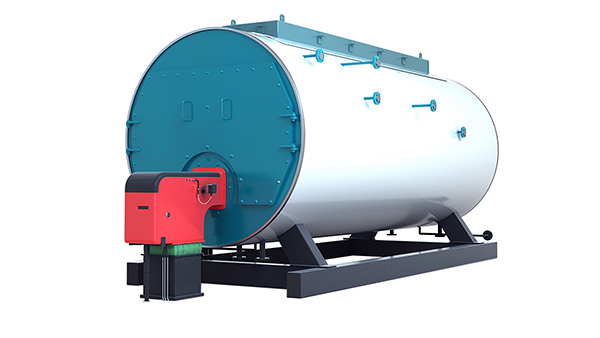
What Defines a Commercial Boiler, and Where Is It Typically Used?

In commercial buildings such as hotels, hospitals, office towers, and schools, the demand for heating and hot water is both intensive and continuous. These environments cannot tolerate cold interiors, poor sanitation, or inconsistent service. When a residential boiler is undersized or inefficient, it leads to guest complaints, energy waste, and regulatory fines. That’s where commercial boilers come in. These units are specifically engineered to handle the scale, reliability, and control requirements of large non-industrial facilities. Understanding their capabilities and limitations is essential for choosing the right boiler system for your commercial needs.

A commercial boiler is a pressurized system designed to supply hot water or steam for heating and domestic purposes in non-residential buildings. Typically rated between 300,000 and 10 million BTU/hr, commercial boilers are used in spaces like hotels, hospitals, schools, malls, and office buildings, providing space heating, hot water, or process heat with high reliability and efficiency.

They bridge the gap between small-scale residential units and heavy-duty industrial boilers.

Commercial boilers are typically used in non-industrial settings such as offices, schools, and hospitals.True

Commercial boilers are engineered to meet the heating and hot water needs of larger non-residential facilities without the high-pressure requirements of industrial boilers.

A residential boiler can be used for any commercial application as long as it is installed properly.False

Residential boilers are not rated for the size, runtime, redundancy, or safety codes required in commercial environments.


Key Features That Define a Commercial Boiler

AttributeCommercial Boiler Specification
Output Rating300,000–10,000,000 BTU/hr (or 88–3,000 kW)
Fuel TypeNatural gas, oil, propane, electricity, dual-fuel
Efficiency StandardsCondensing (90–98% AFUE) or non-condensing (>80% AFUE)
Pressure RangeTypically up to 150 psi (10.3 bar) for hot water, 15 psi for steam
ConstructionFire-tube, water-tube, sectional cast iron, or condensing steel
ControlsDigital touchscreens, remote monitoring, BACnet, fault detection
RedundancyOften modular or with N+1 configuration for reliability

Commercial boilers are engineered for long runtime, daily cycling, and low maintenance while complying with regional codes and ASHRAE standards.


Typical Applications of Commercial Boilers

Industry/Facility TypeUsage ScenarioBoiler Function
HospitalsSterilization, laundry, heatingSteam and hot water
Hotels & ResortsRoom heating, showers, laundryCondensing hot water boilers
Office BuildingsWinter heating, reheat coilsSpace heating
Universities & SchoolsCentral plant heating, cafeteriasHot water, sometimes low-pressure steam
Retail MallsHVAC zones, restrooms, food courtsHigh-efficiency hot water boilers
Correctional FacilitiesKitchen, laundry, shower heatingLong-duty hot water supply
Nursing HomesCentralized DHW, space heatingConstant-temperature water boilers

Commercial systems are often required to have multiple boilers, typically in modular banks, to support redundancy and load balancing.


Commercial Boiler vs. Industrial Boiler: Comparison

AspectCommercial BoilerIndustrial Boiler
BTU/hr Range300,000 – 10 million10 million – 300 million+
Pressure Rating<150 psi (typically)150 – 2,000 psi
ApplicationHVAC, hot water, basic steamProcess steam, power generation
Control SystemRemote BMS, auto-startPLC + SCADA, advanced instrumentation
Fuel TypeNatural gas, electricity, oilMostly natural gas, coal, biomass, heavy oil
Operation Time6–20 hours/dayOften 24/7 continuous

Common Boiler Types Used in Commercial Buildings

Boiler TypeBest ForAdvantages
Condensing BoilersHigh-efficiency hot water supply90–98% efficiency, low emissions
Fire-tube BoilersModerate-pressure steam or hot waterCompact, easier maintenance
Modular BoilersFacilities with variable load demandsScalability, redundancy, N+1 design
Electric BoilersSilent operations (hospitals, schools)No flue gas, fast response, low emissions

Regulations and Standards for Commercial Boilers

StandardApplies ToPurpose
ASME Section IVHeating boilers under 15 psi steam/160 psi waterDesign, construction, pressure certification
ANSI Z21.13Gas-fired low-pressure steam/hot water unitsCombustion safety and thermal efficiency
NFPA 85Combustion safeguardsFlame failure, ignition lockouts
ASHRAE 90.1Energy efficiency for commercial HVACBoiler efficiency minimums
UL/CSA CertificationsElectrical and burner safetyNorth American compliance

Local jurisdictions may also require periodic inspection, emissions reports, or operator training certification.


Conclusion

A commercial boiler is a purpose-built heating system designed to meet the large, continuous, and controlled thermal demands of commercial spaces. Whether it’s providing 24/7 hot water for a hospital or HVAC heating for a high-rise office, commercial boilers are defined by their higher output capacity, integration-ready control systems, and code-compliant designs. Choosing the right type depends on load variability, space constraints, emissions targets, and long-term efficiency goals.
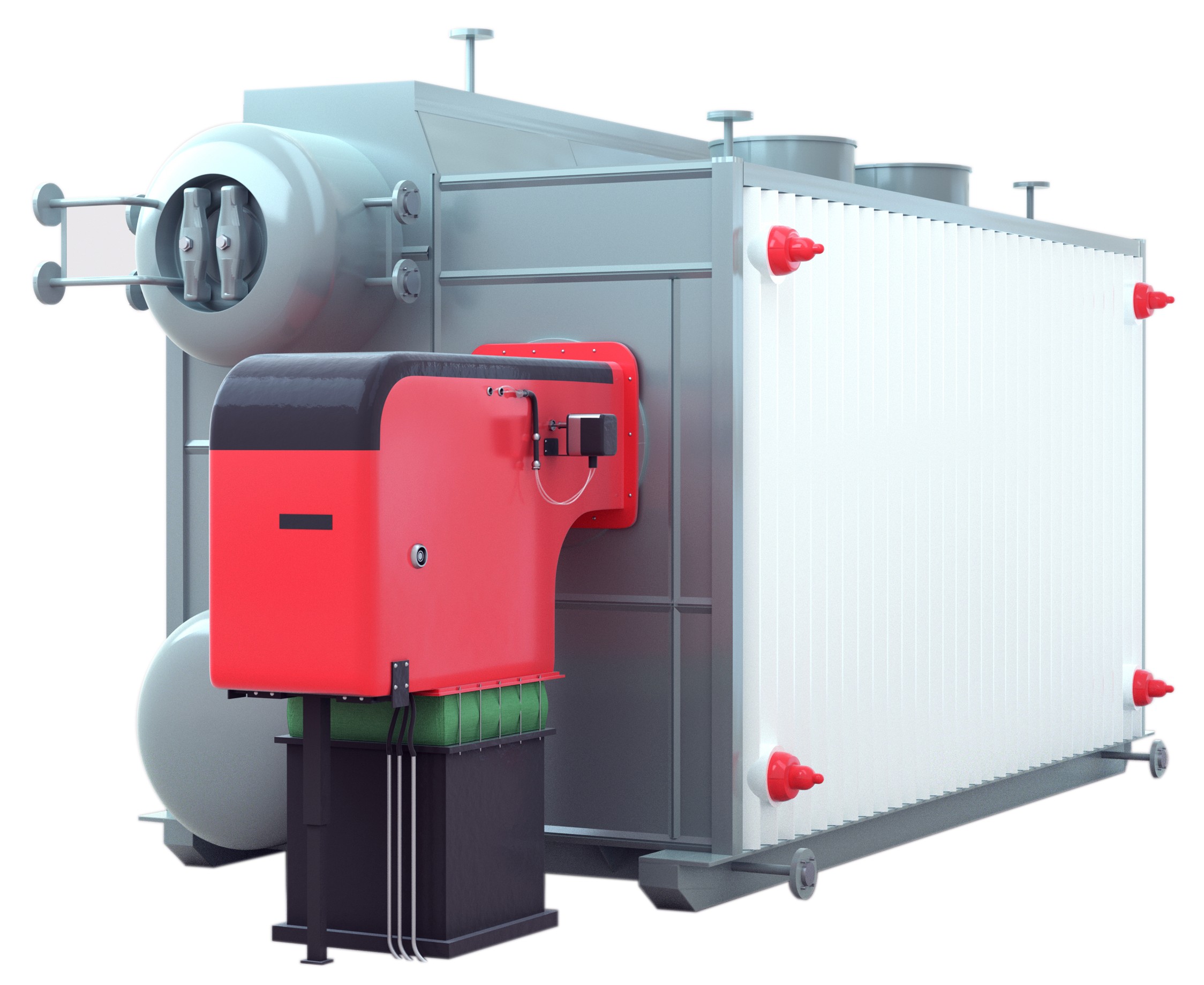
What Defines an Industrial Boiler, and What Are Its Main Applications?

In modern manufacturing and energy production, steam is the lifeblood of countless operations—from sterilizing food to spinning turbines in a power station. Relying on insufficient or underperforming steam systems can result in production delays, product defects, high fuel waste, or safety hazards. That’s why large-scale operations across heavy industries invest in industrial boilers—engineered systems capable of producing massive amounts of high-pressure steam to meet demanding process loads. Understanding what defines an industrial boiler and how it differs from commercial or residential units is essential for planning your plant’s energy infrastructure.

An industrial boiler is a high-capacity pressure vessel designed to generate steam or hot water for manufacturing processes, large-scale heating, or power generation. Typically ranging from 10 to 300+ TPH in capacity and operating at pressures of 10–160 bar, industrial boilers are used in industries such as chemicals, textiles, food processing, petrochemicals, paper, and power plants.

These boilers are engineered for durability, efficiency, and compliance with strict safety and environmental codes.

Industrial boilers are primarily used to provide process steam for manufacturing and power generation.True

Unlike commercial boilers that serve heating needs, industrial boilers support heavy-duty applications such as distillation, drying, sterilization, and turbine drive.

Industrial boilers operate at low pressure and temperature similar to residential systems.False

Industrial boilers typically operate at much higher pressures (10–160 bar) and temperatures (150–540°C) than residential or commercial systems.


Key Characteristics That Define an Industrial Boiler

AttributeIndustrial Boiler Specification
Steam Output10 TPH – 300+ TPH
Pressure Range10 bar – 160 bar (145–2,300 psi)
Temperature Range180°C – 540°C
Fuel TypesCoal, natural gas, oil, biomass, electricity, waste heat
Boiler TypesWater-tube (most common), fire-tube (small/legacy), HRSG
Control SystemPLC/SCADA-based automation with alarms, feedback loops
Construction CodesASME Section I, EN 12952, IBR, ISO, GB standards

Industrial boilers are heavily customized based on process demands, emission targets, fuel availability, and layout constraints.


Primary Applications of Industrial Boilers by Industry

IndustryMain Boiler RoleSteam Usage
Power GenerationDrives steam turbines for electricityHigh-pressure saturated/superheated steam
Food & BeveragePasteurization, sterilization, cookingLow to medium pressure steam
Chemical & PharmaReactions, drying, crystallizationClean steam or process steam
TextilesDyeing, printing, dryingMedium-pressure saturated steam
Pulp & PaperDigestion, paper drying, turbine cogenerationSteam for process + power
Oil & GasDesalting, cracking, steam injectionHigh-temperature/high-pressure steam
Steel & MetallurgyHeat treatment, rolling, picklingHigh pressure for batch operations
Waste-to-EnergySteam from incineration of wasteBoiler + turbine (cogeneration)

Many industrial boilers are also designed to co-generate heat and power (CHP) to maximize energy efficiency.


Boiler Types Commonly Used in Industrial Applications

Boiler TypeBest ForBenefits
Water-tube BoilerHigh-pressure, high-load applicationsFast steam generation, high capacity
Fire-tube BoilerSmall/medium industries, lower pressureSimpler, easier to maintain
Electric BoilerCleanroom, lab-scale industriesNo emissions, compact
HRSG (Heat Recovery)Combined cycle plants, turbinesUses waste heat, improves energy efficiency
Fluidized Bed BoilerCoal, biomass combustionFuel flexibility, low NOx

Pressure & Temperature Comparison

Boiler TypePressure (bar)Temperature (°C)
Commercial Boiler6 – 10 bar110 – 180°C
Industrial Steam Boiler20 – 160 bar180 – 540°C
Power Boiler (Utility)160 – 350+ bar540 – 620°C

Many industrial boilers operate in the subcritical range (below 221 bar) but may approach supercritical conditions in cogeneration systems.


Essential Systems Included in an Industrial Boiler Package

SubsystemFunction
Burner SystemFuel-air mixing and ignition
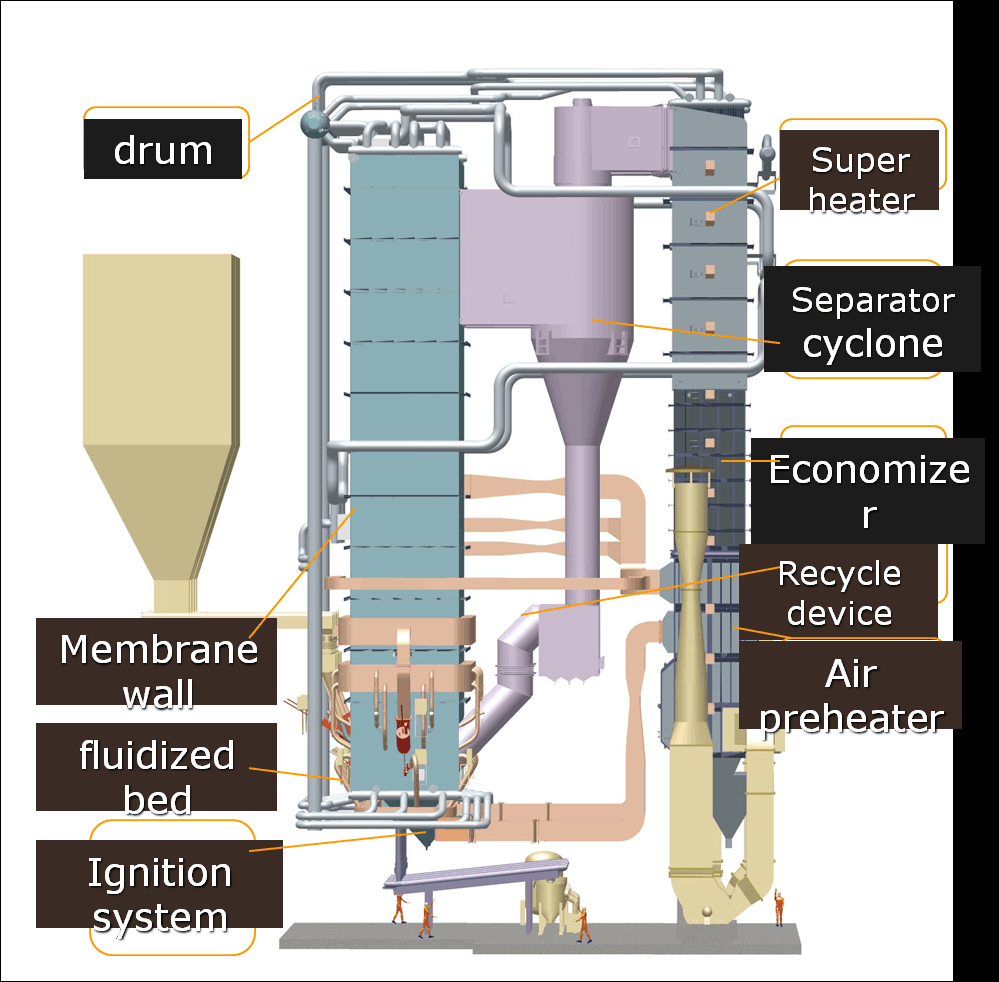
Drum & Water CirculationSeparates water/steam, feeds economizers
SuperheaterRaises steam temperature above saturation
EconomizerRecovers flue gas heat to preheat feedwater
Deaerator & FW TankRemoves O₂ and CO₂, preheats feedwater
Control PanelPLC-based automation and diagnostics
Safety ValvesOverpressure protection
Blowdown SystemTDS and sludge removal
Emissions ControlSCRs, ESPs, baghouses for NOx, PM, SOx

Typical Size and Footprint

Steam CapacityBoiler TypePhysical SizeBoiler House Needs
10 TPHHorizontal water-tube~10 m × 3 m × 4 mModerate infrastructure
50 TPHVertical water-tube~15 m × 5 m × 7 mFoundation, crane, stack system
150 TPH+Modular units/HRSGMultiple modulesComplex piping, emission zones

Efficiency & Emissions Considerations

Fuel TypeEfficiency (%)CO₂ IntensityCompliance Equipment
Natural Gas85–95%LowLow-NOx burners, SCR
Coal75–85%HighESP, baghouse, scrubber
Biomass70–90%MediumMulticyclone, CO filters
Electricity98–100% (point)Depends on sourceNo flue needed

Many modern industrial boilers are designed to meet local emissions codes (e.g., EPA, CPCB, EU) and integrate CEMS (continuous emissions monitoring systems).


Conclusion

An industrial boiler is a high-performance thermal system designed for demanding operations that require high-pressure steam or hot water. These boilers are vital in industries like power generation, food production, chemicals, textiles, and metallurgy—where consistent, scalable, and controllable heat is mission-critical. From 10 TPH water-tube systems to 300 TPH HRSGs, industrial boilers come in a variety of forms, and choosing the right one depends on pressure, process requirements, fuel strategy, and emissions constraints.
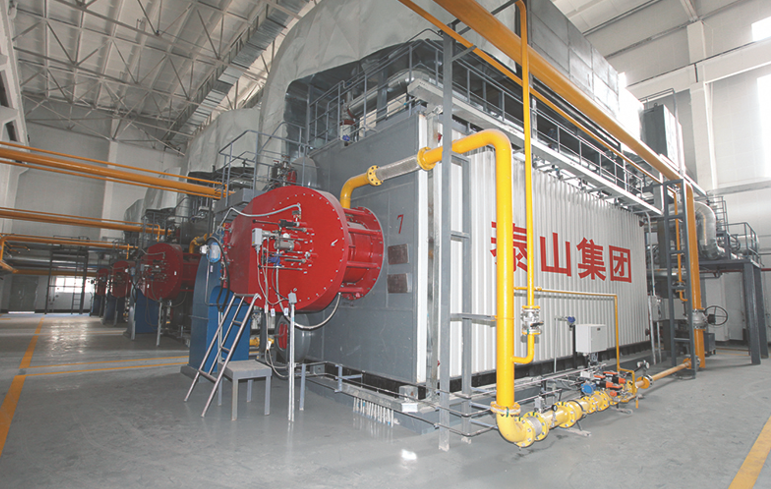
How Do Commercial and Industrial Boilers Differ in Pressure, Temperature, and Capacity?

Choosing between a commercial and an industrial boiler isn’t just a matter of size—it’s about matching performance specs to your operation’s intensity. While commercial boilers handle domestic hot water and heating in buildings like hotels and offices, industrial boilers support intense, continuous steam or heat needs in production environments. Selecting the wrong type can lead to dangerous pressure failures, underperformance, or regulatory non-compliance. To prevent costly mistakes and ensure safety and efficiency, it’s crucial to understand how these systems differ in pressure, temperature, and capacity.

Commercial boilers generally operate below 10 bar (145 psi), with output temperatures below 180°C and capacities under 3,000 kW (10 million BTU/hr). Industrial boilers, on the other hand, operate at 10–160 bar, exceed 500°C in temperature, and deliver steam flow up to 300 TPH or more, supporting complex manufacturing and power generation processes.

These differences impact sizing, safety systems, design codes, and energy efficiency.

Commercial boilers operate at significantly lower pressure and temperature than industrial boilers.True

Commercial boilers are designed for building heating or hot water, while industrial boilers must generate high-pressure, high-temperature steam for processing or power.

Commercial and industrial boilers are interchangeable if properly installed.False

Industrial boilers follow stricter codes and are built for higher stress, capacity, and complexity; they are not interchangeable with commercial systems.


🔧 Technical Comparison of Pressure, Temperature & Capacity

SpecificationCommercial BoilerIndustrial Boiler
Pressure Range1–10 bar (15–145 psi)10–160 bar (145–2,300 psi)
Temperature Range60–180°C (140–356°F)180–540°C (356–1,004°F)
Steam Output<3 TPH (tons per hour) or <10 million BTU/hr10–300+ TPH or 30–1,000+ million BTU/hr
Water Output (Hot Water)Up to 3 MW (10,000,000 BTU/hr)3 MW – 200+ MW (10–700+ million BTU/hr)
Run TimeIntermittent to 16 hrs/dayOften 24/7 continuous
Fuel TypesNatural gas, propane, electricityGas, oil, coal, biomass, electricity, waste heat
Boiler TypesFire-tube, condensing, cast ironWater-tube, HRSG, FBC, high-pressure fire-tube
ApplicationsHeating buildings, domestic hot waterProcess steam, cogeneration, sterilization, turbines

📊 Boiler Pressure vs. Application Requirements

ApplicationRequired Pressure (bar)Suitable Boiler Type
Office Building HVAC2–5 barCommercial fire-tube or condensing
Hotel Hot Water3–6 barCommercial condensing boiler
Food Pasteurization8–12 barLight industrial fire-tube
Textile Steam Processes10–16 barIndustrial water-tube
Chemical Processing20–40 barIndustrial high-pressure boiler
Power Generation (Turbine)60–160 barIndustrial superheated steam boiler

High-pressure systems require reinforced drums, certified pressure vessels, and safety interlocks—absent in most commercial units.


🔥 Temperature Range Comparison

Steam/Water UseCommercial BoilerIndustrial Boiler
Domestic hot water60–80°COften not applicable
Radiant space heating70–90°CRarely used
Low-pressure steam100–150°C180–200°C
Process steam (standard)N/A180–400°C
Superheated steamN/A400–540°C

Commercial boilers cannot safely generate steam above 150°C, limiting their role to comfort or light-duty heating.


📐 Real-World Size and Output Examples

Boiler ApplicationBoiler TypePressureCapacityOutput
Small hotel (60 rooms)Gas condensing4 bar500 kWDHW + HVAC
Office tower (20 floors)Fire-tube modular6 bar2 MWSpace heating
Textile mill (large)Water-tube12 bar10 TPHSteam for dyeing
Power plant (medium)Supercritical water-tube165 bar250 TPHTurbine steam
Oil refineryWater-tube + HRSG120 bar180 TPHProcess + co-gen

Commercial systems are typically pre-assembled with plug-and-play controls, while industrial systems are custom-engineered.


🧰 Key System Differences

System FeatureCommercial BoilerIndustrial Boiler
Control SystemBMS compatible, auto-startPLC/SCADA, interlock redundancy
Emissions ControlLow-NOx burner optionalSCR, ESP, CEMS required
Feedwater TreatmentBasic softeningDeaerators, TDS blowdown
Safety ComplianceASME Section IVASME Section I, IBR, EN 12952
MaintenanceLight duty, occasionalScheduled, intensive

Industrial boilers must meet stricter codes, including ASME I, PED, and IBR, often requiring third-party certification and inspections.


Conclusion

The pressure, temperature, and capacity of a boiler determine its suitability for either commercial or industrial applications. Commercial boilers are ideal for comfort heating and hot water in buildings, while industrial boilers are designed to deliver high-pressure steam for demanding processes. Misapplication can lead to equipment failure, inefficiency, and safety risks. Always align your boiler selection with your operational intensity, runtime needs, and regulatory requirements.
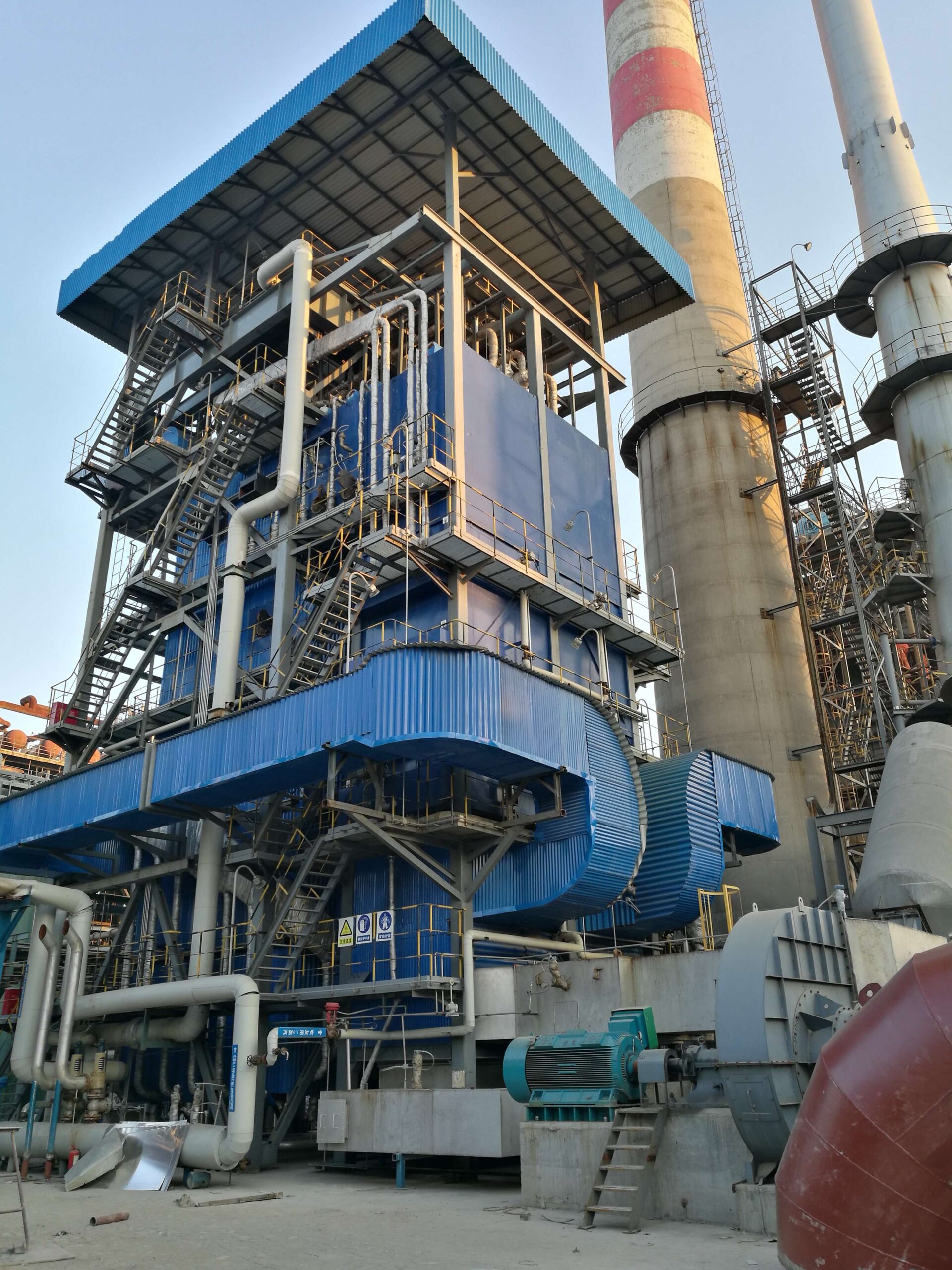
What Are the Differences in Materials, Construction, and Service Life Between Commercial and Industrial Boilers?

When evaluating boiler options, most users focus on size, output, and fuel—but often overlook the materials and construction quality, which directly influence durability, corrosion resistance, and safety under pressure. The long-term performance and cost-effectiveness of a boiler depend heavily on how it’s built and what it’s made of. While commercial boilers are optimized for compactness and simplicity, industrial boilers are engineered for longevity under extreme pressures and temperatures—using thicker steel, higher-grade alloys, and advanced welding techniques. These differences translate into distinct lifespans, maintenance schedules, and total cost of ownership.

Commercial boilers use lighter-gauge carbon steel or cast iron and are constructed for intermittent or medium-duty service with a lifespan of 10–15 years. Industrial boilers are built from thick-walled carbon steel or high-alloy materials, designed for high-pressure, high-temperature applications with a service life of 25–35+ years when properly maintained.

Material selection and welding standards vary significantly to meet ASME, EN, or IBR codes, especially for pressure parts in industrial boilers.

Industrial boilers use heavier, higher-grade materials than commercial boilers to withstand higher pressures and temperatures.True

Industrial boilers are made of thicker steel plates, high-alloy tubes, and certified welds to meet safety and durability requirements under extreme operating conditions.

The construction quality of commercial and industrial boilers is nearly the same.False

Commercial boilers are not built to the same codes, stress tolerances, or duty cycles as industrial boilers and therefore have very different construction requirements.


🧱 Material Comparison: Pressure Parts and Shell

ComponentCommercial BoilerIndustrial Boiler
Shell MaterialCarbon steel (3–10 mm thick)SA-516 Gr.70 carbon steel (12–40+ mm thick)
Tube MaterialMild steel or basic ERW tubesSA-192, SA-210, or 13CrMo44 seamless tubes
Drum MaterialThin-walled rolled steel or omittedThick-walled forged or welded steel drums
Refractory/InsulationLightweight ceramic fiber or foamDense firebrick, ceramic wool, mineral board
Weld TypeMIG or submerged arc, few stress-relievedFull-penetration, X-ray tested, stress-relieved
Flanges & FittingsANSI 150# threaded or slip-onANSI 300–900#, butt-welded with RT test

Industrial boilers use certified pressure vessel-grade steels and undergo code-regulated fabrication procedures, including preheat, post-weld heat treatment (PWHT), and NDT.


🏗️ Construction Features That Differentiate Commercial vs. Industrial Boilers

Design ElementCommercial BoilerIndustrial Boiler
Boiler TypeFire-tube, sectional cast iron, condensingWater-tube, HRSG, FBC, coil-type
Tube ArrangementHorizontal shell with small fire tubesMultiple passes with wide steam/water circuits
Drum DesignOften none (direct flow)Steam and mud drums with internal baffles
Tube ExpansionRolled into headers or weldedFully welded with end caps or stub tubes
Access & Maintenance PortsLimited hatches, small inspection doorsManholes, access doors, soot blower ports
Mounting BaseSkid-mounted or floor-mountedFoundation-supported with seismic anchoring
Heat Transfer Area (per TPH)~30–40 m²/Ton60–90 m²/Ton

Industrial boilers are built for modular cleaning, inspection, and component replacement during long lifespans and rigorous service cycles.


📆 Service Life Expectations

FactorCommercial BoilerIndustrial Boiler
Design Life (avg)10–15 years25–35 years
Duty CycleIntermittent or seasonalContinuous (24/7/365)
Corrosion ResistanceBasic coatings or anodizingInternal linings, deaeration, alloy components
Expected DowntimeSeasonal or annual maintenanceScheduled shutdowns for overhaul
RepairabilityLimited (often replace vs. repair)High—tubes, refractory, valves replaceable

A commercial boiler is considered a disposable asset in many buildings, whereas an industrial boiler is treated as a critical capital investment.


🧪 Metallurgical and Structural Integrity Comparison

Performance MetricCommercial BoilerIndustrial Boiler
Tensile Strength of Shell~400–450 MPa550–700+ MPa
Creep Resistance at High TempLowHigh (Mo-alloys, Cr-moly steels)
Thermal Cycling ToleranceModerateHigh
Corrosion Allowance~1 mm wall loss over life2–4 mm (extra thickness or alloy)
Fatigue Life (cycles)Low (~10⁴–10⁵ cycles)Very high (~10⁶–10⁷ cycles)

🏭 Real-World Example: Boiler Lifespan & Construction Specs

FacilityBoiler TypeShell MaterialDesign LifePressure Rating
Small Hospital500 kW condensingCarbon steel (5 mm)~12 years6 bar
Commercial Office Tower1.5 MW fire-tubeMild steel + aluminum fins~15 years8 bar
Textile Mill (Medium Scale)10 TPH water-tubeSA-516 Gr.70 + SA-210~25–30 years18 bar
Power Plant (Cogeneration)150 TPH HRSGSA-387 alloy, Inconel35+ years110 bar

These differences in build quality and material selection reflect the end-use expectations—comfort heating vs. mission-critical process performance.


Conclusion

The differences in materials, construction, and service life between commercial and industrial boilers are substantial. Commercial boilers are built for simplicity, ease of installation, and moderate duty. Industrial boilers are engineered for strength, endurance, and reliability, capable of withstanding high temperatures and pressures for decades. Their thicker shells, high-alloy tubes, and certified fabrication standards ensure long-term performance in demanding environments—from petrochemicals to food processing to energy.
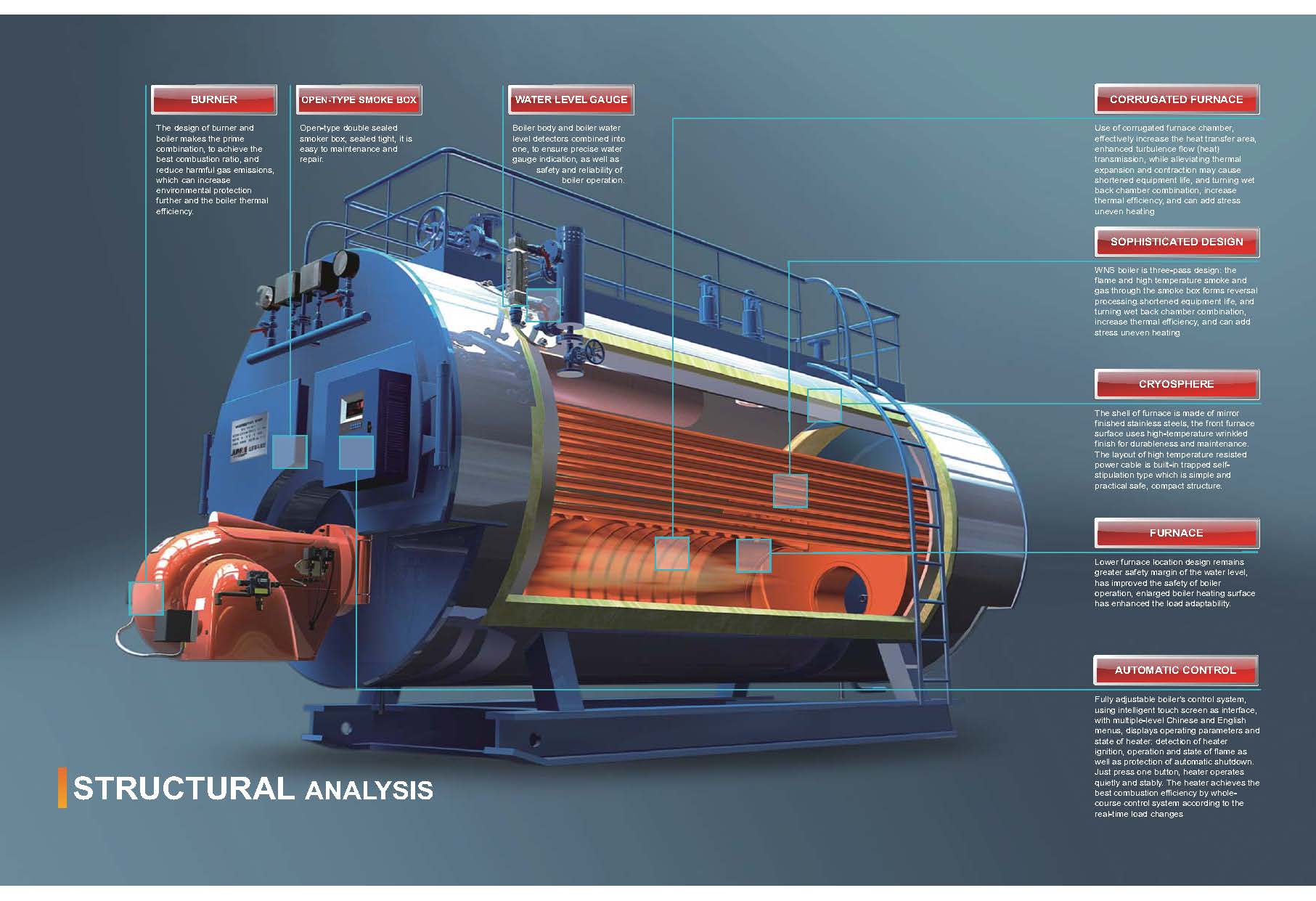
How Do Control Systems and Compliance Standards Vary Between Commercial and Industrial Boilers?

When selecting a boiler, it’s easy to focus on hardware—pressure ratings, output, and fuel type. But the true intelligence and safety of a boiler lies in its control system and regulatory compliance. For commercial boilers, controls are designed to be user-friendly, plug-and-play, and integrated with building systems. In contrast, industrial boilers require robust, programmable logic controllers (PLC), real-time monitoring, and strict adherence to international safety codes. If the wrong level of control or non-compliant system is chosen, the results can include process failures, safety violations, or legal shutdowns.

Commercial boilers use simplified digital control panels and often integrate with BMS (Building Management Systems), while industrial boilers are equipped with advanced PLC- or SCADA-based systems that control, monitor, and protect high-pressure, high-capacity operations. Compliance standards also differ: commercial boilers follow ASME Section IV and local codes, whereas industrial boilers must comply with ASME Section I, NFPA, ISO, PED, and emissions standards like EPA Title V or EU IED.

These differences affect installation complexity, operating safety, and ongoing inspection obligations.

Industrial boilers require more sophisticated control systems and stricter code compliance than commercial boilers.True

Due to their higher pressure, temperature, and energy potential, industrial boilers are subject to more rigorous control and safety standards including SCADA automation and ASME Section I design.

A commercial boiler control system can be reused in industrial applications if needed.False

Commercial boiler control systems lack the interlocks, alarm layers, and process logic necessary for safe operation in industrial environments.


🔧 Control System Differences

FeatureCommercial BoilerIndustrial Boiler
Control TypeDigital controller (thermostatic or PLC-lite)Full PLC or SCADA-based system
User InterfaceTouchscreen or dial-basedHMI + Remote workstation
Automation LevelPre-set cycles and time controlFully automated with feedback and PID loops
Remote AccessVia BMS/BACnetVPN/industrial protocols (Modbus, OPC-UA, Profibus)
Alarm HandlingBasic local alertsMulti-tiered alarms, real-time alerts to operators
Start-Up & ShutdownTimed sequence or manual startSequenced startup with interlocks, safety interlocks
Data LoggingLimitedContinuous trend logging, performance data storage
RedundancyOften not includedDual-sensor logic, backup controls

Industrial boilers require control systems that can actively prevent catastrophic events like overpressure, dry fire, or feedwater failure using real-time diagnostics.


📜 Compliance Standards Comparison

Regulation CategoryCommercial BoilerIndustrial Boiler
Pressure Vessel CodeASME Section IV or UL 795ASME Section I, EN 12952, IBR (India), GB150 (China)
Combustion SafetyANSI Z21.13, NFPA 85 (partial)Full NFPA 85, IEC 61511 (SIS), API 520
Control Panel SafetyUL 508A (North America)UL 508A + ATEX, IECEx (in hazardous areas)
Electrical SafetyNEC, CSANEC, IEC 60204, EMC/EMI compatibility
Water Treatment StandardsASHRAE, local health codesISO 5667, ASTM D1193, boiler-specific feedwater specs
Emissions ComplianceLocal AQMD, EPA under 10 MMBTU/hrEPA Title V, EU IED, CPCB (India), CEMS required
Inspection RequirementsAnnual visual/local code-basedASME NBIC inspections, state pressure vessel inspection
Operator CertificationOften not requiredRequired in many regions for >50 HP boilers

Industrial boilers are subject to third-party certifications, documented test procedures, and traceable logs. This adds cost but ensures safety.


🧰 Functional Capabilities in Controls

FunctionCommercial Control PanelIndustrial Boiler PLC/SCADA
Fuel-air ratio controlManual or pre-setAutomatic, dynamic O₂ trim
Water level managementFloat switch or probeDual-element level control
Stack temp monitoringOptionalReal-time with trend analysis
Combustion optimizationBasic burner feedbackIntegrated fuel efficiency optimization
Safety shutdown logicBasic over-temp/low-water tripsMulti-layer interlocks and fail-safes
Boiler sequencing (multi-unit)Manual or BMSLoad-dependent auto sequencing
Emissions logging and reportingRareContinuous via CEMS and SCADA

🔍 Real-World Example: Pharmaceutical Plant vs. School Heating System

Facility TypeBoiler TypeControls UsedCompliance Needs
Public School2×300 kW fire-tubeTouchscreen controller, BACnetASME IV, local building codes
Pharmaceutical Factory20 TPH water-tubePLC/SCADA with remote HMIASME I, NFPA 85, ISO 9001, FDA audit logs

In regulated industries like pharmaceuticals and food, automated control documentation is required for compliance verification.


🏗️ Installation and Operational Implications

AspectCommercial BoilerIndustrial Boiler
Startup TimeMinutesUp to hours (warm-up, purge)
Training RequiredMinimalOperator certification needed
Maintenance AlertsBasic LED or screen messagePredictive maintenance systems
Integration with Plant SystemsSimple HVAC/BMSFull industrial system integration
Cybersecurity FeaturesLimited or noneVPN-secured, role-based access

Conclusion

The difference between commercial and industrial boiler control systems and compliance standards is foundational. Commercial boilers are plug-and-play, ideal for space heating and hot water, and follow building-focused regulations. Industrial boilers operate under far greater thermal and operational stress, needing advanced automation and strict adherence to codes like ASME Section I, NFPA, ISO, and EPA emissions limits. Investing in the right level of control intelligence and regulatory readiness ensures long-term performance, safety, and legal compliance.
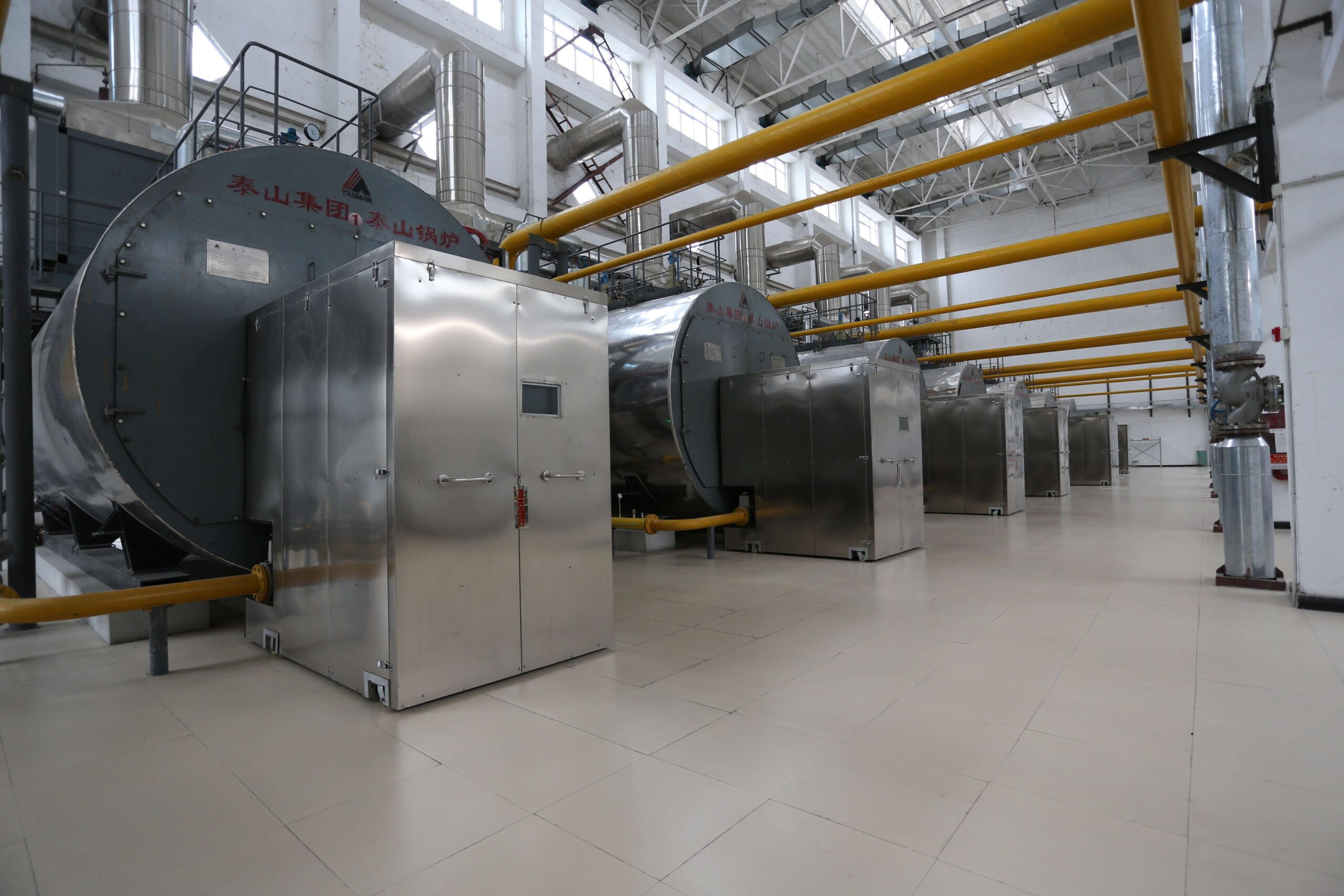
When Should You Upgrade From a Commercial Boiler to an Industrial Solution?

Many facilities begin with commercial boilers due to their lower upfront costs and ease of installation. However, as your business grows—whether in manufacturing, food production, healthcare, or energy services—those same systems may become underpowered, unsafe, or inefficient for evolving operational demands. If your current boiler is frequently overloaded, causes pressure drops, fails inspection, or struggles to support new processes, it may be time to upgrade to an industrial-grade boiler solution.

You should upgrade from a commercial to an industrial boiler when your facility requires higher steam capacity (>3 TPH), higher pressure (>10 bar), continuous 24/7 operation, or integration with process-critical systems. This shift is also necessary if your commercial system no longer meets safety codes, fuel flexibility needs, or emissions compliance.

Upgrading ensures improved reliability, performance, and regulatory alignment, especially in high-demand applications.

Upgrading to an industrial boiler is necessary when operating pressure or output requirements exceed commercial capabilities.True

Industrial boilers are designed for higher capacities, pressures, and duty cycles that commercial systems are not built to handle.

A commercial boiler can meet industrial needs if it's run in parallel with multiple units.False

While modular commercial systems may extend capacity, they still lack the pressure handling, process integration, and safety systems needed in true industrial applications.


🔧 Key Indicators It’s Time to Upgrade

Warning SignWhy It Matters
Frequent low-pressure alarms or trippingBoiler is undersized for load or out of spec
Extended runtime (>16–20 hours/day)Shortens lifespan of commercial units not rated for heavy use
Plans to expand or add steam-intensive processesMay exceed flow, temp, and pressure capacity
Failed inspection due to pressure/temperature ratingsCommercial code no longer sufficient
Process demands precise steam controlRequires advanced automation only found in industrial systems
Maintenance costs are rising fastCommercial boilers degrade faster under high stress
Fuel flexibility is now a requirementIndustrial boilers can handle gas, oil, biomass, or dual-fuel
Regional emissions limits are tighteningNeed SCRs, low-NOx burners, CEMS—industrial-only features

📊 Technical Limits Comparison: Commercial vs. Industrial

SpecificationCommercial BoilerIndustrial Boiler
Steam OutputUp to 3 TPH (~10 MMBTU/hr)10–300+ TPH
Operating PressureMax ~10 bar (145 psi)10–160+ bar
Max Temp (Steam/Water)~180°CUp to 540°C
Continuous DutyLight to medium (~16 hrs/day)Heavy (24/7 for decades)
Fuel OptionsGas, electric, light oilGas, oil, coal, biomass, hybrid
Control SystemBMS, basic touchscreenPLC/SCADA, advanced safety logics
Code ComplianceASME Section IVASME Section I, NFPA, ISO, IBR

🏭 Application Thresholds That Require Industrial Boilers

Facility TypeApplicationThreshold That Triggers Upgrade
Food Processing PlantPasteurization, sterilization, drying>3 TPH steam, precise pressure temp control
Textile MillDyeing, printing, calendaring>10 bar pressure, 10+ hours daily operation
Chemical PlantReaction heating, solvent distillationCritical pressure/temperature requirements
Power PlantTurbine drive, cogeneration40–300 TPH steam, high superheat temps
Pharma FactoryGMP steam, CIP systemsHigh purity steam, automated quality controls
District HeatingLong-run hot water/steam distribution>5 MW demand, seasonal 24/7 operation

If your plant has growing production lines, added shifts, or energy optimization goals, an industrial boiler becomes the only sustainable choice.


⚙️ Key System Differences Upon Upgrading

System FeatureCommercialIndustrial
Burner/Combustion SystemPre-mix or staged gas burnerModulating, dual-fuel, O₂-trim enabled
Feedwater ManagementSoftener or basic preheatDeaerator, multi-stage pump system
Blowdown ControlManual or basic timedAutomatic TDS/continuous blowdown system
Emissions MonitoringUsually absentCEMS, opacity monitor, NOx analyzers
Safety Valves and ShutdownsOver-temp/low-waterASME/NBIC certified logic with interlocks
Boiler Sequencing (multi-boiler)Manual or BMS-drivenLoad-sharing with intelligent logic
Fuel-to-Steam Efficiency80–90% (non-condensing)85–95% with heat recovery options

💸 Cost and ROI Considerations

Cost FactorCommercial BoilerIndustrial Boiler
Initial Equipment Cost$20,000 – $100,000$100,000 – $1.5 million+
Installation & Commissioning$10,000 – $40,000$50,000 – $300,000+
Annual O&M Cost$2,000 – $10,000$10,000 – $100,000+
Efficiency Savings PotentialLimitedHigh via economizers, FGR, etc.
Emissions Penalty AvoidanceNot always requiredOften critical to avoid fines
Lifespan10–15 years25–35 years
Payback Period4–7 years3–6 years (with energy optimization)

Many facilities find that the upfront cost is quickly offset by lower downtime, better energy efficiency, and emissions compliance.


🔐 Compliance & Safety Triggers for Upgrade

Regulatory TriggerResulting Requirement
>10 bar steam generationASME Section I (industrial only)
>3 TPH or >1,000 kW outputHigh-pressure boiler designation
Hazardous location classificationExplosion-proof controls (ATEX/IECEx)
EPA/CPCB emissions thresholdsRequire SCR, ESP, CEMS monitoring
FDA/GMP audit requirementsClean steam generator + auto logging
NBIC/Third-party inspection neededIndustrial design code required

Conclusion

If your operations are outgrowing the capabilities of a commercial boiler, it’s not just about size—it’s about safety, performance, efficiency, and compliance. Upgrading to an industrial boiler is the responsible, future-proof move when your business reaches a point where steam becomes mission-critical. With higher capacities, smart controls, and robust certifications, industrial boilers protect your output, workforce, and regulatory standing.

🔍 Conclusion

While they may look similar externally, commercial and industrial boilers are built for fundamentally different workloads and environments. Selecting the right type depends on your heat load, operational intensity, safety regulations, and future scalability. Understanding these differences ensures safe, efficient, and cost-effective system performance.


📞 Contact Us

💡 Not sure if you need a commercial or industrial boiler? We provide engineering assessments, load analysis, and system recommendations to help you choose the right boiler class for your application.

🔹 Let our experts guide you to the right boiler solution—commercial or industrial. 🔍🔥🏭✅

FAQ

What is the main difference between commercial and industrial boilers?

The primary difference lies in scale, capacity, and application:

  • Commercial boilers are designed for light-duty use in places like schools, offices, hospitals, and apartment buildings.

  • Industrial boilers are heavy-duty systems built for large-scale production, such as in power plants, chemical processing, manufacturing, and refineries.

Industrial boilers handle higher pressures, temperatures, and continuous loads, while commercial units serve smaller-scale heating and hot water needs.


How do the capacities of commercial and industrial boilers compare?

  • Commercial boilers: 100,000 to 3,000,000 BTU/hr

  • Industrial boilers: 10 to 1,000+ horsepower (HP) or 345,000 to 34,500,000+ BTU/hr

Industrial boilers are often custom-designed to handle specific process loads, including steam generation, power cogeneration, and thermal oil systems.


Are there differences in boiler design and construction?

Yes. Design differences include:

  • Commercial boilers:

    • Often pre-packaged and compact

    • May use cast iron or copper heat exchangers

    • Primarily hot water-based

  • Industrial boilers:

    • Larger and often modular

    • Built with heavy-duty steel

    • Use fire-tube or water-tube designs for steam or high-temperature applications

Industrial designs prioritize durability, scalability, and long operating lifespans.


What are the typical applications for each type?

  • Commercial boilers:

    • HVAC heating for buildings

    • Domestic hot water supply

    • Small-scale radiant heating

  • Industrial boilers:

    • Steam for manufacturing or sterilization

    • Process heating in food, textile, paper, and chemical industries

    • Power generation (in cogeneration plants)

Industrial applications demand higher energy output and process integration.


How do maintenance and operational requirements differ?

  • Commercial boilers:

    • Easier to operate

    • Typically maintained by in-house facility teams

    • Less frequent inspections and lower compliance standards

  • Industrial boilers:

    • Require licensed boiler operators

    • Subject to strict regulatory inspections (ASME, EPA, etc.)

    • Need routine monitoring, chemical treatment, and professional servicing

Industrial systems are more complex, with higher maintenance and safety standards.


References

  1. Cleaver-Brooks – Commercial vs. Industrial Boilershttps://www.cleaverbrooks.com

  2. Hurst Boiler – Boiler Types and Applicationshttps://www.hurstboiler.com

  3. Spirax Sarco – Steam vs. Hot Water Systemshttps://www.spiraxsarco.com

  4. Powerhouse – Choosing the Right Boilerhttps://www.powerhouse.com

  5. Miura Boilers – Industrial vs. Commercial Explainedhttps://www.miuraboiler.com

  6. Thermodyne Boilers – Industrial Boiler Designhttps://www.thermodyneboilers.com

  7. BioEnergy Consult – Industrial Heating Systemshttps://www.bioenergyconsult.com

  8. ASHRAE – Boiler Efficiency Standardshttps://www.ashrae.org

  9. EPA – Boiler Emissions & Compliancehttps://www.epa.gov

  10. IEA – Boiler Performance in Industryhttps://www.iea.org

Wade Zhang

CEO of Taishan Group Taian Boao International Trade Co., Ltd. 30 years experience in Global industrial boiler market,  Over 300 boiler projects experience, including 21+ EPC projects. Projects span 30+ countries & regions, involving industries such as nuclear power, energy & electricity, municipal heating, mining, textiles, tires etc.

What is the difference between commercial and industrial boilers? Read More »
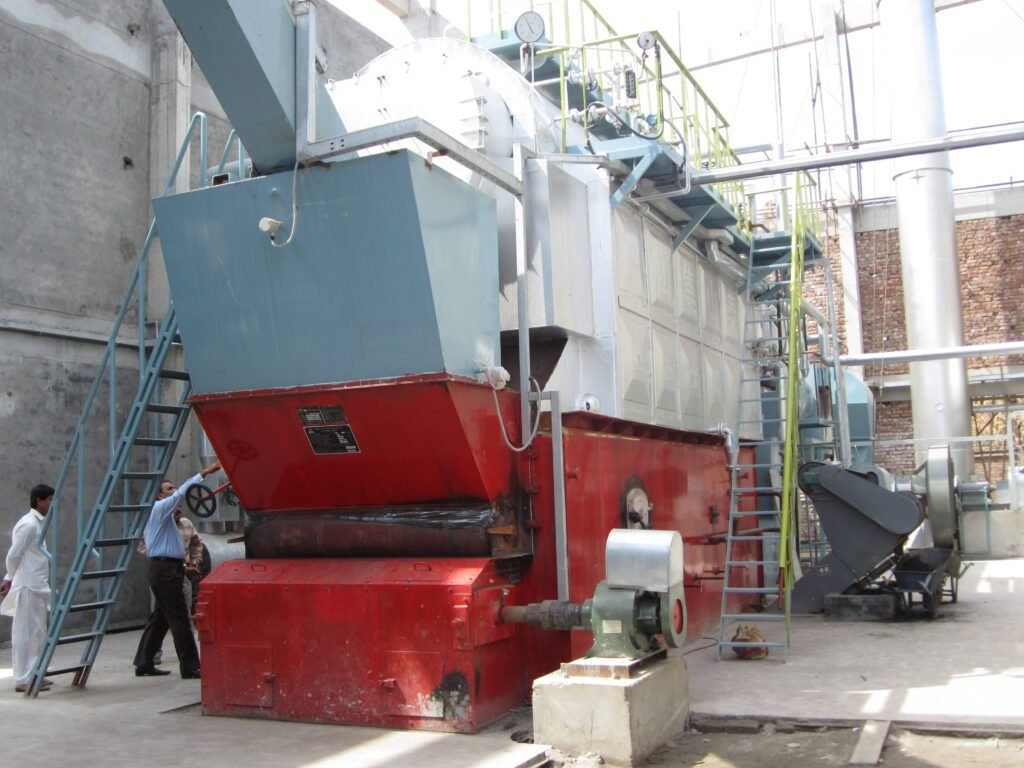
Industrial Boiler Shipping Terms, Packaging & Dispatch Port Info

Industrial Boiler Shipping Terms, Packaging & Dispatch Port Info

When purchasing an industrial boiler, many buyers focus solely on technical specifications and price—overlooking critical logistics details such as shipping terms, packaging standards, and port arrangements. These factors directly impact delivery lead time, import duties, insurance coverage, and installation planning. Misunderstanding shipping terms or inadequate packaging can result in damage, delays, or unexpected costs upon arrival.

Industrial boilers are typically shipped under international trade terms such as FOB (Free on Board), CIF (Cost, Insurance, and Freight), or EXW (Ex Works). Packaging methods include export-grade wooden crates, shrink-wrapping, anti-corrosion coatings, and steel base frames for secure handling. The port of dispatch is usually a major international seaport near the manufacturing facility—commonly Shanghai, Tianjin, Qingdao, or Guangzhou for China-based suppliers.

Proper coordination of shipping and packaging ensures your boiler arrives safely, legally compliant, and ready for installation. Below, we detail what to expect from a professional boiler supplier regarding these key logistics components.

What International Shipping Terms (Incoterms) Are Commonly Used for Industrial Boilers?

When ordering an industrial boiler for international delivery, the shipping terms—also known as Incoterms—are just as important as the equipment itself. These standardized global trade terms define who is responsible for the costs, risks, and logistics at each stage of the shipment. Whether you’re importing a steam boiler from Europe, a biomass unit from Asia, or an oil-fired boiler from the U.S., choosing the right Incoterm affects your budget, risk exposure, and delivery timeline.

The most commonly used Incoterms for industrial boilers are FOB (Free On Board), CIF (Cost, Insurance & Freight), and DAP (Delivered at Place). FOB and CIF are preferred when the buyer handles inland logistics, while DAP is ideal for turnkey delivery where the seller manages transport to the buyer’s site.

Each term changes who pays for shipping, insurance, duties, and who carries the risk during transit.

Incoterms like FOB, CIF, and DAP define responsibilities for shipping boilers internationally.True

These terms are used globally to standardize cost, insurance, and risk obligations between buyers and sellers of industrial equipment.

Comparison of Common Incoterms for Boiler Shipments

IncotermSeller ResponsibilityBuyer ResponsibilityBest Used When…
FOB (Free On Board)Export clearance, loading at port, delivery to shipFreight, insurance, import customs, inland deliveryBuyer has logistics experience and preferred carriers
CIF (Cost, Insurance & Freight)Same as FOB, plus freight and marine insuranceImport customs and inland transportBuyer wants shared risk but controls final delivery
DAP (Delivered at Place)All transport, export/import clearance, delivery to siteUnloading and domestic permits (if any)Buyer wants door-to-door simplicity
EXW (Ex Works)Product ready at factory gate onlyAll logistics, loading, and customs from origin onwardBuyer has full logistics control
DDP (Delivered Duty Paid)Full delivery, plus all import duties and taxes paidUnloading onlyRare—used when seller assumes all customs obligations

Example: CIF vs DAP in Boiler Delivery

ScenarioCIF (Cost, Insurance & Freight)DAP (Delivered at Place)
Factory in China to plant in BrazilSeller delivers to port in Brazil, buyer arranges inland transportSeller handles delivery directly to plant entrance
Responsibility shiftAt destination portAt buyer’s site gate
Customs clearanceBuyer handles local import dutiesSeller may assist or prepay customs on buyer’s behalf

How to Choose the Right Incoterm for Boiler Projects

  • Choose FOB/CIF if you have a strong local logistics team or freight forwarder

  • Choose DAP if you want simple, door-to-site delivery with minimal risk

  • Choose EXW only if you’re experienced with origin export and full transport

  • Avoid DDP unless specifically needed—it adds complexity and cost to the seller

Tip: Always clarify Incoterm responsibilities in the purchase agreement, including unloading costs, insurance type, and customs documentation support.

Final Word

Shipping terms shape your entire boiler delivery process. Choosing the right Incoterm ensures clear responsibility, smooth logistics, and better cost control from factory to facility.

What Packaging Methods Are Used to Protect Industrial Boilers During Shipment?

Industrial boilers are heavy, valuable, and complex systems that often travel long distances—by land, sea, or air—before reaching their installation site. Without proper export packaging, they can suffer costly damage from vibration, corrosion, moisture, or impact. That’s why specialized industrial packaging methods are used to ensure safe delivery. Whether you’re shipping a 5-ton firetube boiler or a modular steam generator, the right packaging is essential to protect your equipment and maintain warranty and quality standards.

Industrial boilers are typically packaged using a combination of skid-mounting, steel or wood framing, shrink wrapping, vapor barrier films, desiccants, and shock protection systems. These methods prevent corrosion, physical damage, and environmental exposure during shipment and storage.

The exact packaging method depends on the boiler type, shipping route, and environmental risk factors like humidity and handling equipment.

Export packaging for industrial boilers is specially designed to prevent corrosion and physical damage during transport.True

Boilers are vulnerable to vibration, moisture, and impact. Professional packaging with skids, films, and desiccants is required for safe delivery and warranty compliance.

Common Packaging Methods for Industrial Boilers

Packaging MethodPurpose
Heavy-duty wooden skid or steel baseStabilizes the boiler during lifting and transit
Steel or wooden crate frameProvides structural protection against forklift or crane damage
Shrink wrap or stretch filmShields against dust, light rain, and scratching
Aluminum foil vapor barrierPrevents moisture ingress and condensation during sea freight
Desiccant bags or cartridgesAbsorbs humidity inside packaging to avoid corrosion
Shock-absorbing pads or foam blocksReduces vibration and shock during road or sea movement
Rust inhibitor sprays or VCI paperProtects uncoated metal surfaces from corrosion during long storage
Export marking and labelingIdentifies top-heavy points, lifting hooks, and handling limits

Packaging Examples by Shipping Mode

Shipping ModeTypical Packaging Approach
Truck (domestic)Skid-mounted + strapped with stretch wrap and corner guards
Sea freight (export)Full steel or wooden crate + vapor barrier + desiccants + lifting lugs
Rail freightSkid base + shrink wrap + tie-down brackets + impact cushions
Air freight (rare)Light modular crate + moisture protection + component disassembly

Packaging Tip by Boiler Type

  • Large firetube or watertube boilers: Use steel base, full wrap, and moisture barrier for sea travel

  • Electric or compact modular boilers: Crate frame with moisture and shock protection

  • Used or refurbished boilers: Require extra corrosion protection and crate reinforcement

Additional Protective Options

  • GPS trackers to monitor location and vibration

  • Humidity indicators inside the wrap to detect moisture during customs checks

  • Tamper-evident seals for international customs clearance

Tip: Always request a packaging report or photo documentation before shipment—this supports warranty protection and helps verify condition at delivery.

Final Word

Packaging isn’t just about protection—it’s about preserving function, safety, and compliance. The right packaging ensures your industrial boiler arrives ready to perform, not repair.

How Are Large or Modular Boiler Systems Loaded and Secured for Overseas Transport?

Transporting a large or modular boiler system overseas is not a simple task. These units can weigh several tons, include fragile instrumentation, and require protection from sea spray, humidity, and shifting during transit. A mistake during loading or securing can cause serious damage—leading to delays, unexpected repair costs, or even rejected warranty claims. That’s why boiler manufacturers and freight specialists use proven loading and securing methods to keep the system safe from factory floor to installation site.

Large or modular boiler systems are typically secured for overseas transport using heavy-duty lifting equipment, flat-rack or open-top containers, steel or wood cradles, tie-down chains or ratchet straps, anti-slip mats, shock-absorbing cribbing, and moisture protection. Proper load distribution, lift point marking, and center-of-gravity control are essential.

These procedures meet international shipping and safety standards to prevent shifting, tipping, or corrosion during long journeys.

Modular boilers require reinforced crating, load balancing, and moisture protection for safe overseas shipping.True

Due to their weight, shape, and component sensitivity, large boilers are secured with specialized rigging and protective materials to prevent transport damage.

Common Loading Methods for Large or Modular Boilers

MethodDescription
Crane lifting from top pointsUsed for heavy units; lifting eyes and center of gravity clearly marked
Forklift (with extensions)Suitable for smaller skids; requires low center of gravity and counterbalance
Roll-on via platform trailerFor road movement to port; allows horizontal loading on flat-rack container
Multi-piece modular assemblyDisassembled into shipping modules to reduce load height/weight per shipment

Securing Techniques for Sea Freight

Securing MethodPurpose
Flat-rack container tie-downsAllows loading of oversized units with exposed mounting points
Steel or wooden skid baseProvides rigid support during crane lifting and transport vibration
Heavy-duty ratchet straps or chainsSecures unit to deck or flat-rack with high tension resistance
Anti-slip mats or timber cribbingPrevents shifting or sliding under rough sea conditions
Shock pads and VCI wrapProtects sensitive parts and resists corrosion from salt air or humidity
Shrink wrap or tarpaulin coverShields components from weather during exposed deck shipment

Container Types for Modular Boiler Transport

Container TypeUse Case
Flat-Rack ContainerMost common for boilers; open sides and ends for cranes
Open-Top ContainerAllows vertical loading of tall systems with crane access
High Cube ContainerUsed for modular subcomponents (valves, burners, controls)
Break Bulk CargoFor oversized boilers beyond container capacity

Best Practices for Shipping Preparation

  • Verify lifting points are clearly labeled by the manufacturer

  • Check center of gravity markings to avoid tipping during lift

  • Photograph loaded unit before departure for insurance and condition tracking

  • Include export packing list with part numbers, weights, and dimensions

  • Seal and mark all protective wraps with desiccants and humidity indicators

Tip: Always consult with your logistics provider to ensure compliance with IMO (International Maritime Organization) and local port handling rules for oversized or hazardous cargo.

Final Word

Large and modular boiler systems require expert planning, packaging, and precision to ensure they survive the rigors of overseas transport. With the right loading methods and securement techniques, your equipment arrives safely—ready to install and operate.

What Ports of Dispatch Are Typically Used by Industrial Boiler Manufacturers?

When purchasing industrial boilers for international projects, one critical logistics detail is the port of dispatch—the location where your equipment leaves the country of origin. This determines the shipping timeline, freight cost, import documentation, and sometimes even the Incoterm used in your contract. Industrial boiler manufacturers—especially those operating globally—use a set of well-established, high-capacity export ports that support heavy equipment handling, containerized and breakbulk cargo, and streamlined customs clearance.

The most commonly used ports of dispatch for industrial boilers include Shanghai (China), Hamburg (Germany), Houston (USA), Mumbai (India), Busan (South Korea), and Antwerp (Belgium). These ports are chosen for their strategic location, freight infrastructure, container availability, and proximity to major manufacturing hubs.

Manufacturers select dispatch ports based on destination, equipment size, shipping mode, and customer location.

Boiler manufacturers use ports with heavy-lift and breakbulk capabilities for global shipments.True

Because boilers are large, heavy units, ports with specialized cargo handling infrastructure are required to ensure safe and efficient dispatch.

Common Global Dispatch Ports Used by Boiler Manufacturers

Country of OriginMain Ports of DispatchReason for Use
ChinaShanghai, Tianjin, Qingdao, NingboProximity to major factories, strong container and breakbulk handling
USAHouston, Savannah, Long Beach, New YorkOil/gas and industrial hubs; access to Latin America and Europe
GermanyHamburg, BremerhavenCentral EU logistics network, skilled port workforce
IndiaMumbai (Nhava Sheva), Chennai, MundraStrong export zones, excellent ocean routes to ME and Africa
South KoreaBusan, IncheonFast transit links, major manufacturing export center
Belgium/NetherlandsAntwerp, RotterdamEfficient EU outbound distribution, bulk cargo expertise
TurkeyIstanbul, IzmirRegional exports to Europe, Asia, Middle East

How the Port Affects Shipping Planning

FactorImpact
Lead TimePorts closer to the factory reduce inland transport and expedite loading
Freight CostMore competitive rates from high-volume ports
Export Documentation SpeedLarger ports have faster customs processing and freight handling
Container Type AvailabilityCritical for large boiler sizes and multi-module shipments
Port-to-Port Route OptionsAffects delivery timelines and transit flexibility

Real-World Example

  • Manufacturer: Large steam boiler OEM in China

  • Dispatch Port: Shanghai Port

  • Destination: Santos, Brazil

  • Shipping Term: CIF Santos

  • Reason: Shanghai offers breakbulk crane capacity and frequent sailings to South America

Final Tip

When planning your boiler procurement, always confirm the port of dispatch early in the sales agreement. This allows you to plan customs entries, inland logistics, and insurance accurately.

Final Word

Knowing your industrial boiler’s port of dispatch is more than a shipping detail—it’s a strategic factor that impacts your delivery time, total cost, and logistics coordination. Manufacturers choose ports with the infrastructure and expertise needed to safely handle these valuable systems.

What Documents and Customs Requirements Should Buyers Prepare for Boiler Import?

Importing an industrial boiler isn’t just about purchasing the right equipment—it also requires careful attention to customs clearance and documentation. Missing even one required document can lead to delays, fines, or even confiscation of your shipment. Whether you’re importing a pressure vessel, modular steam unit, or boiler accessories, having the right paperwork in hand ensures a smooth and legal arrival in your country.

To import an industrial boiler, buyers must prepare documents such as the commercial invoice, packing list, bill of lading (or airway bill), certificate of origin, and relevant compliance certificates (such as ASME, CE, ISO, or PED). In addition, buyers must meet local customs and safety regulations, including import permits and HS code classification.

Proper documentation and advance coordination with a customs broker reduce clearance time and unexpected costs.

Importing boilers requires documentation like invoices, certificates, and customs declarations.True

Boilers are regulated equipment, and importing them involves proving compliance with safety and commercial laws. Customs documentation is legally required.

Key Documents Required for Boiler Import

DocumentPurpose
Commercial InvoiceLists price, buyer/seller info, boiler description, and Incoterms
Packing ListProvides weight, dimensions, packaging type, and part contents
Bill of Lading (or Airway Bill)Shipping document proving ownership and transport method
Certificate of OriginVerifies the country of manufacture for customs duties and trade rules
Compliance CertificatesCE, ISO 9001, PED, ASME (depending on buyer’s country regulations)
Test Reports or QA RecordsPressure testing, NDT reports—especially for pressure vessels
Import License or PermitMay be required by some countries for pressure equipment
HS Code / Tariff ClassificationNeeded for accurate duty and VAT calculation

Example: Boiler Import into the EU

RequirementDetail
CE MarkingMandatory for boilers under Pressure Equipment Directive (PED)
Declaration of ConformityConfirms compliance with EU standards
HS Code8402.11 (for steam boilers under 45t/hr) or country-specific tariff codes
Import VAT & DutyBased on invoice value and HS classification
Authorized EU ImporterMust be appointed if the manufacturer is outside the EU

Common Issues That Cause Customs Delays

  • Missing compliance certification (especially for pressure-rated components)

  • Incorrect or inconsistent HS code classification

  • Undeclared accessories or control panels packed with boiler

  • Lack of packing list or mismatched quantities

  • Boiler shipped before import license approval (if required)

Tip: Work with a licensed customs broker or freight forwarder familiar with pressure equipment imports in your country. They can flag missing items before the boiler even ships.

Final Word

Importing an industrial boiler is a regulated process. Ensuring documentation accuracy and customs compliance prevents costly holdups and gets your boiler to site—on time and ready to install.

How Can Buyers Optimize Shipping Timelines and Reduce Logistics Risk?

When importing an industrial boiler, time is money. Delayed shipments can derail installation schedules, disrupt plant commissioning, and cause contract penalties. Even worse, poor logistics planning may lead to damage, customs seizures, or unexpected surcharges. To stay on track and within budget, buyers must take a proactive and structured approach to shipping—especially when handling large, heavy, or high-value boiler systems across international borders.

Buyers can optimize shipping timelines and reduce logistics risk by selecting experienced freight partners, confirming Incoterms early, verifying export-ready documentation, using pre-shipment inspections, monitoring real-time tracking, and scheduling buffer time for customs clearance and inland transport.

Advance planning, document readiness, and vendor coordination are the pillars of smooth boiler delivery.

Shipping efficiency improves when buyers use experienced freight forwarders and confirm documentation before dispatch.True

Early logistics coordination and documentation review reduce the risk of port delays, customs issues, and delivery disruptions.

Key Strategies to Optimize Boiler Shipping

StrategyHow It Helps
Plan Shipping Timeline EarlyAligns delivery with site readiness and avoids rush shipping
Confirm Incoterms at Purchase StageClarifies responsibility and prevents disputes over delivery stages
Choose Trusted Freight ForwardersReduces risk of routing errors, lost cargo, or customs issues
Use Pre-shipment Inspection (PSI)Verifies packaging, labeling, and documents before dispatch
Track Shipment in Real TimeIdentifies bottlenecks and enables early reaction to delays
Add Buffer for Customs ClearanceProtects against unplanned inspections or document discrepancies
Bundle Accessories & ComponentsConsolidates parts to prevent separate delays or split arrivals
Select Port Closest to SiteMinimizes inland transport time and complexity

Recommended Boiler Shipping Timeline Framework

StageLead Time EstimateKey Activities
Order ConfirmationDay 0Finalize model, specs, Incoterms, and delivery timeline
Documentation PrepDay 1–10Prepare invoices, CO, packing list, compliance docs
Packaging & DispatchDay 10–20 (varies)Final QA, export packaging, load onto transport
Ocean/Air Transport~2–6 weeks (depending on route)Track via freight forwarder
Customs Clearance & Delivery3–10 days (varies by country)Broker handles duties, inspection, inland delivery

Tips to Minimize Risk

  • Avoid peak shipping seasons (e.g., before Lunar New Year or Q4 holidays)

  • Request photo documentation of loading and crating to prove condition

  • Include shipping clause in the purchase contract with late penalty provisions

  • Verify insurance coverage for full invoice value during international transit

  • Use moisture control packaging for sea freight (e.g., VCI wrap + desiccants)

  • Pre-clear customs documents with your broker to prevent hold-ups

Final Word

Shipping an industrial boiler doesn’t have to be risky or unpredictable. With the right partners, document preparation, and scheduling mindset, you can minimize delays and ensure your boiler arrives exactly when and where it’s needed.

🔍 Conclusion

Shipping and packaging are vital elements of a successful industrial boiler procurement. Understanding Incoterms, protective packaging strategies, and the port of dispatch ensures smooth delivery, cost control, and safe arrival of your equipment—ready for commissioning at your facility.


📞 Contact Us

💡 Need full logistics support for your industrial boiler order? We offer flexible shipping terms, certified packaging solutions, and global delivery services with customs and insurance assistance.

🔹 Let us handle your boiler logistics from factory to installation—safely, efficiently, and globally. 🚢📦✅

FAQ

What are the standard shipping terms for industrial boilers?

Common international shipping terms include:

  • FOB (Free on Board) – Seller delivers the boiler to the port of departure; buyer assumes responsibility from there.

  • CIF (Cost, Insurance, Freight) – Seller covers transport and insurance up to the destination port.

  • EXW (Ex Works) – Buyer handles the full logistics from the seller’s factory gate.

  • DAP (Delivered at Place) – Seller delivers the boiler to a named location, excluding unloading.

Terms depend on buyer-seller agreements, Incoterms® 2020 rules, and customs regulations.


How are industrial boilers packaged for shipment?

Packaging is designed to protect against damage, corrosion, and weather exposure:

  • Steel frames with wooden skids or crates

  • Shrink wrapping and protective covers for outdoor storage

  • Anti-corrosion coatings and VCI films on metal parts

  • Shock and tilt indicators for sensitive instrumentation

  • Seaworthy export packaging per ISPM-15 and international standards

Heavy units may be shipped as breakbulk cargo or in flat-rack containers.


What is the typical port of dispatch for industrial boilers?

Port of dispatch varies by manufacturer location. Common export hubs include:

  • Shanghai, China

  • Mumbai or Chennai, India

  • Houston or Los Angeles, USA

  • Hamburg, Germany

  • Singapore Port

  • Port Klang, Malaysia

These ports offer large freight capacity, customs clearance services, and industrial cargo handling.


Can buyers request custom packaging or shipping arrangements?

Yes. Buyers can request:

  • Customized crating or labeling

  • Special handling for oversized or modular boilers

  • Climate-controlled shipping for sensitive components

  • Third-party logistics (3PL) coordination

  • On-site installation support upon delivery

Such requests should be negotiated at the contract stage and may incur additional costs.


How is shipping insurance handled for industrial boilers?

Under CIF or DAP terms, the seller usually arranges insurance. For FOB or EXW, the buyer is responsible. Insurance should cover:

  • Transit damage

  • Theft or loss

  • Storage delays or demurrage

  • Project-specific risk coverage

Using a marine insurance broker is recommended for high-value industrial shipments.


References

  1. Incoterms 2020 – ICC Official Ruleshttps://iccwbo.org

  2. Maersk Shipping Industrial Cargo Guidehttps://www.maersk.com

  3. Cleaver-Brooks Shipment and Delivery Guidelineshttps://www.cleaverbrooks.com

  4. Powerhouse Boiler Equipment – Export Logisticshttps://www.powerhouse.com

  5. Hurst Boiler Export Packaging & Shippinghttps://www.hurstboiler.com

  6. Thermodyne Boilers – Global Delivery Termshttps://www.thermodyneboilers.com

  7. BioEnergy Consult – Boiler Transport Tipshttps://www.bioenergyconsult.com

  8. Freightos – Industrial Equipment Shippinghttps://www.freightos.com

  9. HS Code and Export Rules – USITChttps://www.usitc.gov

  10. DNV Seaworthy Packaging Standardshttps://www.dnv.com

Wade Zhang

CEO of Taishan Group Taian Boao International Trade Co., Ltd. 30 years experience in Global industrial boiler market,  Over 300 boiler projects experience, including 21+ EPC projects. Projects span 30+ countries & regions, involving industries such as nuclear power, energy & electricity, municipal heating, mining, textiles, tires etc.

Industrial Boiler Shipping Terms, Packaging & Dispatch Port Info Read More »

How Much Does a Steam Boiler Cost? Full Price Breakdown

How Much Does a Steam Boiler Cost? Full Price Breakdown

Choosing a steam boiler involves more than just picking a model—it’s an investment that directly affects your plant’s operating efficiency, production capacity, and lifecycle cost. Yet many buyers underestimate the total cost involved, including auxiliary systems, installation, and long-term maintenance. Without a clear understanding of pricing, it’s easy to underbudget or make compromises that lead to costly inefficiencies or early failures.

The cost of a steam boiler typically ranges from $30,000 to $250,000 for standard fire-tube or water-tube models used in industrial applications. High-capacity or custom-engineered systems can exceed $500,000. Total project costs—including installation, controls, feedwater equipment, and emissions handling—can double the base price, often reaching $100,000 to $1 million depending on the scope.

To make the right purchasing decision, it’s important to break down the boiler cost by system type, capacity, fuel source, and auxiliary requirements. This ensures you’re not just buying a boiler—but a complete, efficient, and scalable steam system.

What Are the Base Costs for Different Types of Steam Boilers (Fire-Tube vs. Water-Tube)?

When purchasing a new steam boiler, one of the most crucial factors for budgeting and planning is understanding the base cost difference between fire-tube and water-tube boilers. These two boiler designs serve very different operational needs—fire-tube boilers are typically used for lower-pressure, smaller-capacity systems, while water-tube boilers handle higher pressures and large-scale operations. The cost difference is significant, both in initial purchase price and long-term operational expenses. Not understanding this distinction may result in overspending or selecting a system unsuited to your process requirements.

Base costs for steam boilers vary depending on boiler type, capacity, pressure, and manufacturer. Fire-tube boilers typically cost between $40,000 and $150,000 for systems up to 30 TPH, while water-tube boilers start at $100,000 and can exceed $1 million for high-pressure, high-capacity industrial applications.

The selection must be based not just on budget but on steam pressure, flow rate, redundancy, and scalability needs.

Fire-tube boilers are generally less expensive than water-tube boilers for equivalent capacities below 30 TPH.True

Their simpler construction, lower pressure limits, and widespread usage in low- to mid-range applications make them more affordable.

Water-tube boilers are always more cost-effective than fire-tube boilers for small operations.False

Water-tube boilers are more expensive upfront and are best suited for high-pressure, large-scale or continuous-load environments.


1. Base Price Comparison Chart by Boiler Type & Capacity

Boiler TypeCapacity (TPH)Typical Operating PressureBase Price Range (USD)Applications
Fire-Tube1 – 3Up to 12 bar$40,000 – $70,000Food plants, laundry, HVAC, small processing
Fire-Tube5 – 1010–16 bar$70,000 – $120,000Hospitals, beverage, pharmaceuticals
Fire-Tube15 – 3010–20 bar$120,000 – $180,000Breweries, paper finishing, textile plants
Water-Tube10 – 2520–60 bar$200,000 – $400,000Chemicals, heavy manufacturing, utility plants
Water-Tube30 – 6040–80 bar$400,000 – $800,000Pulp & paper, refinery, district energy systems
Water-Tube80 – 150+80+ bar (supercritical)$800,000 – $2,000,000+Power generation, petrochemicals, WtE

Prices exclude auxiliary equipment, installation, taxes, and freight. Custom engineering and code compliance (e.g., ASME Section I) increase cost.


2. Fire-Tube Boiler Base Cost Structure

Cost ComponentTypical Cost Share
Pressure Vessel (shell, tubes)30–40%
Burner & Combustion Controls15–20%
Casing & Insulation10%
Mounting Frame & Piping10%
Safety Valves & Instruments5–10%
Factory Testing & Assembly10–15%
Freight, Crating, Packaging5–10%

Fire-tube boilers benefit from standardization and mass production, resulting in lower engineering and fabrication costs.


3. Water-Tube Boiler Base Cost Structure

Cost ComponentTypical Cost Share
High-pressure Drum & Tube Bank35–45%
Superheater & Economizer15–25%
Forced Draft Fans & Air Systems10–15%
Control & Safety Instrumentation10–12%
Mounting Skid & Ducting5–8%
Testing & Heat Treatment5–10%
Project Engineering & Design5–10%

Water-tube boilers require bespoke engineering, extensive QA/QC, and code compliance, particularly for ASME Section I, which drives up cost.


4. Price Trends by Operating Pressure

Operating Pressure (bar)Required Design TypeBase Price Adjustment
< 10 barFire-Tube preferredBase price only
11–20 barHigh-end Fire-Tube or Low Water-Tube+10–20%
21–40 barWater-Tube required+30–40%
41–80 barAdvanced Water-Tube+50–100%
> 100 barSupercritical Water-TubeCustom; +200%+

Higher pressure = thicker walls, specialized tubes, and more advanced controls = higher cost.


5. Real-World Boiler Project Examples (Case-Based)

IndustryBoiler TypeCapacityPressureBase Price (USD)Notes
Dairy PlantFire-Tube3 TPH10 bar~$65,000Standard 3-pass with modulating burner
Textile Dyeing UnitFire-Tube8 TPH12 bar~$110,000Dual-fuel with stack economizer
Chemical PlantWater-Tube20 TPH45 bar~$350,000Includes superheater, multistage feedwater
Power UtilityWater-Tube100 TPH90 bar~$1.3 millionCustom build with economizer and preheater

6. Cost Summary Chart

Boiler TypeInitial Base CostScalabilityPressure FlexibilityEfficiency PotentialTypical Use Case
Fire-Tube$40,000 – $180,000Limited to ~30 TPHUp to ~20 bar80–85% (w/ economizer)Mid-size factories, F&B
Water-Tube$200,000 – $2,000,000+Scales > 150 TPH20–200 bar+85–92% (advanced recovery)Utilities, chemicals, biomass

Keep in mind that total project cost includes auxiliaries (20–50% more) like deaerators, pumps, control panels, blowdown systems, flue stack, etc.


Conclusion

Base costs for fire-tube and water-tube boilers vary widely depending on capacity, pressure, materials, and configuration. Fire-tube boilers are the cost-effective option for small to medium low-pressure systems, while water-tube boilers are essential for high-capacity, high-pressure industrial or utility steam generation. Understanding your operational requirements—pressure, load variation, steam purity, and growth potential—is key to budgeting correctly and avoiding costly under- or over-sizing.

How Do Capacity, Pressure, and Fuel Type Influence Steam Boiler Pricing?

When investing in an industrial steam boiler, three of the most decisive cost drivers are boiler capacity, operating pressure, and fuel type. Each variable doesn’t just affect the price tag of the boiler itself—they also determine the complexity of its design, the size of auxiliary systems, installation costs, and ongoing fuel or maintenance expenses. Businesses that overlook how these variables interplay often end up with underperforming systems or paying far more than necessary over the life of the equipment.

Boiler pricing increases with higher capacity (more TPH), greater operating pressure (more bar or psi), and more complex or less efficient fuel types. High-capacity, high-pressure boilers with solid fuel (biomass or coal) cost significantly more than small, low-pressure, gas-fired models due to design, materials, and emissions compliance.

These factors also drive total lifecycle costs and should be carefully considered during project planning.

Steam boiler prices increase with capacity, operating pressure, and complexity of fuel handling.True

Larger and higher-pressure boilers require thicker materials, larger combustion systems, and higher-efficiency accessories, especially for solid fuel types.

The cheapest boiler option is always the most economical over the long run.False

Cheaper boilers may have low upfront cost but can incur higher fuel, maintenance, and replacement expenses.


1. Boiler Capacity (TPH) vs. Price

Definition: Capacity is the maximum amount of steam a boiler can generate per hour, measured in tons per hour (TPH) or kg/hr.

Capacity RangeTypical ApplicationPrice Impact
1 – 5 TPHSmall factories, laundry, food$40,000 – $100,000 (fire-tube)
6 – 15 TPHTextiles, pharmaceuticals$100,000 – $250,000 (fire or water-tube)
16 – 30 TPHPaper, chemical plants$250,000 – $500,000 (water-tube)
31 – 80 TPHRefineries, biomass$500,000 – $1 million+
81 – 150+ TPHPower generation$1 million – $2.5 million+

Higher capacity = larger shell, more tubing, higher combustion output, and greater steel usage—all of which drive up manufacturing and freight cost.


2. Operating Pressure vs. Boiler Price

Definition: Pressure (bar or psi) indicates the force at which steam is delivered. Higher pressure increases steam energy but requires stronger materials and more rigorous design standards.

Pressure (bar)Common Boiler TypeTypical Cost IncreaseDesign Considerations
6–10 barFire-tubeBaselineSimple casing and moderate wall thickness
11–20 barFire/Water-tube+10–20%Requires enhanced safety and design standards
21–40 barWater-tube+30–50%Needs stronger drums, advanced controls
41–80 barAdvanced water-tube+60–100%Involves thermal stress calculations, superheaters
81–160+ barSupercritical boiler+200–300%Specialty alloys, high-end engineering, ASME I certs

Pressure directly impacts cost by influencing shell thickness, safety valve ratings, piping, and refractory quality.


3. Fuel Type vs. Boiler Cost

Fuel TypeFuel Handling ComplexityCombustion EquipmentCost Impact
Natural GasLowCompact burner, cleanMost cost-effective for small systems
Fuel OilMediumDual-fuel options possible10–20% higher due to pumps, tanks
BiomassHighGrate systems, storage silos30–50% higher than gas systems
CoalVery HighPulverizers, ash handling40–80% higher than gas-fired units
ElectricNone (resistive elements)No combustion systemLow install cost but high OPEX

Solid fuels require bulk storage, feeding systems, ash removal, and emissions controls, significantly increasing capital cost and floor space.


4. Combined Influence: Capacity × Pressure × Fuel Type

ScenarioBoiler TypeEst. Base Cost (USD)Notes
3 TPH, 10 bar, Natural GasFire-tube~$60,000Compact and efficient
10 TPH, 16 bar, Fuel OilFire-tube~$150,000Needs dual-fuel burner + day tank
20 TPH, 40 bar, BiomassWater-tube~$400,000 – $500,000Requires fuel handling, emissions filters
40 TPH, 65 bar, Pulverized CoalWater-tube~$900,000 – $1.2 millionIncludes fly ash handling, economizer, preheater
100 TPH, 130 bar, Natural GasSupercritical WT$2 million+Utility-grade power boiler with FGR, SCR

5. Pricing Model: Capacity × Pressure × Fuel Factor

You can estimate the relative boiler cost using a simple model:

Boiler Price ≈ Base_Cost × Capacity_Factor × Pressure_Factor × Fuel_Factor
Factor TypeTypical Range
Capacity_Factor1.0 to 5.0 (1 TPH to 100+ TPH)
Pressure_Factor1.0 to 3.0 (low to supercritical)
Fuel_Factor1.0 (gas) to 1.5 (oil) to 2.0+ (coal/biomass)

Example:
10 TPH × medium pressure (1.5) × biomass (2.0) =
Baseline $100,000 × 2.5 × 1.5 × 2.0 = $750,000 (approx.)


6. Auxiliary Cost Impacts (Driven by the 3 Factors)

SystemInfluenced ByTypical Additional Cost
Feedwater PumpsPressure & capacity$5,000 – $30,000
Economizers & PreheatersFuel type & temperature needs$10,000 – $80,000
Ash Handling (for biomass/coal)Fuel type$20,000 – $100,000
Stack + Emissions ControlFuel type & pressure$15,000 – $200,000
Burner & Control PanelAll three$15,000 – $50,000

These items may double the base boiler price in high-pressure, solid-fuel systems.


Conclusion

The price of an industrial steam boiler is a compound result of capacity, pressure rating, and fuel type. Lower-pressure gas systems are economical and compact, while high-pressure biomass or coal-fired units require significant investment due to their complexity and regulatory compliance needs. A precise boiler selection must match operational demand while balancing initial cost, efficiency, and long-term ROI.

What Are the Typical Costs of Boiler Auxiliaries Like Economizers, Feedwater Tanks, and Blowdown Systems?

When planning an industrial steam boiler system, it’s easy to focus on the main boiler unit while overlooking the crucial—and costly—auxiliary equipment required for safe, efficient, and code-compliant operation. Components like economizers, feedwater tanks, blowdown systems, deaerators, and control panels play essential roles in energy recovery, water quality management, and pressure safety. These items can add 20–50% or more to the base price of a boiler system, depending on configuration and scale. Neglecting their cost can derail budgets and delay commissioning.

The typical costs of boiler auxiliaries vary based on boiler capacity, operating pressure, and system complexity. Economizers range from $10,000 to $80,000; feedwater tanks with deaerators cost $8,000 to $60,000; and blowdown systems can range from $3,000 to $25,000. These components are essential for boiler efficiency, safety, and longevity.

Selecting and sizing auxiliaries correctly ensures fuel savings, protects your boiler, and meets safety and environmental standards.

Auxiliaries like economizers and blowdown systems are optional for industrial boilers.False

These components are often essential for thermal efficiency, water treatment, safety, and code compliance.

Boiler auxiliaries can cost up to half as much as the main boiler unit.True

Especially in high-pressure or biomass systems, complex feedwater and emission systems drive auxiliary costs significantly.


1. Summary Table: Boiler Auxiliary Equipment and Cost Ranges

Auxiliary ComponentFunctionTypical Cost (USD)Cost Influencing Factors
EconomizerRecovers heat from flue gas to preheat water$10,000 – $80,000Surface area, pressure, material, tube type
Feedwater TankStores and preheats water$5,000 – $20,000Size, insulation, material, vertical/horizontal
Deaerator (with tank)Removes oxygen, preheats feedwater$15,000 – $60,000Capacity, pressure rating, spray/tray design
Blowdown Separator/SystemRemoves sludge, controls TDS$3,000 – $25,000Automatic vs manual, flash tank, heat recovery
Water SoftenerPrevents scale and hardness damage$2,000 – $15,000Flow rate, number of columns, regeneration mode
Chemical Dosing SystemAdds treatment chemicals$1,500 – $10,000Dosing pump accuracy, automation level
Control Panel (PLC/SCADA)System monitoring, safety, automation$5,000 – $30,000+Touchscreen HMI, sensors, integration with DCS
Pumps (FW, condensate)Circulate feedwater and condensate$2,000 – $25,000 (each)Pressure, flow, redundancy
Stack/DuctingDirects flue gases to atmosphere$5,000 – $50,000Height, insulation, material (SS, CS)

2. Economizers: Cost vs. Capacity and Efficiency

Boiler SizeEconomizer Surface AreaHeat Recovery (kW)Cost Estimate (USD)
3 TPH~25–30 m²150–200 kW~$10,000 – $18,000
10 TPH~50–70 m²300–600 kW~$20,000 – $35,000
20 TPH~100–140 m²800–1,000 kW~$40,000 – $60,000
40+ TPH~200+ m²1,200–2,000+ kW~$60,000 – $80,000+

Economizers reduce fuel costs by 4–7%, making them a worthwhile investment even with high upfront cost.


3. Feedwater and Deaeration Systems: Pricing by Boiler Pressure

Boiler Pressure (bar)Tank VolumeDeaerator TypeSystem Cost (USD)
Up to 10 bar1,000–2,000 LAtmospheric tray~$8,000 – $15,000
11–30 bar3,000–5,000 LPressurized spray/tray~$15,000 – $35,000
31–80+ bar8,000+ LPressurized tray~$40,000 – $60,000+

Deaerators extend boiler life and reduce oxygen corrosion, especially in high-pressure systems.


4. Blowdown Systems: Manual vs. Automated Cost Comparison

System TypeTDS ControlHeat RecoveryCost Range (USD)
Manual Blowdown TankNoneNo$3,000 – $6,000
Automated Blowdown ControllerYesOptional$7,000 – $15,000
Blowdown Flash + Heat RecoveryFullYes$15,000 – $25,000

Flashing blowdown steam can be reused in the feedwater system—cutting energy loss and cost.


5. Auxiliary Cost Impact by Boiler Size

Boiler CapacityTotal Auxiliary Cost Range (USD)Share of Total Project (%)
3 TPH$20,000 – $40,00025–40%
10 TPH$50,000 – $90,00030–45%
25 TPH$100,000 – $180,00035–50%
50 TPH$180,000 – $300,000+40–50%

As boiler size increases, auxiliary system costs scale non-linearly, especially for pressure-rated components and controls.


6. Tips to Control Auxiliary Costs

  • Specify scope early – Avoid scope creep and design revisions later.

  • Bundle purchases – Buying the full system from one supplier may cut 10–15% in integration cost.

  • Automate only what’s necessary – Balance between manual and automated blowdown, dosing, and controls.

  • Design for modularity – Scalable feed systems can be reused with future boilers.

  • Invest in heat recovery – Economizers and condensate systems often pay back in <2 years.


Conclusion

Boiler auxiliaries are not optional add-ons—they’re essential for safe, efficient, and code-compliant steam system operation. While the economizer, feedwater tank, deaerator, and blowdown system are the big-ticket items, other components like pumps, dosing systems, and controls also contribute significantly to total cost. Accurate auxiliary budgeting prevents project delays, underperformance, and future retrofits—and helps your boiler investment perform as expected from day one.

How Much Should You Budget for Installation, Commissioning, and Training of a Steam Boiler?

Selecting the right steam boiler is only part of the equation—bringing it into operation requires significant investment in installation, commissioning, and operator training. These post-purchase activities are often underestimated or excluded from budgeting. However, failures in installation or inadequate commissioning can lead to delays, safety hazards, or long-term inefficiency. Similarly, untrained personnel can inadvertently shorten the life of the boiler or cause costly shutdowns. Understanding and planning for these “soft costs” ensures a successful and smooth transition to full operational status.

You should typically budget an additional 15–30% of the boiler equipment cost for installation, commissioning, and training. For a $200,000 boiler system, this amounts to $30,000–$60,000, covering civil works, piping, electrical integration, safety testing, and operator education. Complex or high-pressure systems require higher commissioning budgets due to advanced controls and code compliance.

The exact amount depends on site readiness, boiler size and pressure, fuel type, control complexity, and regional labor costs.

Installation and commissioning costs are often equal to or more than 20% of the boiler’s purchase price.True

Labor, civil works, pipe routing, electrical integration, and controls calibration can be substantial, especially for custom setups.

Operator training is optional for standard steam boiler systems.False

Training is essential for safety, regulatory compliance, and optimal long-term performance, especially in high-pressure systems.


1. Breakdown of Installation, Commissioning, and Training Costs

PhaseKey ActivitiesTypical Cost Range (USD)% of Boiler Cost
InstallationSite prep, unloading, placement, piping, wiring, stack erection$15,000 – $100,000+10–20%
CommissioningCalibration, pressure testing, burner tuning, trial runs$5,000 – $30,0003–10%
TrainingOperator training, safety education, control system instruction$3,000 – $10,0001–5%

Note: Larger systems (>20 TPH) or multi-boiler installations can exceed 30–35% of base cost in total commissioning-related expenses.


2. Cost by Boiler Size

Boiler SizeInstallation CostCommissioningTrainingTotal Budget Estimate
3 TPH, 10 bar$15,000 – $25,000$5,000$3,000~$25,000 – $33,000
10 TPH, 16 bar$25,000 – $45,000$8,000$5,000~$38,000 – $58,000
25 TPH, 40 bar$60,000 – $100,000$15,000 – $25,000$7,000~$85,000 – $130,000
50 TPH, 65 bar$120,000 – $180,000$30,000+$10,000~$160,000 – $220,000+

These figures vary based on geography, on-site infrastructure, and whether auxiliary systems are included or need to be installed separately.


3. Installation Cost Factors

FactorImpact on Cost
On-site infrastructureIf foundation, water, or fuel lines are missing, cost rises
Piping complexityMulti-line connections, long runs, condensate routing
Boiler weight & sizeHeavier units may require cranes or structural work
Stack installationTall or insulated stacks require permits, welders
Local labor ratesSkilled technician and welder rates vary regionally
Crating & UnloadingEquipment handling charges during delivery

4. Commissioning Cost Breakdown

Commissioning TaskDescriptionCost Contribution
Hydrostatic testingVerifying pressure vessel integrityModerate
Combustion tuningBurner calibration for fuel-air ratioHigh
Control system programmingLinking sensors, PLCs, interlocksHigh
Safety and alarm checksVerifying pressure switches, valves, etc.Medium
Startup observation (trial run)Dry-run with load simulationMedium

For biomass, coal, or multi-fuel systems, commissioning complexity—and cost—increases due to combustion and emissions controls.


5. Operator Training Costs

Training TypeDurationCost Range (USD)Topics Covered
Basic Boiler Operation1–2 days$2,000 – $4,000Startup, shutdown, water level, alarms
Controls & Instrumentation2–3 days$3,000 – $6,000PLCs, modulating controls, data logging
Safety and Compliance1 day$1,500 – $3,000Blowdown, TDS, emergency procedures
Maintenance & Troubleshooting2–3 days$2,000 – $5,000Burner issues, scaling, condensate problems

Certified training may be required under local code or insurance standards—especially for high-pressure installations.


6. Total System Cost Allocation Model

Cost CategoryShare of Total Project Cost (%)
Boiler Unit50–65%
Auxiliaries & Accessories20–30%
Installation10–20%
Commissioning & Training5–10%

Example: For a $300,000 base boiler, expect $45,000 – $90,000 in post-purchase commissioning and installation costs.


Conclusion

Installation, commissioning, and training are not optional add-ons—they are essential phases that ensure your steam boiler performs as designed, meets safety requirements, and operates efficiently from day one. Budgeting an additional 15–30% of your boiler system cost for these services is a smart investment. Cutting corners here often results in costly shutdowns, maintenance issues, or compliance failures.

What Hidden or Long-Term Costs Should You Consider Beyond the Purchase Price of a Steam Boiler?

Many companies focus heavily on boiler purchase price when evaluating options—but the true cost of a steam boiler is realized over 10 to 30 years of operation. After installation, the boiler incurs ongoing and sometimes hidden costs related to fuel, maintenance, water treatment, emissions compliance, training, and unplanned downtime. Failing to plan for these long-term expenses can lead to profit loss, regulatory penalties, and early system failure. A cheap boiler can become more expensive than a premium model once lifecycle costs are considered.

Beyond the initial purchase, the hidden or long-term costs of a steam boiler include fuel consumption (the largest OPEX item), water treatment, insurance, maintenance, emissions control, downtime, spare parts, and eventual system upgrades or replacement. These can equal 5–10 times the upfront boiler cost over its lifetime.

Understanding and planning for these costs ensures smarter investment and better operational efficiency.

The majority of a steam boiler’s lifetime cost comes from fuel consumption.True

Fuel accounts for 80–90% of total operating expenditure over a boiler's lifecycle.

Once a boiler is installed, there are few additional costs to worry about.False

Boilers require ongoing maintenance, inspections, water treatment, and compliance testing that add significant recurring expenses.


1. Boiler Lifecycle Cost Overview

Cost CategoryTypical Share of Total Lifecycle Cost
Fuel70–85%
Water treatment & chemicals3–8%
Maintenance & spares5–10%
Downtime or reliability costs2–7%
Compliance & emissions1–5%
Operator training & upgrades1–3%
Insurance & inspections1–3%

A $200,000 boiler can cost $2–5 million to operate over 20 years depending on fuel and operational hours.


2. Fuel: The Dominant Cost Driver

Fuel TypeAnnual Fuel Cost (10 TPH Boiler, 10 bar, 18 hrs/day)Notes
Natural Gas$250,000 – $400,000Most efficient, clean combustion
Fuel Oil$300,000 – $550,000Higher cost and carbon footprint
Biomass$150,000 – $350,000 (varies by region)Needs storage, handling, emissions care
Coal$100,000 – $300,000Cheapest fuel, highest emissions cost
Electricity$600,000 – $1 million+Clean but very high running costs

Fuel savings of just 5% annually from a more efficient system can mean $25,000–$50,000/year in savings.


3. Maintenance & Inspection Costs

Cost TypeFrequencyTypical Annual Cost (USD)
Routine preventive maintenanceMonthly/quarterly$3,000 – $10,000
Annual inspection (ASME, API)Yearly$1,500 – $5,000
Refractory or tube repair2–5 years$10,000 – $30,000
Emergency service/downtimeAs needed$2,000 – $100,000+

Poor maintenance shortens boiler life. Water-tube boilers are more demanding than fire-tube models.


4. Water Treatment & Chemical Costs

ItemAnnual Cost EstimateImpact if Skipped
Water softening chemicals$2,000 – $8,000Scale buildup, efficiency loss
Deaerator maintenance$1,000 – $3,000Corrosion in boiler internals
TDS monitoring/blowdown lossesUp to $20,000 in wasted heatShorter tube life, higher fuel use

Proper water chemistry can extend boiler life by 10+ years.


5. Emissions Compliance and Testing

FactorCost Impact
Stack monitoring system$5,000 – $25,000+ one-time
NOx/SOx testing$1,000 – $5,000/year
FGR/SCR systems (if required)$20,000 – $200,000+
Emissions fines$1,000 – $50,000+/violation

High-pressure or biomass/coal-fired boilers must meet increasingly strict air quality standards, especially in urban and industrial zones.


6. Downtime and Reliability Costs

Cause of DowntimeCost Impact (per day)Risk Factor
Tube leak or scaling$5,000 – $20,000+Improper treatment/oversizing
Controls failure$3,000 – $15,000Inadequate commissioning
Operator error$2,000 – $10,000+Lack of training
Lack of redundancyFull plant shutdownNo backup boiler

Investing in modular setups or backup capacity can prevent catastrophic production losses.


7. Insurance, Permits, and Renewal Costs

Recurring Cost TypeTypical Annual Cost (USD)
Boiler insurance (liability)$1,000 – $5,000
Safety relief valve testing$500 – $1,500
ASME compliance inspections$1,000 – $4,000
Operator certification$1,000 – $3,000

These costs may be required by local law or industry code.


8. End-of-Life Costs or Upgrades

Final Cost ItemTypical Cost
Dismantling and removal$5,000 – $30,000
Boiler tube replacement$20,000 – $80,000+
Control system upgrades$10,000 – $50,000
Emissions retrofits$25,000 – $100,000+

Planning for upgrade intervals every 10–15 years improves long-term cost control.


Conclusion

A boiler’s true cost goes far beyond the purchase price. The hidden and long-term costs—especially fuel, maintenance, treatment, and compliance—determine your total cost of ownership (TCO). A poorly maintained or underspecified boiler may cost millions more over its life than a better-designed, more efficient system. Understanding these hidden costs helps avoid unpleasant surprises and supports smarter procurement decisions.

How Do Custom Engineering and Compliance With Emissions Standards Affect Total Boiler Cost?

When budgeting for a new steam boiler, many buyers overlook two critical cost drivers: custom engineering and compliance with emissions regulations. While standard “off-the-shelf” boilers can work for basic needs, most industrial operations require systems tailored to specific process loads, pressures, fuel types, space constraints, or local air quality laws. These engineering customizations, along with emissions control technologies like SCRs, FGR systems, or ESPs, can increase project costs by 30%–100% or more over a base boiler price. Ignoring these factors can lead to compliance violations, performance failure, or costly retrofits after installation.

Custom boiler engineering and emissions compliance can add 30–100% to the base boiler cost depending on system complexity, pressure class, fuel type, and regional regulations. Engineering costs include sizing, structural mods, pressure vessel design, burner customization, and integration with emission control systems like SCRs, FGR, or baghouses.

These factors also impact auxiliary systems, installation footprint, permitting timelines, and ongoing maintenance.

Boilers with emissions control systems cost significantly more than standard units.True

Equipment such as SCRs, flue gas recirculation, or ESPs require additional burners, sensors, ducting, and controls, increasing both capital and operational costs.

Custom engineering is only needed for power plant-scale boilers.False

Even 5–10 TPH process boilers may need custom layout, instrumentation, or emissions controls depending on fuel and industry type.


1. Custom Engineering: Cost Components and Examples

Custom FeatureWhy It’s NeededTypical Cost Range (USD)
Custom pressure vessel designHigher pressure ratings, superheater integration$10,000 – $80,000
Layout reconfigurationSite constraints, tight footprint, modular delivery$5,000 – $30,000
Burner customizationSpecial fuel blends, multi-fuel modes$15,000 – $50,000+
Heat recovery integrationAdvanced economizers, air preheaters, flue bypass$10,000 – $60,000
Advanced control system programmingPlant-wide SCADA/PLC integration$10,000 – $40,000
Water chemistry/safety adjustmentsDeaerator, softener, blowdown tailored to feedwater$5,000 – $20,000

Custom engineering may also be necessary for marine, mobile, pharmaceutical, or cleanroom environments, all of which require non-standard boiler solutions.


2. Emissions Standards: Compliance Requirements by Region

Region/CountryEmissions RegulatedTypical Requirements
USA (EPA, local AQMDs)NOₓ, SO₂, CO, PM, VOCUltra-low NOₓ burners, SCR, FGR, opacity monitors
EU (IED Directive)NOₓ, dust, CO, hydrocarbonsEmission limit values (ELVs), online monitoring, ESPs
China (GB standards)PM, NOₓ, SO₂Bag filters, desulfurization, de-NOx SCRs
India (CPCB)Particulates, CO₂, NOₓStack testing, ash management, multicyclones
Middle East (varied)SO₂, PM, opacityOften modeled on EU or US benchmarks

Non-compliance can result in daily fines, permit revocation, or shutdown orders, especially for coal or biomass-fueled units.


3. Emissions Control Equipment: Cost Summary

TechnologyPurposeTypical Cost (USD)Required For
SCR (Selective Catalytic Reduction)NOₓ reduction via ammonia injection$50,000 – $300,000+Natural gas, oil, coal >10 bar
FGR (Flue Gas Recirculation)Re-circulate exhaust to lower flame temp$10,000 – $50,000NOₓ control in gas boilers
ESP (Electrostatic Precipitator)Particulate removal from flue gas$30,000 – $100,000+Coal, biomass systems
Baghouse Filter SystemDust and ash removal$40,000 – $150,000Biomass, coal
Continuous Emissions Monitoring (CEMS)Real-time emissions data logging$20,000 – $80,000Required for permitting and auditing
Low-NOₓ BurnerFuel-air mixing to reduce NOₓ$10,000 – $40,000Mandatory in many jurisdictions

Total emissions control cost can add 15–50% to the project depending on local rules and fuel type.


4. Cost Impact Chart: Engineering + Emissions by Boiler Type

Boiler TypeCustom Engineering Cost Add-onEmissions Control Cost Add-onCombined Add-on % (Typical)
Fire-tube (gas, <10 bar)5–10%10–20%15–25%
Water-tube (20–40 bar)15–30%20–40%35–60%
Biomass-fired boiler25–40%40–60%65–100%
Coal-fired (utility)30–50%50–100%80–150%

Example: A $500,000 40 TPH boiler could reach $850,000 – $1.2 million after engineering and emissions upgrades.


5. Design Codes and Emissions Compliance Standards

CategoryStandard/RegulationCost Implication
Boiler designASME Section I, EN 12952Thicker plates, certified welding, NDT
Burner emissionsUL, CSA, EPA 40 CFR Part 60Low-NOₓ burner, staged combustion
Emissions monitoringEN 14181, ISO 4224Stack testing systems
Safety devicesAPI 520, ASME PTC 25Certified relief valves, blowdown limits
Environmental permitsLocal AQMD or EPA Title VApplication fees, continuous reporting

6. Total Cost Comparison: Standard vs. Customized Boiler System

System AttributeStandard 10 TPH BoilerCustom + Emissions Compliant
Base Boiler$150,000$150,000
Engineering Customization$0 – $10,000$30,000 – $50,000
Emissions Equipment$0$40,000 – $150,000
CEMS & Stack MonitoringOptionalMandatory ($20,000 – $60,000)
Installation & Integration$25,000$50,000 – $80,000
Total System Cost~$175,000~$290,000 – $490,000+

Conclusion

Custom engineering and emissions compliance can double your steam boiler project cost, but they are often non-negotiable for regulatory approval, operational reliability, and safety. Instead of viewing them as cost burdens, they should be understood as necessary investments for long-term efficiency, environmental performance, and legal protection. Factoring these elements into your early design and budgeting ensures that your boiler system not only performs but complies—and scales—with your industry’s evolving needs.

🔍 Conclusion

Steam boiler costs vary widely depending on design, capacity, and site-specific needs. Understanding all cost factors—from base unit pricing to installation and lifecycle expenses—helps ensure your project is accurately budgeted and technically optimized.


📞 Contact Us

💡 Looking for an accurate quote for your steam boiler project? We offer custom system design, full pricing breakdowns, and turnkey solutions tailored to your industry and production needs.

🔹 Let us help you plan a cost-effective, high-performance steam boiler system. 💵🔥📊✅

FAQ

How much does a steam boiler typically cost?

Steam boiler prices vary widely depending on capacity, fuel type, and system design:

  • Small commercial boilers (50–150 HP): $20,000–$80,000

  • Medium industrial boilers (150–500 HP): $80,000–$250,000

  • Large industrial steam boilers (>500 HP): $250,000–$1,000,000+

  • Custom high-efficiency or specialty units: Up to $2 million

These costs are for equipment only and don’t include installation or accessories.


What factors affect the cost of a steam boiler?

Several elements influence pricing:

  • Boiler size (horsepower or lb/hr output)

  • Fuel type (natural gas, oil, electric, biomass)

  • Operating pressure and temperature

  • Efficiency rating (standard vs. condensing or high-efficiency)

  • Build material and controls

  • Shipping and location logistics

Optional upgrades like automation, low-NOx burners, or redundancy systems can increase price significantly.


What are the additional installation and setup costs?

Beyond the boiler unit itself, you should budget for:

  • Site preparation and permitting

  • Mechanical and electrical installation

  • Piping, valves, steam traps, and ducting

  • Control panels and instrumentation

  • Water treatment and condensate return systems

Installation costs typically range from 30% to 60% of the boiler’s base price.


What’s the cost of maintaining a steam boiler annually?

Annual maintenance costs depend on boiler size and complexity:

  • Small to mid-size boilers: $5,000–$15,000 per year

  • Large, high-pressure systems: $15,000–$50,000+ per year

Costs include inspections, chemical treatment, part replacements, and tuning. Preventive maintenance is key to maximizing efficiency and lifespan.


Is it more cost-effective to rent or buy a steam boiler?

Buying is better for long-term or permanent applications, offering:

  • Full ownership

  • Customization

  • Long-term savings

Renting is ideal for:

  • Temporary or seasonal use

  • Emergencies or shutdowns

  • Projects with budget limitations

Rental costs typically range from $5,000 to $50,000/month depending on size and service level.


References

  1. Powerhouse – Steam Boiler Rental & Cost Guidehttps://www.powerhouse.com

  2. Thermodyne Boilers – Steam Boiler Pricing Overviewhttps://www.thermodyneboilers.com

  3. Cleaver-Brooks Boiler Estimator Toolhttps://www.cleaverbrooks.com

  4. Hurst Boiler – Boiler Models & Costshttps://www.hurstboiler.com

  5. Miura Boiler Total Cost of Ownership Guidehttps://www.miuraboiler.com

  6. Nationwide Boiler Pricing Estimateshttps://www.nationwideboiler.com

  7. EPA – Industrial Boiler Regulations & Costshttps://www.epa.gov

  8. BioEnergy Consult – Steam Boiler Economic Analysishttps://www.bioenergyconsult.com

  9. IEA – Industrial Steam Systems Efficiencyhttps://www.iea.org

  10. Spirax Sarco – Steam Boiler Planning & Investmenthttps://www.spiraxsarco.com

Andy Zhao

Senior Sales Manager
30+ boiler projects experience, focus on high-end customization, non-standard & special fuel boiler sales. Representative projects include waste heat boilers for Russian EVRAZ Steel, Coal CFB Boiler for Indonesia QMB New Energy Materials, HP drum & LP drum For Italian Nooter/Erisken, MP drum for Korean Hyundai Steel, LP drum for Korean POSCO Steel, 2 sets Air Cooling Coil for Finland Metso. Boiler Sales in Africa, Central Asia, Taiwan, etc.

Wade Zhang

CEO of Taishan Group Taian Boao International Trade Co., Ltd. 30 years experience in Global industrial boiler market,  Over 300 boiler projects experience, including 21+ EPC projects. Projects span 30+ countries & regions, involving industries such as nuclear power, energy & electricity, municipal heating, mining, textiles, tires etc.

How Much Does a Steam Boiler Cost? Full Price Breakdown Read More »

Warranty Period for Industrial Boiler Components & Structure

Warranty Period for Industrial Boiler Components & Structure

When investing in an industrial boiler system, warranty coverage is one of the most critical aspects to consider—yet it’s often overlooked. Without a comprehensive and clearly defined warranty, facility owners expose themselves to unexpected repair costs, production downtime, and reduced ROI in the event of structural failure or component malfunction. Understanding the standard warranty periods and their limitations is essential to protecting your equipment and investment.

Typically, the warranty period for industrial boiler pressure parts or structural components ranges from 5 to 10 years, while non-pressure parts and replaceable components such as burners, valves, control systems, and pumps are covered for 12 to 24 months. Some manufacturers offer extended warranties or customized agreements depending on application, environment, and service contract level.

Boiler buyers should carefully review what is and isn’t covered, including exclusions for improper installation, maintenance neglect, or corrosion. Read on to understand how warranty coverage works and what you should expect from a reliable boiler manufacturer.

oil gas-fired

What Is the Standard Warranty Period for Industrial Boiler Pressure Vessels and Structural Components?

When you invest in an industrial boiler, one of the most important long-term protections you receive is the manufacturer’s warranty—especially for the pressure vessel and other key structural components. These are the core elements of your system, designed to handle extreme pressure, temperature, and long operational hours. But if they fail prematurely, repairs or replacements can be extremely costly. That’s why understanding the standard warranty coverage period is essential for both budget planning and operational risk management.

The standard warranty period for industrial boiler pressure vessels is typically 5 to 10 years. Structural components—such as the boiler shell, tube sheets, and support frame—usually fall under the same warranty period if integrated, though non-pressure parts may only carry 1–3 years of coverage. Some manufacturers offer extended warranties up to 15 years for pressure-bearing parts under specific conditions.

Warranty durations may vary based on the manufacturer, boiler type (firetube, watertube, electric), and installation or usage environment.

Industrial boiler pressure vessels are typically covered under warranty for 5 to 10 years.True

Most boiler OEMs offer long-term warranty protection for pressure vessels due to their importance and durability under proper operation and maintenance.

Typical Warranty Coverage by Component

ComponentStandard Warranty PeriodExtended Warranty Option
Pressure Vessel5–10 yearsUp to 15 years with conditions
Boiler Shell & Drum5–10 yearsOften same as pressure vessel
Tube Sheets / End Plates5–10 yearsUp to 15 years
Structural Frame / Skid Base1–3 yearsLimited extended coverage
Access Doors / Manways1–2 yearsMay be included in parts plan

Conditions to Keep the Warranty Valid

RequirementReason
Annual inspections & logsVerifies structural and pressure integrity over time
Water treatment program compliancePrevents corrosion or scale inside pressure components
OEM installation certificationEnsures the vessel wasn’t compromised during setup
Proof of non-modificationUnauthorized welding or drilling voids coverage
Proper operating conditionsOverpressure or temperature excursions can disqualify claims

Tip: Always request the pressure vessel warranty document separately—it may differ in duration from warranties on burners, controls, or accessories.

Final Word

Understanding the warranty period for your boiler’s pressure vessel and structural components is key to protecting your operation long-term. Maintain your system properly, follow manufacturer guidelines, and you can rely on this critical coverage for years.

How Long Are Common Components Like Burners, Controllers, and Valves Covered Under Warranty?

When purchasing or maintaining an industrial boiler, it’s easy to focus on the pressure vessel’s long-term coverage. However, components like burners, controllers, and valves play a crucial daily role in your boiler’s performance and safety—and are more likely to fail due to constant use and environmental stress. These parts typically have shorter warranty periods, so it’s important to understand how long you’re protected and what options exist for extending coverage if needed.

Common boiler components such as burners, controllers, and valves are typically covered under warranty for 1 to 2 years. Some premium manufacturers offer up to 3 years, but most electrical and mechanical components are considered wear-prone and are therefore limited to short-term protection.

These shorter warranties reflect real-world usage patterns and the expected service life of frequently replaced parts.

Burners, controllers, and valves usually have shorter warranty periods than the pressure vessel.True

Because these parts experience more frequent wear, exposure, and electrical stress, they are typically only covered for 1 to 2 years.

Standard Warranty Periods for Key Boiler Components

ComponentTypical Warranty PeriodExtended Warranty Options
Burners1–2 yearsUp to 5 years with service plan
Controllers (PLC/BCS)1 yearUp to 3 years (select models)
Valves (gas, steam, water)1–2 yearsUsually 2–3 years max
Sensors & Actuators6–12 monthsOften not covered beyond 1 year
Fans & Motors1–2 yearsMay be extended with registration
Ignition & Flame Rods6–12 monthsConsidered consumables

Factors That Influence Component Warranty Duration

FactorImpact
OEM vs. aftermarketOEM parts typically come with better warranty terms
Environmental conditionsHarsh settings (humidity, heat, dust) may limit warranty coverage
Installation certificationPoor installation can void coverage early
Use frequencyHeavy-use components often have shorter standard terms
Contractual extensionsSome warranties can be lengthened with service agreements

Tip for Facility Managers:

Always check your component warranty start date—it may begin at delivery, commissioning, or invoice date depending on the supplier. Track these dates to avoid missed claims.

Final Word

Components like burners, controllers, and valves keep your boiler running day to day—but they come with shorter warranties than structural parts. Knowing the coverage terms helps you plan replacements, reduce downtime, and avoid costly surprises.

What Conditions, Exclusions, or Limitations Typically Apply to Industrial Boiler Warranties?

![Image Placeholder: Boiler warranty conditions and exclusions]
Prompt: Industrial boiler warranty document on clipboard + technician reviewing terms with warning icons + factory maintenance room + clear and serious mood + well-lit technical environment

An industrial boiler warranty is your financial safety net against premature failure, but not all issues are covered—and many claims get rejected due to overlooked terms. Whether you’re purchasing a new boiler or managing an existing one, it’s critical to understand the conditions, exclusions, and limitations that define what your warranty really protects. If you’re not careful, routine mistakes—like missed maintenance or unauthorized modifications—could void your coverage altogether.

Typical boiler warranties require proper installation, regular maintenance, trained operation, and use of OEM parts. Exclusions often include wear items, corrosion, misuse, modifications, and damage from poor water treatment or operator error. Without meeting these conditions, warranty claims may be denied.

Understanding these rules helps you stay compliant and avoid costly out-of-pocket repairs.

Industrial boiler warranties include exclusions for corrosion, wear, and operator error.True

Manufacturers list these as non-covered items because they are preventable with proper maintenance and operation.

Common Warranty Conditions That Must Be Met

ConditionWhy It Matters
Proper InstallationMust follow OEM guidelines to avoid damage or code violations
Certified Operator UsageEnsures system is not misused or misconfigured
Scheduled MaintenanceRoutine service proves responsible usage and extends equipment life
OEM Part UseUse of third-party components can void part-specific warranties
Water Treatment CompliancePrevents scale and corrosion—typically not covered under warranty
Startup Report SubmissionRequired to initiate some warranties or validate coverage

Key Exclusions Common in Industrial Boiler Warranties

Exclusion TypeWhat’s Not Covered
Consumable or Wear PartsGaskets, igniters, flame rods, filters, fuses, etc.
Corrosion or ScalingDamage from poor water chemistry
Electrical Surges/FailuresPower-related issues, lightning, or unprotected circuits
Negligence or AbuseOverfiring, running dry, operating without trained staff
Unauthorized ModificationsAltering boiler design, controls, or fuel system
Environmental DamageFloods, earthquakes, or improper enclosure exposure

Typical Warranty Limitations

LimitationHow It Affects You
Coverage DurationParts like pressure vessels may be covered for 10 years, while controls may only have 1–2 years
Labor Not Always IncludedMany warranties cover parts only—not technician time
Geographic RestrictionsSome warranties apply only in specific countries or regions
Delayed Reporting PenaltiesWaiting too long to report a failure may lead to denial

Tip: Create a Warranty Compliance Binder

Include:

  • Installation certificate

  • Water treatment logs

  • Maintenance records

  • Operator training certificates

  • Original warranty documents
    This will make any future claims smooth, fast, and more likely to be approved.

Final Word

An industrial boiler warranty is only effective when you follow the rules. Know the conditions, avoid the exclusions, and maintain complete records to ensure you stay covered when it matters.

WNS Oil Gas (7)

Can Extended or Customized Warranty Options Be Added for Demanding Industrial Applications?

Industrial applications with heavy daily usage, mission-critical processes, or strict operational regulations cannot afford unpredictable failures or surprise repair costs. In such demanding environments, standard boiler warranties—often 1 to 5 years—might not offer enough protection. The good news? Many leading boiler manufacturers and service providers now offer extended or customized warranty packages tailored for high-stakes operations.

Yes, extended and customized boiler warranties are available for demanding industrial applications. These options typically extend coverage for pressure vessels up to 10–15 years and include additional protection for high-use components like burners, control systems, and pumps. They may also offer priority service, 24/7 support, and guaranteed response times.

These tailored plans give high-demand users confidence, cost predictability, and operational continuity beyond the basic warranty.

Extended boiler warranties can be customized for mission-critical industrial environments.True

Manufacturers and service partners offer optional long-term warranties for customers with continuous operation, safety-critical applications, or strict compliance needs.

What’s Usually Included in Extended or Customized Warranty Plans?

Coverage AreaExtended Warranty DurationOptional Custom Add-Ons
Pressure VesselUp to 10–15 yearsAnnual inspection, water treatment audits
BurnersUp to 5 yearsPriority replacement and calibration service
Control System (PLC, BCS)Up to 3–5 yearsRemote diagnostics and software support
Valves and PumpsUp to 3 yearsOEM-only replacement guarantee
Sensors & ElectricalsUp to 2 years (typically limited)Surge protection service and enhanced replacement
Service Level Agreement (SLA)24/7 response with guaranteed repair timeTechnician on-site guarantee within X hours

Ideal Applications for Extended or Customized Boiler Warranties

Industry/ApplicationWhy Extended Coverage Matters
Power generationUnplanned shutdowns can cause grid failures or massive costs
Pharmaceutical manufacturingStrict uptime, quality, and regulatory compliance required
Food & beverage processingSteam loss disrupts safety and sterilization
Refineries & chemical plantsHeat loss can halt continuous processes or create hazards
Hospitals & critical infrastructureBoiler downtime impacts life support and sterilization systems

What Customizations Are Available?

  • Longer part coverage (e.g., extended to match expected operational life)

  • On-site service guarantees within 4–12 hours

  • Remote monitoring integration for proactive alerts

  • Annual or semi-annual inspections bundled in

  • Fixed-cost maintenance with warranty combination

  • Transferable coverage if asset is sold

Tip: Always negotiate warranty options at the time of purchase or installation—customized packages are most affordable and flexible during procurement.

Final Word

If your boiler system supports a high-value process, extended warranties aren’t just an upgrade—they’re a strategic shield. Customized coverage helps you control long-term costs, reduce downtime risk, and meet compliance with confidence.

How Can Facilities Maintain Compliance With Warranty Terms Through Inspection and Service?

A boiler warranty can save your facility tens of thousands in repair costs—but only if it remains valid and enforceable. Unfortunately, many warranties are voided due to missed maintenance, poor documentation, or improper service. To avoid costly mistakes, facility managers must treat inspection and service routines not just as best practices, but as warranty compliance requirements. Consistent documentation, certified servicing, and proactive care ensure that, when problems arise, your warranty claim holds up.

Facilities can maintain warranty compliance by following the manufacturer’s inspection schedule, documenting all maintenance activities, using certified technicians, keeping proper water treatment logs, and retaining original part invoices. This ensures that all conditions of the warranty are met and verifiable.

When audits or claims happen, records and routine maintenance are your strongest defense.

Documented service and inspection are required to maintain industrial boiler warranty coverage.True

Most boiler warranties include clauses that require proof of regular inspection, OEM part usage, and technician qualifications to validate claims.

Key Steps to Ensure Warranty Compliance Through Inspection & Maintenance

ActionWhy It’s Important
Follow OEM Inspection ScheduleSkipping required monthly, quarterly, or annual checks can void coverage
Log Every Service VisitClaims may be denied without clear proof of maintenance history
Use OEM or Approved PartsThird-party components often void warranty for related systems
Hire Certified TechniciansService by unqualified personnel may disqualify claims
Maintain Water Treatment LogsPoor feedwater causes corrosion and scale—usually not covered
Report Issues PromptlyDelay in fault reporting may be interpreted as neglect
Keep Purchase & Serial RecordsProves eligibility and simplifies claim validation

Sample Warranty Compliance Maintenance Log

DateTechnicianTaskParts UsedNotes
2025-06-01A. MorganQuarterly valve inspectionOEM valve kit #VBX-102No leaks found, minor alignment adjusted
2025-04-01S. ReyesBurner cleaning & calibrationOEM igniter #IGN-008Flame signal improved by 15%

Pro Tips for Compliance:

  • Digitize your logs: Use a maintenance management system (CMMS) to keep inspection records safe and searchable.

  • Photograph major service actions: This visual proof can support your claim.

  • Audit your own compliance quarterly to catch missing data or lapses in schedule.

  • Store all warranty documents and invoices in a centralized binder or cloud folder.

Final Word

Warranty compliance isn’t just about doing the work—it’s about proving you did the work. With disciplined inspection, service, and documentation practices, your facility stays fully protected and ready to claim coverage if needed.

What Is the Process for Filing a Warranty Claim for Boiler Parts or Structural Failure?

When an industrial boiler component fails—whether it’s a burner, controller, or part of the pressure vessel—a valid warranty claim can save your operation substantial repair or replacement costs. But submitting a claim is not as simple as making a phone call. Without proper documentation, evidence, and clear communication, your request could be delayed or rejected. Understanding the correct warranty claim process ensures faster approvals and minimal downtime.

To file a warranty claim for a boiler part or structural failure, you should (1) stop using the affected system, (2) document the issue with photos and service notes, (3) gather required warranty records, (4) contact the supplier or OEM through their claim channel, (5) submit a complete claim form, and (6) cooperate with inspection or service verification.

Timeliness, thorough documentation, and OEM-approved service history are key to a successful claim.

Submitting a warranty claim for boiler parts requires documentation and OEM service records.True

Warranty claims must include evidence of proper use, installation, and maintenance, which is why complete logs and part tracking are essential.

Step-by-Step: How to Submit a Valid Warranty Claim

StepActionPurpose
1Isolate or shut down the failed component or systemPrevent further damage and maintain safety
2Take photos/videos of the damaged or failed areaProvides visual evidence of the failure
3Gather documents: warranty certificate, part number, serial number, service logsVerifies eligibility and proper maintenance
4Contact OEM or supplier through their official warranty claim channelOpens the claim case with the manufacturer
5Fill out the claim form completely with all attachmentsEnsures nothing is missing that might delay approval
6Support inspection or diagnosis by a technician if requiredVerifies cause of failure and confirms claim validity
7Await approval and next steps (repair, replacement, or reimbursement)Typically resolved within 2–10 business days, depending on issue

Required Documentation Checklist

DocumentWhy It’s Needed
Warranty certificate and termsConfirms coverage and dates
Boiler/part serial number and model infoIdentifies the unit and links it to the original purchase
Maintenance and inspection logsProves warranty conditions were followed
Service or repair historyConfirms part failure wasn’t due to negligence
Photos/videos of damageSupports physical evidence of claim
Part invoice or installation recordShows OEM part was used and fitted properly

Tip: Always submit your claim as soon as the issue is discovered. Many warranties require claims to be filed within 7–30 days of the failure.

Example Scenario: Burner Assembly Failure

  • Issue: Burner fails to ignite after recent service

  • Photos: Flame rod and ignition port show carbon buildup

  • Documentation: Burner model CB-RF250, OEM igniter replaced 3 months ago, log of weekly maintenance

  • Claim Filed: Form submitted with images, technician notes, and invoice of OEM part

  • Resolution: OEM approves replacement burner under 1-year parts warranty

Final Word

A successful boiler warranty claim depends on preparation. If your records are clean and your actions are prompt, the process is smooth—and your operation stays protected.

🔍 Conclusion

Industrial boiler warranties vary, but a reliable provider will offer long-term structural coverage (5–10 years) and standard component protection (1–2 years)—along with clear terms and support throughout the equipment’s lifecycle. Understanding these warranties helps buyers mitigate risk and plan for long-term performance.


📞 Contact Us

💡 Want full clarity on warranty terms for your industrial boiler project? We offer customizable warranties, detailed documentation, and responsive support to back your system with confidence.

🔹 Reach out today for tailored warranty options and long-term support. 🛡️🔥📋✅

FAQ

What is the standard warranty period for industrial boiler components?

Most industrial boiler manufacturers offer a 1–2 year warranty on key components, including:

  • Burners

  • Valves and controls

  • Pumps and motors

  • Sensors and gauges

  • Feedwater systems

Component warranties cover manufacturing defects and malfunctions under normal use. Some vendors may provide extended protection plans as an upgrade.


How long is the warranty on the boiler’s structural pressure vessel?

The pressure vessel or shell typically comes with a 5–10 year warranty, depending on the manufacturer and service contract. This warranty usually covers:

  • Material defects in the shell or tubes

  • Weld seam integrity

  • Structural failure under rated conditions

Extended warranties may require routine inspections and maintenance documentation to stay valid.


What is excluded from an industrial boiler warranty?

Typical exclusions include:

  • Improper installation or unauthorized modifications

  • Neglected maintenance or poor water treatment

  • Natural wear-and-tear items (seals, gaskets, filters)

  • Damage from overheating, scaling, or corrosion

  • Third-party accessories not installed by the OEM

Always read the warranty agreement carefully to understand coverage limitations.


Can the boiler warranty be extended?

Yes. Many OEMs and service providers offer extended warranties, which often include:

  • Additional 3–5 years on select parts

  • Priority field service access

  • Inclusion of remote monitoring and diagnostics

  • Requirements for annual maintenance compliance

Extended warranties are ideal for high-use applications or mission-critical plants.


How can I ensure my boiler warranty remains valid?

To maintain warranty coverage:

  • Use OEM-certified technicians for service

  • Follow the manufacturer’s maintenance schedule

  • Document all service and inspections

  • Ensure proper water treatment and system monitoring

  • Avoid overloading or operating outside rated conditions

Failure to meet these requirements can lead to warranty voidance.


References

  1. Cleaver-Brooks Warranty Policyhttps://www.cleaverbrooks.com

  2. Hurst Boiler Warranty Termshttps://www.hurstboiler.com

  3. Thermodyne Boiler Warranty Guidehttps://www.thermodyneboilers.com

  4. Powerhouse Equipment – Warranty Supporthttps://www.powerhouse.com

  5. Spirax Sarco – Service & Warranty Packageshttps://www.spiraxsarco.com

  6. Nationwide Boiler Warranty Overviewhttps://www.nationwideboiler.com

  7. Miura Boilers – Extended Protection Planshttps://www.miuraboiler.com

  8. Boiler Maintenance Best Practices – BioEnergy Consulthttps://www.bioenergyconsult.com

  9. EPA Industrial Equipment Standardshttps://www.epa.gov

  10. ASHRAE Maintenance Compliance Standardshttps://www.ashrae.org

Wade Zhang

CEO of Taishan Group Taian Boao International Trade Co., Ltd. 30 years experience in Global industrial boiler market,  Over 300 boiler projects experience, including 21+ EPC projects. Projects span 30+ countries & regions, involving industries such as nuclear power, energy & electricity, municipal heating, mining, textiles, tires etc.

Warranty Period for Industrial Boiler Components & Structure Read More »

Industrial Boiler Warranty: Coverage for Components & Structure

Industrial Boiler Warranty: Coverage for Components & Structure

When investing in an industrial boiler, many buyers focus on capacity, efficiency, and cost—but warranty coverage is just as critical. Without a clear and reliable warranty, you risk unexpected repair costs, unplanned downtime, and even safety liabilities if structural or component failures occur. A well-defined warranty protects your investment and ensures long-term confidence in your boiler’s performance and durability.

The typical warranty period for industrial boiler components ranges from 12 to 24 months, while the boiler pressure vessel or structural shell is often covered for 5 to 10 years, depending on the manufacturer. Extended warranties may be available for burners, control systems, and critical accessories under customized agreements.

Understanding what’s included—and excluded—in the warranty is key to ensuring your boiler is protected from manufacturing defects, corrosion, weld failure, and component malfunctions. Keep reading to find out how to evaluate and negotiate warranty terms effectively.

What Is the Standard Warranty Period for Industrial Boiler Pressure Vessels?

When investing in an industrial boiler, the pressure vessel is the heart of the system—and also the most expensive and safety-critical component. That’s why understanding the warranty period for the pressure vessel is essential. The warranty protects you against manufacturing defects or early material failure. If you don’t know the coverage length or conditions, you could face costly repairs that should’ve been covered. Let’s look at what’s standard in the industry and what you should confirm before signing a boiler purchase or service agreement.

The standard warranty period for industrial boiler pressure vessels is typically 5 to 10 years, depending on the manufacturer and boiler design. Some suppliers offer base coverage of 5 years with optional extensions up to 15 years, provided maintenance and operating conditions are properly followed.

Warranty terms vary, so it’s critical to check what’s included, what’s excluded, and how to maintain compliance to avoid voiding the coverage.

Industrial boiler pressure vessels are usually covered by a standard 5- to 10-year warranty.True

Most manufacturers offer at least 5 years of coverage for pressure vessels, as they are built to endure high pressure and temperature stresses under normal operating conditions.

Typical Pressure Vessel Warranty Terms by Manufacturer Type

Manufacturer TypeStandard Warranty PeriodExtended Warranty Option
Major OEMs (Cleaver-Brooks, Miura, Hurst)5–10 yearsUp to 15 years
Custom-built Boilers3–5 yearsUp to 10 years (conditional)
Budget/Entry-Level Units1–3 yearsRarely extended

Warranty Conditions to Be Aware Of

RequirementWhy It Matters
Regular Maintenance LogsMust prove the boiler was serviced on schedule
Water Quality ManagementPoor treatment can void the warranty due to corrosion or scaling
Operator Training CertificationUntrained operation may disqualify coverage
Installation by Approved TechniciansEnsures the vessel is installed according to code
Non-modification ClauseAltering the vessel voids the warranty automatically

Tip: Request the Pressure Vessel Warranty Certificate Separately

Many warranty packages bundle controls, burners, and pumps into 1–2 year terms—only the pressure vessel usually carries long-term coverage. Make sure you have clear documentation stating:

  • Start and end date

  • Serial number tied to the pressure vessel

  • Terms of coverage and exclusions

  • Steps to maintain coverage

Final Word

Your pressure vessel warranty is your long-term protection—know it, follow it, and document everything. That way, if a defect ever occurs, your repair costs are covered.

How Long Are Components Like Burners, Controls, and Pumps Typically Covered?

When buying or maintaining an industrial boiler, many customers focus on the pressure vessel warranty—but overlook other key components like burners, controls, and pumps. These parts are critical for safe and efficient operation, and they’re also the ones most likely to wear out first. Knowing how long they’re typically covered under warranty helps you plan ahead, avoid surprise repair costs, and protect your investment more effectively.

Burners, controls, and pumps in industrial boilers are typically covered for 1 to 2 years under standard warranty terms. Some OEMs may offer up to 3 years on select components, while extended coverage is often available through service contracts or warranty upgrades.

These components have shorter coverage than the pressure vessel because they’re exposed to more wear, electrical stress, and environmental changes.

Burners and control systems in industrial boilers usually have shorter warranties than the pressure vessel.True

Due to their complexity and exposure to wear and electronic failure, these components are usually covered for only 1–2 years, unlike the pressure vessel which may be covered for up to 10 years.

Typical Warranty Coverage by Component

ComponentStandard Warranty PeriodExtended Warranty Option
Burners1–2 yearsUp to 5 years (with upgrade)
Control Panels1 yearUp to 3 years (select OEMs)
Sensors & Actuators6–12 monthsOften not covered beyond 1 year
Pumps (Feedwater/Circulation)1–2 yearsUp to 3 years with OEM service plan
Motors & Fans1–2 yearsPossible extension with registration
Valves1 year (standard)Depends on use and type

Important Warranty Conditions

ConditionImpact
Must use OEM-approved partsNon-OEM replacements may void component warranty
Proper installation documentationRequired to validate claims if parts fail early
Scheduled maintenance complianceMissed maintenance can disqualify warranty claims
Operating conditions within specOverheating, dry firing, or voltage issues can void coverage

Tip: Ask for a component-level warranty summary from your supplier when you purchase the boiler or replacement part. Keep all invoices and service logs on file.

Final Word

Burners, controls, and pumps are high-value, high-risk components. Their warranties are shorter, but you can extend coverage with smart planning, service contracts, or early registration.

What Conditions or Limitations Apply to Industrial Boiler Warranties?

Industrial boiler warranties offer essential protection for your investment—but only if you meet the required conditions. Many warranty claims are denied not because of a defect, but because the user didn’t follow the fine print. To protect your coverage and avoid surprise costs, it’s critical to understand what conditions and limitations apply. These vary by manufacturer, but most warranties follow a common structure with clearly defined do’s and don’ts.

Industrial boiler warranties typically require proper installation, regular maintenance, correct water treatment, use of OEM parts, and operation within specified limits. Limitations include exclusions for misuse, neglect, corrosion, or damage caused by unapproved modifications.

Knowing these terms helps you stay in compliance and avoid voiding your warranty—intentionally or not.

Failing to meet maintenance and operation requirements can void your industrial boiler warranty.True

Most boiler warranties require documented routine service, proper water treatment, and trained operation. Failure to comply can lead to denied claims.

Common Conditions Required to Maintain Warranty Coverage

ConditionWhy It Matters
Proper InstallationMust follow OEM guidelines; poor setup may cause system failure
Scheduled MaintenanceService logs are often required to validate any warranty claim
Correct Water TreatmentPrevents corrosion and scale, which are usually not covered
Trained OperationOnly certified personnel should run or adjust the system
OEM Parts UseUsing third-party parts may void coverage
Prompt Reporting of IssuesDelays in reporting a fault may result in denied claims

Typical Warranty Limitations and Exclusions

ExclusionExample
Wear-and-tear itemsGaskets, seals, filters, and igniters are not covered
Corrosion or foulingDamage from untreated or low-quality water
Operator errorOverfiring, dry-firing, or pressure beyond specs
Acts of natureFloods, lightning, or earthquakes often excluded
Unapproved modificationsAdding untested controls or burners without OEM approval
Lack of documentationMissing service records or start-up reports

Tip: Always keep a warranty compliance folder with service records, installation forms, water test results, and part numbers used during maintenance.

Final Word

Industrial boiler warranties offer strong protection—but only if you play by the rules. Understanding and following the conditions ensures you don’t lose coverage when it matters most.

Are Extended Warranties Available for High-Demand or Mission-Critical Applications?

In industries where boiler downtime is not an option—like power generation, pharmaceuticals, food processing, or chemical manufacturing—standard warranties may not offer enough protection. These environments demand long runtimes, tight safety margins, and minimal tolerance for failure. That’s why many boiler manufacturers and service providers offer extended warranties specifically tailored for high-demand or mission-critical operations.

Yes, extended warranties are available for industrial boilers used in mission-critical or high-demand applications. These plans typically extend coverage up to 10–15 years on pressure vessels and 3–5 years on key components such as burners, pumps, and controls. They also include enhanced support, faster response times, and service guarantees.

Extended warranties provide added peace of mind by minimizing the financial and operational risks of failure in high-stakes environments.

Extended boiler warranties are available for critical operations requiring longer coverage periods.True

Many boiler manufacturers offer long-term protection plans that extend beyond standard warranties, specifically for continuous or mission-critical processes.

What’s Typically Covered in Extended Boiler Warranties?

ComponentStandard WarrantyExtended Warranty (Optional)
Pressure Vessel5–10 yearsUp to 15 years
Burner System1–2 yearsUp to 5 years
Control System1 yearUp to 3–5 years
Pumps & Valves1–2 yearsUp to 3 years
Sensors & Ignition6–12 monthsOften extended with service plan

Additional Benefits of Extended Warranty Plans

  • 24/7 priority technical support

  • Guaranteed response time for repairs (e.g., 6–12 hours)

  • Annual inspections included

  • Parts + labor coverage (vs. parts-only in standard warranty)

  • Service discounts on out-of-warranty repairs or upgrades

  • Transferable coverage if the boiler is sold or relocated

When Should You Consider an Extended Warranty?

Ideal for Facilities That…
Operate the boiler 24/7 with minimal downtime tolerance
Are in regulated industries (e.g., pharma, food, energy)
Face long lead times for repairs or replacement parts
Rely on consistent heat/steam for product quality
Require budget predictability for maintenance planning

Tip: Extended warranties are most cost-effective when bundled at the time of purchase or during initial commissioning.

Final Word

In high-demand environments, extended warranties aren’t a luxury—they’re a risk management strategy. They ensure long-term protection, operational reliability, and peace of mind when failure is not an option.

How Can Users Maintain Warranty Validity Through Operation and Maintenance?

A warranty is only as strong as the care you put into maintaining it. While manufacturers offer boiler warranties to protect your investment, they come with conditions—and if you don’t follow them, your claim could be denied. Many boiler users lose warranty coverage not because of faulty equipment, but because of incomplete logs, poor maintenance, or operator mistakes. If you want to keep your warranty active and enforceable, you need to follow specific operational and maintenance practices.

To maintain industrial boiler warranty validity, users must follow manufacturer-recommended maintenance schedules, document all service activities, use trained personnel, operate within specified limits, treat feedwater properly, and use only approved parts. Any deviation can void warranty coverage.

Think of the warranty as a contract—you do your part, the manufacturer covers theirs.

Following maintenance schedules and keeping service records are required to maintain industrial boiler warranty validity.True

Boiler warranties typically include conditions requiring proof of proper use and servicing. Missing logs or using untrained operators can lead to rejected claims.

7 Must-Follow Practices to Keep Your Boiler Warranty Valid

ActionWhy It Matters
Follow OEM Maintenance SchedulesSkipping scheduled checks or cleanings can lead to premature failure
Keep Detailed Maintenance LogsProof of service is often required when filing a warranty claim
Use Certified OperatorsImproper operation voids many warranties due to human error risks
Operate Within Rated LimitsExceeding pressure, temperature, or firing rate can disqualify claims
Maintain Proper Water TreatmentCorrosion and scale damage are not covered under warranty
Use Only OEM or Approved Spare PartsAftermarket components may void the coverage
Report Issues PromptlyDelayed reporting can be interpreted as negligence

Example of a Maintenance Log Entry That Supports Warranty

Date: 2025-07-01
Technician: J. Roberts
Action: Annual burner inspection and recalibration
Notes: Verified flame stability, cleaned flame sensor, adjusted air-fuel ratio
Parts Used: OEM electrode set, part #CB-89235
Next Scheduled Service: 2025-10-01

Tip: Store your service logs, inspection forms, and water test records in a dedicated “warranty binder” or cloud folder for easy access.

Common Mistakes That Void Warranties

  • Forgetting to log monthly or annual maintenance

  • Using untreated feedwater

  • Installing non-OEM valves or sensors

  • Letting untrained staff adjust burner or control settings

  • Modifying system components without manufacturer approval

Final Word

Your boiler’s warranty is a valuable asset—protect it with discipline and documentation. Stay on schedule, operate responsibly, and track everything.

DZL coal-fired boilers(3)

What Steps Should You Take if a Warranty Claim Is Needed for a Boiler Component or Structure?

Even the most reliable industrial boilers can experience failures. When a covered component or structural part fails, submitting a proper warranty claim can save thousands in repair or replacement costs. But boiler warranty claims aren’t automatic—you must follow specific steps to ensure the claim is processed quickly and successfully. Missing documents or poor communication can lead to rejection or long delays. So, what exactly should you do when a warranty-covered issue occurs?

To submit a boiler warranty claim, immediately stop using the affected component, document the issue with photos and detailed notes, gather all required warranty documents (including serial numbers, service logs, and part records), contact the manufacturer or supplier, and follow their formal claims process. Prompt, accurate reporting is essential to approval.

Well-organized paperwork and clear communication make the difference between a fast resolution and a denied claim.

Submitting complete documentation is essential for a valid industrial boiler warranty claim.True

Manufacturers require proof of maintenance, photos, serial numbers, and official service records to validate claims. Missing or incorrect information often leads to denial.

Step-by-Step: How to File a Valid Boiler Warranty Claim

StepAction Required
1. Stop Equipment UsePrevent further damage—shut down the affected component immediately
2. Take Photos or VideoCapture clear images of the failure, damage, or malfunction
3. Gather Key DocumentsWarranty certificate, boiler serial number, service logs, part invoices
4. Contact Manufacturer or DealerReach out through the official support or warranty claim channel
5. Submit Formal Claim FormComplete the supplier’s warranty claim application with required attachments
6. Cooperate with InspectionBe available for technician inspection or diagnostic questions
7. Await Response/ApprovalMost claims are reviewed in 2–10 business days depending on complexity

Required Documentation for a Typical Boiler Claim

Required ItemPurpose
Warranty certificateConfirms coverage and eligibility
Serial number and modelLinks claim to the specific boiler or component
Maintenance/service recordsProves the unit was maintained according to standards
Failure description and timelineDetails what happened, when, and under what conditions
Photos of damaged part or issueVisual evidence to support claim
Part purchase invoice (if replaced)Verifies OEM use and date

Tip: Always file a claim as soon as the issue occurs—delayed reporting can void eligibility.

Final Word

A warranty claim doesn’t have to be stressful. If you gather your records, document the issue, and follow the proper steps, the process is usually smooth and successful.

🔍 Conclusion

Warranty coverage for industrial boilers is a vital aspect of risk management. With standard warranties covering structures for up to 10 years and components for 1–2 years, it’s important to understand the terms, maintain compliance, and know your options for extended coverage. This ensures long-term operational security and minimizes out-of-pocket expenses.


📞 Contact Us

💡 Want detailed warranty information or coverage options tailored to your boiler project? We provide transparent warranty terms, extended coverage plans, and technical support for all industrial boiler components and structures.

🔹 Let us help you protect your boiler investment with reliable coverage and expert support. 🛡️🔥📋✅

FAQ

What is the standard warranty period for industrial boiler components?

Most manufacturers offer a 1–2 year warranty on replaceable or functional components such as:

  • Burners

  • Control panels and instrumentation

  • Valves, sensors, and actuators

  • Feedwater systems

  • Pumps and blowers

Warranty periods can vary depending on manufacturer, contract terms, and operating conditions. Some OEMs provide extended warranties for an additional fee.


How long is the warranty for the boiler’s pressure vessel or structure?

The pressure vessel or boiler shell typically comes with a 5–10 year warranty, depending on the boiler type and usage. High-end manufacturers may offer:

  • 5 years standard, extendable to 10 years with maintenance compliance

  • Coverage for welding seams, corrosion resistance, and material defects

Structural warranties are subject to annual inspections and service records to remain valid.


What is usually excluded from the boiler warranty?

Common exclusions include:

  • Improper installation or unauthorized modifications

  • Damage due to poor water treatment or scaling

  • Operational misuse or exceeding pressure/temperature limits

  • Wear-and-tear parts like gaskets, filters, seals

  • Third-party or aftermarket components

Always review the terms and conditions of your boiler warranty carefully.


Can the boiler warranty be extended?

Yes. Many manufacturers and service providers offer warranty extensions that may include:

  • 3–5 years additional coverage on parts and/or pressure vessels

  • Preventive maintenance contracts tied to the extension

  • Priority technical support and emergency repair inclusion

Extended warranties offer peace of mind and can be bundled with annual service agreements.


How do I ensure the warranty remains valid?

To keep your warranty active:

  • Follow OEM installation guidelines

  • Perform regular preventive maintenance

  • Use authorized service providers

  • Keep a detailed maintenance log

  • Ensure water treatment systems are functioning properly

Failing to comply with these practices may void your warranty prematurely.


References

  1. Cleaver-Brooks Warranty Informationhttps://www.cleaverbrooks.com

  2. Hurst Boiler Warranty Detailshttps://www.hurstboiler.com

  3. Powerhouse Boiler Equipment – Warranty FAQshttps://www.powerhouse.com

  4. Spirax Sarco Boiler Support Planshttps://www.spiraxsarco.com

  5. Thermodyne Boiler Protection Programshttps://www.thermodyneboilers.com

  6. Nationwide Boiler Warranty Guidehttps://www.nationwideboiler.com

  7. Boiler Insurance and Warranty Options – IEAhttps://www.iea.org

  8. BioEnergy Consult – Boiler Risk Managementhttps://www.bioenergyconsult.com

  9. EPA Industrial Boiler Regulations & Warranty Linkshttps://www.epa.gov

  10. Industrial Boiler Maintenance Standards – ISOhttps://www.iso.org

Wade Zhang

CEO of Taishan Group Taian Boao International Trade Co., Ltd. 30 years experience in Global industrial boiler market,  Over 300 boiler projects experience, including 21+ EPC projects. Projects span 30+ countries & regions, involving industries such as nuclear power, energy & electricity, municipal heating, mining, textiles, tires etc.

Industrial Boiler Warranty: Coverage for Components & Structure Read More »

Industrial Boiler Support: Typical Response & Repair Times

Industrial Boiler Support: Typical Response & Repair Times

Industrial boiler breakdowns can bring production to a standstill, resulting in costly downtime, safety risks, and workflow disruptions. In urgent cases, delays in technical support or field repair services can lead to financial loss and reputational damage. Yet, many operators are unaware of what kind of response time to expect, or how to ensure they receive prompt service when emergencies arise.

The response time for industrial boiler technical support is typically within 1–4 hours for remote assistance, while on-site repair services usually take 24–48 hours under standard service agreements. For critical or emergency situations, response times can be expedited to as fast as 4–8 hours, depending on the provider’s resources, contract terms, and site location.

If rapid recovery is vital for your operation, understanding service agreements, provider capabilities, and location factors is essential. Read on to discover how to plan and ensure fast response for your boiler emergencies.

WNS Oil Gas (7)

What Is the Average Response Time for Remote Technical Support for Industrial Boilers?

When your industrial boiler shows signs of trouble, remote technical support is often the first and fastest lifeline. It can resolve many issues without the cost or delay of sending a technician on-site. But how fast can you expect help to arrive when you call? Understanding the average response time for remote support allows you to plan better and reduce downtime.

The average response time for remote technical support for industrial boilers is typically 1 to 4 hours during normal business hours. With premium or 24/7 service plans, response time can drop to under 1 hour—even on nights, weekends, or holidays.

Faster remote support helps diagnose problems early, suggest corrective actions, and keep your boiler running with minimal interruption.

Remote boiler support services usually respond within 1 to 4 hours.True

Most boiler OEMs and service partners offer same-day remote support during business hours, with faster responses available under service agreements.

Response Time Overview by Support Level

Support Plan TypeAverage Response TimeAvailability
Basic (Business Hours Only)2–4 hoursMonday–Friday, 8 AM–5 PM
Standard 24/7 Plan1–2 hoursAnytime, including weekends
Premium / Priority Plan<1 hour24/7, with guaranteed SLA windows
Ad-hoc / Non-Contract Call4–12 hours (variable)Business hours only, no priority

What Affects Response Time?

  • Service contract level (basic vs. premium)

  • Time of contact (weekends and holidays may slow basic plans)

  • Information provided (faster when issue details and error codes are shared up front)

  • Geographic location of support center

Tip: Prepare your support request with boiler model, serial number, fault description, and photos or screenshots. It helps the support team respond faster and more accurately.

Final Word

Remote support is your first line of defense—and with the right plan, help can be available in under an hour.

How Long Does It Typically Take for On-Site Boiler Repair Services to Respond?

When an industrial boiler breaks down, fast on-site repair is critical to avoid extended downtime and production losses. But how soon can you expect a technician to arrive after calling for help? The response time for on-site boiler repair depends on your service contract, location, and issue severity. Knowing the typical timelines helps you plan better, manage emergencies, and protect operations.

On-site boiler repair response times typically range from 6 to 48 hours. Emergency service under a premium contract can be provided the same day, often within 6–12 hours. Standard service without a contract may take 2–5 business days.

Faster response times are available for customers with a service agreement or facilities in major industrial regions.

Having a boiler service contract significantly reduces on-site repair response time.True

Customers with service agreements often receive same-day or priority scheduling, while others may wait several days based on technician availability.

Typical On-Site Repair Response Times by Service Type

Service LevelAverage Response TimeAvailability
Emergency (with contract)6–12 hours (same day)24/7 or guaranteed within 1 day
Standard (with contract)24–48 hoursWithin 1–2 business days
No Contract (ad hoc service)2–5 business daysBased on technician availability
Remote Location Access+1–2 daysTravel time may add delay

What Can Affect Repair Time?

  • Your contract type (emergency, standard, or none)

  • Time and day of request (weekend/holiday delays possible)

  • Location of facility (urban sites get faster access than remote plants)

  • Availability of parts (repairs may be delayed if parts must be ordered)

Tip: To speed up service, provide your boiler’s serial number, detailed fault description, and photos when you make the call.

Final Word

Fast on-site service depends on preparation and planning. With a service contract in place, you can often get a technician on-site the same day to prevent losses and get back online quickly.

What Factors Influence Response Time for Industrial Boiler Service Providers?

![Image Placeholder: Factors affecting boiler service response time]
Prompt: Industrial boiler service scheduling + technician reviewing service request on tablet + visible factory map and clock + analytical and responsive mood + bright operational lighting

When your industrial boiler needs urgent attention, how fast a service provider can respond depends on more than just your phone call. Several key factors determine how quickly help arrives—some within your control, others tied to logistics, contracts, or geography. Knowing what influences boiler service response time helps you make better decisions about service plans, plant readiness, and communication during an emergency.

Response time for industrial boiler service is influenced by factors such as contract type, geographic location, time of request, technician availability, issue severity, and part stock status. Service agreements and clear communication can significantly speed up response.

Planning ahead and choosing the right service partner can turn hours of downtime into minutes of action.

Response time for boiler repairs is shorter with a service agreement in place.True

Service agreements often include guaranteed response windows and priority access to technicians and parts, reducing delays significantly.

Top Factors That Affect Boiler Service Response Time

FactorImpact on Response Time
Service Contract TypeEmergency or premium contracts guarantee faster, often same-day service
Geographic LocationUrban or regional hub = faster; remote sites may wait 1–2 days longer
Time & Day of RequestWeekends/holidays can slow down non-contract service response
Technician AvailabilityLimited staff or high demand periods can delay dispatch
Issue SeverityFull shutdowns or safety risks get prioritized over minor issues
Parts AvailabilityIf replacement parts are on-site or nearby, repairs happen faster
Detail in Service RequestClear fault description speeds up troubleshooting and preparation

Real-World Example:

ScenarioExpected Response Time
Contracted plant near service center6–12 hours (same day)
Remote facility without contract3–5 business days
Emergency call with vague problem info12–24 hours (delayed due to back-and-forth)

Tip: Always include boiler model, fault codes, location, urgency level, and contact info in your service request. This eliminates delays caused by missing details.

Final Word

If you want fast service, make it easy for your provider to respond—have a contract, provide full details, and keep common parts on-site. When seconds count, preparation pays off.

How Do Emergency or Premium Service Contracts Impact Repair Response Time?

When your industrial boiler fails, time is money—and safety. The difference between hours and days in response time can mean lost production, missed deadlines, or regulatory risk. That’s why many facilities choose emergency or premium service contracts, which guarantee fast repair support when it’s needed most. But how much faster are they, really? In this article, we’ll explain how these contracts work and how they directly improve response time compared to ad hoc or standard service calls.

Emergency and premium service contracts typically reduce on-site boiler repair response times to under 12 hours, with some providers offering guaranteed 4–6 hour windows. In contrast, non-contract customers may wait 2–5 business days. These contracts provide priority dispatch, 24/7 availability, and faster access to critical parts and technicians.

The result? Less downtime, faster recovery, and peace of mind during critical failures.

Emergency boiler service contracts provide faster response times than standard service calls.True

Premium service customers receive priority support, often within guaranteed windows, while non-contract clients may face delays depending on technician availability.

Key Differences in Response Time: With vs. Without a Contract

Service TypeWith Emergency/Premium ContractWithout Contract (Standard Call)
Emergency Repair4–12 hours (same day guaranteed)2–5 business days
24/7 Availability✅ Included❌ Limited or not available
Priority Dispatch✅ First in queue❌ Scheduled based on availability
Access to Parts✅ Reserved stock or fast-track❌ Subject to inventory and lead time
Remote Troubleshooting<1 hour response4–12 hour average

Additional Contract Benefits That Speed Up Service

  • Dedicated service hotline for instant access

  • Pre-registered boiler details for faster triage

  • Site familiarization visits so technicians arrive ready

  • Guaranteed service level agreements (SLAs) that protect your operations

Tip: Emergency service contracts often pay for themselves in just one avoided shutdown. Compare the cost of downtime versus the cost of a fast-track agreement.

Final Word

If uptime is critical to your plant, an emergency or premium service contract is not just a convenience—it’s a smart investment. These agreements guarantee response when you need it most.

What Should a Service Level Agreement (SLA) Include Regarding Boiler Support?

A Service Level Agreement (SLA) is more than just a piece of paperwork—it’s your safety net for fast, reliable boiler support. Whether you’re operating a steam plant, a process heating system, or a critical production line, an SLA outlines the exact expectations between you and your service provider. If it’s missing key details, you could face long response times, unclear responsibilities, or uncovered costs when you need help most. In this article, we’ll explain what every boiler support SLA should include to keep your operation protected and your downtime minimized.

A boiler service SLA should include: (1) guaranteed response times, (2) scope of covered services, (3) technician availability (24/7 or business hours), (4) spare parts access terms, (5) escalation procedures, (6) performance metrics, and (7) cost and renewal conditions. These elements ensure clear expectations and fast, accountable support.

With a well-structured SLA, you’re never left guessing what help is available—or when it will arrive.

A clear SLA improves response time and accountability for industrial boiler service.True

Service providers with a formal SLA commit to defined timeframes, support standards, and resource access, reducing downtime and communication delays.

Key Components Every Boiler SLA Should Contain

SLA ComponentWhat It Should Include
Response Time GuaranteesExact hours (e.g., 4 hrs for emergency, 24 hrs for non-urgent calls)
Service Hours24/7 coverage or specific business hours
Scope of ServicesWhat’s included—inspections, emergency repairs, remote support, etc.
Parts AvailabilityAccess to priority inventory, lead time guarantees
Performance Metrics (KPIs)Uptime %, repair resolution time, first-time fix rate
Communication ProtocolsHow to report issues, whom to contact, escalation tiers
Site FamiliarizationInitial boiler review and technician training on-site
Pricing & InclusionsFlat rate, labor hours, travel costs, included vs. billable services
Renewal & Exit ClausesContract length, cancellation terms, renewal process

Example SLA Clause for Emergency Support

“For any critical boiler failure resulting in total shutdown, the service provider shall dispatch a qualified technician on-site within 6 hours of ticket submission. Failure to meet this standard will result in a 10% service credit applied to the monthly invoice.”

Final Word

A strong SLA removes uncertainty and ensures you get what you’re paying for—fast, accountable, expert boiler support when you need it most.

How Can Facilities Optimize Readiness for Faster Boiler Technical Support?

When boiler issues arise, every second counts. But even with 24/7 support on paper, delays often happen because the facility isn’t ready to provide the right information or access. The key to faster boiler technical support isn’t just having a service contract—it’s being fully prepared when the issue occurs. Proper preparation can shave hours off your resolution time, minimize downtime, and help technicians solve problems on the first visit.

Facilities can optimize readiness for faster boiler technical support by maintaining updated documentation, keeping a detailed maintenance log, storing critical spare parts, designating a point-of-contact, and ensuring remote or physical access to key boiler areas. This enables technicians to diagnose and fix problems quickly without unnecessary delays.

Being organized isn’t extra work—it’s a built-in advantage when your operation is on the line.

Facility readiness significantly improves boiler technical support speed and repair efficiency.True

Facilities with proper documentation, access, and part availability allow technicians to work faster and avoid delays in diagnosing or resolving issues.

7 Ways to Optimize Your Facility for Faster Boiler Support

Optimization AreaAction Step
Documentation ReadinessKeep updated boiler manuals, wiring diagrams, and past service reports on hand
Maintenance Log AccessMaintain digital or written records of inspections, errors, and repairs
Spare Parts InventoryStock critical items like sensors, gaskets, and ignition components
Designated Contact PersonAssign someone trained to speak with tech support and provide access
Remote Monitoring SetupUse smart systems to allow technicians to view live data off-site
Clear Physical AccessEnsure boiler rooms and control panels are unlocked and unobstructed
Issue Reporting ProtocolUse a simple form or checklist for quickly describing faults and symptoms

Example: Effective Service Call Starts with Good Info

“We’ve had 3 burner misfires on our Cleaver-Brooks CB700 in the last 24 hours. Sensor readings show fluctuating flame signals. Ignition electrode was replaced 6 months ago. Maintenance log and part numbers are attached.”

That kind of clear report lets support staff act fast, send the right technician, and possibly resolve the issue remotely.

Final Word

Fast support starts with a prepared facility. A few small steps—like keeping good records and stocking key parts—can save hours of downtime when every minute matters.

🔍 Conclusion

Response time is a critical performance factor when it comes to industrial boiler support. Knowing what’s standard—and what’s possible under emergency contracts—allows plant managers to minimize downtime, reduce losses, and protect operational safety. Selecting a service partner with fast, guaranteed response times can make the difference in a crisis.


📞 Contact Us

💡 Need fast and reliable support for your industrial boiler? We provide 24/7 technical assistance, emergency field service, preventive maintenance plans, and SLA customization to keep your operations running smoothly.

🔹 Let us help you reduce downtime and ensure rapid recovery for your boiler system. 🧰🔥📈✅

FAQ

What is the typical response time for industrial boiler technical support?

Response time depends on support agreements, supplier location, and issue severity:

  • Standard remote technical support: 4–24 hours

  • Priority SLA or contract clients: <4 hours response

  • 24/7 emergency hotlines: Immediate call response

  • Email support: 1–2 business days (non-critical)

Most OEMs and service providers offer tiered support plans with guaranteed response windows.


How fast can on-site repair teams arrive for industrial boiler issues?

Arrival times vary based on location, urgency, and service contracts:

  • Urban or industrial zones: 2–6 hours

  • Remote or international sites: 12–48 hours

  • Emergency dispatch (with premium support): Within 2 hours

Many boiler service companies offer rapid deployment teams for critical infrastructure and power plants.


What factors affect technical support response time?

Several elements impact support timing:

  • Service-level agreements (SLAs)

  • Time of request (business hours vs. nights/weekends)

  • Geographical proximity of service centers

  • Availability of technicians

  • Nature of the problem (diagnostics vs. full repair)

High-priority customers often receive guaranteed rapid escalation paths.


Is 24/7 technical support available for industrial boilers?

Yes, most large manufacturers and third-party service providers offer 24/7 technical support for critical systems. This includes:

  • Phone support with live engineers

  • Remote diagnostics and monitoring

  • After-hours dispatch for field service

  • Online support tickets or chat systems

24/7 service is usually part of premium maintenance contracts or long-term boiler service agreements.


How can companies ensure fast repair response times?

To reduce downtime and ensure rapid service:

  • Sign an Annual Maintenance Contract (AMC) with fast-response SLAs

  • Choose local service partners or authorized dealers

  • Use smart boiler monitoring systems with remote alerts

  • Maintain a critical spare parts inventory on-site

  • Conduct regular inspections to identify issues early

Proactive planning helps avoid prolonged outages and boosts operational resilience.


References

  1. Cleaver-Brooks Support Serviceshttps://www.cleaverbrooks.com

  2. Powerhouse Boiler Emergency Serviceshttps://www.powerhouse.com

  3. Hurst Boiler Repair and Supporthttps://www.hurstboiler.com

  4. Nationwide Boiler Field Service Responsehttps://www.nationwideboiler.com

  5. Spirax Sarco Boiler Service Contractshttps://www.spiraxsarco.com

  6. Indeck Power Equipment Technical Supporthttps://www.indeck.com

  7. Thermodyne Boilers AMC & Support Detailshttps://www.thermodyneboilers.com

  8. Boiler Emergency Maintenance Tipshttps://www.bioenergyconsult.com

  9. Boiler Service SLA Guidelines – EPAhttps://www.epa.gov

  10. Remote Boiler Monitoring Systemshttps://www.automation.com

Wade Zhang

CEO of Taishan Group Taian Boao International Trade Co., Ltd. 30 years experience in Global industrial boiler market,  Over 300 boiler projects experience, including 21+ EPC projects. Projects span 30+ countries & regions, involving industries such as nuclear power, energy & electricity, municipal heating, mining, textiles, tires etc.

Industrial Boiler Support: Typical Response & Repair Times Read More »

What’s Inside an Industrial Steam Boiler? Key Parts Explained

What’s Inside an Industrial Steam Boiler? Key Parts Explained

Industrial steam boilers are high-efficiency thermal systems used to generate pressurized steam for applications such as power generation, chemical processing, food sterilization, and textile manufacturing. While they may look like a simple tank from the outside, internally they consist of complex, interdependent systems designed for maximum heat transfer, safe operation, and fuel efficiency.

An industrial steam boiler typically contains a pressure vessel, furnace (combustion chamber), burner assembly, steam drum or headers, heat exchanger tubes, water feed system, blowdown system, control panel, safety valves, and flue gas handling equipment. These components work together to convert fuel energy (gas, oil, biomass, or coal) into usable steam while ensuring pressure regulation, efficient combustion, and emission control.

Let’s explore the core components that make up a complete industrial steam boiler system.

What Is the Function of the Pressure Vessel in a Steam Boiler?

In every steam boiler system, the pressure vessel is the core component where heat energy is transferred to water under pressure to generate steam. This part of the boiler must withstand extreme temperature and pressure conditions safely and reliably over long periods. The consequences of failure—ranging from efficiency losses to catastrophic explosion risks—make understanding its structure and function absolutely critical. Whether in a power station, chemical plant, or food factory, the pressure vessel plays a central role in steam generation and safety.

The pressure vessel in a steam boiler serves as the sealed chamber where water is heated and steam is generated under pressure; it is designed to safely contain high-temperature and high-pressure fluids, providing the necessary environment for efficient phase transformation from water to steam.

It is the structural heart of the boiler, designed to strict engineering codes to ensure safety, efficiency, and long-term durability.

The pressure vessel holds water and steam at high pressure for safe energy transfer in a boiler.True

Its purpose is to contain the phase change from water to steam under controlled pressure and temperature.

The pressure vessel is not important to steam boiler operation.False

The pressure vessel is a critical component that defines the function and safety of any steam boiler system.


Components and Functions of a Steam Boiler Pressure Vessel

PartFunction
Shell or DrumPrimary container for water and steam
Water SpaceLower part where water absorbs heat
Steam SpaceUpper section where steam accumulates
Tubes (fire-tube or water-tube)Facilitate heat transfer from combustion gases
End Plates / HeadsSeal the vessel ends; must resist internal pressure
Nozzles and OpeningsEntry/exit points for steam, feedwater, and safety devices
Safety ValvesRelease excess pressure to prevent rupture
Manholes / Inspection PortsAllow maintenance access without compromising vessel integrity

In fire-tube boilers, the pressure vessel contains the tubes through which hot gases pass.
In water-tube boilers, the pressure vessel contains steam drums and headers, while water circulates in external tubes.


Thermodynamic Role of the Pressure Vessel

  • Maintains pressure typically ranging from 7 to 200 bar, depending on the boiler type.

  • Supports the phase change: Liquid water absorbs heat → becomes saturated steam → optionally superheated.

  • Stores and stabilizes pressure fluctuations during load variations.

  • Allows latent heat accumulation to sustain steam delivery under dynamic load.


Typical Operating Parameters by Boiler Type

Boiler TypePressure Vessel Pressure RangeSteam TemperatureFunction in Vessel
Fire-Tube Boiler7–20 bar170–220°CHot gases pass through tubes in shell
Water-Tube (Subcritical)30–170 bar300–540°CWater in tubes, steam in drum
Supercritical Boiler>221 bar>540°CNo steam drum; entire system acts as pressure vessel

Design Codes: Pressure vessels in boilers are regulated by standards such as ASME Section I, EN 12952, and PED 2014/68/EU, ensuring safe design and fabrication.


Cross-Sectional Diagram: Pressure Vessel Components

LabelDescription
A – ShellOuter steel body rated for pressure
B – Water LineNormal level during operation
C – Steam SpaceArea above water line where steam collects
D – Tube BundleInternal tubes (fire-tube or water-tube) for heat transfer
E – Safety Valve MountPressure relief to avoid explosion
F – ManholeAccess for internal inspection and cleaning

Pressure Vessel Safety Design Features

FeaturePurpose
Material ThicknessDesigned based on internal pressure formula (ASME/EN)
Stress RelievingHeat-treated to remove welding-induced stress
Hydrostatic TestingPressure tested 1.5× design pressure before commissioning
Radiographic/X-ray InspectionChecks for weld defects in shell and heads
Corrosion AllowanceExtra thickness or coatings for long-term durability

Case Study: Power Plant Boiler Drum Failure Analysis

Problem: A thermal power plant experienced fluctuating steam pressure and eventual tube rupture.

Findings:

  • Internal scale build-up in the pressure vessel disrupted heat transfer.

  • Safety valve set point drifted above design pressure.

  • Operating pressure exceeded material limit intermittently.

Solution:

  • Immediate descaling and chemical cleaning.

  • Recalibration of safety valve and drum pressure sensors.

  • Upgrade to ASME Section I-compliant reinforced shell.

Result: Restored safe operations and 4% improvement in thermal output.


Pressure Vessel Monitoring for Efficiency and Safety

Monitoring ToolParameter TrackedPurpose
Pressure TransmitterSteam drum internal pressureEnsures operation within limits
Level TransmitterWater level in vesselAvoids low/high water risks
Temperature SensorSteam temperatureIndicates superheating or overloading
Ultrasonic Thickness GaugeShell wall thickness (offline)Detects corrosion or wear
Acoustic Emission DetectorCrack or stress signatureEarly warning of structural failure

Summary: Why the Pressure Vessel Is Indispensable

BenefitExplanation
Steam GenerationConverts water to steam under controlled pressure
Pressure StabilizationEnsures safe and consistent energy output
Structural IntegrityContains high-pressure water/steam mixture
Heat Transfer FacilitationSupports energy absorption from combustion
Compliance and InspectionMeets mandatory regulatory safety codes

Conclusion

The pressure vessel is the backbone of every steam boiler. It is the chamber where thermal energy becomes mechanical power in the form of pressurized steam. From withstanding extreme internal forces to supporting efficient heat transfer and safe energy storage, the pressure vessel’s design, monitoring, and maintenance are critical for operational success. Whether you’re running a small industrial boiler or a 1,000 MW power plant, the vessel’s performance directly affects boiler efficiency, safety, and longevity.

How Does the Burner and Furnace Generate Heat from Various Fuel Sources?

The burner and furnace are the heart of the boiler system, where chemical energy stored in fuels—such as natural gas, coal, oil, or biomass—is converted into thermal energy through controlled combustion. This intense heat is then transferred to water via radiation and convection, forming high-pressure steam for power generation or industrial processes. The design and behavior of the burner and furnace vary greatly depending on the fuel type, combustion method, flame control, and emissions strategy. Choosing the right combination ensures high combustion efficiency, stable operation, and regulatory compliance.

The burner delivers and mixes fuel with combustion air, while the furnace provides the high-temperature environment where ignition and complete combustion occur; together, they generate heat by oxidizing the fuel, converting chemical energy into thermal energy used to produce steam.

Each fuel type—gas, oil, coal, or biomass—requires a specialized burner-furnace system to ensure optimal combustion, low emissions, and safe thermal delivery.

Burners and furnaces convert the chemical energy of fuels into heat through controlled combustion.True

The burner mixes fuel and air for ignition, and the furnace holds the flame and allows heat transfer.

All fuels can use the same burner and furnace without adjustment.False

Different fuels require customized burners and furnace designs due to varying combustion characteristics and physical forms.


1. Burner Function: Fuel Injection + Air Mixing + Ignition

Burner RoleFunction
Fuel Atomization / InjectionIntroduces gas, oil, or pulverized solid into furnace
Primary Air MixingDelivers oxygen for combustion
Ignition InitiationStarts combustion via spark, pilot, or hot surface
Flame Shaping & ControlControls flame size, shape, stability
Safety Shutdown CapabilityShuts down during flame loss or excess pressure

Burners are classified based on the fuel type:

  • Gas Burners: Use pressure-jet or premix design

  • Oil Burners: Use atomizing nozzles or steam-assisted injection

  • Coal Burners: Use pulverized coal + air injection

  • Biomass Burners: Use stoker, fluidized bed, or rotary grate systems


2. Furnace Function: Heat Holding + Radiation + Convection

Furnace RoleFunction
Combustion ChamberContains flame and radiant heat zone
Refractory / InsulationPrevents heat loss and supports high-temperature zones
Gas Flow ManagementDirects flue gas to tubes or superheater
Residence Time ControlEnsures complete combustion of volatile matter
Ash and Slag ManagementCollects unburned solids (for solid fuels)

The shape, volume, and material of the furnace are tuned based on the fuel used. High-ash fuels like coal and biomass require slag-resistant materials and large volumes for burnout.


3. Combustion Mechanisms by Fuel Type

Fuel TypeCombustion Process in Burner/FurnaceFlame Characteristics
Natural GasMixed with air → ignited in premix or diffusion flame → fast, clean combustionShort, blue or orange flame
Fuel OilAtomized into fine mist → mixed with heated air → burns in suspended droplet formYellow luminous flame
Pulverized CoalFine coal blown with air → ignited by pilot → burns in suspension in radiant zoneLong, luminous flame with sparks
Biomass (Chips, RDF)Solid fuel spread over grate or fluidized with air → burns as char or gasifiesVolatile, unstable flame (orange)

4. Typical Furnace Temperature and Combustion Efficiency

FuelFurnace Temp (°C)Combustion Efficiency (%)Special Considerations
Natural Gas1,000–1,400°C98–99%Minimal ash or residue
Fuel Oil1,100–1,500°C96–98%Requires preheating and atomization
Pulverized Coal1,300–1,700°C94–97%Needs fine grind (60–70% <75 μm)
Biomass (wet)800–1,200°C85–92%Moisture affects ignition & flame quality

Higher temperatures in the furnace zone lead to better heat transfer but increase NOₓ emissions unless controlled.


5. Burner Configurations for Different Applications

ApplicationBurner Type UsedDesign Feature
Power Plant (Gas)Low-NOₓ gas burnersPremixed flame with staged air
Coal-Fired BoilerTangential or swirl burnersCreates vortex for complete combustion
Industrial Oil BoilerPressure jet burnerAtomizes fuel at nozzle under high pressure
Biomass Steam PlantMoving grate or bubbling bed burnerHandles variable size and moisture of solid fuel

6. Emission Control at Burner/Furnace Level

EmissionControl at Combustion Zone
NOₓLow-NOₓ burner, flue gas recirculation
SO₂Fuel selection (e.g., low sulfur coal/oil)
COProper air-fuel mixing, staged combustion
PM (Dust)Furnace temperature, fuel preparation

Combustion efficiency and NOx emissions are heavily influenced by burner design.True

Burner air-fuel mixing, flame temperature, and staging determine the rate of complete combustion and formation of nitrogen oxides.


7. Burner-Furnace Matching Diagram by Fuel

Fuel TypeBurner TypeFurnace DesignAutomation Level
Natural GasPremix / Pressure JetSmall, compact radiant zoneHigh (instant response)
Fuel OilAtomizing burnerLarger for droplet burnoutMedium to high
Pulverized CoalSwirl / Tangential jetLarge radiant + convectionMedium (requires tuning)
Biomass (solid)Grate / Fluidized bed burnerVoluminous, high residenceMedium (moisture responsive)

8. Real-World Case: Burner Retrofit for Efficiency

Industry: Textile mill
Old Burner: Pressure-jet oil burner, 88% efficiency
New Burner: Dual-fuel gas + oil low-NOₓ burner
Upgrade Result:

  • Efficiency increased to 92.5%

  • NOₓ reduced by 60%

  • Fuel savings of $36,000/year


Conclusion

The burner and furnace work in tandem to perform one of the most critical processes in a boiler: heat generation through fuel combustion. While the burner precisely injects and mixes fuel and air, the furnace retains the high-temperature flame and directs the resulting thermal energy to the water walls or tubes. Each fuel type—whether gaseous, liquid, or solid—requires tailored burner geometry, airflow design, and furnace volume to ensure efficient and clean combustion. Optimizing these systems for your fuel and process needs can dramatically improve thermal efficiency, fuel economy, and emissions compliance.

What Are Heat Exchanger Tubes, and How Do They Facilitate Energy Transfer?

In any thermal process—whether in a power boiler, chemical reactor, or HVAC unit—heat exchangers play a central role by allowing energy to move from one fluid to another without mixing them. At the heart of most heat exchangers are tubes, which separate and guide the fluids while maximizing the surface area for energy transfer. These heat exchanger tubes must withstand high temperatures, pressures, and corrosion while delivering efficient, safe, and long-lasting performance. In industrial boilers, they are critical for turning combustion energy into usable steam or hot water.

Heat exchanger tubes are cylindrical components used in boiler and process equipment to separate and transfer thermal energy between two fluids—typically hot gases and water or steam—by providing a large surface area across which heat can flow efficiently via conduction, convection, and sometimes radiation.

Their design, material, and arrangement determine the heat exchanger’s capacity, efficiency, and durability in high-temperature environments.

Heat exchanger tubes are responsible for transferring heat between two separate fluids in a boiler.True

They act as the thermal conduit, allowing energy to pass from hot combustion gases to water or steam without mixing the fluids.

Heat exchanger tubes mix water and flue gas to exchange heat.False

The tubes separate the fluids and transfer heat through solid surfaces, not by mixing.


1. Where Are Heat Exchanger Tubes Used?

ApplicationType of Heat ExchangerTubes CarryHeat Source
Fire-Tube BoilerFire-tubeHot gasesCombustion flame
Water-Tube BoilerWater-tubeWater/steamGases outside tubes
EconomizerTubular bundleFeedwaterFlue gas
Superheater/ReheaterU-tube or straight tubeSteamHigh-temp flue gas
Shell and Tube HXTube bundle inside shellProcess fluidUtility steam/hot oil
Air Preheater (Tubular)Tube bundles (sometimes)AirHot flue gas

2. How Heat Exchanger Tubes Transfer Heat

The thermal energy transfer occurs in three stages:

  1. Convection (Fluid → Tube Wall):

    • Hot fluid (e.g., flue gas or steam) transfers energy to the inside/outside wall of the tube.

  2. Conduction (Through Tube Wall):

    • Heat flows through the metal wall of the tube by conduction.

  3. Convection (Tube Wall → Cooler Fluid):

    • Cooler fluid on the opposite side absorbs the energy from the tube wall.

Energy Transfer ModeMechanismEquation (Simplified)
ConductionThrough tube wallq = k × A × (T₁–T₂)/d
ConvectionFluid-tube interfaceq = h × A × ΔT
Overall TransferCombined rateq = U × A × ΔTₘ

Where:

  • q = heat transfer rate (W)

  • k = thermal conductivity (W/m·K)

  • A = surface area of tubes (m²)

  • h = convective heat transfer coefficient (W/m²·K)

  • U = overall heat transfer coefficient

  • ΔTₘ = log mean temperature difference


3. Tube Types and Arrangements

Tube ArrangementTypical UseCharacteristics
Straight TubesWater-tube boilers, superheatersSimple to fabricate and clean
U-TubesEconomizers, process HXCompact, handles expansion stress
Helical / Spiral TubesWaste heat recovery unitsIncreases surface area in limited space
Fin TubesAir preheaters, economizersEnhanced surface area for gas side
Bundled ArraysShell & tube HXHigher heat exchange density

Most high-efficiency boilers use staggered tube arrays to promote turbulence on the gas/fluid side and increase heat transfer rates.


4. Materials Used for Heat Exchanger Tubes

MaterialCommon UseWhy It’s Chosen
Carbon SteelGeneral-purpose boilersAffordable, good strength, moderate corrosion resistance
Alloy Steel (e.g., SA213 T11, T22)Power boilers, superheatersHigh temperature/pressure resistance
Stainless Steel (304, 316)Food, pharma, marine HXExcellent corrosion resistance
Inconel / HastelloyHigh-temp waste heat recoveryExceptional oxidation and acid resistance
Copper/BrassHVAC and small heat exchangersHigh thermal conductivity, corrosion resistance

Alloy steels like SA213 T22 are commonly used in boiler heat exchanger tubes for high-temperature resistance.True

These materials withstand creep and oxidation under prolonged high-temperature operation.


5. Key Design Parameters of Heat Exchanger Tubes

ParameterTypical RangeEffect on Performance
Outer Diameter (OD)12.7–76.2 mm (0.5–3 inches)Affects surface area and fluid velocity
Wall Thickness (Gauge/Sch)16–10 gauge or Sch 20–Sch 80Impacts pressure capacity and conduction resistance
Length1–12 meters (can vary)Determines heat surface availability
Surface FinishSmooth, ribbed, or finnedAffects fluid turbulence and fouling resistance
Pitch (Tube Spacing)1.25–1.5 × ODInfluences flow distribution and cleaning access

6. Heat Transfer Efficiency Enhancement Techniques

TechniquePurpose
Finned TubesIncrease surface area on gas side
Tube TurbulatorsCreate turbulence to disrupt laminar flow
Water TreatmentPrevent internal scaling and fouling
Regular Soot BlowingMaintain clean external tube surfaces
Baffle Design OptimizationGuides flow for better tube contact

7. Heat Exchanger Tube Failure Modes (and Solutions)

Failure ModeCausePrevention
Erosion/CorrosionHigh-velocity water + dissolved O₂Deaeration, better material, inhibitors
Scaling/FoulingHard water or ash depositionWater softening, sootblowing
Stress Corrosion CrackingTemperature + chloride or acidAlloy selection, pH control
Creep FailureLong-term high temp operationUse of Cr-Mo alloys like SA213 T91
Pitting/Localized CorrosionPoor water qualityBetter chemical dosing, passivation

Real-World Example: Water-Tube Boiler Upgrade

Application: Chemical Plant Steam Boiler
Previous Tubes: Carbon steel SA192 (max 400°C)
Problem: Tube scaling, low efficiency, early creep
Upgrade: Replaced with SA213 T22 alloy steel tubes
Result:

  • Increased boiler outlet temp from 410°C to 520°C

  • Extended tube life by 2×

  • Reduced fuel use by 6% (due to better heat transfer)


Conclusion

Heat exchanger tubes are vital components in the thermal systems of boilers, condensers, economizers, and process heat exchangers. They enable the efficient transfer of heat between two fluids by maximizing surface area while preventing direct contact between them. Their material, geometry, and arrangement dictate the efficiency, durability, and pressure-handling capacity of the overall system. Understanding their function and optimizing their design is key to improving boiler efficiency, reliability, and lifecycle cost.

What Roles Do the Steam Drum, Headers, and Water Circulation Systems Play?

In a water-tube steam boiler, particularly in power generation and high-pressure industrial boilers, three critical components—steam drum, headers, and the water circulation system—work together to manage the flow, phase separation, and pressure integrity of the boiler’s internal fluid cycle. These elements form the backbone of boiler operation, directly influencing steam quality, heat transfer efficiency, and the safety of high-pressure systems. Without proper design and coordination among these elements, the boiler cannot maintain stable and efficient operation.

The steam drum separates steam from water, the headers distribute water and collect steam among the tubes, and the water circulation system ensures continuous fluid movement through the heated and unheated zones, maintaining proper heat transfer, steam production, and pressure balance in the boiler.

This synergy ensures stable steam output, effective phase separation, and safe operation across a wide range of loads and temperatures.

Steam drums separate steam and water in water-tube boilers, enabling high-quality dry steam output.True

Steam drums collect steam from riser tubes and use gravity, baffles, and cyclones to separate it from water.

Headers are not necessary in large boiler systems.False

Headers are essential for distributing water and steam between tubes and controlling flow balance.


1. Steam Drum: The Core Steam-Water Separator

Primary Functions:

  • Phase Separation: Separates saturated steam from the water-steam mixture.

  • Steam Storage: Maintains a reserve of steam to meet load fluctuations.

  • Water Level Management: Ensures enough water volume to feed evaporation tubes.

  • Chemical Dosing: Injects chemicals to control scale, corrosion, and carryover.

  • Blowdown Point: Removes sludge and impurities from the system.

Key Features:

ComponentPurpose
Cyclone SeparatorsMechanical separation of water droplets
Scrubber BafflesReduce moisture carryover into steam line
Feedwater NozzleEven distribution of feedwater
Water Level IndicatorsFor manual and automatic control
Safety ValvesProtect drum from overpressure

A typical subcritical boiler steam drum operates at 60–170 bar pressure and stores steam at temperatures between 300–540°C.


2. Headers: Distribution and Collection Junctions

What Are Headers?

Headers are large, pressurized manifolds that collect or distribute water or steam between the steam drum and the network of water tubes. They are strategically located at various boiler zones, including furnace walls, superheaters, and economizers.

Types of Headers:

Header TypeFunctionLocation
Water Distribution HeaderSends water from downcomers to risersBottom of furnace wall
Steam Collection HeaderCollects steam from risersTop of furnace wall or roof
Intermediate HeadersBalance flow in multi-pass unitsBetween tube banks
Superheater HeadersHandle high-temperature steamSuperheater outlet section

Headers are designed for equal flow distribution, structural support, and pressure integrity at temperatures up to 600°C or more in high-efficiency boilers.


3. Water Circulation System: Driving Thermal Flow

The water circulation system in boilers can be natural, assisted, or forced depending on pressure, temperature, and load requirements.

Circulation TypeDriving ForceUsed In
Natural CirculationDensity difference between hot risers and cool downcomersSubcritical boilers (<180 bar)
Forced CirculationExternal pumps drive flowHigh-pressure or compact units
Once-Through FlowNo recirculation (fluid exits once)Supercritical boilers (>221 bar)

Circulation Loop in Natural Boilers:

  1. Downcomers carry cool, dense water from steam drum to waterwall headers.

  2. Waterwall Tubes absorb radiant heat from the furnace and heat the water.

  3. Risers carry hot water/steam mixture back up to the steam drum.

  4. Steam Drum separates and delivers dry steam to superheater or process line.

This loop ensures uniform heating, avoids hot spots, and maintains stable boiling conditions.


Water Circulation System Diagram (Natural Circulation):

  [Steam Drum]
      ↑     ↓
   [Risers] [Downcomers]
      ↑     ↓
   [Waterwall Headers]
      ↓     ↑
   [Furnace Tube Panels]

4. Integration of Steam Drum, Headers, and Circulation

ComponentConnected ToKey Role
Steam DrumRisers, downcomers, SH inletSeparates steam, stores water
Riser TubesWaterwall headers → Steam drumDeliver hot water-steam mix to drum
Downcomer TubesSteam drum → bottom headersFeed cool water to furnace wall tubes
Waterwall HeadersDowncomers ↔ Furnace tubesSupply and collect fluid for waterwall heating
Superheater HeadersSteam drum outlet → processDeliver dry, high-temp steam downstream

5. Material and Design Considerations

ComponentMaterialDesign Pressure RangeThermal Stress Considerations
Steam DrumAlloy steel (SA516, SA302)60–250 barThermal expansion, pressure retention
HeadersCr-Mo Alloy (T11, T22, T91)Up to 300 barMust tolerate cyclic stresses
Downcomers/RisersSeamless alloy steelBased on load configurationMust prevent flow reversal or stagnation

Downcomers feed cool water to furnace tubes while risers return steam-water mixtures to the steam drum.True

This circulation creates a natural loop that facilitates continuous heat absorption and phase change.


6. Monitoring and Control of Circulation System

ParameterSensor/DevicePurpose
Drum LevelDifferential pressure probeMaintain water-steam interface
Drum PressurePressure transmitterMonitor operating pressure
Steam PuritySilica/Na analyzersPrevent turbine damage from contaminants
Flow in DowncomersUltrasonic/magnetic flowmeterDetect blockage or stagnation
Tube TemperatureThermocouplesPrevent overheating and creep damage

7. Real-World Performance Case: Power Plant Retrofit

Situation: A 300 MW subcritical coal-fired boiler was experiencing drum pressure fluctuations and steam wetness.

Issues Identified:

  • Uneven riser flow due to header imbalance

  • Improper drum water level control

  • Excess carryover of moisture to superheater

Solutions Implemented:

  • Rebalanced steam headers and added internal baffles

  • Installed modern level control system

  • Upgraded separators in the drum

Result:

  • Steam purity improved from 96% to 99.7%

  • Efficiency gain of 2.8%

  • Avoided turbine blade fouling


Conclusion

The steam drum, headers, and circulation system form the circulatory and respiratory system of a water-tube boiler. The steam drum acts as the separation and storage center; the headers serve as fluid junctions; and the circulation system maintains steady phase change and uniform heat absorption. A well-designed and balanced system ensures stable steam production, high purity, and prolonged tube and component life. In high-pressure power boilers and process units alike, their function is both structural and thermodynamic.

How Do Control Systems and Safety Valves Protect Boiler Operation?

In high-pressure steam boilers, safe and stable operation hinges not only on good mechanical design but also on robust control systems and safety devices. From sudden load surges to fuel feed errors or water level loss, boilers face a range of hazards. If not managed instantly, these issues can lead to thermal failure, pressure vessel rupture, or explosion. That’s why every modern boiler is equipped with intelligent automation systems, instrumentation, and mechanical safety valves designed to anticipate, detect, and correct dangerous situations before they escalate.

Control systems regulate fuel, air, water, and steam parameters in real time to maintain safe operating conditions, while safety valves act as mechanical fail-safes that automatically release excess pressure to prevent overpressure and explosion.

Together, these systems form the foundation of boiler safety, ensuring reliable steam generation under all conditions.

Control systems and safety valves are essential for safe boiler operation.True

Control systems manage boiler inputs automatically, while safety valves provide emergency pressure relief if system limits are exceeded.

Boilers can operate safely without control systems or pressure relief devices.False

Without these protections, the risk of overheating, pressure surges, and catastrophic failure increases dramatically.


1. Boiler Control System: The Brain of Safe Operation

Modern boilers are governed by PLC- or DCS-based control systems that automate essential operating parameters. These systems use sensors, actuators, and logic programs to constantly monitor and adjust the boiler’s behavior.

Key Functions:

FunctionMonitored/Controlled ParameterPurpose
Combustion ControlFuel and air flowMaintain efficient and safe flame
Water Level ControlDrum or shell water levelPrevent low/high water incidents
Pressure ControlSteam pressureMatch load demand without overshooting
Feedwater ControlFlow rate and inlet pressureEnsure continuous water supply
Oxygen TrimFlue gas O₂ levelsOptimize combustion and prevent CO formation
Alarm and InterlockAll critical parametersInitiate shutdown if limits are breached

Typical Control System Components:

DeviceFunction
PLC/DCS ControllerExecutes logic, receives sensor data
HMI (Human-Machine Interface)Operator interaction and alerts
Actuators (valves, dampers)Adjust fuel, water, and air flows
Sensors (temperature, pressure, flow)Provide real-time data
Alarm ModulesNotify operators of abnormal events

2. Safety Valves: Mechanical Guardians of Pressure Limits

Safety valves (or relief valves) are spring-loaded devices mounted on steam drums, headers, or superheaters. They are not dependent on control systems and operate purely on pressure physics to vent steam when set limits are exceeded.

Steam Safety Valve Operation:

  • When system pressure exceeds the valve’s set pressure, the internal spring is compressed.

  • The valve pops open, releasing steam rapidly to reduce pressure.

  • Once the pressure falls below the reseating point, the valve closes.

Key Parameters:

ParameterTypical RangeDescription
Set Pressure10–200 barValve opens at this pressure
Blowdown Pressure2–4% below set pointValve reseats at this pressure
CapacitySized in kg/hr or TPHMust handle worst-case steam generation rate
CertificationASME, EN, PED, IBRVerified by 3rd-party testing and stamping

3. Combined Protection System: How They Work Together

ScenarioControl System ActionSafety Valve Role
Sudden Steam Demand DropReduce fuel/air input to maintain pressureVent if pressure spike occurs
Water Level Too LowTrigger alarm, stop burner, initiate feedwaterPrevent dry firing
Fuel Supply SurgeThrottle fuel flow, adjust air/fuel ratioBackup venting if overpressure results
Sensor FailureInterlock shuts down system safelyFinal protection if system logic fails

In many high-integrity boiler setups, redundant safety valves, emergency shutdown solenoids, and multiple control loops are used to comply with SIL (Safety Integrity Level) standards.


4. Real-Time Monitoring Parameters

Control VariableTypical Sensor TypeBoiler Location
Steam PressurePressure transmitterSteam drum or outlet header
Water LevelDP transmitter or conductivity probeSteam drum
Fuel FlowMass flow meter or orifice plateFuel inlet line
Air FlowVortex/thermal flow meterCombustion air duct
Flue Gas OxygenZirconia O₂ analyzerStack or flue gas exit

Safety valves operate independently of the boiler’s electrical control system.True

They are mechanical devices designed to function even in the event of a power failure or system crash.


5. Control & Safety Interlock Examples

Interlock ConditionSystem Response
Low water level alarmShut off fuel valve, stop burner
High steam pressureClose damper, modulate fuel, or trip burner
Flame failure (burner)Shutdown fuel valves, activate purge cycle
Feedwater pump failureAlarm, engage standby pump or stop firing
High flue gas temperatureWarn of tube fouling or incomplete combustion

6. Regular Testing and Calibration

DeviceRecommended FrequencyWhy It Matters
Safety ValvesEvery 12–24 months (code required)Ensures set pressure and reseating reliability
Pressure TransmittersQuarterly or semi-annuallyAvoids false readings or missed trips
Water Level ProbesMonthlyPrevent false alarms or dry firing
PLC System LogicAnnually or after updatesConfirm response sequences and shutdowns
Alarm SystemsMonthlyVerify audible/visible alerts work properly

7. Case Study: Control Failure vs. Safety Valve Action

Scenario: Power boiler at 120 bar suffered PLC logic error; control system failed to reduce firing rate during a drop in load.

  • System Response:
    Steam pressure surged from 118 bar to 129 bar in 3 seconds.
    Control system failed to respond due to software bug.
    Primary and secondary safety valves activated at 130 bar.

  • Outcome:
    Safety valves released steam for 7 seconds, reducing pressure to 117 bar.
    No equipment damage. Control system later patched.

Lesson: Mechanical safety valves provide fail-safe backup to digital control systems in any scenario.


Conclusion

A steam boiler’s safety and reliability depend on intelligent control systems working in tandem with mechanical safety devices. Controls ensure stable and optimized operation under normal conditions by managing fuel, air, water, and steam. Safety valves stand as the final line of defense, protecting the system from overpressure even if sensors or software fail. Together, they form a comprehensive protection architecture that keeps boiler operations safe, efficient, and compliant with global standards.

What Auxiliary Systems Manage Feedwater, Blowdown, and Flue Gas Emissions?

In a high-performance boiler system, the core functions—steam generation and heat transfer—rely heavily on several auxiliary systems to maintain water purity, pressure stability, and emission compliance. These support systems manage critical operations such as feedwater delivery and conditioning, boiler blowdown, and flue gas treatment. Without them, boilers would suffer from corrosion, scaling, thermal inefficiency, or environmental violations. Whether in a power plant or a process facility, these auxiliary units are essential for safe, clean, and continuous boiler operation.

Feedwater systems regulate and purify water entering the boiler, blowdown systems remove concentrated impurities to protect internal components, and flue gas emission systems control pollutants like NOₓ, SO₂, and particulates before releasing combustion gases to the atmosphere.

Together, these systems enable long-term reliability, operational safety, and environmental compliance of steam boiler installations.

Auxiliary systems like feedwater conditioning and blowdown are essential to protect boiler tubes from scale and corrosion.True

These systems manage water purity and remove dissolved solids and gases that can damage the boiler.

Flue gas emissions can be released without treatment in modern boiler systems.False

Environmental laws require boilers to include filtration and chemical systems to reduce air pollution before flue gas discharge.


1. Feedwater System: Supplying Clean, Pressurized Water

Objectives:

  • Deliver high-purity water at the required pressure and temperature

  • Remove dissolved oxygen, CO₂, and hardness-causing minerals

  • Maintain continuous and stable water level in the steam drum

Components:

Feedwater EquipmentFunction
DeaeratorRemoves oxygen and CO₂ using steam stripping
Feedwater Pump (BFP)Pressurizes water (30–250 bar, depending on boiler)
Low-Pressure Heater (LPH)Recovers heat from steam condensate return
High-Pressure Heater (HPH)Heats feedwater using extraction steam
Control ValveRegulates flow based on drum level sensors
Make-up Water TreatmentSoftens or demineralizes raw water

High-pressure boilers typically use multistage centrifugal pumps and thermally conditioned feedwater to avoid shocking boiler tubes.


2. Blowdown System: Managing Solids and Concentration

Purpose:

  • Prevent buildup of dissolved solids, sludge, and corrosion products in the boiler

  • Maintain appropriate Total Dissolved Solids (TDS) to avoid foaming, scaling, and carryover

Types of Blowdown:

Blowdown TypeMethodWhen It Occurs
Continuous BlowdownSmall, constant flow from drumMaintains TDS balance during operation
Intermittent BlowdownManual or automatic valve openingPerformed periodically to remove sludge

Blowdown Equipment:

ComponentFunction
Blowdown ValveControls discharge of water and solids
Blowdown Tank / SeparatorReduces pressure and temperature of blowdown
Flash TankRecovers flash steam for reuse
Cooling Water InjectionCools discharge before sewer or treatment entry

Regulatory codes like ASME and EN require controlled blowdown temperature (typically <60°C at discharge) to protect plumbing and the environment.


3. Flue Gas Emissions System: Pollution Control & Heat Recovery

Purpose:

  • Remove air pollutants before stack release

  • Recover waste heat to improve system efficiency

  • Meet emission regulations (e.g., NOₓ, SO₂, CO, PM, Hg)

Major Equipment:

ComponentFunction
EconomizerRecovers heat from flue gas to preheat feedwater
Air Preheater (APH)Heats combustion air using flue gas
Cyclone SeparatorRemoves coarse particulates from flue gas
Baghouse / Fabric FilterCaptures fine particles (PM2.5, ash)
Electrostatic Precipitator (ESP)Electrically charges and collects dust
SCR (Selective Catalytic Reduction)Reduces NOₓ using ammonia or urea
FGD (Flue Gas Desulfurization)Removes SO₂ via limestone slurry or seawater
ID FanMaintains negative draft in furnace
Stack / ChimneyReleases treated flue gas to atmosphere

Emission Standards for Large Boilers:

PollutantTypical Limit (mg/Nm³)Control Method
NOₓ100–200Low-NOₓ burner, SCR
SO₂200–400FGD scrubber (wet/dry)
Particulates<50Baghouse, ESP
CO<100Combustion tuning

SCR systems reduce NOₓ emissions in boilers by injecting ammonia or urea into flue gas.True

The injected reagent reacts with NOₓ over a catalyst bed to convert it into nitrogen and water.


4. Integration Flow Chart: Auxiliary Systems in Boiler Cycle

[Make-up Water] → [Water Softener] → [Deaerator] → [Feed Pump] → [Boiler Drum]
                                     ↓                                  ↓
                                  [Blowdown] ← [TDS Control]       [Steam Generation]
                                     ↓                                  ↓
                          [Blowdown Separator]                      [Flue Gas Flow]
                                     ↓                                  ↓
                          [Condensate Cooling]             → [Economizer → ESP → Stack]
                                                           → [SCR / FGD if needed]

5. Monitoring and Automation

SystemKey Sensors / InstrumentsControl Logic
FeedwaterFlow meter, pressure sensor, conductivityRegulates drum level and oxygen removal
BlowdownTDS analyzer, temperature probeOpens valves based on concentration setpoints
EmissionNOₓ analyzer, opacity monitor, SO₂ sensorAdjusts reagent flow and triggers alarms

Many auxiliary systems are integrated into the main boiler DCS or PLC system for real-time coordination and alarms.


6. Real Case Example: Power Plant Auxiliary System Optimization

Problem: A 500 MW coal-fired plant experienced high TDS in the boiler, wet steam carryover, and NOₓ emission non-compliance.

Solution:

  • Upgraded to automated continuous blowdown with conductivity sensors

  • Installed new economizer and dual-stage SCR system

  • Integrated feedwater oxygen sensor into deaerator loop

Results:

  • Reduced blowdown rate by 40%, saving water and heat

  • Steam quality increased to 99.6% dryness

  • NOₓ reduced from 350 to 160 mg/Nm³ (within regulatory limits)


Conclusion

The feedwater system, blowdown system, and flue gas emission controls are vital auxiliary subsystems that protect a boiler’s core functions from chemical damage, thermal loss, and environmental penalties. They are as essential as the boiler itself. Ensuring these systems are properly sized, monitored, and maintained is key to achieving long-term boiler efficiency, steam quality, and compliance with global emission standards.

🔍 Conclusion

An industrial steam boiler is a precision-engineered system made up of several key components that together ensure safe, reliable, and efficient steam production. Understanding what’s inside helps operators maintain performance, improve efficiency, and plan maintenance for long-term operational success.


📞 Contact Us

💡 Need a complete steam boiler system or component consultation? We offer technical audits, system design, spare parts sourcing, and lifecycle support for industrial steam boiler operations.

🔹 Let us help you build and manage a steam boiler system that delivers safe, reliable output. ♨️💨📊✅

FAQ

What are the main components of an industrial steam boiler?

An industrial steam boiler consists of several critical parts that work together to generate steam:

  • Burner – Mixes fuel and air to ignite combustion

  • Combustion chamber – Area where fuel burns to produce heat

  • Boiler drum – Collects and separates steam and water

  • Heat exchanger or tubes – Transfers heat from combustion gases to water

  • Economizer – Recovers residual heat from exhaust gases

  • Feedwater system – Supplies treated water to the boiler

  • Steam outlet – Directs steam to the system or process

  • Controls and sensors – Monitor temperature, pressure, and safety

Each part plays a vital role in steam generation and system efficiency.


What is the function of the boiler drum?

The boiler drum acts as a separator, collecting both steam and water. It ensures that:

  • Steam rises to the top and exits to the distribution system

  • Water returns to the tubes for reheating

  • Pressure remains stable during operation

It’s essential for phase separation, pressure regulation, and maintaining safe operations.


What type of burner is used in industrial steam boilers?

Common types include:

  • Gas burners – High-efficiency, low-emission, used with natural gas

  • Oil burners – Often used in dual-fuel systems

  • Combination burners – Allow switching between fuels based on availability and cost

  • Low-NOx burners – Designed to reduce nitrogen oxide emissions

Burner selection impacts fuel efficiency, emission control, and combustion stability.


How does heat transfer happen in a steam boiler?

Heat is transferred through the heat exchanger tubes inside the boiler:

  • Flue gases from combustion travel around or through the tubes

  • Water inside the tubes absorbs the heat

  • As water temperature increases, it turns into steam

  • Efficient heat transfer is crucial for fuel economy and boiler output

Boilers are designed with fire-tube or water-tube configurations to optimize this process.


Why are sensors and control systems important in a steam boiler?

Sensors and controls monitor:

  • Pressure

  • Temperature

  • Water levels

  • Flame detection

  • Fuel-to-air ratios

These systems help prevent accidents, maintain performance, and optimize fuel use. Modern boilers use digital control panels and SCADA systems for real-time monitoring and automation.


References

  1. ASME Boiler & Pressure Vessel Codehttps://www.asme.org

  2. Cleaver-Brooks Boiler Systemshttps://www.cleaverbrooks.com

  3. Spirax Sarco – Steam Boiler Components Explainedhttps://www.spiraxsarco.com

  4. Thermodyne Engineering – Boiler Working Principleshttps://www.thermodyneboilers.com

  5. EPA Industrial Steam Boilers Guidehttps://www.epa.gov

  6. Powerhouse Boiler Equipment – Parts & Systemshttps://www.powerhouse.com

  7. Hurst Boiler Technical Specshttps://www.hurstboiler.com

  8. Indeck Industrial Boiler Designhttps://www.indeck.com

  9. Industrial Boiler Inspection Best Practiceshttps://www.bioenergyconsult.com

  10. Boiler Room Guide – Cleaver-Brookshttps://www.cleaverbrooks.com/boiler-room-guide

Wade Zhang

CEO of Taishan Group Taian Boao International Trade Co., Ltd. 30 years experience in Global industrial boiler market,  Over 300 boiler projects experience, including 21+ EPC projects. Projects span 30+ countries & regions, involving industries such as nuclear power, energy & electricity, municipal heating, mining, textiles, tires etc.

What’s Inside an Industrial Steam Boiler? Key Parts Explained Read More »

How to Get Industrial Boiler Spare Parts & Expected Delivery Times

How to Get Industrial Boiler Spare Parts & Expected Delivery Times

Industrial boilers are complex systems with numerous components—burners, pumps, valves, gauges, refractory, tubes, control modules, and more—all subject to wear and eventual failure. When a part fails, fast replacement is essential to avoid costly downtime, safety issues, or production losses. Knowing how to obtain spare parts efficiently—and understanding expected lead times—helps ensure operational continuity and proper maintenance planning.

To obtain spare parts for an industrial boiler, you should contact the original equipment manufacturer (OEM), authorized distributor, or certified third-party supplier. Most suppliers provide spare parts catalogs or customized BOMs for your specific boiler model. Common parts (e.g., gaskets, thermocouples, nozzles) are often stocked with delivery in 2–5 days. Specialized parts (e.g., control panels, burner assemblies, pressure vessel components) may require custom fabrication or importation, with lead times ranging from 2–10 weeks depending on origin, material, and complexity.

Here’s what you need to know for efficient boiler spare parts procurement.

Where Can You Source Genuine Spare Parts for Your Industrial Boiler System?

When your industrial boiler system goes down, fast access to the right spare parts is critical. But not all parts are created equal—using low-quality or fake components can lead to repeated failures, warranty voids, or even dangerous accidents. That’s why it’s essential to source genuine OEM-approved spare parts from trusted channels. In this article, we’ll show you where to get reliable boiler parts and how to ensure they meet quality and safety standards.

You can source genuine boiler spare parts directly from the boiler manufacturer (OEM), through authorized distributors, or certified service partners. These sources ensure part compatibility, warranty protection, and safe long-term operation. Avoid unverified third-party sellers to prevent quality and compliance risks.

Ordering the wrong or poor-quality part can cause more downtime and unexpected costs. With the right sourcing approach, you protect your system, your staff, and your budget.

Only genuine OEM parts ensure full compatibility and maintain boiler warranty coverage.True

Non-OEM parts may not meet original design specifications, which can cause performance issues and invalidate your warranty.

Trusted Sources for Genuine Boiler Spare Parts

SourceAdvantages
OEM (Original Equipment Manufacturer)Guaranteed compatibility, full technical support, warranty-safe
Authorized DistributorsLocal availability, trained support staff, quick delivery
Certified Service ProvidersProfessional installation, access to correct parts, diagnostics
Official Online Portals24/7 ordering, part numbers match OEM catalogs

Examples of Common Spare Parts Available from Trusted Sources

Part TypeExamples
Burners and NozzlesGas burners, oil injectors
Gaskets and SealsManway gaskets, flange seals
Sensors and ControlsFlame detectors, thermocouples
Valves and ActuatorsSafety valves, feedwater control
Pumps and MotorsFeedwater pumps, combustion fans

What to Avoid

  • Generic parts with no brand or serial number

  • Sellers without certifications or references

  • Used or refurbished parts with no warranty

Tip: Always match part numbers from your boiler’s manual and request a certificate of authenticity when ordering.

Final Word

Sourcing genuine spare parts is an investment in safety, efficiency, and reliability. It prevents rework, keeps warranties intact, and extends the life of your boiler.

What Is the Difference Between OEM Parts and Third-Party Aftermarket Components?

When maintaining or repairing an industrial boiler, the choice between OEM parts and aftermarket components can directly affect safety, efficiency, and warranty coverage. While third-party parts might seem cheaper, they may introduce compatibility issues or hidden risks. Understanding the true differences helps you make smarter, long-term decisions for your boiler’s health and operational stability.

OEM (Original Equipment Manufacturer) parts are made by the boiler’s original maker and are designed to meet exact system specifications. Third-party aftermarket components are made by outside manufacturers and may vary in quality, fit, and performance. OEM parts ensure full compatibility and often preserve warranty coverage, while aftermarket parts can be less expensive but risk failure or voided warranties.

Choosing the wrong part may save upfront cost but can cost much more in system downtime or repairs later.

Using third-party aftermarket parts may void your industrial boiler’s warranty.True

Most OEMs require that only certified parts be used during the warranty period. Non-OEM parts can lead to denial of warranty claims if issues arise.

OEM vs. Aftermarket: Side-by-Side Comparison

FeatureOEM PartsAftermarket Parts
CompatibilityExact fit, guaranteed by the boiler makerMay require adjustments or not fit properly
Quality ControlHigh, tested to original specsVaries by brand—some are low-grade
Warranty ProtectionMaintains boiler warrantyMay void OEM warranty terms
Documentation & SupportComes with manuals and technical assistanceOften limited or none
PricingHigher upfront costTypically 20–40% cheaper
Lifespan & PerformanceOptimized for system longevityMay wear faster or perform inconsistently
AvailabilityThrough OEM or authorized partnersWider availability online or in open market

When to Choose OEM vs Aftermarket?

  • Choose OEM parts if:

    • Your boiler is under warranty

    • You want guaranteed performance and safety

    • You’re replacing critical parts like burners, controls, or sensors

  • Choose high-quality aftermarket parts only if:

    • Warranty has expired

    • You’ve verified compatibility and brand reputation

    • You’re dealing with non-critical components (like generic gaskets)

Tip: Always compare material specs, tolerances, and documentation before using third-party parts.

Final Word

OEM parts offer peace of mind, long-term reliability, and full system protection. While third-party components may lower costs upfront, they carry risks that can lead to greater expenses later.

What Boiler Parts Are Typically In-Stock vs. Made-to-Order Items?

When your industrial boiler needs a replacement part, time is critical. But not all parts are readily available. Some can be shipped the same day, while others require manufacturing lead time. Understanding which boiler parts are typically in-stock and which are made-to-order helps you plan smarter maintenance, reduce downtime, and avoid emergency repair delays.

In-stock boiler parts include high-use items like gaskets, sensors, valves, and burners. Made-to-order parts include large pressure vessels, custom heat exchangers, control panels, and legacy system components. Planning ahead for long-lead items is key to minimizing downtime.

Knowing what’s readily available vs. what needs lead time allows your team to manage inventory more effectively and respond faster during outages.

Most critical boiler components are not immediately available and may require custom fabrication.True

Large or system-specific parts like pressure vessels, economizers, or burner assemblies often require custom manufacturing based on boiler model and specifications.

In-Stock vs. Made-to-Order Boiler Parts

CategoryTypically In-StockTypically Made-to-Order
Seals & GasketsManway gaskets, flange seals, handhole coversNon-standard gasket sizes for legacy or custom boilers
ValvesSafety valves, feedwater valves, blowdown valvesOversized valves, custom trim valves
Burner PartsIgnition electrodes, fuel nozzles, flame rodsFull burner assemblies for large or unique systems
Sensors & ControlsThermocouples, pressure sensors, flame detectorsCustom PLC panels, control racks
Electrical ComponentsRelays, fuses, switches, actuatorsIntegrated control cabinets or OEM logic boards
Heat Transfer UnitsEconomizers, superheaters, boiler tubes
Structural ComponentsShells, doors, tube sheets, custom refractory panels

Lead Time for Made-to-Order Parts (Estimates)

Component TypeTypical Lead Time
Custom burners2–6 weeks
Control panels3–8 weeks
Pressure vessel sections6–12 weeks
Custom tube bundles4–10 weeks
Special-order valves3–6 weeks

How to Avoid Delays

  • Keep in-stock items on-site as part of a preventive maintenance program

  • Identify long-lead parts in advance and create a strategic spare parts plan

  • Work with an authorized supplier who can fast-track critical custom components

Tip: Ask your boiler OEM or service partner for a spare parts forecast based on your model and service history.

Final Word

Some parts can be replaced the same day—others may take months. Understanding this difference is critical for plant reliability.

What Are the Average Delivery Times for Common and Critical Boiler Components?

When your boiler system needs a part—especially during an emergency—delivery time matters. Some components are easy to get within a day or two, while others may take weeks depending on availability, customization, or shipping logistics. Knowing the average delivery times for both common and critical boiler components helps your team plan smarter maintenance, avoid delays, and reduce costly downtime.

Common boiler parts like gaskets, sensors, valves, and burners usually ship within 1–5 business days. Critical or customized components—such as control panels, burner assemblies, or pressure vessels—can take 3–12 weeks. Delivery time depends on stock status, supplier location, and part complexity.

Planning ahead is the best way to avoid production losses when unexpected failures happen.

Critical boiler parts can take several weeks to deliver if not kept in stock.True

Large or custom components often require fabrication, testing, and shipping from the manufacturer, which can take weeks.

Average Delivery Times by Part Type

ComponentCategoryAverage Delivery Time
Gaskets & SealsCommon1–3 business days
Pressure/Temp SensorsCommon2–4 business days
Safety ValvesCommon3–5 business days
Fuel Nozzles & ElectrodesCommon1–3 business days
Flame Detectors & RodsCommon2–4 business days
Burner Assemblies (standard)Critical2–4 weeks
Control Panels (custom/OEM)Critical4–8 weeks
Feedwater Pumps (standard)Semi-critical1–2 weeks
Combustion Blowers or FansSemi-critical2–3 weeks
Tube Bundles / EconomizersCritical/Custom6–12 weeks
Boiler Shell or Drum SectionsCritical/Custom8–14 weeks

Factors That Affect Delivery Time

  • Stock availability (in OEM warehouse vs. made-to-order)

  • Shipping method (standard freight vs. express delivery)

  • Location of supplier (local distributor vs. overseas OEM)

  • Regulatory certifications (e.g., ASME stamped parts require testing and documentation)

  • Holiday or seasonal backlogs (end-of-year often sees delays)

Tip: Build a spare parts inventory for 24–48 hour replacements and get lead time estimates from your supplier for long-lead items.

Final Word

Delivery times vary widely depending on the part. Keeping common items on-site and knowing lead times for critical ones keeps your boiler operation safe, efficient, and prepared.

How Can You Build an On-Site Spare Parts Inventory for Emergency Preparedness?

When a boiler fails unexpectedly, even a small missing part can cause hours—or days—of downtime. Waiting on deliveries, especially for critical components, can cripple production and increase operating costs. That’s why having an on-site spare parts inventory is one of the smartest investments a facility can make. A well-planned inventory ensures you’re ready for emergencies and can respond immediately to system failures, without delay.

To build an effective on-site boiler spare parts inventory, identify critical components, categorize parts by failure risk and delivery time, maintain stock records, and set reorder points. Prioritize high-use and long-lead-time items, and organize them in a clean, accessible storage area.

This simple strategy can drastically reduce downtime, repair costs, and production risks when problems strike.

A well-managed on-site spare parts inventory significantly reduces boiler downtime during emergencies.True

Storing essential components on-site eliminates wait times for delivery and enables immediate repairs when failures occur.

Step-by-Step Guide to Building a Boiler Spare Parts Inventory

StepAction
1. Identify Critical ComponentsList all parts essential for operation (e.g., sensors, valves, gaskets)
2. Classify by PriorityGroup parts by frequency of failure and lead time (A, B, C levels)
3. Use Manufacturer RecommendationsRefer to OEM spare parts lists for your specific boiler model
4. Track Usage HistoryReview past breakdowns and maintenance logs to determine high-use parts
5. Set Stock Levels & Reorder PointsDecide how many units of each part to keep and when to reorder
6. Organize Storage AreaLabel bins and shelves clearly; keep parts dry, clean, and secure
7. Digital Inventory TrackingUse software or spreadsheets to monitor stock, expiration, and serial numbers
8. Review QuarterlyReassess needs based on maintenance trends and update inventory levels

Sample Critical Parts to Keep On-Site

Component TypeRecommended Stock LevelReason
Gaskets & Seals5–10 unitsCommonly replaced during maintenance
Flame Detectors & Rods2–4 unitsProne to wear and must be replaced fast
Ignition Electrodes2–3 unitsFailure leads to burner shutdown
Thermocouples/Sensors3–5 unitsKey to system control
Safety Valves1–2 spare per modelMandatory for pressure safety compliance
Fuel Nozzles4–6 unitsAffected by dirt, heat, and corrosion
Actuators/Relays1–2 per control panelElectrical faults can halt boiler quickly

Tips for Effective Spare Parts Management

  • Label each part with the boiler model, part number, and replacement instructions

  • Conduct mock emergency drills to test inventory readiness

  • Keep high-value parts in locked, access-controlled cabinets

  • Consider consignment inventory agreements with OEMs or service partners

Final Word

A smart spare parts inventory is like insurance—low cost compared to the damage it prevents. With the right items on hand, your team can respond instantly to emergencies, keeping your boiler—and your business—up and running.

What Information Should You Provide When Ordering Spare Parts to Avoid Delays?

Ordering the wrong boiler part—or not giving enough details—can cause frustrating delays, especially during emergency repairs. Suppliers often need specific data to match parts precisely. Missing or incorrect information can lead to wrong shipments, extended downtime, or even damage to your system. To make sure you get the right part the first time, it’s important to provide all necessary details when placing your order.

When ordering boiler spare parts, always include: (1) boiler model and serial number, (2) part name and number, (3) quantity needed, (4) installation location or system reference, and (5) any urgency or delivery preferences. This ensures fast and accurate order processing without delays.

A complete and clear request saves time, reduces mistakes, and helps your supplier deliver exactly what you need.

Providing detailed boiler and part information speeds up spare parts delivery.True

Accurate information allows suppliers to match parts correctly and ship them faster, especially during urgent situations.

Key Information to Include When Ordering Boiler Parts

Information TypeDetails to Provide
Boiler IdentificationBoiler brand, model number, and serial number
Part Name & DescriptionExact name (e.g., flame detector, safety valve) and where it’s used
Part Number (if known)OEM part number or catalog reference
Quantity RequiredNumber of units needed for repair or inventory
System ReferenceLocation in the system (e.g., burner assembly, water line)
Urgency LevelEmergency, standard, or scheduled replacement
Delivery Address & ContactFull shipping details and point of contact for coordination
Special NotesAny previous modifications, installation notes, or handling needs

Example of a Clear Spare Parts Request

“We need 3 ignition electrodes for a Cleaver-Brooks CB-700-100 boiler, serial number CB-193845-09. OEM part number: 89467-A. Located in the main burner chamber. Urgent delivery to Plant A, Receiving Dept. Please confirm stock availability and lead time.”

Tip: Keep a standardized spare parts request form or template on file for fast, consistent communication.

Final Word

The more precise your request, the faster you’ll get the right part. Don’t leave anything out—even small details help avoid big delays.

🔍 Conclusion

Timely access to spare parts is critical for the safe and efficient operation of any industrial boiler. By working with reliable OEMs or certified suppliers, keeping a recommended inventory on-site, and planning for typical lead times, you can significantly reduce unplanned downtime and maintenance disruptions.


📞 Contact Us

💡 Need help sourcing spare parts or building a parts inventory plan? We offer spare parts sourcing, lead time analysis, and emergency support services for industrial boilers of all types.

🔹 Let us help you stay prepared—with the right parts, right when you need them. 🔧📦🕒✅

FAQ

How can I find reliable suppliers for industrial boiler spare parts?

You can find reliable suppliers by checking the original equipment manufacturer (OEM) network or their authorized distributors. Also, explore industrial directories like ThomasNet, platforms like Alibaba, or regional HVAC supply specialists. Look for providers that offer certified parts, technical support, and fast shipping. A good supplier will have a track record, clear return policy, and compatibility guarantees for your specific boiler model.


What is the typical delivery time for industrial boiler spare parts?

Delivery times depend on part availability, origin, and urgency:

  • In-stock local parts: 2–5 business days

  • Special-order or international parts: 2–6 weeks

  • Expedited emergency shipments: 24–72 hours (with premium fees)

Maintaining an on-site critical parts inventory helps avoid long wait times during breakdowns.


What factors affect the lead time for boiler spare parts?

Key factors include:

  • Stock levels (local vs. overseas inventory)

  • Custom fabrication requirements

  • Shipping method (air, sea, or express courier)

  • Customs clearance delays for international orders

  • Supplier processing speed and logistics efficiency

Faster lead times can be secured through service agreements with boiler manufacturers or distributors.


Can I request expedited shipping for urgent boiler components?

Yes. Most professional suppliers offer rush orders, often shipped via overnight courier or same-day freight. You should confirm availability before ordering, as some specialized parts may still require manufacturing time. Emergency delivery services are especially useful for minimizing costly plant shutdowns.


How can I minimize downtime when waiting for boiler spare parts?

To reduce downtime:

  • Keep critical spare parts in inventory (e.g., gaskets, sensors, pumps)

  • Establish a preferred supplier list with fast response times

  • Conduct preventive maintenance to predict failures

  • Invest in digital monitoring tools for early detection

  • Sign service contracts that include priority spare part access

Strategic planning saves time, money, and avoids operational risks during urgent repairs.


References

  1. Cleaver-Brooks Parts & Servicehttps://www.cleaverbrooks.com

  2. Powerhouse Boiler Equipment – Parts & Rentalshttps://www.powerhouse.com

  3. Spirax Sarco Boiler Solutionshttps://www.spiraxsarco.com

  4. Nationwide Boiler Inc.https://www.nationwideboiler.com

  5. Hurst Boiler & Welding Companyhttps://www.hurstboiler.com

  6. ThomasNet Industrial Parts Directoryhttps://www.thomasnet.com

  7. Alibaba Industrial Boiler Partshttps://www.alibaba.com

  8. Indeck Power Equipment Companyhttps://www.indeck.com

  9. McMaster-Carr Boiler Componentshttps://www.mcmaster.com

  10. BioEnergy Consult – Boiler Maintenance Tipshttps://www.bioenergyconsult.com

Andy Zhao

Senior Sales Manager
30+ boiler projects experience, focus on high-end customization, non-standard & special fuel boiler sales. Representative projects include waste heat boilers for Russian EVRAZ Steel, Coal CFB Boiler for Indonesia QMB New Energy Materials, HP drum & LP drum For Italian Nooter/Erisken, MP drum for Korean Hyundai Steel, LP drum for Korean POSCO Steel, 2 sets Air Cooling Coil for Finland Metso. Boiler Sales in Africa, Central Asia, Taiwan, etc.

Wade Zhang

CEO of Taishan Group Taian Boao International Trade Co., Ltd. 30 years experience in Global industrial boiler market,  Over 300 boiler projects experience, including 21+ EPC projects. Projects span 30+ countries & regions, involving industries such as nuclear power, energy & electricity, municipal heating, mining, textiles, tires etc.

How to Get Industrial Boiler Spare Parts & Expected Delivery Times Read More »

Can You Convert an Existing Boiler to Biomass or Gas Firing?

Can You Convert an Existing Boiler to Biomass or Gas Firing?

As industries face growing pressure to reduce carbon emissions and fuel costs, many facilities are exploring fuel conversions for existing boilers. Switching from coal or oil to biomass or gas firing offers improved efficiency, cleaner emissions, and regulatory compliance. But conversion isn’t always straightforward—it involves careful technical, structural, and economic evaluation to determine feasibility.

Yes, it is possible to convert an existing boiler to biomass or gas firing, but it depends on the boiler’s original design, age, condition, and compatibility with new combustion systems. Gas conversions (natural gas, LNG, LPG) are often simpler and more cost-effective, requiring burner replacement and control upgrades. Biomass conversions are more complex due to differences in combustion properties, moisture content, fuel feeding, and ash handling, often requiring major furnace modifications, grate redesign, and emissions controls. A professional feasibility study is essential before proceeding.

Below is a detailed breakdown of what to consider before converting your boiler.

biomass power station

What Types of Boilers Are Most Suitable for Fuel Conversion to Biomass or Gas?

As energy costs rise and emission standards tighten, many industries are switching from coal or oil to cleaner fuels like biomass or natural gas. But not every boiler can handle this transition easily. Some boiler types are better suited for conversion, while others may require major redesigns—or may not be viable at all. Understanding which boiler systems are most compatible with biomass or gas fuel helps companies plan efficient, low-risk upgrades that reduce fuel costs and improve compliance.

Boilers most suitable for fuel conversion to biomass or gas include water tube boilers, hybrid biomass-gas boilers, and modern fire tube boilers with flexible burner configurations. These systems offer structural compatibility, adaptable combustion chambers, and proven retrofit success.

Choosing the right boiler type for conversion saves time, avoids engineering problems, and ensures stable performance with the new fuel. Let’s take a closer look at which systems are ideal and why.

Water tube boilers are well-suited for conversion to biomass or gas fuels.True

Their large combustion chambers, high heat transfer rates, and flexible design allow for effective retrofitting to alternative fuel sources.

Boiler Types and Their Suitability for Fuel Conversion

Boiler TypeBiomass ConversionGas ConversionWhy It’s Suitable or Not
Water Tube Boiler✅ Excellent✅ ExcellentLarge furnace area, strong pressure ratings, and modular designs
Fire Tube Boiler⚠️ Limited (for biomass)✅ GoodGas burners retrofit easily; biomass limited by space/furnace design
Chain Grate Boiler✅ Good❌ PoorAlready solid-fuel-based, ideal for biomass but hard to convert to gas
Fluidized Bed Boiler✅ Excellent (for biomass)⚠️ ModerateDesigned for solid fuels; gas use requires careful modification
Package Boiler (Oil/Coal)⚠️ Costly for biomass✅ GoodCompact design works well with gas burners; biomass needs major mods

Key Factors That Influence Boiler Conversion Feasibility

  1. Combustion Chamber Size and Shape
    Biomass requires more space to burn properly due to lower energy density. Water tube and fluidized bed boilers have large chambers ideal for this. Gas, by contrast, works with smaller chambers and can often use premix burners.

  2. Burner Compatibility
    Fire tube and package boilers can often switch to gas simply by installing new burners. Water tube boilers may need tuning but are still compatible.

  3. Fuel Feed Systems
    Biomass needs augers, hoppers, and air distribution systems. Chain grate and fluidized bed boilers are pre-designed for solid fuel flow.

  4. Ash and Moisture Handling
    Biomass produces ash and often has high moisture. Boilers that allow ash removal and moisture control—like chain grate or fluidized bed types—are better suited.

  5. Emission Compliance
    Gas-fired conversions usually improve emissions, making them easier to permit. Biomass conversions may require filters or scrubbers.

Pro Tip: Always do a feasibility study or fuel conversion audit before starting any retrofit project. It ensures you pick the right boiler, avoid hidden costs, and meet compliance standards.

Switching fuels can cut costs and lower your carbon footprint—but only if your boiler type is up to the task.

What Structural and System Modifications Are Needed for Gas or Biomass Retrofits?

Switching your industrial boiler to run on gas or biomass can lead to lower fuel costs, reduced emissions, and better compliance with modern energy standards. But it’s not as simple as swapping the fuel. Retrofitting a boiler for gas or biomass requires careful structural and system modifications to ensure safe, efficient, and long-lasting performance. Failing to make these changes correctly can lead to combustion problems, equipment damage, or even serious safety risks. In this guide, we explain what structural and system upgrades are typically needed to support a successful fuel conversion.

Retrofitting a boiler to use gas or biomass fuel often requires modifications to the combustion chamber, burner system, fuel feed or piping setup, control systems, emission handling, and ash or condensate removal systems. Structural reinforcements may also be needed to support heavier biomass equipment or to meet new code requirements.

Each retrofit is unique, but understanding the key upgrade areas helps plant managers plan for cost, time, and system compatibility.

Retrofitting a boiler to burn biomass or gas requires changes to both mechanical and control systems.True

These fuels have different combustion characteristics and flow requirements, so boilers must be physically and digitally adjusted to handle them properly.

Key Modifications Required for Biomass or Gas Boiler Retrofits

System AreaModifications for Gas RetrofitModifications for Biomass Retrofit
Combustion ChamberRe-sizing or lining changes to optimize flame geometryEnlarged or reinforced to handle slower, larger biomass burn
Burner SystemNew gas burner installation (low NOx or premix types)Removal of oil/coal burners, install biomass grate or stoker
Fuel Supply SystemGas pipeline installation, regulators, safety shutoff valvesHopper, auger conveyors, fuel feed motors, moisture control
Flue and StackMay need corrosion-resistant materials for gas condensatesLarger ash handling and draft adjustments for biomass exhaust
Emission ControlsAdjust air/fuel ratio via O₂ sensors, optional NOx controlAdd cyclones, bag filters, or ESP to control ash and PM
Control System (PLC/HMI)Retune combustion controls, flame monitoring, interlocksAdd biomass feed rate control, flue temp sensors, flame cams
Ash or Condensate SystemAdd drain traps or neutralizers for condensateInstall ash conveyors, storage bins, and discharge controls
Structural SupportsUsually minor (gas gear is lightweight)May require heavy-duty base for feeders, silos, and stokers

Other Important Considerations

  • Safety Upgrades: Gas systems need explosion-proof valves, leak detectors, and pressure cutoffs. Biomass systems require spark arrestors, flame sensors, and over-temperature alarms.

  • Energy Management Integration: Retrofitted systems should connect to a central energy or SCADA system to track performance and fuel savings.

  • Regulatory Compliance: New fuel types often require updated environmental permits, especially for particulate or NOx emissions.

  • Downtime Planning: Depending on the extent of modifications, the retrofit could take 2–8 weeks, so plan accordingly.

Example: Fire Tube Boiler Converted to Gas

Before RetrofitAfter Retrofit
Oil burner with mechanical linkageFully modulating low-NOx gas burner installed
Manual draft controlDigital O₂ trim added
No condensate trapStainless condensate neutralizer added
Basic analog controlsPLC and touchscreen HMI installed

Final Word

Successful biomass or gas retrofits require more than just changing the fuel source. They involve coordinated upgrades across mechanical, electrical, and control systems. Done correctly, these modifications can extend boiler life, improve energy efficiency, and help meet sustainability goals.

Biomass boilers (9)

How Does Fuel Conversion Affect Thermal Efficiency, Emissions, and Operational Control?

Many companies switch from coal or oil to gas or biomass to lower costs and meet emission regulations—but what does this really mean for your boiler’s performance? Understanding how fuel conversion impacts thermal efficiency, emissions, and operational control helps you make smarter energy decisions and avoid costly surprises. In this article, we explain these three key areas in simple terms.

Fuel conversion can improve thermal efficiency (especially with natural gas), reduce harmful emissions like SOx and NOx, and enhance operational control through modern burners and automation. Biomass can lower emissions but may slightly reduce efficiency without proper design.

Choosing the right fuel doesn’t just affect your energy bill—it changes how your system runs day to day. Here’s what you can expect.

Switching from coal to gas improves boiler thermal efficiency and reduces emissions.True

Natural gas burns cleaner and more completely than coal, improving efficiency and lowering pollutants like CO₂, SOx, and particulates.

Key Impacts of Fuel Conversion

CategoryGas ConversionBiomass Conversion
Thermal Efficiency✅ Improves 3–8% due to cleaner, hotter combustion⚠️ May drop slightly due to lower fuel energy
Emissions✅ Major reductions in CO₂, NOx, SOx, and particulates✅ Lower CO₂ (net-zero), but more ash or PM
Operational Control✅ Enhanced via modern modulating gas burners⚠️ Requires precise feed and air control systems

Conclusion:
Fuel conversion can deliver major gains—but results vary by fuel type and boiler design. Gas typically boosts efficiency and simplifies control. Biomass offers green benefits but needs proper system tuning.

What Are the Regulatory and Safety Considerations in Boiler Fuel Switching?

Switching an industrial boiler from oil or coal to gas or biomass may seem like a smart move for cost savings or environmental goals—but it also brings new regulatory and safety responsibilities. If you overlook compliance rules or skip safety upgrades, your project could face legal penalties, shutdowns, or even accidents. Understanding what authorities require and what safety systems must be updated is key to a smooth and safe fuel switch.

Fuel switching requires compliance with environmental permits, boiler code standards, fire safety regulations, and local utility rules. You must also upgrade safety systems like fuel shutoff valves, gas detectors, flame monitoring, and emissions controls to match the new fuel type.

Whether converting to natural gas or biomass, boiler systems must meet new expectations. These include emission limits, combustion controls, and risk prevention measures.

Switching boiler fuel without updating safety systems can violate code and increase explosion risks.True

Different fuels have unique combustion characteristics and hazards. Codes require proper safety devices to match the fuel used.

Key Regulatory and Safety Considerations

AreaConsideration
Environmental ComplianceUpdate air permits for new emission profiles (NOx, CO, particulates)
Boiler Code StandardsMust meet ASME, NFPA, or EN codes for new burner and fuel system
Fire Safety RequirementsInstall fuel shutoff valves, flame safeguards, gas leak detectors
Utility RegulationsCoordinate with gas suppliers or biomass authorities for supply approval
Operator CertificationTrain staff on new fuel handling procedures and safety protocols
Inspection & ReportingMay require post-conversion safety inspections and documentation

Tip: Always consult with local environmental and safety agencies before starting a conversion. Early planning avoids delays or penalties.

In short, switching boiler fuel is not just a technical project—it’s a compliance and safety challenge. But with proper planning and expert help, it can be done safely and legally.

How Do the Conversion Costs Compare to Full Boiler Replacement?

If you’re looking to switch from coal or oil to natural gas or biomass, you may wonder: is it better to convert the existing boiler or just buy a new one? Both options offer benefits, but the costs—upfront and long-term—can be very different. Making the wrong choice could lead to budget overruns, hidden upgrades, or poor system performance. In this article, we compare the true costs of fuel conversion versus full boiler replacement, so you can decide what’s best for your operation.

Fuel conversion typically costs 40–70% less than full boiler replacement. While retrofitting saves money and time, new boiler installations may offer higher efficiency, better long-term reliability, and easier compliance with modern codes. The right choice depends on the age, condition, and design of your current boiler.

Let’s break down the numbers and trade-offs, so you get the best return on your investment.

Boiler fuel conversion is generally more cost-effective than replacing the entire boiler system.True

Retrofitting allows you to reuse most of the existing boiler structure and systems, significantly reducing material and labor costs.

Cost Comparison: Retrofit vs Replacement

CategoryFuel Conversion (Retrofit)Full Boiler Replacement
Upfront Cost Range$50,000 – $300,000$250,000 – $1,000,000+
Installation Time2 – 8 weeks8 – 16 weeks
Downtime RequiredMinimal (can phase-in during shutdown)Longer (plant shutdown may be required)
New Control SystemsUpgrade existing where neededIncluded in new system
Fuel Efficiency GainModerate (2–8%)High (up to 15–20%)
Compliance LevelMay require additional retrofitsFully code-compliant out of the box
Return on Investment (ROI)1–3 years5–10 years

Key Considerations for Choosing Retrofit or Replacement

  • Boiler Age: If your boiler is under 20 years old and structurally sound, retrofitting is often the better value.

  • Fuel Flexibility: Modern replacement boilers are designed to switch between gas, biomass, or even hydrogen blends.

  • Space Limitations: Retrofitting fits into your current plant layout; replacements may require rework of piping and exhaust systems.

  • Emission Targets: If your plant has strict carbon or NOx goals, newer boilers often achieve lower emissions with less effort.

Example:
A mid-sized manufacturing plant converted its 15-year-old coal-fired water tube boiler to natural gas.

  • Retrofit cost: $180,000

  • Time to complete: 6 weeks

  • Fuel cost savings: $90,000/year

  • ROI: Just 2 years

By contrast, replacing the unit would have cost $650,000 and taken 14 weeks of downtime.

Final Word

If your boiler is in decent condition, fuel conversion offers major savings and faster ROI. But if it’s outdated, inefficient, or near failure, a new boiler may be a smarter long-term investment.

What Steps Are Involved in Assessing the Feasibility of a Boiler Fuel Conversion?

Switching an industrial boiler from oil or coal to natural gas or biomass can cut fuel costs and emissions—but it’s not a plug-and-play change. Before moving forward, it’s critical to conduct a feasibility assessment. This helps determine if your current boiler is compatible, what upgrades are needed, and whether the investment makes sense. Skipping this step can lead to unexpected costs, safety issues, or compliance failures. In this article, we outline the essential steps to assess whether your boiler is a good candidate for fuel conversion.

A boiler fuel conversion feasibility assessment involves: (1) evaluating boiler condition, (2) analyzing fuel compatibility, (3) checking structural and control systems, (4) estimating upgrade requirements and costs, and (5) reviewing regulatory and safety compliance. These steps ensure technical fit, cost-effectiveness, and code approval.

A detailed assessment helps you avoid guesswork, uncover hidden risks, and build a confident case for conversion or replacement.

A fuel conversion feasibility study is essential to determine if an existing boiler can safely switch fuels.True

This evaluation checks system compatibility, engineering requirements, and cost-benefit ratios to avoid performance or compliance issues.

Step-by-Step Feasibility Assessment Process

StepPurpose
1. Boiler Age & Condition CheckInspects pressure vessel, furnace, and components for long-term usability
2. Fuel Compatibility ReviewCompares burner type, chamber size, and design with new fuel properties
3. Structural & Control System AuditAssesses controls, piping, feed systems, sensors, and emissions gear
4. Cost Estimate & ROI AnalysisCalculates upgrade costs, expected savings, and return on investment
5. Regulatory ReviewIdentifies permits, environmental standards, and code requirements
6. Utility and Infrastructure CheckConfirms fuel availability, gas line size, or biomass storage capacity
7. Safety Risk AssessmentEvaluates explosion risk, ventilation, shutdown protocols, and alarms
8. Conversion Plan DevelopmentOutlines timeline, installation plan, and contingency measures

Key Questions to Ask During Assessment

  • Is the boiler structurally sound and under 25 years old?

  • Can the combustion chamber handle the new fuel’s heat release?

  • Will the retrofit meet new NOx, SOx, or CO₂ targets?

  • Is your site ready for new fuel delivery systems (e.g., gas line or biomass silo)?

  • How quickly will the fuel savings cover the conversion costs?

Tip: Involve a certified boiler specialist or OEM engineer during the assessment for technical accuracy and safety assurance.

Final Word

Fuel conversion can be a great move—but only if your boiler is a good fit. A proper feasibility study gives you the data to make a smart, safe, and cost-effective decision.

🔍 Conclusion

Converting an existing boiler to gas or biomass firing is technically possible and often financially advantageous, especially when fuel savings, emissions compliance, and carbon reduction goals are considered. However, each case must be evaluated individually—taking into account engineering constraints, fuel properties, and long-term performance requirements.


📞 Contact Us

💡 Considering a fuel switch for your industrial boiler? We offer technical feasibility studies, conversion engineering, and ROI analysis for gas and biomass retrofit projects.

🔹 Let us help you transition your boiler to a cleaner, more sustainable fuel source. 🌱🔥🔧✅

FAQ

Can an existing boiler be converted to use biomass or gas fuel?

Yes, many industrial boilers can be converted from coal or oil to biomass or gas, but feasibility depends on:

  • Boiler type (water-tube and fire-tube designs vary in adaptability)

  • Age and condition of the boiler

  • Combustion system configuration

  • Space for fuel handling systems (especially for biomass)

  • Regulatory compliance and emissions limits
    A professional retrofit assessment is required to confirm viability.


What modifications are needed to convert a boiler to biomass firing?

Converting to biomass typically requires:

  • Installing fuel storage silos and conveyors or augers

  • Modifying or replacing the burner and grate systems

  • Upgrading the combustion chamber to handle ash and variable fuel quality

  • Enhancing emissions control systems (particulate filters, scrubbers)

  • Adjusting the control and feedwater systems to accommodate new heat profiles


What’s involved in converting a boiler to natural gas?

A gas conversion is often more straightforward than biomass. It typically includes:

  • Burner replacement or modification

  • Installing gas supply lines and pressure regulation systems

  • Updating combustion controls and flame safeguards

  • Boiler tuning for optimum air-to-fuel ratio and efficiency

  • Ensuring compliance with NOx and CO emissions limits


Is it cost-effective to retrofit instead of replacing the boiler?

It can be, especially if:

  • The boiler shell and pressure parts are still in good condition

  • The plant has fuel cost advantages (e.g., local biomass availability)

  • There are incentives or grants for renewable fuel upgrades
    However, in older or heavily worn boilers, replacement may be more economical long-term.


Are there any regulatory or permitting concerns when converting boiler fuels?

Yes. You may need:

  • Air emissions permit revisions

  • Fuel handling and safety compliance upgrades

  • Environmental impact assessments (especially for biomass)

  • Compliance with local fire codes and NFPA standards
    Consult local environmental and building authorities before initiating any retrofit project.


References

  1. EPA Guide to Boiler Fuel Switching and Emissions Compliancehttps://www.epa.gov

  2. DOE Industrial Boiler Retrofit Handbookhttps://www.energy.gov

  3. Biomass Fuel Conversion Case Studies – IEA Bioenergyhttps://www.ieabioenergy.com

  4. Gas Conversion Burner Technology Overviewhttps://www.sciencedirect.com

  5. NFPA Combustion Safety Code for Fuel Conversionshttps://www.nfpa.org

  6. Industrial Boiler Retrofitting Economics – ResearchGatehttps://www.researchgate.net

  7. Biomass Storage and Feeding Design Guidelineshttps://www.bioenergyconsult.com

  8. Emission Standards for Industrial Boilershttps://www.iso.org

  9. Gas Supply Infrastructure and Safety Ruleshttps://www.osha.gov

  10. Retrofitting vs. Replacing Industrial Boilers – Trustpilot Reviewshttps://www.trustpilot.com

Wade Zhang

CEO of Taishan Group Taian Boao International Trade Co., Ltd. 30 years experience in Global industrial boiler market,  Over 300 boiler projects experience, including 21+ EPC projects. Projects span 30+ countries & regions, involving industries such as nuclear power, energy & electricity, municipal heating, mining, textiles, tires etc.

Can You Convert an Existing Boiler to Biomass or Gas Firing? Read More »

What are the recommendations for preventive maintenance schedules for industrial boilers?

What are the recommendations for preventive maintenance schedules for industrial boilers?

Industrial boilers are critical energy systems in manufacturing, power generation, and chemical processing facilities. Without proper preventive maintenance, these systems can experience efficiency loss, unplanned shutdowns, safety hazards, and expensive repairs. A structured maintenance schedule helps ensure your boiler runs safely, efficiently, and reliably, while extending equipment lifespan and complying with safety regulations.

A recommended preventive maintenance schedule for an industrial boiler should include daily checks (such as pressure and water levels), weekly and monthly inspections (such as blowdown and burner checks), and comprehensive quarterly, semi-annual, and annual maintenance activities. These tasks include cleaning, calibration, NDT testing, inspection of pressure parts, safety valves, fuel systems, and control panels. The specific frequency and scope depend on boiler type, fuel used, operating conditions, and local regulations.

Below is a general industry-standard preventive maintenance schedule you can customize to your facility.

What Daily Checks Should Be Performed on Industrial Boiler Systems?

An industrial boiler is the heart of many process plants, hospitals, and energy systems. But even the most advanced boiler system can become a safety hazard or cost center if neglected. Daily checks are the first line of defense against leaks, low-water conditions, misfiring burners, and creeping efficiency losses. These checks are quick but critical—helping avoid unplanned shutdowns, safety incidents, or early component wear.

Daily boiler checks should include inspection of water levels, steam pressure, fuel supply pressure, burner flame quality, feedwater pump operation, blowdown systems, alarm and safety device functionality, and recordkeeping of readings. These checks verify that the boiler is running safely, efficiently, and within regulatory parameters every operating day.

Ignore the boiler today, and you’ll be fixing it tomorrow—or worse, replacing it early.

Daily inspections of industrial boilers are essential to maintain operational safety, reduce downtime, and detect early signs of malfunction or inefficiency.True

Routine visual and system checks on water levels, burner performance, and control signals help identify issues before they escalate into critical failures or hazardous events.


Industrial Boiler Daily Checklist: Key Areas to Monitor

Check PointWhat to Look ForWhy It Matters
Water levelIs the sight glass in the normal range?Low water = boiler rupture risk
Steam pressureStable at setpoint? Spikes? Drops?Maintains process control & safety
Fuel supplyAdequate fuel pressure/flowPrevent burner instability
Burner flameColor, stability, soundYellow = poor mix; noisy = dirty nozzle
Feedwater pumpOperating smoothly? No cavitation?Prevents dry firing and overheating
Condensate returnBackflow rate normal?Indicates steam trap performance
Safety valvesFree from leaks or lifting?Overpressure protection
BlowdownManual blowdown from bottom or skimmerRemoves sludge, prevents scale
Alarms and controlsNo faults or overrides activePrevents unsafe operation
Readings logAll key pressures and temps recordedTrend analysis and compliance logs

Example: Daily Log Template for Boiler Operators

ParameterNormal RangeReading AMReading PMRemarks
Steam pressure (bar)8.5 – 9.59.08.7Stable
Water levelMid-glass
Fuel pressure (psi)80 – 1009598
Stack temperature (°C)220 – 280245238Normal
Feedwater pump amps8 – 11 A9.29.5OK
Blowdown time10 secManual at 10:00, 15:00
Alarms statusNo activeNoneNone
Visual leaksNoneNoneNone

Operator Walkthrough: Morning Routine in <15 Minutes

  1. Approach and Visual Inspection

    • Listen for abnormal noises (whining, rumbling, hissing)

    • Smell for gas or oil leaks

    • Check for puddles, soot, or insulation damage

  2. Water Level & Gauge Glass

    • Confirm water at correct level

    • Test gauge glass by draining briefly (blowdown test)

  3. Burner and Flame Check

    • Observe flame: blue (gas) or stable orange (oil)

    • Ensure modulating control is responsive

    • Look for short cycling or failure to ignite

  4. Pressure and Temperature Readings

    • Record steam drum pressure

    • Check stack/flue gas temp

    • Note feedwater and return line temps

  5. Pump and Blower Check

    • Ensure feedwater and combustion air fans are rotating smoothly

    • No excessive vibration or noise

  6. Manual Bottom Blowdown

    • Open and close bottom blowdown valve for 5–10 seconds

    • Note color and pressure response of discharged water

  7. Alarm Panel Review

    • Check for blinking lights, silenced alarms, override switches

    • Test interlocks if scheduled (e.g., low water cut-off weekly)


Why These Checks Matter: Real Risks from Skipped Inspection

Missed CheckPotential Outcome
Water levelBoiler dry-fires, metal warps, explosion risk
Burner flameFuel-rich mix causes soot, fire hazard
Pressure controlOverpressure can trigger emergency venting
Condensate returnTrap failure = water hammer and heat loss
BlowdownScale buildup reduces heat transfer, increases fuel cost
LeaksSilent pressure drop, fuel waste, wet insulation

Case Study: Near-Miss in Pharmaceutical Steam Plant

Boiler: 10 TPH fire-tube, LPG-fired
Event: Intermittent burner flameouts
Finding:

  • Flame detector lens was dirty (wasn’t cleaned in daily routine)

  • Caused 4 shutdowns over 2 days
    Impact: $37,000 in production downtime
    Resolution:

  • Added flame sensor cleaning to daily checklist

  • Logged combustion stability per shift


Summary

Daily boiler checks are the cheapest insurance your plant can buy. Just 10–15 minutes per day can catch issues before they cost thousands—or compromise safety. Look, listen, log, and respond. Train every operator to read more than just the gauges—read the signs of health or harm. Ask your boiler supplier for a customized checklist, audit template, and operator training guide. Choose vigilance that drives uptime. Choose routine that protects reliability. Choose boiler stewardship built one check at a time.

What Weekly and Monthly Tasks Are Essential for System Stability and Combustion Safety?

Industrial boilers run under high pressure and temperature, making regular maintenance essential—not just to keep them running, but to keep them safe. Skipping routine checks can lead to fuel waste, performance drops, or even dangerous accidents. That’s why suppliers and safety standards recommend clear weekly and monthly maintenance routines. These tasks are simple but critical for ensuring combustion safety and stable operation. Let’s break down what needs to be done—and why it matters.

Essential weekly tasks include checking fuel and air pressure, testing safety valves, and inspecting flame signals. Monthly tasks should include checking burner operation, cleaning sensors, and verifying combustion settings. These routines prevent breakdowns, improve efficiency, and protect workers from combustion hazards.

Doing these small tasks regularly helps detect problems early—before they lead to big failures. It also keeps your warranty valid and ensures your system passes safety inspections.

Routine checks of safety valves and flame sensors reduce the risk of combustion-related accidents.True

These components are critical to detect unsafe conditions and shut down the system before damage occurs.

Weekly & Monthly Checklist for Boiler Safety and Stability

TaskFrequencyPurpose
Check fuel pressureWeeklyEnsures stable combustion and prevents burner issues
Inspect flame signal and sensorsWeeklyVerifies flame presence and detects unsafe conditions
Test safety valvesWeeklyConfirms they open correctly under high pressure
Drain water from blowdown valveWeeklyRemoves sludge and prevents scale buildup
Check burner flame colorWeeklyBlue flame = good combustion; yellow = needs attention
Inspect burner ignition sequenceMonthlyConfirms proper startup and safe shutdown
Clean flame sensor and electrodesMonthlyMaintains reliable flame detection
Calibrate combustion controlsMonthlyKeeps fuel-air ratio optimized for safety and savings
Lubricate moving parts (if required)MonthlyReduces wear and tear on mechanical components
Review alarm and fault historyMonthlyTracks recurring issues and prevents future failures

Tip: Use a printed or digital checklist so your team never misses a task. Sign and store logs for warranty and inspection purposes.

Keeping up with these small but vital tasks keeps your system reliable, energy-efficient, and—most importantly—safe for your team.

What Quarterly Inspections Are Recommended for Mechanical, Water, and Fuel Systems?

If you’re running an industrial boiler, minor issues can build up over time—and if left unchecked, they often lead to major breakdowns. That’s why quarterly inspections are critical. Every three months, your team should perform deeper checks on the mechanical, water, and fuel systems. These aren’t daily checks—they’re more detailed reviews that help catch hidden problems before they cause unplanned downtime or safety hazards. In this guide, we’ll show you exactly what should be inspected quarterly to keep your system running safely and efficiently.

Quarterly inspections for industrial boilers should include: (1) mechanical system checks like valve seals and vibration levels, (2) water system checks such as feedwater quality and tank integrity, and (3) fuel system checks including gas leak tests and burner alignment. These steps help prevent failures, improve efficiency, and support long-term safety.

Without quarterly inspections, issues like worn gaskets, fuel leaks, and dirty sensors can slowly reduce performance and raise risks. With them, you ensure your boiler runs like it should—safe, steady, and cost-effective.

Quarterly inspection of boiler fuel lines helps prevent leaks and combustion hazards.True

Fuel line inspections help detect early signs of corrosion, cracks, or loose fittings that could cause leaks or fire hazards.

Recommended Quarterly Inspection Tasks by System

System AreaInspection TaskPurpose
MechanicalInspect motor vibration and alignmentPrevents mechanical failure and uneven wear
 Check all valve seals and gasketsDetects leaks and aging components
 Test safety valve operation under controlled conditionsConfirms pressure protection still works
 Inspect fan belts, drive motors, and linkage wearEnsures proper airflow and mechanical stability
Water SystemTest and record feedwater quality (TDS, pH, hardness)Protects against scale, corrosion, and boiler damage
 Clean or replace filters and strainersMaintains clean water flow and protects components
 Inspect feedwater tank, pumps, and check valvesEnsures reliable water delivery to the boiler
 Verify level sensors and floatsPrevents low-water shutdown or overflow risks
Fuel SystemInspect and test fuel lines for leaks or corrosionAvoids fire or explosion risks
 Check fuel pressure and regulator settingsKeeps combustion stable and efficient
 Inspect burner for soot buildup or misalignmentReduces emissions and fuel waste
 Clean combustion head and flame detectorEnsures reliable ignition and flame monitoring

Quick Tip: Use a quarterly inspection log and keep it signed by the technician. This helps with warranty claims, audits, and safety checks.

Performing these inspections every three months ensures that deeper wear, buildup, or hidden risks don’t lead to costly breakdowns or unsafe conditions. It also keeps your boiler working at top performance and helps meet legal and insurance requirements.

What Should Be Included in a Semi-Annual Boiler Performance and Safety Inspection?

Twice a year, every industrial boiler should go through a detailed inspection—not just for basic function, but to confirm overall performance and safety. Unlike weekly or monthly checks, a semi-annual inspection digs deeper into system health, energy efficiency, and risk factors. Skipping these inspections can lead to undetected damage, efficiency losses, or even major hazards. In this article, we’ll show you what a proper 6-month inspection should include so your boiler keeps running safely and efficiently.

A semi-annual boiler inspection should cover five key areas: (1) pressure and safety device testing, (2) combustion performance checks, (3) mechanical system review, (4) fuel and water system analysis, and (5) control system calibration. This ensures safe operation, energy savings, and early detection of faults.

These inspections are often required by insurance, safety regulators, and OEM warranties. Done right, they prevent shutdowns, save fuel, and extend equipment life.

Semi-annual boiler inspections help detect safety issues before they become critical.True

By checking safety valves, pressure controls, and combustion performance, these inspections reduce the risk of explosions, leaks, and failures.

Key Elements of a Semi-Annual Inspection

Inspection CategorySpecific Tasks
Safety DevicesTest safety valves, pressure switches, low-water cutoffs, and flame safeguard
Combustion PerformanceAnalyze flue gas (O₂, CO₂, CO), inspect burner settings, verify fuel-air ratio
Mechanical SystemsCheck pumps, fans, valves, motors, and lubrication; inspect seals and alignments
Fuel and Water SystemsInspect fuel lines, regulators, filters; test water quality and clean tanks
Control & MonitoringCalibrate pressure and temperature sensors; review alarm logs and system settings

What You Should Expect from the Inspection:

  • A full combustion analysis report

  • A written safety checklist signed by a certified technician

  • Recommendations for repairs, upgrades, or efficiency improvements

  • Updated documentation for insurance or compliance audits

Tip: Schedule this inspection during seasonal changeover (before heavy winter or summer usage) to prepare for peak demand.

Skipping semi-annual inspections puts your plant at risk for unseen problems, regulatory penalties, and rising energy bills. A detailed inspection gives peace of mind and keeps your boiler working safely and efficiently for years to come.

What Annual Maintenance Activities Should Be Scheduled for Code Compliance and Reliability?

Annual maintenance is not just a good practice—it’s often required by safety codes, insurance policies, and manufacturer warranties. If skipped or done poorly, it can lead to efficiency loss, legal penalties, safety hazards, or even total system failure. To ensure code compliance and keep your boiler reliable year after year, you need a well-planned, professional annual maintenance checklist. This article breaks down the essential yearly tasks that every industrial boiler owner or operator should schedule.

Annual boiler maintenance should include: (1) internal and external inspections, (2) safety valve and control device testing, (3) combustion efficiency checks, (4) cleaning of critical components, and (5) documentation for compliance. These activities ensure long-term reliability and meet safety regulations.

Without this annual service, even a healthy-looking boiler may develop dangerous faults or fail to meet code—resulting in fines, shutdowns, or invalidated insurance coverage.

Annual boiler maintenance is required to meet most local and national code standards.True

Regulatory bodies such as OSHA, ASME, and insurance firms require documented annual inspections and maintenance to ensure equipment safety and performance.

Annual Maintenance Activities Checklist

Maintenance CategorySpecific Annual Tasks
Visual & Internal InspectionInspect boiler shell, tubes, refractory lining, and casing for corrosion, scale, and cracks
Safety SystemsRemove, test, and reset pressure relief valves, flame safeguards, and low-water cutoffs
Combustion SystemTest burner operation, inspect ignition electrodes, analyze flue gas emissions (O₂, CO₂, CO)
Water Treatment SystemFlush and inspect deaerators, condensate tanks, and chemical feed systems
Mechanical ComponentsService feedwater pumps, fans, drive belts, and lubricate bearings
Electrical & ControlsCalibrate pressure/temperature sensors, test alarms, verify control settings
DocumentationRecord inspection results, file maintenance logs, update compliance reports

Key Reminders:

  • Always use certified technicians for code-required inspections.

  • Keep signed reports—many insurance and code authorities will ask for them.

  • Align this inspection with your warranty terms to maintain coverage.

Doing these tasks once a year may seem time-consuming, but it saves major costs in emergency repairs, compliance fines, or production losses.

Coal fired boiler diagonal diagram diagram square with logo

How Can Digital Monitoring Tools Improve Preventive Maintenance Scheduling and Accuracy?

Preventive maintenance is essential to keep industrial boilers running safely and efficiently—but traditional manual scheduling often leads to missed tasks, guesswork, or late interventions. That’s where digital monitoring tools come in. Today’s smart sensors and cloud-based dashboards allow you to track your boiler’s real-time condition, detect early signs of trouble, and automatically plan the right maintenance at the right time. This leads to fewer breakdowns, better safety, and longer equipment life—all while saving time and money.

Digital monitoring tools improve preventive maintenance by tracking boiler performance in real time, sending alerts for abnormal conditions, and automatically scheduling maintenance based on actual usage and wear. This ensures tasks are done accurately and only when needed—preventing over-maintenance or critical failures.

By switching from fixed schedules to data-driven maintenance, plant managers get better control, fewer surprises, and higher reliability. Let’s look at how this works in practice.

Digital monitoring tools help detect early signs of boiler failure and optimize maintenance timing.True

These tools use real-time data like temperature, pressure, and vibration to identify potential issues early and trigger timely maintenance actions.

How Digital Monitoring Tools Enhance Maintenance

FunctionBenefit to Maintenance
Real-time data trackingDetects issues like pressure drops, temperature spikes, or low flow instantly
Condition-based alertsSends automatic warnings to technicians when values go out of range
Usage-based schedulingPlans maintenance based on actual runtime or fuel usage, not guesswork
Remote access & reportingAllows teams to monitor multiple boilers from anywhere
Predictive analyticsForecasts part failures or wear patterns before they cause shutdowns
Maintenance history loggingStores inspection and service records in one place for easy review

Example: Instead of guessing when to inspect a burner, your monitoring system can notify you once it has operated for 1,000 hours, or when efficiency drops below 85%.

Quick Tip: Many modern boilers come with built-in smart modules. If yours doesn’t, wireless retrofit kits are available that connect to sensors and feed data to cloud dashboards.

With digital tools, maintenance becomes proactive, not reactive. This lowers the risk of unplanned downtime, improves combustion safety, and helps you comply with regulations more easily.

🔍 Conclusion

A robust preventive maintenance schedule ensures your industrial boiler operates with maximum safety, uptime, and thermal efficiency. By dividing tasks into daily, monthly, quarterly, and annual intervals—and following OEM and code requirements—you can avoid costly breakdowns, extend boiler life, and maintain operational confidence.


📞 Contact Us

💡 Need a customized maintenance plan for your specific boiler type and application? We offer boiler audits, service contracts, and predictive maintenance consulting for industrial systems.

🔹 Let us help you implement a preventive maintenance program that keeps your boiler running at peak performance. 🛠️♨️📅✅

FAQ

What is a preventive maintenance schedule for industrial boilers?

A preventive maintenance schedule outlines routine checks and servicing tasks performed at set intervals to maintain optimal boiler performance, prevent unexpected breakdowns, and ensure regulatory compliance. It includes daily, weekly, monthly, quarterly, and annual inspections based on operating hours, fuel type, and boiler size.


What should be checked daily on an industrial boiler?

Daily checks are essential to catch early signs of failure:

  • Inspect water levels and test low-water cutoff

  • Check operating pressure and temperature gauges

  • Observe burner flame color and operation

  • Monitor fuel levels and feed systems

  • Check for any unusual noise, vibrations, or leaks

  • Record readings in the boiler logbook


What weekly maintenance tasks should be performed?

Each week, carry out:

  • Blow down the boiler to remove sludge and sediment

  • Inspect and clean burner components and air intake

  • Test safety valves and flame safeguard systems

  • Check stack temperature and analyze for soot buildup

  • Review control settings and system pressure for stability


What monthly and quarterly inspections are needed?

Monthly/Quarterly actions include:

  • Inspect refractory lining and insulation

  • Calibrate temperature and pressure gauges

  • Check and clean combustion air fans and blowers

  • Inspect fuel lines, feedwater pumps, and valves for leaks

  • Perform flue gas analysis to monitor combustion efficiency

  • Verify proper operation of condensate return system


What annual preventive maintenance should be done on an industrial boiler?

Yearly maintenance should include:

  • Complete internal and external inspections of boiler tubes, drum, and firebox

  • Ultrasonic thickness testing of pressure parts (as required)

  • Inspect and test all safety devices (valves, controls, alarms)

  • Clean heat exchanger surfaces and burner assemblies

  • Overhaul burner, fans, and feedwater system

  • Review and update the boiler maintenance logbook and service records


References

  1. ASME Boiler Maintenance Standardshttps://www.asme.org

  2. DOE Industrial Boiler Maintenance Guidelineshttps://www.energy.gov

  3. Boiler Safety and Inspection Checklists – OSHAhttps://www.osha.gov

  4. EPA Guide to Combustion Efficiency and Emissionshttps://www.epa.gov

  5. NFPA Boiler Inspection Requirementshttps://www.nfpa.org

  6. Boiler Refractory Inspection Techniqueshttps://www.researchgate.net

  7. Industrial Boiler Maintenance Best Practices – BioEnergy Consulthttps://www.bioenergyconsult.com

  8. Combustion Efficiency Monitoring Toolshttps://www.automation.com

  9. Preventive Maintenance Strategy Templates – ISO 55000https://www.iso.org

  10. Industrial Boiler Operator Logbook Guidehttps://www.energystar.gov

Wade Zhang

CEO of Taishan Group Taian Boao International Trade Co., Ltd. 30 years experience in Global industrial boiler market,  Over 300 boiler projects experience, including 21+ EPC projects. Projects span 30+ countries & regions, involving industries such as nuclear power, energy & electricity, municipal heating, mining, textiles, tires etc.

What are the recommendations for preventive maintenance schedules for industrial boilers? Read More »
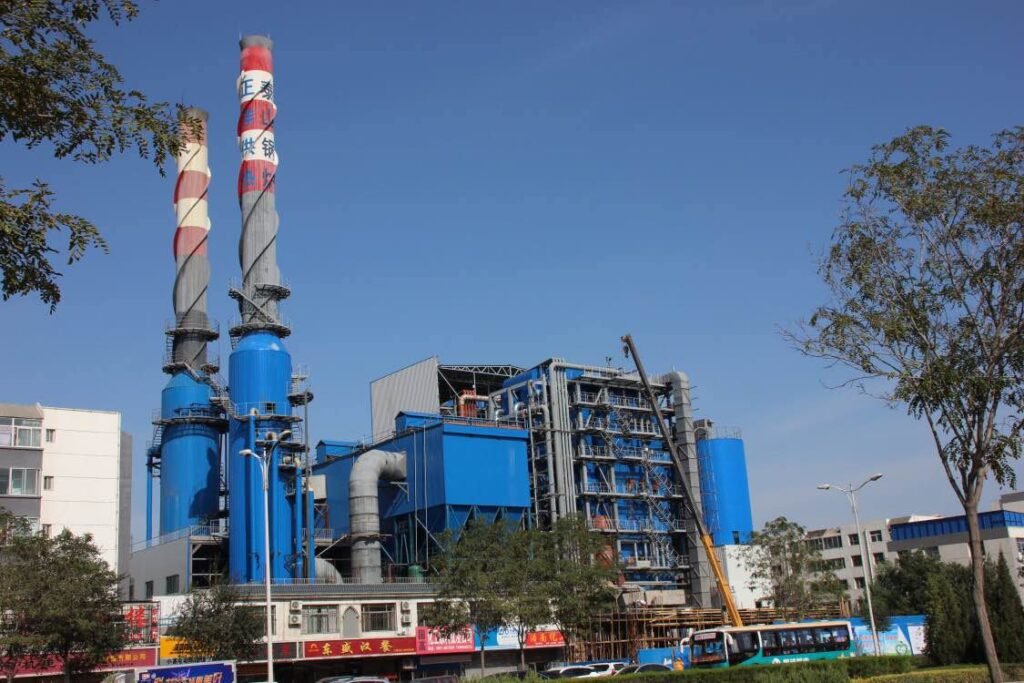
Scroll to Top

Get Quick Support

Taishan Group
Make an appointment with us to meet at exhibition
Quick Contact