Sourcing an industrial biomass boiler from China without a clear picture of who actually builds reliable equipment — versus who just brokers and relabels — costs more than people expect. A mismatched grate design or an undersized convection pass shows up six months in as chronic tube fouling, unplanned outages, or flue-gas temperatures running 80–120°C hotter than the datasheet promised, burning through fuel budgets and killing ROI on what should have been a 15-to-20-year asset.
China’s leading industrial biomass boiler manufacturers produce steam units from roughly 2 t/h up to 130 t/h and hot-water boilers from about 1.4 MWth to 90 MWth, covering operating pressures between 0.7 MPa and 9.81 MPa and steam temperatures up to 540°C. The strongest suppliers hold ASME, CE, or China SELO certification, offer in-house grate, CFB, and stoker designs, and can support EPC delivery with local commissioning teams — critical distinctions that separate a real manufacturer from a trading company.
What makes this market genuinely complicated is that the shortlist looks similar on paper — everyone claims full capacity range, efficiency figures in the high 80s or low 90s, and export references across Southeast Asia and beyond. The difference only surfaces when you dig into combustion system design for your specific fuel, ask who actually fabricated the pressure parts, and find out whether that commissioning engineer will physically show up on-site or just send a PDF.
Biomass Boiler Types and Technology Selection Guide for Industrial Buyers
Picking the wrong boiler type is one of the most expensive procurement mistakes a plant can make — not because the unit fails on day one, but because you spend years fighting fuel handling problems, plugged grates, underperforming heat output, or compliance headaches that the right technology would have avoided entirely. Here is a practical breakdown of what each type actually does and where it earns its keep.
Fixed-Grate and Traveling-Grate Stoker Boilers
These are the simplest biomass steam boilers in the Chinese manufacturer lineup — mechanically straightforward, relatively easy to train operators on, and genuinely low-maintenance when matched to the right fuel. Capacity typically runs from 2 t/h up to around 35 t/h steam, operating pressures between 1.0 and 3.82 MPa, with thermal efficiency in the 82–88% range depending on whether an economizer is fitted and how consistent the fuel quality is.
The sweet spot is clean, low-ash biomass: wood chips, wood pellets, sawdust briquettes. If your fuel moisture is below roughly 35% and ash content under 8%, a traveling-grate stoker is hard to beat on total cost of ownership. The grate moves the fuel bed mechanically, which gives reasonably stable combustion without constant operator attention. Fixed-grate variants are even simpler but need more manual de-ashing — fine for small batch operations, less suited to 24/7 continuous runs.
Where buyers get into trouble is feeding rice husk or high-alkali agricultural residues through a grate designed for wood. The ash fusion behavior is completely different and you end up with clinker buildup that chokes airflow and kills efficiency fast.
Chain Grate (Mechanical Stoker) Boilers
Chain grate is the workhorse of medium-capacity agro-industrial plants across Southeast Asia and South Asia. Capacity range is wider — roughly 6 to 75 t/h — which makes it the default choice for a palm oil mill, sugar factory, or plywood plant that needs reliable steam for both process heat and power generation.
Rice husk, bagasse, wood waste, and mixed agricultural residues all work reasonably well here, provided the combustion chamber is designed with proper air staging. Without staged air injection, NOx emissions will exceed most current regulatory thresholds, and that is an increasingly real issue in Vietnam, Thailand, and Indonesia where emission standards have tightened since 2022. A decent Chinese manufacturer will incorporate overfire air ports as standard; verify this in the drawing package before signing. Ash handling — conveyor, hydraulic sluice, or pneumatic — needs to be scoped at the same time, because an undersized ash removal system will shut you down faster than almost any other single issue.
Circulating Fluidized Bed (CFB) Biomass Boilers
CFB is the technology to specify when your fuel is problematic: high ash, high moisture, inconsistent sizing, or a blend of two or three different biomass streams. Chinese manufacturers produce CFB biomass boilers from roughly 20 t/h up to 130 t/h steam, and thermal efficiency with a full economizer and air preheater package typically lands between 88 and 94% — the upper end of that range requires good fuel consistency and well-tuned bed temperature control, usually 850–900°C.
The in-bed limestone injection system handles SO₂ control without a separate wet scrubber, which simplifies the flue gas treatment balance of plant considerably. Capex is meaningfully higher than a chain grate unit of equivalent capacity — expect 30–55% more depending on scope — but fuel flexibility and lower long-term opex often justify the premium for plants running 6,000+ hours per year on variable fuel supply.
CFB biomass boilers achieve thermal efficiencies of 88–94% with economizer and air preheater packagesTrue
This range is consistent with published performance data from Chinese boiler manufacturers and independent test reports for well-maintained CFB units firing biomass fuels; the upper end depends on fuel quality, load factor, and auxiliary equipment configuration
Bubbling Fluidized Bed (BFB) Biomass Boilers
BFB is less common than CFB in export markets but fills a specific niche: very wet biomass, typically bark, wet wood waste, paper mill sludge, or co-firing combinations where moisture content can run up to 60%. Capacity range is roughly 10–60 t/h. The bed velocities are lower than CFB, which means gentler mechanical stress on bed material and somewhat simpler refractory maintenance — relevant if your maintenance team is lean. Combustion stability with wet fuel is better than on a grate but worse than CFB; expect some operational tuning time during commissioning.
Biomass Thermal Oil (Heat Transfer Fluid) Boilers
This is where buyers unfamiliar with Chinese product lines sometimes create serious confusion. A biomass thermal oil boiler is not a steam boiler. It circulates a synthetic heat transfer fluid — Therminol, Dowtherm, or a domestic equivalent — at oil outlet temperatures of 250–350°C, typically at or near atmospheric pressure in the expansion tank circuit. No steam drum, no steam license, no condensate system.
That pressure profile matters enormously for permitting. In many jurisdictions — Indonesia, parts of Africa, several Latin American countries — thermal oil systems face a lighter regulatory burden than steam boilers above a certain pressure threshold. For plywood pressing, MDF hot pressing, rubber vulcanization, or chemical reactor heating, thermal oil gives precise, uniform temperature delivery that steam simply cannot match at the same operating pressure. The tradeoff is that thermal oil degrades over time and requires periodic sampling and replacement; budget for that in your opex model.
Biomass Hot Water Boilers
Hot water boilers for district heating or large greenhouse operations run at 0.7–1.6 MPa, supply temperatures typically 95–130°C. The circuit design, expansion vessel sizing, pump selection, and safety valve logic are all different from a steam system — and completely different from a thermal oil system. Mixing up pressure class or safety requirements between these three categories during engineering is a real risk on fast-moving EPC projects, especially when the buyer is communicating requirements through a translator.
Matching Technology to Your Application
The table below summarizes the main decision variables. In practice, fuel moisture and ash content dominate the selection more than almost any other factor.
| Technology | Capacity Range | Fuel Best Fit | Moisture Limit | Efficiency Range | Relative Capex |
|---|---|---|---|---|---|
| Traveling-grate stoker | 2–35 t/h | Wood chips, pellets | ≤35% | 82–88% | Low |
| Chain grate stoker | 6–75 t/h | Rice husk, bagasse, wood waste | ≤40% | 82–88% | Low–Medium |
| CFB biomass | 20–130 t/h | Mixed/high-ash/variable fuel | Up to 55% | 88–94% | High |
| BFB biomass | 10–60 t/h | Bark, sludge, wet wood | Up to 60% | 85–91% | Medium–High |
| Thermal oil | 0.35–14 MWth | Any dry-ish biomass | ≤30% recommended | 82–90% | Medium |
| Hot water | 1.4–58 MWth | Wood chips, pellets, ag residue | ≤40% | 83–90% | Low–Medium |
Efficiency figures depend on auxiliary equipment scope, load factor, and fuel quality — treat these as planning ranges, not guarantees to put in a contract without a guaranteed performance test clause.
Top Biomass Boiler Manufacturers in China: Capability and Credential Profiles
Picking a biomass boiler supplier from China is not difficult — there are dozens of factories willing to quote. Picking the right one, with the certifications, production depth, and after-sales infrastructure to back a 20-year asset, is a different task entirely. Below are the manufacturers that consistently appear in serious procurement shortlists for 2026, evaluated on what actually matters to plant engineers and EPC buyers.
Taishan Group (Taishan Boiler)
Taishan covers the widest practical capacity band in biomass: steam boilers from 2 t/h up to 130 t/h, plus matched thermal oil and hot water lines for process heat applications where steam isn’t appropriate. Holding both the ASME S stamp (power boilers) and U stamp (pressure vessels) puts them in a small group of Chinese manufacturers cleared for export to markets with ASME-code requirements — North America, Southeast Asia, parts of the Middle East. ISO 9001 certification covers the full manufacturing scope.
What separates Taishan operationally is in-house auxiliary manufacturing. Economizers, air preheaters, baghouse pulse-jet filters, screw conveyors — these aren’t purchased from third-party vendors and bolted on; they’re designed and built as part of the system. That matters enormously on a biomass project, because auxiliary sizing errors (an undersized economizer, for instance) can drop boiler efficiency 3–5 percentage points in real operation, and finger-pointing between a boiler OEM and a separate auxiliary supplier is a project management nightmare. EPC project experience spans Southeast Asia, Africa, and South Asia, with on-site erection and commissioning teams available for turnkey delivery.
Zhengzhou Boiler Co. (ZBG)
ZBG runs high-volume production on both stoker-grate and CFB biomass lines. Their references for rice husk and straw-fired boilers in Pakistan and Bangladesh are genuine and worth asking for directly — agro-residue fuels with high ash content and variable moisture punish boiler designs that weren’t built with that in mind. CE-marked units are available, which matters for buyers targeting European market entry or projects in EU-adjacent regulatory environments where CE marking on pressure equipment is an import requirement, not just a preference.
Wuxi Xineng Boiler
Xineng has carved out a real niche in biomass thermal oil (heat transfer fluid) boilers rather than trying to compete across all types. Their integration with organic Rankine cycle systems for combined heat and power in wood processing is worth examining if you’re running a plywood or MDF plant in Vietnam or Indonesia. Thermal efficiency on well-sized thermal oil systems typically runs 85–90%, depending on fuel moisture and whether an economizer tail is fitted. Their Southeast Asian installation base is relatively dense, which means spare parts logistics and local service contacts are easier to establish than with a manufacturer you’d be introducing to a region fresh.
Hangzhou Boiler Group (HBC)
HBC is a state-owned enterprise and operates accordingly — stronger on large-capacity CFB biomass above roughly 75 t/h, active in biomass power generation projects rather than industrial process steam. They hold both ASME and TÜV certifications. For a buyer commissioning a dedicated biomass power plant rather than an industrial plant boiler, HBC’s project references are relevant. Lead times and commercial flexibility can be slower than private manufacturers, in my experience — worth factoring into project schedules.
Jinan Boiler Group
Sugar industry buyers should look here specifically. Jinan has documented bagasse-fired boiler references in Southeast Asian sugar mills, and their high-pressure units — up to 9.81 MPa operating pressure, steam temperatures up to 540°C — are suited to cogeneration CHP configurations where high-grade steam feeds a condensing turbine before exhaust steam returns to process. That pressure-temperature combination requires rigorous material traceability and weld inspection, and it’s worth requesting third-party NDT records as part of your technical due diligence.
What to Verify Before Shortlisting Any Manufacturer
| Criterion | What to Ask For | Why It Matters |
|---|---|---|
| ASME / CE / PED stamp | Copy of current certificate with scope | Determines regulatory acceptability in your country |
| Chinese TSG manufacturing license grade | Grade A or B pressure vessel license | Grade B is limited in pressure/capacity range — confirm scope covers your spec |
| Overseas commissioning references | Contact details for 2–3 comparable projects | Verifies they can actually execute abroad, not just ship boxes |
| DCS/PLC control system brand | Siemens, ABB, Honeywell, or equivalent | Local service, spare logic cards, and integrator availability |
| O&M documentation | Request English-language draft manuals pre-contract | Absence of English O&M is a practical operations liability |
| Hydrostatic test reports | Third-party witness required | Self-certified hydro tests are common and insufficient |
| Spare parts availability | Lead time commitment in contract | 6–12 week lead time on wearing parts is a major downtime risk |
ASME S and U stamp certification is a reliable indicator of pressure vessel manufacturing quality discipline in Chinese boiler factories.True
The ASME stamp program requires third-party audits by ASME-authorized inspection agencies and documented quality management systems. A valid, current stamp (verifiable on the ASME certification search) means the manufacturer has passed independent review — unlike self-declared quality claims.
Red flags that should stop a procurement process cold: a manufacturer unable to produce a valid TSG special equipment manufacturing license (not just an ISO certificate, which is easier to obtain and covers less), absence of any third-party hydrostatic test witness records, no verifiable overseas project references, and a sales team that cannot provide O&M manuals in English on request. These aren’t minor paperwork gaps — they’re indicators of a factory operating below the baseline for export-quality pressure equipment.
Fuel Specification, Calorific Value, and Boiler Sizing for Overseas Projects
Getting the fuel specification wrong is probably the most common and most expensive mistake in biomass boiler projects. A boiler sized against the wrong LHV will either run undersized — starving the process of steam — or oversized, cycling constantly and wasting fuel. Either way, the manufacturer gets blamed, but the root cause is usually a fuel datasheet that was never properly validated before the order was placed.
Key Fuel Parameters That Actually Drive the Design
The lower heating value (LHV) on an as-received basis is the starting point. Not the dry basis figure your fuel supplier quotes, and not a value borrowed from a textbook. The as-received LHV accounts for the moisture the fuel actually carries when it reaches the grate. A wood chip supplier quoting 16 MJ/kg is almost certainly giving you an air-dried or oven-dry figure. If the chips arrive at 45–55% moisture content during the rainy season — which is routine in Vietnam and Indonesia — the effective LHV drops to somewhere in the 9–11 MJ/kg range. That gap will undersize your combustion chamber and your fuel feed system.
Ash content and ash fusion temperature deserve equal attention, and they’re often ignored until a slagging event shuts the boiler down mid-campaign. Rice husk ash fuses at relatively high temperatures (above 1400°C typically), which makes it reasonably forgiving on a grate. Bagasse and certain agricultural straws are a different story — alkali-rich ash can start softening at 1050–1150°C, well within the furnace temperature range of a conventional stoker. When the ash fusion temperature is below roughly 1100°C, the grate design needs to shift: air-cooled or water-cooled grate sections, wider superheater tube pitch to reduce deposit bridging, and soot blowers specified from the outset rather than retrofitted later.
Chlorine and sulfur content feed directly into corrosion risk on superheater tubes and economizer surfaces. Palm frond, rice straw, and some municipal biomass residues can carry chlorine levels that cause aggressive high-temperature corrosion above 450°C. If your process genuinely needs steam above 440°C and your fuel has chlorine content above roughly 0.3% by weight, that conversation needs to happen with the manufacturer’s thermal design team before the pressure parts are fabricated — not after the first outage.
Bulk density and particle size distribution govern the fuel feed and storage system sizing. A fuel handling system designed for wood pellets (bulk density ~600–700 kg/m³, uniform size) will jam or starve on loose cotton stalks (bulk density often below 100 kg/m³, highly variable length).
Benchmark Fuel Data for Common Biomass Types
| Fuel | LHV (as-received) | Moisture (typical) | Ash Content | Notes |
|---|---|---|---|---|
| Rice husk | 13–14 MJ/kg | 10–14% | 18–20% | High silica ash, abrasive on feed screws |
| Bagasse | 7.5–9.5 MJ/kg | 45–55% | 2–5% | LHV highly moisture-dependent |
| Wood chips | 9–16 MJ/kg | 25–55% | 0.5–3% | Wide range; specify by season and species |
| Wood pellets | 17–18 MJ/kg | 8–10% | 0.5–1.5% | Most consistent; premium cost |
| Palm kernel shell | 17–19 MJ/kg | 10–15% | 2–4% | Good energy density, popular in SE Asia |
| Cotton stalk | 14–16 MJ/kg | 10–18% | 4–8% | Low bulk density, sizing/feed challenge |
Sizing Methodology and Heat Balance
The basic sizing equation is straightforward:
Required steam output (t/h) = Process heat demand (kW) ÷ (steam enthalpy rise, kJ/kg × boiler efficiency)
In practice, buyers consistently underestimate the process heat demand by ignoring blowdown losses (typically 2–5% of steam flow for boilers using moderate-quality feedwater, higher with poor water chemistry), auxiliary steam for deaerators and soot blowers, and startup thermal load if the boiler cycles daily. A plant that calculates a 10 t/h net steam requirement should probably be sizing toward 11.5–13 t/h nameplate capacity once these parasitic loads are included, depending on the process.
Boiler efficiency for Chinese-manufactured CFB biomass boilers with economizer and air preheater packages typically reaches 88–94% LHV basisTrue
This range is consistent with published performance data for circulating fluidized bed biomass boilers equipped with full heat recovery trains. The exact value depends on fuel moisture content, excess air ratio, and flue gas exit temperature — a unit firing 50%-moisture bagasse will realistically sit toward the lower end.
Multi-Fuel Grate Design for Variable Supply
Fuel supply in agro-industrial settings is rarely consistent. A palm oil mill in Indonesia or a sugar mill in Thailand may want to fire palm kernel shell during normal operations and switch to wood chips or bagasse during the crushing off-season. Reputable Chinese manufacturers handle this through adjustable grate speed, variable-depth fuel bed control, and combustion air zoning that can compensate for swings in fuel LHV of roughly ±30% without a manual retune. What they cannot do is seamlessly switch from pellets to loose straw without physical changes to the fuel feed throat geometry — that needs to be declared at the specification stage.
Altitude and Feedwater Effects
High-altitude sites matter more than most buyers expect. Above 1500 m, reduced air density means the forced draft and induced draft fans need to be derated or resized — typically a capacity reduction of 8–15% depending on elevation — and combustion air distribution in the furnace behaves differently. If you’re installing in the Ethiopian highlands or the Andean foothills, the site altitude needs to go into the fan and combustion system design explicitly.
Feedwater quality affects both sizing and long-term reliability. A boiler specified for 10 t/h steam at 3.82 MPa assumes a certain feedwater temperature and TDS level. If the local water treatment system is undersized or poorly operated — which, frankly, is common in rural agro-industrial sites — blowdown rates climb, effective output drops, and scale-related failures arrive early. Size the water treatment system alongside the boiler, not as an afterthought.
Emissions Standards, Flue Gas Treatment Systems, and Regulatory Compliance
For overseas buyers, getting the boiler spec right is only half the battle. The permit is the other half — and it’s the one that kills projects late in the game if you haven’t planned the flue gas treatment train from the start.
Biomass combustion produces five emission categories that regulators in most markets track: particulate matter (PM), sulfur dioxide (SO₂), nitrogen oxides (NOx), carbon monoxide (CO), and — specifically when you’re co-firing waste wood, demolition timber, or agricultural residues with chlorinated content — dioxins and furans. The last category is often overlooked at the inquiry stage, then becomes a very expensive surprise during commissioning.
Emission Benchmarks Worth Knowing
The IFC/World Bank Environmental Health and Safety guidelines give you a reasonable global baseline: PM ≤ 50 mg/Nm³, SO₂ ≤ 200 mg/Nm³, NOx ≤ 650 mg/Nm³ at 11% O₂ reference. In practice, buyers in Vietnam, Indonesia, or the Philippines often use these as a floor — their national regulators may be stricter than that on PM, particularly near population centers.
The EU Industrial Emissions Directive sets tighter numbers for medium combustion plants (1–50 MWth): PM ≤ 20–30 mg/Nm³, NOx ≤ 200–300 mg/Nm³ depending on fuel and plant age category. If you’re supplying into an Eastern European industrial zone or a plant with EU-affiliated financing, expect IED-tier requirements on the project spec sheet.
China’s own GB 13271-2014 standard, for reference, requires PM ≤ 50 mg/Nm³ and SO₂ ≤ 300 mg/Nm³ for biomass boilers in general zones — somewhat relaxed compared to IED, though key industrial provinces enforce stricter local limits. Understanding this gap matters when evaluating what a Chinese manufacturer’s standard package is actually designed to achieve versus what your permit demands.
The Standard Flue Gas Treatment Train
A properly configured biomass boiler system — say, a 20 t/h grate-fired unit burning rice husk or wood chips — typically runs flue gas through a cyclone pre-separator first to knock out coarse fly ash before the fabric filter. The pulse-jet bag filter is the workhorse of PM control; a well-specified unit with the right bag material (PTFE-coated woven fiberglass for abrasive ash, or PPS for higher temperatures up to around 180–200°C) routinely achieves outlet PM of 10–20 mg/Nm³ — comfortably below IED limits. The induced draft fan sits downstream of the bag filter, pulling gases through and pushing them up the stack.
When fuel contains significant chlorine — palm kernel shell with residual soil contamination, demolition wood, or certain agro-industrial waste streams — HCl in the flue gas can exceed permit limits and also attacks bag filter media aggressively. In those cases, a wet scrubber or dry sodium bicarbonate injection upstream of the bag filter is worth the added capital cost. Budget roughly 8–15% additional system cost, depending on scrubber type and HCl load. Skip it and you’ll be replacing bag media on a 12-month cycle instead of 3–4 years.
NOx Control: Primary Measures First
Before specifying SNCR or SCR, push the combustion design hard. Air staging — splitting secondary air injection to create a fuel-rich primary zone that suppresses thermal NOx formation — combined with low-excess-air operation (typically targeting 15–25% excess air at the furnace exit) can bring NOx down to roughly 250–400 mg/Nm³ on a well-tuned grate-fired unit burning clean agricultural biomass. That’s often sufficient for IFC-standard permits without any reagent system.
Where permits require NOx below 200 mg/Nm³ — increasingly common in South Asian industrial estates with international financing — SNCR urea injection into the upper furnace zone (temperature window roughly 850–1050°C) is the practical solution at this boiler scale. It adds urea consumption, a dosing skid, and operational discipline around furnace temperature stability, but capital cost is moderate compared to SCR. SCR is rarely justified for biomass boilers under 50 MWth unless you’re in a highly regulated zone; the catalyst poisoning risk from alkali metals in biomass ash is real and maintenance costs reflect it.
Leading Chinese biomass boiler manufacturers supply bag filters, economizers, air preheaters, and SNCR systems as part of an integrated package rather than as separately sourced components.True
Established manufacturers including those with in-house auxiliary equipment workshops design and fabricate these components to match the boiler's flue gas volume, temperature profile, and fuel characteristics — reducing interface risk compared to mixing boiler and auxiliary suppliers from different vendors.
CEMS Integration and What Buyers Often Underestimate
An increasing number of markets — Vietnam’s Ministry of Natural Resources and Environment, India’s CPCB regulations, several African nations following World Bank loan conditions — now mandate online Continuous Emission Monitoring Systems with data transmission to regulatory servers. A typical CEMS suite covers O₂, CO, NOx, SO₂, and PM opacity or concentration; some permits add CO₂ for carbon accounting. The instrumentation is not the hard part. The integration into the boiler DCS, the data validation logic, and the historian setup for regulatory reporting — that’s where projects bog down when the CEMS is a last-minute add-on from a third party who never talked to the boiler controls engineer.
Specifying CEMS as part of the boiler package from the outset, with the supplier responsible for signal integration into the main control panel, avoids the blame-sharing that happens when opacity readings spike during load changes and nobody owns the tuning.
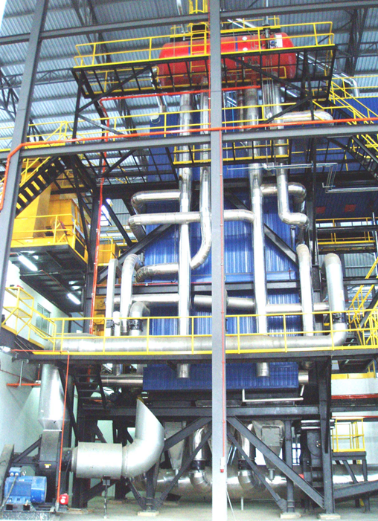
EPC Project Delivery, Auxiliary Systems, and Overseas Commissioning Process
A lot of overseas buyers make the same mistake early in procurement: they price a biomass boiler and assume everything else — civil work, fuel handling, water treatment, electrical hookup — will somehow sort itself out locally. It usually doesn’t. The difference between a boiler supply contract and a full EPC contract is the difference between receiving a pressure vessel on a flatbed and having a running plant.
What EPC Scope Actually Covers
Boiler-only supply typically includes the pressure parts (drum, headers, furnace membrane walls, superheater, economizer, air preheater), the burner or grate assembly, and a local control panel. That’s it. A full EPC contract wraps around all of that: reinforced concrete foundations sized for actual dynamic loads, fuel receiving and storage infrastructure, the entire feedwater and condensate loop, chimney and stack, all interconnecting piping with proper expansion loops, electrical MCC and instrumentation, and commissioning labor through to performance test sign-off. For a buyer in Vietnam or Bangladesh without a resident plant engineering team, skipping EPC to save 15–20% on contract value often costs far more in delays, rework, and compliance failures during startup.
Fuel Handling System Design
Biomass fuel handling is where a lot of otherwise competent suppliers fall short, because it’s highly fuel-specific. Wood chips move well on belt conveyors with rotary pocket feeders into the furnace; the main concerns are oversized chips jamming feeders and moisture-driven bridging in hoppers. Rice husk and fine sawdust are usually conveyed pneumatically — dense-phase or dilute-phase depending on distance and capacity — but enclosed pneumatic systems handling dusty biomass carry real explosion risk. Any properly engineered system includes explosion relief panels, spark detection before silos, and CO monitoring. Pellets are more forgiving and work well with screw conveyors, though pellet quality varies enormously by origin, and a hardness spec in the contract is worth the argument.
Storage silo sizing depends on supply chain reliability at the project site. For projects in remote agricultural areas — which describes a lot of the rice mill and palm oil applications we see in Indonesia and the Philippines — designing for 5–7 days of buffer storage is more realistic than the 2–3 days that looks acceptable on paper.
Feedwater, Condensate, and Water Treatment
Feedwater system design is directly governed by operating pressure. For units below roughly 3.82 MPa, a properly sized deaerator plus chemical dosing (oxygen scavenger, phosphate treatment) is usually sufficient, with softened makeup water. Push above that pressure — say, a 9.81 MPa superheated steam unit for a CHP application — and you need full demineralization or reverse osmosis, because hardness and silica limits at high pressure are unforgiving. Scale of even 0.3–0.5 mm on evaporator tubes at elevated pressures causes measurable efficiency loss and accelerates failure. Condensate return design is frequently underfunded; a good EPC contractor will specify flash vessel recovery and polishing filters rather than dumping condensate to drain.
Steam Distribution and PRDS Stations
Industrial plants often need steam at more than one pressure level — say, 1.0 MPa for process heating and 0.3 MPa for a dehumidification or sterilization circuit — from a single boiler running at 3.82 MPa. Chinese EPC suppliers typically handle this with a cascaded pressure-reducing desuperheating (PRDS) station: a main header at boiler pressure, with let-down stations incorporating pressure control valves and water-injection desuperheaters to hit each downstream header. Designing these correctly requires accurate knowledge of each process’s steam demand profile, including peak loads. Undersizing a PRDS station because the buyer supplied optimistic load estimates is one of the more common startup headaches.
Overseas Commissioning Workflow
The sequence matters and shortcuts here cost time rather than save it. Factory acceptance testing (FAT) in China should include a full hydrostatic pressure test, interlock function checks, and burner or grate trial run — witnessed by the buyer’s representative or a third-party inspector from SGS, Bureau Veritas, or TUV. Shipping documentation needs to be tight: HS codes for boiler pressure parts, material test certificates (MTCs) traceable to the relevant standard (GB 150, ASME, or EN depending on destination), and a packing list granular enough for customs clearance without surprises.
On-site, the sequence runs cold commissioning (pressure testing installed piping, checking instrument loops, verifying pump rotation, flushing systems) before any heat is applied. Hot commissioning follows: light-off at reduced load, gradual pressure raising, steam blowing for line cleanliness, then a stepped load ramp to design conditions. The performance test — efficiency measurement against fuel calorific value, steam output verification, emissions sampling — should be contractually defined with acceptance criteria before the project starts, not negotiated during handover.
Taishan Group has delivered biomass boiler EPC projects in Southeast Asia and Africa, including rice husk and wood waste-fired installations for process steam and CHP applications.True
Taishan Group's industrial boiler business has documented overseas EPC project delivery experience in biomass applications across multiple export markets, consistent with the company's stated manufacturing scope and export capability.
O&M training is the last item on the commissioning checklist and the one most often rushed. A plant operator in a country where biomass boiler technicians are scarce needs more than a manual — they need hands-on time with the control system under real load conditions, and clear escalation contacts for the first operating season.
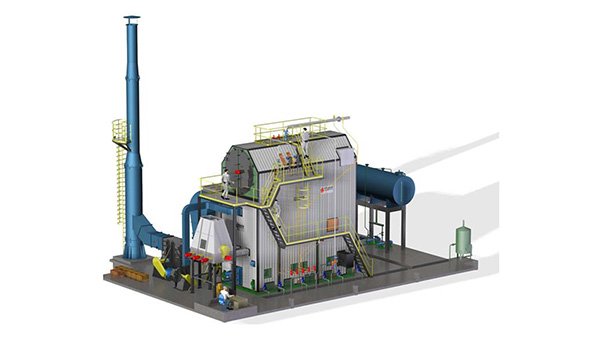
Total Cost of Ownership: Capex, Opex, Payback, and Lifecycle Benchmarks
Sticker price is the wrong place to start. A 20 t/h biomass boiler quoted at USD 180,000 FOB and another quoted at USD 260,000 FOB can easily invert their economics within three years of operation — depending on efficiency, fuel logistics, and how well the water treatment was engineered. Project finance teams and procurement managers need real input data, not marketing summaries.
Capex Benchmarks by System Scale
For a small packaged stoker or grate-fired unit in the 2–6 t/h range, FOB supply cost from a Chinese manufacturer typically runs USD 80,000–250,000. The spread is wide because it depends heavily on operating pressure (0.7 MPa vs. 1.6 MPa makes a real difference in vessel cost), whether an economizer is included, and how complete the auxiliary package is — some quotes strip out the feed water system and controls entirely.
Step up to a 10–20 t/h packaged system and you’re generally looking at USD 300,000–700,000 FOB, again with significant variation based on steam parameters and the scope of the fuel handling and ash extraction systems. A 35–75 t/h CFB biomass project on a full EPC basis — civil foundations, stack, fuel yard, electrical, commissioning — commonly lands in the USD 1.5–5 million range. The lower end of that assumes a reasonably flat, prepared site in a country like Vietnam or Indonesia with accessible infrastructure; the upper end reflects difficult terrain, remote grid connection, or unusually tight emissions compliance requirements.
Full EPC typically adds 40–80% over boiler-only supply cost. That’s not padding — it reflects real civil work, local subcontractors, freight, and commissioning labor that buyers without in-country engineering resources genuinely cannot avoid.
Operating Cost: Fuel Dominates Everything
Biomass fuel cost is the single largest operating variable, usually 60–75% of total Opex. On a gross calorific value basis, agricultural residues in Southeast Asia — rice husk, sugarcane bagasse, palm shell — typically range from USD 2–6/GJ depending on location, season, and whether you’re buying wet or dry material. Natural gas in the same markets often runs USD 8–14/GJ; coal varies but frequently sits at USD 3–6/GJ. The biomass advantage over gas is substantial; against coal it’s thinner and depends entirely on local fuel supply reliability.
Auxiliary power consumption — ID fan, FD fan, feed pumps, screw conveyors — typically draws 2–4% of rated thermal output. On a 20 t/h unit running 8,000 hours a year, that’s a real electricity bill worth tracking. Ash disposal or, better, ash reuse (rice husk ash has silica value; wood ash can go to agriculture) can offset USD 5,000–20,000 annually at mid-scale plants. Water treatment chemicals and blowdown losses are easy to underestimate during project budgeting and then painful to explain later.
Efficiency Is Not an Abstract Spec
A 3-percentage-point efficiency gap — say 85% vs. 88% — on a 20 t/h rice husk boiler at 8,000 hours/year translates to roughly USD 40,000–80,000 in extra annual fuel cost, depending on local fuel price and calorific value. That gap is exactly what a properly sized economizer and air preheater package closes. Payback on those add-ons is often under 18 months. Skipping them to save USD 15,000 on the initial quote is a decision that looks bad by year two.
A 3% efficiency improvement on a 20 t/h biomass boiler running 8,000 hours/year saves USD 40,000–80,000 in annual fuel cost.True
Based on biomass fuel at USD 2–6/GJ and a steam output of approximately 14–15 MWth; the range reflects variation in local fuel price and actual calorific value of feedstock such as rice husk at 12–15 MJ/kg air-dry.
Planned Maintenance: Budget It Before You Bid
Annual planned maintenance on a Chinese-supplied biomass boiler — tube cleaning, refractory inspection and patch repair, grate bar replacement, safety valve testing, water-side chemical clean — typically runs USD 15,000–60,000/year depending on capacity and fuel abrasiveness. Rice husk is hard on refractory. Palm kernel shell with high alkali content accelerates slagging and requires more frequent grate servicing than wood chip.
Unplanned downtime is the number that matters most for process steam users. A plant running continuous production — a paper mill, a food processing facility, a textile dye house — cannot absorb a 48-hour boiler outage without serious production loss. Target availability above 95% for any industrial process steam application; that threshold should appear explicitly in the supply contract, tied to performance guarantees and spare parts commitments.
Payback Framework and What Erodes It
Simple payback on a well-sited agro-industrial biomass project in Southeast Asia — where the fuel is a cheap local byproduct and the reference fuel is diesel or gas — typically runs 3–7 years. The calculation is straightforward: annual fuel cost savings versus the displaced fossil fuel, multiplied by operating hours, divided by net capex after any applicable renewable energy incentives or carbon credits.
What destroys that payback in practice: running an oversized boiler at 40–50% load factor because the process demand was overestimated during design (efficiency drops, wear accelerates, cycling damages refractory); a fragile fuel supply chain that forces the plant to buy expensive alternative fuel during harvest off-seasons; scale buildup from inadequate feedwater treatment, which degrades heat transfer and eventually causes tube failures; and contracts with no performance guarantee clause, leaving the buyer with no recourse when efficiency falls 5 points below spec within 18 months of commissioning. Each of those is a pattern, not an edge case. Build mitigation for all four into the procurement process before the purchase order is signed.
Procurement Checklist and Technical Specification Requirements for 2026 Buyers
Getting the technical specification right before you issue an RFQ saves more money than any negotiation that happens afterward. This section gives you a working checklist — not a theoretical framework, but the actual documents, clauses, and data points that separate a well-controlled procurement from one that produces arguments at commissioning.
Minimum Technical Datasheet Requirements
Start with fuel. If a manufacturer quotes without seeing your fuel analysis, walk away. You need both proximate analysis (moisture, ash, volatile matter, fixed carbon) and ultimate analysis (C, H, N, S, O by weight), plus ash fusion temperature — specifically the initial deformation temperature (IDT). For rice husk or bagasse with high silica ash, the IDT can run as low as 950–1,050°C, which dictates grate design and combustion temperature limits entirely. Without it, you’re guessing.
The datasheet itself should state: design steam output at MCR (maximum continuous rating) in t/h or MWth, operating pressure and temperature, feedwater inlet temperature (don’t let this default to 20°C on paper when your plant runs 60–80°C feedwater — it affects efficiency calculations), excess air coefficient at design load (typically 1.25–1.45 for stoker-fired biomass depending on fuel moisture), and guaranteed thermal efficiency at MCR. Thermal efficiency guarantees from credible Chinese manufacturers typically range 82–88% for stoker/grate units and 88–93% for CFB configurations with full economizer and air preheater packages — exact value depends on fuel moisture and stack temperature. Get the NOx and PM emission guarantees written at the stack, not at the furnace exit, and tied to specific flue gas oxygen content (usually 6% O₂ dry basis for comparison).
Quality Documentation Package
Before you place the order, require the full quality dossier. This means ASME or CE/PED design calculation package, material test certificates (MTCs) for all pressure parts to EN 10204 3.1 minimum — 3.2 if your project insurer demands third-party witness. NDE records covering radiographic or ultrasonic examination of critical welds, a witnessed hydrostatic test certificate, and a third-party inspection report from a recognized body (Bureau Veritas, TÜV, Lloyd’s, SGS — whoever your project requires). Chinese manufacturers with serious export track records carry these routinely. Smaller shops often cannot produce 3.2 MTCs without advance notice, which tells you something about their supply chain.
Control System Specification
Specify the PLC/DCS brand explicitly in your RFQ. Siemens S7 series, Allen-Bradley ControlLogix, and ABB AC500 are the sensible choices for overseas projects — spare cards, qualified local integrators, and firmware support exist in most markets. A proprietary Chinese PLC might cost 15–25% less at purchase and cause serious headaches three years later when you need a replacement I/O module in rural Vietnam. The HMI must be in English — non-negotiable for international sites. Demand full interlock and safety shutdown logic documentation in English, and confirm remote monitoring capability (OPC-UA or Modbus TCP over VPN is workable; cloud-only solutions with vendor lock-in are a liability).
Performance Guarantee and Liquidated Damages
The performance test protocol needs to be agreed and signed before commissioning begins, not during it. Specify guaranteed thermal efficiency within ±1%, steam output at design fuel spec, and plant availability above 95% over a defined test period (typically 72-hour continuous run plus a 30-day operational period). Liquidated damages for non-conformance should be real penalties — a flat daily rate tied to lost production value or fuel overconsumption, calculated transparently. Vague language like “the supplier will make best efforts” is contractually meaningless.
Thermal efficiency guarantees from Chinese biomass boiler manufacturers are typically backed by witnessed performance tests using standardized heat loss methods per ASME PTC 4 or equivalent GB/T standards.True
Established Chinese manufacturers conducting export projects routinely reference GB/T 10184 (power plant boiler performance test code) or ASME PTC 4 for acceptance testing. Both use indirect heat-loss methods and are technically comparable for efficiency verification purposes.
Spare Parts Package
Negotiate the two-year critical spares list at contract stage, not after delivery. Price it line by line. For a stoker-fired biomass boiler, the list typically covers grate bars (cast alloys vary by supplier — get the part numbers), refractory bricks and castable for the furnace walls and arch, bag filter bags (filter media grade matched to your flue gas temperature and chemistry), gaskets for manholes and flanges, thermocouple and pressure transmitter spares, and mechanical seals for feedwater and condensate pumps. Leaving this to “we’ll order when needed” is how plants sit idle for three to six weeks waiting for a €200 seal kit.
After-Sales Service Terms
Write specific numbers into the contract: minimum 30 days on-site for commissioning engineers, annual inspection visit included in the first two years, 24-hour remote technical support with named escalation contacts, and a committed lead time for standard spare parts shipment of under two weeks. Some manufacturers will push back on the annual visit — that’s negotiable — but the parts lead time and remote support response are worth holding firm on.
Red-Line Contract Clauses
Four clauses that are non-negotiable for any serious overseas project: factory acceptance test (FAT) conducted at the manufacturer’s shop before shipment with your inspector or third-party witness present; performance test protocol agreed in writing before commissioning kicks off; all O&M manuals, spare parts catalogs, and control system documentation delivered in English; and governing law plus dispute resolution mechanism specified under a jurisdiction acceptable to your side — not automatically Chinese law if your project financing or insurance requires otherwise. These are the clauses that protect you if something goes wrong at month 18.
Frequently Asked Questions: China Biomass Boilers for International Buyers
Steam Boiler vs. Thermal Oil Boiler — Which One Does Your Process Actually Need?
These two technologies get confused more often than you’d expect, even by experienced procurement teams. A biomass steam boiler generates saturated or superheated steam at elevated pressure — typically 0.7 MPa up to 9.81 MPa depending on the design — and that steam is what drives turbines, sterilizes product, heats process vessels, or runs absorption chillers. A thermal oil (heat transfer fluid) boiler does something fundamentally different: it circulates a synthetic oil around a closed loop, delivering heat at 250–350°C while the system itself runs at near-atmospheric pressure.
That pressure difference matters enormously from a regulatory standpoint. In many Southeast Asian and African jurisdictions, a pressurized steam boiler requires a licensed boiler operator on shift, mandatory periodic inspections, and a formal operating permit. A thermal oil system often escapes that classification entirely, which reduces both compliance overhead and insurance cost. The tradeoff is that you cannot generate steam for a turbine with thermal oil — if your process needs steam at 180°C or higher, or you want to cogenerate power, you need a steam boiler. If you’re running a wood drying kiln, a rubber processing line, or a vegetable oil refinery where you just need controlled heat delivery below 320°C, thermal oil is worth a serious look.
Do Chinese Biomass Boilers Carry CE or ASME Certification?
Leading manufacturers do — but the phrase “CE certified” gets thrown around loosely in Chinese export marketing, and buyers need to be precise. For pressure vessels destined for most European or internationally financed projects, the relevant standard is PED 2014/68/EU, and the ASME S and U stamps cover fired steam boilers and pressure vessels respectively. Taishan Group holds both ASME S/U stamps and CE/PED certification.
Taishan Group holds valid ASME S and U stamps as well as CE/PED certification for its industrial boiler product lines.True
ASME S/U stamp and CE/PED certification are verifiable through the ASME public directory and the notified body registry respectively; buyers should request the actual certificate number and confirm current validity directly with the issuing body before contract signature.
Not every Chinese manufacturer carries these. Some hold only Chinese GB standards certification (GB/T 10180, TSGG0001), which is perfectly legitimate domestically but may not satisfy project lenders or local authorities in your country. Always ask for the original certificate document — not a photocopy — and verify the certificate number with the issuing body yourself. This takes maybe 20 minutes and has saved more than one buyer from a painful surprise at customs or during lender due diligence.
What Fuels Can a Traveling-Grate Stoker Boiler Actually Handle?
Most traveling-grate stoker boilers from Chinese manufacturers are designed around wood chips, wood pellets, rice husk, palm kernel shell, and similar agricultural residues with moisture in the 15–45% range and ash fusion temperatures above roughly 1,100°C. Within those parameters, they run reliably and don’t ask much from the operator.
The problems start when fuel falls outside those bounds. Straws, grasses, and certain bagasse types have ash fusion temperatures that can drop below 1,000°C — sometimes well below — and on a traveling grate, that means clinker formation, grate jamming, and unplanned shutdowns within a season. Fuels above 55% moisture simply won’t sustain stable combustion on a grate; the energy balance doesn’t work. For high-alkali straws or wet fuels, a bubbling fluidized bed or CFB design is the correct answer, not a grate boiler spec’d by a vendor who wants to win the order.
Manufacturing Lead Times and Realistic Project Timelines
Standard stoker biomass boilers in the 6–20 t/h range typically require 60–90 days of shop fabrication time, assuming steel and components are available — lead times can stretch 2–3 weeks during Chinese New Year or when plate steel supply is tight. CFB biomass boilers at 35–75 t/h are more involved: 120–180 days is realistic, and that’s for the boiler island alone.
Sea freight adds time that buyers from inland countries consistently underestimate. Port-to-port to Vietnam or Indonesia runs roughly 15–25 days from a major Chinese port; to East Africa or Brazil, budget 35–55 days, plus inland transit. For a complete EPC project — fuel handling, water treatment, stack, controls, civil work, and commissioning — a realistic schedule from contract signature to first steam on process is 9–15 months depending on site readiness and permit timelines. Buyers who plan for 6 months and then blame the manufacturer for delays usually had a site that wasn’t ready.
Thermal Efficiency: What Numbers Are Realistic?
A well-designed traveling-grate stoker biomass boiler achieves 82–88% thermal efficiency under design fuel conditions. CFB biomass boilers fitted with an economizer and air preheater package reach 88–94%. Those ranges assume fuel close to design spec.
Every 10% increase in fuel moisture above the design point costs roughly 2–3 percentage points of efficiency — the boiler is spending energy evaporating water instead of making steam. Excess air coefficient has a similar effect; running 30–40% excess air where 20% is sufficient is a common operator habit that quietly inflates fuel consumption. Blowdown rate matters too, especially in areas with high TDS feedwater. Efficiency isn’t just a design number; it’s an operating outcome.
EPC Contracts: Can Chinese Manufacturers Handle the Full Scope Overseas?
Major manufacturers including Taishan Group offer full EPC contracts covering mechanical supply, auxiliary systems (fuel handling, ash handling, feedwater treatment), electrical and instrumentation, civil and structural design, and overseas commissioning. That’s a meaningful capability — it removes a significant coordination burden from the buyer.
Before committing to EPC, verify three things specifically: whether the manufacturer’s commissioning engineers have actually worked in your target country or region before, whether they can communicate effectively in English or the local working language, and whether they can provide references from completed EPC projects you can contact directly. A manufacturer who has only done EPC domestically is a different risk profile from one who has commissioned plants in Indonesia or Bangladesh.
Emissions Performance With a Bag Filter — Will It Pass Your Environmental Permit?
A properly specified and operated pulse-jet bag filter achieves particulate matter below 20 mg/Nm³ — usually well below in practice, often 10–15 mg/Nm³ when the bags are in good condition and the gas temperature stays above the dew point. With air staging on the furnace, NOx typically lands in the 300–500 mg/Nm³ range from biomass combustion. SO₂ from clean biomass fuels is generally below 100 mg/Nm³ given the inherently low sulfur content.
Those levels satisfy IFC/World Bank environmental guidelines and meet most Southeast Asian national emission standards as they currently stand. The caveat worth stating plainly: provide your specific local permit limits to the manufacturer before the flue gas treatment system is designed, not after. In some countries emission limits are tightening on 2–3 year cycles, and designing to today’s limit when your project commissioning is 18 months away is a procurement risk you can avoid with one conversation early in the project.
References
- Biomass Boilers — Chain-Grate, Reciprocating-Grate and CFB Technologies — Taishan Group
- Taishan Group — Manufacturing, Certifications and Industrial Boiler Capabilities — Taishan Group
- Biomass and Waste Boilers — Industrial and Power Generation Product Range — Jinan Boiler Group
- Biomass-Fired Boilers — Steam and Hot-Water Product Range — ZOZEN Boiler
- Biomass-Fired SZL Steam Boiler — Technical Specifications — ZOZEN Boiler
- Wood Pellet-Fired Thermal-Oil Boiler — Industrial Biomass Project — EPCB Boiler
- DZL Biomass Steam Boiler — Products and Technical Information — Henan Yuanda Boiler
- BPVC Section I — Rules for Construction of Power Boilers — ASME
- Boiler and Pressure Vessel Certification — ASME
- Biomass Combustion and Cofiring — Technical Information — IEA Bioenergy Task 32