There is no single lead time for an industrial oil or gas fired boiler. A project is a chain of overlapping phases, and its length depends on boiler size, pressure, fuel, scope of supply and site readiness.
Published guidance for large industrial boilers suggests allowing 18–24 months from early planning to steam, of which roughly 12 months cover engineering, manufacturing, installation and commissioning, provided the long-lead equipment is ordered at the very start. For the largest units, today’s manufacturing queues can push the total beyond that, because building the boiler alone can take close to a year. Smaller shop-assembled boilers are quicker, but they pass through the same phases.
Contract and design approval → approvals and long-lead procurement → manufacturing and factory testing → delivery → installation → commissioning → handover
This article is a planning overview. The schedule in your contract, and the commissioning procedure issued for your specific boiler, always take precedence.
How is a boiler project timeline counted?
Quoted timelines are often not comparable because they start and end at different points. Three clocks are commonly mixed together:
- Manufacturing lead time: from approved drawings or contract effectiveness until the boiler is ready to ship.
- Delivery time: manufacturing lead time plus packing, transport and customs clearance.
- Project duration: everything up to commissioning and handover, including site works, installation and testing.
When a supplier quotes weeks or months, confirm which clock is meant, what starts it (contract signing, advance payment or drawing approval) and what is included.
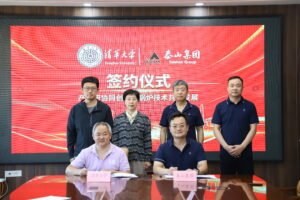
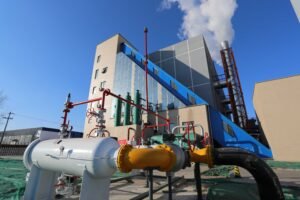
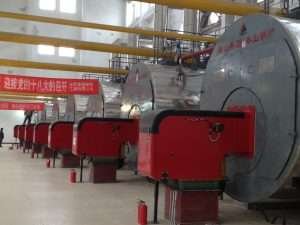
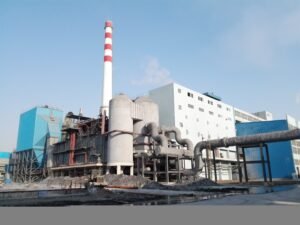
Scope matters as much as boiler size. Taishan Group’s project cases include gas-fired projects that differ widely in scope: four 60 t/h and two 55 t/h gas-fired steam boilers for China Nuclear Engineering Corporation, and five 58 MW gas boilers with all auxiliary equipment for the boiler island for Beijing Heat Group. More units and a wider scope of supply add coordination work to every phase below.
How long does a typical project take?
Public data on boiler timelines is thin and comes mostly from suppliers, so the figures below are planning reference points, not guarantees. The best-documented benchmarks describe large packaged watertube boilers in North America. The only indicator for smaller units is a supplier’s marketing statement.
| Benchmark | Figure | Source |
|---|---|---|
| Early planning to steam, large industrial package boiler project | At least 18–24 months | HPAC Engineering |
| Start of detailed engineering to commissioning (large unit, long-lead items ordered at once) | About 12 months | HPAC Engineering |
| Remaining components after the main equipment is ordered | 6–20 weeks | HPAC Engineering |
| Mechanical installation, large unit in a petrochemical plant | About 16 weeks | HPAC Engineering |
| Manufacturing of a 180,000 lb/h, 500 psig packaged watertube boiler | 50–52 weeks (2025 standard time) | Nationwide Boiler |
| Lead time for some large new watertube boilers | Up to about 54 weeks | BIC Magazine |
| Wait for new firetube boilers (smaller units, manufacturing only) | 8–20 weeks, as implied by one supplier’s marketing | GlobalSpec listing |
Two points follow from the table. First, the 12-month model assumes the main equipment reaches site at the start of month eight, followed by roughly five months of installation and commissioning. That is hard to achieve when manufacturing alone takes 50 weeks or more, so for the largest boilers the total will exceed 12 months unless the boiler is ordered extremely early. Second, the HPAC guide dates from 2009 and was written by a boiler-solutions provider, so treat its sequencing as a planning model, not a measurement.
For smaller oil and gas fired boilers, ask each supplier for a phase-by-phase schedule. This article does not quote a general figure it cannot support.
What must happen before manufacturing can start?
Manufacturing cannot begin until the design is approved, and the boiler’s main features depend on decisions taken at this stage: capacity, pressure, fuel, emission limits and plant layout. HPAC’s guidance is to finalize piping and instrumentation diagrams within the first six to eight weeks and to match equipment lead times to drawing-review and approval time.
Three early decisions often reach the critical path:
- Emission limits. Strict NOx limits are commonly met with low-NOx burners combined with flue gas recirculation and, in the strictest cases, selective catalytic reduction (SCR). SCR catalyst is itself a long-lead item.
- Applicable code and inspection regime. Boilers are built to a defined pressure-equipment code and inspected under the rules of the project country. Taishan Group lists ASME, EU CE/PED, India IBR, Malaysia DOSH, Singapore MOM, North America NB and China GB among the standards its products meet (see Production & Manufacture). Fixing the code at contract stage settles documentation, stamping and inspection requirements before fabrication begins. Quality assurance is covered on our Quality Control page.
- Fuel supply. Confirm the fuel, supply pressure and connection point early. The fuel section below explains why.
Permits depend on the jurisdiction. Air-quality permits and pressure-equipment registration can take time, so identify them during design rather than at delivery.
What drives manufacturing and delivery time?
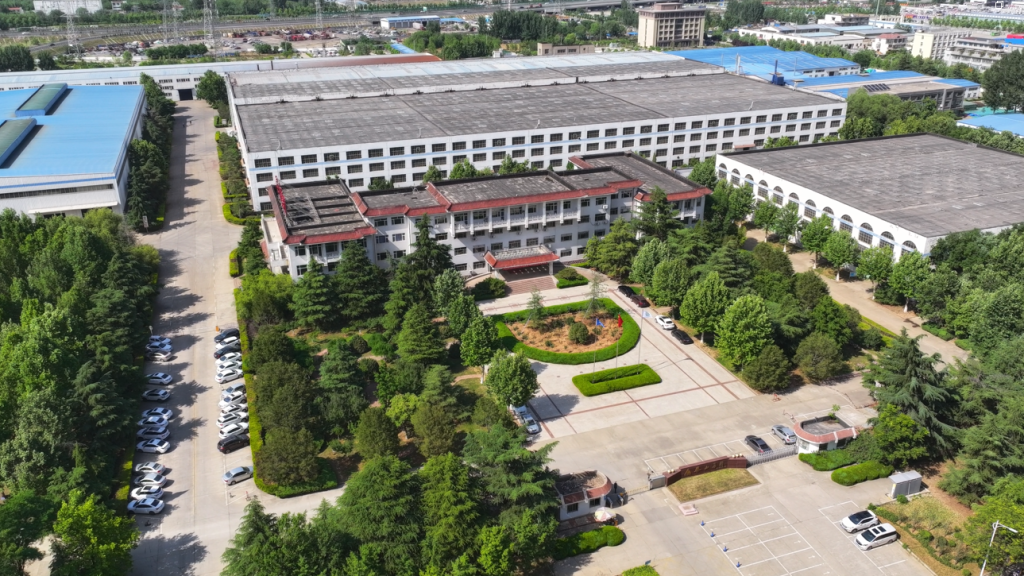
Manufacturing. Fabrication covers materials procurement, forming of drums and pressure parts, welding, assembly, and integration of the burner, fuel train and burner management system. HPAC identifies the boiler, the burner and controls package and the forced-draft fan as the items to order within the first weeks, with the remaining components needing six to 20 weeks. Workshop capacity and the order book also matter: Taishan Group’s manufacturing facilities cover more than 378,000 m² (see Production & Manufacture).
Inspection hold points. Under ASME Section I, the manufacturer’s data report carries certificates of shop inspection by an Authorized Inspector and, where applicable, of field assembly, and it records the shop hydrostatic test (see the ASME data report form). These witness points and document reviews are scheduled steps, and a failed test or missing document delays shipment.
Delivery. After final inspection the boiler is packed and moved by truck, rail, barge or sea. Large boilers usually need specialized transport equipment and permits, according to HPAC, and road and rail limits often decide whether one packaged boiler can be delivered or several smaller units are needed. For export projects, ocean freight, port handling and customs clearance add time that depends on route, season and documentation, so plan them as a separate line in the schedule.
How do packaged and field-erected projects differ?
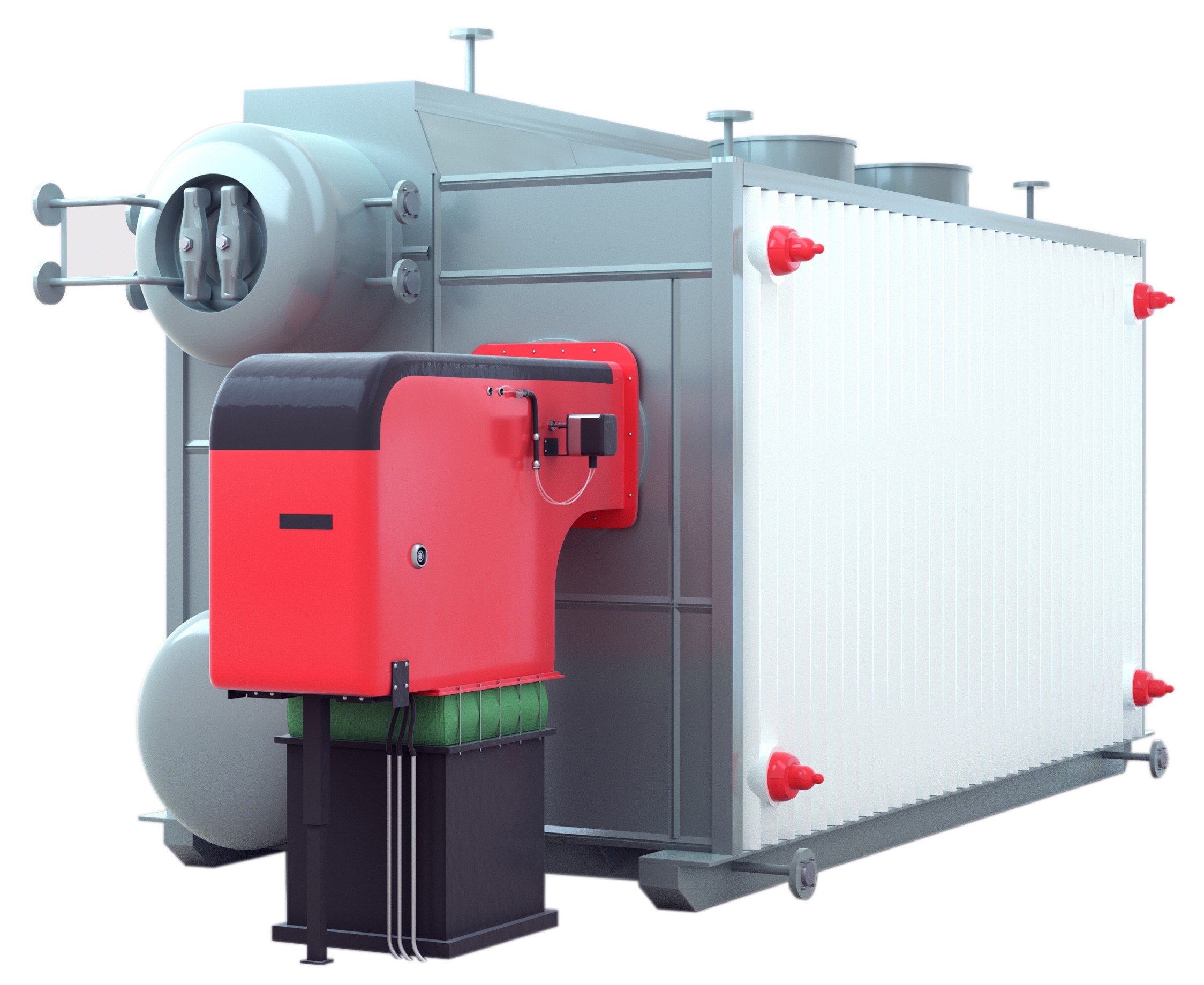
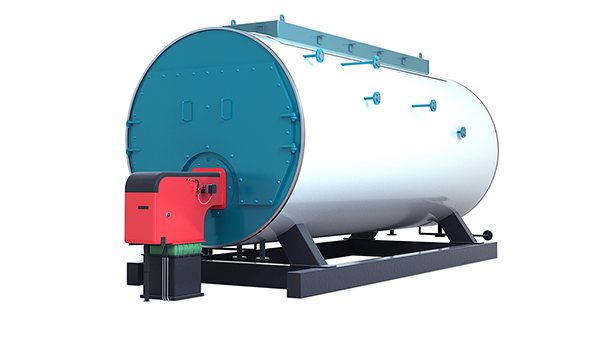
A packaged boiler is largely assembled in the workshop and shipped as one unit or a few modules. A field-erected boiler is built on site from components, typically when the unit is too large to transport assembled. Packaged designs are now built at much larger sizes than in the past, so transport limits, not capacity alone, often decide which route is available.
The practical difference is where the time goes. Packaged projects move work into the controlled workshop environment and typically shorten site work. Field-erected projects spend more time on site and are more exposed to weather, labor availability and site logistics. Neither is automatically faster end to end: HPAC warns that the word package can mislead, because these projects are often years in the making.
Site readiness runs in parallel with manufacturing. Foundations should be finished about two weeks before the boiler arrives, and a replacement project may first need old equipment removed. Installation then covers the economizer, stack and ductwork, fuel-train skids and fans, piping, the hydrostatic test, instruments, insulation and electrical work, together with boiler auxiliaries where they are in scope.
How does fuel type change the schedule?
| Fuel | Main schedule factor | Notes |
|---|---|---|
| Natural gas | Gas supply connection, supply pressure and gas train | Connection for large loads is controlled by the gas supplier |
| Light or heavy oil | On-site storage, pumping and handling; heating for heavy oil | More site equipment; fuel storage must be planned and built |
| Dual-fuel | Both of the above, plus added burner and control complexity | Each fuel must be commissioned |
Gas supply deserves special attention because a third party controls it, and connection times vary enormously with the size of the load. UGI, a US gas distributor, says simple connection projects typically take 6 to 12 weeks from application to completion. At transmission level the picture changes: TransGas says building facilities for a new large gas customer can take 12 to 24 months, and Fluxys, the Belgian transmission operator, tells industrial applicants to anticipate 24 to 46 months, mainly because of permitting. These are examples from three regions, not global rules, but they show that a gas connection can take longer than the boiler itself. Apply as soon as capacity and pressure are known.
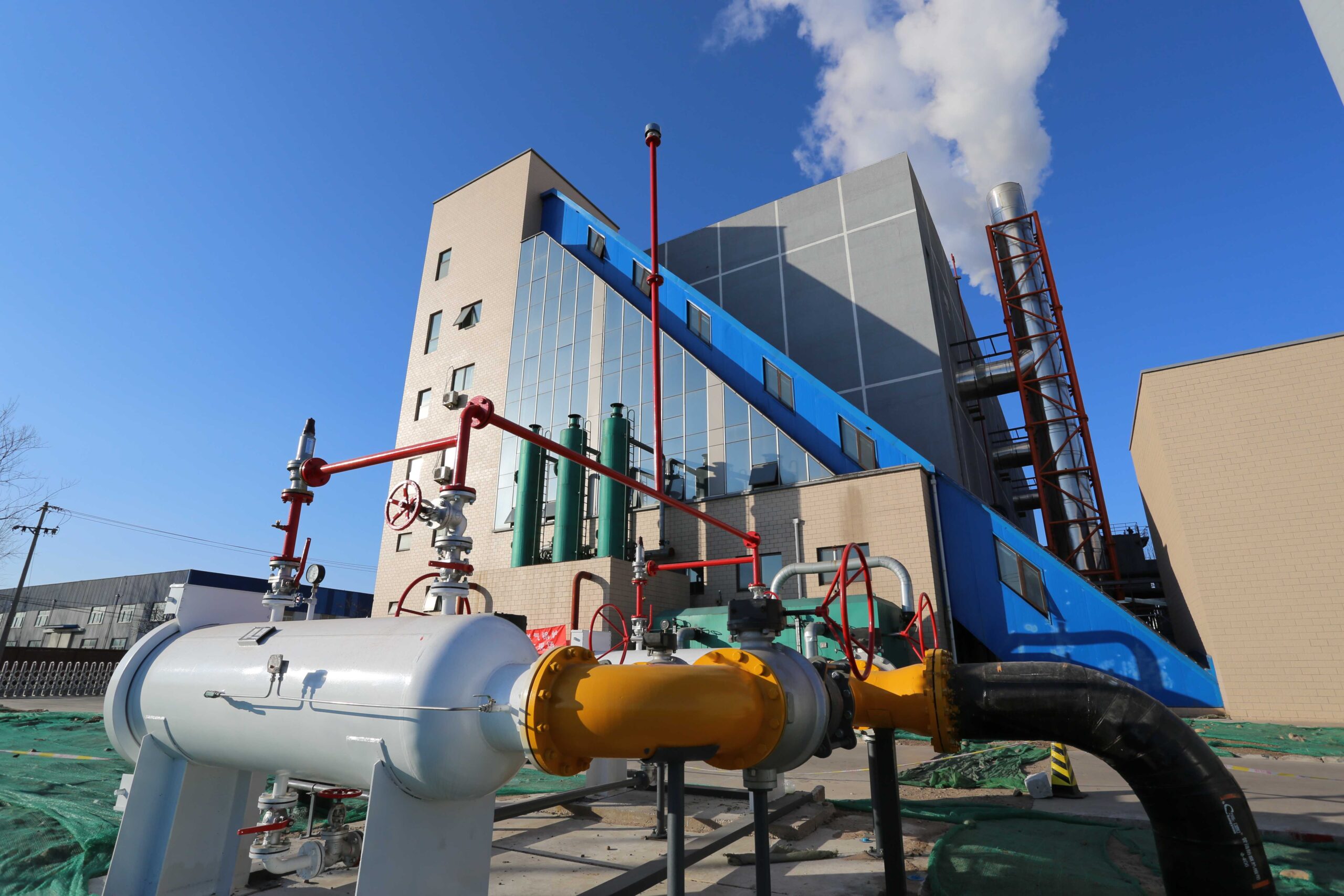
Oil firing shifts the effort to the site. Taishan Group’s oil & gas fired boiler page notes that oil-fired boilers need on-site fuel storage, while gas-fired boilers depend on the gas supply network. According to HPAC, start-up time also grows with the number of fuels a boiler can burn.
What does commissioning involve?
Commissioning turns installed equipment into a proven, accepted boiler. HPAC’s description of a typical start-up breaks it into stages; the exact scope varies by project.
- Close-out of installation. The hydrostatic test ends mechanical installation. Instruments, insulation, wiring and loop checks are completed afterwards.
- Proving the fire side. First light exercises the fuel systems, controls, fan and dampers together.
- Cleaning the water side. A chemical boil-out removes lubricants and mill scale from drums and tubes, after which the boiler is flushed, cooled and inspected.
- Proving performance. The boiler is run across its operating range so control curves can be set and integration with plant-wide controls confirmed.
- Proving compliance. Emissions equipment is checked and tuned, often with a third-party emissions test to verify the operating permit.
- Handover. Operators are trained, ideally from the start of commissioning.
HPAC also advises bringing in a qualified combustion engineer before construction ends, and notes that start-up duration depends on the control scheme, the number of fuels, the emissions equipment and the quality of the installation. If local rules require an authority inspection or registration before operation, treat it as a schedule milestone.
This section covers first-time commissioning. Routine start-up and shutdown after handover follow the operating manual issued for the specific boiler.
What sits on the critical path, and what delays boiler projects?
| Phase | Overlaps with | Typically gated by |
|---|---|---|
| Design and approvals | Early ordering of long-lead items | Drawing approval, specification freeze |
| Manufacturing and testing | Site civil works, permits, gas connection | Materials, shop capacity, inspection hold points |
| Delivery | Final site preparation | Transport permits, route limits, export documents |
| Installation | Auxiliary and piping work | Foundations, delivered equipment, fuel and utility tie-ins |
| Commissioning | Operator training | Hydrostatic test, fuel availability, emissions testing |
The critical path usually runs through drawing approval, boiler manufacturing, delivery, installation and commissioning. Civil works, permits and fuel connection run beside it, but they become critical the moment they finish late. The most common causes of delay, and their effect, are:
- Late drawing approval, or changes after ordering. Procurement and fabrication steps must be repeated or paused.
- Site not ready on arrival. Mechanical installation cannot begin.
- Fuel supply not available at first light. Commissioning waits.
- Permit or inspection gaps. Handover is held up even when the boiler is ready.
- Transport restrictions or missing permits. Delivery slips.
- Start-up complications. Complex controls, several fuels, added emissions equipment and installation quality all extend commissioning.
How can buyers shorten the schedule?
- Order long-lead items first. Place orders for the boiler, burner and controls package and fan within the first weeks, as HPAC recommends.
- Freeze the specification early. Finalize piping and instrumentation diagrams in the first six to eight weeks and involve plant operations staff.
- Consider pre-engineered configurations. Cleaver-Brooks, for example, introduced configured industrial watertube boilers to compress project schedules by reducing engineering time.
- Run site works in parallel. Complete foundations before the boiler arrives, not after.
- Start the fuel connection process immediately. Gas connection and oil storage can both outlast equipment manufacturing.
- Settle the code and inspection route at contract stage.
- Engage a combustion engineer early so commissioning does not start cold.
- Match the design to transport limits. Where a single unit cannot be shipped, several smaller packaged boilers may be easier to deliver.
Taishan Group offers A–Z service covering the entire project lifecycle (see Services). To discuss a schedule for your own project, send your required capacity, pressure, fuel and site conditions through our contact page.
Frequently asked questions
What is the longest-lead item in an oil or gas fired boiler project?
HPAC lists the boiler, the burner and controls package and the forced-draft fan as the items to order first, with SCR catalyst added where emission limits require it. On some sites the gas supply connection takes longer than any equipment item.
Is a packaged boiler always faster than a field-erected one?
Not always. Packaged designs shorten site work, but large packaged boilers can still take close to a year to manufacture, and transport limits may rule them out for the largest capacities.
Does a dual-fuel boiler take longer?
It usually adds work: two fuel systems, more burner and control complexity, and commissioning on each fuel. HPAC notes that the number of fuels affects start-up time, but there is no fixed extra duration.
Can installation start before the boiler arrives?
Site preparation can, and should. Demolition in replacement projects, foundations and utility work run during manufacturing, with foundations finished about two weeks before delivery. Mechanical installation of the boiler itself begins on arrival.
Conclusion
An industrial oil or gas fired boiler project is set by its critical path, not by a single lead time. For large units, published guidance points to 18–24 months from early planning to steam, and current manufacturing queues can push the biggest boilers beyond the 12-month engineering-to-commissioning model. Smaller units move faster, but fuel connection, applicable code and site readiness can still decide the schedule. Settle those early, and ask every supplier for a phase-by-phase plan. Review Taishan Group’s oil & gas fired boilers and recent project cases when you begin planning.
References
- HPAC Engineering, “Anatomy of a Package-Boiler Project” (June 2009): project phases, 12-month and 18–24 month planning benchmarks, installation and start-up steps. https://www.hpac.com/heating/article/20924912/anatomy-of-a-package-boiler-project
- Nationwide Boiler, Steamlines (April 2025): standard manufacturing time for a large packaged watertube boiler. https://nationwideboiler.com/pdfs/steamlines/Steamlines_April_2025.pdf
- BIC Magazine, “Nationwide Boiler Launches In-Stock Boiler Program”: lead times of 54 weeks or more for some large boilers. https://www.bicmagazine.com/resources/supplier-news/nationwide-boiler-launches-in-stock-boiler-program/
- GlobalSpec, firetube boiler supplier listing (Indeck): 8–20 week wait implied for new firetube boilers. https://www.globalspec.com/ds/1939/areaspec/technolgoy_fire_tube
- Power Magazine, packaged and field-erected boiler classification and transport limits. https://www.powermag.com/?p=241910
- ASME BPVC Section I, Manufacturer’s Data Report form P-2 (Authorized Inspector certificates and shop hydrostatic test record). https://www.asme.org/getmedia/30106146-7f4f-42cd-8781-f917799d7882/BPVC_I_P-2-2023-1.pdf
- UGI, new natural gas service timelines for simple projects. https://ugi.com/?p=21016
- TransGas, Connection Process & Timeline Overview. https://www.transgas.com/node/299
- Fluxys, Connect your company to the Belgian grid. https://www.fluxys.com/en/products-services/supplying-europe/belgium/connection-grid/connect-your-company-to-our-grid
- Power Magazine, Cleaver-Brooks press release on configured industrial watertube boilers. https://www.powermag.com/press-releases/cleaver-brooks-offers-new-configured-industrial-watertube-boiler-options-for-faster-quotes-and-technical-documentation
- Taishan Group, Project Case, Production & Manufacture and Oil & Gas Fired Boiler pages: project scope examples, certifications and standards, facility size, fuel notes. https://coalbiomassboiler.com/