Industrial buyers often begin a boiler project with a straightforward question: How much does a coal-fired boiler cost?
The short answer is that there is no reliable universal price per TPH for an industrial coal-fired boiler. Capacity is an important starting point, but it does not define the equipment that must ultimately be designed and supplied.
A 20 TPH boiler producing moderate-pressure saturated steam can have a very different configuration from a 20 TPH boiler requiring superheated steam, a difficult design coal, extensive fuel and ash handling, stricter emission controls, or additional certification and inspection.
There is another reason published prices vary so widely: “boiler price” does not always describe the same scope. One quotation may cover primarily the boiler and combustion equipment, while another may include fans, coal handling, ash handling, flue-gas treatment, water treatment, controls, freight, or erection services.
So the more useful question is not:
“What is the price per TPH?”
It is:
“What does an industrial coal-fired boiler cost under a defined technical specification and supply scope?”
This guide focuses on the initial purchase cost of industrial coal-fired boiler equipment and the scope behind a manufacturer’s quotation. It does not estimate the total capital investment required to build a utility-scale coal-fired power plant.
What Does an Industrial Coal-Fired Boiler Typically Cost?
Industrial coal-fired boilers are engineered-to-order equipment, so capacity alone does not support a defensible universal purchase-price range.
That does not mean buyers have no way to establish a budget. It means that any useful budget figure must first be tied to a defined basis.
At minimum, a meaningful price reference should identify:
- steam capacity;
- steam pressure and temperature;
- design coal;
- combustion configuration;
- emission requirements;
- applicable manufacturing code;
- equipment supply scope;
- currency and reference year;
- manufacturing origin;
- delivery basis such as EXW, FOB, or CIF; and
- whether installation is included or excluded.
Without this information, two prices may appear comparable while actually representing very different equipment packages.
Why We Do Not Publish a Generic “2026 Price per TPH” Table
There are published industrial-boiler cost data, but much of the authoritative information was developed for a specific period, geography, or project-cost basis.
For example, the U.S. Environmental Protection Agency published detailed industrial-boiler cost studies that distinguish equipment cost, direct installation cost, and indirect capital cost. These documents remain useful for understanding how boiler-project costs are structured, but the detailed cost tables use a June 1978 cost basis. They should not be relabeled as current commercial boiler quotations.
A later peer-reviewed study by Han, Shen, and Zhang examined the fixed and operating costs of industrial-boiler alternatives in China using period- and location-specific economic conditions. That study is useful for understanding industrial-boiler economics in its original analytical context, but it is not a current global price list for new coal-fired boiler purchases.
For this reason, this guide does not convert historical engineering data, marketplace listings, or unrelated project costs into an artificial “current market price” table.
A price that looks precise but does not disclose its scope is often less useful than a broader quotation based on an actual project specification.
| Pricing Basis | Why It Matters |
|---|---|
| Boiler capacity | Defines nominal steam output |
| Steam pressure and temperature | Defines important design conditions |
| Design coal | Affects combustion and auxiliary requirements |
| Equipment scope | Determines what the quoted amount covers |
| Currency | Avoids exchange-rate ambiguity |
| Reference year | Distinguishes historical from current data |
| Manufacturing origin | Provides geographic cost context |
| Delivery term | Defines transport-related commercial responsibility |
| Installation basis | Separates equipment purchase from installed project cost |
The practical conclusion is simple:
A current project-specific budget should come from a defined design basis and supply boundary, not from a universal USD-per-TPH formula.
What Does a Coal-Fired Boiler Price Actually Include?
Before comparing quotations, buyers should establish each proposal’s battery limits, or supply boundary.
Even established engineering cost methodologies separate the boiler itself from coal handling, ash handling, water treatment, installation, and other project costs rather than treating them as one interchangeable number.
The boiler itself and the complete boiler project are not automatically the same scope.
Core Boiler Equipment
Depending on boiler type and contract definition, the manufacturer’s core supply can include:
- pressure parts;
- steam and mud drums where applicable;
- furnace and heating surfaces;
- combustion equipment;
- supporting steel structure;
- standard valves and fittings;
- local instrumentation; and
- specified boiler accessories.
The exact boundary should always be confirmed in the supplier’s technical proposal.
Extended Boiler-System Supply
A broader manufacturer package may additionally cover:
- economizer;
- air preheater;
- ID and FD fans;
- boiler feedwater equipment;
- coal feeding and conveying;
- fuel-preparation equipment where required;
- bottom-ash and fly-ash handling;
- particulate-control equipment;
- SO₂ or NOₓ control systems where required;
- PLC and instrumentation;
- water treatment;
- ductwork and chimney-related equipment; and
- commissioning or erection services.
None of these items should be assumed to be included simply because two suppliers describe their boilers using the same nominal steam capacity.
A Practical Price-Scope Checklist
| Item | What the Buyer Should Confirm |
|---|---|
| Boiler pressure parts | Exact pressure-part boundary |
| Combustion equipment | Type and included mechanical scope |
| Economizer / air preheater | Included, optional, or excluded |
| ID / FD fans | Quantity, specification, motors, and controls |
| Feedwater equipment | Supplier or owner scope |
| Coal feeding / conveying | Equipment boundary and storage interface |
| Ash handling | Bottom ash, fly ash, and storage boundary |
| Particulate / SO₂ / NOₓ control | Required system and supplier responsibility |
| PLC / DCS interface | Control scope and plant interface |
| Water treatment | Supplier or owner scope |
| Freight | Delivery term and destination |
| Installation | Included, supervised, or owner-contracted |
| Civil works | Separate or included contractually |
A price comparison becomes meaningful only when the technical specification, equipment boundary, and commercial basis are aligned.
What Factors Actually Affect the Purchase Price?
For budgeting purposes, the useful question is how each requirement changes what the manufacturer has to design and supply—not how to design the complete boiler plant.
Steam Capacity
Higher steam output generally requires greater furnace capacity, heat-transfer surface, pressure-part capacity, structural support, and auxiliary-system capacity.
However, cost does not scale in a perfectly linear relationship with TPH. Different systems within the boiler package scale differently, and project-specific auxiliaries can change independently of the nominal steam capacity.
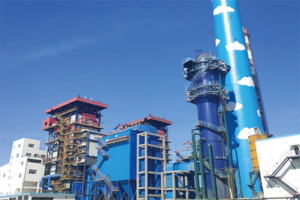
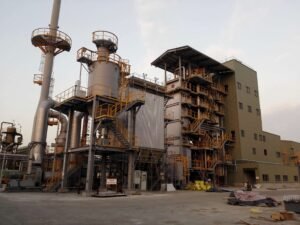
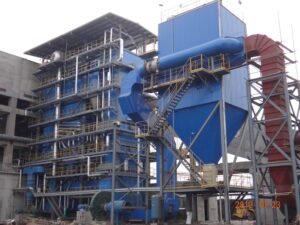
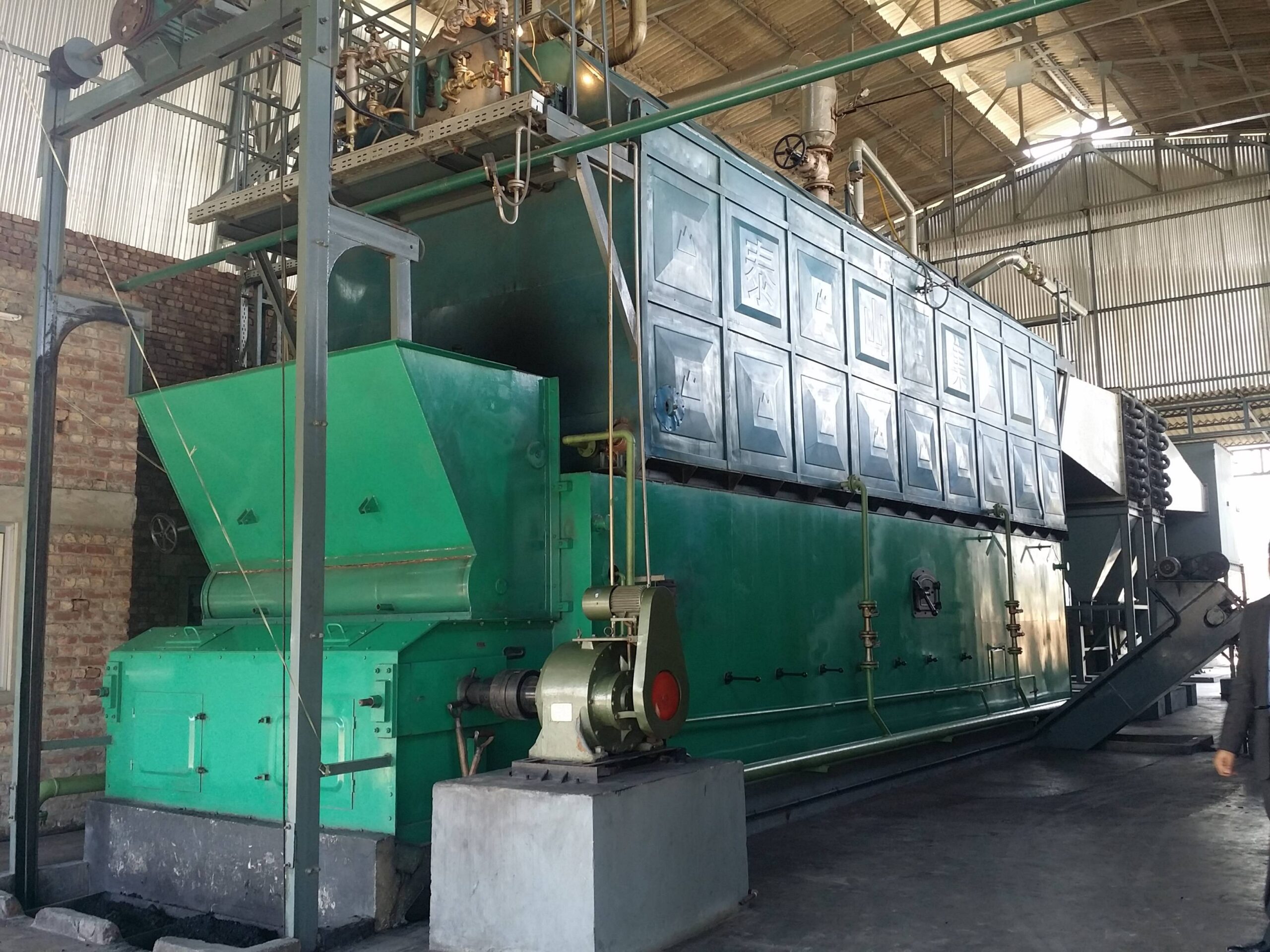
Taishan Group’s published project portfolio illustrates this limitation. It includes a 20 TPH coal-fired steam boiler for a textile plant in Pakistan, separate 2 × 20 t/h fluidized-bed boiler EPC projects in Vietnam, and a 12 TPH anthracite-fired boiler for a paper producer.
These projects cannot be treated as interchangeable products simply because some of their nominal capacities are similar.
View Taishan Group Industrial Boiler Project Cases
Steam Pressure and Temperature
Two boilers with the same TPH but different steam conditions may require different pressure-part designs and equipment configurations.
Higher design pressure or temperature can affect:
- pressure-part dimensions;
- material selection;
- welding requirements;
- examination and testing;
- superheater configuration where applicable; and
- inspection and certification scope.
For projects manufactured to the ASME Boiler and Pressure Vessel Code, Section I addresses the construction of power boilers, while related BPVC sections cover areas such as materials, nondestructive examination, and welding qualifications.
The relevant pricing point is not that one code universally adds a fixed premium. Rather:
Boilers built under different code, inspection, certification, and project-specification requirements should not automatically be assumed to have identical manufacturing scope or cost.
Coal Characteristics
“Coal” is not a complete fuel specification.
Relevant properties include:
- heating value;
- moisture;
- ash;
- sulfur;
- volatile matter; and
- ash characteristics relevant to the selected combustion system.
The U.S. EPA’s AP-42 combustion guidance maintains separate technical sections for bituminous and subbituminous coal, anthracite, and lignite, reflecting meaningful differences in fuel and combustion behavior.
From a purchase-price perspective, coal properties can affect:
- furnace configuration;
- fuel preparation and feeding;
- combustion-air systems;
- wear protection;
- ash-removal capacity; and
- flue-gas treatment.
A quotation developed for one design coal therefore should not automatically be treated as valid for a materially different coal.
For the deeper fuel-selection topic, see How Fuel Types & Combustion Influence Industrial Coal-Fired Boiler Selection.
Combustion Configuration
Chain-grate, fluidized-bed, and circulating fluidized-bed boilers do not share identical mechanical arrangements.
Different technologies may require different:
- furnace structures;
- fuel feeding;
- primary and secondary air systems;
- refractory;
- solids handling;
- ash-removal systems; and
- controls.
This does not justify applying a universal cost multiplier to one technology versus another.
The combustion system should first be selected according to the fuel, capacity, operating conditions, and project requirements. Price should then be compared between technically equivalent proposals.
Emission Requirements
Emission requirements can materially change the equipment included in a boiler quotation.
In the United States, for example, EPA regulations for industrial, commercial, and institutional boilers differ by source classification and other regulatory criteria. EPA’s major-source boiler requirements address pollutants including mercury, hydrogen chloride, particulate matter, and carbon monoxide for covered sources, while area-source boilers are governed under a separate regulatory framework.
International projects may be subject to very different emission limits.
Therefore:
There is no universal emission-control package that should automatically be added to every coal-fired boiler quotation.
The manufacturer needs to know the actual project location and permitted emission limits before defining whether particulate, SO₂, NOₓ, monitoring, or other control systems are required.
For the wider regulatory topic, see Environmental and Emission Regulations Impacting Industrial Coal-Fired Boiler Selection.
Automation and Instrumentation
A basic local control package and a highly integrated boiler plant connected to an existing DCS are not equivalent scopes.
Requirements may include:
- PLC architecture;
- combustion and safety interlocks;
- motor control;
- field instrumentation;
- variable-frequency drives;
- alarms and protection;
- data logging; and
- communication with the plant DCS.
For price comparison, these requirements should be listed explicitly rather than summarized as “automatic control included.”
Why Are Coal-Fired Boiler Prices Online So Different?
Large differences between published boiler prices do not necessarily mean that one supplier is dramatically cheaper than another.
Often, the prices simply describe different equipment or commercial scopes.
Equipment-Only vs. Complete Boiler-System Price
A relatively low published figure may represent the core boiler package.
Another quotation may include:
boiler + combustion system + fans + fuel handling + ash handling + environmental controls + water system + automation.
Those two figures are not answering the same commercial question.
Standard Configuration vs. Engineered-to-Order Design
A standard configuration for commonly used coal and conventional industrial steam conditions is not equivalent to a project engineered around:
- unusual or variable fuel;
- higher steam parameters;
- demanding emission limits;
- special certification;
- additional inspection;
- extensive auxiliaries; or
- unusual site requirements.
The more project conditions deviate from the manufacturer’s standard design basis, the less useful a generic online listing becomes.
EXW, FOB, and CIF Are Different Commercial Bases
International quotations also need to be compared using the same delivery basis.
Under Incoterms® 2020, EXW, FOB, and CIF allocate transport obligations, costs, and risks differently.
In simplified terms:
- EXW places the goods at the buyer’s disposal at the agreed location;
- FOB includes delivery on board the nominated vessel at the agreed port of shipment;
- CIF additionally requires the seller to arrange specified carriage and insurance to the named destination port.
For example, USD 500,000 EXW and USD 500,000 CIF do not represent the same commercial offer, even if the equipment itself is identical.
The amount above is purely illustrative and is not a coal-fired boiler price benchmark.
Marketplace Listing vs. Engineering Quotation
A marketplace or public product listing may represent:
- a base model;
- an indicative lead-generation figure;
- equipment-only supply;
- a broad capacity series; or
- a configuration that does not satisfy the buyer’s actual coal and emission requirements.
For engineered industrial equipment, a public listing should therefore be treated as an initial reference—not as evidence of what a specific project should cost.
Historical Cost Data vs. Current Commercial Pricing
Historical engineering studies can be valuable for understanding cost structure, but their monetary values should remain tied to their original year and geography.
For example:
- the detailed EPA industrial-boiler cost study uses a 1978 cost basis;
- the Han, Shen, and Zhang study analyzed industrial-boiler economics under period- and location-specific Chinese conditions.
Neither source should be relabeled as a current global boiler quotation.
Material costs, labor, certification, logistics, environmental requirements, exchange rates, and project specifications all change over time.
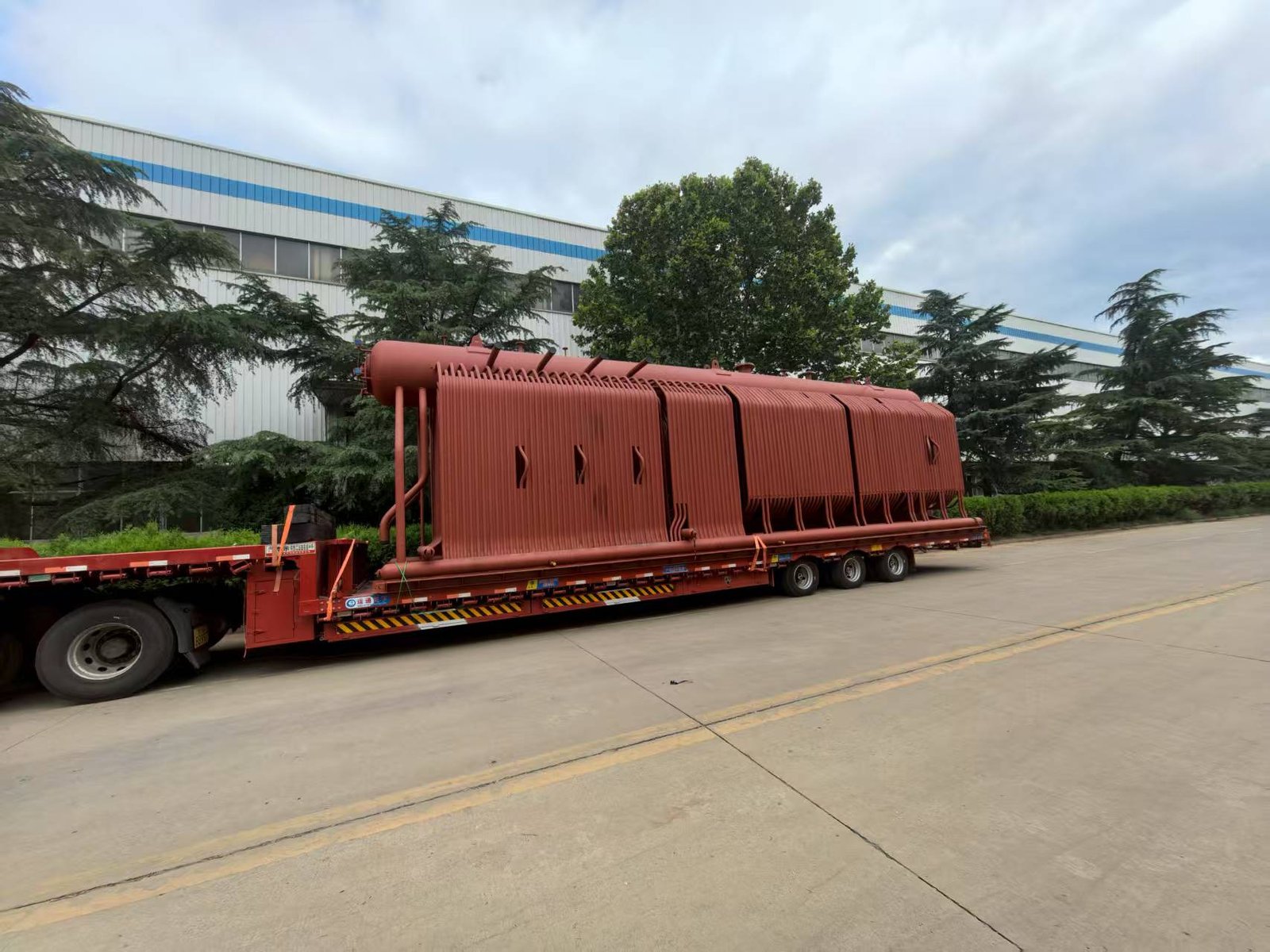
Boiler Purchase Price vs. Total Installed Cost
The manufacturer’s boiler quotation is not automatically the total investment required to bring the steam plant into operation.
The broader project can include:
- foundations and civil construction;
- boiler-house structures;
- on-site erection;
- steam, water, and other interconnecting piping;
- electrical distribution;
- fuel-storage infrastructure;
- site coal conveying;
- water and utility connections;
- erection equipment;
- local permits and inspections;
- import duties and taxes; and
- systems supplied by the owner or EPC contractor.
This distinction also appears in established engineering-cost methodologies, which separate equipment cost from installation and other capital-cost categories.
So when one quotation appears substantially higher than another, the first question should not necessarily be:
“Why is this boiler more expensive?”
It should be:
“Are these quotations based on the same technical conditions and the same supply boundary?”
For the broader project-budget question, see What Is the Total Installed Cost of an Industrial Boiler Including Auxiliary Systems?.
This guide deliberately does not apply a generic multiplier between boiler purchase price and installed project cost because that relationship varies too much with site conditions, country, project scope, and contracting strategy.
What Information Is Needed for a Meaningful Budgetary Boiler Price?
A buyer does not need to finish detailed engineering before requesting an initial quotation.
But an inquiry such as:
“Please quote a 20 TPH coal-fired boiler.”
still leaves several major design and scope variables undefined.
Providing the following information allows a manufacturer to develop a much more meaningful budgetary proposal.
Technical Information
| Requirement | Information to Provide |
|---|---|
| Steam capacity | TPH or kg/h |
| Working / design pressure | bar or MPa |
| Steam condition | Saturated or superheated |
| Steam temperature | °C where applicable |
| Feedwater temperature | If available |
| Fuel | Primary and backup fuel |
| Coal analysis | Heating value, moisture, ash, sulfur, volatile matter, and available ash data |
| Emission limits | Applicable project limits |
| Operating profile | Continuous, variable load, or other requirements |
| Applicable code | ASME, local code, or project specification |
Scope and Commercial Information
The buyer should also identify, where possible:
- coal feeding and handling requirements;
- ash-handling scope;
- particulate-control requirements;
- SO₂ / NOₓ requirements;
- water-treatment scope;
- automation requirements;
- project destination;
- requested delivery term;
- installation or erection-supervision requirements; and
- third-party inspection or certification requirements.
This moves the discussion from a generic capacity inquiry toward a defined:
design basis + equipment configuration + supply boundary.
That is the foundation of a useful budget quotation.
A Low Purchase Price Does Not Automatically Mean a Low-Cost Boiler
Purchase price is only the initial capital decision.
Over the operating life of a coal-fired boiler, economics can also be affected by fuel consumption, auxiliary electricity, maintenance, refractory and wear parts, labor, water treatment, ash handling, and environmental-system operation.
These are total-cost-of-ownership questions, not purchase-price questions, so they should not be mixed into a basic equipment-price comparison.
A more useful procurement sequence is:
First compare technically equivalent purchase scopes; then evaluate the long-term economics of the shortlisted alternatives.
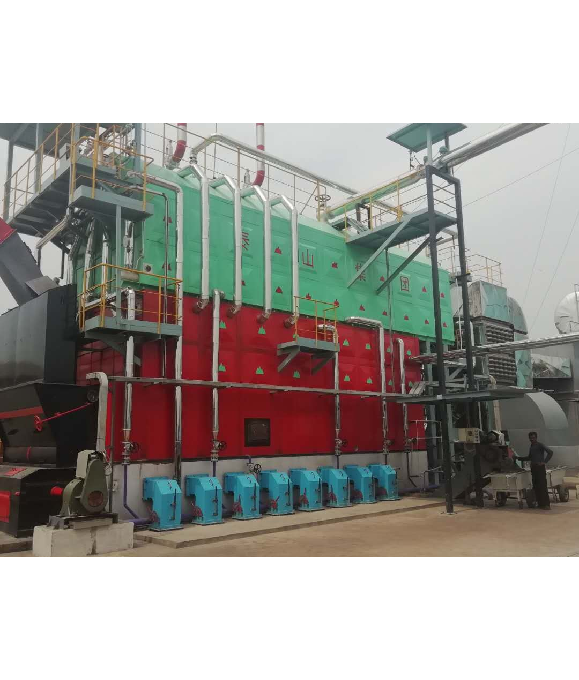 Coal-fired boiler SZL
Frequently Asked Questions
How much does an industrial coal-fired boiler cost?
There is no reliable universal price based on TPH alone.
A meaningful purchase-price estimate requires the boiler capacity and steam conditions, design coal, combustion configuration, emission requirements, manufacturing and certification requirements, equipment scope, destination, and commercial delivery basis.
Published historical cost studies can provide engineering context, but their figures should not be treated as current commercial quotations unless the year, geography, technical basis, and scope are comparable.
How much does a 10 TPH coal-fired boiler cost?
A 10 TPH rating alone is insufficient for a responsible price estimate.
For example, a boiler producing relatively moderate-pressure saturated steam can require a different equipment package from a 10 TPH boiler requiring superheated steam, more extensive fuel preparation, stricter emission-control equipment, or a broader auxiliary-system scope.
A meaningful budget therefore requires more than capacity.
Does boiler capacity determine the price?
Capacity is one of the major price drivers, but it does not determine the final quotation by itself.
Steam pressure and temperature, coal properties, combustion configuration, emissions requirements, manufacturing code, automation, auxiliary systems, and contractual supply scope can all affect the equipment that must be supplied.
Is installation included in a coal-fired boiler price?
Not necessarily.
Some quotations cover primarily equipment supply. Others may include erection supervision, installation services, or a broader turnkey or EPC scope.
The installation boundary should therefore be stated explicitly in the technical and commercial proposal.
Why do two manufacturers quote different prices for the same TPH?
The two proposals may not actually be technically or commercially equivalent.
Compare at least:
- steam parameters;
- design coal;
- combustion configuration;
- manufacturing code and certification;
- emission-control scope;
- auxiliaries;
- automation;
- delivery term; and
- installation boundary.
Only after these conditions are aligned does a direct price comparison become meaningful.
Can a manufacturer quote a boiler from capacity alone?
Capacity is enough to start a preliminary discussion, but usually not enough to establish an accurate project quotation.
Providing steam conditions, coal analysis, emission limits, project destination, and required supply scope allows the manufacturer to prepare a substantially more useful budgetary proposal.
Conclusion
There is no responsible universal answer to “How much does an industrial coal-fired boiler cost?” based on TPH alone.
That is not because boiler pricing is unknowable. It is because the price only becomes meaningful when the technical specification and commercial scope behind it are defined.
Before comparing suppliers, establish three things:
- Are the boilers designed for the same steam conditions and design coal?
- Do the quotations include the same auxiliary and environmental systems?
- Are the delivery terms and contractual supply boundaries comparable?
Once these conditions are aligned, price becomes a useful procurement metric instead of a potentially misleading number.
For a project-specific budgetary quotation, provide your required steam capacity, pressure and temperature, available coal analysis, applicable emission limits, project destination, and expected supply scope.
References
U.S. Environmental Protection Agency — Capital and Operating Costs for Industrial Boilers
Historical engineering cost study covering industrial-boiler equipment, installation, and capital-cost categories. The detailed monetary data use a 1978 cost basis and are not treated here as current commercial prices.U.S. Environmental Protection Agency — Cost Equations for Industrial Boilers
Documents industrial-boiler costing methodology and the separation of equipment, installation, and indirect capital costs.U.S. Environmental Protection Agency — AP-42, Chapter 1: External Combustion Sources
Technical combustion resource covering bituminous/subbituminous coal, anthracite, lignite, and other external-combustion fuels.U.S. Environmental Protection Agency — Industrial, Commercial, and Institutional Boilers and Process Heaters: NESHAP for Major Sources
EPA information on air-pollutant requirements for covered industrial boiler and process-heater major sources.U.S. Environmental Protection Agency — Industrial, Commercial, and Institutional Boilers: Area Sources
EPA information on the separate regulatory framework applying to covered area-source boilers.ASME — 2025 ASME Boiler and Pressure Vessel Code
Official information on the ASME BPVC, including Section I requirements for power boilers and related code sections covering materials, examination, and welding qualifications.International Chamber of Commerce — Incoterms® 2020 Checklist and Flowcharts
Official ICC guidance covering EXW, FOB, CIF, and other Incoterms® rules.Han, Y., Shen, B., and Zhang, T. — A Techno-economic Assessment of Fuel Switching Options of Addressing Environmental Challenges of Coal-Fired Industrial Boilers: An Analytical Work for China, Energy Procedia, 142 (2017), 3083–3087.
Peer-reviewed research comparing fixed and operating costs for industrial-boiler and fuel-switching options under period- and location-specific Chinese conditions.Taishan Group — Industrial Boiler Project Cases
Published industrial-boiler project references covering different capacities, combustion configurations, industries, and project scopes.