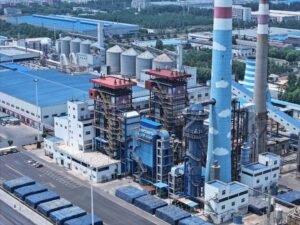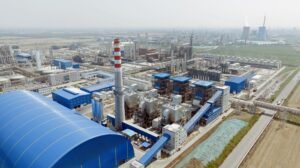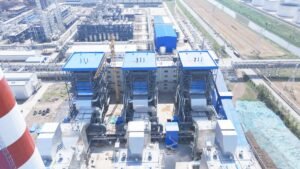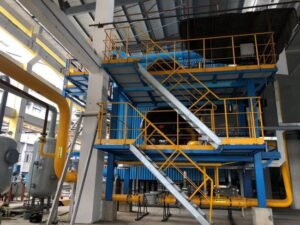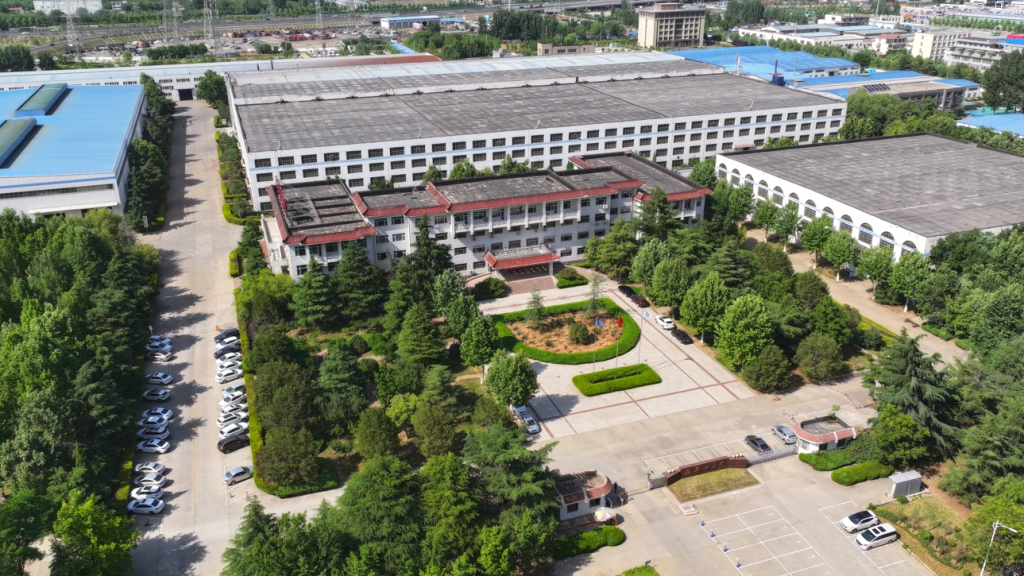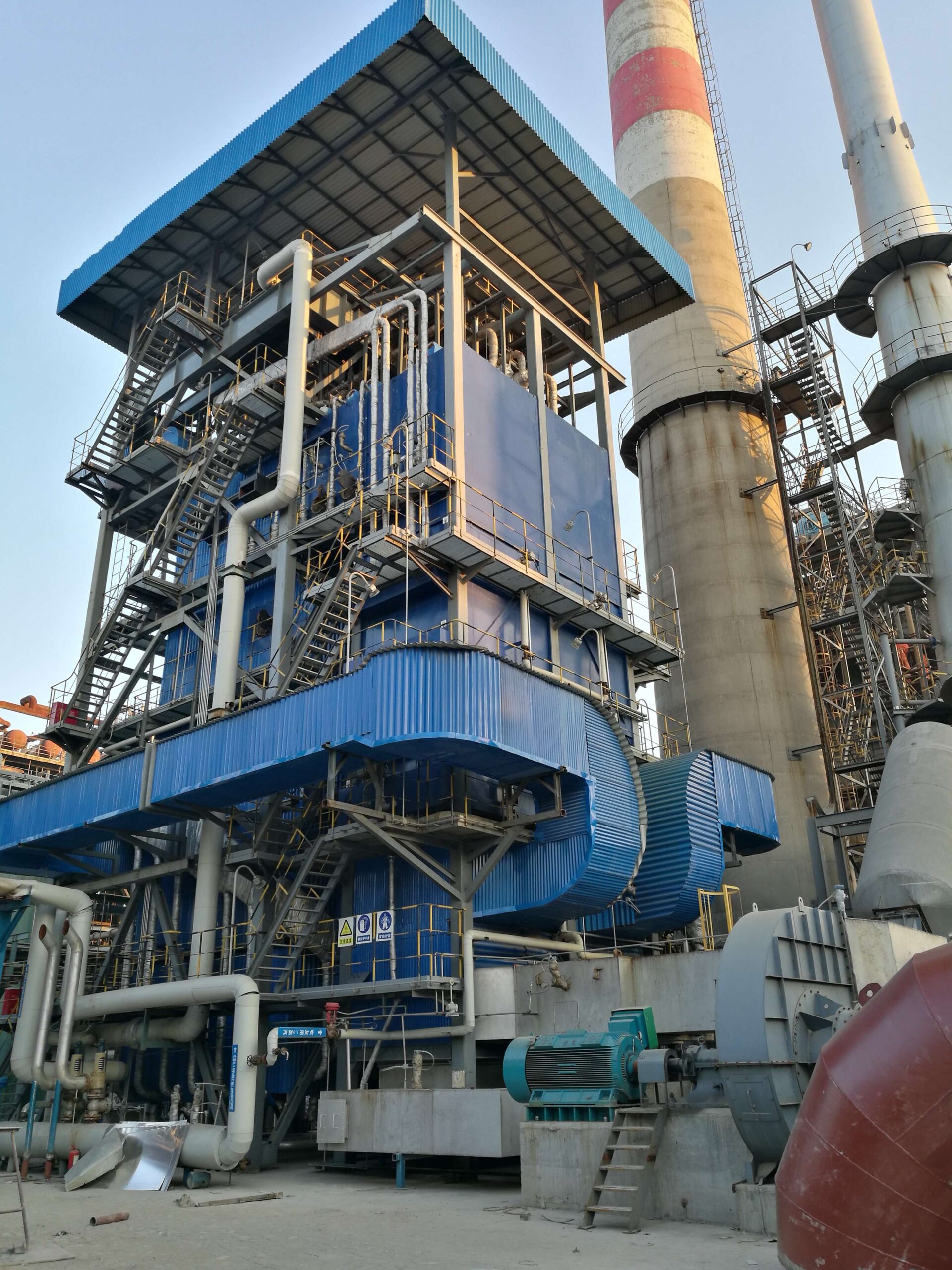
Industrial steam boiler cost cannot be determined by steam capacity alone. Two boilers with the same rated output may require very different budgets when they use different fuels, operate at different pressures, or include different auxiliary and installation scopes.
A packaged gas-fired boiler, for example, is not commercially comparable with a biomass boiler island that includes fuel storage, conveying, ash handling and flue-gas cleaning. Likewise, a boiler equipment quotation cannot be compared directly with an EPC proposal covering civil works, piping, electrical installation and commissioning.
This guide explains what determines industrial steam boiler price, what may be included in a quotation, and how buyers can obtain a technically comparable project budget.
It applies to steam boilers used in manufacturing, food processing, textiles, paper, chemicals, mining, district energy and combined heat and power applications. It does not cover residential heating boilers, domestic combination boilers or small household steam generators.
Quick Answer
There is no reliable universal industrial steam boiler price per ton of steam.
A meaningful budget normally requires at least six inputs:
- Required steam capacity;
- Working pressure and steam temperature;
- Fuel specification;
- Applicable emission limits;
- Required construction code;
- Expected supply scope.
The quotation must also clarify whether it covers boiler equipment, a complete boiler package, a boiler island or a turnkey EPC project.
Industrial Steam Boiler Cost at a Glance
Without verified and comparable commercial data, publishing a fixed price table can be misleading. A more reliable early-stage approach is to classify boiler projects by configuration and relative system complexity.
| Boiler configuration | Relative initial-cost tendency | Main reasons |
|---|---|---|
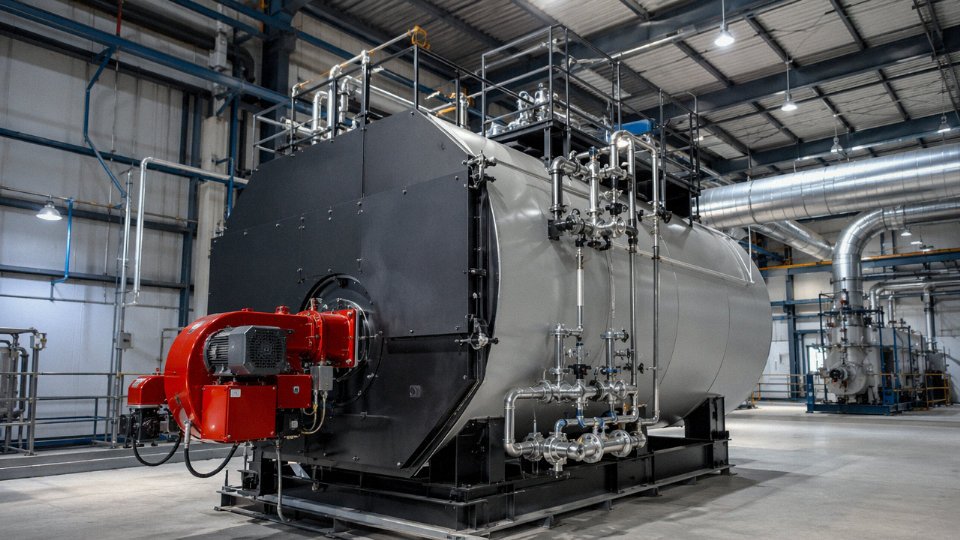
| Packaged gas- or light-[oil-fired boiler](https://coalbiomassboiler.com/product/oil-gas-fired-boiler/) | Generally lower under comparable steam conditions | Compact fuel system, limited ash handling and high degree of factory assembly |
| Custom gas- or oil-fired water-tube boiler | Medium to high | Higher pressure or temperature, engineered pressure parts and more complex controls |
| Biomass- or coal-fired grate boiler | Generally high | Fuel storage, conveying, feeding, ash handling and particulate-control systems |
| Circulating fluidized bed boiler | High to very high | Fluidized-bed combustion, material circulation, larger air systems and wider auxiliary scope |
| High-pressure CHP or power boiler | Project-specific | Superheated steam, turbine integration and balance-of-plant requirements |
| Electric steam boiler | Boiler equipment may be compact, but total project cost is site-dependent | Transformer, switchgear, cabling and grid-capacity requirements |
These classifications describe general tendencies rather than fixed price multipliers. Fuel quality, steam conditions, emissions requirements, project location and supply boundary can materially change the quotation.
What Is Included in an Industrial Steam Boiler Price?
The term “boiler price” may refer to several different commercial boundaries. Buyers should define the boundary before comparing offers.
Boiler Equipment Price
A basic equipment quotation may include:
- Boiler pressure parts;
- Furnace, shell or membrane-wall structure;
- Burner, grate or basic combustion equipment;
- Boiler-mounted safety valves and instruments;
- Insulation and casing;
- Platforms and ladders;
- Basic boiler control functions.
The precise boundary varies by manufacturer. An economizer, feedwater pump or control cabinet may be included by one supplier but quoted separately by another.
The detailed scope list is therefore more important than the quotation title.
Boiler Package or Boiler Island Price
A boiler package or boiler island normally covers a wider functional system.
Depending on the fuel and project requirements, it may include:
- Economizer or air preheater;
- Forced-draft and induced-draft fans;
- Primary- and secondary-air systems;
- Feedwater pumps and feedwater equipment;
- PLC, MCC and variable-frequency drives;
- Fuel storage, conveying and feeding;
- Ash and slag handling;
- Cyclone, bag filter or other flue-gas cleaning equipment;
- Boiler-side piping and instrumentation;
- Connecting ducts or stack.
There is no single universal commercial definition of “boiler island.” The quotation must specify battery limits, included systems, interfaces and exclusions.
Total Installed or EPC Project Cost
A total installed or EPC proposal may extend beyond the boiler island to include:
- Engineering and project management;
- Export packing and transportation;
- Civil foundations and structural steel;
- Boiler-house construction;
- Site lifting and erection;
- Steam, feedwater, fuel and utility piping;
- Electrical distribution and cabling;
- Insulation and painting;
- Water-treatment facilities;
- Testing and commissioning;
- Operator training;
- Site supervision;
- Local permits and statutory inspection.
These items can substantially change the total investment. They should be analysed in a dedicated industrial boiler total installed cost guide, rather than being hidden within a generic boiler price.
A boiler-equipment price, a boiler-island price and a turnkey EPC price are not directly comparable.
Why the Same Steam Capacity Can Produce Different Prices
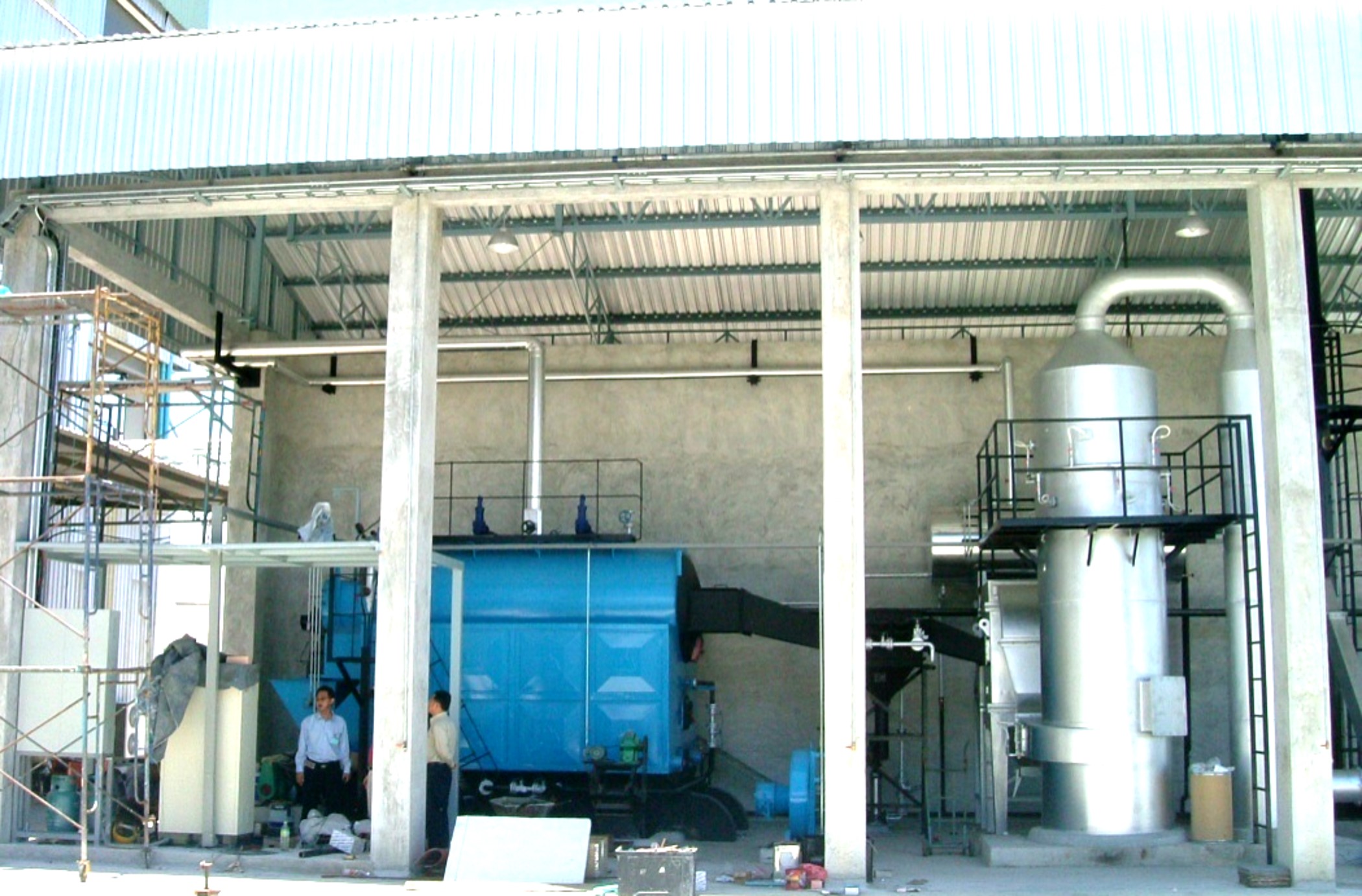
Steam capacity is an important sizing parameter, but it does not define the entire boiler system.
Steam Pressure and Temperature
Increasing pressure or temperature may affect:
- Pressure-part calculations;
- Drum, header and tube design;
- Feedwater-pump head;
- Valve and piping classes;
- Welding procedures;
- Heat-treatment requirements;
- Nondestructive examination;
- Inspection and documentation.
A saturated-steam boiler and a superheated-steam boiler with the same nominal capacity may have different pressure-part arrangements, temperature-control requirements and downstream piping systems.
Materials and wall thicknesses must be calculated separately for the relevant components under the applicable construction code. They should not be selected from a universal table based only on boiler pressure.
ASME’s Boiler and Pressure Vessel Code provides construction requirements used in boiler and pressure-equipment projects, while Section I specifically addresses power boilers within its stated scope. The governing code still depends on the installation country, customer specification and local jurisdiction. (The American Society of Mechanical Engineers)
Fuel and Combustion System
Fuel choice affects more than the burner or furnace. It can change the complete project arrangement.
Natural Gas and Light Oil
Gas- and light-oil-fired boiler systems are generally compact because they do not normally require large solid-fuel storage, ash handling or extensive fuel-conveying systems.
Their cost may still increase when the project requires:
- Dual-fuel capability;
- Low-NOx combustion;
- Flue-gas recirculation;
- High burner turndown;
- Redundant fuel trains;
- Customer-specified burner brands;
- Advanced burner-management systems.
Heavy Fuel Oil
Heavy fuel oil should not be treated as identical to diesel or light oil.
Depending on viscosity and fuel composition, the system may require:
- Heated storage;
- Pipe tracing;
- Fuel circulation;
- Filtration;
- Viscosity control;
- Special atomization equipment.
The actual configuration must be selected from the fuel specification and operating conditions.
Biomass and Coal
A solid-fuel project may require much more equipment than the boiler pressure parts alone.
The scope may include:
- Fuel receiving;
- Storage and moisture protection;
- Screening or fuel preparation;
- Conveying and metering;
- Feeding equipment;
- Grate or fluidized-bed combustion;
- Bottom-ash and fly-ash handling;
- Particulate-control equipment;
- Desulfurization or denitrification systems.
Biomass and coal projects must therefore be evaluated using representative fuel data, including heating value, moisture, ash, sulfur and particle size.
EPA’s biomass CHP documentation illustrates that a biomass steam-and-power system includes fuel preparation, boiler equipment, feedwater systems, particulate control, stack and, where applicable, a steam turbine-generator—not simply a boiler body. (US EPA)
Electric Steam Boilers
Electric boilers have no on-site combustion emissions and may require less boiler-side fuel equipment.
However, total project cost may be influenced by:
- Transformer capacity;
- High-voltage switchgear;
- Protection systems;
- Power cables;
- Grid-connection upgrades;
- Demand-capacity charges.
The available electrical infrastructure and local tariff may therefore be more important to feasibility than the boiler equipment price alone.
Fire-Tube vs Water-Tube Boiler Cost
Fire-tube and water-tube boilers should be compared under similar steam conditions and supply boundaries.
| Cost-related factor | Fire-tube boiler | Water-tube boiler |
|---|---|---|
| Common application | Stable process-steam demand | Higher-capacity, higher-pressure or variable-load applications |
| Factory packaging | Often delivered as an integrated package | May be packaged, modular or field assembled |
| Initial-cost tendency | Often lower for suitable small and medium duties | Often higher when custom engineering is required |
| Steam conditions | Commonly used for lower and moderate conditions | More suitable as pressure, temperature or output increases |
| Site work | Often limited for packaged designs | May require more erection and system integration |
| Main selection benefit | Simplicity and compact packaging | Flexibility for more demanding steam requirements |
A lower-pressure fire-tube boiler should not be compared with a higher-pressure water-tube boiler and then used to conclude that boiler type alone caused the price difference.
Boiler type also does not independently determine efficiency. Combustion control, excess air, flue-gas temperature, heat-recovery equipment, water quality, load profile and maintenance condition all affect performance.
The U.S. Department of Energy identifies measures such as controlling excess air, cleaning heat-transfer surfaces, installing suitable heat-recovery equipment, improving water treatment and recovering condensate as important steam-system efficiency opportunities. (The Department of Energy’s Energy.gov)
How Auxiliary Systems Affect the Quoted Price
An industrial boiler plant requires essential safety, combustion, feedwater and blowdown functions. However, this does not mean that every project requires the same equipment configuration.
Water and Feedwater System
The appropriate feedwater arrangement depends on:
- Raw-water analysis;
- Boiler pressure;
- Condensate-return rate;
- Required steam purity;
- Manufacturer water-quality limits;
- Local operating practice.
Possible equipment includes:
- Water softener;
- Reverse-osmosis system;
- Demineralization system;
- Chemical-dosing equipment;
- Feedwater tank;
- Deaerator;
- Feedwater pumps;
- Blowdown control and heat recovery.
Not every project requires all of these items. For example, reverse osmosis should not automatically be included without reviewing the water analysis and boiler requirements.
Heat-Recovery Equipment
Potential heat-recovery equipment includes:
- Economizer;
- Air preheater;
- Blowdown heat-recovery system;
- Condensing heat recovery in suitable applications.
DOE describes economizers and combustion-air preheaters as methods of transferring exhaust-gas energy back into the steam system. Their suitability depends on flue-gas conditions, fuel, feedwater temperature, operating hours and corrosion risk. (The Department of Energy’s Energy.gov)
These systems should be selected through technical and economic evaluation, rather than described as universally mandatory.
Fuel, Ash and Emission Systems
For biomass, coal and CFB projects, fuel and ash systems may represent a substantial share of the boiler-island scope.
Emission-control equipment is also project-specific. Depending on the fuel and applicable limits, the system may involve:
- Low-NOx combustion;
- Cyclone separation;
- Bag filtration;
- Electrostatic precipitation;
- Wet scrubbing;
- SNCR or SCR;
- Desulfurization.
The required technology must be selected according to representative fuel analysis and the legally applicable emission limits.
Electrical and Control System
A standard local boiler PLC and a fully integrated plant control system are different commercial scopes.
The price may increase when the customer requires:
- DCS integration;
- Redundant controllers;
- Safety PLC;
- Remote monitoring;
- Customer-specified instrument brands;
- Extensive metering;
- Communication with an existing plant network;
- Additional MCCs and variable-frequency drives.
These requirements should be defined before supplier quotations are compared.
Real Project Examples: Why Capacity Alone Is Not a Price Basis
Published Taishan Group project cases illustrate how fuel, unit quantity and commercial scope can change the project configuration even when steam capacities appear similar.
Example 1: Two 4 TPH Boilers Using Different Fuels
A project in Uruguay included:
- One 4 TPH heavy-fuel-oil boiler;
- One 4 TPH wood-chip biomass steam boiler;
- EPC project scope.
Although both boilers had the same nominal steam output, their fuel systems were fundamentally different.
The heavy-fuel-oil boiler required liquid-fuel storage, circulation and combustion equipment. The wood-chip boiler required solid-fuel feeding and ash-management functions.
Cost lesson: the same TPH rating does not mean the same equipment list or project cost. (Taishan Group)
Example 2: One 20 TPH Boiler vs a Two-Unit 20 TPH EPC Project
The project portfolio includes a 20 TPH coal-fired steam boiler supplied for a textile factory in Pakistan.
It also lists separate two-unit 20-ton fluidized-bed boiler EPC projects in Vietnam.
These references should not be compared through a simple cost-per-TPH calculation. One is described as a single boiler project, while the others include two units and are explicitly identified as EPC projects.
Cost lesson: unit quantity and commercial boundary must be aligned before quotations are compared. (Taishan Group)
Example 3: Two 170 TPH [CFB Boilers](https://coalbiomassboiler.com/product/circulating-fluidized-bed-boiler/) for an Alumina Project
Taishan’s project portfolio includes two 170 TPH circulating fluidized bed boilers for a bauxite-alumina project in Vietnam.
This scale and two-unit configuration require a project-specific approach to engineering, transportation, auxiliary selection and plant integration. It cannot be budgeted by applying a small packaged-boiler price per ton of steam.
Cost lesson: large industrial and power-related boiler projects require defined battery limits and project-specific engineering. (Taishan Group)
How to Obtain an Accurate Industrial Steam Boiler Price
A reliable budget begins with a complete technical basis.
Steam Requirements
Provide the following information:
| Parameter | Required information |
|---|---|
| Rated steam capacity | Maximum continuous output in TPH or kg/h |
| Normal operating load | Expected average steam demand |
| Peak demand | Maximum short-term requirement |
| Working pressure | Required pressure at the boiler outlet |
| Steam temperature | Saturated or superheated |
| Feedwater temperature | Expected boiler-feedwater condition |
| Operating schedule | Hours per day and days per year |
| Load variation | Stable, seasonal or rapidly changing |
Average operating load is especially important. Selecting a boiler only from peak demand may result in oversizing and inefficient part-load operation.
Fuel Information
For gas and oil, provide:
- Fuel type;
- Supply pressure;
- Heating value;
- Composition where relevant;
- Viscosity for heavy fuel oil;
- Required backup fuel.
For biomass or coal, provide a representative analysis covering:
- Lower heating value;
- Moisture;
- Ash;
- Sulfur;
- Volatile matter;
- Particle size;
- Bulk density;
- Available annual quantity.
A fuel name such as “wood chips,” “coal” or “agricultural waste” is not sufficient for final combustion-system design.
Site and Compliance Information
The supplier should also receive:
- Installation country and city;
- Altitude;
- Ambient design temperature;
- Seismic and wind requirements;
- Indoor or outdoor arrangement;
- Available plot area;
- Voltage and frequency;
- Applicable emission limits;
- Required construction code;
- Third-party inspection requirements.
The code and certification basis must be established at the quotation stage because it can affect engineering, materials, welding, inspection, documentation and certification. ASME lists Section I, materials sections, nondestructive-examination requirements and welding-qualification standards among the code books associated with relevant power-boiler certifications. (The American Society of Mechanical Engineers)
Required Supply Scope
State whether the inquiry is for:
- Boiler equipment only;
- Packaged boiler;
- Boiler island;
- Installation supervision;
- Complete erection and commissioning;
- EPC;
- CHP or power-generation integration.
Also specify:
- Destination port or project site;
- Required Incoterm;
- Expected delivery date;
- Local-contractor responsibilities;
- Warranty requirement;
- Spare-parts scope.
How to Compare Boiler Quotations Correctly
The lowest quotation is not necessarily the lowest project cost.
Before making a commercial comparison, align the following items:
| Comparison item | What to verify |
|---|---|
| Rated output | Same continuous steam capacity |
| Operating conditions | Same pressure, temperature and feedwater conditions |
| Fuel basis | Same fuel analysis and allowable variation |
| Efficiency | Same calculation method and guaranteed load |
| Design code | Same construction and documentation requirements |
| Boiler scope | Same pressure parts, combustion equipment and controls |
| Auxiliary scope | Same fans, pumps, water treatment and heat recovery |
| Environmental scope | Same emission-control and ash-handling systems |
| Electrical scope | Same PLC, MCC, VFD and integration boundary |
| Delivery basis | Same Incoterm and destination |
| Site services | Same installation, supervision and commissioning scope |
| Guarantees | Same performance, emissions and warranty terms |
| Exclusions | Clearly identified customer-supplied items |
Particular attention should be paid to exclusions.
A low boiler-body price may result in a higher total project cost when essential fuel equipment, water treatment, emission systems, electrical equipment or installation materials are added later.
Purchase Price Is Only One Part of Boiler Economics
This article focuses on initial equipment and project pricing rather than full lifecycle-cost calculation.
Long-term steam cost may include:
- Fuel;
- Electricity;
- Raw water;
- Feedwater treatment;
- Chemicals;
- Blowdown;
- Ash disposal;
- Emission-control operation;
- Maintenance;
- Labor.
DOE’s steam-cost methodology includes fuel, raw water, feedwater treatment, pumping power, fan power, blowdown, ash disposal, emissions control, and maintenance materials and labor. It also uses steam enthalpy, feedwater enthalpy, fuel price and boiler efficiency in determining fuel-related steam-generation cost. (The Department of Energy’s Energy.gov)
A full evaluation of these costs belongs in a dedicated industrial boiler total cost of ownership guide or industrial steam boiler lifecycle cost analysis, rather than being repeated in this purchase-price article.
Frequently Asked Questions
How much does a new industrial steam boiler cost?
There is no reliable universal price based only on boiler capacity. A quotation must define the fuel, pressure, temperature, construction code, emission requirements, auxiliary equipment, delivery basis and installation scope. A standard gas-fired package and a solid-fuel EPC project with the same TPH rating are fundamentally different purchases.
What is the price of a 10 TPH steam boiler?
The price of a 10 TPH boiler depends first on whether it is gas-, oil-, biomass- or coal-fired and whether saturated or superheated steam is required. The manufacturer must also know the pressure, fuel specification, emissions limits, design code, auxiliary scope and delivery location before preparing a reliable budget.
Why does a [biomass boiler](https://coalbiomassboiler.com/product/biomass-boilers/) usually require a higher initial budget than a gas-fired boiler?
Under comparable steam conditions, a biomass project normally requires additional fuel-receiving, storage, conveying, feeding, ash-handling and particulate-control equipment. The difference results from the complete boiler-island configuration rather than only the boiler pressure parts.
Is a fire-tube boiler always cheaper than a water-tube boiler?
No. A fire-tube boiler often provides a cost-effective packaged solution for suitable small and medium applications. A water-tube boiler becomes more appropriate as output, pressure, temperature or load-response requirements increase. The comparison must use the same steam conditions and supply scope.
What is normally included in a boiler quotation?
There is no universal quotation boundary. Some quotations cover only the boiler and combustion system, while others include feedwater equipment, fans, controls, heat recovery, fuel handling, ash removal and emission controls. Buyers should review the detailed equipment list, battery limits and exclusions.
How much does boiler installation add to the project cost?
Installation cost depends on whether the boiler is packaged or field assembled, as well as the required civil works, lifting, piping, electrical installation, insulation, local labor and statutory inspection. A fixed installation percentage cannot be applied reliably to all projects.
What information is required for an accurate quotation?
At minimum, provide the steam capacity, working pressure, steam temperature, feedwater temperature, fuel specification, operating schedule, project location, emission limits, required construction code and expected supply scope.
Conclusion
Industrial steam boiler cost is determined by much more than tons of steam per hour.
Steam pressure, temperature, fuel characteristics, boiler configuration, construction code, emission limits, auxiliary systems, delivery terms and installation boundary all affect the final quotation.
Reliable budgeting begins by distinguishing among:
- Boiler equipment;
- Boiler package or boiler island;
- Total installed or EPC project.
Suppliers should then receive the same technical parameters and be asked to identify their included scope, exclusions and performance guarantees clearly.
A technically aligned quotation takes more preparation than a generic online price, but it provides a more dependable basis for investment decisions and reduces the risk of major scope gaps later in the project.
Send Taishan Boiler your steam requirements, fuel data, installation location and required supply scope for preliminary boiler selection and budget planning.
References
Taishan Group Project Case Portfolio
Published boiler and EPC references covering gas, oil, coal, biomass and circulating fluidized bed systems in multiple industrial applications. (Taishan Group)
ASME BPVC Section I — Rules for Construction of Power Boilers
Official ASME information on construction requirements for power boilers within the standard’s stated scope. (美国机械工程师协会)
Improving Steam System Performance: A Sourcebook for Industry
U.S. Department of Energy guidance covering steam generation, boiler controls, heat recovery, condensate recovery and system-level efficiency improvement. (The Department of Energy’s Energy.gov)
How to Calculate the True Cost of Steam
U.S. Department of Energy guidance on the cost components and thermodynamic inputs used in industrial steam-cost analysis. (The Department of Energy’s Energy.gov)
Biomass Combined Heat and Power Catalog of Technologies
U.S. EPA reference describing representative biomass boiler, fuel-handling, emissions-control and steam-power system configurations. (US EPA)