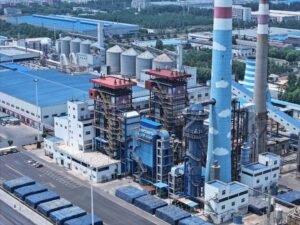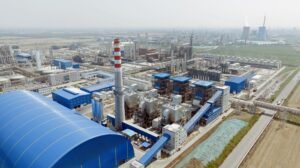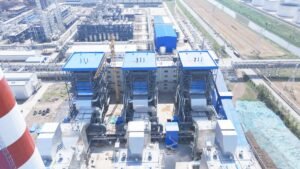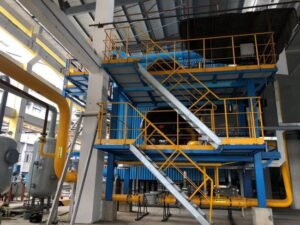
Industrial boilers commonly deliver hot water at 60–150°C, saturated steam at approximately 100–311°C depending on pressure, superheated steam at approximately 250–600°C, and thermal oil at approximately 150–350°C.
The combustion temperature inside a biomass, coal, oil or gas-fired boiler furnace can be much higher, often reaching approximately 800–1,200°C. However, furnace temperature is not the same as the temperature of the steam, hot water or thermal oil leaving the boiler.
The correct industrial boiler operating temperature depends on the required heat-transfer medium, pressure, application, fuel characteristics, materials, downstream equipment and applicable design code.
Key Takeaways
- Hot-water boilers commonly operate at 60–150°C.
- Saturated-steam temperature is determined by pressure; at 10 bar(g), it is approximately 184°C.
- Superheated-steam boilers commonly deliver steam at 250–600°C.
- Biomass and coal boiler furnaces may operate at 800–1,200°C, but this is not the boiler outlet temperature.
- Higher temperature is not automatically better; the correct condition must match the process requirement.
Typical Industrial Boiler Temperature Ranges
Industrial boiler temperature varies according to the medium being heated and how the generated heat will be used.
Temperature ranges at a glance
| Boiler or temperature type | Typical temperature range | Common applications |
|---|---|---|
| Low-temperature hot-water boiler | 60–95°C / 140–203°F | Building heating, process-water heating and district heating |
| High-temperature hot-water boiler | 95–150°C / 203–302°F | Industrial heating and centralized heating networks |
| Saturated-steam boiler | Approximately 100–311°C / 212–592°F | Food, textile, paper, chemical and general manufacturing |
| Superheated-steam boiler | Approximately 250–600°C / 482–1,112°F | Power generation, CHP and high-temperature processes |
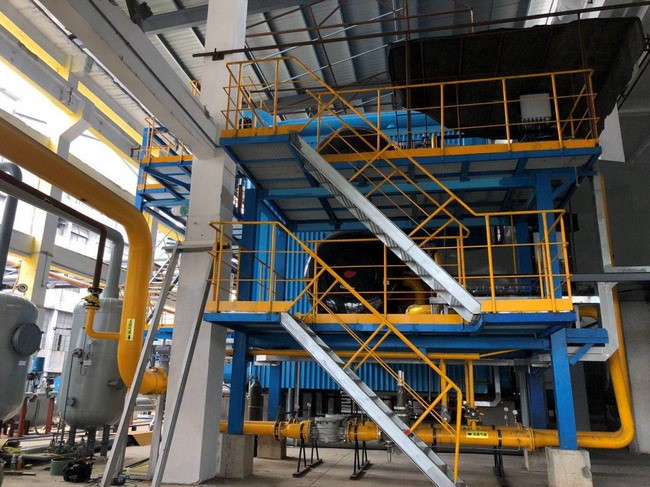
| Thermal oil boiler | Approximately 150–350°C / 302–662°F | Chemical, asphalt, drying and reactor heating |
| Biomass or coal boiler furnace | Approximately 800–1,200°C / 1,472–2,192°F | Fuel combustion inside the furnace |
These are commonly encountered project conditions rather than fixed minimum or maximum limits.
The actual industrial boiler temperature must be determined according to:
- Boiler pressure and capacity
- Saturated or superheated steam requirements
- Fuel type and fuel analysis
- Process heat demand
- Heating-surface arrangement
- Material allowable stress
- Downstream equipment
- Applicable engineering code
Why there is no single normal boiler temperature
Two boilers with the same steam capacity can require completely different designs.
For example, a 10 t/h boiler could produce:
- Saturated steam at 10 bar(g)
- Saturated steam at 25 bar(g)
- Superheated steam at 350°C
- Superheated steam at 450°C
Although all four boilers have the same nominal capacity, they require different pressure parts, heating surfaces, materials, controls and downstream equipment.
Steam capacity alone is therefore not sufficient for boiler selection.
What Does “Boiler Temperature” Actually Mean?
The term “boiler temperature” may refer to several measurement points. These temperatures must be clearly distinguished before comparing boiler specifications.
Hot-water outlet temperature
Hot-water outlet temperature is the temperature of the water leaving the boiler and entering the heating or process system.
Industrial hot-water boilers commonly operate between 60°C and 150°C.
Low-temperature systems are frequently used for:
- Building and warehouse heating
- Process-water preparation
- District-heating networks
- Low-temperature industrial processes
Pressurized hot-water systems can operate above 100°C without boiling because system pressure raises the boiling point of water.
The boiler, pumps, piping, expansion system and safety devices must all be designed for the required pressure and temperature.
Saturated-steam temperature
Saturated steam exists in equilibrium with liquid water at a given pressure.
Its temperature is determined by pressure. As saturated-steam pressure increases, its saturation temperature also increases.
For example:
- At approximately 1 bar(g), saturated steam is about 120°C.
- At approximately 10 bar(g), saturated steam is about 184°C.
- At approximately 20 bar(g), saturated steam is about 215°C.
Pressure and saturated-steam temperature cannot be selected independently.
Superheated-steam temperature
Superheated steam is produced by adding heat to saturated steam after evaporation.
The steam passes through a superheater, where its temperature rises above the saturation temperature corresponding to the same pressure.
Superheated steam is commonly required for:
- Steam turbines
- Combined heat and power plants
- Industrial power generation
- Petrochemical processes
- High-temperature drying
- Selected chemical processes
A superheated-steam boiler generally requires more complex heating surfaces, temperature control and material selection than a saturated-steam boiler.
Furnace and flue-gas temperature
Furnace temperature refers to the temperature in the fuel-combustion zone.
A biomass circulating fluidized bed boiler may maintain a furnace temperature of approximately 800–900°C while producing superheated steam at 485°C. These values describe different parts of the boiler.
Flue-gas temperature may be measured at the:
- Furnace outlet
- Superheater outlet
- Economizer outlet
- Air preheater outlet
- Boiler stack
Stack temperature is influenced by fuel moisture, excess air, heat-recovery performance, boiler load and low-temperature corrosion limits.
A lower stack temperature may indicate better heat recovery, but it must remain above the safe limit for the selected fuel and flue-gas composition.
How Pressure Determines Steam Temperature
The pressure-temperature relationship is one of the most important principles in industrial steam boiler selection.
Gauge pressure and absolute pressure
Boiler pressure may be expressed as gauge pressure or absolute pressure.
- bar(g) is gauge pressure measured relative to atmospheric pressure.
- bar(a) is absolute pressure measured relative to a perfect vacuum.
Industrial boiler specifications commonly use bar(g), while thermodynamic calculations and steam tables may use bar(a).
For example:
- Saturated steam at 10 bar(a) is approximately 180°C.
- Saturated steam at 10 bar(g) is approximately 184°C.
This difference occurs because 10 bar(g) is approximately equal to 11 bar(a).
Unless otherwise stated, pressure values in this article are expressed as gauge pressure.
Saturated-steam pressure and temperature table
| Steam pressure | Approximate saturation temperature |
|---|---|
| 0 bar(g), near standard atmospheric pressure | 100°C / 212°F |
| 1 bar(g) | 120°C / 248°F |
| 3 bar(g) | 144°C / 291°F |
| 5 bar(g) | 159°C / 318°F |
| 10 bar(g) | 184°C / 363°F |
| 15 bar(g) | 201°C / 394°F |
| 20 bar(g) | 215°C / 419°F |
| 40 bar(g) | 251°C / 484°F |
| 60 bar(g) | Approximately 276°C / 529°F |
| 100 bar(g) | Approximately 311°C / 592°F |
The boiling point at 0 bar(g) varies slightly with local atmospheric pressure and altitude.
These figures are rounded for preliminary reference. Final boiler, piping, valve and pressure-relief calculations should use recognized steam-property formulations and the applicable engineering standard.
Saturated steam vs. superheated steam
| Factor | Saturated steam | Superheated steam |
|---|---|---|
| Temperature | Determined by pressure | Higher than saturation temperature |
| Main heat-transfer mechanism | Condensation and latent-heat release | Sensible heat before condensation |
| Typical application | Process heating, cooking, sterilization and drying | Turbines, CHP and high-temperature processes |
| Heat-transfer performance | Generally effective for indirect process heating | Often less effective before cooling to saturation |
| Steam condition | May contain moisture if steam quality is poor | Remains dry until it cools to saturation |
| Boiler equipment | Evaporator and steam separation | Boiler plus superheater and temperature control |
Saturated steam is normally preferred for many industrial heating applications because it releases substantial latent heat at an almost constant temperature when it condenses.
Superheated steam is selected when steam must expand through a turbine, provide a higher process temperature or maintain an additional temperature margin before reaching saturation during transportation or expansion.
The critical point of water
Saturated-steam temperature rises with pressure until water reaches its critical point.
The critical point of ordinary water is approximately:
- 22.064 MPa absolute pressure
- 373.946°C
- 647.096 K
Above this point, liquid water and steam no longer exist as two clearly separated phases. Water becomes a single supercritical fluid.
A boiler operating at 100 bar should therefore not be described as supercritical because its pressure remains below the critical pressure of approximately 220.64 bar(a).
Temperature Ranges by Boiler Type and Application
Different boiler types can operate across overlapping temperature ranges. Boiler construction alone does not determine the outlet temperature.
Commonly encountered outlet conditions by boiler type
| Industrial boiler type | Typical outlet condition | Commonly encountered temperature |
|---|---|---|
| Fire-tube steam boiler | Mainly saturated steam | Approximately 120–204°C |
| Water-tube process boiler | Saturated or superheated steam | Approximately 180–450°C |
| Biomass grate boiler | Saturated or superheated steam | Approximately 170–540°C |
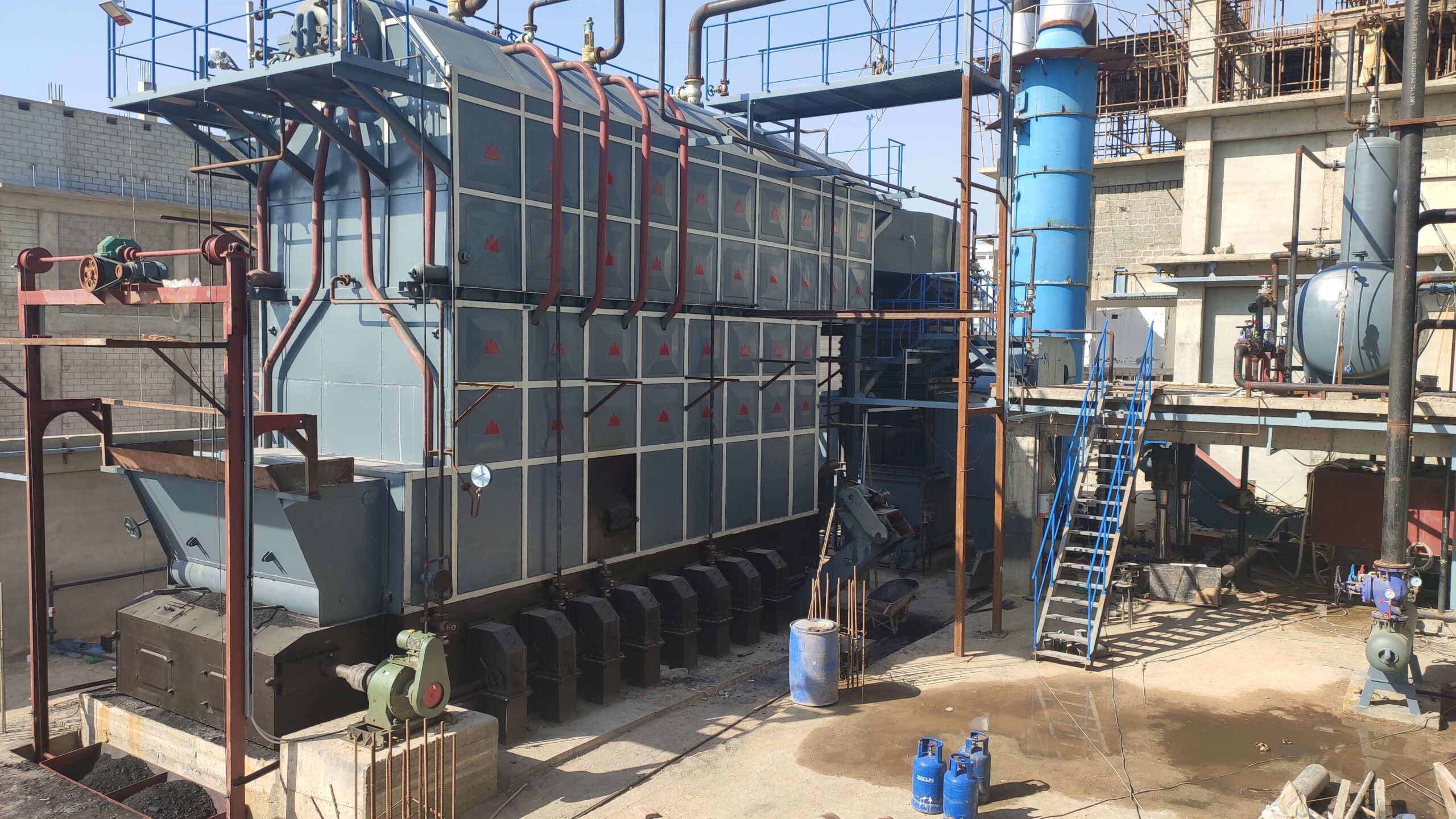
| Coal-fired chain-grate boiler | Saturated or superheated steam | Approximately 170–540°C |
| Circulating fluidized bed boiler | Saturated or superheated steam | Approximately 200–570°C |
| Oil- or gas-fired water-tube boiler | Saturated or superheated steam | Approximately 180–600°C |
| Industrial hot-water boiler | Pressurized hot water | Approximately 60–150°C |
| Thermal oil boiler | Organic heat-transfer fluid | Approximately 150–350°C |
These ranges describe commonly encountered project conditions rather than the absolute technical limits of each boiler type.
Final conditions depend on pressure, capacity, process requirements, fuel properties, materials and boiler configuration.
Typical saturated-steam applications
| Application | Indicative pressure | Approximate saturation temperature |
|---|---|---|
| Light heating and humidification | 1–3 bar(g) | Approximately 120–144°C |
| Food and beverage processing | 3–10 bar(g) | Approximately 144–184°C |
| Textile dyeing and drying | 5–15 bar(g) | Approximately 159–201°C |
| General manufacturing | 7–16 bar(g) | Approximately 170–204°C |
| Paper and chemical processing | 10–25 bar(g) | Approximately 184–226°C |
These values are indicative rather than universal. Some plants generate steam at a higher central pressure and use pressure-reducing stations to supply different production areas.
Typical superheated-steam applications
| Steam system | Indicative pressure | Indicative temperature |
|---|---|---|
| Moderate industrial superheated steam | 20–60 bar(g) | Approximately 250–450°C |
| Industrial CHP | 40–100 bar(g) | Approximately 400–540°C |
| Subcritical power-generation steam | Below critical pressure | Approximately 450–565°C |
| Supercritical steam system | Above 22.064 MPa(a) | Commonly approximately 540–600°C |
| Ultra-supercritical system | Higher than conventional supercritical conditions | Commonly around 600°C or higher |
“Ultra-supercritical” is an industry classification rather than one universally fixed pressure-and-temperature boundary.
Higher-temperature steam may improve power-cycle performance, but it also increases material, piping, valve, control and maintenance requirements.
For many process-heating applications, saturated steam at the correct pressure is more suitable than superheated steam.
Fuel, Material and System Limits
The maximum practical boiler temperature is controlled by the complete system rather than the furnace alone.
Furnace combustion temperature
| Combustion technology | Indicative combustion temperature |
|---|---|
| Circulating fluidized bed | Approximately 800–900°C |
| Bubbling fluidized bed | Approximately 800–950°C |
| Reciprocating or moving grate | Approximately 850–1,100°C |
| Pulverized-coal furnace | Often above 1,000°C |
Actual furnace temperature depends on:
- Fuel moisture and heating value
- Volatile matter
- Ash-fusion characteristics
- Fuel particle size
- Excess-air ratio
- Primary and secondary air distribution
- Furnace heat-release rate
- Boiler load
- Bed material and circulation rate
Furnace temperature should be optimized rather than maximized.
Excessively high temperature can increase slagging, fouling, thermal NOx formation, material damage and high-temperature corrosion.
How biomass fuel affects steam temperature
Biomass characteristics can limit the practical superheated-steam temperature of a boiler.
Important fuel properties include:
- Moisture
- Chlorine
- Alkali metals
- Sulfur
- Ash content
- Ash-fusion temperature
- Heating value
- Particle size
- Soil or sand contamination
A steam temperature that is suitable for clean wood chips may not be appropriate for a high-chlorine agricultural residue without changes to the superheater arrangement, tube material, soot-blowing system, furnace design or fuel blending strategy.
A reliable biomass boiler proposal should therefore be based on representative fuel analysis rather than only a general description such as “wood chips” or “agricultural waste.”
Thermal oil temperature limits
Thermal oil systems typically operate at approximately 150–350°C, depending on the selected heat-transfer fluid.
Two temperature limits must be considered:
Bulk-fluid temperature
Bulk-fluid temperature is the average temperature of the circulating thermal oil.
Film temperature
Film temperature is the temperature of the fluid layer directly adjacent to the heating surface.
Film temperature can be significantly higher than bulk-fluid temperature. Excessive film temperature may cause thermal cracking, carbon deposits, viscosity changes and accelerated fluid degradation.
The boiler must maintain sufficient thermal-oil flow and control heat flux rather than relying only on the stated outlet temperature.
Pressure-part material limits
Material selection cannot be based on temperature alone.
Engineers must also consider:
- Design pressure
- Component metal temperature
- Component type and wall thickness
- Allowable stress
- Creep strength
- Corrosion environment
- Welding procedures
- Expected operating life
- Applicable code edition
Carbon steel is widely used for moderate-temperature boiler pressure parts. Chromium-molybdenum alloy steels may be required for higher-temperature superheaters, headers and steam piping.
Advanced high-temperature systems may use selected stainless steels or nickel-based alloys.
Tube, pipe, plate and forging specifications should not be treated as interchangeable simply because they belong to the same alloy family. Final material selection must be verified through project-specific calculations and applicable code allowable-stress tables.
Real Project Examples and Boiler Specification
Actual project parameters demonstrate why boiler temperature must be selected according to the required duty.
Overseas industrial hot-water project
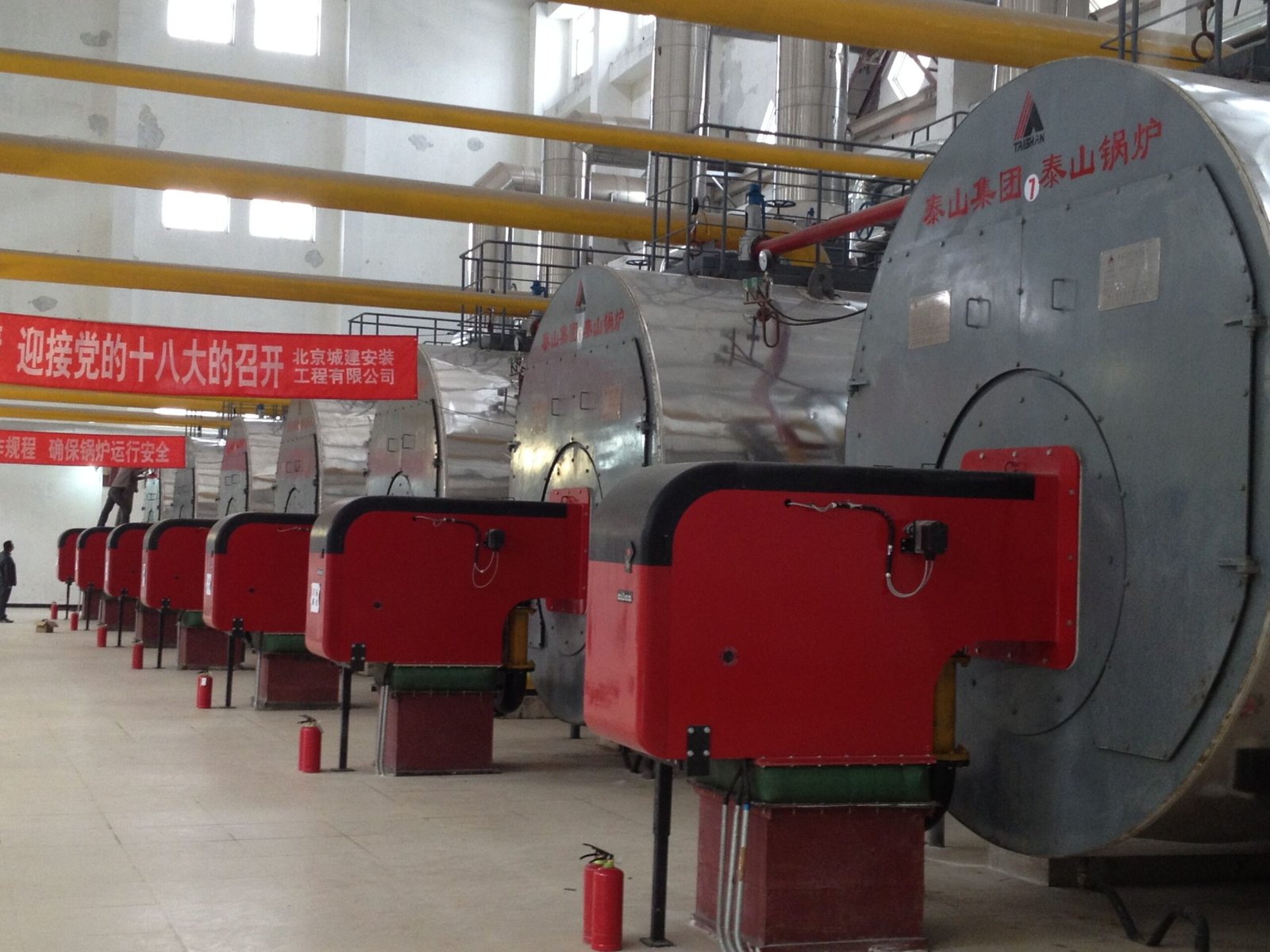
Taishan Group supplied multiple 2.8 MW coal-fired hot-water boilers for an overseas industrial heating project.
| Parameter | Project condition |
|---|---|
| Thermal output | 2.8 MW per boiler |
| Working pressure | 1.0 MPa |
| Outlet-water temperature | 95°C |
| Return-water temperature | 75°C |
| Fuel | Lignite |
| Application | Industrial heating network |
This project demonstrates that hot-water boiler temperature should be matched to the actual supply-and-return conditions of the heating network.
Selecting a higher temperature without a process requirement can increase pressure, material and control demands without necessarily improving project performance.
Confidential 75 t/h biomass [CFB boiler](https://coalbiomassboiler.com/product/circulating-fluidized-bed-boiler/) case
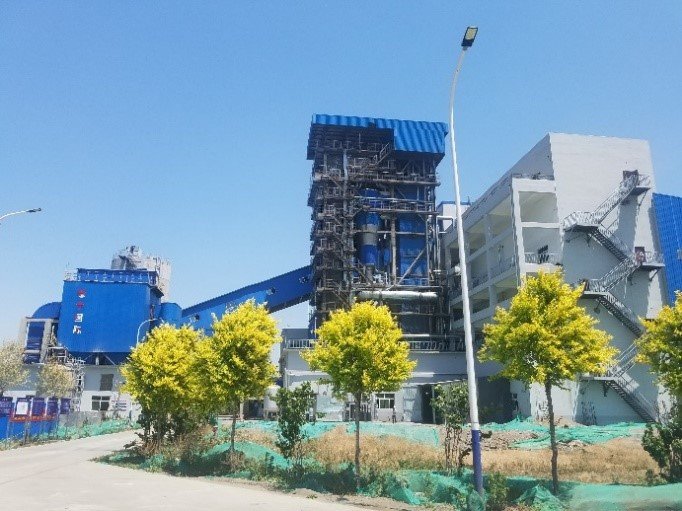
Taishan Group supplied a 75 t/h biomass circulating fluidized bed boiler for an overseas industrial energy project.
To protect commercial confidentiality, the customer name, country, commissioning date, detailed plant configuration and fuel-supply information are not disclosed.
| Parameter | Project condition |
|---|---|
| Rated steam capacity | 75 t/h |
| Rated steam pressure | 5.29 MPa |
| Rated steam temperature | 485°C |
| Boiler technology | Biomass circulating fluidized bed boiler |
| Steam condition | Superheated steam |
| Application | Integrated industrial energy and process-steam supply |
| Fuel | Multiple biomass fuels; detailed analysis confidential |
The project required higher-grade superheated steam rather than only low-temperature process steam.
Compared with a saturated-steam boiler of the same capacity, the design required additional consideration of:
- Superheater arrangement
- Steam-temperature control
- High-temperature pressure-part materials
- Biomass-related fouling and corrosion
- Stable operation under load changes
- Downstream equipment requirements
- Feedwater and boiler-water quality
The case demonstrates why a request for a “75 t/h biomass boiler” is not sufficiently detailed.
It could refer to:
- Saturated steam at 10 bar(g)
- Saturated steam at 25 bar(g)
- Superheated steam at 450°C
- Superheated steam at 485°C
- Industrial process-steam supply
- Combined heat and power
- Power generation
Each condition requires a different boiler configuration.
Information required for boiler selection
A technically useful industrial boiler inquiry should include:
| Required information | Why it matters |
|---|---|
| Steam capacity or thermal output | Determines boiler size |
| Operating and design pressure | Determines pressure-part requirements |
| Required outlet temperature | Determines whether a superheater is needed |
| Feedwater temperature | Affects heat balance and efficiency |
| Fuel type and fuel analysis | Determines combustion and heating-surface design |
| Application | Determines the correct heat-transfer medium |
| Operating hours and load profile | Affects configuration and control strategy |
| Water quality | Determines water-treatment requirements |
| Emission limits | Determines flue-gas treatment equipment |
| Design code | Determines calculations, materials and inspection |
| Project altitude | Affects fan and combustion-air selection |
| Scope of supply | Defines auxiliaries and balance-of-plant equipment |
A useful request might state:
Required steam capacity: 20 t/h
Operating pressure: 15 bar(g)
Steam condition: Saturated steam
Feedwater temperature: 105°C
Fuel: Wood chips with approximately 35% moisture
Application: Industrial drying
Operating schedule: 24 hours per day
Applicable code: ASME or EN
Emission limits: To be confirmed
This information allows the boiler manufacturer to determine the correct furnace, pressure parts, heating surfaces, auxiliaries and control system.
Frequently Asked Questions and Final Guidance
What is the normal temperature of an industrial boiler?
There is no single normal temperature. Hot-water boilers commonly operate at 60–150°C, saturated-steam temperature depends on pressure, and superheated-steam boilers commonly deliver steam at approximately 250–600°C.
What is the steam temperature at 10 bar?
At 10 bar(g), saturated-steam temperature is approximately 184°C. At 10 bar(a), it is approximately 180°C, so the pressure basis must be confirmed.
Can a hot-water boiler operate above 100°C?
Yes. A pressurized hot-water boiler can operate above 100°C if the system maintains sufficient pressure to prevent boiling.
Is furnace temperature the same as steam temperature?
No. Furnace temperature describes the combustion zone and may exceed 800°C, while steam temperature describes the steam leaving the boiler and is normally much lower.
What is the maximum temperature of a [biomass boiler](https://coalbiomassboiler.com/product/biomass-boilers/)?
The answer depends on the measurement point. A biomass furnace may operate at approximately 800–1,100°C, while the boiler may supply saturated steam at approximately 180–250°C or superheated steam at approximately 400–540°C.
When is a superheater required?
A superheater is required when the specified steam outlet temperature is higher than the saturation temperature corresponding to the operating pressure.
Is higher-temperature steam always better?
No. Higher-temperature steam may improve power-cycle performance, but it also increases material, piping, valve, control and maintenance requirements. Saturated steam is often more suitable for process heating.
Conclusion
Industrial boiler temperature may refer to hot-water outlet temperature, saturated-steam temperature, superheated-steam temperature, furnace temperature or flue-gas temperature.
These values should not be used interchangeably.
As a general reference:
- Hot-water boilers commonly operate at 60–150°C.
- Saturated-steam temperature is determined by pressure.
- Superheated-steam boilers commonly produce steam at 250–600°C.
- Thermal oil systems commonly operate at 150–350°C.
- Solid-fuel boiler furnaces may operate at approximately 800–1,200°C.
The correct boiler temperature should be determined by the actual process requirement, pressure, fuel characteristics, downstream equipment, material limitations and applicable design code.
Taishan Group designs and manufactures industrial hot-water boilers, saturated-steam boilers, superheated-steam boilers, biomass boilers, coal-fired boilers, oil- and gas-fired boilers, CFB boilers and power-plant boiler systems.
Send us your required capacity, operating pressure, outlet temperature, fuel analysis, application and project location. Taishan Group’s engineering team will evaluate the appropriate boiler type, steam condition and preliminary scope of supply for your project.
References
NISTIR 5078: Thermodynamic Properties of Water and Steam — National Institute of Standards and Technology
ASME International Steam Tables for Industrial Use — National Institute of Standards and Technology
Superheated Steam Temperature and Heat-Transfer Principles — Spirax Sarco
Superheated Steam Table Calculator — Spirax Sarco
Industrial Steam Systems and Boiler Efficiency Resources — U.S. Department of Energy
Improving Process Heating System Performance: A Sourcebook for Industry — U.S. Department of Energy
Industrial Watertube Package Boiler Temperature and Pressure Specifications — Babcock & Wilcox
Industrial Watertube Package Boilers Technical Brochure — Babcock & Wilcox
Industrial Hot-Water Boiler Temperature Classifications — Atlas Copco
AP-42 External Combustion and Industrial Boiler Resources — U.S. Environmental Protection Agency