Industry News

How Much Does a Coal-Fired Boiler Cost? Price Guide 2025
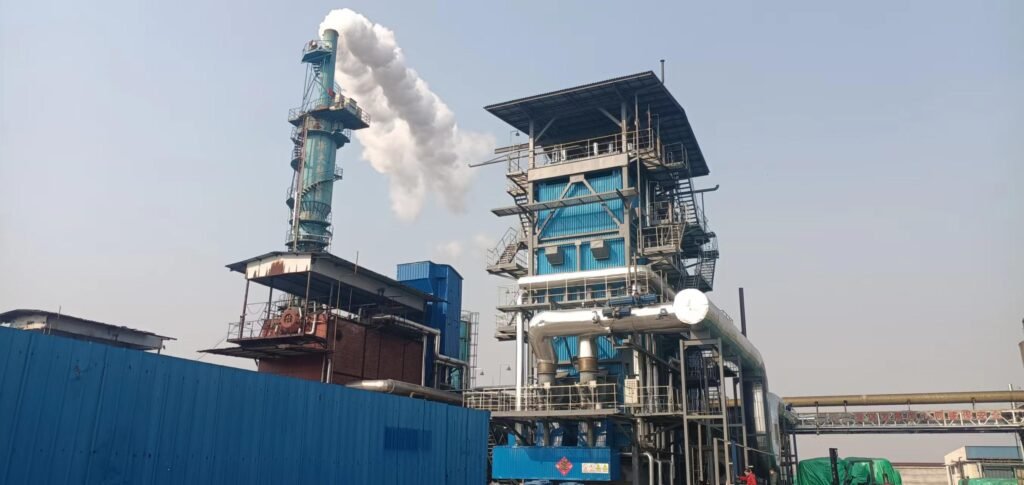
How Much Does a Coal-Fired Boiler Cost? Price Guide 2025

Coal-fired boilers remain a popular choice for large-scale industrial heating and power generation due to their ability to handle varied fuel qualities and deliver high output. However, many buyers face uncertainty when budgeting because the true cost of a coal-fired boiler depends on capacity, design, and compliance requirements. Without clear cost insights, projects risk budget overruns, hidden expenses, and delays.

The cost of a coal-fired boiler typically ranges from $25,000 to $100,000+ for small industrial units (1–10 ton/hr), $1 million–$5 million for medium-capacity boilers (20–75 ton/hr), and $10 million–$100 million+ for utility-scale installations (100–500 MW). Final pricing depends on capacity, steam parameters, fuel quality, pressure rating, efficiency enhancements (economizers, air preheaters), emission control systems (ESP, bag filters, desulfurization), auxiliary equipment (feedwater system, fans, ash handling), and whether the project includes full EPC/civil works.

Accurate budgeting requires evaluating not just the boiler body, but also its auxiliary systems and environmental compliance features.
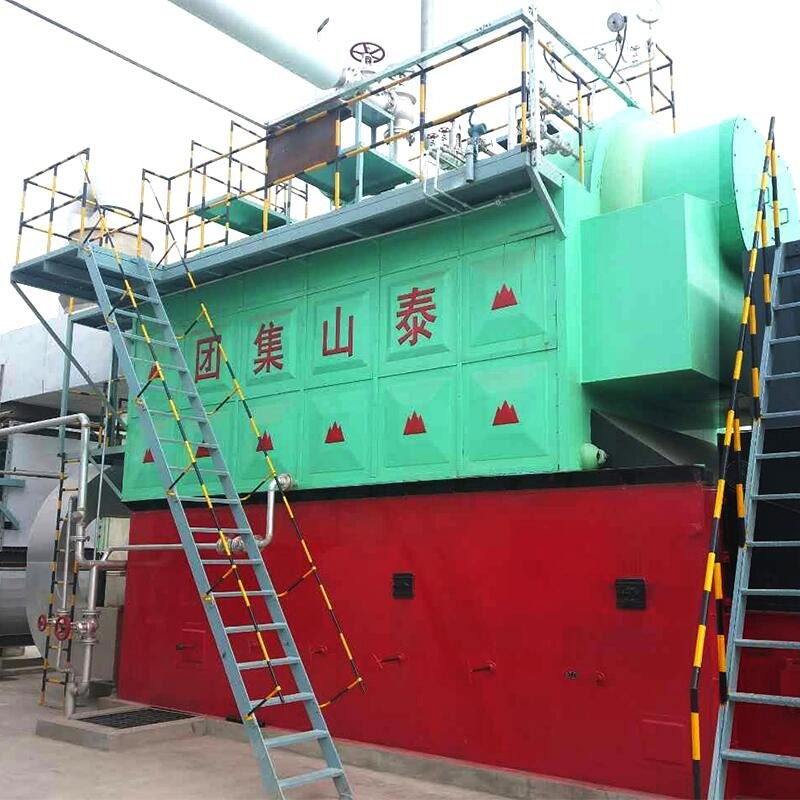
 

What Capacity and Steam Parameters Influence Coal-Fired Boiler Cost?

When industrial investors consider installing a coal-fired boiler, one of the most pressing challenges they face is the high capital cost and long-term operating expense. Choosing the wrong boiler capacity or mismatched steam parameters often leads to oversized equipment, excessive fuel consumption, inefficient energy output, and costly maintenance. On the other hand, selecting the right capacity and steam characteristics can drastically lower lifecycle costs, improve performance, and ensure compliance with energy efficiency standards. This article explores how boiler capacity and steam parameters directly affect costs, offering practical insights for decision-makers.

The cost of a coal-fired boiler is mainly influenced by its rated capacity (measured in tons of steam per hour or MW output) and the designed steam parameters, including steam pressure, steam temperature, and steam flow rate. Larger capacities generally require bigger furnaces, higher-grade steel, and stronger auxiliary systems, raising capital costs, while higher steam parameters demand advanced materials and manufacturing precision, which also increase investment but improve efficiency and reduce operating cost per unit of energy.

Before diving into detailed technical aspects, it is important to recognize that capacity and steam parameters do not work in isolation; they must be optimized together based on the intended industrial application. For instance, a textile plant with low-pressure steam requirements may not need the same boiler configuration as a utility-scale power station. Therefore, understanding how these two factors interact helps businesses make balanced, cost-effective decisions.

Higher steam pressure always reduces the cost of a coal-fired boiler.False

While higher steam pressure improves efficiency, it requires stronger alloy steel, thicker walls, and advanced welding technology, which increases initial cost.

Coal-fired boiler capacity has a direct linear relationship with its price.False

Boiler costs do not increase linearly with capacity; larger units benefit from economies of scale, though they require more advanced infrastructure and higher-grade materials.

Capacity and Its Impact on Cost

Boiler capacity refers to the maximum steam output a unit can generate, typically measured in tons/hour (TPH) or MW thermal/electrical. A higher-capacity unit requires:

  • A larger furnace volume to accommodate more coal combustion.

  • A stronger pressure vessel design to handle increased steam load.

  • More complex feedwater, air supply, and flue gas systems.

  • Higher-grade materials for durability under extended operating cycles.

This results in a higher upfront investment but, depending on scale, may reduce the cost per unit of steam produced. For example, a 20 TPH boiler may cost 2.5 times as much as a 10 TPH boiler, but its per-ton steam cost may be 30–40% lower due to efficiency gains.

Boiler Capacity (TPH)Approximate Initial Cost (USD million)Typical Efficiency (%)Cost per ton of steam (USD)
10 TPH1.5 – 2.080–8219–22
20 TPH3.5 – 4.283–8513–16
50 TPH7.0 – 9.085–8710–12
100 TPH12.0 – 15.086–888–10

This demonstrates that while capacity expansion raises equipment cost, operational cost efficiency improves over time, making large boilers attractive for continuous, high-demand operations.

Steam Parameters and Material Costs

Steam parameters (pressure, temperature, and flow) significantly dictate the design complexity and material selection. For example:

  • High pressure (>100 bar): Requires thick-walled drums and seamless alloy pipes.

  • High temperature (>500°C): Necessitates chrome-moly or nickel-based steel to resist creep and thermal fatigue.

  • Supercritical or ultra-supercritical designs: Demand cutting-edge metallurgy and advanced welding techniques.

Steam Pressure (bar)Steam Temp (°C)Required MaterialsCost Impact
30–40350–400Carbon steel, standard tubesLow
60–100450–500Low-alloy steel (Cr-Mo)Medium
100–160500–540High-alloy Cr-Mo, seamless forgingHigh
220+ (supercritical)560–600Nickel-based alloys, advanced weldingVery High

Although higher steam parameters increase capital expenditure, they provide better thermal efficiency, often reducing coal consumption by 8–12% compared to subcritical boilers. This translates into significant long-term savings on fuel, especially in large-scale power plants where coal cost is the largest operating expense.

Case Example: Cost Analysis in Power Generation

Consider a utility company evaluating two options:

  1. A 100 TPH subcritical boiler operating at 90 bar/450°C.

  2. A 100 TPH supercritical boiler operating at 250 bar/570°C.

  • Initial cost difference: ~30–35% higher for supercritical.

  • Fuel savings: ~10–12% annually.

  • Payback period: 5–7 years depending on coal price.

  • Lifetime ROI: 15–20% higher for supercritical due to reduced fuel consumption.

This illustrates how steam parameters influence not just the initial boiler cost but the entire life-cycle economics.

Conclusion

Capacity and steam parameters are the two most critical factors influencing coal-fired boiler cost. While larger capacity requires a higher investment, it typically lowers the per-unit cost of steam generation. Similarly, higher steam pressure and temperature increase upfront material and manufacturing costs but lead to significant efficiency gains and long-term fuel savings. The key for businesses is to match boiler size and steam parameters with actual process demand, avoiding both under-sizing (leading to inefficiency and operational strain) and over-sizing (leading to wasted investment).
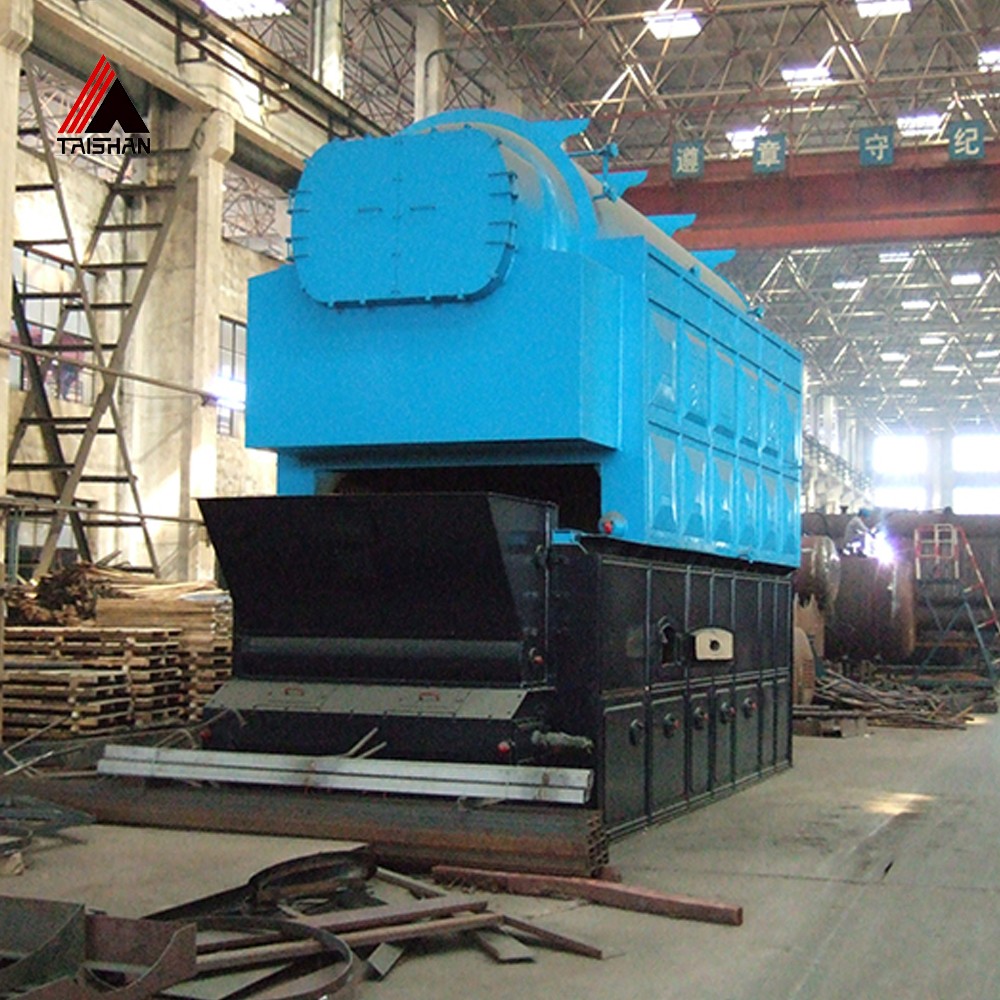
How Does Fuel Quality and Type (Bituminous, Lignite, Anthracite) Affect Coal-Fired Boiler Pricing?

One of the most overlooked yet costly mistakes in boiler investment decisions is underestimating the impact of coal fuel quality. Many buyers focus primarily on boiler capacity and steam parameters while assuming coal is a uniform commodity. In reality, the type of coal—whether lignite, bituminous, or anthracite—greatly determines the boiler’s design, efficiency, maintenance requirements, and ultimately its overall cost. Poor fuel matching can lead to excessive ash handling, slagging, corrosion, higher emissions compliance costs, and even premature boiler failure. However, selecting the right boiler design aligned with fuel quality can lower total cost of ownership and boost performance reliability.

Coal type directly affects the cost of coal-fired boilers because different grades have varying calorific values, moisture content, sulfur levels, and ash properties. Lignite, with high moisture and low heating value, requires larger furnaces and more complex flue gas systems, increasing capital cost and operating expense. Bituminous coal, being more energy-dense and widely available, balances cost and efficiency, making it the most common choice. Anthracite, though highly efficient due to its high carbon content and low volatile matter, significantly increases equipment wear and upfront boiler price due to its harder combustion characteristics.

Understanding the fuel–boiler relationship is critical because choosing the wrong fuel compatibility not only raises upfront investment but also locks the operator into higher fuel and maintenance costs for decades. This is why engineers stress fuel testing, calorific value analysis, and long-term supply chain assessment before finalizing a boiler design.

Anthracite coal always reduces total boiler cost because it is the most efficient fuel.False

Although anthracite provides higher efficiency, its higher hardness, limited supply, and stricter combustion requirements increase both capital and operating cost.

Lignite coal is the cheapest fuel option and always lowers boiler operating cost.False

While lignite is inexpensive per ton, its high moisture and low calorific value mean higher consumption and larger boiler size, leading to increased overall system cost.

Fuel Characteristics That Drive Boiler Cost

Each coal type has a unique chemical and physical profile. These directly influence boiler size, furnace design, and pollution control systems.

Coal TypeCalorific Value (kcal/kg)Moisture (%)Ash (%)Sulfur (%)Impact on Boiler DesignCost Effect
Lignite2,500 – 4,20025–406–150.2–1.0Large furnace, high flue gas volume, robust ash handlingHigh OPEX despite low fuel price
Bituminous5,000 – 7,5005–155–120.5–2.0Balanced furnace size, moderate emission controlMedium CAPEX, efficient OPEX
Anthracite7,500 – 9,0002–68–120.4–0.8Stronger burner systems, higher-grade materialsHigh CAPEX, lower fuel use but higher wear

From this comparison, lignite seems cheap per ton, but its poor calorific value means consuming 2–3 times more tons compared to bituminous coal for the same steam output. This leads to larger storage, transportation, and ash disposal systems, all of which raise cost. Anthracite, though powerful, requires expensive feed systems and can damage refractory linings, demanding higher maintenance budgets.

Case Study: Cost Analysis of Fuel Choice

Consider a 50 TPH coal-fired boiler running 8,000 hours per year:

Fuel TypeAnnual Fuel Consumption (tons)Fuel Price (USD/ton)Annual Fuel Cost (USD)Maintenance & Handling Cost (USD)Total OPEX (USD)
Lignite110,000252,750,000900,0003,650,000
Bituminous70,000604,200,000500,0004,700,000
Anthracite60,0001006,000,000750,0006,750,000

While lignite appears cheapest in direct fuel cost, its high consumption and ash handling raise OPEX. Bituminous coal strikes a balance, often offering the best cost-to-efficiency ratio. Anthracite is efficient but economically viable only in regions with abundant local supply.

Engineering Considerations

  1. Combustion System Design: Lignite requires fluidized bed combustion (FBC) for efficiency, while bituminous performs well in pulverized coal systems. Anthracite often needs specialized stokers or fluidized systems.

  2. Emission Control: High-sulfur bituminous coal requires desulfurization units, adding cost. Lignite boilers must handle high flue gas moisture, requiring larger ESPs or baghouses.

  3. Material Stress: Anthracite’s high flame temperature can shorten refractory life, raising replacement costs.

  4. Logistics: Lignite degrades quickly and is uneconomical for long transport, necessitating proximity to mines.

Long-Term Cost Perspective

  • Lignite: Best suited for captive power plants located near mines, where transportation cost is negligible and fuel price stability offsets high consumption.

  • Bituminous: Ideal for industrial users requiring reliable, balanced economics.

  • Anthracite: Recommended only for niche applications where its superior calorific value justifies higher investment and supply is secure.

Conclusion

Fuel type and quality are decisive in coal-fired boiler pricing. Lignite requires larger, costlier systems despite its low per-ton price. Bituminous remains the most cost-effective and widely adopted fuel due to its balance of calorific value and manageable emissions. Anthracite delivers high efficiency but comes with higher boiler design and maintenance costs, making it viable only under specific local supply conditions. The right choice depends on both the technical compatibility of the fuel with the boiler design and the economic realities of long-term supply.
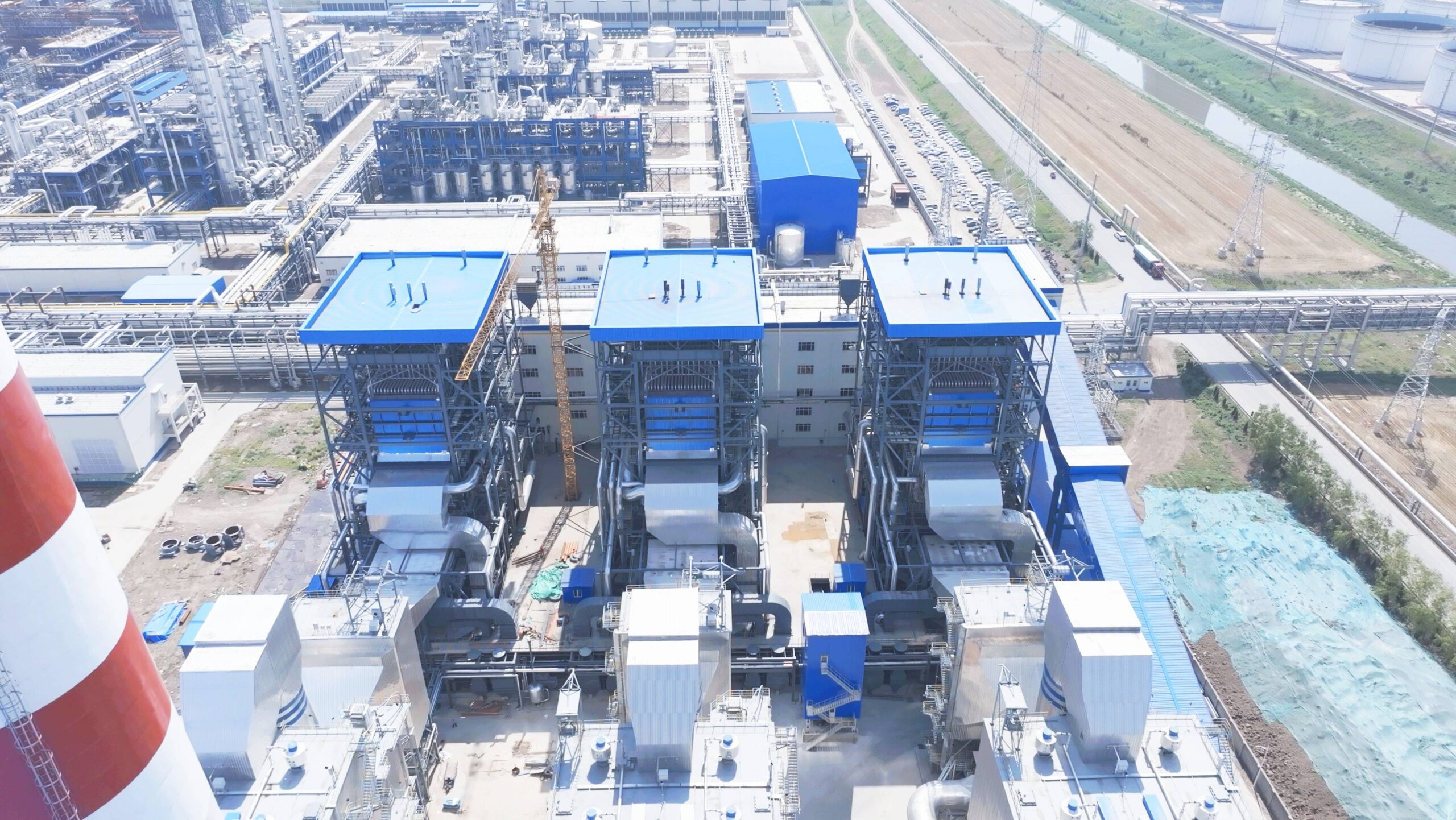
What Auxiliary Equipment Must Be Included in the Total Installed Cost of a Coal-Fired Boiler?

When calculating the investment for a coal-fired boiler project, many buyers make the mistake of focusing only on the boiler body and pressure vessel. This approach often leads to unexpected cost overruns of 20–40% because a complete coal-fired boiler system requires a full set of auxiliary equipment for safe, efficient, and environmentally compliant operation. Without properly budgeting for these components, projects face delays, compliance risks, and higher operating costs. The solution is to consider the total installed cost (TIC), which includes all required auxiliary systems along with the boiler itself.

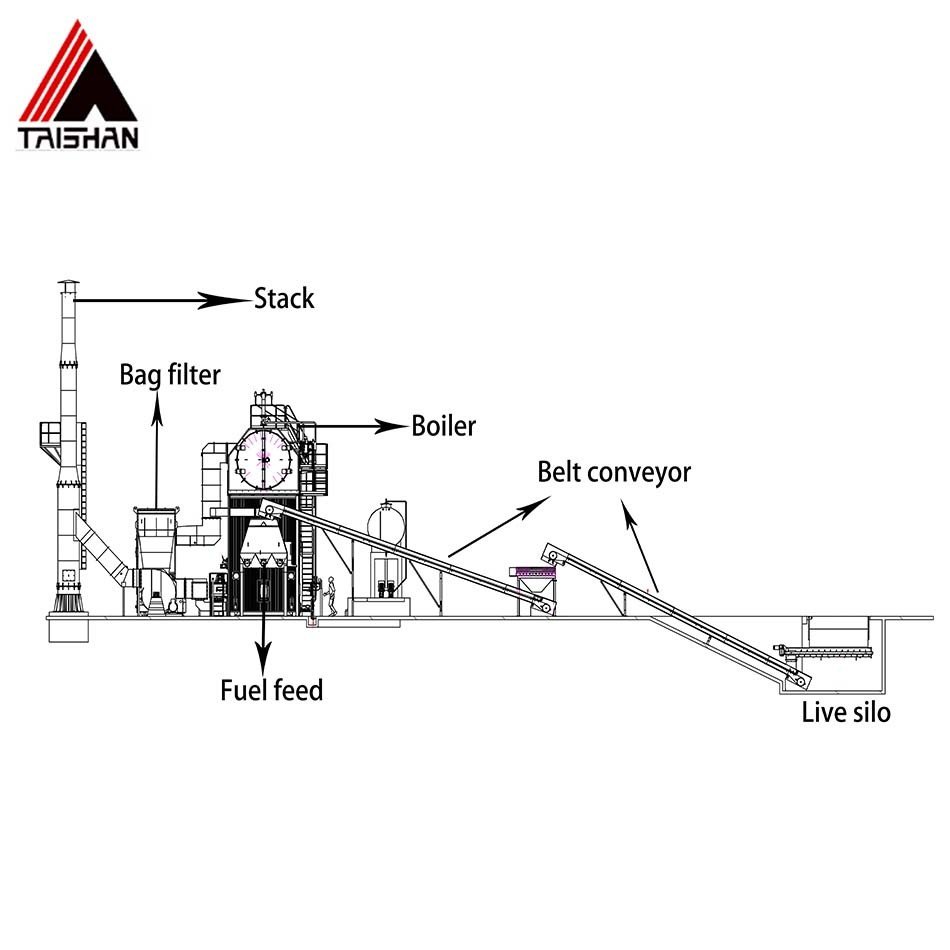
The total installed cost of a coal-fired boiler must include key auxiliary equipment such as draft fans (ID/FD/PA fans), fuel feeding systems, ash handling systems, feedwater treatment and pumps, air preheaters, economizers, electrostatic precipitators or bag filters, chimneys, and control systems. These auxiliaries ensure proper combustion, emission control, heat recovery, and safe operation. Excluding them from initial budgeting leads to serious underestimation of project costs.

Investors should view auxiliary equipment not as optional add-ons but as integral parts of a functioning power or steam generation system. Each unit directly impacts performance, compliance, and lifecycle economics, which is why EPC (Engineering, Procurement, and Construction) contractors always quote turnkey projects including auxiliaries.

The main boiler body accounts for over 80% of the total installed cost of a coal-fired boiler.False

The boiler pressure part typically represents only 50–60% of the TIC; auxiliaries and balance-of-plant equipment make up the remaining share.

Auxiliary equipment in coal-fired boilers is optional and can be added later without major cost impact.False

Auxiliaries are essential for combustion, heat transfer, and emission compliance; retrofitting later is far more expensive and often impractical.

Major Auxiliary Equipment for Coal-Fired Boilers

Auxiliary EquipmentFunctionCost Impact (% of TIC)
Induced Draft (ID) FanDraws flue gas through furnace & ESP8–12%
Forced Draft (FD) FanSupplies combustion air to furnace3–5%
Primary Air (PA) FanCarries coal powder to burners2–4%
Coal Feeding SystemPulverizers, feeders, conveyors8–10%
Ash Handling SystemRemoves bottom & fly ash safely6–9%
Feedwater Pumps & HeatersEnsure proper water/steam cycle6–8%
EconomizerRecovers waste heat from flue gas4–6%
Air PreheaterPreheats combustion air for efficiency3–5%
ESP or Bag FilterCaptures particulate emissions10–15%
Chimney/StackSafely releases treated flue gas4–7%
Water Treatment PlantRemoves impurities to protect boiler tubes3–5%
Instrumentation & ControlsDCS, safety interlocks, automation7–10%

This breakdown shows that auxiliaries collectively account for 40–50% of the total installed cost, making them equally important as the boiler itself.

Example: 50 TPH Coal-Fired Boiler TIC Breakdown

Cost ComponentApproximate Cost (USD million)Share of Total (%)
Boiler Pressure Parts5.055
Draft Fans (ID, FD, PA)1.213
Fuel Feeding & Pulverizers0.910
Ash Handling System0.67
Air Preheater & Economizer0.78
ESP & Chimney1.112
Instrumentation & Control0.55
Total Installed Cost9.1100

From this analysis, we can see that the pressure part alone is insufficient for cost planning. Without auxiliaries, the plant cannot operate efficiently or legally.

Engineering Considerations for Auxiliary Selection

  1. Fuel Type Dependence: Lignite boilers require more robust fuel feeding and ash handling compared to bituminous designs.

  2. Emission Regulations: Stricter NOx/SOx norms may require flue gas desulfurization (FGD) systems, which can add 15–20% to TIC.

  3. Plant Layout Constraints: Limited space may demand compact auxiliary systems or modular ESPs.

  4. Automation Level: Higher DCS sophistication improves safety and efficiency but increases control system cost.

Long-Term Value of Investing in Auxiliaries

Well-designed auxiliaries reduce unplanned downtime, optimize fuel efficiency, and ensure compliance with tightening environmental laws. For example, economizers and air preheaters together can raise boiler efficiency by 4–6%, resulting in millions of dollars in fuel savings across the plant’s lifecycle. Similarly, reliable ash handling reduces maintenance downtime and environmental penalties.

Conclusion

Auxiliary equipment is not an afterthought—it is the backbone of a functioning coal-fired boiler system. Proper budgeting for fans, pumps, coal handling, ash handling, emission control, heat recovery devices, and control systems is essential to avoid underestimating project cost by nearly half. By including all auxiliaries in the total installed cost, plant owners safeguard efficiency, safety, and compliance for decades of operation.
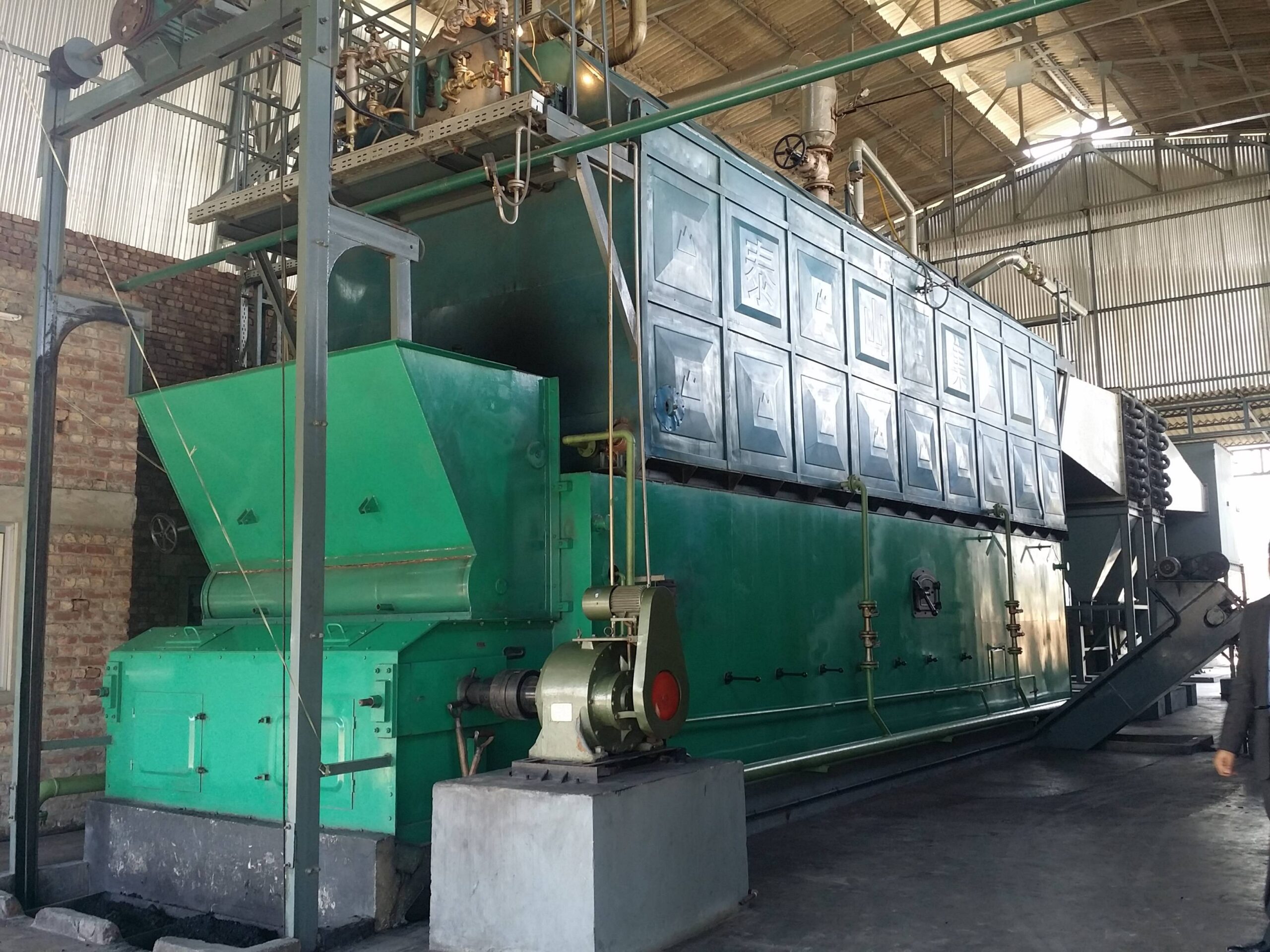
How Do Emission Control and Environmental Compliance Raise Investment in Coal-Fired Boilers?

For many investors, the biggest hidden expense in a coal-fired boiler project isn’t the boiler itself—it’s the environmental compliance equipment required to meet emission standards. Power plants that ignore these costs face regulatory penalties, forced shutdowns, or expensive retrofits that can exceed 30% of the original investment. With increasingly strict global emission norms covering particulates, SO₂, NOₓ, and CO₂, emission control has become a mandatory driver of upfront capital cost in every new coal-fired boiler installation.

Emission control and environmental compliance raise the investment cost of coal-fired boilers by requiring additional systems such as electrostatic precipitators (ESP) or bag filters for particulate removal, flue gas desulfurization (FGD) units for SO₂ reduction, selective catalytic reduction (SCR) or low-NOx burners for nitrogen oxide control, and continuous emission monitoring systems (CEMS) for regulatory reporting. These systems can add 20–40% to the total installed cost depending on local regulations, fuel type, and boiler size.

This means that even if two boilers have the same capacity and steam parameters, their total installed cost can differ dramatically based on the environmental standards they must meet. Investors should therefore integrate compliance costs from the feasibility stage, not as an afterthought.

Emission control systems are optional in coal-fired boiler projects and only needed for large plants.False

Environmental regulations apply to all industrial boilers; even small and medium units require particulate and NOx control systems to operate legally.

Emission control increases operating cost but has no impact on initial capital expenditure.False

ESP, FGD, and SCR units require substantial upfront investment and significantly raise capital cost, in addition to adding operational expenses.

Key Emission Control Equipment and Cost Impacts

Pollutant ControlledEquipment RequiredTypical Cost Impact (% of TIC)Efficiency
Particulate Matter (PM)ESP or Bag Filter10–15%99% removal
Sulfur Dioxide (SO₂)Wet/Dry Flue Gas Desulfurization (FGD)12–20%90–98% removal
Nitrogen Oxides (NOₓ)Low-NOx Burners, Overfire Air, or SCR Systems8–12%60–95% removal
Carbon Dioxide (CO₂)CCS (Carbon Capture & Storage, emerging tech)25–40%80–90% removal
Monitoring & ComplianceCEMS, stack testing, data reporting systems2–4%N/A

As shown, particulate and SO₂ removal dominate capital additions in most installations, while NOx control is increasingly mandated in urban and developed regions. CO₂ capture, though still limited, represents the single largest potential compliance cost as global decarbonization accelerates.

Example: Investment Impact for a 100 TPH Boiler

ComponentCost Without Emission Control (USD million)Cost With Compliance Systems (USD million)Increase (%)
Boiler Pressure Parts & Auxiliaries12.012.0
ESP for Particulate1.8+15%
Wet FGD for SO₂2.4+20%
SCR for NOₓ1.5+12%
CEMS & Monitoring0.5+4%
Total Installed Cost12.018.2+52%

This case illustrates how compliance can push capital cost up by more than 50%. However, failure to install these systems exposes operators to fines, shutdowns, and loss of market access for electricity or industrial steam.

Engineering Considerations

  1. Fuel Type: High-sulfur lignite requires larger FGD units, while anthracite with low volatile matter produces less NOx but higher particulates.

  2. Regulatory Region: U.S. EPA and EU standards require nearly zero visible emissions, while developing regions may allow relaxed PM levels.

  3. Plant Scale: Larger units benefit from economies of scale in emission systems, reducing cost per MW.

  4. Integration: Designing compliance systems from the outset is cheaper than retrofitting after construction.

Long-Term Cost of Compliance

While emission controls increase CAPEX, they also impact OPEX:

  • ESP and bag filters require regular maintenance and energy input (1–3% of plant load).

  • FGD systems consume water, limestone, and electricity, raising running costs.

  • SCR catalysts degrade over time and need replacement every 3–5 years.

Despite these costs, compliance ensures plant operation longevity and avoids fines that can exceed millions annually. Moreover, modern systems often qualify for government incentives or carbon credits, offsetting part of the investment.

Conclusion

Emission control and environmental compliance are no longer optional—they are fundamental to coal-fired boiler projects. ESPs, FGD units, SCRs, and monitoring systems can add 20–50% to the initial investment, but they safeguard long-term operation, regulatory approval, and public trust. Investors must view compliance costs not as penalties but as essential infrastructure for sustainable operation in a carbon-constrained world.
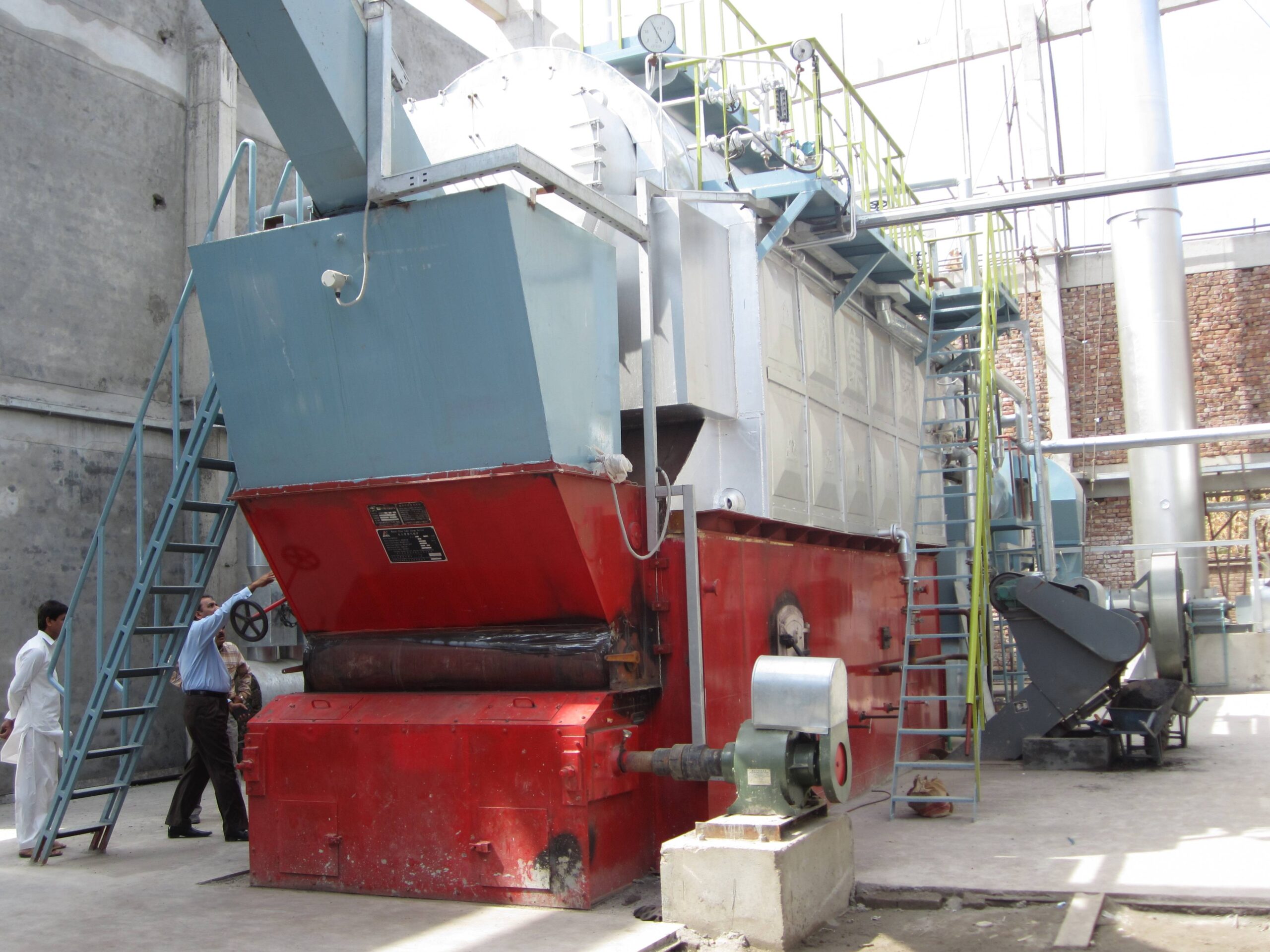
What Are the Typical Cost Ranges for Industrial vs. Utility-Scale Coal-Fired Boilers?

One of the most important financial questions for investors planning a coal-fired boiler project is whether the system will serve an industrial application (such as textiles, food processing, or chemicals) or a utility-scale power generation plant. Many first-time buyers assume that costs scale linearly with size, but this is not the case. Industrial boilers and utility boilers are fundamentally different in design, complexity, and compliance requirements. Failing to understand these differences often results in major underestimation of capital expenditure (CAPEX), lifecycle cost, and project feasibility.

Industrial coal-fired boilers typically cost between USD $1.5 million and $15 million depending on capacity (5–100 TPH) and steam parameters, while utility-scale coal-fired boilers designed for power generation (200–1000+ MW) can range from USD $500 million to $1.5 billion or more. Industrial units prioritize cost-efficiency and process steam reliability, while utility boilers demand advanced materials, emission control, and high-efficiency cycles, leading to far higher investment per unit.

Understanding the cost distinction helps businesses budget realistically and align boiler choice with project objectives. An industrial user aiming to generate 30 TPH of steam should not compare costs with a 600 MW supercritical unit built for a national grid.

Utility-scale coal-fired boilers cost only slightly more than industrial boilers of similar size.False

Utility boilers require advanced designs such as supercritical/ultra-supercritical parameters, stricter emission compliance, and large auxiliary systems, making them exponentially more expensive than industrial units.

Industrial coal-fired boilers are always cheaper in the long term than utility boilers.False

While industrial boilers have lower upfront cost, utility boilers achieve higher thermal efficiency and lower fuel cost per kWh, making them more economical at large scales.

Industrial vs. Utility-Scale: Cost Comparison

CategoryIndustrial Coal-Fired BoilersUtility-Scale Coal-Fired Boilers
Typical Capacity5 – 100 TPH steam (10–200 MWth)200 – 1000+ MW electric
ApplicationsTextile, paper, food, chemical, captive powerNational grid power plants
Steam ParametersSubcritical (<100 bar, 350–450°C)Supercritical/Ultra-supercritical (220–600 bar, 540–600°C)
CAPEX Range$1.5M – $15M$500M – $1.5B+
AuxiliariesBasic fans, pumps, ESP/bag filterFull-scale FGD, SCR, CCS (optional)
Efficiency75–85%85–92%
Payback Period3–6 years (fuel dependent)7–12 years (grid electricity revenue)

This table highlights the stark cost gap: industrial boilers are order-of-magnitude investments, while utility-scale systems are nation-scale infrastructure projects.

Example Case Analysis

  1. Industrial Plant (50 TPH Boiler):

  • Boiler & Auxiliaries: $7M

  • ESP & Stack: $2M

  • Total Installed Cost: ~$9M

  • OPEX: ~$3–5M/year depending on coal type

  1. Utility-Scale Power Plant (600 MW Supercritical Boiler):

  • Boiler Island: $450M

  • Steam Turbine & Generator: $250M

  • Emission Control (FGD, SCR, ESP): $300M

  • Balance of Plant: $200M

  • Total Installed Cost: ~$1.2B

  • OPEX: ~$200–300M/year (fuel-driven)

While both serve the same fundamental purpose (steam generation from coal combustion), the design, engineering, and regulatory requirements differ so dramatically that they exist in different investment categories.

Factors Driving Utility-Scale Costs Higher

  1. Steam Parameters: Ultra-supercritical systems require exotic alloys and precision engineering.

  2. Emission Standards: Utility plants must meet stringent SO₂/NOₓ/PM standards, requiring FGD, SCR, ESP, and continuous monitoring.

  3. Grid Reliability: Redundant systems, automation, and safety interlocks increase capital intensity.

  4. Economies of Scale vs. Complexity: Larger size reduces per-MWh cost but massively increases total CAPEX.

  5. Construction & Civil Works: Utility plants require massive foundations, cooling towers, and coal handling systems.

Long-Term Economic Outlook

  • Industrial Boilers: Best for captive power and process steam; payback depends on fuel choice and efficiency.

  • Utility Boilers: Justified only with guaranteed electricity purchase agreements or state-backed projects. They offer long-term fuel cost savings due to high efficiency but demand heavy upfront investment.

Conclusion

The typical cost range for industrial coal-fired boilers falls between $1.5M and $15M, while utility-scale projects range from $500M to $1.5B or more. The wide disparity reflects differences in scale, design complexity, emission compliance, and operational goals. Businesses must carefully identify whether they require process steam or grid-scale electricity before budgeting, as confusing the two can lead to massive underestimation of project costs.
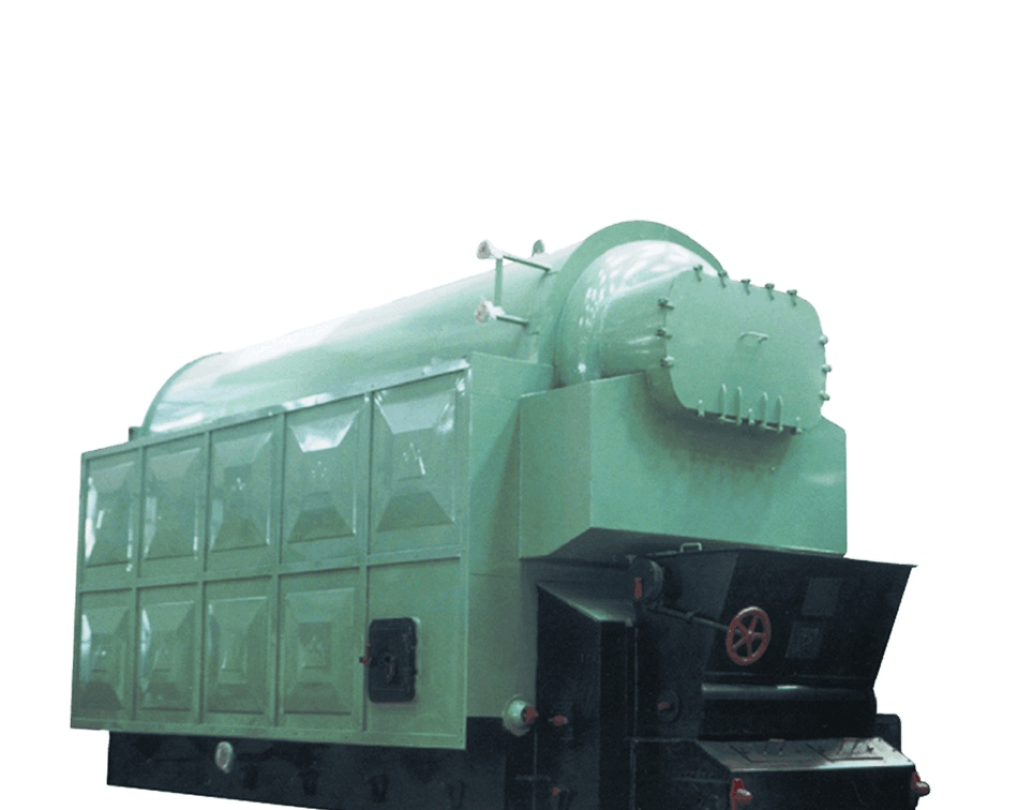
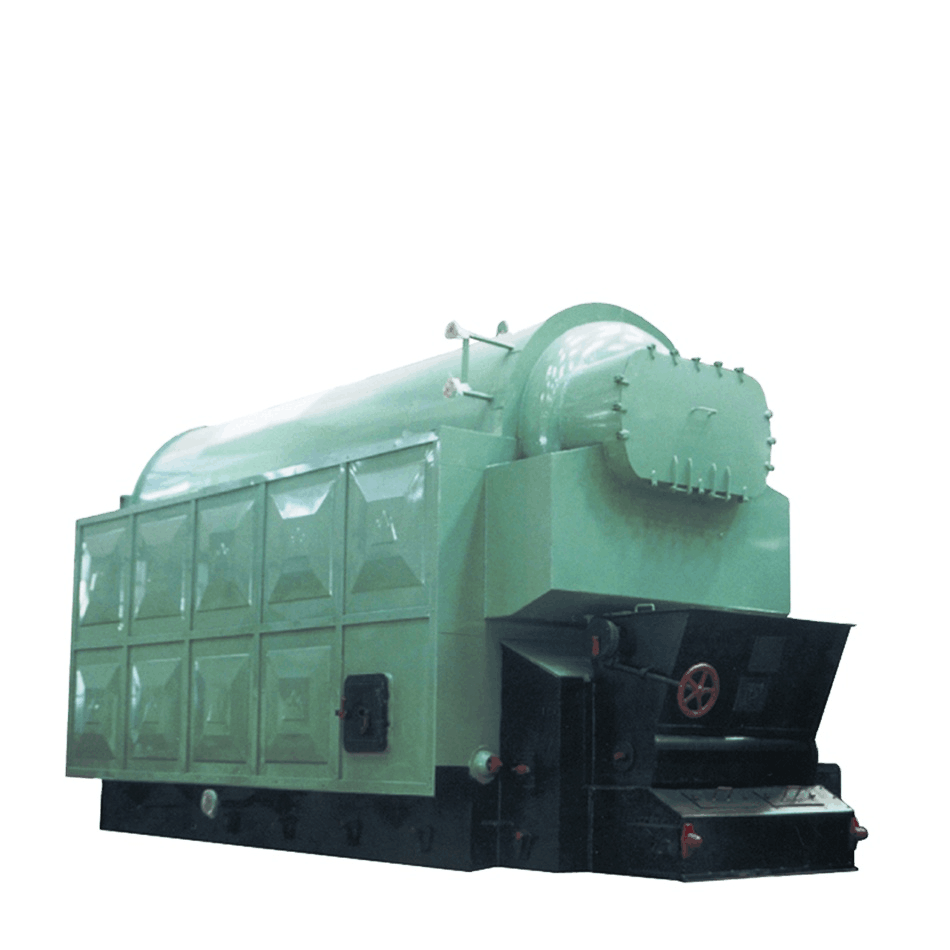
DZL coal-fired boilers(3)

How Can EPC or Turnkey Supply Reduce Project Risk and Hidden Costs in Coal-Fired Boiler Projects?

Coal-fired boiler projects are capital-intensive and technically complex. One of the most common pain points investors face is hidden costs and delays when dealing with multiple suppliers, contractors, and integrators. A boiler purchased without considering auxiliaries, civil works, emission systems, or commissioning often exceeds budget by 25–40% and suffers from schedule overruns. These problems stem from fragmented responsibility and poor integration between vendors. The solution lies in adopting an EPC (Engineering, Procurement, and Construction) or turnkey supply model, where one contractor assumes full responsibility for delivering a complete, operational system at a fixed cost and timeline.

EPC or turnkey supply reduces project risk and hidden costs by centralizing accountability under a single contractor who manages design, equipment procurement, auxiliary integration, construction, commissioning, and compliance. This approach eliminates vendor disputes, ensures system compatibility, locks in cost predictability, and accelerates project delivery. Instead of managing dozens of contracts, the owner deals with one responsible party.

This strategy is especially important in coal-fired boiler projects, where technical complexity spans multiple systems—boiler island, coal handling, ash handling, flue gas cleaning, water treatment, automation, and civil construction.

Turnkey EPC supply increases project cost compared to sourcing each component separately.False

While EPC bids may appear higher initially, they prevent costly overruns, change orders, and integration failures that often make multi-vendor projects more expensive in the end.

Turnkey EPC contracts transfer most technical and financial risks from the owner to the contractor.True

In EPC models, the contractor assumes responsibility for design, procurement, construction, schedule, and performance guarantees, reducing owner-side risk.

Key Advantages of EPC/Turnkey Supply

Risk AreaChallenge in Multi-Vendor SupplyHow EPC/Turnkey Solves It
Design MismatchBoiler, auxiliaries, and emission systems may not integrate seamlesslyEPC contractor provides single-source engineering
Schedule DelaysMultiple vendors with different timelines cause slippageEPC sets unified project schedule and penalties
Hidden CostsChange orders, redesigns, and site corrections raise CAPEXEPC guarantees fixed-price contracts
Quality AssuranceUneven quality control across suppliersEPC enforces uniform QA/QC across all systems
Regulatory ComplianceGaps in emission or safety systemsEPC ensures turnkey compliance certification
Performance GuaranteesDifficult to hold individual vendors accountableEPC offers system-wide efficiency and output guarantees

Example: Industrial vs. Utility Project Risk

  1. Industrial Plant (30 TPH Boiler):

  • Multi-vendor approach led to a 20% overrun due to mismatched ash handling and water treatment.

  • EPC turnkey delivery of a similar project came in on time and 8% below owner’s expected cost due to optimized integration.

  1. Utility Plant (600 MW Boiler):

  • Without EPC, disputes between boiler supplier and FGD vendor delayed commissioning by 18 months.

  • EPC-led project in the same region finished within 5% of budget and achieved early synchronization to the grid.

EPC and Lifecycle Economics

EPC doesn’t just reduce upfront CAPEX risk—it also influences long-term OPEX by ensuring:

  • Proper auxiliary sizing (avoids oversized fans/pumps that waste energy).

  • Optimized emission control integration (reduces limestone and power consumption in FGD).

  • Automated systems with standardized controls (lower maintenance costs).

  • Performance guarantees backed by penalties, ensuring promised efficiency is met.

Cost Distribution Under EPC

Cost ComponentShare in TIC (%)EPC Coverage
Boiler & Auxiliaries45–55
Emission Control (ESP, FGD, SCR)20–30
Civil & Structural Works10–15
Electrical & Controls5–10
Commissioning & Training2–5

This shows that EPC scope covers the entire balance of plant (BOP), eliminating fragmented budgeting errors.

Conclusion

EPC or turnkey supply transforms coal-fired boiler projects from fragmented, high-risk ventures into controlled, predictable investments. By integrating engineering, procurement, construction, and commissioning under one contract, EPC contractors eliminate hidden costs, minimize delays, and deliver guaranteed performance. For investors, the choice between multi-vendor sourcing and EPC is essentially a trade-off between uncertainty and security.

🔍 Conclusion

Coal-fired boiler costs vary significantly with capacity, efficiency, and environmental systems. While small industrial units are relatively affordable, large-scale power boilers require multi-million-dollar investments. A detailed scope and lifecycle cost analysis ensures the best value for long-term operation.


📞 Contact Us

💡 Planning a coal-fired boiler project? We provide detailed quotations, fuel suitability analysis, and turnkey EPC services to match your budget and operational goals.

🔹 Get a precise coal-fired boiler cost estimate tailored to your project needs. 🏭🔥📊✅

FAQ

How much does a coal-fired boiler cost?

The cost of a coal-fired boiler depends on capacity, pressure rating, fuel system, and technology. On average:

  • Small industrial units (1–10 t/h): $50,000 – $250,000

  • Medium-sized units (10–50 t/h): $300,000 – $1,000,000

  • Large utility-scale boilers (>100 t/h): $2 million – $10+ million

These figures cover only the equipment purchase price, not installation or auxiliary systems.


What factors affect the cost of a coal-fired boiler?

  1. Boiler capacity (t/h of steam) – Larger units cost significantly more.

  2. Pressure and temperature rating – High-pressure boilers require advanced materials.

  3. Fuel handling system – Coal crushers, conveyors, and storage increase cost.

  4. Emission control systems – Electrostatic precipitators, scrubbers, and bag filters can add 20–40%.

  5. Location and civil works – Foundations, building, and labor vary by region.


What is the total installed cost of a coal-fired boiler?

Installed cost usually runs 2–3 times the equipment price. For example:

  • A $1 million boiler may cost $2–3 million fully installed, including auxiliary systems (economizer, feedwater system, fans, chimney) and civil works.


Is a coal-fired boiler cheaper than gas or biomass boilers?

  • Coal boilers have a lower upfront price per MW, but higher operating and maintenance costs.

  • Gas-fired boilers are often cheaper to maintain and cleaner, but fuel costs vary.

  • Biomass boilers cost slightly more upfront but may qualify for renewable energy incentives.


What ongoing costs should be considered for coal boilers?

  • Fuel costs – Coal prices vary by region and quality.

  • Operation and maintenance (O&M) – Higher than gas/oil due to ash handling and emission controls.

  • Environmental compliance – Meeting emission standards adds significant long-term costs.


References

  1. IEA – Coal Power Generation Costshttps://www.iea.org

  2. DOE – Industrial Boiler Cost Guidehttps://www.energy.gov

  3. World Bank – Coal-Fired Power Plant Investment Costshttps://www.worldbank.org

  4. Babcock & Wilcox – Coal Boiler Pricing and Designhttps://www.babcock.com

  5. Spirax Sarco – Boiler Investment and ROIhttps://www.spiraxsarco.com

  6. ResearchGate – Comparative Study of Boiler Costshttps://www.researchgate.net

  7. BioEnergy Consult – Coal vs Biomass Boiler Economicshttps://www.bioenergyconsult.com

  8. ScienceDirect – Coal Boiler Technology and Efficiencyhttps://www.sciencedirect.com

  9. EIA – Coal Prices and Market Datahttps://www.eia.gov

  10. Forbes Marshall – Boiler Costing Factorshttps://www.forbesmarshall.com

Wade Zhang

CEO of Taishan Group Taian Boao International Trade Co., Ltd. 30 years experience in Global industrial boiler market,  Over 300 boiler projects experience, including 21+ EPC projects. Projects span 30+ countries & regions, involving industries such as nuclear power, energy & electricity, municipal heating, mining, textiles, tires etc.

How Much Does a Coal-Fired Boiler Cost? Price Guide 2025 Read More »
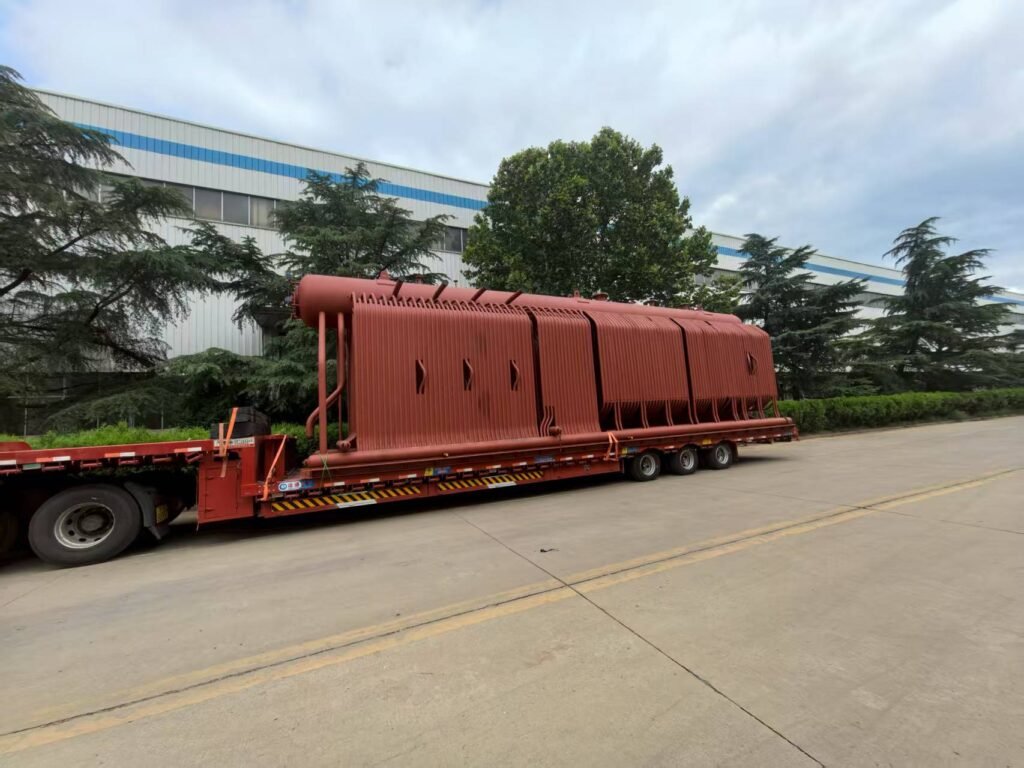
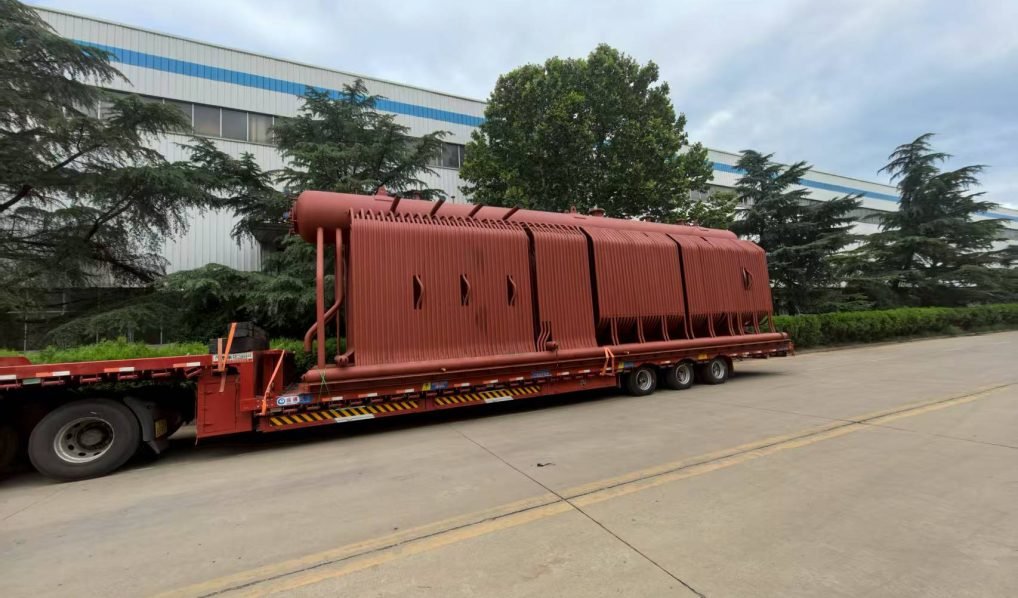
20t/h High-Efficiency Coal-Fired Steam Boiler Shipped to Cambodia

20t/h High-Efficiency Coal-Fired Steam Boiler Shipped to Cambodia

1️⃣ Shipment Overview: Timely Delivery of Industrial Steam Boiler

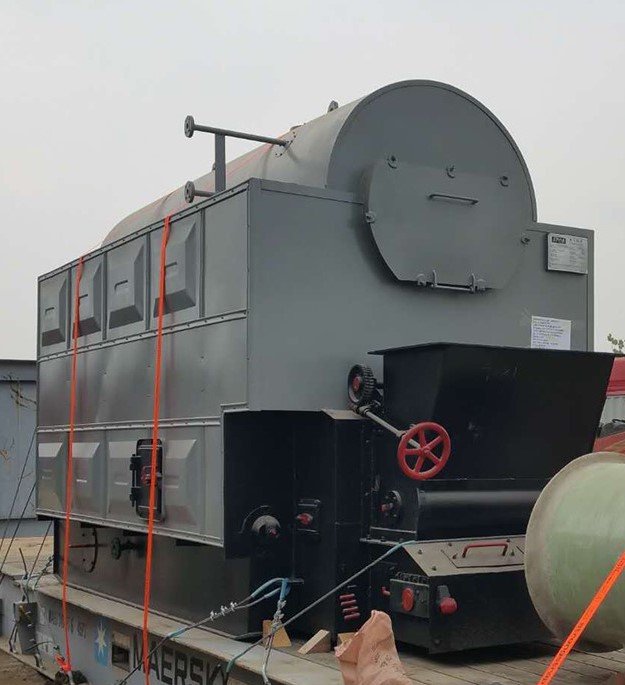
Taishan Group, a leading industrial boiler manufacturer and exporter, is pleased to announce the successful shipment of a 20t/h coal-fired steam boiler along with its auxiliary equipment to a valued client in Cambodia. The shipment marks another milestone in our international delivery record and showcases our ability to meet the demands of overseas projects efficiently.

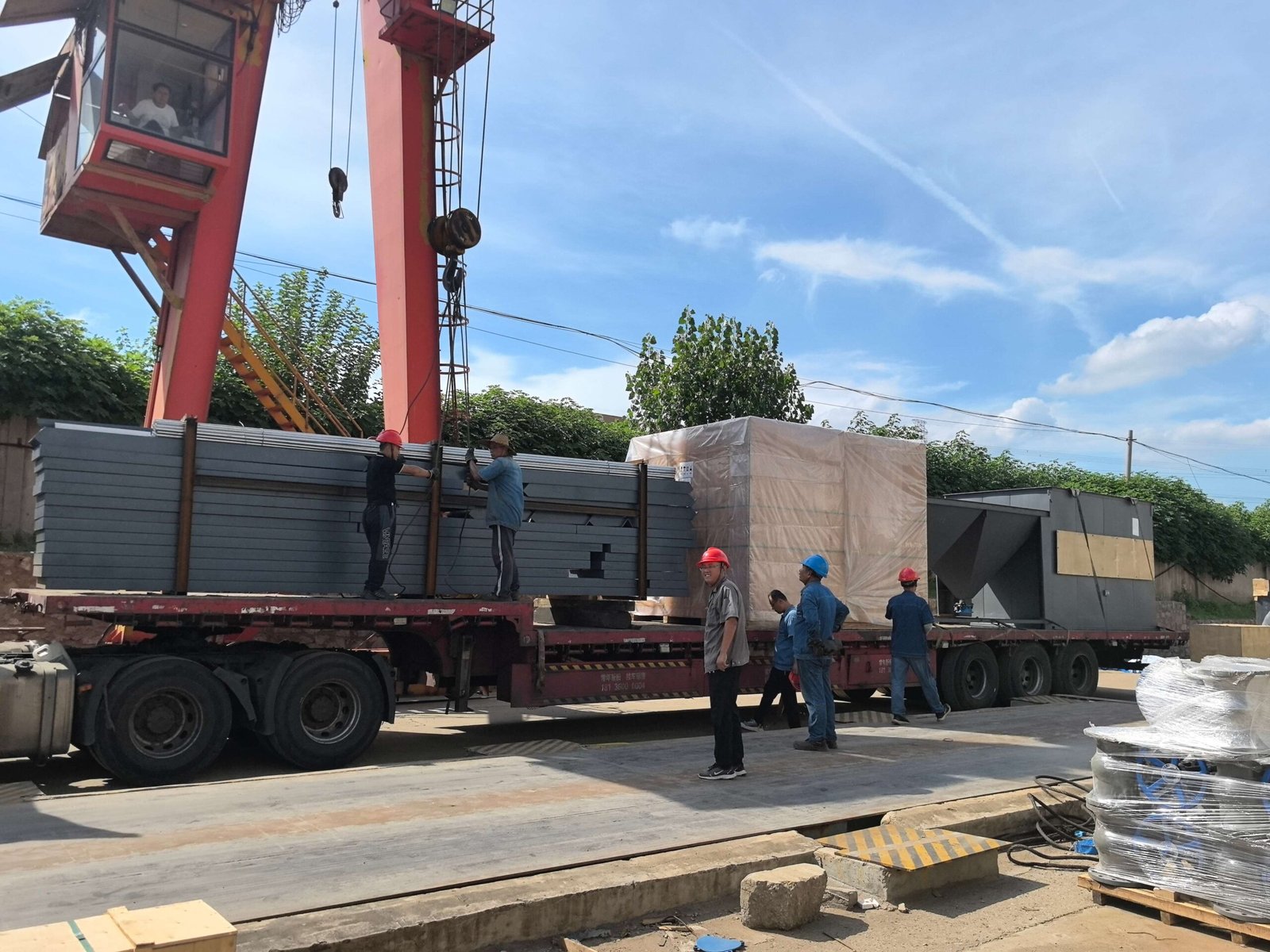
The boiler was carefully prepared for transport, with every component inspected and secured according to international shipping standards. This ensures not only timely delivery but also the safety and integrity of the equipment during the overseas journey. By providing reliable steam boiler solutions for industrial applications, we continue to expand our footprint in Southeast Asia and other global markets.

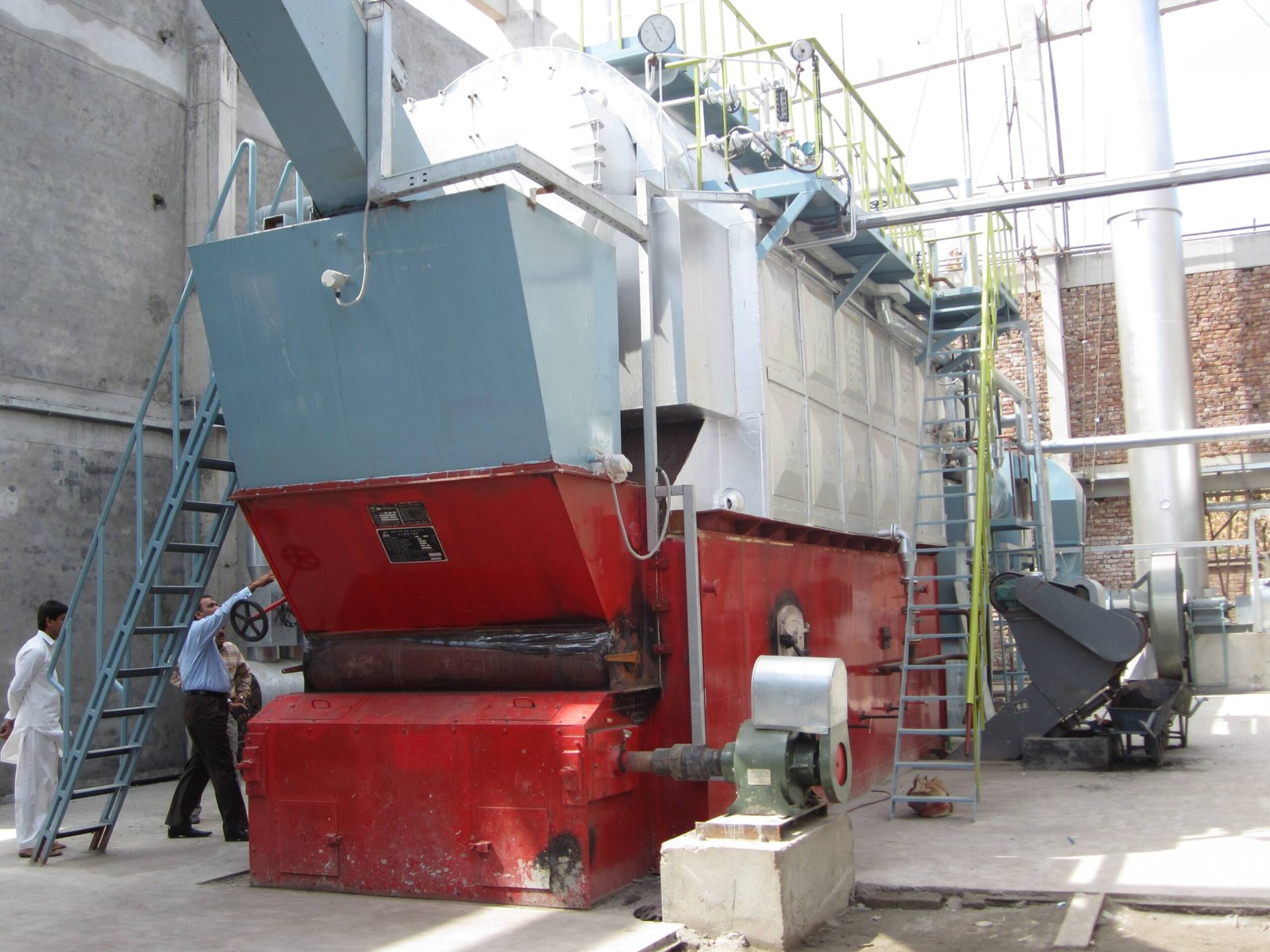
Coal-Fired Boiler

2️⃣ Boiler Specifications & Advanced Features

The exported boiler is a double-drum coal-fired steam boiler featuring a chain grate stoker, designed for stable combustion and high thermal efficiency. Key technical specifications include:

  • Steam Flow: 20t/h

  • Design Pressure: 2.5 MPa

  • Boiler Structure: Double-drum

  • Fuel Type: Anthracite coal

  • Application: Suitable for industrial processes including manufacturing, chemical, and energy production

The chain grate stoker ensures uniform coal combustion and efficient fuel utilization, reducing operating costs while maintaining consistent steam output. The boiler’s robust design, high efficiency, and compliance with modern industrial standards make it a reliable solution for clients seeking long-term performance and energy savings.

3️⃣ Packaging, Transportation & Logistics Management

To guarantee the safe delivery of heavy industrial equipment, the boiler and its auxiliary units were packed using reinforced protective materials, secured on transport vehicles, and carefully inspected by our logistics and engineering teams.

International shipment of industrial boilers requires meticulous planning, including:

  • Load distribution and weight balance

  • Reinforced packaging to withstand transport stress

  • Compliance with export regulations and customs documentation

By leveraging years of experience in industrial boiler export and overseas logistics, [Company Name] ensures that every project reaches the client on schedule and in perfect working condition. Our proactive planning minimizes risk, avoids shipment delays, and ensures a seamless boiler delivery process.


4️⃣ Customer Value, Application, & After-Sales Support

This successful shipment highlights our dedication to providing clients with high-performance, energy-efficient steam boiler solutions. By choosing [Company Name], customers benefit from:

  • Industry-leading coal-fired steam boiler technology

  • Stable operation under demanding industrial conditions

  • Timely and professional international delivery

  • Comprehensive after-sales support including installation guidance, commissioning, and operational advice

The 20t/h steam boiler shipped to Cambodia will support the client’s production efficiency, optimize energy consumption, and enhance overall operational reliability. Our commitment to quality, service, and innovation ensures that our clients achieve long-term value from every boiler investment.

📞 Contact Us

💡 Looking for a high-capacity coal-fired steam boiler for your project? We specialize in custom design, energy-efficient solutions, and global delivery services for industrial boilers.

🔹 Contact us today to discuss your boiler requirements and turnkey project solutions. 🏭⚡✅

FAQ

What are the features of the 20t/h coal-fired steam boiler shipped to Cambodia?

This industrial steam boiler is designed with:

  • High thermal efficiency (80–85%) through optimized combustion.

  • Advanced grate system for stable coal firing.

  • Economizer and air preheater for heat recovery.

  • Low NOx combustion design to meet emissions standards.

  • Robust structure suitable for long-term industrial use.


What industries in Cambodia will benefit from this boiler?

Industries such as:

  • Textiles and garments – For dyeing and finishing.

  • Food and beverage processing – For sterilization and cooking.

  • Rice mills and agriculture – For paddy drying and process heating.

  • Pharmaceuticals and chemicals – For process steam and heating.
    This 20t/h boiler ensures reliable and cost-effective steam supply across multiple sectors.


Why choose a high-efficiency coal-fired boiler?

  • Fuel cost savings – More steam per ton of coal.

  • Lower emissions – Advanced combustion reduces pollutants.

  • Durability – Designed for continuous 24/7 operation.

  • Flexibility – Handles variable coal qualities.


How was the shipment of the 20t/h steam boiler managed?

The shipment process included:

  • Modular design for easy transport and installation.

  • Heavy-duty packaging to protect boiler components.

  • Sea freight logistics coordinated from the manufacturing site to Cambodia.

  • On-site technical support for installation and commissioning.


What benefits will the Cambodian client achieve with this project?

  • Stable steam supply for industrial operations.

  • Reduced fuel and operational costs through high efficiency.

  • Improved environmental compliance with lower emissions.

  • Technical support and after-sales service ensuring long-term reliability.


References

  1. U.S. Department of Energy – Industrial Boiler Efficiencyhttps://www.energy.gov

  2. IEA – Coal-Fired Power and Steam Systemshttps://www.iea.org

  3. Babcock & Wilcox – Coal-Fired Boiler Systemshttps://www.babcock.com

  4. Cleaver-Brooks – High-Efficiency Boiler Technologieshttps://www.cleaverbrooks.com

  5. Forbes Marshall – Industrial Steam Solutionshttps://www.forbesmarshall.com

  6. Thermax – Industrial Coal Boilershttps://www.thermaxglobal.com

  7. Spirax Sarco – Steam Boiler Applicationshttps://www.spiraxsarco.com

  8. ResearchGate – Coal-Fired Boiler Efficiency Studieshttps://www.researchgate.net

  9. ScienceDirect – Advances in Coal Combustion Technologyhttps://www.sciencedirect.com

  10. Engineering Toolbox – Steam Boiler Data and Fuel Efficiencyhttps://www.engineeringtoolbox.com

Wade Zhang

CEO of Taishan Group Taian Boao International Trade Co., Ltd. 30 years experience in Global industrial boiler market,  Over 300 boiler projects experience, including 21+ EPC projects. Projects span 30+ countries & regions, involving industries such as nuclear power, energy & electricity, municipal heating, mining, textiles, tires etc.

20t/h High-Efficiency Coal-Fired Steam Boiler Shipped to Cambodia Read More »
What Is the Efficiency of an Industrial Steam Boiler?

What Is the Efficiency of an Industrial Steam Boiler?

Many operators face high fuel bills, rising emissions, and reduced output because their boiler efficiency is lower than expected. Without understanding what efficiency really means and how it is measured, companies risk underutilizing equipment, missing savings opportunities, and failing regulatory checks.

The efficiency of an industrial steam boiler typically ranges from 80% to 95%, depending on design, fuel type, and operating conditions. Standard fire-tube and water-tube boilers usually achieve 80–88% efficiency, while modern high-performance units with economizers, condensing heat recovery, and optimized controls can exceed 90–95%. Efficiency is measured either as combustion efficiency (how well fuel energy is converted to heat) or overall thermal efficiency (how much of that heat is delivered as usable steam). Factors such as excess air, fuel quality, insulation, and maintenance strongly affect real-world results.

By understanding efficiency values and influencing factors, plant operators can optimize performance, cut energy costs, and extend boiler lifespan.

SZS

What Are the Main Types of Boiler Efficiency (Combustion vs. Thermal)?

When industries invest in boilers, the focus is always on energy cost reduction and performance reliability. However, many facility managers confuse different types of boiler efficiency, leading to inaccurate performance evaluations and poor decision-making. This confusion can cause underperforming systems to go unnoticed or result in unnecessary fuel waste. To avoid these pitfalls, it’s essential to distinguish clearly between the two most common efficiency measures: combustion efficiency and thermal efficiency.

Combustion efficiency measures how completely fuel is burned inside the furnace, while thermal efficiency evaluates how effectively the boiler transfers the released heat into steam or hot water. Together, these metrics provide a comprehensive view of boiler performance and fuel utilization.

Combustion efficiency and thermal efficiency measure the same aspect of boiler performance.False

Combustion efficiency refers to fuel burn quality, while thermal efficiency reflects heat transfer effectiveness into steam or water.

Understanding these two types of efficiency is crucial because they often complement each other: a boiler may burn fuel efficiently but lose energy through poor heat transfer, or it may transfer heat well but waste fuel due to incomplete combustion.


🔹 1. Combustion Efficiency

  • Definition: Ratio of the heat released by complete combustion of the fuel to the heat input from the actual combustion process.

  • Focus: How well the burner mixes fuel and air to minimize unburned fuel and excess oxygen.

  • Key Losses:

    • Unburned fuel in ash or flue gas

    • Heat lost in excess O₂ from over-firing

  • Typical Ranges:

    • Natural gas boilers: >85–95%

    • Oil-fired boilers: 80–90%

    • Coal-fired boilers: 75–88%


🔹 2. Thermal Efficiency

  • Definition: Ratio of the useful heat (converted into steam or hot water) to the total heat input from fuel.

  • Focus: Heat transfer surfaces (tubes, drum, economizer) and how much energy escapes through stack gases or radiation.

  • Key Losses:

    • Flue gas temperature above design

    • Scale or fouling on heat transfer surfaces

    • Shell radiation losses

  • Typical Ranges:

    • Fire-tube boilers: 70–85%

    • Water-tube boilers: 75–93%

    • Modern condensing boilers: >95% (HHV basis)


📊 Comparison Table: Combustion vs. Thermal Efficiency

AspectCombustion EfficiencyThermal Efficiency
MeasuresFuel burn qualityHeat transfer into steam/water
Key LossesUnburned fuel, excess O₂Flue gas temp, fouling, radiation
Main InfluencersBurner design, fuel-air ratioBoiler design, maintenance, insulation
Typical Range75–95% (depending on fuel)70–95% (depending on design)
Improvement MethodsO₂ trim control, burner tuningEconomizers, sootblowers, insulation

📌 Why Both Matter

  • A boiler with 90% combustion efficiency but 75% thermal efficiency wastes too much energy through hot flue gases.

  • A boiler with 90% thermal efficiency but 80% combustion efficiency wastes fuel through unburned hydrocarbons.

  • The goal is to optimize both simultaneously for maximum overall boiler efficiency.

What Is the Typical Efficiency Range of Industrial Steam Boilers by Type?

When industries evaluate steam boilers, efficiency is one of the most decisive factors, because it directly impacts operating costs, fuel consumption, and environmental performance. Choosing the wrong boiler type without considering its typical efficiency range can result in higher fuel bills, reduced output reliability, and even regulatory compliance issues. To avoid costly mistakes, facility managers must understand the typical efficiency ranges of different industrial steam boiler types.

Industrial steam boiler efficiency typically ranges from 70% to over 95%, depending on the design. Fire-tube boilers often achieve 70–85%, water-tube boilers 75–93%, electric boilers close to 100% (point-of-use), and modern condensing boilers can exceed 95% under optimal conditions.

All industrial boilers have nearly the same efficiency regardless of design.False

Boiler efficiency varies widely by type: fire-tube designs are lower, while water-tube, electric, and condensing boilers achieve higher ranges.

This difference is why industries choose different boiler technologies depending on their priorities: low investment cost, high pressure capacity, or maximum energy efficiency.


🔹 Typical Efficiency Ranges by Boiler Type

Boiler TypeTypical Efficiency RangeNotes
Fire-Tube Boilers70–85%Compact, lower cost, but limited efficiency due to larger heat losses.
Water-Tube Boilers75–93%Higher pressure/temperature capacity, better heat transfer.
Electric Boilers~99% (at point-of-use)No combustion losses, but true efficiency depends on power source generation.
Condensing Boilers90–98% (with return temp < 55°C)Recovers latent heat from flue gas condensation, highly efficient in low-temp return systems.
Coal-Fired CFB Boilers75–90%Efficiency depends on coal quality, ash content, and combustion system.
Biomass Boilers70–88%Efficiency affected by fuel moisture, particle size, and feeding system.

📊 Example: Fire-Tube vs. Water-Tube Efficiency Profile

ParameterFire-Tube BoilerWater-Tube Boiler
Pressure CapabilityLow to medium (<30 bar)High (>100 bar possible)
Efficiency Range70–85%75–93%
Best UseSmall-medium industriesPower plants, high-capacity
Limiting FactorHeat transfer surface areaHigher cost & complexity

📌 Why These Ranges Matter

  • Cost: Even a 2–3% efficiency gain translates into thousands of dollars saved annually in fuel.

  • Compliance: Higher efficiency = lower CO₂ and NOₓ emissions.

  • Application Suitability: A food factory might choose a fire-tube boiler for simplicity, while a utility plant requires a water-tube boiler for pressure and capacity.


Summary:
Industrial steam boiler efficiency depends strongly on design. Fire-tube boilers are reliable but limited in efficiency, water-tube boilers provide higher performance for demanding operations, electric boilers achieve nearly perfect conversion efficiency, and condensing boilers surpass all others in certain applications. Correct selection ensures the best balance between fuel savings, performance, and lifecycle cost.

How Do Fuel Type and Combustion Quality Impact Boiler Efficiency?

Industrial boilers rely on fuel combustion as their primary source of heat, which means the type of fuel and the quality of combustion directly determine how much of the input energy is converted into useful steam. Poor fuel choice or suboptimal combustion leads to lower efficiency, higher operating costs, and excess emissions. On the other hand, selecting the right fuel and maintaining high combustion quality ensures maximum efficiency, lower carbon footprint, and longer equipment life.

Fuel type impacts boiler efficiency through its calorific value, moisture content, ash/impurities, and combustion properties, while combustion quality affects air-to-fuel ratio, flame stability, and heat transfer. High-quality fuels with optimized combustion systems result in higher efficiency and lower emissions.

All fuels deliver the same boiler efficiency if burned properly.False

Efficiency varies significantly: natural gas can exceed 90% efficiency, while wet biomass may achieve below 75% due to moisture losses.

This means efficiency is never determined by design alone — the fuel and combustion process must always be considered together.


🔹 Efficiency Differences by Fuel Type

Fuel TypeCalorific Value (kcal/kg or kcal/Nm³)Typical Boiler Efficiency RangeKey Efficiency Factors
Natural Gas~8,500–9,500 kcal/Nm³90–95%Clean combustion, low excess air requirement.
Fuel Oil (Diesel, HFO)9,000–10,500 kcal/kg85–92%Viscosity, atomization quality, sulfur content.
Coal3,500–7,500 kcal/kg75–88%Ash handling, coal grinding, moisture removal.
Biomass2,500–4,500 kcal/kg (variable)70–88%High moisture reduces efficiency, needs drying.
Electricity860 kcal/kWh equivalent~99% (point-of-use)No combustion losses, but depends on grid efficiency.

🔹 Combustion Quality Factors

The same fuel can deliver very different efficiencies depending on how well it is burned. Key factors include:

  1. Air-to-Fuel Ratio

    • Too little air → incomplete combustion, CO emissions, efficiency loss.

    • Too much air → heat carried away in flue gas, lowering efficiency.

  2. Burner Technology

    • Modern low-NOx burners improve flame stability and mixing.

    • Proper atomization in oil burners reduces unburned fuel.

  3. Fuel Preparation

    • Pulverized coal burns more completely than lump coal.

    • Biomass requires proper drying and size reduction.

  4. Flue Gas Monitoring

    • Continuous O₂ and CO measurement helps maintain optimal combustion conditions.


📊 Example: Effect of Combustion Quality on Efficiency

FuelPoor Combustion EfficiencyOptimized Combustion EfficiencyEfficiency Loss Source
Gas85%92%Excess air, improper burner tuning
Oil80%90%Poor atomization, soot buildup
Coal72%86%Incomplete burning of carbon
Biomass65%82%High moisture, unburned particles

📌 Why This Matters

  • Fuel cost savings: A 5% efficiency gain in a 20-ton/hour boiler can save tens of thousands of dollars annually.

  • Environmental compliance: Better combustion reduces NOₓ, SO₂, and particulate emissions.

  • Reliability: Poor combustion causes fouling, slagging, and tube corrosion.


Summary:
Boiler efficiency is not fixed — it depends on both fuel type and combustion quality. Natural gas offers the highest efficiency with minimal emissions, while biomass and coal require advanced combustion systems to achieve acceptable performance. Maintaining proper air-fuel ratios, burner tuning, and fuel preparation is essential for maximizing efficiency and minimizing costs.

What Role Do Economizers, Air Preheaters, and Condensing Units Play in Efficiency?

When boilers run without heat recovery systems, a significant portion of fuel energy is lost in hot exhaust gases. This wasted heat directly reduces boiler efficiency and drives up fuel costs. As energy prices rise and emission limits tighten, plants that ignore waste heat recovery face higher operating costs and compliance risks. The solution lies in installing economizers, air preheaters, and condensing heat recovery units, which capture and reuse waste heat to improve overall system efficiency.

Economizers recover heat from flue gases to preheat feedwater, air preheaters warm incoming combustion air, and condensing units extract latent heat from flue gas moisture — together improving boiler efficiency by 5–15% while lowering fuel consumption and emissions.

This makes them essential tools in both industrial and commercial boiler plants seeking peak energy performance.

Adding an economizer or air preheater typically improves boiler efficiency by at least 5%.True

By reducing the fuel energy required to reach steam temperature, heat recovery devices capture exhaust heat that would otherwise be wasted.


🔹 Role of Each Component

1. Economizer

  • Function: Transfers residual heat from flue gas to boiler feedwater.

  • Impact: Reduces fuel demand by raising feedwater temperature before it enters the boiler.

  • Typical Gain: 3–7% efficiency improvement.

2. Air Preheater (APH)

  • Function: Recovers flue gas heat to warm incoming combustion air.

  • Impact: Hotter combustion air → faster, cleaner fuel burning.

  • Typical Gain: 2–4% efficiency improvement.

  • Additional Benefit: Reduces unburned carbon in ash (coal/biomass).

3. Condensing Unit / Condensing Economizer

  • Function: Cools flue gases below dew point (~55°C) to recover latent heat of vaporized water.

  • Impact: Provides the largest potential efficiency boost, particularly for natural gas boilers.

  • Typical Gain: 5–10% efficiency improvement.

  • Constraint: Works best with fuels low in sulfur (e.g., natural gas), as acid condensation from coal/oil flue gas can cause corrosion.


📊 Efficiency Contributions by Device

DeviceEfficiency Improvement (%)Best Fuel TypeNotes
Economizer3–7%All fuelsMost common upgrade.
Air Preheater2–4%Coal, biomass, oilEnhances combustion stability.
Condensing Unit5–10%Natural gas, biogasRequires corrosion-resistant materials.

🔹 Combined Effect

When applied together, these systems can yield 10–15% total efficiency improvement, reducing both fuel consumption and CO₂ emissions. For example:

  • A 20-ton/hr natural gas boiler at 85% efficiency consumes ~1,000 Nm³/hr gas.

  • Adding an economizer (+5%) and condensing unit (+8%) increases efficiency to ~98%.

  • This saves ~150 Nm³/hr gas, cutting annual fuel costs by hundreds of thousands of dollars.


📌 Why It Matters

  1. Fuel Savings: Faster return on investment (ROI), often within 1–3 years.

  2. Sustainability: Lower CO₂, NOₓ, and particulate emissions.

  3. Extended Equipment Life: Reduces thermal stress by moderating flue gas temperatures.

  4. Regulatory Compliance: Helps meet energy efficiency mandates.


Summary:
Economizers, air preheaters, and condensing units are critical heat recovery systems that prevent energy loss and boost boiler performance. Economizers preheat feedwater, air preheaters improve combustion efficiency, and condensing units reclaim latent heat. Together, they can raise boiler efficiency by up to 15%, providing strong financial and environmental benefits.

How Do Operating Conditions and Maintenance Practices Affect Long-Term Efficiency?

Boilers are capital-intensive assets, but their efficiency does not remain constant over time. Without proper operational control and preventive maintenance, boiler performance declines due to scaling, fouling, poor combustion, leaks, and suboptimal controls. This efficiency drop leads to higher fuel consumption, higher emissions, and greater wear on equipment. The key to sustaining long-term performance is maintaining favorable operating conditions and implementing proactive maintenance practices, which together minimize energy loss and extend equipment lifespan.

Long-term boiler efficiency depends heavily on stable operating conditions (pressure, load, fuel quality, water treatment) and disciplined maintenance practices (cleaning, calibration, inspection). Proper management can sustain or even improve efficiency, while neglect can cause losses of 10–20% over time.

Consistent operational monitoring and preventive maintenance help ensure boilers deliver designed efficiency across decades of service.

Scaling and fouling in boiler tubes have little effect on efficiency.False

Even a 1 mm layer of scale can reduce heat transfer efficiency by 10%, leading to significant fuel wastage.


🔹 Operating Conditions That Influence Efficiency

  1. Load Fluctuations

    • Boilers run most efficiently at 60–90% of rated load.

    • Frequent cycling or prolonged low-load operation increases standby losses and reduces combustion efficiency.

  2. Fuel Quality & Combustion

    • Coal with high ash, biomass with high moisture, or low-calorific gas can all reduce combustion efficiency.

    • Proper fuel preparation (e.g., pulverization, drying, blending) improves performance.

  3. Water Quality & Treatment

    • Poor water chemistry causes scaling and corrosion, reducing heat transfer.

    • Chemical dosing and deaeration protect against deposits and oxygen corrosion.

  4. Steam Pressure & Temperature Control

    • Operating far from design pressure/temperature lowers thermodynamic efficiency.

    • Over-pressurization or under-pressurization increases fuel consumption.


🔹 Maintenance Practices That Sustain Efficiency

Maintenance PracticeImpact on EfficiencyFrequency
Tube Cleaning (mechanical/chemical)Restores heat transfer, prevents scalingQuarterly to annually
Burner Calibration & O₂ TuningMaintains optimal combustion, prevents excess air/fuel wasteMonthly to quarterly
Leak Detection & RepairPrevents steam/water/fuel lossesContinuous monitoring
Feedwater & Condensate TreatmentMinimizes scaling/corrosion, keeps heat transfer surfaces cleanDaily checks
Flue Gas AnalysisOptimizes air-fuel ratioMonthly
Safety Valve & Control CalibrationEnsures safe & stable operation at design conditionsAnnual

📊 Impact of Maintenance vs. Neglect on Boiler Efficiency

ConditionEfficiency Loss (%)Fuel Cost Impact (20 t/h boiler, NG fuel)
1 mm Scale on Tubes–10%+$150,000/year fuel cost
Fouled Air Preheater–3%+$45,000/year
Burner Out of Calibration–4–6%+$60,000–90,000/year
Regular Preventive Maintenance0% (sustained efficiency)No added cost

🔹 Why It Matters

  • Financial Impact: Even small efficiency drops multiply across years of operation and high steam demand.

  • Reliability: Well-maintained boilers suffer fewer breakdowns, reducing downtime.

  • Environmental Compliance: Inefficient boilers emit more CO₂, NOₓ, and particulates.

  • Asset Life: Preventive maintenance can extend service life by 5–10 years, reducing replacement costs.


Summary:
Boiler efficiency is not just about initial design; it is equally shaped by how the system is operated and maintained. Stable loads, good fuel/water quality, and calibrated controls optimize conditions, while regular cleaning, inspections, and combustion tuning preserve performance. Plants that combine strong operations with preventive maintenance sustain high efficiency over decades, while those that neglect these practices pay the price in higher fuel bills, emissions, and premature equipment failure.

What Methods Are Used to Test and Verify Boiler Efficiency On-Site?

Boilers are designed with a rated efficiency, but actual efficiency often drifts over time due to scaling, combustion imbalance, or poor maintenance. If not tested regularly, operators may underestimate fuel losses, leading to higher operational costs and emissions. The solution is on-site efficiency testing, which validates performance under real conditions, identifies hidden inefficiencies, and guides corrective actions such as burner tuning, cleaning, or retrofitting.

Boiler efficiency is tested and verified on-site using methods such as the direct (input-output) method, the indirect (heat loss) method, and real-time flue gas analysis. These approaches measure fuel input, steam or heat output, and stack losses to calculate actual efficiency and detect opportunities for improvement.

Regular testing allows operators to benchmark actual performance against design values, ensuring that boilers run safely, economically, and within compliance limits.

Boiler efficiency can only be measured in a laboratory setting.False

Boiler efficiency can be measured directly at the plant using flue gas analyzers, flow meters, and calibrated instruments.


🔹 Key Methods for On-Site Boiler Efficiency Testing

1. Direct Method (Input–Output Method)

  • Principle: Compares useful heat output (steam) to energy input (fuel).

  • Formula: Efficiency = (Heat Output / Heat Input) × 100

  • Advantages: Simple, fast, requires fewer instruments.

  • Limitations: Less diagnostic—does not show where heat is lost.

2. Indirect Method (Heat Loss Method)

  • Principle: Calculates efficiency by subtracting various measured losses from 100%.

  • Common Losses:

    • Dry flue gas loss

    • Moisture in fuel and combustion air

    • Incomplete combustion (CO, unburned fuel)

    • Radiation & convection losses

  • Advantages: More accurate, diagnostic—pinpoints sources of inefficiency.

  • Limitations: Requires more measurements and calculations.

3. Flue Gas Analysis (Portable or Online O₂/CO₂ Analyzers)

  • Measures oxygen, CO₂, CO, unburned hydrocarbons, and stack temperature.

  • Identifies excess air, incomplete combustion, and heat losses.

  • Allows real-time monitoring for continuous optimization.

4. Performance Monitoring with Flow Meters

  • Steam Flow: Measured with orifice plates, venturi meters, or vortex flow meters.

  • Fuel Flow: Natural gas (mass or volume flow meters), coal (gravimetric feeders), oil (turbine meters).

  • Provides precise data for efficiency balance sheets.


📊 Comparison of Boiler Efficiency Testing Methods

MethodAccuracyData ProvidedBest Use Case
Direct (Input–Output)ModerateOverall efficiencyQuick routine checks
Indirect (Heat Loss)HighLoss breakdown (stack, moisture, radiation)Detailed audits
Flue Gas AnalysisHigh (real-time)Combustion efficiency, excess airContinuous monitoring, burner tuning
Flow Meter BalancingHighActual steam/fuel ratioLong-term benchmarking

🔹 Supporting Tests to Enhance Accuracy

  • Stack Temperature Monitoring: High stack temperatures indicate fouled heat transfer surfaces.

  • Blowdown & Water Chemistry Testing: Ensures scaling/corrosion losses are minimized.

  • Infrared Thermography: Detects insulation failures and radiation losses.

  • Vibration/Noise Analysis on Burners: Identifies combustion instability.


✅ Why Testing Matters

  • Economic: Even a 2% efficiency loss in a 20-ton/hour natural gas boiler can add $80,000–$100,000/year in extra fuel costs.

  • Environmental: Poor efficiency increases CO₂, NOₓ, and CO emissions.

  • Reliability: Early detection prevents tube failures, overheating, and unplanned shutdowns.

  • Benchmarking: Testing allows comparison against OEM guarantees and industry norms.


👉 In summary: Boiler efficiency verification is best done using a combination of direct and indirect methods, supplemented by real-time flue gas analysis for continuous monitoring. Plants that regularly test and adjust their boilers save on fuel, extend equipment life, and maintain compliance.

🔍 Conclusion

Industrial steam boiler efficiency varies with design, fuel, and operation. While standard systems achieve 80–88%, advanced models can push beyond 90–95%. Regular measurement and optimization ensure boilers deliver reliable steam at the lowest possible fuel cost.


📞 Contact Us

💡 Looking to improve your boiler’s efficiency? We offer energy audits, system upgrades, economizer retrofits, and efficiency optimization programs for industrial steam boilers.

🔹 Boost your steam boiler efficiency to save fuel, reduce emissions, and maximize uptime. ⚡🔥📊✅

FAQ

What is the typical efficiency of an industrial steam boiler?

Most industrial steam boilers operate with 80%–90% efficiency, depending on design, fuel, and operating conditions.

  • Fire-tube boilers: 75%–85%

  • Water-tube boilers: 80%–90%

  • Condensing boilers: up to 95% (with heat recovery)


How is boiler efficiency calculated?

Two methods are widely used:

  • Direct Method (Input-Output Method):

Efficiency=Heat Output/Heat Input×100

  • Indirect Method (Loss Method):

Efficiency=100−(Stack Loss+Radiation Loss+Blowdown Loss)

The indirect method is more detailed and identifies specific areas for improvement.


What factors influence industrial steam boiler efficiency?

  1. Fuel type and quality – Gas-fired units are generally more efficient than coal.

  2. Excess air and combustion tuning – Proper air-fuel ratio minimizes losses.

  3. Heat recovery systems – Economizers and air preheaters improve performance.

  4. Operating pressure and temperature – Higher ratings generally increase efficiency.

  5. Maintenance – Soot buildup, scaling, and leaks can reduce efficiency by 5–10%.


How can boiler efficiency be improved?

  • Install economizers and condensate recovery systems.

  • Optimize burner controls for proper air-fuel mixing.

  • Regularly clean heat transfer surfaces (descaling, soot removal).

  • Upgrade to modern water-tube or condensing designs.

  • Implement real-time monitoring and automation for combustion control.


Why is boiler efficiency important for industry?

Higher efficiency reduces fuel consumption, operational costs, and greenhouse gas emissions. Even a 1% efficiency improvement can save thousands of dollars annually in large steam generation facilities.


References

  1. Spirax Sarco – Boiler Efficiency Guidehttps://www.spiraxsarco.com

  2. DOE – Industrial Boiler Efficiency Guidebookhttps://www.energy.gov

  3. ASME – Boiler Performance Standardshttps://www.asme.org

  4. Cleaver-Brooks – Boiler Efficiency Datahttps://www.cleaverbrooks.com

  5. Forbes Marshall – Methods of Boiler Efficiency Evaluationhttps://www.forbesmarshall.com

  6. IEA – Industrial Energy Efficiency Reportshttps://www.iea.org

  7. Babcock & Wilcox – Boiler Efficiency Factorshttps://www.babcock.com

  8. Engineering Toolbox – Boiler Heat Losseshttps://www.engineeringtoolbox.com

  9. ResearchGate – Boiler Efficiency Studieshttps://www.researchgate.net

  10. BioEnergy Consult – Improving Boiler Efficiencyhttps://www.bioenergyconsult.com

Wade Zhang

CEO of Taishan Group Taian Boao International Trade Co., Ltd. 30 years experience in Global industrial boiler market,  Over 300 boiler projects experience, including 21+ EPC projects. Projects span 30+ countries & regions, involving industries such as nuclear power, energy & electricity, municipal heating, mining, textiles, tires etc.

What Is the Efficiency of an Industrial Steam Boiler? Read More »
How Much Does a Circulating Fluidized Bed (CFB) Boiler Cost?

How Much Does a Circulating Fluidized Bed (CFB) Boiler Cost?

Investing in a CFB boiler without knowing the true cost structure can lead to budget overruns, delayed commissioning, and unexpected operating expenses. Since CFB technology offers fuel flexibility and lower emissions, it is often chosen for large-scale power generation and industrial applications, but its cost can vary widely depending on size, fuel type, and environmental compliance requirements.

The cost of a circulating fluidized bed (CFB) boiler generally ranges from $1,000 to $2,500 per kW of installed capacity. For utility-scale units (100–300 MW), this can translate to $100 million–$750 million. Price factors include boiler capacity, steam parameters (pressure and temperature), fuel type (coal, biomass, petroleum coke, etc.), emission control systems, site location, and the inclusion of auxiliary systems like feedwater equipment, electrostatic precipitators, and flue gas desulfurization units. Turnkey EPC packages typically cost more but reduce execution risk and project delays.

Understanding all cost components ensures accurate budgeting and long-term value.

What Capacity and Steam Parameters Affect CFB Boiler Cost?

When planning a CFB (Circulating Fluidized Bed) boiler investment, many buyers focus on the fuel type and technology, but capacity and steam parameters are the two biggest cost drivers. Undersizing a unit risks insufficient output and lost revenue, while oversizing inflates capital expenditure and increases auxiliary system costs. Higher steam pressures and temperatures demand stronger, more expensive materials and advanced manufacturing — directly increasing both the purchase price and the lifecycle operating cost. A mismatch between capacity, steam parameters, and plant requirements can cost millions over the boiler’s lifespan.

In CFB boilers, higher capacity increases cost due to larger pressure vessel size, more heat exchange surface, and higher auxiliary equipment demand, while higher steam pressure and temperature ratings raise cost through the need for thicker materials, advanced alloys, and tighter manufacturing tolerances.

A plant that specifies unnecessarily high steam parameters without matching turbine and process requirements will overspend on both the boiler and downstream equipment, while a unit rated too low may force costly retrofits or limit production growth.

Increasing steam temperature always increases boiler efficiency.True

Within material and design limits, higher steam temperature improves Rankine cycle efficiency by increasing turbine output per unit of heat input.


📏 How Capacity Affects CFB Boiler Cost

Capacity (t/h)Typical ApplicationRelative Cost ImpactReason
< 50Small industrial heat & powerLowSmaller pressure vessel, fewer auxiliaries
50–150Mid-size CHP & process steamMediumLarger furnace, more heat exchange surface
150–300Utility-scale generationHighLarger footprint, high auxiliary load
> 300Large power plantsVery HighComplex manufacturing, heavy lifting & logistics

🌡 How Steam Pressure & Temperature Affect Cost

Steam ParameterTypical Range in CFB BoilersCost ImpactNotes
Pressure (MPa)3.8 – 16.5↑↑Higher pressure = thicker drums/tubes
Temperature (°C)450 – 600Requires alloy steels to withstand creep
Superheat/ReheatSingle / Double↑↑Adds heat exchangers & piping complexity

⚙ Practical Engineering Impact

  • Higher Capacity → More heat exchange surface, stronger support structures, larger fans, pumps, and ash handling systems.

  • Higher Pressure → Drum shell thickness increases, welding quality requirements become more stringent, and stress-relieving heat treatment is mandatory.

  • Higher Temperature → Tube alloys must resist oxidation and creep deformation, increasing both material and fabrication costs.


📌 Key Takeaways

  • Capacity and steam parameters must be chosen together with turbine requirements to avoid over- or under-investment.

  • Each step up in pressure/temperature rating adds significant material and testing cost.

  • The “sweet spot” for most industrial CFB boilers is 100–150 t/h at 4–9 MPa and 450–540°C unless process or grid supply demands higher.

How Does Fuel Type and Quality Influence CFB Boiler Investment?

When investing in a Circulating Fluidized Bed (CFB) boiler, fuel type and quality are not just operational considerations — they are capital cost drivers that affect furnace size, refractory requirements, material selection, emission control systems, and auxiliary equipment. Using a high-ash, low-calorific fuel can lower ongoing fuel costs, but it often raises the initial investment by requiring larger combustion chambers, more robust ash handling, and enhanced erosion protection. Conversely, high-grade fuels reduce equipment stress but can be costly or subject to price volatility.

The fuel’s calorific value, ash content, moisture, and chemical composition directly influence furnace volume, fluidization system design, heat exchanger configuration, and emission control requirements, thereby shaping both capital and lifecycle costs of a CFB boiler project.

Choosing a boiler optimized for the wrong fuel mix can lead to chronic efficiency losses, excessive maintenance, and unplanned retrofits.

Low-calorific fuels always reduce CFB boiler capital costs.False

Low-calorific fuels require larger furnaces, increased air supply systems, and stronger refractory, which can raise initial investment costs despite lower fuel price.


🔍 Fuel Characteristics That Affect CFB Boiler Investment

Fuel PropertyImpact on Boiler DesignInvestment Effect
Calorific Value (CV)Determines furnace size and heat transfer areaLow CV = ↑ cost
Ash ContentRequires larger ash handling and more wear-resistant partsHigh ash = ↑ cost
Moisture ContentAffects combustion stability, increases fuel feed ratesHigh moisture = ↑ fan/pump capacity
Sulfur ContentDictates SO₂ control (limestone feed, scrubbers)High sulfur = ↑ FGD cost
Chlorine/PotassiumAccelerates tube corrosion and fouling↑ material upgrade cost
Particle Size & UniformityImpacts fluidization efficiencyPoor size control = ↑ handling cost

⚙ Design Adaptations Based on Fuel Type

1. Coal (Bituminous, Sub-Bituminous, Lignite)

  • Pros: High and consistent CV, stable combustion.

  • Cons: Higher SO₂ and NOx emissions → needs limestone feed or scrubbers.

  • Investment Impact: Moderate capital cost; high-pressure designs feasible.

2. Biomass (Wood Chips, Palm Kernel Shells, Agricultural Residue)

  • Pros: Renewable, low sulfur.

  • Cons: High moisture and alkali content, lower CV.

  • Investment Impact: Larger furnace, more corrosion-resistant alloys, higher fuel feed capacity.

3. Waste-Derived Fuels (RDF, Industrial Sludge, MSW)

  • Pros: Low or negative fuel cost, waste disposal benefits.

  • Cons: Highly variable quality, high ash and contaminants.

  • Investment Impact: Heaviest design requirements — oversized furnace, robust refractory, enhanced emission control.


📊 Example: Effect of Fuel Quality on Furnace Size

Fuel TypeCalorific Value (MJ/kg)Furnace Volume Required (m³)Relative Capital Cost
Bituminous Coal251.0× baseline100%
Wood Chips (wet)101.8× baseline120%
RDF (mixed waste)82.2× baseline140%

💡 Practical Insights

  • A low-CV fuel requires more combustion air, longer residence time, and larger heat transfer surfaces, all of which raise capital cost.

  • Fuels high in chlorine or alkalis force upgrades in tube material (e.g., Inconel cladding) to prevent rapid corrosion.

  • If future fuel flexibility is desired, designing for multi-fuel operation at the outset is cheaper than retrofitting later.

What Auxiliary Systems Are Included in the Total Installed Cost of an Industrial Boiler?

When budgeting for a new industrial boiler, many buyers focus on the main pressure vessel cost but overlook the auxiliary systems required for safe, efficient, and compliant operation. These subsystems can make up 30–50% of the total installed cost and directly affect performance, fuel efficiency, maintenance frequency, and emissions compliance. Missing them in early planning can cause budget overruns, delayed commissioning, or regulatory penalties.

The total installed cost of an industrial boiler includes not only the boiler itself, but also feedwater preparation, combustion air handling, heat recovery, blowdown management, fuel supply, emission control, and instrumentation systems that enable the boiler to meet capacity, safety, and environmental requirements.

Without proper auxiliary systems, even a top-quality boiler will underperform, consume more fuel, and fail to meet emissions targets.

Auxiliary systems are optional extras that do not significantly affect boiler performance.False

Auxiliary systems such as economizers, feedwater treatment, and blowdown recovery are essential for efficiency, safety, and regulatory compliance.


🔍 Typical Auxiliary Systems in the Total Installed Cost

Auxiliary SystemFunctionCost Impact (% of Boiler Price)
EconomizerRecovers heat from flue gases to preheat feedwater, boosting thermal efficiency5–15%
Air PreheaterWarms combustion air to improve fuel burn efficiency3–8%
Feedwater Tank & DeaeratorStores and removes dissolved oxygen from feedwater to prevent corrosion8–12%
Water Treatment PlantFilters, softens, and chemically conditions make-up water5–10%
Blowdown SystemRemoves dissolved solids to maintain water chemistry2–5%
Fuel Handling & StorageIncludes pumps, conveyors, hoppers, bunkers, or tanks depending on fuel type10–20%
Flue Gas Treatment (ESP, Baghouse, Scrubber)Captures particulates, SO₂, NOx to meet environmental regulations10–25%
Instrumentation & Control SystemsMonitors pressure, temperature, O₂ levels, flow rates; enables automation5–10%
Draft Fans (FD & ID)Supply combustion air and exhaust flue gases3–6%
Condensate Recovery SystemReturns hot condensate to the feedwater tank to save energy2–5%

⚙ How These Systems Integrate into the Plant

1. Feedwater Preparation

  • Deaerator removes oxygen and CO₂ to prevent pitting corrosion in boiler tubes.

  • Softener & RO Units prevent scale buildup that can cut efficiency by 10–20%.

2. Combustion Air & Fuel Systems

  • Fans ensure the correct air-fuel ratio.

  • Fuel feeders, pumps, or conveyors must be matched to the boiler’s combustion system design.

3. Heat Recovery Systems

  • Economizers can improve efficiency by 3–8% by recovering flue gas heat.

  • Air preheaters raise flame temperature for cleaner, more complete combustion.

4. Emission Controls

  • Cyclones, ESPs, baghouses handle particulate matter.

  • Scrubbers neutralize SO₂; SCR units reduce NOx.

5. Water & Condensate Management

  • Blowdown tanks protect against flash steam hazards.

  • Condensate polishers improve water quality and reduce make-up demand.


📊 Example Cost Breakdown for a $1M Boiler Project

ComponentApprox. Cost (USD)% of Total
Boiler Pressure Vessel$500,00050%
Auxiliary Systems$350,00035%
Installation & Commissioning$150,00015%
Total$1,000,000100%

💡 Key Insights for Buyers

  • In waste-to-energy and biomass plants, fuel handling and emission control can exceed the cost of the boiler itself.

  • Skimping on water treatment is a false economy — tube failures from scaling or corrosion are far costlier.

  • Early integration of control and automation systems prevents costly retrofits and improves long-term efficiency.

How Do Emission Control Requirements Impact the Price of an Industrial Boiler?

In modern industrial boiler projects, emission control systems are no longer optional — they are legally required in most jurisdictions and can represent a significant percentage of the total installed cost. Stricter environmental regulations on particulate matter, NOₓ, SO₂, CO, and volatile organic compounds (VOCs) have transformed these systems from simple dust collectors into complex multi-stage treatment setups. Neglecting these requirements during budgeting can lead to unexpected capital cost overruns, higher operating expenses, and costly retrofits after installation to achieve compliance.

Emission control requirements directly influence boiler pricing because each targeted pollutant may require dedicated equipment — such as electrostatic precipitators, fabric filters, scrubbers, or catalytic reduction units — which can collectively account for 10% to 40% of total boiler project costs, depending on fuel type, local regulations, and desired efficiency levels.

Failure to account for these costs early in project planning risks both regulatory non-compliance and significant operational penalties.

Emission control systems are a small and optional cost in modern boiler projects.False

In most regions, emission controls are mandatory and can add 10–40% to total installed costs depending on the fuel type and emission limits.


📋 Common Emission Control Systems & Cost Influence

Pollutant ControlledTypical Control TechnologyCost Impact (% of Boiler Price)Fuel Types Most Affected
Particulate Matter (PM)Cyclone separator, ESP, baghouse5–20%Coal, biomass, waste fuels
SO₂ (Sulfur Dioxide)Wet scrubber, dry sorbent injection8–15%High-sulfur coal, heavy oil
NOₓ (Nitrogen Oxides)Low-NOₓ burners, SCR, SNCR5–12%Gas, coal, biomass
Mercury & Heavy MetalsActivated carbon injection + baghouse2–5%Coal, waste fuels
Acid Gases (HCl, HF)Scrubber systems3–8%Waste-to-energy, biomass
CO & VOCsOxidation catalyst3–6%Biomass, waste, oil

🔍 Factors That Drive Price Differences

1. Fuel Type & Contaminants

  • Coal & biomass have higher particulate and sulfur content, requiring more robust and costly PM and SO₂ controls.

  • Natural gas generally needs less PM control but still may require NOₓ reduction.

2. Regulatory Stringency

  • EU and US EPA Tier standards are stricter than many developing nations, often requiring multiple systems in series.

  • Stricter limits = higher removal efficiency targets = larger, more expensive equipment.

3. Boiler Size & Load

  • Higher flue gas volumes require proportionally larger collectors, fans, and ducting — raising both CAPEX and OPEX.

4. Integration Complexity

  • Space constraints can force custom-engineered, compact systems, which cost more per unit capacity.


📊 Example Cost Scenario — 50 MW Coal-Fired Boiler

SystemApprox. CAPEX (USD)% of Total Installed Cost
Boiler Pressure Vessel$12,000,00060%
Particulate Control (ESP)$2,000,00010%
SO₂ Control (Wet Scrubber)$3,000,00015%
NOₓ Control (SCR)$1,500,0007.5%
Mercury Control (ACI + FF)$500,0002.5%
Total Installed Cost$19,000,000100%

💡 Buyer’s Insight

  • Early regulatory compliance review avoids redesign and costly retrofits.

  • For biomass plants, particulate and NOₓ controls often dominate costs.

  • For coal plants, SO₂ and PM systems can double the cost of the “bare” boiler.

  • Hybrid systems (e.g., ESP + baghouse + scrubber) may be more cost-effective than over-sizing one unit.

What Are the Cost Differences Between Industrial and Utility-Scale CFB Boilers?

When planning a circulating fluidized bed (CFB) boiler project, one of the first budget questions is whether the system is industrial-scale (typically under 200 MWth or <50 MWe) or utility-scale (200–1000+ MWth, often 50–600 MWe). This scale difference is not just about physical size — it dramatically affects capital cost per MW, engineering complexity, installation time, and long-term maintenance budgets. Underestimating these differences can lead to major cost overruns or even procurement failure.

Utility-scale CFB boilers generally have a much lower cost per megawatt of output due to economies of scale, but their total installed cost is significantly higher than industrial units because of larger pressure vessels, more extensive emission controls, complex feed systems, and integration with high-voltage generation infrastructure. Industrial CFBs cost less in absolute terms but more per unit of capacity.

Utility-scale CFB boilers are always more expensive per megawatt than industrial CFB boilers.False

Per megawatt, utility CFBs often cost less due to economies of scale, but their total installed cost is much higher.


📋 Typical CAPEX Comparison

ParameterIndustrial CFB Boiler (50–200 MWth)Utility-Scale CFB Boiler (200–1000+ MWth)
Steam Output (t/h)50–300500–2500
Power Output (MWe)10–5050–600
Pressure Rating40–100 bar100–250 bar
Temp. Rating (Main Steam)450–540 °C540–600 °C
Installed Cost per MW (USD)$1.5M–$3M$0.9M–$1.5M
Typical Total CAPEX (USD)$15M–$80M$90M–$800M
Lead Time12–18 months24–48 months
Emission ControlsBasic PM & NOₓFull multi-stage PM, NOₓ, SO₂, Hg systems

🔍 Why the Cost Gap Exists

1. Economies of Scale

  • Larger utility CFBs distribute fixed engineering and manufacturing costs over more output capacity.

2. Pressure Vessel & Materials

  • Higher temperatures and pressures in utility units require thicker alloy steels, advanced welding, and NDE (non-destructive examination), raising material and labor costs.

3. Fuel Handling & Storage

  • Utility-scale plants often handle thousands of tonnes of fuel per day, needing larger silos, conveyors, and redundancy systems.

4. Emission Control Systems

  • Utility units typically must meet stricter national-level regulations (SO₂, NOₓ, mercury), requiring multi-stage ESP + baghouse + scrubber + SCR setups.

5. Auxiliary Power & Grid Integration

  • Utility CFBs require high-voltage switchyards, large condensers, and complex turbine-generator sets, adding tens to hundreds of millions USD.


📊 Example Cost Breakdown

ComponentIndustrial CFBUtility CFB
Boiler Island45%30%
Turbine-Generator20%25%
Fuel Handling & Storage8%10%
Emission Control Systems12%20%
Electrical & Grid Integration5%10%
Civil Works & Buildings10%5%

💡 Buyer’s Insight

  • If your capacity requirement is under ~150 MWth, an industrial CFB is almost always more cost-effective and faster to install.

  • If your load is base-load utility generation, the lower cost per MW of a utility-scale unit offsets its higher absolute CAPEX over the long run.

  • Hybrid approaches (multiple mid-sized industrial units) can offer redundancy but lose some scale cost benefits.

How Can EPC or Turnkey Contracts Help Control Project Costs?

When executing a large-scale boiler or power plant project, one of the biggest risks is budget overrun caused by scope creep, poor coordination, or supplier delays. Traditional multi-contractor approaches can create fragmented responsibilities, unclear accountability, and inconsistent pricing. These issues often lead to disputes, schedule slippage, and inflated costs. A proven solution to minimize these risks is adopting an EPC (Engineering, Procurement, and Construction) or turnkey contract, where a single contractor takes responsibility for delivering a complete, operational facility for an agreed price and schedule.

EPC and turnkey contracts help control project costs by assigning a single entity full responsibility for design, equipment sourcing, construction, commissioning, and handover at a fixed or guaranteed maximum price, thereby reducing cost uncertainty, minimizing scope changes, and improving schedule discipline.

EPC contracts always guarantee the lowest possible project cost.False

EPC contracts reduce cost uncertainty and risk, but they do not always yield the lowest cost; they trade potential savings for higher cost predictability and reduced risk exposure.

The advantages of this approach can be broken into cost control mechanisms:


📌 How EPC/Turnkey Contracts Help Manage Costs

MechanismHow It Controls CostsExample in Boiler Projects
Single-Point ResponsibilityEliminates disputes between designer, supplier, and builder.Boiler supplier also manages turbine integration, so misalignment costs are avoided.
Fixed Price or GMP (Guaranteed Maximum Price)Caps financial exposure for the owner.$100M project guaranteed not to exceed $105M with performance incentives.
Integrated Design & ProcurementDesign optimized for readily available materials, reducing lead times and price volatility.Steel plate thickness adjusted to match stock dimensions.
Optimized SchedulingContractor coordinates critical path activities to reduce downtime.Foundation curing timed with boiler drum delivery.
Risk TransferContractor absorbs many technical and cost risks.If the burner fails performance tests, EPC covers redesign.

🔍 Cost Advantages vs. Traditional Contracting

AspectEPC/TurnkeyMulti-Contract
Cost PredictabilityHigh — fixed price commonMedium to low — scope and price drift
Risk to OwnerLow — shifted to EPC contractorHigh — owner absorbs coordination risks
Speed of DeliveryFaster — parallel procurement & constructionSlower — sequential procurement stages
Owner ControlLess day-to-day control over subsystemsHigh — direct control over each contract
Potential for SavingsModerate — limited by fixed priceHigher if owner manages efficiently

⚠️ Considerations Before Choosing EPC

While EPC contracts reduce financial uncertainty, they are not always the cheapest path. Owners should ensure:

  • Detailed scope definition before signing, to avoid expensive change orders.

  • Performance guarantees included, covering output, efficiency, and emissions.

  • Transparent reporting from the EPC contractor, with milestone-based payments.

  • Supplier prequalification to ensure experience with similar boiler scale and fuel type.


📈 Example:
For a 200 MWth CFB boiler project, a traditional multi-contract approach might budget $95M but risk 15–20% overrun from coordination failures. An EPC contract might be priced at $102M but cap the owner’s exposure, potentially saving $10–15M in avoided overruns and delays.

🔍 Conclusion

CFB boilers are capital-intensive but fuel-flexible solutions ideal for low-emission, large-scale steam and power generation. A detailed cost assessment should include capacity, fuel, environmental systems, and project scope to ensure successful investment.


📞 Contact Us

💡 Need an accurate cost estimate for a CFB boiler project? We provide technical feasibility studies, detailed quotations, and turnkey EPC solutions for CFB boiler installations.

🔹 Partner with us for cost-optimized, fuel-flexible, and environmentally compliant CFB boiler solutions. 🏭🔥📊✅

FAQ

What is the typical cost of a CFB boiler?

The cost of a CFB boiler depends on capacity, design pressure, fuel type, and emissions control systems. Typical industrial-scale units can range from $4 million to $30 million.

  • Small to medium CFB boilers (10–50 t/h) – $4M–$10M

  • Large utility-scale CFB boilers (100–300 t/h) – $15M–$30M+


What factors affect the cost of a CFB boiler?

  1. Capacity and steam output – Larger boilers require more material and complex design.

  2. Operating pressure and temperature – Higher ratings need advanced metallurgy and controls.

  3. Fuel type – Coal, biomass, or multi-fuel capability affects design and cost.

  4. Emission control systems – Adding flue gas desulfurization (FGD), selective catalytic reduction (SCR), or baghouses increases price.

  5. Supplier and origin – European/Japanese units often cost more than Chinese or Indian designs due to labor and technology costs.


Is installation included in the CFB boiler price?

Usually, the quoted price covers main boiler equipment only. Installation costs can add 30%–50% more for:

  • Civil works and foundations

  • Auxiliary systems (feedwater, air preheater, ash handling)

  • Piping and ductwork

  • Electrical and control systems


What is the operating cost of a CFB boiler?

Operating costs depend on:

  • Fuel price – CFB boilers can burn low-grade fuels at lower costs.

  • Maintenance – Higher initial maintenance due to moving bed materials.

  • Manpower – Skilled operators required for complex systems.
    CFB boilers often provide long-term fuel cost savings compared to pulverized coal units.


Are CFB boilers more expensive than other boiler types?

Yes, initial capital cost is generally higher due to complex design and refractory linings. However, they often have lower lifetime costs due to:

  • Better fuel flexibility (cheaper fuels)

  • Lower NOx and SOx emissions (reduced environmental compliance costs)

  • High efficiency across a wide load range


References

  1. IEA – Circulating Fluidized Bed Combustion Technologyhttps://www.iea.org

  2. DOE – Industrial Boiler Cost Analysishttps://www.energy.gov

  3. Babcock & Wilcox – CFB Boiler Overviewhttps://www.babcock.com

  4. Sumitomo SHI FW – CFB Solutionshttps://www.shi-fw.com

  5. GE Steam Power – CFB Boiler Systemshttps://www.ge.com

  6. Valmet – CFB Boiler Technologyhttps://www.valmet.com

  7. Doosan Lentjes – CFB Boiler Designhttps://www.doosanlentjes.com

  8. Engineering Toolbox – Boiler Cost Estimationhttps://www.engineeringtoolbox.com

  9. BioEnergy Consult – CFB Boiler Fuel Flexibilityhttps://www.bioenergyconsult.com

  10. Power Engineering – CFB Boiler Market Trendshttps://www.power-eng.com

Wade Zhang

CEO of Taishan Group Taian Boao International Trade Co., Ltd. 30 years experience in Global industrial boiler market,  Over 300 boiler projects experience, including 21+ EPC projects. Projects span 30+ countries & regions, involving industries such as nuclear power, energy & electricity, municipal heating, mining, textiles, tires etc.

How Much Does a Circulating Fluidized Bed (CFB) Boiler Cost? Read More »
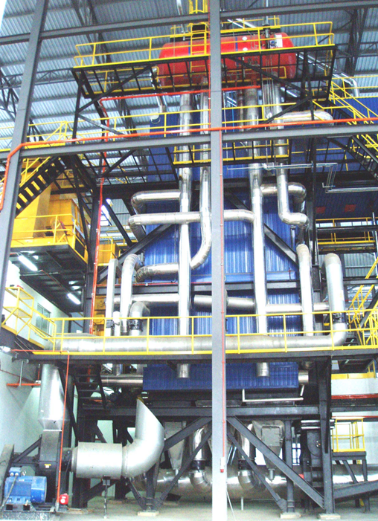
What is the difference between a steam boiler and a thermal boiler?

What is the difference between a steam boiler and a thermal boiler?

Choosing between a steam boiler and a thermal boiler without understanding their differences can lead to mismatched heating capacity, inefficient energy use, and unnecessary maintenance costs. Each boiler type serves distinct industrial needs, and using the wrong one can impact production quality, energy bills, and equipment lifespan.

A steam boiler generates pressurized steam by heating water inside a pressure vessel, making it ideal for applications like power generation, sterilization, and process heating. A thermal boiler (or thermal oil heater) uses a heat transfer fluid—usually thermal oil—instead of water/steam, circulating it through a closed loop to provide precise, stable temperatures without high pressure, making it suitable for drying, chemical processing, and indirect heating. The main differences lie in the heat transfer medium, operating pressure, temperature range, application scope, and maintenance needs.

Knowing these differences helps you choose the most efficient and safe system for your process.

What Is the Working Principle of a Steam Boiler vs. a Thermal Boiler?

When choosing an industrial heating system, buyers often struggle to understand the differences in how steam boilers and thermal oil boilers work. Misunderstanding these principles can lead to selecting a system that’s inefficient, costly to operate, or unsuitable for the process requirements—causing energy waste, reduced output, and higher maintenance. Knowing how each system transfers heat and operates is essential for making the right investment.

A steam boiler heats water to generate pressurized steam, which then transfers heat to process equipment, while a thermal oil boiler heats a special heat transfer fluid (thermal oil) that circulates in a closed loop without pressurization, delivering high temperatures with lower operating pressure.

If you’re considering which system to buy, keep reading—you’ll see how their operation, temperature range, and maintenance needs differ, helping you match the right boiler to your process.

Thermal oil boilers operate without the high pressures found in steam systems.True

Thermal oil boilers can reach temperatures up to 300°C without exceeding atmospheric pressure, unlike steam systems that require high pressure to reach similar temperatures.


🔹 Core Working Principles

FeatureSteam BoilerThermal Oil Boiler
Heat Transfer MediumWater → SteamThermal oil
Operating PressureHigh (to reach higher temperatures)Low / Near-atmospheric
Temperature RangeTypically 100–250°C (up to 540°C in power plants)Typically up to 300°C (some fluids allow 350°C)
CirculationNatural or forced circulation of steam/waterPump-driven closed-loop circulation of thermal oil
Heat Transfer MethodLatent heat of steam condensationSensible heat of thermal oil
Condensate ReturnRequiredNot applicable
System ComponentsSteam drum, water walls, superheater, blowdown systemThermal oil heater, expansion tank, circulating pump, filter

📊 Comparison of Operating Characteristics

ParameterSteam BoilerThermal Oil Boiler
Efficiency80–90% (higher with economizer)85–92%
Startup TimeSlower due to water heating and steam buildupFaster due to smaller fluid mass
MaintenanceRequires water treatment and blowdownRequires fluid monitoring and filtration
Safety RiskHigh due to pressureLower due to low-pressure operation
Process SuitabilityHigh for direct heating, sterilization, turbinesBest for indirect heating, uniform high temps

✅ Buyer Guidance

  • Choose a steam boiler if your process requires direct steam for heating, sterilization, or mechanical drive (e.g., turbines).

  • Choose a thermal oil boiler if you need high, stable temperatures without high pressure, especially for chemical, food, or asphalt heating.

  • Always consider fuel type, thermal efficiency, and available maintenance expertise before finalizing your choice.

How Do Heat Transfer Mediums (Steam vs. Thermal Oil) Affect Efficiency?

When selecting an industrial boiler system, many buyers focus on capacity or fuel type but overlook how the heat transfer medium impacts efficiency. Using the wrong medium can cause higher fuel costs, more maintenance downtime, and poor heat delivery. Understanding how steam and thermal oil behave in heat transfer will help you choose the system that delivers the most energy to your process at the lowest lifecycle cost.

Steam systems use the latent heat of vaporization, which delivers rapid heat transfer but loses energy through condensation and blowdown, while thermal oil systems rely on sensible heat, offering stable high temperatures with fewer losses and often higher overall thermal efficiency.

If you want your investment to last and run cost-effectively, knowing the efficiency trade-offs between these two mediums is key to making the right choice.

Thermal oil systems are always more efficient than steam systems.False

Thermal oil systems can be more efficient in certain applications, but steam systems may outperform in processes that benefit from direct condensation heat transfer.


🔹 Efficiency Comparison Overview

FactorSteam SystemThermal Oil System
Heat Transfer MechanismLatent heat of steam condensation – very fast heat deliverySensible heat of oil – slower but steady and controllable
Operating PressureHigh (increases risk and heat loss via leaks)Low or atmospheric (reduces energy loss)
Temperature StabilityMay fluctuate due to pressure changes and steam loadHighly stable, unaffected by atmospheric pressure
Energy Loss PointsSteam traps, condensate return lines, blowdownPumping losses, minor heat loss in piping
Max Operating Temp~250°C at moderate pressures (higher temps require very high pressure)Up to 300°C without pressurization
System Efficiency Range80–90% (up to 92% with modern economizers)85–92% (with well-maintained thermal oil and insulation)
Maintenance ImpactWater treatment critical – fouling and scaling reduce efficiencyOil degradation affects efficiency – requires monitoring and filtration

📊 Key Efficiency Drivers

DriverSteam AdvantageThermal Oil Advantage
Heat Transfer RateVery high for quick process heatingMore controlled for sensitive processes
Loss ReductionChallenging – traps, leaks, and blowdown are commonLower loss potential due to closed-loop design
Temperature ControlHarder to fine-tune without complex controlsEasy to maintain steady, uniform temperature
Startup EnergyHigher due to steam generationLower due to smaller thermal mass

✅ Buyer Takeaway

  • Choose steam if your process benefits from rapid, direct heat transfer or requires steam as a process medium.

  • Choose thermal oil if you need high, stable temperatures with minimal pressure risk and lower long-term heat losses.

  • Always factor in maintenance practices and insulation quality, as these can shift real-world efficiency by several percentage points.

What Are the Temperature and Pressure Ranges for Each Boiler Type?

When selecting an industrial boiler, it’s not enough to consider capacity and fuel — the working temperature and pressure ranges directly determine whether the system can meet process requirements. Choosing a boiler outside the correct range can cause inefficiency, safety risks, or even early equipment failure. Understanding these ranges for each boiler type helps avoid mismatches and ensures long-term performance.

Fire-tube boilers generally operate at lower pressures (up to ~25 bar) and moderate temperatures, water-tube boilers can handle much higher pressures (above 100 bar) and temperatures over 500°C, and thermal oil heaters run at high temperatures (up to ~300°C) but low pressure.

Knowing these design envelopes ensures your process operates within safe and efficient limits without over-investing in unnecessary capacity.

Water-tube boilers can safely operate at higher pressures than fire-tube boilers.True

Water-tube designs distribute pressure inside small-diameter tubes, allowing much higher safe operating pressures compared to fire-tube designs.


🔹 Typical Temperature and Pressure Ranges by Boiler Type

Boiler TypeTypical Pressure RangeTypical Temperature RangeNotes
Fire-Tube Boiler0.5 – 25 bar (7–360 psi)Up to 250°C (480°F)Best for low-to-medium pressure steam and heating
Water-Tube Boiler10 – 160 bar (150–2,300 psi)180°C – 540°C (350–1,000°F)Used for high-pressure steam, power generation
Electric Boiler0 – 30 bar (0–435 psi)100°C – 250°C (212–480°F)No combustion gases; compact but limited output
Thermal Oil HeaterAtmosphere to ~5 bar (0–73 psi)150°C – 320°C (300–610°F)High temperature without high pressure
Biomass Boiler5 – 90 bar (73–1,300 psi)150°C – 500°C (300–930°F)Pressure/temperature depend on design
HRSG (Heat Recovery Steam Generator)10 – 150 bar (150–2,175 psi)180°C – 540°C (350–1,000°F)Uses exhaust heat from turbines or engines

📊 Pressure vs. Temperature Operating Zone

MediumPressure Needed for High TempKey Advantage
SteamYes — higher temp needs higher pressureHigh heat transfer efficiency
Thermal OilNo — can reach 300°C without high pressureLower safety risk, easier compliance
Hot WaterModerate — pressurization raises boiling pointSimple, low-cost heat medium

✅ Buyer Takeaway

  • Low to moderate temperature & pressure needs → Fire-tube, electric, or thermal oil heaters.

  • High steam output or high-pressure applications → Water-tube or HRSG systems.

  • High temperature without high pressure → Thermal oil systems are ideal.

  • Always match process needs to boiler capability to avoid over-specifying and overspending.

Which Industries and Processes Typically Use Steam Boilers?

Steam boilers remain one of the most versatile pieces of industrial equipment, yet many buyers underestimate their role beyond just power generation. Choosing the wrong boiler for a specific industrial process can lead to excessive fuel costs, poor product quality, or even safety hazards. By clearly understanding where steam boilers are used, companies can match design specifications to real-world operational needs — avoiding costly mismatches and maximizing return on investment.

Steam boilers are used in industries such as power generation, chemical manufacturing, oil refining, food and beverage processing, pulp and paper production, textiles, pharmaceuticals, and HVAC for large facilities — providing heat, sterilization, mechanical drive, or process steam.

This broad range of applications makes steam boilers an essential asset for both continuous production lines and seasonal or batch processes.

Steam boilers are only used for power generation.False

Steam boilers have diverse applications including heating, sterilization, cooking, drying, and driving mechanical equipment across various industries.


🔹 Major Industrial Sectors Using Steam Boilers

IndustryKey Processes Using SteamTypical Steam Parameters
Power GenerationSteam turbines for electricity productionHigh pressure (up to 160 bar), high temperature (500°C+)
Chemical & PetrochemicalReactor heating, distillation, stripping, process heatMedium-high pressure (10–100 bar), saturated or superheated
Oil & Gas RefiningFractional distillation, desulfurization, process heatingHigh temperature and pressure
Food & BeverageCooking, pasteurization, sterilization, dryingLow-medium pressure (3–15 bar), clean steam
Textile IndustryDyeing, finishing, pressing, humidity controlLow-medium pressure steam
Pulp & PaperPulp digesters, paper drying cylindersMedium pressure steam
PharmaceuticalsSterilization, clean-in-place (CIP), humidity controlLow pressure, ultra-pure steam
District HeatingBuilding heating via steam networksLow-medium pressure steam

📊 Steam Boiler Use by Industry Share (Global Market Estimate)

SectorApprox. Share of Steam Boiler Usage
Power Generation40%
Chemicals & Petrochemicals20%
Food & Beverage15%
Pulp & Paper10%
Others (Textiles, Pharma, HVAC)15%

✅ Buyer Takeaway

  • Power & chemical sectors → High-pressure water-tube boilers dominate.

  • Food, pharma, and textiles → Low-to-medium pressure, often fire-tube or electric boilers with clean steam capability.

  • Pulp & paper → Medium-to-high pressure water-tube systems.

  • District heating → Often lower pressure but large capacity for network supply.

Which Industries and Processes Typically Use Thermal Boilers?

Many production managers underestimate the advantages of thermal oil boilers compared to steam systems — until they face temperature control issues, scaling problems, or high-pressure safety risks. Choosing the right heat medium system can make the difference between steady, efficient operation and costly downtime. Thermal boilers (thermal oil heaters) operate at atmospheric pressure yet can reach high temperatures, making them ideal for industries that need precise, stable heat without the hazards of high-pressure steam.

Thermal boilers are commonly used in industries such as chemicals, plastics, textiles, wood processing, food manufacturing, asphalt production, oil & gas heating, and printing — especially where precise high-temperature heat (150°C–350°C) is required without high pressure.

This makes them a preferred choice for processes involving sensitive materials, heat transfer fluids, or continuous heating demands.

Thermal boilers are only suitable for small-scale heating.False

Thermal oil heaters are widely used in large-scale industrial applications, offering high temperature control without high-pressure operation.


🔹 Major Industrial Applications of Thermal Boilers

IndustryKey Processes Using Thermal Oil HeatingTypical Operating Temp.
Chemical IndustryReactor heating, polymerization, distillation, evaporation180–320°C
Plastics & RubberExtruder heating, mold temperature control, drying150–300°C
TextilesDyeing, printing, finishing, drying160–280°C
Wood & Panel IndustryVeneer drying, lamination presses, MDF production180–300°C
Food & Edible OilFrying, deodorization, heat treatment, drying180–240°C
Asphalt & BitumenAsphalt mixing, bitumen heating150–220°C
Oil & GasCrude oil heating, tank farms, pipeline tracing100–250°C
Printing & CoatingDrying ovens, coating lines, laminating150–220°C

📊 Thermal Boiler Usage by Sector (Global Estimate)

SectorApprox. Share of Thermal Boiler Use
Chemicals & Petrochemicals30%
Plastics & Rubber20%
Wood & Panels15%
Food Processing15%
Asphalt & Bitumen10%
Others (Printing, Oil & Gas)10%

✅ Buyer Takeaway

  • Chemicals & plastics → High-temp, stable heat critical for consistent product quality.

  • Wood & panel → Uniform temperature prevents defects in laminates and boards.

  • Food processing → Safe, indirect heating prevents contamination.

  • Asphalt → Steady heating keeps viscosity optimal for mixing and paving.

What Are the Key Maintenance and Safety Differences Between Steam Boilers and Thermal Oil Boilers?

When companies select between a steam boiler and a thermal oil boiler, they often focus on efficiency or temperature range — but overlooking maintenance and safety can lead to unexpected costs, downtime, or compliance issues. Steam boilers operate under high pressure, which means more stringent safety protocols and frequent inspections. Thermal oil boilers work at atmospheric pressure but handle high-temperature fluids, requiring different maintenance priorities such as fluid quality management. Understanding these differences ensures smoother operation, longer equipment life, and fewer safety risks.

Steam boilers demand more frequent safety checks, water quality treatment, and pressure vessel inspections due to their high-pressure operation, while thermal oil boilers require less frequent inspections but need strict monitoring of heat transfer fluid condition, leak prevention, and temperature control to avoid degradation or fire hazards.

By matching maintenance planning to each system’s safety profile, facilities can cut downtime and improve reliability.

Thermal oil boilers are maintenance-free.False

Thermal oil boilers require routine checks for leaks, oil quality degradation, and heater surface cleanliness to maintain performance and safety.


🔹 Maintenance & Safety Difference Overview

AspectSteam BoilerThermal Oil Boiler
Operating PressureHigh pressure (often >10 bar) → requires pressure vessel inspectionAtmospheric or low pressure → no steam explosion risk
Water/Fluid QualityRequires water treatment to prevent scaling/corrosionRequires monitoring and periodic replacement of thermal oil
Corrosion RiskHigh — from oxygen, scaling, condensate return issuesLow — no water, but oil oxidation and sludge formation possible
Safety DevicesPressure relief valves, water level controls, blowdown systemsTemperature limiters, expansion tank, thermal oil level sensors
Inspection FrequencyAnnual or semi-annual regulated inspection for pressure equipmentVisual checks and oil sampling every 6–12 months
Fire RiskLower, unless fuel leaksHigher if oil leaks near hot surfaces — requires strict sealing
Startup & ShutdownSlower due to water heating and pressure buildupFaster due to direct oil heating and no pressurization

📊 Risk & Maintenance Effort Comparison

CategorySteam Boiler (Risk/Workload)Thermal Oil Boiler (Risk/Workload)
Explosion RiskHighVery Low
Corrosion/ScalingHighLow
Oil DegradationN/AMedium
Inspection BurdenHighLow
Leak ConsequencesMediumMedium–High (fire hazard)

✅ Buyer Takeaway

  • Steam boiler safety focus → Pressure control, vessel integrity, and water chemistry.

  • Thermal boiler safety focus → Oil quality, leak prevention, and fire risk control.

  • For critical industries with 24/7 operation, thermal oil systems can cut downtime from inspections, but they require disciplined oil management.

  • For applications with steam demand (e.g., humidification, sterilization), steam boilers remain the practical choice despite higher inspection requirements.

🔍 Conclusion

Steam boilers and thermal boilers each have unique advantages depending on your process requirements. Matching the boiler type to your industry needs ensures optimal performance, safety, and energy savings.


📞 Contact Us

💡 Not sure whether you need a steam or thermal boiler? We offer process evaluations, heat load calculations, and system design recommendations to help you choose the right technology.

🔹 Get the right boiler solution that maximizes efficiency and reliability for your operation. ♨️🏭📊✅

FAQ

What is a steam boiler and how does it work?

A steam boiler heats water to produce pressurized steam for use in industrial processes, heating, or power generation. Heat from fuel combustion (coal, gas, biomass, oil, or electricity) transfers to water inside tubes or a shell. Once the water reaches boiling point, steam is collected and distributed via pipelines to drive turbines, sterilize equipment, or heat systems.


What is a thermal boiler and how does it work?

A thermal boiler, more accurately called a thermal oil boiler or thermal fluid heater, circulates heated thermal oil instead of water or steam. The oil is heated through a combustion chamber and pumped through a closed-loop system, delivering consistent high temperatures (up to 400°C) without the need for high-pressure operation. This makes them ideal for processes requiring precise temperature control.


What are the main differences between steam and thermal boilers?

  • Heat transfer medium – Steam boilers use water/steam; thermal boilers use heat transfer oil.

  • Operating pressure – Steam boilers operate under high pressure; thermal boilers typically run at low or atmospheric pressure.

  • Temperature capability – Steam is generally limited to ~250°C; thermal oil systems can reach ~400°C.

  • Applications – Steam boilers are common in power plants, sterilization, and heating; thermal boilers are preferred for drying, chemical processing, and food production where stable high heat is needed.


Which boiler type is more efficient?

Thermal boilers can achieve higher heat transfer efficiency at high temperatures because they avoid phase change losses and operate without high pressure. However, for power generation, steam boilers remain more efficient due to the ability to drive turbines directly. The better choice depends on the end-use requirement.


How do I choose between a steam boiler and a thermal boiler?

  • Select a steam boiler if you need high-pressure steam for turbines, sterilizers, or heating networks.

  • Choose a thermal boiler if you require steady high temperatures, low maintenance, and safety from avoiding high-pressure systems.

  • Consider fuel availability, operating costs, temperature needs, and safety regulations before making a decision.


References

  1. Spirax Sarco – Steam Boiler Fundamentalshttps://www.spiraxsarco.com

  2. Thermodyne Boilers – Thermal Oil Heater Guidehttps://www.thermodyneboilers.com

  3. Hurst Boiler – Steam vs Hot Oil Systemshttps://www.hurstboiler.com

  4. Clayton Industries – Steam Generation Systemshttps://www.claytonindustries.com

  5. Sigma Thermal – Thermal Fluid Heater Applicationshttps://www.sigmathermal.com

  6. Babcock Wanson – Thermal vs Steam Boilershttps://www.babcock-wanson.com

  7. Energy.gov – Industrial Boilers Overviewhttps://www.energy.gov

  8. IEA – Industrial Heat Processeshttps://www.iea.org

  9. Engineering Toolbox – Steam Propertieshttps://www.engineeringtoolbox.com

  10. BioEnergy Consult – Boiler System Selectionhttps://www.bioenergyconsult.com

Wade Zhang

CEO of Taishan Group Taian Boao International Trade Co., Ltd. 30 years experience in Global industrial boiler market,  Over 300 boiler projects experience, including 21+ EPC projects. Projects span 30+ countries & regions, involving industries such as nuclear power, energy & electricity, municipal heating, mining, textiles, tires etc.

What is the difference between a steam boiler and a thermal boiler? Read More »
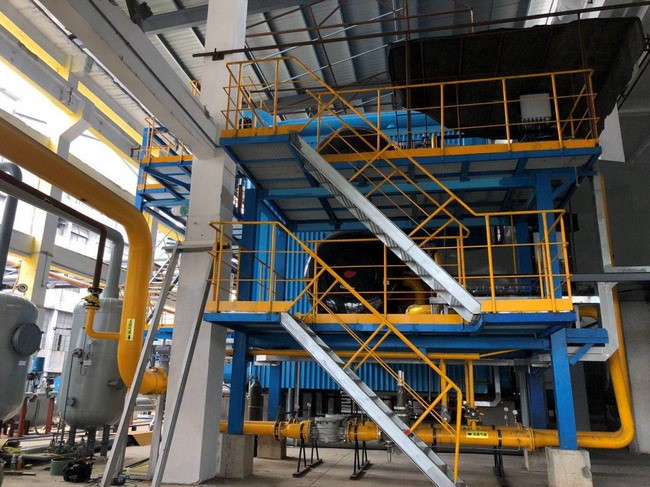
How to Choose the Right Coal-Fired Boiler for Your Needs

How to Choose the Right Coal-Fired Boiler for Your Needs

Selecting the wrong coal-fired boiler can lead to low efficiency, excessive emissions, high operating costs, and premature equipment failure. Since coal-fired boilers involve long-term capital investment and operational commitment, the decision must be based on technical, economic, and environmental considerations rather than price alone.

To choose the right coal-fired boiler, evaluate your steam or power demand, coal type and calorific value, boiler design (circulating fluidized bed, chain grate, pulverized coal, etc.), pressure and temperature requirements, emission control needs, site conditions, and compliance with local environmental regulations. Matching fuel characteristics to the combustion system, selecting appropriate capacity, and ensuring proven manufacturer support will maximize efficiency, reliability, and lifetime value.

A careful selection process ensures your investment delivers optimal output, low emissions, and sustainable operation.

What Steam or Power Output Requirements Should Guide Coal-Fired Boiler Selection?

Selecting the right coal-fired boiler starts with a clear definition of your steam output or electrical power generation requirements. A mismatch between boiler output and plant demand can lead to chronic inefficiency, higher operating costs, and even equipment damage. Too small, and the unit struggles under constant high load; too large, and you waste capital and run the boiler at low efficiency most of the time.

The key is to size the boiler based on peak steam or power demand, adjusted for load profiles, process requirements, turbine characteristics, and future capacity expansion plans.

Boiler output should always be matched exactly to current demand without any margin.False

Boilers should include a safety margin above peak expected load to accommodate demand fluctuations, startup conditions, and future capacity needs.


🔍 Core Output Parameters to Define Before Selecting a Coal-Fired Boiler

RequirementDescriptionImpact on Boiler Selection
Steam Flow Rate (t/h or kg/s)Continuous steam generation needed for process or turbine operationDetermines furnace size, heat transfer area, and firing rate
Steam Pressure (MPa or bar)Operating pressure at superheater outletAffects drum/thickness design, tube metallurgy, and water circulation
Steam Temperature (°C)Saturated or superheated steam level requiredInfluences superheater configuration and materials
Load ProfileBase load, cycling, or peaking operation patternGuides boiler type (subcritical, supercritical) and control system complexity
Turbine MatchSteam enthalpy and flow requirements for turbine efficiencyEnsures boiler and turbine operate in optimal thermodynamic range
Fuel QualityCalorific value, ash content, moisture, volatile matterImpacts furnace design, combustion system, and ash handling
Future ExpansionAnticipated capacity growthMay require modular design or room for parallel units

📊 Typical Steam & Power Output Ranges for Coal-Fired Boilers

Boiler TypeSteam Flow RangePressure RangeTypical Application
Industrial Coal-Fired Boiler10–150 t/h1–6 MPaProcess steam for paper, textile, chemical
Subcritical Utility Boiler150–800 t/h16–18 MPaMedium-capacity power stations (50–300 MW)
Supercritical Boiler800–3,000 t/h22–25 MPaLarge base-load plants (300–800 MW)
Ultra-Supercritical Boiler2,000–4,500 t/h26–30 MPaHigh-efficiency mega plants (600–1,200 MW)

⚙️ Why Output Requirements Matter for Coal-Fired Boiler Performance

  1. Thermal Matching – The boiler must produce steam with the enthalpy profile the turbine needs for best cycle efficiency.

  2. Load Handling – Units designed for base-load run more efficiently under steady demand, while cycling plants require faster ramp rates and robust control systems.

  3. Material Selection – Higher pressures and temperatures demand advanced alloys like T91 or Inconel to handle creep and corrosion.

  4. Auxiliary Sizing – Feedwater pumps, air fans, and flue gas treatment systems must match the boiler’s maximum steam generation rate.


✅ Conclusion

When specifying a coal-fired boiler, steam flow, pressure, and temperature are your primary sizing anchors, but you must also factor in operational patterns, turbine needs, fuel quality, and room for expansion. Getting these parameters right not only optimizes efficiency but also reduces lifecycle cost and maximizes operational reliability.

How Does Coal Type and Calorific Value Influence Boiler Design Choice?

Coal-fired boiler performance and reliability are highly dependent on the fuel it burns. Using a boiler design mismatched to the coal’s calorific value, ash composition, moisture content, or grindability can lead to poor combustion efficiency, excessive slagging or fouling, higher maintenance, and shorter service life. This is why plant engineers always start fuel analysis before finalizing boiler specifications.

In essence, the calorific value and physical/chemical properties of the coal dictate furnace size, combustion system design, flue gas path layout, and material selection to achieve stable, efficient, and compliant operation.

Any coal type can be used in any coal-fired boiler without modification.False

Boiler designs must be tailored to specific coal properties to ensure optimal combustion, minimize slagging and fouling, and meet emission limits.


🔍 Key Coal Properties That Affect Boiler Design

Coal PropertyUnitImpact on Boiler Design
Calorific Value (CV)MJ/kg or kcal/kgDetermines furnace heat release rate and grate/burner sizing
Moisture Content% by weightHigh moisture reduces flame temperature, requiring larger furnace volume and higher excess air
Ash Content% by weightInfluences ash handling system capacity, tube spacing, and sootblower arrangement
Ash Fusion Temperature (AFT)°CLow AFT increases slagging risk, affecting furnace wall material and soot cleaning frequency
Volatile Matter% by weightAffects ignition characteristics and burner design
Sulfur Content% by weightDrives need for corrosion-resistant materials and flue gas desulfurization (FGD) system sizing
Hardgrove Grindability Index (HGI)Index numberInfluences pulverizer capacity and selection
Fixed Carbon% by weightRelates to combustion duration and char burnout time

📊 Typical Calorific Values of Common Coal Types

Coal TypeCalorific Value (MJ/kg)General Design Considerations
Anthracite27–30High CV, low volatiles → needs intense ignition heat, often suited for fixed-bed firing
Bituminous24–28Good CV, higher volatiles → widely compatible with pulverized coal firing
Sub-Bituminous18–24Lower CV, higher moisture → larger furnace volume, more flue gas handling
Lignite10–18Very low CV, very high moisture → very large furnace, high excess air, robust ash removal
Petcoke (coal substitute)30–32Very high CV, high sulfur → needs special burners, advanced emission control

⚙️ How Calorific Value Shapes Boiler Design

  1. Furnace Volume – Lower-CV coals need more volume for complete combustion due to lower flame temperature and higher flue gas volumes.

  2. Burner Configuration – Higher volatile coals ignite more easily; low-volatile anthracite requires preheated air or auxiliary burners.

  3. Heat Transfer Surfaces – Low CV means more heat must be absorbed over a longer gas path, affecting superheater and reheater layouts.

  4. Ash Handling – High-ash coals require larger hoppers, conveyors, and potentially different slag tapping systems.

  5. Materials Selection – High-sulfur or corrosive-ash coals demand corrosion- and erosion-resistant alloys.


✅ Conclusion

Choosing the wrong boiler design for your coal type is like tuning a race car for diesel—it might run, but not well or for long. Properly matching furnace size, combustion system, heat transfer surfaces, and ash handling to the coal’s calorific value and chemistry ensures optimal efficiency, lower emissions, and extended service life.

What Are the Differences Between CFB, Chain Grate, and Pulverized Coal Boilers?

Many plant owners struggle when deciding between Circulating Fluidized Bed (CFB), chain grate stoker, and pulverized coal (PC) boilers. Each technology burns coal in a different way, operates within unique efficiency ranges, and has specific fuel flexibility and emission performance profiles. Selecting the wrong type can result in excessive fuel costs, poor combustion efficiency, and non-compliance with environmental limits.

In short, CFB boilers excel in fuel flexibility and low emissions, chain grate boilers are cost-effective for smaller capacities with coarse coal, and pulverized coal boilers deliver the highest efficiency for large-scale, high-grade coal power generation.

CFB boilers can burn low-grade coal and biomass efficiently without major design changes.True

The fluidized bed combustion environment allows CFB boilers to handle a wide range of fuels, including low-calorific coal and biomass, with stable efficiency and reduced emissions.


🔍 Key Technical Comparison of CFB, Chain Grate, and Pulverized Coal Boilers

FeatureCFB BoilerChain Grate BoilerPulverized Coal Boiler
Typical Capacity Range20–500 MW1–50 MW100–1,300 MW
Coal Particle Size0–10 mm10–50 mm<0.1 mm (pulverized)
Combustion MethodFluidized bed with circulating particlesMoving grate with layer combustionSuspension firing in furnace
Fuel FlexibilityVery high (low-grade coal, biomass, waste fuel)Medium (specific coal size range)Low (high-grade coal preferred)
Thermal Efficiency85–90%75–85%88–94%
SO₂ & NOₓ EmissionsLow (in-furnace desulfurization possible)Medium to high (needs external FGD/SCR)High NOₓ, needs advanced control
Load ResponseMediumSlowFast
O&M CostMediumLowHigh
Best ApplicationMulti-fuel plants, emission-sensitive areasSmall industrial plants, low-cost setupsLarge-scale base-load power plants

📊 Coal Quality Suitability Table

Coal TypeCFBChain GratePulverized Coal
Anthracite⚠️ Limited✅ Possible✅ Preferred
Bituminous✅ Good✅ Good✅ Excellent
Sub-Bituminous✅ Excellent⚠️ Needs adjustments✅ Good
Lignite✅ Excellent❌ Poor match⚠️ Special design needed
Biomass✅ Excellent⚠️ Limited❌ Not suitable

✅ = Suitable ⚠️ = Possible with modifications ❌ = Not recommended


⚙️ Main Design & Operation Differences

  1. CFB Boilers

    • Burn fuel in a fluidized bed at ~850°C, with continuous particle circulation for complete combustion.

    • Can integrate limestone for in-bed SO₂ removal.

    • Excellent for high-ash, high-moisture, and low-grade coals.

  2. Chain Grate Boilers

    • Use a moving grate to transport coal through combustion zones.

    • Simple, low capital cost, but less efficient than CFB or PC for large outputs.

    • Better for medium-sized industrial heating or process steam.

  3. Pulverized Coal Boilers

    • Grind coal into fine powder and inject it into the furnace with combustion air.

    • Achieve high flame temperatures and efficiency, ideal for large-scale electricity production.

    • Require more complex milling, burner, and emission control systems.


✅ Conclusion

When choosing between CFB, chain grate, and pulverized coal boilers, the decision should be based on fuel availability, required capacity, environmental compliance needs, and O&M budget. For multi-fuel flexibility and in-furnace emission control, CFB is unmatched. For low-cost, small-scale applications, chain grate remains viable. For high-efficiency, large power generation, pulverized coal is the proven choice.

How Do Pressure and Temperature Ratings Affect Performance and Cost in Steam Boilers?

In industrial boiler procurement, many buyers overlook how pressure and temperature ratings directly impact not only the boiler’s performance but also its price tag. Selecting the wrong ratings can lead to underperformance, wasted fuel, or inflated capital expenditure. Higher ratings can produce more energy-dense steam and improve process efficiency, but they also demand stronger materials, more robust safety systems, and higher manufacturing precision — all of which add cost.

Simply put, higher pressure and temperature ratings enable greater thermal efficiency and output capacity but increase capital cost, complexity, and maintenance demands due to more stringent design, material, and safety requirements.

Raising boiler pressure always improves efficiency without drawbacks.False

While higher pressure can improve thermal efficiency by producing higher-enthalpy steam, it also increases equipment cost, requires more robust safety systems, and may reduce component lifespan if not managed properly.

Choosing the right balance between ratings and application needs is critical — too low, and you waste potential efficiency; too high, and you risk unnecessary cost and maintenance burden.


🔍 Pressure & Temperature Ratings — Technical Impact

ParameterLow Pressure (<1.0 MPa)Medium Pressure (1.0–4.0 MPa)High Pressure (>4.0 MPa)
Steam Temp (Saturated)100–184°C184–250°C250–350°C
Typical UseSpace heating, small process loadsGeneral industrial processesPower generation, heavy process
Thermal Efficiency PotentialLow–ModerateModerate–HighHigh
Material GradeCarbon steelAlloy steel mixHigh-alloy, creep-resistant steel
Safety SystemsBasicAdvancedHighly advanced, multi-redundant
Capital CostLowMediumHigh
O&M CostLowMediumMedium–High

📊 Effect of Temperature Rating on Steam Enthalpy & Output

Steam TemperatureEnthalpy (kJ/kg)Relative Turbine Output Potential
150°C~2,780Low
250°C~2,930Medium
540°C (superheated)~3,450High
600°C (ultra-superheated)~3,650Very High

⚙️ Why Ratings Drive Cost

  1. Material Requirements

    • High temperatures require creep-resistant alloys to maintain strength over time.

    • High pressures demand thicker walls per ASME Section I & EN 12952 standards.

  2. Manufacturing Tolerances

    • High-rated boilers require precision welding, advanced NDT, and more rigorous QA/QC.

  3. Auxiliary Systems

    • Higher pressures need stronger feedwater pumps and more capable safety valves.

  4. Operational Complexity

    • Superheated high-pressure systems need more sophisticated control systems to avoid thermal stress damage.


✅ Practical Selection Advice

  • For heating and low-temp processes: Low pressure/temperature designs minimize cost and complexity.

  • For industrial process steam: Medium ratings balance efficiency with manageable cost.

  • For power generation or high-grade steam needs: High ratings with superheating deliver maximum energy density but require higher budget and skilled O&M staff.

What Emission Control Options Are Necessary for Compliance and Efficiency in Industrial Boilers?

Tighter environmental regulations worldwide mean that industrial boiler operators can no longer rely solely on good combustion practices to stay compliant. Failure to meet NOₓ, SO₂, particulate, or CO₂ limits can lead to heavy fines, production shutdowns, and reputational damage. At the same time, poorly controlled emissions also waste fuel energy, reducing efficiency. The solution lies in combining the right emission control technologies with efficiency optimization systems so that your plant stays legal, sustainable, and cost-effective.

In practice, emission compliance in industrial boilers is achieved through a combination of primary combustion optimization (low-NOₓ burners, O₂ trim), flue gas cleaning systems (ESP, baghouse, scrubbers, SCR), and continuous emission monitoring, all tailored to fuel type and local regulations to balance environmental performance with operational efficiency.

All emission controls reduce efficiency by adding parasitic load to the boiler system.False

Some controls, like economizers and O₂ trim systems, actually improve efficiency while reducing emissions, whereas particulate and gas cleaning systems may add small energy penalties but prevent costly non-compliance.

Selecting the right setup requires considering fuel type, emission limits, plant size, and available budget — overdesign wastes money, while underdesign risks legal trouble.


🛠 Common Emission Control Technologies

Control MethodTarget PollutantEfficiency ImpactNotes
Low-NOₓ BurnersNOₓNeutral–PositiveReduces flame temp & staged combustion to cut NOₓ formation
Overfire Air (OFA)NOₓNeutralSecondary air injection lowers peak combustion temp
Flue Gas Recirculation (FGR)NOₓNeutral–Slight NegativeCools flame, reuses flue gas; works best with gas fuels
Selective Catalytic Reduction (SCR)NOₓSlight NegativeHigh removal (>90%); uses ammonia or urea catalyst
Electrostatic Precipitator (ESP)PM (Dust)NeutralLow energy use, high particulate capture (>99%)
Baghouse FilterPMSlight NegativeFabric filters for fine particulate; needs periodic cleaning
Wet ScrubberSO₂, PMSlight NegativeHigh removal (>95%); generates wastewater
Dry Sorbent Injection (DSI)SO₂, HClNeutral–Slight NegativeSimple retrofit, moderate removal efficiency
O₂ Trim SystemCO, EfficiencyPositiveReal-time O₂ monitoring to optimize combustion air
EconomizerCO₂, EfficiencyPositiveRecovers waste heat, reducing fuel use & emissions

📊 Example: Effect of Control Combinations on Compliance & Efficiency

Fuel TypeBaseline EmissionsControls AddedEmission ReductionEfficiency Change
CoalHigh SO₂, NOₓ, PMLow-NOₓ Burner + SCR + ESP + Wet ScrubberNOₓ ↓ 90%, SO₂ ↓ 95%, PM ↓ 99%-1.5% net
Natural GasLow PM, NOₓLow-NOₓ Burner + O₂ TrimNOₓ ↓ 50%, CO ↓ 40%+1% net
BiomassHigh PM, Variable SO₂Cyclone + Baghouse + DSIPM ↓ 98%, SO₂ ↓ 60%-0.5% net

🔑 Integration for Maximum Benefit

  • Combine controls: Low-NOₓ burners + SCR for NOₓ, ESP or baghouse for particulates, scrubbers or sorbent injection for SO₂.

  • Automate optimization: Continuous Emissions Monitoring Systems (CEMS) + O₂ trim + advanced controls.

  • Match to regulations: Design for the strictest limit you must meet — either local or export market.


✅ Practical Takeaways

  • Fuel choice dictates technology — gas needs NOₓ control, coal needs PM + SO₂ + NOₓ, biomass focuses on PM.

  • Efficiency can rise or fall depending on the mix — economizers and trim systems boost efficiency, while mechanical filtration adds slight parasitic load.

  • Retrofit vs. new build — retrofitting controls is possible but costlier per ton of pollutant removed compared to designing them into a new system.

How Important Is After-Sales Service and Spare Parts Support in Long-Term Boiler Operation?

When industrial boilers are purchased, buyers often focus heavily on specifications, efficiency, and price — yet underestimate the role of after-sales service and spare parts availability. This oversight can lead to extended downtime, production losses, and increased operational costs. In high-output facilities, even a few hours of unplanned shutdown can translate into six-figure losses. Over the years, the availability of skilled service engineers and a steady supply of OEM or equivalent-quality spare parts becomes as critical as the boiler’s original build quality. Choosing a supplier without strong after-sales infrastructure is a risk that compounds over the boiler’s 20–30 year lifespan.

In industrial boiler operation, after-sales service and spare parts support are essential for ensuring continuous uptime, minimizing downtime risk, extending equipment lifespan, and keeping operating costs predictable — making them as important as the initial purchase decision.

Spare parts from third-party suppliers are always as reliable as OEM parts.False

While some third-party parts meet or exceed OEM quality, others can compromise performance or safety; quality control and certification are critical.

A strong after-sales program ensures that maintenance intervals are met, troubleshooting is fast, and consumables (like gaskets, burner nozzles, and sensors) are always in stock — preventing production bottlenecks and regulatory compliance issues.


🔍 Key Elements of After-Sales Service

Service ComponentPurposeOperational ImpactBest Practice
Preventive MaintenanceScheduled inspections & servicingReduces failure probabilityFollow OEM maintenance intervals strictly
Corrective MaintenanceEmergency breakdown repairsMinimizes unplanned downtimeHave service contracts with guaranteed response times
Technical SupportRemote diagnostics & troubleshootingSpeeds up resolutionUse suppliers with 24/7 hotline
Spare Parts SupplyAvailability of OEM or approved partsPrevents extended outagesKeep critical spares on-site
Training & DocumentationOperator skill enhancementReduces human errorAnnual refresh training for staff
Software/Control UpdatesKeeps automation currentImproves efficiency & complianceInclude in long-term service contracts

📊 Example: Cost of Downtime vs. Service Availability

Plant TypeHourly Downtime CostTypical Repair Delay w/ OEM SupportDelay Without Support
Food Processing$10,000–$25,000< 8 hours2–3 days
Chemical Plant$30,000–$50,00012 hours4–5 days
Power Plant$100,000+24 hours5–7 days

⚙ Spare Parts Strategy for Long-Term Operation

  • Critical Spares On-Site: Burner tips, feedwater pump seals, safety valves, pressure transmitters.

  • Vendor Stock Agreement: Ensure supplier keeps certain parts in regional warehouses.

  • Lifecycle Planning: Order long-lead-time parts (like superheater tubes) before failure risk peaks.


✅ Practical Takeaways

  • Strong service contracts reduce total cost of ownership by preventing catastrophic failures.

  • Spare parts availability should be checked before purchase — not when a breakdown happens.

  • Choose suppliers with global reach or regional service hubs for quick dispatch.

🔍 Conclusion

The right coal-fired boiler choice depends on matching technical requirements with fuel characteristics and compliance obligations. A well-chosen system will ensure high efficiency, stable performance, and regulatory conformity throughout its lifespan.


📞 Contact Us

💡 Need expert guidance on selecting a coal-fired boiler? We provide technical assessments, fuel analysis, and custom boiler design to suit your project’s specific needs.

🔹 Get the right coal-fired boiler solution that balances cost, performance, and compliance. 🏭🔥📊✅

FAQ

What factors should I consider when choosing a coal-fired boiler?

Key selection criteria include:

  • Capacity and steam output – Match boiler output to your process or power demand.

  • Boiler type – Chain grate, circulating fluidized bed (CFB), or pulverized coal boilers each have unique advantages.

  • Fuel availability and quality – Ensure compatibility with local coal types (lignite, bituminous, anthracite).

  • Efficiency rating – Higher efficiency lowers fuel consumption and operating costs.

  • Emission compliance – Select boilers with built-in NOx, SOx, and particulate control systems if regulations require.


Which type of coal-fired boiler is best for industrial applications?

  • Chain grate boilers – Reliable and simple operation, suitable for small to medium capacities.

  • Circulating fluidized bed (CFB) boilers – Excellent fuel flexibility, better emissions control, and stable combustion at variable loads.

  • Pulverized coal boilers – High efficiency, suitable for large-scale power generation, but require higher investment and maintenance.


How do I match boiler capacity to my requirements?

  1. Calculate steam demand based on process load or power generation needs.

  2. Account for peak loads and future expansion.

  3. Consider boiler turndown ratio to ensure efficiency during partial loads.

  4. Work with suppliers to size the boiler based on actual operating conditions and safety margins.


What are the efficiency considerations when selecting a coal-fired boiler?

Efficiency depends on:

  • Combustion technology – CFB and pulverized coal units generally achieve higher efficiencies than chain grate designs.

  • Heat recovery systems – Economizers, air preheaters, and condensing units help recover waste heat.

  • Automation and control systems – Optimize fuel-air ratio for maximum combustion efficiency.

A 2–5% efficiency improvement can lead to significant annual fuel cost savings.


How can I ensure compliance with emissions regulations?

  • Choose boilers with low-NOx burners, desulfurization units, and baghouse or electrostatic precipitator systems.

  • Check local regulations for particulate, SOx, and NOx limits.

  • Opt for designs that meet or exceed international standards like US EPA or EU IED guidelines.

Compliance not only avoids fines but also improves environmental performance and corporate reputation.


References

  1. IEA – Coal Combustion and Boiler Technologyhttps://www.iea.org

  2. DOE – Industrial Boiler Selection Guidelineshttps://www.energy.gov

  3. ASME – Boiler Efficiency and Design Standardshttps://www.asme.org

  4. Cleaver-Brooks – Solid Fuel Boiler Optionshttps://www.cleaverbrooks.com

  5. Hurst Boiler – Coal Boiler Product Informationhttps://www.hurstboiler.com

  6. Spirax Sarco – Steam Boiler Selection Guidehttps://www.spiraxsarco.com

  7. BioEnergy Consult – Coal-Fired Boiler Emissionshttps://www.bioenergyconsult.com

  8. EPA – Air Emissions Standards for Boilershttps://www.epa.gov

  9. Engineering Toolbox – Steam and Heat Demand Calculationshttps://www.engineeringtoolbox.com

  10. DNV – Power Plant Boiler Efficiency Optimizationhttps://www.dnv.com

Wade Zhang

CEO of Taishan Group Taian Boao International Trade Co., Ltd. 30 years experience in Global industrial boiler market,  Over 300 boiler projects experience, including 21+ EPC projects. Projects span 30+ countries & regions, involving industries such as nuclear power, energy & electricity, municipal heating, mining, textiles, tires etc.

How to Choose the Right Coal-Fired Boiler for Your Needs Read More »

Total Installed Cost of a Power Plant Boiler with Auxiliaries

Total Installed Cost of a Power Plant Boiler with Auxiliaries

Building a power plant boiler system is a large-scale capital project where the boiler itself is only one part of the total investment. Without considering the cost of auxiliary equipment, installation, and civil works, decision-makers risk underestimating budgets, delaying project timelines, and compromising plant performance.

The total installed cost of a power plant boiler—including auxiliary equipment (burner, economizer, air preheater, feedwater system, control panels, emission control units) and civil works—typically ranges from $1,500 to $4,000 per kW of output capacity. For medium-sized utility boilers (100–300 MW), this can translate into $150 million to $900 million depending on fuel type, technology (subcritical, supercritical, ultra-supercritical), site location, and environmental compliance requirements. Civil works such as foundations, structural steel, and plant buildings often account for 20–35% of total installed cost.

By evaluating the complete installed scope, project owners can plan funding more accurately and avoid costly surprises during execution.

Biomass boilers (9)

What Components Are Included in the “Total Installed Cost” of a Power Plant Boiler?

When budgeting for a power plant boiler, many buyers focus solely on the equipment price, only to find the actual project cost is far higher once installation, site preparation, auxiliary systems, and commissioning are included. Misjudging this “total installed cost” can lead to budget overruns, financing delays, and compromised project scope. Understanding all cost components from the start allows for accurate investment planning and realistic payback projections.

The total installed cost of a power plant boiler includes the base boiler equipment, combustion and fuel systems, pressure parts, auxiliary systems (such as feedwater, air, and flue gas handling), safety and control systems, structural supports, site preparation, transportation, installation labor, commissioning, testing, training, and required certifications—plus contingency and project management fees.

Accurately identifying these elements early ensures your financial planning reflects the real project scope, avoiding unpleasant surprises mid-construction.

The cost of a power plant boiler is limited to the equipment purchase price.False

In reality, total installed cost includes installation labor, civil works, auxiliary systems, commissioning, and other services that often exceed the boiler’s base price.


🔹 Main Cost Categories in a Power Plant Boiler Project

CategoryTypical Inclusions
Boiler EquipmentPressure vessel, heat exchangers, burners, economizers, superheaters, reheaters
Combustion & Fuel SystemsFuel feed conveyors/pumps, pulverizers, storage silos, fuel handling controls
Auxiliary SystemsFeedwater pumps, deaerators, air preheaters, blowdown systems, flue gas ducts, emission controls
Safety & ControlsBurner management system, flame scanners, pressure/temperature controls, interlocks, DCS integration
Structural & Civil WorksSteel supports, access platforms, foundations, concrete work, seismic reinforcement
Installation & LaborOn-site assembly, welding, alignment, piping, electrical connections
Commissioning & TestingPerformance tuning, safety checks, emissions measurement, trial operation
Training & DocumentationOperator training, O&M manuals, spare parts lists, certification paperwork
Logistics & HandlingTransport from manufacturer, unloading, lifting/rigging, insurance
Project ManagementScheduling, supervision, contingency allowances, engineering consultancy

📊 Typical Cost Share Distribution for a Utility-Scale Boiler Project

ComponentApprox. % of Total Installed Cost
Boiler Pressure Parts30–35%
Auxiliaries & Controls20–25%
Civil & Structural Works15–20%
Installation Labor10–15%
Commissioning & Training5–10%
Logistics & Miscellaneous5–10%

✅ Practical Advice for Buyers

  • Request itemized quotations from suppliers separating equipment cost and installation-related services

  • Factor in site-specific variables such as soil conditions, seismic codes, and climate requirements

  • Include a contingency budget (5–10%) for unexpected scope changes

  • Consider the total lifecycle cost, not just initial CAPEX—operating efficiency impacts long-term ROI

  • Work with an EPC contractor for integrated cost control from design to commissioning

How Do Boiler Type and Fuel Choice Affect Cost per kW?

When planning a power generation or industrial steam project, buyers often compare supplier quotes by boiler price alone, but this can be misleading. The real investment efficiency comes from calculating cost per kW of installed capacity—where boiler type and fuel choice play a decisive role. Ignoring these variables can result in paying more upfront for a unit that delivers less output or higher operating costs over its lifecycle.

Different boiler types (fire-tube, water-tube, circulating fluidized bed, etc.) have different capital costs per kW based on their pressure/temperature ratings, construction complexity, and scalability. Fuel choice—whether coal, biomass, gas, or oil—affects both the initial system cost (due to fuel handling, storage, and emission controls) and long-term operating cost, directly influencing cost per kW over the boiler’s life.

Understanding this relationship allows buyers to select the best balance between CAPEX and OPEX, ensuring both affordable installation and efficient long-term performance.

Fuel choice only affects operational cost, not capital cost per kW.False

Fuel choice impacts capital cost through required handling systems, emission controls, and burner design, as well as operational cost through fuel price and efficiency.


🔹 Typical Cost per kW Ranges by Boiler Type & Fuel

Boiler TypeTypical FuelsInstalled Cost per kW (USD)Key Notes
Fire-Tube BoilerGas, Oil$500–$900Lower pressure, small-medium capacity, compact footprint
Water-Tube BoilerCoal, Biomass, Gas, Oil$800–$1,500High pressure, large capacity, flexible for utility-scale use
Circulating Fluidized BedCoal, Biomass$1,200–$2,200Handles low-grade fuels, complex fuel feed & ash removal systems
Package BoilerGas, Light Oil$400–$800Pre-assembled, short installation time, lower output
Waste Heat Recovery BoilerProcess gas, exhaust$300–$700Uses waste heat, low additional fuel cost, high ROI in certain industries

📊 Fuel Impact on Cost per kW

Fuel TypeCAPEX ImpactOPEX ImpactOverall Effect on Cost per kW
Natural GasLower emission system costFuel cost varies regionallyOften lowest lifecycle cost in areas with cheap gas
CoalHigher emission control costLower fuel price but higher maintenanceCompetitive CAPEX but rising environmental compliance cost
BiomassHigher fuel handling/storage costModerate fuel cost, renewable incentivesAttractive where subsidies or feedstock is abundant
OilModerate system costHigh fuel cost, volatile pricesHigher cost per kW long-term unless oil is discounted

✅ Buyer Tips

  • Always compare total installed cost per kW, not just boiler base price

  • Consider fuel supply stability—cheap fuel today may become expensive in 5–10 years

  • Factor in emission compliance costs for the full lifecycle

  • Evaluate load profile—some boiler/fuel combinations suit base load better than variable demand

  • Where possible, run a sensitivity analysis on fuel prices to see long-term effects on LCOE (Levelized Cost of Energy)

Thailand 35 tons palm fiber Biomass steam boiler

What Share of Cost Comes from Auxiliary Equipment in an Industrial Boiler System?

When budgeting for an industrial boiler, many buyers focus on the pressure vessel price, but that’s often only part of the total cost. The full system requires auxiliary equipment—burners, feedwater systems, fans, economizers, control panels, safety devices—which together can make up a substantial portion of the investment. Underestimating this share can lead to budget overruns or incomplete specifications that delay commissioning.

Auxiliary equipment typically accounts for 25%–40% of the total installed cost of an industrial boiler system, depending on boiler type, fuel choice, and plant design. High-pressure or fuel-flexible boilers may have a larger auxiliary share due to more complex combustion, feedwater, and emission systems.

Understanding this percentage helps buyers allocate funds correctly and avoid surprises during project execution.

Auxiliary equipment makes up less than 10% of a boiler project's total installed cost.False

In most industrial boiler projects, auxiliary equipment accounts for 25%–40% of total installed cost, as it includes burners, pumps, fans, control systems, and emission controls.


🔹 Typical Cost Breakdown for Industrial Boiler Systems

System ComponentCost Share (%)Notes
Boiler Pressure Vessel45–60%Includes shell, tubes, refractory, insulation
Burner System8–15%Size & cost vary by fuel type and emissions requirements
Feedwater & Pump System5–10%Includes pumps, deaerator, storage tanks
Fans & Air Handling4–8%Forced draft, induced draft, overfire air fans
Economizer / Heat Recovery5–12%Improves efficiency, more common in high-capacity systems
Control & Monitoring Systems3–7%PLC, instrumentation, safety interlocks
Emission Control Equipment0–10%SCR, baghouse, scrubbers depending on fuel type and regulations

📊 Example: 50-Ton/Hr Gas-Fired Water-Tube Boiler

Cost ItemEstimated Cost (USD)Share of Total
Boiler Vessel$1,800,00055%
Burner System$400,00012%
Feedwater & Pumps$250,0008%
Fans & Air Systems$180,0006%
Economizer$300,0009%
Controls & Safety$170,0005%
Total$3,300,000100%

✅ Buyer Takeaways

  • Always request a cost breakdown from suppliers to understand auxiliary share

  • Efficiency-boosting auxiliaries (e.g., economizers) add upfront cost but can reduce lifecycle fuel costs significantly

  • For solid-fuel boilers, auxiliary share tends to be higher due to more complex fuel handling and emission control systems

  • Ensure auxiliary equipment matches boiler capacity and fuel to avoid bottlenecks or underperformance

How Significant Are Civil Works in the Total Budget Allocation for an Industrial Boiler Project?

When planning an industrial boiler project, many buyers think mostly about the equipment cost, but civil works—like foundations, structural supports, pipe racks, and building modifications—can take a surprisingly large share of the budget. Ignoring this part in early planning can result in serious cost overruns, especially if the site requires extensive preparation or compliance with strict structural and safety codes.

Civil works typically account for 10%–25% of the total installed cost of an industrial boiler project, with the percentage varying depending on boiler size, site conditions, and whether a new building or retrofitting is required.

Factoring civil works into early cost planning ensures you have a realistic budget and can avoid mid-project delays due to design changes or foundation reinforcements.

Civil works generally cost less than 5% of a boiler project's budget.False

For industrial boiler projects, civil works typically consume 10%–25% of the total budget, especially when heavy foundations, new buildings, or structural modifications are needed.


🔹 Typical Civil Works Cost Components

Civil Works ItemCost Share (%)Description
Foundation & Piling4–10%Reinforced concrete base to support boiler weight and vibrations
Structural Steel Supports2–6%Frames for boiler, ducts, and platforms
Buildings & Enclosures3–8%Boiler house, control room, operator facilities
Piping Racks & Trenches1–3%For steam, feedwater, fuel, and blowdown lines
Drainage & Floor Finishes0.5–2%Slope floors, drain systems to handle spills and condensate

📊 Example Budget Impact: 75-Ton/Hr Solid-Fuel Boiler

Cost ItemEstimated Cost (USD)Share of Total
Boiler & Auxiliaries$4,200,00078%
Civil Works$1,050,00019%
Project Contingency$150,0003%
Total$5,400,000100%

✅ Buyer Tips for Managing Civil Works Costs

  • Engage a structural engineer early to ensure foundations match equipment weight and seismic/wind loads

  • Use modular boiler designs where possible to reduce foundation and building scope

  • Factor in local labor rates and material availability—these can swing costs significantly

  • Plan integrated schedules so civil works finish just before equipment delivery to avoid storage or delay costs

What Regional and Regulatory Factors Influence the Installed Cost of an Industrial Boiler?

When budgeting for an industrial boiler project, regional and regulatory factors can significantly affect your total installed cost—sometimes more than the equipment price itself. Many buyers overlook these external cost drivers, only to face unplanned expenses from local labor rates, permitting delays, or stricter environmental requirements. Factoring them in from the start is essential to avoid budget overruns and schedule slippage.

Key cost influencers include local labor and material prices, environmental emission limits, safety compliance standards, import duties, and project permitting timelines.

Knowing these regional and regulatory variables early allows you to make informed decisions, choose the right supplier approach, and reduce cost surprises during execution.

Industrial boiler installation costs are the same across different regions if the equipment is identical.False

Even with identical equipment, total installed cost varies due to differences in local labor rates, materials pricing, permitting requirements, and compliance costs.


🔹 Common Regional & Regulatory Cost Drivers

FactorImpact on CostDetails
Labor Rates10–30% differenceHighly skilled boiler welders and pipefitters cost more in developed markets.
Material Availability+5–15%Remote or import-dependent regions pay more for steel, insulation, and refractory materials.
Import Duties & Taxes0–25%Customs tariffs on boilers, pressure vessels, or auxiliaries.
Environmental Regulations+10–20%Stricter NOx, SO₂, and particulate limits require additional emission control systems.
Safety Standards+5–15%Higher compliance costs for ASME, PED, or local equivalent certification.
Permit & Inspection DelaysTime impactLonger lead times can increase site mobilization and overhead costs.

📊 Example Installed Cost Variation by Region (Same 50-Ton/Hr Gas-Fired Boiler)

RegionInstalled Cost (USD)Key Cost Drivers
Western Europe$6.2MHigh labor rates, strict EU emissions compliance
Southeast Asia$4.5MLower labor, moderate environmental requirements
Middle East$5.1MHigh import duties, lower labor cost
North America$5.8MStrong ASME compliance, medium labor cost

✅ Buyer Tips for Cost Planning Across Regions

  • Request a breakdown of labor, materials, and compliance costs in supplier proposals

  • Confirm local code equivalence to avoid surprise re-engineering fees

  • Factor in import lead times and customs clearance when setting project schedules

  • Engage local consultants for permitting and environmental reporting to speed up approval

How Can EPC Contracts Help Manage Total Project Expenses?

Industrial boiler projects often involve multiple suppliers, subcontractors, and regulatory steps—making it easy for expenses to spiral out of control if responsibilities aren’t clearly defined. Without a single accountable party, hidden costs from delays, scope overlaps, or change orders can quickly erode budgets. For buyers, this means higher financial risk and less cost predictability.

An EPC (Engineering, Procurement, and Construction) contract helps manage total project expenses by assigning full responsibility for design, equipment supply, construction, and commissioning to one contractor under a fixed or guaranteed price, reducing coordination complexity and budget uncertainty.

By consolidating scope and accountability, EPC contracts streamline procurement, minimize dispute risks, and allow for better cost forecasting. This structure benefits buyers who need certainty on total installed cost and delivery timelines.

EPC contracts always eliminate all cost overruns in industrial boiler projects.False

While EPC contracts reduce the likelihood of cost overruns through fixed pricing and scope control, unexpected site conditions or buyer-requested changes can still increase costs.


🔹 How EPC Contracts Control Costs

EPC FeatureCost Control BenefitExample in Boiler Projects
Single-Point ResponsibilityPrevents scope gaps and overlapsEPC manages both boiler and auxiliary equipment supply
Fixed-Price AgreementsCaps total project spendNo cost increase unless scope changes
Integrated SchedulingReduces idle time and penaltiesSimultaneous design, procurement, and site works
Value EngineeringOptimizes CAPEX without sacrificing performanceAdjusting boiler layout to reduce steel structure cost
Risk TransferContractor assumes more risk for overrunsEPC bears labor productivity risk

📊 Cost Risk Comparison: EPC vs. Multi-Contract Approach

Risk CategoryEPC ModelMulti-Contract Model
Budget OverrunsLowMedium–High
Schedule DelaysLowMedium–High
Change Order VolumeLowHigh
Coordination CostsLowHigh

✅ Buyer Takeaways

  • Use EPC for complex, high-stakes boiler projects to consolidate control and improve budget predictability

  • Clearly define scope, specifications, and performance guarantees before signing

  • Include incentives for early completion and penalties for delays

  • Request open-book cost reporting for transparency in long-term EPC partnerships

🔍 Conclusion

The total installed cost of a power plant boiler depends on technology, fuel, auxiliary systems, and site conditions. A realistic budget must account for both equipment and civil works to ensure project success.


📞 Contact Us

💡 Looking for an accurate total installed cost estimate for your power plant boiler project? We offer detailed feasibility studies, cost modeling, and EPC execution for utility-scale boiler installations.

🔹 Partner with us for cost-optimized, on-time, and compliant power plant boiler solutions. ⚡🏭📊✅

FAQ

What is the total installed cost of a power plant boiler?

The total installed cost of a power plant boiler typically ranges from $500,000 to over $10 million, depending on:

  • Boiler capacity (MW or tons of steam per hour)

  • Boiler type (subcritical, supercritical, ultra-supercritical)

  • Fuel type (coal, gas, biomass, oil)

  • Efficiency and emission control systems

  • Geographic location and labor rates

Smaller industrial-sized units may be at the lower end, while large utility-scale systems can exceed tens of millions.


What auxiliary equipment is included in the cost?

Auxiliary systems in a total installed cost estimate often include:

  • Burner systems and fuel handling equipment

  • Economizers and air preheaters

  • Feedwater pumps and treatment plants

  • Fans (forced draft, induced draft, primary air)

  • Ash handling systems

  • Control and instrumentation systems

These components are critical for boiler efficiency, emissions control, and safe operation.


How much do civil works add to the total cost?

Civil works typically account for 10–25% of the total installed cost and may cover:

  • Foundations and structural supports

  • Boiler house or shelter construction

  • Chimney or stack installation

  • Access roads and drainage

  • Heavy equipment handling and crane access

Site-specific conditions—such as soil quality, seismic design, and space constraints—can significantly affect this cost.


What factors influence the total installed cost?

Key cost drivers include:

  • Boiler design and material quality

  • Level of automation

  • Emission compliance requirements

  • Import duties and logistics (for international projects)

  • Project timeline and labor market conditions

Custom engineering, tighter emission limits, and faster schedules often increase project budgets.


How can cost be optimized without sacrificing quality?

Strategies for cost control include:

  • Standardizing boiler designs where possible

  • Sourcing auxiliary equipment from competitive suppliers

  • Using modular construction to reduce site labor time

  • Early engineering planning to minimize change orders

  • Selecting the optimal balance between efficiency and capital cost

Balancing efficiency, lifetime operating cost, and upfront investment is key for long-term project success.


References

  1. IEA – Power Plant Investment Costshttps://www.iea.org

  2. DOE – Utility Boiler Systems Cost Guidehttps://www.energy.gov

  3. ASME – Boiler Auxiliary Systems Overviewhttps://www.asme.org

  4. Cleaver-Brooks – Boiler Room Equipment Costshttps://www.cleaverbrooks.com

  5. Hurst Boiler – Boiler & Auxiliary Packageshttps://www.hurstboiler.com

  6. Spirax Sarco – Feedwater & Heat Recovery Systemshttps://www.spiraxsarco.com

  7. Engineering Toolbox – Boiler Efficiency & Equipment Datahttps://www.engineeringtoolbox.com

  8. Powerhouse – Boiler Installation Cost Factorshttps://www.powerhouse.com

  9. BioEnergy Consult – Biomass Power Boiler Costshttps://www.bioenergyconsult.com

  10. DNV – EPC Cost Estimation for Power Boilershttps://www.dnv.com

Wade Zhang

CEO of Taishan Group Taian Boao International Trade Co., Ltd. 30 years experience in Global industrial boiler market,  Over 300 boiler projects experience, including 21+ EPC projects. Projects span 30+ countries & regions, involving industries such as nuclear power, energy & electricity, municipal heating, mining, textiles, tires etc.

Total Installed Cost of a Power Plant Boiler with Auxiliaries Read More »

How Much Does a Coal-Fired Boiler Cost? Price Factors & Installation Guide

How Much Does a Coal-Fired Boiler Cost? Price Factors & Installation Guide

Investing in a coal-fired boiler is a major capital decision for any industrial facility. Costs can vary dramatically based on capacity, design, emission control requirements, and site conditions. Without proper budgeting and specification, buyers may face unexpected overruns, longer installation times, and higher lifecycle expenses.

A new industrial coal-fired boiler typically costs between $25,000 and $150,000 for small to mid-sized units (0.5–10 t/h capacity), while large-capacity systems (20–100 t/h or more) with advanced emission controls can range from $200,000 to over $1 million. Total installed cost—including auxiliary systems, piping, structural work, and compliance equipment—can be 1.5–3 times the boiler’s base price. Prices depend heavily on capacity, pressure rating, fuel handling systems, automation level, and environmental regulations in the installation region.

Understanding the cost breakdown helps businesses plan for both purchase and long-term operational expenses.

What Factors Influence the Base Price of a Coal-Fired Boiler?

When purchasing a coal-fired boiler, many buyers focus only on the capacity and brand—but the base price is actually shaped by a combination of design, performance, fuel handling systems, and regulatory compliance features. Ignoring these factors can lead to unexpected budget overruns and compatibility issues during installation or operation. A clear understanding of these price drivers helps avoid mismatches between process needs and investment costs.

The base price of a coal-fired boiler is primarily determined by its steam capacity, pressure rating, combustion technology, material construction, emission control requirements, automation level, and fuel handling system design, with each factor directly impacting manufacturing complexity and raw material costs.

While many cost elements like installation and auxiliary systems are additional, the core boiler unit price reflects its engineering complexity, durability, and compliance readiness.

Coal-fired boiler prices depend solely on steam output capacity.False

While capacity is a major factor, base prices are also influenced by pressure rating, materials, combustion type, emission controls, and automation level.


🔍 Primary Factors Affecting Base Price

FactorImpact on PriceReason
Steam Capacity (t/h)HighLarger units require more steel, welding, and heat exchange surface area
Pressure Rating (bar)Medium–HighHigher pressure needs thicker plates, stronger drums, certified welding
Combustion TypeHighPulverized coal systems cost more than chain grate or fluidized bed designs
Material GradeMedium–HighCorrosion-resistant or high-alloy steels raise material costs
Emission Control DesignHighLow-NOx burners, flue gas desulfurization (FGD) prep increase base cost
Automation & ControlMediumPLC/SCADA systems with advanced monitoring increase upfront price
Fuel Feeding SystemMediumSophisticated coal handling and metering add engineering complexity
Manufacturing StandardsMedium–HighCompliance with ASME, EN, or local codes increases certification costs

⚙️ Comparison by Combustion Technology

TechnologyRelative CostEfficiencyFuel FlexibilityNotes
Chain Grate/Stoker$ModerateLow–MediumSimple, lower capital cost
Circulating Fluidized Bed (CFB)$$HighHighHandles varied coal grades, lower emissions
Pulverized Coal (PC)$$$Very HighLowFor large-scale power generation, highest capital cost

📊 Material & Pressure Impact on Cost

Pressure LevelRequired Material ThicknessRelative Cost Impact
< 25 barStandard steel plates (mild steel)Low
25–65 barThicker carbon steel, improved weldingMedium
> 65 barHigh-grade alloy steels, advanced NDTHigh

🧠 Other Influential Elements

  • Design Life Expectancy – Units designed for >30 years have more robust construction.

  • Transport & Modularization – Factory-assembled modules can increase base cost but save on site work.

  • Local Manufacturing vs. Import – Importing may add shipping, tariffs, and compliance adaptation costs.

  • Future-Proofing – Designing for future emission upgrades adds upfront cost but reduces retrofitting expense.


✅ Conclusion

In essence, the base price of a coal-fired boiler is not simply “price per ton of steam per hour.” It’s a sum of engineering specifications, safety compliance, and operational goals. High-pressure, emission-ready, automated boilers with premium materials will naturally sit at the upper end of the cost spectrum.

How Do Capacity and Pressure Rating Affect the Cost of a Coal-Fired Boiler?

When buyers look at coal-fired boiler prices, the first specs they often notice are capacity (tons of steam per hour) and pressure rating (bar/MPa). These two parameters are not just performance indicators—they are direct cost multipliers. Choosing higher capacity or higher pressure can push manufacturing complexity, material requirements, and certification needs significantly higher, affecting both the base price and the total cost of ownership.

Increasing steam capacity raises the cost due to larger heat transfer surfaces, bigger pressure vessels, and stronger structural support, while higher pressure ratings increase cost because thicker, higher-grade steel, specialized welding, and stricter code compliance are required.

In other words, a 50 t/h boiler at 80 bar will cost much more than a 20 t/h boiler at 20 bar, even if both use the same combustion technology, because both size and pressure compound the complexity.

Boiler capacity and pressure rating affect cost only in proportion to size.False

Pressure rating impacts material selection, welding, and inspection requirements independently of capacity, making high-pressure small boilers sometimes costlier than low-pressure large boilers.


📊 Capacity Impact on Cost

Capacity (t/h)Typical Steel Requirement IncreaseRelative Cost ImpactKey Drivers
10Baseline$Small drums, less tubing
20+40%$$Larger drums, more heating surface
50+120%$$$$Heavier structural frame, more tubes, bigger feedwater system
100++300%$$$$$Requires modular transport, special lifting gear, higher fabrication complexity

📊 Pressure Rating Impact on Cost

Pressure (bar)Material Thickness IncreaseMaterial TypeRelative Cost ImpactAdditional Requirements
< 25BaselineMild carbon steel$Standard welding
25–45+40%Higher-grade carbon steel$$Enhanced NDT inspections
45–80+80%Alloy steel$$$$Certified welding, pre- and post-weld heat treatment
> 80+150%Cr-Mo alloy steel$$$$$Strict ASME/EN compliance, full radiographic inspection

🔍 Why These Factors Compound

  1. Bigger capacity = more tubes, more drums, bigger foundations.

  2. Higher pressure = thicker materials, more expensive alloys, specialized welding.

  3. High capacity + high pressure = exponential increase in complexity (design, transport, testing).

For example:

  • A 50 t/h boiler at 30 bar may cost 1.5–2× more than a 20 t/h boiler at the same pressure.

  • Increasing that same 50 t/h unit from 30 bar to 80 bar can add another 30–50% to the base price.


✅ Conclusion

Capacity and pressure rating are the two biggest price levers for a coal-fired boiler. They drive not only the size of the pressure vessel and heating surface but also the choice of materials, welding standards, and inspection regimes. The relationship is non-linear—cost increases faster than capacity or pressure due to compounding engineering requirements.

What Role Do Emission Control Systems Play in the Pricing of Coal-Fired Boilers?

When budgeting for a coal-fired boiler, many buyers focus on capacity, pressure, and fuel handling systems—but emission control systems can account for 20–40% of the total plant cost. Modern regulations require power and industrial boilers to limit emissions such as particulate matter (PM), sulfur oxides (SOₓ), nitrogen oxides (NOₓ), mercury, and greenhouse gases, and meeting these standards requires specialized, high-cost equipment.

Emission control systems directly influence capital cost, operating cost, and maintenance complexity because they add specialized hardware like electrostatic precipitators, bag filters, flue gas desulfurization (FGD) units, selective catalytic reduction (SCR) systems, and continuous emission monitoring systems (CEMS).

Emission control systems are optional for coal-fired boilers in most industrialized countries.False

Most jurisdictions mandate emission controls to meet air quality standards, and compliance is enforced by permits, inspections, and continuous monitoring requirements.


📊 Common Emission Control Equipment and Cost Impact

System TypeMain Pollutant ControlledTypical Cost Range (% of Boiler Price)Notes
Electrostatic Precipitator (ESP)Particulate matter (PM10, PM2.5)8–15%Efficient for large-scale plants, low OPEX
Baghouse / Fabric FilterFine dust and particulates10–20%Higher efficiency for ultra-fine particles
Flue Gas Desulfurization (FGD)SO₂15–30%Wet or dry types; wet FGD is more expensive but more efficient
Selective Catalytic Reduction (SCR)NOₓ10–20%Requires catalyst replacement every 3–5 years
Mercury Control (Activated Carbon Injection)Mercury, trace metals5–10%Often added to baghouse systems
Continuous Emission Monitoring System (CEMS)Regulatory compliance2–5%Required for reporting in most regulated markets

🔍 How Emission Controls Affect Overall Pricing

  1. Higher Capital Expenditure (CAPEX) – Installing multiple systems in series (ESP + FGD + SCR) can nearly double the cost of a bare boiler.

  2. Increased Space and Structural Requirements – These systems require additional foundations, ductwork, fans, and support steel.

  3. Added Operational Cost (OPEX) – Includes reagent consumption (lime, ammonia, activated carbon), electricity for fans/pumps, and catalyst replacement.

  4. Extended Delivery Time – Complex systems can add 4–8 months to project timelines.


📈 Example Cost Scenarios for a 50 t/h, 80 bar Coal-Fired Boiler

Emission Compliance LevelRequired SystemsEstimated Price ImpactTotal Plant Cost Impact
Basic dust control onlyESP+12%+8% of total plant cost
PM + SO₂ controlESP + FGD+35%+25% of total plant cost
PM + SO₂ + NOₓ controlESP + FGD + SCR+55%+40% of total plant cost
Full compliance (PM, SO₂, NOₓ, Hg)ESP + FGD + SCR + ACI + CEMS+70%+50% of total plant cost

✅ Conclusion

Emission control systems are not an optional add-on—in most jurisdictions, they are mandatory and have a major influence on both upfront and lifetime costs. Their selection must balance regulatory requirements, fuel sulfur/nitrogen content, plant location, and OPEX tolerance. In many cases, emission systems cost as much as the boiler itself and must be planned in from the earliest design stage to avoid costly retrofits.

How Much Does Installation and Commissioning Add to the Total Cost of a Coal-Fired Boiler Project?

When planning a coal-fired boiler purchase, many project teams underestimate installation and commissioning (I&C) costs. While the boiler unit itself may represent the largest single expense, I&C can add 20–40% to the total plant budget depending on site conditions, system complexity, and regulatory requirements. Ignoring these costs during budgeting can lead to serious funding shortfalls or project delays.

Installation and commissioning costs typically include unloading and positioning of the boiler, structural steel erection, piping and ductwork connections, electrical and control wiring, integration of auxiliaries, pre-commissioning testing, and performance validation runs.

Boiler installation costs are usually less than 5% of the total plant cost.False

In most industrial boiler projects, installation and commissioning represent 20–40% of the total plant cost, especially for large coal-fired systems with extensive auxiliaries.


📊 Typical Cost Breakdown for Installation & Commissioning

CategoryTypical Cost Range (% of Boiler Price)Key Factors
Civil works & foundations5–10%Concrete pads, pilings, load-bearing structures
Mechanical installation8–15%Erection of pressure parts, ducting, fans, economizers
Piping & ducting5–12%Steam, feedwater, blowdown, flue gas
Electrical & control wiring3–6%Motor control centers, cable trays, sensors
Auxiliary system integration2–5%Pumps, tanks, emission controls
Pre-commissioning tests1–3%Hydrotest, safety checks, electrical continuity
Commissioning & trial runs2–4%Full-load tests, emissions verification, tuning

🔍 Factors That Increase Installation & Commissioning Costs

  1. Site Access and Crane Requirements – Tight spaces or remote locations require specialized lifting equipment.

  2. Custom Engineering – Non-standard foundations, layouts, or emission control retrofits increase complexity.

  3. High-Pressure/High-Capacity Units – More structural steel, piping, and safety systems to install.

  4. Integration with Existing Systems – Retrofitting into an operational plant demands more labor and downtime planning.

  5. Regulatory Testing and Certification – Extended trial runs and third-party inspections can add weeks of commissioning labor.


📈 Example Installation Cost Scenarios for a 50 t/h, 80 bar Coal-Fired Boiler

Project TypeInstallation & Commissioning Cost (% of Boiler Price)Notes
New plant, greenfield site20–25%Ample space, optimized layout
Brownfield, easy access25–30%Tie-ins to existing systems
Brownfield, tight space30–40%Crane limitations, high labor hours
Complex retrofit with emissions upgrades35–45%Multiple shutdowns, regulatory compliance testing

✅ Conclusion

Installation and commissioning are major cost drivers in coal-fired boiler projects, often equaling a quarter to a third of the boiler’s purchase price. For high-capacity or retrofit projects, these costs can be even higher. Careful front-end engineering design (FEED), site surveys, and realistic schedule planning are essential to avoid budget overruns.

What Are the Operating and Maintenance Costs Over the Lifetime of an Industrial Coal-Fired Boiler?

Running a coal-fired boiler is not just about the upfront purchase price — operating and maintenance (O&M) costs over its 20–30 year lifespan often surpass the initial investment. Failing to plan for these recurring expenses can undermine plant profitability, compromise safety, and shorten service life. O&M costs are influenced by fuel prices, maintenance intervals, spare parts usage, labor, and compliance with environmental regulations.

Over a typical lifespan, O&M costs for a coal-fired boiler can amount to 3–6 times its purchase price, with fuel being the single largest contributor (60–80% of total O&M costs).

Fuel costs are usually less than 30% of total O&M expenses for coal-fired boilers.False

For coal-fired boilers, fuel accounts for the majority of lifetime operating costs — often 60–80% — while labor, maintenance, and compliance make up the rest.


📊 Typical Annual Operating & Maintenance Cost Breakdown

CategoryShare of Annual O&M CostNotes
Fuel (coal purchase, handling, transport)60–80%Highly dependent on coal market prices and plant efficiency
Routine maintenance & inspections5–10%Scheduled shutdowns, wear part replacement
Labor (operations staff)5–8%Control room operators, technicians
Spare parts & consumables3–6%Gaskets, tubes, refractory, lubricants
Water treatment chemicals2–4%Scale prevention, corrosion control
Ash handling & disposal2–4%Fly ash and bottom ash systems
Emissions monitoring & compliance2–5%Continuous emissions monitoring systems (CEMS), testing fees

📈 Lifetime Cost Projection for a 50 t/h, 80 bar Coal-Fired Boiler (20-Year Service Life)

Cost Component% of Total Lifetime CostEstimated Range (USD)
Fuel65–75%$45M–$60M
Maintenance (routine + major overhauls)10–15%$7M–$12M
Labor6–8%$4M–$6M
Water treatment2–4%$1.5M–$3M
Ash & waste disposal2–3%$1.2M–$2.4M
Compliance & monitoring2–4%$1.5M–$3M
Total O&M Over 20 Years100%$60M–$80M

🔧 Key Maintenance Activities and Their Cost Drivers

  1. Tube cleaning and replacement – Fouling and corrosion in water/steam circuits can reduce efficiency by 3–5% if neglected.

  2. Refractory repair – Worn furnace linings increase heat loss and risk of structural damage.

  3. Fan and motor servicing – Prevents breakdowns in induced draft (ID) and forced draft (FD) systems.

  4. Emission system upkeep – ESPs, baghouses, and scrubbers require regular inspection and bag/filter changeouts.

  5. Scheduled outages – Annual or biannual shutdowns for inspections, hydrotesting, and control system calibration.


✅ Conclusion

For a coal-fired boiler, lifetime O&M costs dwarf the purchase price. Fuel is the dominant cost driver, followed by scheduled maintenance and labor. Efficient operation, proactive maintenance, and investment in performance monitoring systems can significantly reduce lifetime costs while extending equipment life.

DZL coal-fired boilers(3)

How Can Buyers Optimize Industrial Boiler Costs Without Sacrificing Performance or Compliance?

Purchasing and operating an industrial boiler can consume a significant portion of an organization’s capital and operational budget. The risk many buyers face is focusing only on the lowest upfront price, which often results in higher lifetime costs, operational inefficiencies, or costly compliance failures. The real challenge is balancing capital cost savings with long-term performance, energy efficiency, and adherence to environmental and safety regulations.

Buyers can optimize boiler costs by selecting the right capacity and design for their needs, investing in proven efficiency technologies, and ensuring that compliance is built into the initial design rather than added later at higher expense.

Cutting initial capital expenditure by selecting undersized boilers always leads to lower lifetime costs.False

Undersized boilers often operate at higher stress levels, leading to more breakdowns, reduced efficiency, and higher maintenance costs over time.


📊 Cost Optimization Strategies for Industrial Boilers

StrategyImplementationImpact on Cost & Performance
Accurate load analysisUse process audits and software modeling to determine true steam/hot water demandAvoids oversizing (higher capital cost) and undersizing (efficiency loss)
Invest in efficiency upgradesEconomizers, air preheaters, O₂ trim, and VFDs for fans/pumpsReduces fuel consumption 5–15% annually
Fuel flexibilitySelect multi-fuel burners or convertible designsAllows switching to lower-cost fuels as markets change
Lifecycle cost analysis (LCCA)Compare options over 15–25 years, not just purchase pricePrevents buying low-cost but high-maintenance units
Proactive maintenance contractsPartner with OEMs or certified service providersReduces unplanned downtime and major repair costs
Compliance-ready designIntegrate NOx/SOx control and CEMS from the startAvoids expensive retrofits and legal penalties
Automation & monitoringUse PLC/DCS with remote diagnosticsMaintains peak efficiency and extends lifespan

📈 Example: Impact of Economizers and O₂ Trim on a 50 t/h Coal-Fired Boiler

UpgradeCapital Cost (USD)Annual Fuel SavingsPayback PeriodCO₂ Reduction
Economizer$150,000$80,0001.9 years750 t/year
O₂ Trim Control$60,000$30,0002 years280 t/year
Combined$210,000$110,000< 2 years1,030 t/year

🔑 Key Takeaways for Cost Optimization Without Risk

  1. Size it right – Precise demand assessment ensures you’re not paying for unused capacity or suffering from strain due to undersizing.

  2. Think lifetime, not just purchase – Include maintenance, fuel, and compliance costs in the decision-making process.

  3. Leverage modern control tech – Automation improves combustion control, prevents waste, and ensures consistent compliance.

  4. Integrate compliance early – Avoid retrofits by designing for current and upcoming environmental regulations.

  5. Plan for maintainability – Ensure easy access to key components to reduce downtime during servicing.


✅ Conclusion

Cost optimization for industrial boilers is not about cutting corners — it’s about smart design choices, predictive maintenance, and integrating efficiency and compliance from day one. The cheapest boiler to buy can be the most expensive to own, while the right investment in efficiency and reliability can yield millions in fuel savings and compliance cost avoidance over its lifetime.

🔍 Conclusion

Coal-fired boiler costs depend on size, technology, and compliance requirements. Considering both capital and operational expenses ensures you make a cost-effective, regulatory-compliant investment.


📞 Contact Us

💡 Need a precise quotation for a coal-fired boiler project? We provide cost analysis, custom design, and turnkey installation for industrial coal-fired steam systems.

🔹 Get an accurate price and complete cost plan for your coal-fired boiler investment. 🏭🔥📊✅

FAQ

How much does a coal-fired boiler cost?

The purchase price of a coal-fired industrial boiler typically ranges from $50,000 to $500,000+, depending on:

  • Capacity (tons of steam per hour)

  • Pressure rating (low, medium, high pressure)

  • Design type (chain grate, circulating fluidized bed, pulverized coal)

  • Automation level and emission control systems

Small package units for commercial use may cost under $100,000, while large power plant boilers can exceed $1 million.


What is the total installed cost of a coal-fired boiler?

Installation often adds 30–50% to the purchase price, covering:

  • Foundations and structural work

  • Fuel handling systems (conveyors, crushers, storage silos)

  • Piping and ducting

  • Electrical and control systems

  • Emission control equipment (baghouse filters, scrubbers)

For example, a $300,000 boiler could have an installed cost of $400,000–$450,000.


What are the operating costs of a coal-fired boiler?

Key ongoing costs include:

  • Coal fuel cost (varies by region and grade)

  • Ash disposal and handling

  • Labor and maintenance

  • Emission compliance fees (if applicable)

  • Water treatment

Coal is often cheaper per energy unit than gas or oil but requires more maintenance and environmental control.


What factors influence the price of a coal-fired boiler?

Major cost drivers include:

  • Boiler capacity and efficiency

  • Type of coal used (lignite, bituminous, anthracite)

  • Emission control technology (electrostatic precipitators, desulfurization)

  • Automation level and fuel handling complexity

  • Supplier reputation and warranty coverage

Higher efficiency and stricter emissions compliance increase upfront costs but reduce long-term expenses.


Is a coal-fired boiler still a good investment?

Coal-fired boilers can be cost-effective in regions with:

  • Abundant and low-cost coal supply

  • Limited access to natural gas

  • High steam demand for industrial processes

However, investors must consider environmental regulations, carbon pricing, and future fuel availability when planning long-term operations.


References

  1. IEA – Coal-Fired Power Generation Costshttps://www.iea.org

  2. Spirax Sarco – Industrial Boiler Selection Guidehttps://www.spiraxsarco.com

  3. Cleaver-Brooks – Solid Fuel Boiler Systemshttps://www.cleaverbrooks.com

  4. Hurst Boiler – Coal Boiler Product Rangehttps://www.hurstboiler.com

  5. Thermodyne – Coal Boiler Pricing Factorshttps://www.thermodyneboilers.com

  6. BioEnergy Consult – Coal Combustion Technologieshttps://www.bioenergyconsult.com

  7. EPA – Emission Standards for Solid Fuel Boilershttps://www.epa.gov

  8. Engineering Toolbox – Energy Content of Coal Typeshttps://www.engineeringtoolbox.com

  9. Powerhouse – Industrial Boiler Cost Analysishttps://www.powerhouse.com

  10. DNV – Cost Estimation for Power Boilershttps://www.dnv.com

Wade Zhang

CEO of Taishan Group Taian Boao International Trade Co., Ltd. 30 years experience in Global industrial boiler market,  Over 300 boiler projects experience, including 21+ EPC projects. Projects span 30+ countries & regions, involving industries such as nuclear power, energy & electricity, municipal heating, mining, textiles, tires etc.

How Much Does a Coal-Fired Boiler Cost? Price Factors & Installation Guide Read More »

Industrial Boiler Fuel Compatibility: Coal, Gas, Biomass, Oil & More

Industrial Boiler Fuel Compatibility: Coal, Gas, Biomass, Oil & More

Selecting the right fuel for an industrial boiler is a critical decision that affects operating costs, efficiency, emissions, and system longevity. If the boiler is not compatible with the chosen fuel—or if future fuel flexibility is not considered—plants may face expensive retrofits, regulatory compliance challenges, and unexpected downtime.

Industrial boilers can be designed for single-fuel or multi-fuel operation, with compatibility for coal, natural gas, biomass, oil, electricity, or a combination of these. The actual fuel options depend on the boiler type, burner configuration, furnace design, and emission control systems. Many modern boilers feature dual-fuel or multi-fuel capabilities to provide operational flexibility, energy cost optimization, and resilience against fuel supply disruptions.

By understanding fuel compatibility, operators can make strategic procurement choices that support both short-term production needs and long-term sustainability goals.

What Fuels Are Commonly Supported by Different Industrial Boiler Types?

Selecting the right fuel for your industrial boiler is a critical operational and financial decision. Choosing a fuel your boiler isn’t optimized for can lead to poor efficiency, excessive maintenance, or even safety hazards. Each boiler type is engineered to burn certain fuels efficiently, with specific combustion chamber designs, burner technologies, and ash or emission handling systems.

Industrial boilers commonly support fuels such as natural gas, fuel oil, coal, biomass, and waste heat, with compatibility depending on boiler type: fire-tube and water-tube boilers are typically designed for gas, oil, or dual-fuel use; fluidized bed boilers are ideal for coal, biomass, and waste-derived fuels; and waste heat recovery boilers utilize exhaust gases from other processes rather than direct fuel combustion.

Understanding these alignments ensures you select equipment that delivers optimal efficiency, longevity, and compliance with emissions standards.

A gas-designed boiler can easily burn coal by adding a coal feeder.False

Boilers are designed with combustion geometry, heat exchange surfaces, and ash handling systems tailored to specific fuels; switching from gas to coal requires major redesign, not just adding a feeder.


🔍 Fuel Compatibility by Boiler Type

Boiler TypeCommon Fuels SupportedNotes on Operation
Fire-Tube BoilerNatural gas, light/heavy fuel oil, LPG, dual-fuelSimple, lower-pressure applications; quick start-up; limited adaptability to solid fuels
Water-Tube BoilerNatural gas, oil, coal, biomass (with modifications), dual-fuelHigh-pressure, high-capacity; widely used in power and process industries
Fluidized Bed Boiler (CFB/BFB)Coal, biomass, waste-derived fuels, petroleum cokeExcellent fuel flexibility; high combustion efficiency; low NOx and SOx emissions
Waste Heat Recovery BoilerProcess exhaust gases, gas turbine exhaust, kiln off-gasNo direct fuel combustion; depends on heat source quality and consistency
Biomass BoilerWood chips, pellets, agricultural waste, energy cropsRequires specific feeding and ash handling systems
Electric BoilerElectricityZero on-site emissions; high operating cost unless renewable or low-cost electricity

📊 Typical Fuel Use Across Industries

IndustryPreferred Fuel(s)Reason
Food & BeverageNatural gas, LPGClean combustion, minimal odor or contamination risk
Chemical ProcessingNatural gas, waste heatStable heat source, lower emissions
Pulp & PaperBiomass, black liquor (waste from pulp process)Low fuel cost, sustainability
Power GenerationCoal, natural gas, biomassLarge-scale capacity, fuel availability
Cement & MiningCoal, petroleum coke, waste fuelsHigh-temperature process, low-cost fuel sourcing

🛠 Factors Affecting Fuel-Boiler Matching

  • Combustion System Design – Burner or grate type must match fuel burn characteristics

  • Heat Transfer Surfaces – Fouling tendency varies by fuel, affecting cleaning requirements

  • Emission Controls – Sulfur, nitrogen, and particulates vary significantly by fuel type

  • Fuel Handling Systems – Solid fuels need conveyors and storage; gas needs piping and regulation

  • Local Fuel Availability & Price – Impacts long-term operational cost


✅ Practical Tips for Fuel Selection

  • Always choose a boiler designed for your primary fuel to maximize efficiency

  • If flexibility is needed, consider dual-fuel burners or fluidized bed designs

  • Evaluate fuel cost trends and supply chain reliability before committing

  • Ensure emission compliance with fuel-specific control systems


A fuel-boiler mismatch can cost you millions over the system’s lifetime in inefficiency and downtime. By understanding the inherent fuel compatibilities of each boiler type, you can make a more informed, future-proof investment.

How Does Burner and Furnace Design Determine Fuel Compatibility?

Choosing the wrong fuel for your boiler’s burner and furnace design is like putting diesel in a gasoline car—it won’t just run poorly; it could damage the system. In industrial boilers, the burner and furnace aren’t just where combustion happens—they’re engineered for the specific flame shape, heat release rate, and ash or residue characteristics of each fuel. Mismatch them, and you risk low efficiency, excessive emissions, and high maintenance costs.

Burner and furnace design determine fuel compatibility by matching the combustion air supply, flame geometry, heat release rate, and ash handling to the physical and chemical properties of the fuel—gas burners require precise mixing and ignition systems, oil burners need atomization equipment, solid fuel furnaces demand grates or fluidized beds, and each design controls flame stability, heat transfer, and emissions for the intended fuel.

Understanding this link is essential before attempting fuel changes or retrofits.

Any boiler burner can operate efficiently on any fuel if adjusted correctly.False

Burners are specifically designed for certain fuel properties—changing fuels may require complete burner and furnace redesign, not just tuning.


🔍 Fuel-Specific Design Considerations

Fuel TypeBurner/Furnace Design RequirementsKey Challenges
Natural GasPremix or diffusion gas burners; precise air-fuel ratio control; stable flame detection systemsAvoiding NOx formation while ensuring complete combustion
Fuel OilPressure or steam-assisted atomizing burners; heated fuel lines; combustion air preheatAtomization quality; soot formation; sulfur emissions
CoalPulverized coal burners or stoker-fired grates; furnace volume sized for slower combustion; ash removal systemsSlagging, fouling, fly ash handling
BiomassMoving grate, vibrating grate, or fluidized bed furnaces; moisture handling; flexible air zones for uneven fuel combustionVariable fuel quality; higher volatile matter; slagging risk
Waste FuelsCustom burners or CFB designs; robust refractory lining; advanced emission control systemsHighly variable fuel properties; contamination risks

📊 Combustion Property & Design Match

Fuel PropertyDesign Adaptation NeededExample
Volatility (ease of ignition)Adjust ignition system & air stagingGas ignites easily → simple pilot flame system
Ash contentInstall ash removal and larger furnace volumeCoal → slag tapping and soot blowing
Moisture contentPre-dry fuel or design for higher furnace tempBiomass → extended combustion zone
Sulfur contentEmission control devicesOil/coal → flue gas desulfurization
Burn rateMatch heat release to furnace geometryPulverized coal → large radiant section

✅ Practical Advice for Buyers

  • Always match burner and furnace design to your primary fuel first

  • For multi-fuel capability, use fluidized bed or dual-fuel burner systems

  • Consult the OEM before any fuel switch—minor differences in flame temperature or ash content can cause serious long-term damage

  • Evaluate emission control requirements for each fuel type at the design stage

What Are the Benefits of Dual-Fuel or Multi-Fuel Boiler Systems?

Relying on a single fuel source for your industrial boiler can leave you vulnerable to price spikes, supply disruptions, or changing environmental regulations. Many facilities that operate 24/7—such as food processing plants, chemical manufacturers, and district heating networks—cannot afford production downtime due to fuel availability issues. Dual-fuel or multi-fuel boiler systems are engineered to burn more than one fuel type, giving businesses both flexibility and resilience in operations.

Dual-fuel or multi-fuel boiler systems allow operators to switch between fuels—such as natural gas, fuel oil, coal, or biomass—depending on price, availability, or emissions requirements, improving energy security, reducing operating costs, and enabling compliance with evolving environmental regulations while maintaining high system reliability.

In competitive industries, this flexibility can directly impact profitability and uptime.

Switching fuels in a dual-fuel boiler always requires major mechanical modifications.False

Dual-fuel boilers are specifically designed for seamless fuel switching, often with automated controls that require minimal downtime.


🔹 Key Benefits Overview

BenefitDescriptionExample Scenario
Fuel Cost OptimizationSwitch to the most cost-effective fuel based on market pricesUse natural gas in summer when cheap, switch to oil in winter
Energy SecurityMaintain operations during supply interruptionsIf gas supply is cut, switch to stored diesel fuel
Regulatory ComplianceMeet emissions targets by choosing cleaner fuels when requiredSwitch from coal to biomass during seasonal air quality alerts
Operational FlexibilityAdapt fuel mix to seasonal or production changesIncrease biomass use during agricultural waste season
Reduced Downtime RiskPrevent shutdowns due to fuel shortagesMulti-fuel backup ensures production continuity
Lower Carbon FootprintChoose renewable or low-carbon fuels to meet sustainability goalsCo-fire biomass with coal to reduce CO₂ emissions

📊 Typical Fuel Combinations for Dual/Multi-Fuel Boilers

ConfigurationPrimary FuelSecondary/Alternate FuelsBest Use Cases
Gas/OilNatural GasDiesel, Heavy OilIndustrial plants, district heating
Coal/BiomassCoalWood Chips, Agricultural WastePulp & paper mills, power plants
Biomass/GasBiomassNatural GasFood processing, municipal heating
Gas/Oil/BiomassNatural GasDiesel + BiomassEnergy-intensive industries with seasonal fuel changes

✅ Practical Tips for Buyers

  • When designing for multi-fuel use, prioritize the most frequently used fuel for optimum efficiency

  • Consider automatic fuel switching controls for faster response to market or supply changes

  • Ensure emissions control equipment is compatible with all fuels in your plan

  • Factor in storage and handling systems—especially for solid fuels like biomass or coal

  • Work with an OEM to evaluate burner and furnace design requirements for each fuel

How Do Fuel Properties (Calorific Value, Moisture, Ash Content) Impact Boiler Performance?

Choosing the wrong fuel—or not understanding its characteristics—can dramatically reduce your boiler’s efficiency, increase maintenance costs, and shorten equipment life. Many industrial boiler issues, from incomplete combustion to slag buildup, can be traced back to mismatched fuel properties. By knowing the calorific value, moisture content, and ash content of your fuel, you can predict performance, optimize operation, and prevent costly downtime.

Calorific value determines the heat output per unit of fuel, moisture content affects combustion efficiency and fuel handling, and ash content influences slagging, fouling, and maintenance frequency—together these properties directly impact boiler thermal efficiency, emissions, and long-term reliability.

Understanding these parameters helps operators select fuels, adjust firing systems, and schedule maintenance with confidence.

High-moisture fuels improve boiler efficiency by creating more steam during combustion.False

High moisture reduces combustion temperature, lowers efficiency, and can cause corrosion from acidic condensates.


🔹 Key Fuel Properties and Their Boiler Effects

PropertyDefinitionImpact on Boiler PerformanceTypical Mitigation
Calorific ValueHeat energy released per unit mass or volumeHigher value = more heat, less fuel needed; low value increases fuel consumptionAdjust fuel feed rate, improve combustion controls
Moisture ContentWater present in fuelAbsorbs heat to evaporate water → reduces efficiency, lowers furnace temperaturePre-dry fuel, optimize combustion air supply
Ash ContentNon-combustible residue after burningCauses slagging, fouling of heat surfaces, wear on handling equipmentInstall soot blowers, select low-ash fuel

📊 Example: Impact of Fuel Properties on Steam Output

Fuel TypeCalorific Value (MJ/kg)Moisture (%)Ash (%)Relative Boiler Efficiency
Natural Gas50+<10Very High (~92–95%)
Bituminous Coal24–305–128–15High (~85–88%)
Biomass (Wood Chips)14–1820–501–5Moderate (~70–80%)
Lignite8–1425–405–10Low (~65–75%)

✅ Practical Operator Tips

  • Always test new fuel batches for calorific value, moisture, and ash before full use

  • Maintain consistent fuel quality to avoid unstable combustion and efficiency loss

  • Install fuel pre-treatment systems (drying, screening) for high-moisture or high-ash fuels

  • Monitor flue gas composition to detect incomplete combustion early

  • Work with your supplier to match burner design to fuel type for optimal results

What Emission Control Measures Are Needed for Different Fuels?

Different boiler fuels release different pollutants, and failing to match the right emission control system can lead to non-compliance, fines, and production shutdowns. Each fuel type—whether coal, oil, gas, or biomass—produces a unique mix of particulate matter, sulfur oxides (SOx), nitrogen oxides (NOx), and other pollutants. The right combination of control technologies ensures your boiler meets environmental standards while maintaining efficiency.

Coal and heavy oil often require multi-stage controls (dust collectors, scrubbers, desulfurization, and low-NOx burners), biomass typically needs particulate and VOC controls, while natural gas mainly focuses on NOx reduction—choosing the right measures depends on the fuel’s emission profile and local regulations.

Matching your fuel type to the right emission system is not just a compliance task—it’s a strategic investment in reliability and sustainability.

Natural gas combustion requires no emission control equipment due to clean burning.False

While natural gas is cleaner than solid fuels, it still produces NOx emissions that often require control measures such as low-NOx burners or SCR systems.


🔹 Common Fuel Types and Matching Emission Controls

Fuel TypeMajor PollutantsRecommended Control Measures
CoalParticulate matter, SOx, NOx, mercuryESP or baghouse, wet/dry scrubber, flue gas desulfurization, SCR/SNCR
Heavy Fuel OilSOx, NOx, particulatesWet scrubber, low-NOx burner, ESP
BiomassParticulates, VOCs, NOxCyclone or baghouse, thermal oxidizer, low-NOx burner
Natural GasNOxLow-NOx burner, flue gas recirculation, SCR/SNCR
Petroleum CokeSOx, particulates, heavy metalsESP, scrubber, desulfurization

📊 Example: Pollutant Levels by Fuel Type (Typical Range)

FuelPM (mg/Nm³)SOx (ppm)NOx (ppm)Common Tech Used
Coal50–200500–2000200–500ESP + FGD + SCR
Heavy Fuel Oil30–1501000–3000150–400Scrubber + Low-NOx Burner
Biomass50–30050–300150–350Baghouse + Cyclone
Natural Gas<10<2050–150Low-NOx Burner + SCR

✅ Practical Implementation Tips

  • Always perform a fuel emission profile test before selecting control systems

  • Check local regulatory emission limits—these often dictate the required technology

  • For solid fuels, combine particulate and gas phase controls for best results

  • For high-SOx fuels, desulfurization systems are essential for compliance

  • Consider multi-pollutant systems for flexibility in switching fuels

How Can Facilities Future-Proof Their Boiler Investment for Potential Fuel Switching?

Investing in a boiler is a long-term commitment, and locking into a single fuel can limit operational flexibility, increase exposure to market volatility, and risk non-compliance with future emission regulations. Many facilities discover too late that adapting an existing system to a new fuel is costly and time-consuming. Designing with fuel-switching readiness from the start—through proper burner selection, material compatibility, and auxiliary system flexibility—can safeguard your investment, reduce downtime, and keep options open as energy prices and regulations evolve.

Facilities can future-proof their boiler investment by selecting multi-fuel compatible designs, modular combustion systems, corrosion- and temperature-resistant materials, scalable emission controls, and adaptable fuel handling infrastructure—allowing for smoother transitions between coal, gas, biomass, or other fuels with minimal retrofitting.

Building flexibility into your boiler project now avoids costly retrofits later and ensures energy security regardless of market or policy changes.

All industrial boilers can easily switch between any fuels without major modifications.False

Fuel switching often requires changes to burners, controls, fuel feed systems, and emission control equipment. Only boilers designed with multi-fuel capability from the start can switch with minimal modifications.


🔹 Key Design Features for Fuel-Switching Readiness

Design AreaFuture-Proofing MeasureBenefit
Burner & Furnace DesignDual-fuel or modular burner assembliesSupports rapid fuel changeover
Fuel Handling SystemModular conveyors, hoppers, or pipelinesCompatible with both solid and liquid/gaseous fuels
Pressure PartsHigh-alloy or corrosion-resistant materialsHandles different combustion chemistry
Emission ControlsScalable or multi-pollutant control systemsAvoids reinstallation when switching fuels
Control SystemsProgrammable automation with multiple fuel profilesMinimizes reprogramming cost

📊 Example: Retrofit Cost Impact vs. Fuel-Ready Design

ApproachInitial CostFuture Fuel Switch CostTotal 20-Year Cost
Standard Single-Fuel BoilerLowHighHigh
Multi-Fuel Ready BoilerModerateLowModerate

✅ Practical Tips to Plan Ahead

  • Conduct a fuel availability and price forecast for your region before finalizing boiler specs

  • Select burners with replaceable nozzles and adjustable air/fuel ratios

  • Design fuel storage and feeding systems with modular layouts for easy adaptation

  • Use digital combustion controls that can store multiple fuel firing curves

  • Ensure emission control equipment can handle future fuels’ pollutant profiles

🔍 Conclusion

Fuel compatibility in industrial boilers depends on design, combustion systems, and emission controls. Choosing a boiler with flexible fuel capability can reduce operating costs, ensure energy security, and meet evolving environmental regulations.


📞 Contact Us

💡 Need a fuel-flexible industrial boiler solution? We provide custom boiler designs, burner retrofits, and fuel conversion services to match your operational and environmental requirements.

🔹 Partner with us for a boiler system that works with your fuel strategy—today and in the future. 🔥⚡🌱✅

FAQ

What fuels can industrial boilers use?

Industrial boilers can operate on a wide range of fuels depending on design:

  • Coal – Common in large-scale plants, especially in regions with abundant reserves.

  • Natural Gas – High efficiency, low emissions, and widely available in developed markets.

  • Biomass – Renewable option using wood chips, pellets, agricultural residues.

  • Fuel Oil (Diesel/Heavy Oil) – Reliable for areas without gas supply or as backup.

  • Electricity – Zero on-site emissions, ideal for clean energy integration.

  • Waste Heat – From other industrial processes, improving overall energy efficiency.

Some modern units are multi-fuel capable, allowing switching based on cost and availability.


How does fuel type affect boiler performance?

Fuel choice impacts:

  • Efficiency – Gas and oil typically achieve higher thermal efficiencies than coal or biomass.

  • Maintenance – Solid fuels generate ash and slag, requiring more cleaning.

  • Startup/shutdown time – Gas and oil-fired units heat up faster than coal-fired ones.

  • Heat output stability – Liquid and gas fuels provide steadier combustion control.

  • Environmental footprint – Biomass and natural gas emit fewer greenhouse gases than coal.


Can a single industrial boiler run on multiple fuels?

Yes, dual-fuel and multi-fuel boilers can switch between fuels, e.g., gas/oil, coal/biomass, or gas/electric, based on:

  • Burner design (multi-fuel burners)

  • Combustion chamber flexibility

  • Fuel handling and feeding systems

  • Control system programming

This flexibility improves fuel security and mitigates price volatility.


Which fuel is most cost-effective for industrial boilers?

Cost-effectiveness depends on:

  • Local fuel prices and availability

  • Boiler efficiency with that fuel

  • Fuel handling and storage costs

  • Emission compliance costs (taxes, permits, carbon credits)

For example, coal is often cheapest per unit energy in developing countries, while natural gas may be more economical in gas-rich regions due to lower maintenance and emission costs.


What factors should be considered when selecting boiler fuel?

Key considerations include:

  • Fuel availability and long-term supply contracts

  • Boiler design compatibility

  • Emission regulations and environmental goals

  • Operational requirements (load variation, run hours)

  • Safety in storage and handling

  • Integration with other plant processes (e.g., CHP systems)

A detailed life-cycle cost analysis is recommended before finalizing fuel choice.


References

  1. Spirax Sarco – Industrial Boiler Fuels Overviewhttps://www.spiraxsarco.com

  2. Cleaver-Brooks – Multi-Fuel Boiler Systemshttps://www.cleaverbrooks.com

  3. Thermodyne – Fuel Types for Industrial Boilershttps://www.thermodyneboilers.com

  4. Hurst Boiler – Biomass and Hybrid Boilershttps://www.hurstboiler.com

  5. IEA – Fuel Switching in Industryhttps://www.iea.org

  6. BioEnergy Consult – Biomass Boiler Fuelshttps://www.bioenergyconsult.com

  7. EPA – Industrial Boiler Fuel Emission Factorshttps://www.epa.gov

  8. DNV – Fuel Selection Guidelines for Process Heatinghttps://www.dnv.com

  9. Powerhouse – Boiler Fuel Comparison Guidehttps://www.powerhouse.com

  10. Engineering Toolbox – Energy Content of Fuelshttps://www.engineeringtoolbox.com

Wade Zhang

CEO of Taishan Group Taian Boao International Trade Co., Ltd. 30 years experience in Global industrial boiler market,  Over 300 boiler projects experience, including 21+ EPC projects. Projects span 30+ countries & regions, involving industries such as nuclear power, energy & electricity, municipal heating, mining, textiles, tires etc.

Industrial Boiler Fuel Compatibility: Coal, Gas, Biomass, Oil & More Read More »

What Is the Difference Between Industrial Furnace and Boiler?

What Is the Difference Between Industrial Furnace and Boiler?

Many professionals in manufacturing, energy, and process industries often confuse industrial furnaces and boilers, assuming they perform the same function. However, these two systems are designed for distinct thermal processes, and using the wrong equipment can result in energy waste, poor process efficiency, and non-compliance with application requirements. Understanding the difference is essential for choosing the right heat generation system.

The main difference is that an industrial boiler produces steam or hot water to transfer heat indirectly to a process or space, while an industrial furnace generates direct high-temperature heat for thermal processing applications such as metal melting, heat treatment, or chemical reactions. Boilers use a heat transfer medium (steam/water), whereas furnaces apply heat directly to materials or air.

Knowing this distinction helps engineers, procurement teams, and plant operators select the proper system based on process type, temperature needs, and heat delivery method.

What Is the Primary Function of an Industrial Boiler Compared to a Furnace?

When industrial facilities choose heat generation equipment, one of the most common questions is whether to use a boiler or a furnace. Though they may appear similar—both burn fuel to generate heat—they serve fundamentally different functions. Selecting the wrong system can result in incompatible process support, inefficiency, or equipment mismatch.

The primary function of an industrial boiler is to generate steam or hot water for process heating, power generation, or hydronic systems, whereas a furnace is primarily used to produce hot air for direct space heating or drying applications.

Boilers are essential in industries where steam or pressurized water is a critical utility (like chemical, food, textile, or power plants), while furnaces are ideal for direct air heating in buildings, kilns, or drying systems.

Boilers and furnaces perform the same function by generating steam for industrial heating.False

Furnaces produce hot air, not steam. Only boilers generate steam or pressurized water for industrial processes.

Industrial boilers are more suitable than furnaces for applications requiring process steam.True

Boilers are specifically designed to convert water into steam under pressure for industrial operations, while furnaces are not.


🔍 Key Functional Differences: Boiler vs. Furnace

FeatureIndustrial BoilerIndustrial Furnace
Primary OutputSteam or hot water (liquid phase heating)Hot air (gas phase heating)
Working MediumWater, steamAir
Pressure OperationOperates under pressureUsually atmospheric or slight positive pressure
Heat Transfer MethodIndirect via water-steam circuitDirect heating of air
ApplicationsSteam turbines, autoclaves, jacketed vessels, heatingSpace heating, kilns, ovens, drying tunnels
Fuel TypesGas, oil, coal, biomass, electricityGas, oil, electric, infrared
System ComponentsDrum, economizer, heat exchangers, feed pumpsHeat exchanger, fan blower, burner assembly

💨 Heat Output Medium Comparison

Output MediumBoilerFurnace
Steam (saturated/superheated)✔️ Yes❌ No
Hot Water (>100°C possible)✔️ Yes❌ Rare
Hot Air (~40°C–90°C+)❌ Only in rare cases✔️ Primary output

Boilers use a closed-loop system (fluid-based), while furnaces use an open-loop air-based system.


🏭 Application Examples by Industry

IndustryPreferred SystemUse Case
Power GenerationBoilerSteam to drive turbines
Food & BeverageBoilerSterilization, cooking, cleaning, jacketed tanks
Automotive ManufacturingFurnacePaint drying, curing ovens
Textile IndustryBoilerSteam for dyeing, drying, and pressing
Warehousing & RetailFurnaceSpace heating
Ceramics & MetalsFurnaceKilns, smelting, metal heat treatment

⚙️ Technical System Component Differences

System ComponentBoilerFurnace
Heat GenerationCombustion chamber, burnerBurner + heat exchanger
Medium CirculationPumps (water/steam loop)Blower fans (air loop)
Output ControlPressure/temperature control loopThermostat or temp sensors
Auxiliary SystemsFeedwater tanks, blowdown, deaeratorsFilters, ducts, thermostats
Exhaust HandlingStack or flue gas treatmentDirect vent or filtered exhaust

Boilers are complex pressure vessels requiring strict safety standards; furnaces are air systems with simpler construction.


📊 Performance Comparison Table

MetricBoilerFurnace
Thermal Efficiency80% – 95% (depending on system)78% – 98% (especially condensing types)
Response TimeSlower (due to water mass)Faster (direct air heating)
Installation ComplexityHighModerate to low
Energy Transfer QualityHigh (via phase change)Moderate (via convection)
Operating PressureUp to 300 bar (HP boilers)Typically <0.5 bar

💡 When to Choose a Boiler Over a Furnace (and Vice Versa)

Choose a Boiler When…Choose a Furnace When…
You need high-pressure steamYou need warm air for heating
Your process requires indirect heatingYou require fast-response air heating
You’re generating power via steam turbinesYou’re drying parts, materials, or occupied spaces
You operate in food, textile, or chemical sectorsYou heat buildings, factories, or ducts
You need closed-loop temperature controlYou need simple direct heating

Conclusion

Industrial boilers and furnaces are not interchangeable. Boilers are engineered to deliver pressurized steam or hot water for process and power generation, while furnaces are designed to heat air for direct use. Choosing the right system depends on your thermal requirements, pressure needs, medium of heat transfer, and application type.

How Do Heat Transfer Methods Differ Between Boilers and Furnaces?

The way heat moves through a thermal system is not just a background process—it defines system design, energy efficiency, and application suitability. Many people confuse boilers and furnaces because both burn fuel, but what happens after ignition is vastly different. Boilers and furnaces differ primarily in how they transfer heat to the working medium—water vs. air—and how efficiently they convert fuel energy into usable thermal output.

Boilers transfer heat primarily through conduction and convection to water or steam within pressure vessels, while furnaces use direct convection and radiation to heat air. This fundamental difference makes boilers ideal for high-efficiency, closed-loop thermal systems and furnaces suitable for rapid space or product heating.

These differences in heat transfer methods influence not only system efficiency and operating temperatures but also application types, safety requirements, and energy losses.

Furnaces transfer heat through water and steam, similar to boilers.False

Furnaces heat air directly, not water or steam. Only boilers use water or steam as the working medium.

Boilers rely on conduction and convection to transfer heat to water or steam inside tubes or drums.True

Boiler heat exchange occurs through metal surfaces using conduction and convection to convert water into steam.


🔥 Core Heat Transfer Mechanisms

MechanismBoiler SystemFurnace System
ConductionHeat transfers through tube walls to water/steamHeat exchanger transfers combustion heat to air
ConvectionWater or steam circulates and absorbs heat from hot surfacesBlower moves air across hot surfaces or flames
RadiationFrom flame to waterwall/furnace tubes (minor portion)Direct radiant heating of air or objects (major role)
Phase ChangeWater turns to steam (latent heat absorbed)No phase change — air heated as gas remains in gas phase

💧 Boiler: Water-Based Heat Transfer

Working Medium: Water → Steam
Heat Transfer Sequence:

  1. Fuel combustion heats internal fire tubes or water walls.

  2. Conduction through metal tubes transfers heat to surrounding water.

  3. Convection circulates water/steam for uniform temperature.

  4. Phase change from water to steam absorbs large amounts of latent heat.

  5. Steam is transported for industrial process or turbine use.

AdvantagesWhy It Matters
High thermal energy storage (via steam)Enables consistent heating across long distances
More stable temperature controlIdeal for sensitive processes (chemical, food)
High-pressure capabilityPowers turbines and industrial equipment
Closed-loop circulationReduces energy loss and water consumption

💨 Furnace: Air-Based Heat Transfer

Working Medium: Ambient Air
Heat Transfer Sequence:

  1. Fuel combustion generates hot gases inside heat exchanger or open chamber.

  2. Radiant heat from flame directly heats air or product.

  3. Convection as blower forces air over hot surfaces or through ducts.

  4. Heated air is used immediately for space heating, drying, or curing.

AdvantagesWhy It Matters
Fast temperature responseSuitable for HVAC and drying operations
Simpler system (no water treatment)Lower capital and O&M cost for small-scale use
No pressure vessel requiredFewer regulatory burdens
Direct heating without intermediate fluidHigher responsiveness

📊 Comparative Heat Transfer Properties

CharacteristicBoiler (Steam/Water)Furnace (Air)
Medium Heat CapacityHigh (4.2 kJ/kg·K for water)Low (1.0 kJ/kg·K for air)
Latent Heat UseYes (2257 kJ/kg at 100°C)No (air remains gas phase)
Heat Distribution MethodPressurized pipingDucts or open space
Thermal InertiaHigh (water mass)Low (air heats quickly)
Max Output Temperature>500°C (superheated steam)Typically <150°C (HVAC)
System PressureUp to 300 barNear-atmospheric
Efficiency Loss PointsBlowdown, scale foulingStack losses, short cycling

Boilers are more efficient for sustained process heat; furnaces excel in fast, short-burst applications like drying, HVAC, or heat treatment.


🏭 Use Case-Based Comparison

ApplicationRecommended SystemReason
Steam-based sterilization (food)BoilerRequires saturated/high-pressure steam
Central heating in buildingsFurnaceAir-based system with low installation cost
Steam turbines (power plants)BoilerConverts heat to mechanical energy via steam
Textile dryingBoiler or FurnaceDepends on whether steam or hot air is used
Foundry or kiln heatingFurnaceRequires radiant high-temperature air/combustion
Reactor heating (chemical plant)BoilerClosed-loop, high control precision needed

⚙️ Engineering Insights: Why Boilers Use Steam

Steam is a superior heat transfer medium because:

  • It carries latent heat, delivering more energy per unit mass than hot air.

  • It can be transported over long distances in insulated pipes with minimal loss.

  • It provides stable and controllable temperature through pressure regulation.

  • It integrates well with turbines and process heat exchangers.

In contrast, air loses temperature rapidly and is harder to control precisely—making furnaces suitable for immediate and localized heating.


🔧 Maintenance Impacts of Heat Transfer Differences

IssueBoiler SystemsFurnace Systems
Scaling (hard water)Requires chemical treatment/blowdownNot applicable
Soot buildupIn fire-tube or water-tube combustion zonesOn burners or heat exchangers
Corrosion (condensate)Steam condensate requires pH controlMinimal, unless humid air causes duct rust
Leak risksHigh-pressure piping and vesselsDuct or exchanger leaks (low pressure)

Conclusion

Heat transfer in boilers is fluid-based, relying on phase change (steam), conduction, and convection to distribute thermal energy efficiently and with high precision. Furnaces, on the other hand, use direct air heating through convection and radiation, delivering fast but less controllable warmth. Your selection between the two should be based on temperature requirements, process needs, control precision, and system efficiency goals.

What Are the Typical Applications of Industrial Boilers vs. Industrial Furnaces?

Confusion often arises in industries about whether to install industrial boilers or furnaces, especially when the end goal is simply “heat.” However, the two systems differ dramatically not only in design and heat transfer but also in where and how they’re used. Installing the wrong type could result in inefficiencies, operational mismatches, or non-compliance with process standards.

Industrial boilers are primarily used in applications where steam or hot water is required for processing, sterilizing, power generation, or heating systems, while industrial furnaces are used where hot air or direct radiant heat is needed for drying, melting, baking, or thermal processing of materials.

The decision depends on whether the application requires steam-driven precision or direct heat exposure. Understanding the typical use cases of each is critical for proper equipment selection.

Boilers are better suited for applications needing process steam or hydronic heat, while furnaces are used where hot air or radiant heat is required.True

Boilers generate and circulate water or steam, while furnaces deliver hot air directly for immediate thermal effects.

Industrial furnaces are typically used in textile dyeing and steam-based food sterilization.False

Textile dyeing and food sterilization require steam, which only boilers can provide. Furnaces are not used for steam-based applications.


🔧 Typical Industrial Applications of Boilers

IndustryBoiler ApplicationWhy Boilers Are Used
Power GenerationSteam turbines for electricityHigh-pressure steam drives generators
Food & BeverageCooking, sterilization, CIP systemsRequires clean, regulated steam
PharmaceuticalsAutoclaves, reactors, humidificationSteam sterilization ensures compliance
Chemical ProcessingJacketed vessels, reactors, heat exchangersPrecise temperature control via steam loops
Textile ManufacturingDyeing, calendaring, dryingSteam provides uniform, high-capacity heating
Hospitals & InstitutionsSpace heating, sterilizers, laundryHydronic heat and high-quality steam required
Breweries & DistilleriesMash tun heating, distillation, pasteurizationSteam is clean, controllable, and consistent
District HeatingSteam or hot water for residential networksEfficient transmission over long distances

Boilers are essential when moisture, pressure, or thermal inertia are required for the process.


🔥 Typical Industrial Applications of Furnaces

IndustryFurnace ApplicationWhy Furnaces Are Used
Metallurgy & FoundriesMelting, heat treatment, forgingDelivers extremely high temperatures and radiant heat
Ceramics & GlassKilns, annealing, sinteringSustained high heat without steam
AutomotivePaint curing, part drying, preheatingFast-response air heat for drying/curing processes
Lumber & PaperKiln drying, curingHigh-volume hot air needed to dry large batches
Electronics ManufacturingPCB baking, reflow solderingPrecision hot-air or infrared heating required
HVAC SystemsWarehouse, retail, and office space heatingForced air distributed directly to occupied zones
Baking & Food DryingIndustrial ovens and dryersDirect heat exposure preferred over moist steam

Furnaces excel in high-temperature, dry-heat, and short-cycle applications where steam is either unnecessary or undesirable.


⚙️ Comparison by Thermal Output & Application Nature

ParameterIndustrial BoilerIndustrial Furnace
Output MediumSteam or hot waterHot air or radiant heat
Moist Heat (Steam)✔️ Yes❌ No
Dry Heat (Hot Air)❌ Not designed for this purpose✔️ Yes
Precision Temperature Control✔️ High (via pressure & flow control)✔️ Moderate (via burner mod)
Start-Up TimeSlower (water heat-up time)Faster (air heats up quickly)
Use in Closed Loop System✔️ Yes❌ Mostly open loop
Ideal for Batch Processing✔️ Yes (consistent heating)✔️ Yes (quick heating cycles)

📊 Application and Equipment Fit Summary Table

ApplicationBest FitReason
Pasteurizing milk or beveragesBoilerRequires pressurized saturated steam
Forging steel componentsFurnaceNeeds extreme dry heat (>1,200°C)
Heating a large buildingFurnace (HVAC)Air heating via ductwork
Running a turbine for electricityBoilerHigh-pressure steam generation
Drying lumber or textilesFurnace or BoilerDepends on desired humidity and material
Food sterilization (autoclaving)BoilerPressurized moist heat required
Sintering ceramics or glassFurnaceRadiant heating and very high temperature

🧠 Why the Output Medium Matters

  • Steam (Boilers): Allows controlled delivery of latent heat, more stable across long distances, and ideal for closed-loop systems in industrial processing.

  • Hot Air (Furnaces): Offers rapid heating and is ideal for open-loop processes, such as ventilation, drying, or melting.

Steam delivers more energy per unit mass due to latent heat, making boilers ideal for heavy-duty process heating.


🏗️ Design Implications Based on Application

Design ConsiderationBoiler SystemFurnace System
Fuel Efficiency FocusCondensing, economizers, heat recoveryModulating burners, thermal insulation
Space RequirementsLarger footprint (due to pressure vessel)Smaller in footprint
Safety SystemsRequires pressure relief, blowdown, controlsFocus on burner safety and gas control
Water Treatment Needed?Yes (for scale, corrosion prevention)No (air-based system)

Conclusion

Industrial boilers and furnaces serve distinct applications. If your operation requires steam, pressurized heat, or consistent hydronic energy, a boiler is essential. If you need high-temperature air, radiant heat, or rapid response heating, a furnace will serve better. Matching the system to the process ensures not only optimal performance but also lower operating costs and longer equipment life.

How Do Operating Temperatures and Pressure Requirements Vary Between Industrial Boilers and Furnaces?

Industrial boilers and furnaces both deliver heat, but they do so under vastly different pressure and temperature conditions—a distinction that defines their design, safety requirements, and application range. While boilers operate under pressure to generate steam or pressurized hot water, furnaces typically heat air at or near atmospheric pressure. This core difference affects material selection, safety protocols, system complexity, and energy transfer potential.

Boilers operate at elevated pressures (up to 300 bar) and temperatures (up to 600°C for superheated steam), while furnaces operate primarily at atmospheric or slightly positive pressures with temperatures ranging from 100°C to over 1600°C depending on the application.

These differing operating conditions make boilers suitable for process steam and power generation, and furnaces ideal for direct air heating, melting, and drying tasks.

Boilers typically operate at higher pressures but lower peak temperatures compared to industrial furnaces.True

Boilers generate high-pressure steam (up to 300 bar) but generally operate below 600°C, while furnaces can exceed 1600°C at atmospheric pressure.

Industrial furnaces require high-pressure operation for effective heating.False

Most furnaces operate at or near atmospheric pressure and rely on high temperatures and direct radiant heat rather than pressurized heat transfer.


🌡️ Pressure and Temperature Comparison Chart

SystemTypical Operating PressureTypical Temperature RangeMax Temperature (Specialized)
Fire-Tube Boiler6 – 30 bar150°C – 250°C (saturated steam)~300°C
Water-Tube Boiler40 – 160 bar250°C – 550°C (superheated steam)~600°C (ultra-supercritical)
Electric Boiler6 – 20 bar120°C – 300°C~400°C
Hot Water Boiler1 – 25 bar90°C – 200°C~220°C
Low-Temp FurnaceAtmospheric (0 – 0.5 bar)100°C – 400°C~500°C
High-Temp FurnaceAtmospheric or slight pressure600°C – 1,600°C (direct heat)>1,700°C (metal/glass applications)

🏭 Why Boilers Require Pressure (and Furnaces Don’t)

Boiler SystemsFurnace Systems
Pressure is needed to produce and transport steamAir is heated and used at atmospheric pressure
Pressure enables phase change and high heat energy storageFurnaces rely on direct radiant and convective heating
Requires pressure vessel code compliance (e.g., ASME BPVC)No pressure vessel—simpler mechanical code requirements
Pressure affects steam enthalpy and turbine efficiencyTemperature affects drying/melting effectiveness

Steam carries significant energy due to latent heat, which can only be harnessed at elevated pressures.


🔧 Temperature Use Cases by System

Temperature RangeUsed In Boilers ForUsed In Furnaces For
100°C – 200°CHot water heating, sterilizationLow-temp drying (wood, food)
200°C – 400°CProcess steam, autoclaves, jacketed heatingPaint curing, powder coating, air heaters
400°C – 600°CSuperheated steam for turbinesSome heat treatment ovens
>800°C❌ Not applicable (boilers)Glass, ceramic kilns, metal smelting, forging

📊 Pressure and Enthalpy Relationship in Boilers

Steam Pressure (bar)Saturation Temp (°C)Enthalpy of Steam (kJ/kg)
6165~2,780
20212~2,760
60275~2,745
160345~2,700

Higher pressure → higher saturation temperature, but latent heat decreases slightly—thus requiring precise control for turbine efficiency or process heating.


⚙️ System Design Implications

Design FactorBoiler SystemFurnace System
Material StrengthHigh-pressure steel, stress-tested tubingHigh-temperature alloys, insulation
Safety RequirementsPressure relief valves, code-certified vesselsFlame safeguard, temperature interlocks
Monitoring NeedsContinuous pressure/temp control & alarmsTemp sensors, flame detection
Control SystemsPLC or SCADA for temp, pressure, and flowThermostats, burner modulation

🔥 Industrial Applications by Operating Condition

ApplicationPreferred SystemReason
Power generation (steam turbine)BoilerNeeds superheated steam under high pressure
Heat treatment of metalFurnaceNeeds 800°C+ radiant heat, not steam
Drying paper or woodFurnace or BoilerDepending on whether hot air or steam is used
Jacketed vessel heatingBoilerRequires regulated hot water or steam
Glass or ceramic processingFurnaceRequires direct high-temperature exposure
Clean-in-place (CIP) sanitationBoilerNeeds pressurized, clean steam

⚠️ Risks from Misapplying Pressure or Temperature

MistakeConsequence
Using furnace where steam is neededInadequate moisture/pressure for sterilization
Overpressuring furnace systemEquipment damage; non-code-compliant operation
Oversizing boiler temperatureMetal fatigue, scaling, loss of pressure vessel life
Underspecifying furnace insulationHeat loss, combustion inefficiency

Selecting the right operating range prevents downtime, energy waste, and safety hazards.


Conclusion

Industrial boilers operate under pressure to deliver steam or hot water at tightly controlled temperatures, ideal for power generation, processing, or sterilization. Industrial furnaces operate at atmospheric pressure but deliver much higher temperatures, ideal for drying, melting, and heat treatment. Understanding these distinctions ensures your system delivers optimal thermal performance, safety, and cost-efficiency.

What Fuel Types and Combustion Systems Are Used in Industrial Boilers and Furnaces?

Selecting the right fuel type and combustion system is a critical design decision that influences not just the performance, efficiency, and emissions of an industrial boiler or furnace, but also its long-term operating cost and environmental compliance. Although boilers and furnaces may use similar fuels—natural gas, oil, biomass, coal, or electricity—the combustion system architecture and how that fuel is utilized can differ greatly depending on the heat transfer method and application.

Industrial boilers typically use combustion systems designed to convert fuel energy into heat for steam or water under pressure, including burners, grates, and fluidized beds, while furnaces use similar fuels but in systems optimized for direct air heating or radiant heat—such as direct flame burners, electric heaters, or open hearths.

The fuel and combustion technology must match the process requirements, load variability, emissions limits, and fuel availability in your region or industry.

Industrial boilers and furnaces can both use a wide variety of fuels including gas, oil, coal, biomass, and electricity.True

Both systems are fuel-flexible, but the combustion mechanisms and emissions handling differ depending on heat transfer needs.

Electric boilers and furnaces have identical operating principles.False

Electric boilers use immersion elements to heat water or produce steam, while electric furnaces generate radiant or convective heat directly for air or material heating.


🔥 Common Fuel Types in Boilers vs. Furnaces

Fuel TypeUsed in BoilersUsed in FurnacesNotes
Natural Gas✅ Widely used✅ CommonHigh efficiency, low emissions, easy to control
Fuel Oil (Diesel, LDO)✅ Yes✅ YesHigher energy density; backup for gas systems
Coal✅ For large boilers⚠️ RareHigh emissions; used in older plants or large foundries
Biomass (wood chips, rice husks)✅ Yes⚠️ LimitedRenewable but requires advanced combustion systems
Electricity✅ Electric boilers✅ Electric furnacesClean, silent, but high operating costs in many regions
LPG/Propane✅ Small boilers✅ Space heatersUsed where pipeline gas isn’t available
Waste Heat/Process Gas✅ Yes⚠️ LimitedBoilers often integrated with waste heat recovery systems

Boilers typically require stable, continuous combustion, while furnaces can support cyclic or fast-response heating.


⚙️ Types of Combustion Systems in Boilers

System TypeFuel TypeApplication
Gas BurnersNatural gas, LPGFire-tube and water-tube boilers (low/high pressure)
Oil BurnersDiesel, HFO, LDOBackup or off-grid steam generation
Grate CombustionBiomass, coalSmall to mid-range solid fuel boilers
Fluidized Bed (FBC)Coal, biomass, waste solidsHigh-efficiency combustion with fuel flexibility
Electric ResistanceElectricityClean steam or hot water boilers in cleanrooms
Hybrid (dual-fuel)Gas + OilFuel flexibility; auto-switch for cost or backup

Boiler combustion is designed for indirect heating, maintaining flame containment and heat recovery through economizers and heat exchangers.


🔥 Types of Combustion Systems in Furnaces

System TypeFuel TypeApplication
Direct Flame BurnerGas, oilCuring ovens, dryers, high-temp air heating
Radiant Tube HeaterGas, LPGHeat treatment, batch ovens
Electric Resistance HeaterElectricityReflow ovens, kilns, lab dryers
Induction HeatingElectricityMelting metals, precision heating
Infrared (IR) FurnaceElectricity or gasSurface heating, fast thermal response
Rotary Kiln CombustionGas, coal, biomassCement, lime, minerals

Furnaces often have open combustion zones or direct radiant surfaces, allowing hot gases to contact the product being treated.


📊 Boiler vs. Furnace: Fuel and Combustion at a Glance

CategoryBoilerFurnace
Combustion System EnclosureFully enclosed (sealed pressure system)Often open or semi-open for air contact
Heat Transfer MediumWater or steam (indirect)Air or product surface (direct)
Fuel FlexibilityHigh (gas, oil, coal, biomass, electric)High (gas, oil, electric, IR, solid fuel)
Emission Control OptionsAdvanced (scrubbers, FGD, O₂ trim, baghouse)Some (burner tuning, filters, catalytic oxidizers)
Efficiency EnhancementsEconomizers, air preheaters, O₂ trimHeat recirculation, modulation, zone control

🌿 Emissions and Environmental Impact Considerations

Fuel TypeCO₂ Emission LevelEmission Control Needs
Natural GasLowO₂ trim, low NOx burners
Diesel/OilMediumFilters, flame tuning, FGR
CoalHighScrubbers, ESPs, FGD systems
BiomassNeutral (if renewable)Ash handling, cyclone separators
ElectricZero at point of useDepends on grid source (renewable vs. fossil)

Boilers are more heavily regulated under emissions laws (e.g., US EPA, EU EcoDesign), especially for coal or biomass combustion.


🏭 Industrial Application Examples by Fuel & Combustion

IndustrySystemFuel & Combustion Example
PharmaceuticalBoilerClean electric boiler with immersion elements
FoundryFurnaceNatural gas-fired direct flame melting furnace
Food ProcessingBoilerGas burner with modulating controls and economizer
CeramicsFurnaceElectric radiant kiln with programmable temp zones
Chemical PlantBoilerOil-fired water-tube boiler with O₂ trim and FGR system
Wood MillFurnace/BoilerBiomass grate system using wood chips and dust

Conclusion

Both industrial boilers and furnaces support a wide variety of fuel types, but their combustion systems are optimized for different heat delivery methods: indirect steam generation vs. direct air or radiant heating. Boilers tend to involve enclosed combustion with pressure control and heat recovery, while furnaces are geared toward flexible thermal applications with open or radiant flame zones. The right combination of fuel and combustion system will maximize efficiency, ensure compliance, and align with operational needs.

How Should You Choose Between a Boiler and a Furnace for Your Specific Process Needs?

Choosing between a boiler and a furnace is not just a matter of heating capacity—it’s about aligning your thermal system with the exact requirements of your process. Using the wrong system can lead to inefficiency, product quality issues, regulatory non-compliance, and higher operational costs. A careful evaluation of process medium, temperature control, pressure requirements, and fuel compatibility is essential to ensure optimal performance.

Boilers should be chosen when your process requires steam or pressurized hot water for indirect heating, precise temperature control, or process integration, while furnaces are better for direct air or radiant heating in drying, melting, or rapid heating applications that don’t need moisture or pressure.

Whether you operate a chemical plant, food facility, metal foundry, or textile mill, understanding this distinction is critical to thermal system optimization and long-term reliability.

Choosing between a boiler and a furnace depends primarily on whether your process requires steam or air-based heating.True

Boilers provide steam or hot water for indirect heating, while furnaces deliver direct heat using air or flame.

Furnaces are ideal for applications that require high-pressure steam for sterilization.False

Sterilization and other high-pressure steam processes require boilers, not furnaces, due to the need for pressurized water vapor.


🔍 Key Process-Based Selection Criteria

FactorBoilerFurnace
Heating MediumSteam or hot waterHot air or direct flame
Heat Transfer MethodIndirect (via fluid in closed loop)Direct (via air flow or radiation)
Required PressureMedium to high pressure (up to 300 bar)Atmospheric or low pressure
Humidity ControlSteam adds moisture (desirable for some processes)No moisture (ideal for drying)
Temperature RangeUp to ~600°C with superheated steamUp to 1600°C for melting or drying
Process SensitivityHigh—precise control through pressure/valvesModerate—controlled via burner/airflow
Application TypesPower gen, sterilization, CIP, reactorsDrying, melting, curing, high-temp heating
Emission ControlAdvanced (flue gas treatment, O₂ trim)Simpler (filters, direct vent)
Fuel OptionsGas, oil, coal, biomass, electricGas, oil, electric, IR, solid fuels

🏭 Application Use Case Matrix

Process TypeBest ChoiceReason
Clean steam for pharmaceutical useBoilerSterile, pressurized steam for autoclaves and reactors
Drying textiles, lumber, or paperFurnaceHot air dries materials without adding moisture
Power generation via steam turbineBoilerHigh-pressure steam is needed to spin turbines
High-temp metal melting or forgingFurnaceRequires extreme temperatures and radiant heat
Jacketed heating in food processingBoilerSteam/hot water provides even, regulated heat
HVAC and warehouse heatingFurnaceFast-response air heat for space heating
Paint curing or powder coatingFurnaceDirect, dry, radiant heat is best for finishing
District or central heatingBoilerClosed-loop hot water/steam system is more efficient

📊 Technical Requirement Comparison

RequirementBoiler SystemFurnace System
Precision Temp Control✔️ PID or PLC-based⚠️ Coarser control with on-off modulation
Energy Storage✔️ Latent heat in steam❌ No phase change
Start-up Time⚠️ Slower (heats water mass)✔️ Rapid air heating
Thermal Inertia✔️ High (good for stable processes)⚠️ Low (ideal for batch/drying)
Installation Complexity⚠️ Higher (pressure vessel, piping)✔️ Simpler (ducts and burners)
Safety Requirements✔️ High (pressure control)⚠️ Moderate (flame control)

🧠 Process Questions to Ask Before Choosing

  1. Does your process require steam or hot air?
    → If steam: Use a boiler.
    → If hot air: Use a furnace.

  2. Do you need pressure or phase change?
    → If yes, only boilers provide controlled pressure and phase transition (water to steam).

  3. What temperature does your process require?
    <250°C: Either system could work, depending on heat medium.
    >600°C: Only furnaces can reach those levels.

  4. Do you need indirect heating to avoid contamination?
    → If yes, go with a boiler, which separates combustion gases from the process.

  5. Is moisture or sterilization part of the application?
    → Moisture = Boiler
    → Dry heat = Furnace


🔧 Maintenance and Operational Considerations

FactorBoilerFurnace
Water Treatment Required✔️ Yes (scaling, corrosion risks)❌ No
Emissions Regulation✔️ Heavily regulated⚠️ Moderate depending on location
Routine MaintenancePumps, valves, safety systemsBurners, blowers, ducts
Lifespan20–30 years10–20 years depending on duty cycle

✅ Summary: Decision Guidelines

Choose a Boiler If…Choose a Furnace If…
You need steam or pressurized hot waterYou need hot air or radiant heat
Your process includes sterilization or CIPYou’re drying, curing, or heating products
You want precise temp and pressure controlYou need fast-response heating
You’re integrating with turbines or reactorsYou’re heating spaces or direct products
You require clean, indirect heatYou can use open-flame or direct-contact heat

Conclusion

The decision between an industrial boiler and an industrial furnace hinges on heat medium, process precision, fuel strategy, and thermal dynamics. Boilers are optimal for steam-driven process control, sterilization, and power, while furnaces dominate in dry heat, rapid heating, and high-temperature exposure. Making the right choice protects your process, optimizes energy use, and ensures regulatory compliance.

🔍 Conclusion

Industrial boilers and furnaces serve different purposes: boilers produce steam or hot water for indirect heat transfer, while furnaces deliver direct, high-temperature heat for process applications. Selecting the right system based on your operational goals will improve energy efficiency, process reliability, and equipment longevity.


📞 Contact Us

💡 Not sure whether your process requires a boiler or furnace? We offer thermal system consulting, design recommendations, and complete solutions for industrial heating applications.

🔹 Let us help you choose the optimal thermal system for your process—accurate, efficient, and reliable. 🔥📊✅

FAQ

What is the main difference between an industrial furnace and a boiler?

The primary difference lies in their function and heat transfer medium:

  • Industrial Boiler: Heats water to generate steam or hot water for process heating, power generation, or HVAC.

  • Industrial Furnace: Produces direct high-temperature heat for processes like metal melting, heat treatment, or drying.

Boilers use fluids (water/steam) as heat carriers, while furnaces deliver heat directly to materials or processes via combustion or electric resistance.


How do industrial boilers and furnaces operate differently?

  • Boilers:

    • Use closed-loop systems with water or steam circulation

    • Transfer heat indirectly through tubing or exchangers

    • Common in chemical, textile, food, and power industries

  • Furnaces:

    • Generate direct radiant or convective heat

    • Often have open chambers or refractory linings

    • Used in steel, glass, ceramics, and foundry operations

The key difference is that boilers transfer heat to fluids, while furnaces apply heat directly to solids or gases.


What are the typical applications for boilers vs. furnaces?

Boilers are used in:

  • Steam generation for turbines

  • Hot water for HVAC systems

  • Process heating in pharmaceuticals, textiles, and F&B

Furnaces are used in:

  • Metallurgy: Annealing, forging, smelting

  • Glass and ceramics manufacturing

  • Thermal oxidation and waste incineration

  • Heat treatment of metals (hardening, tempering)

Each serves distinct industrial heating needs.


Do boilers and furnaces differ in fuel usage?

Both systems can use similar fuels (e.g., natural gas, oil, coal, biomass, or electricity), but:

  • Boilers are optimized for efficient combustion and heat transfer to fluids

  • Furnaces are built for higher flame temperatures and rapid heat application

Furnaces generally require more refractory material and can withstand higher temperature thresholds than standard boilers.


Which is more energy-efficient: boiler or furnace?

  • Boilers tend to be more energy-efficient in closed-loop systems because they recover heat via economizers, condensate return, and insulation

  • Furnaces may experience greater heat loss due to open designs and direct flame exposure

However, furnaces are more efficient when direct material heating is required (e.g., smelting metal), whereas boilers are better for fluid heating and process integration.


References

  1. Spirax Sarco – What is a Boiler?https://www.spiraxsarco.com

  2. Cleaver-Brooks – Boiler vs. Other Heating Systemshttps://www.cleaverbrooks.com

  3. Thermodyne – Boiler vs. Furnace Explainedhttps://www.thermodyneboilers.com

  4. BioEnergy Consult – Industrial Heating Systems Overviewhttps://www.bioenergyconsult.com

  5. Powerhouse – Boiler Applications and Designhttps://www.powerhouse.com

  6. Hurst Boiler – Boiler Basicshttps://www.hurstboiler.com

  7. IEA – Industrial Process Heating Technologieshttps://www.iea.org

  8. OSHA – Furnace Safety in Industryhttps://www.osha.gov

  9. DNV – Thermal Systems Design Guidehttps://www.dnv.com

  10. Engineering Toolbox – Temperature Limits and Fuel Comparisonhttps://www.engineeringtoolbox.com

Wade Zhang

CEO of Taishan Group Taian Boao International Trade Co., Ltd. 30 years experience in Global industrial boiler market,  Over 300 boiler projects experience, including 21+ EPC projects. Projects span 30+ countries & regions, involving industries such as nuclear power, energy & electricity, municipal heating, mining, textiles, tires etc.

What Is the Difference Between Industrial Furnace and Boiler? Read More »

Scroll to Top

Get Quick Support

Taishan Group
Make an appointment with us to meet at exhibition
Quick Contact