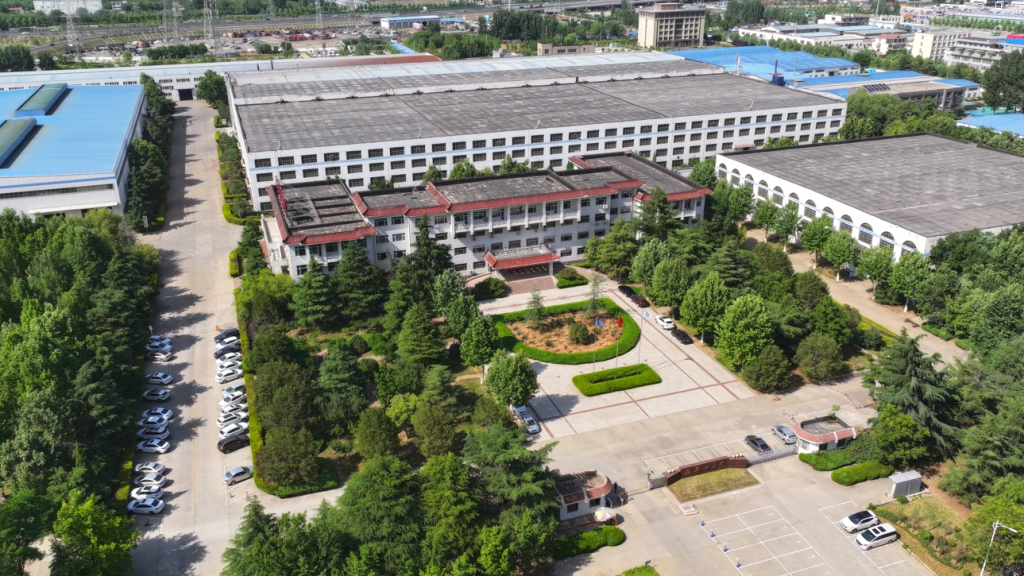
The main components of a power plant boiler typically include the furnace, water walls or evaporator, steam drum or separator where applicable, downcomers and headers, superheater, reheater where required, economizer, air preheater, burners or fuel-introduction system, and draft equipment.
These components do not operate independently. Together, they form interconnected combustion, water-steam, air, and flue-gas paths that convert fuel energy into high-temperature, high-pressure steam for power generation.
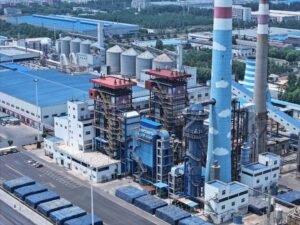
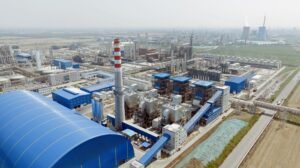
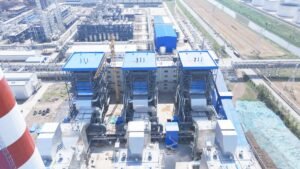
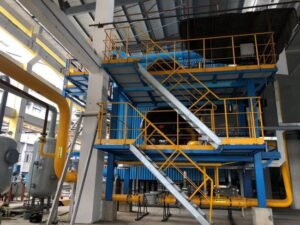
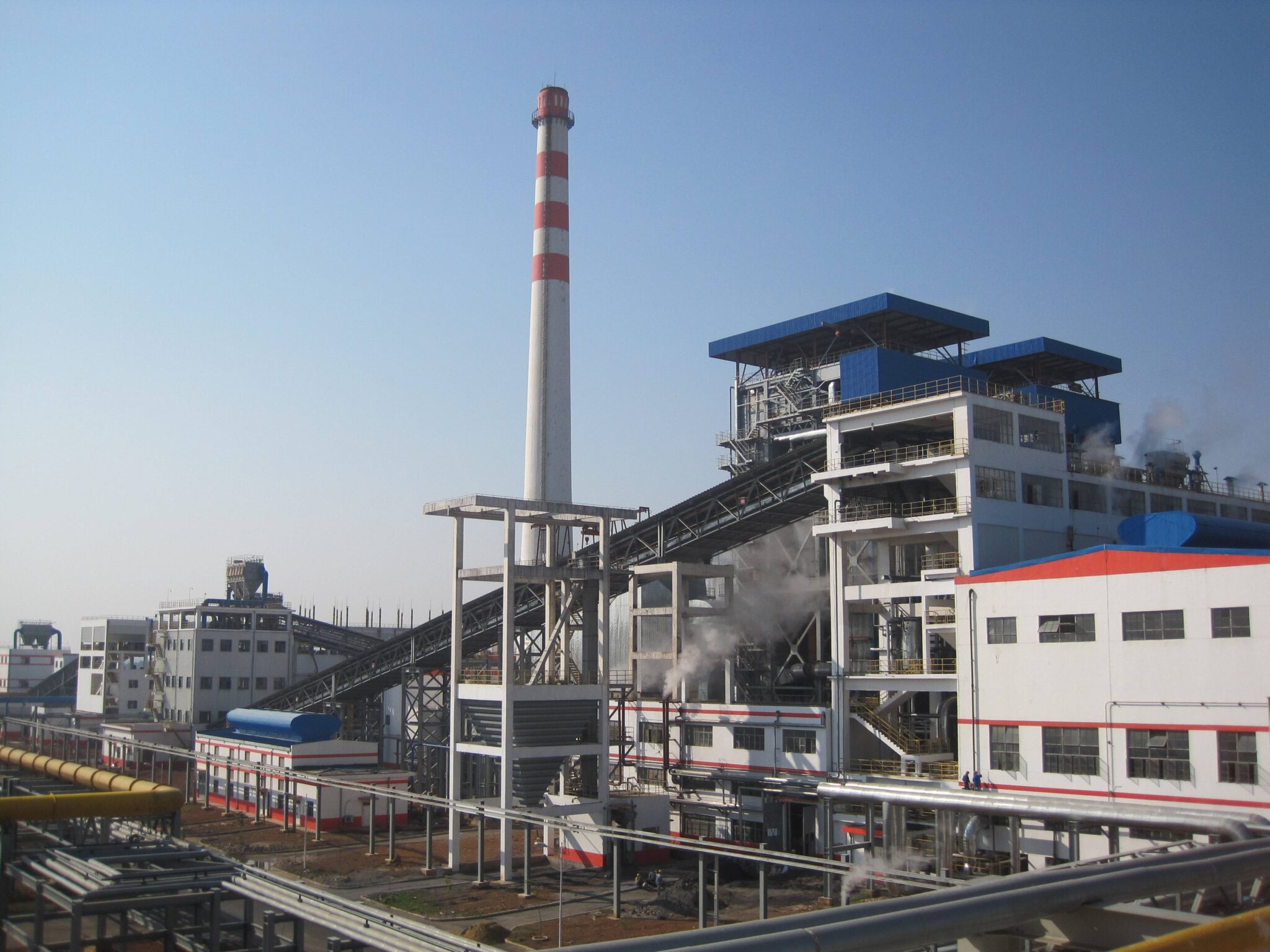
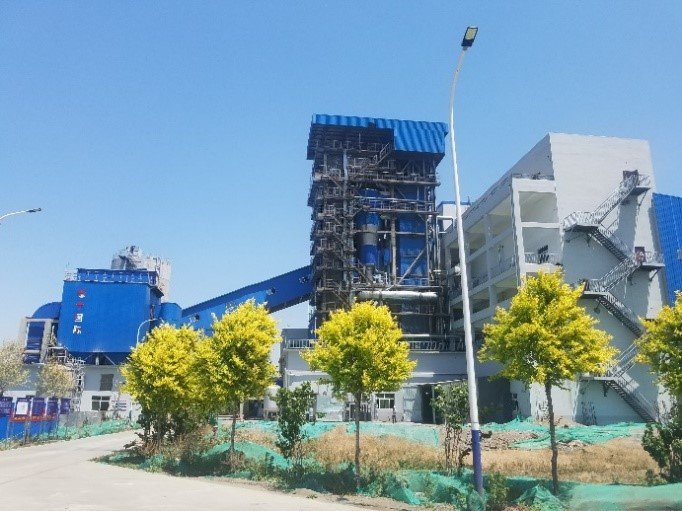
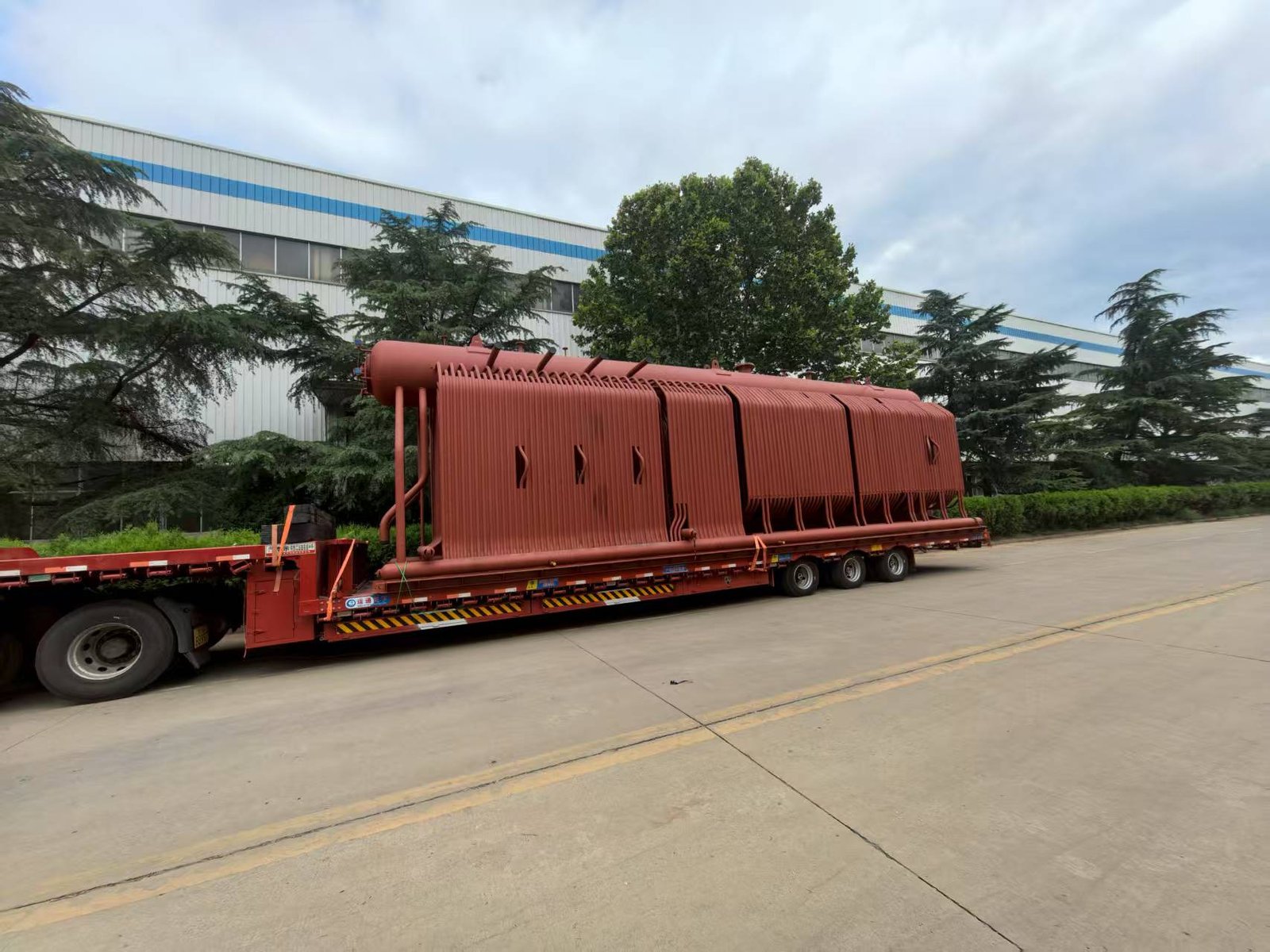
Power Plant Boiler Project Example: This 50 MW coal-fired power plant project illustrates how the boiler pressure parts, steel structure, draft system, auxiliaries, and other equipment are integrated into a complete boiler island.
The exact arrangement depends on the boiler design. A drum-type subcritical boiler, an once-through supercritical boiler, a pulverized-coal boiler, and a circulating fluidized bed (CFB) boiler do not necessarily contain the same component configuration.
If you are looking for a broader explanation of the overall steam-generation process rather than individual boiler parts, see our guide to What Is a Power Plant Boiler and How Does It Work?.
Power Plant Boiler Components at a Glance
| Component | Main Function | Main Flow |
|---|---|---|
| Furnace | Provides the combustion and primary heat-release zone | Fuel, combustion air, flue gas |
| Water walls / evaporator | Absorb furnace heat and generate steam or a steam-water mixture | Water / steam |
| Steam drum | Separates steam from water and supports circulation in drum-type boilers | Water / steam |
| Downcomers and headers | Distribute and circulate water through the evaporative circuit | Water / steam |
| Superheater | Raises main steam temperature above saturation | Steam |
| Reheater | Reheats steam after expansion through the high-pressure turbine | Steam |
| Economizer | Uses flue-gas heat to preheat boiler feedwater | Feedwater / flue gas |
| Air preheater | Uses flue-gas heat to preheat combustion air | Air / flue gas |
| Burners / fuel-introduction system | Introduces fuel into the combustion zone | Fuel / air |
| Draft system | Supplies combustion air and moves flue gas through the boiler | Air / flue gas |
Fans, feedwater pumps, sootblowers, controls, safety devices, ash-handling equipment, and environmental systems are also essential to a complete boiler installation. However, they are usually better distinguished from the boiler’s primary pressure parts and heat-transfer surfaces.
What Counts as a Power Plant Boiler Component?
The term boiler component can describe different scopes depending on the project.
In a relatively narrow engineering sense, the boiler proper consists primarily of the furnace enclosure, pressure parts, steam-water circulation components, and heating surfaces involved directly in steam generation and steam-temperature control.
These include components such as:
- water walls;
- steam drums or separators;
- headers and downcomers;
- superheaters;
- reheaters; and
- economizers.
A wider boiler island may additionally include fuel-handling equipment, burners, primary-air and forced-draft fans, induced-draft fans, sootblowers, ash-handling systems, boiler controls, pumps, and associated flue-gas treatment equipment.
The distinction is important in EPC and procurement projects because a pressure-part supply package and a complete boiler-island package can have very different equipment boundaries.
For power boilers designed and constructed to ASME requirements, ASME Boiler and Pressure Vessel Code Section I provides construction rules applicable to power boilers.
1. Furnace and Combustion Zone
The furnace is the main heat-release zone of a fired power boiler.
Fuel and combustion air enter the furnace, combustion takes place, and the resulting thermal energy is transferred to the surrounding heating surfaces.
In many large water-tube boilers, the furnace enclosure itself is formed largely by water-cooled membrane walls. Closely spaced tubes connected by metal fins create a gas-tight enclosure while allowing the tubes to absorb intense radiant heat.
The furnace therefore serves two closely related functions:
- providing sufficient space and conditions for combustion; and
- transferring radiant combustion heat into the water-steam circuit through the furnace walls.
Furnace Design Depends on Combustion Technology
A pulverized-coal boiler uses burners to introduce finely prepared fuel and combustion air into the furnace.
Gas- and oil-fired boilers use burner systems designed around gaseous or liquid fuels.
A circulating fluidized bed boiler, by contrast, maintains a fluidized mixture of fuel, bed material, ash, and recirculated solids. It therefore requires additional equipment such as an air-distribution system, solids separator, and solids-return circuit.
For more information on this specific boiler technology, see our Circulating Fluidized Bed Boiler page.
Because the combustion systems differ, there is no single furnace temperature, geometry, or heat-flux range that accurately represents every power plant boiler.
2. Water Walls and Evaporator
Water walls are among the most important pressure parts in a power boiler.
They are typically formed from water-cooled tubes arranged around the furnace. In membrane-wall construction, fins welded between adjacent tubes help form a gas-tight furnace enclosure.
Water walls absorb a substantial amount of radiant heat from combustion while participating directly in steam generation.
What Happens Inside Water-Wall Tubes?
The answer depends on the circulation system.
In a drum-type boiler, water is distributed to the lower furnace circuit and flows upward through heated water-wall tubes. As heat is absorbed, part of the water evaporates and a steam-water mixture develops.
That mixture eventually returns to the steam drum for steam-water separation.
In a natural-circulation boiler, circulation is driven primarily by the density difference between relatively dense water flowing downward through the downcomers and the lower-density steam-water mixture rising through the heated furnace tubes.
In an once-through boiler, the arrangement is different. Feedwater passes continuously through the water-side heating surfaces toward the superheater without relying on a conventional steam-drum circulation loop during normal once-through operation.
For supercritical operation, it is also inaccurate to describe the process as conventional boiling with a fixed liquid-vapor boundary. Above the critical pressure, the fluid changes continuously as heat is added.
3. Steam Drum and Boiler Circulation System
The steam drum is a defining component of many conventional drum-type power boilers.
Its principal functions include:
- receiving the steam-water mixture from the evaporative circuit;
- separating steam from water;
- providing connections for the circulation system; and
- maintaining the water inventory required for stable operation.
Steam-Water Separation
The steam-water mixture returning from the furnace walls cannot normally be sent directly to the turbine or superheater without adequate separation.
Inside the steam drum, separation equipment removes entrained water from the steam before it enters downstream superheating surfaces.
For this reason, describing normal superheater inlet steam simply as wet steam is misleading. In a properly operating drum boiler, steam sent from the drum to the superheater should have undergone effective steam-water separation.
Downcomers
Downcomers carry relatively cool, dense water from the steam drum toward the lower parts of the circulation circuit.
Because this water is denser than the steam-water mixture rising in the heated furnace tubes, a natural-circulation driving force can be established.
Headers and Risers
Headers distribute water into groups of pressure tubes or collect flow leaving them.
A simplified natural-circulation path is:
Steam Drum → Downcomers → Lower Headers → Water Walls / Risers → Upper Headers → Steam Drum
Actual header arrangements vary by boiler configuration, but the principle illustrates how the drum, downcomers, headers, and furnace walls operate as one connected circulation system.
Does Every Power Plant Boiler Have a Steam Drum?
No.
Conventional subcritical drum boilers commonly use a steam drum, but modern once-through boilers do not require a conventional steam drum during normal once-through operation.
This distinction is particularly important when discussing supercritical boilers. Once-through boiler designs use a continuous water-steam flow path rather than the conventional drum-and-downcomer circulation loop.
Startup separators and recirculation systems may still be incorporated for startup and low-load operation, but they should not be confused with a conventional operating steam drum.
4. Superheater
The superheater raises steam temperature above the saturation temperature corresponding to its pressure.
In a conventional drum-type boiler, separated saturated steam leaving the steam drum passes through superheater tube banks, where additional heat is transferred to the steam.
The purpose is to deliver steam at the temperature required by the turbine and overall steam cycle.
Depending on the boiler configuration, superheating surfaces may include combinations of:
- radiant surfaces;
- platen sections;
- convection superheaters; and
- primary and final superheaters.
The steam does not undergo an intentional pressure increase in the superheater. In practice, some pressure drop occurs because of friction and flow resistance through the tubes, headers, and connecting piping.
Steam-temperature control may involve heating-surface arrangement, gas-side control, combustion control, and spray attemperation, depending on the boiler design.
5. Reheater
The reheater also raises steam temperature, but it operates at a different stage of the power cycle.
In a reheat power unit, steam first passes through the superheater and enters the high-pressure turbine. After partial expansion, the steam returns to the boiler through the cold-reheat line.
It then passes through the reheater before entering the next turbine stage.
A simplified sequence is:
Superheater → HP Turbine → Cold Reheat → Reheater → IP / LP Turbine
Reheating improves the thermodynamic performance of the steam cycle and helps limit excessive moisture development during later turbine expansion.
However, a reheater is not present in every power plant boiler. Its use depends on the turbine and steam-cycle configuration.
It is also misleading to assume that cold-reheat steam is necessarily wet. In many modern reheat cycles, steam leaving the high-pressure turbine remains superheated before entering the reheater.
6. Economizer
The economizer is a heat-recovery surface that transfers residual energy from the flue gas to incoming boiler feedwater.
Instead of allowing all of the remaining flue-gas energy to leave through the boiler back-end, part of that heat is recovered before the feedwater enters the drum or the downstream once-through water circuit.
A typical fired-boiler gas path may place the economizer after high-temperature superheater and reheater surfaces and before the air preheater, although actual arrangements vary.
Why Economizer Performance Cannot Be Reduced to One Percentage
The actual contribution of an economizer depends on factors such as:
- feedwater inlet temperature;
- flue-gas inlet and outlet temperatures;
- boiler load;
- fuel composition;
- heat-transfer area;
- tube cleanliness;
- gas velocity; and
- allowable cold-end conditions.
It is therefore not technically sound to state that every economizer produces the same percentage fuel saving.
For a broader discussion of boiler heat losses and performance rather than component construction, see Power Plant Boiler Efficiency.
7. Air Preheater
The air preheater recovers heat from the flue gas and transfers it to the incoming combustion air.
Its function is therefore different from that of the economizer:
| Feature | Economizer | Air Preheater |
|---|---|---|
| Medium being heated | Boiler feedwater | Combustion air |
| Heat source | Flue gas | Flue gas |
| Main function | Recover heat into the water-steam cycle | Recover heat into combustion air |
| Typical location | Boiler back-end | Lower-temperature back-end gas path |
Air heaters can use different heat-transfer arrangements, including regenerative and recuperative designs.
Preheated combustion air can support stable combustion and reduce the amount of useful heat leaving with the stack gas. However, an air preheater should not be assigned a universal NOx-reduction percentage.
NOx formation depends on the complete combustion system, including temperature distribution, oxygen availability, burner design, air staging, residence time, fuel characteristics, and any dedicated NOx-control technology.
Similarly, minimum allowable cold-end temperatures must be evaluated against actual fuel sulfur content and flue-gas chemistry rather than applying one fixed acid-dew-point temperature to every boiler.
8. Burners and Draft System
The combustion and pressure-part systems depend on controlled movement of fuel, combustion air, and flue gas.
Burners and Fuel Introduction
Fuel-introduction equipment varies substantially by boiler type.
Pulverized-coal boilers use burner systems designed to introduce pulverized fuel together with combustion air.
Gas- and oil-fired units use fuel-specific burners and fuel-train equipment.
CFB boilers rely on fuel-feeding equipment and fluidizing-air systems together with their solids-circulation arrangement.
Biomass boilers may require additional fuel receiving, storage, conveying, and feeding equipment because biomass properties can vary considerably with fuel source and preparation.
Primary-Air and Forced-Draft Fans
Forced-draft, or FD, fans supply combustion air to the boiler.
Primary-air, or PA, fans are used where a separate primary-air stream is required. Depending on boiler type, this air may be involved in fuel drying, pulverized-fuel transport, fluidization, or primary combustion.
Induced-Draft Fan
The induced-draft, or ID, fan performs a different function.
It draws flue gas through the boiler and downstream gas path and helps maintain the required furnace pressure or draft condition.
The ID fan should therefore not be described as a fan whose primary function is to supply oxygen to the furnace.
How Do the Main Boiler Components Work Together?
Individual component descriptions are useful, but a power boiler is easier to understand as two interacting flow paths:
- the water-steam path; and
- the air-flue-gas path.
Heat crosses from the combustion and flue-gas side into the water-steam side through the boiler’s heating surfaces.
Water-Steam Path in a Typical Drum-Type Reheat Unit
A simplified example is:
Feedwater → Economizer → Steam Drum → Downcomers → Lower Headers → Water Walls → Steam Drum → Superheater → HP Turbine → Reheater → Subsequent Turbine Stages
This represents a typical drum-type reheat arrangement, not every drum boiler.
Boilers without a reheat steam cycle will not include the reheater and associated turbine return path.
The key engineering point is that the economizer, drum, downcomers, headers, water walls, superheater, and reheater are not isolated pieces of equipment. They form successive parts of the overall water-steam circuit.
Air and Flue-Gas Path
A simplified fired-boiler gas path can be represented as:
Fuel + Combustion Air → Furnace → High-Temperature Heating Surfaces → Economizer → Air Preheater → Downstream Flue-Gas Treatment and Draft Equipment → Stack
The exact position of particulate-control equipment, NOx/SOx treatment systems, and the ID fan depends on the plant configuration.
This is why a general flow diagram should be treated as a functional explanation rather than a universal equipment-layout drawing.
Recommended page graphic: Create an original cutaway diagram titled “Main Components and Flow Paths of a Drum-Type Power Plant Boiler.” Show the water-steam path and air/flue-gas path in the same diagram, clearly labeling the furnace, water walls, steam drum, downcomers, superheater, reheater, economizer, and air preheater.
Drum-Type vs Once-Through Boiler Components
The circulation system creates one of the most important structural differences between power boilers.
| Feature | Drum-Type Boiler | Once-Through Boiler |
|---|---|---|
| Conventional steam drum | Yes | No during normal once-through operation |
| Drum-based recirculation loop | Yes | No |
| Steam-water separation | Primarily in the steam drum | No conventional drum separation during normal once-through operation |
| Conventional downcomer circuit | Common | Not required in the same form |
| Water-cooled furnace | Common | Common |
| Superheater | Common | Common |
| Economizer | Common | Common |
The distinction is especially relevant when comparing conventional subcritical units with many modern supercritical and ultra-supercritical designs.
Once-through supercritical boilers still use major heating surfaces such as water-cooled furnace walls, superheaters, reheaters, and economizers, but the water-steam circuit is fundamentally different from a conventional drum boiler.
How Do Components Differ by Boiler Type?
Many pressure parts serve similar thermodynamic functions across different boiler technologies. The greatest differences often occur in the combustion, solids-handling, fuel-feeding, and auxiliary systems.
| Boiler Type | Particularly Distinctive Features |
|---|---|
| Pulverized-coal boiler | Pulverized-fuel burners and associated furnace/fuel-preparation arrangement |
| CFB boiler | Air distributor, fluidized bed, cyclone or solids separator, solids-return system |
| [Biomass boiler](https://coalbiomassboiler.com/product/biomass-boilers/) | Fuel receiving, conveying and feeding systems; fuel-specific combustion and ash-handling provisions |
| Gas/oil-fired boiler | Burner, fuel train, flame-safeguard and combustion-control equipment |
| Once-through supercritical boiler | Continuous once-through water-steam circuit without a conventional operating steam drum |
| Waste-heat boiler | Heating surfaces arranged around an external hot-gas source rather than a conventional fired furnace |
These differences are why fuel- or technology-specific component guides should focus on the systems that distinguish that boiler type rather than repeating a generic explanation of every drum, superheater, and economizer.
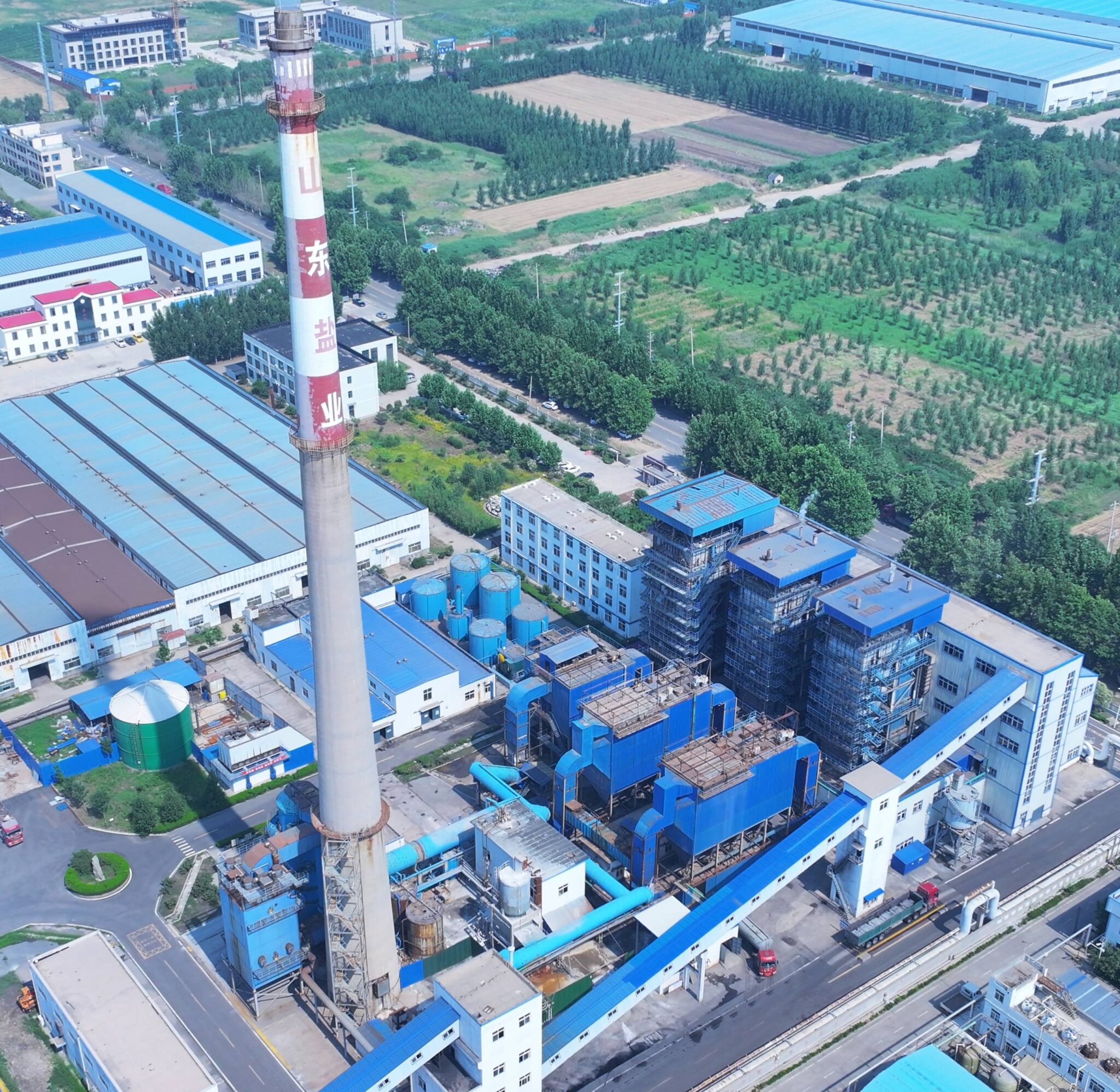
Taishan Project Experience: Different Boiler Technologies Require Different System Configurations
Taishan Group’s published project portfolio includes several large boiler installations using different combustion technologies.
Examples include:
- two 170 t/h circulating fluidized bed boilers for the Vietnam National Coal and Mineral Industries Group Bauxite-Alumina Project;
- a 75 t/h biomass power plant boiler for Xingtai Shuangjie Thermal Power Co., Ltd.;
- a 170 t/h biomass power plant boiler for Weixian Aosen New Energy Co., Ltd.; and
- three 240 TPH pulverized-coal boilers for Shandong Jincheng Petrochemical Group.
See the Taishan Group Project Case portfolio for published project information.
These projects illustrate an important engineering principle: although major water-steam pressure parts may perform similar functions, the complete component configuration changes with fuel, combustion technology, steam conditions, and project scope.
A CFB boiler, for example, requires solids circulation and fluidizing-air systems that are fundamentally different from the burner arrangement of a pulverized-coal boiler. Biomass projects may place much greater emphasis on fuel preparation, conveying, feeding, ash characteristics, and fouling control.
For this reason, boiler components should be evaluated as an integrated system, not as a universal list of interchangeable parts.
Supporting [Boiler Auxiliaries](https://coalbiomassboiler.com/product/boiler-auxiliaries/)
A complete boiler installation also depends on systems that support the boiler proper.
| Supporting System | Main Role |
|---|---|
| Feedwater pump | Supplies feedwater at the required pressure |
| Sootblower | Removes deposits from heating surfaces |
| Boiler Management System (BMS) | Manages safe furnace and burner operating sequences |
| Distributed Control System (DCS) | Monitors and controls boiler and plant operation |
| Safety valves | Protect pressure parts against excessive pressure |
| Fuel-handling system | Receives, prepares and delivers fuel |
| Ash-handling system | Removes combustion residues where applicable |
| Associated flue-gas treatment systems | Control regulated pollutants according to project requirements |
Depending on the contract and EPC boundary, some of these systems may form part of the wider boiler island rather than the boiler proper.
Taishan Group also provides Boiler Auxiliary Equipment for integrated boiler-system configurations.
Frequently Asked Questions
What are the main components of a power plant boiler?
The main components generally include the furnace, water walls or evaporator, steam drum or separator where applicable, circulation headers and downcomers, superheater, reheater where required, economizer, air preheater, burners or fuel-introduction equipment, and the draft system. The exact arrangement depends on boiler type and steam-cycle design.
Does every power plant boiler have a steam drum?
No. Conventional drum-type boilers use a steam drum for steam-water separation and circulation. Once-through boilers do not use a conventional steam drum during normal once-through operation, although startup separators and recirculation equipment may be used during startup and low-load conditions.
What is the difference between a steam drum and a header?
A steam drum is a relatively large pressure vessel used in drum-type boilers to separate steam from water and form part of the circulation system. A header is a pressure-part manifold that distributes flow into multiple tubes or collects flow leaving them.
What is the difference between a superheater and a reheater?
A superheater raises the temperature of steam before it enters the high-pressure turbine. A reheater raises the temperature of steam again after it has partially expanded through the high-pressure turbine. Reheaters are only required when the plant uses a reheat steam cycle.
What is the difference between an economizer and an air preheater?
Both recover heat from the flue gas, but they heat different fluids. The economizer heats boiler feedwater, while the air preheater heats incoming combustion air.
Conclusion
A power plant boiler is best understood as an integrated network of combustion equipment, pressure parts, and heat-transfer surfaces.
The furnace releases heat. Water walls absorb a large share of the radiant energy. In drum-type boilers, the drum, downcomers, headers, and risers form the circulation system. The superheater and, where required, reheater prepare steam for turbine expansion, while the economizer and air preheater recover lower-temperature heat from the flue gas.
The exact component arrangement is not universal. Drum-type and once-through boilers use different circulation systems, while CFB, pulverized-coal, biomass, gas/oil-fired, and waste-heat boilers require different combustion and auxiliary equipment.
Understanding these relationships is more useful than memorizing a component list: each boiler component must be considered as part of the complete water-steam, combustion-air, and flue-gas system.